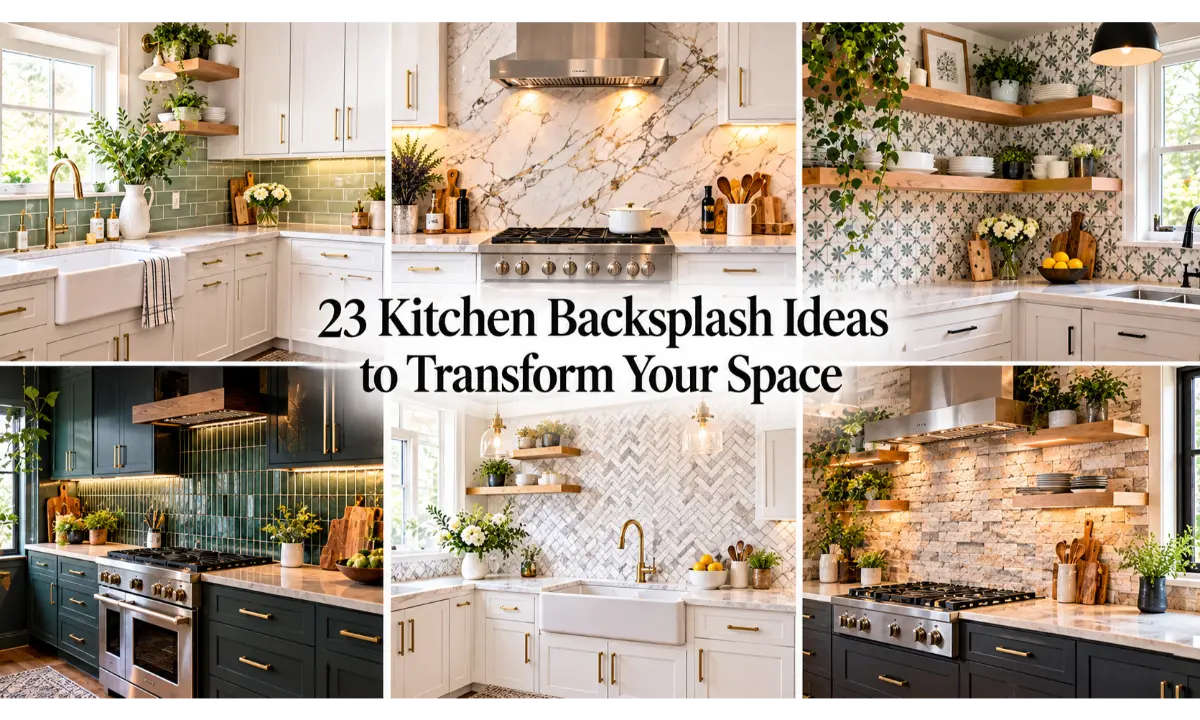
23 Stunning Kitchen Backsplash Ideas for a Stylish Space
Your kitchen backsplash can completely change the look and feel of your cooking space without requiring a full renovation. The right tile, color, texture, or material can make plain cabinets look more stylish, brighten a small kitchen, add warmth to a modern space, or create a beautiful focal point behind the stove. The best backsplash should also handle everyday splashes, cooking messes, heat, and regular cleaning.
Whether you love timeless white tile, dramatic marble, colorful patterns, natural stone, or handmade finishes, there are plenty of ways to create a backsplash that feels personal. These ideas combine style with practical details so you can choose a design that works with your cabinets, countertops, lighting, and overall kitchen style.
Best Kitchen Backsplash Ideas for a Stylish and Functional Space
1. Classic White Kitchen Backsplash Ideas for a Timeless Look
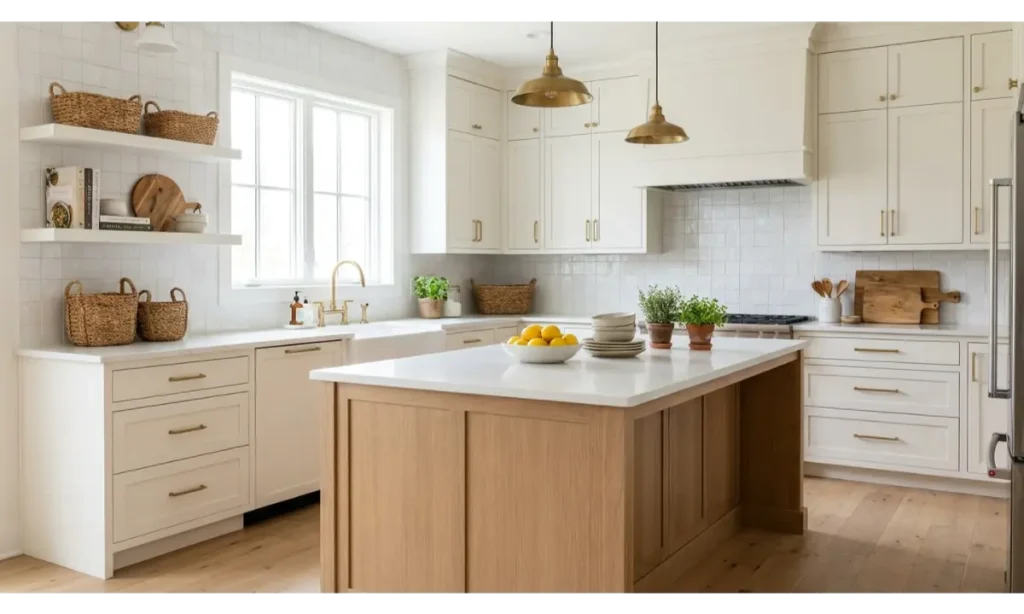
These Kitchen Backsplash Ideas start with a classic white tile because it offers one of the easiest ways to create a bright and timeless kitchen. Simple rectangular ceramic tiles can make the walls feel clean while allowing cabinets, countertops, lighting, and accessories to stand out. Choose warm white instead of icy white if you want a softer and more welcoming appearance.
You can also change the entire character of the backsplash by adjusting the layout. A traditional staggered pattern feels familiar, while a stacked arrangement creates a more contemporary appearance. Pair white tile with natural wood, brass hardware, marble countertops, or soft beige accents for a kitchen that feels fresh without looking overly decorated.
Pro Tip: Choose grout that complements your cabinet undertones instead of automatically using bright white.
2. Handmade Zellige Tile for Beautiful Texture
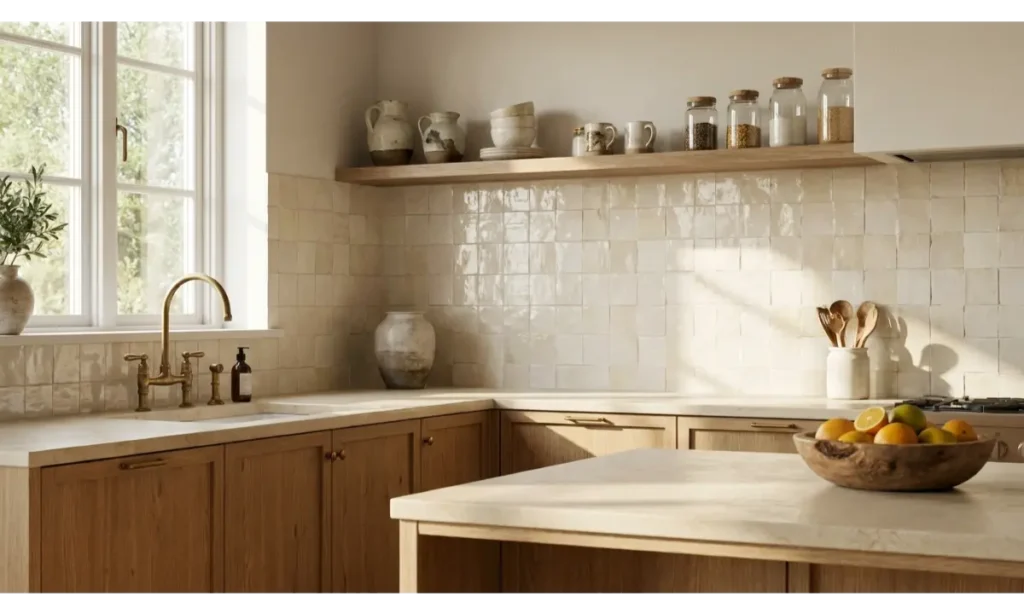
Zellige tile brings handmade character into the kitchen through uneven edges, gentle color variation, and naturally reflective surfaces. Cream, ivory, beige, pale green, and soft blue versions can create a relaxed appearance that feels warm rather than overly polished. The small variations make the wall interesting even when you use a single color.
This handmade tile backsplash works beautifully with natural wood, stone countertops, brass fixtures, and simple cabinet doors. Because the tile already has plenty of texture, you can keep other surfaces relatively quiet. The result feels sophisticated but still comfortable, making it especially appealing for kitchens inspired by Mediterranean, European, or organic modern interiors.
Pro Tip: Always view tile samples under your kitchen lighting because handmade finishes can change noticeably throughout the day.
Read More: 20 Gorgeous Vintage Kitchen Design Ideas for a Timeless Look
3. Full Height Marble Slab for a Luxurious Kitchen
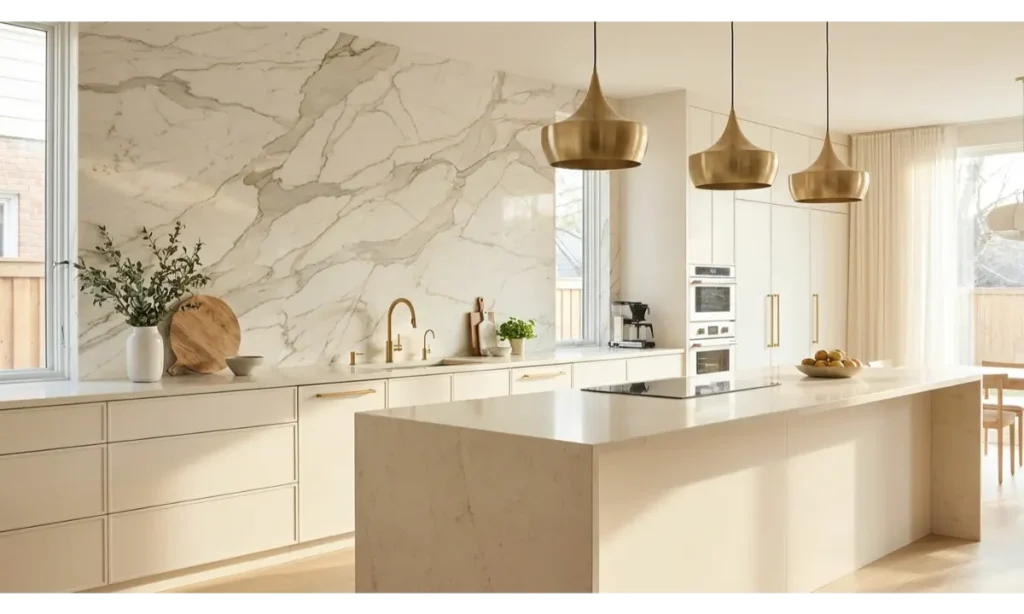
A marble slab can turn the backsplash into the main architectural feature of the kitchen. Instead of breaking the wall into many individual tiles, one continuous surface allows the natural veining to flow across the space. This creates a polished appearance that works particularly well with simple cabinets and understated hardware.
For a luxurious look, choose marble with veining that complements the countertop instead of competing with it. If you already have a dramatic countertop, a quieter stone may create better balance. A marble backsplash can work with traditional, transitional, and contemporary kitchens when you coordinate its undertones carefully.
Pro Tip: Use a honed finish if you prefer a softer appearance with less shine.
4. Soft Sage Green Tile for a Calm Look
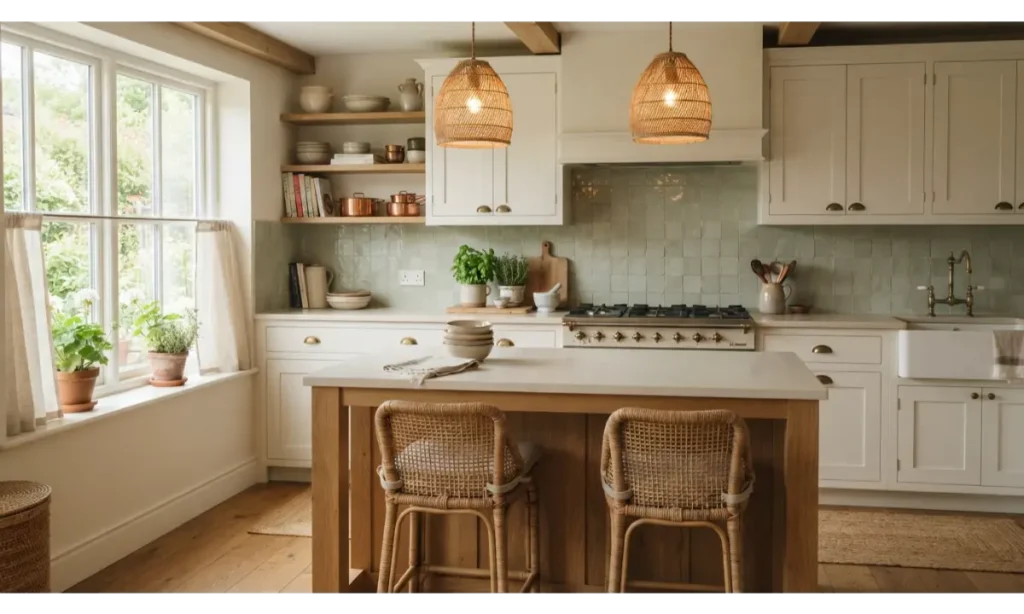
Sage green adds gentle color while keeping the kitchen relaxed and easy to decorate. This muted shade works especially well with warm white cabinetry, oak, walnut, cream countertops, and aged brass. Unlike stronger green shades, sage can introduce personality without making the kitchen feel overly themed.
Choose square ceramic tiles for a classic cottage feeling or handmade rectangular tiles for more texture. You can also keep the rest of the room neutral and repeat small touches of green through plants, pottery, or artwork. This creates a cohesive green kitchen backsplash without making every element match perfectly.
Pro Tip: Use muted sage instead of bright green if you want the backsplash to remain versatile.
5. Large Format Porcelain for a Seamless Appearance
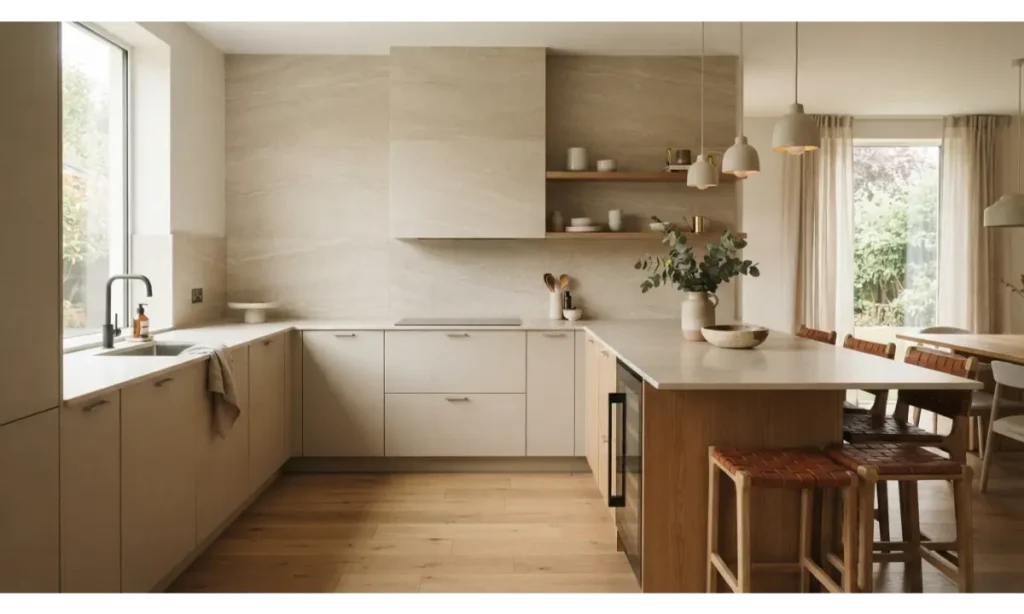
Large format porcelain creates a smooth wall with fewer grout lines, which can make the kitchen feel more spacious and visually connected. Stone look porcelain can provide the appearance of marble, limestone, or concrete while creating a practical surface for everyday use. It is especially attractive in contemporary kitchens with clean architectural lines.
The reduced number of grout joints can also make maintenance feel easier. Use this approach behind the range or across a larger wall for a stronger statement. A neutral large format backsplash works particularly well when your cabinets already have interesting color, grain, or hardware.
Pro Tip: Take your countertop sample with you when selecting porcelain so you can compare undertones accurately.
Read More: 24 Christmas TV Stand Decor Ideas for a Cozy Holiday Home
6. Elegant Herringbone Tile Pattern
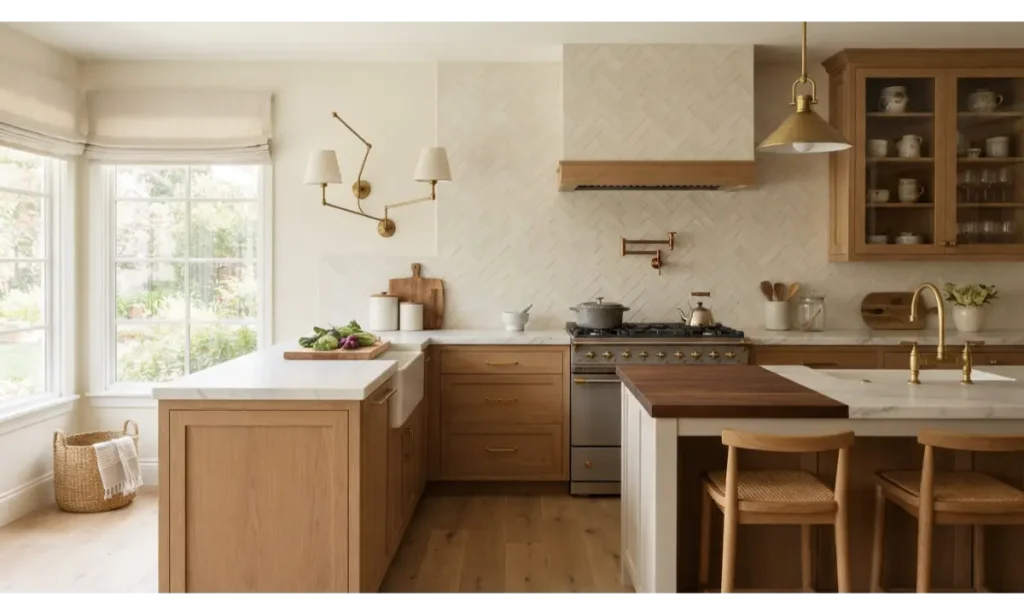
Herringbone tile adds movement to the kitchen while keeping the overall color palette simple. Cream, white, beige, or pale gray tiles can create a sophisticated pattern without making the room feel too busy. This design works particularly well when the cabinetry has simple doors and the kitchen needs a decorative detail.
The pattern can become stronger or softer depending on the grout color. Matching grout creates a subtle effect, while contrasting grout emphasizes each individual tile. A herringbone backsplash looks beautiful with marble countertops, natural wood cabinets, brass fixtures, and classic lighting.
Pro Tip: Use contrasting grout only when you want the pattern to become a major visual feature.
7. Glossy Subway Tile with a Modern Twist
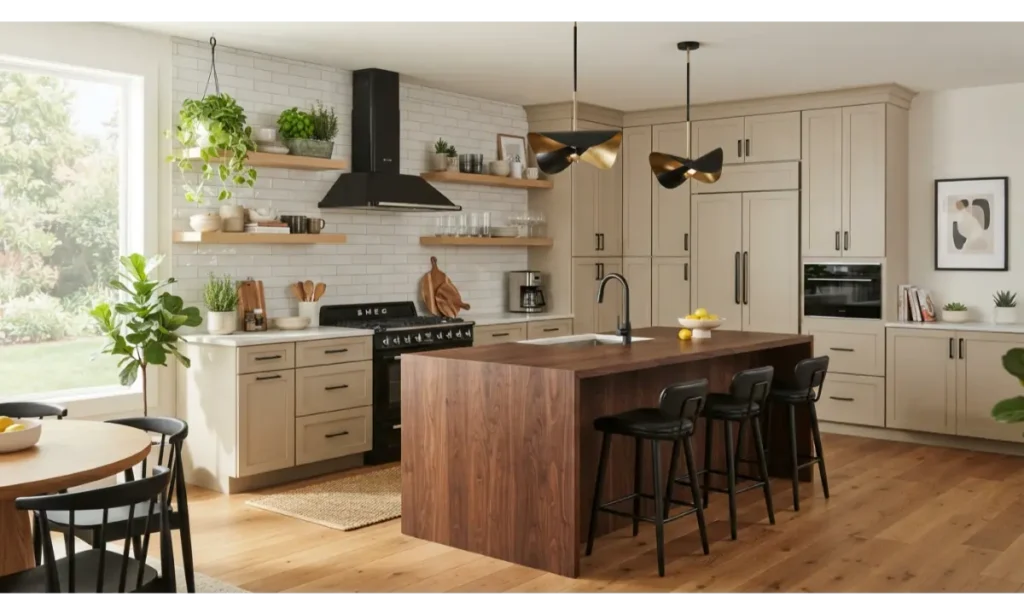
Subway tile remains popular because its simple shape can work with almost any kitchen style. To make it feel fresh, choose an unexpected installation pattern, warmer grout, elongated tiles, or updated cabinet colors. A glossy surface can also reflect natural light and make the wall appear brighter.
Instead of creating a traditional farmhouse appearance, combine the tile with modern lighting, contemporary stools, and streamlined hardware. A subway tile backsplash can then feel clean and current while still retaining its familiar charm. This makes it a useful option for homeowners who want flexibility.
Pro Tip: Try a stacked layout for a cleaner contemporary appearance.
8. Deep Forest Green for Dramatic Contrast
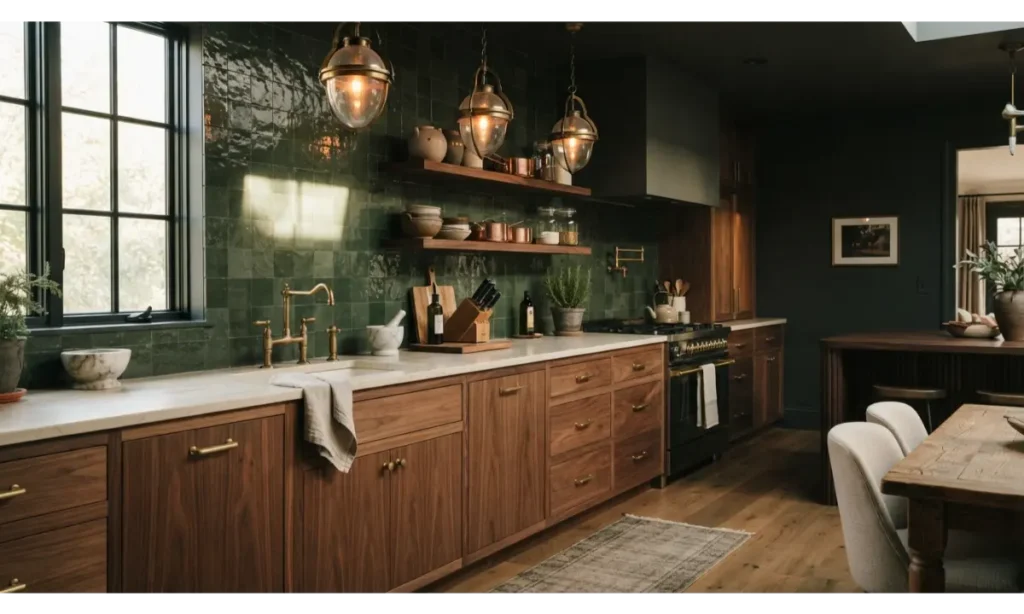
Deep forest green creates a dramatic backdrop that feels rich and sophisticated. It pairs especially well with walnut, oak, cream, brass, and natural stone. A glossy surface adds subtle reflections that prevent the dark color from appearing completely flat.
This style works best when the rest of the kitchen has enough light and some lighter finishes. Use cream countertops, warm lighting, and pale flooring to create balance. A dark green backsplash can become the centerpiece of a kitchen without requiring bright decorative accessories or complicated patterns.
Pro Tip: Add warm under cabinet lighting to keep deep green from feeling too heavy.
9. Neutral Limestone Look for Warm Minimalism
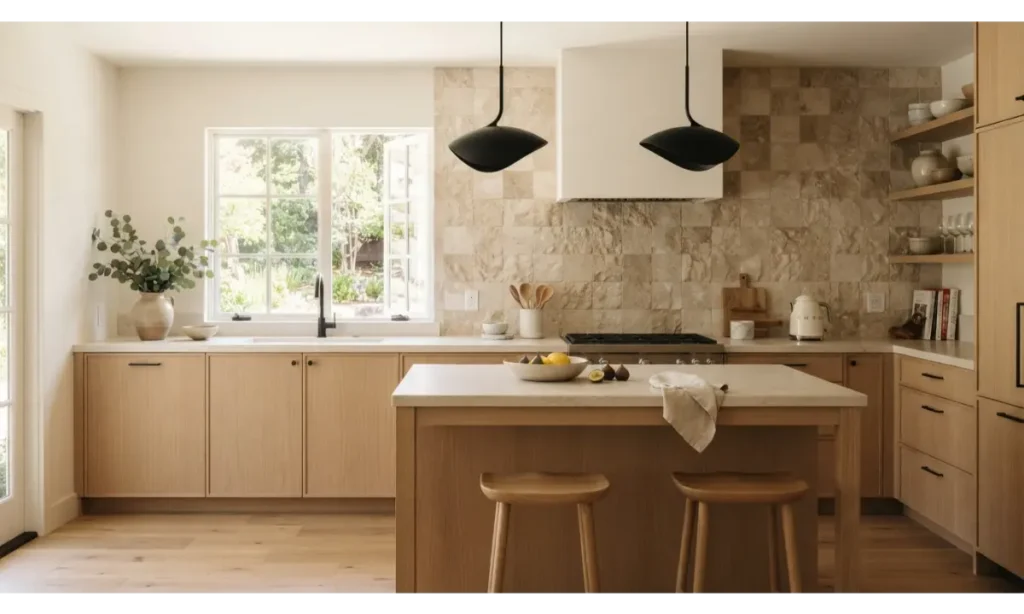
A limestone inspired backsplash can create a warm and understated kitchen with plenty of natural character. Beige, taupe, mushroom, and creamy tones blend beautifully with wood cabinetry and natural stone. These colors also make it easier to update kitchen accessories later without worrying about clashing with the backsplash.
This approach works particularly well for warm neutral kitchens where the goal is to create a relaxed and timeless atmosphere. Choose subtle variation rather than dramatic veining if you want the backsplash to remain a supporting feature. Natural textures can then provide interest without overwhelming the room.
Pro Tip: Compare the backsplash with your flooring in natural light to avoid unwanted undertone clashes.
10. Soft Blue Tile for a Fresh Coastal Feel
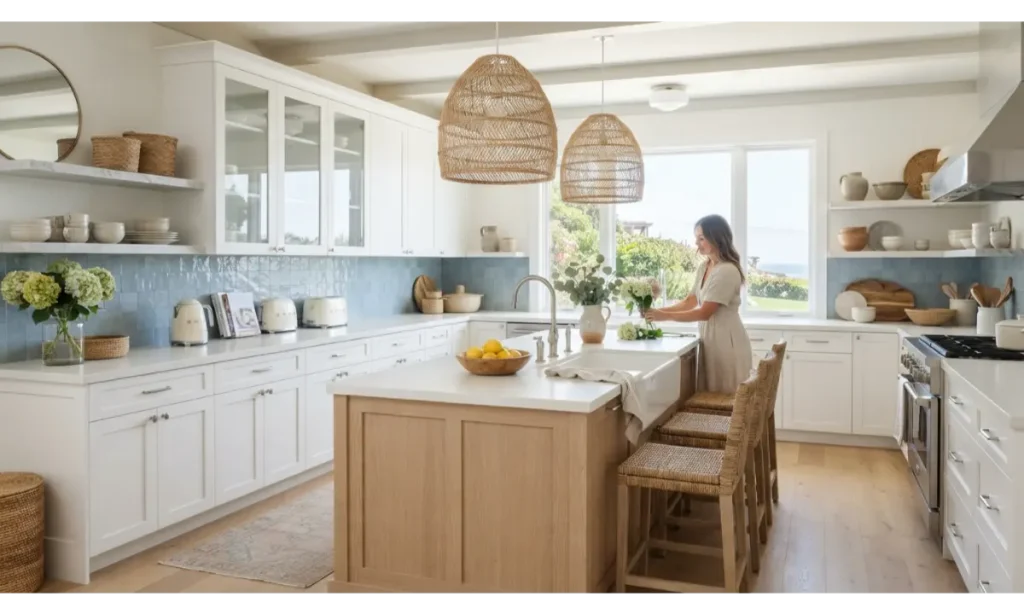
Soft blue can instantly make a kitchen feel fresh, open, and relaxing. Dusty blue, blue gray, pale aqua, and muted denim shades work beautifully with white cabinetry and pale wood. These colors can create a coastal feeling without relying on obvious nautical decorations.
For a more sophisticated result, choose a muted blue and combine it with natural textures. White counters and woven accessories can reinforce the airy feeling, while brass or nickel fixtures add contrast. A blue tile backsplash can also work in cottage and transitional kitchens when the color remains soft.
Pro Tip: Choose a dusty blue if you want a color that will remain easy to style over time.
11. Fluted Tile for Modern Texture
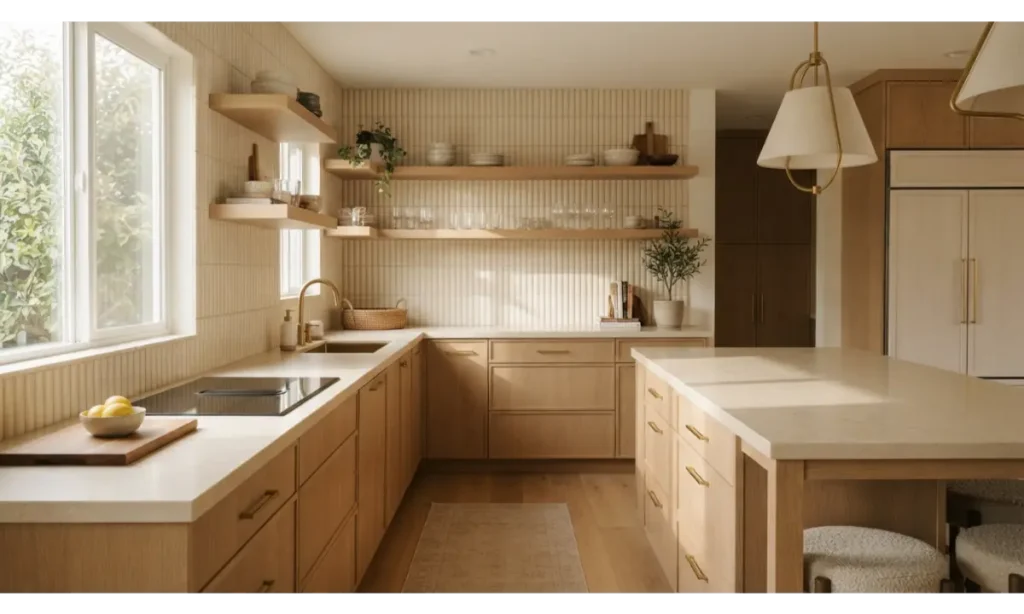
Fluted tile creates visual interest through texture rather than strong color. Vertical grooves catch the light and create subtle shadows that change throughout the day. This gives the backsplash depth while keeping the overall kitchen palette calm and sophisticated.
Warm ivory, beige, and soft white are particularly versatile choices. Because textured backsplash tile already adds detail, pair it with simple cabinets and minimal accessories. The result can feel modern, organic, and architectural without looking cold or overly minimalist.
Pro Tip: Choose a texture that does not have deep grooves if the backsplash sits directly behind your cooking area.
12. Hand Painted Tiles for a Personal Touch
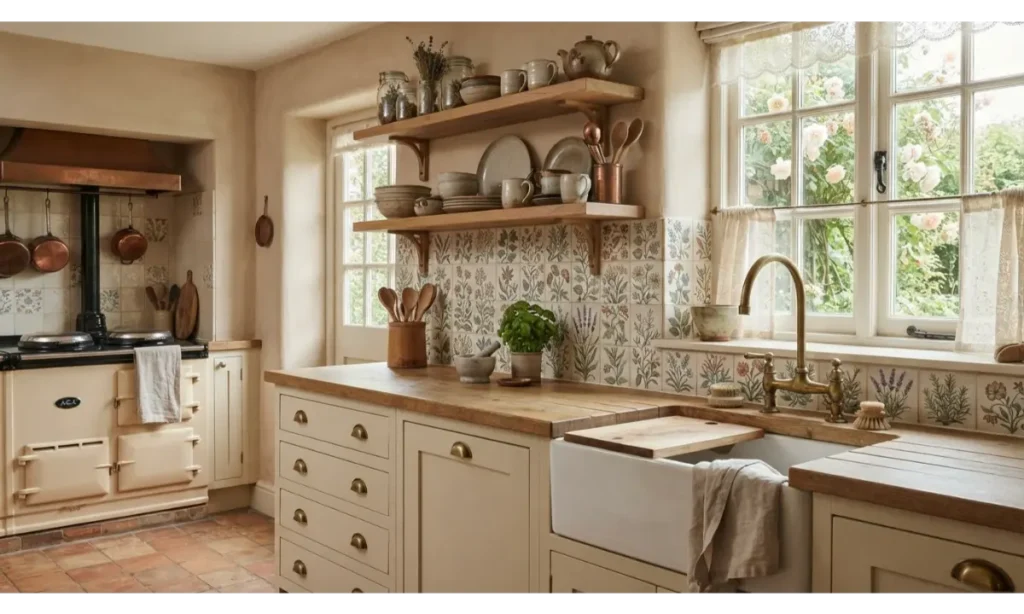
Hand painted tiles can make the backsplash feel like a piece of art. Botanical patterns, small florals, geometric details, and Mediterranean inspired designs can bring personality into an otherwise simple kitchen. They work especially well behind the range where the backsplash naturally becomes a focal point.
You do not need to use decorative tile across every wall. A smaller feature area can provide plenty of visual impact while keeping the surrounding surfaces simple. Decorative kitchen tile works best when its colors connect with nearby cabinets, countertops, textiles, or accessories.
Pro Tip: Repeat one color from your tile design somewhere else in the kitchen for better visual flow.
13. Terracotta Tile for Earthy Warmth
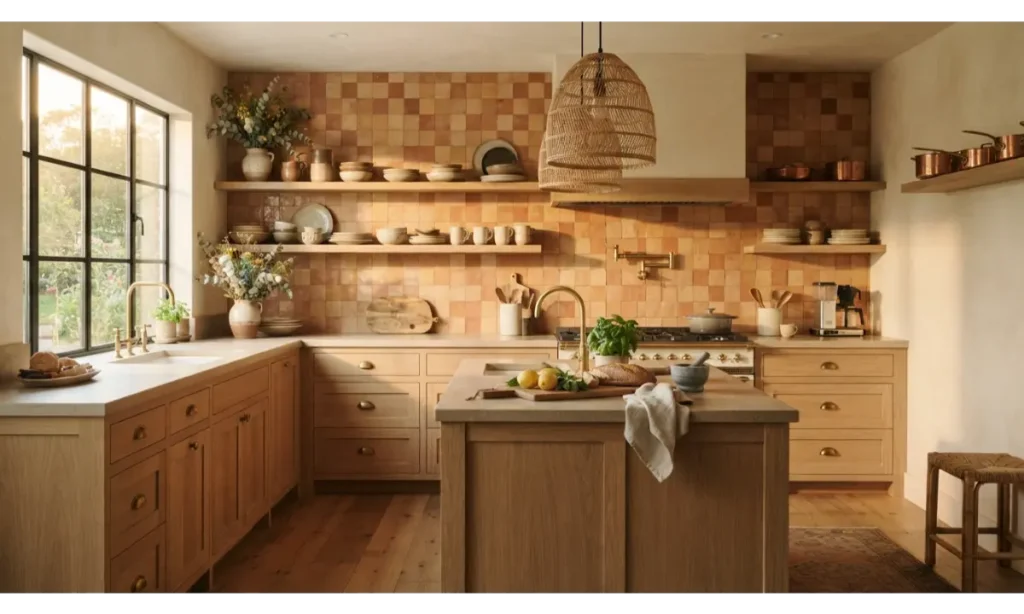
Terracotta adds earthy warmth and a handcrafted feeling to the kitchen. Its natural clay tones work beautifully with cream, olive, walnut, oak, and aged brass. If your kitchen feels too cool or sterile, this material can bring warmth without requiring major changes to the cabinets.
Choose irregular handmade tiles for a relaxed Mediterranean appearance or cleaner rectangular tiles for a more contemporary finish. A terracotta backsplash can also connect naturally with pottery, wooden shelves, woven baskets, and other organic accessories.
Pro Tip: Balance terracotta with light countertops and creamy walls so the kitchen does not feel too dark.
14. Black and White Checkerboard Tile
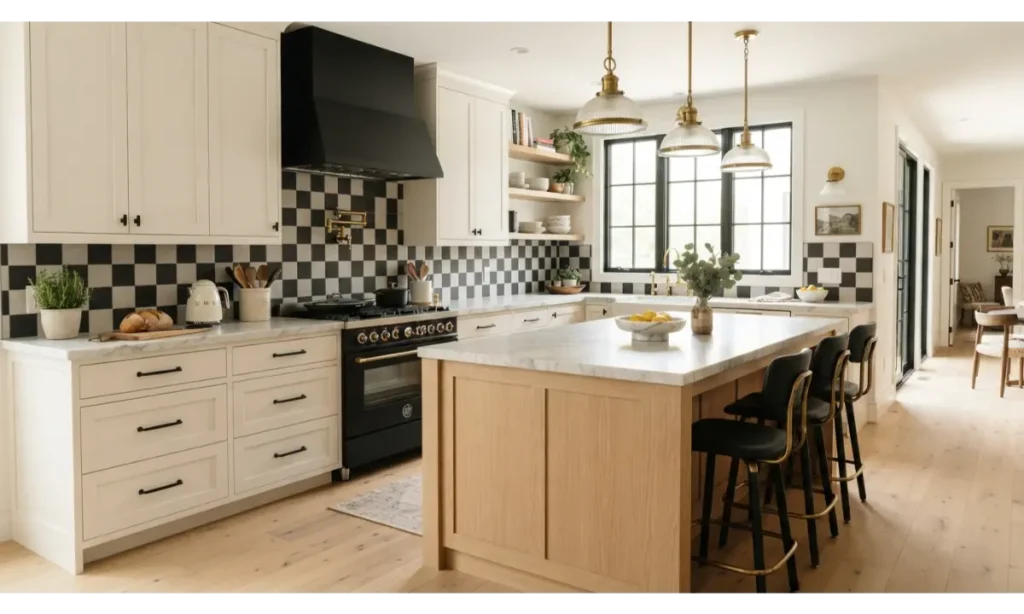
Checkerboard tile brings instant personality through a simple geometric pattern. Black and white creates bold contrast, while cream and charcoal can provide a softer vintage appearance. The design works particularly well when the cabinets and countertops remain relatively simple.
Avoid adding too many other patterns because the backsplash already provides strong visual movement. Natural wood, solid color textiles, and simple lighting can soften the contrast. A checkerboard backsplash works beautifully in vintage, eclectic, European, and contemporary kitchens.
Pro Tip: Choose larger squares for a cleaner modern look and smaller squares for a more traditional feeling.
15. Antique Mirror for a Small Kitchen
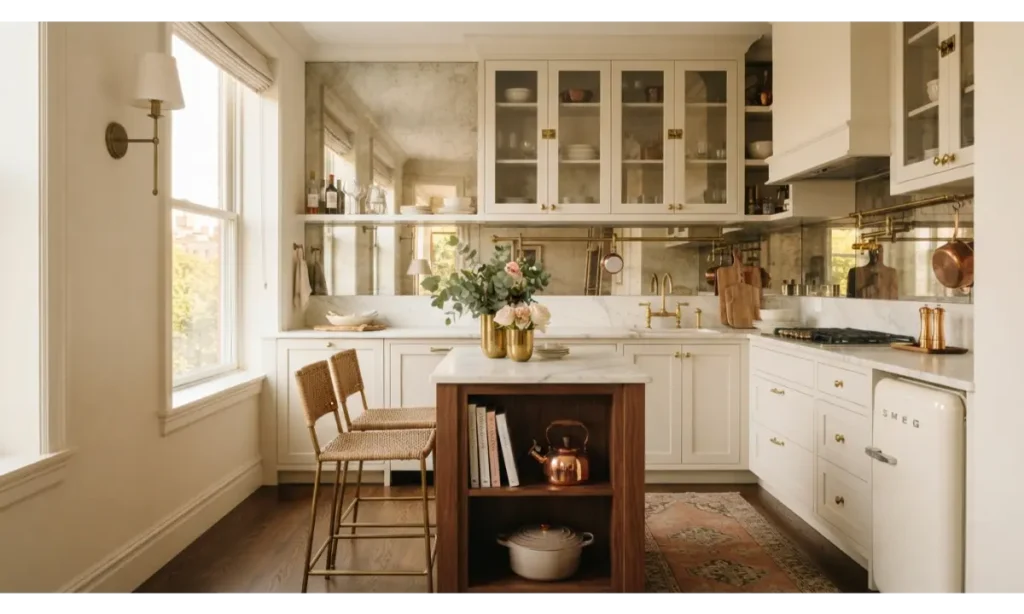
A mirrored backsplash can make a compact kitchen feel brighter and more spacious by reflecting light and surrounding surfaces. Antique mirror provides character and warmth, while a cleaner reflective finish creates a more modern appearance. This can be especially useful when the kitchen does not receive much natural light.
Keep the surrounding materials relatively calm so the reflections do not create visual clutter. For small kitchen design, a reflective backsplash can provide depth without changing the actual size of the room. It can also make a simple kitchen feel more polished.
Pro Tip: Consider an aged mirror finish if you want a more forgiving surface for everyday fingerprints.
16. Marble Mosaic for Elegant Detail
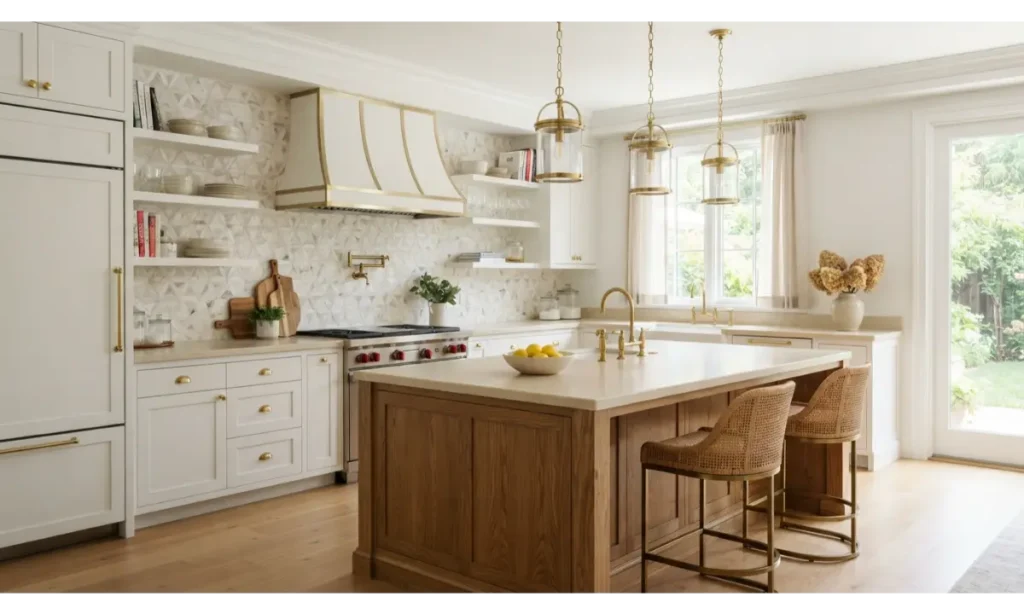
Marble mosaic tile provides more detail than a traditional slab while keeping the color palette sophisticated. Geometric shapes can create movement, while natural marble variations add depth. Cream, white, and soft gray combinations work especially well with both classic and contemporary cabinetry.
Because mosaic contains many individual pieces, it can become the main decorative element of the wall. Keep nearby finishes restrained so the room remains balanced. A marble mosaic backsplash can look especially elegant with simple cabinet doors and warm metallic hardware.
Pro Tip: If the countertop already has dramatic veining, select a quieter mosaic with subtle movement.
17. Vertical Stacked Tile to Add Height
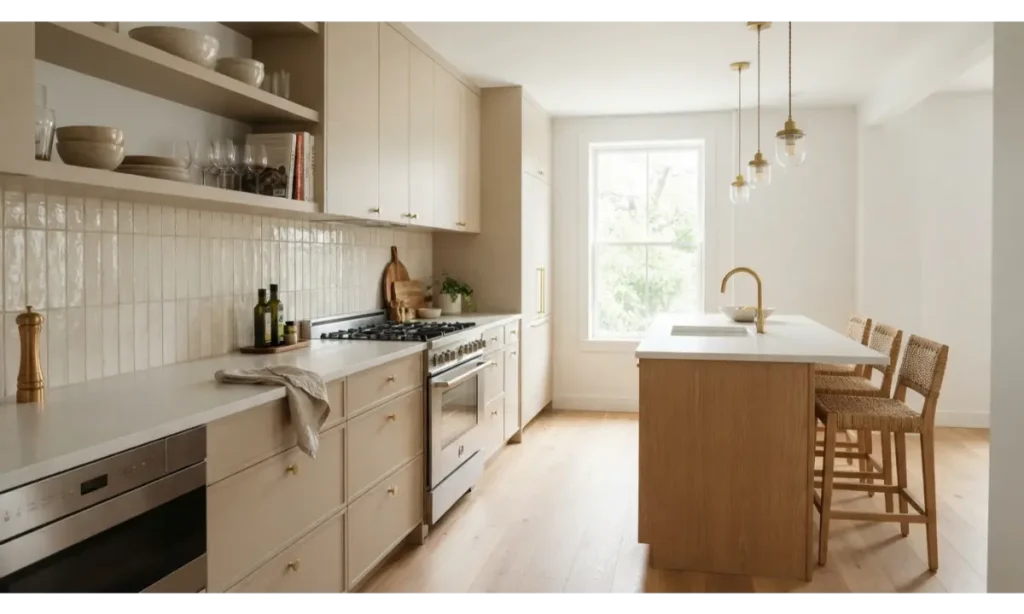
The direction of a tile installation can change the way the entire kitchen feels. Vertical stacked tile draws the eye upward and can make the wall appear taller. It works particularly well in smaller kitchens or spaces with lower ceilings.
Cream, white, beige, and muted colors can keep the design sophisticated. A vertical backsplash tile installation also pairs naturally with slim pendant lights, tall cabinets, and vertical architectural details. This creates a strong sense of height without requiring complicated patterns.
Pro Tip: Continue the tile higher behind the range if you want to emphasize the vertical effect.
18. Moroccan Patterned Tile for Character
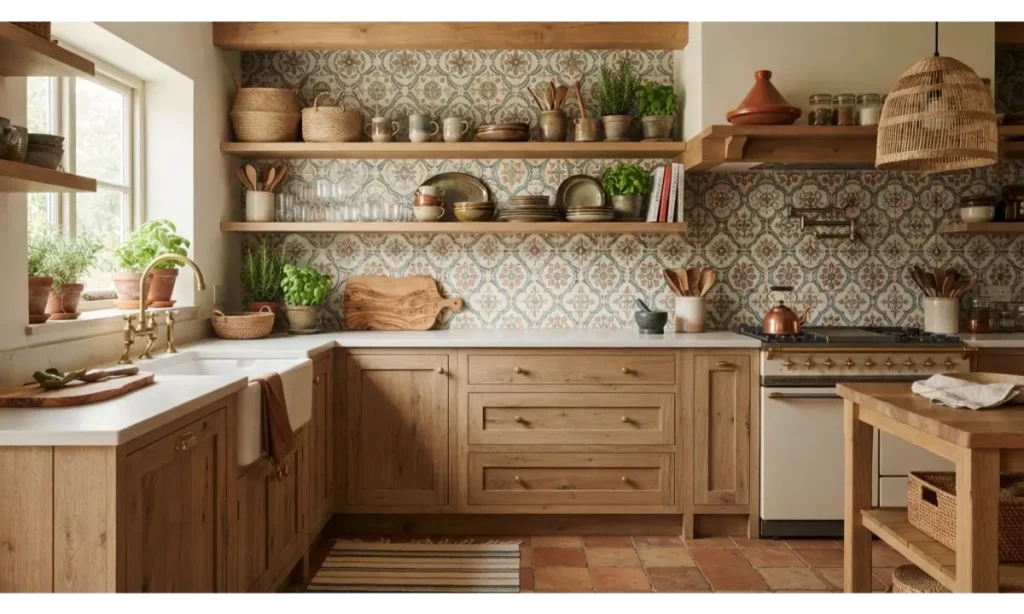
Moroccan inspired tiles can give the kitchen a collected and artistic feeling. Geometric patterns work especially well when they use a limited color palette. Cream combined with muted blue, terracotta, or sage can create visual interest without overwhelming the cabinetry.
Use patterned tile behind the range or sink if you want a smaller statement area. Keep other surfaces simple so the pattern remains the focal point. These patterned backsplash tiles work especially well in Mediterranean, eclectic, bohemian, and globally inspired kitchens.
Pro Tip: Pull one subtle color from the pattern into your kitchen runner, pottery, or artwork.
19. Warm Beige Subway Tile
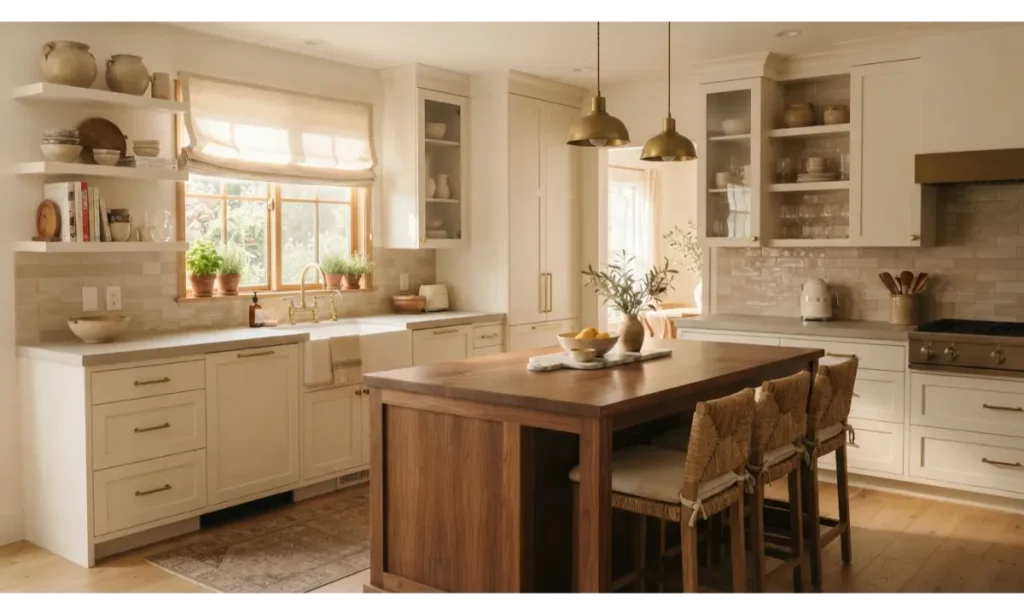
Warm beige subway tile provides the familiar shape of classic subway tile with a softer appearance. It works beautifully with cream cabinets, walnut, oak, bronze, brass, and natural stone. Beige can also make a kitchen feel warmer than a stark white backsplash.
Choose a satin, matte, or lightly glossy surface based on your preferred style. Matching grout can create a subtle wall, while slightly darker grout highlights each tile. This neutral kitchen backsplash provides plenty of flexibility when you want to change accessories later.
Pro Tip: Compare beige tile with your countertop because beige can have pink, yellow, gray, or green undertones.
20. Dramatic Black Stone Slab
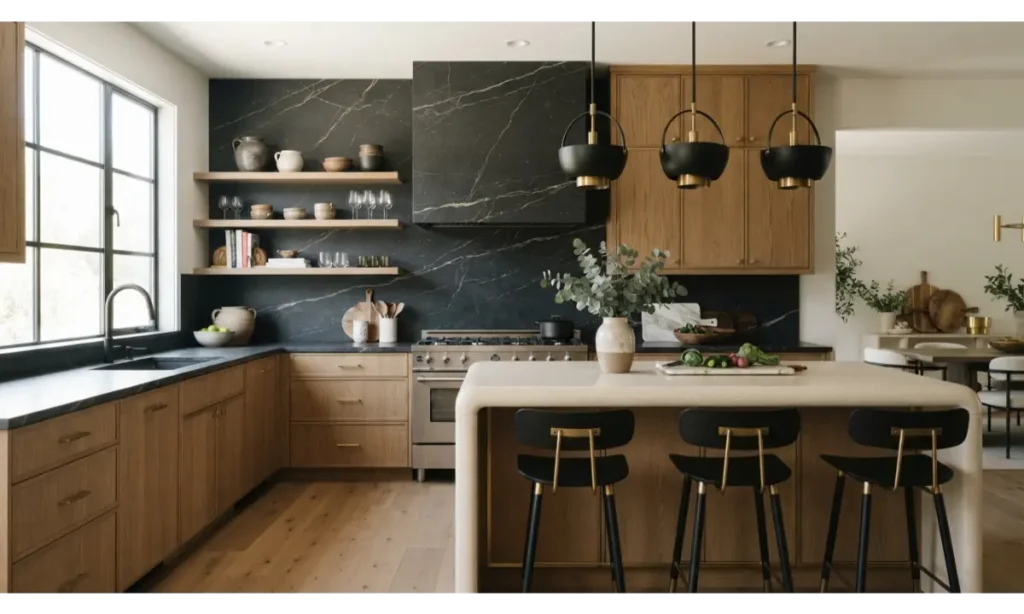
A black stone slab creates powerful contrast and gives the kitchen a sophisticated architectural appearance. Charcoal, graphite, and deep black can look striking against warm wood cabinets and light countertops. A large uninterrupted surface also keeps the design visually clean.
Since the color has a strong presence, avoid adding too many competing patterns. Soft lighting, warm wood, and cream surfaces can prevent the room from feeling too heavy. A black backsplash works especially well in contemporary kitchens that need a bold focal point.
Pro Tip: Install strong under cabinet lighting to highlight the stone and maintain balance.
21. Mixed Materials for a Custom Design
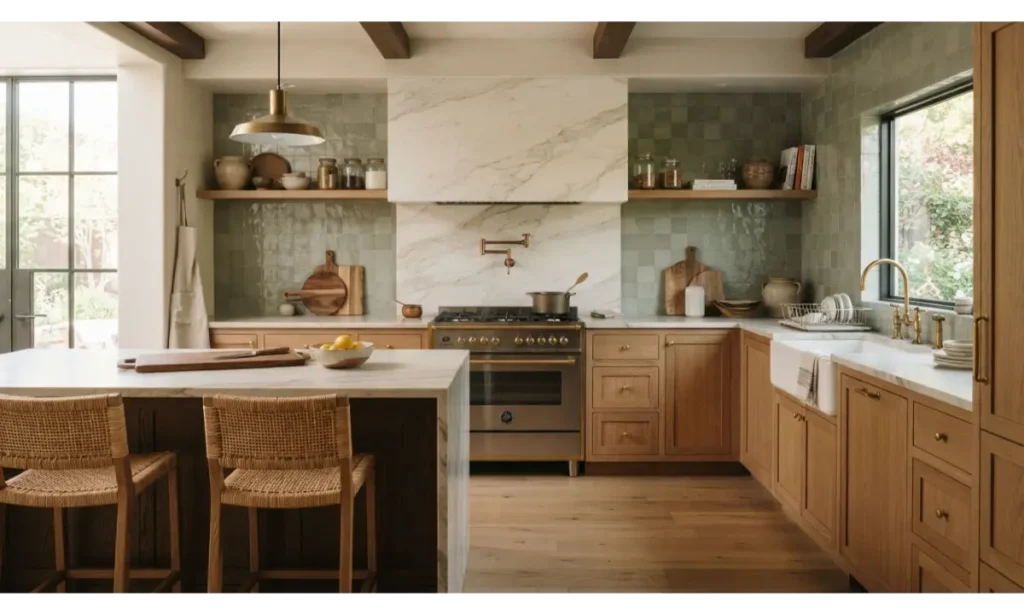
Using two complementary materials can create a customized backsplash without making the entire kitchen look complicated. A marble slab behind the range can create a strong focal point, while handmade ceramic tile can cover the surrounding walls. This approach allows different materials to serve different visual and practical purposes.
The secret is to connect the materials through color, undertone, or texture. A cream marble paired with sage or ivory tile can feel cohesive because the finishes share warm characteristics. A mixed material backsplash works best when one material clearly leads and the other supports it.
Pro Tip: Select the main material first and choose the secondary tile to complement it.
22. Vintage Blue and White Delft Style Tile
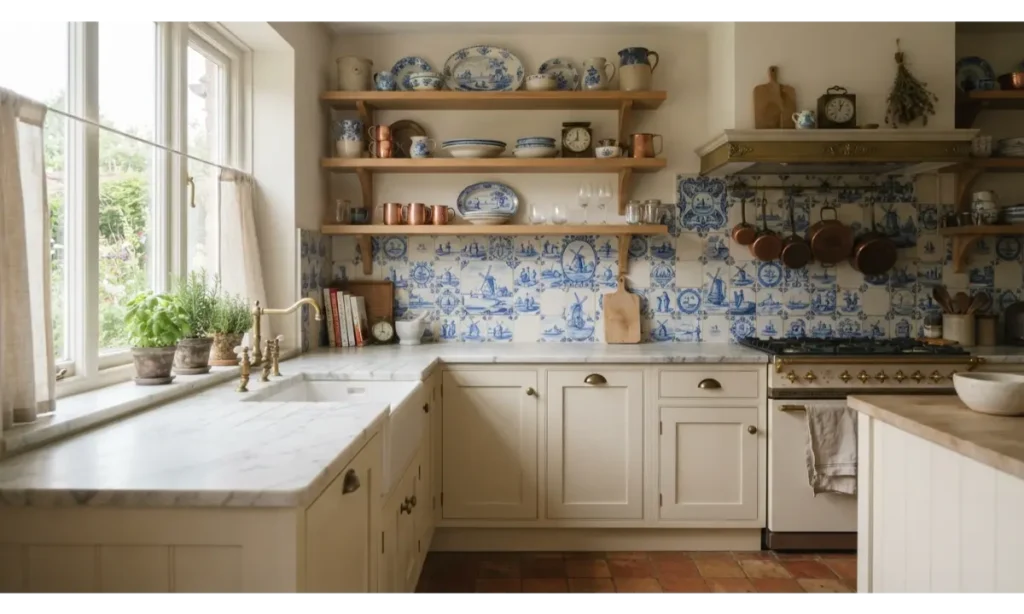
Blue and white vintage inspired tiles can bring timeless character to a kitchen. Botanical illustrations, florals, landscapes, and delicate traditional patterns create a collected appearance that works beautifully with cream cabinets and natural wood.
Use these tiles selectively if you want charm without making the kitchen feel overly traditional. A small section behind the range can become an attractive focal point. Vintage backsplash tile is especially effective when the surrounding finishes remain simple and modern.
Pro Tip: Keep the rest of the color palette restrained so the blue and white artwork remains the star.
23. Ceiling Height Backsplash for a Statement Wall
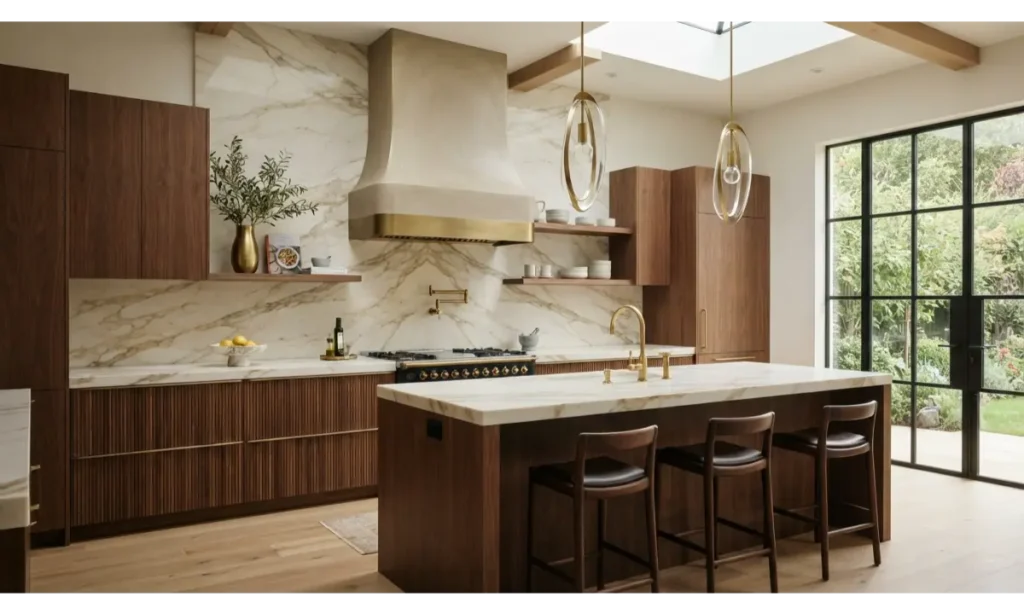
Extending the backsplash from the countertop to the ceiling can make the kitchen feel taller and more finished. This approach works especially well behind a range hood or on a wall without upper cabinets. A continuous material creates a strong architectural statement and makes the entire wall feel intentional.
You do not need a dramatic pattern to make this idea work. Creamy marble, limestone, porcelain, or handmade tile can all look beautiful when taken upward. Among modern backsplash designs, this option creates especially strong impact when the material connects visually with the countertop.
Pro Tip: Use a ceiling height backsplash on one important wall if you want the look without covering the entire kitchen.
How to Choose the Best Backsplash for Your Kitchen
The right backsplash should balance appearance with everyday function. Think about how often you cook, where grease and water tend to splash, and how much cleaning you want to do. Areas behind a stove usually need a practical material that can handle regular wiping, while decorative tile may work better in lower splash areas.
Your cabinets and countertops should also guide the decision. If your countertop has dramatic movement, choose a quieter backsplash. If your cabinets are simple and neutral, you have more freedom to introduce color, pattern, or texture. Always compare samples in natural and artificial light before making your final choice.
How to Match Backsplash, Cabinets, and Countertops
A successful kitchen does not require every finish to match. Instead, the materials should share a visual relationship. Warm white cabinets pair naturally with cream tile, beige stone, brass, and natural wood. Cool gray cabinets can work with white, blue gray, charcoal, or cooler stone finishes.
If your countertop contains several colors, choose one subtle shade from the surface and repeat it in the backsplash. This creates a connection without making everything look identical. You can then introduce contrast through hardware, lighting, stools, rugs, or decorative accessories.
Backsplash Ideas for Small Kitchens
Small kitchens often benefit from lighter colors, simple patterns, reflective finishes, and fewer visual interruptions. White ceramic, pale blue, soft beige, light marble, and glossy surfaces can reflect light and make the room feel more open.
Large format tile can also help because fewer grout lines create a cleaner visual surface. Another useful option is a backsplash that extends higher than expected. Taking the material toward the ceiling can draw the eye upward and make a compact kitchen feel more spacious.
Frequently Asked Questions
What is the most timeless backsplash choice?
White, cream, beige, and natural stone backsplashes usually offer excellent long term flexibility. Simple tile shapes also make it easier to update the kitchen with new hardware, lighting, rugs, and accessories.
What backsplash makes a small kitchen look bigger?
Light colored tile, glossy ceramic, glass, light stone, and large format materials can help a small kitchen feel brighter and more open. Extending the backsplash upward can also create a stronger sense of height.
Should the backsplash match the countertop?
The backsplash does not need to match the countertop exactly. It should coordinate through undertones, colors, textures, or patterns. If the countertop is highly patterned, a simpler backsplash usually creates better balance.
Is a full height backsplash worth it?
A full height backsplash can create a polished architectural appearance and make the kitchen wall feel taller. It works especially well behind a range, beneath an open shelf, or on a wall without upper cabinets.
What backsplash is easiest to maintain?
Porcelain, glass, and glazed ceramic are practical options because they generally provide smooth surfaces that are easy to wipe. Larger tiles can also reduce the amount of grout that needs regular cleaning.
What color backsplash works best with white cabinets?
White cabinets pair well with almost any backsplash color. Warm beige, sage green, soft blue, marble, natural stone, black, and classic white can all work depending on the atmosphere you want.
Should backsplash tile go behind the stove?
Yes, the area behind the stove is often an excellent place for a backsplash because it protects the wall from cooking splashes. It can also become a natural focal point in the kitchen.
How high should a kitchen backsplash be?
A traditional backsplash often extends from the countertop to the bottom of the upper cabinets. However, you can extend it higher or all the way to the ceiling when you want a stronger architectural effect.
Can you mix two backsplash materials?
Yes. Combining materials can create a custom look when the colors and undertones relate to each other. A statement stone behind the range paired with simple ceramic tile on surrounding walls is one effective approach.
Are patterned backsplashes still a good choice?
Patterned backsplashes can work beautifully when the rest of the kitchen remains relatively simple. Choose a pattern that complements the cabinet and countertop colors rather than competing with them.
Conclusion
The best backsplash does more than cover the wall. It adds personality, protects your kitchen, supports the overall color palette, and can completely change the atmosphere of the space. From timeless white tile and warm beige to handmade zellige, sage green, marble, terracotta, patterned tile, and dramatic stone, there is an option for almost every design style and budget.
When choosing between these Kitchen Backsplash Ideas, focus on the way your kitchen actually works. Consider cooking habits, cleaning needs, natural light, cabinet color, countertop patterns, and the mood you want to create. A beautiful backsplash should not only look impressive in photographs. It should also feel practical, cohesive, and enjoyable every day.