20 Gorgeous Vintage Kitchen Design Ideas for a Timeless Look
A well designed vintage kitchen brings warmth, personality, and a sense of history into the heart of your home. Unlike fast changing trends, vintage inspired spaces focus on details that continue to feel beautiful over time. From weathered wood and antique brass to retro colors and classic tile, every element can help create a kitchen with a story.
The best Vintage Kitchen Design Ideas mix nostalgic charm with modern comfort. You do not need to copy one specific decade or fill the room with antiques. Instead, combine timeless materials, meaningful details, and practical features that suit everyday life. These fresh ideas will help you create a kitchen that feels collected, inviting, and effortlessly stylish.
Timeless Vintage Kitchen Design Ideas to Inspire Your Space
1. Vintage Kitchen Design Ideas with Cream Cabinets
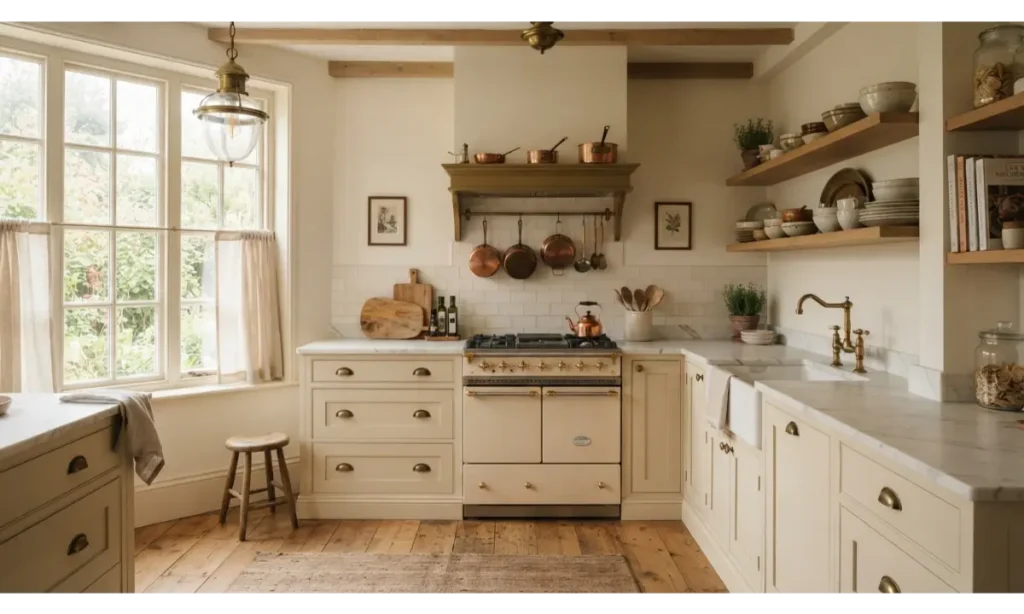
Among the most timeless Vintage Kitchen Design Ideas, cream cabinets create a warm and welcoming foundation. Their soft color feels gentler than bright white and works beautifully with natural materials. Add framed cabinet doors, crown molding, and aged brass handles to strengthen the traditional character. Cream cabinetry also reflects natural light, helping the kitchen feel open while maintaining the cozy charm associated with older homes.
Pair cream cabinets with marble countertops, wooden accessories, and handmade ceramics for a layered appearance. The combination feels elegant without becoming overly formal. You can introduce personality through lighting and textiles while keeping the cabinetry timeless. This approach works especially well for homeowners who want a classic kitchen design that can adapt to changing decor while still maintaining a strong sense of character.
Pro Tip: Choose a warm ivory or buttery cream instead of stark white for a softer and more authentic vintage appearance.
2. Retro Checkerboard Kitchen Floor
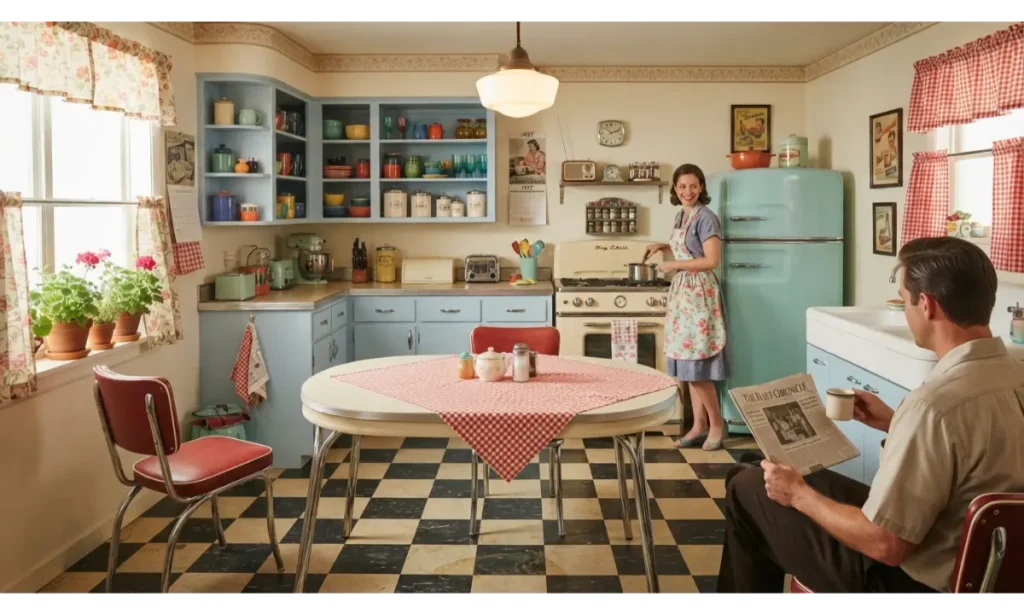
A checkerboard floor instantly brings movement and personality into a kitchen. Black and white remains a classic choice, but softer combinations such as cream and sage green can create a fresher look. Large square tiles feel clean and timeless, while slightly textured surfaces add character. This bold flooring choice can transform even a simple kitchen into a space with strong nostalgic appeal.
Keep the cabinetry and walls relatively simple so the floor becomes the main visual feature. Light painted cabinets, natural wood, and understated lighting create balance around the pattern. Checkerboard flooring works well in both small and large kitchens because it draws the eye across the room. It remains one of the most recognizable retro kitchen ideas for creating cheerful vintage charm.
Pro Tip: Choose matte finish tiles to create a softer appearance and reduce the overly polished look of modern flooring.
Read More: 23 Brilliant Galley Kitchen Ideas to Maximize Space & Style
3. Antique Wooden Kitchen Island
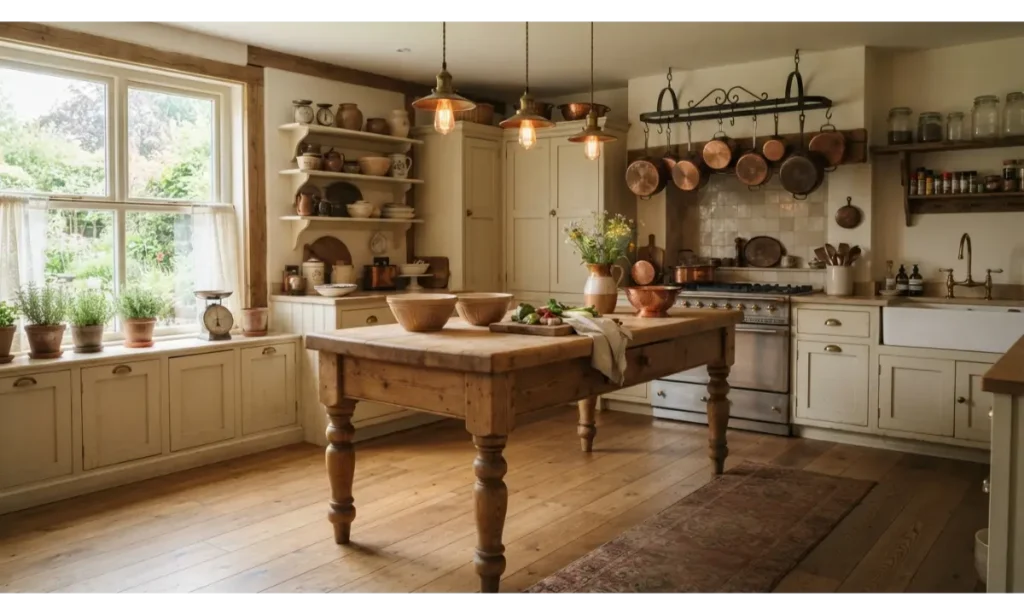
An antique wooden island can give a kitchen instant history and warmth. Instead of choosing a perfectly matched built in island, use reclaimed wood or a furniture style piece with visible grain. Turned legs, carved details, and gentle imperfections make the island feel collected over time. This furniture inspired approach adds character while creating a strong central gathering point for cooking and conversation.
Make the island practical by adding drawers, baskets, or open storage underneath. A butcher block surface provides a useful workspace and strengthens the natural look. Pair the aged wood with cleaner surrounding finishes to create contrast. This idea suits a farmhouse kitchen or traditional space where warmth matters. The goal is to create a centerpiece that feels useful, personal, and beautifully imperfect.
Pro Tip: Seal reclaimed wood carefully before using it near food preparation areas to protect the surface from moisture.
4. Open Shelves with Vintage Dishware
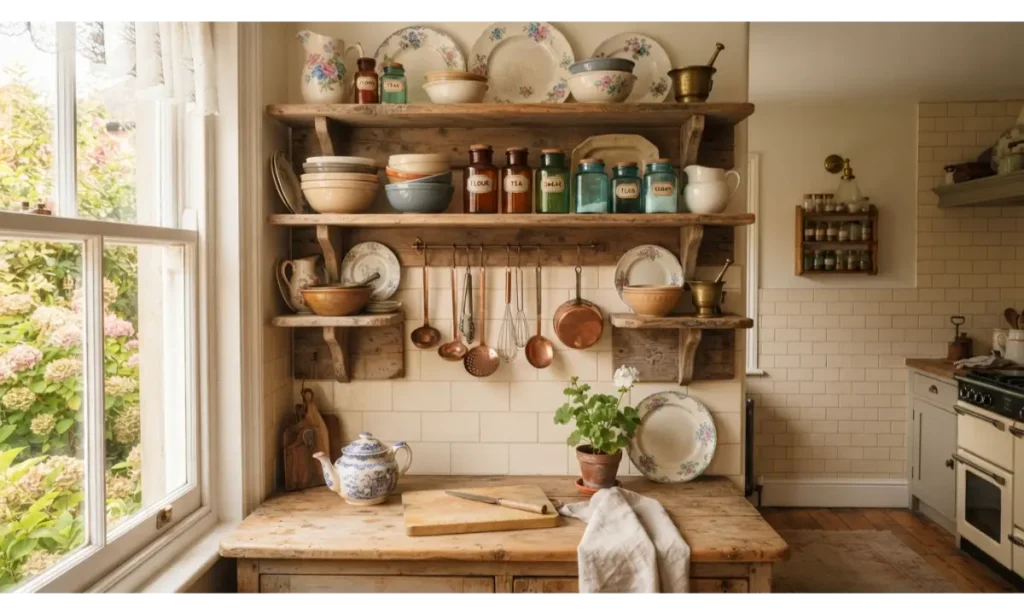
Open shelving allows everyday kitchen items to become part of the decoration. Display antique plates, handmade bowls, colored glassware, and ceramic pitchers that reflect your personal style. Choose pieces with related colors so the shelves feel curated rather than crowded. Natural wood shelves add warmth and create a beautiful contrast against painted walls or classic tile backsplashes.
Mix useful items with a few decorative objects for a relaxed and collected appearance. Stack dishes, place glass jars beside cookbooks, and add a small vase with fresh herbs. This styling method brings personality into the room without requiring major renovation. It also creates the layered feeling often seen in beautiful vintage home decor, where meaningful objects contribute to the overall atmosphere.
Pro Tip: Keep frequently used items on lower shelves and reserve higher shelves for decorative pieces.
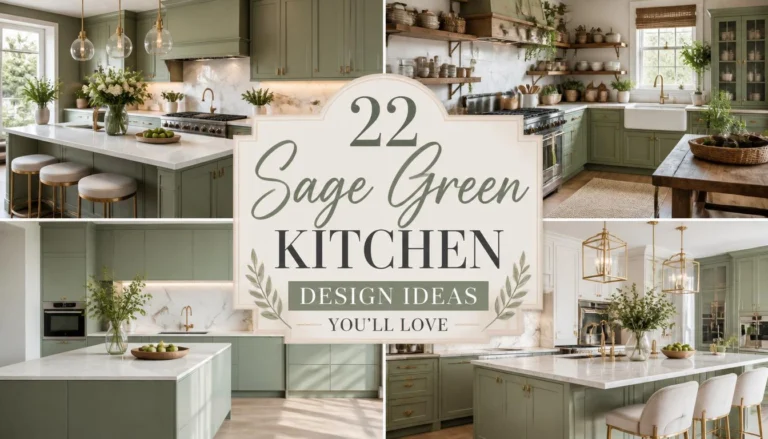
5. Sage Green Vintage Cabinets
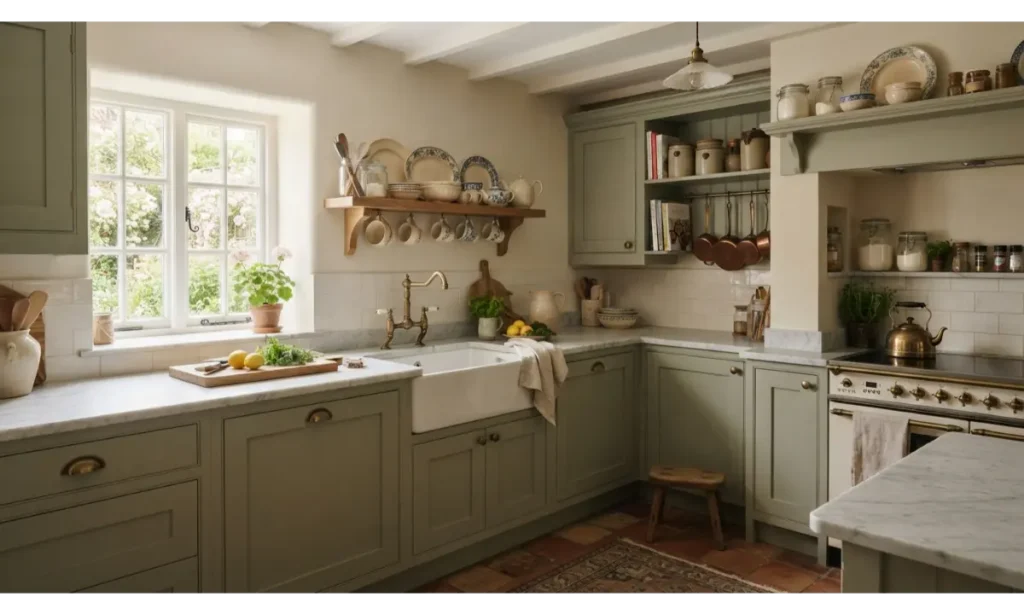
Sage green cabinets offer a calm way to introduce color into a vintage inspired kitchen. The muted tone pairs naturally with brass, wood, marble, and handmade ceramics. Choose a dusty or gray based shade instead of bright green for a more timeless result. Traditional cabinet profiles and antique style handles can make the color feel connected to historic interiors while still looking fresh.
Extend the palette through small details such as linen curtains, botanical artwork, and pottery. Cream walls provide softness, while dark wood adds useful contrast. Sage green works beautifully in kitchens with cottage, farmhouse, or English country influences. Its versatility makes it easy to update surrounding decor later. The color creates personality without making the kitchen feel overly themed or visually heavy.
Pro Tip: Test several sage samples on your cabinets because natural and artificial light can change how green tones appear.
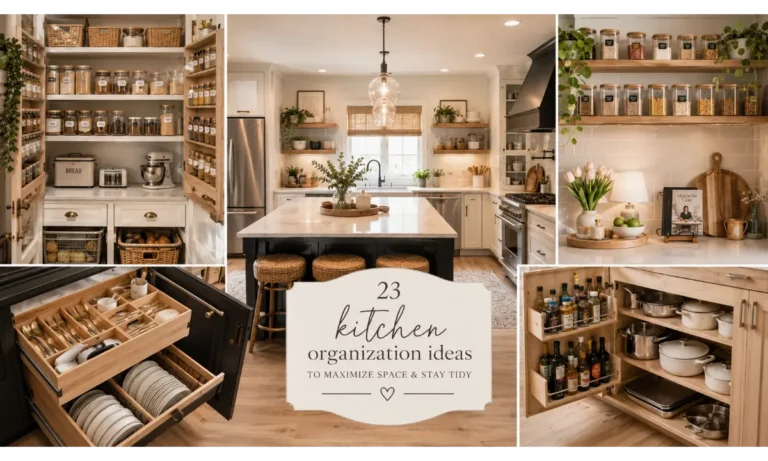
Read More: 23 Genius Kitchen Organization Ideas to Stay Tidy
6. Antique Brass Pendant Lighting
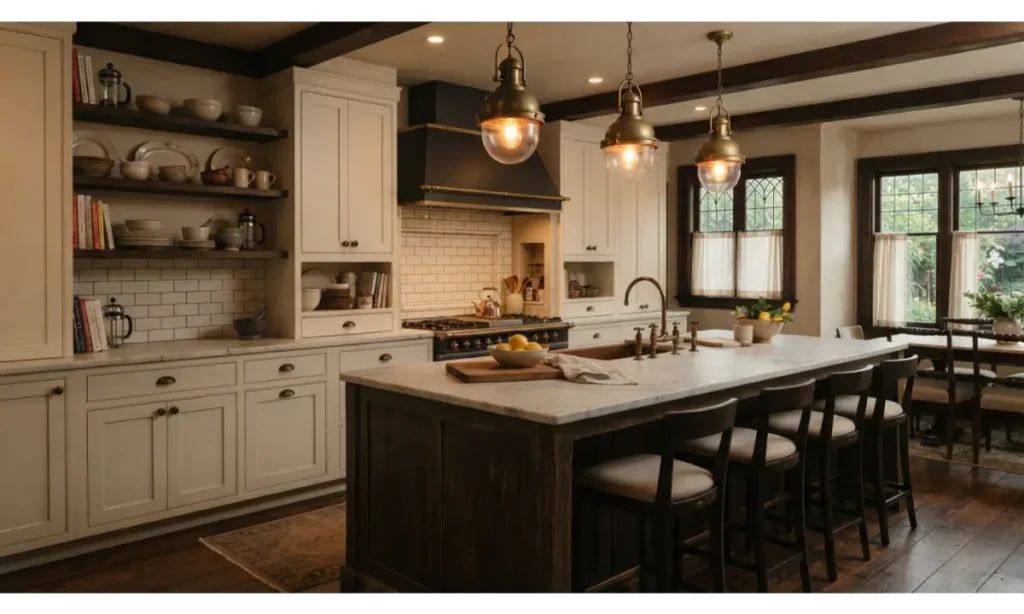
Lighting can shape the mood of a kitchen just as strongly as cabinets or flooring. Antique brass pendants, schoolhouse fixtures, and fluted glass shades all bring old fashioned character into the space. Look for warm finishes with subtle patina rather than highly polished metal. These details create depth and make the lighting feel naturally connected to the overall vintage kitchen decor.
Hang pendant lights above an island or dining table where they can serve as a beautiful focal point. Their warm glow creates a welcoming atmosphere during evening hours and highlights surrounding textures. Pair brass with cream cabinetry, marble, or natural wood for a classic combination. A carefully chosen fixture can make even a modern kitchen feel more established and full of personality.
Pro Tip: Use warm white bulbs around 2700K to create a cozy glow that complements brass and natural wood.
7. Colorful Retro Kitchen Appliances
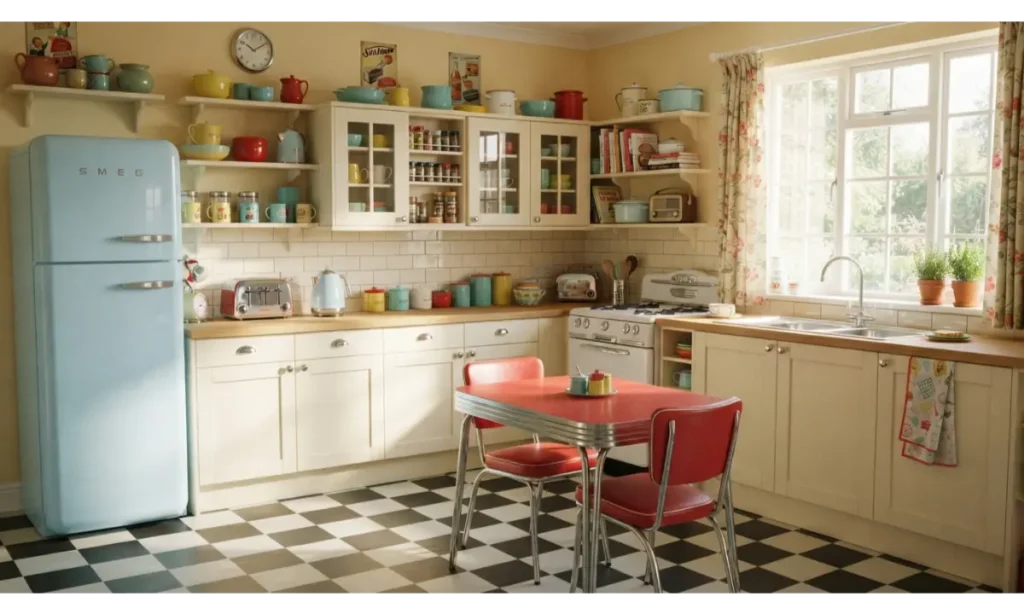
Colorful appliances provide a playful way to bring retro character into the kitchen. A pastel refrigerator, vintage style range, or colorful mixer can become the main statement piece. Soft blue, mint green, butter yellow, and muted red all work well when surrounded by neutral surfaces. Choose one major appliance color so the room feels intentional rather than overly busy.
Support the colorful feature with simple cabinetry, classic tile, and natural materials. Chrome details can strengthen the retro feeling without overwhelming the design. Modern appliances inspired by older shapes offer the convenience of current technology while maintaining nostalgic style. This makes them ideal for homeowners who love a cheerful 1950s kitchen but still need efficient performance for everyday cooking.
Pro Tip: Repeat the appliance color in only two or three smaller accessories to create a balanced and cohesive look.
8. Classic White Subway Tile Backsplash
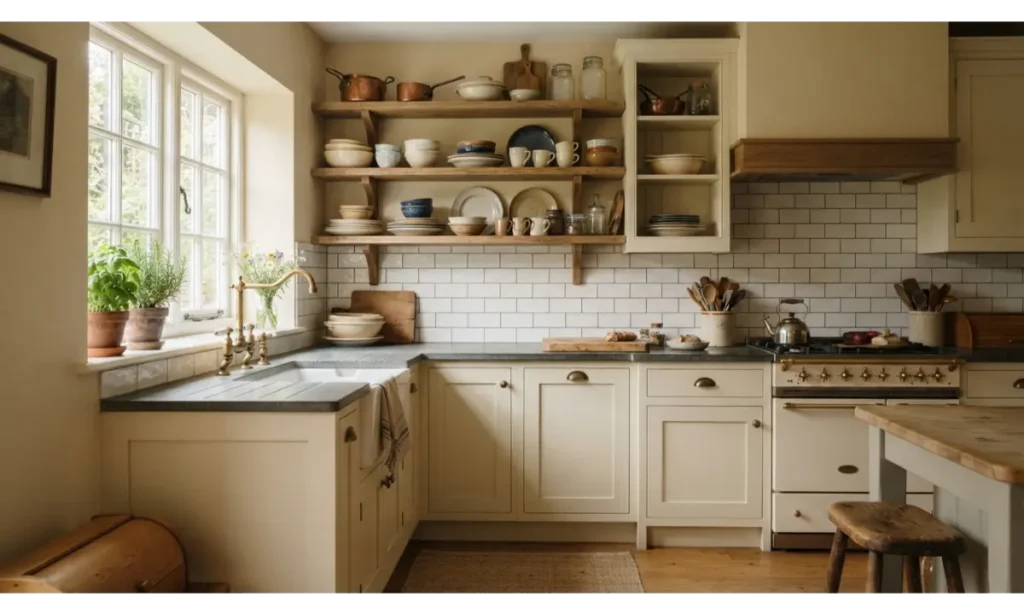
White subway tile remains popular because it feels clean, practical, and connected to historic interiors. For a stronger vintage appearance, choose handmade looking tiles with slight variation instead of perfectly uniform surfaces. Darker grout lines can highlight the classic brick pattern and add definition. This simple backsplash works beautifully behind colorful cabinets, antique fixtures, and open wooden shelving.
The flexibility of subway tile makes it especially useful for a timeless kitchen design. You can change hardware, wall colors, or accessories without replacing the backsplash. Pair it with brass fixtures for warmth or dark wood for contrast. The result can feel traditional, farmhouse inspired, or slightly retro depending on the surrounding details, making this feature easy to personalize.
Pro Tip: Choose a warm white tile rather than bright pure white to create a softer and more traditional atmosphere.
9. Hanging Copper Pot Display
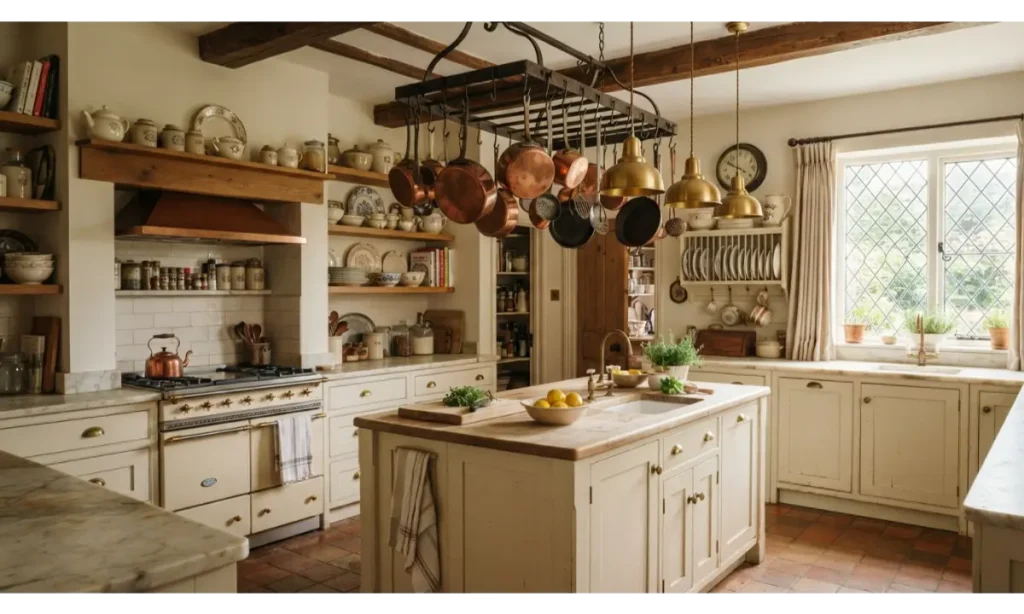
Copper cookware can serve as both a useful kitchen tool and a beautiful decorative feature. Hang pots from a ceiling rack or wall rail where their warm metallic color becomes part of the room. The combination of polished and naturally aged copper creates visual depth. This material pairs especially well with wood, stone, marble, and warm painted cabinetry.
Place the display close to the cooking area so it remains practical. Avoid filling the rack with too many pieces because breathing room helps each pot stand out. Copper adds richness to French country kitchens and rustic interiors without requiring excessive decoration. Over time, the changing surface develops more personality, making the kitchen feel lived in rather than perfectly staged.
Pro Tip: Allow some copper pieces to develop natural patina instead of polishing every item to a bright shine.
10. Floral Wallpaper Accent Wall
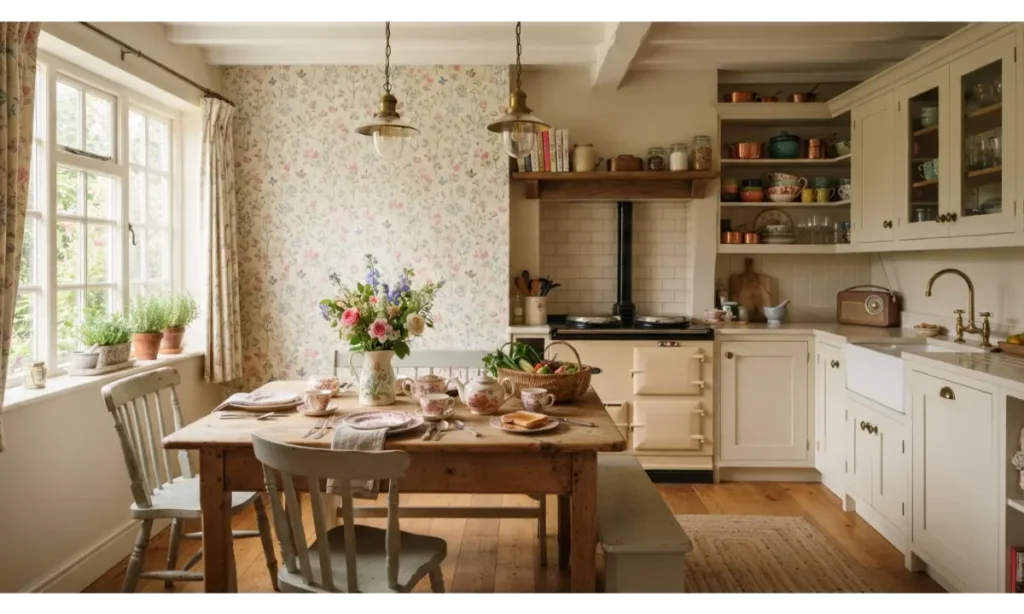
Floral wallpaper introduces softness into a kitchen filled with hard surfaces such as stone, tile, and cabinetry. Choose small scale botanical patterns or faded floral prints for a more timeless effect. Colors such as dusty blue, muted pink, sage, and cream work beautifully with traditional materials. Use wallpaper on one feature wall to add personality without making the room feel visually crowded.
Balance the pattern with simple cabinets and neutral countertops. Repeat one subtle color from the wallpaper through curtains, dishware, or a table runner to create harmony. Floral designs work particularly well in cottage kitchens where comfort and charm matter. This detail can make the room feel more personal while adding the gentle decorative quality associated with traditional kitchen decor.
Pro Tip: Choose washable wallpaper made for kitchens so humidity and everyday splashes do not damage the surface.
11. Vintage Farmhouse Sink
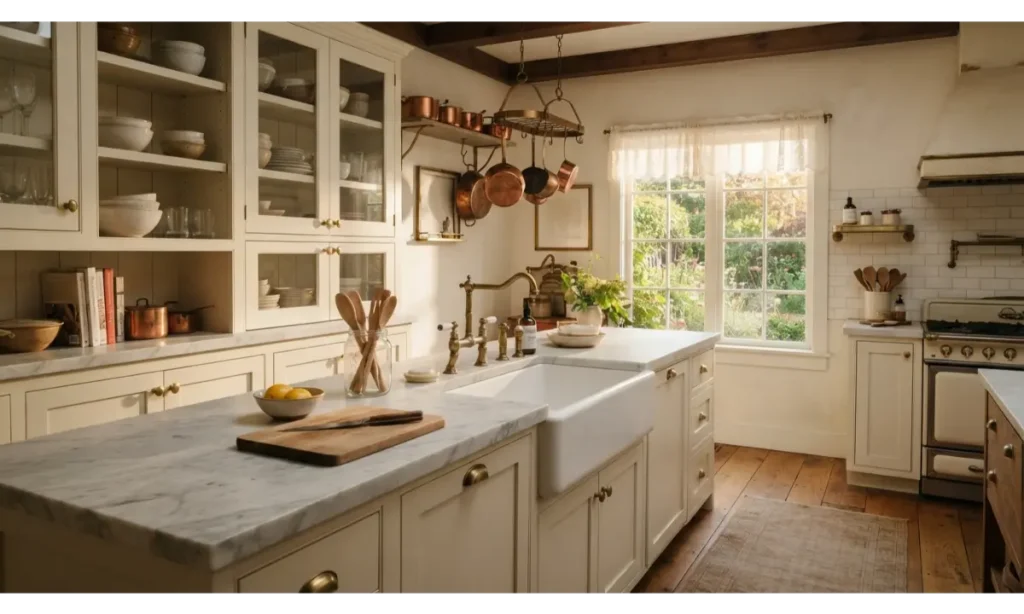
A farmhouse sink combines strong visual appeal with everyday practicality. Its deep basin provides plenty of room for washing large pots and dishes, while the exposed front creates a beautiful focal point. White fireclay offers a classic appearance, but copper and natural stone can also introduce unique character. Pair the sink with a bridge faucet to strengthen the traditional feeling.
Surround the sink with materials that complement its shape and texture. Marble, soapstone, and warm wood all create attractive combinations. This feature fits naturally into a farmhouse vintage kitchen because it looks useful rather than purely decorative. A well chosen sink can anchor the room and connect modern cooking needs with details inspired by older homes.
Pro Tip: Check cabinet measurements before buying because apron front sinks often require a specially designed base cabinet.
12. Dark Wood Cabinets with Glass Doors
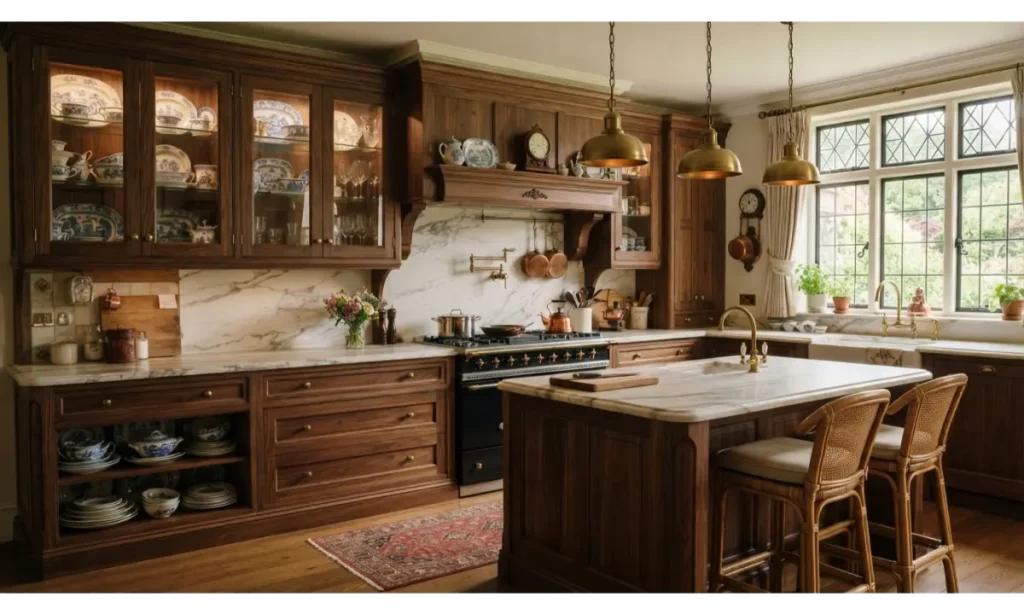
Dark wood cabinets create a rich and sophisticated version of the vintage kitchen aesthetic. Walnut, oak, and stained wood with visible grain feel warmer than flat modern surfaces. Glass front doors help lighten the appearance while offering a place to display beautiful dishware. The combination of wood and glass creates depth and brings a furniture like quality into the room.
Balance darker cabinetry with light countertops and walls so the kitchen remains bright. Brass hardware adds warmth, while glassware behind cabinet doors introduces subtle reflection. This style works particularly well in larger spaces where dark finishes have room to breathe. The result feels traditional and elegant while still offering plenty of opportunities for modern appliances and practical storage.
Pro Tip: Add subtle interior lighting inside glass cabinets to highlight your dishware and create warmth during the evening.
13. Cozy Vintage Breakfast Nook
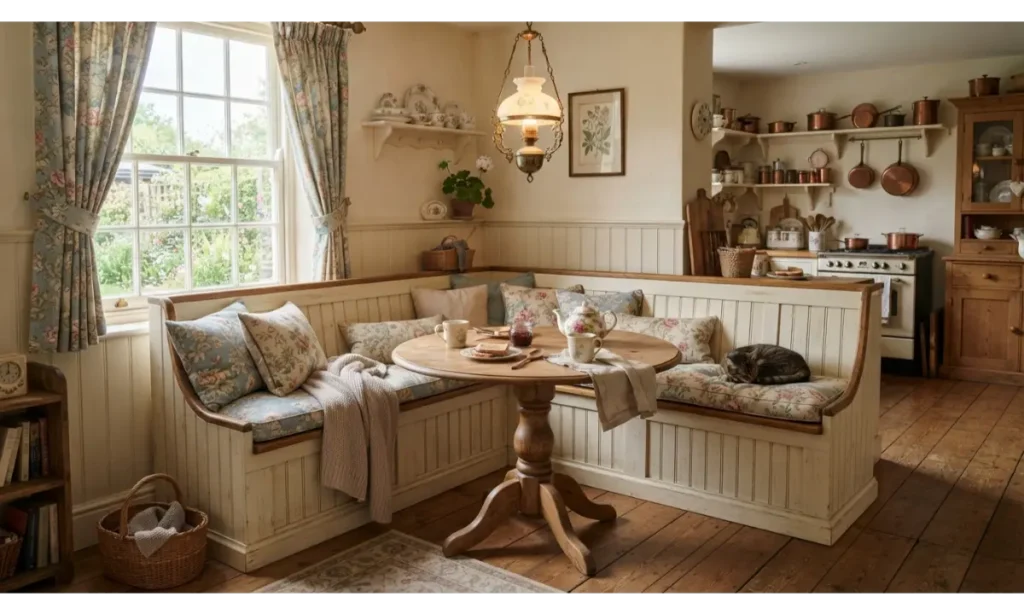
A breakfast nook creates a comfortable corner where the kitchen can become a place for conversation and slow mornings. Built in benches feel especially charming when painted in a muted heritage color or finished with warm wood. Add patterned cushions, a round table, and a vintage pendant light to define the area and make it feel separate from the cooking zone.
Choose subtle floral, gingham, or striped fabrics to strengthen the nostalgic atmosphere. A few framed botanical prints can add personality without taking up useful space. This feature works well in homes where the kitchen serves as a gathering place throughout the day. The mix of furniture and architecture creates a welcoming environment that feels more relaxed than a standard dining setup.
Pro Tip: Add hidden drawers beneath built in bench seating to gain extra storage without changing the cozy appearance.
14. Gingham Curtains and Natural Textiles
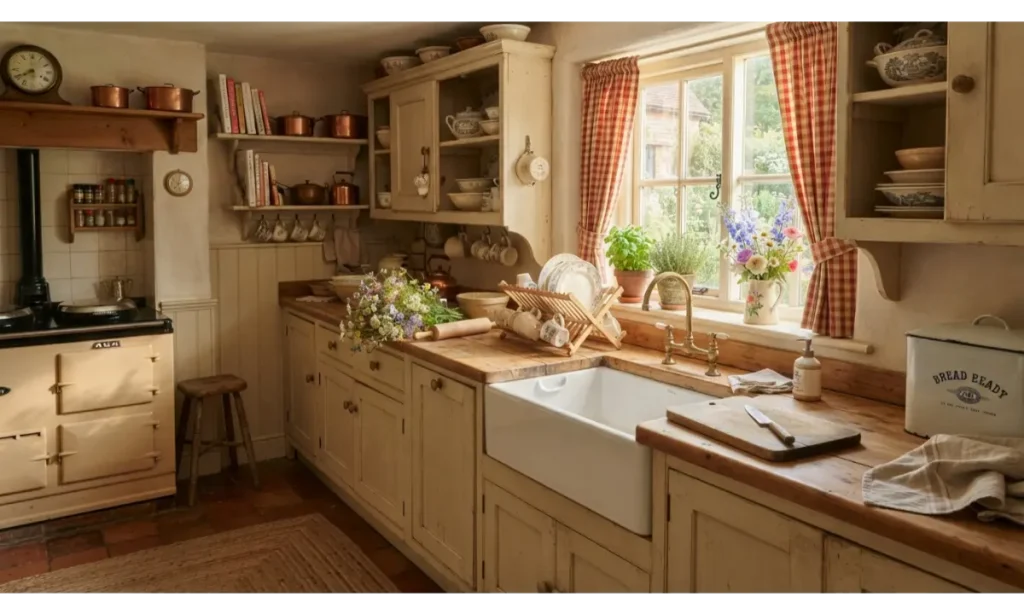
Soft textiles can make a kitchen feel warmer and more personal. Gingham curtains offer a familiar pattern that suits farmhouse and cottage inspired interiors. Choose red, blue, green, or neutral tones depending on your color scheme. Natural fabrics such as cotton and linen work especially well because their relaxed texture complements wood, ceramic, and aged metal finishes.
Repeat the pattern carefully through a cushion or table runner instead of using it everywhere. This keeps the room balanced while allowing the textile to feel like a thoughtful accent. Fabric details also soften kitchens filled with stone and tile. They offer an affordable way to experiment with vintage decorating ideas without making permanent changes to the room.
Pro Tip: Choose machine washable fabrics because kitchen curtains and textiles need frequent cleaning.
15. Reclaimed Wood Ceiling Beams
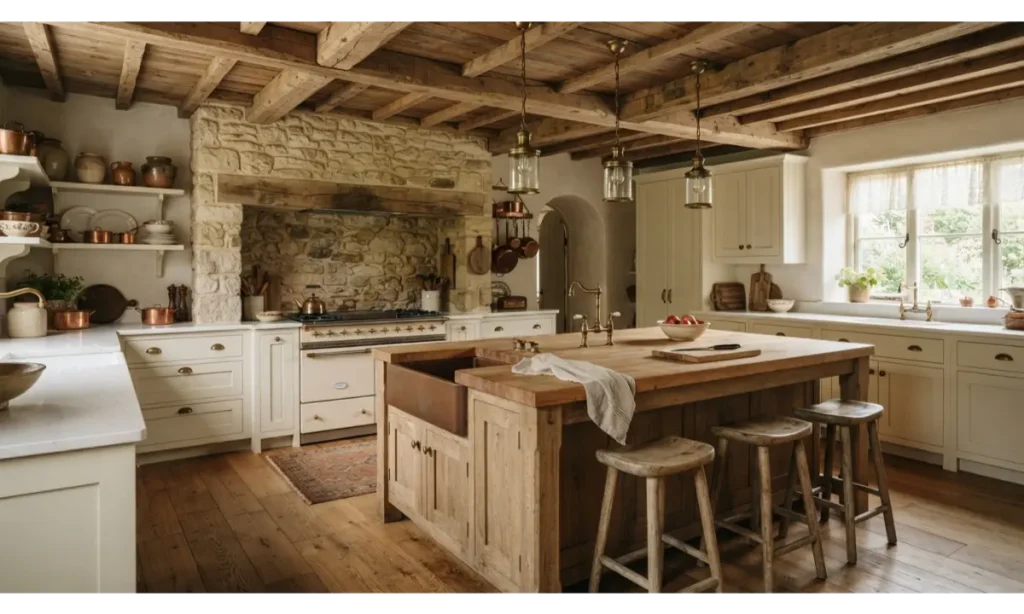
Exposed wood beams can add instant architectural character to a kitchen. Reclaimed timber with knots, visible grain, and natural variation creates a sense of age that newer materials often lack. Beams work especially well in rooms with higher ceilings because they visually connect the upper space with the furniture and cabinetry below.
Keep surrounding surfaces simple so the wood remains a meaningful feature. Cream walls, natural stone, and understated lighting allow the beams to stand out without creating visual clutter. Decorative box beams can offer a similar effect when structural timber is not possible. This idea adds depth to a rustic kitchen design while keeping the overall atmosphere warm and welcoming.
Pro Tip: Match the undertones of ceiling beams with other wooden elements to create a more connected overall design.
16. Marble Countertops with Natural Patina
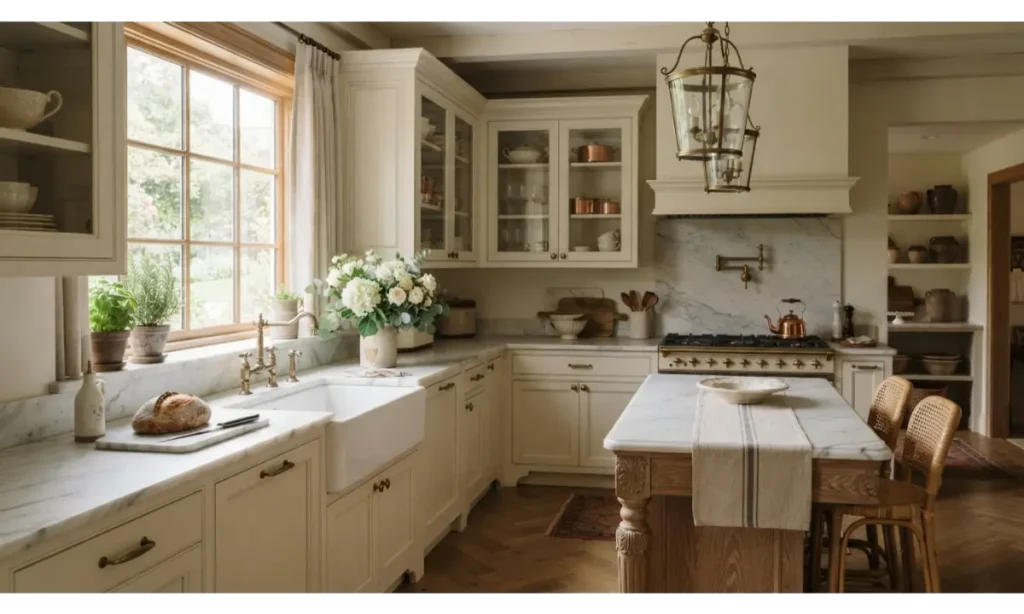
Marble has remained a popular material for generations because its natural veining creates movement and visual depth. In a vintage kitchen, small marks and gentle changes can become part of its character. Instead of expecting a flawless surface forever, embrace the subtle patina that develops through everyday use. This approach gives the kitchen an authentic and lived in feeling.
Pair marble with painted cabinets, antique brass, or rich wood for a classic combination. Wooden boards can protect areas used frequently for food preparation. Marble works beautifully in elegant French interiors, traditional homes, and relaxed country kitchens. Its ability to age gracefully makes it a strong choice for anyone who wants a surface with lasting beauty and personality.
Pro Tip: Seal marble regularly and wipe acidic spills quickly to reduce visible etching and staining.
17. Antique Kitchen Wall Art
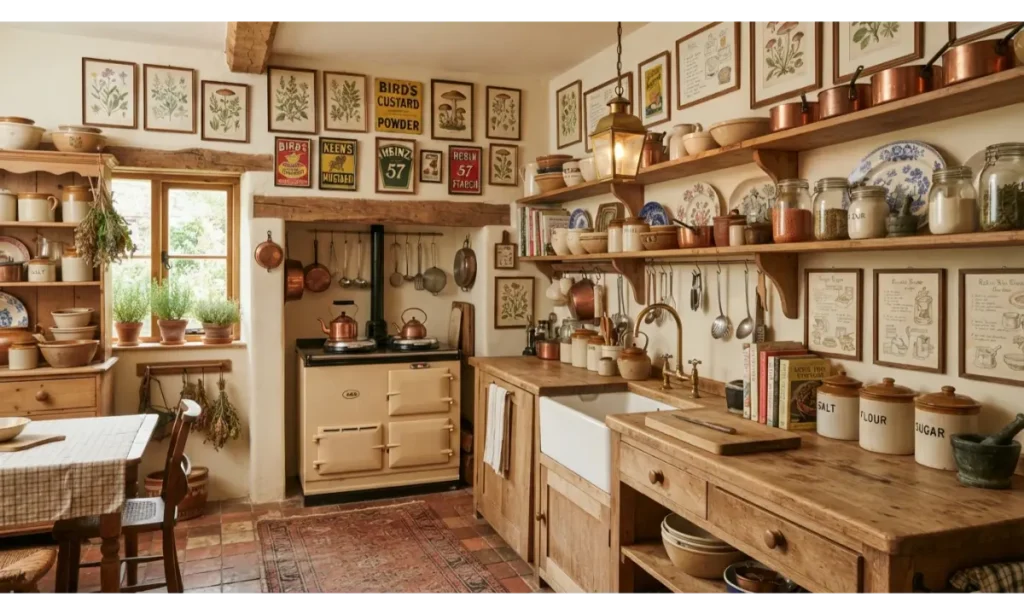
Wall art can make a kitchen feel collected instead of looking like a showroom. Botanical illustrations, old food advertisements, vintage recipe prints, and framed handwritten documents all connect naturally with the room’s purpose. Look for artwork with warm, faded colors and aged frames. These small details can introduce history even when the kitchen itself has recently been renovated.
Create a small arrangement rather than covering every available wall. Mixing frame sizes adds interest, while a shared color palette keeps the display cohesive. Art works beautifully above a breakfast nook or beside open shelving. It helps turn the kitchen into a complete living space and gives guests something interesting to notice beyond cabinets and appliances.
Pro Tip: Place valuable artwork away from direct heat, steam, and heavy cooking areas to protect the frames and prints.
18. Retro Dining Table with Chrome Chairs
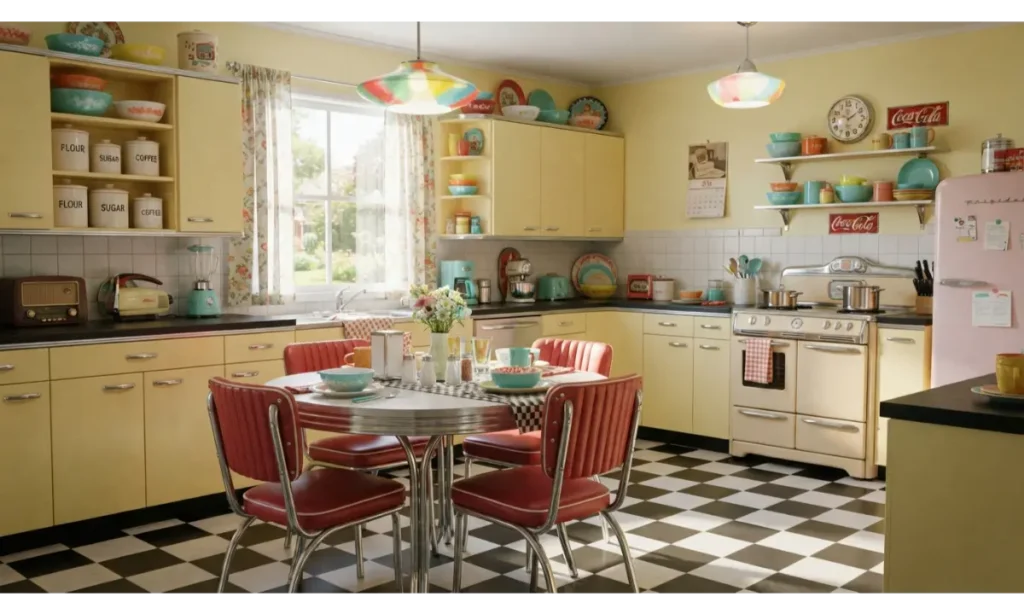
A retro dining set can bring playful midcentury energy into the kitchen without requiring a complete renovation. Chrome chairs, curved forms, and colorful upholstery create an immediate nostalgic effect. A round table works particularly well in smaller spaces because it improves movement and encourages conversation. Choose colors that complement your cabinetry rather than competing with the rest of the room.
Allow the dining furniture to become the main statement by keeping nearby surfaces relatively simple. Neutral walls and classic flooring provide balance around stronger colors and shiny chrome. This approach suits homeowners who enjoy cheerful retro kitchen design but do not want every detail to follow one specific decade. A few carefully chosen pieces can create more impact than excessive themed decoration.
Pro Tip: Add felt pads beneath chair legs to protect flooring and reduce noise when chairs move.
19. Pastel Blue Vintage Kitchen Accents
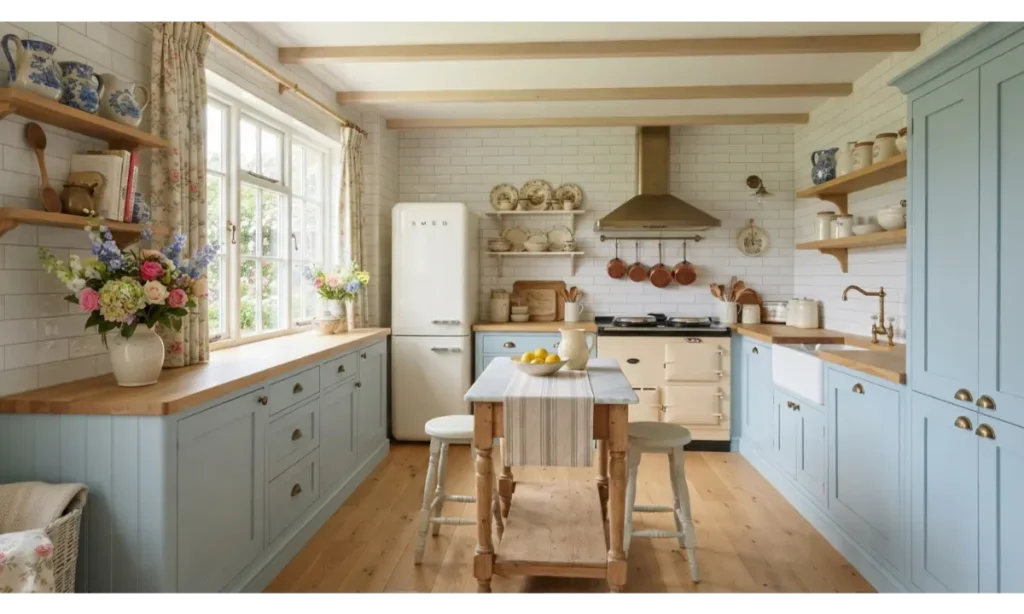
Pastel blue brings a calm and cheerful quality to a kitchen while creating a subtle connection to retro interiors. Introduce it through lower cabinets, dishware, a pantry door, or one statement appliance. Pair the shade with warm cream and natural wood so the overall design remains inviting. Dusty blues usually feel more timeless than bright and heavily saturated tones.
Continue the palette through small accents such as glass bottles, ceramic pitchers, or patterned textiles. Brass hardware creates warmth against cool blue surfaces, while marble adds elegant contrast. This gentle color can work across several Vintage Kitchen Design Ideas because it remains flexible and easy to combine with other classic finishes. It adds personality without dominating the entire room.
Pro Tip: Use pastel blue mainly as an accent when your kitchen receives limited natural light to keep the room feeling warm.
20. Modern Convenience with Vintage Character
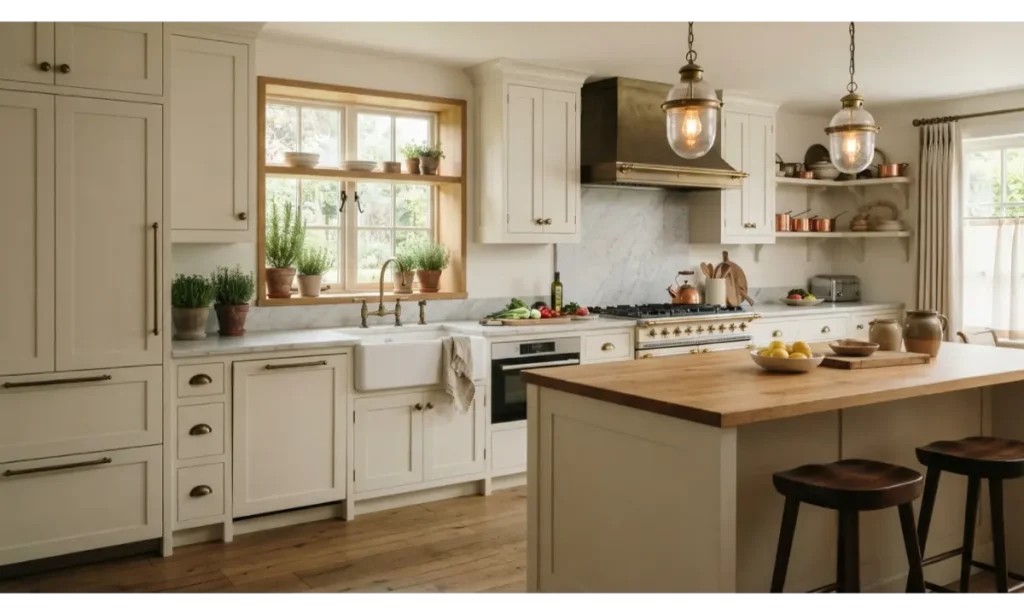
The most successful vintage kitchens combine nostalgic details with the comfort of modern living. You can hide contemporary appliances behind cabinet panels while allowing character rich features to remain visible. Antique hardware, traditional lighting, natural stone, and furniture style pieces provide charm. Smart storage and efficient appliances ensure that the kitchen remains practical for busy everyday routines.
Avoid forcing every element into one historical period. A farmhouse sink can sit beside a modern oven, while an antique table can work with updated lighting controls. This balance creates a collected appearance that feels personal rather than staged. The strongest Vintage Kitchen Design Ideas celebrate the past while making space for modern needs, comfort, and long term functionality.
Pro Tip: Invest in timeless permanent materials first, then use smaller accessories to experiment with stronger vintage styles.
How to Make a Vintage Kitchen Feel Timeless
A beautiful vintage kitchen design should feel layered rather than overly decorated. Start with lasting materials such as natural wood, ceramic tile, marble, stone, and quality metal finishes. These elements create a strong foundation and tend to develop more character over time. Then introduce smaller details through lighting, textiles, hardware, artwork, and meaningful objects that reflect your personality.
Color also plays an important role in creating a timeless space. Muted greens, warm creams, dusty blues, soft yellows, and natural wood tones usually age better than overly trendy colors. Choose one or two statement features and allow the remaining surfaces to stay calm. This approach creates visual balance and prevents the kitchen from feeling overly themed.
FAQs About Vintage Kitchen Design Ideas
What colors are best for a vintage kitchen?
Sage green, cream, dusty blue, butter yellow, muted red, and warm wood tones work beautifully in vintage inspired kitchens. These colors pair naturally with materials such as brass, marble, ceramic, and natural stone. Choose muted shades for a more timeless appearance.
How can I make my kitchen look vintage on a budget?
Start with smaller details such as vintage cabinet hardware, glass knobs, secondhand artwork, open shelving, and traditional textiles. Changing lighting fixtures can also create a major visual impact. Focus on materials and accessories with character instead of replacing every cabinet or appliance.
Are vintage kitchens still popular?
Yes, vintage kitchen decor remains popular because homeowners want spaces with warmth, personality, and lasting character. Current designs often mix nostalgic features with modern appliances. This balance allows the kitchen to feel stylish without losing everyday functionality.
What flooring works best in a vintage kitchen?
Checkerboard tile, natural wood, patterned ceramic tile, and stone flooring all work well. Choose flooring based on your preferred style. Checkerboard patterns suit retro spaces, while wood and stone create a warmer farmhouse or old world appearance.
How do I prevent a vintage kitchen from looking outdated?
Balance older details with clean surfaces and modern practical features. Avoid adding too many themed accessories from one era. Instead, choose timeless materials, quality lighting, and a limited color palette. This creates a space that feels inspired by history rather than trapped in the past.
Conclusion
Creating a beautiful vintage kitchen is about combining character with comfort. Cream cabinets, checkerboard floors, antique brass lighting, reclaimed wood, farmhouse sinks, and retro accents can each bring a different layer of personality into the room. You do not need to recreate a specific decade to achieve an authentic and welcoming result.
The best Vintage Kitchen Design Ideas focus on materials that age beautifully and details that feel meaningful. Mix classic finishes with modern convenience, choose colors that create warmth, and allow a few imperfections to add character. When thoughtfully combined, vintage elements can create a kitchen that feels nostalgic, functional, personal, and truly timeless.