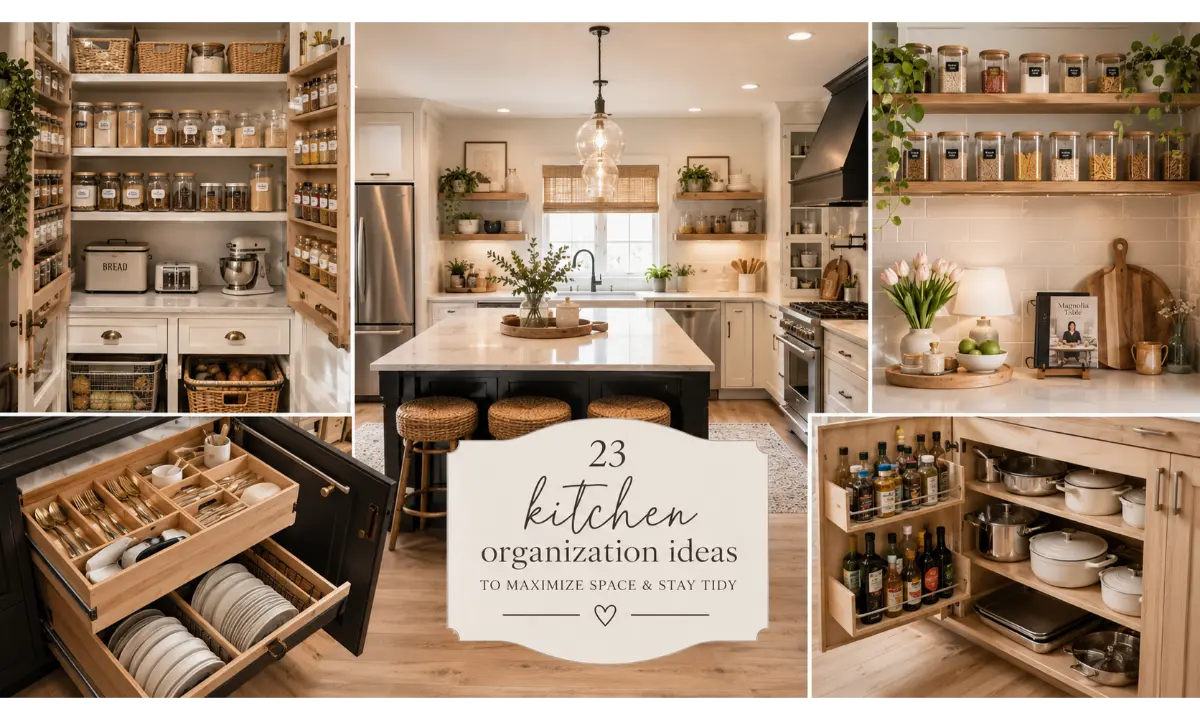
23 Genius Kitchen Organization Ideas to Stay Tidy
A well organized kitchen should make everyday life easier, not give you another system to maintain. When counters become crowded, cabinets become difficult to reach, and drawers fill with random tools, even simple cooking tasks can feel stressful. The right kitchen organization approach creates a clear home for the things you use most while making better use of overlooked areas.
The best solutions focus on how you actually cook, clean, store food, and move around the room. From clever kitchen storage and pantry organization to vertical cabinets, hidden drawers, and countertop solutions, these ideas can help you create a kitchen that feels spacious without requiring a major renovation. Whether your kitchen is large, compact, modern, or traditional, small changes can make a noticeable difference.
Kitchen Organization Ideas for a More Functional Home
1. Kitchen Organization Ideas With Pull Out Pantry Shelves
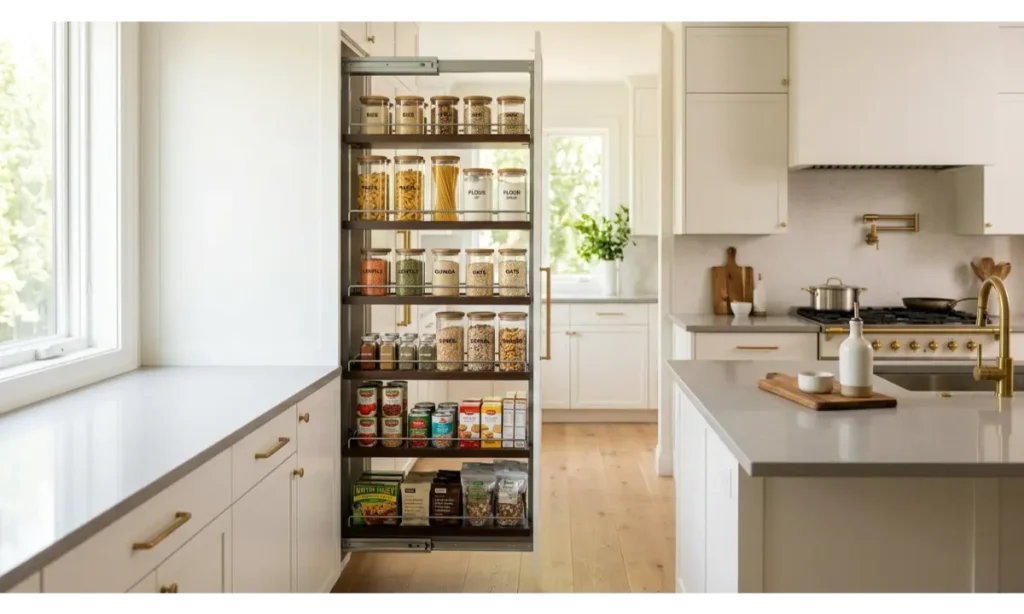
Pull out pantry shelves can completely change the way you use a narrow cabinet. Instead of reaching deep inside and moving several containers just to find one ingredient, you can bring the entire shelf toward you. Store pantry staples such as rice, pasta, flour, canned foods, sauces, snacks, and baking ingredients in separate sections so everything remains visible and easy to reach.
This solution works especially well in narrow spaces beside refrigerators, ovens, or tall cabinets. Keep everyday ingredients at comfortable height and place backup supplies on higher or lower shelves. A consistent arrangement also makes grocery shopping easier because you can quickly see what needs replacing. Smart pull out storage turns awkward cabinet depth into useful, accessible space.
Pro Tip: Measure the cabinet opening, interior depth, and door clearance before installing pull out shelves.
2. Deep Drawers for Pots and Pans
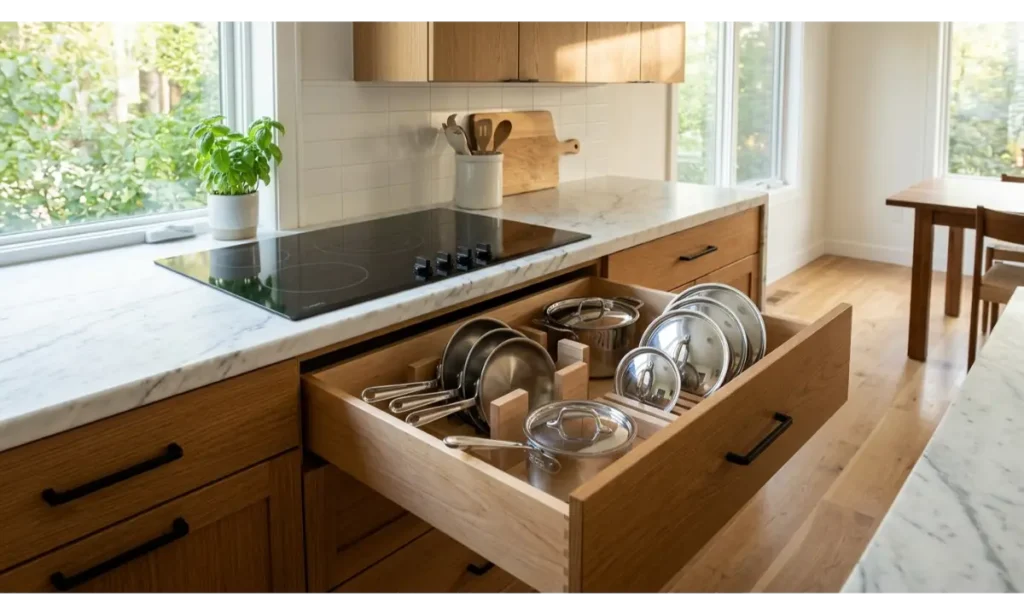
Deep drawers are much easier to use for heavy cookware than crowded lower cabinets. Instead of stacking several pans into one unstable pile, arrange pots and pans according to size and frequency of use. Keep your favorite skillet and everyday saucepan toward the front, while large stockpots and specialty cookware can sit farther back.
Add vertical dividers for lids so they remain upright instead of sliding beneath other cookware. Deep drawers also allow you to see more of your collection at once. If you are planning a kitchen remodel, placing wide drawers near the cooktop can create a practical cooking zone where your most important tools stay close to where you need them.
Pro Tip: Store your most frequently used cookware in the easiest drawer rather than organizing everything strictly by size.
Read More: 23 Coffee Bar Decor Ideas to Create a Cozy Café Feel
3. Create a Dedicated Coffee Station
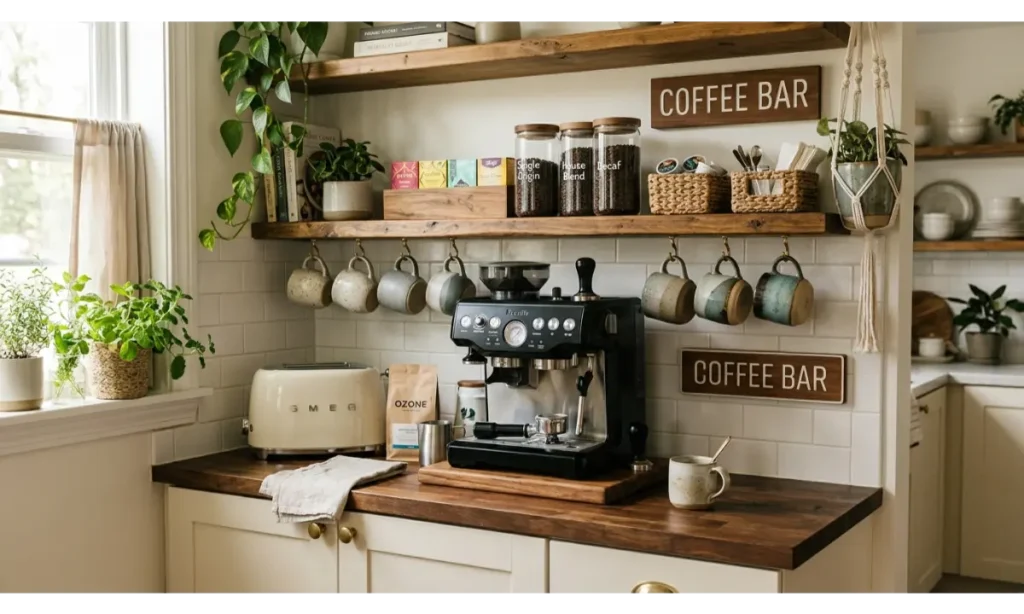
A dedicated coffee station can keep several small items from spreading across your countertop. Place coffee beans, tea bags, filters, mugs, sweeteners, syrups, and your coffee machine in one defined area. If you have cabinet space nearby, store extra supplies behind closed doors so the station stays visually calm.
You can also turn the same area into a small breakfast station by adding oatmeal, cereal, honey, jam, or a toaster. Grouping items by activity makes everyday routines easier because you do not need to search different cabinets for related supplies. A coffee station can also become an attractive feature that adds personality without creating unnecessary clutter.
Pro Tip: Keep only the coffee and breakfast items you use daily on display and store backups elsewhere.
4. Add Shelf Risers Inside Cabinets
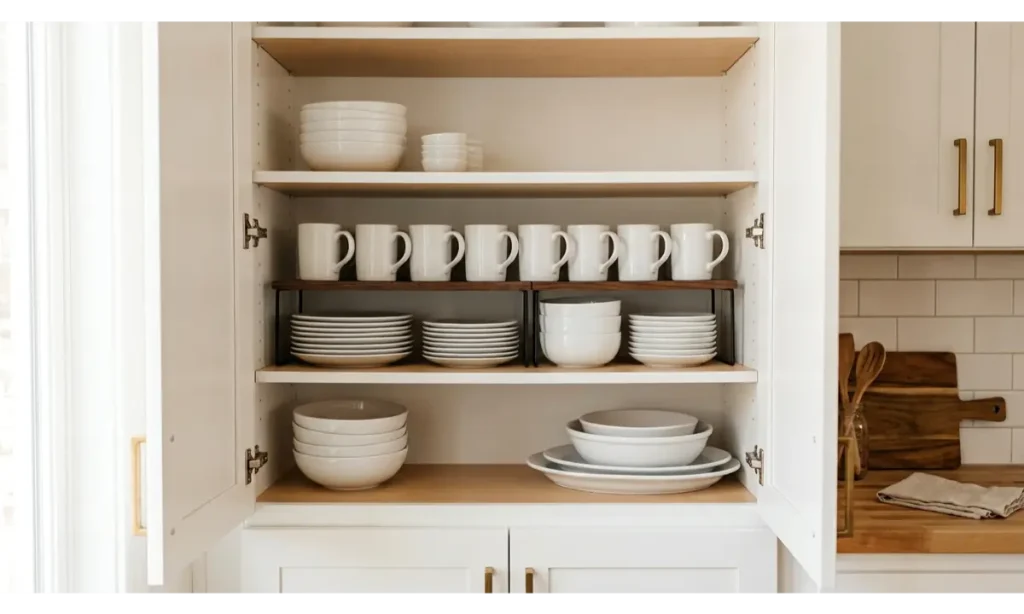
Tall cabinet shelves often contain large amounts of wasted vertical space. Shelf risers create an additional level so you can store plates, bowls, mugs, and small serving pieces without creating tall unstable stacks. This simple solution can make a cabinet feel much larger without changing its structure.
Adjustable shelf risers work especially well because you can change the height as your storage needs change. Keep heavier dishes on sturdy supports and leave enough space to remove items comfortably. The goal is to improve access rather than simply filling every empty area. A well arranged cabinet should let you see and reach individual items without moving an entire stack.
Pro Tip: Leave enough clearance above each shelf level so dishes can slide out without hitting the cabinet above.
5. Use the Inside of Cabinet Doors
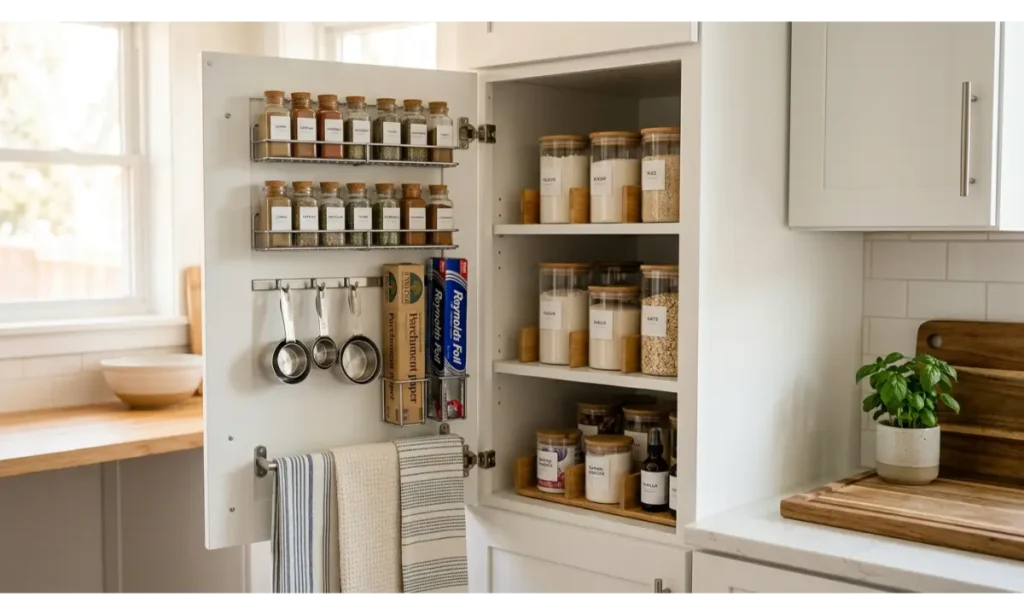
The inside of a cabinet door provides hidden storage that often goes completely unused. Slim racks can hold wraps, foil, parchment paper, measuring tools, cleaning cloths, small spices, or other lightweight supplies. This solution works especially well when your cabinets have extra door clearance.
Keep heavier objects away from door organizers unless the hardware can safely support their weight. You can also use pantry doors for small packets and frequently used ingredients. Using cabinet doors creates additional storage without taking floor or countertop space. It is one of the simplest ways to make an existing kitchen work harder without adding another large storage unit.
Pro Tip: Close the cabinet door carefully after installation to make sure the organizer does not hit the shelves.
Read More: 23 Best Eco Friendly Bathroom Design Ideas for a Greener Home
6. Create a Shallow Spice Drawer
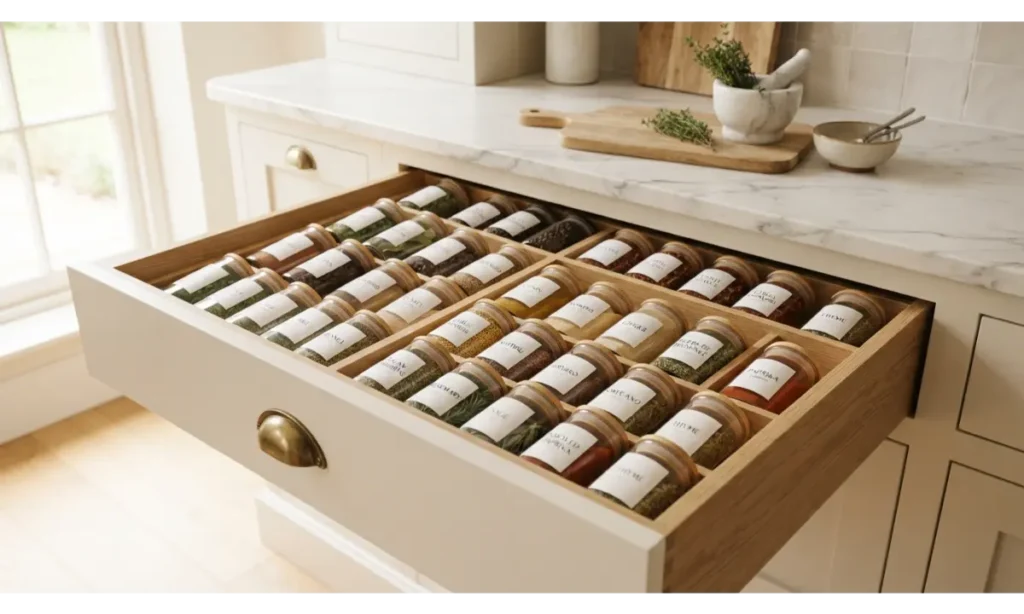
A shallow drawer near the cooking area can become a practical spice station. Instead of placing jars behind one another in a deep cabinet, lay them flat with the labels facing upward. This makes every spice visible and lets you quickly choose what you need while cooking.
Group spices according to how often you use them or by cooking style. Everyday seasonings can stay near the front, while specialty spices can occupy the back. Adjustable dividers prevent jars from rolling when the drawer opens. This arrangement also makes it easier to notice duplicates and expired products during regular kitchen resets.
Pro Tip: Check your spice collection regularly and remove old or duplicate containers before adding new ones.
7. Add a Lazy Susan to Corner Cabinets
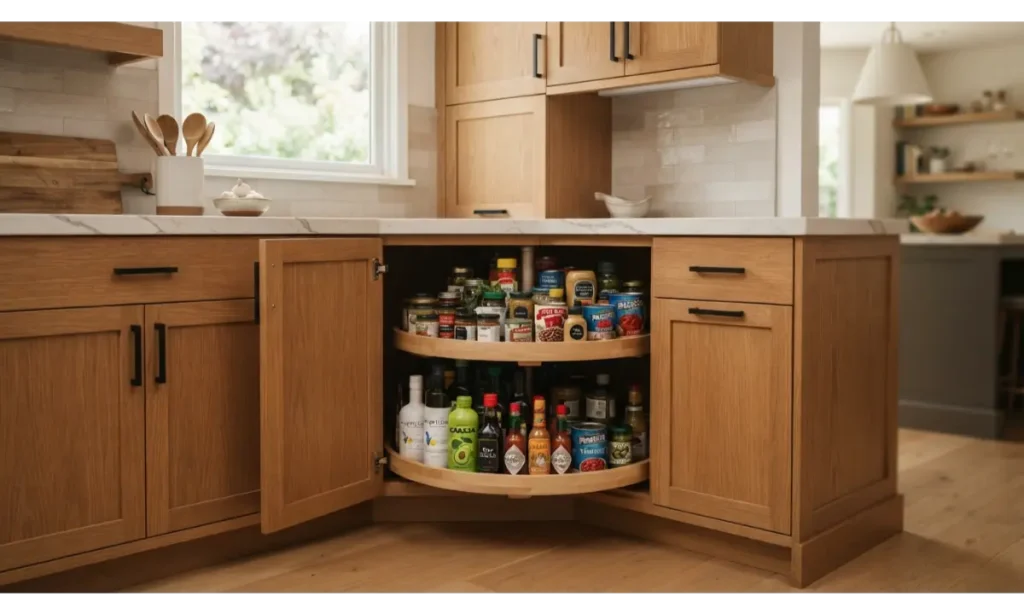
Corner cabinets can become difficult to manage because their deep shape hides items behind other containers. A lazy Susan brings everything within reach with a simple rotation. Use one for sauces, oils, condiments, baking ingredients, jars, or smaller pantry items.
Avoid overcrowding the turntable because too many objects can prevent smooth rotation. Group similar products together and place the most frequently used items where you can reach them quickly. A rotating organizer works particularly well in awkward corners because it turns difficult storage into a more accessible zone without requiring a complete cabinet renovation.
Pro Tip: Choose a turntable with a raised edge so bottles and jars stay secure when you rotate it.
8. Store Cutting Boards Vertically
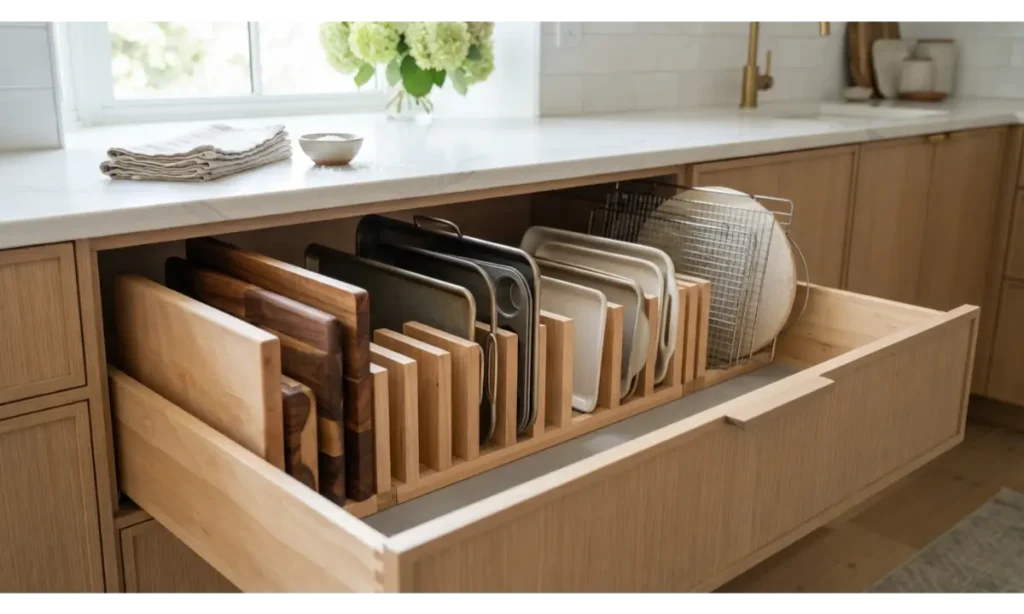
Large flat items become difficult to manage when they are stacked horizontally. Create a vertical storage section for cutting boards, baking sheets, serving trays, and cooling racks instead. Adjustable dividers keep each item upright so you can remove one without disturbing the entire collection.
Place this section close to your main preparation area or oven depending on how you use these items. Vertical storage makes better use of cabinet height and prevents large objects from forming unstable piles. It also allows you to see each item immediately instead of searching through a stack every time you need a particular tray or board.
Pro Tip: Leave enough space between dividers so you can remove large boards without scraping neighboring pieces.
9. Organize the Under Sink Cabinet
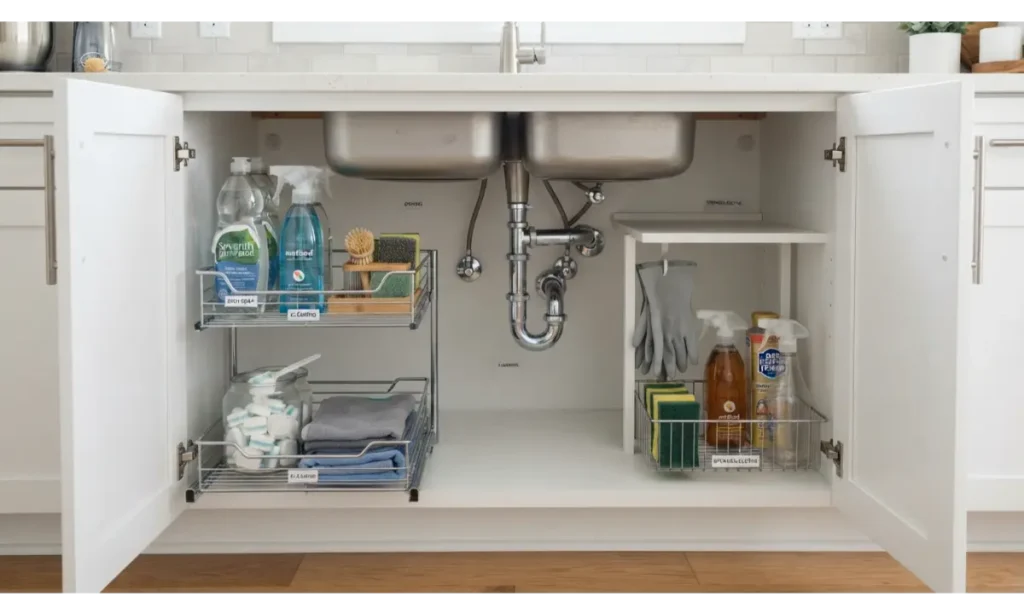
The cabinet beneath the sink often becomes one of the messiest areas because pipes reduce usable space. Instead of throwing random bottles inside, create separate zones around the plumbing. Use a pull out bin for cleaning sprays and a smaller container for sponges, brushes, gloves, and dishwasher supplies.
Choose storage that allows you to see everything without reaching behind several bottles. Keep household cleaning products away from food and cooking supplies. Leave enough open space around the plumbing so you can easily inspect the area for leaks. A simple under sink system can turn an awkward cabinet into a highly functional cleaning station.
Pro Tip: Store bottles upright and avoid overcrowding the cabinet so plumbing problems remain easy to spot.
10. Add a Slim Rolling Cart
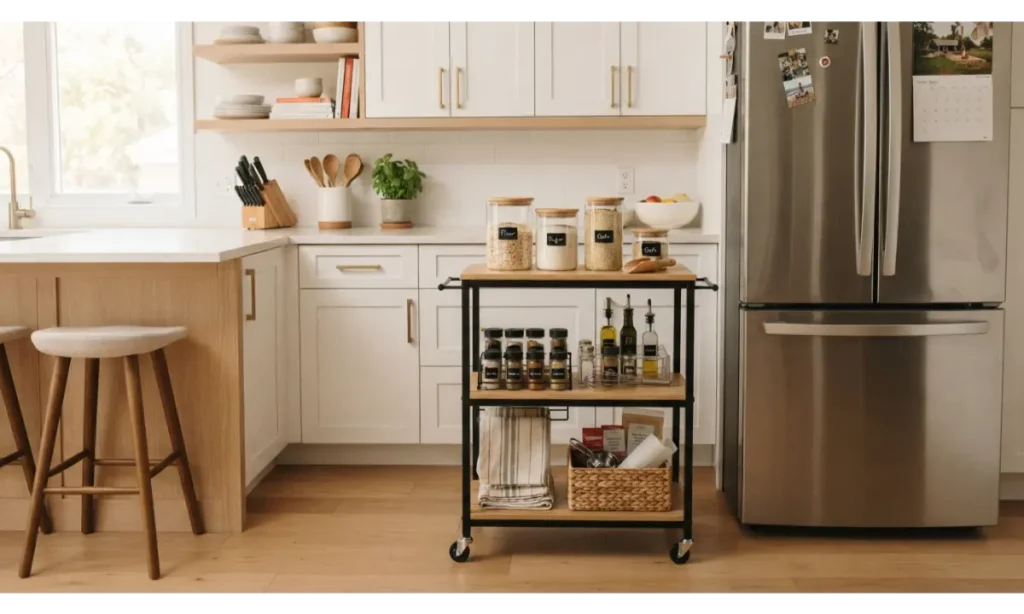
A slim rolling cart can provide extra storage when you have a narrow unused gap. Place it between a refrigerator and cabinet, beside an island, or against an empty wall. Use the upper shelf for frequently used supplies and lower levels for heavier or less frequently used items.
The best part is flexibility. You can pull the cart toward your preparation area when needed and move it back afterward. Depending on your routine, it can become a baking station, beverage area, pantry extension, or produce station. This makes it especially useful for renters or small kitchens where permanent storage changes may not be practical.
Pro Tip: Measure the entire gap carefully and make sure the cart can roll freely before purchasing it.
11. Organize the Refrigerator by Zones
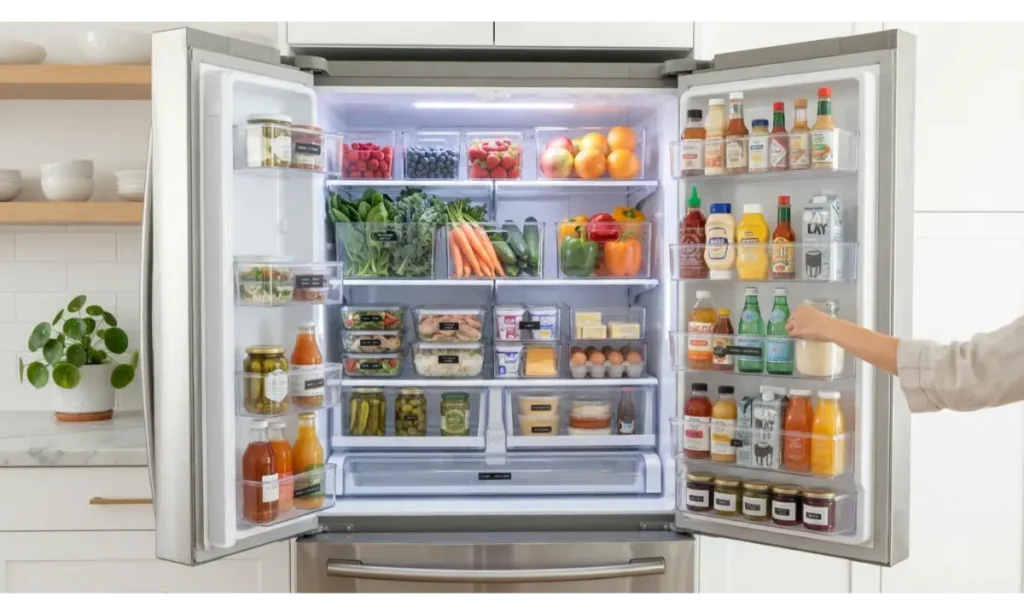
A refrigerator can become cluttered even when your cabinets look perfectly organized. Group similar foods together so everyone knows where to look. Use clear bins for snacks, dairy products, condiments, vegetables, or ready to eat foods. Keep frequently used ingredients where they are easy for everyone to reach.
Avoid filling shelves so tightly that you cannot see what is behind other containers. A simple refrigerator system can help you notice foods that need to be used soon and prevent forgotten ingredients from sitting at the back. Clear categories also make weekly meal planning and grocery shopping easier because you can quickly see what you already have.
Pro Tip: Check your refrigerator before grocery shopping to avoid buying ingredients you already have.
12. Use Stackable Food Containers
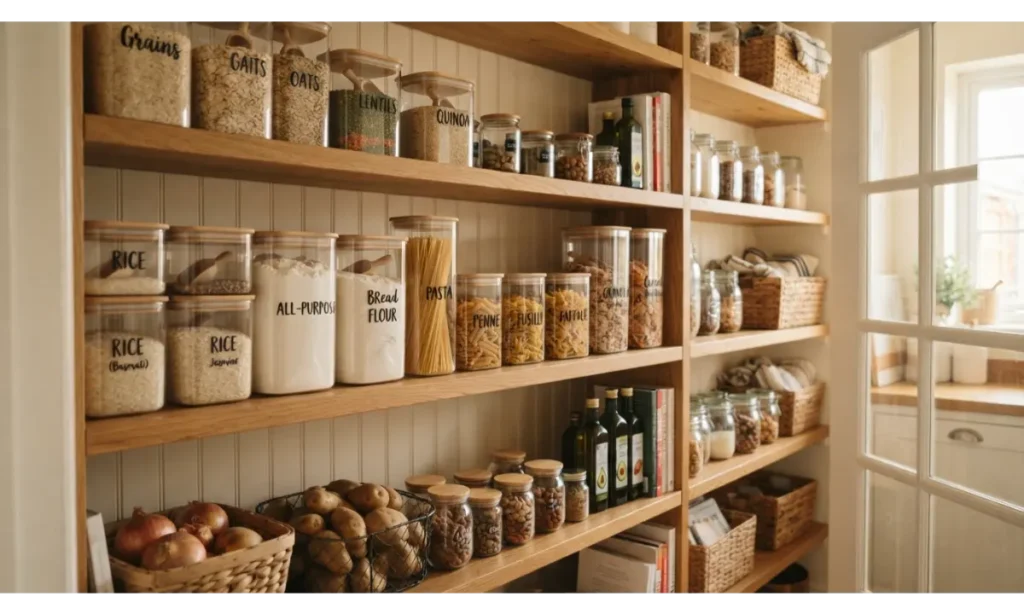
Stackable food containers can make pantry shelves look cleaner while improving visibility. Use airtight containers for frequently used dry goods such as rice, flour, pasta, oats, cereal, lentils, and grains. Matching shapes can stack more efficiently and help you use vertical space.
Choose container sizes based on how much your household actually consumes. Oversized containers can waste shelf space if you rarely fill them. Clear containers also make it easier to notice when supplies are running low. For ingredients that need protection from humidity, airtight storage can provide an added layer of protection while keeping your pantry easier to maintain.
Pro Tip: Write the opening date on ingredients that you transfer into containers so you can track freshness more easily.
13. Create a Dedicated Baking Drawer
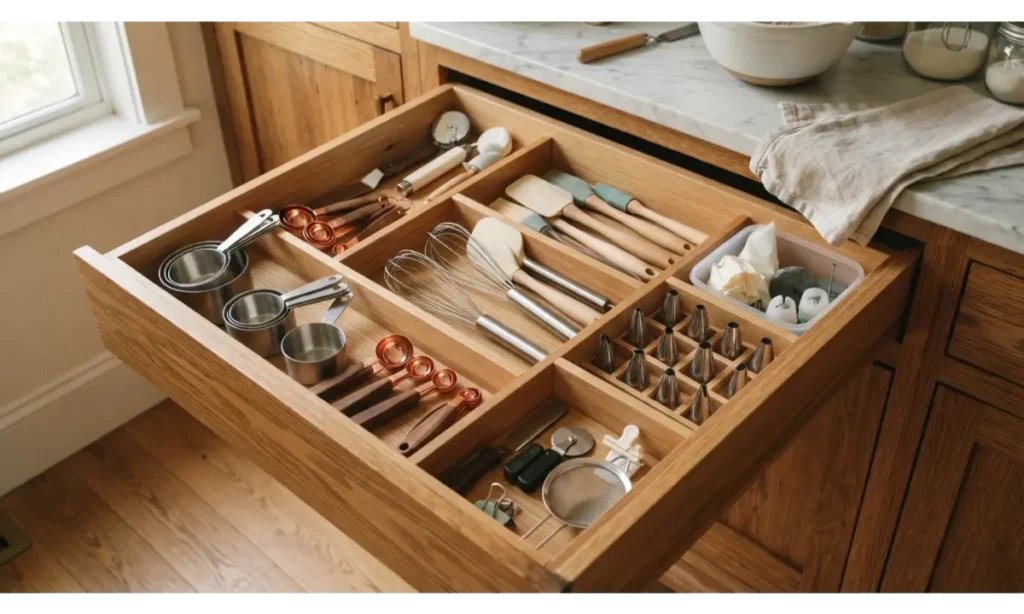
If you bake regularly, mixing baking tools with everyday utensils can quickly create drawer clutter. Give measuring cups, measuring spoons, pastry tools, scrapers, whisks, piping accessories, and silicone tools their own dedicated area. Keeping related supplies together makes baking preparation much faster.
Arrange the drawer according to how you work. Put frequently used measuring tools toward the front and specialty decorating supplies farther back. Larger baking sheets and rolling pins can stay vertically in a nearby cabinet if they do not fit. A dedicated baking station prevents small tools from spreading across several drawers and cabinets.
Pro Tip: Keep the tools you use for almost every recipe in the easiest part of the drawer.
14. Hide Small Appliances in an Appliance Garage
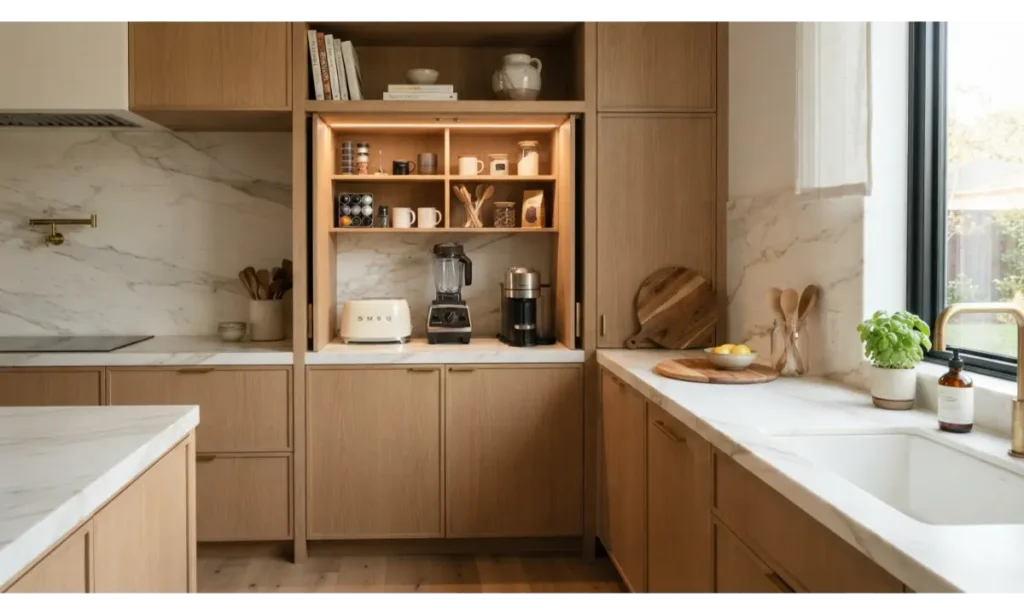
Small appliances can quickly take over countertops. An appliance garage provides a dedicated area where frequently used machines remain ready while staying hidden when not needed. This can work beautifully for coffee makers, toasters, blenders, mixers, and other compact appliances.
The cabinet should provide suitable clearance and safe access for the specific appliances you use. The goal is not to hide everything but to reduce visual clutter while keeping daily equipment convenient. When appliances have a designated home, countertops become easier to clean and the entire kitchen can feel more spacious.
Pro Tip: Keep appliance cords neatly managed so the storage area stays clean and easy to use.
15. Use Toe Kick Drawers
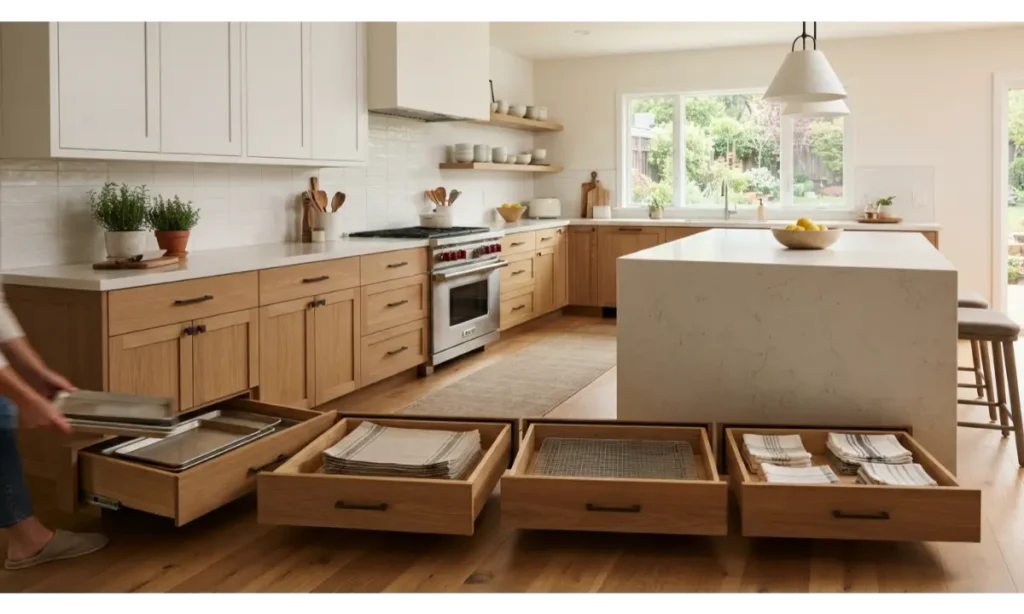
The narrow space beneath lower cabinets can provide surprisingly useful hidden storage. Toe kick drawers work well for flat items such as placemats, baking trays, cooling racks, serving boards, and kitchen linens. Because the storage sits close to the floor, use it for items that do not require constant access.
This solution can add storage without changing the visible appearance of your cabinets. It is especially useful in kitchens where every inch matters. Instead of allowing the space beneath cabinets to remain completely unused, you can turn it into a discreet storage area for occasional kitchen supplies.
Pro Tip: Store lightweight flat items in toe kick drawers and avoid placing fragile objects where they are difficult to retrieve.
16. Organize Everyday Dishes on Open Shelves
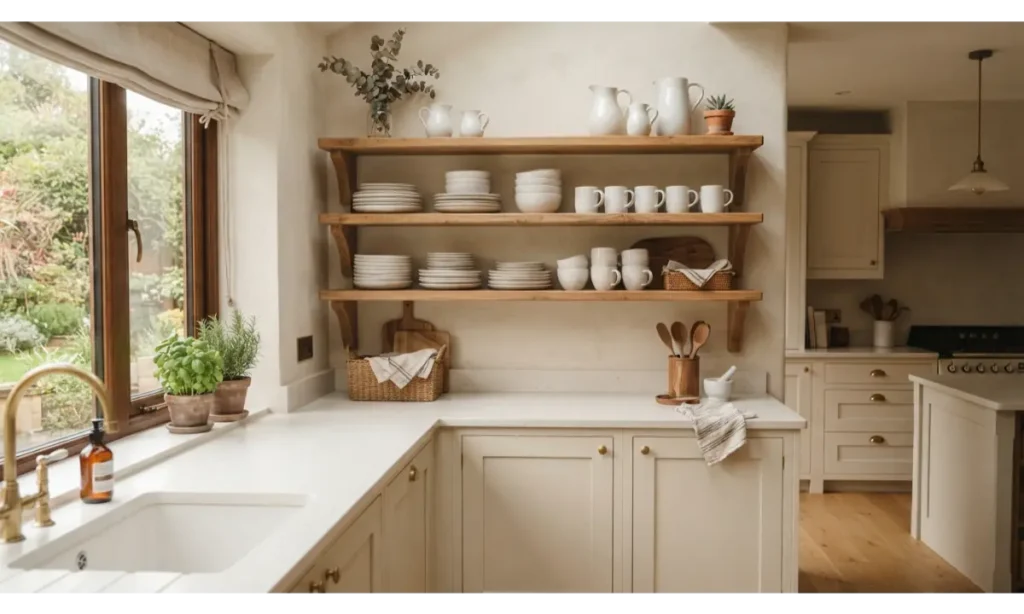
Open shelves can make everyday dishes easier to reach while giving the kitchen a lighter appearance. Use them for plates, bowls, mugs, and attractive serving pieces that you use regularly. Keeping the display limited prevents the shelves from becoming another clutter zone.
Choose a simple color palette if you want the shelves to look calm and cohesive. You can also use small baskets for less attractive supplies. Open shelving works best when it supports your daily routine rather than becoming a surface that requires constant styling.
Pro Tip: Leave some empty space between groups of dishes to keep the shelves visually balanced.
17. Create a Breakfast Drawer
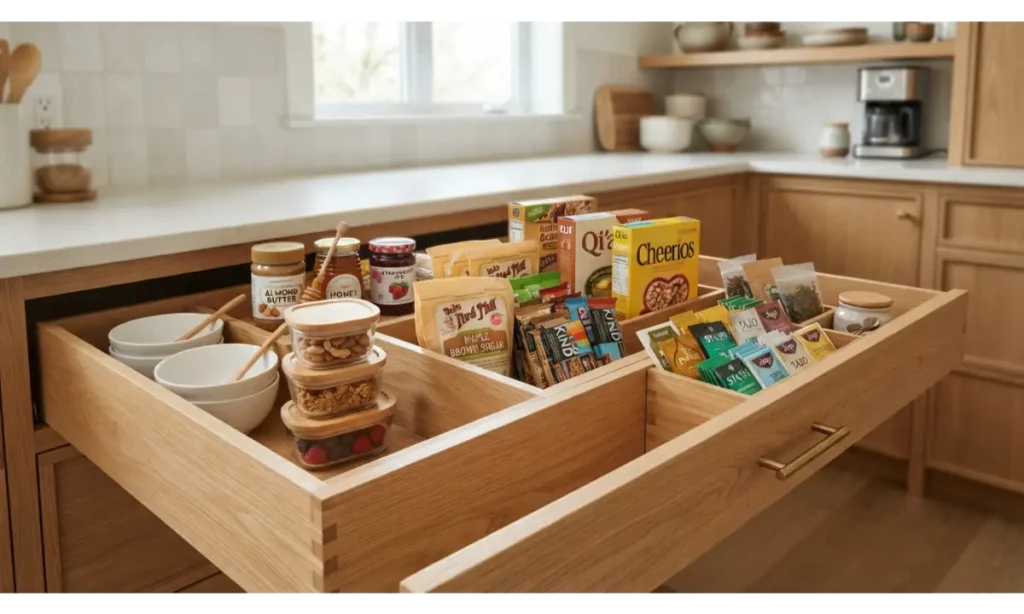
A breakfast drawer can make busy mornings easier by keeping small breakfast essentials in one place. Store oatmeal, cereal, tea bags, honey, jam, spreads, snack containers, and other frequently used items together. This eliminates the need to search several cabinets before starting the day.
Use small bins to separate categories and keep backup supplies somewhere else. If children use the kitchen independently, place safe breakfast items at a comfortable height. The system should remain simple enough that everyone can return items to their correct location after use.
Pro Tip: Restock the breakfast drawer once a week instead of allowing breakfast supplies to spread throughout the kitchen.
18. Store Food Container Lids Vertically
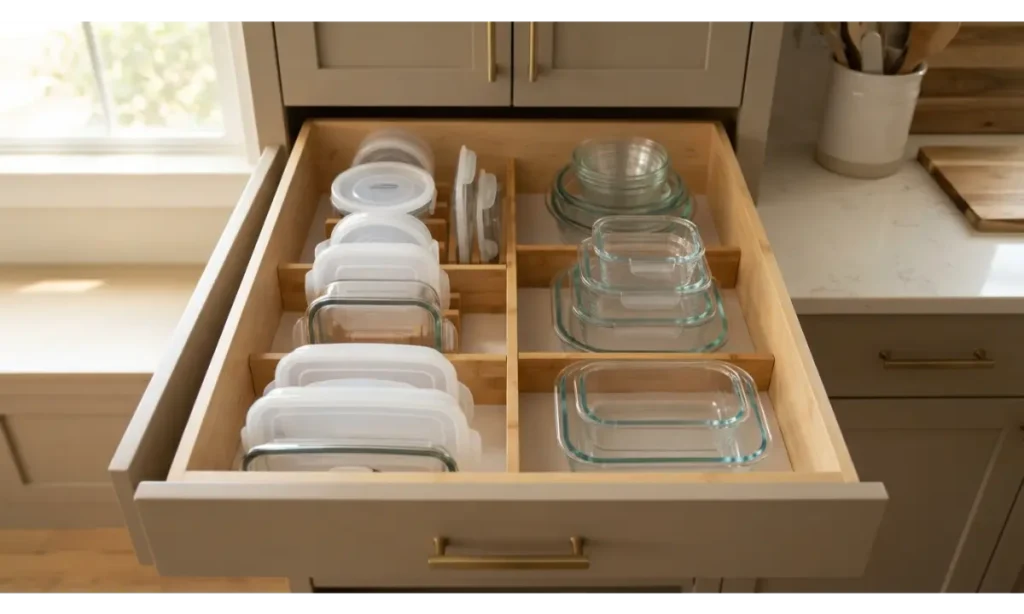
Food storage containers often become difficult to manage because their lids and bases mix together. Stack containers inside one another and store lids vertically in a separate section. This lets you quickly find the correct lid without opening every container in the cabinet.
Before organizing, remove damaged containers and pieces without matching lids. Keeping fewer containers can create more useful space than buying another organizer. Choose one or two container styles when possible because matching shapes stack more efficiently and create a cleaner system.
Pro Tip: Arrange lids like files and place the largest ones toward the back of the divider.
19. Install Hooks Under Cabinets
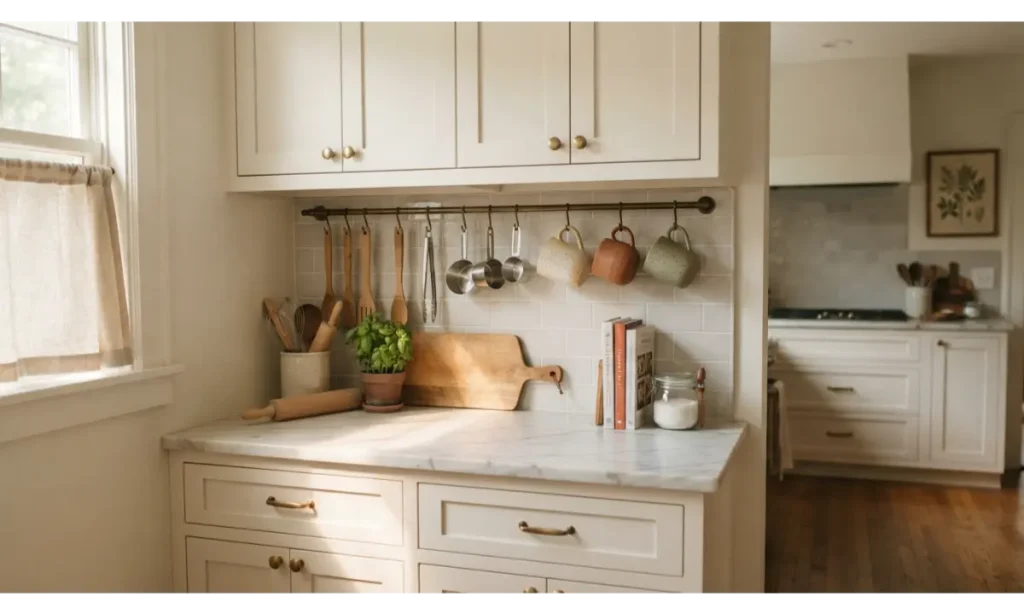
The underside of an upper cabinet can provide valuable storage for lightweight items. Small hooks can hold measuring cups, mugs, frequently used utensils, or kitchen towels. This keeps useful objects accessible without taking up drawer or countertop space.
Keep the arrangement simple because too many hanging objects can make a small kitchen look busy. Place hooks close to where you use the items. Measuring tools can sit near a baking area, while mugs can stay near a coffee station. This creates convenient storage without requiring a major change to your kitchen layout.
Pro Tip: Use removable hooks when possible if you live in a rental home.
20. Create a Dedicated Cleaning Zone
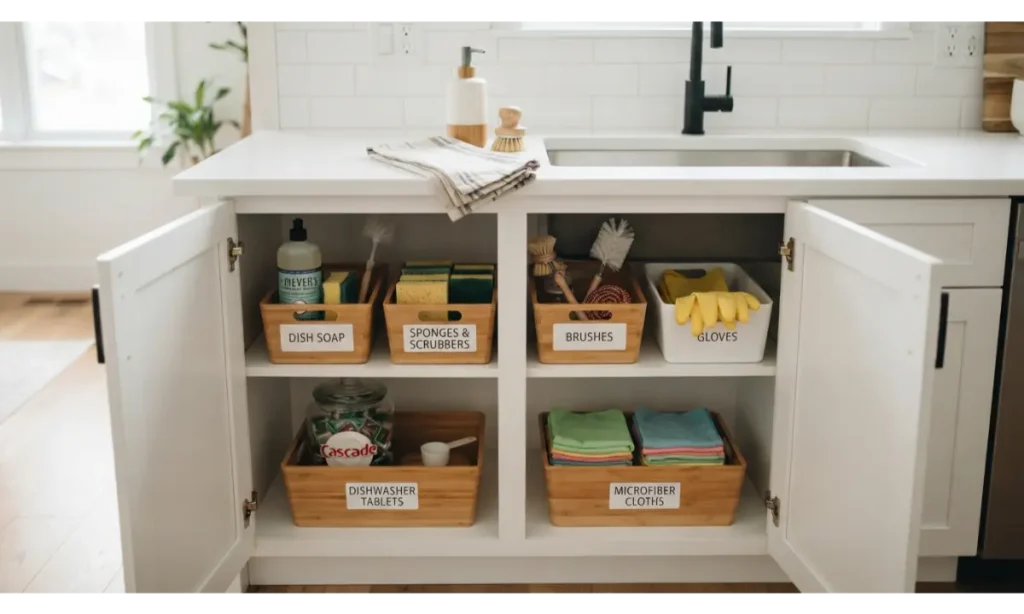
Cleaning supplies often move around the kitchen when they do not have a fixed home. Create one dedicated zone near the sink for dish soap, sponges, brushes, gloves, dishwasher products, and microfiber cloths. Use separate containers for daily supplies and backup products.
Keep household cleaning chemicals away from food and cooking tools. A clear cleaning zone makes daily chores easier because you can find everything without opening several cabinets. It also helps you notice when a product is running low, preventing last minute searches when you need to clean quickly.
Pro Tip: Keep a small daily cleaning caddy accessible while storing extra products in a separate nearby bin.
21. Create a Kitchen Pegboard Wall
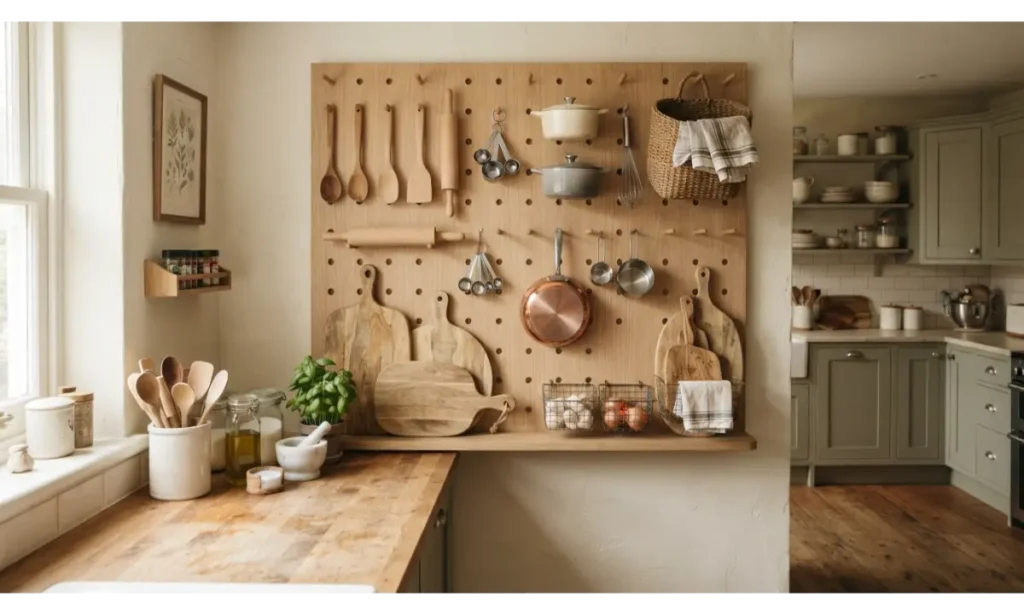
A pegboard can transform an empty wall into flexible storage. Use adjustable hooks to hold cutting boards, wooden spoons, whisks, pans, graters, or small baskets. Because you can move the hooks, you can change the arrangement whenever your storage needs change.
Keep only the tools you use frequently on display. A selective arrangement looks more intentional and makes the wall feel like part of the kitchen design rather than a cluttered storage area. Pegboards work particularly well in compact kitchens where cabinet and drawer space is limited.
Pro Tip: Place heavier cookware on strong hooks and lighter tools around the edges.
22. Create a Simple Pantry Inventory
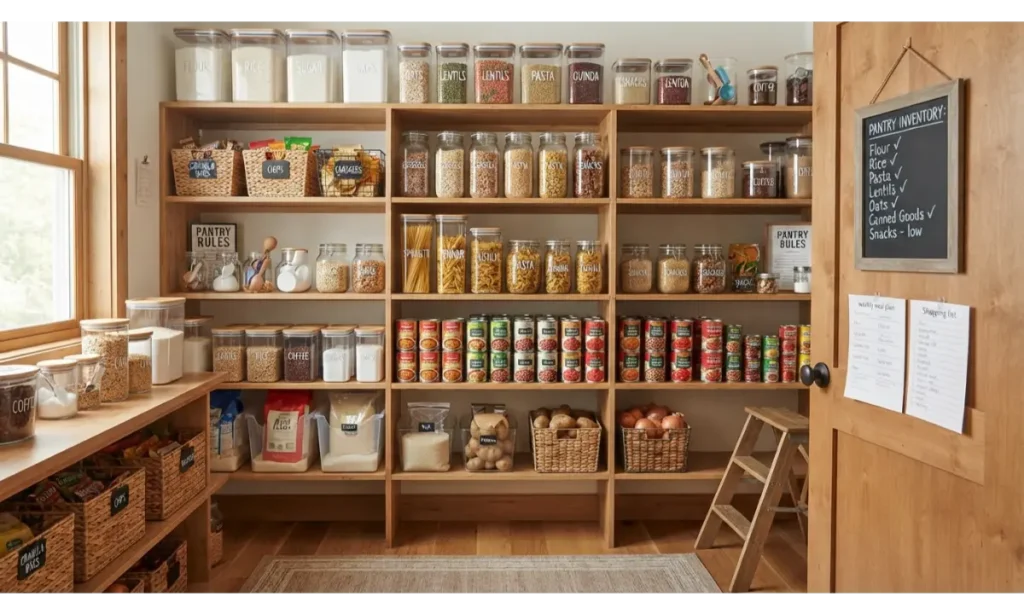
A pantry can look organized today and become chaotic again if you keep buying duplicate products. Create a simple inventory system by grouping similar ingredients and checking your supplies before shopping. Keep older items where you will notice them first and place newer purchases behind them when appropriate.
You do not need a complicated spreadsheet. A small shopping list on the refrigerator or pantry door can work just as well. The goal is visibility. When you know what you already have, you can reduce unnecessary purchases and use ingredients before they become forgotten.
Pro Tip: Do a quick pantry check before your weekly grocery trip.
23. Organize the Kitchen by Activity Zones
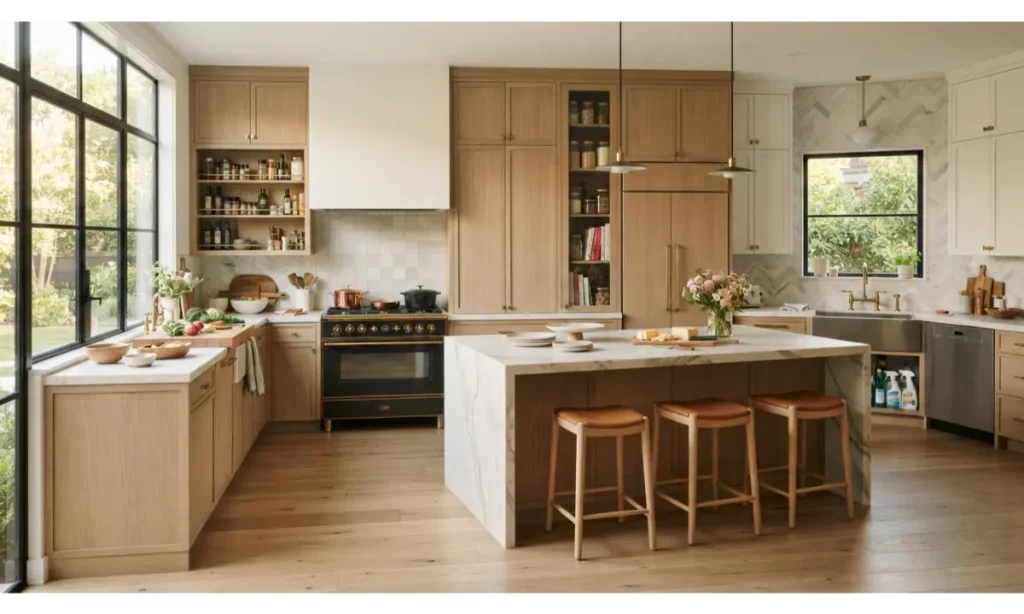
The most effective Kitchen Organization Ideas start with the way you actually use the room. Create a preparation zone with cutting boards, knives, mixing bowls, and utensils near your main work surface. Keep pots, pans, spices, and cooking tools close to the stove. Place dish soap, towels, and cleaning supplies near the sink.
This activity based approach reduces unnecessary movement and makes the kitchen easier to understand. When related items stay close to where you use them, cooking becomes smoother and putting things away becomes more natural. Your kitchen does not need to look perfect at every moment. It needs to support your everyday routine with practical storage solutions that everyone in the household can follow.
Pro Tip: Walk through your normal cooking routine and move the items you use most often closer to their point of use.
How to Keep Your Kitchen Organized for Longer
The secret to long lasting kitchen organization is not buying more containers. It is creating a system that matches your habits. Start by watching how you use the kitchen. Notice which drawers you open most, which appliances stay on the counter, and which cabinets create frustration. Then place frequently used items in convenient locations and move occasional items to higher or less accessible storage.
Decluttering should come before adding organizers. Remove broken tools, expired food, duplicate utensils, and appliances you rarely use. When you reduce unnecessary items first, your existing cabinets often provide more usable space than you expected.
Keep your categories simple. If everyone in the home can understand where something belongs, the system is more likely to last. A successful kitchen should make finding, using, and returning items feel natural rather than complicated.
Kitchen Organization Mistakes to Avoid
One of the biggest mistakes is trying to fill every cabinet completely. A packed cabinet may hold more objects, but it makes everyday items harder to reach. Leave some breathing room around frequently used categories so you can remove and replace items without creating another mess.
Another mistake is buying storage products before measuring the space. Always measure cabinet width, height, depth, drawer clearance, and door movement before purchasing organizers. The right product should improve your available space rather than reduce it.
Avoid giving prime storage locations to items you rarely use. Specialty appliances, duplicate serving pieces, and seasonal items can often move to higher shelves or secondary storage. Your easiest storage should belong to the things you reach for every day.
Frequently Asked Questions
How do I organize a small kitchen?
Start by removing duplicate and rarely used items. Then use vertical storage, shelf risers, cabinet door racks, drawer dividers, hooks, rolling carts, and stackable containers. Focus on making frequently used items easy to reach rather than trying to fill every available space.
What should I organize first?
Start with the area that causes the most frustration. For many kitchens, this may be the pantry, food container cabinet, cookware drawer, junk drawer, or countertop appliance area. Finish one zone before moving to another.
How can I make kitchen cabinets hold more?
Use shelf risers, stackable containers, adjustable dividers, pull out shelves, turntables, and cabinet door storage. However, avoid overfilling cabinets because too much storage can make items harder to find.
What is the best way to organize kitchen drawers?
Group items according to their purpose and frequency of use. Use dividers for utensils, shallow sections for small tools, and deep drawers for cookware or food containers. Keep everyday items close to the preparation and cooking areas.
How can I organize my pantry?
Group similar foods together and use clear airtight containers for frequently used dry ingredients. Keep older products toward the front and newer products behind them. Check your pantry before grocery shopping so you can avoid unnecessary duplicates.
Are open kitchen shelves practical?
Yes, especially for dishes, mugs, bowls, and other items you use frequently. Keep displays simple and avoid overcrowding the shelves. If you prefer less maintenance, use closed cabinets for rarely used items.
How do I organize under the kitchen sink?
Use compact bins or pull out organizers that work around plumbing. Keep dishwashing products, cleaning sprays, sponges, brushes, and gloves in separate sections. Never store food with household cleaning chemicals.
How can I keep my kitchen tidy every day?
Give every frequently used item a fixed home and return it after use. Spend a few minutes each evening clearing countertops, returning tools, and checking the sink area. Small daily resets prevent clutter from becoming overwhelming.
Conclusion
The best Kitchen Organization Ideas are the ones that make your everyday routine easier. You do not need a huge kitchen, expensive renovation, or dozens of complicated organizers to create a tidy space. Small improvements such as pull out shelves, deep drawers, vertical dividers, cabinet door racks, pantry containers, and activity zones can make a major difference.
Start with the area that bothers you most and work from there. Remove what you no longer need, group similar items, give frequently used tools convenient homes, and use overlooked spaces intelligently. With practical kitchen storage, thoughtful pantry organization, smart drawer organization, and simple daily habits, your kitchen can stay functional, attractive, and much easier to maintain.