

23 Amazing Beach Themed Living Room Ideas for a Breezy Escape
A beautiful coastal room does not need seashells on every shelf or an anchor on every wall. The most inviting spaces borrow the feeling of the shoreline through light, natural textures, relaxed furniture, soft colors, and thoughtful details. Current coastal design is moving toward a more refined look that feels personal rather than overly themed, with rattan, linen, warm woods, layered textures, and meaningful artwork doing much of the visual work.
These Beach Themed Living Room ideas will help you create that airy vacation feeling while keeping your home comfortable and practical. Whether you prefer modern coastal style, classic seaside charm, California coastal warmth, or a subtle beach house aesthetic, you can adapt these ideas to almost any room size. The key is to create a space that feels bright, relaxed, natural, and easy to live in.
Beach Themed Living Room Ideas to Create a Breezy Coastal Look
1. Soft White and Sandy Beach Themed Living Room
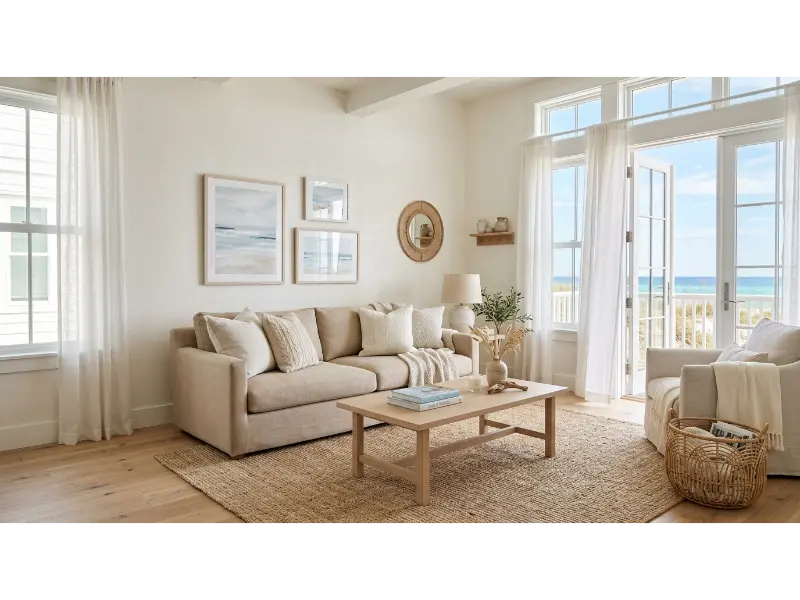
A Beach Themed Living Room looks instantly calmer when you build the room around warm white and sandy beige. Choose an ivory sofa with relaxed linen upholstery and pair it with pale oak furniture. A woven jute rug can ground the seating area without making the room feel heavy. Keep the walls warm rather than stark white so sunlight creates a soft, welcoming glow throughout the space.
Add a few cushions in oatmeal, cream, and faded blue to create gentle contrast. A large landscape artwork can provide a subtle connection to the ocean without turning the room into a themed display. This approach works especially well in small rooms because light colors and simple furniture help the space feel open. Natural materials also add depth without requiring many decorative objects.
Pro Tip: Use different shades of beige instead of one exact neutral to prevent the room from looking flat.
2. Ocean Blue Accent Wall
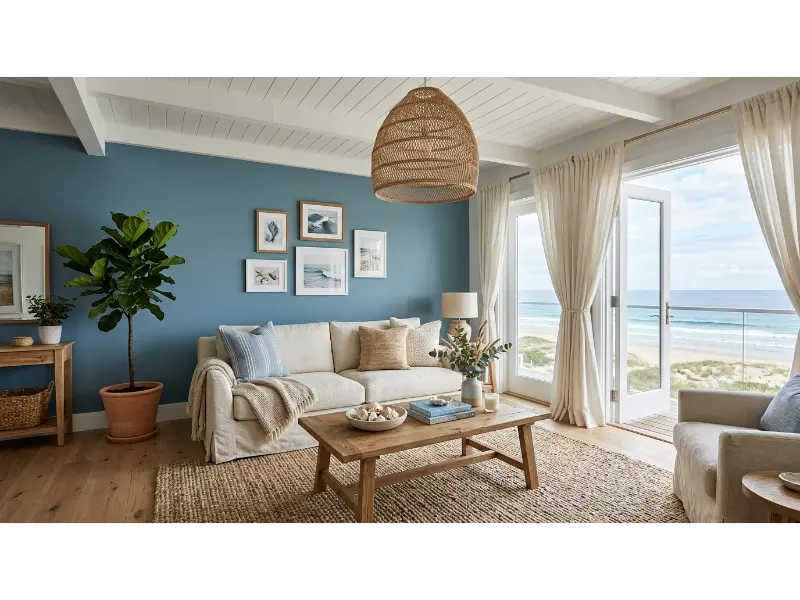
An ocean blue accent wall can become the visual anchor of your coastal space. Select a muted blue inspired by deep seawater rather than a bright primary blue. Pair it with creamy upholstery, natural wood, and woven accessories so the color feels sophisticated. The combination creates a relaxing focal point while keeping the rest of the room light and uncomplicated.
Use the blue wall behind the sofa, fireplace, or television area to establish a clear visual center. Add smaller touches of the same shade through cushions or artwork for balance. Avoid matching every accessory because slight variations make the room feel more collected. Soft lighting becomes especially important here, as warm lamps can keep deeper blue tones from feeling cold after sunset.
Pro Tip: Test the paint at different times of day because natural light can dramatically change how blue appears.
Read More: 23 Country Living Room Ideas for a Cozy Home
3. Rattan Furniture for Natural Texture
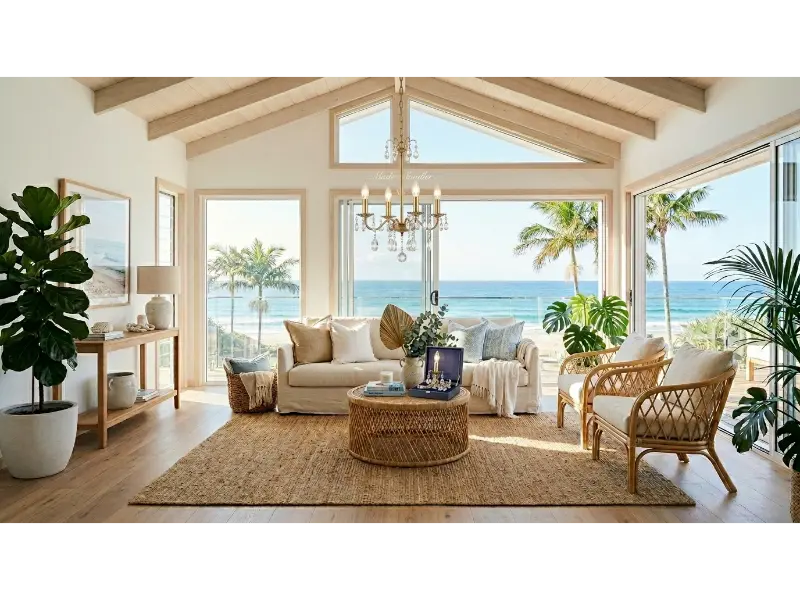
Rattan furniture instantly brings natural texture into a Beach Themed Living Room without making the space feel overly decorated. Try two rattan accent chairs opposite a simple linen sofa, then balance their visual weight with a light wood coffee table. The woven surfaces create the relaxed character associated with coastal homes while remaining versatile enough for everyday decorating.
Keep the surrounding palette simple so the furniture remains noticeable. Cream, sand, pale blue, and natural wood work beautifully with rattan. You can also introduce a woven pendant light or basket for continuity. The goal is to repeat natural texture in several places rather than filling the room with identical pieces. This creates rhythm and makes the design feel intentional.
Pro Tip: Mix rattan with linen and wood instead of using rattan everywhere. Too much matching texture can make a room feel predictable.
4. Coastal Stripes With a Modern Twist
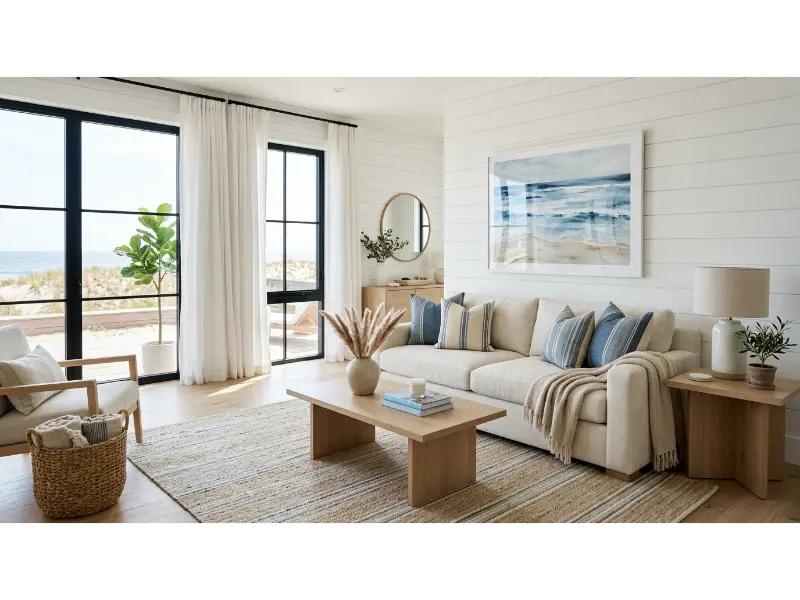
Stripes are a classic coastal pattern, but they look fresher when used with restraint. Choose wide blue and ivory stripes on one or two cushions rather than covering every surface. You can also use a subtle striped rug to create visual movement beneath a neutral seating arrangement. This keeps the familiar seaside influence while giving the room a polished modern appearance.
Combine stripes with solid fabrics and organic textures for balance. A cream sofa, pale wood table, woven basket, and soft linen curtains provide enough visual variety without competing with the pattern. For a more sophisticated result, select dusty blue or blue gray instead of bright navy. The result feels coastal without looking like a traditional nautical room.
Pro Tip: Keep the stripe direction consistent on major pieces, then use smaller patterns only as supporting accents.
5. Driftwood Inspired Neutral Decor
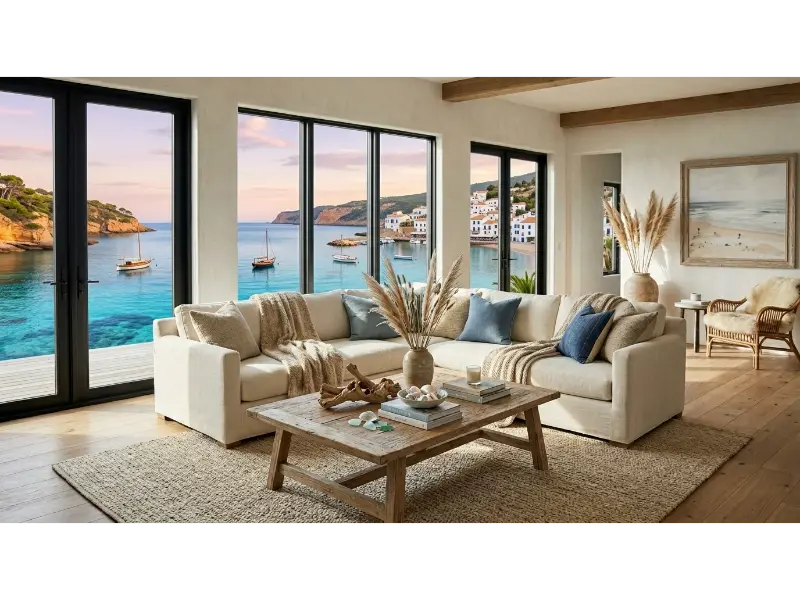
Weathered wood can give a room the relaxed character of a shoreline without relying on literal beach souvenirs. Choose a coffee table with a naturally aged finish or a console made from pale reclaimed wood. Pair it with cream upholstery and soft neutral textiles to create an understated coastal foundation.
Add one or two sculptural wooden objects instead of filling shelves with small decorations. A large ceramic vase with dried grasses can soften the harder wood surfaces and introduce an organic shape. This style works particularly well when you want a coastal atmosphere that feels mature and timeless. The room should suggest the beach through texture and color rather than obvious symbols.
Pro Tip: Choose naturally varied wood grain whenever possible because it gives neutral interiors more character.
Read More: 20 French Country Home Ideas That Feel Luxurious
6. Breezy Linen Sofa Arrangement
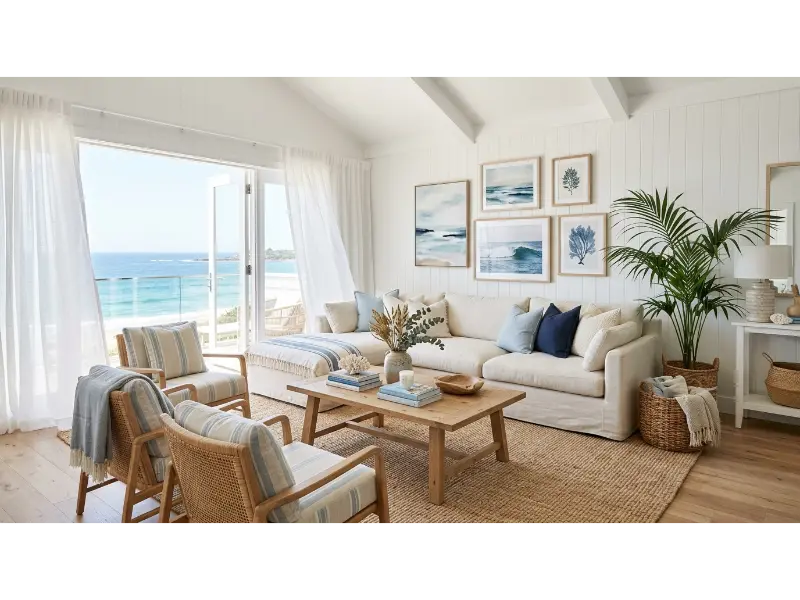
A relaxed linen sofa can become the foundation of an inviting coastal space. Look for an oversized silhouette with soft cushions and a washable or durable fabric if your room gets frequent use. Place it where natural light can highlight the fabric texture, then add a jute or sisal style rug underneath to create a grounded seating zone.
The surrounding furniture should feel equally relaxed. A pair of simple armchairs can face the sofa while a rounded coffee table softens the arrangement. Add pillows in cream, pale blue, and sandy beige rather than using strong patterns. This combination creates a comfortable gathering area that feels like a beach retreat while remaining practical for everyday family life.
Pro Tip: Prioritize durable upholstery if the living room receives heavy traffic. Coastal style works best when it remains genuinely livable.
7. California Coastal Living Room
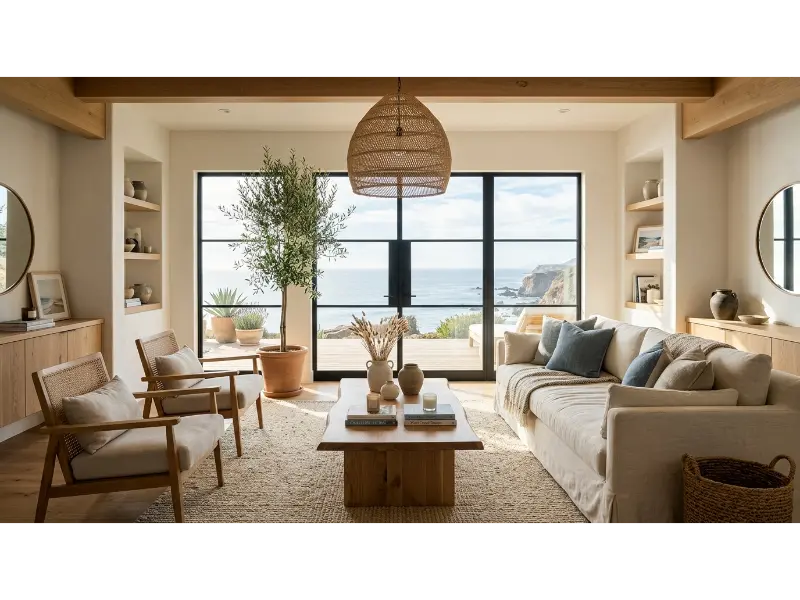
California coastal style blends relaxed beach influences with warmer earthy tones and clean modern furniture. Start with creamy walls and neutral upholstery, then introduce pale oak, woven materials, and muted blue accents. An olive tree or another sculptural plant can add organic height while creating a connection with the outdoors.
Avoid making every piece look brand new. A vintage side table, handmade ceramic lamp, or slightly weathered wooden stool can give the room personality. This mix of old and new creates a comfortable atmosphere rather than a staged showroom effect. The overall palette should feel sun washed, natural, and easygoing while still looking polished enough for entertaining.
Pro Tip: Mix warm beige and soft blue instead of relying only on white and blue. The warmer base makes the room feel more inviting.
8. Coastal Grandmother Inspired Style
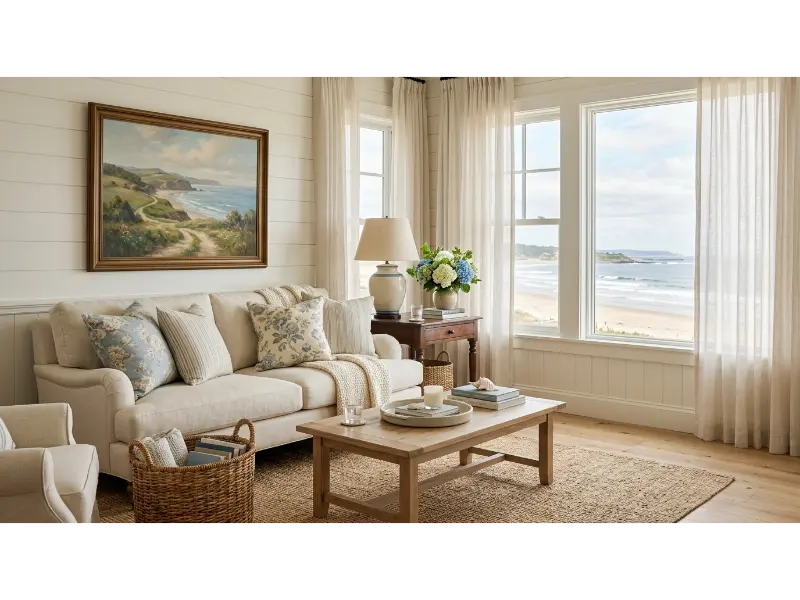
A coastal grandmother inspired room combines seaside calm with classic comfort. Start with a comfortable cream sofa, traditional wooden side tables, and soft blue or faded floral textiles. Add a woven basket, ceramic lamp, and framed landscape artwork to create the feeling of a collected home rather than a newly decorated space.
Vintage details make this style especially appealing. Look for an old wooden stool, secondhand artwork, or traditional lamp with a linen shade. The room should feel relaxed and lived in, not overly perfect. Layering old and new pieces also gives you more freedom to personalize the design while maintaining a gentle coastal palette.
Pro Tip: Choose one vintage piece with real character instead of filling the room with artificial antique finishes.
9. Modern Coastal Minimalist Space
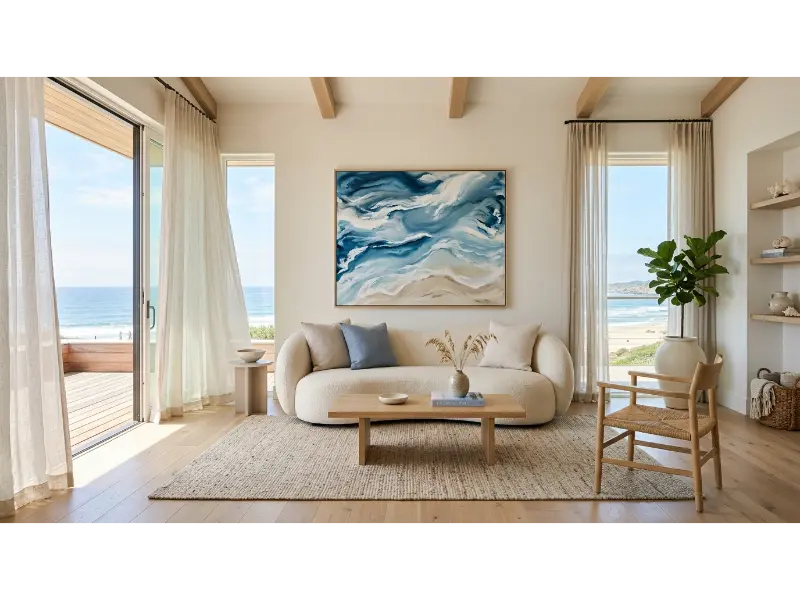
Minimalism works beautifully in a Beach Themed Living Room because both styles benefit from openness and visual calm. Choose fewer furniture pieces with clean silhouettes and leave generous space between them. A cream sofa, low wood coffee table, textured rug, and one oversized artwork can create a complete room without unnecessary accessories.
Texture becomes essential when the color palette stays quiet. Use linen, boucle, woven fibers, wood, and handmade ceramics to prevent the space from feeling empty. Keep decorative objects intentional and give each one enough breathing room. This approach creates a refined coastal retreat that feels peaceful rather than sparse.
Pro Tip: Remove one decorative item from every surface after styling. The extra breathing room can make minimalist coastal rooms look more expensive.
10. Tropical Coastal With Green Accents
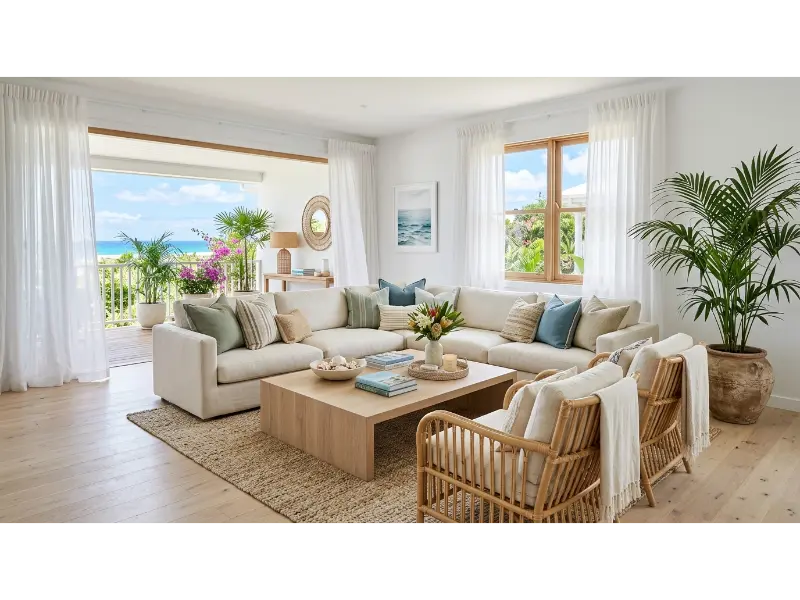
Bring a gentle tropical influence into your room with greenery rather than loud patterns. A tall palm, bird of paradise, or another architectural houseplant can create height and introduce a fresh green tone. Combine the plant with cream upholstery, pale wood, rattan, and a few blue accents for a natural coastal palette.
Keep tropical motifs subtle if you want the room to remain sophisticated. One botanical print or leafy cushion can be enough to establish the connection. Too many palm prints can quickly dominate the space. Natural greenery works especially well near windows because it reinforces the indoor outdoor feeling that makes coastal interiors so inviting.
Pro Tip: Choose plants according to your actual light conditions so the room stays attractive beyond the first few weeks.
11. Coastal Cottage With Soft Blue Details
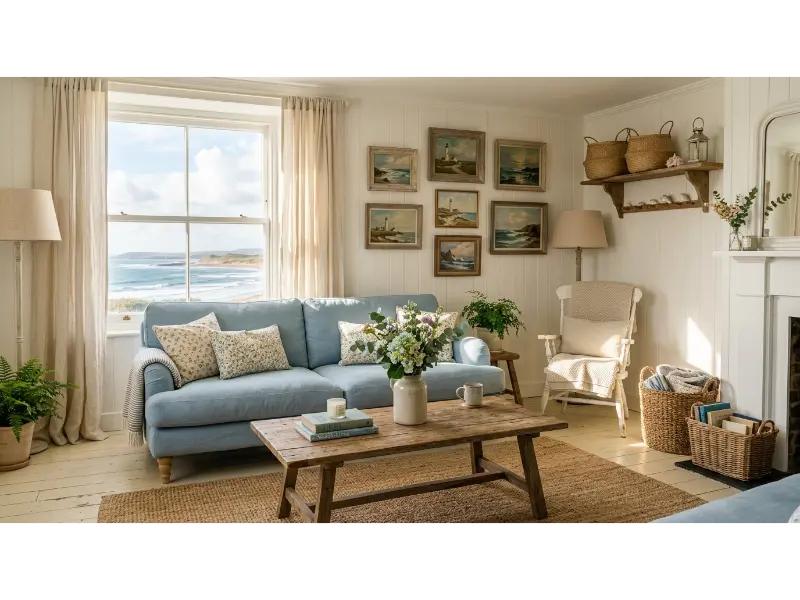
A coastal cottage style feels warm, personal, and slightly nostalgic. Use white or creamy walls as the backdrop, then bring in powder blue through the sofa, cushions, or an occasional chair. Reclaimed wood and woven baskets can add the imperfect texture that makes cottage rooms feel welcoming rather than formal.
Small details can make this style feel authentic. Try a vintage landscape print, handmade ceramic vase, or softly patterned cushion. Keep the furniture comfortable and avoid overly sharp silhouettes. The best cottage interiors feel like they have developed naturally over time, with practical pieces sharing space with sentimental finds.
Pro Tip: Repeat your soft blue in at least two areas of the room so the accent color feels connected rather than random.
12. White Walls With Warm Wood
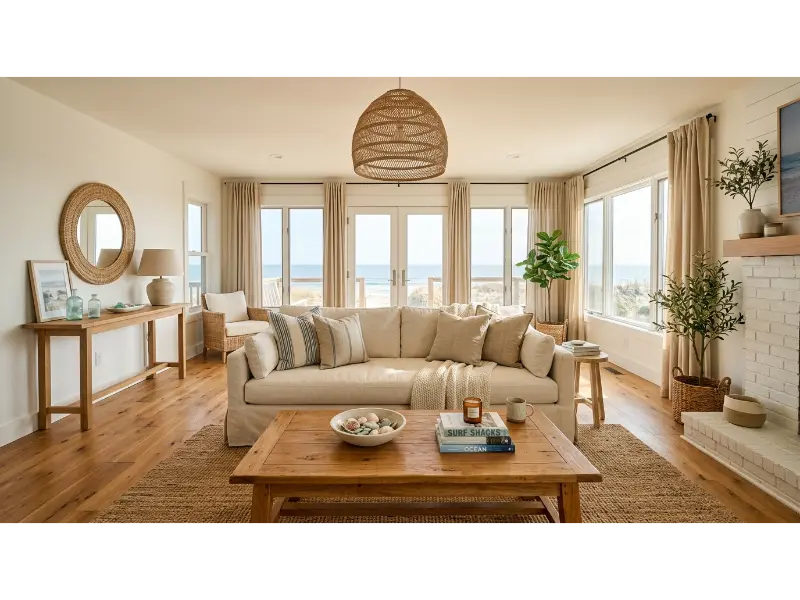
Warm wood can keep white coastal rooms from feeling cold. Choose oak, ash, or another light to medium wood for the coffee table, media console, or side tables. The warmer grain creates contrast against white walls while still maintaining the bright atmosphere associated with seaside interiors.
Layer the room with natural textiles such as linen, cotton, and woven fibers. Add only a few blue or green accents so the wood remains a major part of the visual story. This approach works particularly well if your home already has wood flooring or exposed beams because you can repeat those tones throughout the room.
Pro Tip: Match the undertones of your wood pieces. Too many unrelated wood colors can make a calm room feel visually busy.
13. Sea Glass Color Palette
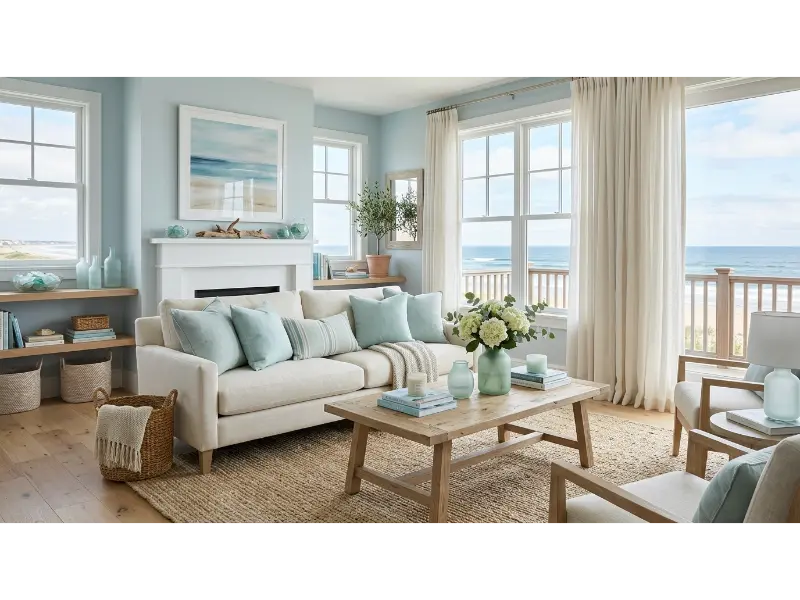
Sea glass offers a softer alternative to traditional coastal blue. Build the room around cream and pale beige, then add translucent aqua, misty green, and faded blue accents. These colors create a gentle palette that feels inspired by the shoreline without becoming overly literal.
Use ceramic vases, glass lamps, cushions, and artwork to repeat the palette in different textures. Keep the largest furniture pieces neutral so you can change the accent colors later. This makes the room easier to refresh when your preferences change. The result feels light, calm, and subtly connected to the ocean.
Pro Tip: Combine cool sea glass shades with warm wood or beige so the room does not feel too icy.
14. Natural Jute Rug Foundation
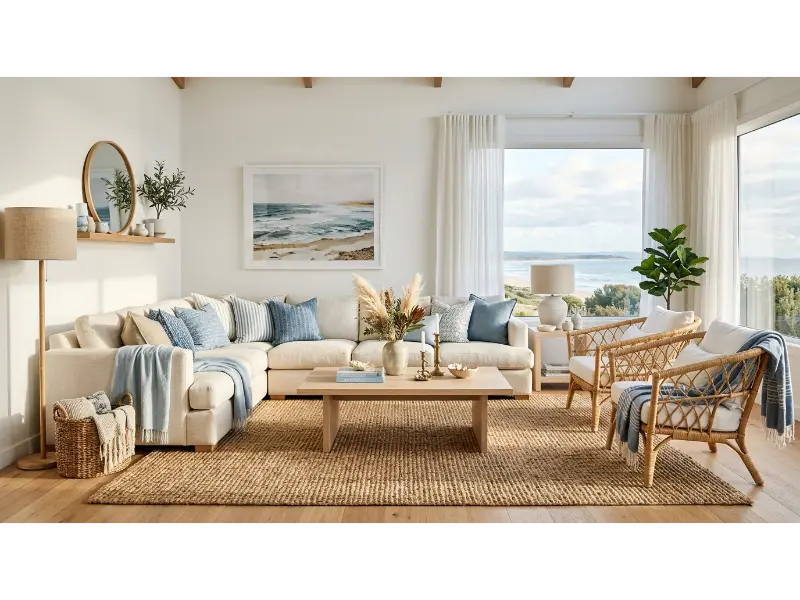
A natural jute rug can establish the entire foundation of a Beach Themed Living Room. Its sandy color naturally connects with beach landscapes, while its woven texture adds warmth beneath streamlined furniture. Choose a large enough rug to connect the front legs of your main seating pieces so the arrangement feels unified.
Layer the rug with cream, beige, or muted blue textiles for a comfortable finish. Because jute already has strong texture, you do not need many patterned accessories. A simple coffee table and a few woven baskets can complete the look. This strategy also works well in open plan homes because the rug clearly defines the living zone.
Pro Tip: Check the rug’s care instructions before buying. Natural fibers can behave differently in humid or high traffic rooms.
15. Coastal Gallery With Ocean Artwork
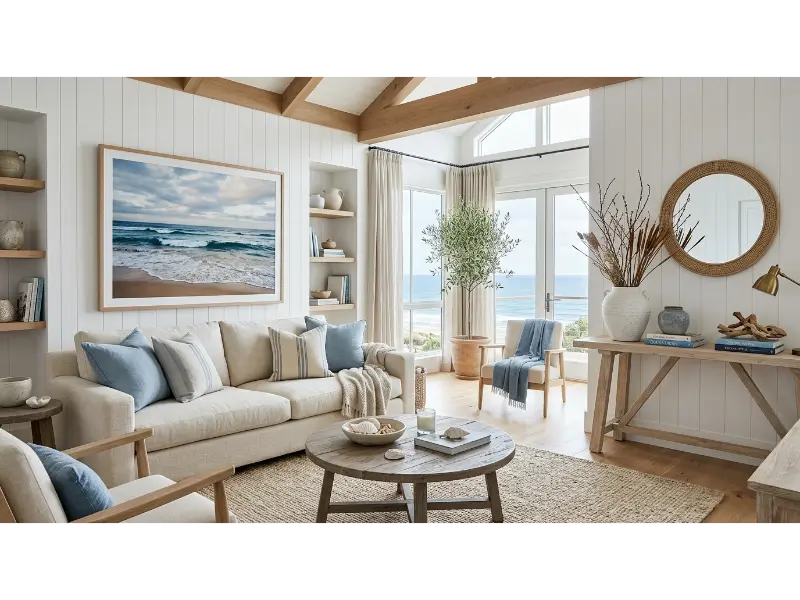
Instead of covering every wall with tiny nautical decorations, make one large piece of ocean inspired artwork the star. A wide landscape painting can visually expand the room while introducing blue, green, sandy, or gray tones. This approach feels more sophisticated and personal than a collection of predictable beach souvenirs.
Choose supporting furniture that allows the artwork to breathe. A neutral sofa, simple wood table, and understated lamp will keep the composition balanced. If you want more personality, select artwork connected to a meaningful coastline or memorable trip. Personal details can make coastal decorating feel authentic rather than generic.
Pro Tip: Choose artwork before buying accent pillows. Pulling colors from the artwork creates a more cohesive room.
16. Arched Shapes and Organic Furniture
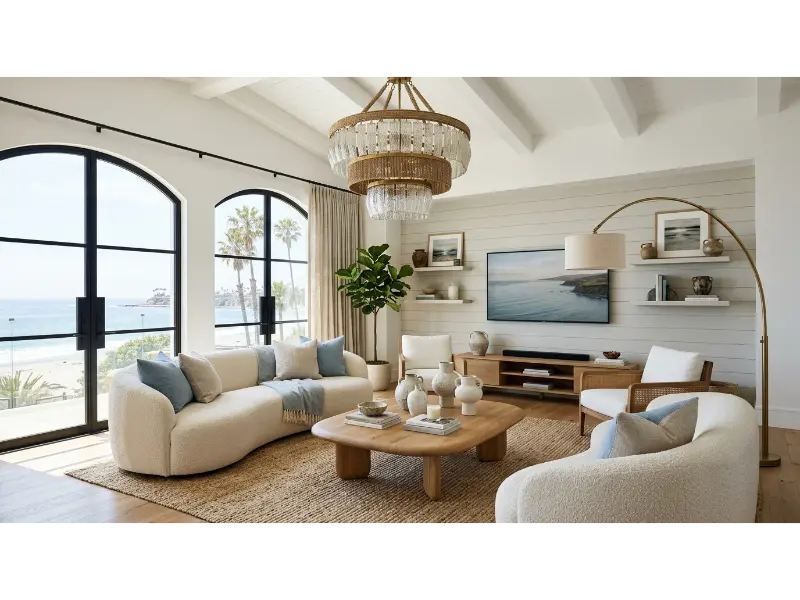
Curved furniture can soften the straight lines commonly found in modern homes. Try a rounded coffee table, curved armchairs, or a sofa with a gentle silhouette. These shapes echo the natural movement of waves and stones while making the room feel more relaxed.
Balance rounded pieces with simple architectural lines so the space does not become overly decorative. Natural oak, linen, stone, and woven textures work particularly well with organic forms. A single sculptural lamp or ceramic vessel can add another curved element without overwhelming the room.
Pro Tip: If replacing furniture is not practical, introduce curved shapes through mirrors, lamps, side tables, and decorative vessels.
17. Coastal Fireplace With Texture
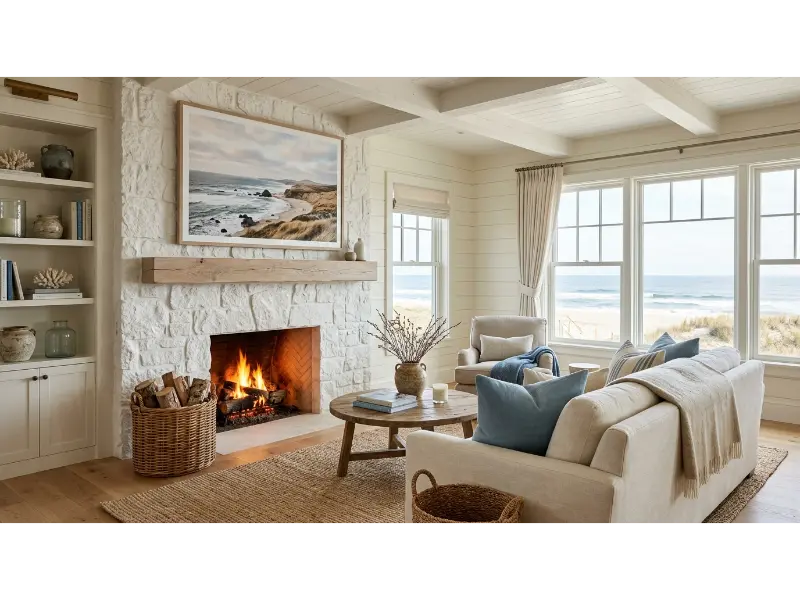
A textured fireplace can become a beautiful focal point in a coastal room, especially in homes where the beach atmosphere needs to work through every season. Whitewashed stone, pale brick, or subtle plaster can create an organic backdrop without looking too rustic. Keep the mantel simple with one large ceramic vessel or artwork.
Place comfortable seating around the fireplace rather than arranging everything toward the television. This creates a flexible gathering space for reading, conversation, and relaxing. Layering soft textiles around the hard fireplace surface also makes the room feel warmer and more inviting during cooler months.
Pro Tip: Choose fireplace materials with natural variation. Perfectly uniform finishes can look less organic.
18. Small Coastal Living Room With Smart Layout
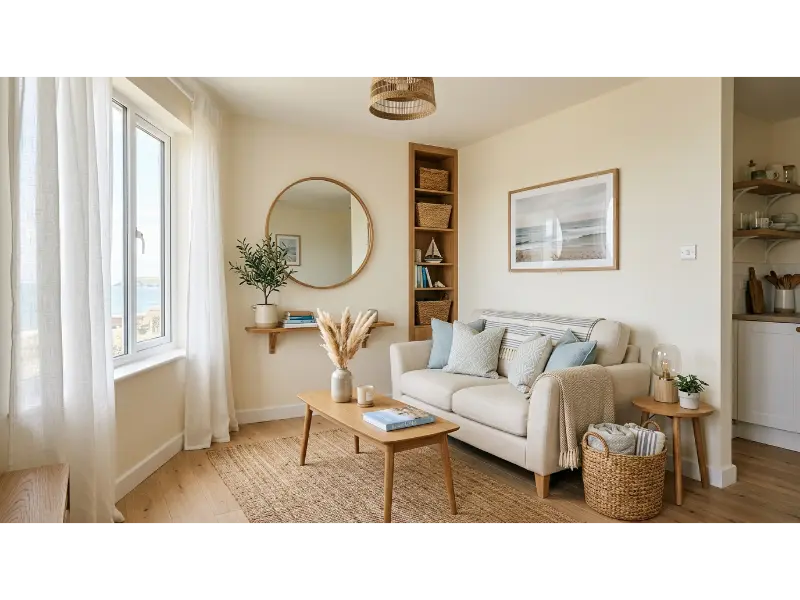
Small rooms can still feel like relaxed coastal retreats when you prioritize visual openness. Choose furniture with exposed legs, a compact sofa, and a slim coffee table rather than bulky pieces. A large mirror opposite a window can help distribute light and make the room feel more spacious.
Use vertical storage for baskets, books, and accessories so the floor remains clear. Keep the color palette light and repeat only a few coastal tones. The goal is not to fill every corner but to make the available space feel useful and breathable. This creates a calm room even when the square footage is limited.
Pro Tip: Measure the room and furniture before buying anything. Coastal style depends heavily on maintaining comfortable negative space.
19. Coastal Boho With Handmade Textures
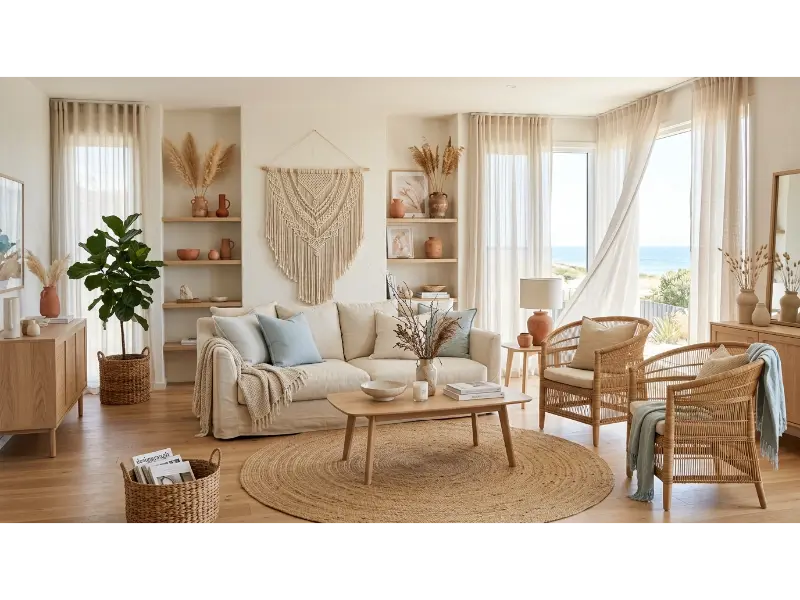
A coastal boho room gives you more freedom to mix textures and handmade details. Begin with a neutral sofa and natural rug, then layer rattan, macrame, woven baskets, handmade ceramics, and soft blue textiles. A small amount of terracotta can introduce warmth and prevent the palette from becoming too cool.
The trick is to keep the color range controlled. Choose two or three supporting shades and let texture provide most of the variety. Handmade pieces can also give the room personality because small imperfections make the space feel collected. This style works especially well for relaxed homes that favor creativity over formal symmetry.
Pro Tip: Repeat natural materials at different heights, such as a floor basket, table lamp, and wall hanging, to create visual balance.
20. Refined Navy and Cream Coastal Style
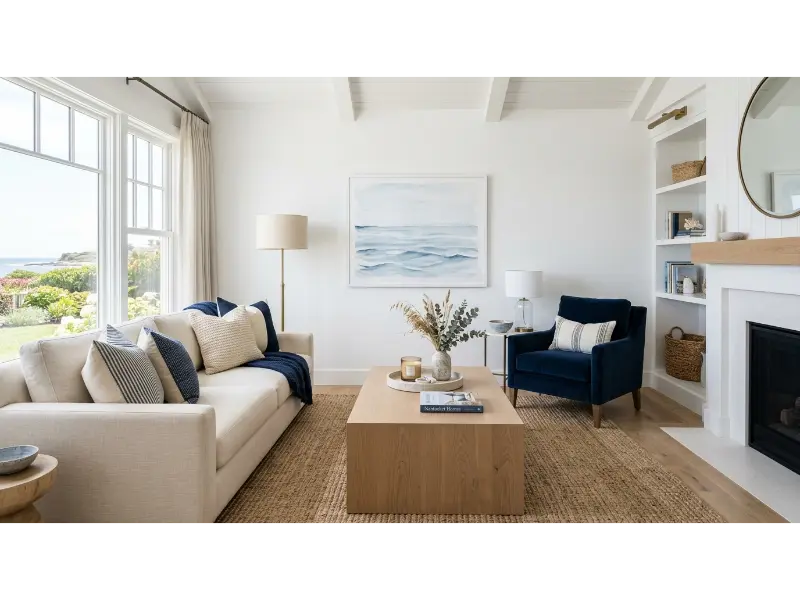
Navy can bring depth to a coastal room when you use it selectively. Instead of painting every wall dark blue, introduce navy through one accent chair, a few cushions, or a patterned rug. Pair it with warm cream upholstery and pale wood so the contrast feels sophisticated rather than heavy.
Brass or aged metal accents can add a small amount of warmth, while woven materials keep the room connected to natural coastal textures. This palette works particularly well in larger rooms because deeper colors can create definition without sacrificing the relaxed feeling.
Pro Tip: Keep navy below eye level when possible if you want a lighter overall atmosphere.
21. Coastal Sunroom Inspired Living Room
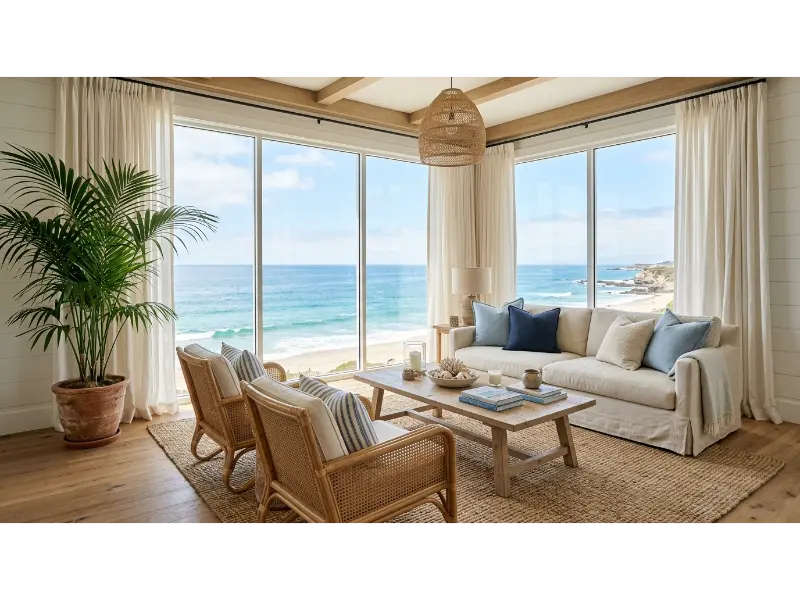
If your living room receives abundant sunlight, emphasize that natural feature instead of covering the windows with heavy treatments. Use sheer linen curtains that soften the light while preserving the bright connection to the outdoors. Arrange seating toward the windows so the view becomes part of the room’s design.
Keep furniture comfortable and low profile to maintain an open sightline. Cream upholstery, pale wood, and woven chairs will reflect the light beautifully. Add one or two plants to connect the interior with the landscape. The result should feel like a sunroom even if your home sits far from the coast.
Pro Tip: Use UV protective window treatments where strong sunlight could fade upholstery, rugs, and artwork.
22. Sophisticated Coastal With Warm Neutrals
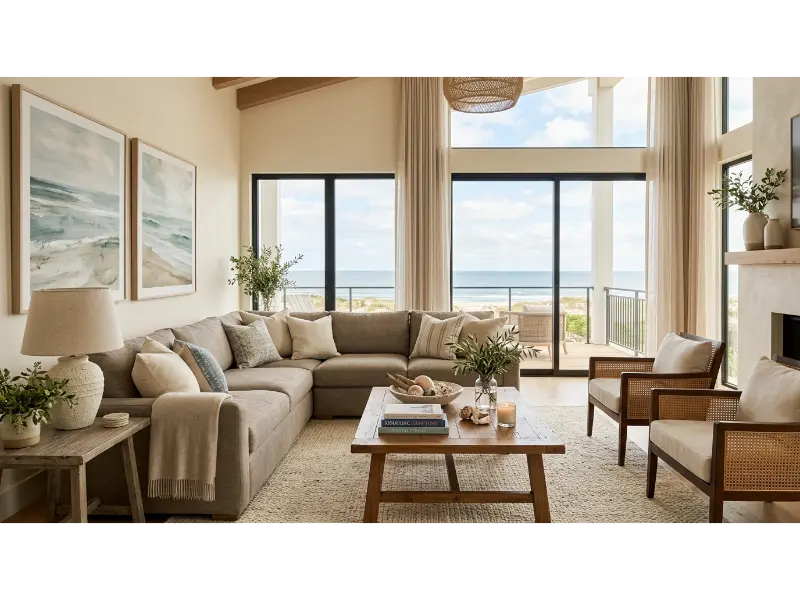
For a more grown up coastal look, replace bright whites with warm ivory, taupe, mushroom, and soft sand. These shades create a sophisticated foundation while allowing subtle ocean blue accents to stand out. Natural wood and woven furniture add warmth, while textured fabrics keep the palette interesting.
This style is especially useful if you want your room to feel coastal without looking like a vacation rental. Choose quality looking materials and fewer decorative pieces. One beautiful artwork, a sculptural lamp, and a textured rug can have more impact than many small accessories. The room should feel curated but still comfortable.
Pro Tip: Use texture as your main source of contrast when working with a mostly neutral palette.
23. Personalized Beach House Retreat
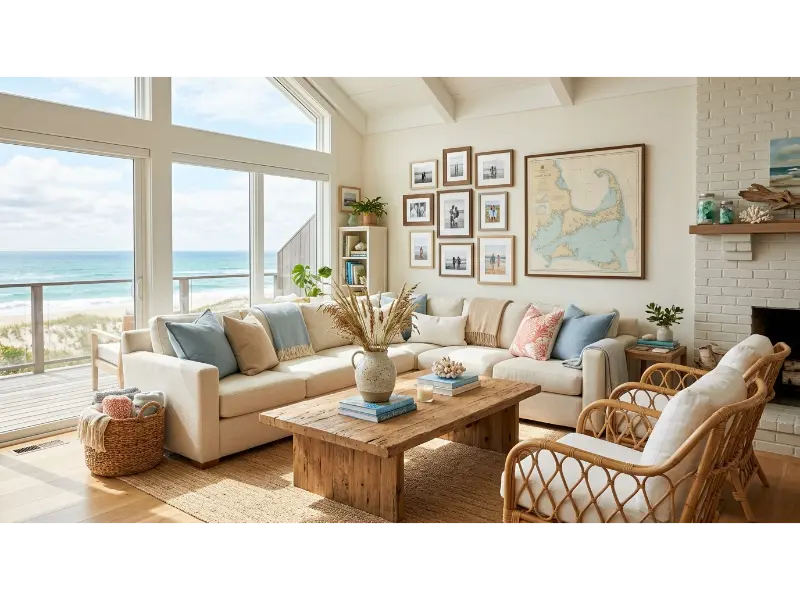
The most memorable coastal rooms feel personal. Instead of copying a showroom, bring in pieces that connect you with places, people, or experiences. Frame photographs from favorite seaside trips, display a vintage map of a meaningful coastline, or place a handmade ceramic object on the coffee table. These details give the room an emotional story.
Keep the background simple so personal pieces remain easy to notice. A neutral sofa, natural wood, woven textures, and soft blue accents create a flexible foundation. This approach also reflects the direction of modern coastal design, which increasingly favors meaningful details and natural textures over obvious beach themed decorations.
Pro Tip: Choose personal objects because they mean something to you, not simply because they look beachy.
How to Make a Beach Themed Living Room Feel Authentic
The strongest coastal interiors usually start with light, natural materials, and a restrained color palette. Warm whites, sandy neutrals, soft blues, muted greens, pale woods, linen, rattan, jute, and woven fibers create the foundation. Designers also recommend avoiding excessive nautical symbols because too many anchors, shells, ropes, and signs can make a room feel themed instead of naturally coastal.
Think about how the room should feel before choosing individual decorations. If you want calm, prioritize soft textures and uncluttered furniture. If you want a family friendly space, choose durable upholstery and practical baskets. If you prefer luxury, use fewer pieces but select richer textures and carefully chosen artwork. A successful coastal room does not need to look identical to another home. It should reflect your lifestyle while borrowing the peaceful qualities of the shoreline.
Coastal Color Combinations That Work Best
A reliable palette starts with a warm neutral such as ivory, cream, beige, or sand. Add one main coastal color, such as dusty blue, sea glass green, muted aqua, or deep navy. Finish with natural wood tones and small amounts of greenery. This approach gives you enough contrast without losing the airy feeling that makes coastal interiors so appealing.
Do not feel limited to blue and white. Current coastal interiors increasingly combine warm neutrals, earthy colors, natural woods, and softer ocean inspired shades. California coastal spaces, for example, often mix creams, beige, brown, greens, and blues for a warmer organic effect.
Materials That Bring Coastal Style to Life
Natural materials are one of the easiest ways to create a convincing coastal atmosphere. Rattan furniture, jute rugs, linen upholstery, light wood, woven baskets, cotton textiles, and handmade ceramics add tactile interest without requiring strong patterns. These materials also create the relaxed texture associated with beach homes.
Texture becomes especially important when your color palette stays neutral. Combine a smooth ceramic lamp with a rough woven basket, soft linen sofa, natural wood table, and textured rug. The contrast keeps the room visually rich while maintaining the calm quality people usually want from coastal decorating.
Common Mistakes to Avoid in Coastal Living Rooms
The biggest mistake is trying to make every object announce the beach. A few coastal references can feel elegant, but repeated shells, anchors, rope details, nautical signs, and matching blue accessories can quickly overwhelm the room. Modern coastal designers increasingly favor subtle references through color, texture, artwork, and natural materials.
Another common mistake is choosing only cool white and bright blue. That combination can make a room feel stark. Add warm beige, natural wood, woven textures, and soft lighting to create balance. Finally, avoid sacrificing comfort for appearance. The best coastal living spaces invite people to sit down, relax, read, talk, and spend time together.
FAQs
What colors work best for a Beach Themed Living Room?
Warm white, cream, sand, beige, pale blue, sea glass green, muted aqua, and navy all work well. Start with a neutral foundation and use one or two ocean inspired shades as accents.
How can I make my living room look coastal without using seashells?
Focus on natural textures, linen, rattan, jute, light wood, soft blue colors, and ocean inspired artwork. These elements create a coastal feeling without relying on obvious beach decorations.
Can coastal style work in a small living room?
Yes. Use light colors, compact furniture, exposed legs, mirrors, sheer curtains, and uncluttered surfaces. Keeping the floor visually open can make a small room feel brighter and more spacious.
What type of rug is best for coastal decor?
Jute, sisal, cotton, and other natural textured rugs work particularly well. Choose a neutral color that connects with your sofa and flooring while adding tactile interest.
Is coastal style still popular in 2026?
Yes, but the look has evolved. Current coastal design favors refined natural textures, meaningful artwork, warm neutrals, and personal details instead of heavily themed nautical decorations.
How do I make coastal decor look expensive?
Use fewer decorative pieces, prioritize texture, choose cohesive colors, and mix natural materials. A large statement artwork, quality looking linen, warm wood, and carefully selected lighting can create more impact than many inexpensive accessories.
Can I combine coastal style with modern furniture?
Absolutely. Modern furniture can make coastal decorating feel cleaner and more current. Balance straight lines with organic shapes, woven textures, pale wood, and soft natural fabrics.
How much blue should I use in a coastal room?
There is no fixed amount. For a subtle look, use blue through cushions, artwork, and small accessories. For stronger impact, add a blue accent wall or statement chair while keeping major furniture pieces neutral.
Conclusion
A beautiful Beach Themed Living Room is less about decorating with beach objects and more about recreating the feeling of being near the water. Start with natural light, comfortable furniture, warm neutrals, soft ocean colors, and tactile materials such as linen, rattan, jute, and wood. Then add personality through artwork, plants, vintage finds, and meaningful objects.
The most successful coastal spaces feel relaxed without looking unfinished and polished without becoming formal. Whether you choose a minimalist retreat, a cozy coastal cottage, a California inspired room, or a sophisticated neutral design, focus on creating a space that feels comfortable every day. Let the colors, textures, and natural materials suggest the shoreline while allowing your own personality to complete the room.