
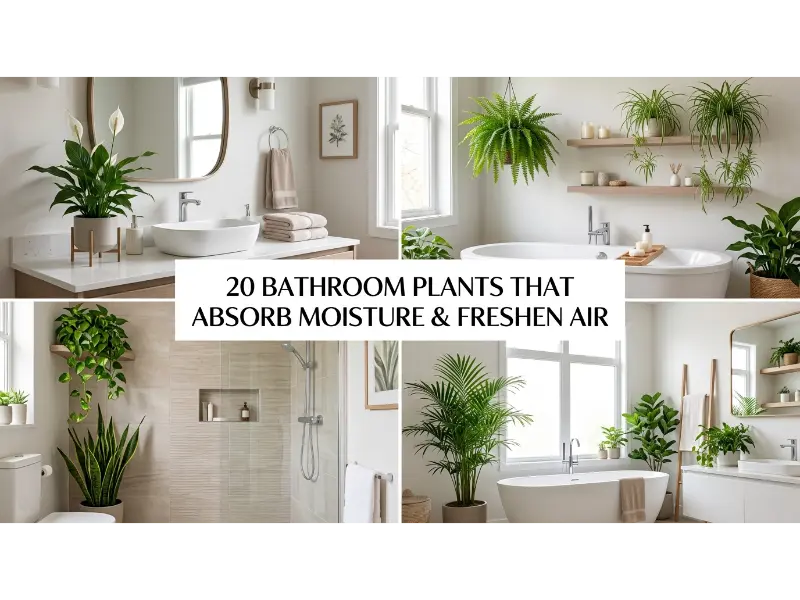
20 Bathroom Plants That Absorb Moisture & Freshen Air
A steamy bathroom can become one of the best places in your home for the right greenery. The warm, humid air created by showers gives many tropical houseplants conditions that closely match their natural environment. The key is choosing plants that enjoy high humidity, tolerate your bathroom’s light level, and still have enough airflow to stay healthy. While plants should not replace a proper exhaust fan or ventilation, they can add a fresh, natural feeling while softening hard tile, glass, and metal surfaces. This collection brings together beautiful choices for everything from tiny bathrooms to spacious spa inspired rooms. You will find easy care favorites, trailing plants, statement foliage, and unusual varieties that can handle moisture beautifully.
Best Bathroom Plants for Humid, Fresh Spaces
1. Spider Plant
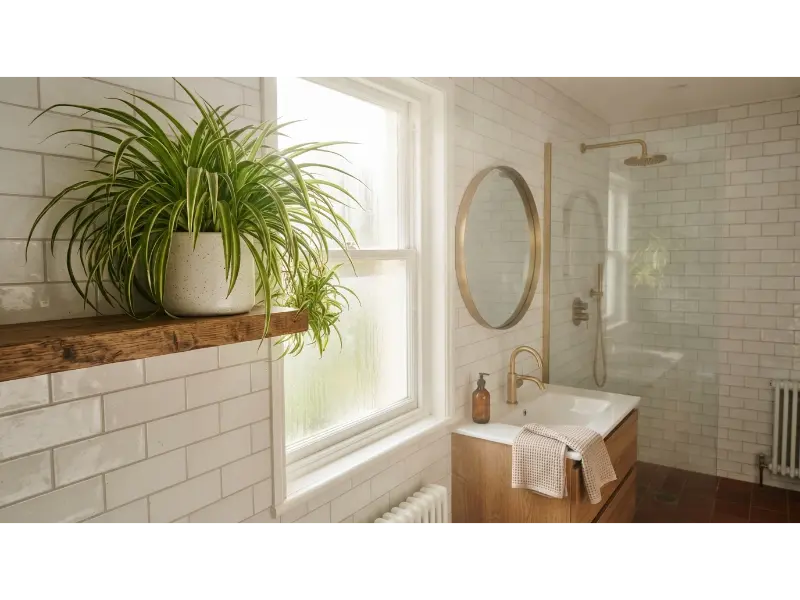
Bathroom Plants That Absorb Moisture can start with the classic spider plant because it combines an easy growing nature with attractive arching foliage. Its narrow striped leaves bring movement to a bathroom shelf without making the room feel crowded. It works especially well beside a mirror or on a floating shelf where its baby plantlets can naturally trail downward. Spider plants also tolerate a range of indoor conditions, making them a practical choice for beginners.
Give your spider plant bright indirect light when possible and let the potting mix dry slightly between waterings. A bathroom with a window can provide useful humidity, but do not rely on moisture in the air alone to meet its watering needs. Choose a container with drainage so excess water can escape easily. This simple setup keeps the roots healthier and prevents soggy soil from becoming a problem.
Pro Tip: Place a spider plant where its trailing babies can hang freely instead of crowding them behind toiletries.
2. Boston Fern
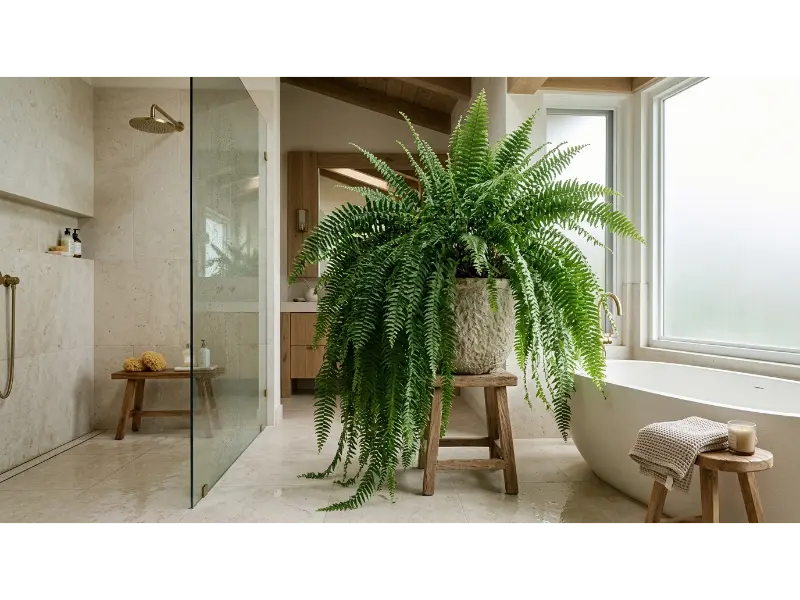
Boston fern is one of the most natural choices for a steamy bathroom because it loves warmth and humidity. Its soft, ruffled fronds create a lush effect that can instantly make an ordinary bathroom feel more like a private garden retreat. It looks beautiful in a hanging basket, on a plant stand, or beside a freestanding bathtub where its arching foliage becomes part of the room’s decor.
Keep the compost consistently moist without leaving the roots sitting in water. Bright indirect light helps the fronds stay full, while direct sunlight can scorch delicate foliage. If your bathroom becomes especially dry between showers, occasional misting or grouping plants together can raise local humidity. The Royal Horticultural Society lists Boston fern among its recommended large bathroom houseplants because it enjoys warm, humid conditions.
Pro Tip: Give a Boston fern plenty of room around its fronds so air can circulate and the plant can develop a fuller shape.
Read More: 23 Bathroom Tile Ideas for a Luxe Look
3. Bird’s Nest Fern
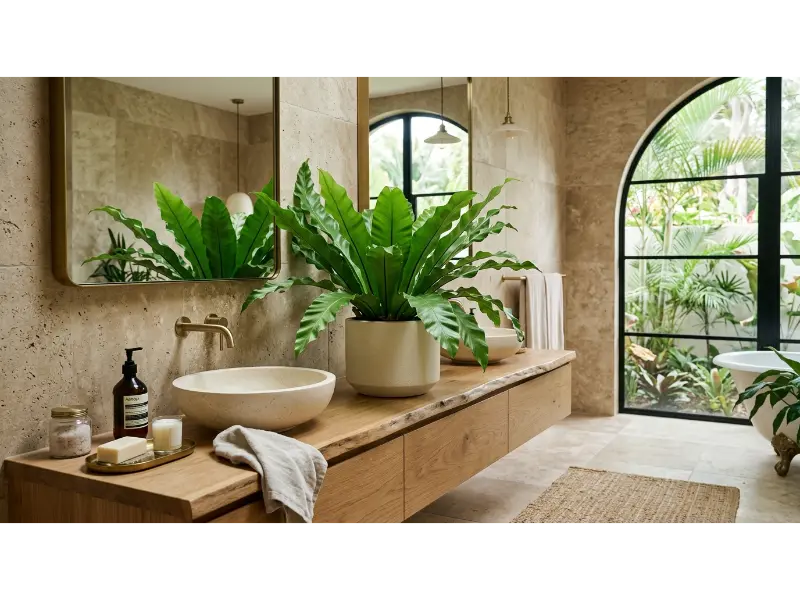
Bird’s nest fern brings a different texture to a humid bathroom because its broad leaves grow outward from a central rosette. Instead of delicate fronds, you get bold, glossy foliage that creates a strong focal point without requiring a huge amount of floor space. It looks especially attractive beside a wooden vanity, on a stool, or in a raised planter near a bright frosted window.
This fern naturally grows in tropical environments and appreciates warm, humid conditions. The RHS notes that its natural growth habit helps explain why it suits steamy bathroom environments so well. Keep it away from harsh direct sun and maintain suitable moisture without keeping the pot waterlogged. Its architectural shape also makes it useful when you want tropical bathroom decor that feels polished rather than overly busy.
Pro Tip: Water around the soil rather than repeatedly filling the center of the rosette to reduce the risk of crown problems.
4. Peace Lily
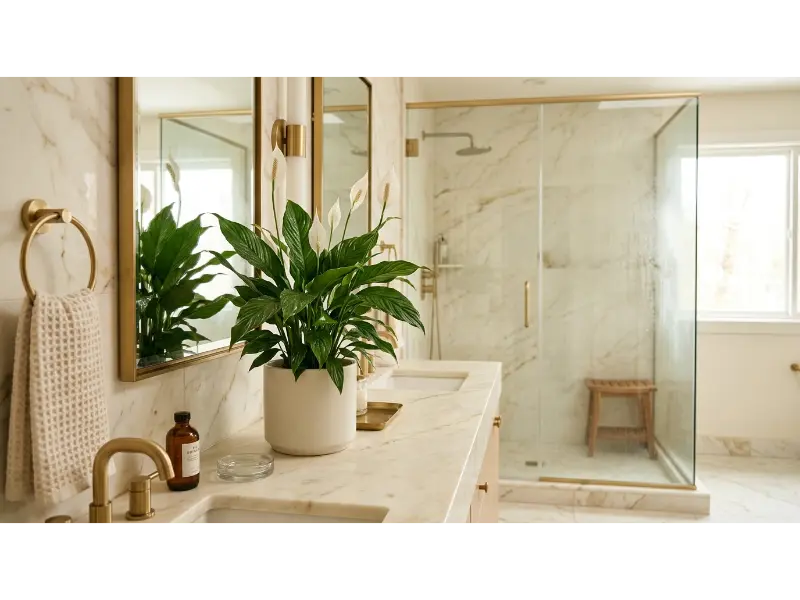
Peace lily is a favorite for homeowners who want greenery plus elegant flowers. Its deep green leaves create a rich contrast against pale bathroom walls, while the white spathes add a clean and sophisticated accent. The plant works beautifully beside a bathtub, near a vanity, or in an empty corner where its vertical growth can soften hard architectural lines.
A peace lily prefers warm conditions and bright indirect light, making a naturally lit bathroom particularly suitable. Avoid placing it directly against a cold window or near strong heating sources. The plant likes moisture, but constantly saturated compost can cause root problems. Humid air can support healthy foliage, yet regular watering should still depend on the soil and growing conditions rather than the presence of shower steam alone.
Pro Tip: If the leaves suddenly droop, check the soil before watering because drooping can signal either dryness or another growing issue.
5. Maidenhair Fern
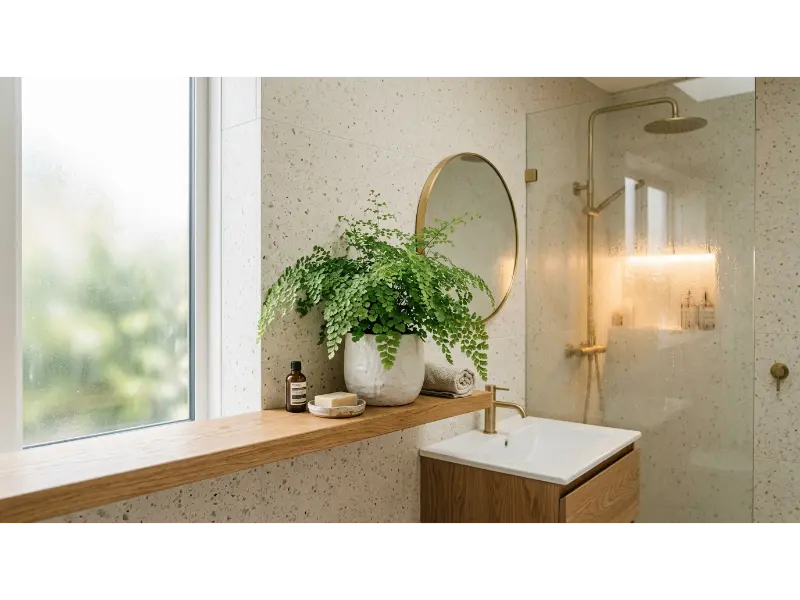
Maidenhair fern is ideal when you want a delicate plant that makes a bathroom feel soft and romantic. Its tiny leaflets create an almost cloudlike appearance, especially when the plant sits on a shelf or narrow vanity. The fine foliage works beautifully with light wood, cream tile, natural stone, and other calm materials often used in modern bathroom plant decor.
This fern appreciates humid surroundings and bright light without harsh direct sun. A frequently used bathroom can provide the moist atmosphere it prefers, but it still needs attentive care because the soil should not dry completely. Keep it away from strong drafts and monitor the foliage regularly. The RHS specifically recommends maidenhair fern for bright bathrooms that receive indirect light and naturally humid conditions.
Pro Tip: Choose a spot with steady humidity and consistent light rather than moving the fern frequently around the bathroom.
Read More: 20 Bathroom Sink Design Ideas You’ll Want to Copy
6. Cretan Brake Fern
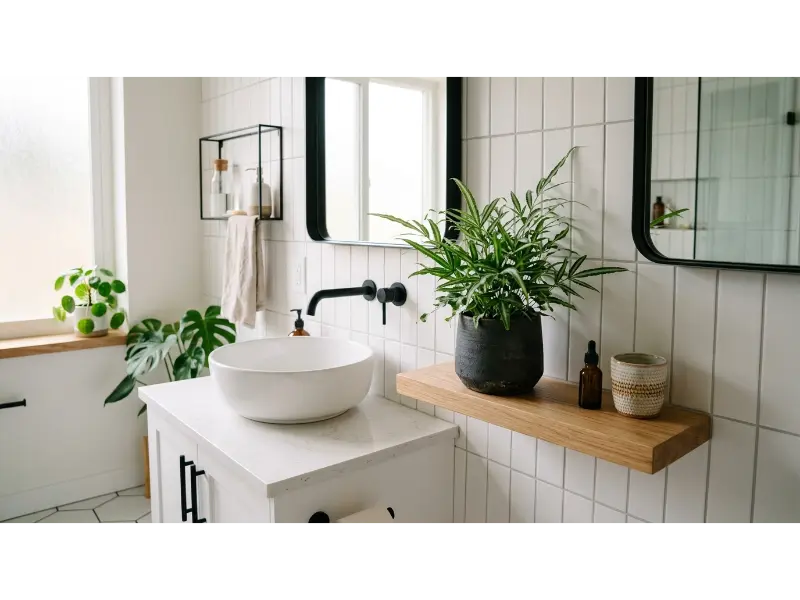
Cretan brake fern offers an elegant combination of narrow foliage and compact growth. Its straplike leaflets create a tidy appearance that works particularly well in smaller bathrooms where large plants could overwhelm the room. The white striped forms can also brighten darker spaces and create contrast against charcoal tile, black fixtures, or deep wood finishes.
This fern enjoys moisture and bright indirect light, making it a strong candidate for a bathroom with a frosted or shaded window. Keep the compost reasonably moist while allowing excess water to drain away. Humidity helps the foliage stay attractive, but good ventilation still matters because overly wet conditions can encourage fungal problems. Choosing the right plant for the actual light and moisture conditions remains more important than choosing a plant simply because it looks good.
Pro Tip: Use a white or pale planter to make the striped foliage stand out against darker bathroom surfaces.
7. Air Plant
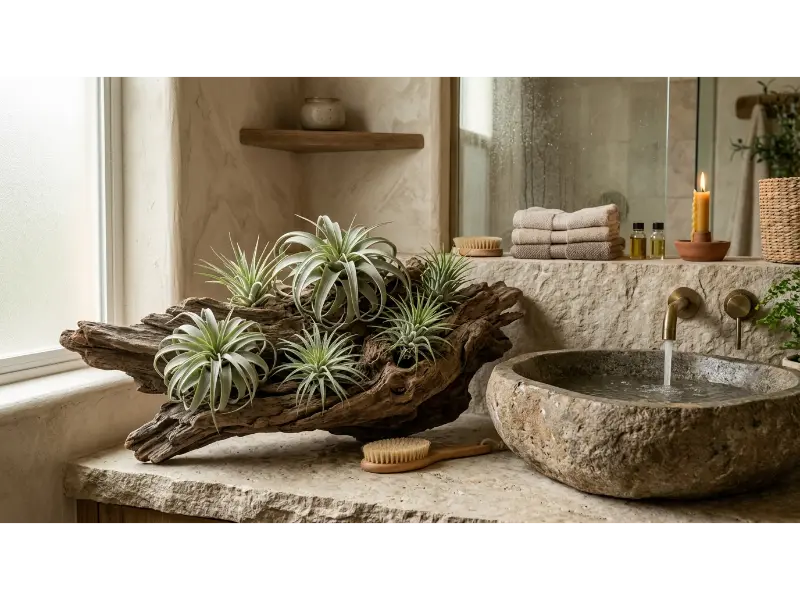
Air plants create one of the most unusual humid bathroom ideas because they do not need traditional potting soil. Their sculptural forms can sit on driftwood, decorative stones, wall mounts, or small shelves. This makes them especially useful when counter space is limited. Their silvery leaves also provide a beautiful contrast against white tile and warm natural materials.
Tillandsia naturally obtains moisture through specialized structures on its leaves, which help capture water from rainfall and fog in its native environments. However, bathroom steam alone does not guarantee enough moisture for healthy growth. Give air plants appropriate watering and let them dry properly afterward. Good air circulation is essential, especially in a room that remains damp for long periods.
Pro Tip: Display air plants where they receive bright filtered light and enough airflow to dry after watering.
8. Umbrella Plant
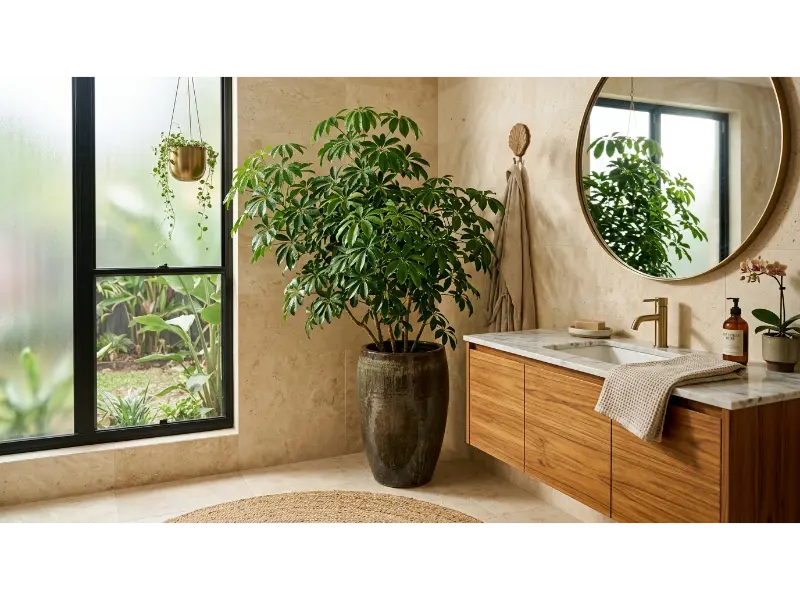
Umbrella plant is a striking choice for homeowners who want a taller plant with a tropical personality. Its clustered leaflets create a rounded canopy that can soften an empty bathroom corner. A tall planter can make the plant feel like an intentional design feature rather than an accessory. It works particularly well with warm wood, natural stone, woven baskets, and other organic bathroom materials.
Unlike drought tolerant houseplants, umbrella plants appreciate moist surroundings and consistent growing conditions. Choose bright indirect light and avoid extreme temperature changes. The bathroom should feel warm rather than cold and drafty, especially during winter. A container with reliable drainage remains essential because humidity does not mean the roots should remain saturated. Matching the plant to its actual growing conditions gives you a healthier and longer lasting display.
Pro Tip: Use a tall umbrella plant to fill an unused corner beside a bathtub while keeping walkways completely clear.
9. Peaceful Fittonia
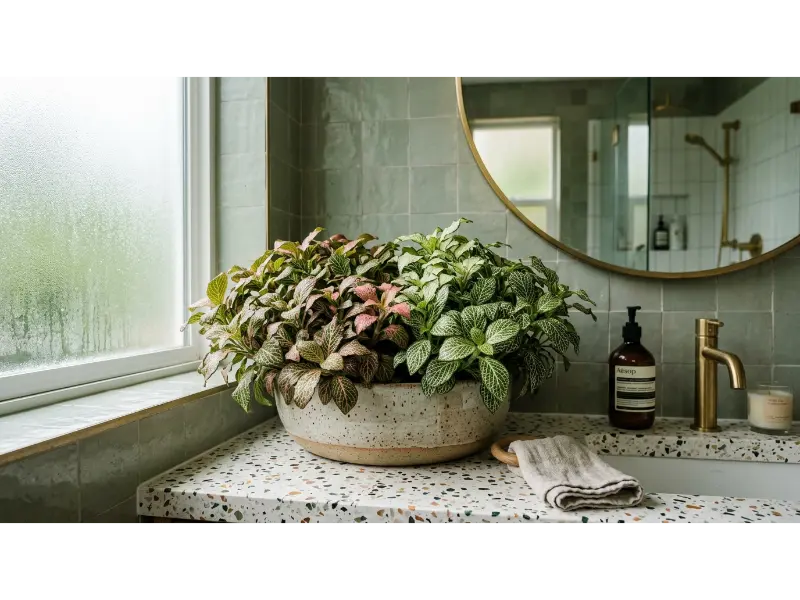
Fittonia, often called nerve plant, brings color into a bathroom without taking up much space. Its compact leaves feature striking pink, white, or red veins that can become a beautiful accent against neutral tile. Because the plant stays relatively small, it works well on narrow shelves, vanity corners, windowsills, and decorative trays where larger foliage would feel too heavy.
Fittonia genuinely enjoys high humidity, which makes a regularly used bathroom a natural match. The RHS recommends bright light away from direct sun and warns against keeping the compost waterlogged. Let the plant stay comfortably moist while ensuring the container drains well. Its small size also makes it a useful option for creating a layered indoor plant display alongside taller ferns or trailing foliage.
Pro Tip: Pair Fittonia with a simple neutral pot so its colorful leaf veins become the main visual feature.
10. Calathea
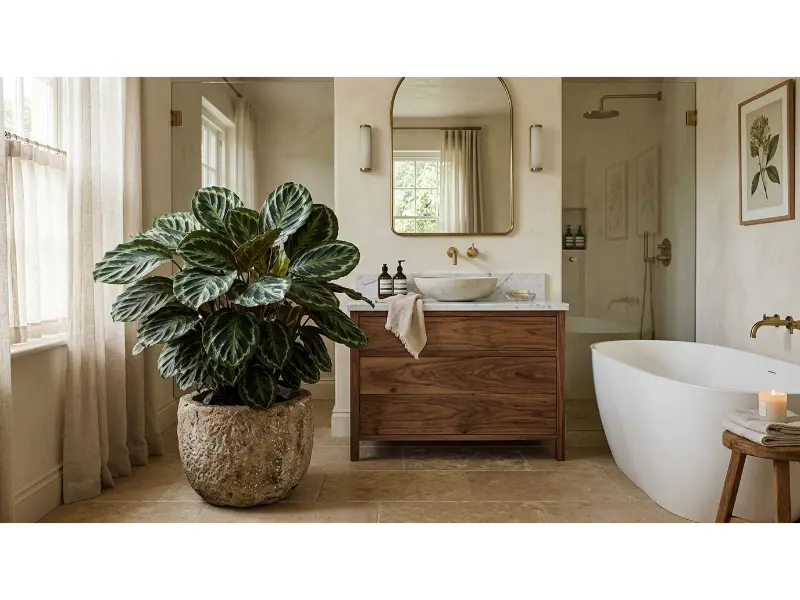
Calathea can turn a simple bathroom into a lush botanical retreat with patterned foliage that looks almost painted by hand. Different varieties offer different leaf markings, allowing you to choose a style that complements your bathroom palette. Its broad foliage looks especially beautiful beside natural stone, warm wood, and soft neutral finishes.
Calatheas prefer humid conditions and stable temperatures, so a warm bathroom can provide a useful environment. Avoid placing the plant beside heating vents, cold drafts, or intense direct sunlight. Keep moisture consistent but do not allow the potting mix to stay saturated. The RHS notes that calatheas enjoy high humidity, making them suitable candidates for rooms where moist air occurs naturally.
Pro Tip: Keep Calathea away from sudden temperature changes because consistency often matters as much as humidity.
11. Monstera
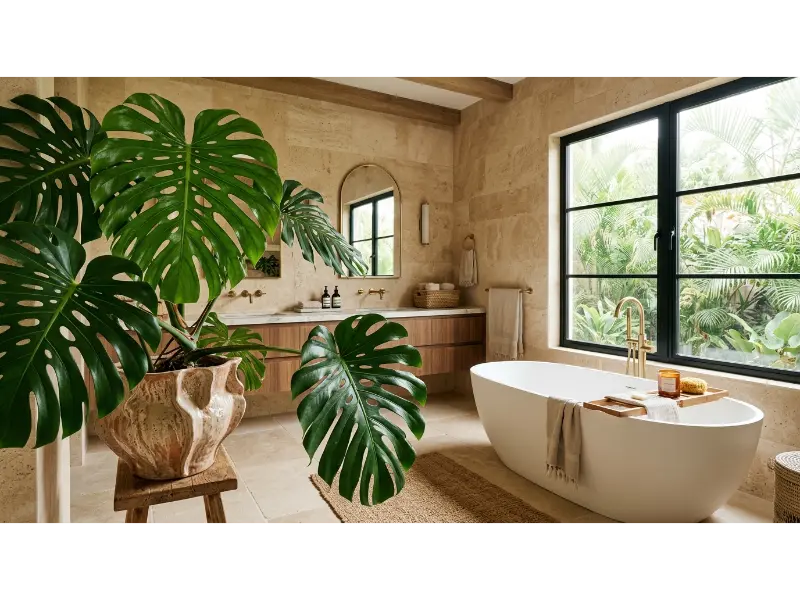
Monstera is perfect when you want a dramatic statement plant rather than a small decorative accent. Its oversized split leaves create instant tropical character and can make a plain bathroom feel more luxurious. Place it beside a freestanding bathtub or in a spacious corner where the foliage has enough room to spread without blocking movement.
This tropical plant appreciates warm, humid conditions and bright indirect light. Give it a sturdy container and enough room for its mature size. Humidity can support attractive foliage, but watering should still follow the condition of the potting mix. The RHS includes Monstera among suitable larger bathroom plants because its tropical background makes warm, humid indoor conditions a good match.
Pro Tip: Rotate the Monstera occasionally so growth stays balanced when light comes mainly from one bathroom window.
12. ZZ Plant
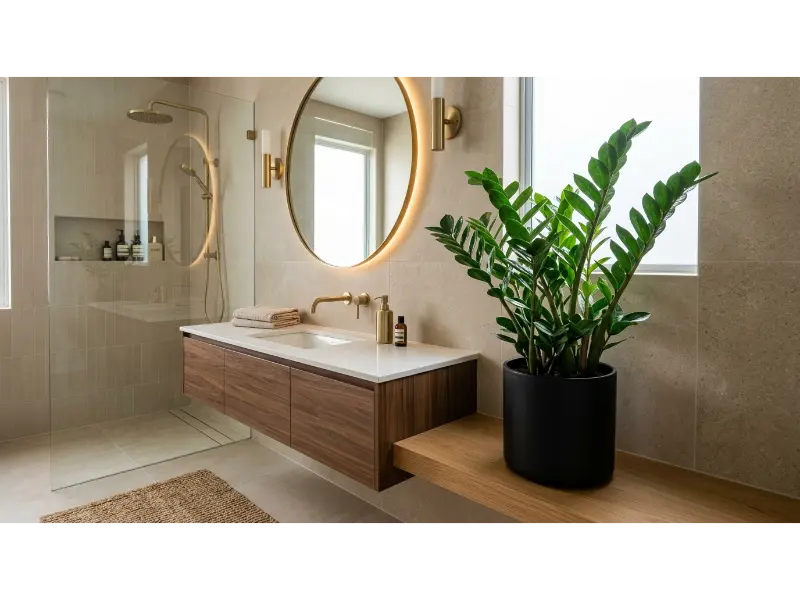
ZZ plant is a practical option for bathrooms where plant care needs to stay simple. Its glossy leaves and upright stems give it a polished appearance, while its structured growth works well with modern bathroom furniture. It can fill a corner or sit beside a vanity without requiring the constant attention that some humidity loving plants need.
Although ZZ plants can tolerate less frequent watering, they still need suitable light and should not sit in constantly wet compost. A bathroom with indirect natural light can work well, provided the plant receives enough illumination. The RHS describes ZZ plant as unfussy and forgiving, making it especially useful for beginners who want attractive greenery without a demanding care routine.
Pro Tip: If your bathroom has limited natural light, use a ZZ plant only where it still receives enough useful ambient light for long term growth.
13. Mind Your Own Business Plant
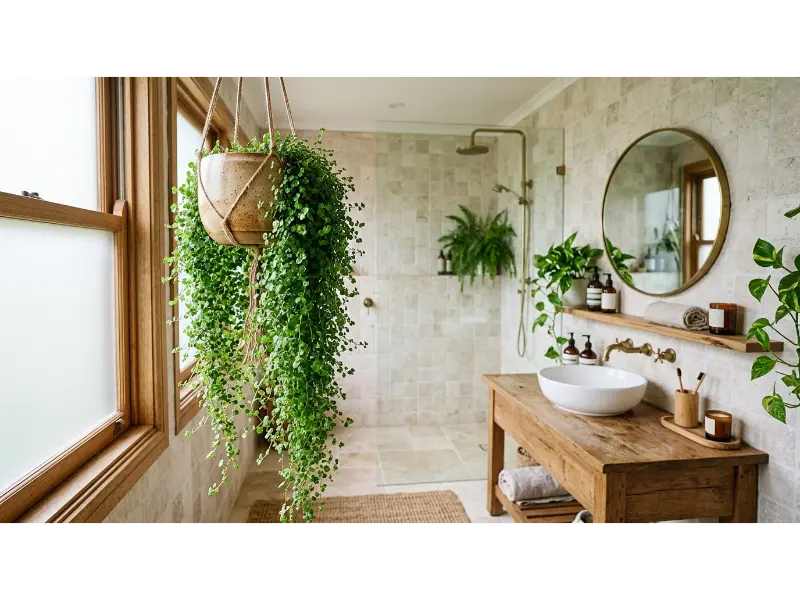
Mind your own business plant offers a charming way to introduce tiny scale greenery into a bathroom. Its dense carpet of small round leaves creates a soft, mosslike appearance that looks beautiful spilling over the edge of a hanging planter. It works particularly well in compact bathrooms where a large tropical plant would not fit comfortably.
This plant naturally prefers moist conditions, so a humid bathroom can provide an appealing environment. Keep it in bright indirect light and avoid letting its compost dry completely. At the same time, drainage remains important because constantly saturated roots can cause problems. The RHS lists this plant among suitable small bathroom choices because of its natural preference for moisture and humid surroundings.
Pro Tip: Grow it in a hanging container to create a soft cascading effect without sacrificing valuable countertop space.
14. Clubmoss
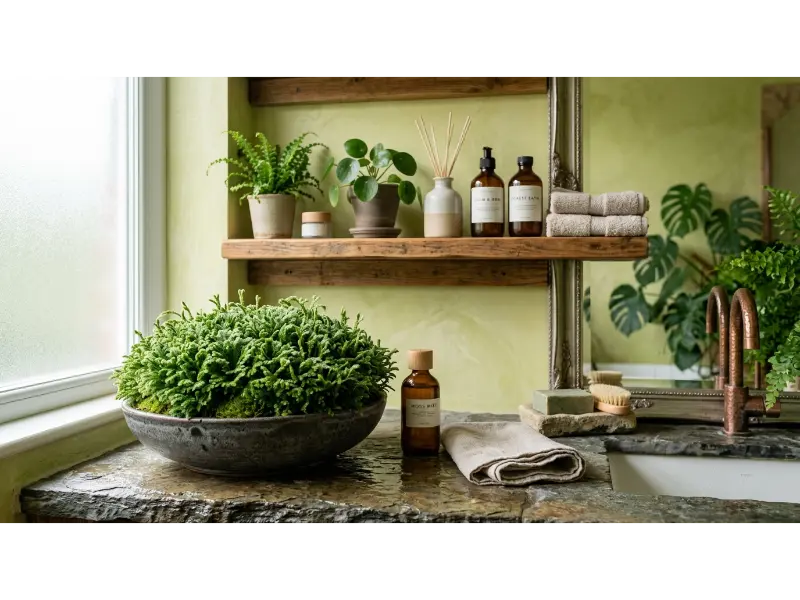
Clubmoss is an unusual choice that can make your bathroom greenery feel more distinctive. Its tiny, dense foliage creates a soft textured surface that contrasts beautifully with smooth tile and polished fixtures. It stays relatively compact, so you can use it on shelves or as part of a layered arrangement with larger ferns.
Humidity is one of the reasons clubmoss works well in regularly used bathrooms. It prefers moisture and can benefit from the naturally humid environment created by showers. Give it suitable indirect light and keep the growing medium from drying excessively. Because the plant likes moisture, it can complement a bathroom where humidity loving foliage already forms part of the room’s overall styling.
Pro Tip: Use clubmoss as a foreground plant in a layered display, placing taller foliage behind it for depth.
15. Parlour Palm
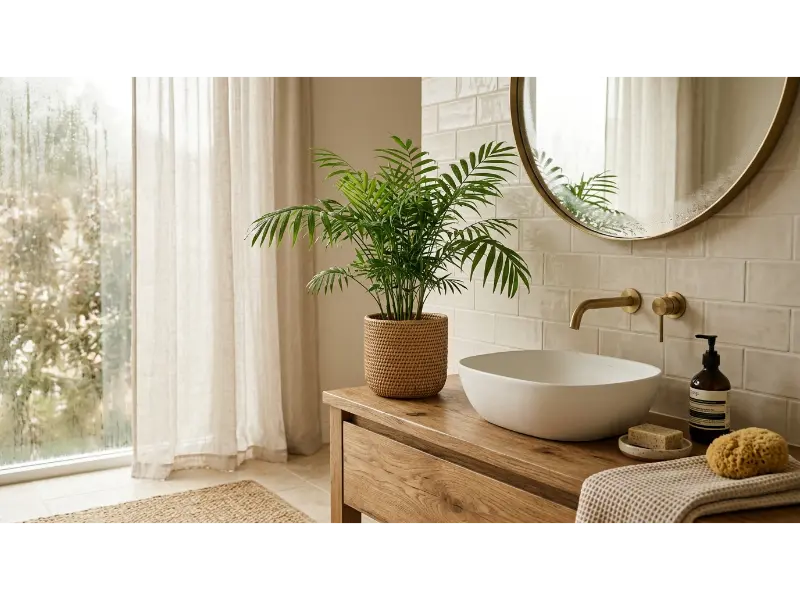
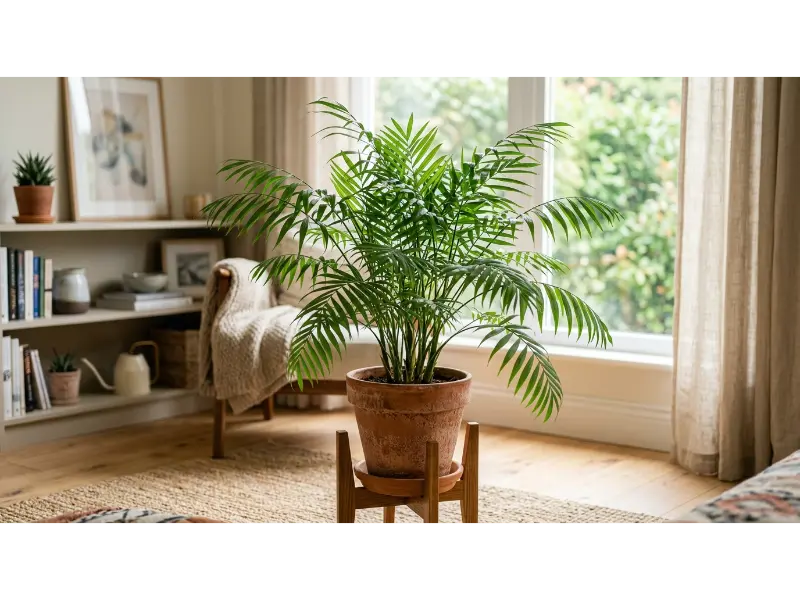
Parlour palm brings soft vertical height without the dramatic size of a Monstera. Its thin stems and delicate fronds create a relaxed tropical feeling that works especially well with neutral bathrooms. A woven basket or textured planter can make the display feel warmer and more natural, while the plant itself softens hard surfaces around the vanity or bathtub.
Give parlour palm bright filtered light and avoid harsh direct sun. Bathrooms with natural light can provide a comfortable environment, while consistent warmth helps the foliage remain attractive. Do not assume humidity eliminates the need for proper watering. Check the growing medium regularly and use a container with drainage. A balanced combination of light, temperature, water, and humidity creates better long term growth.
Pro Tip: Choose a compact palm for a small bathroom and a larger specimen only when the room has enough floor space.
16. Heartleaf Philodendron
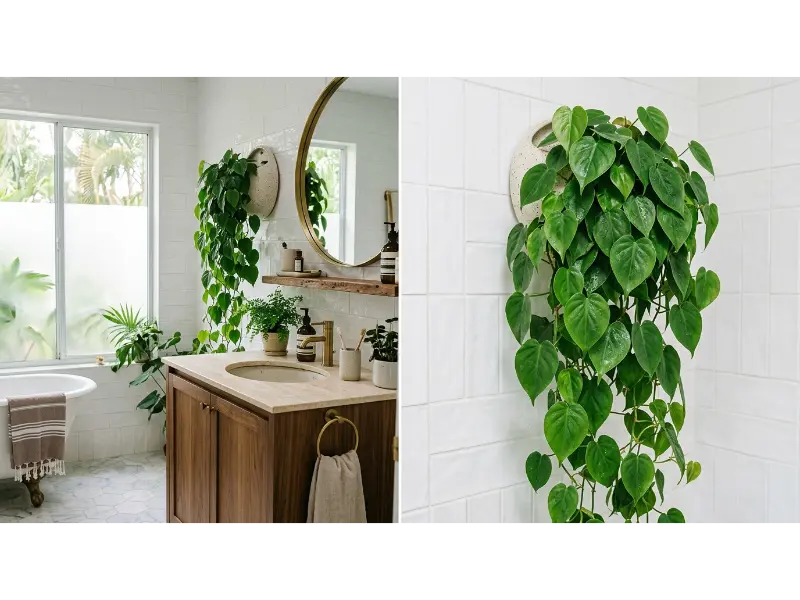
Heartleaf philodendron is a wonderful option when you want greenery that naturally trails. Its heart shaped leaves can soften shelves, wall planters, and tall cabinets while creating a relaxed indoor jungle effect. The plant looks particularly attractive when its vines are allowed to fall freely instead of being trimmed into a compact shape.
Choose a bathroom with bright indirect light for healthy, attractive foliage. Keep the soil moderately moist while allowing excess water to drain away. Humid air can support tropical foliage, but avoid treating bathroom steam as a replacement for normal plant care. This approach makes the philodendron both decorative and practical for creating a layered tropical bathroom look without using bulky floor plants.
Pro Tip: Train the vines around a shelf edge or wall support to create a deliberate cascading effect.
17. English Ivy
English ivy can add movement to a bathroom through its long trailing stems and attractive lobed leaves. Instead of placing it on the floor, use a hanging planter where the vines can fall naturally. This creates vertical greenery while keeping countertops and walking areas clear. Its classic shape also works beautifully with cottage, vintage, and traditional bathroom styles.
Give ivy bright indirect light and maintain good airflow around the foliage. Avoid keeping the compost permanently wet, even if your bathroom feels humid after showers. Regularly inspect the leaves and stems for pests, particularly when the plant becomes dense. A healthy trailing plant should look fresh and flexible rather than limp, yellow, or overly wet.
Pro Tip: Trim long vines occasionally to encourage fuller growth instead of allowing the plant to become sparse at the base.
18. Orchid
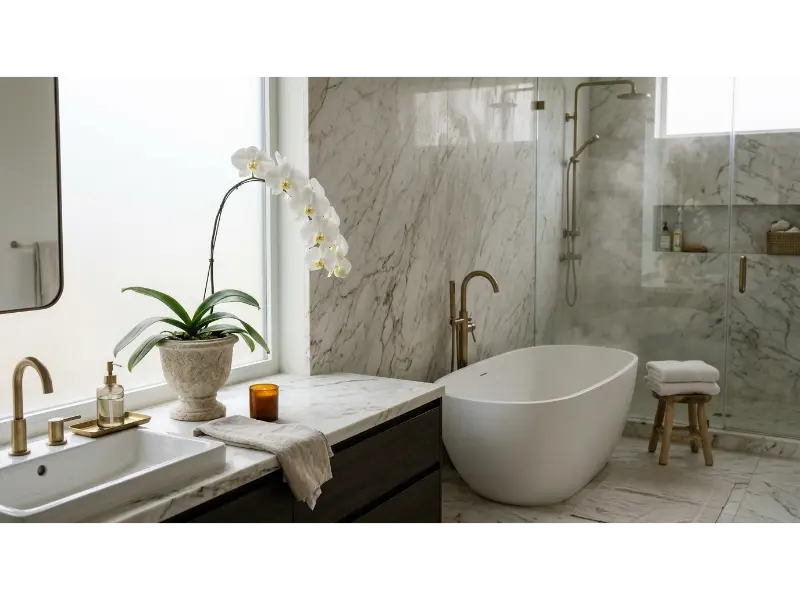
Orchids can make a bathroom feel instantly more refined because their flowers bring an elegant focal point without requiring a large plant. A flowering Phalaenopsis orchid looks beautiful beside a basin, bathtub, or bright window where its clean lines complement modern fixtures. The combination of glossy leaves and delicate blooms creates a calm hotel spa effect.
Many orchids appreciate humid air, but they still require careful watering and excellent drainage. Avoid allowing water to remain trapped around the roots for long periods. Bright indirect light generally works better than harsh direct sun. Humidity supports the plant, but the growing medium should still receive time to drain and breathe. Matching the orchid to the available light is essential for reliable flowering.
Pro Tip: Place the orchid near a bright window with filtered light rather than directly against hot glass.
19. Syngonium
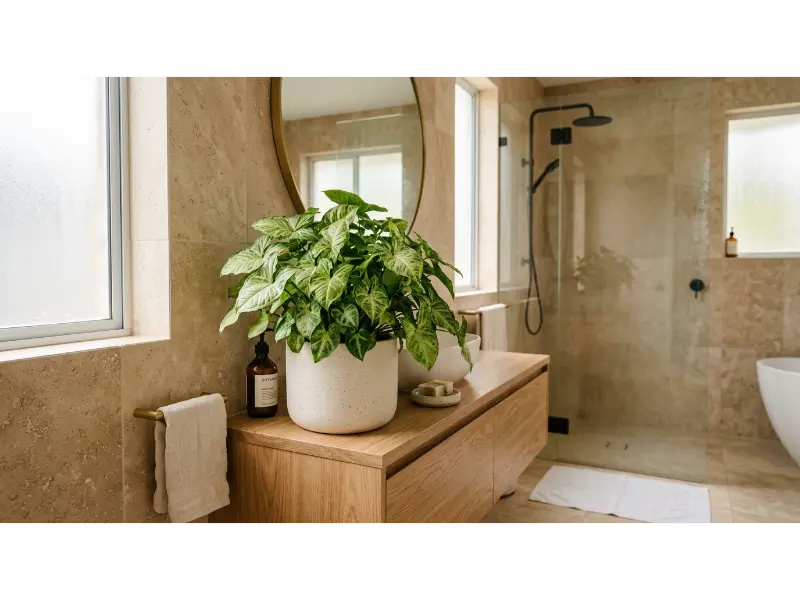
Syngonium adds fresh foliage with a slightly playful shape that works beautifully in modern bathrooms. Its arrow shaped leaves create visual interest without the oversized presence of tropical statement plants. As it matures, the stems can become more trailing, allowing you to use it on a shelf or elevated planter for a softer silhouette.
Provide bright indirect light and keep the growing medium appropriately moist without allowing water to collect around the roots. A humid bathroom can suit this tropical plant, particularly when the room stays warm and receives useful natural light. The RHS includes Syngonium among houseplants that can cope with indoor conditions that vary in temperature and light.
Pro Tip: Prune the growing tips when necessary to encourage a fuller, bushier shape instead of long sparse stems.
20. Bamboo Palm
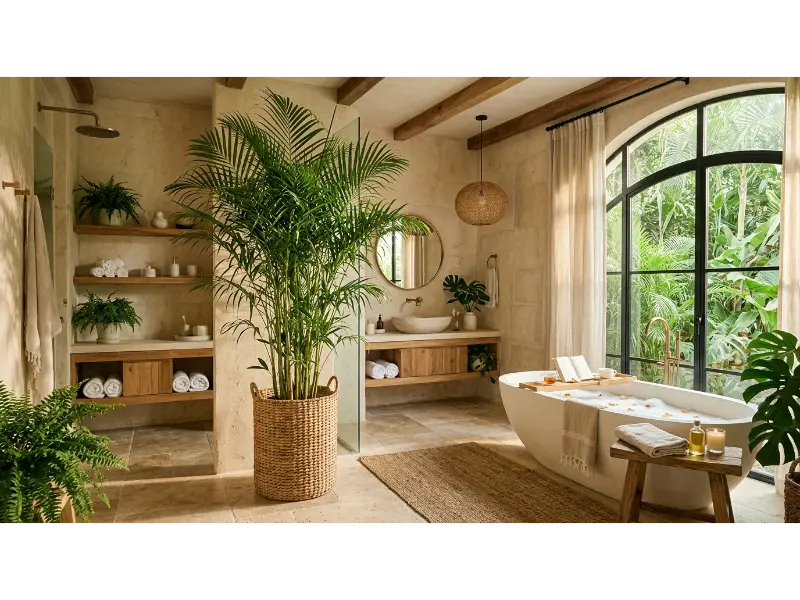
Bamboo palm creates an instant resort feeling and works especially well in bathrooms with enough floor space for a larger plant. Its slender stems and graceful fronds add height without making the room feel visually heavy. Place it beside a bathtub, near a vanity, or in a corner where it can soften straight architectural lines and introduce a relaxed tropical mood.
This palm appreciates warm conditions and suitable humidity, but it still needs adequate natural light to thrive. Avoid positioning it directly against heating sources or in a permanently dark corner. Use a well draining pot and check the growing medium before watering. A humid environment can support the foliage, but balanced care remains important for maintaining healthy roots and attractive leaves.
Pro Tip: Use a tall woven basket around the nursery pot to give the bamboo palm a finished designer look while keeping drainage practical.
How to Choose the Right Bathroom Plant
The best choice depends on more than humidity. Start with natural light, because live plants need enough light to maintain healthy growth. A bathroom with a bright frosted window can support many tropical foliage plants, while a windowless bathroom creates a much more difficult environment. The RHS specifically notes that bathrooms without windows are not suitable for growing live plants naturally.
Next, consider ventilation. Humidity loving plants enjoy moist air, but excessively damp conditions combined with poor airflow can encourage fungal problems. Your exhaust fan still matters. Use plants as part of your bathroom environment rather than as a replacement for ventilation. Choose containers with drainage holes, keep foliage from touching constantly wet walls, and inspect leaves regularly.
For a small bathroom, prioritize compact options such as Fittonia, air plants, clubmoss, spider plants, and maidenhair ferns. For larger rooms, consider Monstera, bamboo palm, umbrella plant, or Boston fern. This approach gives you greenery that suits both the room and the plant’s actual growing requirements.
Bathroom Plant Care Tips for Humid Rooms
Humidity does not mean you should water every plant more often. Plant roots still need oxygen, and constantly waterlogged compost can cause root problems. Always check the growing medium and follow the plant’s individual watering needs. Containers should have drainage holes so excess water can escape.
Keep plants away from direct heat sources and strong drafts. Clean dusty leaves gently so the foliage can receive light effectively. If condensation remains on surfaces for long periods, use the bathroom fan to improve airflow. You can also group humidity loving plants together, but avoid creating an overcrowded corner where air cannot move freely.
Frequently Asked Questions
Do plants really absorb moisture from a bathroom?
Some plants can take up moisture through their foliage, especially species adapted to humid environments. However, houseplants should not be treated as a substitute for an exhaust fan or proper bathroom ventilation. Their main value comes from thriving in humid conditions while adding greenery and visual softness to the space.
What are the best plants for a steamy bathroom?
Boston fern, bird’s nest fern, maidenhair fern, Fittonia, peace lily, air plants, Calathea, and Monstera are strong choices when the bathroom provides suitable light. Tropical plants often appreciate humid air because it resembles the conditions found in their natural habitats.
Can bathroom plants reduce condensation?
Plants may interact with moisture in the surrounding air, but they will not remove bathroom condensation quickly enough to replace ventilation. If your mirror, walls, or ceiling stay wet after showers, improve airflow and use the exhaust fan. Plants should add beauty and complement a healthy bathroom environment rather than act as a dehumidifier.
What plants are best for bathrooms with low light?
A bathroom with very low light is challenging for living plants. ZZ plants, snake plants, and some adaptable houseplants can tolerate lower light better than many tropical species, but tolerance does not mean plants can thrive indefinitely without adequate illumination. If there is no window at all, consider rotating suitable plants between the bathroom and a brighter room.
Should I mist bathroom plants?
Misting can temporarily increase humidity around foliage, but it should not replace proper watering or ventilation. Some humidity loving plants benefit from increased moisture in the air, while constantly wet leaves can contribute to fungal problems in poorly ventilated rooms. Focus first on appropriate light, watering, drainage, and airflow.
Are bathroom plants safe around pets?
Pet safety depends on the individual plant species. Several popular houseplants can cause problems if pets chew or ingest them. If cats or dogs have access to your bathroom, research each plant’s toxicity before bringing it home and place unsuitable plants where pets cannot reach them.
Can I keep plants in a bathroom without a window?
Living plants need light, so a completely windowless bathroom is not naturally suitable for long term plant growth. You can use a suitable artificial grow light or rotate plants between brighter rooms. Do not assume that regular shower steam provides everything a plant needs.
Conclusion
The right greenery can make a bathroom feel warmer, fresher, and much more inviting. The best Bathroom Plants That Absorb Moisture are not simply chosen because they look tropical. They should match the room’s light, temperature, humidity, airflow, and available space. Ferns can create a lush spa atmosphere, trailing plants can soften shelves, and statement foliage can transform an empty corner into a dramatic focal point.
For beginners, spider plants, ZZ plants, peace lilies, and heartleaf philodendrons offer approachable options. If you want a more dramatic look, Monstera, bamboo palm, Boston fern, and bird’s nest fern can create a rich tropical feeling. Remember that plants complement ventilation rather than replace it. With the right placement and basic care, your bathroom can become one of the most beautiful green spaces in your home.