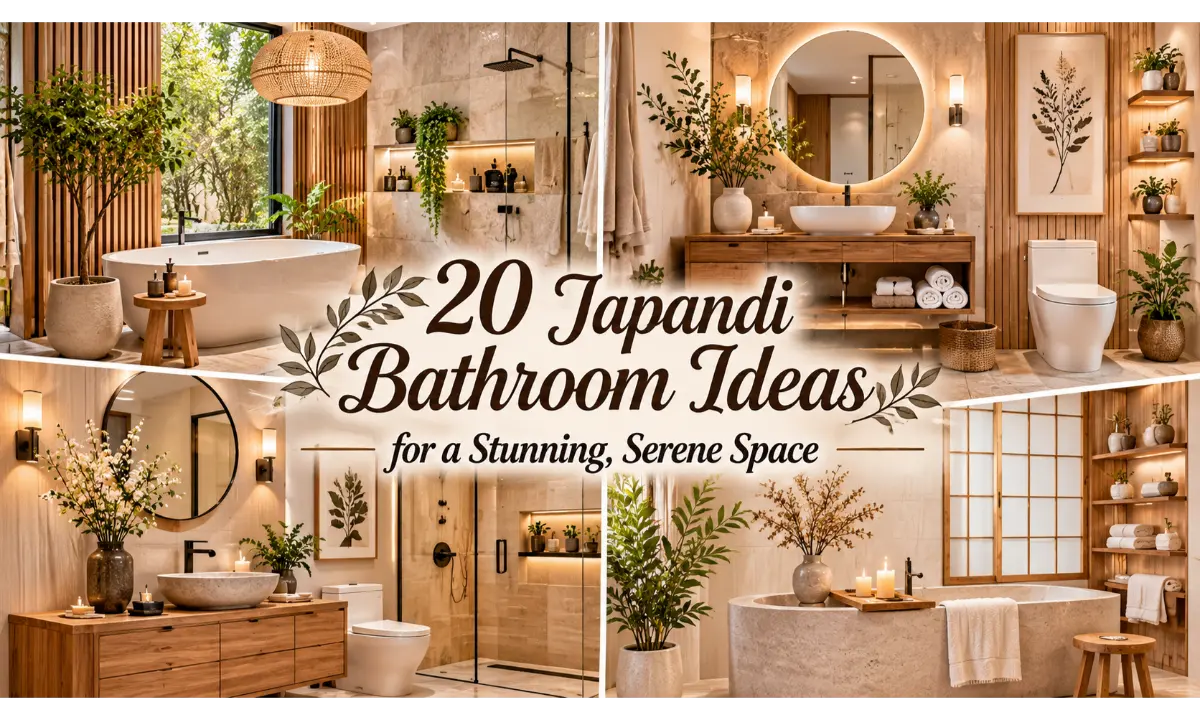
20 Japandi Bathroom Ideas for a Stunning, Serene Space
Japandi Bathroom Ideas combine Japanese simplicity with Scandinavian comfort to create a bathroom that feels peaceful, warm, and beautifully organized. This style focuses on natural materials, clean lines, soft colors, and practical design rather than unnecessary decoration. Whether you have a small bathroom or a spacious master suite, you can create a relaxing retreat with thoughtful choices.
The best part is that you do not need a complete renovation to achieve this look. Natural wood, stone textures, warm lighting, and clutter free storage can make a noticeable difference. These ideas will help you create a timeless bathroom that feels calm, functional, and inviting.
Natural Materials and Timeless Japandi Bathroom Ideas
1. Japandi Bathroom Ideas With a Floating Wooden Vanity
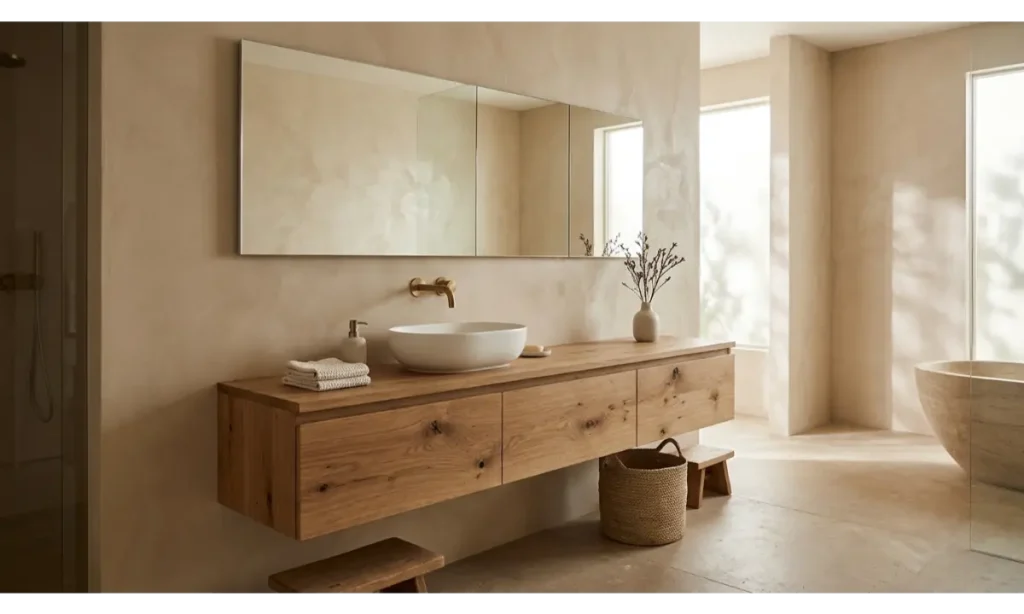
A floating wooden vanity creates a clean and open look while bringing natural warmth into your bathroom. Choose pale oak or light walnut with a simple rectangular shape and minimal hardware. The exposed floor beneath the vanity makes the room feel less crowded, especially in a small space. Pair the wood with a white countertop, a simple ceramic sink, and warm beige walls to create a balanced mix of Japanese minimalism and Scandinavian comfort.
Storage matters just as much as appearance. Select a vanity with deep drawers to keep toiletries, hair tools, and everyday essentials out of sight. A wide mirror above the sink will reflect natural light and make the bathroom feel brighter. Keep the countertop mostly clear, displaying only a soap dispenser or a small ceramic tray. This simple arrangement gives your bathroom a refined appearance without making it feel cold or overly formal.
Pro Tip: Choose a moisture resistant wood finish and wipe away standing water regularly to protect the vanity.
2. Warm Beige Walls With Natural Wood Accents
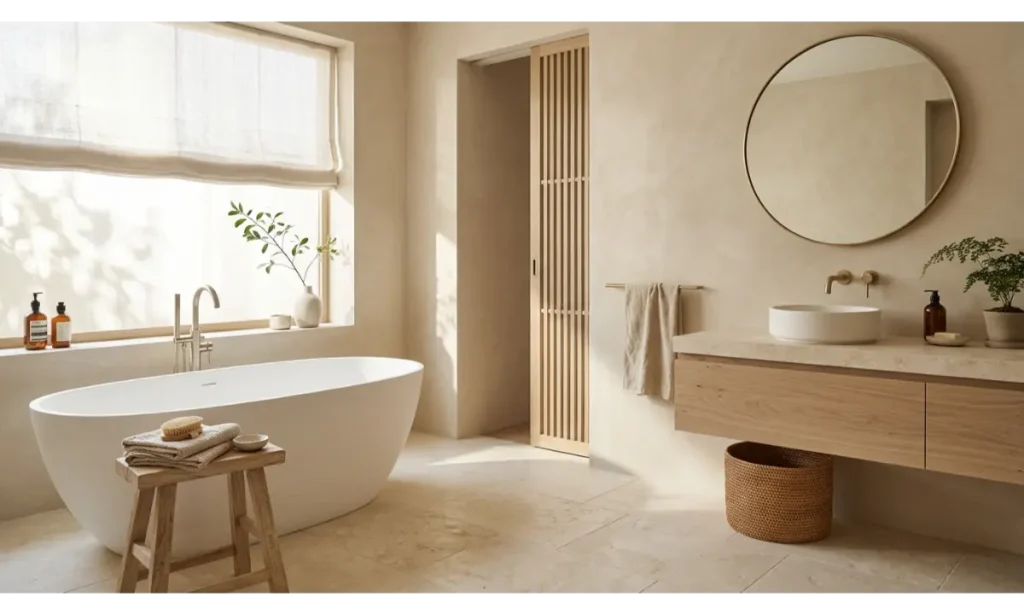
Warm beige walls provide a gentle background for Japandi bathroom design. Instead of bright white paint, choose creamy ivory, sand, oatmeal, or muted taupe. These colors soften the room and work beautifully with wood, stone, and ceramic finishes. A matte wall treatment adds subtle depth without demanding attention. Combine it with a natural wood vanity and simple white fixtures to create a space that feels cohesive, light, and comfortable throughout the day.
To keep the palette interesting, use slightly different shades across the walls, floor, and cabinetry. For example, combine sandy beige walls with cream floor tiles and a medium oak vanity. The gentle contrast prevents the bathroom from looking flat while preserving its peaceful character. Natural daylight can bring out the undertones, while warm evening lighting makes the room feel cozy. Avoid adding too many decorative colors because the beauty of this look comes from restraint.
Pro Tip: Test paint samples beside your actual tiles and wood finishes because beige can look different under cool and warm lighting.
Read More: 18 Indoor Library Decor Ideas for a Stunning Reading Space
3. A Freestanding Bathtub With Minimalist Styling
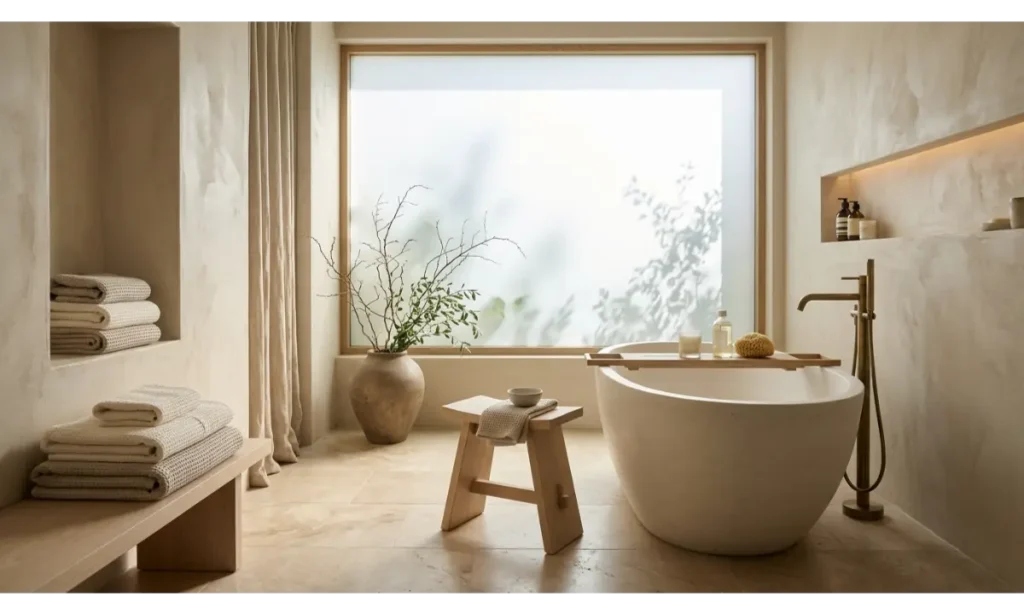
A freestanding bathtub can become the main feature of a peaceful bathroom without requiring elaborate decoration. Choose a simple oval or gently curved design in matte white. Place it against a neutral wall or near a window where natural light can highlight its shape. Stone flooring, warm plaster, and pale wood create a grounded setting that feels connected to nature. Keep the surrounding area open so the bathtub remains visually important rather than competing with shelves and accessories.
Comfort should guide the placement as much as appearance. Leave enough room to move around the tub, reach towels, and clean the floor easily. A small wooden stool can hold bath essentials, while a soft cotton towel adds texture. If your bathroom is compact, a smaller freestanding model or a clean lined built in tub can achieve a similar effect. The goal is to create a relaxing bathing area that feels spacious, simple, and easy to maintain.
Pro Tip: Before choosing a freestanding tub, measure the available floor area and check the plumbing requirements.
4. Natural Stone Tiles for an Organic Look
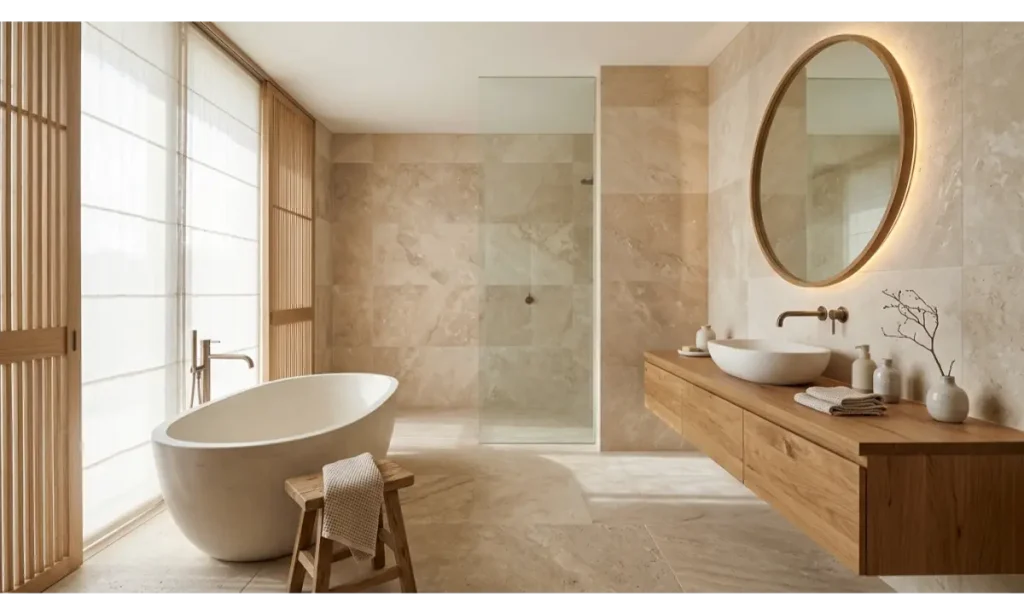
Natural stone tiles introduce subtle texture and an earthy character that suits Japanese inspired bathroom decor. Limestone, travertine, and stone look porcelain tiles work well with wood and neutral finishes. Their gentle variations create visual interest without the busy appearance of strong patterns. Use a consistent stone finish across the floor or shower walls to make the room feel connected. A beige or soft gray stone palette also pairs easily with white fixtures and warm metallic details.
The practical choice depends on the location. Real natural stone may require sealing and ongoing care, while porcelain can provide a similar appearance with less maintenance. For shower floors, select a suitable slip resistant finish and ensure the surface works with proper drainage. Large tiles reduce the number of grout lines and can create a cleaner visual effect. Smaller textured tiles may offer better flexibility on sloped shower floors, so consider both appearance and function.
Pro Tip: Ask your tile supplier about slip resistance, water absorption, sealing, and cleaning requirements before purchasing.
5. Japandi Bathroom Ideas With a Walk In Shower
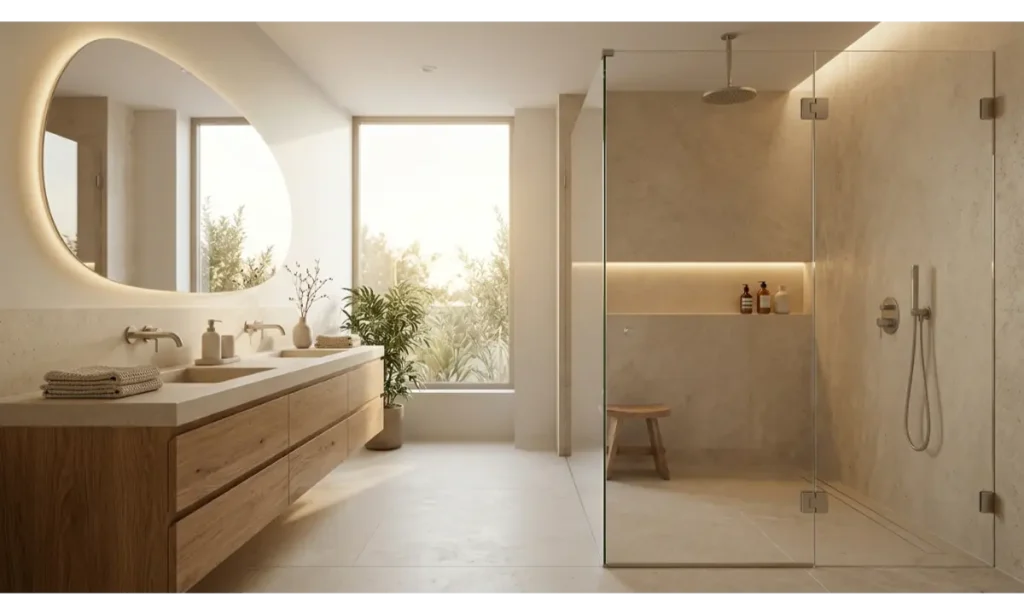
A walk in shower suits Japandi Bathroom Ideas because it keeps the layout visually simple and reduces bulky barriers. Clear glass allows light to travel through the room, while neutral tiles create a continuous look. Choose understated shower fixtures in brushed nickel, matte black, or brushed brass, depending on the other finishes. A recessed wall niche provides storage for shampoo and soap without adding protruding shelves. Together, these features create a clean shower area that feels open and practical.
Good planning makes this design work better every day. The floor needs a suitable slope toward the drain, and the shower area requires proper waterproofing to protect the surrounding structure. A fixed glass panel may be enough for some layouts, while others need a door to control splashing. Use a nonslip floor surface and provide accessible storage at a comfortable height. These details preserve the minimalist look while making the shower safer and easier to clean.
Pro Tip: Plan the glass panel, drain location, and waterproofing before installation rather than treating them as finishing details.
Read More: 20 Christmas Garland Ideas for a Magical Holiday Home
6. Japandi Bathroom Ideas With a Wooden Slat Wall
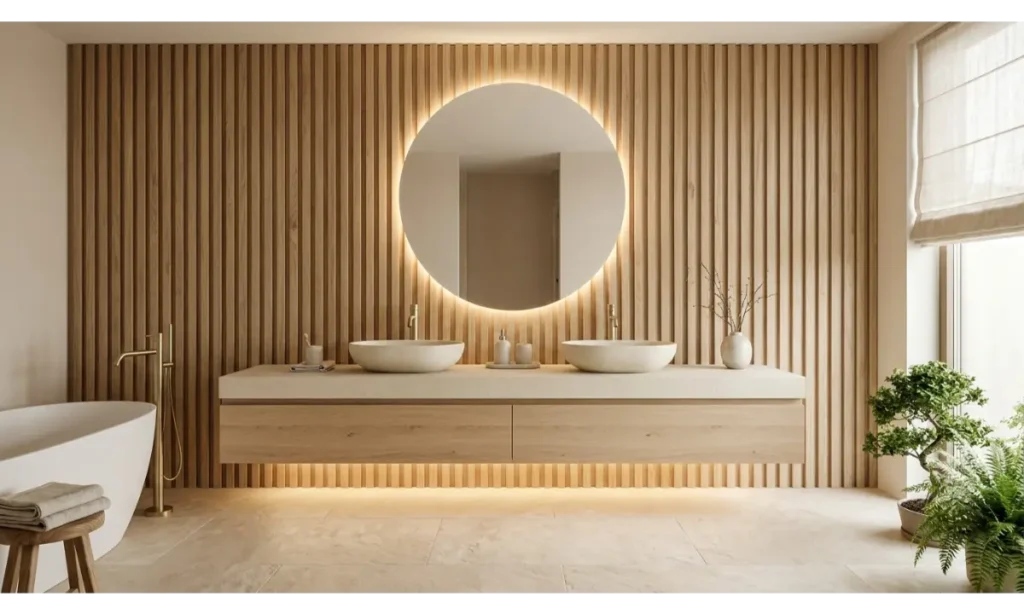
A wooden slat wall adds rhythm and warmth to a minimalist bathroom without introducing bright colors or busy patterns. Use slim vertical oak slats behind the vanity or on a dry feature wall to create height and visual interest. Pair the wood with smooth plaster, cream stone, and simple fixtures. The contrast between linear wood and softer surfaces creates the balanced appearance associated with Japandi bathroom styling, making the room feel thoughtfully designed.
Placement and moisture protection are important when using wood in a bathroom. Keep decorative slats away from direct shower spray unless the complete system is specifically designed for wet conditions. Proper ventilation helps reduce moisture buildup and protects the finish. If natural timber is unsuitable for your space, consider moisture resistant decorative panels with a realistic wood appearance. Limit the accent to one wall so the bathroom remains calm rather than visually crowded.
Pro Tip: Use vertical slats on a dry wall to make a low ceiling appear taller.
7. A Japanese Soaking Tub for a Spa Like Retreat
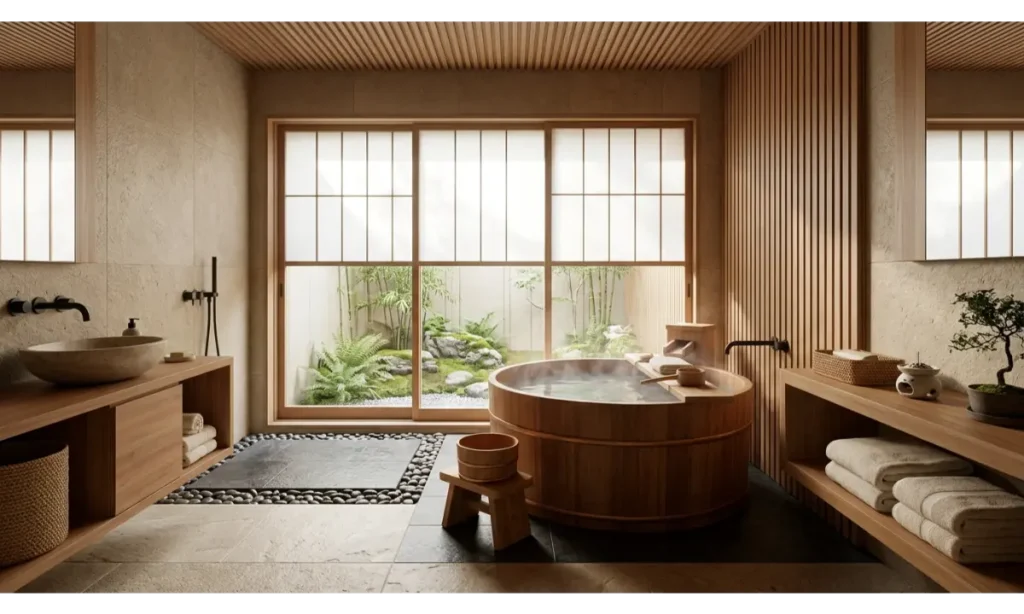
A deep soaking tub brings the relaxing spirit of a Japanese bathing ritual into a modern home. Unlike a long traditional bathtub, a soaking tub emphasizes depth and an upright sitting position. Choose a compact rounded design that fits your available space, then surround it with natural stone, warm wood, and understated finishes. The result feels intimate and restful, especially when the room has soft lighting and very few decorative objects.
You can enhance the bathing experience with a small wooden stool, folded cotton towels, and a simple tray for bath products. Keep these accessories useful rather than decorative clutter. Before buying a deep tub, check its internal dimensions, water capacity, entry height, and the strength of the supporting floor. A soaking tub may hold more water than a standard bathtub, so plumbing and installation requirements deserve careful attention.
Pro Tip: If space is limited, compare compact soaking tubs with standard bathtubs before changing the bathroom layout.
8. Cream Microcement for Seamless Surfaces
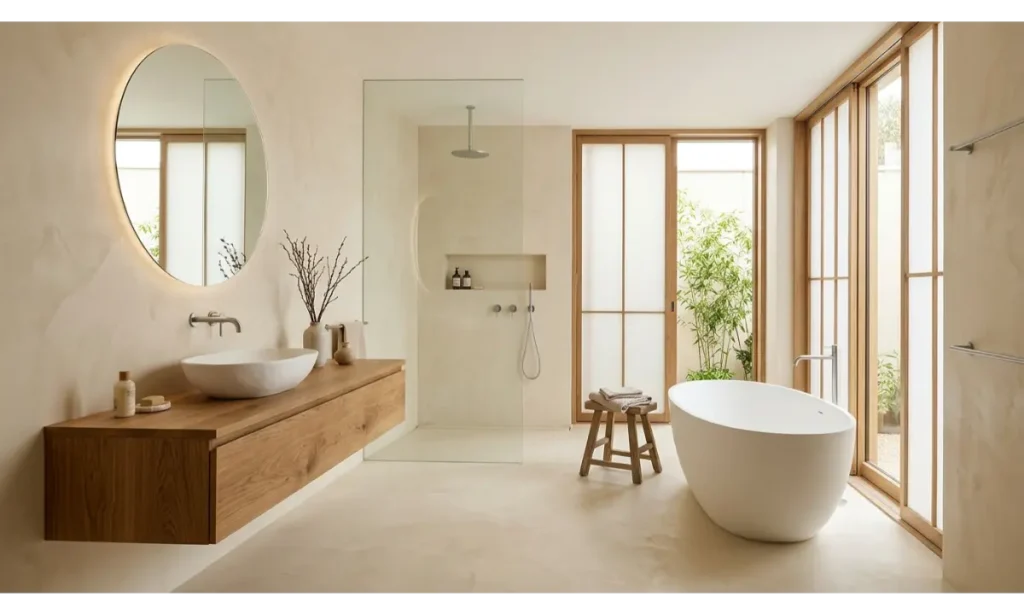
Cream microcement creates a smooth, continuous appearance that works beautifully in a minimalist bathroom. Its subtle texture gives walls and floors more character than plain paint while keeping the overall design quiet. Pair it with a pale wood vanity, a simple basin, and a frameless shower screen for a cohesive look. This approach suits homeowners who prefer modern surfaces but still want the warmth and natural character associated with Japandi Bathroom Ideas.
Microcement requires careful installation, especially in wet areas. The correct substrate, waterproofing system, protective coating, and skilled application all affect its performance. It should not be treated as automatically waterproof simply because the finished surface looks seamless. Choose a qualified installer who understands bathroom applications and maintenance requirements. If you prefer a simpler project, large format porcelain tiles in a similar matte finish can create a related effect with more familiar installation methods.
Pro Tip: Request a finished sample before installation so you can assess its color, texture, and appearance in your bathroom lighting.
9. A Backlit Mirror for Soft Ambient Lighting
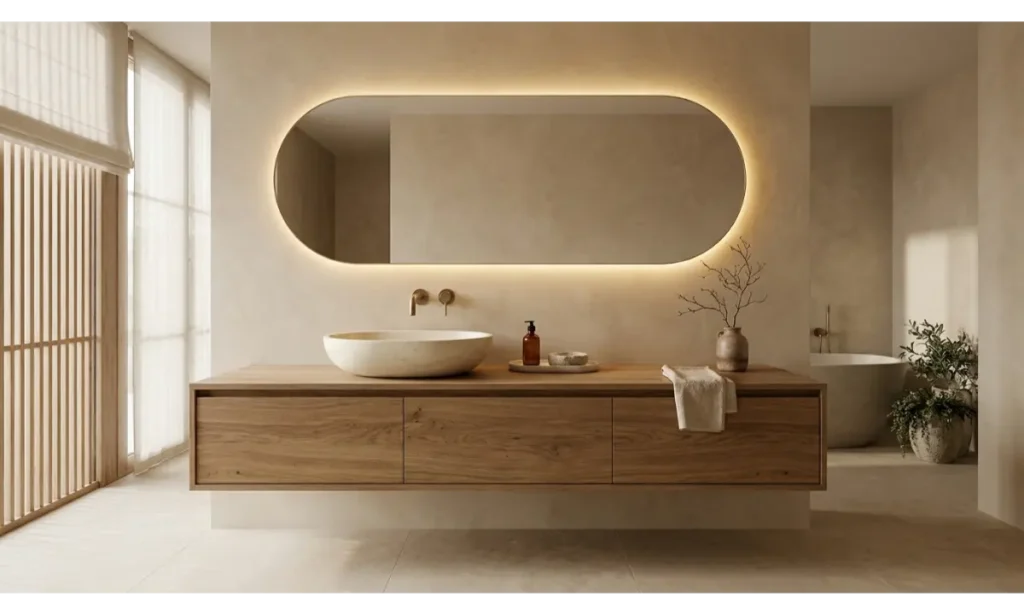
A backlit mirror adds gentle light without requiring decorative wall lamps or elaborate fixtures. Its soft glow can make early mornings and evening routines feel more comfortable while highlighting the texture of the wall behind it. Choose a simple round, oval, or rounded rectangular mirror with a warm white light setting. Combine it with natural wood, creamy surfaces, and restrained accessories to maintain the calm visual balance of Japandi bathroom design.
A backlit mirror should complement rather than replace practical task lighting. You need enough clear, even light to shave, apply skincare, and complete other grooming tasks comfortably. Look for a mirror designed for bathroom use, with appropriate electrical protection for its installation location. A dimmable option provides more flexibility throughout the day. Keep the surrounding wall relatively simple so the mirror’s soft outline remains a subtle feature rather than a competing focal point.
Pro Tip: Combine a backlit mirror with suitable face level lighting to reduce shadows during daily grooming.
10. Japandi Bathroom Ideas With Open Wooden Shelves
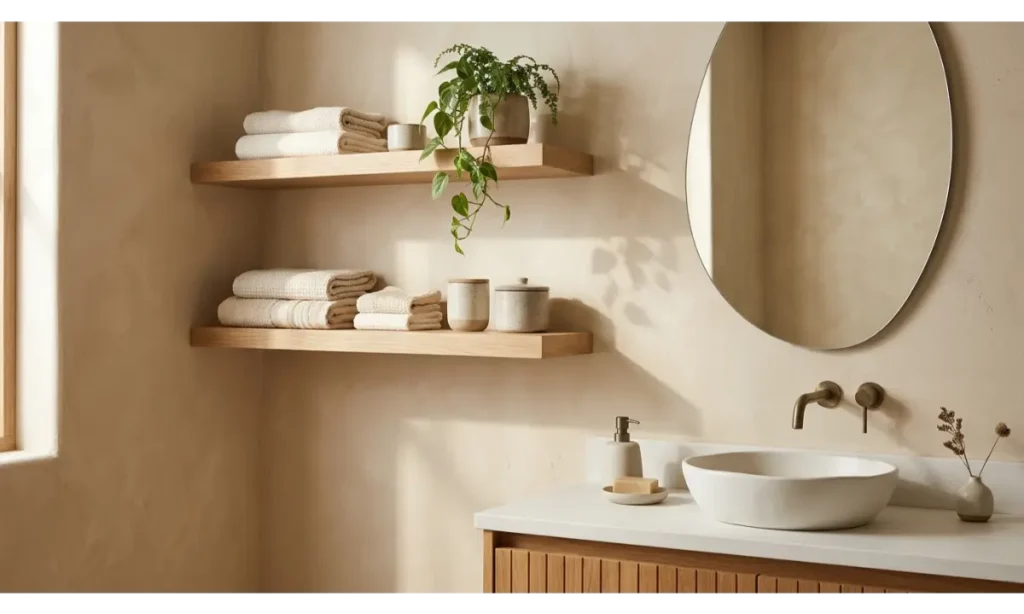
Open wooden shelves add warmth and useful storage without the visual weight of large cabinets. Install one or two shelves above the toilet, beside the vanity, or on another suitable dry wall. Pale oak works well with cream towels, stone accessories, and simple ceramic containers. In Japandi Bathroom Ideas, every visible object should contribute to comfort or function, so arrange only the items you regularly use and leave enough empty space around them.
Open shelving can look beautiful, but it requires regular tidying because everything remains visible. Place everyday essentials in matching containers and store extra products elsewhere. Avoid positioning untreated wood where it receives frequent splashes or condensation. If you need more hidden storage, combine open shelves with a closed vanity or a wall cabinet. This balance keeps the room practical while preserving the natural, uncluttered appearance that makes the style appealing.
Pro Tip: Keep frequently used items on the lowest shelf and reserve the highest shelf for light, less frequently used objects.
11. A Stone Vessel Sink With Sculptural Shape
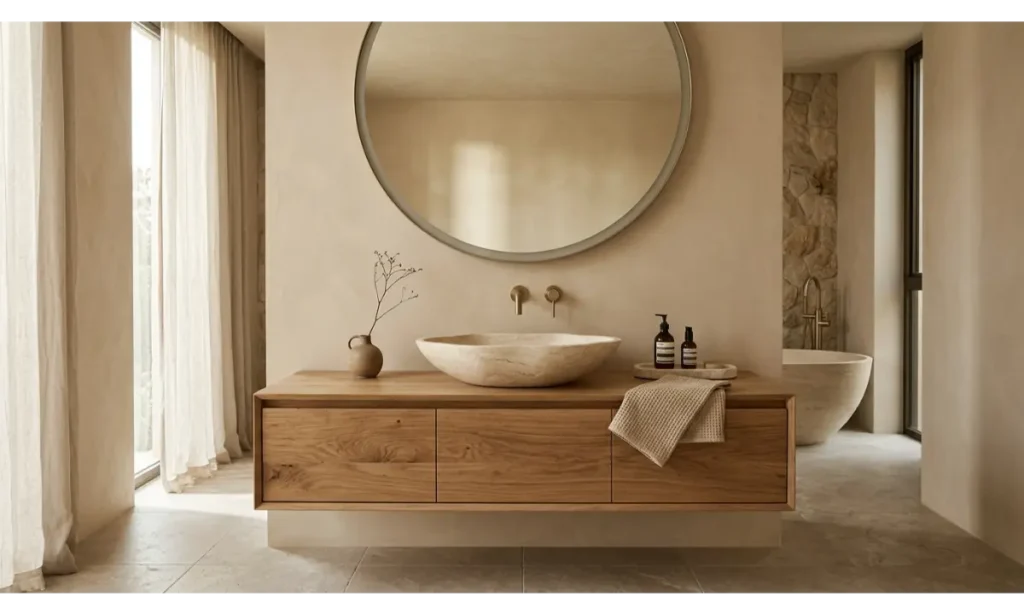
A stone vessel sink creates a focal point through its shape and natural texture rather than bright color or decorative patterns. Choose a rounded basin, a gently oval silhouette, or a simple rectangular design in cream, beige, or pale gray. Pair it with a clean wooden vanity and an understated faucet. The combination brings a natural, crafted quality to Japandi Bathroom Ideas while keeping the overall space modern and uncluttered.
The basin should be comfortable to use as well as attractive. Check its height, depth, splash behavior, and compatibility with the faucet before purchasing. A vessel sink can sit higher than an integrated basin, so the vanity height may need adjustment. Natural stone also varies in porosity and maintenance needs, making sealing instructions important. If you want a similar appearance with easier upkeep, consider a high quality ceramic or composite basin with a matte stone inspired finish.
Pro Tip: Select the faucet and basin together to make sure water flows into the bowl without excessive splashing.
12. Add a Small Indoor Plant for Natural Balance
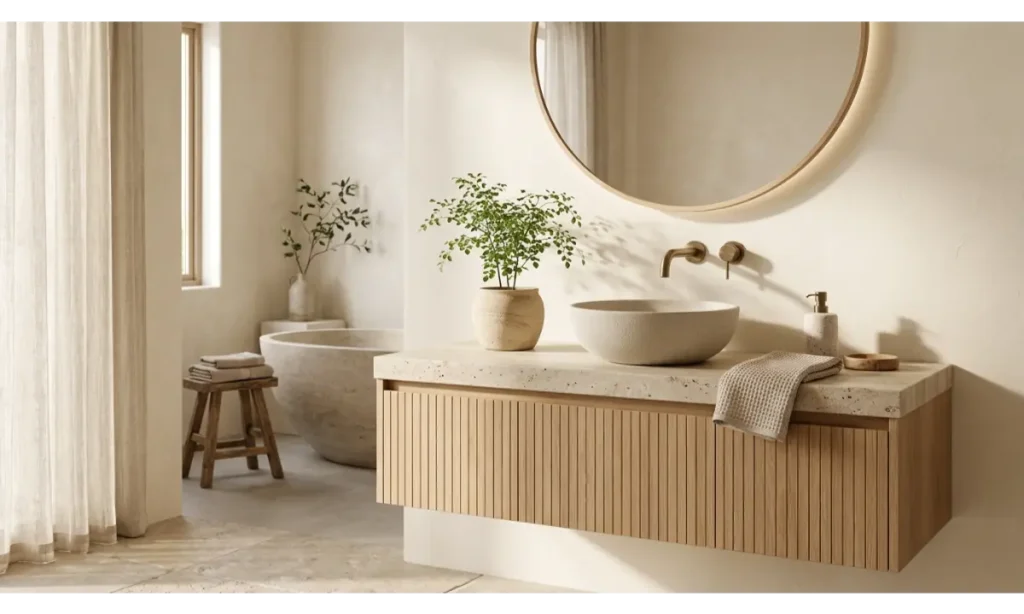
A carefully chosen plant introduces life and a gentle touch of green to a neutral bathroom. Place a small fern or another humidity tolerant plant near a window or on a stable shelf where it receives suitable light. A simple ceramic pot in sand, cream, or muted brown connects the greenery with the surrounding materials. This restrained approach supports Japanese minimalist decor without turning the bathroom into a crowded collection of accessories.
Plant selection depends on the conditions in your room. Bathrooms without windows may not provide enough light for many living plants, even when humidity is high. Consider a suitable grow light or choose a realistic artificial plant if natural light is limited. Keep foliage away from electrical fixtures, avoid standing water beneath the pot, and make sure the plant does not obstruct movement. One healthy plant often creates a stronger effect than several struggling ones.
Pro Tip: Match the plant to your bathroom’s actual light levels rather than choosing one based on appearance alone.
13. Matte Black Fixtures for Subtle Contrast
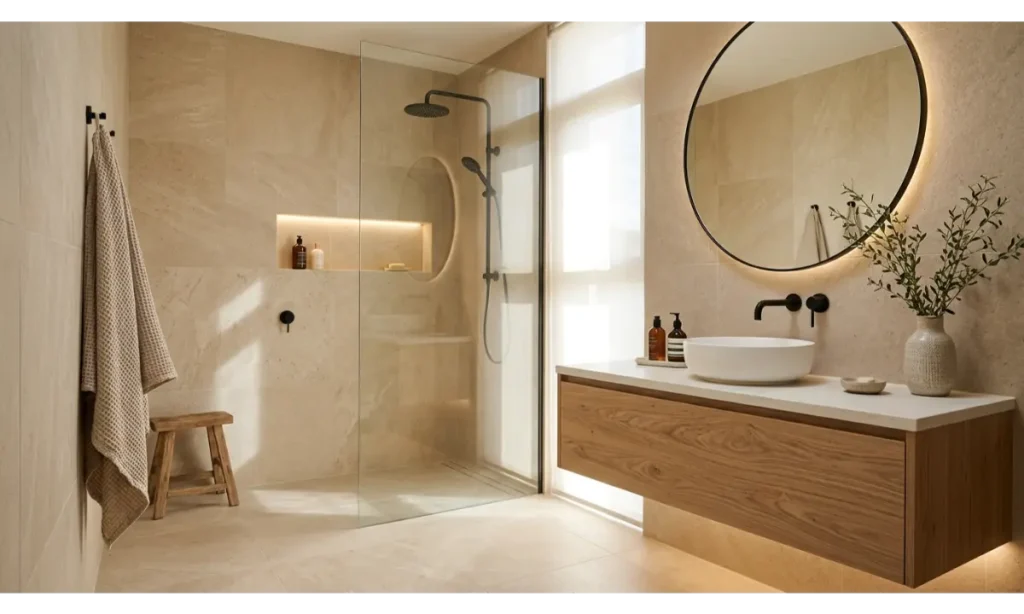
Matte black fixtures add definition to a soft neutral bathroom without requiring dark walls or dramatic decoration. A black faucet, shower set, or simple cabinet handle can stand out beautifully against cream tiles and natural oak. Keep the number of contrasting elements limited so the room retains its light and peaceful character. The clean lines of black hardware complement the restrained materials and balanced proportions found in Japandi Bathroom Ideas.
Consistency makes this finish more effective. Choose a small group of matching fixtures instead of mixing several unrelated metal colors throughout the room. Matte black surfaces can show mineral deposits, soap residue, or scratches depending on their finish and water quality, so check the manufacturer’s cleaning advice. If you prefer a softer appearance, brushed nickel or muted bronze can provide definition without creating such a strong contrast against pale surfaces.
Pro Tip: Repeat matte black in only two or three places, such as the faucet, shower fixtures, and a cabinet handle.
14. A Walk In Shower With a Built In Niche
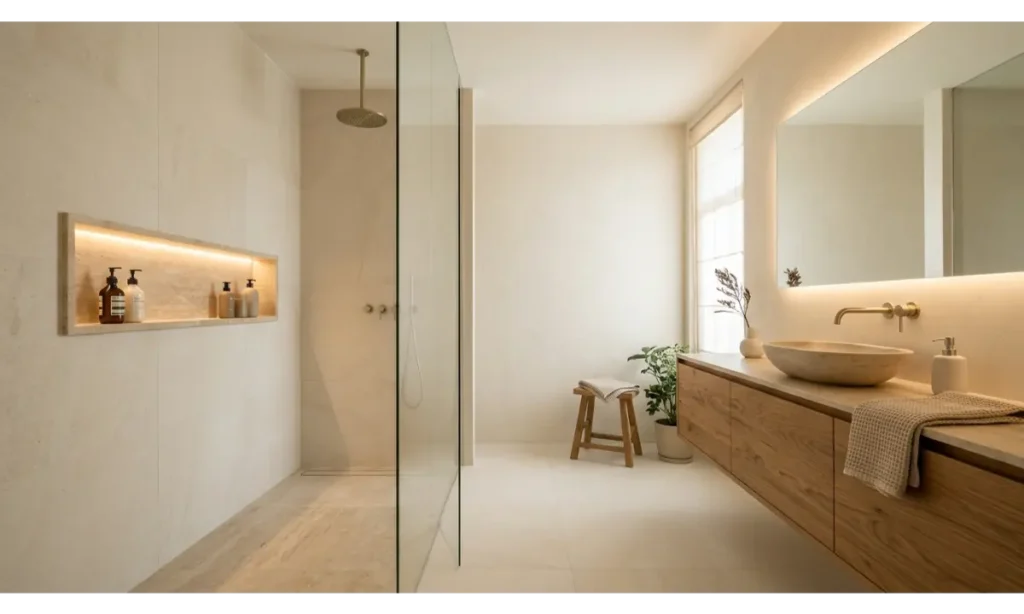
A built in shower niche keeps shampoo, conditioner, and soap organized without adding bulky racks. The recessed design follows the clean lines of a Japandi bathroom and leaves more room for comfortable movement. Finish the niche in the same tile as the shower wall for a seamless appearance, or use a subtly contrasting stone to create depth. A simple rectangular shape usually works well with minimalist fixtures and large format tiles.
Plan the niche before tiling begins so its size and location suit the people using the shower. It should hold everyday bottles without forcing them to fit awkwardly, and the base needs an appropriate slope to prevent water from pooling. Proper waterproofing around the niche is essential because this area sits inside a wet zone. Keep products in a small, consistent group to maintain a tidy appearance even when the shower is in regular use.
Pro Tip: Measure your tallest shampoo bottle before finalizing the niche height and shelf spacing.
15. Warm Layered Lighting for a Relaxing Mood
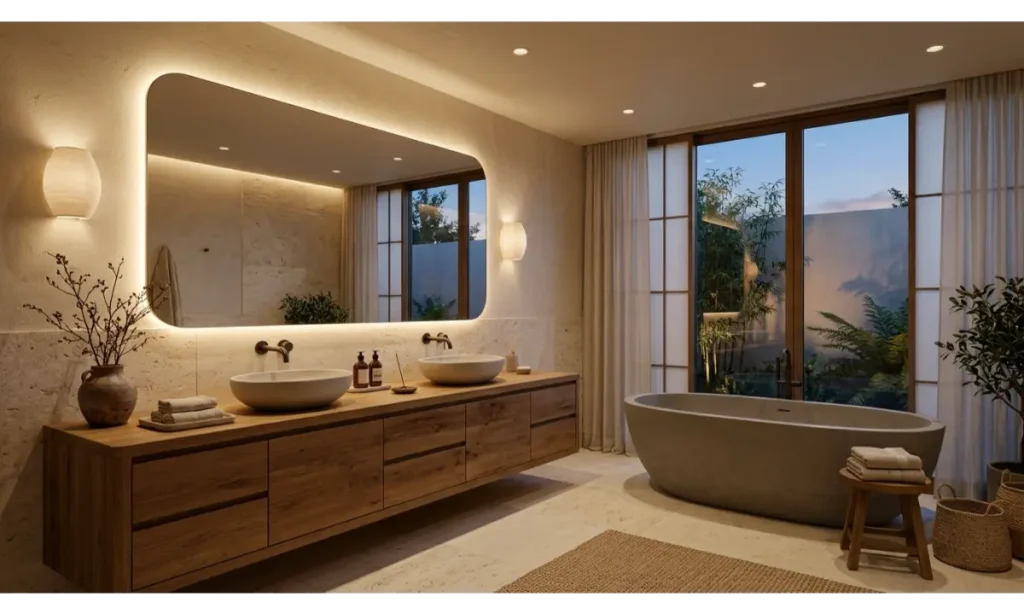
Layered lighting makes a bathroom feel welcoming at different times of day. Combine general ceiling lights with task lighting around the mirror and a softer source of ambient light. Warm white illumination works well with beige walls, oak cabinetry, and natural stone because it emphasizes their gentle undertones. Rather than relying on a single bright ceiling fixture, spread the light evenly to create a comfortable environment without harsh shadows.
Lighting should serve practical needs as well as atmosphere. Choose suitable bathroom rated fittings for their installation zones and use dimmers only where the fixtures and electrical setup support them. A bright, clear setting is helpful for grooming, while a lower setting can make an evening bath more relaxing. Avoid placing lights where they create strong reflections in mirrors or leave the shower area poorly lit. Good planning helps every finish look more natural.
Pro Tip: Use warm, dimmable ambient lighting alongside separate task lighting for a more flexible bathroom.
16. Japandi Bathroom Ideas With a Curved Mirror
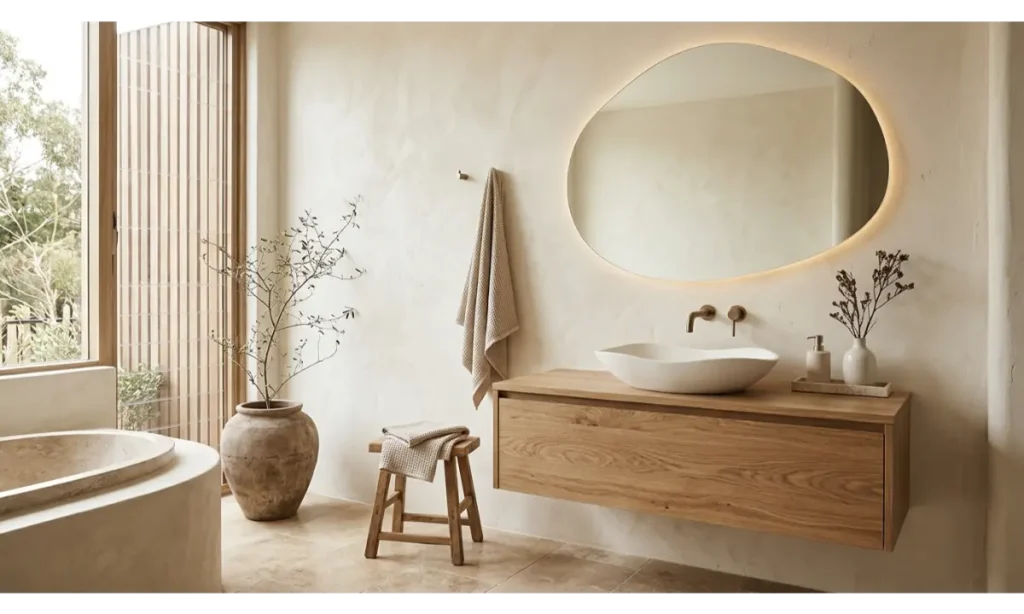
A curved mirror softens the straight lines of tiles, cabinetry, and rectangular sinks. Choose a round, oval, or gently irregular shape to introduce movement without adding visual clutter. A slim frame in wood or muted metal can connect the mirror to other finishes, while a frameless design keeps the appearance especially clean. These Japandi Bathroom Ideas work well when the room feels too angular and needs a small detail to create a more inviting balance.
Scale is important when selecting a mirror. A small round mirror may suit a compact powder room, while a wider oval mirror can work better above a double vanity. Make sure the mirror provides enough usable reflection for everyday routines and leaves space for lighting where needed. If you choose an asymmetrical shape, keep nearby accessories simple so the outline remains noticeable. A well proportioned mirror can change the room’s character without requiring major construction.
Pro Tip: Choose a mirror width that relates to the vanity instead of selecting one based only on its decorative shape.
17. A Wooden Bath Stool With Simple Accessories
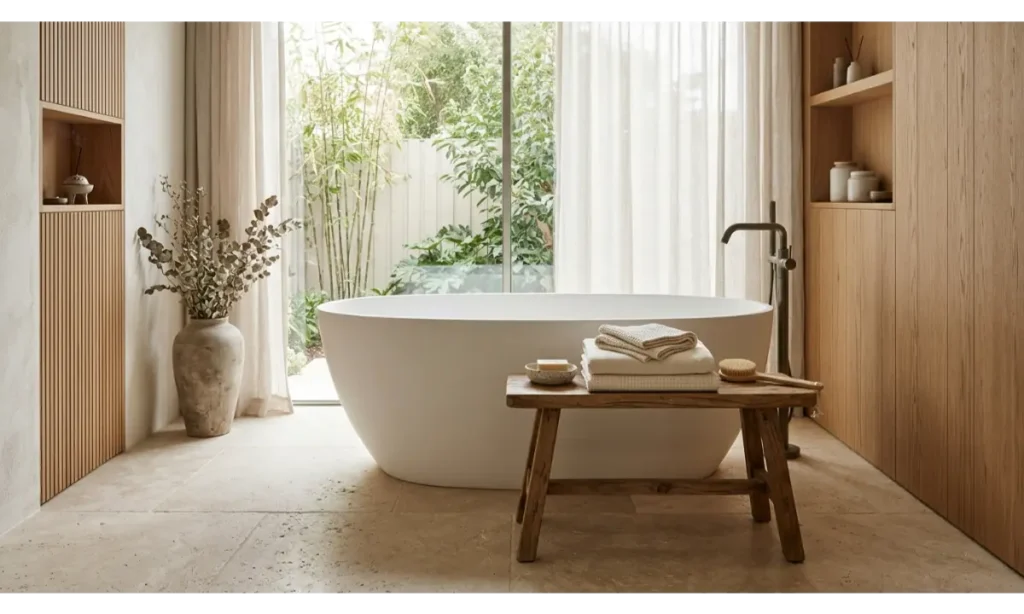
A simple wooden bath stool adds practical function and a crafted detail to the bathroom. Use it beside the tub for a folded towel, a book, or bath essentials, or place it near the shower if the material is suitable for that environment. Teak and other moisture suitable woods can complement pale stone, cream walls, and oak cabinetry. Its small footprint makes it useful when you want a natural accent without introducing another large piece of furniture.
Choose a stool that feels stable, has a suitable finish, and can dry properly after use. Not every decorative wooden stool is designed to remain in a damp bathroom, so check the product’s intended use. Avoid loading a small stool with too many objects because that defeats its simple purpose. One folded towel and a ceramic dish can provide enough visual interest while leaving the surrounding area open and easy to clean.
Pro Tip: Keep the stool on a level surface and allow it to dry between uses to protect the wood.
18. Textured Towels and Natural Fabric Details
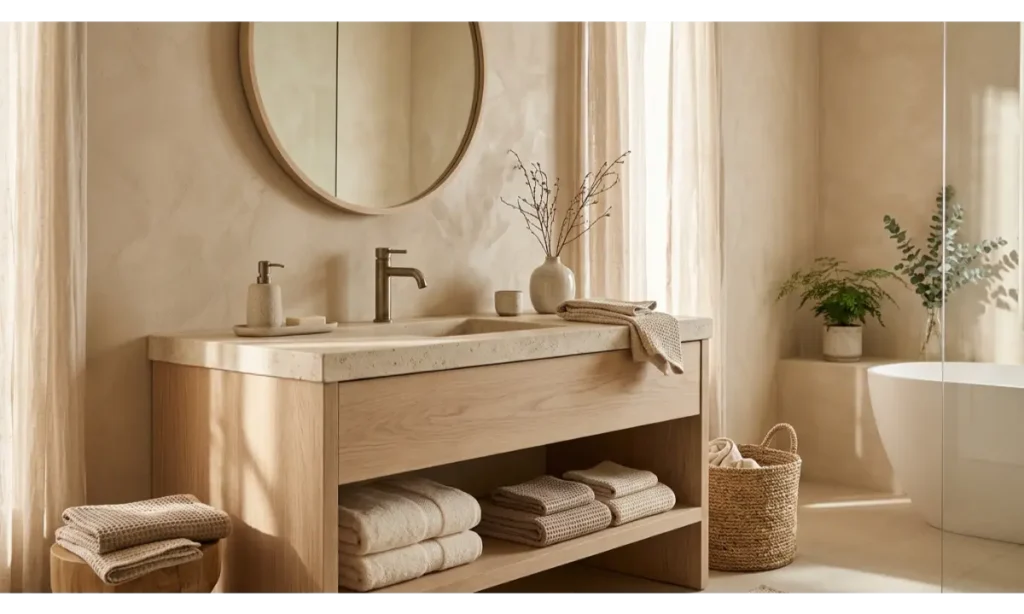
Textiles make a minimalist bathroom feel softer without changing its main finishes. Choose cotton towels in ivory, oatmeal, warm gray, or muted taupe, and mix smooth towels with waffle or lightly textured weaves. These subtle differences add depth to the room while preserving its calm color palette. In Japandi Bathroom Ideas, everyday items can contribute to the design when their textures, colors, and arrangement feel intentional rather than overly styled.
Display a small number of neatly folded towels on an open shelf or hang hand towels on simple hooks. Keep extra linens in a closed cabinet to reduce visual clutter and protect them from bathroom moisture. Choose fabrics that absorb water well and can be washed regularly. Natural fibers often provide a comfortable feel, but drying time and care instructions still matter. A practical textile choice should look good while standing up to everyday use.
Pro Tip: Keep your towels within two or three related neutral shades for a coordinated look.
19. A Compact Japandi Bathroom for Small Spaces
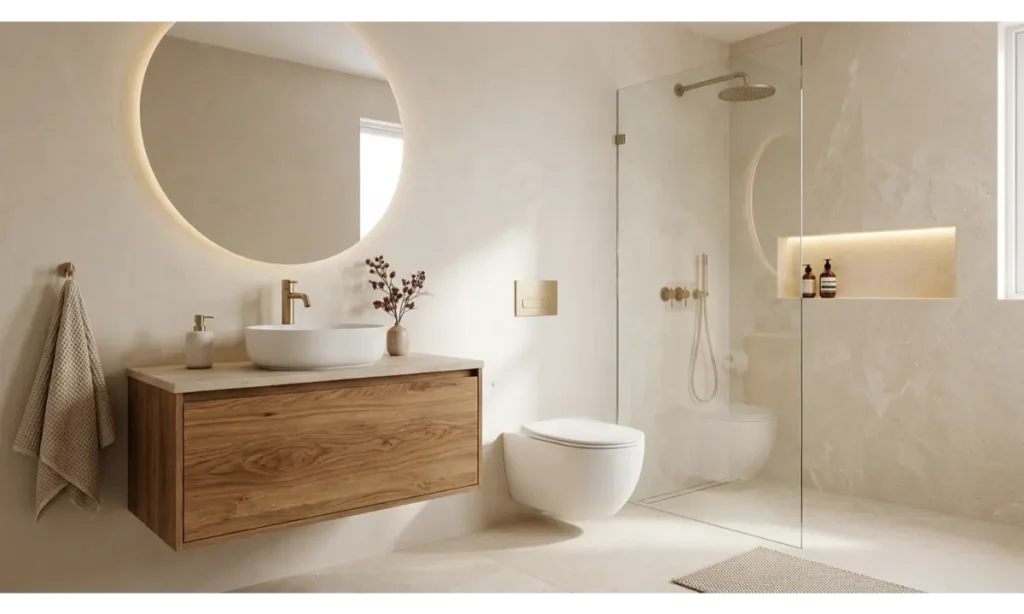
A small bathroom can still feel spacious when every feature has a clear purpose. Choose a wall mounted vanity, a large mirror, and pale tiles to reduce visual weight. A frameless shower screen helps light move through the room, while recessed niches provide storage without taking up valuable space. These Japandi Bathroom Ideas focus on simple shapes and useful details, making even a narrow bathroom feel calmer and easier to navigate.
Keep the layout practical before adding decorative accessories. Measure door swings, walking space, vanity depth, and shower entry to avoid creating tight areas. Use wall mounted storage where appropriate and store backup toiletries outside the room if possible. Consistent floor and wall colors can help the space feel connected, while one natural wood feature prevents it from appearing plain. You do not need a large bathtub or elaborate fittings to create a comfortable, attractive bathroom.
Pro Tip: Prioritize movement, storage, and lighting before purchasing decorative items for a small bathroom.
20. Japandi Bathroom Ideas With a Complete Spa Inspired Look
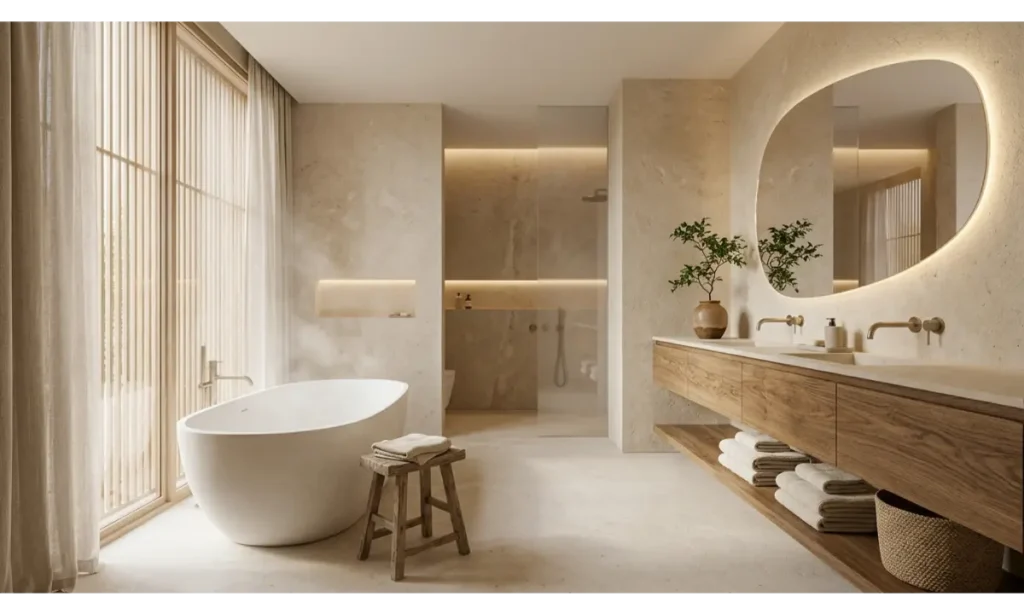
A spa inspired bathroom brings the key elements of Japandi Bathroom Ideas together in one balanced space. Combine natural wood, warm stone, soft neutral colors, and simple fixtures to create a consistent appearance. Keep the bathtub or shower as the main feature, then support it with comfortable towels, gentle lighting, and a small amount of greenery. The result should feel restful and personal rather than like a showroom filled with carefully arranged products.
To make the design last, focus on durable finishes, practical storage, and materials that suit your household’s routine. Use closed cabinets for everyday clutter and leave only a few useful accessories on display. Maintain good ventilation, clean wet surfaces regularly, and choose fixtures that are easy to repair or replace. A beautiful bathroom is not simply about appearance; it should remain comfortable, organized, and easy to care for over time.
Pro Tip: Before buying anything, select your main tile, wood finish, and metal finish so the entire bathroom follows one clear design direction.
Frequently Asked Questions About Japandi Bathroom Ideas
What are Japandi Bathroom Ideas?
Japandi Bathroom Ideas combine Japanese minimalism with Scandinavian warmth. They use natural wood, stone, neutral colors, simple fixtures, and practical storage to create a peaceful, functional bathroom. The style values quality materials, useful details, and open space rather than excessive decoration.
What colors work best in a Japandi bathroom?
Cream, warm white, beige, sand, taupe, and soft gray are excellent choices. Natural oak and walnut add warmth, while muted green can introduce a subtle natural accent. Choose a small, coordinated palette to maintain a calm appearance.
How can I create a Japandi bathroom on a budget?
Start with simple improvements instead of a complete renovation. Replace cluttered accessories with coordinated ceramic containers, add neutral towels, improve lighting, and organize existing storage. If your budget allows, upgrade one feature, such as the vanity or mirror, rather than replacing everything.
Can Japandi bathroom design work in a small bathroom?
Yes. Wall mounted vanities, large mirrors, pale finishes, recessed niches, and frameless shower screens can make a compact bathroom feel more open. Choose furniture that fits the available space and keep the floor as clear as possible.
What materials are best for Japandi bathrooms?
Natural wood, stone, ceramic, porcelain, cotton, and textured plaster all suit this style. Choose moisture appropriate finishes for wet areas and prioritize easy maintenance. Porcelain tiles can provide the appearance of natural stone with less demanding care.
How do I make a Japandi bathroom feel luxurious?
Focus on a few high quality details rather than adding many accessories. A floating oak vanity, beautiful stone surfaces, warm layered lighting, a sculptural basin, and neatly arranged towels can create an elegant atmosphere. Consistency between finishes is more important than expensive decoration.
What is the difference between Japandi and Scandinavian bathroom design?
Scandinavian bathrooms often emphasize brightness, simplicity, and comfortable functionality. Japanese design adds a stronger appreciation for natural imperfection, restrained decoration, organic shapes, and quiet balance. Japandi combines these qualities to create a warm, minimal, and practical space.
Conclusion
The best Japandi Bathroom Ideas show that a beautiful bathroom does not need complicated decoration or expensive upgrades. Natural wood, warm neutral colors, stone textures, soft lighting, and practical storage can transform an ordinary room into a relaxing retreat. From floating vanities and soaking tubs to compact layouts and simple accessories, each idea offers a way to balance beauty with everyday comfort.
Start with the changes that will make the biggest difference in your bathroom. Choose a consistent color palette, select materials that can handle moisture, and keep only useful or meaningful objects on display. With thoughtful planning, these Japandi Bathroom Ideas can help you create a timeless space that feels peaceful, organized, and welcoming every day.