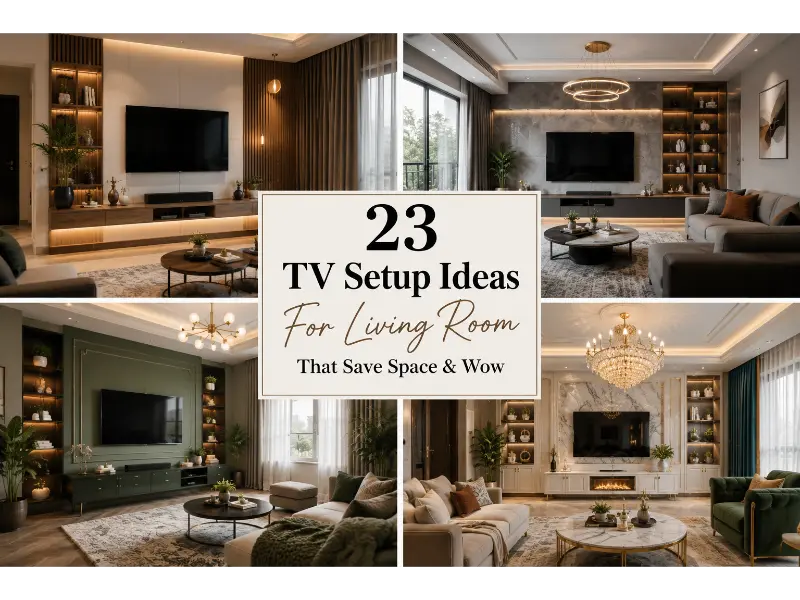
23 TV Setup Ideas For Living Room That Save Space & Wow
A television can be one of the hardest pieces to style because it is large, dark, and naturally draws attention. The right arrangement can turn that challenge into a beautiful focal point while adding storage, warmth, and better flow. These TV Setup Ideas For Living Room spaces focus on smart proportions, hidden cables, useful storage, comfortable viewing, and materials that feel current in 2026. From warm wood slats and floating consoles to built in cabinetry and soft plaster finishes, each idea gives you a practical way to make the screen feel like part of the room instead of an afterthought.
TV Setup Ideas For Living Room to Maximize Style and Space
1. Warm Wood Slat TV Wall
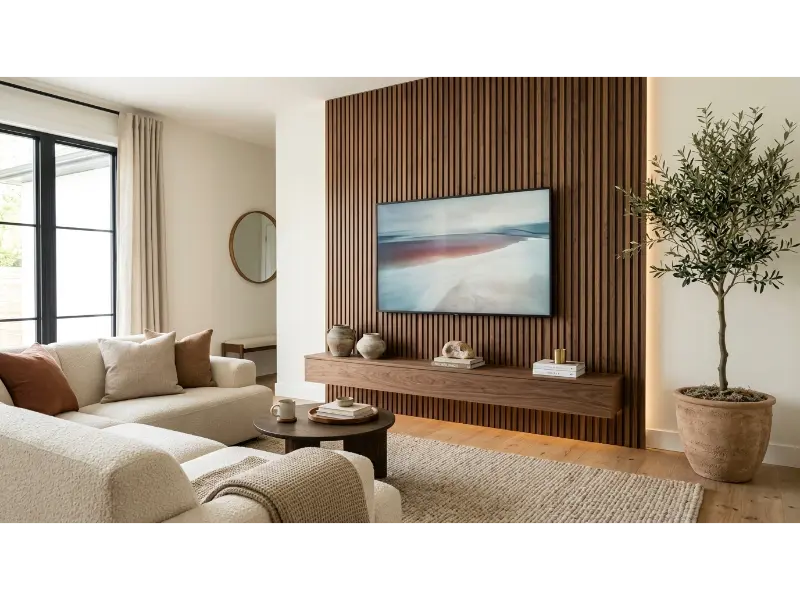
A warm wood backdrop is one of the most inviting TV Setup Ideas For Living Room because it gives the screen an architectural frame without making the wall feel heavy. Choose walnut, smoked oak, or medium natural wood depending on your existing furniture. Vertical slats also introduce rhythm and can make a low ceiling appear taller. Keep the console simple so the wood remains the visual star.
Pair the panel with a slim floating media console and concealed cable management for a cleaner appearance. A few larger decorative pieces work better than many tiny accessories because they preserve the calm lines of the wall. Current media wall designs increasingly combine natural textures with hidden storage and integrated lighting, making this approach both practical and contemporary.
Pro Tip: Continue the wood panel slightly wider than the television so the screen looks intentionally framed rather than squeezed into the wall.
2. Floating Console With Hidden Storage
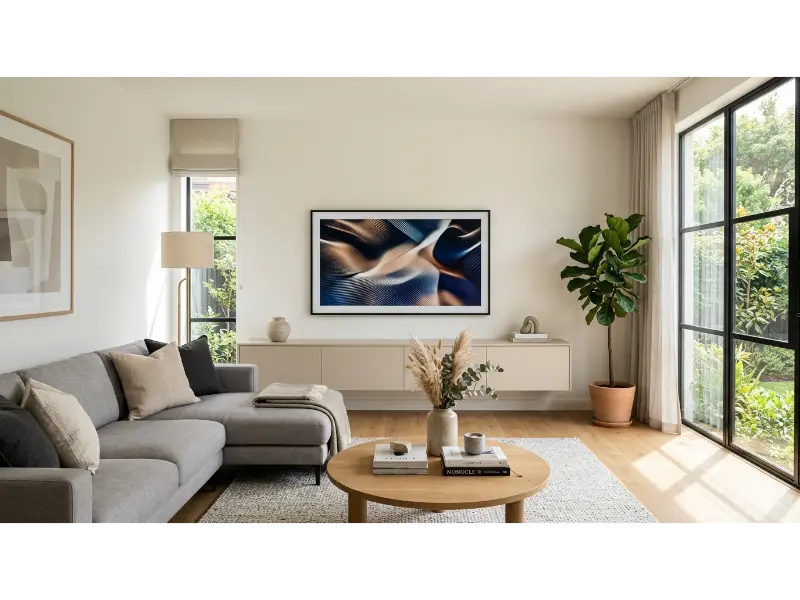
A floating console creates instant visual breathing room because the floor remains visible underneath. This makes it particularly useful for compact rooms where bulky furniture can make the layout feel crowded. Choose a cabinet slightly wider than the television and use closed doors to hide remotes, gaming equipment, streaming devices, and everyday clutter. The result feels streamlined without sacrificing useful storage.
This design also makes cleaning easier because you can vacuum beneath the cabinet without moving furniture. For a polished modern living room TV wall, hide power cables inside a suitable wall chase or approved cable management system rather than allowing wires to hang behind the screen. Floating furniture and concealed wiring remain popular because they combine function with a lighter visual footprint.
Pro Tip: Leave enough rear access for your devices so future upgrades do not require removing the entire console.
Read More: 23 Ceiling Decor Ideas to Elevate Your Room in Style
3. Floor To Ceiling Built In Media Wall
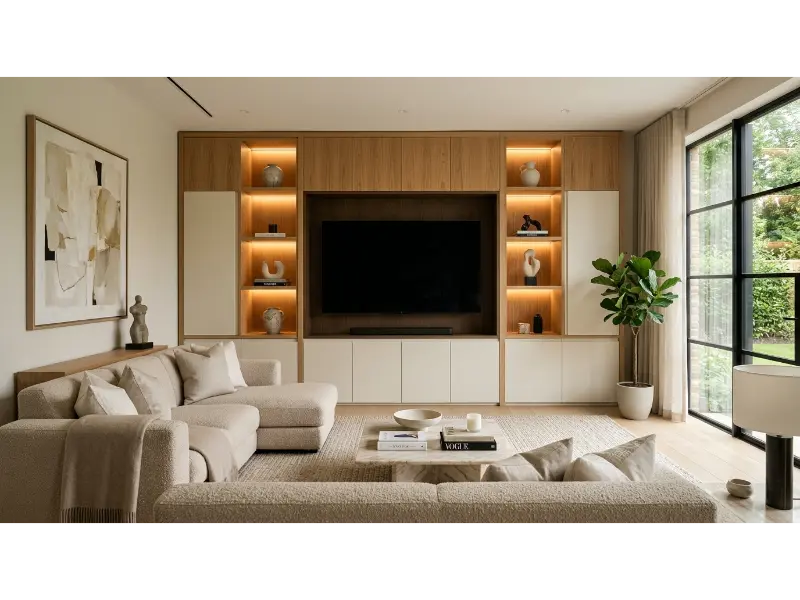
A floor to ceiling unit can make a difficult blank wall feel purposeful from top to bottom. Center the television and balance it with closed cabinets and carefully selected open shelving. This approach gives you a substantial amount of storage while visually integrating the screen into the architecture. It works especially well in larger living rooms where a small console alone might look undersized.
Use closed cabinetry for unattractive essentials and reserve open niches for books, ceramics, framed photographs, or plants. A built in TV unit should feel like one composition rather than separate furniture pieces placed beside each other. Designers increasingly use full wall media systems to combine display, storage, and entertainment functions in one organized zone.
Pro Tip: Make the cabinet finish match another major element in the room, such as flooring, doors, or shelving, to create visual continuity.
4. Soft Plaster Accent Wall
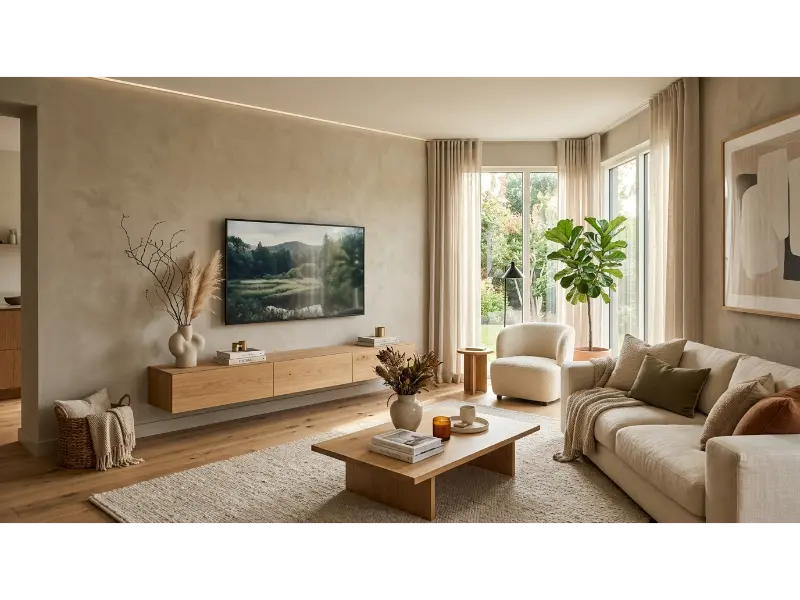
A soft plaster wall gives the television a subtle backdrop without relying on busy patterns. Shades such as warm white, mushroom, taupe, sand, and greige create depth while keeping the room relaxed. The slightly imperfect texture adds character and helps soften the hard appearance of a large black screen. This is a strong choice if you prefer minimalist interiors but still want the TV wall to feel special.
Keep surrounding furniture understated so the plaster finish remains visible. A textured TV wall can work with both modern and organic interiors, especially when paired with natural wood, linen, stone, and woven materials. Avoid excessive decoration around the television because the wall texture already supplies visual interest and should remain the main supporting feature.
Pro Tip: Use a matte finish rather than a glossy surface because it reduces distracting reflections around the screen.
5. TV Wall With Vertical Fireplace
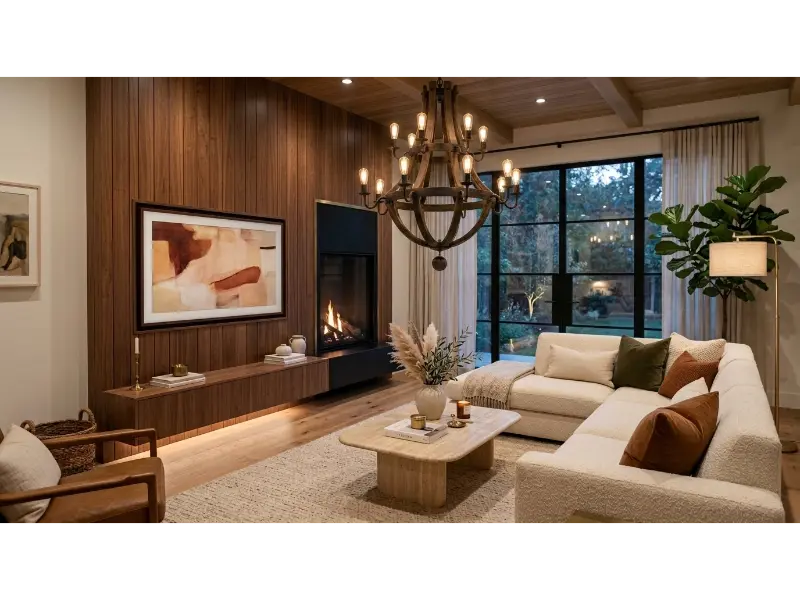
A television and fireplace can share a wall beautifully when you plan the proportions before mounting anything. Instead of automatically placing the screen directly above the fireplace, consider a side by side arrangement when the wall is wide enough. This often creates a more comfortable viewing height and lets both features act as intentional focal points. Recent designer guidance also cautions against automatically placing a TV over a mantel because height and viewing comfort can suffer.
Use matching materials to visually connect the two zones. A fireplace media wall can feature stone around the fire and warm wood around the television, with a long low cabinet tying everything together. This arrangement gives the room two strong focal points while allowing seating to face the screen naturally. It also creates opportunities for concealed storage beneath both areas.
Pro Tip: Test the seated sightline before installation and prioritize comfortable viewing over symmetry alone.
Read More: 23 Eco Friendly Bedroom Ideas for a Healthier, Cozy Space
6. Travertine Inspired TV Wall
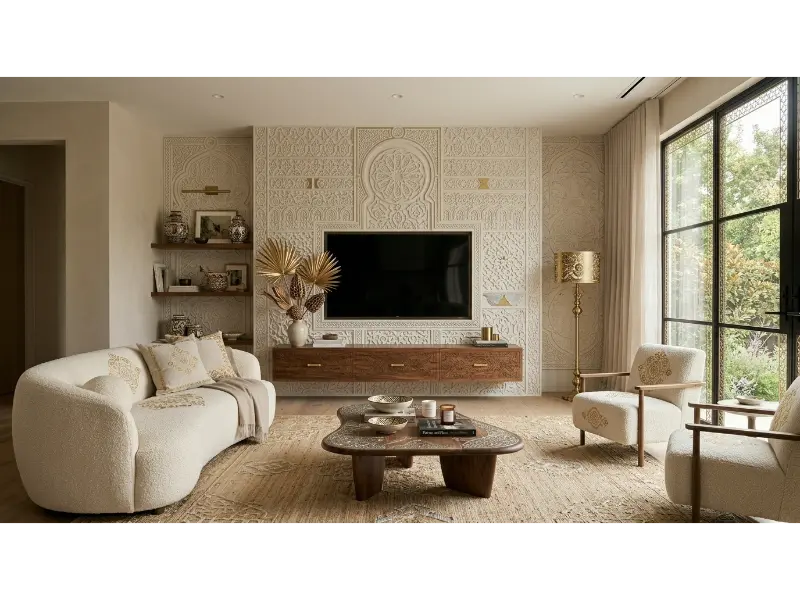
Travertine brings warmth and quiet luxury to a television wall without demanding complicated decoration. Choose a soft beige or creamy stone effect if you want the room to remain bright and relaxed. Large format surfaces work especially well because fewer seams create a calmer background. A slim console beneath the screen can provide storage without competing with the natural texture.
For a sophisticated luxury TV wall, combine the stone with curved furniture, linen upholstery, natural wood, and restrained accessories. Stone look porcelain or other durable alternatives can create a similar visual effect while offering easier maintenance. Current design trends favor tactile materials and warmer neutral palettes rather than overly polished feature walls.
Pro Tip: Choose low contrast stone patterns so the television remains easy to see instead of competing with dramatic veining.
7. Gallery Style TV Arrangement
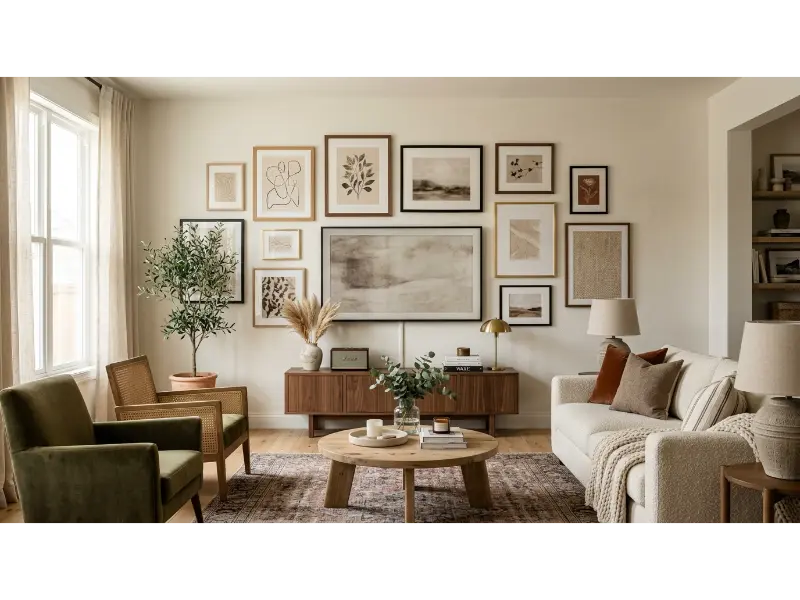
If you dislike the idea of making the television the only focal point, create a gallery style arrangement around it. Keep the screen centered and use artwork on either side to create balance. Choose frames in related finishes and repeat a small color palette so the composition feels intentional. The goal is to integrate the screen into the room rather than hide it completely.
This approach works especially well for transitional, eclectic, and cozy living room decor. You can use photographs, line drawings, abstract prints, or vintage inspired pieces depending on the room. Keep enough negative space around the television so the artwork does not make the wall feel crowded. A carefully planned arrangement can make the screen feel like another object within the overall composition.
Pro Tip: Lay your artwork arrangement on the floor first and photograph it before hanging anything.
8. Slim Black Media Wall
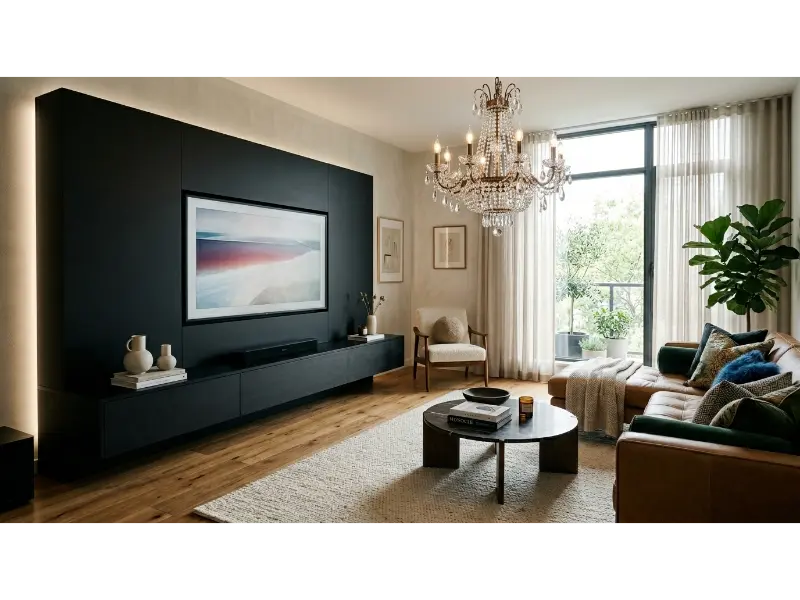
A black media wall can make a television almost disappear because the screen naturally blends into the dark background. This creates a dramatic and sophisticated effect, particularly when the rest of the room uses warm neutral furniture. Choose matte paint or a low sheen finish to prevent distracting reflections and soften the overall look.
Balance the dark wall with lighter upholstery, natural wood, woven textures, and warm lighting. A black TV wall design works best when the room has enough daylight or layered lamps to prevent it from feeling enclosed. Instead of filling the wall with decoration, let the contrast between the dark backdrop and lighter furniture provide the visual impact.
Pro Tip: Add warm lighting at floor level or inside nearby shelving to keep a dark media wall inviting after sunset.
9. Corner TV Setup For Small Rooms
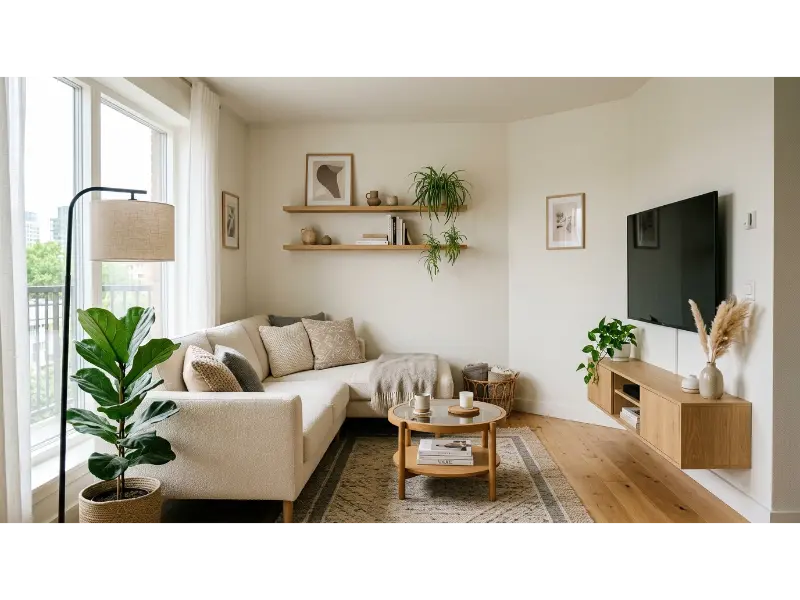
A corner television can solve a difficult layout when the main walls contain windows, doors, or architectural features. Instead of forcing the screen onto an unsuitable wall, use a carefully planned corner arrangement that keeps the viewing angle comfortable. A compact floating console can provide storage while leaving valuable floor area open for movement.
This is one of the most practical small living room TV ideas because it allows furniture to wrap naturally around the screen. Use a slim mount and avoid oversized cabinetry that makes the corner feel bulky. Designers recommend thinking carefully about sightlines and furniture placement in compact rooms so the television remains visible without dominating the entire space.
Pro Tip: Use a round coffee table in front of the seating area to improve circulation around a corner setup.
10. TV Above A Long Low Console
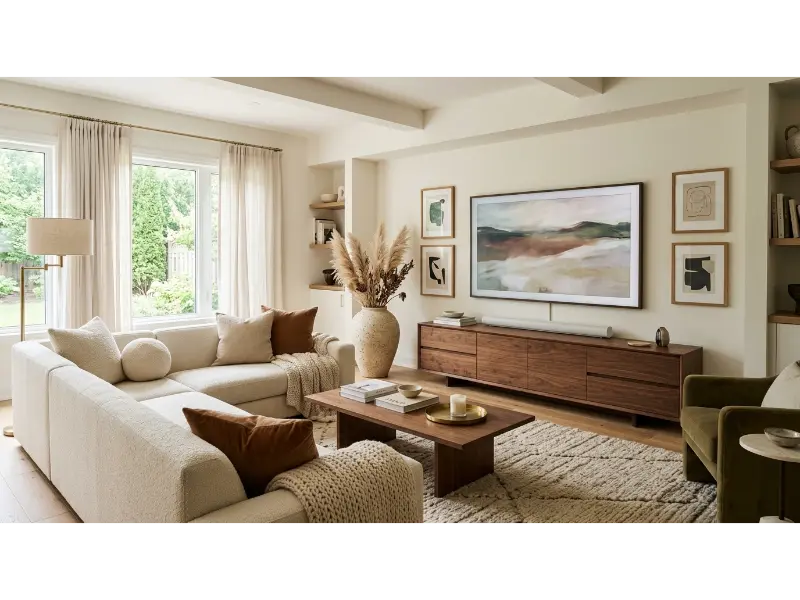
A long low console gives the television a stronger visual base and can make the entire wall feel more proportionate. Choose a console that extends beyond the screen on both sides instead of selecting one that barely matches its width. The extra horizontal length creates a grounded composition and provides space for carefully chosen accessories.
Use drawers or cabinets to hide electronics and everyday objects. This media console design works across many styles because the shape remains simple while materials can change from walnut to painted wood, oak, stone, or matte laminate. A low profile cabinet also keeps the room visually open and works particularly well with contemporary sofas and low coffee tables.
Pro Tip: Keep decorative objects low and sparse so they do not interfere with the screen or make the console look crowded.
11. Built In Shelves Around The TV
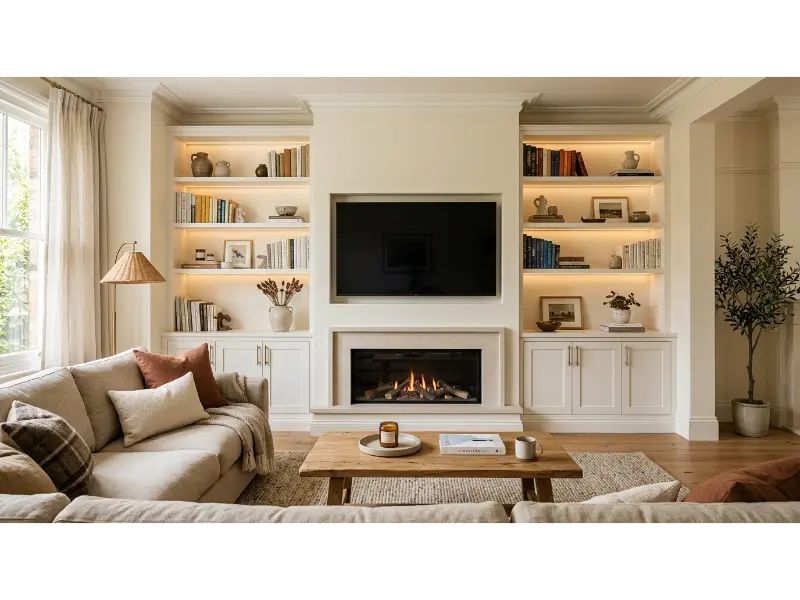
Framing a television with built in shelving gives you a chance to combine entertainment with personality. Place closed cabinets below and open shelving on the sides for objects that you genuinely enjoy seeing. Symmetry creates a calm effect, while slightly varied shelf styling can make the arrangement feel more relaxed and lived in.
The most successful built in media wall designs avoid filling every shelf. Leave empty space around larger objects and repeat materials or colors to connect the shelves with the rest of the room. This method can also hide cables and equipment, making the entertainment zone feel more organized and architectural.
Pro Tip: Use warm shelf lighting on selected niches instead of illuminating every shelf equally.
12. Minimal White TV Wall
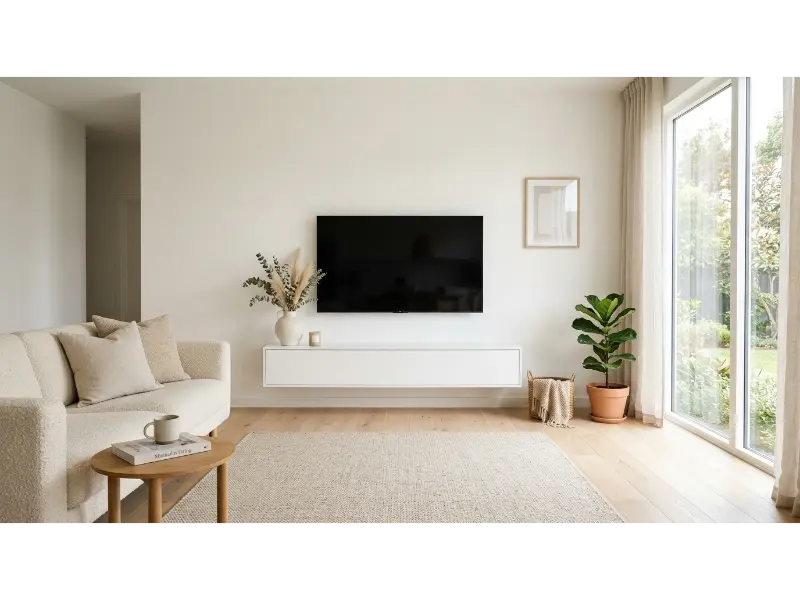
A white television wall can feel surprisingly elegant when you focus on proportion and restraint. Mount the screen neatly and pair it with a white or pale oak console so the entire arrangement feels light. This setup is ideal for rooms that already receive plenty of daylight and need a design that preserves an airy atmosphere.
Add warmth through flooring, upholstery, woven baskets, wood accents, and greenery rather than adding more objects to the wall. This minimalist living room TV setup works especially well in Scandinavian, modern, and Japandi interiors where visual calm matters. The key is to keep cables hidden and choose furniture with clean edges so the screen does not appear randomly attached to the wall.
Pro Tip: Use one oversized plant near the TV zone instead of several small plants scattered around the console.
13. Hidden TV Behind Sliding Panels
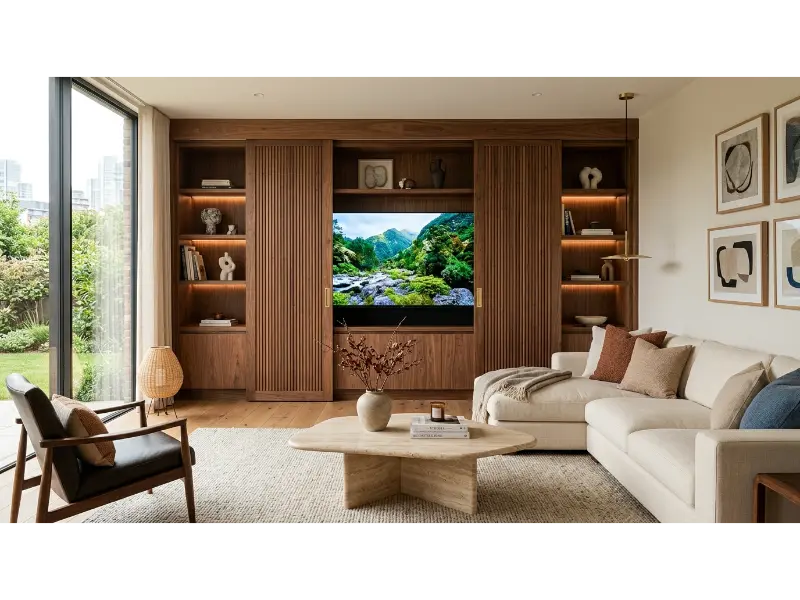
If you want the television to disappear when it is not being used, sliding panels offer a practical architectural solution. The panels can match the surrounding cabinetry so the entire wall looks like a furniture feature rather than an entertainment center. When movie time arrives, simply slide them aside to reveal the screen.
This idea suits formal living rooms where you do not want technology to dominate the decor. A hidden TV solution can also protect the screen from becoming the visual center of a room that is used for conversation, reading, or entertaining. Plan the panel movement carefully and leave enough clearance for ventilation and equipment access.
Pro Tip: Choose lightweight, smooth sliding panels so daily opening and closing remains effortless.
14. Fluted Cabinet TV Wall
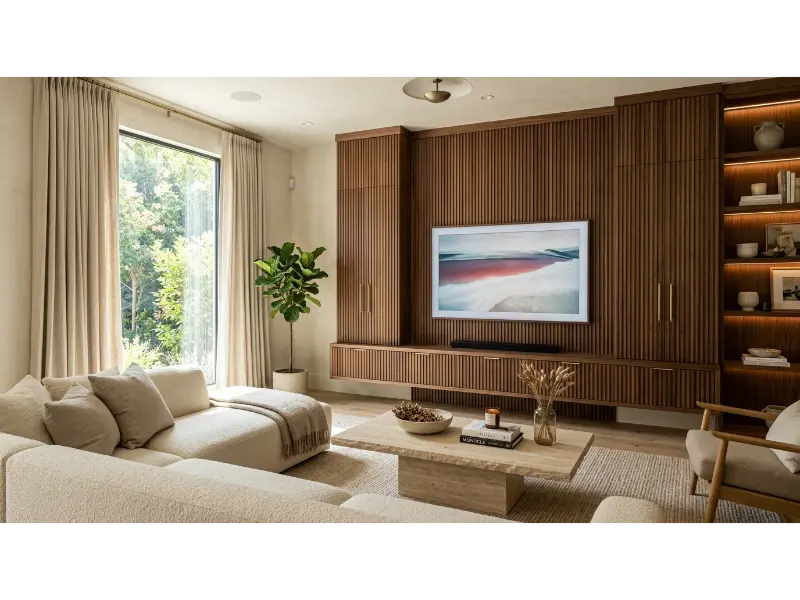
Fluted cabinet doors add texture while keeping storage concealed. They are especially effective when you want a television wall to feel custom but do not want exposed shelving. The repeated vertical lines create subtle movement and can connect beautifully with vertical architectural details elsewhere in the room.
Choose a warm wood or painted finish depending on your style. A fluted TV cabinet works beautifully with curved sofas, rounded coffee tables, linen textiles, and soft lighting because the combination feels modern without becoming cold. Keep the cabinet hardware minimal so the ribbed surface remains the defining detail.
Pro Tip: Repeat the fluted texture on only one or two surfaces in the room so the design feels coordinated rather than repetitive.
15. Floating Shelf TV Setup
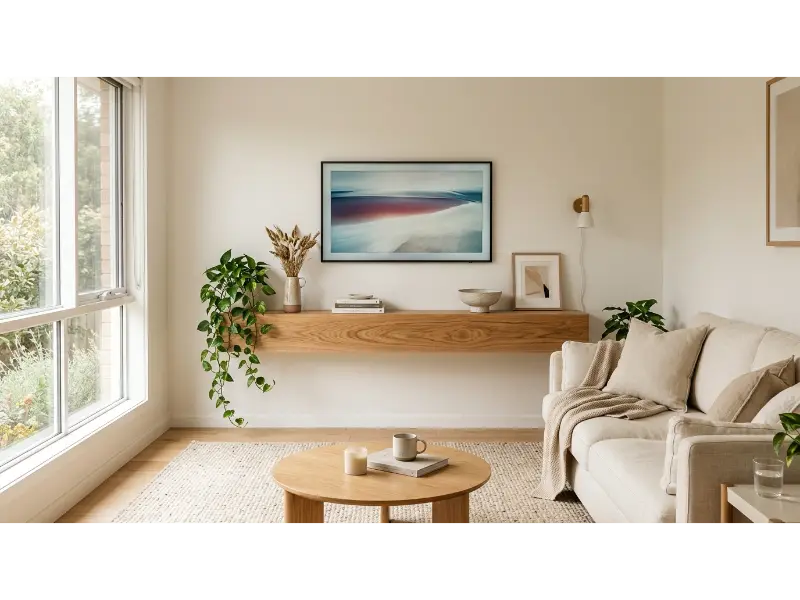
A single floating shelf can be enough when you want a simple television arrangement without installing a full cabinet. Choose a thick shelf in oak, walnut, or painted wood and place only a few meaningful objects on it. This creates a clean horizontal line beneath the screen while keeping the wall visually open.
This floating shelf TV design works especially well in smaller homes and rental friendly spaces where large built ins may not make sense. Use proper wall anchors for the shelf and avoid placing fragile objects where they could fall or become a distraction. The simplicity makes it easy to update as your style changes.
Pro Tip: Keep the shelf noticeably wider than the TV to create a stronger visual foundation.
16. TV Wall With Vertical Lighting
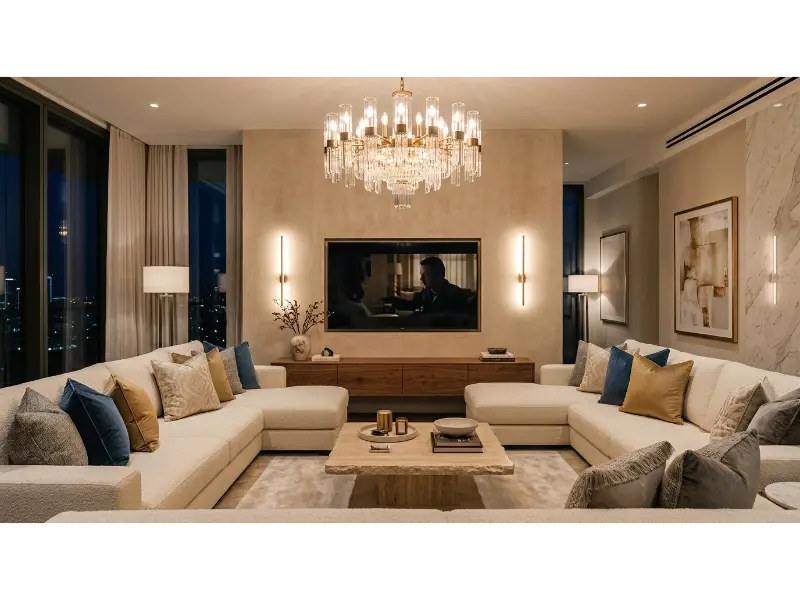
Lighting can completely change how a television wall looks after sunset. Instead of relying only on ceiling lights, add slim vertical sconces or concealed LED strips around the architectural feature. The goal is to create gentle ambient illumination without producing glare on the screen.
A carefully lit media wall design feels more layered and expensive because the wall remains visually interesting even when the main room lights are off. Choose warm light and position fixtures so they illuminate the surrounding surfaces rather than shining directly toward viewers. Integrated lighting is also being used more often in contemporary media walls to create depth and a softer nighttime atmosphere.
Pro Tip: Use dimmable lighting so you can lower the brightness when watching movies.
17. TV With A Curved Console
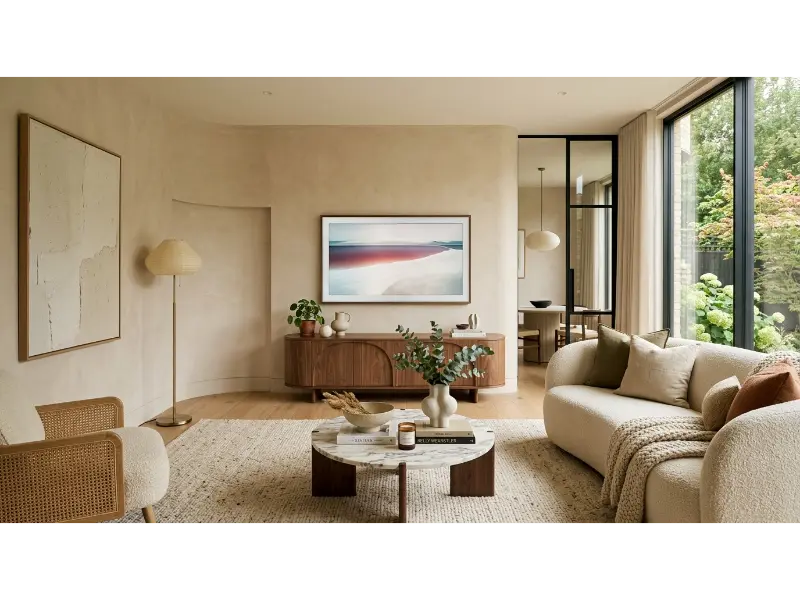
A curved console can soften the strong rectangular shape of a television. The contrast works particularly well in modern rooms filled with straight walls and clean architectural lines. Choose a rounded cabinet with concealed doors and enough length to anchor the screen above it.
Combine the furniture with rounded seating, a circular coffee table, or curved lighting for a cohesive design language. This modern TV unit feels more decorative than a standard rectangular cabinet while still providing useful storage. Keep the wall behind the television simple so the sculptural shape of the console remains easy to appreciate.
Pro Tip: Repeat at least one curved shape elsewhere in the room so the console feels connected to the overall design.
18. Dark Green Media Wall
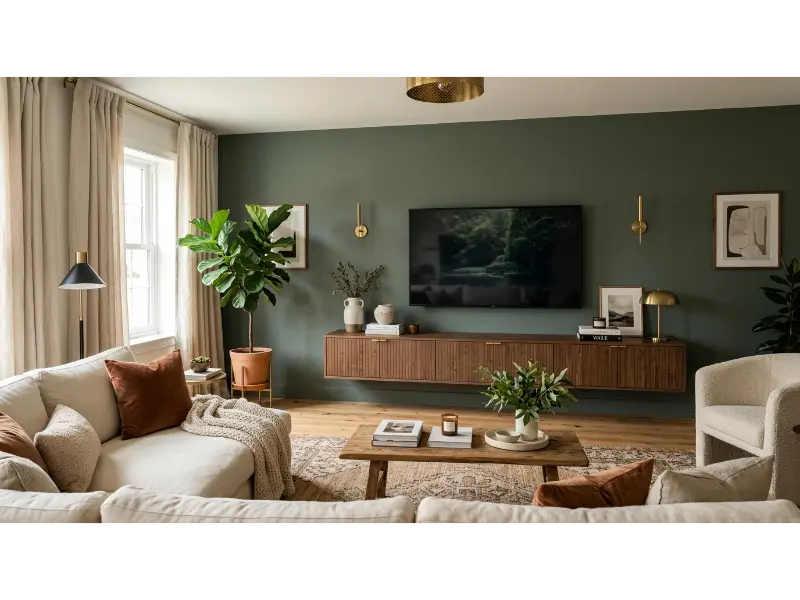
A deep green backdrop creates a rich and comfortable atmosphere while helping the television blend into the wall. Shades such as olive, forest, moss, or muted sage can work beautifully with walnut, brass, cream, and natural stone. This is a strong choice for anyone who wants more color without creating a loud feature wall.
Use the same green tone on surrounding cabinetry for a built in appearance. A colored TV wall can make a room feel more personal and layered than a plain neutral wall, especially when supported by warm materials. Keep accessories restrained because the color itself already provides substantial visual character.
Pro Tip: Test the paint in both daylight and evening light before committing because deep colors can shift dramatically throughout the day.
19. TV Wall With Closed Floor Cabinets
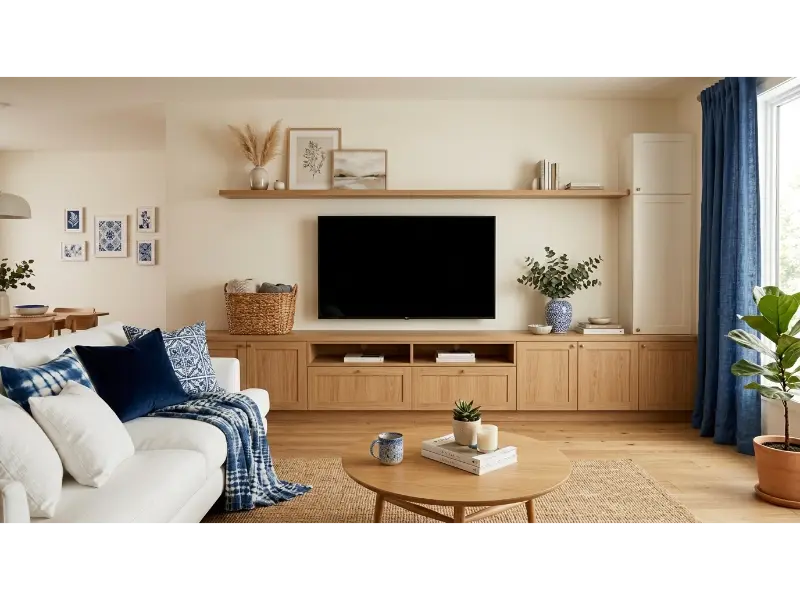
Closed floor cabinets are excellent when the living room needs serious storage. They can hold board games, blankets, books, toys, consoles, cables, and other items that would otherwise create visual clutter. The television remains the focal point while everything else stays neatly behind doors.
For a practical living room media unit, choose handleless doors or discreet pulls for a clean appearance. A long cabinet can visually widen the room while providing much more storage than a small television stand. Keep frequently used devices accessible through ventilation friendly compartments and allow enough room for cables behind the equipment.
Pro Tip: Use labeled interior baskets or adjustable dividers so hidden storage stays organized instead of becoming a cluttered black hole.
20. Organic Modern TV Nook
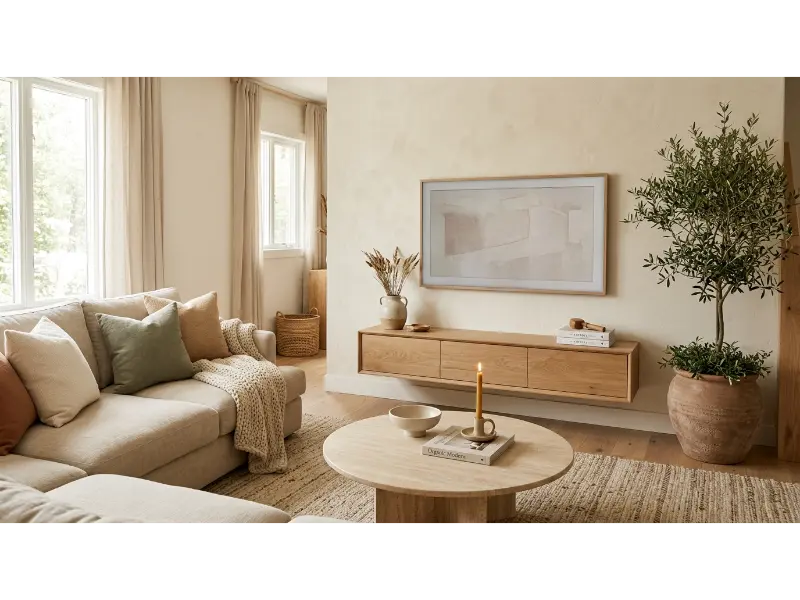
An organic modern television nook makes technology feel softer through natural materials and earthy colors. Pair pale oak with linen, woven textures, stone, clay, and greenery. Instead of creating a dramatic feature wall, allow the surrounding materials to make the entertainment area feel warm and connected to the rest of the room.
This approach works well for people who prefer a relaxed home rather than a showroom appearance. A cozy TV setup can still look polished when you use consistent tones and maintain enough empty space around the screen. Natural textures also help balance the hard surfaces of electronics and cabinetry.
Pro Tip: Choose three main materials, such as wood, stone, and linen, and repeat them throughout the room for a cohesive finish.
21. TV Inside A Recessed Niche
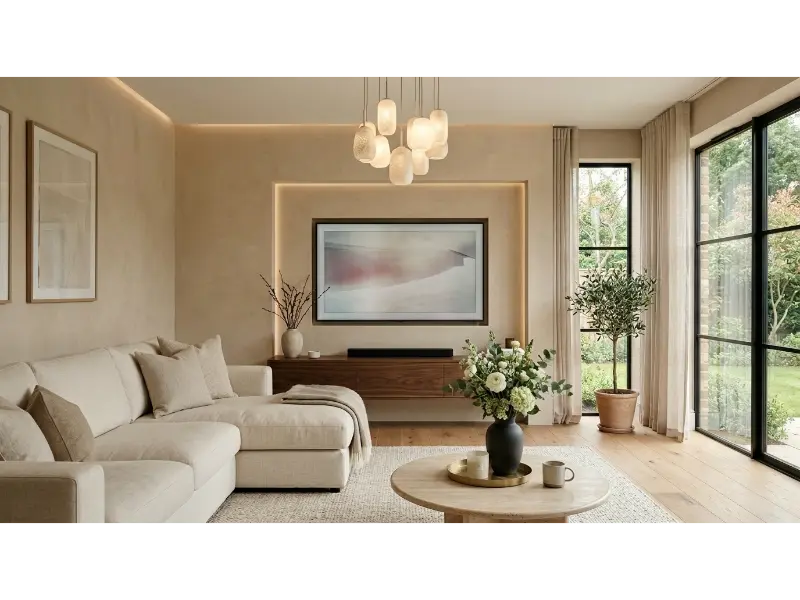
A recessed television niche gives the screen a built in appearance without requiring a huge amount of cabinetry. The shallow recess can create a subtle shadow line around the television and make the installation feel more architectural. Pair it with a simple console below to maintain visual balance.
This recessed TV wall is especially effective in contemporary homes where clean geometry matters. Plan the depth carefully so the television and cables fit properly, and make sure the equipment can still receive ventilation. A shadow gap around the niche can add a premium detail without relying on excessive decoration.
Pro Tip: Keep the niche only slightly larger than the television so the recess frames the screen rather than creating a large empty cavity.
22. Scandinavian TV Setup With Light Wood
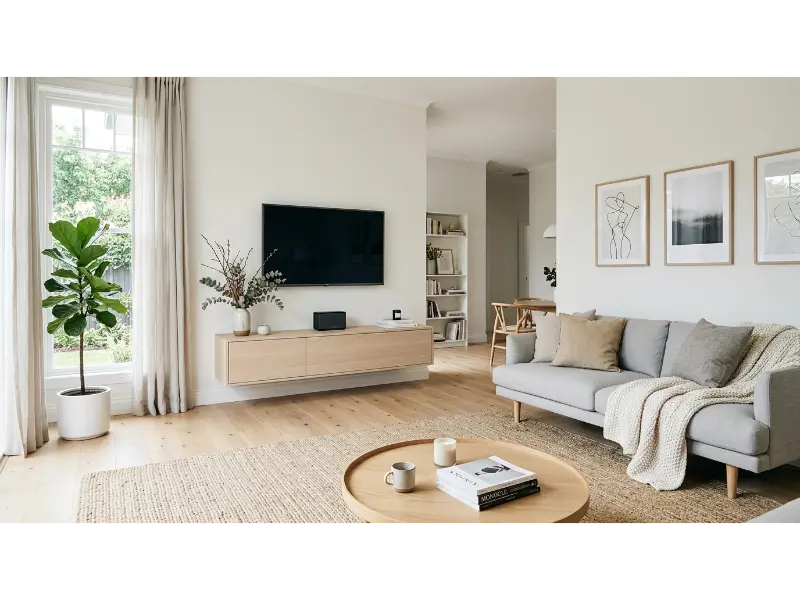
Scandinavian style keeps a television area bright, functional, and uncomplicated. Pale oak, warm white, soft gray, and natural textiles create an easy backdrop that works in both small and medium sized living rooms. Choose furniture with slim proportions so the screen does not feel visually heavier than the rest of the space.
A Scandinavian TV wall should prioritize useful storage and clean cable management rather than excessive decoration. Add one or two plants and a small amount of artwork for personality. The result feels fresh and comfortable without requiring expensive architectural work.
Pro Tip: Choose furniture with visible legs when you want the room to feel especially open and airy.
23. Statement TV Wall With Mixed Materials
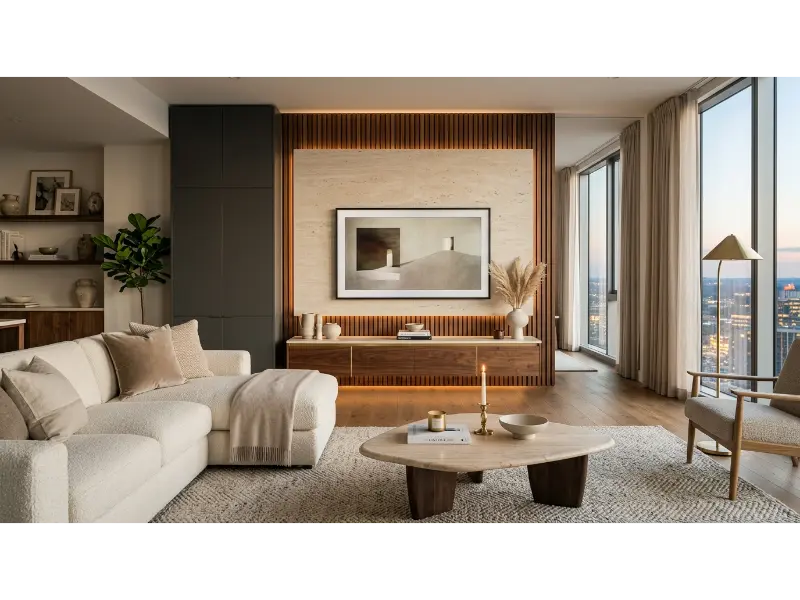
For the ultimate statement, combine two or three complementary materials instead of relying on one feature finish. Walnut can bring warmth, travertine can add texture, and matte cabinetry can provide practical storage. The television should remain centered within the composition so the materials frame it rather than compete with it.
This is one of the most versatile TV wall decor ideas because you can adapt the materials to almost any interior style. Keep the palette controlled and repeat each material elsewhere in the room. A successful mixed material wall feels intentional because every surface has a role, from storage and cable concealment to texture and visual balance. Contemporary media walls increasingly treat the television as part of a larger architectural composition rather than a standalone appliance.
Pro Tip: Limit the main wall to two or three finishes and let lighting create additional depth instead of adding more materials.
How To Choose The Right TV Setup For Your Living Room
Start with the room rather than the television. Measure the wall, sofa position, windows, doors, fireplace, and walking paths before choosing a media unit. The screen should remain comfortable to watch from the main seating area, and the layout should not force people to twist their necks or move furniture simply to see the picture. A good living room TV layout balances viewing comfort with the way the room functions every day.
Next, think about storage. If your family uses gaming consoles, speakers, streaming devices, books, blankets, or board games, choose cabinetry that can actually handle those items. Closed storage keeps visual noise under control, while open shelves provide space for personality. If you need maximum flexibility, combine both. Modern media walls increasingly use this mix because it keeps practical objects hidden while giving the room a curated appearance.
Cable management deserves attention before installation, not after. Plan where power, HDMI connections, sound equipment, and other devices will sit. Concealed wiring can dramatically improve the finished appearance, but any in wall electrical work should follow local codes and use appropriate products or qualified professionals. A beautiful wall loses much of its impact when loose cables hang beneath the screen.
Proportion matters just as much as style. A tiny console beneath a huge television can look unstable, while an oversized cabinet can overwhelm a small room. In most cases, a console that extends beyond the screen creates a more grounded composition. Before purchasing furniture, use painter’s tape to mark the television and cabinet dimensions on the wall. This simple step lets you judge scale before spending money.
Finally, think about lighting. Daylight can create reflections, while strong ceiling lights can become distracting during movie nights. Use curtains, shades, dimmable lamps, wall sconces, or indirect LED lighting to create a comfortable viewing environment. The best home entertainment setup should work beautifully during the day and feel cozy after dark.
Frequently Asked Questions
Should a TV be centered on the wall or the sofa?
The best position usually relates to the main seating arrangement rather than simply the physical center of the wall. If the sofa faces slightly off center, prioritize a comfortable viewing angle. The room should feel natural when people sit down to watch television rather than forcing the seating to follow an arbitrary wall measurement.
How can I make my TV wall look less cluttered?
Use concealed storage, hide cables, and reduce the number of decorative objects. A floating console, closed cabinets, or built in shelves can keep electronics and everyday items organized. Choose a simple backdrop and repeat a small number of materials throughout the room. Less visual noise usually makes the television area feel more expensive.
Is a floating TV console good for a small living room?
Yes. A floating console can make a small room feel more open because the floor remains visible beneath the furniture. It also provides useful storage without creating the heavy appearance of a deep freestanding cabinet. Make sure the wall construction and mounting hardware can safely support the cabinet and its contents.
What should I put under my TV?
A media console is the most practical choice for most homes. You can also use a floating cabinet, built in drawers, a long low cabinet, or a simple shelf depending on your storage needs. The furniture should complement the scale of the television and leave enough space for equipment ventilation and cable access.
Should I put my TV above the fireplace?
Not automatically. Although this arrangement can save wall space, a television mounted too high may create an uncomfortable viewing angle. Designers increasingly recommend considering separate TV and fireplace zones when the room allows it. If you must combine them, check the seated sightline and fireplace heat requirements carefully before installation.
What wall color makes a TV look better?
Deep charcoal, muted green, warm taupe, dark brown, and soft neutral shades can help the television blend into its surroundings. A dark matte wall often makes the black screen less noticeable, while warm neutrals create a softer backdrop. Choose the color according to the room’s natural light and existing furniture.
How wide should a TV console be?
A console that extends beyond the television generally creates a more balanced appearance than one that is narrower than the screen. The exact width depends on the room, television size, and storage needs. Always consider the overall composition rather than choosing furniture based only on the screen measurement.
How do I hide TV cables?
Plan cable routing before mounting the television. Depending on the wall and local electrical requirements, cables may run through an appropriate wall management system, behind a purpose built panel, or through a surface mounted raceway designed for the job. Keep power and signal connections accessible enough for future changes and use professional electrical help when required.
Are TV media walls still popular in 2026?
Yes. Current 2026 design coverage shows strong interest in media walls that combine television placement with storage, architectural materials, lighting, and concealed technology. The trend has shifted away from simply mounting a screen and toward making the entire wall feel intentional. Warm woods, stone effects, integrated cabinetry, and subtle lighting are particularly prominent.
What is the best setup for a very small living room?
Start with a wall mounted television and a shallow or floating console. Avoid deep cabinets that reduce walking space. A corner installation can work when the room has limited uninterrupted wall area, while a light colored wall and slim furniture can help maintain an airy appearance. The goal should be clear sightlines and open circulation.
Conclusion
The best television arrangement does more than give your screen a place to sit. It can improve storage, hide cables, define a focal point, and make the entire living room feel more complete. From warm walnut slats and floating consoles to recessed niches, built in cabinetry, soft plaster, and mixed material media walls, these ideas offer options for different room sizes, budgets, and decorating styles.
The smartest approach is to begin with how you actually use the room. Consider your seating, viewing angle, storage needs, lighting, wall size, and existing finishes before choosing a design. When those practical details work together, the television stops looking like an awkward electronic box and becomes a natural part of the home’s architecture. That balance of beauty and function is what makes a living room feel genuinely finished.