

23 Stunning Earthy Living Room Ideas for a Cozy Feel
A beautiful living room should feel good the moment you walk into it. Earthy Living Room Ideas create that feeling by bringing together warm colors, natural textures, comfortable furniture, organic shapes, and subtle touches inspired by the outdoors. Instead of relying on trendy pieces that quickly feel outdated, this style focuses on materials and colors that make a home feel calm, welcoming, and timeless.
From warm beige walls and natural wood to olive green, terracotta, stone, linen, rattan, and indoor plants, there are countless ways to create a natural atmosphere. You can keep the look modern and minimal, add rustic character, or bring in a little bohemian warmth. The ideas below are designed to help you build a room that looks beautiful in photos while still feeling practical and comfortable for everyday life.
Beautiful Ways to Create a Warm and Natural Living Room
1. Earthy Living Room Ideas With Warm Beige and Natural Wood
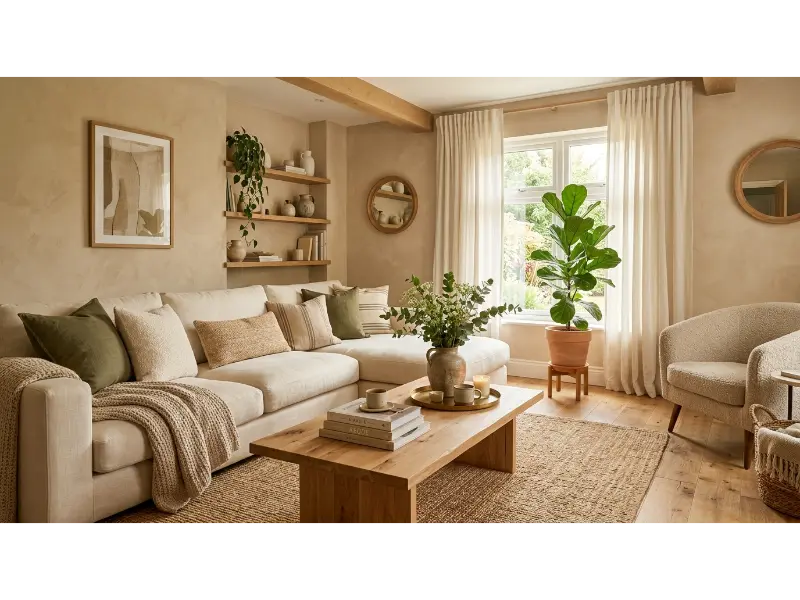
Earthy Living Room Ideas look especially inviting when warm beige meets natural wood. Start with a cream or oatmeal sofa and pair it with an oak coffee table, wooden sideboard, or pale wood flooring. The gentle contrast keeps the room bright while adding enough warmth to prevent the space from feeling plain. A textured jute rug, linen cushions, and simple ceramic pieces can introduce additional layers without making the room look crowded.
Keep the accessories simple and let the materials provide most of the character. Add a leafy plant near a window, place a woven basket beside the sofa, and use warm lighting for the evening. If your room already has wooden floors, repeat the same wood tone through smaller furniture pieces. This creates visual consistency and gives the entire space a naturally connected appearance.
Pro Tip: Use one main wood tone throughout the room and repeat it in at least two or three places for a cohesive finish.
2. Olive Green Walls With Cream Furniture
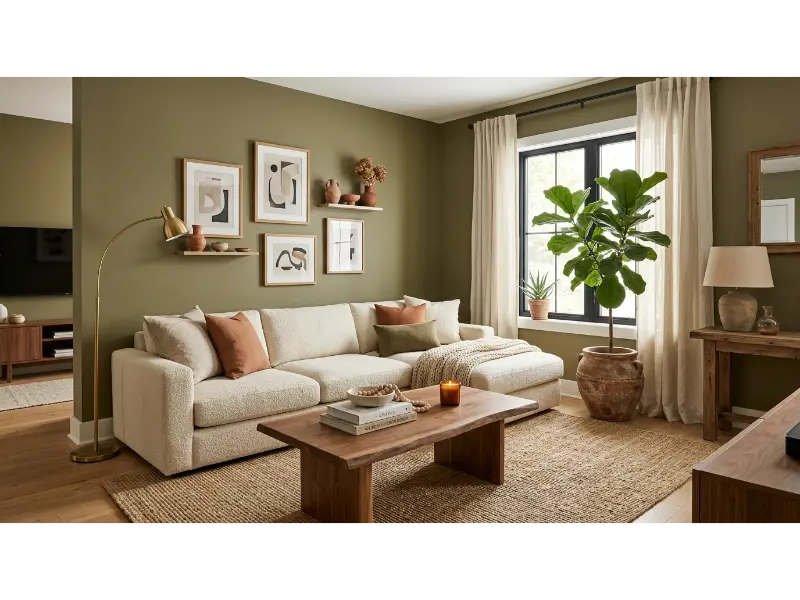
Olive green brings the peaceful feeling of nature indoors while giving the living room more personality than a basic neutral wall. Choose a soft, muted olive instead of an intense green and pair it with cream upholstery, warm wood, and natural woven textures. The combination feels grounded but still fresh. A large cream sofa can balance the deeper wall color and make the room feel comfortable rather than heavy.
Bring the palette together with small olive cushions, botanical artwork, or a ceramic vase in a similar shade. Warm brass or aged bronze lighting can add a refined touch without taking the design away from its natural direction. Keep the flooring and larger furniture pieces relatively simple so the wall color remains the main feature.
Pro Tip: Test olive paint in different lighting conditions before committing because green can look very different during the day and evening.
Read More: 23 Amazing Beach Themed Living Room Ideas for a Breezy Escape
3. Terracotta Accents for a Warm Natural Look
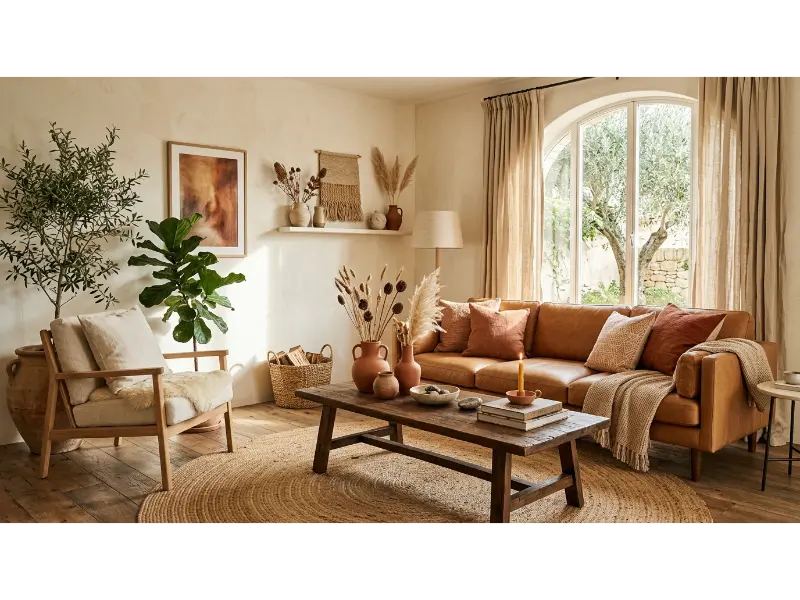
Terracotta is an excellent choice when you want to add warmth without covering the entire room in a strong color. Introduce it through cushions, pottery, artwork, a small accent chair, or a textured throw. The warm clay tone works naturally with beige decor, cream upholstery, wood, and woven materials. It can make a simple living room feel more personal while maintaining a relaxed atmosphere.
Try using several small touches instead of one oversized terracotta feature. For example, place a clay vase on the coffee table and repeat the shade through one cushion and a small artwork detail. This creates a subtle color rhythm. Add linen, jute, and natural wood around these accents to keep the overall look balanced and connected to nature.
Pro Tip: Pair terracotta with warm cream rather than bright white for a softer and more sophisticated combination.
4. Natural Stone Fireplace as the Main Focal Point
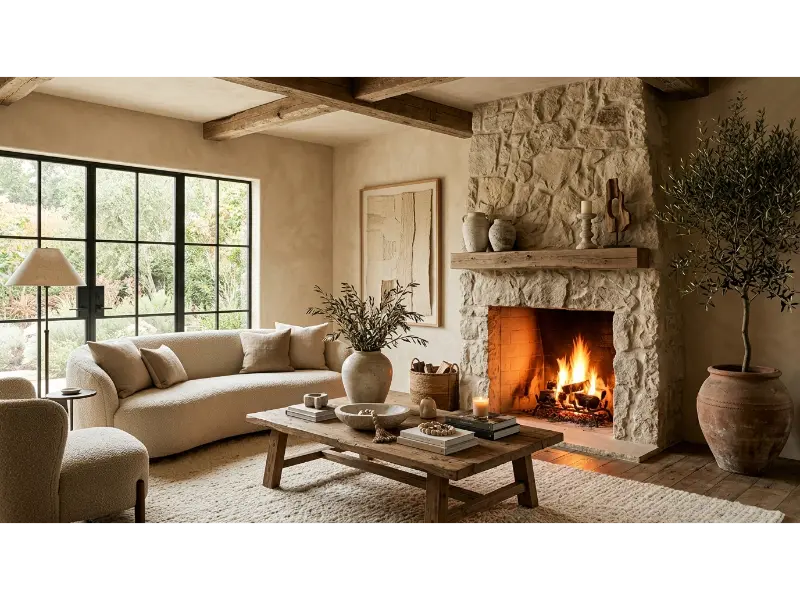
A natural stone fireplace can instantly give a living room a strong architectural focal point. Limestone, travertine, slate, or textured stone adds depth and connects the interior with the natural world. Keep the surrounding furniture simple so the fireplace remains visually important. A cream sofa, warm wood table, and soft rug can balance the harder surface and make the entire seating area feel more comfortable.
Arrange the furniture around the fireplace rather than placing it directly against every wall. This creates a natural conversation area and makes the room feel intentional. Use a few handmade ceramics or wooden accessories on the mantel if space allows. Avoid excessive decoration because the stone already provides plenty of visual texture and character.
Pro Tip: Use warm directional lighting near the fireplace to highlight the natural texture of the stone after sunset.
5. Curved Furniture for a Softer Organic Feel
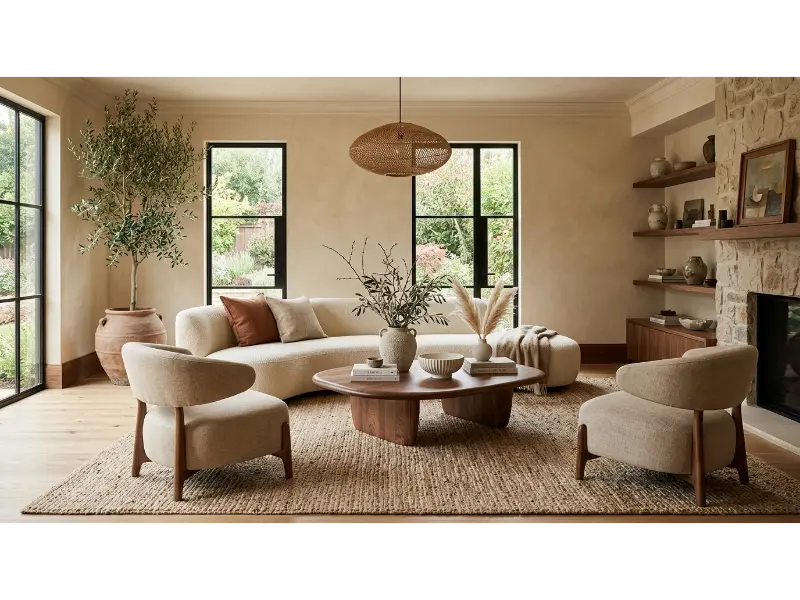
Curved furniture can make a natural living room feel softer and more inviting. Replace sharp rectangular shapes with a rounded sofa, oval coffee table, curved armchair, or circular side table. These gentle silhouettes work particularly well with warm neutrals and natural materials because they create a relaxed visual flow. A curved cream sofa can become the centerpiece while wooden furniture adds warmth underneath the softness.
You do not need to make every item curved. In fact, combining curved furniture with a few straight pieces creates better balance. Try pairing a rounded sofa with a rectangular wooden console or a linear floor lamp. Add a textured rug underneath to visually connect the different shapes and make the seating arrangement feel complete.
Pro Tip: Use curves for one or two major pieces and keep other furniture more structured to maintain visual balance.
Read More: 23 Ceiling Decor Ideas to Elevate Your Room in Style
6. Rattan Furniture for Natural Texture
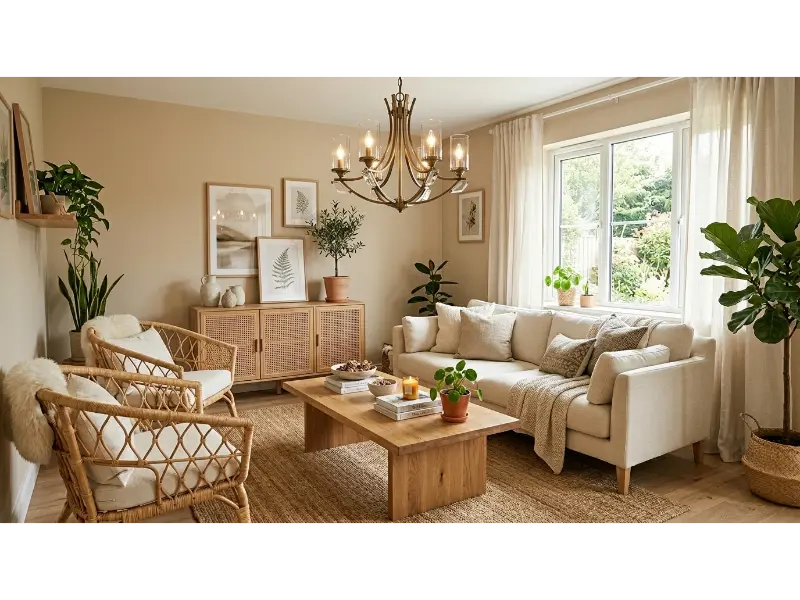
Rattan is one of the easiest materials to introduce when you want more texture. A rattan chair, cane cabinet, woven pendant, or natural basket can give a neutral room a relaxed character. Its open weave creates light and shadow, which adds interest without requiring bright colors. Combine rattan with natural wood, cream upholstery, and linen for a cohesive organic palette.
Avoid using rattan on every piece of furniture because too much can make the room feel themed. One statement chair paired with a woven basket may be enough. If the furniture already contains rattan, keep the accessories more understated. A few ceramic pieces and a leafy plant can complete the look without competing with the woven texture.
Pro Tip: Repeat rattan in only two or three places so the texture feels intentional rather than overwhelming.
7. Layered Neutral Textures
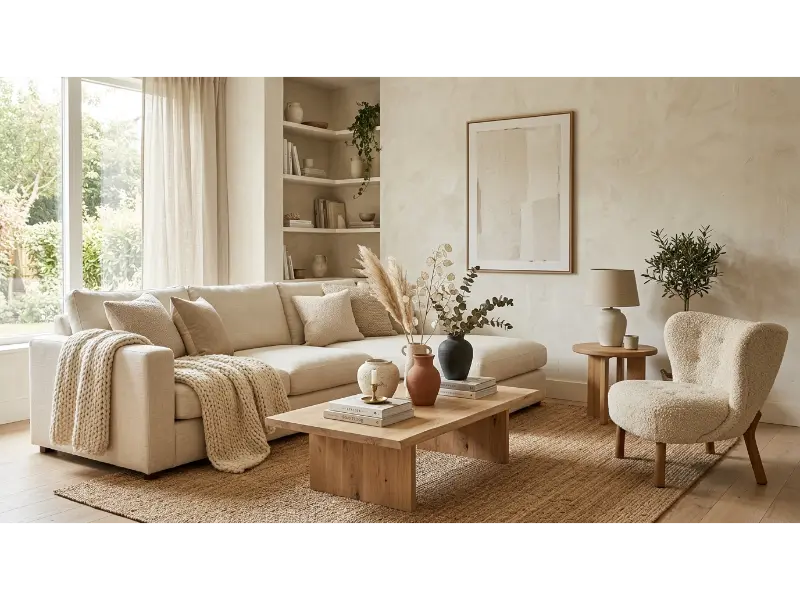
A neutral living room does not have to look boring. The secret is using different textures within a similar color palette. Combine linen, wool, jute, boucle, wood, ceramic, and cotton while keeping the colors around cream, beige, taupe, sand, and warm white. The subtle changes in texture create depth even when the colors remain very close.
Begin with the largest surfaces, such as the sofa and rug, before adding smaller details. A chunky wool throw can soften a linen sofa, while a rough ceramic vase adds contrast against a smooth wooden table. Keep some areas intentionally empty so the room still feels calm. Too many accessories can hide the beautiful textures you worked to create.
Pro Tip: When using mostly neutral colors, let texture provide the contrast instead of adding lots of different shades.
8. Rich Walnut Furniture With Soft Neutrals
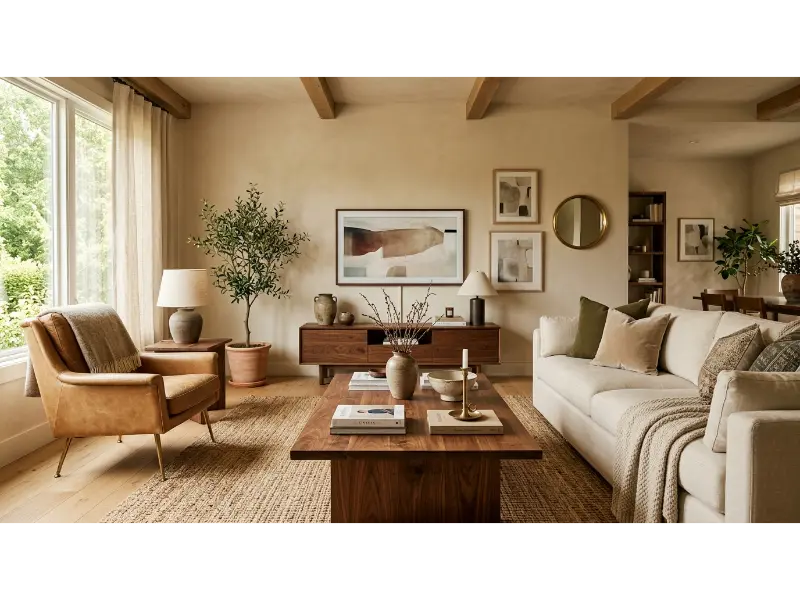
Walnut furniture adds depth and sophistication to a warm neutral room. A walnut coffee table, console, shelving unit, or media cabinet can create a strong foundation while cream upholstery keeps the space bright. The deep brown grain gives the room character without introducing an artificial-looking color. This combination works especially well in modern homes where you want warmth without a rustic appearance.
Balance walnut with lighter fabrics and natural fibers. A cream wool rug, beige linen cushions, and a woven basket can soften the darker wood. Add one camel leather chair or a muted green accent to create another layer of warmth. Keep other wood finishes limited so the walnut remains visually strong.
Pro Tip: Pair rich walnut with light fabrics and warm neutral walls to keep the room sophisticated but open.
9. A Large Indoor Olive Tree
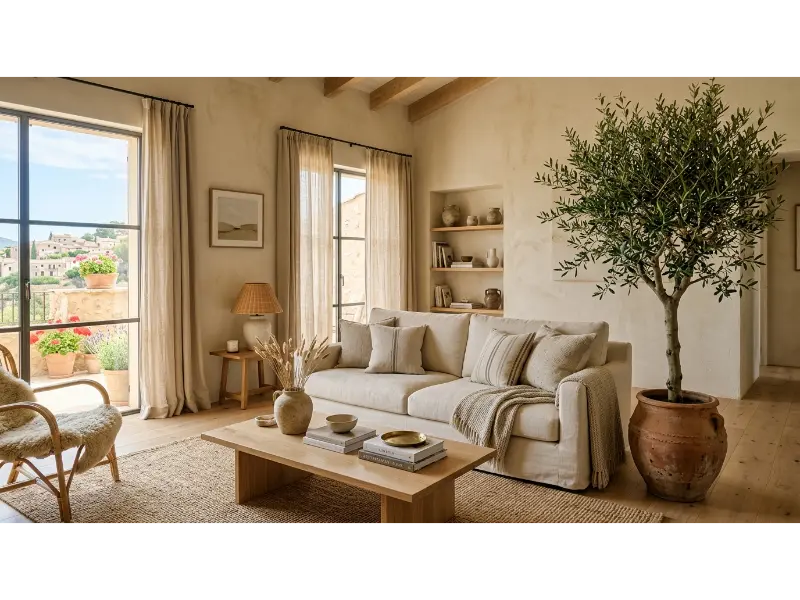
A tall indoor olive tree can become a beautiful natural focal point without adding strong color. Its soft green leaves work beautifully with cream, beige, tan, terracotta, and natural wood. Place the tree near a bright window where its shape can stand out against a simple wall. The height also helps fill an empty vertical area that might otherwise look unfinished.
Choose a planter that supports the room’s material palette. Terracotta, stone, handmade ceramic, or woven planters all work well. Keep nearby furniture relatively simple so the tree does not compete with other large shapes. If your space is small, choose a compact olive tree or another sculptural plant that provides a similar vertical effect.
Pro Tip: Give a large plant breathing room instead of placing several accessories directly around its base.
10. Warm Clay Colored Walls
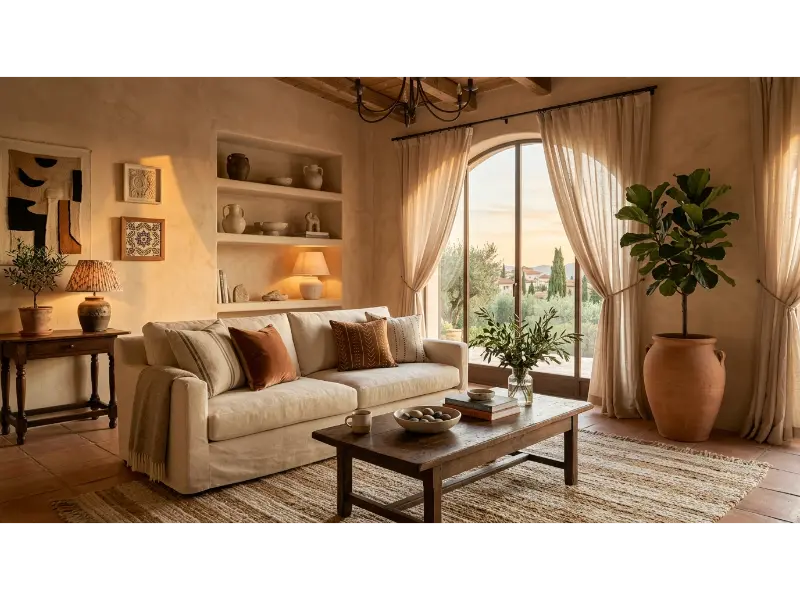
Warm clay walls can make a living room feel intimate and cozy while adding more personality than ordinary beige. Choose a muted clay, cinnamon, dusty terracotta, or soft caramel shade rather than an extremely bright orange. Pair the walls with cream furniture, natural wood, and soft textiles to create a comfortable contrast.
Because the wall already creates a strong backdrop, keep the larger furniture pieces simple. Linen curtains can soften the windows, while handmade ceramics and greenery add small details. Warm lamps will make the clay tone even richer at night. This approach works especially well in rooms with good natural light because sunlight brings out the subtle variation in the color.
Pro Tip: Always sample warm wall colors first because natural and artificial lighting can change their appearance significantly.
11. Japandi Inspired Natural Simplicity
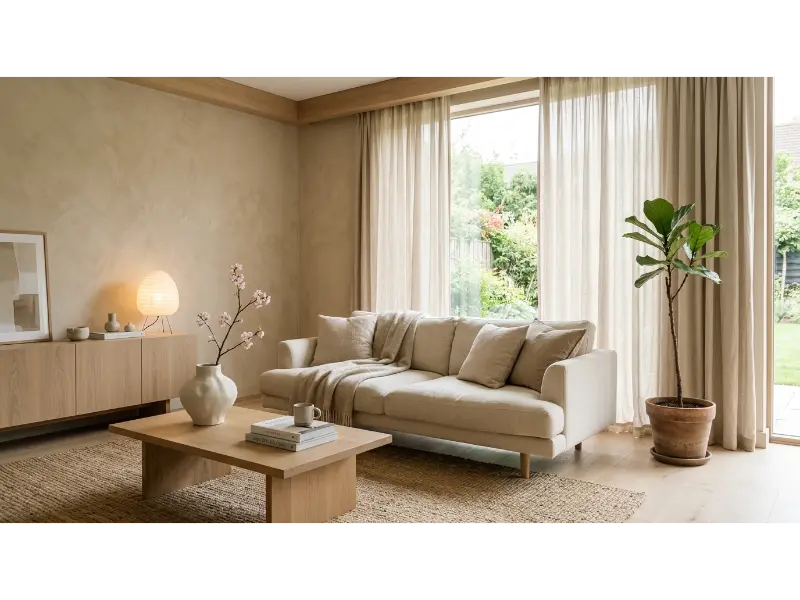
Japandi style combines Japanese simplicity with Scandinavian warmth, making it a natural fit for a calm living room. Use low profile furniture, pale wood, cream upholstery, simple ceramics, and restrained greenery. The design should feel purposeful rather than empty. Every piece should contribute either function, comfort, texture, or visual balance.
Keep the floor area open and avoid filling shelves and tables with small decorations. One sculptural vase can create more impact than several unrelated accessories. Soft linen curtains and a woven rug introduce warmth while maintaining the clean foundation. This style works particularly well in smaller homes because its uncluttered approach can make the room feel more spacious.
Pro Tip: Before adding decor, remove anything that does not serve a clear visual or practical purpose.
12. Reclaimed Wood for Rustic Character
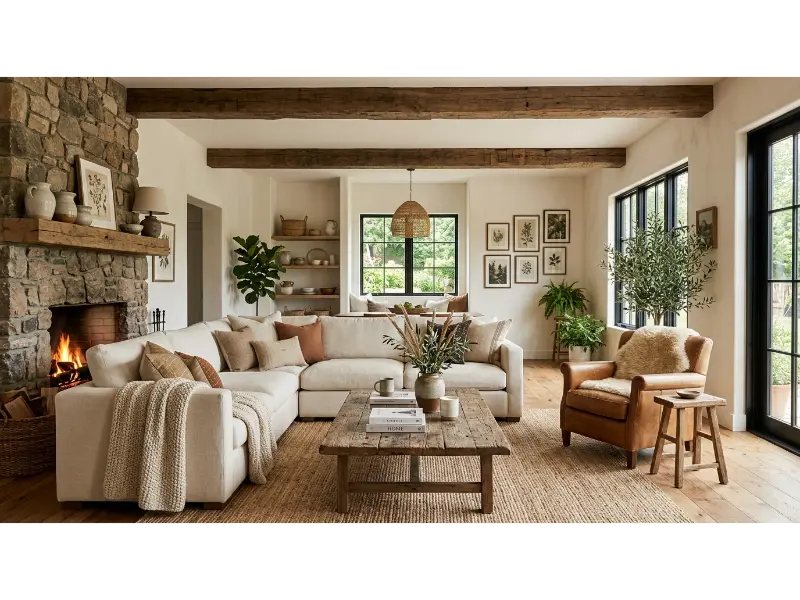
Reclaimed wood adds authentic character to a living room because every piece carries natural variation. Use it for a coffee table, shelving, console, ceiling beam, or accent wall. The aged grain and imperfections can make a newer home feel warmer and more established. Balance the roughness with soft cream upholstery, linen curtains, and a comfortable wool rug.
Avoid using distressed wood on every surface. One statement piece usually creates more impact than an entire room filled with matching rustic furniture. Add handmade pottery and greenery to support the natural theme. A caramel leather chair can provide another durable material while introducing a slightly deeper tone.
Pro Tip: Let one reclaimed wood feature become the star and keep the remaining furniture cleaner and simpler.
13. Cream Boucle Sofa With Natural Accents
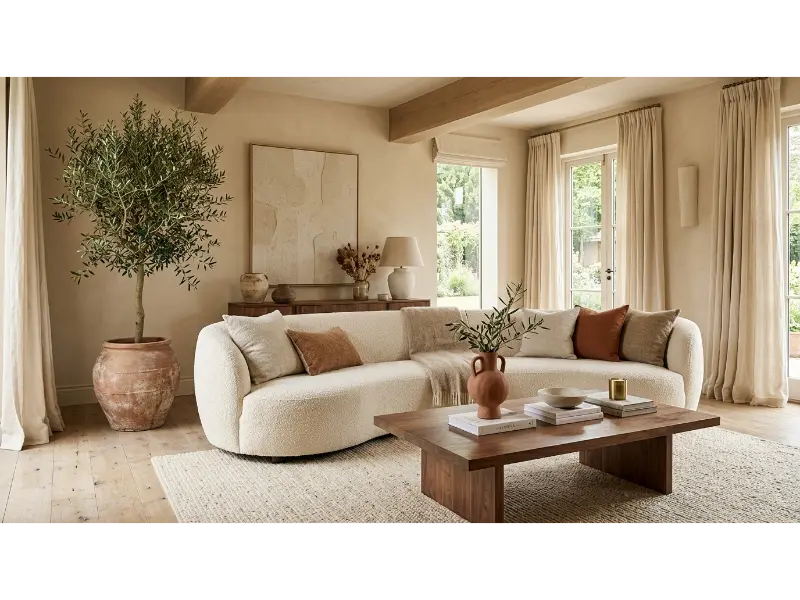
A cream boucle sofa can make a living room feel soft, comfortable, and sophisticated at the same time. Its textured upholstery creates visual interest without introducing a strong color. Pair it with walnut, oak, travertine, jute, and muted green accents to build a layered natural palette. Curved boucle seating works especially well when the rest of the furniture has clean organic forms.
Balance the soft sofa with harder materials. A stone or wooden coffee table can provide contrast, while a smooth ceramic vase creates another surface variation. Add linen cushions or a lightweight cotton throw instead of using too many bulky textures. This keeps the seating area comfortable without making it visually heavy.
Pro Tip: Combine highly textured boucle with smoother fabrics so the room has both softness and visual contrast.
14. Wabi Sabi Inspired Imperfections
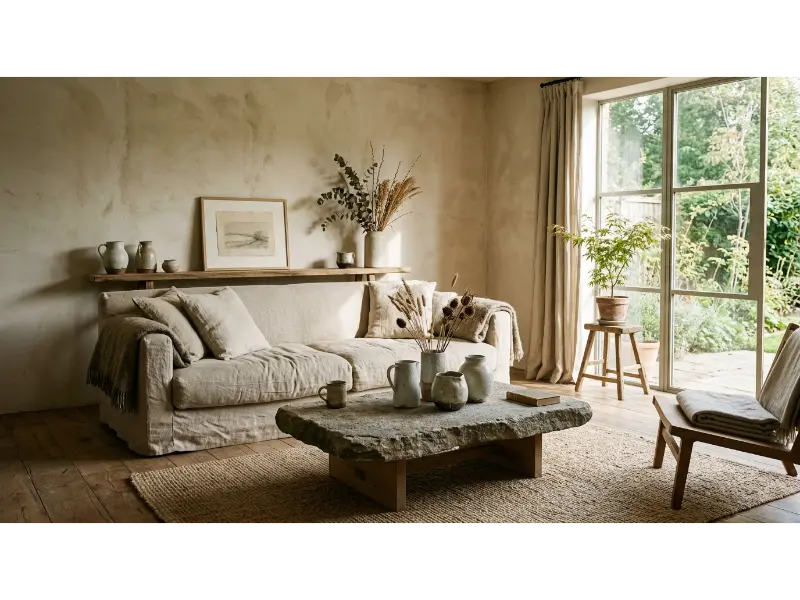
Wabi sabi inspired interiors focus on simplicity, authenticity, and natural imperfections. Instead of choosing perfectly matching accessories, look for handmade ceramics, irregular stone, textured plaster, unfinished wood, and linen with visible character. These materials make a living room feel personal and relaxed rather than overly polished.
Keep the color palette quiet with warm white, taupe, sand, brown, and muted clay. A handmade bowl or imperfect ceramic vase can become a subtle focal point. Avoid filling every shelf or table. The beauty of this style comes from giving individual materials enough space to be appreciated.
Pro Tip: Choose a few pieces with authentic imperfections rather than buying many mass produced decorations.
15. Caramel Leather and Linen Combination
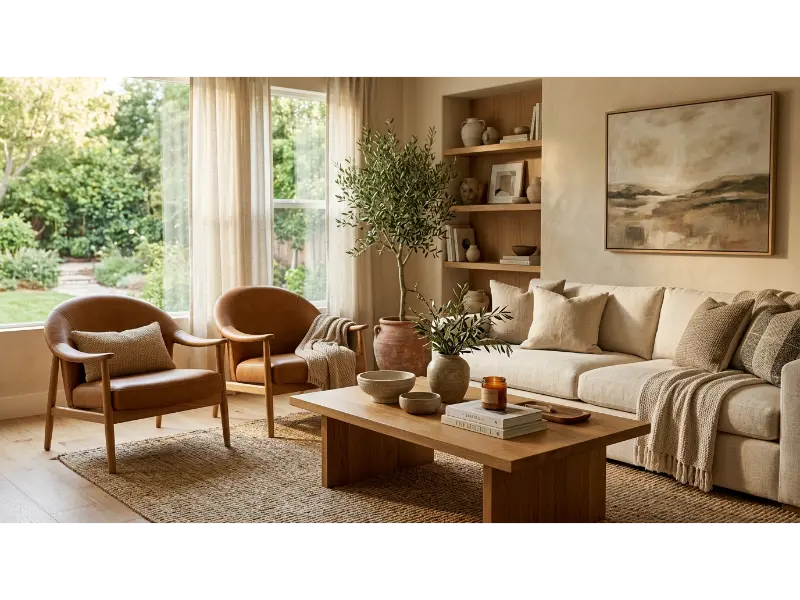
Caramel leather and linen create a beautiful contrast between structured durability and soft comfort. Place a caramel or cognac leather chair beside a cream linen sofa and add warm wood underneath. The combination feels polished without becoming formal. Jute, wool, and ceramic accents can strengthen the natural material palette.
Choose leather with a soft matte finish rather than an extremely glossy surface. Add neutral cushions and a textured throw to soften the seating area. Keep the surrounding colors warm and muted so the leather does not appear isolated. A walnut or oak table can connect the different materials and create a balanced arrangement.
Pro Tip: Choose caramel or cognac leather when you want warmth without the heaviness of very dark brown upholstery.
16. Oversized Botanical Artwork
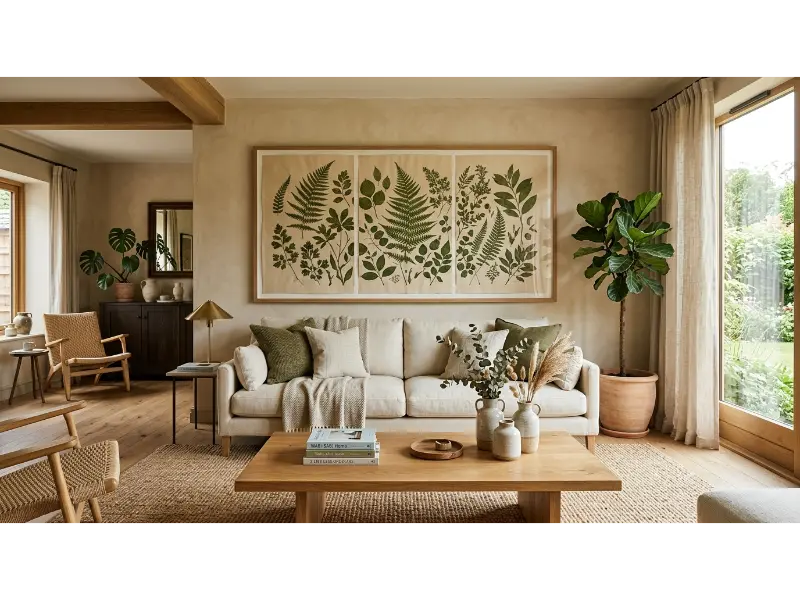
Botanical artwork can strengthen a natural theme without filling the room with plants. Choose oversized leaves, soft landscapes, pressed botanical inspired designs, or abstract artwork in muted greens and earthy neutrals. One large artwork can create a stronger focal point than a collection of small frames, especially above a sofa.
Let the artwork guide your accent colors. If the print includes olive green, repeat that shade through one cushion or plant. If it contains terracotta, bring the tone into a ceramic vase. Natural wood frames work especially well with warm interiors and help connect the wall decor with the rest of the room.
Pro Tip: Choose artwork before buying small decorative accessories so your colors develop naturally from one strong focal point.
17. Jute and Wool Rug Layers
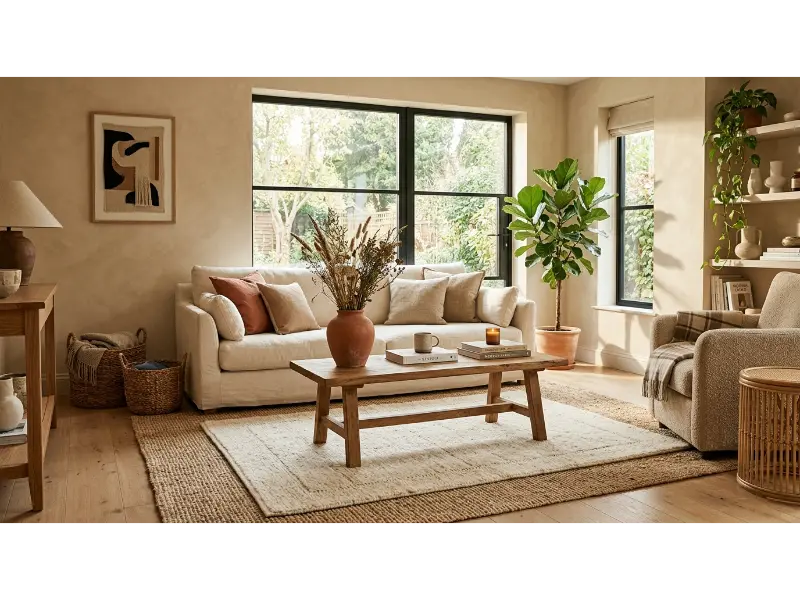
Layered rugs can make a living room feel warmer and more complete. Start with a larger jute or sisal rug and place a smaller wool rug underneath the main seating area. The difference between the rough woven fiber and soft wool creates texture without requiring strong colors. This technique works especially well in large open rooms where a single rug can feel too small.
Choose rugs that share similar warm neutral tones. Position the furniture so the front legs sit comfortably on the top rug and the seating arrangement feels connected. Add woven baskets, linen cushions, and natural wood to repeat the texture throughout the room without making everything look identical.
Pro Tip: Make the bottom rug noticeably larger than the top rug so the layered effect looks intentional.
18. Sculptural Organic Accessories
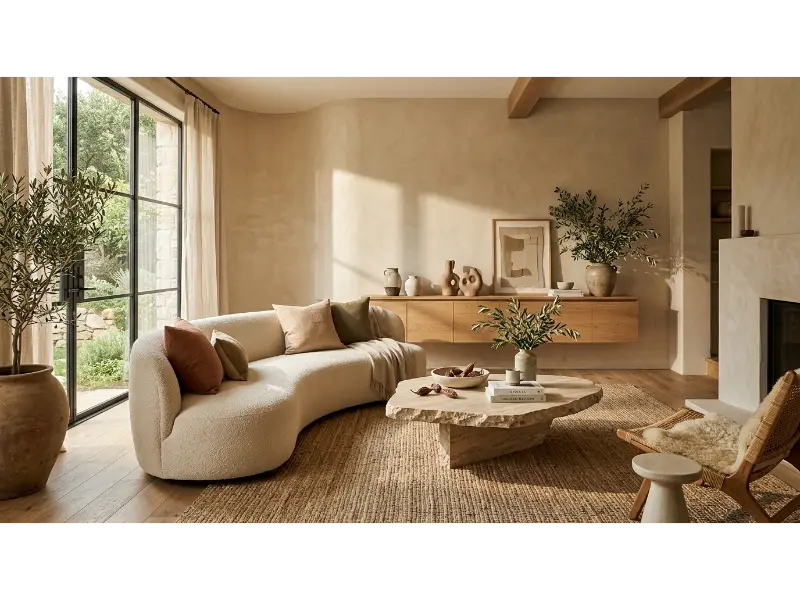
Sculptural accessories can give a natural room a more artistic and sophisticated personality. Look for rounded stone bowls, irregular ceramic vessels, wooden sculptures, organic lamps, and objects inspired by natural forms. Their unusual shapes create interest without introducing loud colors. A few carefully chosen pieces can make a simple coffee table or console feel intentionally styled.
Mix smooth and rough surfaces to make the arrangement more interesting. A polished ceramic vase can sit beside a rough stone bowl, while a wooden object introduces warmth. Vary the heights of your pieces but keep their colors connected. This creates a curated appearance without making the display look overly formal.
Pro Tip: Use fewer sculptural pieces and give each one enough space to remain visually noticeable.
19. Floor to Ceiling Linen Curtains
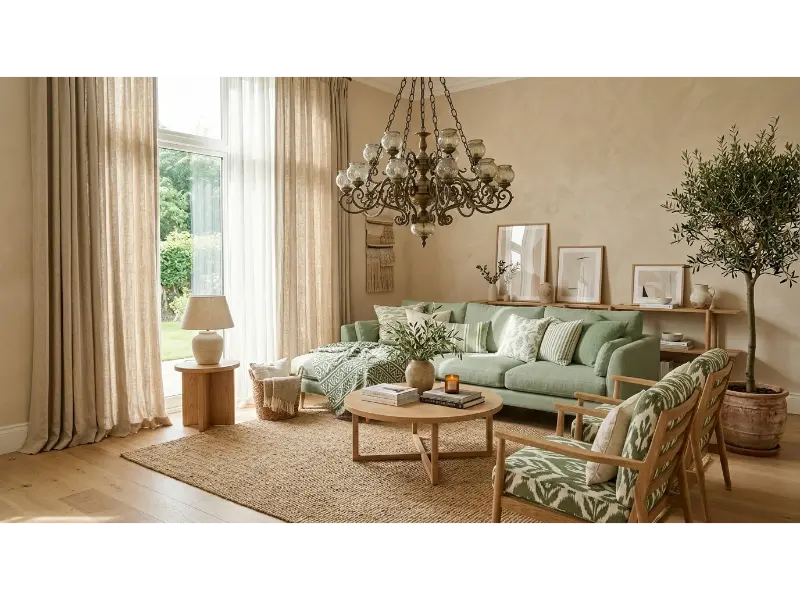
Linen curtains can transform the atmosphere of a living room by adding softness around the windows. Choose oatmeal, flax, beige, or warm taupe panels and hang them close to the ceiling to create the impression of greater height. The natural texture filters sunlight beautifully and adds another layer without introducing a strong pattern.
For a seamless appearance, choose curtains close to the wall color. If you prefer contrast, use a slightly deeper neutral. Let the fabric reach the floor rather than stopping above it. Combine the curtains with a textured rug and soft upholstery so the windows become part of the overall natural material story.
Pro Tip: Hang curtains higher and wider than the window frame to make the room feel taller and more spacious.
20. Deep Brown Accents With Light Neutrals
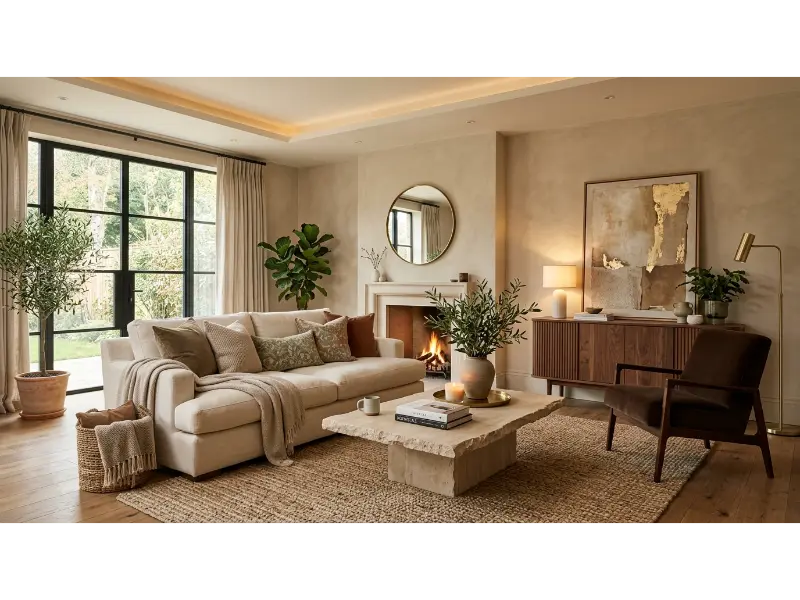
Deep brown accents can give a neutral living room a sophisticated focal point. Introduce the color through a leather chair, walnut console, dark ceramic vase, wooden table, or small artwork detail. Against cream and beige, the deeper shade creates contrast while still feeling natural. This approach works particularly well when you want a mature and elegant atmosphere.
Repeat the brown in several small areas so it feels connected. For example, pair a dark wood table with a brown leather chair and one darker decorative object. Keep the walls and larger textiles lighter so the room retains an open appearance. Warm lighting will make the deeper tones feel especially inviting at night.
Pro Tip: Use deep brown as an accent instead of making it the dominant color when you want the room to stay bright.
21. Plants at Different Heights
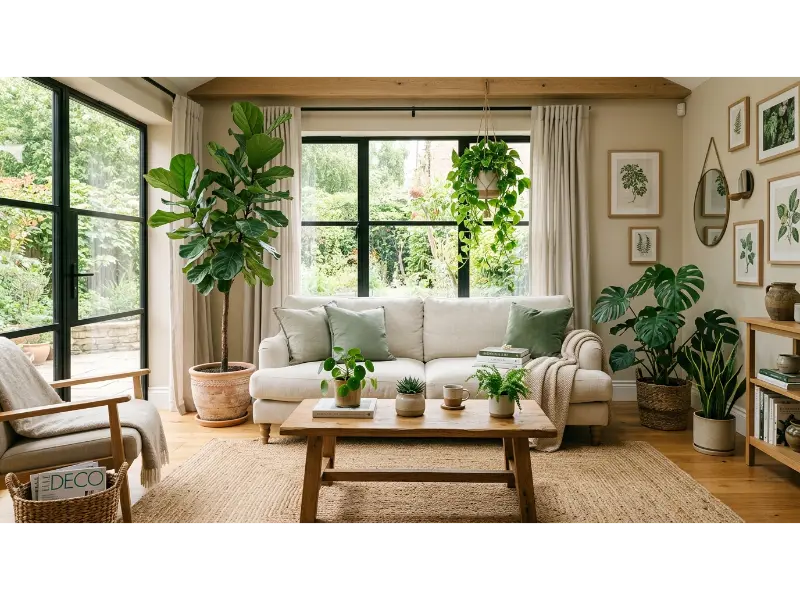
A layered plant arrangement can make the room feel more connected to nature. Instead of placing every plant on the floor, combine a tall indoor tree, medium floor plant, tabletop greenery, and trailing plant. Different heights create movement and help fill empty vertical and horizontal spaces without relying on additional furniture.
Choose planters made from terracotta, stone, ceramic, or woven materials. Spread the plants around the room instead of keeping them all in one corner. Place taller greenery near empty walls and smaller plants on shelves or tables. Make sure each plant receives the light it needs so the arrangement remains healthy as well as attractive.
Pro Tip: Use greenery to frame furniture and architectural features rather than blocking windows or walkways.
22. Soft Desert Inspired Colors
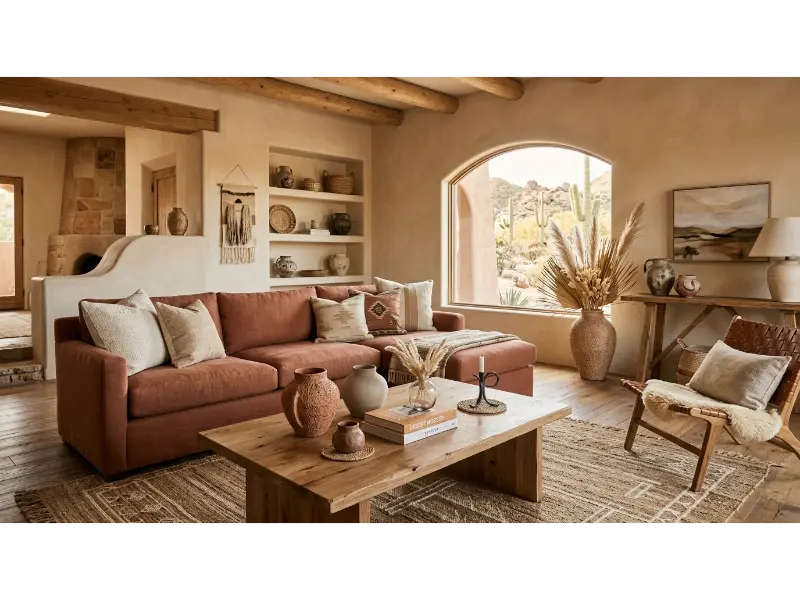
A soft desert palette can make a living room feel warm and sun kissed without becoming overly colorful. Combine sand, camel, cream, muted terracotta, warm brown, and dusty beige. These shades work beautifully with natural wood and woven materials. Keep the furniture simple so the color palette creates the main visual interest.
Add stone accessories, handmade ceramics, and subtle dried grasses to strengthen the landscape inspired feeling. A wool or cotton rug can soften the harder surfaces and make the seating area more comfortable. If the palette begins to feel too warm, introduce a muted sage or olive accent for balance.
Pro Tip: Add a small amount of muted green to prevent warm desert colors from becoming visually flat.
23. Modern Organic Luxury With Natural Materials
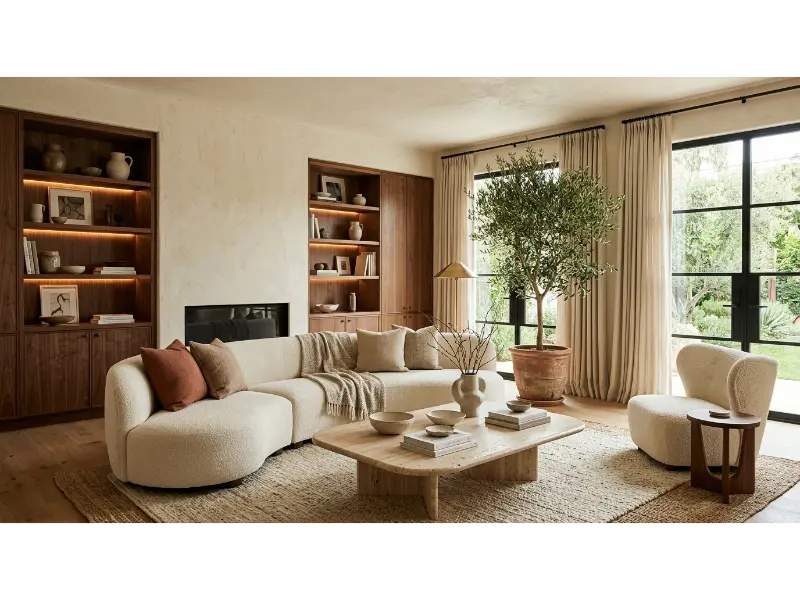
The most polished natural interiors combine warmth with carefully chosen modern pieces. Think curved cream seating, travertine, walnut, textured plaster, linen, wool, and greenery. Instead of filling the room with expensive looking accessories, focus on quality materials, balanced proportions, and comfortable furniture. The room should feel luxurious because every element has a purpose.
Keep the palette restrained and allow individual materials to stand out. Travertine can introduce natural stone texture, walnut can provide depth, while linen and boucle soften the seating area. Add layered lighting so the room remains welcoming after sunset. A few handmade ceramics and a large plant can finish the space without making it feel overdecorated.
Pro Tip: Invest in one or two beautiful natural focal pieces rather than spending heavily on many small accessories.
How to Choose the Right Earthy Style for Your Home
The best natural interior starts with a clear color foundation. Choose one dominant neutral such as warm white, beige, taupe, sand, or mushroom. Then select one or two supporting colors such as olive, terracotta, caramel, clay, or muted brown. This makes it easier to choose furniture and accessories without creating a disconnected appearance.
Next, focus on materials. Natural wood, stone, linen, wool, jute, rattan, ceramic, and leather can all add character. You do not need every material in one room. Choose three or four and repeat them thoughtfully. For example, oak furniture can work with linen upholstery, a jute rug, and ceramic accessories.
Lighting should also support the mood. Use natural daylight whenever possible, then add warm floor lamps, table lamps, wall lights, or pendants for evening comfort. Avoid relying on one bright ceiling light because layered lighting creates a much more relaxed atmosphere.
Common Mistakes to Avoid When Decorating With Earthy Colors
One common mistake is using too many shades of brown. Although brown works beautifully in a natural palette, too much of it can make a room feel dark. Balance darker wood and leather with cream, beige, warm white, or lighter natural fabrics.
Another mistake is adding too many rustic accessories. A natural interior does not need to look like a farmhouse or cabin. Mix rustic materials with clean modern furniture, curved shapes, simple artwork, and contemporary lighting to create a more current appearance.
Finally, avoid filling every empty surface. Natural design looks best when materials have room to breathe. A beautiful stone table, wooden console, or handmade vase can make a stronger impression when surrounded by a little negative space.
Frequently Asked Questions
What colors are best for an earthy living room?
Warm beige, cream, taupe, sand, olive green, terracotta, camel, clay, walnut, and muted brown are excellent choices. You can also use soft gray or charcoal in small amounts when you need contrast.
How can I make my living room look earthy without remodeling?
Start with textiles and accessories. Add a jute rug, linen cushions, wooden trays, woven baskets, ceramic vases, indoor plants, and warm lighting. These changes can create a natural atmosphere without replacing your major furniture.
Can earthy decor work in a modern home?
Yes. Combine warm natural colors with clean furniture, simple lighting, curved silhouettes, and uncluttered styling. Materials such as travertine, oak, walnut, linen, and boucle can give modern interiors plenty of warmth.
What wood color works best with earthy decor?
Oak, walnut, teak, reclaimed wood, and other warm natural finishes work beautifully. Choose the wood according to the amount of contrast you want. Pale oak keeps the room light, while walnut creates a richer and more dramatic appearance.
How can I make an earthy room feel brighter?
Use lighter wall colors, cream upholstery, natural linen curtains, mirrors, and plenty of daylight. Keep darker shades such as walnut, brown, and terracotta as accents instead of covering every large surface.
Are indoor plants necessary for an earthy living room?
No, but they can strengthen the natural feeling. If you do not have enough light or time for plants, use botanical artwork, branches, dried grasses, natural wood, stone, and woven materials instead.
What rug works best with natural decor?
Jute, wool, cotton, sisal, and other textured natural fiber rugs are excellent choices. A neutral rug can establish the foundation, while a layered wool rug can add softness and comfort.
How do I make earthy decor look expensive?
Focus on proportion, texture, lighting, and quality rather than quantity. A well shaped sofa, beautiful natural wood table, textured rug, sculptural lamp, and carefully selected ceramic pieces can create a sophisticated appearance without filling the room with decorations.
Conclusion
Creating a warm natural living room is less about following one strict decorating style and more about choosing elements that work together. Earthy Living Room Ideas become especially effective when you balance warm neutrals with natural wood, stone, linen, wool, woven fibers, greenery, and organic shapes.
You can keep your design minimalist with Japandi influences, make it cozy with rustic wood, add warmth through terracotta and clay, or create a sophisticated organic modern space with travertine, walnut, boucle, and curved furniture. Start with the colors and materials you genuinely enjoy, then build the room slowly around them.
The goal is not simply to create a room that looks beautiful in a photograph. It is to create a space that feels comfortable when you sit down, welcoming when guests arrive, and peaceful when you want to relax. With the right balance of texture, color, natural materials, and thoughtful styling, your living room can feel timeless, warm, and genuinely connected to nature.