
20 Japandi Home Decor Ideas for Calm, Minimal Living
Japandi home decor blends the calm simplicity of Japanese minimalism with the cozy warmth of Scandinavian design, creating a home that feels serene, uncluttered, and deeply inviting. These Japandi home decor ideas will help you create that perfect balance of function and tranquility. From low-profile furniture to wabi-sabi textures, each idea brings you closer to a calmer way of living. Let’s explore twenty beautiful ways to embrace this timeless style.
Creative and Cozy Japandi Home Decor Ideas
1. Low-Profile Platform Bed
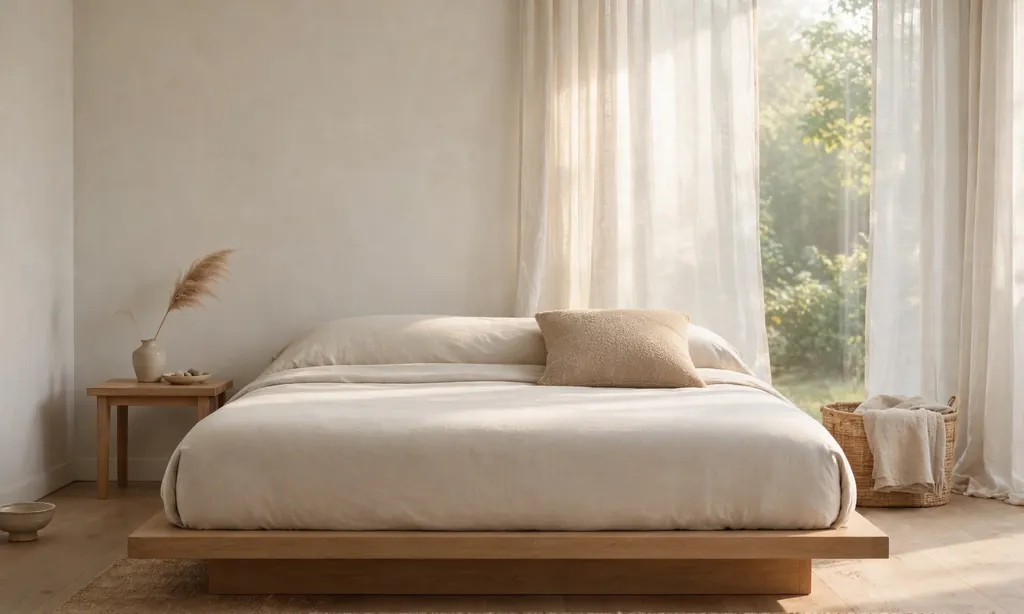
A low-profile platform bed is the heart of a Japandi bedroom. Sitting close to the floor, it creates a grounded, restful feeling inspired by traditional Japanese futon living. Choose a solid light oak or ash frame with clean, simple lines and no bulky headboard.
Pair the bed with neutral linen bedding in warm white, beige, or soft gray for a layered yet calm look. Keep bedside styling minimal — a small wooden stool with a paper lantern or a single ceramic vase is enough. The low height also makes smaller bedrooms feel more open and airy.
Pro Tip: Skip the box spring entirely — a solid slatted base keeps the silhouette low and honest, which is the soul of Japandi design.
2. Natural Wood Furniture Pieces
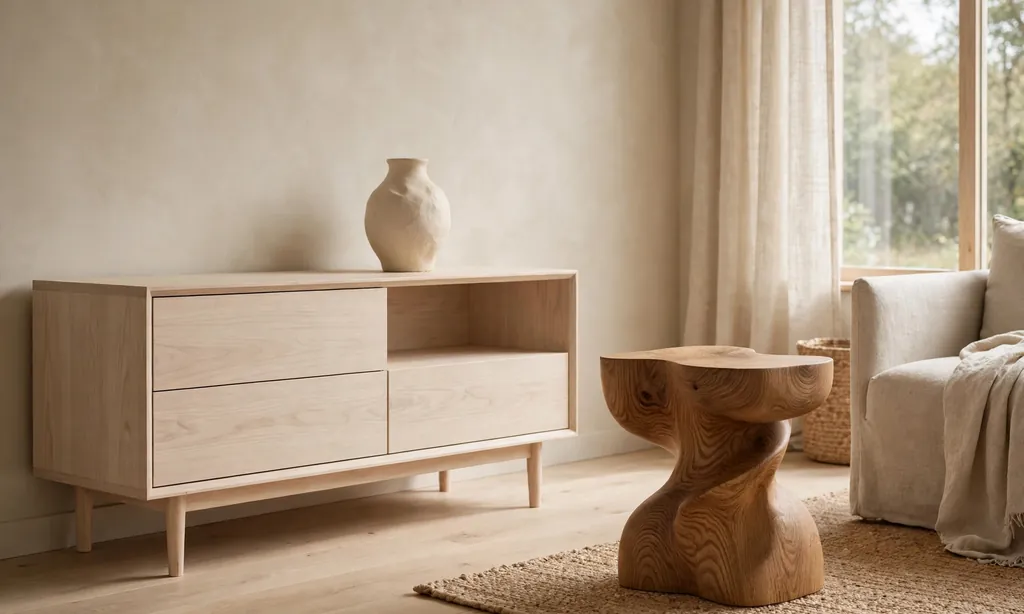
Natural wood furniture is the backbone of Japandi style. Light woods like ash, oak, birch, and bamboo bring warmth without the heaviness of dark finishes. Look for pieces that celebrate the grain — visible knots and subtle color variation are part of the charm.
Choose a few well-made wooden pieces rather than filling the room with furniture. A simple oak credenza, a sculptural side table, and one comfortable armchair can furnish a whole sitting area. Let each piece breathe with space around it so the craftsmanship can be appreciated.
Pro Tip: Stick to one or two wood tones per room — mixing too many finishes breaks the calm, cohesive feeling Japandi is known for.
3. Neutral Linen Textiles

Linen is Japandi’s signature fabric, prized for its natural texture and effortless drape. Neutral linen textiles in oatmeal, sand, cream, and stone gray soften hard wood and clean lines. Curtains, throws, and cushion covers in washed linen add quiet luxury to any room.
Layer linens in slightly different tones rather than matching them exactly — the subtle variation creates depth without pattern. Let curtains pool just slightly at the floor and leave throws casually folded. Linen’s gentle wrinkles are part of its relaxed, lived-in beauty.
Pro Tip: Choose stonewashed linen for the softest feel — it arrives relaxed and gets even better with every wash.
4. Wabi-Sabi Inspired Ceramics
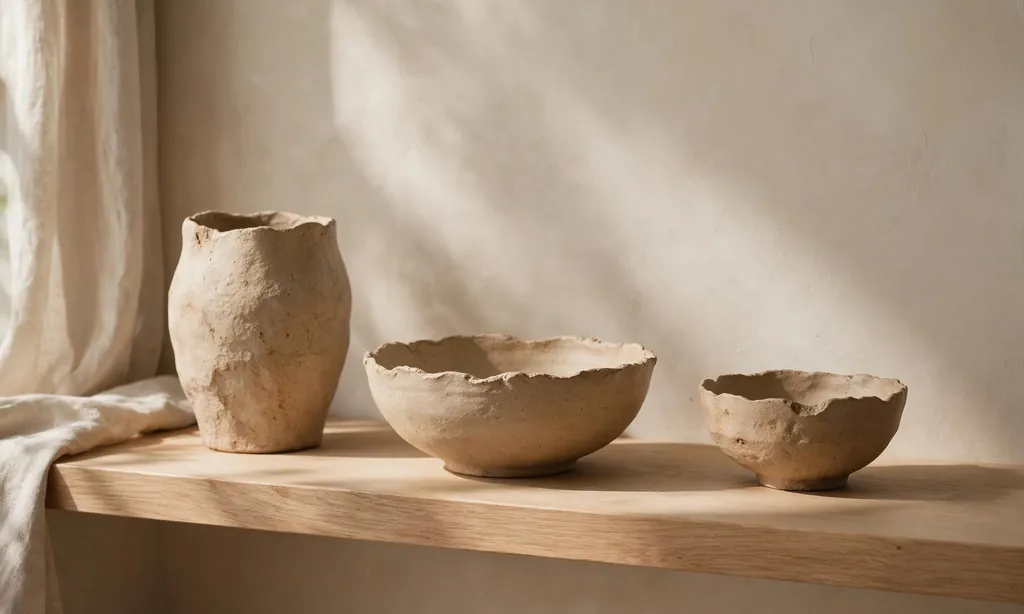
Wabi-sabi — the Japanese appreciation of imperfection — shines through handmade ceramics. Uneven rims, visible fingerprints, and matte earthy glazes give each piece a soul that mass-produced decor lacks. Display a small collection of stoneware vases, bowls, and cups in beige, clay, and charcoal.
Style ceramics in small groups of two or three on shelves, consoles, and coffee tables. Leave some pieces empty so their sculptural forms can be admired on their own. One handcrafted vase with a single branch often says more than a crowded display ever could.
Pro Tip: Shop local pottery studios and artisan markets — handmade pieces cost more but carry the authentic wabi-sabi character this style demands.
5. Paper Lantern Lighting

Paper lantern lighting brings a soft, moonlike glow that defines Japandi evenings. Rice-paper pendants and table lanterns diffuse light gently, eliminating harsh shadows and creating instant calm. The warm glow flatters both light wood and neutral textiles beautifully.
Hang one large paper pendant over a dining table or reading corner, and add smaller lanterns on side tables for layered light. Choose warm bulbs around 2700K to keep the glow golden and cozy. Paper shades are also wonderfully affordable, so you can use them generously.
Pro Tip: Hang your paper pendant 30 to 34 inches above a dining table — low enough to feel intimate, high enough to see across.
Read More: 20 Space Saving Dining Table Ideas for Compact, Stylish Homes
6. Tatami-Inspired Area Rugs
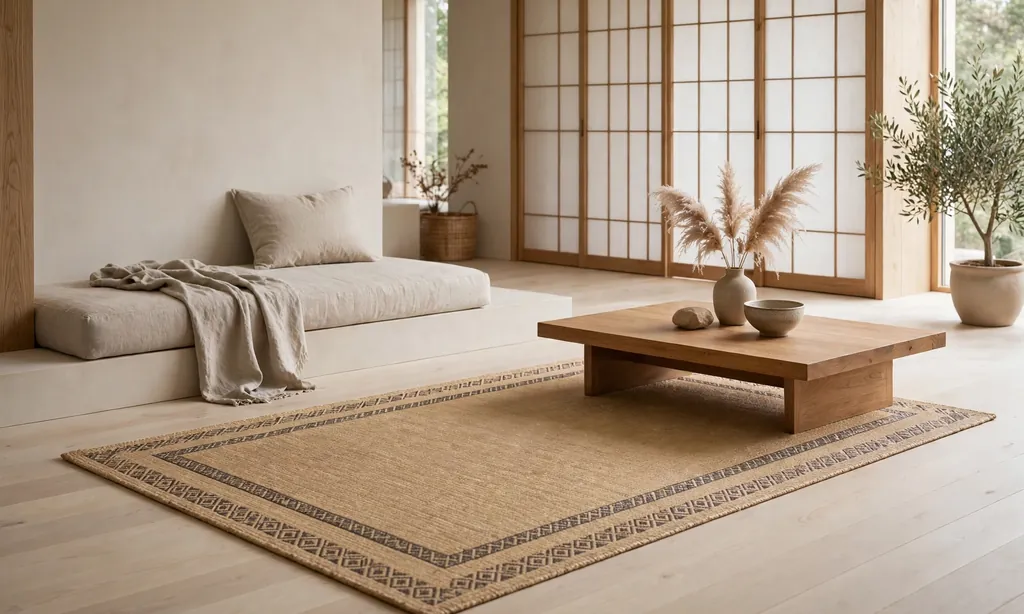
Tatami-inspired area rugs bring the texture of traditional Japanese flooring into modern homes. Woven from straw, jute, or seagrass-look fibers, these rugs add warmth and natural pattern underfoot. Their subtle geometric borders echo classic tatami mat designs without feeling themed.
Place a low, rectangular woven rug in your living or meditation area to anchor the space. Keep furniture low around it — a coffee table and floor cushions work better than tall sofas. The flat, firm weave also suits Japandi’s clean aesthetic since it never looks plush or fussy.
Pro Tip: Layer a smaller tatami-style mat over a larger plain jute rug for added texture while keeping the palette strictly neutral.
7. Minimalist Open Shelving
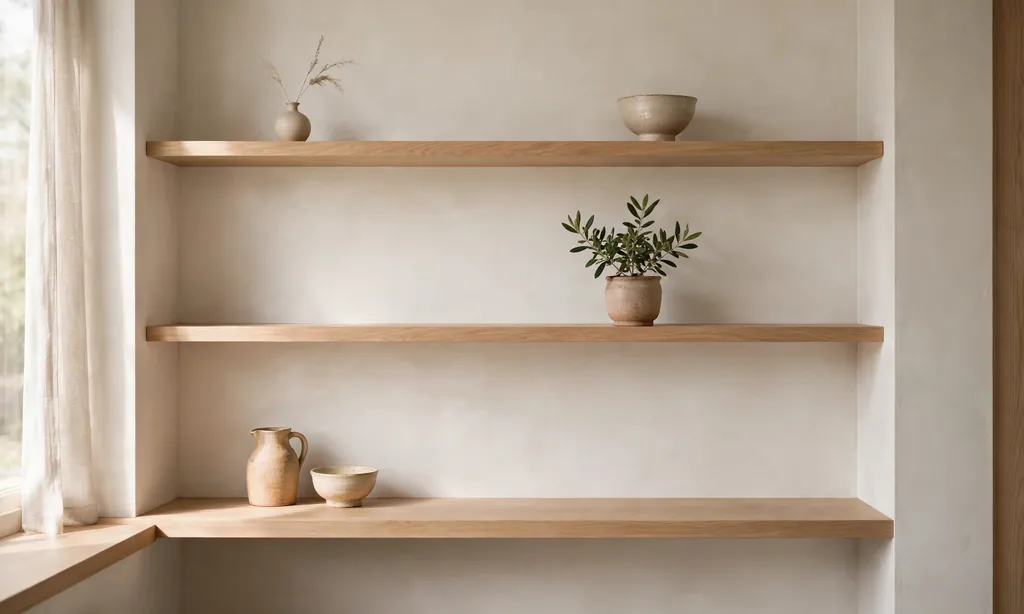
Minimalist open shelving turns storage into a quiet design statement. Light wood floating shelves with generous empty space embody Japandi’s “less but better” philosophy. Each shelf should hold only a few beautiful objects — ceramics, a plant, or a stack of linen-bound books.
Resist the urge to fill every inch; the empty space between objects is what makes this look work. Group items in odd numbers and vary their heights for a natural rhythm. In kitchens, open shelves replace upper cabinets beautifully when kept sparse and tidy.
Pro Tip: Follow the one-in-one-out rule with open shelves — every new item means something else gets stored away.
8. Indoor Bonsai and Greenery
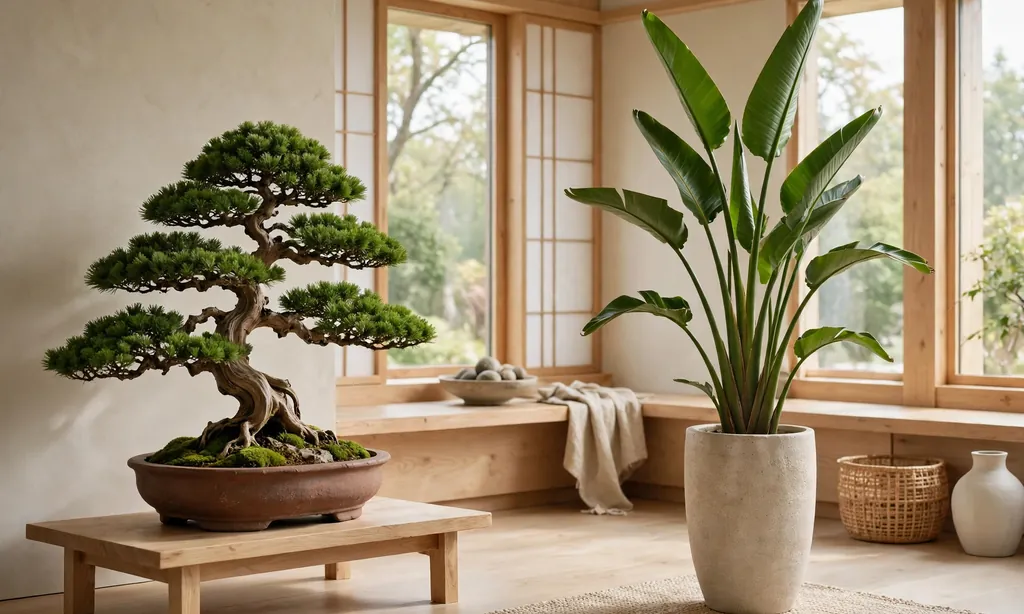
A carefully shaped bonsai is the ultimate Japandi living accent. Its sculptural form and sense of age bring nature indoors in the most artful way possible. Display it on a low wooden stand where it can be admired like the piece of art it is.
Beyond bonsai, choose one or two architectural plants — a fiddle leaf fig, olive tree, or snake plant in a clay pot. Fewer, larger plants suit Japandi better than many small ones. Keep pots simple and earthy so the greenery itself stays the star.
Pro Tip: New to bonsai? Start with a hardy ficus or jade variety — they forgive missed waterings far better than delicate junipers.
9. Sliding Shoji-Style Screens
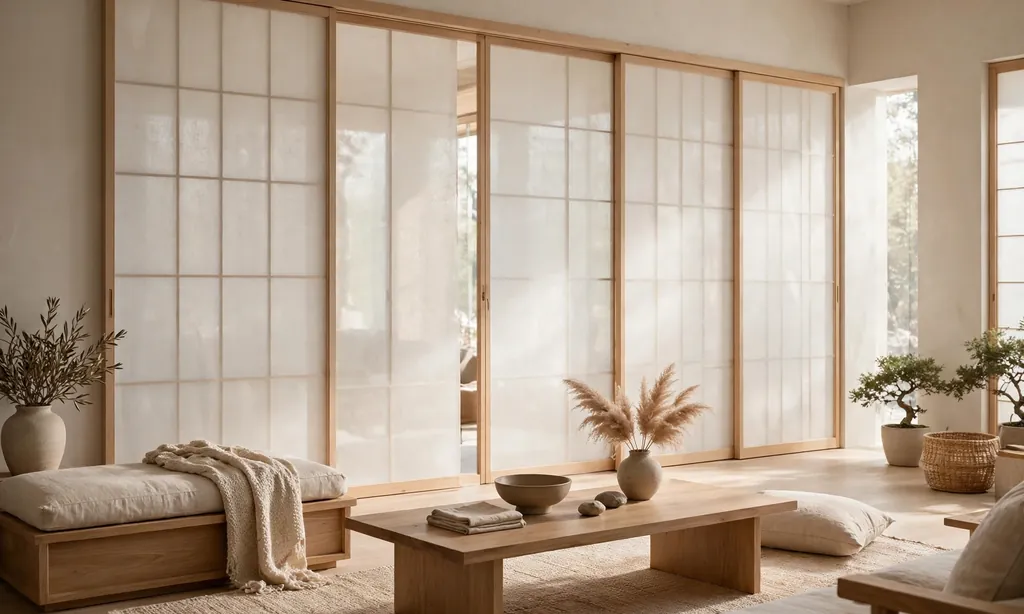
Sliding shoji-style screens divide space without closing it off, which is pure Japandi genius. The translucent rice-paper panels filter daylight into a soft, dreamy glow while providing privacy. Light wood frames keep the look warm and natural.
Use a shoji screen to separate a home office corner, hide a closet, or create a flexible guest sleeping area. Freestanding folding versions need no installation at all. They also make stunning backdrops for a meditation corner or reading nook.
Pro Tip: Modern shoji screens use durable synthetic paper that resists tearing and yellowing — a practical upgrade for homes with kids or pets.
10. Muted Earth-Tone Color Palette

Japandi’s color palette draws straight from nature — muted and earthy, never loud. Think warm greige, soft clay, stone gray, sage, and warm white as your foundation. These tones layer together effortlessly and make any room feel instantly calmer.
Build your palette from the largest surfaces down: walls first, then textiles, then small accents. Add depth with slightly darker tones like charcoal or deep walnut in small doses. Avoid bright whites and cool grays, which can make Japandi rooms feel stark instead of serene.
Pro Tip: Test paint colors in both morning and evening light — earthy tones shift beautifully, and you want to love every version.
Read More: 20 Rustic Living Room Wall Decor Ideas for a Warm, Charming Space
11. Stone and Clay Accent Pieces

Stone and clay accents ground a Japandi room with raw, elemental texture. A rough travertine sculpture, raw clay vases, or a simple stone tray add the tactile richness that keeps minimalism from feeling cold. Their imperfect surfaces celebrate the wabi-sabi spirit beautifully.
Style these pieces on wooden consoles, coffee tables, and bathroom vanities where their textures contrast with smooth surfaces. One substantial stone piece has more impact than several small ones. Keep the color range tight — travertine cream, terracotta, and gray stone blend seamlessly.
Pro Tip: A single large raw-edge stone bowl on a coffee table can anchor an entire Japandi living room — let it be the hero.
12. Clutter-Free Genkan-Style Entryway
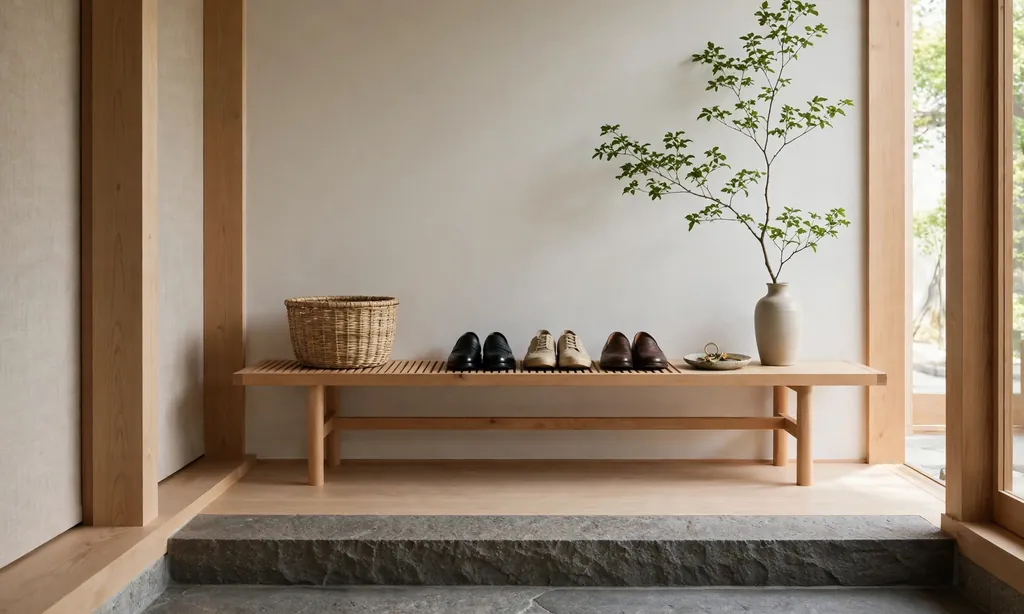
The Japanese genkan — a lowered entryway where shoes come off — inspires the calmest way to arrive home. Create your own version with a simple bench, a woven basket for everyday items, and a small ceramic dish for keys. Everything has a place, and nothing lingers.
Keep the shoe count to what’s actually worn — store the rest elsewhere. A single branch in a tall vase or one small plant is all the decoration this space needs. The genkan mindset sets the tone for the whole home: order at the door means calm inside.
Pro Tip: A low-profile shoe tray in stone or dark wood corrals everyday pairs neatly and wipes clean in seconds.
13. Low Wooden Coffee Table

A low wooden coffee table is the gathering point of a Japandi living room. Its height — often just 12 to 14 inches — encourages relaxed, floor-level living and keeps sightlines open across the room. Choose a solid light wood slab or a simple rectangular design with clean joinery.
Style it with restraint: one handmade bowl, a small stack of books, and perhaps a sprig of greenery. Pair it with a low sofa or floor cushions rather than tall seating. The table’s simplicity lets the wood grain become the decoration.
Pro Tip: Look for tables with a lower shelf — it adds hidden storage while keeping the tabletop beautifully clear.
14. Handmade Textured Wall Art

Handmade textured wall art adds quiet drama to Japandi walls without breaking the calm. Plaster relief pieces with organic ridges, waves, or carved patterns catch light and shadow beautifully throughout the day. One large piece makes a stronger statement than a gallery wall here.
Keep the artwork in warm off-white, sand, or clay tones so it harmonizes with your palette. Hang it above a low console or sofa with plenty of empty wall around it. The texture itself is the art — no bold colors or busy patterns needed.
Pro Tip: Center textured art at eye level (about 57 inches from the floor) so the relief details catch the best natural light.
15. Cozy Floor Cushions
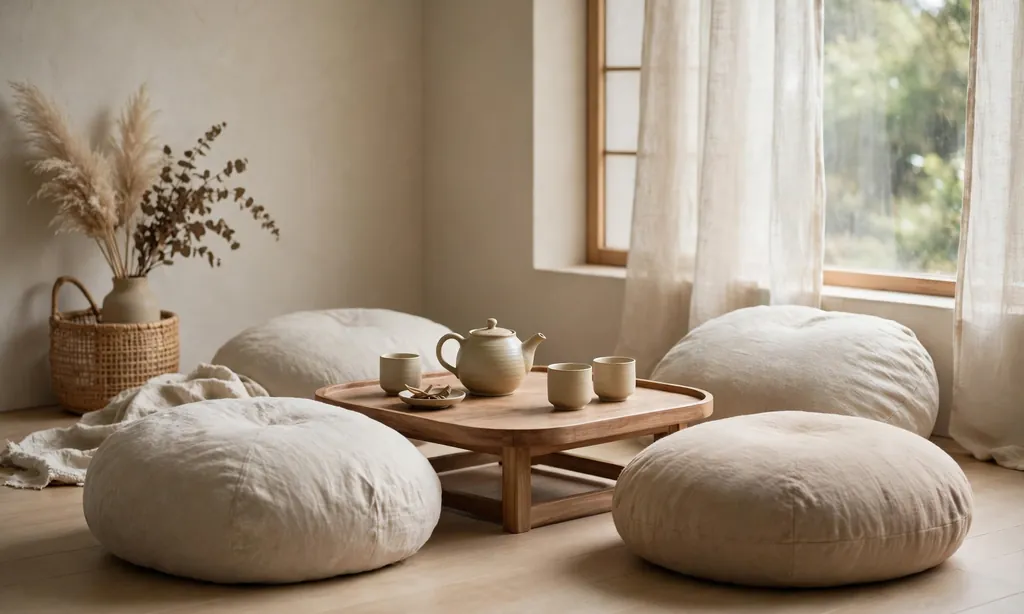
Cozy floor cushions embrace Japandi’s floor-level way of living. Plump round or square cushions in oatmeal and sand linen create flexible, informal seating that feels warm and welcoming. They invite lingering conversations, tea rituals, and quiet reading sessions.
Arrange cushions around a low tray table to create an instant gathering spot. Choose firm, generously filled cushions that hold their shape and support comfortable sitting. When not in use, stack them neatly in a corner or a large basket to keep the room tidy.
Pro Tip: Look for cushions with removable, washable linen covers — floor seating earns its keep only if it’s easy to clean.
Read More: 20 Living Room With Fireplace and TV Ideas for Cozy Gatherings
16. Simple Wooden Dining Set
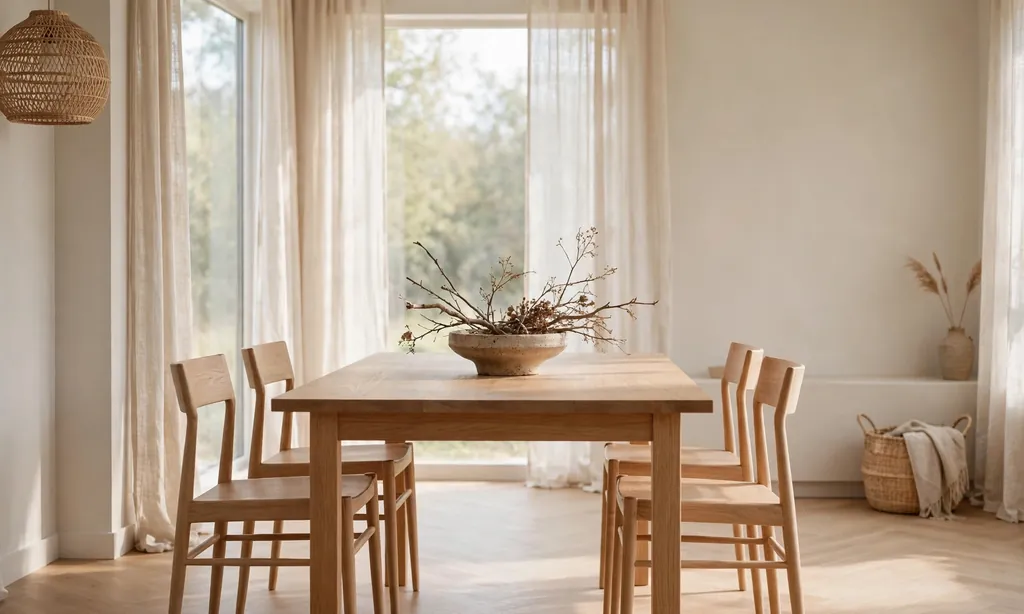
A simple wooden dining set turns everyday meals into calm rituals. A rectangular light oak table with four minimalist chairs — no carving, no ornament — lets the natural material speak. The uncluttered design keeps the dining area feeling open even in smaller homes.
Style the table with a single low centerpiece: a handmade ceramic bowl, a few dried branches, or a small plant. Leave the table clear between meals so it stays a serene surface. Mismatched handmade dinnerware in neutral tones adds warmth without visual noise.
Pro Tip: Choose chairs with curved seats and backrests — subtle ergonomics make simple wooden chairs comfortable for long, slow dinners.
17. Soft Diffused Lighting

Soft diffused lighting is what makes Japandi rooms glow with evening calm. Beyond paper lanterns, linen-shaded table lamps and frosted-glass floor lamps scatter light gently across walls and ceilings. Multiple low light sources beat one bright overhead every time.
Place lamps at different heights — a floor lantern in the corner, a small shaded lamp on a side table — for layered warmth. Dim everything slightly in the evening to signal the day winding down. Warm-toned bulbs are essential; cool white light destroys the mood instantly.
Pro Tip: Put your main Japandi lamps on dimmer plugs — one small upgrade that transforms the entire evening atmosphere.
18. Natural Fiber Storage Baskets

Natural fiber storage baskets keep clutter invisible while adding beautiful texture. Handwoven seagrass, rattan, and water hyacinth baskets hold throws, toys, and everyday odds and ends in plain sight — looking like decor instead of storage. Their earthy tones fit the Japandi palette perfectly.
Use varying sizes for visual interest: a large lidded basket for blankets, medium ones for magazines, small ones for remotes. Tuck them beside benches, under consoles, and in open shelving. Lids keep the look tidy and double as extra surfaces.
Pro Tip: Give every basket a job — unlabeled “miscellaneous” baskets become clutter magnets instead of solutions.
19. Japandi Bathroom Touches
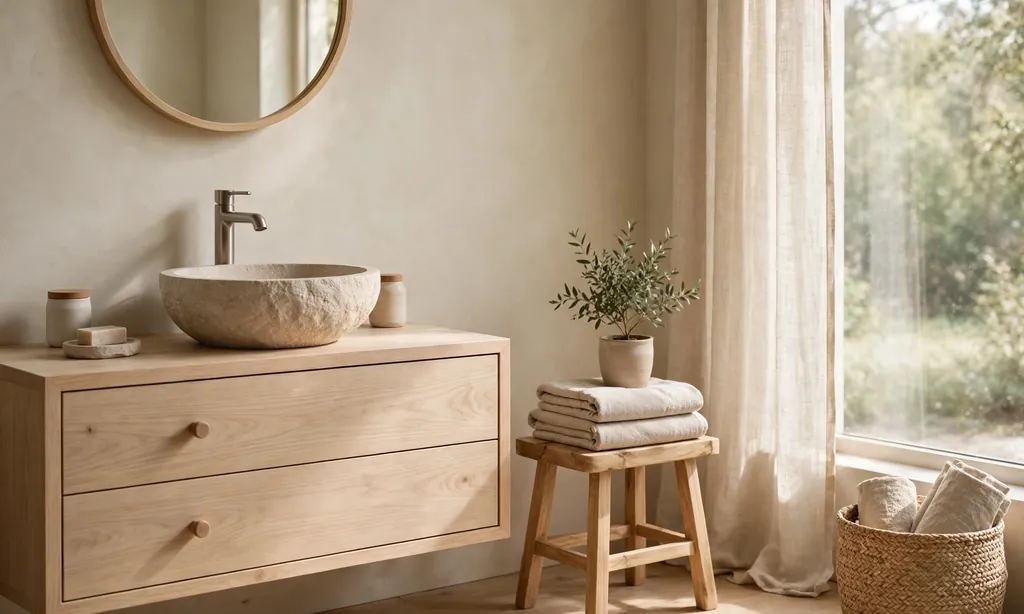
Japandi style turns the bathroom into a spa-like retreat. Start with the senses: folded beige linen towels on a wooden stool, a stone soap dish, and a small eucalyptus sprig in a clay vase. Natural materials make even a small bathroom feel luxurious and calm.
Replace plastic bottles with simple amber glass or ceramic dispensers for an instant upgrade. A light wood bath mat or teak stool adds warmth underfoot and beside the tub. Keep counters nearly clear — store daily items in one beautiful basket instead.
Pro Tip: A single potted plant that loves humidity — like a fern or pothos — brings living calm to the bathroom with zero effort.
20. Mindful Negative Space
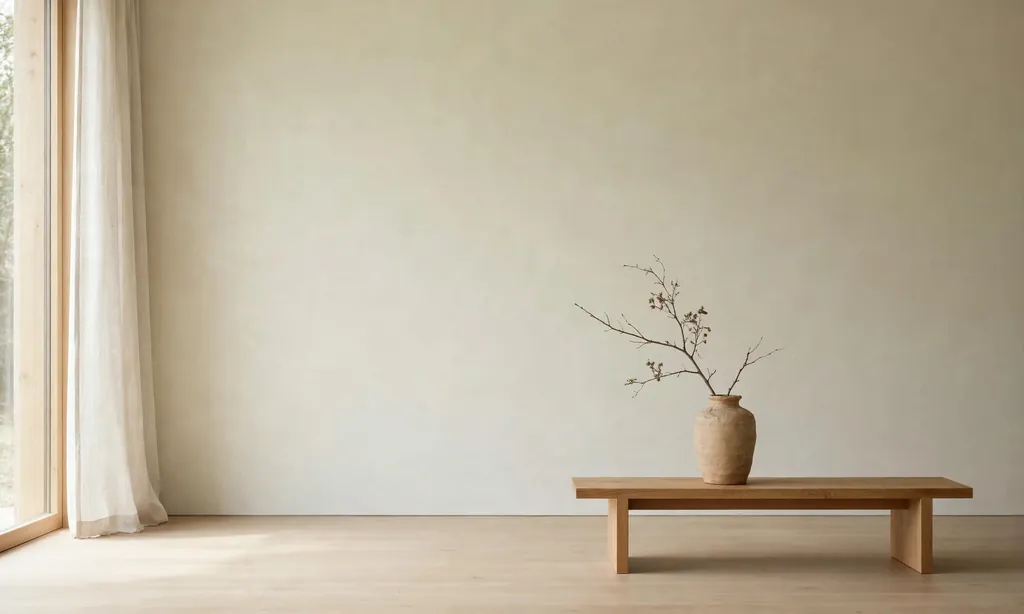
Mindful negative space is the most powerful — and most free — Japandi idea of all. The Japanese concept of “ma” treats empty space as something beautiful in itself, not something to fill. A bare wall, an empty corner, or a clear tabletop gives the eye rest and the mind calm.
Practice ma by removing one decorative item from each room and living with the space for a week. You’ll likely find the room feels better, not emptier. What remains gains importance, and the room finally breathes. This is the essence of calm, minimal living.
Pro Tip: Photograph a room, then remove three items and photograph again — the before-and-after makes the power of negative space undeniable.
Read More: 20 Fall Front Porch Decor Ideas for a Cozy Autumn Welcome
Japandi Styling Tips
Choose Quality Over Quantity
Japandi rewards fewer, better things. One solid oak table outlasts and outshines three flat-pack pieces — and it looks calmer doing it. Save for craftsmanship where it counts: the bed, the sofa, the dining table.
Keep Technology Hidden
Nothing breaks Japandi calm faster than visible cables and glowing screens. Tuck routers in baskets, run cords behind furniture, and choose a TV frame or cabinet with doors. The goal is a room that feels timeless, not wired.
Bring Nature Indoors Daily
A single branch, a sprig of eucalyptus, or a seasonal bloom keeps Japandi rooms feeling alive. This small daily ritual connects your home to the natural world. Even one stem in a handmade vase changes a room’s energy completely.
Let Texture Do the Talking
With color kept quiet, texture carries all the visual interest. Layer rough linen against smooth wood, matte clay beside polished stone. Running your hand across a room’s surfaces should feel like a journey — that’s how you know the textures are working.
Edit Ruthlessly, Seasonally
Walk through your home once each season and remove anything that no longer earns its place. Japandi is a practice, not a one-time makeover. Regular editing keeps the calm intact as life and belongings naturally accumulate.
Frequently Asked Questions
1. What is Japandi home decor?
Japandi is a design style that fuses Japanese minimalism with Scandinavian coziness. It combines Japan’s love of simplicity, natural materials, and craftsmanship with Scandinavia’s warmth, comfort, and functionality. The result is a calm, uncluttered home that still feels deeply inviting.
2. What colors are used in Japandi decor?
Japandi relies on muted, earthy neutrals: warm white, beige, greige, soft clay, stone gray, and sage. Darker accents like charcoal, deep walnut, and black appear sparingly for contrast. Bright or saturated colors are avoided to preserve the style’s serene mood.
3. How is Japandi different from minimalism?
Minimalism can feel cold and stark, while Japandi adds warmth through natural textures, wood tones, and cozy textiles. Japandi also embraces wabi-sabi — finding beauty in imperfection — so handmade and aged pieces are welcome. Think of it as minimalism with a soul.
4. Can I do Japandi decor on a budget?
Absolutely — Japandi’s “less but better” mindset actually saves money since you buy fewer things. Start by decluttering, then add affordable staples like paper lanterns, jute rugs, and secondhand solid-wood furniture. Thrift stores are goldmines for the simple wooden pieces this style loves.
5. What materials define Japandi style?
Natural materials are non-negotiable: light woods like oak, ash, and bamboo; linen and cotton textiles; clay, stone, and handmade ceramics; paper, rattan, and seagrass. Avoid plastic, chrome, and synthetic fabrics — they clash with Japandi’s organic, handcrafted feel.
6. Does Japandi work in small apartments?
Japandi is ideal for small spaces. Low-profile furniture keeps sightlines open, the light palette makes rooms feel larger, and the clutter-free philosophy maximizes every square foot. Multifunctional pieces — like a bench with storage — are especially at home here.
7. How do I add warmth without cluttering a Japandi room?
Layer textures instead of adding objects: a linen throw on a wooden chair, a wool rug under a low table, a single branch in a clay vase. Warm lighting does heavy lifting too — paper lanterns and dimmed lamps make minimal rooms feel cozy instantly.
8. What should I avoid in Japandi decorating?
Skip bold patterns, bright colors, ornate furniture, and fussy accessories — they fight the calm Japandi is built on. Also avoid over-filling shelves and walls; empty space is a design element here. If an item doesn’t serve a purpose or bring genuine joy, it doesn’t belong.
Conclusion
Japandi home decor is more than a style — it’s a calmer way of living. From low-profile platform beds to mindful negative space, these twenty ideas show how Japanese simplicity and Scandinavian warmth come together in perfect harmony. The beauty of Japandi is that you don’t need a full makeover to feel its effects; even small changes bring more peace to your rooms.
Start with one idea that speaks to you, whether it’s swapping in linen textiles or clearing a corner for mindful negative space. Small, intentional steps will transform your home into the serene retreat you deserve. Add a few favorite decorative pieces to complete the look and make the space truly yours. With Japandi’s gentle balance of beauty and simplicity, your home will radiate the calm, minimal living that makes every day feel a little more peaceful.