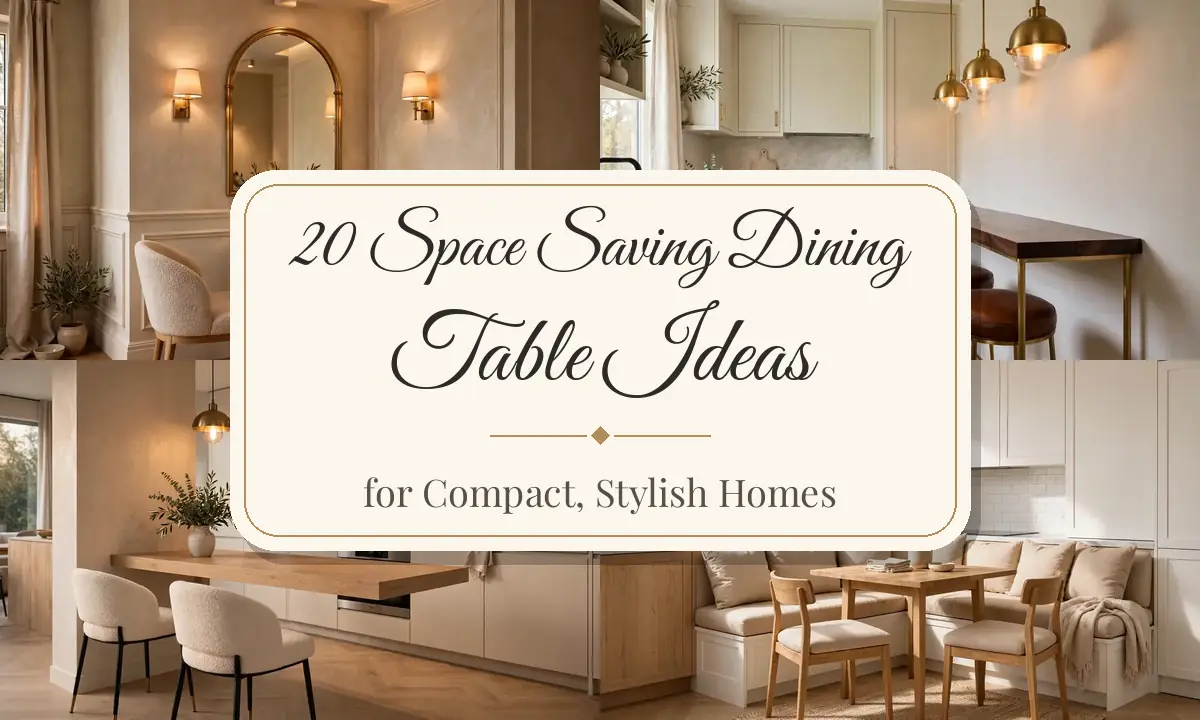
20 Space Saving Dining Table Ideas for Compact Homes
Eating well should never depend on having a big dining room. With the right table, even the tiniest corner can become a welcoming spot for morning coffee, family dinners, and everything in between. These space saving dining table ideas are designed for compact homes, studio apartments, and cozy eat-in kitchens. From wall-mounted drop-leafs to convertible consoles, each idea helps you dine in style without sacrificing precious floor space. Let’s find the perfect table for your small space.
Creative and Cozy Space Saving Dining Table Ideas
1. Wall-Mounted Drop-Leaf Dining Table
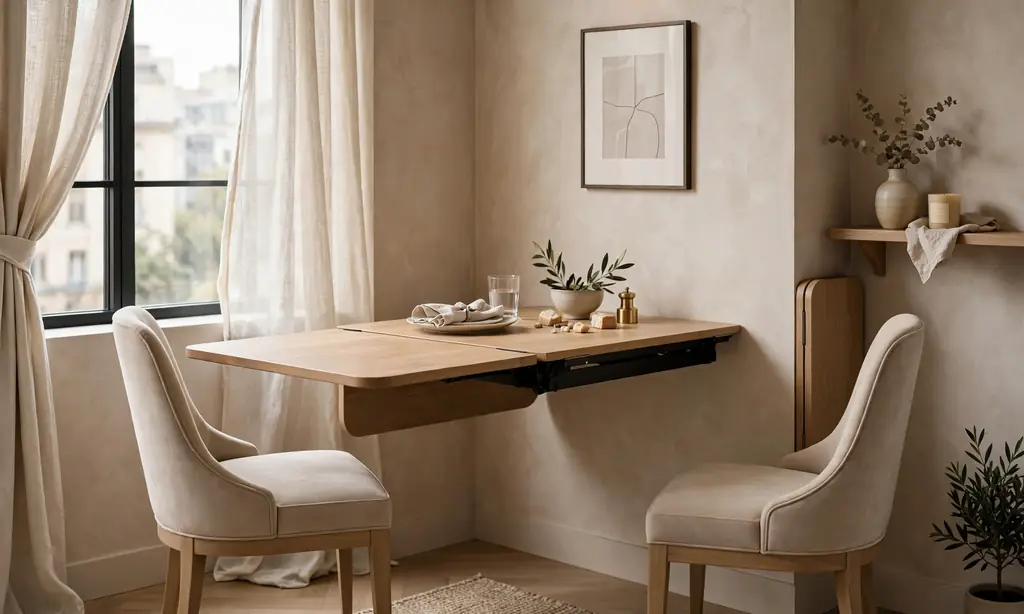
A wall-mounted drop-leaf table is the ultimate space saver for tiny dining areas. When mealtime ends, simply fold the leaf down flat against the wall and reclaim your floor space instantly. It works beautifully in studio apartments, narrow kitchens, and multipurpose rooms.
Choose a sturdy bracket system rated for at least 50 pounds so the table feels rock solid when open. Style the wall above with a small piece of art or a floating shelf so the folded table looks intentional, not like an afterthought. A round or D-shaped leaf softens the look in tight corners.
Pro Tip: Mount the table at standard dining height (29 to 30 inches) and pair it with stackable stools that tuck completely underneath.
2. Round Pedestal Table for Tight Corners
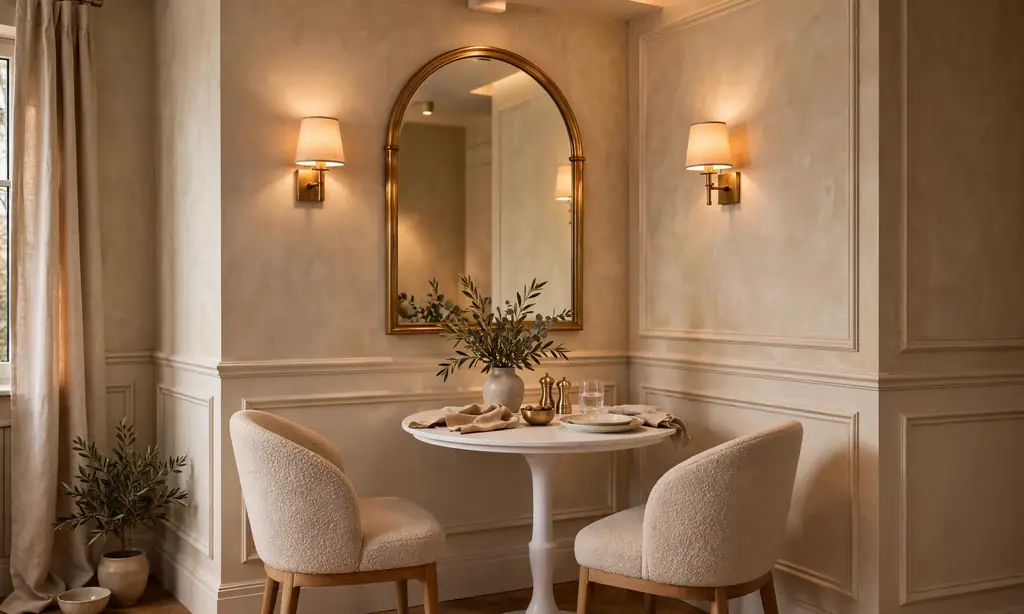
Round tables have no sharp corners to bump into, which makes them perfect for tight dining corners. A single pedestal base frees up legroom all around, so four people can sit comfortably at a table that takes up barely any floor space. It is one of the easiest swaps for opening up a cramped dining area.
Look for a 36-inch round top, which seats four in a pinch but feels generous for two. A tulip-style or turned-wood pedestal adds sculptural interest without visual bulk. Keep chairs armless and lightweight so they slide fully under the table when not in use.
Pro Tip: Place the table near a window — natural light makes small round tables feel even more spacious.
3. Extendable Table with Hidden Leaves
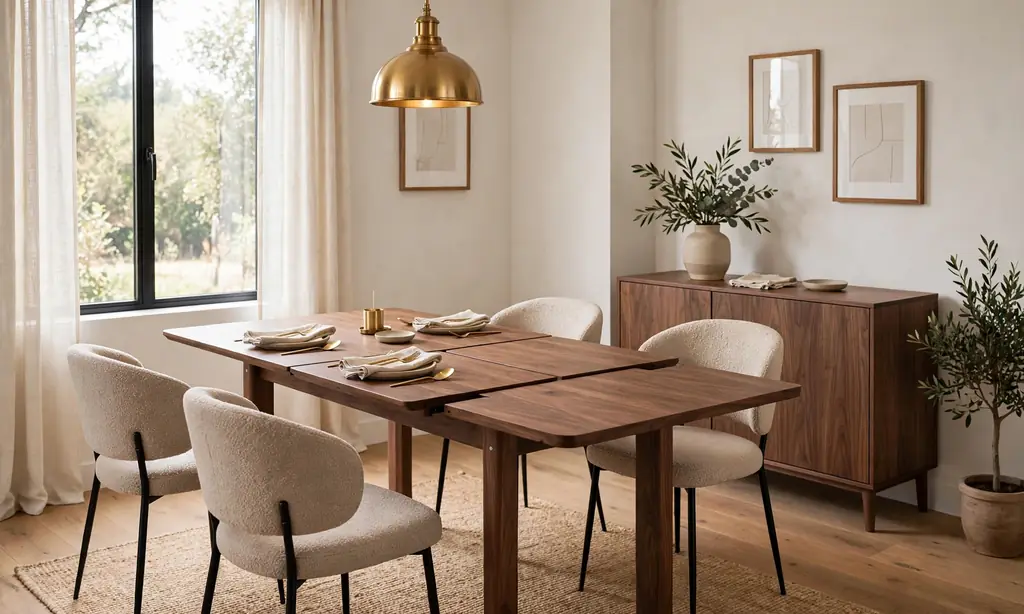
An extendable table with hidden butterfly leaves gives you two tables in one. Keep it compact for everyday meals, then unfold the self-storing leaf when guests arrive. There are no separate leaves to store in a closet and no wobbly add-on panels.
Butterfly-leaf mechanisms are the smoothest option — one person can open and close the table in seconds. Choose a solid wood top for durability, since the moving parts get daily use. Measure your room with the table fully extended before buying so you know it fits on special occasions.
Pro Tip: Test the extension mechanism in the store — it should glide open with one hand and lock firmly with a click.
4. Console-to-Dining Convertible Table
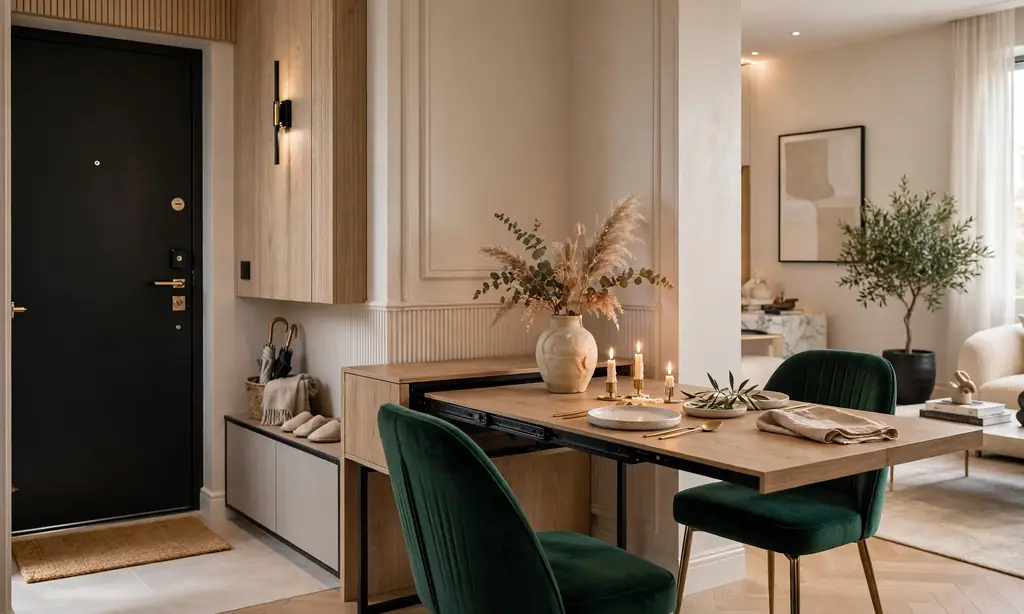
A console-to-dining table lives as a slim hallway console most days, then expands into a full dining table for six or more. It is the hardest-working piece of furniture you can own in a small home. Fold-out panels and hidden leaves do all the magic.
Place it behind your sofa or along an empty wall where a console naturally belongs. When guests come, pull it into the room and unfold — most designs extend from 16 inches to over 80 inches long. Keep folding chairs in a nearby closet so seating is always ready.
Pro Tip: Buy the matching storage bag for the extension panels if they are not self-storing — it protects the finish and keeps everything together.
Read More: 20 Rustic Living Room Wall Decor Ideas for a Warm, Charming Space
5. Classic Gateleg Dining Table
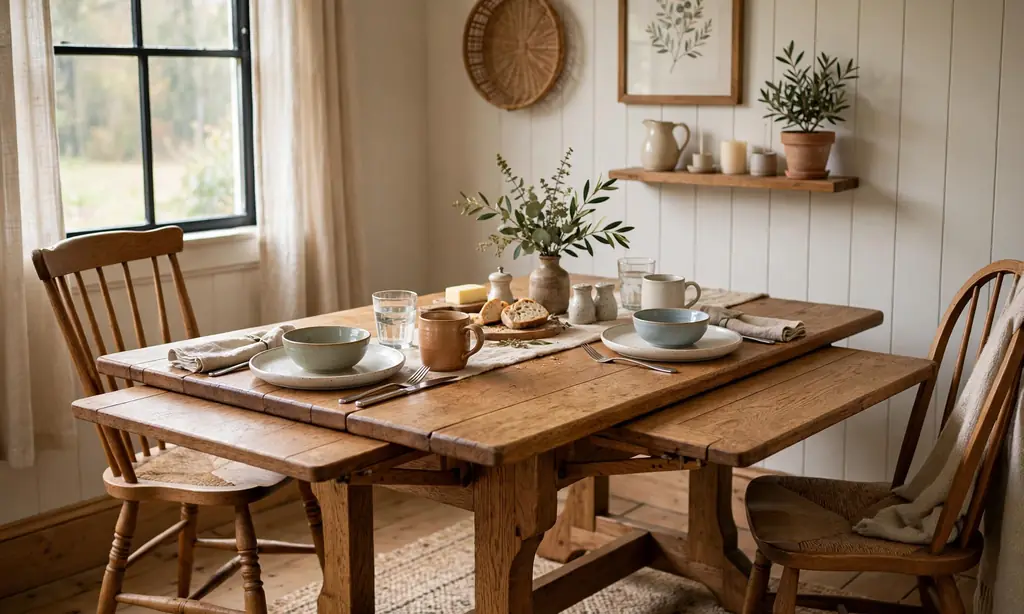
The gateleg table has saved small dining rooms for centuries, and it still works beautifully today. With both leaves down, it is a slim console; raise one leaf for intimate dinners, or both for a full family meal. Few designs adapt to daily life this gracefully.
Modern gatelegs come in painted finishes and mid-century styles, not just traditional oak. The swing-leg mechanism is simple and sturdy, with no complicated hardware to fail. Use it as a sideboard or entry table when the leaves are folded down.
Pro Tip: Put felt pads on the gate legs so they swing smoothly without scratching your floors.
6. Bench Seating Instead of Chairs
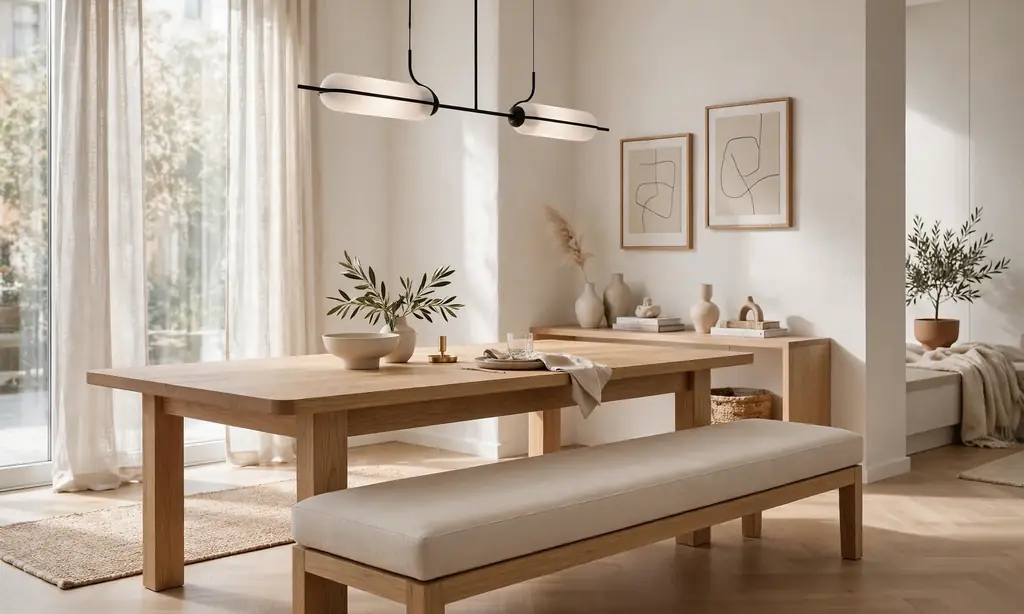
Swapping chairs for a bench on one side of your table instantly saves space. Benches tuck completely under the tabletop, eliminating the gap that chair backs create. You can also squeeze an extra person onto a bench when friends drop by unexpectedly.
Choose a backless upholstered bench for the slimmest profile and easiest tucking. A storage bench adds a bonus — stash table linens, placemats, and board games inside. Match the bench cushion to your chair upholstery for a pulled-together look.
Pro Tip: Leave at least 24 inches of bench length per person so everyone has comfortable elbow room.
7. Slim Counter-Height Table Against the Wall
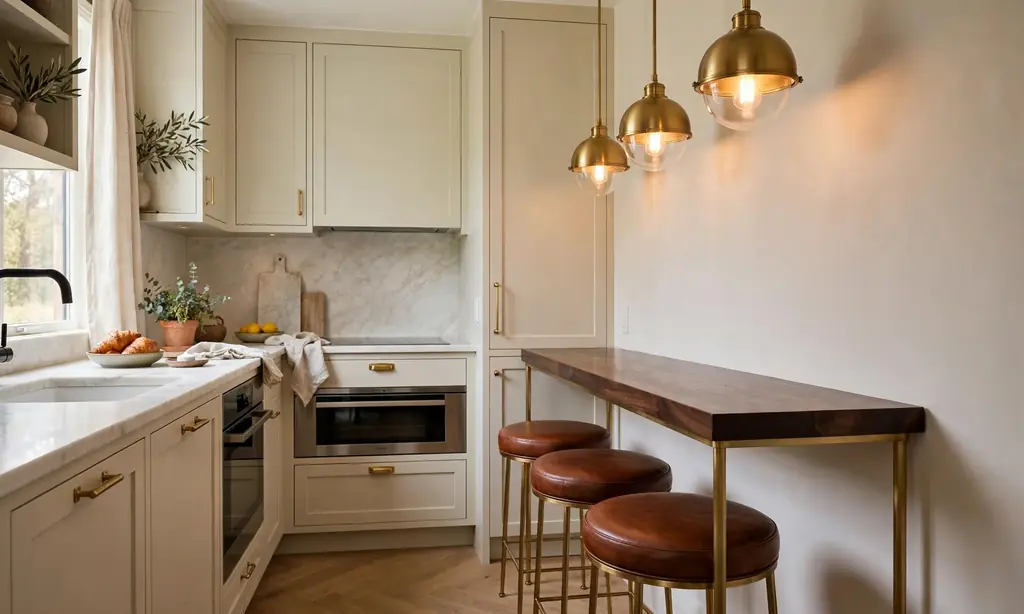
Pushing a slim counter-height table against the wall turns dead wall space into a dining spot. It doubles as a breakfast bar, homework station, and buffet during parties. The taller height keeps sightlines open, so the room feels larger.
Look for tables 16 to 18 inches deep — enough for a dinner plate with room to spare. Backless stools slide completely underneath, keeping the walkway clear. Add two pendant lights above to define the zone and make it feel like a real dining destination.
Pro Tip: Anchor the table with a narrow runner rug to visually separate the dining zone from the rest of the room.
8. Round Glass-Top Table for Visual Lightness
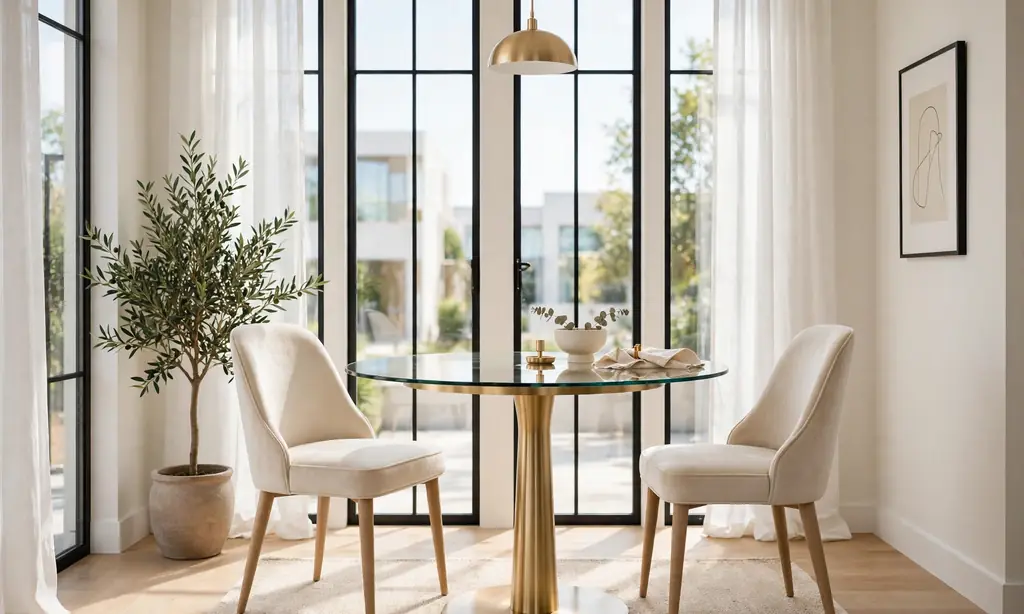
A glass-top table practically disappears in a small room, which is exactly the point. You see the floor and rug through it, so your eye reads the whole space as open and continuous. It is the closest thing to a dining table that takes up no visual space at all.
Tempered glass tops are strong, safe, and easy to wipe clean. Pair the table with a sculptural metal or wood base that becomes the real design feature. Keep the styling minimal — a single low centerpiece is all a glass table needs.
Pro Tip: Use clear placemats or a runner to protect the glass and cut down on the clatter of dishes.
Read More: 20 Fall Front Porch Decor Ideas for a Cozy Autumn Welcome
9. Storage Banquette Dining Nook
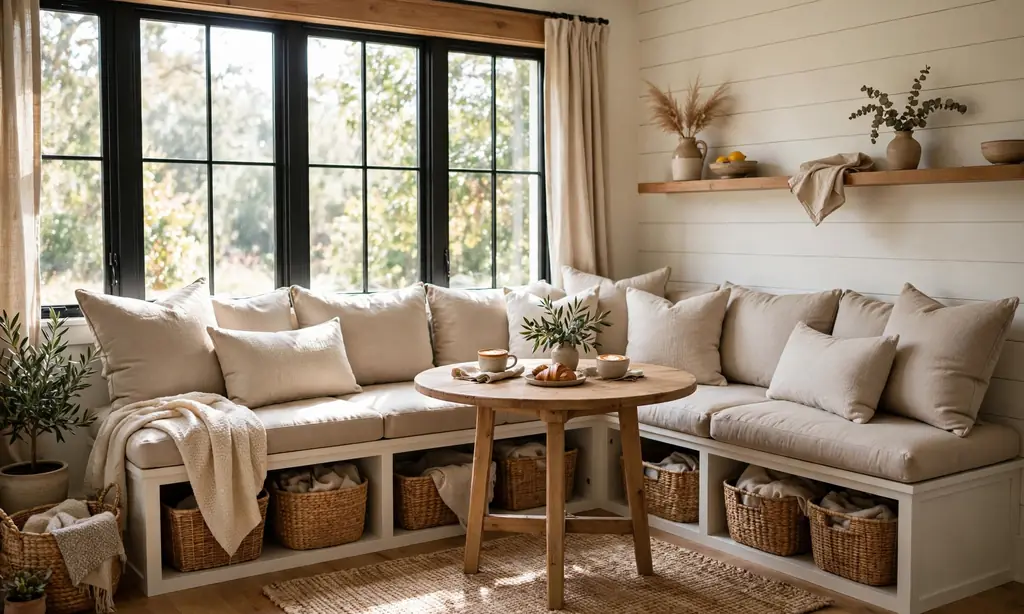
A built-in banquette with storage under the seats is the smartest use of a dining corner. You get comfortable seating, hidden storage for linens and seasonal items, and a cozy booth-like feel. Every inch works hard in a banquette nook.
Hinged seat tops lift for easy access, or choose drawers that pull out from the front. Add thick cushions and throw pillows in washable fabrics for comfort and style. A small round or square table in the middle keeps the footprint tight.
Pro Tip: Build the banquette 18 inches deep and 18 inches high — standard dining seat dimensions for all-day comfort.
10. Nesting Tables as Flexible Dining
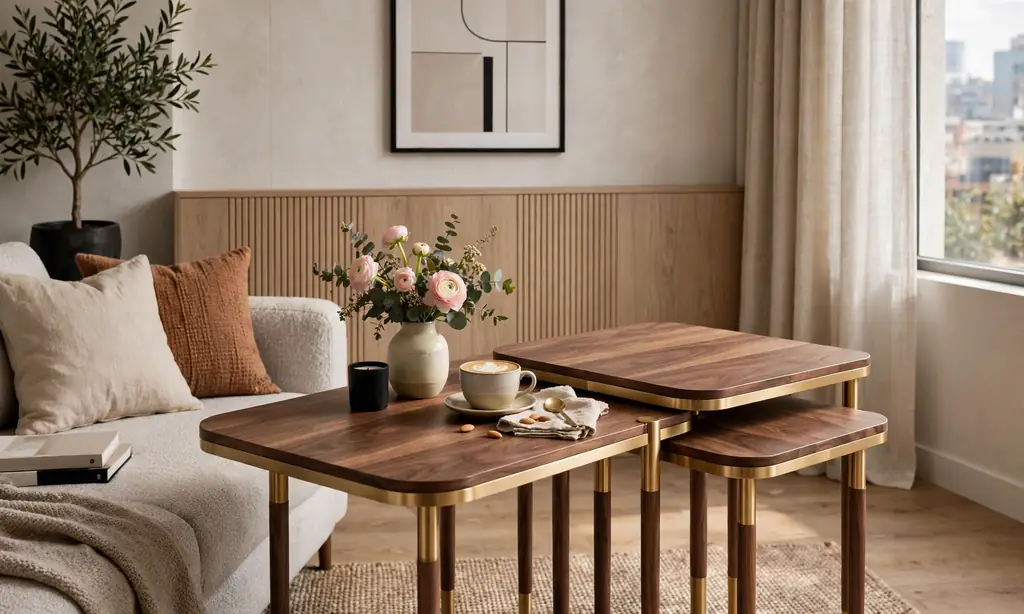
A set of nesting tables can moonlight as a dining surface when you need it most. Pull the tables apart to create one long surface for a buffet, or use the largest as a dining table for two. When the meal is over, they nest back into a single small footprint.
Choose nesting tables with sturdy construction and a height close to 29 inches for comfortable dining. Mixed materials like wood and brass keep them looking like intentional decor, not a compromise. They are perfect for studio apartments where every piece must multitask.
Pro Tip: Add a tablecloth or runner over the nested set when dining — it unifies the separate tops into one elegant surface.
11. Folding Dining Table with Hidden Storage
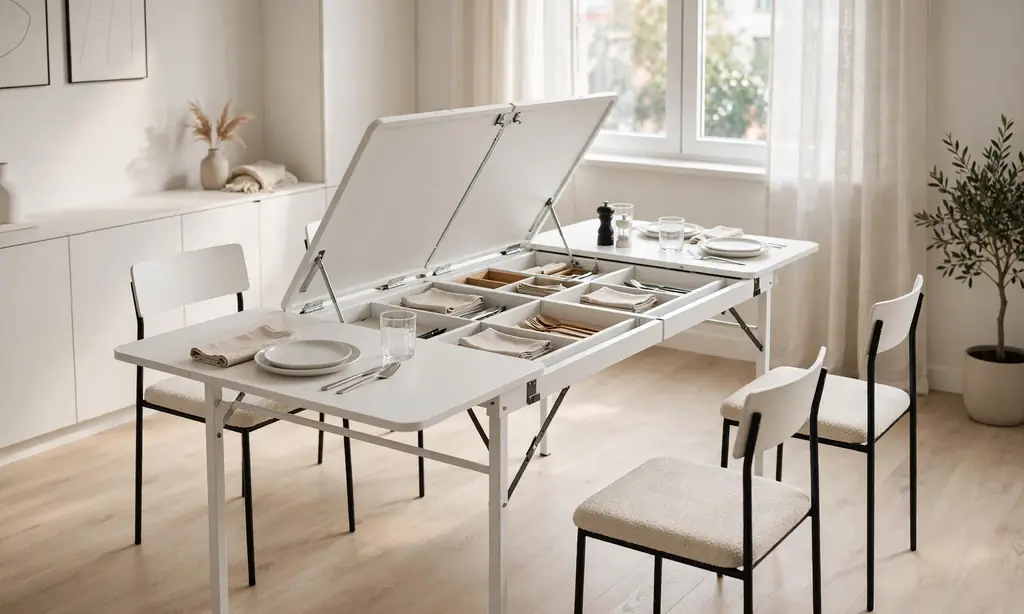
Some folding tables hide storage compartments right inside the tabletop — perfect for stashing placemats, napkins, and serving pieces. Fold the table flat against the wall or into a slim console when not in use. It is dining furniture and a storage cabinet in one.
Look for designs where the storage stays accessible even when the table is folded. Soft-close hinges protect fingers and keep the mechanism quiet. A light finish like white oak or painted white keeps the folded piece looking like a chic cabinet.
Pro Tip: Store your everyday placemats and coasters inside so setting the table takes under a minute.
12. Expandable Round-to-Oval Table
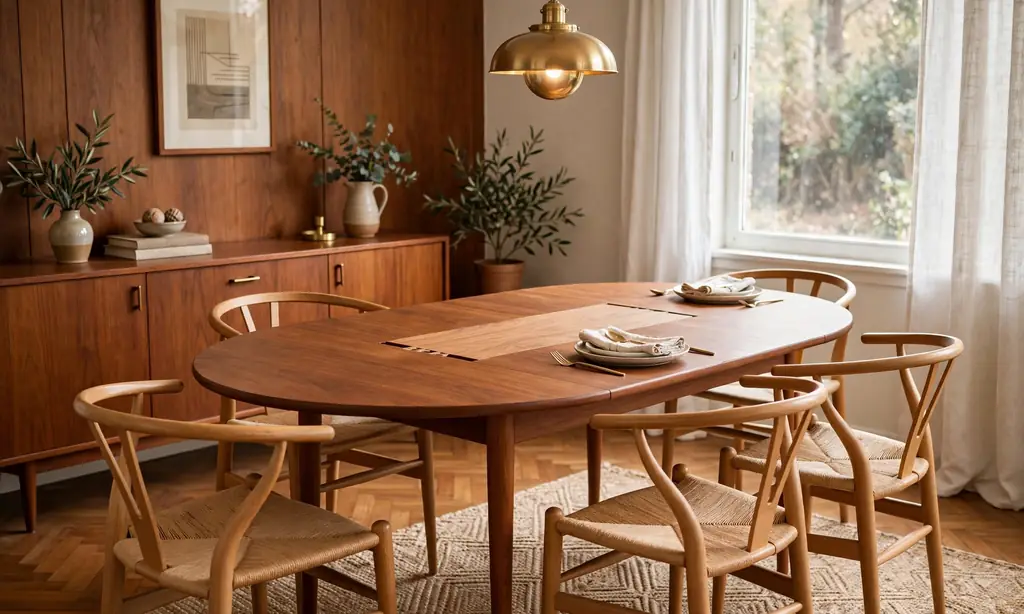
A round table that expands into an oval is brilliant for small dining rooms. Daily life happens around the cozy round shape, and the oval extension appears only when you host. You get intimacy and capacity without a permanently large table.
Self-storing leaves are the key feature — the extension lives inside the table, ready in seconds. The oval shape seats six comfortably while still fitting through standard doorways when moved. Choose a pedestal base so no legs block the extra chairs.
Pro Tip: Count your chairs before you buy — make sure you own enough seating for the fully extended size.
Read More: 20 DIY Easter Home Decor Ideas for a Fresh, Cheerful Spring
13. Floating Wall-Mounted Dining Bar
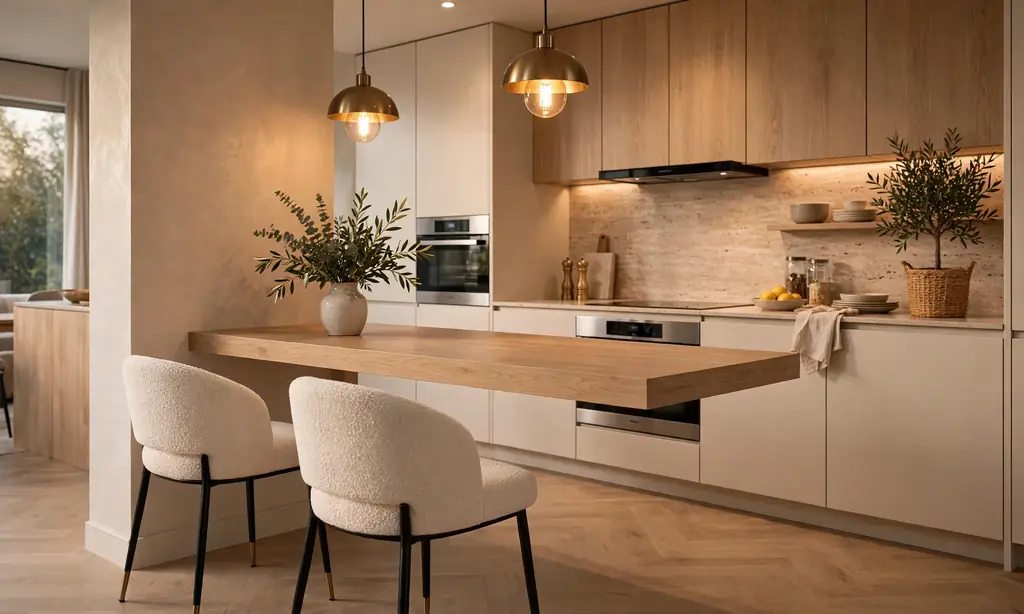
A floating dining bar mounts directly to the wall with no legs touching the floor. The open space underneath keeps the room feeling airy and makes cleaning a breeze. It is a sleek, modern answer to the small dining dilemma.
Have it installed into wall studs or with heavy-duty anchors — a floating bar must support leaning elbows and full dinner plates. A depth of 16 to 20 inches works for dining; go deeper if it doubles as a workspace. Style it with two or three comfortable counter stools.
Pro Tip: Add a slim floating shelf above the bar for glasses and small plants — it completes the built-in look.
14. Narrow Farmhouse Table for Small Dining Rooms
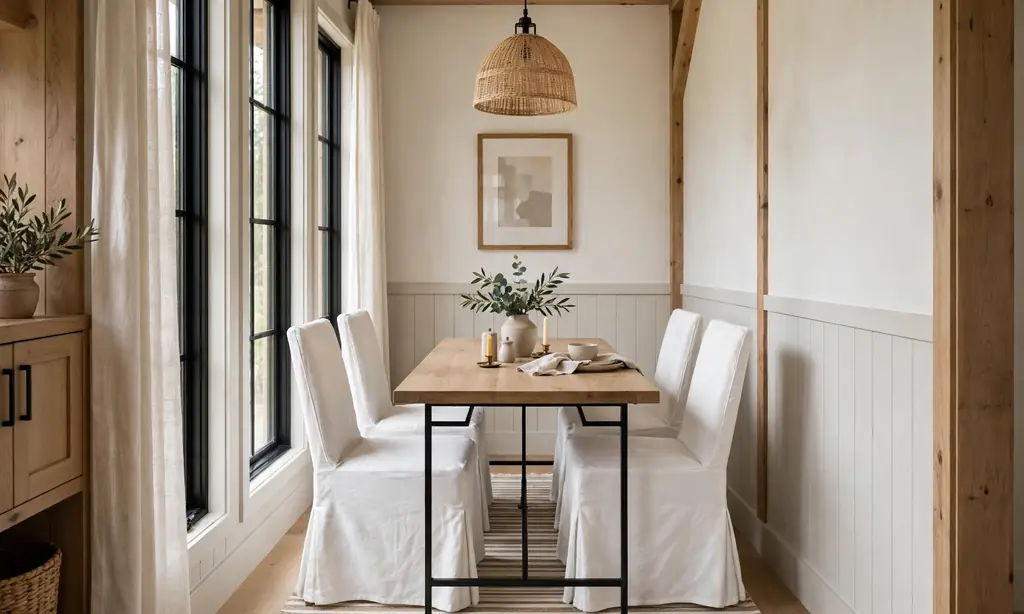
You do not need a wide table to get farmhouse charm — narrow farmhouse tables are made for slim dining rooms. At 30 to 34 inches wide, they leave comfortable walkways on both sides. The rustic wood top still delivers all the warmth and character you love.
Pair the table with slim-profile chairs or a bench to keep the footprint tight. A simple bench on one side and two chairs on the other seats four without crowding. Finish the look with a textured runner and a low-profile centerpiece.
Pro Tip: Choose a table with a trestle base rather than four corner legs — it gives everyone’s knees more room.
15. Drop-Leaf Side Table Pair
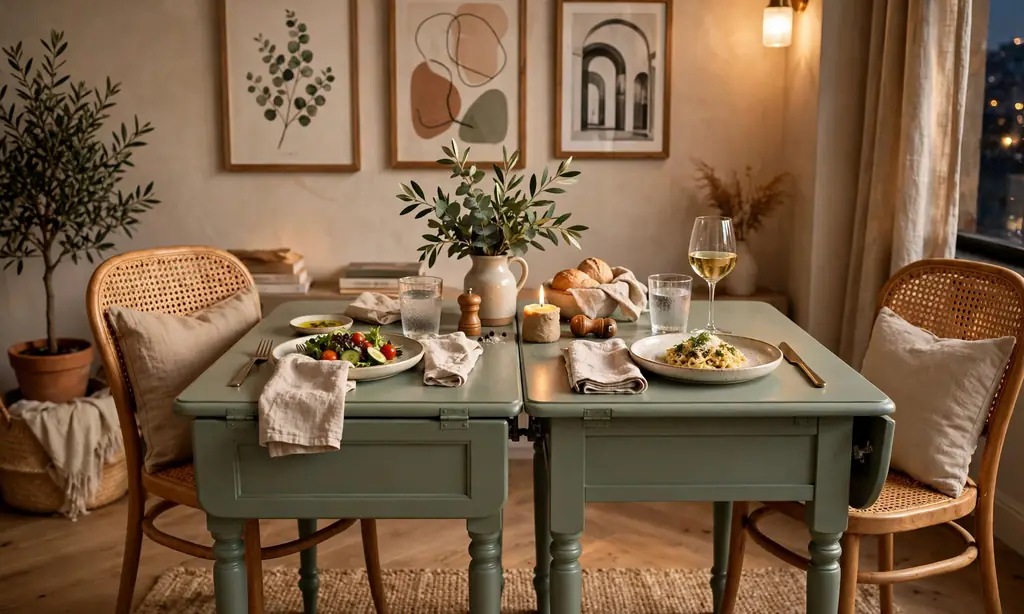
Two small drop-leaf side tables can join forces as a dining table for two. Push them together with leaves up for meals, then separate them as end tables around the room. It is the most flexible dining setup for truly tiny spaces.
Matching tables look intentional when pushed together — same height is essential, so buy them as a pair. Each table works solo as a nightstand, entry table, or plant stand. This approach costs less than most dedicated dining tables.
Pro Tip: Measure carefully — the combined width with both leaves up should be at least 48 inches for comfortable dining for two.
16. Convertible Coffee-to-Dining Table
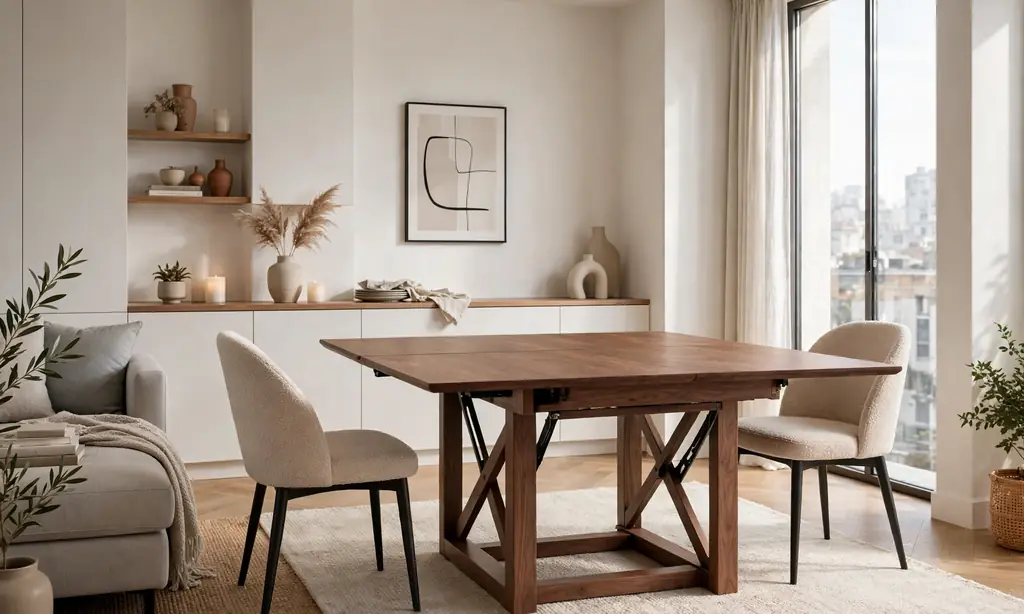
A coffee-to-dining table rises from coffee table height to full dining height in seconds. By day it anchors your living room; by night it hosts dinner. For studio apartments, it eliminates the need for a separate dining table entirely.
Look for smooth lift mechanisms with locking positions at multiple heights. The expanding top should at least double in size for real dining use. Keep the styling simple — this hardworking piece should blend into your living room decor.
Pro Tip: Store two folding chairs in a closet or behind a sofa so you are always dinner-party ready.
Read More: 20 Music Corner Decor Ideas for a Beautiful, Creative Space
17. Bistro Table with Folding Chairs
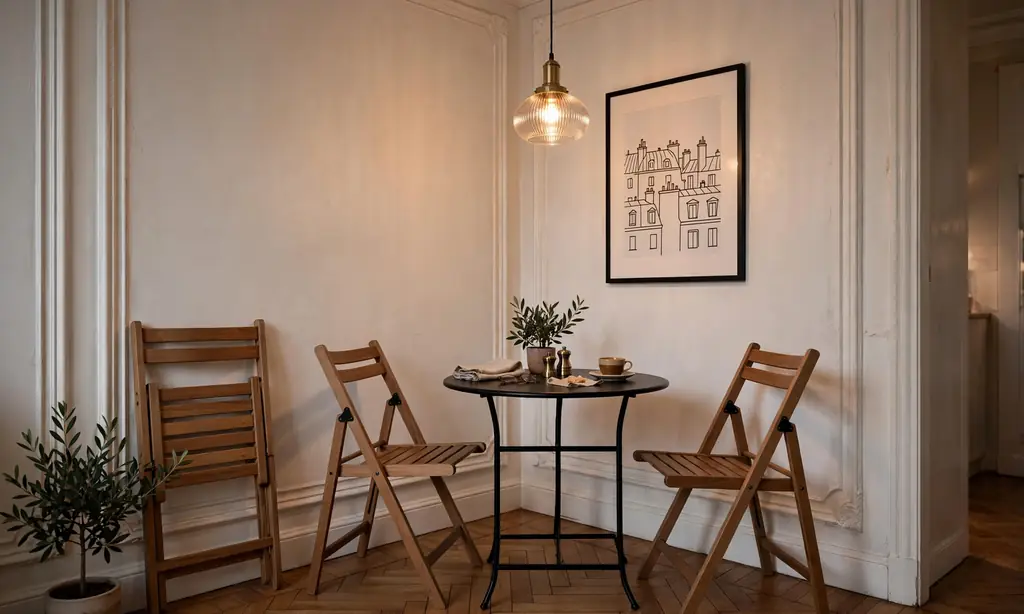
A petite bistro table with folding chairs is the classic small-space dining solution. The whole set can fold flat and slide behind a door or into a closet. It is perfect for eat-in kitchens and tiny breakfast nooks.
Modern bistro sets come in marble, wood, and metal finishes far beyond the old cafe look. Choose chairs with a comfortable seat — you will use them more than you expect. A 28 to 30-inch round top is the sweet spot for two diners.
Pro Tip: Hang the folded chairs on wall hooks as decor — many folding designs are pretty enough to display.
18. Corner Dining Set with L-Shaped Bench
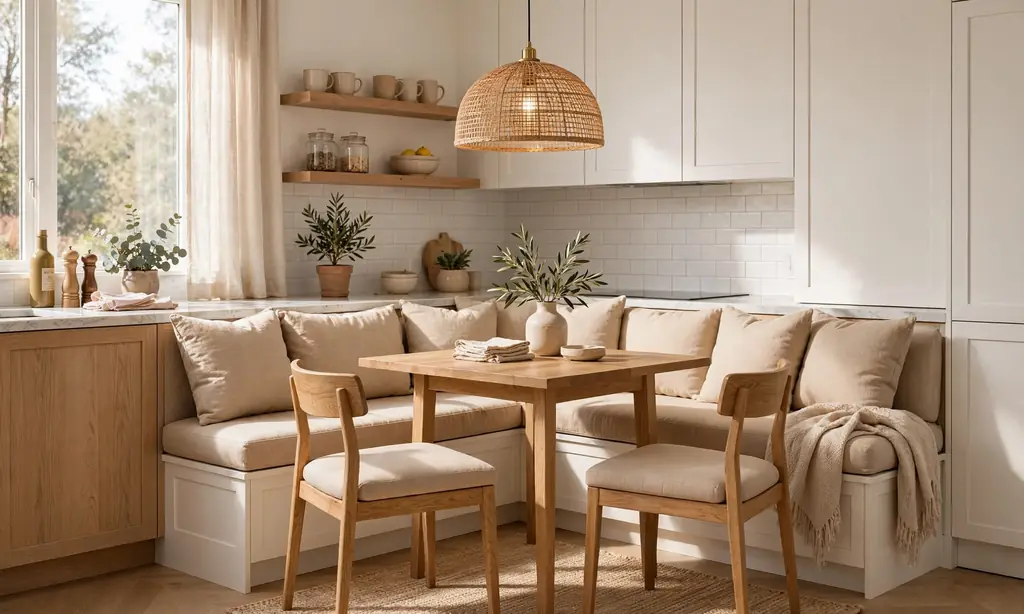
An L-shaped bench turns an awkward corner into the best seat in the house. Corners are often wasted space, but a banquette-style bench wraps right into them. You gain seating for four or five where a regular table and chairs would never fit.
Freestanding corner bench sets are available if you cannot build in. The L-shape naturally defines the dining zone in an open-plan room. Add a square or rectangular table sized to the bench, and finish with plush cushions.
Pro Tip: Leave a few inches between the bench and the wall for easy cleaning behind the cushions.
19. Dining Table with Built-In Shelving Base
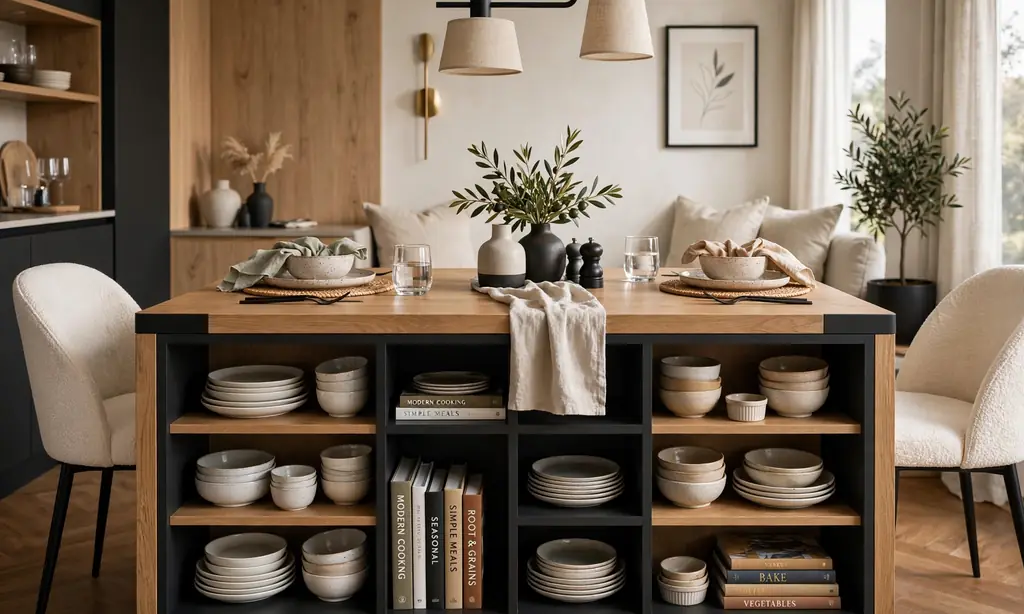
A dining table with open shelving in its base turns the dead space under the table into storage. Display pretty dishes, store cookbooks, or stash baskets of linens. The table earns its footprint twice over.
Open shelves keep the look airy — closed cabinets under a table can feel bulky. Style the shelves with restraint so they read as decor, not clutter. This design works especially well in open-plan kitchens where storage is scarce.
Pro Tip: Keep everyday dishes on the shelves and formal pieces higher up or elsewhere — you will reach for them constantly.
20. Cabinet-Hidden Fold-Down Table
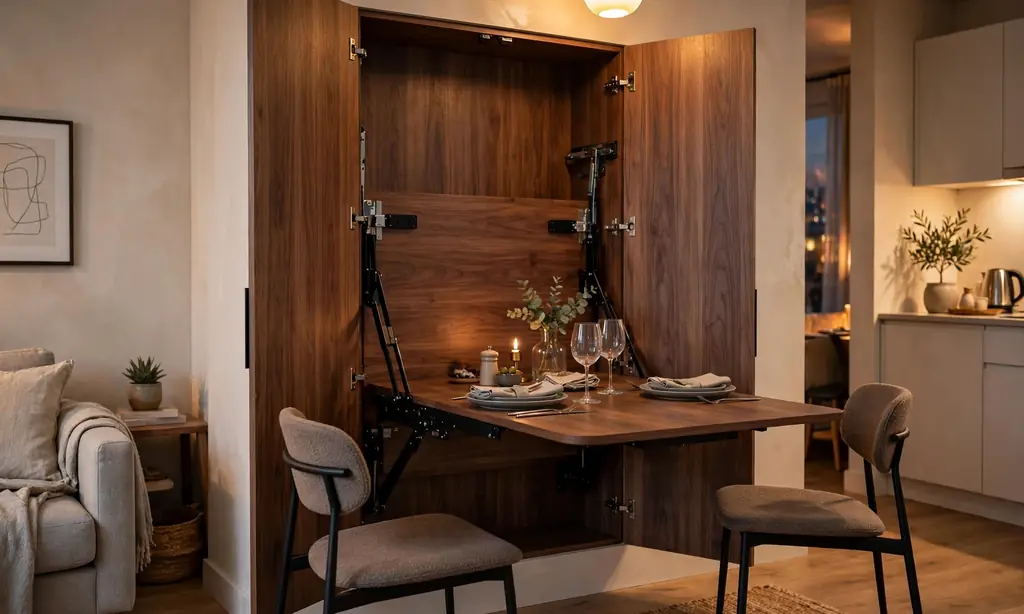
The ultimate disappearing act: a dining table that folds away inside a wall cabinet. Closed, it looks like elegant storage furniture; open, it reveals a full dining surface. Guests will never guess your dining room hides in a cabinet.
These are often custom or semi-custom pieces, so measure your space carefully before ordering. The cabinet interior can include small shelves for placemats and candles. When folded down, make sure the table clears your chairs and has sturdy support legs.
Pro Tip: Choose a cabinet style that matches your other furniture so the hidden table blends in seamlessly.
Space Saving Dining Table Styling Tips
Keep the Tabletop Clutter-Free
A clear tabletop makes any table look bigger — visual clutter shrinks a small dining area fast. Limit yourself to one low centerpiece, like a small vase of greenery or a candle cluster. Corral everyday items like salt, napkins, and coasters on a single tray you can lift away.
Use Light Colors and Reflective Surfaces
Light finishes bounce light around the room and make furniture feel less heavy. White, light oak, and glass tabletops all help a small dining area breathe. A mirror hung near the table doubles the sense of space by reflecting light and the room itself.
Hang Lighting at the Right Height
A pendant light hung 30 to 34 inches above the tabletop defines the dining zone and adds instant style. In small spaces, one well-chosen pendant beats a large chandelier. Choose a slim or open design that does not block sightlines across the room.
Define the Zone with a Rug
A rug under the dining table anchors the area and makes it feel like a real dining room, even in an open-plan space. Choose a rug that extends at least 24 inches beyond the table on all sides so chairs stay on it when pulled out. Low-pile, washable rugs are the practical choice for dining.
Choose Seating That Disappears
The slimmest seating keeps walkways clear and the room feeling open. Backless stools, transparent acrylic chairs, and benches that tuck fully under the table all but vanish when not in use. If you love upholstered chairs, pick armless styles in a light fabric.
Frequently Asked Questions
1. What is the best dining table shape for a small space?
Round tables are usually the best choice for tight spaces. They have no corners to bump into, seat more people per inch of diameter, and fit naturally into corners and nooks. For narrow rooms, a slim rectangular table works better than a square one.
2. How much clearance do I need around a dining table?
Allow at least 36 inches between the table edge and the wall so chairs can pull out comfortably. If the space is also a walkway, aim for 44 inches on the traffic side. Allow about 24 inches of table width per person for comfortable elbow room.
3. Are extendable dining tables sturdy enough for daily use?
Yes — a well-made extendable table is just as sturdy as a fixed one. Look for solid wood construction and a smooth, locking extension mechanism. Butterfly-leaf and pull-out designs from reputable makers easily handle years of daily meals.
4. Can I use a console table as a dining table?
You can, as long as the height is right — standard dining height is 29 to 30 inches. Many console-to-dining convertible tables are designed exactly for this dual role. Just make sure the table is deep enough (at least 30 inches when extended) for comfortable dining.
5. What size dining table comfortably seats four people?
A 36 to 44-inch round table seats four comfortably, as does a 48 by 30-inch rectangle. In very tight spaces, a 36-inch round with a pedestal base is the most efficient four-person option. Remember to budget extra room if you plan to use armchairs.
6. Is a round or rectangular table better for saving space?
Round tables win in square rooms and tight corners because they eliminate wasted corner space and improve traffic flow. Rectangular tables win in narrow rooms where a round top would block the walkway. Match the table shape to your room’s shape for the best fit.
7. How can I make a small dining area look bigger?
Use a glass or light-colored tabletop, hang a mirror nearby, and keep the tabletop styling minimal. Choose seating that tucks fully under the table and hang a pendant light to define the zone. Light wall colors and an appropriately sized rug complete the spacious feel.
8. Where should I place a dining table in a studio apartment?
Place it near the kitchen or a window to create a natural dining zone. A wall-mounted drop-leaf or floating bar against an empty wall works beautifully. If you use a convertible coffee-to-dining table, keep it in the living area where it serves double duty all day.
Conclusion
Small dining spaces deserve beautiful tables just as much as grand dining rooms do. From wall-mounted drop-leafs to convertible coffee tables, these twenty ideas prove that limited square footage is no barrier to stylish dining. The right table does not just fit your space — it makes the whole room work harder and feel more welcoming.
Start by measuring your space and thinking honestly about how you dine every day. Then pick the idea that matches your life, whether that is a gateleg table for flexible hosting or a floating bar for sleek minimalism. Add a few favorite decorative pieces to complete the look and make the space truly yours. With a little creativity, your compact dining area will feel anything but small.