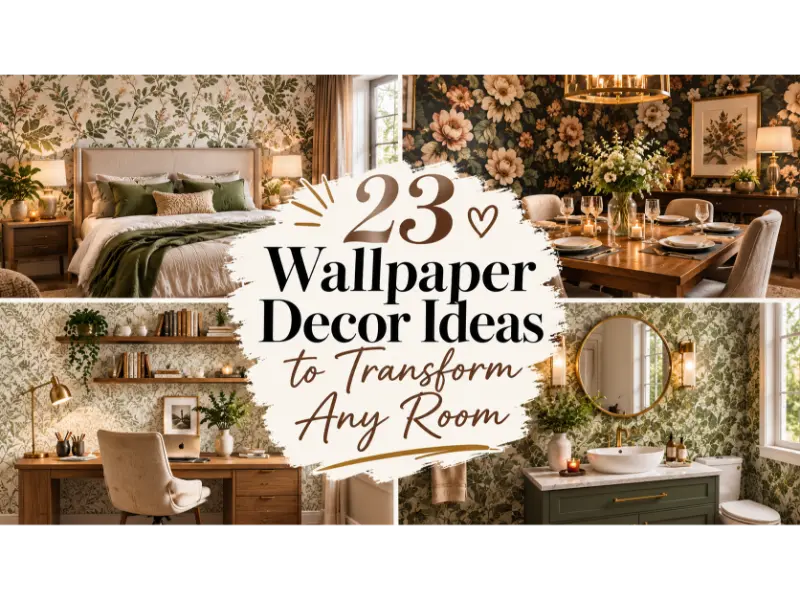
23 Creative Wallpaper Decor Ideas to Transform Any Room
Wallpaper can completely change the personality of a room without requiring a major renovation. The right pattern can make a plain bedroom feel layered, give a hallway more character, or turn a small powder room into a memorable jewel box. The secret is choosing a design that works with the room’s size, natural light, furniture, and overall mood. These Wallpaper Decor Ideas go beyond ordinary accent walls, bringing together botanical prints, murals, textured finishes, ceilings, small spaces, and unexpected applications. Whether your home feels modern, traditional, cozy, or eclectic, you can find a wallpaper direction that makes the space feel more personal and finished.
Creative Wallpaper Decor Ideas for Every Room
1. Botanical Wallpaper Bedroom Retreat
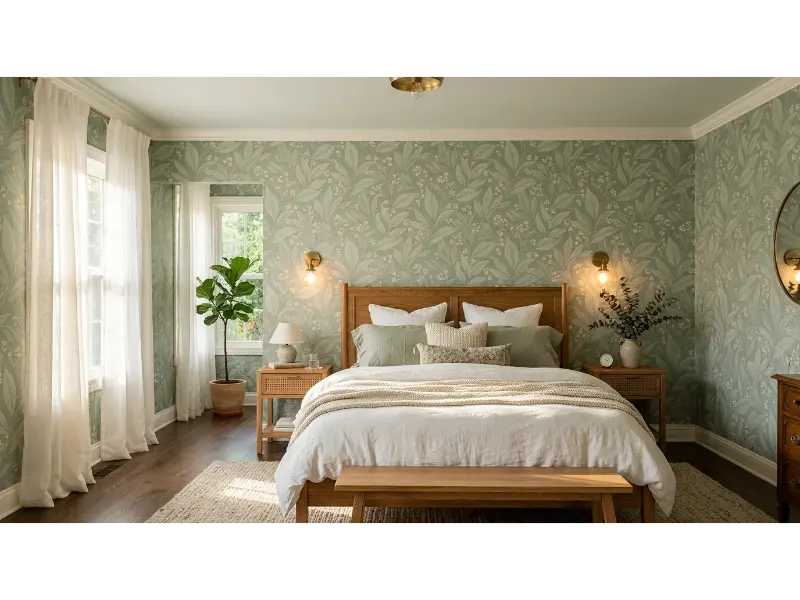
Botanical wallpaper creates a peaceful bedroom that feels connected to nature without looking overly themed. Choose muted greens, warm creams, or dusty blue patterns if you want a calming atmosphere. A larger botanical print can create drama, while a delicate repeating pattern gives the walls a softer, almost textile like appearance. Pair it with natural wood and simple bedding so the wallpaper remains the visual foundation.
For a more polished bedroom, repeat one or two colors from the wallpaper through cushions, curtains, artwork, or a small rug. Avoid matching every accessory exactly because the room can quickly feel too coordinated. Instead, use warm textures such as linen, woven baskets, oak, and boucle to balance the pattern and make the space feel comfortable rather than staged.
Pro Tip: Use wallpaper samples beside your bedding and flooring before committing. Natural and artificial light can change how the colors appear throughout the day.
2. Dramatic Floral Dining Room
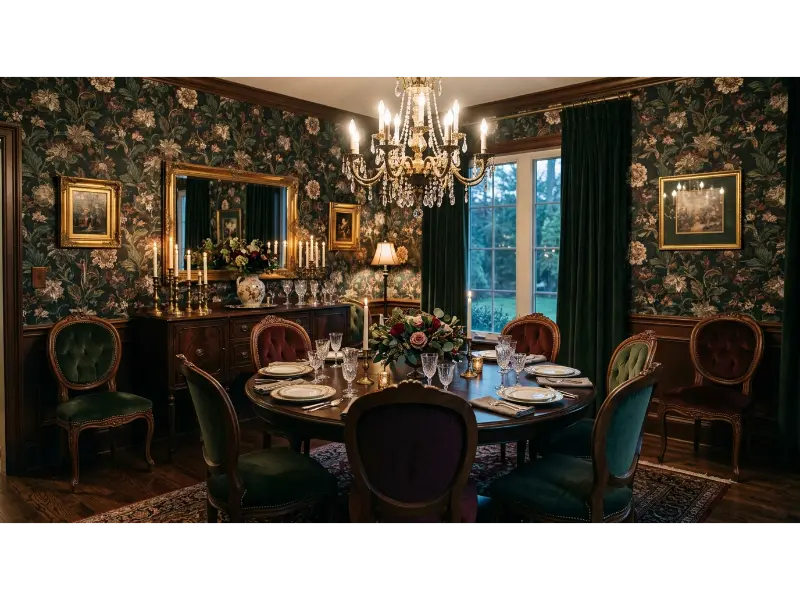
A dramatic floral wall can turn an ordinary dining room into an intimate entertaining space. Instead of choosing tiny flowers, consider a large scale design with generous leaves and blooms. Deep colors such as forest green, plum, navy, or charcoal can create a rich backdrop, especially when paired with warm wood furniture and brass lighting.
Keep the rest of the room relatively controlled so the wallpaper has room to breathe. A simple dining table, understated artwork, and warm lighting can make the pattern feel sophisticated instead of overwhelming. If the room has limited natural light, choose a wallpaper with lighter details within the darker background to preserve visual depth.
Pro Tip: Take the room’s evening lighting seriously. A wallpaper that looks beautiful in daylight may look much darker under cool white bulbs.
Read More: 21 Luxurious Bathroom Design Ideas for a Luxe Home
3. Soft Geometric Home Office
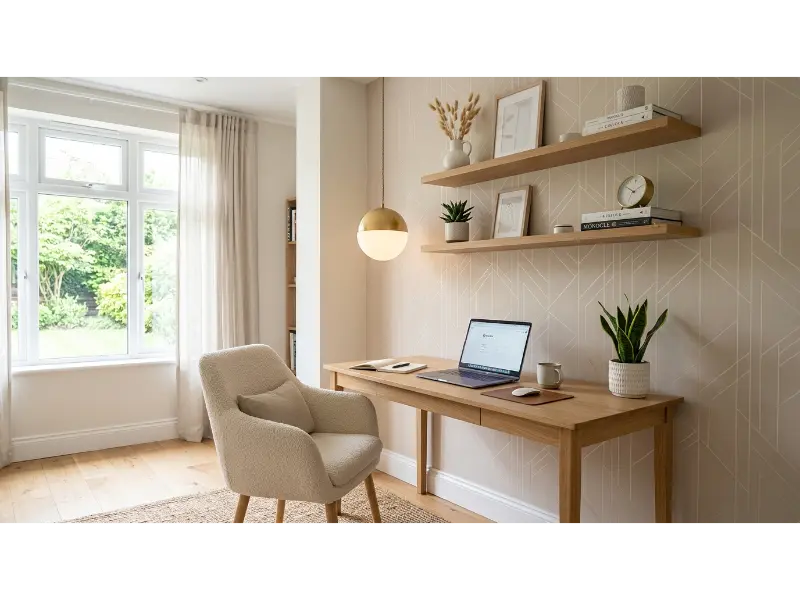
A subtle geometric pattern works beautifully in a home office because it adds structure without distracting from the workspace. Look for fine lines, arches, grids, or repeating shapes in neutral shades. These patterns can make a plain wall feel designed while still allowing artwork, shelving, and office accessories to stand out.
Warm neutrals work particularly well with wood furniture because they soften the sharper appearance of geometric lines. If you want more personality, introduce one accent color through the chair, desk accessories, or artwork. The result should feel creative and organized rather than visually busy, especially if you spend several hours working in the room.
Pro Tip: Choose a pattern with enough negative space around its shapes. Very dense geometry can become distracting when viewed for long periods.
4. Ceiling Wallpaper Decor Ideas
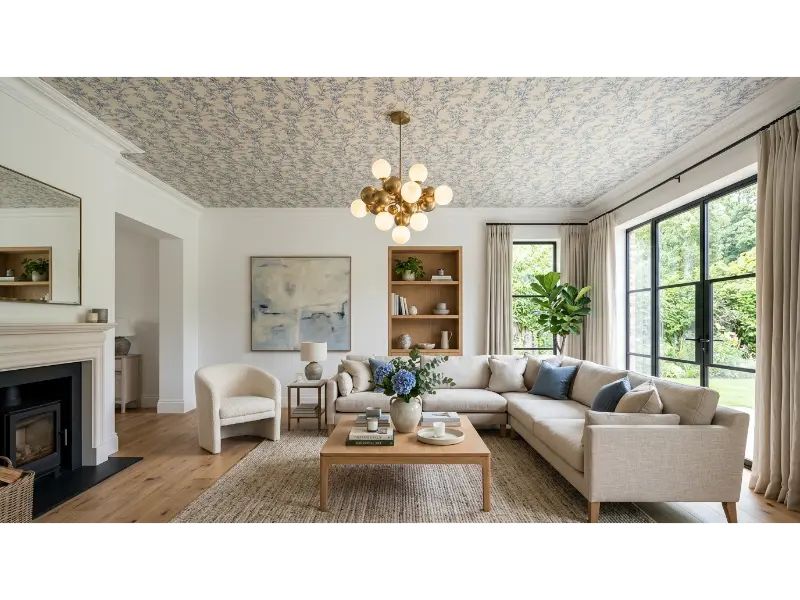
Wallpaper does not have to stop at the walls. Applying a patterned covering to the ceiling can create an unexpected focal point and make a room feel carefully designed from every angle. A delicate botanical, starry, cloud inspired, or geometric pattern works especially well when the surrounding walls remain relatively calm.
This approach works particularly well in dining rooms, bedrooms, reading spaces, and small entry areas where the ceiling is easy to notice. Keep the pattern lighter if the ceiling is low, and consider a design that visually connects with the furniture below. The goal is to make the ceiling feel like part of the architecture rather than a random decorative surface.
Pro Tip: Keep lighting fixtures simple when the ceiling carries a strong pattern. Too many competing details can reduce the impact.
5. Cozy Reading Nook
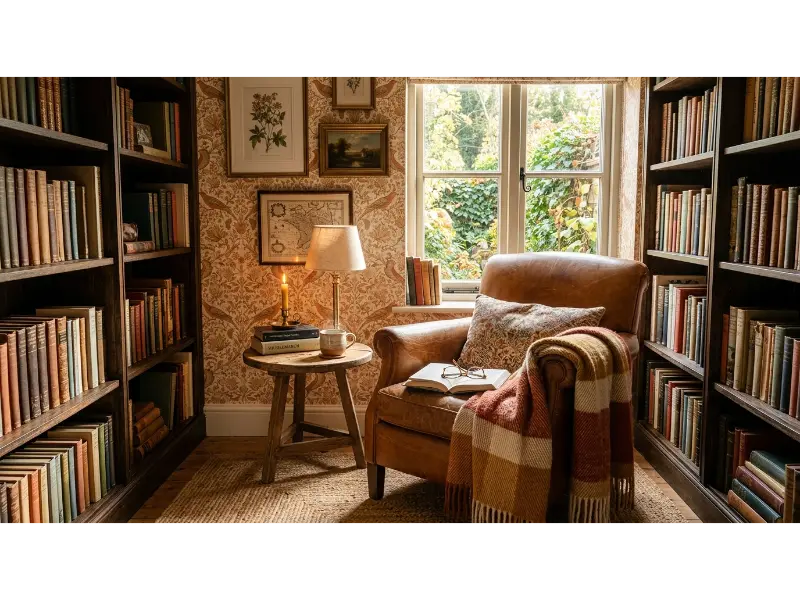
A small reading nook offers the perfect opportunity to experiment with wallpaper because you can create a defined visual zone without covering an entire room. Choose a warm pattern with leaves, small florals, vintage motifs, or gentle stripes. The wallpaper gives the nook its own identity and makes a simple chair feel like part of a thoughtfully designed space.
Add tactile materials to make the corner inviting. A wool throw, woven basket, wooden side table, and warm lamp can soften the printed wall. You can also place a few favorite books and personal objects nearby so the area feels lived in. This idea works especially well beneath stairs, beside windows, or inside unused corners.
Pro Tip: Use wallpaper to visually frame the nook rather than filling it with too many accessories. Let the pattern provide most of the decoration.
Read More: 23 Mid Century Modern Kitchen Ideas You’ll Copy
6. Small Powder Room Jewel Box
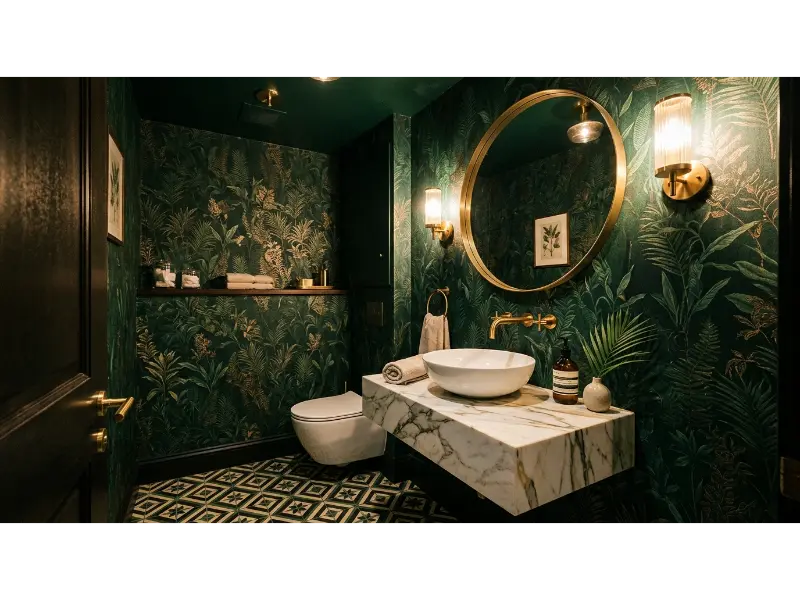
A small powder room can handle wallpaper that might feel too bold in a large living area. Designers are increasingly embracing pattern drenched small spaces because their compact proportions can make strong design choices feel intentional rather than excessive.
Try wrapping the walls in a rich botanical, scenic mural, vintage floral, or dramatic geometric print. Because the room usually contains fewer furnishings, the wallpaper can become the main decorative feature. Pair it with a simple vanity, attractive mirror, and warm metal hardware so the space feels luxurious without becoming cluttered.
Pro Tip: In a tiny room, committing to the pattern can look more polished than using wallpaper on one small section and leaving awkward gaps.
7. Warm Neutral Living Room
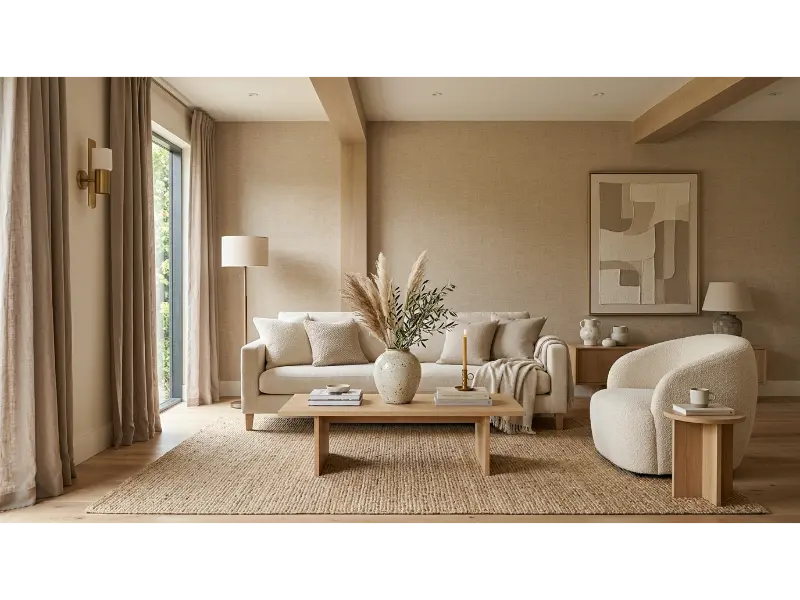
Neutral wallpaper proves that printed walls do not always need strong colors. A linen effect, plaster texture, subtle grasscloth look, tiny geometric pattern, or tonal organic design can add depth while keeping the room calm. This approach works especially well if you prefer a minimalist home but find plain painted walls too flat.
Layer the room with materials rather than extra patterns. Light oak, stone, linen, wool, ceramics, and woven accents can give the space richness without competing with the wallpaper. The finished room feels warm and sophisticated while remaining flexible enough for seasonal changes and future furniture updates.
Pro Tip: Choose wallpaper that is only a few shades different from the main wall color if you want texture without an obvious pattern.
8. Vintage Inspired Entryway
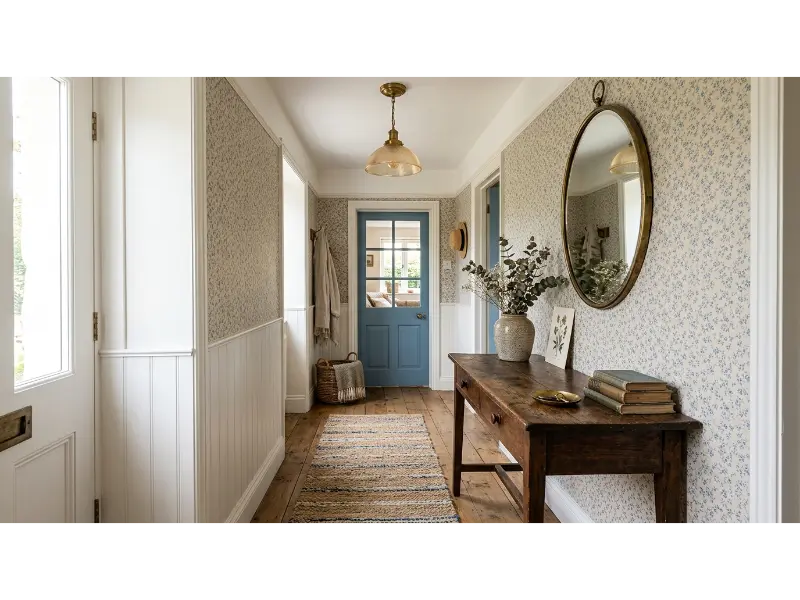
The entryway sets the mood for the entire home, so it deserves more attention than it often receives. A vintage floral or small repeating pattern can make a narrow hallway feel welcoming and collected. Choose colors that connect with nearby rooms so the transition feels intentional rather than disconnected.
A narrow console, mirror, small lamp, and runner can complete the look without crowding the walkway. If your hallway has architectural trim, use it as a framing device around the wallpaper. The combination of traditional details and a fresh pattern can give even a newer home a sense of history and character.
Pro Tip: Check the wallpaper from the doorway as well as close up. The pattern should complement the rooms that visitors see next.
9. Kids’ Bedroom Storybook Wall
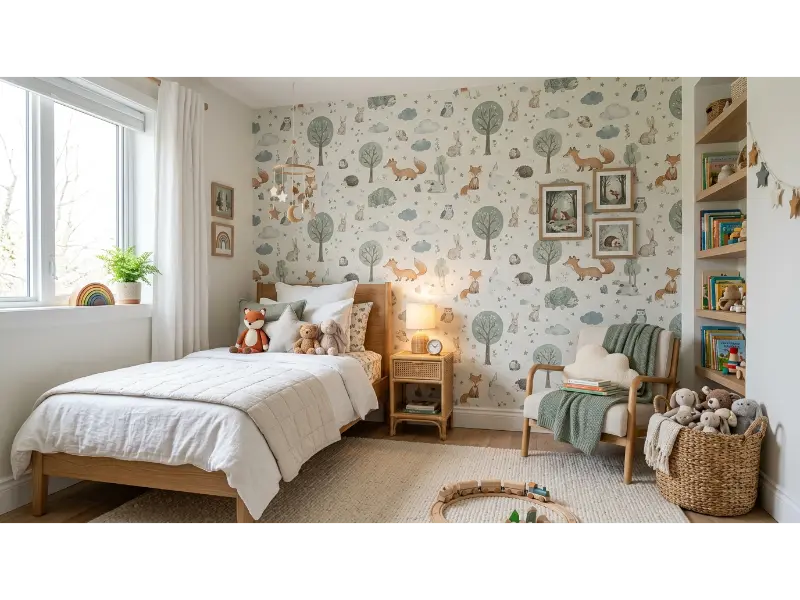
Wallpaper can bring imagination into a child’s bedroom without relying on excessive decorations. Woodland animals, stars, clouds, tiny houses, or illustrated botanical designs can create a storybook feeling while still looking stylish. Choose a pattern that can grow with the child instead of one tied to a very specific age.
Balance playful wallpaper with simple furniture and neutral textiles. A wooden bed, cream rug, soft storage baskets, and understated bedding can keep the room calm. If you want to change the style later, accessories can easily evolve while the wallpaper remains a charming backdrop.
Pro Tip: For children’s spaces, check the manufacturer’s cleaning and durability information before choosing a wallpaper finish.
10. Moody Home Library
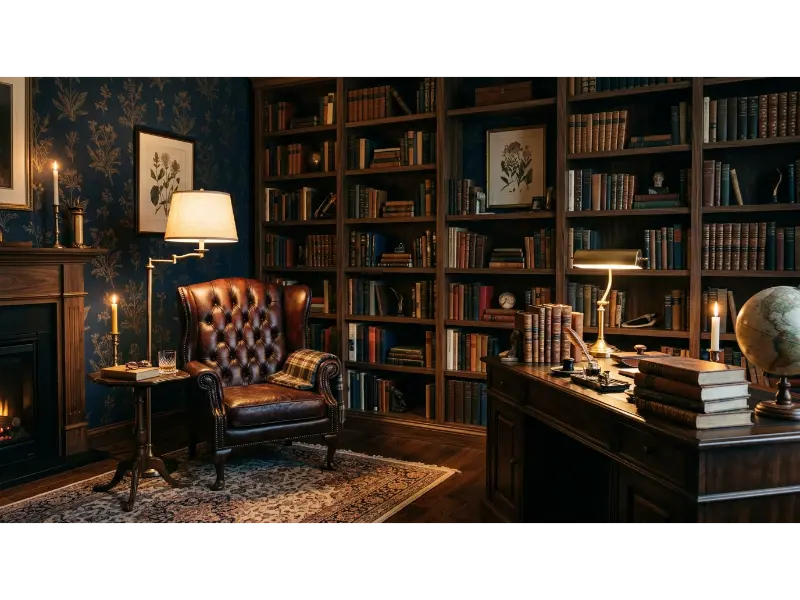
A moody wallpaper can make a home library feel intimate and luxurious. Deep navy, charcoal, olive, chocolate, or burgundy backgrounds work beautifully with dark wood and leather. Instead of making the room feel smaller, a rich color can give it the cozy atmosphere people often want from a reading space.
Keep the lighting warm and layered so the room remains inviting after sunset. A floor lamp beside a reading chair, small table lamp, and warm ceiling fixture can create several pockets of light. Add books, framed art, and vintage accessories gradually so the room feels collected rather than decorated all at once.
Pro Tip: If the room receives little daylight, sample the wallpaper under your actual lamps before buying the full amount.
11. Soft Striped Bedroom
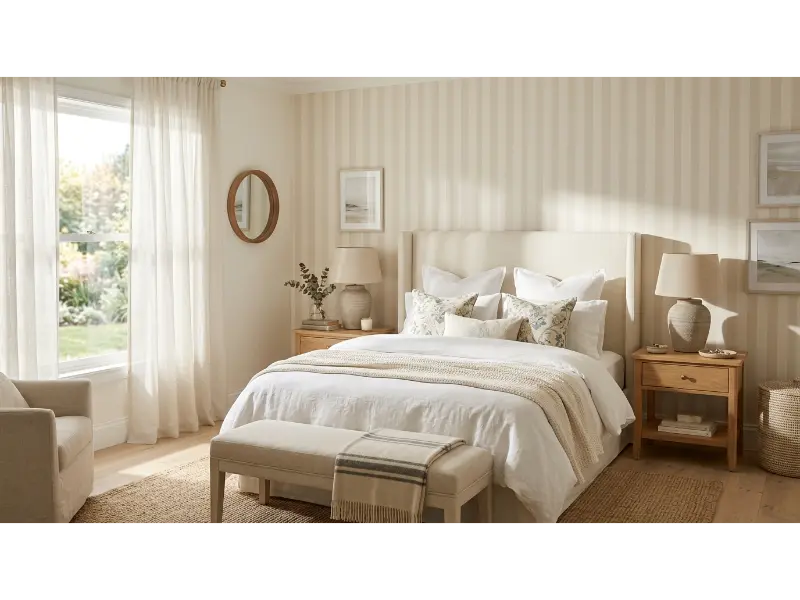
Vertical stripes can give a bedroom a graceful, tailored appearance. Soft beige, cream, dusty blue, or muted green stripes feel timeless and work with many furniture styles. A fine stripe can also draw the eye upward, which makes it useful when you want to emphasize ceiling height.
Keep the bedding simple and layer different textures rather than adding several competing prints. Linen sheets, a quilted coverlet, woven bench, and soft rug can make the striped walls feel relaxed. The overall effect is polished but comfortable, making this idea especially useful for guest bedrooms.
Pro Tip: Avoid very high contrast stripes if you want a calm bedroom. Low contrast creates a softer visual rhythm.
12. Large Scale Botanical Feature
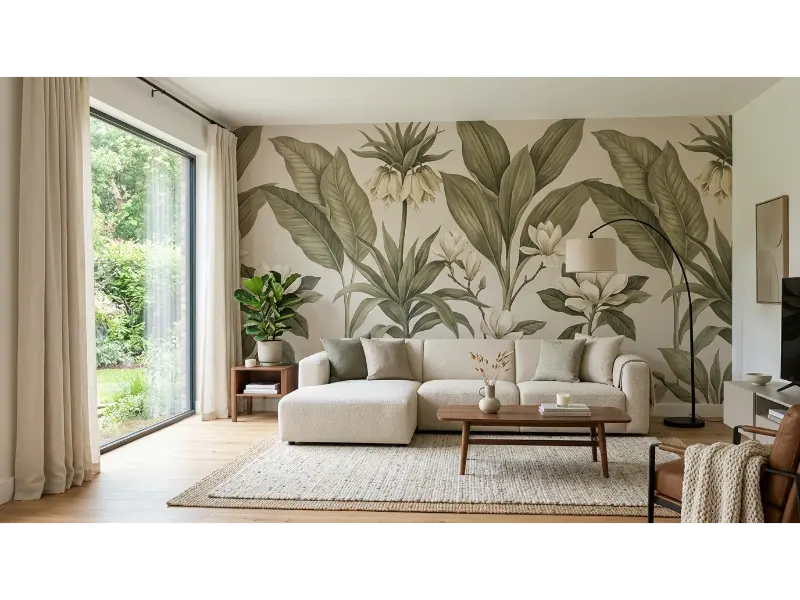
Large botanical patterns create stronger visual impact than delicate floral designs. They work particularly well when you want one wall to become the room’s main artwork. Muted greens, warm neutrals, terracotta, and dusty blue can keep the oversized pattern sophisticated and easier to coordinate.
Use larger furniture pieces in solid colors so they do not fight with the mural like pattern. The wallpaper should establish the palette, while the furniture repeats only a few of its colors. This creates a cohesive room without making every element look deliberately matched.
Pro Tip: Before installation, place a full wallpaper sample behind the main furniture. This helps you see whether important parts of the design will disappear.
13. Modern Black and White Pattern
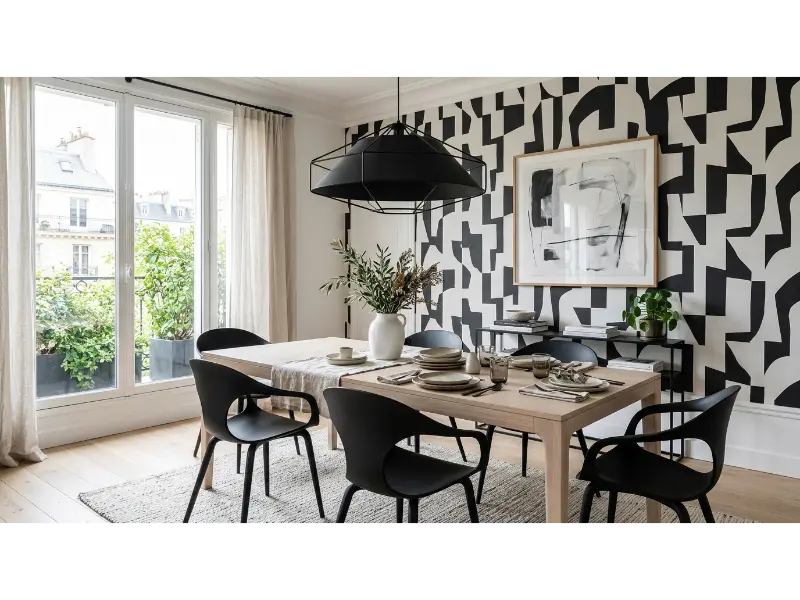
Black and white wallpaper gives a room immediate graphic character. Abstract lines, arches, curves, or artistic brush patterns can create a modern backdrop without introducing many colors. This works especially well in dining rooms, offices, entryways, and contemporary bedrooms where clean lines already dominate the furniture.
Because the palette is simple, you can add warmth through wood, brass, natural stone, or soft textiles. Avoid filling the room with additional black and white accessories because repetition can make the space feel overly staged. One strong wallpaper pattern is enough to establish the visual direction.
Pro Tip: Add one warm material, such as walnut or brass, to prevent a monochrome room from feeling too cold.
14. Scenic Landscape Mural
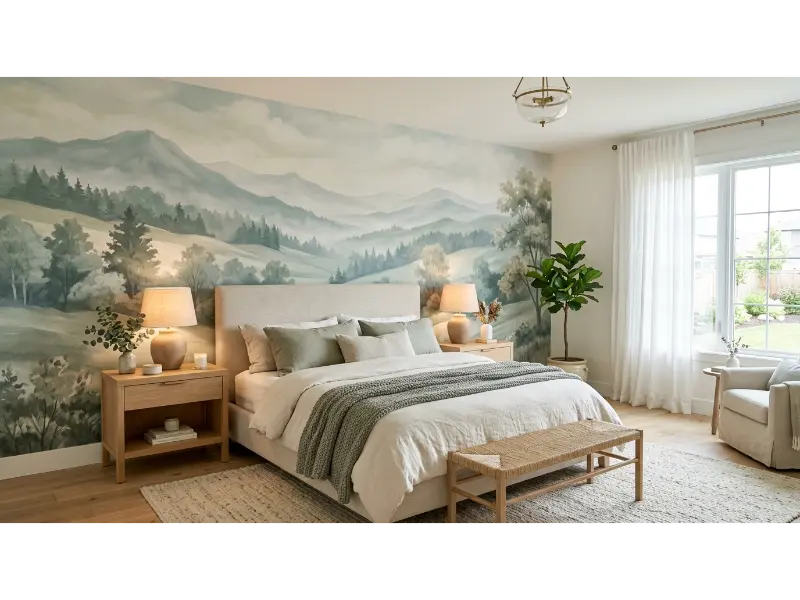
A scenic mural can turn an ordinary wall into a visual escape. Mountain landscapes, countryside scenes, distant forests, or hand painted garden views can give a room more depth and personality. Muted colors often work best because they create atmosphere without overpowering the rest of the interior.
Use the mural where it can be seen clearly, such as behind a bed, sofa, or dining table. Keep the furniture in front of it relatively simple so the artwork remains visible. Natural materials and soft fabrics can reinforce the peaceful feeling without turning the room into a literal themed space.
Pro Tip: Choose a mural with a perspective that suits your wall. A very detailed scene can look crowded if the wall is too narrow.
15. Wallpaper Framed Like Artwork
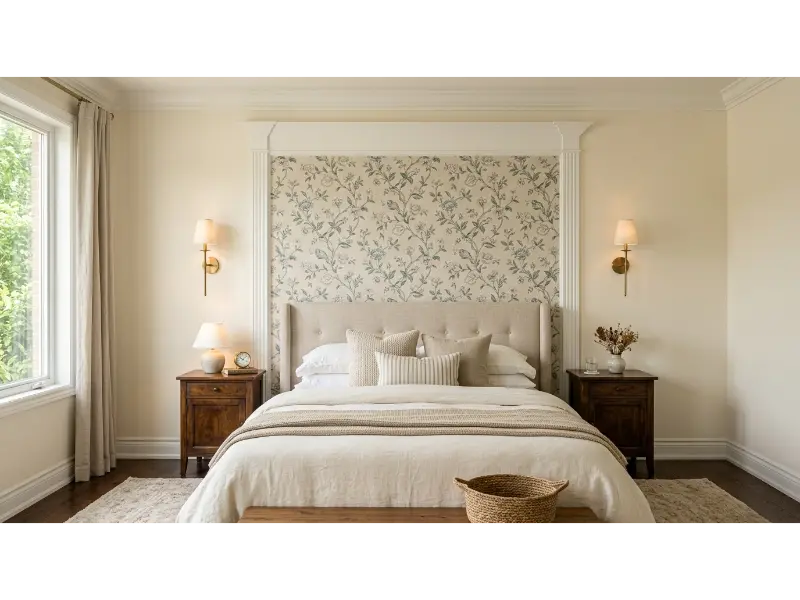
Wallpaper does not always need to cover the entire wall. Framing a patterned section with decorative molding can make it resemble oversized artwork while adding architectural detail. This technique works particularly well behind beds, dining benches, console tables, or sofas.
Choose a wallpaper with a strong central pattern that looks attractive inside the frame. Keep the surrounding paint color coordinated with one of the quieter tones in the design. The result feels intentional and custom, especially in homes that already feature panel molding or classic trim.
Pro Tip: Make the framed section wide enough to feel proportional to the furniture beneath it. A very narrow panel can look accidental.
16. Kitchen Breakfast Nook Wallpaper
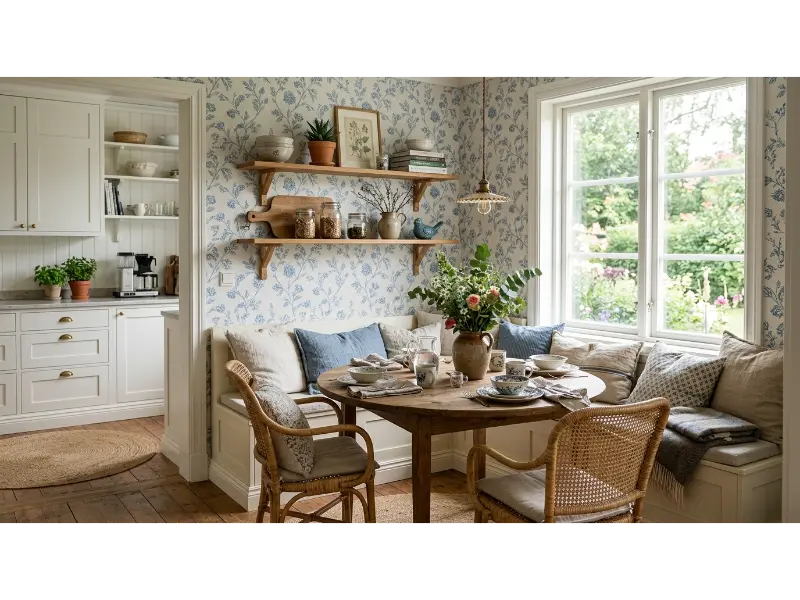
A breakfast nook can benefit from wallpaper because it is a naturally defined area within a larger room. A small floral, botanical, or soft geometric pattern can visually separate the nook from the kitchen while making everyday meals feel more special.
Choose a washable and appropriate finish based on the conditions of your kitchen. Keep the furniture practical and use cushions or ceramics to repeat one or two wallpaper colors. This creates a comfortable corner without requiring a major renovation or adding unnecessary furniture.
Pro Tip: Order a sample before installation and test how easily it wipes clean if the wallpaper will sit close to dining areas.
17. Earthy Japandi Inspired Walls
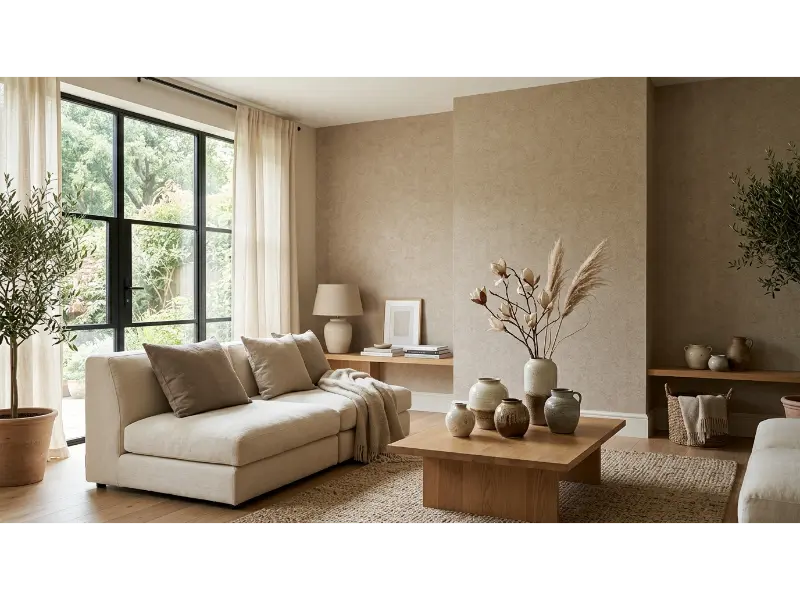
For a calm and natural home, consider wallpaper inspired by clay, plaster, stone, woven fibers, or subtle organic forms. Earthy colors such as sand, mushroom, warm beige, muted olive, and soft brown can create depth while keeping the room peaceful.
This style pairs naturally with low furniture, pale wood, handmade ceramics, linen, and woven textures. The goal is not to create a perfectly empty room but to make every piece feel purposeful. Subtle wallpaper can become the quiet layer that connects the materials throughout the space.
Pro Tip: Look for texture rather than a busy pattern when creating a Japandi inspired room. The wall should support the furniture rather than compete with it.
18. Dark Hallway Transformation
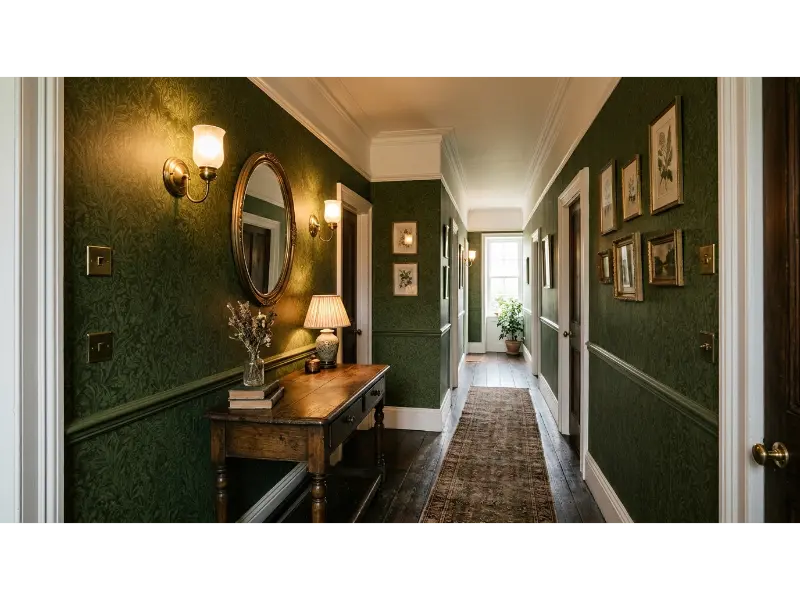
A dark hallway can become one of the most memorable areas of a home when you stop treating it as a transition space. Deep green, navy, charcoal, or warm brown wallpaper can give a narrow corridor personality and make the surrounding rooms feel more intentional.
Use lighting to keep the hallway welcoming. Wall sconces, a small table lamp, or warm ceiling fixtures can highlight the pattern after dark. If the hallway connects several rooms, choose colors that share at least one visual relationship with those spaces so the transition feels cohesive.
Pro Tip: Use warm white lighting rather than cool bulbs in a dark wallpapered hallway. It usually creates a more inviting atmosphere.
19. Elegant Bathroom Botanical Print
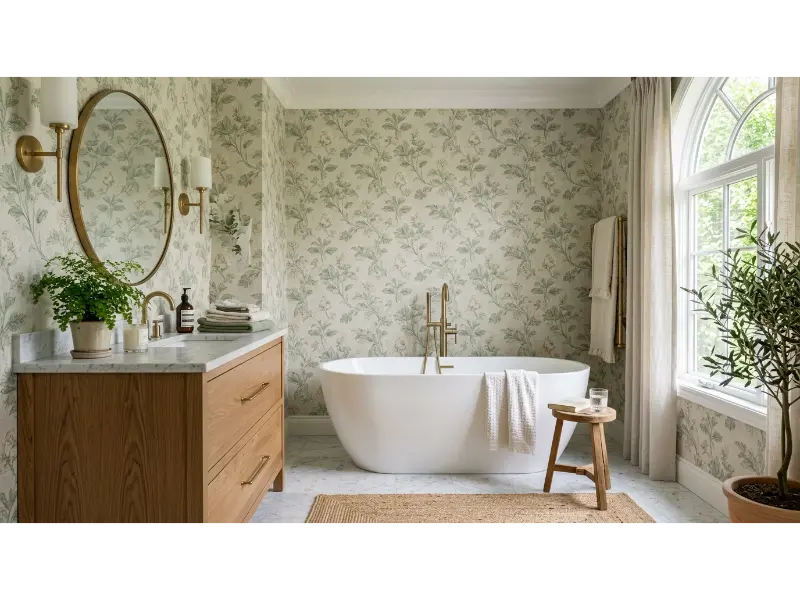
A bathroom can become much more interesting with a carefully selected botanical print. Soft green leaves, delicate flowers, or nature inspired illustrations can complement white tile, marble, wood, and brass fixtures. The contrast between practical surfaces and decorative wallpaper creates a layered look.
Before choosing a design, consider humidity, ventilation, and the manufacturer’s recommended application area. The wallpaper should suit the conditions of the room, not simply look attractive in a photograph. A well chosen pattern can make even a basic bathroom feel more distinctive and finished.
Pro Tip: Keep the plumbing fixtures and major surfaces simple when the wallpaper carries a detailed botanical pattern.
20. Maximalist Dining Corner
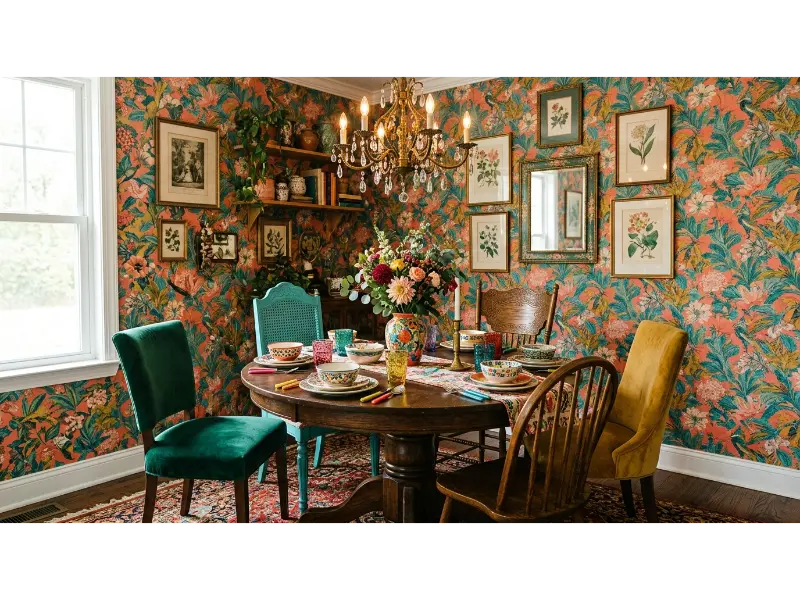
If you love expressive interiors, wallpaper can become the foundation for a maximalist dining room. Choose a design containing several colors, then repeat those colors through chairs, ceramics, artwork, or textiles. This creates a lively room that feels collected instead of chaotic.
Maximalism works best when there is still a visual relationship between the elements. You do not need every pattern to match, but they should share colors, scale, or mood. Vintage furniture can work particularly well because its character balances the boldness of a highly decorative wall.
Pro Tip: Pick three dominant colors from the wallpaper and repeat them throughout the room. This simple rule helps control a busy design.
21. Soft Pink Dressing Room
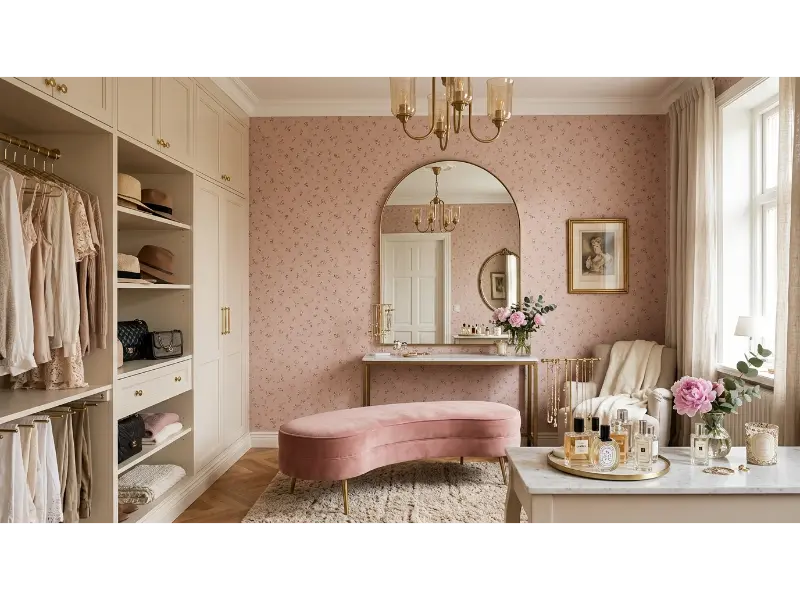
A dressing room is a fun place to use wallpaper because it can feel more personal than the main living areas. Dusty pink, blush, lavender, cream, or warm peach designs can create a soft backdrop for clothing and accessories without competing with every color in your wardrobe.
Small florals and delicate patterns work particularly well because they add detail without dominating the room. Combine the wallpaper with warm metals, cream cabinetry, and soft upholstery for an elegant finish. A large mirror can reflect the pattern and make the space feel more layered.
Pro Tip: If your wardrobe contains many bright colors, choose a quieter wallpaper so clothing remains the main focus.
22. Tiny Home Office Closet Conversion
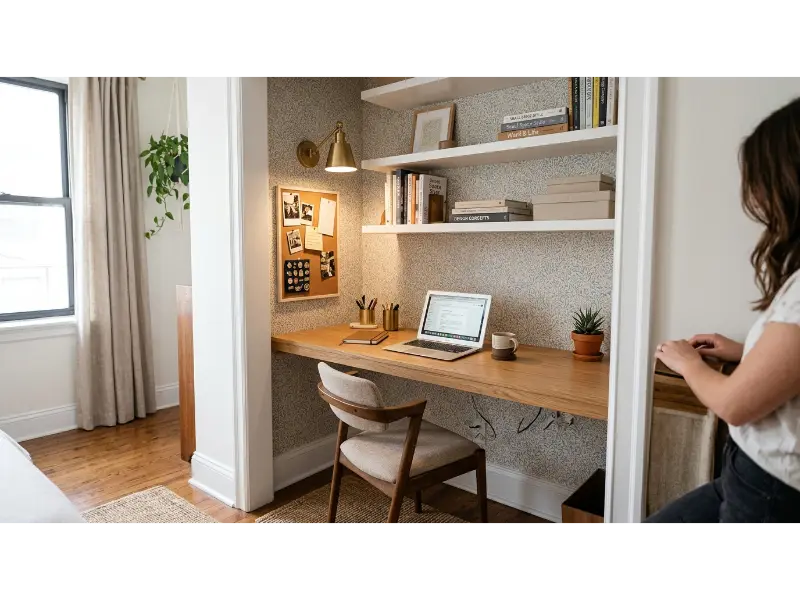
Unused corners and compact closets can become surprisingly attractive workspaces with wallpaper. Because the area is small, you can choose a pattern with more personality than you might use across a large room. A blue botanical, tiny geometric, or vintage print can make the workspace feel intentional.
Keep the furniture compact and use vertical storage whenever possible. A floating desk, slim chair, wall mounted light, and a few shelves can provide everything you need without making the area feel crowded. The wallpaper gives the small workspace a finished backdrop even when the furniture remains simple.
Pro Tip: Small spaces often benefit from committing to one strong visual idea rather than adding many separate decorative elements.
23. Layered Wallpaper With Painted Trim
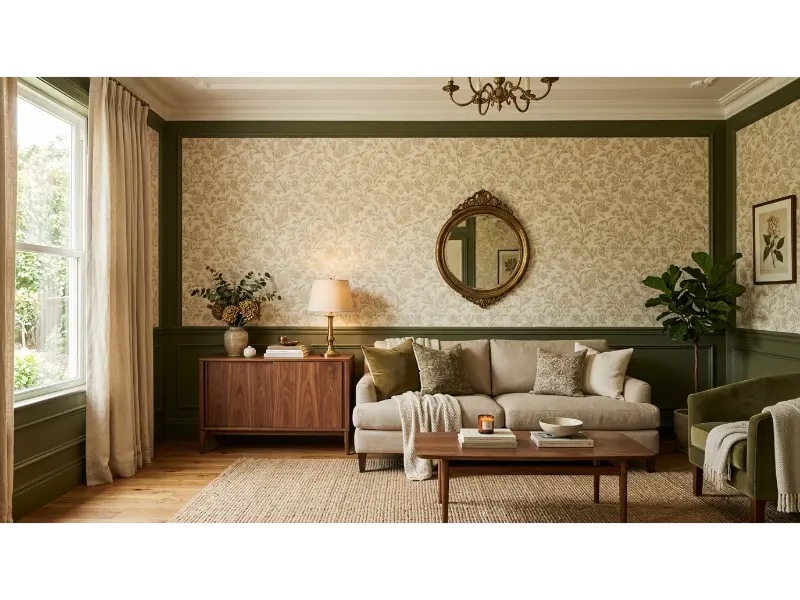
One of the most polished ways to use wallpaper is to combine it with painted trim or paneling. Instead of covering every surface, use wallpaper between architectural details while allowing the molding to create a strong frame. This approach can make an ordinary wall look more custom and visually layered.
Choose a paint color directly from the wallpaper palette so the two finishes feel connected. Deep olive, warm cream, dusty blue, terracotta, or charcoal can work beautifully depending on the pattern. This technique suits traditional, transitional, cottage, and modern classic homes because it adds character without relying on excessive decoration.
Pro Tip: Paint a sample board with the trim color and place the wallpaper beside it before installation. Small differences in undertone can have a surprisingly large effect.
How to Choose the Right Wallpaper for Your Room
The best wallpaper starts with the room rather than the pattern. Look at natural light, ceiling height, furniture size, existing flooring, and the colors already present. In smaller rooms, designers increasingly use wallpaper intentionally rather than automatically avoiding it. Fine scale patterns can create a refined backdrop, while a stronger design can create a memorable jewel box effect when the entire small space embraces it.
Pattern scale also matters. Small repeating designs can read almost like texture from a distance, while large patterns create a stronger focal point. Think about how much wall remains visible after furniture, windows, doors, shelving, and artwork are added. A beautiful pattern can lose its impact if most of its important details disappear behind furniture.
Color should support the mood you want. Soft green and blue can create a restful feeling, warm beige can add subtle depth, and darker colors can produce an intimate atmosphere. If you already own colorful furniture, choose a wallpaper that repeats one or two existing colors rather than introducing an entirely new palette.
Finally, always order samples. Place them against the actual wall and view them during morning, afternoon, and evening light. This simple step can prevent expensive mistakes because wallpaper colors and patterns often look different on a screen, in a showroom, and inside your home.
Common Wallpaper Mistakes to Avoid
One common mistake is choosing a wallpaper simply because it looks beautiful in a photograph. A design can look perfect in a large bright room online but feel completely different in a small room with limited daylight. Always consider the proportions and lighting of your own space before making the final decision.
Another mistake is using too many competing patterns. Wallpaper already adds visual information, so furniture, rugs, curtains, and artwork should support it rather than fight for attention. This does not mean everything needs to be plain. Instead, mix patterns at different scales and repeat a few colors to create balance.
Do not ignore the practical side either. Bathrooms, kitchens, mudrooms, and other areas may require finishes suited to moisture, cleaning, or heavy use. Check the product specifications and installation instructions before purchasing. A beautiful design is only successful when it also performs well in the room where you install it.
Frequently Asked Questions
Is wallpaper still popular for home decor?
Yes. Wallpaper remains a major interior design feature, with 2026 design coverage highlighting bold colors, sophisticated patterns, textured finishes, and unexpected applications such as ceilings. Designers are also using wallpaper more intentionally to give rooms personality rather than treating it as a purely traditional wall covering.
Does wallpaper make a small room look smaller?
Not necessarily. The result depends on pattern scale, color, lighting, and how consistently you use the design. Designers are increasingly embracing wallpaper in small rooms rather than automatically keeping them plain. A thoughtful pattern can make a compact space feel more distinctive and intentional.
Should I wallpaper all four walls?
You can, especially in bedrooms, powder rooms, hallways, and smaller spaces. Full coverage can create a more cohesive appearance when the pattern suits the room. For larger spaces, you may prefer one feature wall or framed sections if you want the wallpaper to act as a focal point.
What wallpaper works best for a bedroom?
Botanical prints, soft florals, subtle stripes, delicate geometrics, and textured neutrals all work well. Choose colors that support the mood you want to create and consider how the wallpaper will interact with your bedding, flooring, curtains, and natural light.
Can wallpaper be used in a bathroom?
Yes, but you should choose a product suitable for the bathroom’s conditions and follow the manufacturer’s installation recommendations. Good ventilation also matters. In bathrooms, wallpaper can create a striking contrast with tile, stone, wood, brass, and other hard finishes.
Is bold wallpaper a good idea?
Bold wallpaper can be an excellent choice when the pattern fits the room’s proportions and the surrounding decor remains controlled. Large florals, scenic murals, dramatic botanicals, and expressive geometric designs can create a memorable focal point without requiring many additional decorations.
How do I make wallpaper look expensive?
Choose a pattern that works with the architecture and existing materials, install it carefully, and coordinate the surrounding trim and furniture. Good lighting, quality hardware, natural materials, and thoughtful spacing can also make wallpaper feel much more sophisticated.
What is the best wallpaper for a narrow hallway?
Small botanical patterns, subtle geometrics, vertical stripes, and darker sophisticated prints can all work. Rather than automatically choosing a very light design, consider the mood you want. A narrow hallway can become a dramatic and memorable transition space when the wallpaper is intentional.
Conclusion
The right wallpaper can do much more than decorate a blank wall. It can create a peaceful bedroom, define a breakfast nook, bring personality to an entryway, transform a powder room, or turn an overlooked hallway into one of the most interesting parts of your home. The most successful designs balance pattern, scale, color, lighting, and the furniture already in the room.
Use these Wallpaper Decor Ideas as inspiration rather than strict rules. Start with the feeling you want your room to create, then choose a pattern that supports that mood. Whether you prefer soft botanicals, bold murals, subtle textures, vintage florals, dramatic colors, or modern geometry, thoughtful wallpaper can make an ordinary room feel personal, layered, and beautifully finished.