

23 Lavender Bedroom Ideas to Create a Calm, Cozy Retreat
A bedroom should feel like a place where your mind can finally slow down, and the right color can make that feeling much easier to create. Lavender brings a soft blend of purple, blue, and gray that can feel peaceful without making a room look dull. It also works beautifully with warm neutrals, natural wood, blush pink, sage green, cream, and deeper plum accents. Designers continue to use adaptable, muted colors in bedrooms because they can bridge modern and traditional styles while changing naturally with daylight.
If you want a bedroom that feels cozy, elegant, dreamy, or quietly luxurious, these Lavender Bedroom Ideas give you plenty of ways to work with the color without creating a room that feels overly purple. You will find ideas for walls, bedding, furniture, lighting, small bedrooms, romantic spaces, modern interiors, and budget friendly updates. Each concept also includes a practical image prompt so you can visualize the finished room before decorating.
23 Lavender Bedroom Ideas Worth Trying
1. Soft Lavender Walls With Cream Bedding
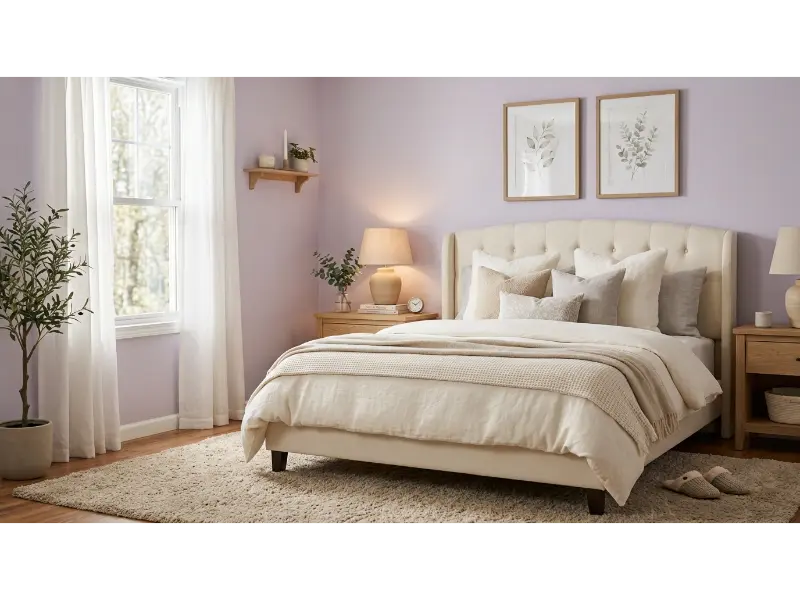
Lavender Bedroom Ideas often work best when the color feels soft rather than overpowering. Paint the walls in a dusty lavender with gentle gray undertones, then balance them with cream bedding and warm ivory textiles. This combination keeps the room bright while giving it more personality than an all white bedroom. Add pale oak furniture to introduce warmth and prevent the cooler purple tones from making the space feel too formal.
Layer the bed with a cream duvet, knitted throw, and several pillows in different textures. Keep the artwork simple and choose curtains that allow daylight to filter through gently. Soft lavender can reflect natural light beautifully, but its appearance changes throughout the day, so test a sample before painting the entire room.
Pro Tip: Test your chosen lavender paint beside your furniture and observe it in morning, afternoon, and evening light before committing.
2. Lavender and Warm Beige Retreat
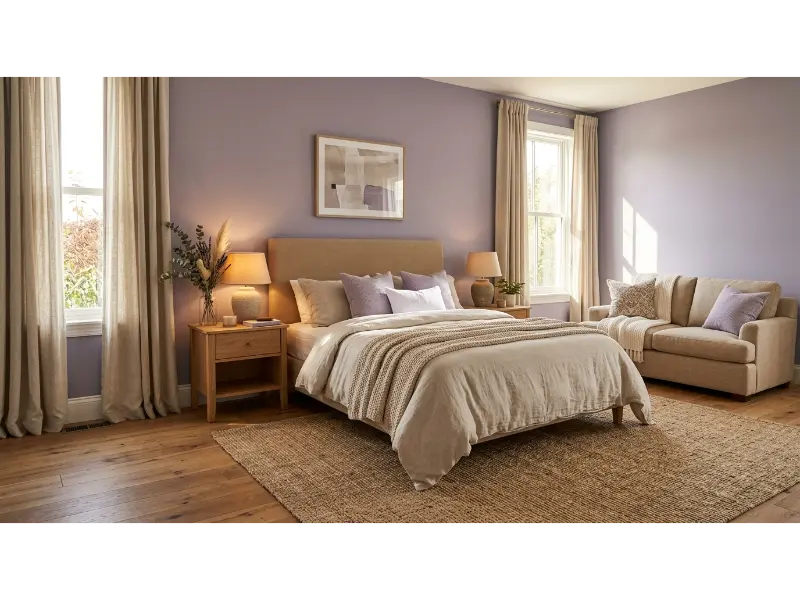
Pairing lavender with warm beige creates a bedroom that feels grounded, mature, and comfortable. Instead of using several strong purple shades, let muted lavender provide the color while beige handles the larger furniture and textiles. A beige upholstered headboard can soften the wall color, while an oatmeal duvet adds another warm layer without competing for attention.
Natural materials make this palette even more inviting. Try woven baskets, linen curtains, oak furniture, and a textured rug to create visual depth. Lavender naturally works with beige because the warm neutral balances its cooler character. The result feels polished but relaxed, making this approach especially useful for a primary bedroom or guest room.
Pro Tip: Choose beige with warm undertones rather than a blue based gray beige to keep the room welcoming.
Read More: 20 French Country Home Ideas That Feel Luxurious
3. Lavender Accent Wall Behind the Bed
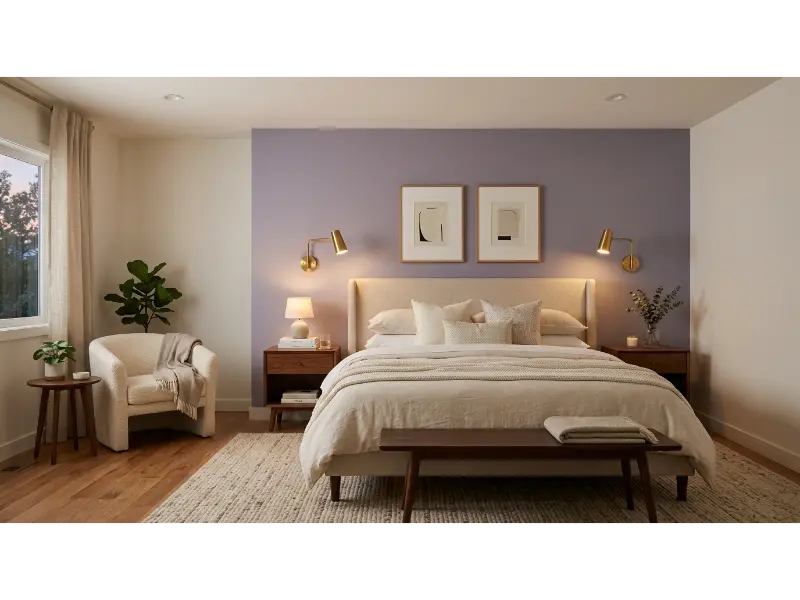
An accent wall gives you the character of lavender without requiring the entire room to carry the color. Paint the wall directly behind the headboard and keep the remaining walls warm white or soft cream. This creates a natural focal point while making the bed feel more intentional. A muted lavender shade works especially well when the room already contains neutral furniture.
Use the accent wall as a backdrop for layered textures. An upholstered headboard, linen bedding, brass lighting, and warm wood furniture can make the space feel collected rather than overly coordinated. The idea also works well in smaller rooms because the color remains concentrated in one visual zone instead of surrounding the entire space. Accent walls are a practical way to introduce color while maintaining balance.
Pro Tip: Keep the largest furniture pieces neutral so the lavender wall remains the main focal point.
4. Lavender and Sage Green Bedroom
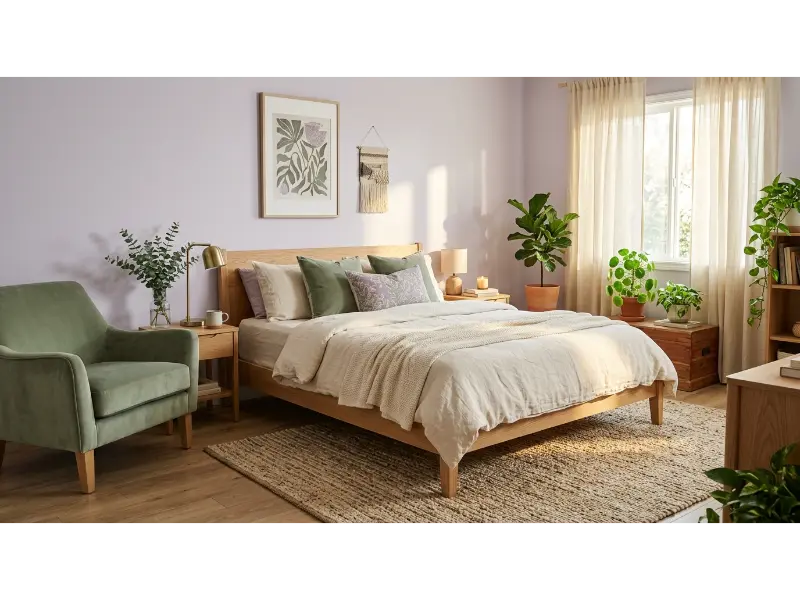
For a fresh lavender and sage green bedroom, combine pale purple with muted botanical green instead of a brighter emerald. The two colors create a gentle nature inspired palette that feels colorful without becoming loud. Keep the walls soft lavender and bring sage through pillows, a bench, curtains, artwork, or a small accent chair.
Natural materials strengthen the connection to the outdoors. Add wood furniture, woven baskets, cotton bedding, and a few leafy plants around the room. Keep the greens slightly dusty so they complement rather than overpower the lavender. This combination works particularly well for people who want a peaceful bedroom with more personality than a traditional neutral palette.
Pro Tip: Repeat sage green in at least two or three small areas so the color feels intentional rather than random.
5. Dreamy Lavender Canopy Bed
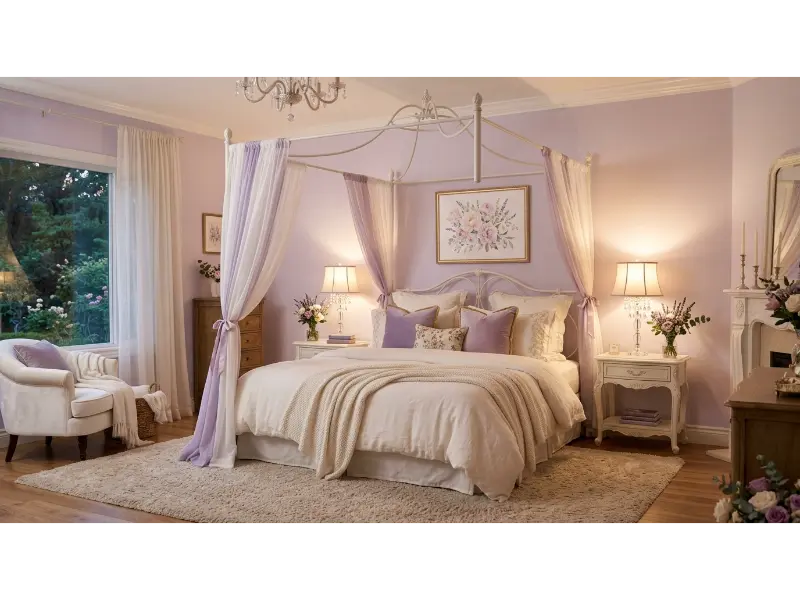
A canopy bed can turn a simple room into a dreamy retreat without requiring major structural changes. Choose a white or natural wood canopy frame and surround it with lightweight ivory curtains. Let lavender appear on the walls and bedding while the canopy remains visually light. The layered fabric creates softness and makes the sleeping area feel more private.
Keep the rest of the furniture understated so the bed remains the star. A small lavender velvet cushion, warm bedside lamps, and a textured rug can add luxury without making the room look theatrical. This approach suits romantic interiors, classic bedrooms, and anyone who wants a cozy atmosphere with a subtle boutique hotel feeling.
Pro Tip: Use lightweight sheer fabric rather than heavy curtains to preserve natural light and keep the room airy.
Read More: 23 Calming Bedroom Design Ideas for Better Sleep
6. Modern Lavender and White Bedroom
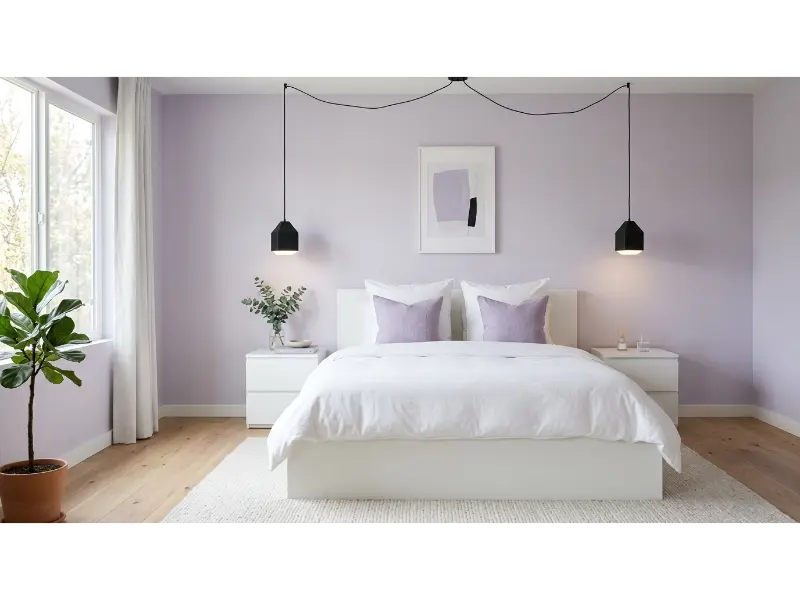
White gives lavender a crisp, modern appearance. Start with pale lavender walls and use a streamlined white bed with simple bedding. Add only a few lavender accessories so the room maintains a clean visual rhythm. Black or brushed metal lighting can provide contrast and stop the palette from looking too soft.
The key to making this combination feel sophisticated is texture. Add a boucle bench, cotton bedding, a softly patterned rug, or a sculptural ceramic lamp. Avoid filling every surface with decorative objects. A modern room benefits from breathing space, and the lavender color becomes more noticeable when the surrounding design stays simple.
Pro Tip: Introduce one darker accent, such as charcoal or black, to give the pale palette definition.
7. Cozy Lavender Cottage Bedroom
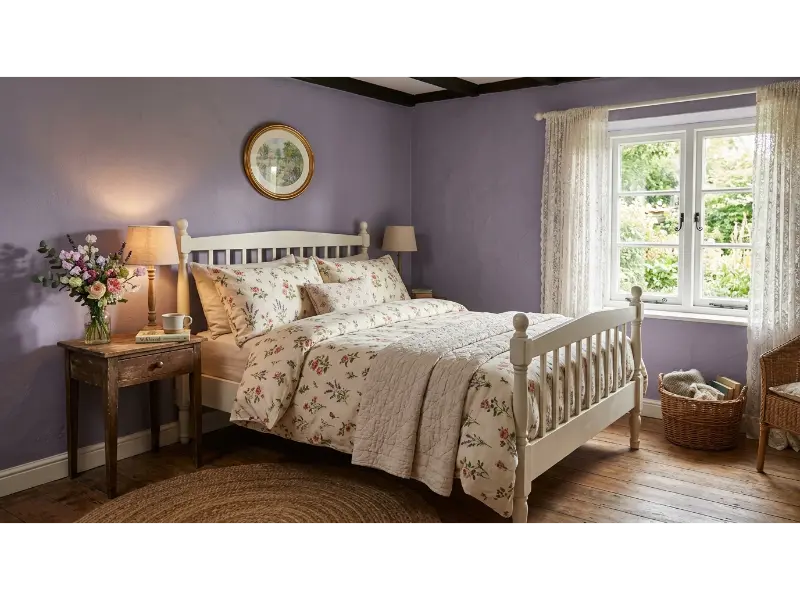
A cottage inspired bedroom can make lavender feel warm, nostalgic, and welcoming. Choose a dusty lavender wall color and pair it with an antique white or painted wooden bed. Floral bedding can introduce tiny touches of mauve, cream, sage, and green without making the room feel overly themed.
Vintage furniture gives the space character that new matching sets often lack. Try a small wooden nightstand, an old framed mirror, woven storage, and a ceramic table lamp. Keep the arrangement slightly relaxed instead of perfectly symmetrical. The goal is to create a bedroom that feels collected over time, comfortable enough for everyday living, and visually rich without becoming cluttered.
Pro Tip: Mix one or two genuine vintage pieces with newer basics to create an authentic cottage look.
8. Lavender Bedroom With Dark Wood Furniture
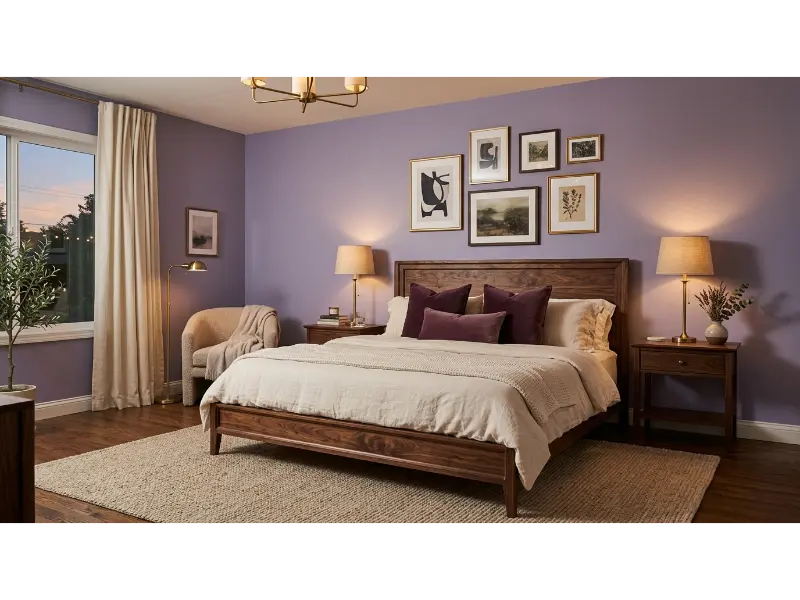
Dark wood creates beautiful contrast against lavender and can make the color feel more sophisticated. Choose walnut, espresso, or another medium to deep brown finish for the bed and nightstands. Then soften the contrast with cream bedding and a beige rug. The wood grounds the purple tones while giving the room a richer, more mature appearance.
Keep decorative accents restrained. Brass lamps, a plum cushion, or a small botanical print can connect the different colors. This combination is particularly effective when you want a cozy bedroom that feels elegant rather than youthful. It also works well in rooms with hardwood floors because the furniture can echo the warmth already present underfoot.
Pro Tip: Use cream textiles between the lavender walls and dark wood so the contrast feels balanced rather than heavy.
9. Lavender and Blush Pink Bedroom
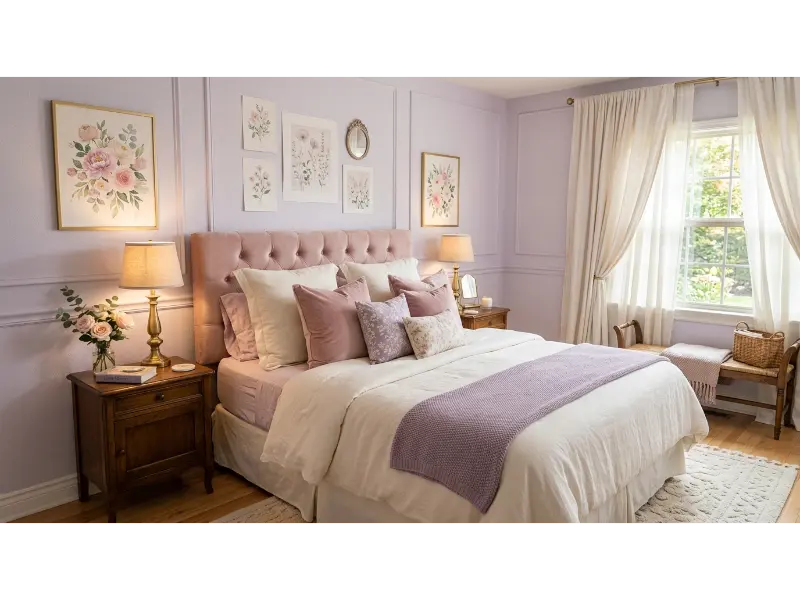
Lavender and blush pink create a soft romantic palette that feels feminine without looking childish. Use lavender as the main wall color and bring blush through the headboard, cushions, artwork, or a small throw. Keep the pink muted and dusty rather than bright, which allows the room to maintain a sophisticated appearance.
Balance both colors with cream and warm metallic accents. Linen, velvet, boucle, and cotton can provide enough texture to make the simple palette feel layered. A small floral arrangement can reinforce the romantic mood, but you do not need floral patterns everywhere. One carefully chosen pattern can create interest while keeping the room visually calm.
Pro Tip: Use blush pink as an accent rather than an equal wall color if you want the bedroom to feel more grown up.
10. Small Lavender Bedroom With Smart Storage
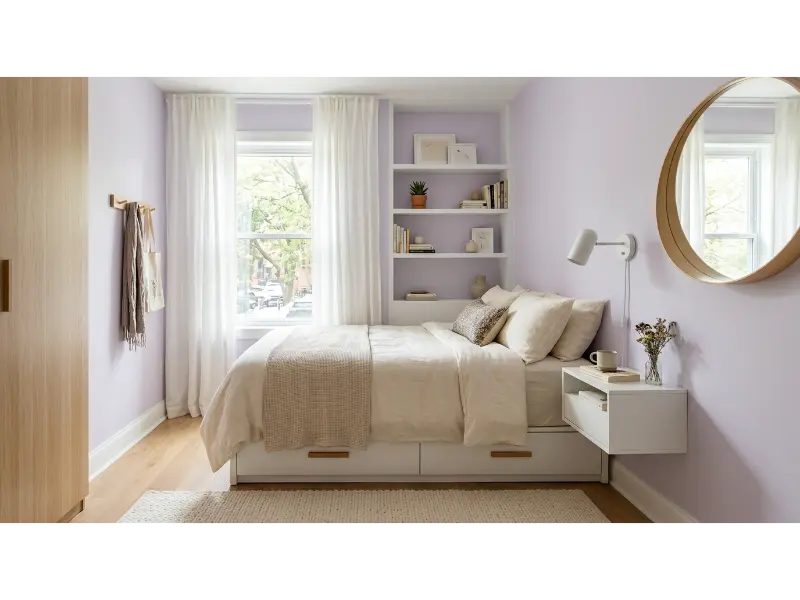
Small bedrooms can benefit from pale lavender because the color adds personality while keeping the walls visually light. Choose a soft shade with a gray or blue undertone and combine it with white, cream, or pale wood furniture. A storage bed can hide extra bedding, while floating shelves keep the floor clear and make the room feel less crowded.
Use vertical space intelligently. Wall mounted lamps, tall shelving, and a large mirror can improve both function and visual openness. Avoid bulky nightstands and oversized decorative pieces. The strongest small room designs focus on a few useful elements and let the wall color provide much of the personality.
Pro Tip: Choose furniture that performs two jobs, such as a storage bed or a bedside table with drawers.
11. Lavender Color Drenching
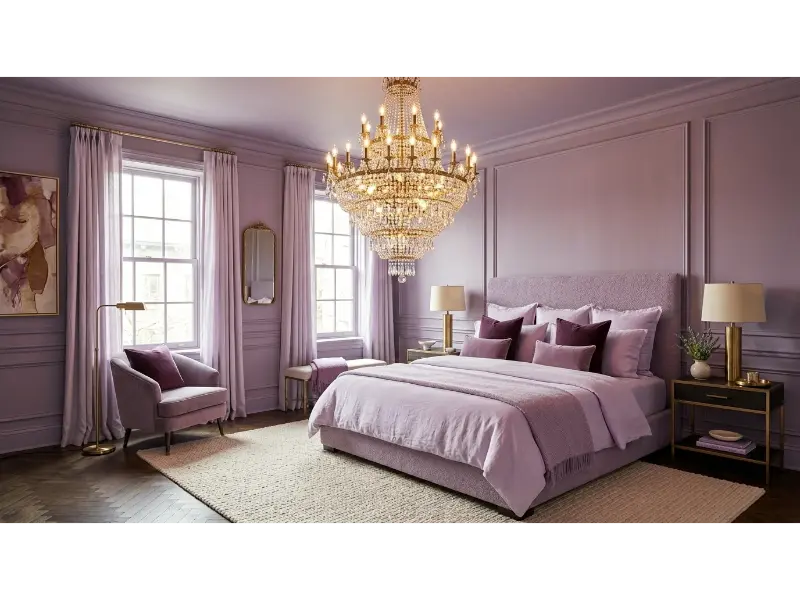
For a bolder look, carry lavender across the walls, trim, and even the ceiling. This color drenching approach creates a cocooning effect because the eye moves smoothly around the room without a strong visual break. Use several related shades rather than forcing every element to match exactly.
Introduce contrast through warm brass, cream, natural wood, or deep plum. These accents prevent the room from becoming visually flat. Current interior trends favor richer, layered spaces over sterile single tone rooms, so mixing materials and eras can make a monochromatic scheme feel more personal and sophisticated.
Pro Tip: Keep the ceiling a slightly lighter lavender if you want the room to feel tall and airy.
12. Lavender Bedroom With Botanical Wallpaper
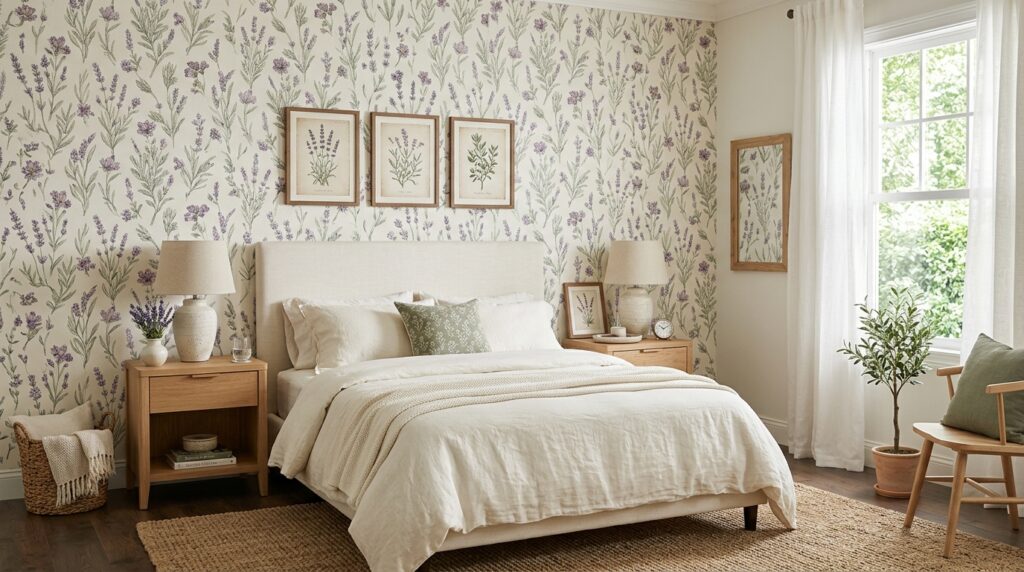
Botanical wallpaper can bring several colors into a lavender bedroom without requiring dozens of separate accessories. Choose a design with lavender, cream, sage, and muted green so the pattern naturally connects the room. Place it behind the bed for a strong focal wall, or use it throughout the room if the pattern remains delicate.
Keep furniture simple when the wallpaper contains plenty of detail. A cream headboard, natural wood nightstands, and plain linen bedding provide enough visual rest. You can then repeat one or two wallpaper colors in cushions or artwork. This approach feels especially charming in cottage, vintage, romantic, and transitional bedrooms.
Pro Tip: Take a wallpaper sample home and view it beside your bedding because printed lavender can look different under artificial light.
13. Elegant Lavender Bedroom With Brass Accents
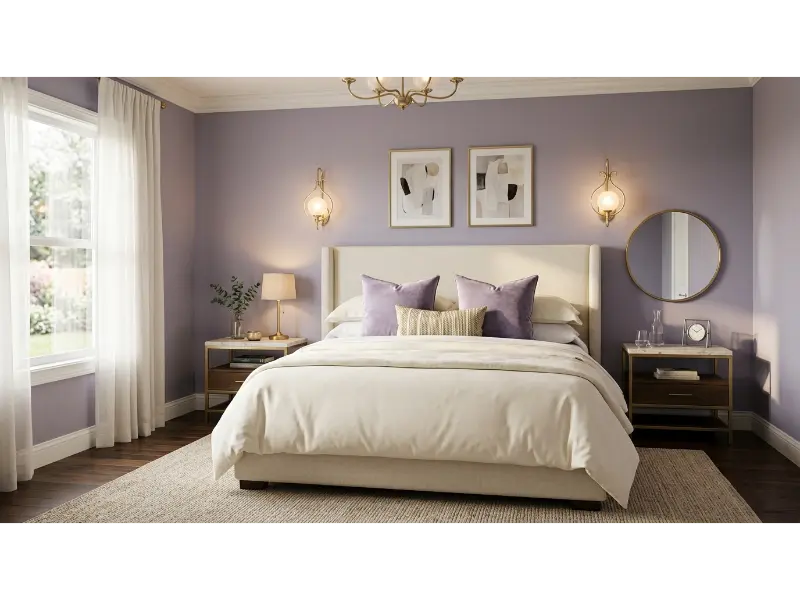
Brass accents can give lavender a more polished and luxurious character. Start with muted lavender walls and a cream upholstered bed, then add brass through sconces, mirror frames, drawer pulls, or small decorative objects. Warm metal works especially well because it counterbalances the cooler quality found in many lavender shades.
Do not add brass to every surface. A few repeated details create a more refined effect than a room filled with metallic accessories. Layer in velvet, linen, and soft wool to create tactile contrast. A neutral rug can connect everything while keeping the room comfortable and practical for everyday use.
Pro Tip: Choose one brass finish and repeat it throughout the room for a cohesive designer look.
14. Moody Lavender and Plum Bedroom
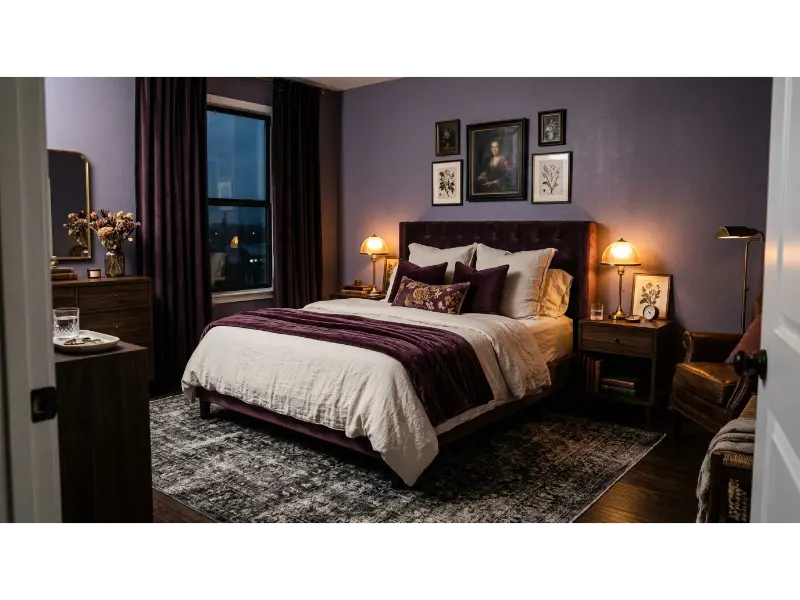
Lavender does not always need to look pale and airy. Deeper lavender paired with plum can create a cozy, dramatic bedroom that feels especially beautiful at night. Use the deeper color on the walls or headboard, then soften it with cream bedding and warm lighting.
Dark wood and charcoal accents can make the palette feel grounded, while velvet introduces a luxurious texture. The trick is to keep enough warm neutral space between the darker colors so the room does not feel closed in. This style works particularly well in bedrooms with limited daylight where a moody atmosphere feels intentional.
Pro Tip: Use warm white bulbs instead of cool white bulbs to make deeper purple tones feel richer and more comfortable.
15. Lavender and Natural Wood Bedroom
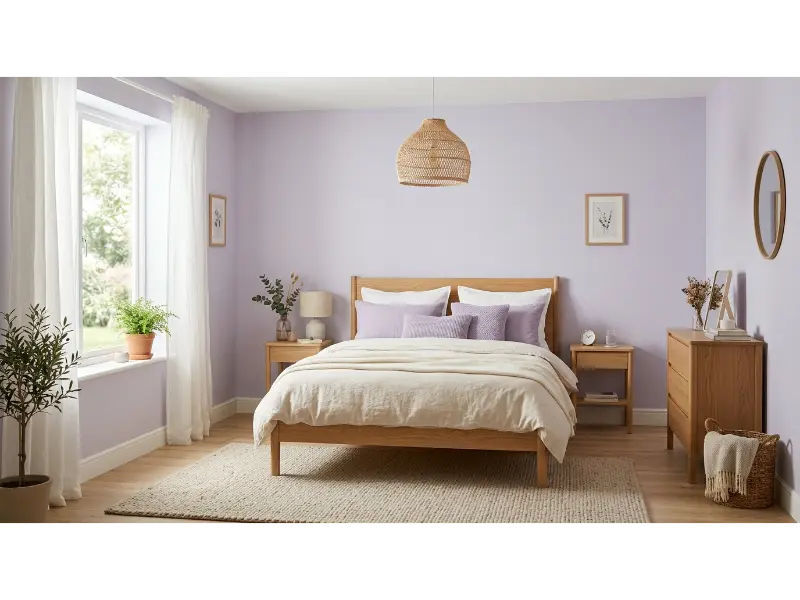
Natural wood can make lavender feel surprisingly earthy. Choose pale oak, ash, or honey toned wood for the bed and nightstands, then use soft lavender on the walls or textiles. The combination creates a relaxed Scandinavian inspired atmosphere that feels warm without needing many decorations.
Add woven lighting, linen bedding, ceramic pieces, and a small plant to strengthen the natural look. Keep the furniture lines simple and allow the wood grain to remain visible. The result feels fresh and calm, while the lavender gives the otherwise neutral room a gentle point of color.
Pro Tip: Warm wood tones usually complement lavender better than extremely pale gray wood when you want a cozy result.
16. Lavender Bedding in a Neutral Bedroom
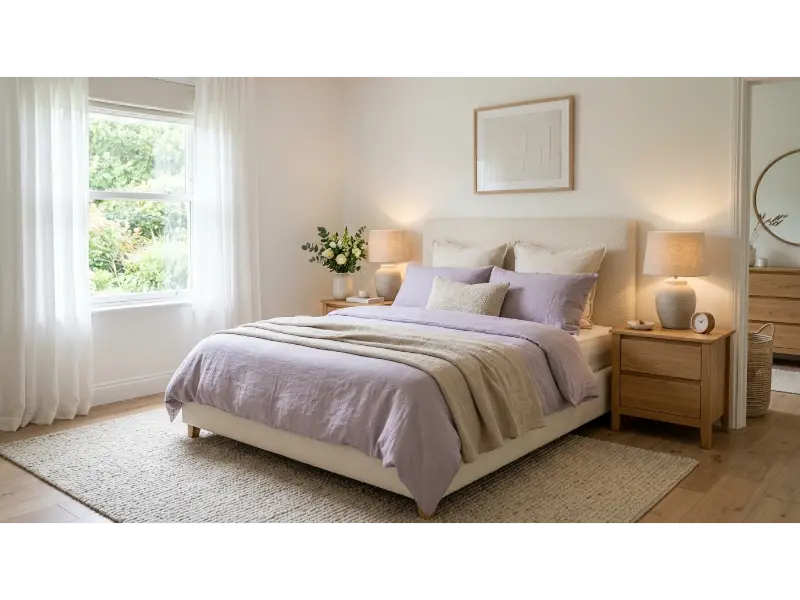
You do not need lavender paint to enjoy the color. Keep the walls warm white or beige and make the bedding the main lavender feature. A lavender duvet cover, two accent pillows, and a folded throw can transform a neutral bedroom without a permanent renovation.
This approach gives you flexibility throughout the year. You can replace the lavender bedding with sage, blue, terracotta, or another color whenever your style changes. Keep the larger furniture neutral so the room remains versatile. It is one of the easiest ways to test whether lavender suits your space before painting the walls.
Pro Tip: Start with bedding before investing in paint if you are unsure about living with lavender every day.
17. Romantic Lavender Bedroom With Soft Lighting
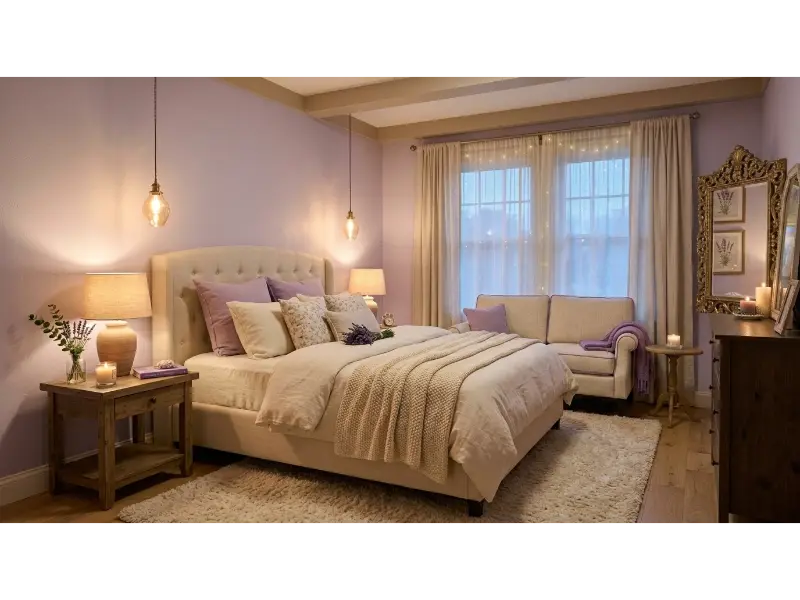
Lighting can completely change how a lavender bedroom feels after sunset. Instead of relying on one overhead fixture, combine bedside lamps, wall sconces, a pendant, and soft accent lighting. Layered lighting creates different levels of brightness and allows the bedroom to shift from practical morning space to relaxing evening retreat.
Keep the light warm and diffuse. Linen shades, frosted glass, and fabric lampshades soften the glow and reduce harsh shadows. Lavender walls can look cooler under blue toned bulbs, so warm white lighting often creates a more welcoming effect. Place reading lights where you actually need them rather than treating every fixture as decoration.
Pro Tip: Aim for ambient, task, and accent lighting instead of depending on one bright ceiling fixture.
18. Lavender Bedroom With Vintage Details
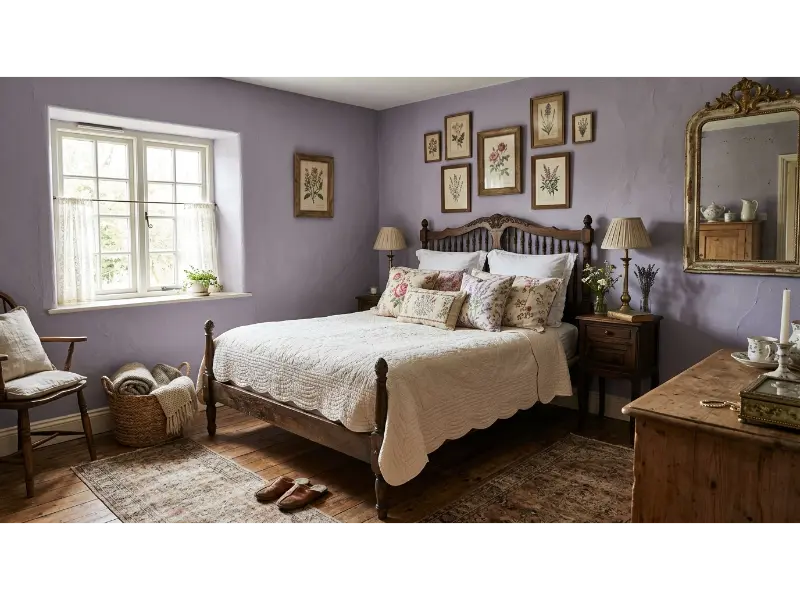
Vintage details can give lavender a timeless quality. Choose an antique style bed, an ornate mirror, traditional artwork, or an old wooden nightstand and combine these pieces with modern bedding. Dusty lavender works especially well because it has enough gray to complement aged finishes without looking too bright.
Keep the room from becoming visually dated by mixing old and new. A simple linen duvet can sit beautifully on an ornate bed, while a modern lamp can work beside an antique dresser. This collected approach creates personality and prevents the bedroom from looking like a themed furniture showroom.
Pro Tip: Mix different furniture eras instead of buying every piece from the same vintage style.
19. Lavender and Navy Contrast Bedroom
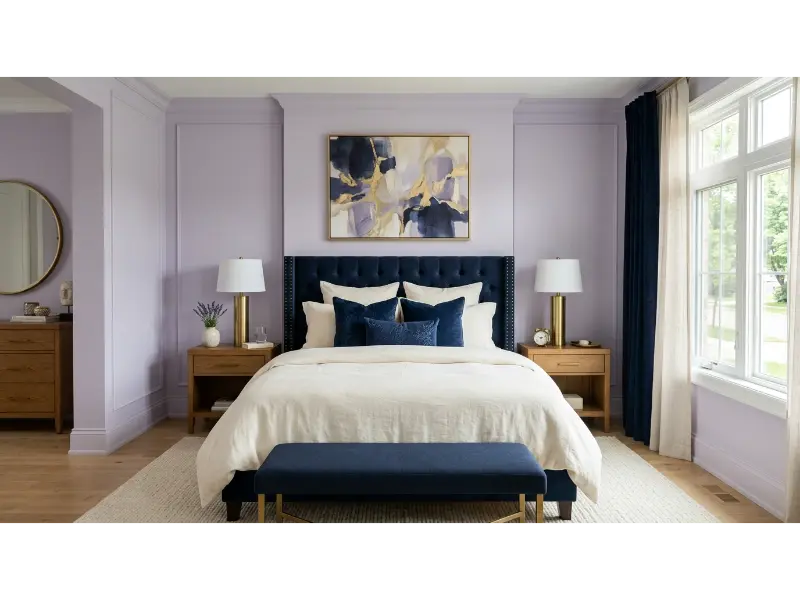
For a stronger color story, combine lavender with navy blue. The deep blue gives the pale purple a dramatic anchor while cream and warm wood prevent the palette from becoming too dark. Use navy on the headboard, curtains, bench, or a small selection of pillows rather than covering every surface.
This combination works especially well in modern classic bedrooms because it balances softness with structure. Add brass or warm bronze lighting for a subtle glow. Keep the lavender relatively muted so the navy remains the contrast rather than creating a competition between two strong colors.
Pro Tip: Let navy occupy a smaller visual area than lavender when you want the bedroom to feel bright and relaxing.
20. Cozy Lavender Bedroom With Layered Textures
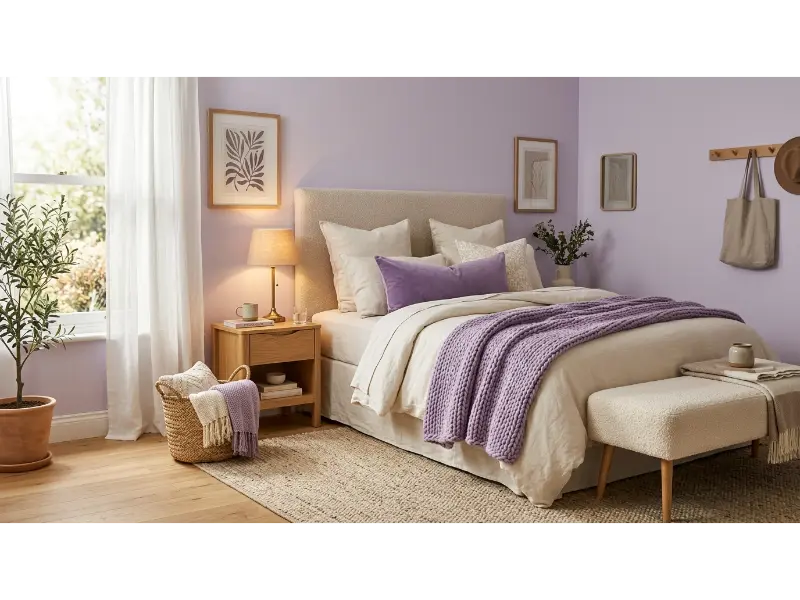
A cozy bedroom depends as much on texture as color. Combine lavender walls with linen bedding, a knitted throw, velvet cushions, boucle upholstery, and a thick woven rug. These materials create depth even when the color palette remains simple. The room feels inviting because every surface offers a slightly different visual and tactile experience.
Avoid buying everything in the same fabric or finish. Mix smooth cotton with nubby wool, soft velvet with natural wood, and matte ceramics with woven fibers. A few carefully chosen layers can make a bedroom look much richer than a large collection of decorative accessories.
Pro Tip: When the color palette is simple, use at least three noticeably different textures to create depth.
21. Lavender Teen Bedroom With a Grown Up Look
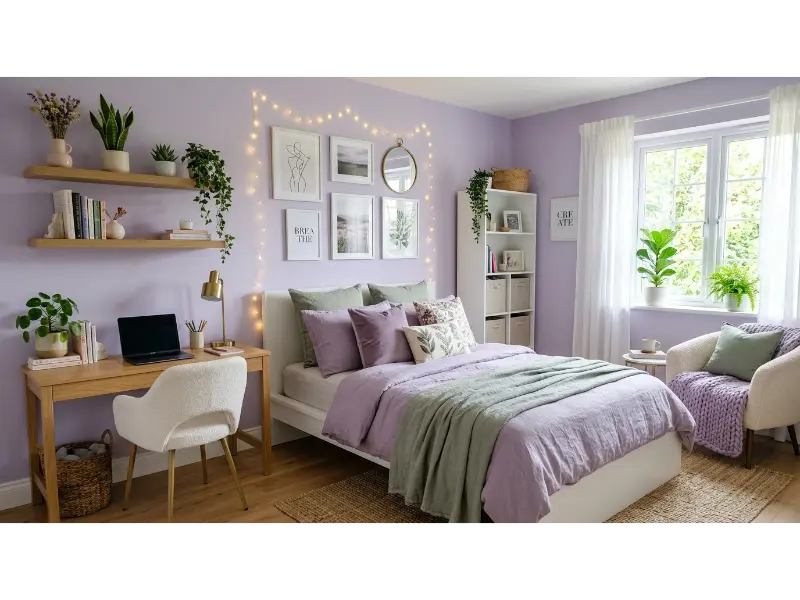
Lavender can create a beautiful teen bedroom when you combine it with modern furniture and restrained accessories. Choose pale lavender walls and pair them with white or light wood furniture. Add a desk, comfortable chair, open shelves, and practical storage so the room supports studying, relaxing, and personal interests.
Allow personality to appear through artwork, bedding, books, and small decorative objects rather than covering every wall with a single theme. Sage green, cream, dusty pink, or muted blue can provide secondary colors. The result feels youthful while remaining sophisticated enough to grow with the person using the room.
Pro Tip: Prioritize flexible furniture and storage so the bedroom can evolve as tastes change.
22. Luxurious Lavender Hotel Style Bedroom
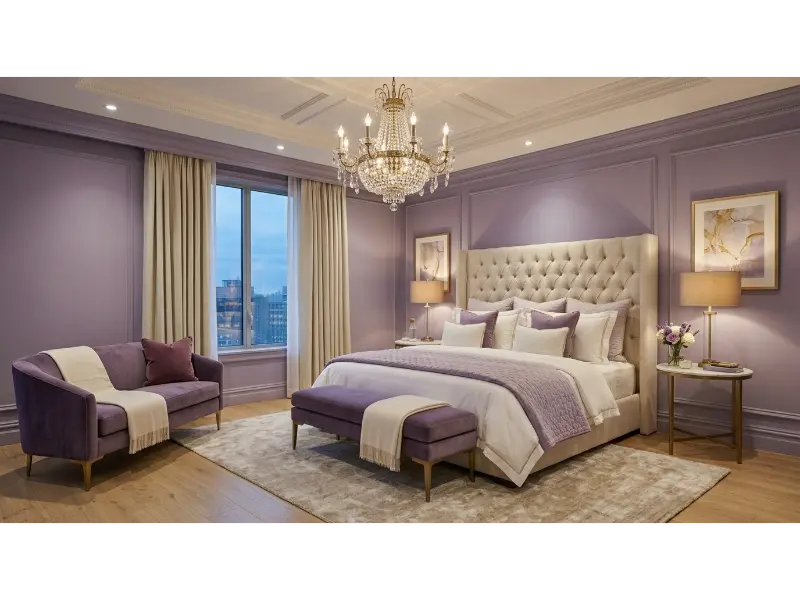
For a boutique hotel feeling, focus on proportion, symmetry, and luxurious textures. Use a tall upholstered headboard against a lavender wall and dress the bed with several layers of white, cream, and lavender textiles. Matching bedside tables and lamps can create a balanced composition that immediately feels polished.
Add one luxurious statement element, such as a velvet bench, marble surface, large mirror, or sculptural light. Keep accessories minimal and choose high quality looking materials. You do not need an enormous budget to create this effect. Good proportions, coordinated lighting, and carefully layered textiles often create more impact than expensive decorations.
Pro Tip: Make the bed the visual centerpiece and build the rest of the room around its proportions.
23. Soft Lavender Bedroom With Earthy Accents
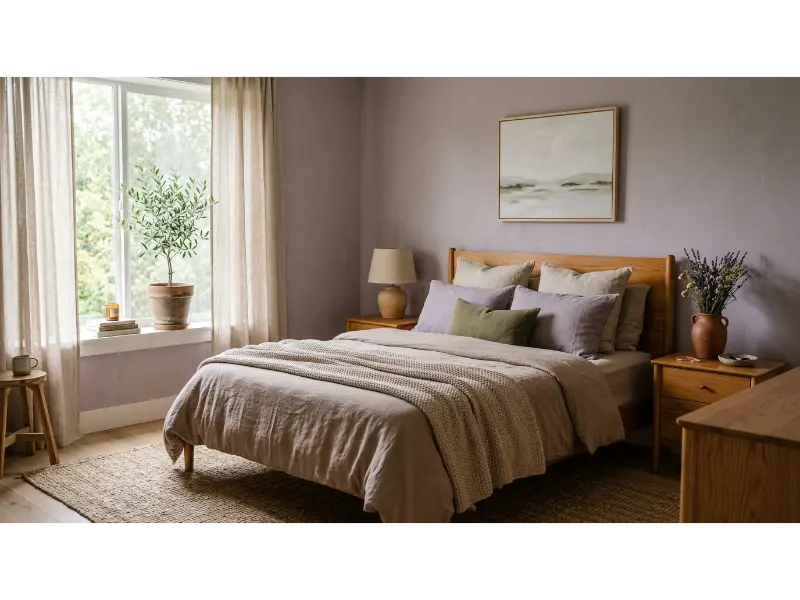
For a fresh take on lavender, combine it with earthy taupe, honey oak, olive green, and small terracotta accents. This palette moves away from the traditional pastel bedroom and gives lavender a more grounded character. Use the purple tone on the walls, then let warm materials carry the rest of the room.
This approach works particularly well with current preferences for warmer, layered interiors. Designers are moving toward spaces that feel personal and collected rather than overly sterile, with natural materials and richer neutrals helping rooms feel more inviting. Add handmade ceramics, woven textiles, plants, and warm wood to make the bedroom feel connected to nature.
Pro Tip: Use earthy accents sparingly so the lavender remains visible as the room’s defining color.
How to Choose the Right Lavender for Your Bedroom
The best lavender shade depends on the room’s natural light, existing furniture, and the mood you want to create. Pale lavender with gray undertones works well when you want an airy, understated bedroom. Dustier lavender can feel warmer and more sophisticated, while deeper purple lavender creates a moodier atmosphere. Natural and artificial lighting can change how these colors appear, so always test samples directly on the wall before making a final choice.
Think about the undertones of everything already in the room. Warm wood, beige, cream, and brass generally pair beautifully with lavender, while cool gray and silver can create a crisper modern effect. You can also use lavender as an accent rather than a dominant color through bedding, curtains, artwork, cushions, or an upholstered headboard.
Best Colors to Pair With Lavender
Cream and ivory create an airy, soft combination that works in almost any bedroom style. Warm beige adds grounding and makes lavender feel more mature. Sage green creates a botanical atmosphere, while blush pink adds romance. Navy blue provides stronger contrast, and dark wood introduces depth. Gold and brass add warmth and elegance, while white keeps the overall scheme fresh.
A useful rule is to select one dominant lavender shade, one neutral foundation, and one or two accent colors. This prevents the bedroom from becoming visually confusing. Related colors can then appear naturally through bedding, artwork, curtains, rugs, and accessories instead of being forced into every part of the room. Lavender’s versatility makes it especially easy to adapt across different decorating styles.
How to Make a Lavender Bedroom Feel Cozy
Cozy design comes from more than wall color. Start with comfortable bedding and build layers using linen, cotton, velvet, wool, boucle, or knitted materials. Add a rug under or beside the bed, use curtains that soften daylight, and place warm lamps near the sleeping area. These details make the room feel comfortable while also giving the lavender palette more depth.
Avoid making every item lavender. Too much of one color can flatten the design. Instead, use cream, beige, wood, green, brown, or subtle metallic accents to create contrast. A thoughtfully layered room feels more personal because your eye can move between different textures, finishes, and colors.
Frequently Asked Questions
Is lavender a good bedroom color?
Yes. Lavender can create a soft, peaceful atmosphere while still giving the room personality. Light lavender works particularly well when you want an airy appearance, while dusty and deeper shades can create a warmer or moodier bedroom. The best choice depends on natural light and the colors already present in the room.
What colors look best with lavender in a bedroom?
Cream, ivory, beige, natural wood, sage green, blush pink, navy, white, and brass all work well with lavender. The right pairing depends on your desired style. Cream and wood create warmth, sage creates a natural feeling, navy adds contrast, and brass gives the room a more elegant appearance.
Can lavender make a small bedroom look bigger?
A pale lavender can help a small room feel light and open when you combine it with white, cream, mirrors, and visually lightweight furniture. Avoid very dark shades across every wall if the room receives little natural light. Using lavender on one wall can also provide color without visually enclosing the entire space.
How do I make a purple bedroom look sophisticated?
Choose muted lavender instead of an extremely bright purple and balance it with sophisticated neutrals. Cream upholstery, natural wood, warm beige, brass lighting, linen bedding, and simple artwork can immediately make the room feel more mature. Limiting decorative clutter also helps the color appear intentional.
Should the ceiling match lavender walls?
It can, especially if you want a dramatic color drenched effect. However, a lighter lavender ceiling can preserve a sense of height. Warm white or cream is another excellent choice if you want stronger contrast. The decision should depend on room size, ceiling height, natural light, and the mood you want.
What bedding looks best with lavender walls?
Cream, ivory, white, beige, sage green, blush pink, and soft gray can all work beautifully. Cream and ivory create the safest timeless combination, while sage and blush introduce more personality. If your lavender walls are deep, lighter bedding can provide useful contrast and keep the room from feeling too heavy.
Is lavender suitable for a modern bedroom?
Absolutely. Use a muted lavender shade with streamlined furniture, simple artwork, clean bedding, and contemporary lighting. White, black, natural wood, and brushed metal can make the color feel modern rather than traditional. The key is choosing clean shapes and avoiding too many decorative patterns.
How can I decorate with lavender without painting the walls?
Use lavender bedding, curtains, pillows, rugs, artwork, lampshades, an upholstered headboard, or a small accent chair. This approach works well for renters or anyone who wants to experiment before committing to paint. Starting with textiles also makes seasonal updates much easier.
What lighting works best in a lavender bedroom?
Layered lighting works best. Combine ambient ceiling lighting with bedside lamps, reading lights, sconces, or subtle accent lighting. Warm white bulbs can create a softer evening atmosphere, while adjustable lighting gives you more control throughout the day. Bedroom lighting should support both practical tasks and relaxation.
Final Thoughts
The most successful lavender bedroom is not necessarily the one with the most purple. It is the one where every color, texture, and piece of furniture supports the mood you want. Lavender can become airy with white, grounded with beige and wood, romantic with blush, natural with sage, dramatic with navy, or luxurious with brass and velvet.
Use these Lavender Bedroom Ideas as a starting point rather than a strict formula. Choose one lavender shade that works with your lighting, build around a comfortable neutral foundation, and add a few meaningful accents. Whether you are refreshing one wall or redesigning the entire room, thoughtful layering can turn a simple bedroom into a calm, cozy retreat that feels personal, stylish, and genuinely comfortable.