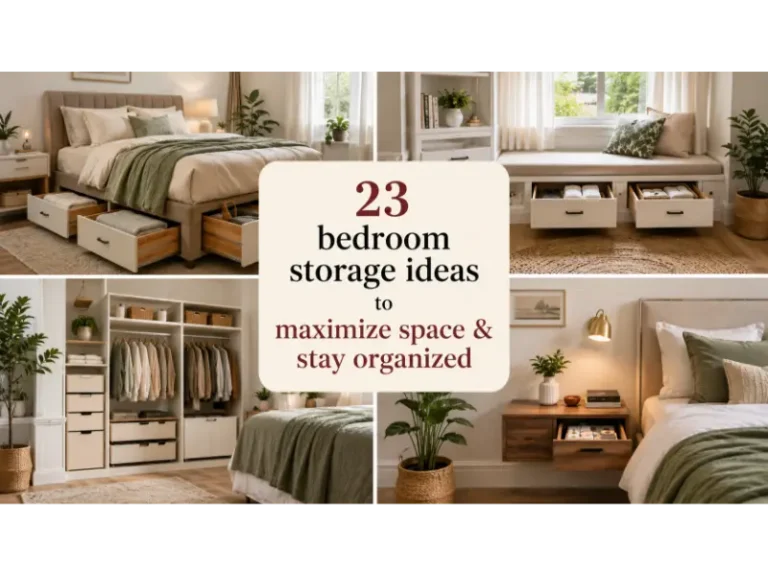

23 Genius Bedroom Storage Secrets for a Clutter Free Space
A bedroom can feel completely different when every item has a sensible place to live. The trick is not always buying more furniture. Often, the best bedroom storage ideas come from using forgotten corners, choosing furniture that works twice as hard, and organizing everyday items around the way you actually live. These 23 genius bedroom storage solutions focus on practical changes that make small and large bedrooms feel calmer, cleaner, and easier to maintain. Whether you are working with a tiny room, limited closet space, or too many clothes, these ideas can help you create a more organized bedroom without making it feel crowded.
Genius Bedroom Storage Secrets for a Clutter Free Space
1. Use the Space Under Your Bed
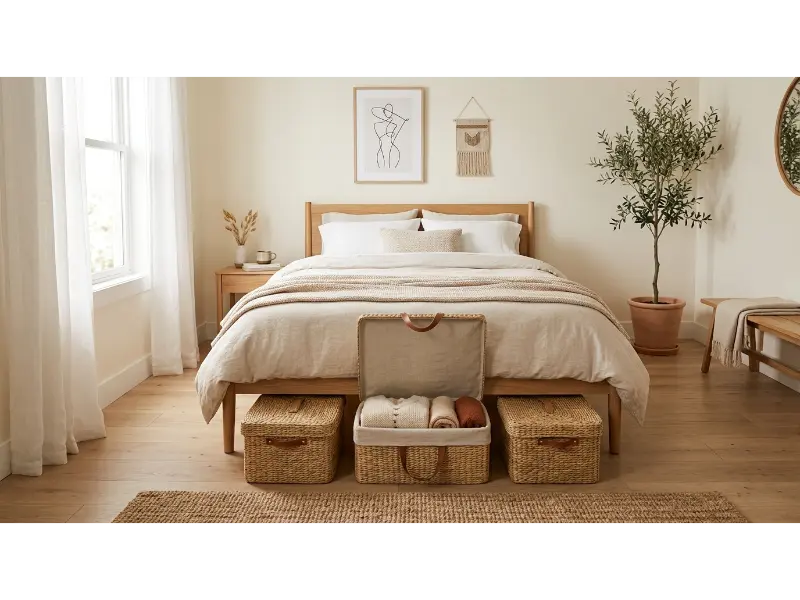
The space beneath your bed can become one of the most useful hidden storage areas in the room. Instead of allowing dust and forgotten items to collect underneath, add shallow containers that slide out easily. Store seasonal clothing, extra bedding, handbags, shoes, or rarely used accessories inside labeled boxes. This approach keeps useful belongings nearby without taking valuable floor space away from your bedroom.
The key is choosing containers that match the height beneath your bed. Low profile fabric bags work well for soft items, while sturdy lidded boxes protect clothing from dust. For a polished look, keep everything inside matching containers rather than mixing random bags. These Storage Secrets From Bedroom spaces work especially well when you rotate your wardrobe throughout the year.
Pro Tip: Choose containers with handles so you can pull them out without lifting the mattress or moving the bed.
2. Add a Storage Bench at the Foot of the Bed
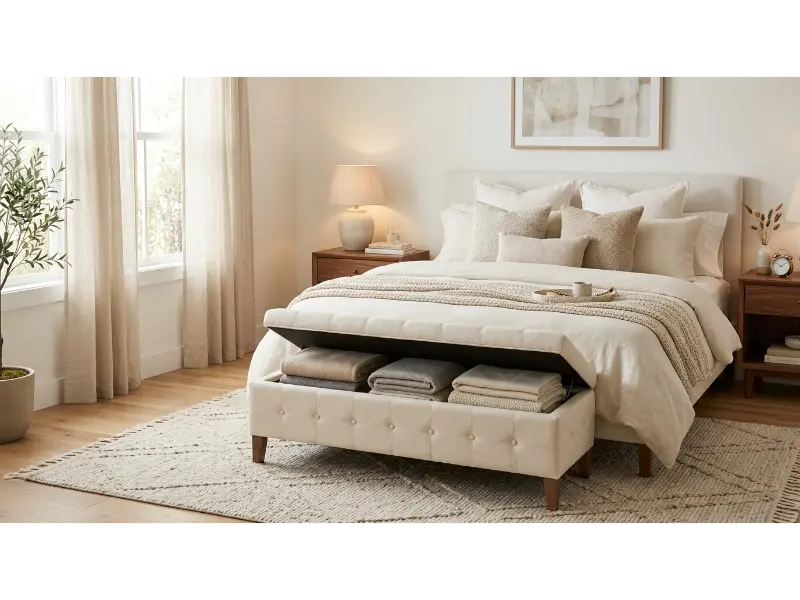
A storage bench gives you both seating and hidden organization in one piece of furniture. Place it at the foot of the bed and use the compartment for blankets, extra pillows, throws, or items that you want close but do not need every day. It also creates a comfortable spot for putting on shoes or preparing clothes in the morning.
Look for a bench with a hinged lid when you need maximum capacity. A long upholstered design can visually anchor the bed while making the room feel more finished. If your bedroom has limited closet space, this simple piece can quietly handle bulky belongings that would otherwise occupy shelves or chairs. It is one of the easiest space saving storage upgrades for a bedroom.
Pro Tip: Keep everyday blankets inside the bench and reserve the closet for clothing that needs hanging or folding.
Read More: 23 Beach Bedroom Ideas for a Relaxing Coastal Retreat
3. Turn the Back of the Door Into Storage
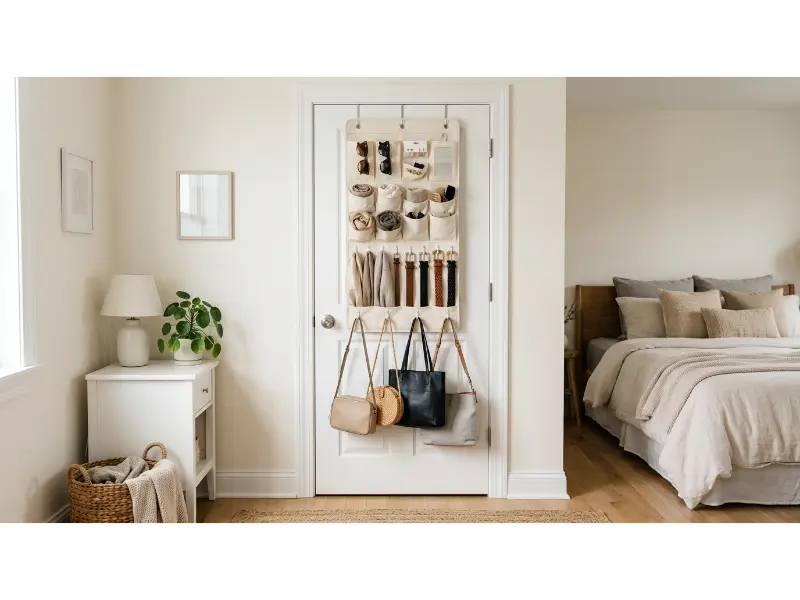
The back of a bedroom door often sits completely unused, even though it provides a valuable vertical surface. An over door organizer can hold accessories, scarves, belts, small handbags, hair tools, or folded items. Because the organizer stays behind the door, it does not consume meaningful floor area or interfere with the main layout.
Choose a design with pockets or narrow shelves according to what you need to store. Clear pockets work particularly well for small accessories because you can see everything at once. A slim hanging rack can also hold robes or frequently worn items. These bedroom organization ideas prove that effective storage does not always require remodeling or expensive furniture.
Pro Tip: Store the things you use most often at eye level and place less frequently used items in the lower sections.
4. Install Floating Shelves Above the Bed
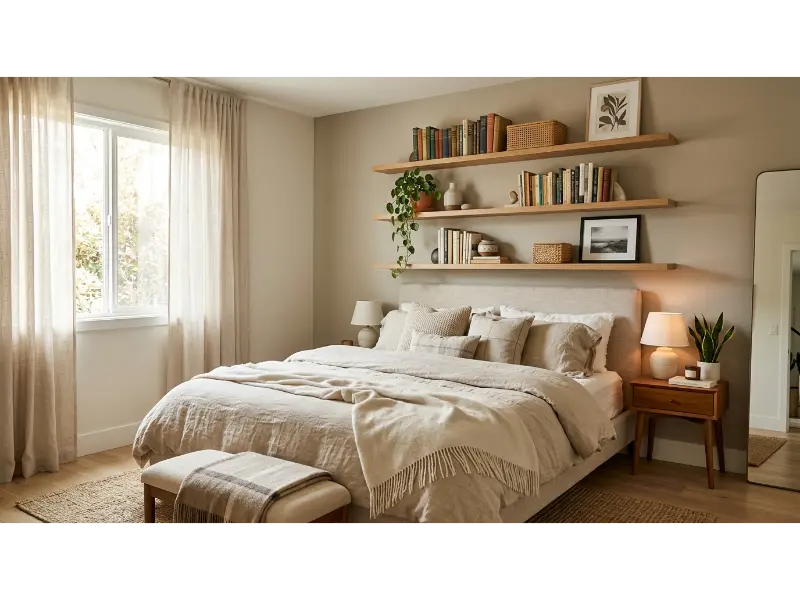
The wall above the bed can provide useful storage when you use it carefully. Floating shelves create a place for books, small baskets, framed photographs, and carefully selected decor without taking up floor space. They work especially well in bedrooms where traditional bookcases or cabinets would make the room feel too crowded.
Keep these shelves visually light by avoiding excessive objects. Small baskets can hide personal items while decorative pieces add personality. If you use shelves for practical belongings, group similar things together so the arrangement looks intentional. A balanced shelf can combine decorative storage, books, and personal touches without turning the bedroom into a busy display.
Pro Tip: Secure shelves firmly into wall studs or use appropriate anchors, especially when installing them above the bed.
5. Choose a Bed With Built In Drawers
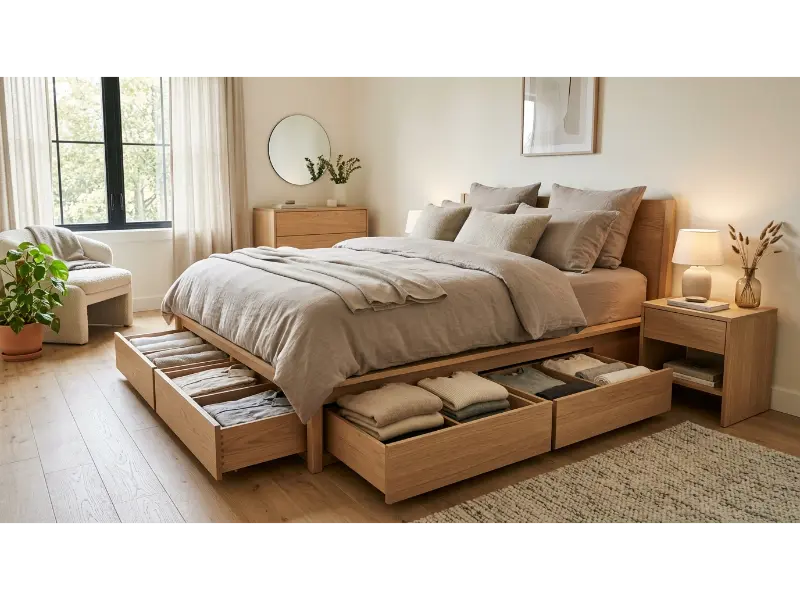
When you need serious storage but have limited room, a bed with built in drawers can transform the layout. The drawers use the large footprint beneath the mattress for clothing, linens, blankets, and accessories. Unlike deep boxes that require you to move the bed, drawers let you access belongings quickly and keep everything organized.
This option works particularly well in small bedrooms where a large dresser would take up too much floor space. Before buying one, measure the room carefully and make sure the drawers can open fully. A good storage bed should improve your routine rather than create another obstacle. It can become a central part of your small bedroom storage strategy.
Pro Tip: Use drawer dividers for smaller belongings so the large compartments do not become messy catchalls.
Read More: 23 Bedroom Organization Ideas for a Clutter Free Home
6. Add Slim Storage Beside the Bed
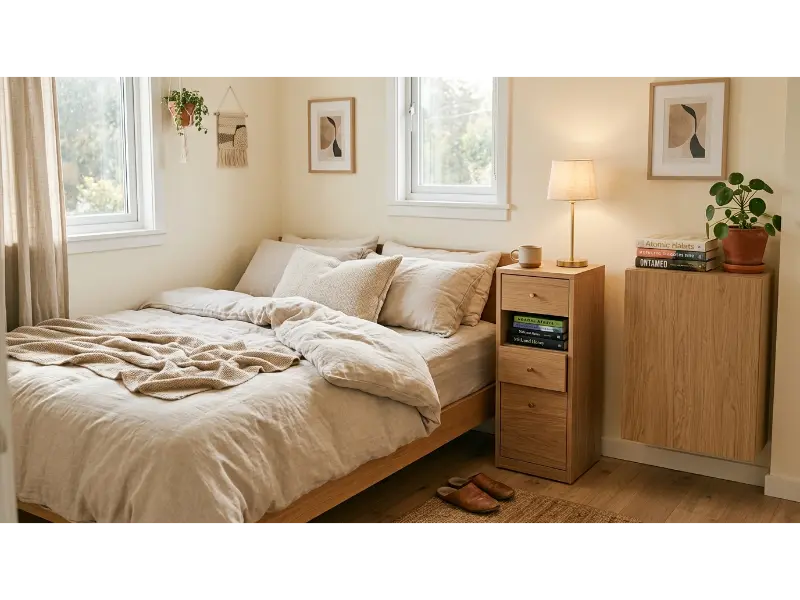
A narrow gap beside the bed can often hold a slim cabinet or vertical storage tower. Instead of leaving the space empty, use it for books, charging cables, skincare products, glasses, or other nighttime essentials. The best design depends on the width available, so measure before purchasing anything.
A narrow piece also prevents the room from feeling overloaded. Choose drawers when you want hidden organization or open shelves when you prefer quick access. If your bedroom is especially small, a tall and narrow cabinet can provide more capacity than a wide nightstand while keeping the floor visually open. Smart hidden bedroom storage starts with noticing these overlooked spaces.
Pro Tip: Keep only nighttime essentials in the top drawer and use lower drawers for items you need less frequently.
7. Use the Wardrobe Door for Accessories
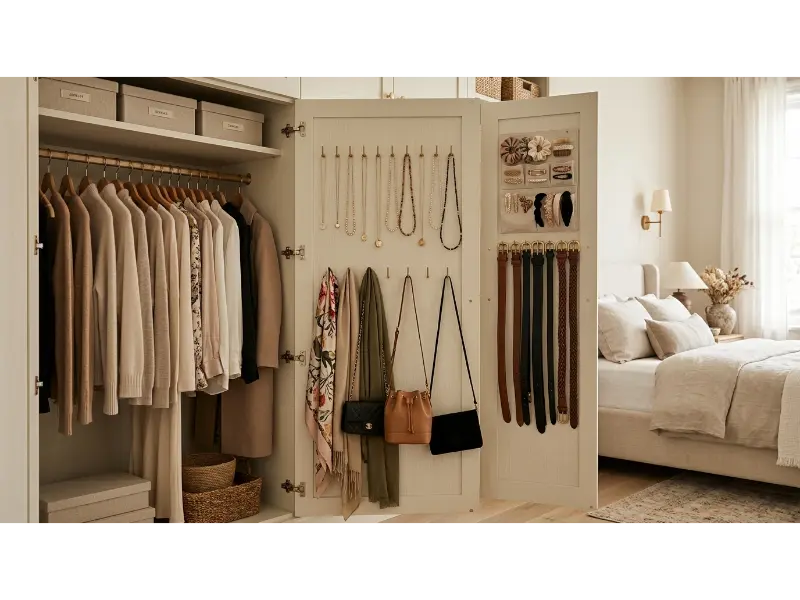
Closet doors can become practical accessory stations with a few carefully placed organizers. Add slim hooks, hanging racks, or pocket organizers to hold belts, scarves, jewelry, and small bags. This keeps accessories visible and prevents them from becoming tangled in drawers or buried beneath clothing.
The inside of the wardrobe door is particularly useful because it remains hidden when the closet closes. It also helps you organize belongings according to how you use them. Keep everyday accessories near the front and special occasion pieces higher or farther back. This approach turns unused surfaces into valuable closet organization without requiring additional furniture.
Pro Tip: Avoid overloading the door because too much weight can strain hinges and make the door difficult to close.
8. Create a Corner Clothing Rack
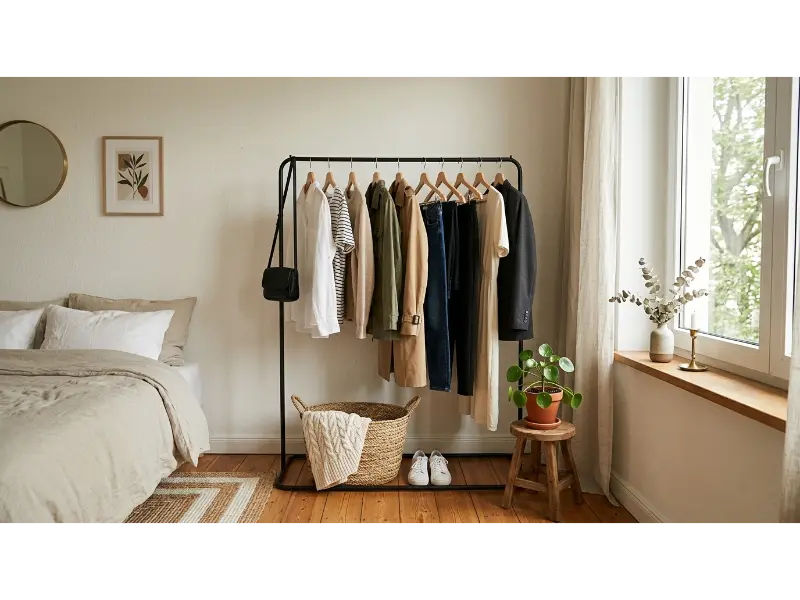
A clothing rack can provide flexible storage when your wardrobe needs more hanging space. Instead of filling an entire wall, choose a narrow rack and place it in an unused corner. Use it for your most frequently worn clothing, favorite jackets, or a small capsule wardrobe that changes with the season.
The secret is keeping the rack curated. Too many garments make the bedroom look cluttered instead of organized. Leave some breathing room between hangers and use one basket underneath for shoes or folded accessories. This method works beautifully for renters because it adds useful clothing storage without permanent construction.
Pro Tip: Follow a one in, one out rule on the rack so it never becomes an overflow zone.
9. Replace a Traditional Nightstand With a Drawer Tower
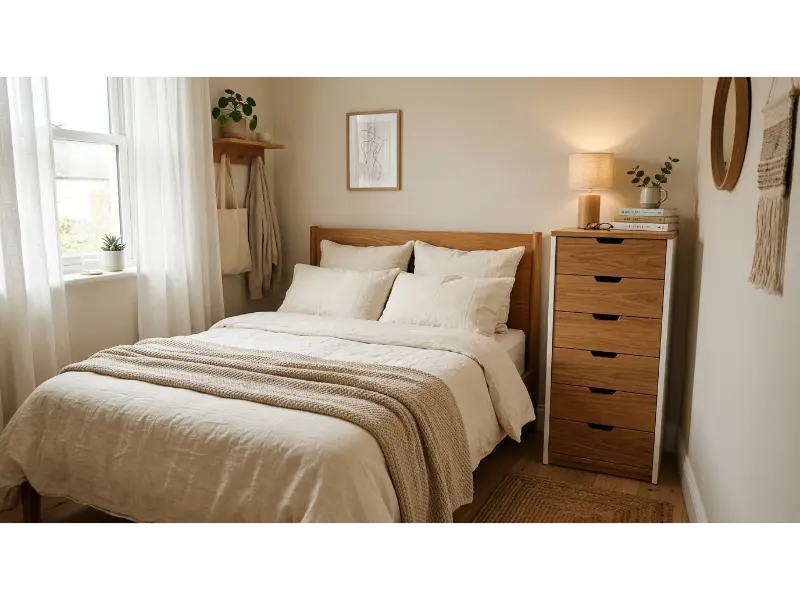
A traditional nightstand usually offers only one or two drawers, but a compact drawer tower can provide much more capacity within nearly the same footprint. Use the upper drawers for personal essentials and lower drawers for socks, accessories, electronics, or beauty products.
This idea works particularly well when every square inch matters. Choose a tower that matches your existing furniture so it looks like part of the room rather than an added storage box. A vertical solution also takes advantage of unused wall height. These Storage Secrets From Bedroom spaces become especially valuable in apartments and compact guest rooms.
Pro Tip: Pick drawers with smooth runners so frequently used items remain easy to access.
10. Hang a Pegboard for Flexible Organization
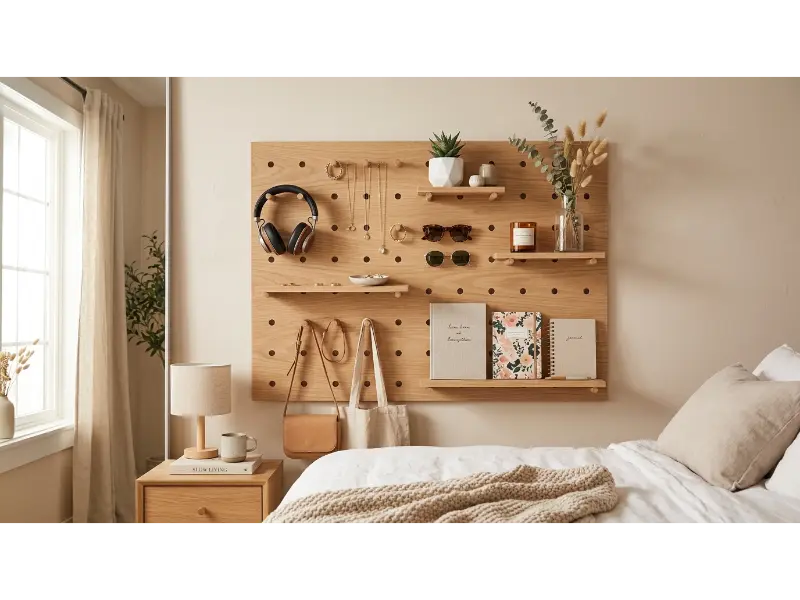
A pegboard gives you storage that can change as your needs change. Mount one on an empty wall and add hooks, shelves, small baskets, or holders for accessories and everyday items. It can become a useful station for handbags, headphones, jewelry, craft supplies, or even small beauty tools.
The biggest advantage is flexibility. Instead of drilling a new hole whenever your routine changes, you can move accessories around the board. Keep frequently used items within easy reach and group similar belongings together. A well arranged pegboard can support vertical storage while also adding an interesting design feature to the bedroom.
Pro Tip: Choose a board that complements your room colors so the organizer feels intentional rather than purely functional.
11. Add Baskets to Open Shelving
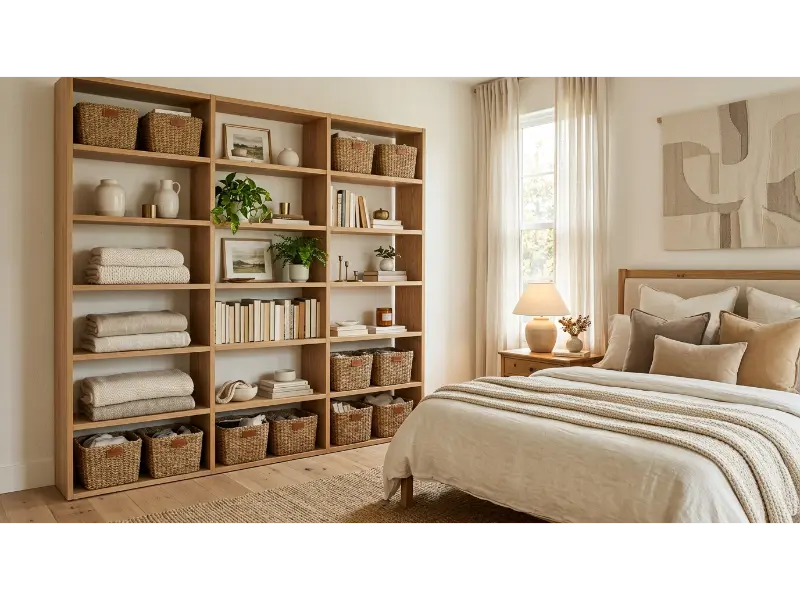
Open shelves look attractive, but small belongings can quickly make them appear messy. Baskets solve this problem by giving loose items a defined home. Use them for accessories, extra linens, electronics, seasonal clothing, or personal items that do not need to remain visible.
Choose baskets in a consistent material such as woven fiber, canvas, or fabric to create visual harmony. Labeling can also make shared bedrooms easier to maintain. The goal is not to hide everything but to create a balance between display and concealed organization. This is one of the simplest organized bedroom techniques for making shelves look polished.
Pro Tip: Assign one basket to each category instead of mixing unrelated belongings together.
12. Install a Full Length Mirror With Hidden Storage
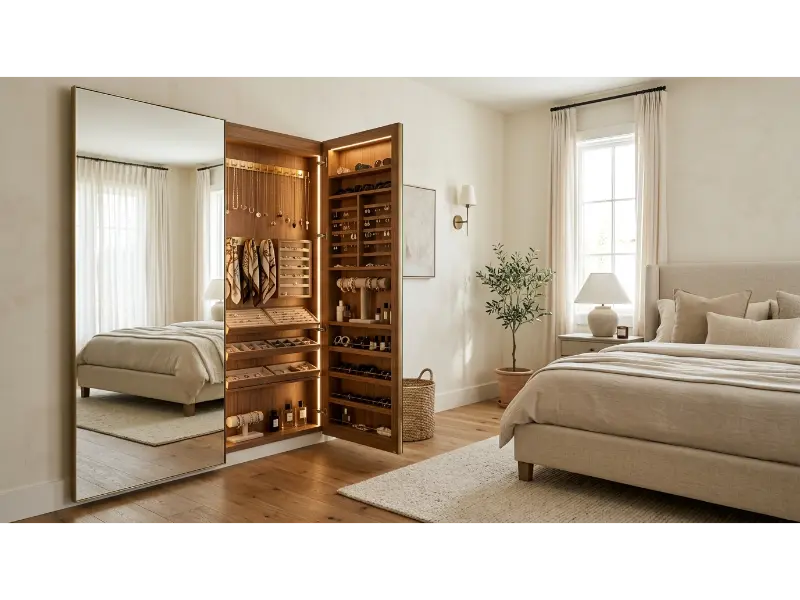
A full length mirror can do more than help you check an outfit. Some mirror designs open to reveal shallow storage for jewelry, watches, hair accessories, cosmetics, or other small belongings. This combination is especially helpful when you want functionality without adding another visible cabinet.
Place the mirror somewhere that receives good light and gives you enough space to stand back. The hidden compartment should hold smaller belongings rather than bulky objects. When closed, the mirror maintains a clean appearance while quietly providing additional capacity. It is a smart example of multifunctional furniture for bedrooms.
Pro Tip: Use small hooks and divided trays inside the mirror cabinet to prevent jewelry from tangling.
13. Use a Rolling Cart Beside the Closet
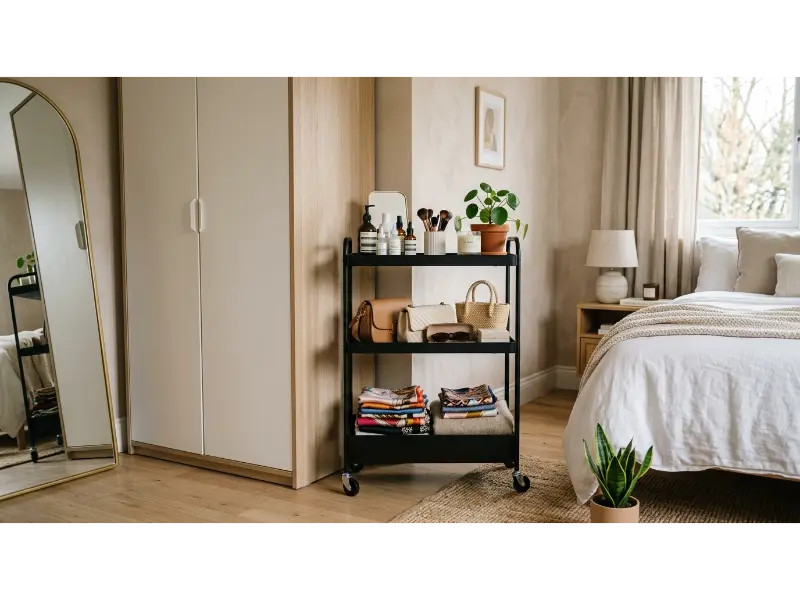
A slim rolling cart can solve storage problems without committing you to a permanent arrangement. Keep one beside the wardrobe for accessories, folded clothing, beauty products, or styling tools. When you need more floor space, simply roll it somewhere else.
Choose a narrow model that fits comfortably beside your furniture. Assign each tier a purpose so the cart remains organized rather than becoming a random pile. You can also move it toward your dressing area when getting ready and return it afterward. This flexible approach adds extra bedroom storage without making the room feel permanently crowded.
Pro Tip: Add small containers to each level so tiny items stay together when you move the cart.
14. Store Shoes Vertically
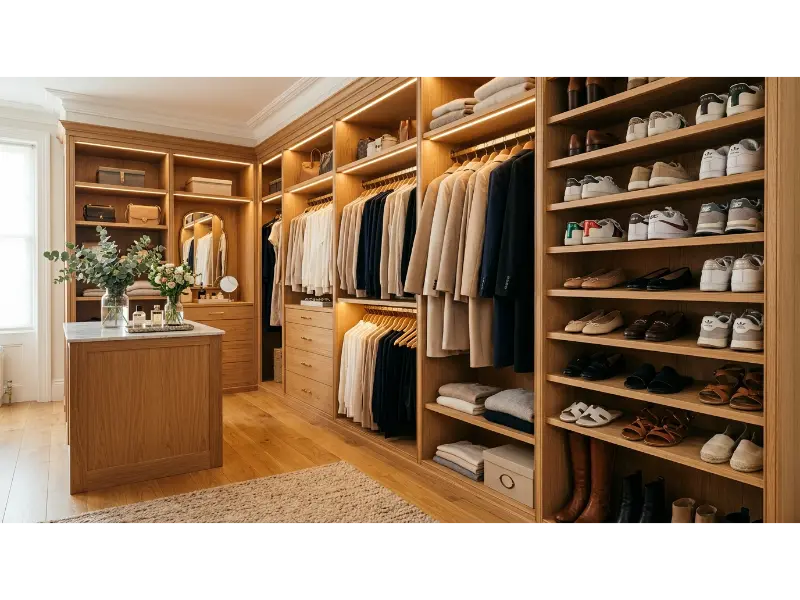
Shoes can consume surprising amounts of floor space when you keep them in scattered pairs. A vertical shoe rack, narrow shelving unit, or hanging organizer can use wall height instead. Keep frequently worn shoes at eye level and place special occasion or seasonal pairs higher.
Before adding storage, remove shoes you no longer wear. Organization works better when you start with a realistic collection. Group shoes by type or frequency of use so finding the right pair takes seconds. Good shoe storage protects your footwear while freeing valuable floor area for movement.
Pro Tip: Keep delicate shoes in breathable boxes and avoid tightly stacking footwear that can lose its shape.
15. Create a Hidden Laundry Station
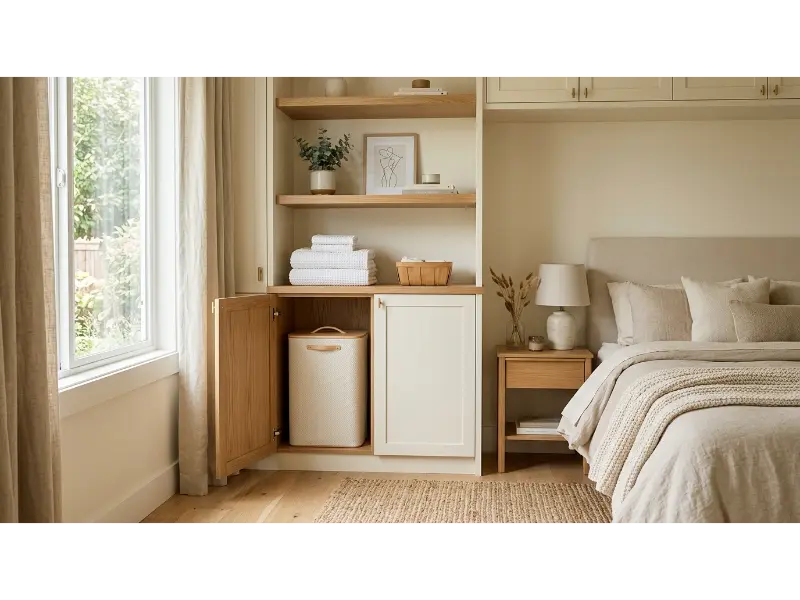
Laundry can make an otherwise tidy bedroom look chaotic when clothes collect on chairs or floors. A slim hamper tucked beside the wardrobe, inside a cabinet, or beneath a counter creates a designated place for worn clothing. Separate compartments can make laundry day easier by sorting colors or fabrics immediately.
Choose a hamper with ventilation and a removable washable liner. If you have limited space, a collapsible design can work well. The important part is creating a convenient habit. The best bedroom organization system is one that makes the tidy choice easier than dropping clothes on the floor.
Pro Tip: Place the hamper where you naturally change clothes instead of hiding it somewhere inconvenient.
16. Use the Top of the Wardrobe Wisely
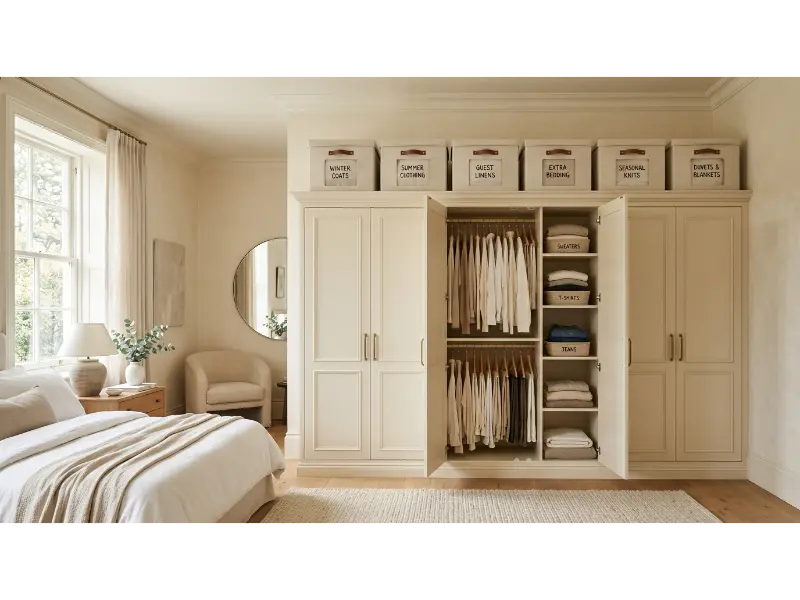
The space above a wardrobe often becomes a forgotten storage zone. Instead of placing random bags there, use matching boxes or baskets for items you rarely need, such as holiday decorations, seasonal bedding, luggage accessories, or winter clothing.
Because this area can collect dust, choose containers with lids. Keep heavy belongings lower and lightweight items higher. Label every box so you do not have to open several containers when searching for something. These Storage Secrets From Bedroom ideas make use of vertical space while keeping rarely used belongings out of your everyday routine.
Pro Tip: Keep a small step stool nearby if you frequently access upper storage, and never place unstable heavy objects overhead.
17. Add Hooks Behind the Headboard
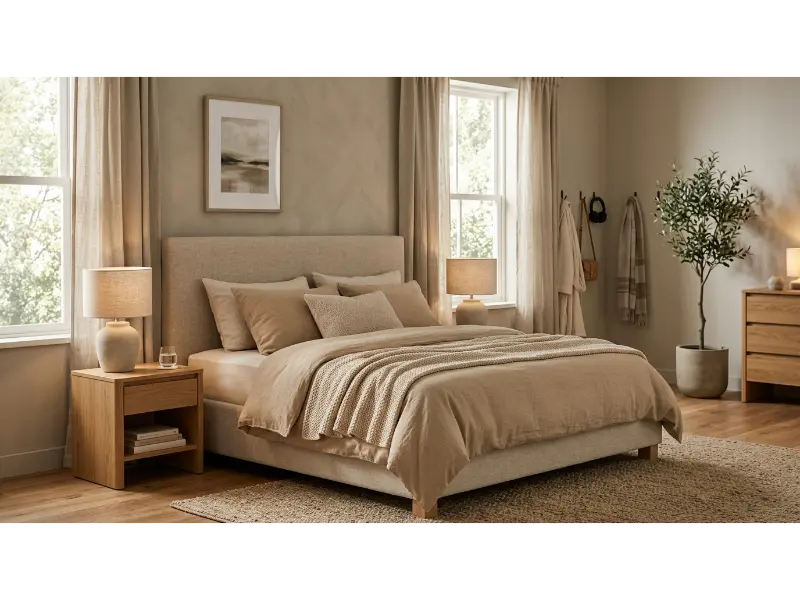
The area behind a freestanding headboard can provide a surprisingly useful hidden zone. Small hooks can hold robes, lightweight bags, scarves, or accessories without adding another visible piece of furniture. This works particularly well when the bed sits slightly away from the wall.
Keep the items lightweight and visually simple. The goal is to create convenient storage without turning the hidden area into a crowded collection. If the headboard moves frequently, choose a solution that does not interfere with its stability. This is a subtle way to create hidden storage ideas from a space that usually serves only one purpose.
Pro Tip: Reserve hidden hooks for items you use regularly so the area does not become a forgotten storage pile.
18. Turn a Window Seat Into Storage
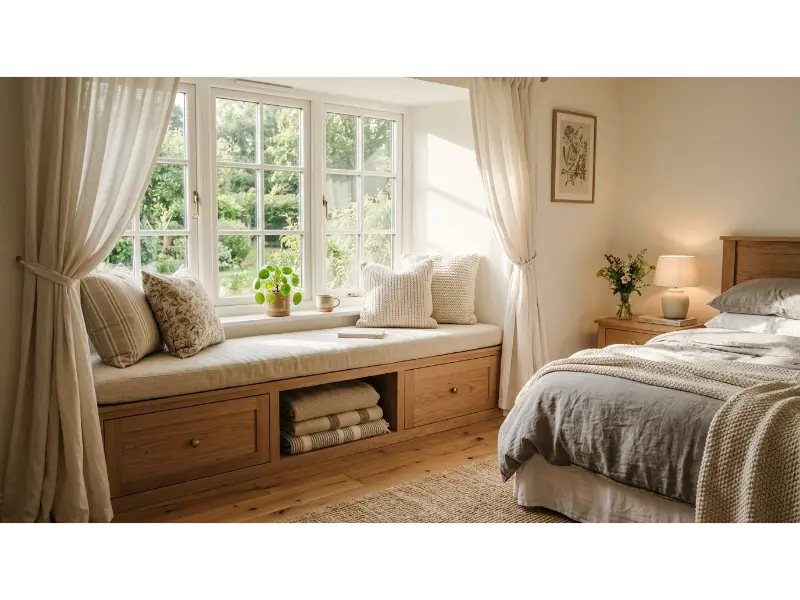
If your bedroom has a window seat, use the base as an opportunity for concealed storage. Deep drawers can hold blankets, books, seasonal accessories, or extra bedding while the cushioned top becomes a comfortable reading spot. This combines seating and organization without increasing the room’s furniture footprint.
Even a simple freestanding bench can provide a similar effect. Choose storage that opens easily and avoid filling it with items you rarely remember owning. When every compartment has a clear purpose, the room becomes easier to maintain. This type of functional bedroom design makes storage feel like part of the architecture.
Pro Tip: Store soft, lightweight belongings in the window seat so the drawers remain easy to open.
19. Organize Drawers With Adjustable Dividers
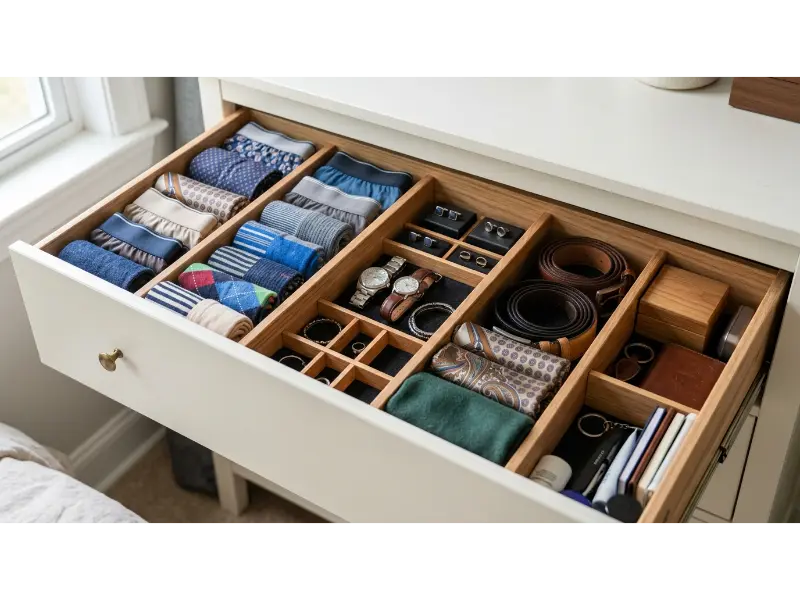
A large drawer can quickly become chaotic when small belongings move around freely. Adjustable dividers create separate zones for socks, underwear, accessories, scarves, belts, or other small items. You can change the layout as your needs evolve, which makes this solution more useful than fixed compartments.
Start by emptying the drawer completely and grouping similar belongings together. Remove duplicates and place frequently used items toward the front. The result should make everything visible at a glance. Good drawer organization reduces the time you spend searching and makes tidying much easier after laundry day.
Pro Tip: Do not pack compartments tightly. Leave enough room to remove an item without disturbing everything around it.
20. Create a Dedicated Charging Drawer
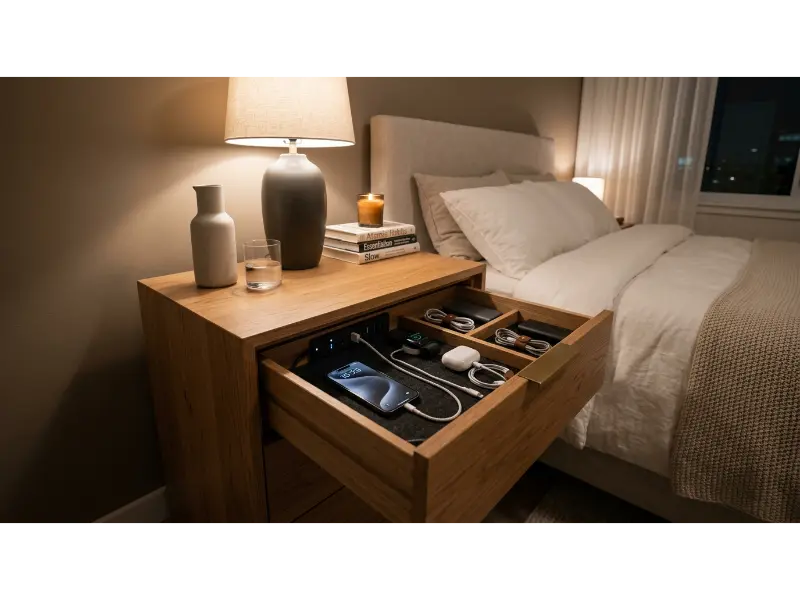
Charging cables can make a bedroom look untidy even when everything else is organized. A dedicated charging drawer keeps phones, earbuds, watches, and cables together while reducing visible cord clutter. Install a cable friendly power solution or use a nearby outlet with neatly managed cords.
Use small cable clips or pouches to separate chargers by device. Avoid filling the drawer with unrelated electronics. A dedicated station works best when everyone in the room knows exactly where charging accessories belong. This small change creates a cleaner nightstand and supports a more peaceful clutter free bedroom.
Pro Tip: Label longer cables or use small reusable ties so you can identify the correct charger immediately.
21. Use a Narrow Dresser in an Empty Wall Gap
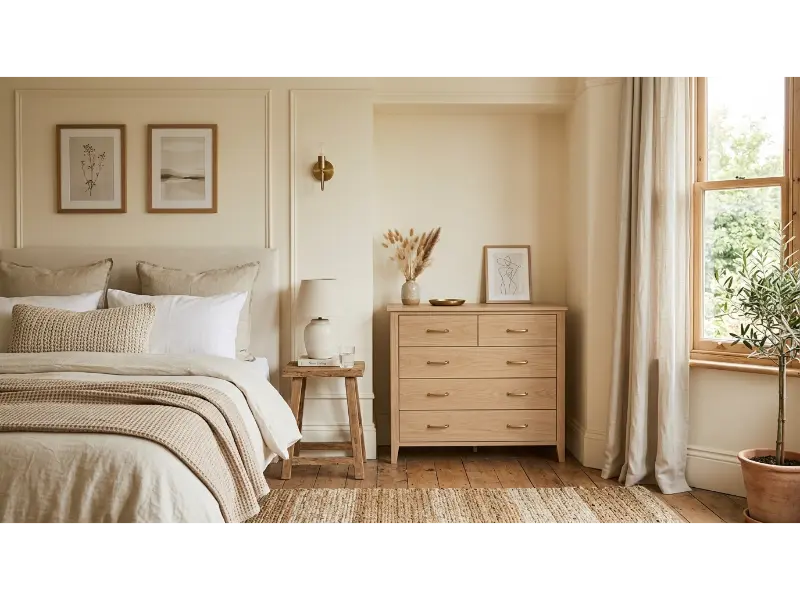
An empty wall does not always need artwork or decoration. If the room has enough clearance, a narrow dresser can turn unused wall space into practical storage. Look for a shallow design that provides drawers without extending too far into the walking area.
Measure the available width and depth before purchasing. Keep the top surface simple so it does not become another clutter zone. A small lamp, mirror, or one decorative object can provide visual balance. This approach creates additional clothes storage while preserving the bedroom’s open feeling.
Pro Tip: Choose a dresser with drawers rather than deep shelves if you want to keep clothing categories clearly separated.
22. Create a Seasonal Rotation System
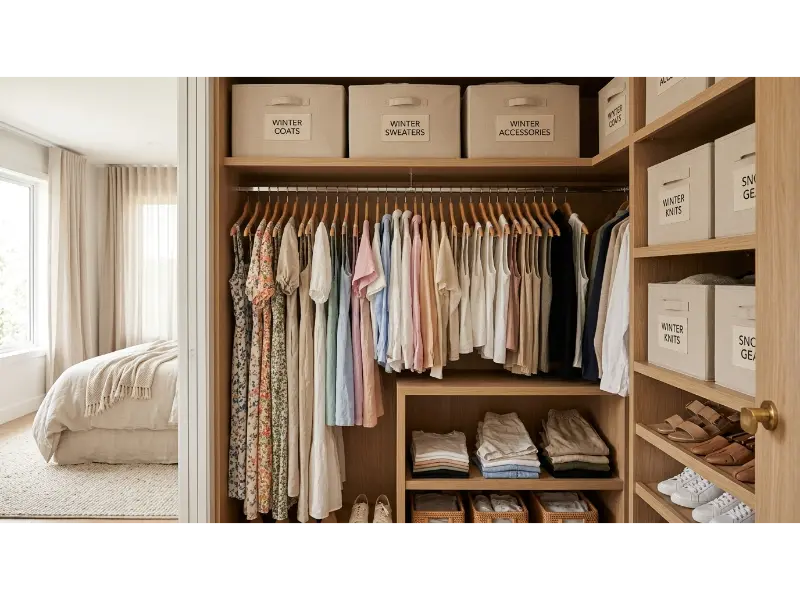
Keeping every item of clothing accessible all year can overwhelm a small wardrobe. A seasonal rotation system allows you to move off season pieces into under bed containers, upper wardrobe boxes, or another designated storage area. Bring the next season’s clothing forward before the weather changes.
During each rotation, review what you actually wore. Clothing that no longer fits your lifestyle does not need to return to the main wardrobe. This system keeps your closet storage manageable and makes dressing easier because the pieces you see match the current season.
Pro Tip: Add the season and category to each storage label so you can find stored clothing quickly.
23. Give Every Category One Home
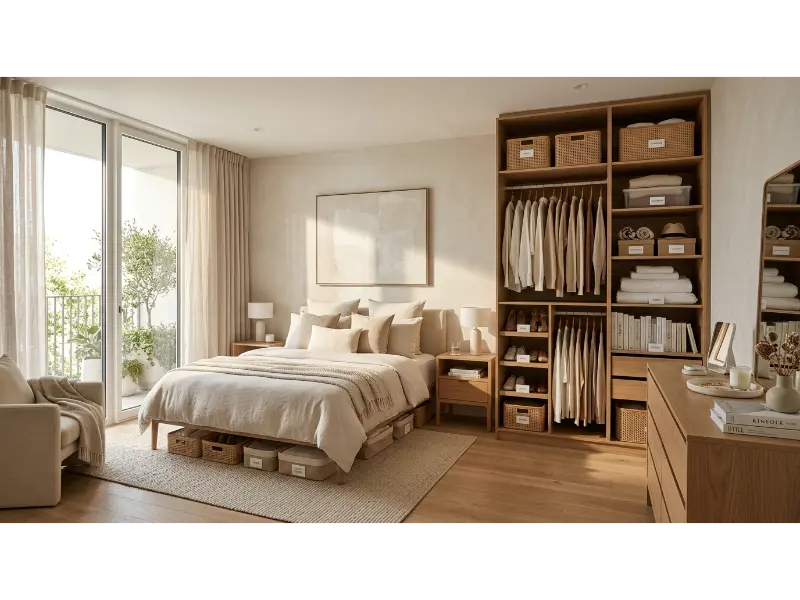
The most powerful storage system is not necessarily the one with the most containers. It is the one where every category has a predictable home. Clothing belongs in the wardrobe or dresser, shoes stay together, accessories have a dedicated area, and extra linens have their own container. When belongings have clear homes, tidying becomes almost automatic.
Think about your daily habits before assigning locations. The items you use constantly should remain easy to reach, while occasional belongings can move into higher or hidden storage. This final principle brings all the Storage Secrets From Bedroom ideas together by creating a system that supports your real routine rather than fighting against it.
Pro Tip: Whenever you bring something new into the bedroom, decide its permanent storage location immediately.
How to Make Bedroom Storage Actually Work
The best bedroom storage solutions begin with editing, not shopping. Before adding another basket or cabinet, remove items you no longer use. A room becomes easier to organize when you reduce unnecessary belongings first. Sort everything into categories such as clothing, accessories, shoes, books, linens, electronics, and sentimental items. Once you understand what you own, you can choose storage based on real needs instead of buying containers that eventually become clutter themselves.
Think vertically whenever floor space feels limited. Walls, wardrobe doors, the backs of doors, the area beneath the bed, and the top of tall furniture can all provide useful capacity. Combining these areas allows a small bedroom to hold much more without feeling crowded. The strongest space saving bedroom ideas use several small improvements together instead of depending on one oversized storage unit.
Small Bedroom Storage Mistakes to Avoid
One common mistake is buying storage furniture that is too large for the room. A huge wardrobe may technically hold more belongings, but it can make movement difficult and visually shrink the space. Always measure the available wall and walking area before buying furniture. Leave enough clearance for doors, drawers, windows, and everyday movement.
Another mistake is creating storage without assigning categories. A beautiful collection of baskets will not solve clutter if everything gets thrown into whichever basket is closest. Give each container a purpose and keep similar items together. The goal of bedroom decluttering is not simply making surfaces look clean for one day. It is creating a system that remains easy to maintain.
How to Keep Your Bedroom Organized Long Term
A bedroom stays organized when the storage system matches your daily habits. If you usually remove jewelry beside the bed, place a small organizer there. If you change clothes beside the wardrobe, keep the laundry hamper nearby. If you read before sleeping, create a dedicated place for books next to the bed. Convenience matters because people naturally repeat systems that require little effort.
Set aside a few minutes each week to return misplaced items to their homes. You do not need a complicated cleaning routine. Small resets prevent clutter from becoming overwhelming. Every few months, review your wardrobe and storage containers again. These simple habits make organized bedroom storage sustainable instead of turning organization into a project you have to restart repeatedly.
Frequently Asked Questions
What is the best storage solution for a small bedroom?
The best solution depends on what you need to store, but vertical shelves, under bed containers, slim drawer towers, over door organizers, and multifunctional furniture usually provide excellent results. Focus on storage that uses unused areas rather than taking away valuable walking space.
How can I add storage without making my bedroom look cluttered?
Choose storage that blends with your existing furniture and keep visible surfaces selective. Closed cabinets, matching baskets, under bed containers, and built in drawers can hide everyday belongings while maintaining a calm appearance. Use open shelves mainly for items that also contribute to the room’s design.
What should I store under my bed?
Under bed storage works well for seasonal clothing, spare bedding, blankets, shoes, handbags, and occasional accessories. Use sealed or lidded containers when possible to protect belongings from dust. Avoid storing anything damp, fragile, or frequently needed if accessing it requires moving the entire bed.
How do I organize a bedroom with no closet?
Use a combination of a freestanding clothing rack, slim dresser, under bed storage, hanging organizers, hooks, shelves, and attractive baskets. A small wardrobe can also work if you prioritize clothing you wear most often and rotate seasonal pieces into less accessible storage.
How do I stop my bedroom from becoming cluttered again?
Give every category a permanent home and return items after use. Keep a laundry hamper where you change clothes, place accessories near the area where you use them, and avoid allowing chairs or the floor to become temporary storage. A simple weekly reset can prevent small piles from becoming overwhelming.
Is open shelving a good idea for bedroom storage?
Open shelving works well for books, baskets, folded blankets, and attractive accessories. However, too many small objects can make the room appear busy. Use baskets to conceal loose belongings and keep shelves visually balanced. Closed storage may work better for items you do not want constantly visible.
How often should I declutter my bedroom?
A quick weekly reset keeps everyday clutter under control, while a deeper review every few months helps prevent unused clothing and accessories from accumulating. Seasonal wardrobe changes provide a natural opportunity to review what you wore and decide what should remain accessible.
What is the cheapest way to increase bedroom storage?
Start with areas you already have. Use the space under the bed, add hooks to doors, reorganize existing drawers with dividers, install simple shelves, and use baskets or fabric containers. Decluttering can also create significant storage capacity without spending anything.
Final Thoughts
A well organized bedroom does not need to look like a showroom. It should feel comfortable, practical, and easy to live in. The best bedroom storage ideas work quietly in the background, giving your clothing, accessories, linens, books, and everyday belongings a sensible place to stay. Start with the areas you already have, then add furniture only when you understand what is genuinely missing.
From under bed drawers and storage benches to vertical shelving and seasonal wardrobe rotation, these 23 ideas offer different solutions for different rooms and lifestyles. Choose two or three changes that solve your biggest problems first. Once those systems become habits, add another improvement when needed. That is how a cluttered bedroom gradually becomes a calm, functional space that stays organized with much less effort.