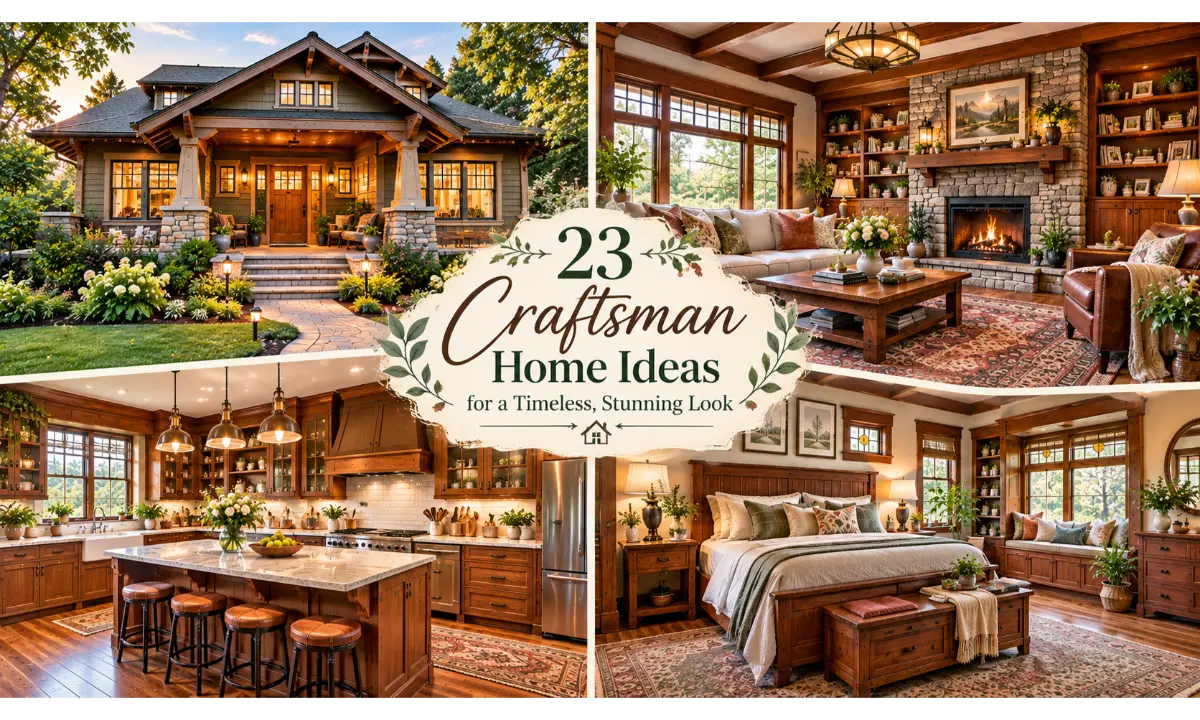
23 Craftsman Style Home Ideas for a Timeless, Stunning Look
A well designed Craftsman Style Home feels warm, grounded, and welcoming from the moment you see it. Its charm comes from honest materials, thoughtful woodwork, comfortable spaces, and architectural details that feel useful rather than overly decorative. Whether you are renovating an older bungalow or giving a newer house Craftsman character, small changes can make a major difference. These ideas combine classic Craftsman architecture, natural textures, practical layouts, and modern comfort for a home that feels timeless without looking dated.
Classic Exterior Ideas for a Craftsman Style Home
1. Welcoming Tapered Porch Columns
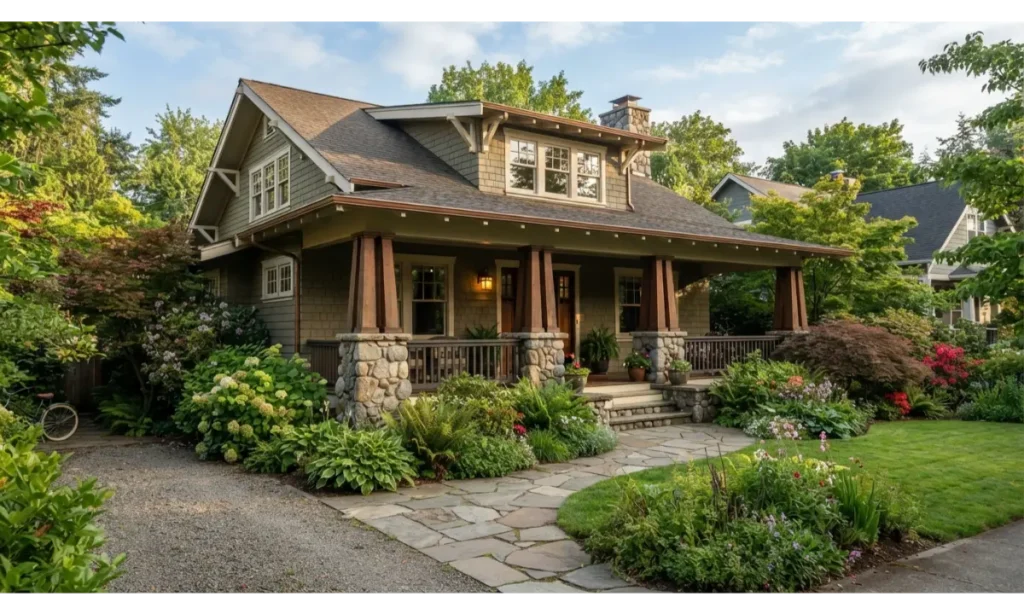
A Craftsman Style Home becomes instantly recognizable when the front porch uses substantial tapered columns. These columns usually appear wider toward the bottom and rest on sturdy masonry or stone bases. The design gives the exterior a grounded appearance while creating a strong visual connection between the house and landscape. Choose natural wood or a convincing wood look, then keep the finish simple so the architecture remains the main attraction.
For a fresh interpretation, pair the columns with warm gray siding, natural stone, and a deep stained front door. Avoid making every exterior element compete for attention. The beauty of Craftsman architecture comes from proportion and craftsmanship. Strong columns, generous porch space, and simple trim can make even a modest facade feel established and thoughtfully designed.
Pro Tip: Use columns that visually match the scale of the porch. Oversized columns can overwhelm a small facade, while thin posts may lose the sturdy Craftsman character.
2. Deep Front Porch With Comfortable Seating
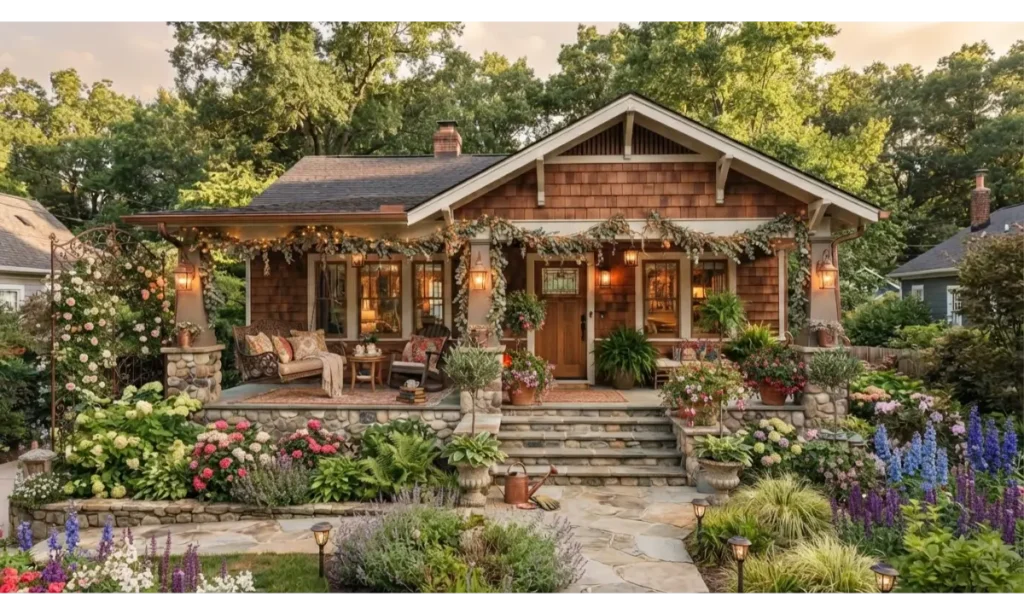
A generous front porch is one of the easiest ways to create a welcoming Craftsman Style Home appearance. Instead of treating the porch as decoration, make it an actual living area. Add a pair of wooden chairs, a compact bench, and a small table where space allows. Natural textures such as woven baskets, cotton cushions, and wood furniture keep the setting relaxed and authentic.
The porch should feel connected to the rest of the property. Use low planters, stone edging, or simple pathway lighting to create a smooth transition toward the garden. Traditional Craftsman home design favors practical beauty, so choose pieces that people can actually use. A comfortable porch can become a natural place for morning coffee, evening conversations, or quiet reading.
Pro Tip: Keep porch furniture visually simple. One beautiful bench or two substantial chairs often look more authentic than filling the space with too many accessories.
Read More: 23 Cottagecore Style Ideas for a Beautiful, Cozy Home
3. Exposed Rafters and Strong Roof Lines
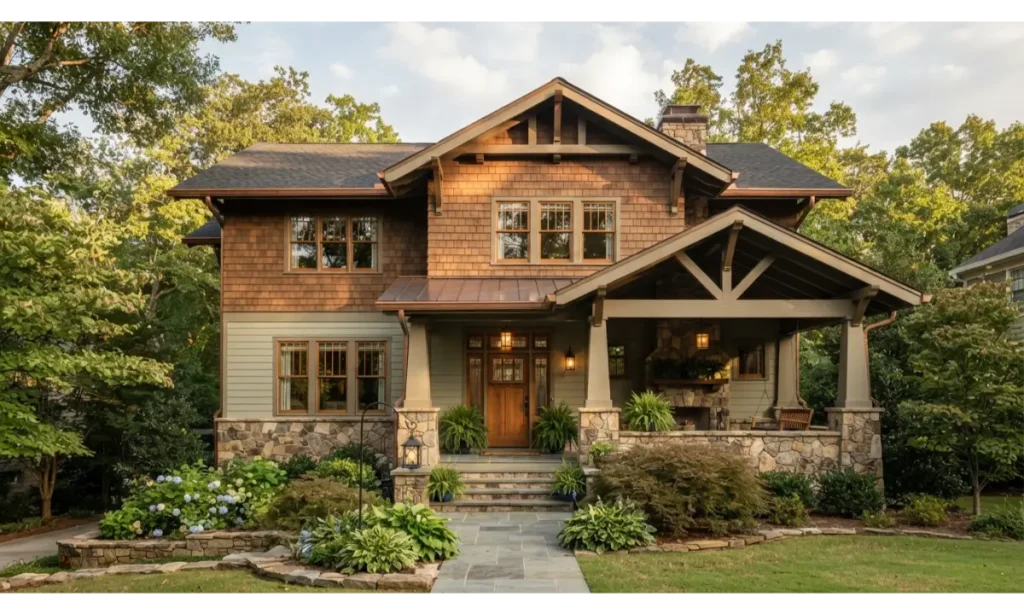
Exposed rafters can give a Craftsman Style Home its distinctive handcrafted appearance. Look beneath the roof edges for visible rafter tails, brackets, and deep overhangs. These details add dimension to a simple roofline and create shadows that make the facade look richer throughout the day. The roof should feel substantial rather than delicate.
If you are updating an existing house, focus on the roof details that are most visible from the street. Clean lines and carefully proportioned brackets can add character without creating visual clutter. Traditional Craftsman exterior ideas often rely on architectural structure rather than excessive ornament, making these details especially valuable for homeowners who want authentic character.
Pro Tip: Repeat the same wood finish on selected exterior details so the rafters, brackets, porch elements, and door feel visually connected.
4. Natural Stone Foundation Details
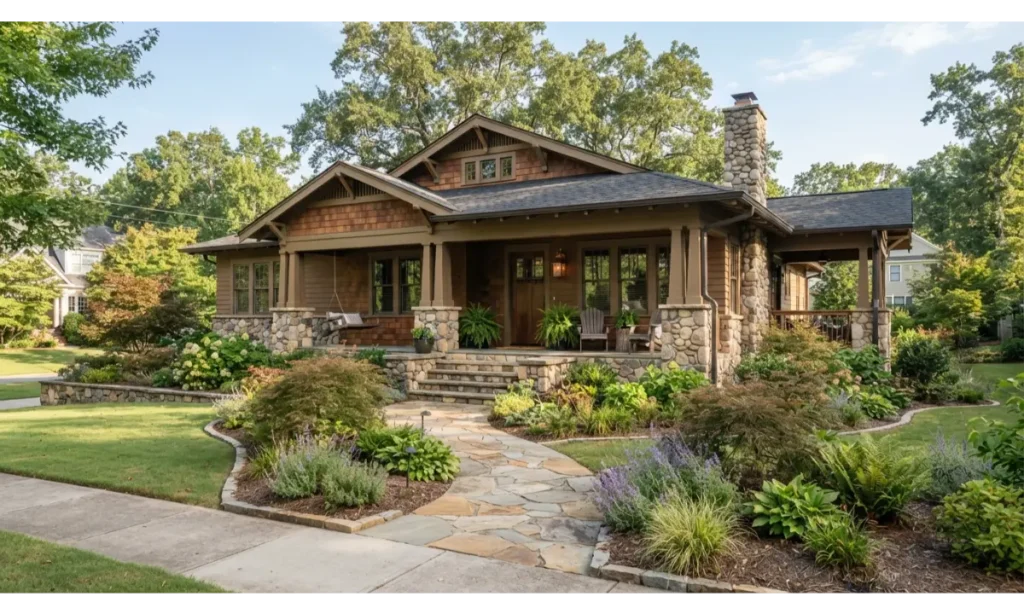
Natural stone works beautifully with the strong horizontal proportions of a Craftsman facade. A stone foundation can visually anchor the house while adding texture beneath painted siding or shingles. The contrast between rough stone and smooth wood creates the layered appearance associated with traditional Craftsman architecture.
You do not need to cover the entire exterior in stone. A carefully designed foundation, porch base, chimney, or entry detail can provide enough visual weight. Choose stone with earthy tones that coordinate with the siding and roof. This approach keeps the exterior warm and balanced while allowing the natural materials to remain the focus.
Pro Tip: Select stone with colors already present in your siding, roof, or landscape. This creates cohesion without making the exterior look overly matched.
5. Rich Wood Front Door
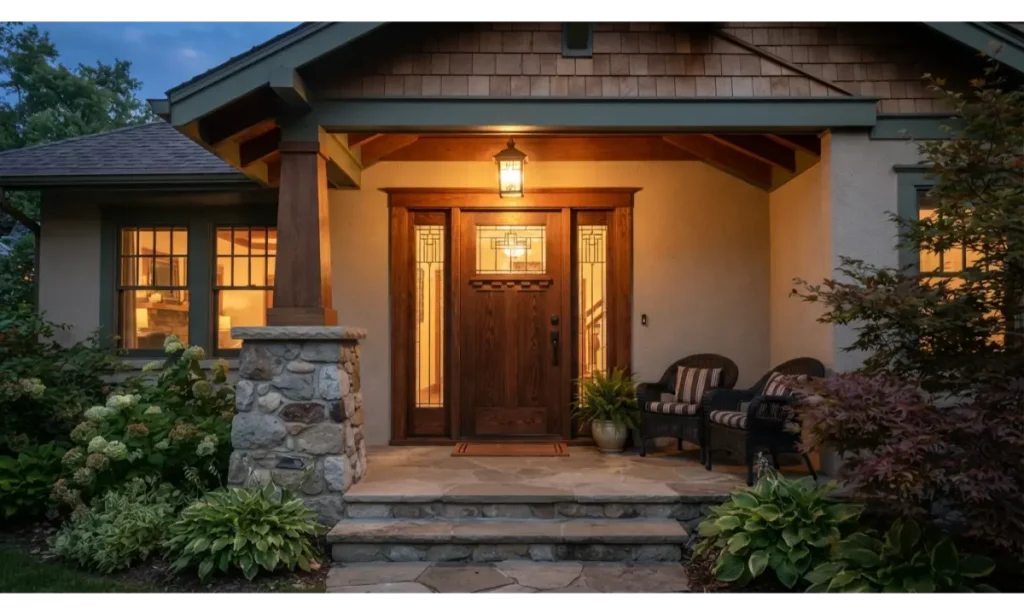
A substantial wood door can become the centerpiece of the entry. Traditional Craftsman homes often use solid wood doors with glass panes, strong trim, and straightforward hardware. For a modern update, choose walnut, oak, or another warm wood tone that highlights the natural grain without looking overly glossy.
The surrounding trim should support the door rather than compete with it. Deep brown, muted green, charcoal, and warm red can work well depending on the exterior palette. A Craftsman front door also benefits from practical lighting, especially a pair of simple lanterns that frame the entry and emphasize its architectural proportions.
Pro Tip: Choose hardware with a substantial shape and aged or satin finish. Tiny decorative hardware can make a large Craftsman door feel less convincing.
Read More: 21 Best Christmas Reading Nook Ideas for a Cozy Escape
6. Earthy Exterior Color Palette
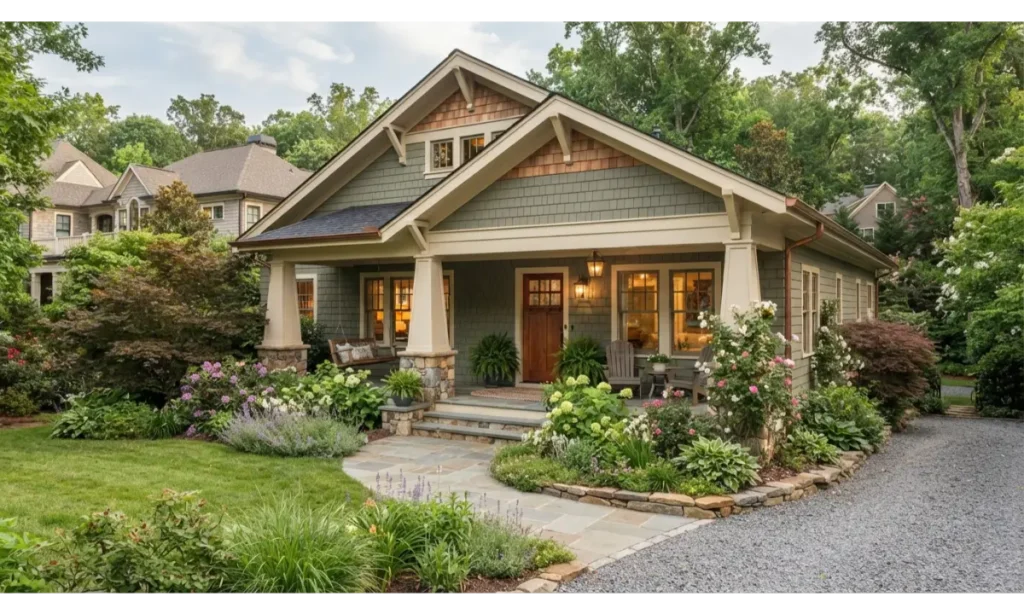
An earthy palette can make a Craftsman Style Home feel connected to its surroundings. Consider muted sage, olive, clay, warm beige, soft brown, charcoal, or dusty blue. These colors complement wood, stone, brick, and greenery while keeping the facade visually calm.
The goal is not to make every part of the house the same color. Use one dominant exterior shade, one trim color, and one or two natural accents. A stained wood door or stone base can provide enough contrast. This restrained approach supports the handcrafted character of Craftsman exterior design without making the house feel overly formal.
Pro Tip: Test exterior colors in morning, afternoon, and evening light. Earthy colors can change noticeably depending on the amount of natural sunlight.
7. Craftsman Style Home With Modern Windows
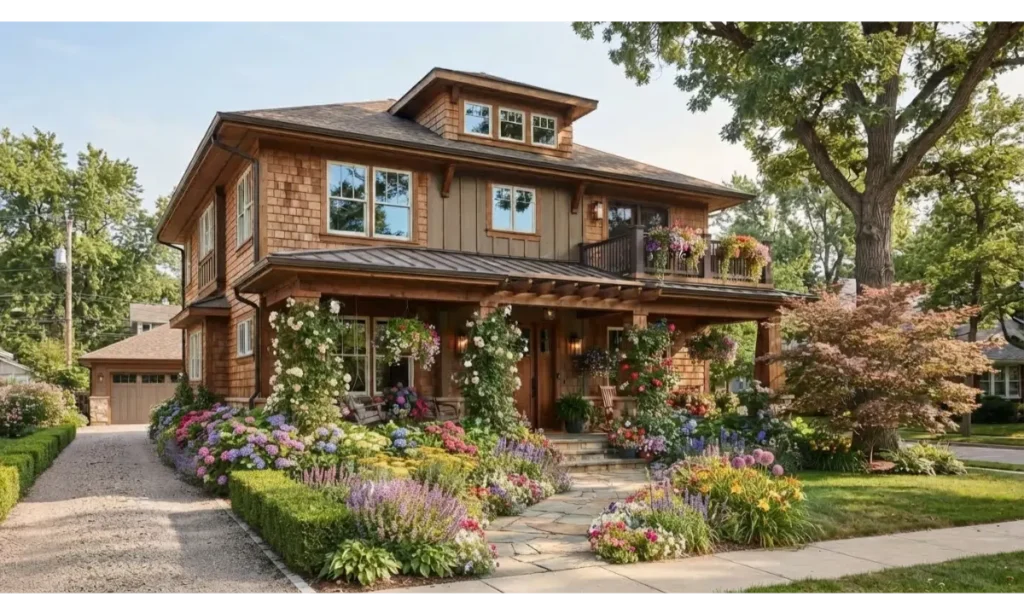
Modern windows can improve comfort while preserving the visual language of a Craftsman Style Home. Look for window designs with strong rectangular proportions, divided panes, and substantial trim. Large picture windows can also work beautifully when their shape complements the original architecture.
Avoid choosing windows only because they are trendy. Their proportions should relate to the roof, porch, doors, and wall sections. A well designed window arrangement can make the exterior feel more balanced while bringing natural light into the interior. This creates a practical blend of historic inspiration and contemporary living.
Pro Tip: If replacing several windows, keep the exterior sightlines consistent. Matching trim widths can make different window sizes feel intentionally designed.
8. A Statement Craftsman Fireplace
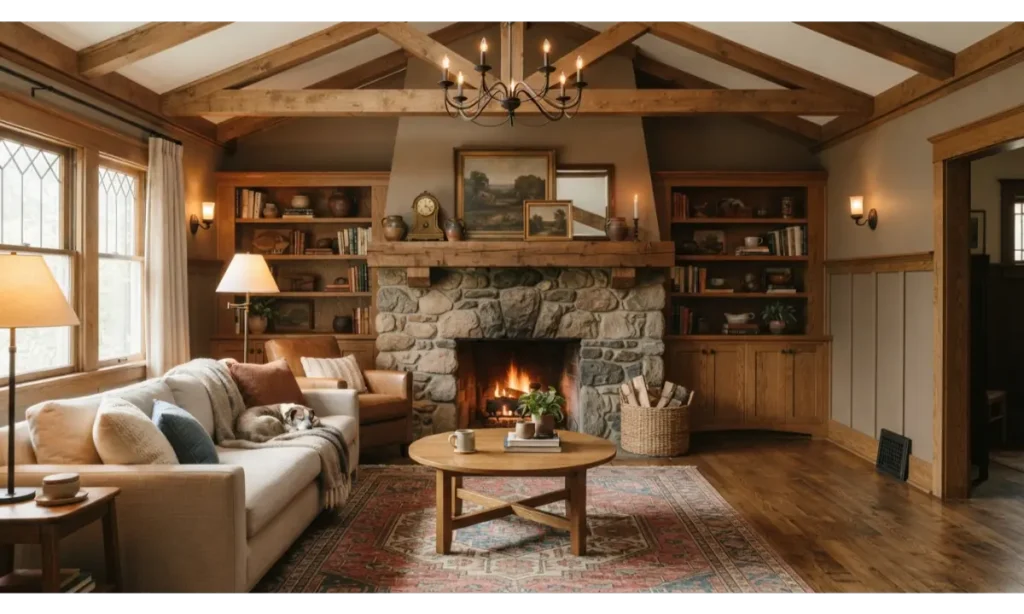
A fireplace can become the heart of a Craftsman living room. Traditional examples often emphasize natural stone, brick, wood mantels, and straightforward geometry. Instead of adding elaborate decoration, let the fireplace structure create the focal point.
Build the surrounding room around warmth and texture. A sturdy sofa, wool rug, leather accent chair, oak coffee table, and simple lighting can reinforce the architectural character. The fireplace should feel connected to the room rather than looking like an isolated feature. This creates the cozy, practical quality associated with Craftsman interior design.
Pro Tip: Keep the mantel styling restrained. A few meaningful objects usually look better than a crowded collection of accessories.
9. Built In Bookshelves Around the Fireplace
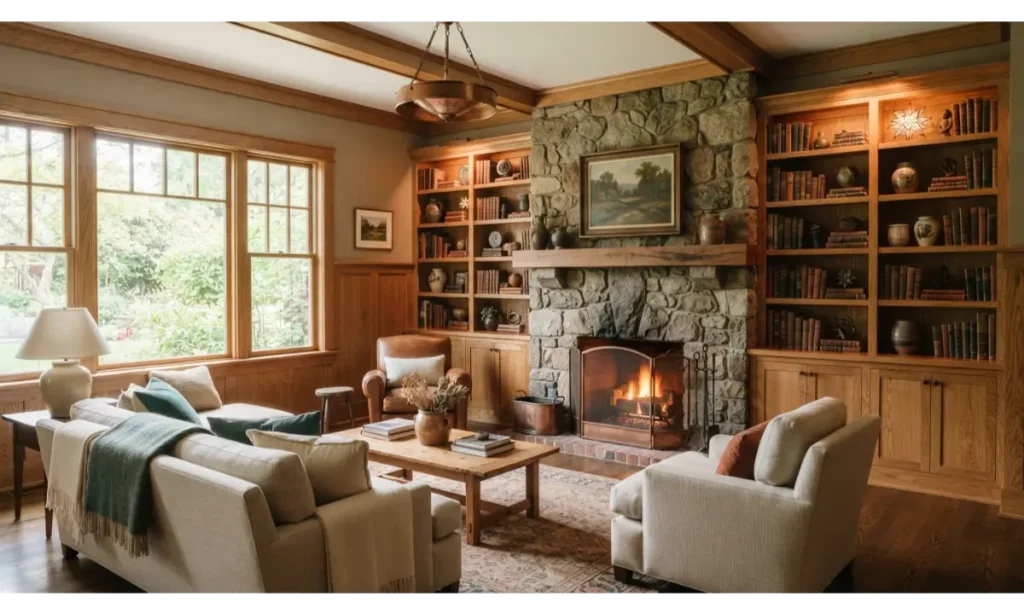
Built in shelving is one of the most useful ways to emphasize Craftsman character. Instead of adding freestanding furniture everywhere, frame the fireplace with custom shelves that follow the room’s architecture. Use oak or another warm wood for a traditional appearance, or paint the shelves if you prefer a softer modern look.
Keep the shelves functional rather than perfectly staged. Mix books with ceramics, framed artwork, woven baskets, and a few plants. The result should feel collected over time. Craftsman home interiors work especially well when storage becomes part of the architecture rather than something added afterward.
Pro Tip: Leave some open space between objects. Empty areas help built ins look intentional instead of crowded.
10. Warm Wood Ceiling Beams
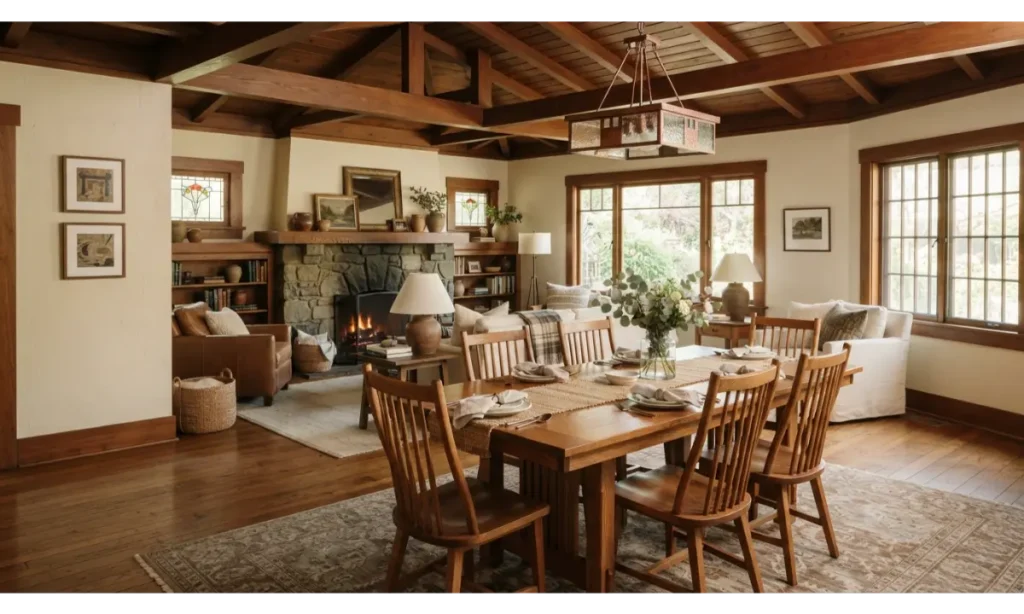
Exposed beams can add architectural depth to a room without requiring elaborate decoration. Dark stained beams create a traditional appearance, while lighter oak can give the same structure a more contemporary feeling. The important factor is proportion. Beams should complement the ceiling instead of making it feel visually heavy.
Pair ceiling beams with simple walls, natural flooring, and furniture with sturdy silhouettes. This creates a comfortable room where the architecture remains visible. If the original house already has exposed structural details, preserve them whenever possible because they can provide genuine character that new decorative features cannot easily reproduce.
Pro Tip: Repeat the beam wood tone in one or two other elements, such as flooring, shelves, or furniture, to create a connected visual rhythm.
11. Craftsman Kitchen With Natural Wood Cabinets
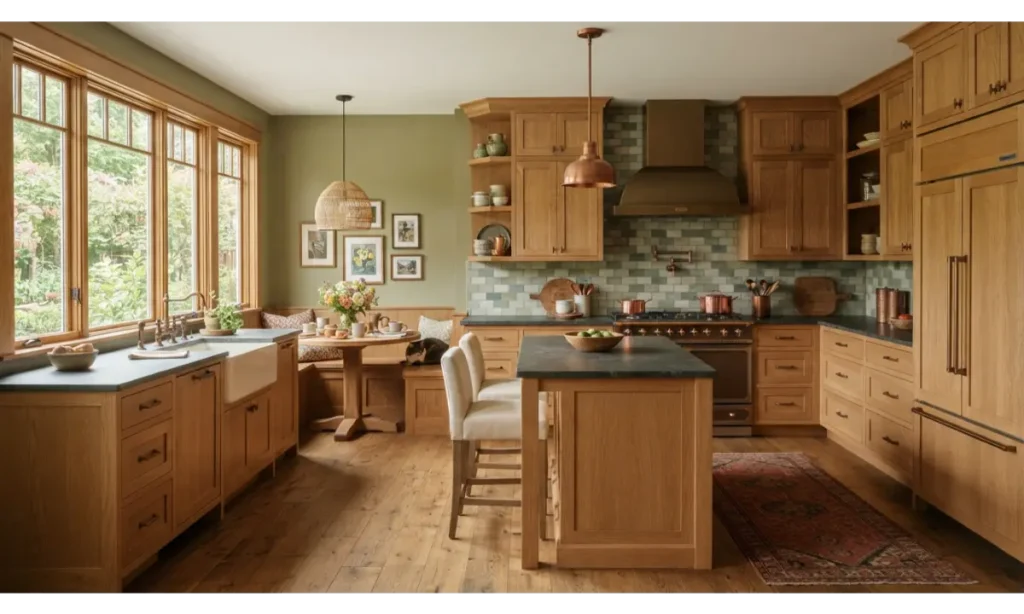
A Craftsman Style Home kitchen can feel modern while still honoring traditional materials. Warm oak cabinets, simple shaker doors, natural stone countertops, and handmade looking tile create an inviting foundation. Choose hardware with a solid feel rather than overly delicate details.
Open shelving can provide another opportunity to showcase craftsmanship, especially when paired with ceramic dishes or wood cutting boards. Keep appliances practical and integrate them carefully so the room retains a calm architectural appearance. A balance of wood, stone, tile, and metal gives the kitchen visual richness without requiring excessive decoration.
Pro Tip: Let one natural material lead the room. If the cabinets have strong grain, choose quieter counters and backsplash materials so the kitchen does not become visually busy.
12. Cozy Craftsman Breakfast Nook
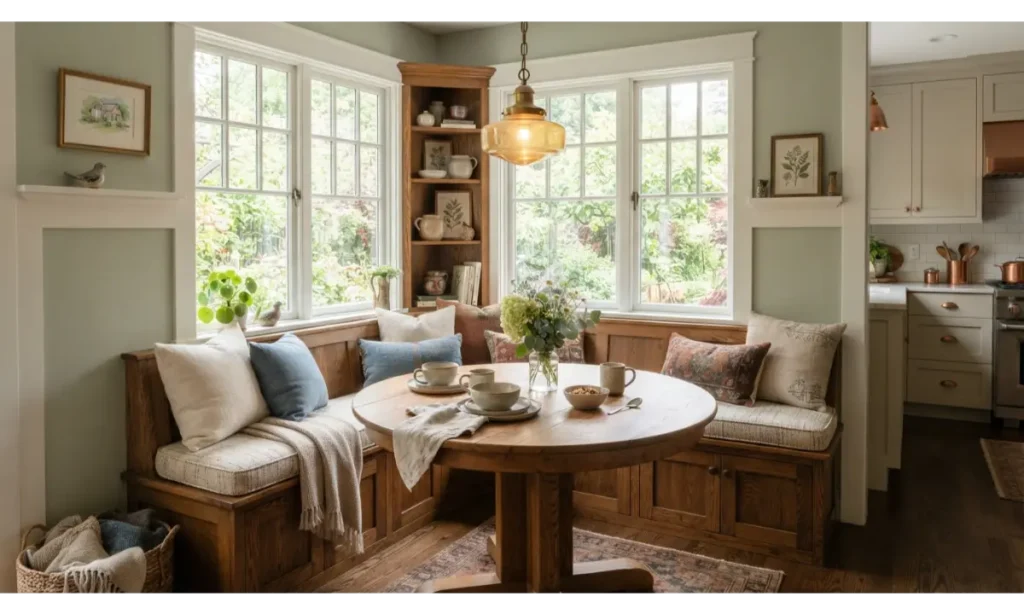
A breakfast nook fits naturally into a Craftsman Style Home because it combines comfort, function, and built in design. A bench beneath a window can create useful seating while taking advantage of natural light. Add a simple wood table and compact chairs to keep the area practical.
Built in drawers beneath the bench can provide hidden storage for linens, games, or everyday kitchen items. Soft cushions and natural fabrics can make the nook feel comfortable without losing its architectural character. This type of space works especially well in homes where every square foot should serve a purpose.
Pro Tip: Use washable upholstery on the bench if the nook will serve as a daily family eating area.
13. Craftsman Dining Room With Dark Wood Trim
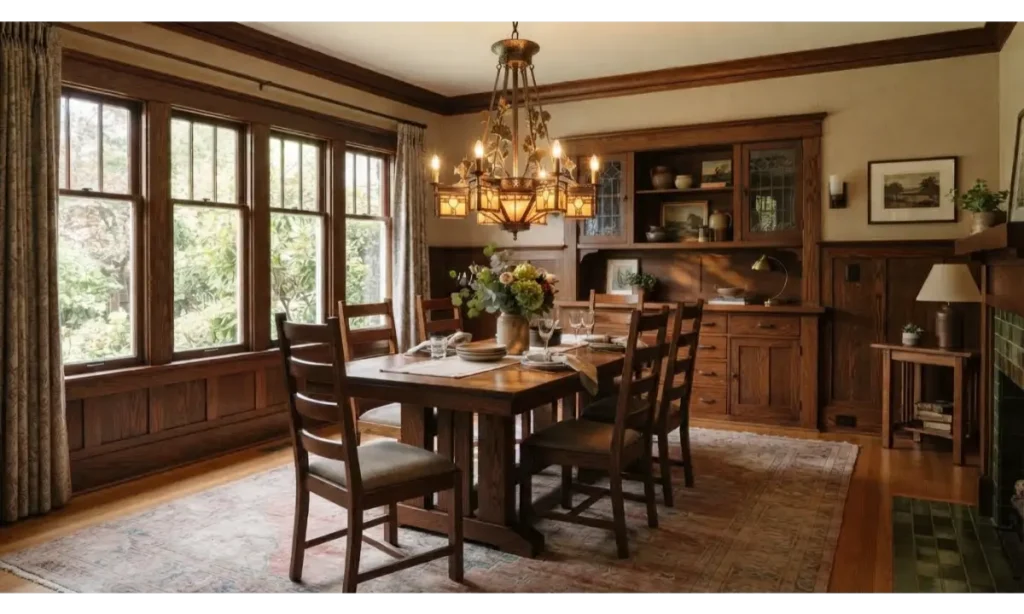
Dark wood trim can give a dining room a strong sense of history and warmth. Instead of painting every wooden element white, consider preserving selected trim around windows, doors, or built ins. A warm stain can highlight the grain and make the architecture feel substantial.
Balance darker wood with lighter walls, natural textiles, and simple furniture. The room should feel comfortable rather than formal. A solid dining table, woven rug, understated pendant, and handcrafted ceramics can reinforce the Arts and Crafts style without turning the room into a museum like setting.
Pro Tip: If the original woodwork remains in good condition, make it the star of the room instead of covering it with competing finishes.
14. Stained Glass Accent Windows
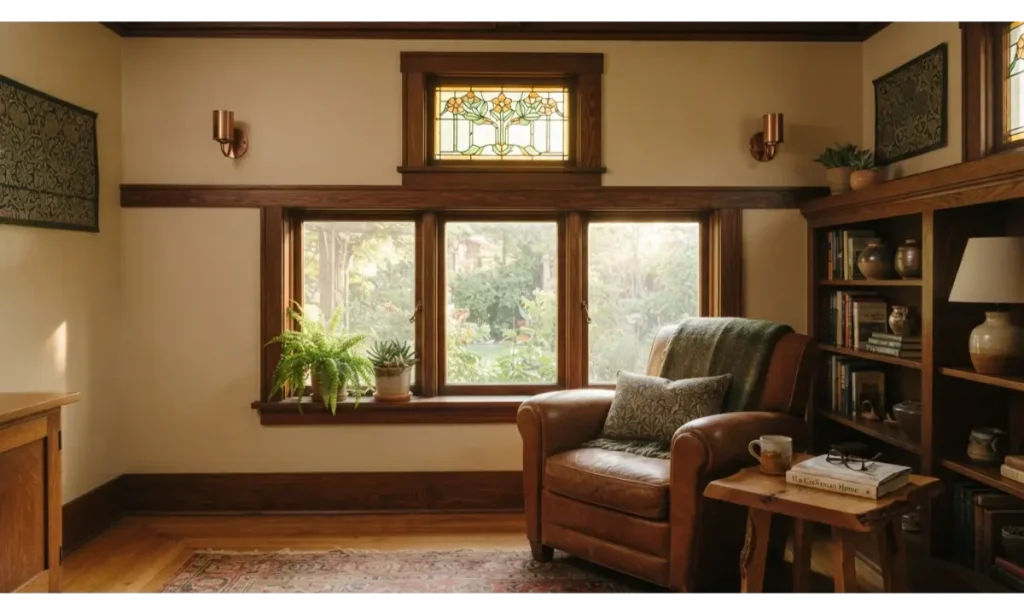
Stained glass can add color and artistry to a Craftsman interior while remaining true to the broader Arts and Crafts tradition. Choose geometric or nature inspired patterns rather than overly ornate designs. A small window near an entry, stairway, or dining room can create a beautiful focal point.
The key is moderation. One carefully placed stained glass feature can have more impact than many decorative panels. Natural daylight will change the appearance throughout the day, giving the room subtle shifts in color. Pair the glass with simple woodwork so its craftsmanship remains easy to appreciate.
Pro Tip: If authentic stained glass is not practical, choose a high quality architectural glass panel with a restrained period inspired pattern.
15. Craftsman Bathroom With Handmade Tile
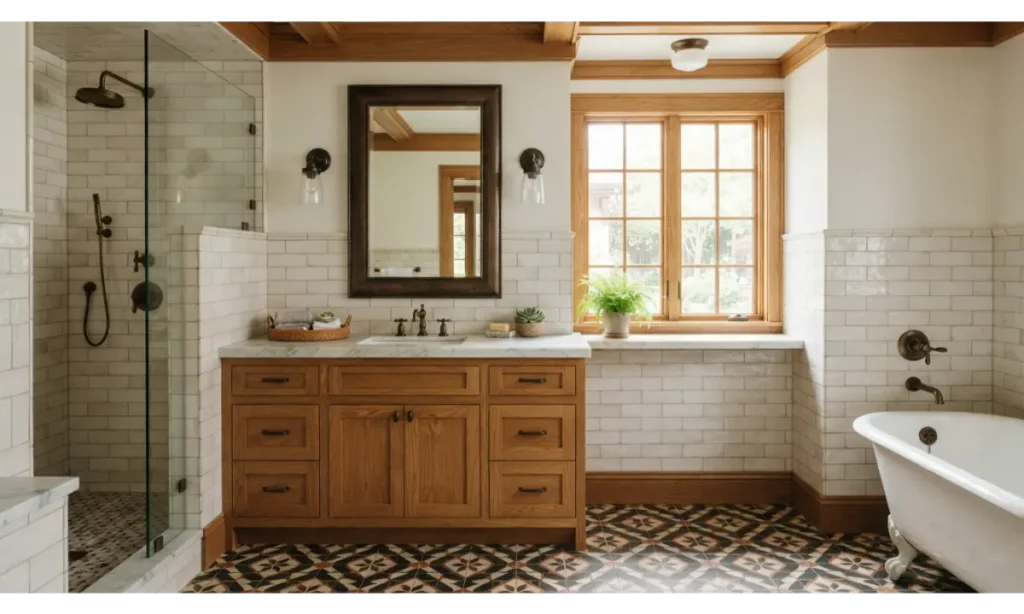
A Craftsman bathroom can combine classic architecture with modern convenience through carefully selected materials. Handmade looking tile, warm wood cabinetry, natural stone, and aged metal fixtures create a layered but relaxed atmosphere. Keep the forms simple so the materials provide most of the visual interest.
A wood vanity can add warmth to a room filled with hard surfaces. Pair it with a simple mirror, practical lighting, and a restrained tile pattern. The result should feel connected to the rest of the house rather than like a completely separate design style.
Pro Tip: Choose grout that complements rather than sharply contrasts with the tile. A softer combination creates a more timeless appearance.
16. Warm Hardwood Flooring
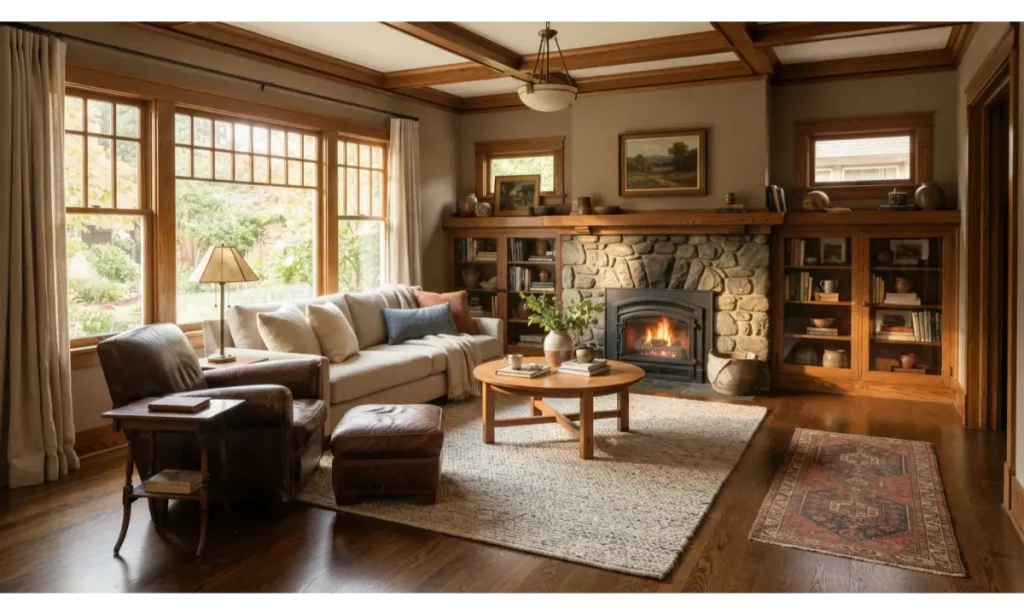
Hardwood flooring provides a strong foundation for Craftsman home decor. Oak, maple, and other natural woods can bring warmth and texture to rooms while connecting visually with doors, trim, shelves, and furniture. Choose a finish that allows the grain to remain visible.
Area rugs can define seating zones without hiding too much of the floor. Neutral wool, vintage inspired patterns, and subtle geometric designs tend to work well with the architectural character. The combination of natural flooring and sturdy furniture creates a room that feels comfortable, durable, and welcoming.
Pro Tip: Coordinate the floor tone with existing woodwork before refinishing. Slight variation can look beautiful, but dramatically different wood colors may compete with each other.
17. Craftsman Entryway With Built In Storage
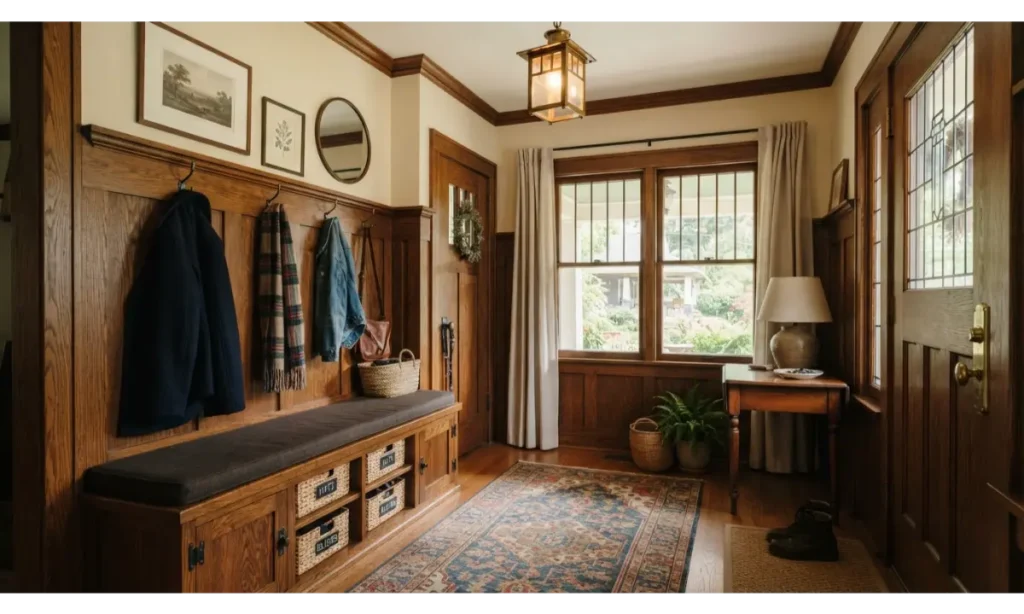
A practical entryway can make a Craftsman Style Home feel organized from the moment you enter. Built in benches, coat hooks, drawers, and closed cabinets provide storage while preserving the clean architectural lines of the room. Natural wood can make the space feel warm and substantial.
Keep everyday items within easy reach but avoid leaving everything exposed. Closed storage can hide shoes, bags, and seasonal accessories while open hooks handle frequently used coats. This balance keeps the entry functional without losing the handcrafted feeling that defines good Craftsman home design.
Pro Tip: Add one durable runner to protect hardwood near the entrance while introducing color and pattern.
18. Window Seat With Built In Storage
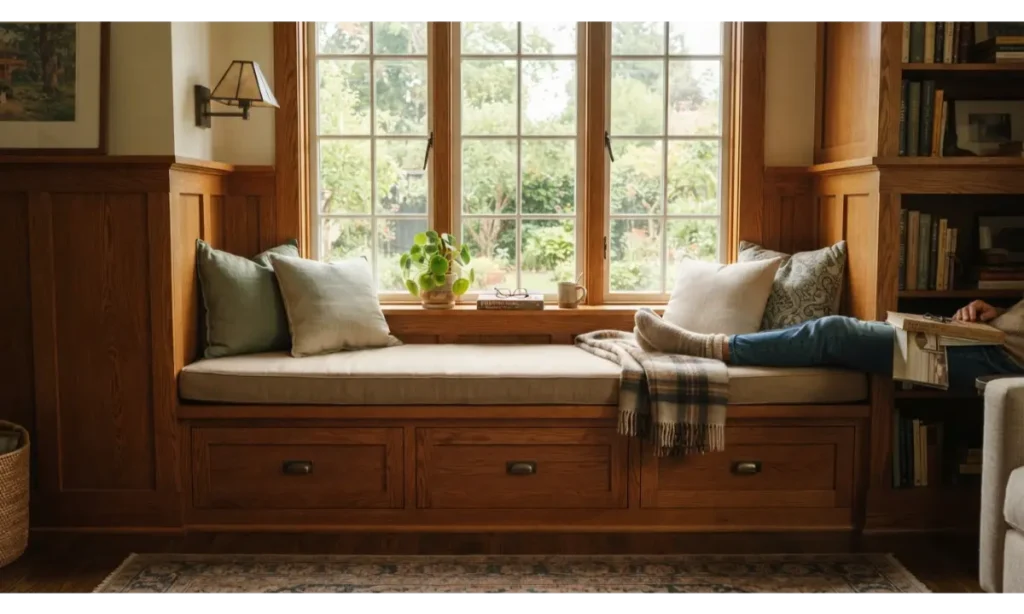
A built in window seat combines several classic Craftsman ideas in one feature. It creates a cozy place to sit, makes use of an otherwise overlooked wall, and can provide valuable hidden storage. Positioning the seat beneath a generous window also brings natural light into the room.
Use durable fabric in a warm neutral or subtle pattern. A few pillows can add softness, but keep the styling relaxed. The surrounding trim should match or complement existing woodwork so the seat looks like part of the architecture rather than an independent piece of furniture.
Pro Tip: Make the seat deep enough for comfortable lounging, but leave enough walking space around it for easy movement.
19. Craftsman Staircase With Detailed Woodwork
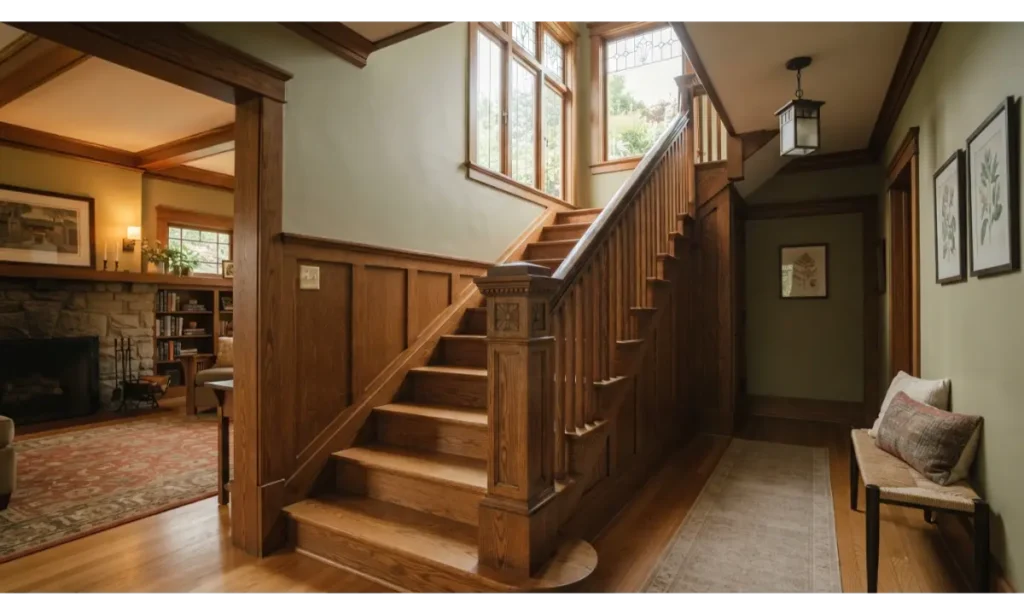
The staircase offers an excellent opportunity to add craftsmanship without decorating every surface. A substantial wood handrail, square balusters, and a carefully shaped newel post can give the space strong architectural character. If the home already has original stair details, preserve them when possible.
Keep the surrounding walls relatively simple so the woodwork remains noticeable. A runner can add comfort and reduce noise while introducing subtle pattern. Warm lighting will also highlight the texture of the wood and make the staircase feel inviting instead of purely functional.
Pro Tip: Match the handrail finish to another major wood element in the home, such as flooring or built in cabinetry.
20. Modern Craftsman Living Room
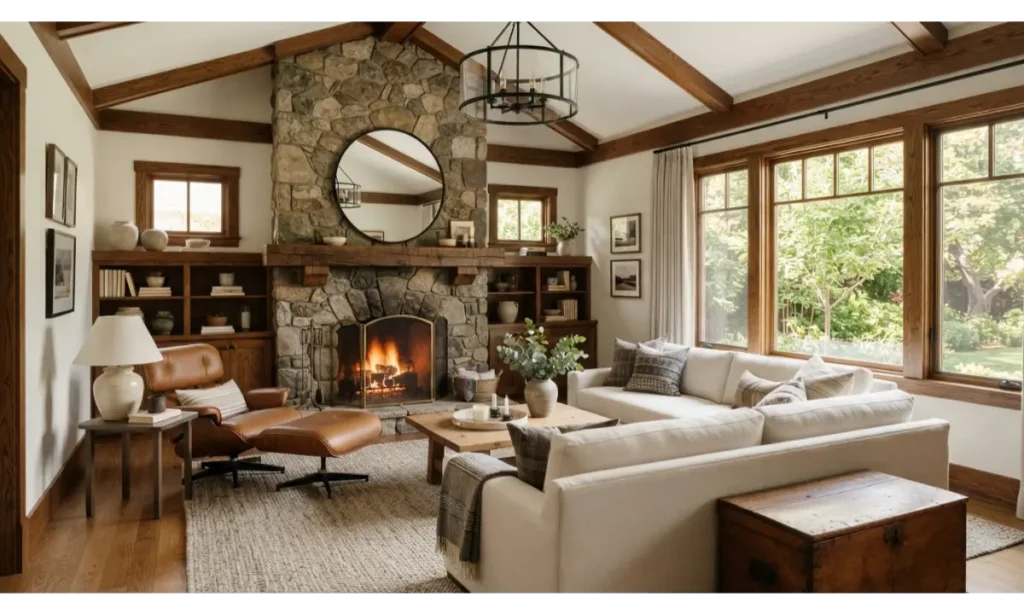
You can create a modern Craftsman Style Home without removing the qualities that make the style special. Keep architectural features such as wood trim, beams, fireplaces, or built ins, then introduce cleaner furniture and simpler textiles. This creates a layered room that feels current but still connected to its roots.
Choose furniture with rounded edges sparingly and combine it with sturdy wood pieces. Neutral upholstery can make the architecture stand out, while black or bronze accents can add a contemporary edge. The goal is balance rather than perfect historical accuracy.
Pro Tip: Update the furniture before changing original architectural details. Good woodwork often provides more lasting character than trendy finishes.
21. Craftsman Garden With Natural Landscaping
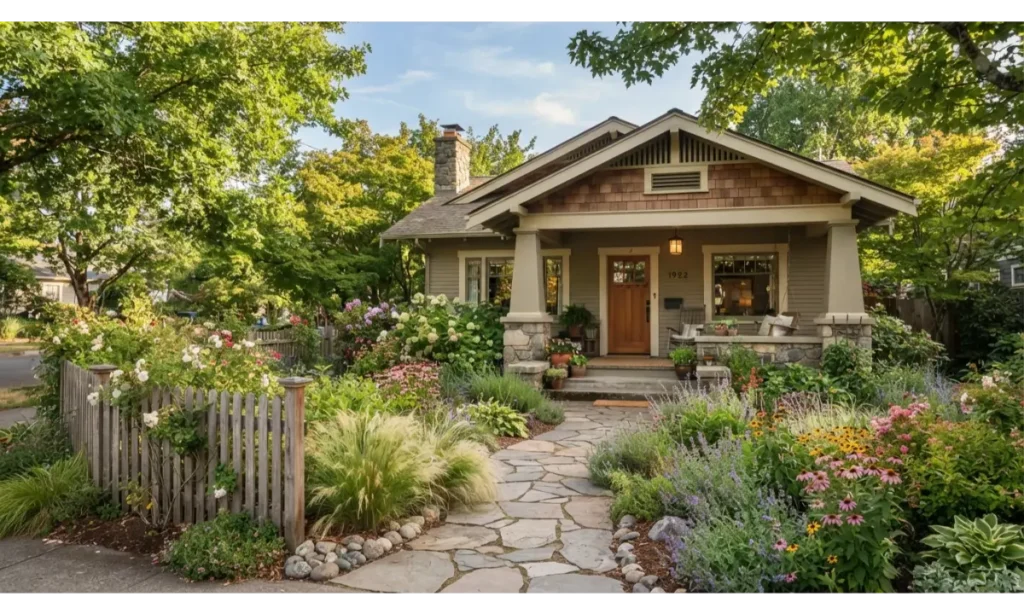
The landscape should feel like an extension of the architecture. Natural stone paths, mature trees, shrubs, grasses, and simple planting beds can complement the grounded proportions of a Craftsman exterior. Avoid making the garden look too formal or symmetrical.
Use plants that suit the local climate and require realistic maintenance. A mixture of different heights can soften the foundation while preserving visibility of the house. The result should feel established and natural, especially around the porch and entry path.
Pro Tip: Keep taller plants away from important architectural features. The porch, columns, windows, and front door should remain visible from the street.
22. Craftsman Exterior Lighting
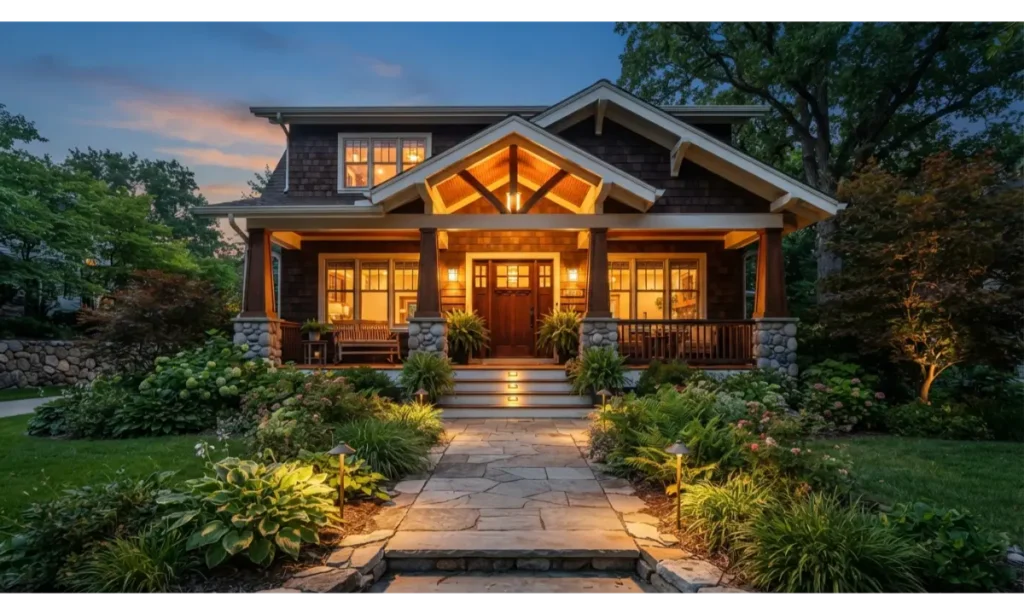
Lighting can transform a Craftsman exterior after sunset. Choose fixtures with simple geometric forms, warm metal finishes, and proportions that suit the house. Lanterns beside the front door can highlight the entry while smaller pathway lights can guide visitors toward the porch.
Avoid excessive brightness. Craftsman design works particularly well with warm, layered lighting that emphasizes materials and shadows. Light the porch, entry, and important landscape areas while allowing darker areas to remain naturally atmospheric.
Pro Tip: Use warm white bulbs rather than very cool light. Warm illumination generally complements wood, stone, brick, and earthy exterior colors more naturally.
23. Timeless Craftsman Style Home With Layered Details
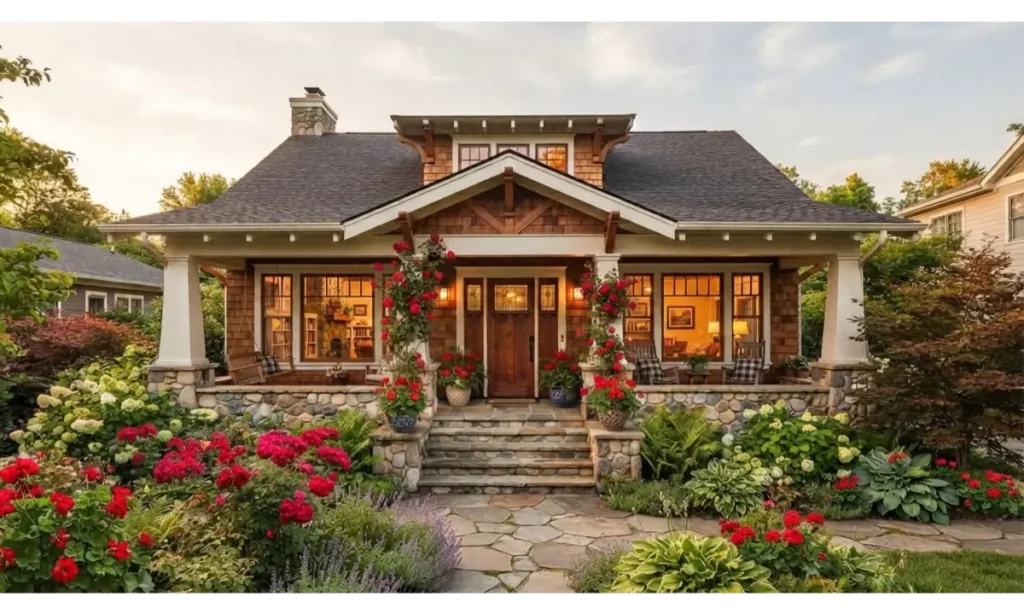
The strongest Craftsman Style Home designs do not depend on one dramatic feature. They combine several compatible elements such as natural wood, stone, deep roof overhangs, substantial porch columns, built ins, warm lighting, and comfortable furniture. Each detail should support the overall feeling of craftsmanship and simplicity.
When bringing these ideas together, start with the architecture and then layer in materials, color, lighting, and furniture. Avoid adding every Craftsman feature at once. A thoughtful combination will feel more authentic than a room filled with obvious themed decorations. The best result feels natural, comfortable, and built to last.
Pro Tip: Choose three defining elements for your project first, such as woodwork, stone, and a welcoming porch, then let the remaining details support them.
Frequently Asked Questions
What makes a Craftsman Style Home different?
A Craftsman Style Home typically emphasizes handcrafted details, natural materials, practical layouts, low pitched roofs, deep overhanging eaves, exposed rafters, substantial porch columns, and strong woodwork. Interiors often include built ins, hardwood floors, fireplaces, generous windows, and simple sturdy furniture.
What colors work best for Craftsman homes?
Earth inspired colors work especially well, including muted greens, warm beige, brown, clay, gray, cream, and subdued blue. Natural wood and stone can provide additional color variation without making the exterior feel overly busy.
Can a modern house have Craftsman style?
Yes. Modern furniture, updated windows, contemporary appliances, and efficient lighting can work beautifully with Craftsman inspired architecture. Keeping a few strong traditional elements, such as wood trim, tapered columns, built ins, or a substantial fireplace, helps preserve the character.
What materials are common in Craftsman homes?
Wood, natural stone, brick, stained glass, hardwood, and handcrafted looking tile are common choices. The style places strong emphasis on natural materials and visible craftsmanship rather than excessive ornamentation.
Are built ins important in Craftsman interiors?
Built ins are a particularly useful Craftsman feature because they combine storage with architecture. Bookshelves, benches, cabinets, and window seats can make a room more functional while creating a custom appearance.
How can I make a Craftsman house look more modern?
Start by simplifying the furniture and color palette while preserving architectural details. Use comfortable contemporary seating, modern lighting, clean textiles, and updated appliances. Keep original woodwork and strong architectural features whenever possible.
What should I focus on when updating a Craftsman exterior?
Start with the front porch, roofline, columns, siding, windows, front door, and landscaping. These elements have a major effect on curb appeal. Deep eaves, tapered columns, exposed rafters, and natural materials are especially recognizable Craftsman characteristics.
Conclusion
A beautiful Craftsman Style Home is less about following a strict decorating formula and more about creating harmony between architecture, materials, comfort, and function. Natural wood, stone, generous porches, built ins, warm lighting, strong rooflines, and thoughtful landscaping can work together to create lasting character.
Whether you are renovating a historic bungalow or adding Craftsman inspired details to a newer property, begin with the features that naturally suit your house. Preserve useful architectural elements, choose materials with warmth and texture, and avoid unnecessary decoration. With the right balance, your home can feel welcoming, authentic, practical, and timeless for years to come.