23 Window Sill Decor Ideas to Transform Your Space
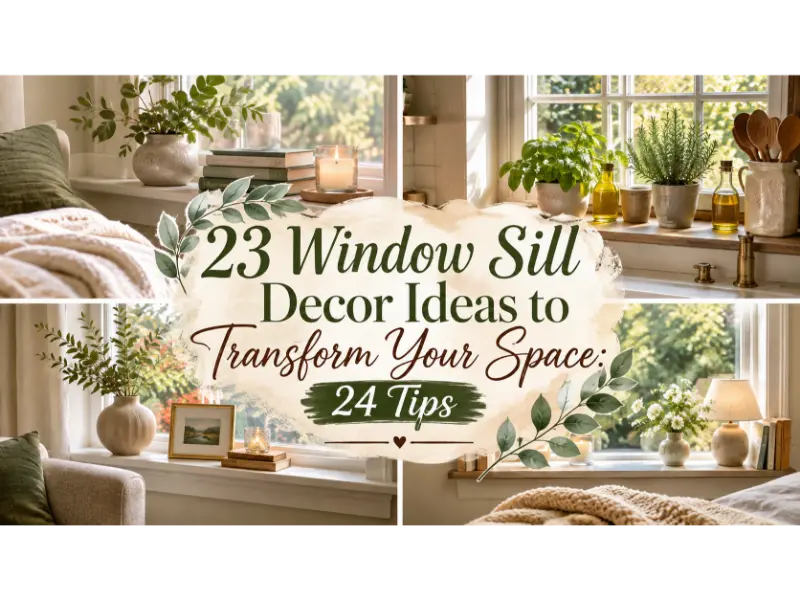
A window sill can become one of the most charming details in a room when you style it with purpose. Instead of leaving this small surface empty or filling it with random objects, you can turn it into a beautiful focal point that adds warmth, personality, color, and function. From lush greenery and collected objects to cozy reading corners and seasonal displays, these Window Sill Decor Ideas offer simple ways to make overlooked spaces feel intentional and inviting.
Before decorating, consider the amount of natural light, the width of your sill, and how often you need to open the window. Plants especially need the right conditions to stay healthy. The Royal Horticultural Society recommends choosing houseplants according to the direction of the window and its changing light levels throughout the year.
Creative Window Sill Styling Ideas for Every Room
1. Window Sill Decor Ideas With Layered Greenery
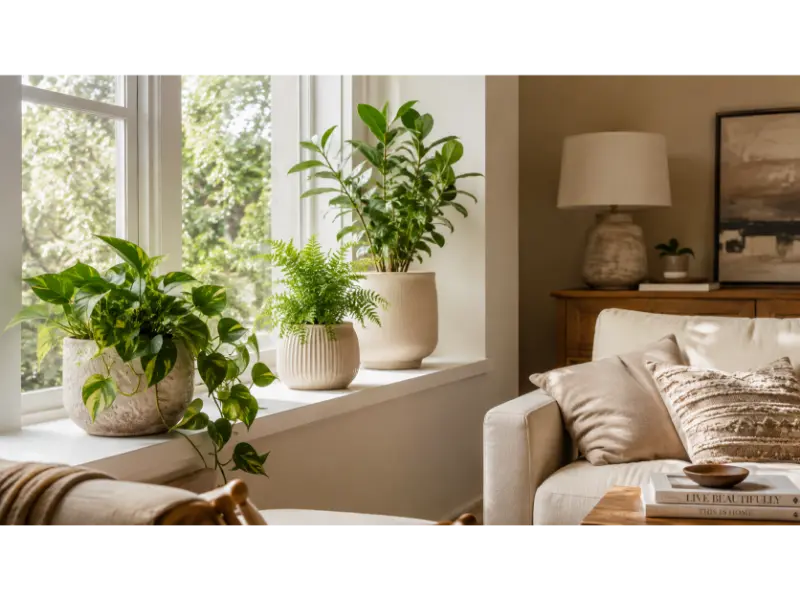
Window Sill Decor Ideas become especially inviting when you use plants to create a small indoor garden. Combine plants with different heights rather than placing identical pots in a straight row. A taller leafy plant can anchor one side while a compact fern and trailing plant fill the middle and edge. Choose pots in related colors such as cream, terracotta, or soft gray so the greenery remains the main visual feature.
Think about the window’s exposure before choosing your plants. Bright south facing windows can suit sun loving plants such as cacti and succulents, while different light conditions call for different choices. The RHS notes that light changes throughout the day and across seasons, so a plant that thrives in one window may struggle in another.
Pro Tip: Keep the tallest plant toward the side rather than directly in the center to preserve an open view through the glass.
2. Create a Mini Herb Garden
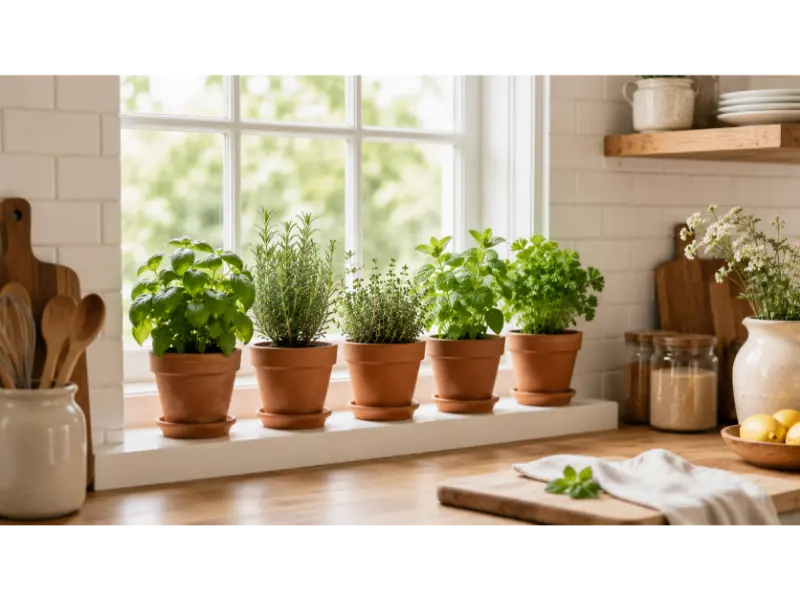
A kitchen window sill offers a natural place for a compact herb garden. Arrange basil, thyme, rosemary, parsley, or mint in small pots that fit comfortably without crowding the glass. Matching terracotta containers create a warm farmhouse feel, while simple white ceramic pots work beautifully in modern kitchens. Place the herbs where you can easily reach them while preparing meals.
This approach adds both beauty and function to an otherwise forgotten surface. The greenery softens hard kitchen materials such as tile, stone, and metal while giving the room a fresh, lived in feeling. Make sure every container has suitable drainage and avoid turning a narrow sill into an obstacle near a frequently opened window.
Pro Tip: Group herbs by height and keep the plants you use most often closest to the working side of the kitchen.
Read More:23 Spa Like Bathroom Decor Ideas for a Calm Retreat
3. Style a Minimalist Candle Display
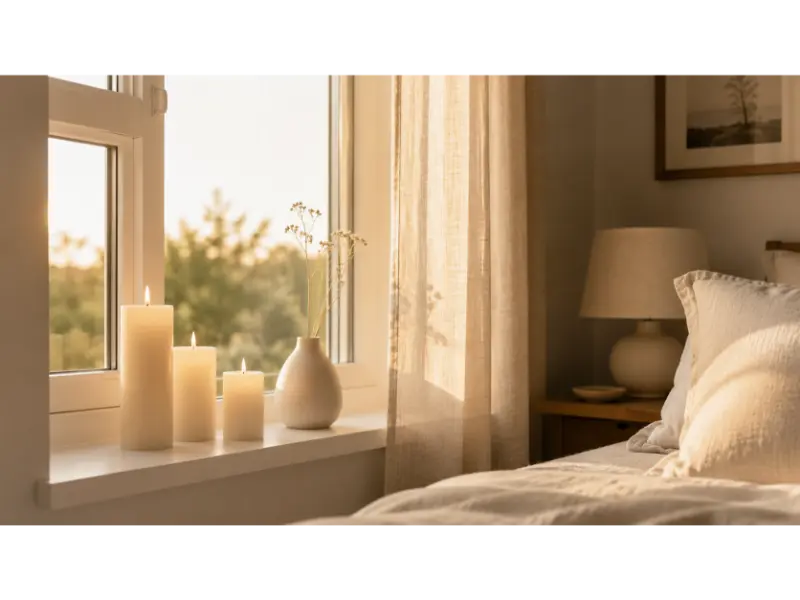
For a calm bedroom or living room, a small candle arrangement can create a peaceful focal point. Choose candles in two or three complementary sizes and place them beside one simple ceramic vase. Cream, ivory, taupe, and warm beige shades create an understated look that works especially well with neutral interiors. Keep the arrangement low enough that it does not compete with the view.
The key to this style is restraint. A window sill does not need many accessories to look finished. One visual anchor, one supporting object, and some open space can create a more sophisticated result than a crowded collection. Interior designers often emphasize intentional styling and negative space because leaving areas visually quiet helps important objects stand out.
Pro Tip: Use flameless candles if the window has curtains, blinds, or other materials close to the sill.
4. Add a Small Reading Nook
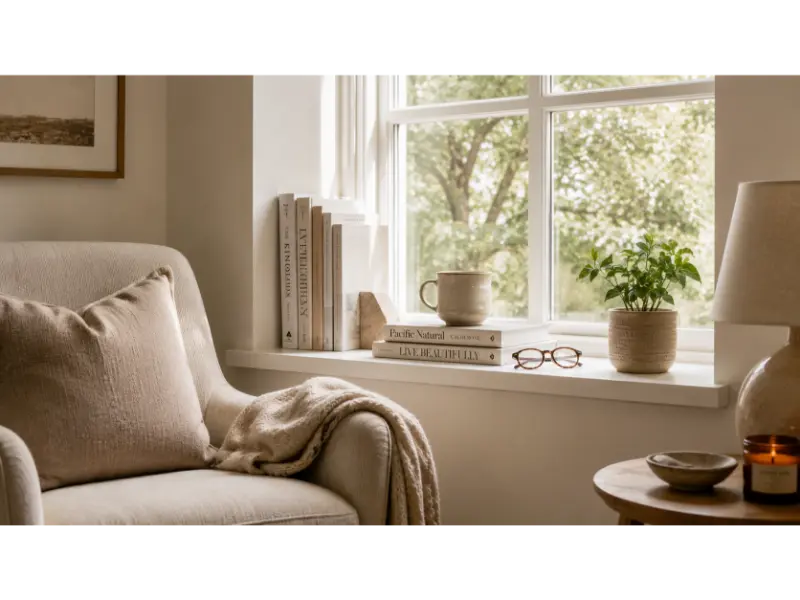
Turn a wide window sill into part of a relaxing reading corner by styling it with a few carefully selected essentials. Stack two or three favorite books beside a small plant and a decorative cup. If the window has a deep ledge, add a cushion or soft textile to make the area feel even more inviting. Keep the styling simple so the space remains practical.
Natural light makes a reading corner feel bright and welcoming during the day. Position your chair so it benefits from daylight without blocking the window or making the room difficult to move through. A nearby floor lamp can provide another layer of light for evenings, creating a comfortable transition from daytime reading to nighttime relaxation.
Pro Tip: Choose books with attractive covers that coordinate with the room instead of using the sill as a storage pile.
5. Build a Neutral Ceramic Collection
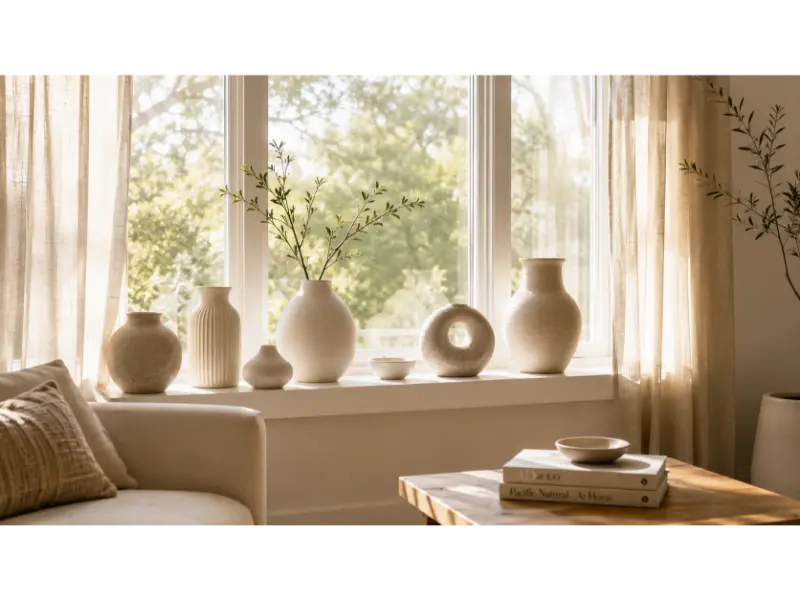
A collection of ceramic objects can give a window sill a curated, artistic appearance without adding strong color. Look for handmade looking vases, small bowls, sculptural pieces, and textured pottery in neutral tones. Arrange them in varying heights so the display feels collected rather than perfectly symmetrical. A few imperfect shapes can add character to an otherwise simple interior.
This look works particularly well with organic modern, Scandinavian, Japandi, and minimalist rooms. Natural materials such as ceramic, stone, wood, and linen create subtle texture while keeping the overall palette quiet. Leave visible gaps between objects so each piece has enough breathing room. Too many similar accessories can quickly make a narrow surface feel busy.
Pro Tip: Repeat one material from the surrounding room, such as wood or linen, to connect the sill styling with the larger space.
Read More:22 Mermaid Bathroom Decor Ideas That Wow Guests
6. Use a Trailing Plant for Soft Movement
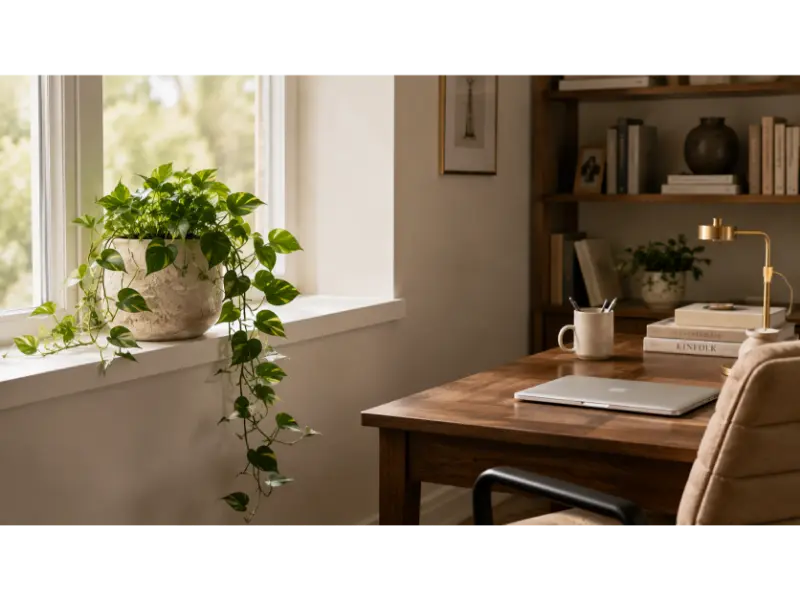
Trailing plants can make a hard architectural edge feel softer and more organic. Place a pothos or another suitable trailing houseplant near one side of the sill and allow its foliage to naturally fall downward. The relaxed shape creates movement and breaks up straight lines around the window. Choose a simple planter so the foliage remains the main attraction.
Before choosing a trailing plant, consider the available light and the temperature around the glass. Houseplants can experience changing conditions throughout the year, and some plants may dislike cold drafts or intense direct sunlight. The RHS recommends matching plants to the conditions of the specific location rather than choosing solely for appearance.
Pro Tip: Let the foliage grow naturally instead of trimming it into a rigid shape for a more relaxed look.
7. Create a Small Coffee Station
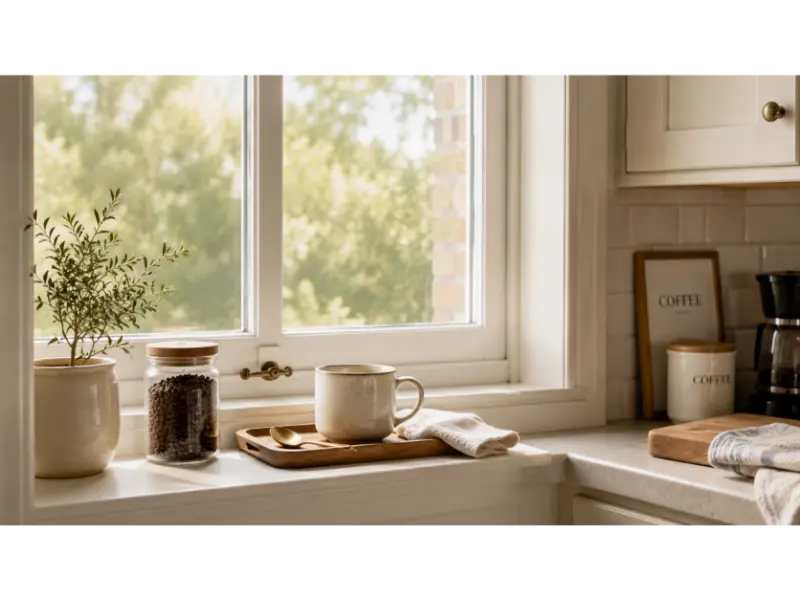
If your kitchen has a broad sill near the breakfast area, turn it into a tiny coffee display. Place a small wooden tray with a beautiful mug, a compact jar, and one decorative plant. The tray keeps the arrangement visually organized and makes it easy to move everything when you need to clean the sill.
Choose accessories that already match your kitchen finishes. Warm wood works beautifully with cream cabinetry, while black or brushed metal details can complement a contemporary space. Keep the arrangement compact enough to avoid interfering with window operation. A useful display should enhance the room without creating another surface that requires constant rearranging.
Pro Tip: Use one attractive storage jar instead of several packages to keep the coffee corner visually clean.
8. Display Framed Mini Art
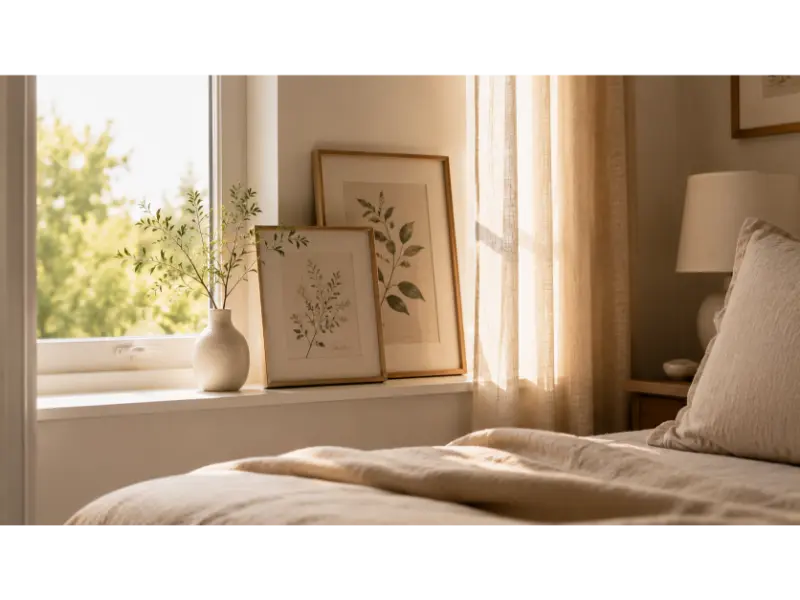
Small framed artwork can give a window sill the feeling of a miniature gallery. Lean two prints against the wall instead of hanging them, then add one small vase or sculptural object in front. Botanical illustrations, abstract artwork, line drawings, and vintage inspired prints all work well. Choose frames that relate to the room’s existing finishes.
Leaning art also makes seasonal decorating easier because you can change the prints without putting additional holes in the wall. Keep the number of pieces limited so the sill does not become visually crowded. If the window already has a strong view, choose artwork with quiet colors that complements rather than competes with the scenery.
Pro Tip: Overlap the frames slightly to create depth and avoid a stiff, showroom style arrangement.
9. Try a Cottagecore Flower Display
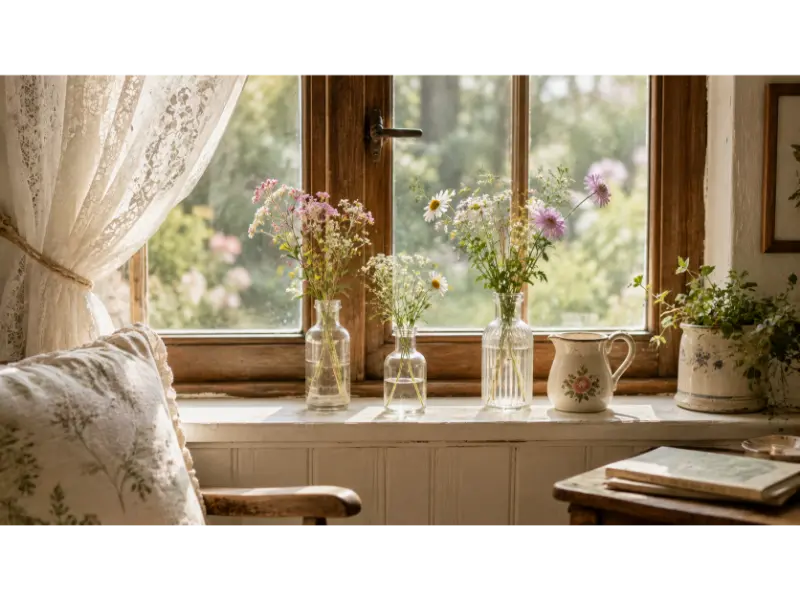
For a romantic cottage inspired look, use small glass bottles or vintage style ceramic jugs filled with delicate flowers. Instead of one large bouquet, create several miniature arrangements with slightly different heights. Soft white, blush, lavender, and pale yellow flowers can create a gentle palette that feels naturally connected to the outdoors.
This style works especially well in bedrooms, kitchens, and breakfast spaces where you want the room to feel personal rather than overly polished. Mix new flowers with a few dried stems for additional texture and longevity. Keep the containers narrow if your sill is shallow, and make sure water cannot spill onto painted wood or delicate surfaces.
Pro Tip: Use odd numbers of small vessels for a more relaxed arrangement with natural visual rhythm.
10. Add a Seasonal Fall Display

Autumn gives you an easy opportunity to refresh the window area with warm seasonal accents. Use miniature pumpkins, dried wheat, amber glass, small pinecones, and a textured vase to create a cozy fall display. Keep the palette focused on warm neutrals, muted orange, cream, brown, and natural wood for a sophisticated result.
The best seasonal displays feel edited rather than overloaded. Choose two or three recognizable fall elements and combine them with everyday decor so the arrangement does not look temporary or overly themed. This makes it easier to transition into winter later by simply replacing one or two pieces instead of redesigning the entire sill.
Pro Tip: Choose natural textures over brightly colored plastic decorations for a more timeless autumn look.
11. Make a Christmas Window Sill Scene

A Christmas window display can become a charming focal point with only a few carefully chosen pieces. Arrange miniature evergreen trees alongside small ceramic houses and a strand of warm fairy lights. Add a few pine branches for natural texture, but avoid blocking too much of the glass. White, green, wood, and subtle metallic accents create an elegant holiday palette.
Think of the display as a miniature winter landscape rather than a collection of Christmas decorations. Vary the height of the trees and houses to create depth, then leave some empty space between them. If you use lighting, keep cords tidy and choose products designed for the intended indoor use.
Pro Tip: Use warm white lights rather than multicolored strands when you want a refined, magazine inspired appearance.
12. Create a Japandi Inspired Sill
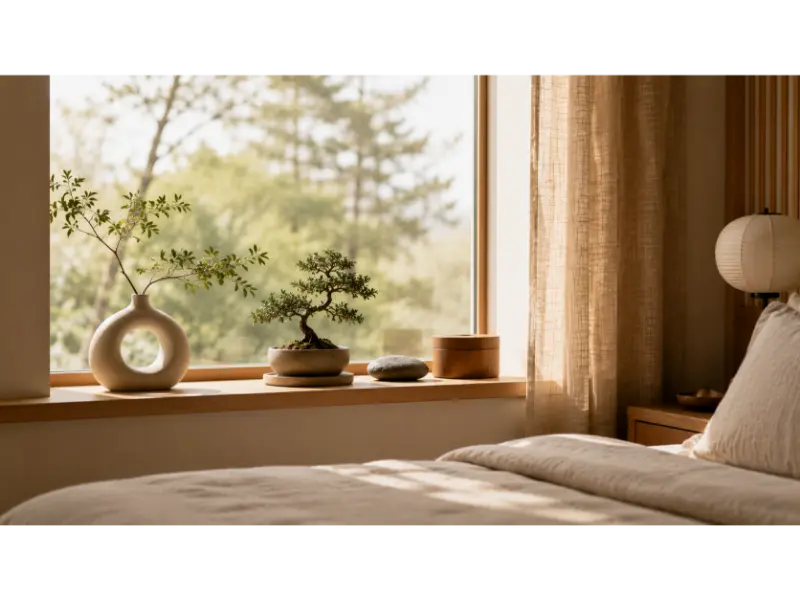
Japandi styling works beautifully on a window sill because it relies on simplicity, natural materials, and intentional placement. Choose one sculptural ceramic vase, a small leafy plant, a smooth stone, or a simple wooden object. Keep the palette close to beige, cream, soft brown, muted green, and natural wood.
The goal is not to fill the entire surface. Instead, create a quiet composition that allows each object to breathe. Natural daylight becomes part of the decoration, changing the mood throughout the day. This approach works particularly well in bedrooms and living rooms where you want a peaceful atmosphere without excessive visual stimulation.
Pro Tip: Start with fewer objects than you think you need and add only one more piece if the arrangement feels incomplete.
13. Style a Small Bathroom Windowsill
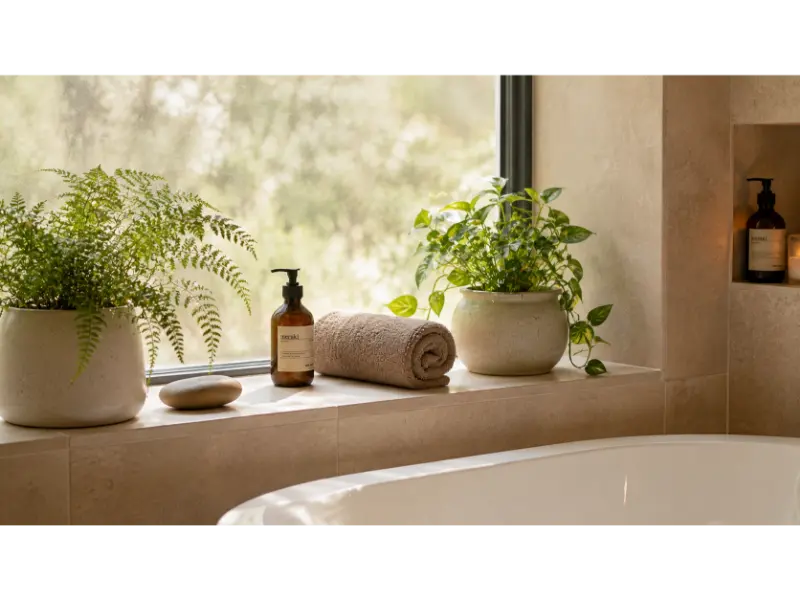
A bathroom window sill can become a simple spa inspired display. Use moisture friendly plants, a small ceramic pot, a rolled hand towel, and one or two understated accessories. Glass bottles and smooth stone details can reinforce the clean, natural feeling while keeping the arrangement practical.
Bathrooms often have different humidity and temperature conditions from bedrooms and living rooms. This can make them suitable for certain plants, but you still need to consider the amount of light available. Choose plants according to both humidity and window exposure rather than assuming every tropical plant will thrive there.
Pro Tip: Keep the sill easy to wipe so your beautiful arrangement never becomes a difficult cleaning zone.
14. Add a Vintage Thrifted Look
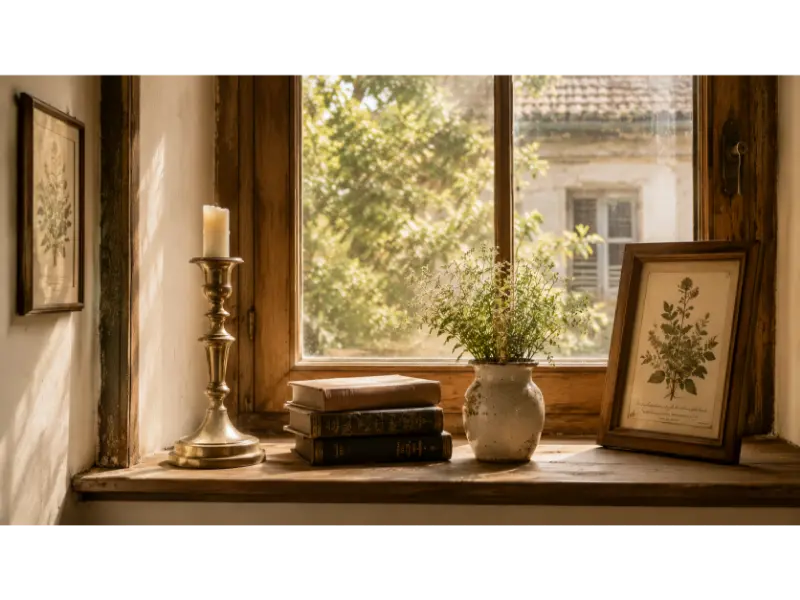
Give your sill personality by mixing thrifted and vintage inspired objects. An old book, brass candlestick, ceramic vessel, small framed print, or weathered wooden object can create a collected look. The trick is to choose pieces that share a visual connection without making everything match perfectly.
This style works particularly well in traditional, cottage, English country, and eclectic interiors. Use the window as a backdrop for objects with character rather than trying to make every item look new. A few imperfections can make the arrangement feel authentic and personal, especially when combined with natural daylight and textured curtains.
Pro Tip: Repeat one color from an older object somewhere else in the room to make the vintage display feel intentional.
15. Create a Tiny Terrarium Garden
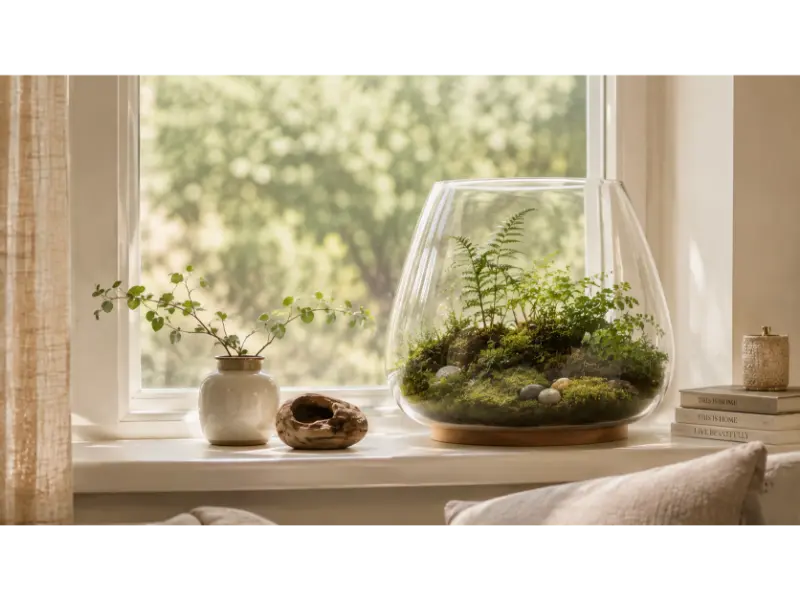
A terrarium can bring the feeling of a miniature garden into a small space. Choose a clear glass vessel and fill it with suitable miniature plants, moss, stones, or other natural details. Its transparent form keeps the arrangement visually light, making it especially useful for narrow sills where solid accessories might look heavy.
Terrariums can also become decorative focal points without requiring a large collection of accessories. The RHS notes that illuminated terrariums can work as decorative indoor features, with miniature foliage plants and moss particularly suited to certain enclosed setups.
Pro Tip: Place the terrarium where it receives appropriate light but avoid harsh direct sunlight that can overheat the glass enclosure.
16. Use Books and Decorative Objects
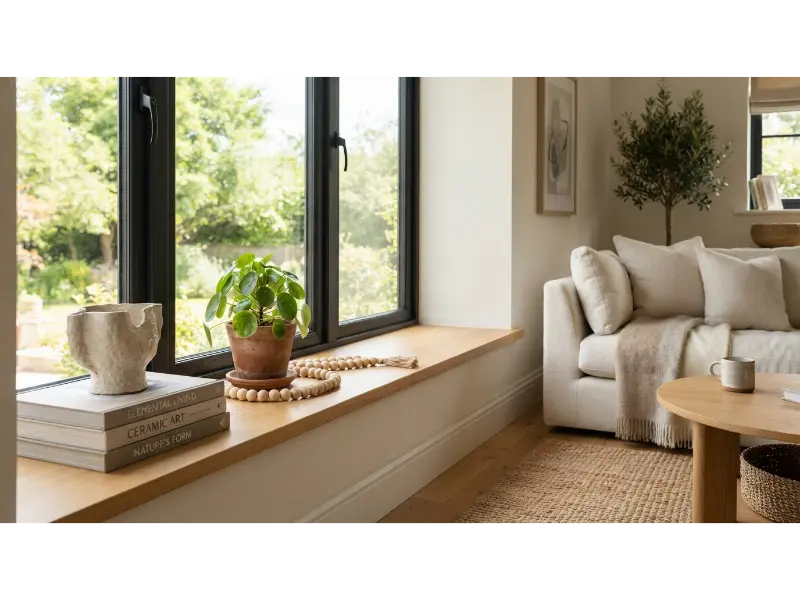
Books offer an easy way to add height and personality to a window display. Stack two or three books horizontally and place a small decorative object or plant on top. The layered arrangement creates visual height without requiring large accessories. Choose neutral covers for a minimalist room or colorful covers when you want a stronger accent.
Avoid using the sill as overflow storage for books you do not have room for elsewhere. A decorative stack should feel deliberate. Choose titles that interest you or covers that contribute to the room’s visual story. This makes the display feel more personal and prevents it from becoming another cluttered storage area.
Pro Tip: Keep the stack low enough that it does not interfere with curtains, blinds, or the opening mechanism.
17. Decorate With Dried Pampas and Natural Stems
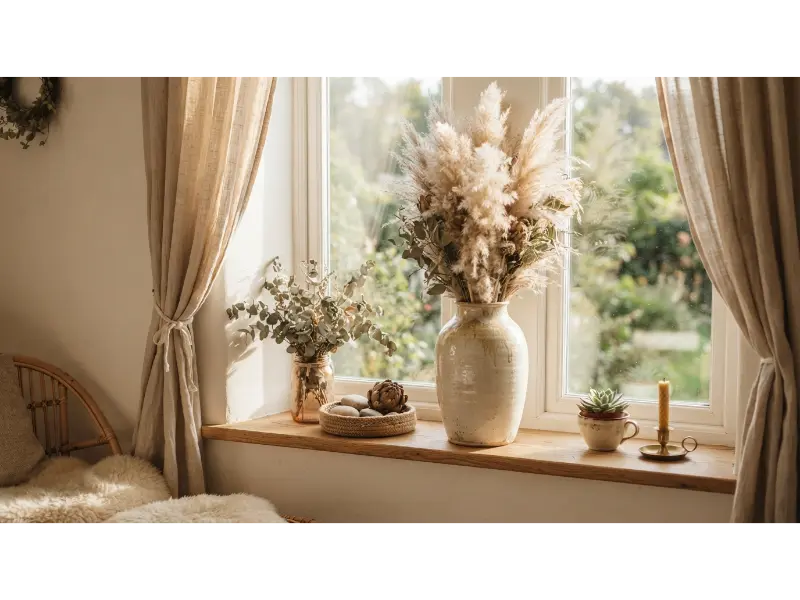
Dried stems are useful when you want natural texture without maintaining fresh flowers. Place a few pampas stems, eucalyptus, wheat, or other dried branches inside a tall narrow vase. Their soft shapes contrast beautifully with straight window frames and add height without requiring many decorative pieces.
Keep the arrangement visually balanced by placing the tallest stems toward one side. This creates an asymmetrical composition that feels relaxed and modern. Dried materials also work across seasons, making them a practical choice when you want decor that can remain in place for several months.
Pro Tip: Trim the stems gradually instead of cutting them all to the same height so the arrangement looks naturally gathered.
18. Create a Coastal Window Display
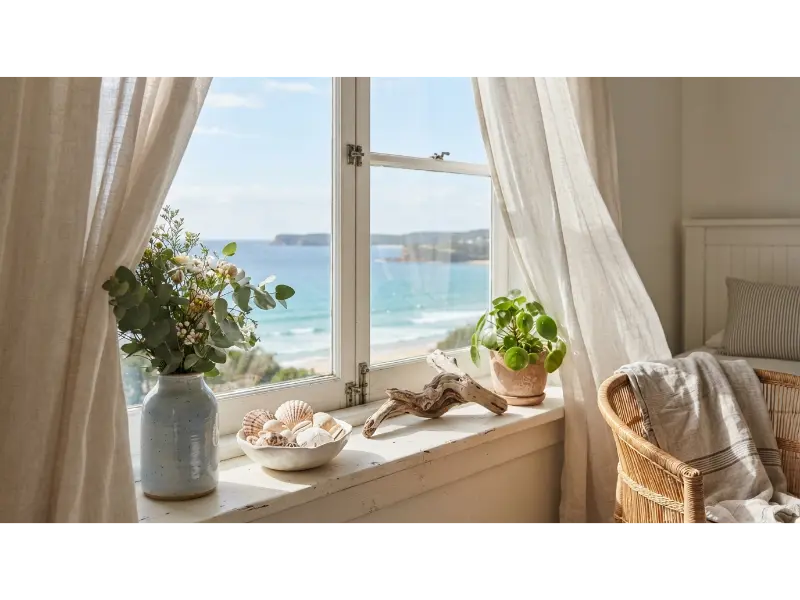
Bring a subtle coastal feeling indoors with pale blue ceramics, natural wood, white shells, woven textures, and soft greenery. Rather than covering the sill with obvious nautical decorations, focus on materials and colors that suggest the coast. A simple blue vase beside a small shell bowl can feel much more sophisticated than a collection of themed objects.
This style works beautifully with white walls, linen curtains, light wood, and natural fiber rugs. Keep the palette restrained so the window remains airy and open. The combination of soft blue and warm natural materials can make a room feel brighter without relying on bold color.
Pro Tip: Choose one coastal accent as the focal point and use natural textures to support it.
19. Make a Small Home Office Feel Livelier
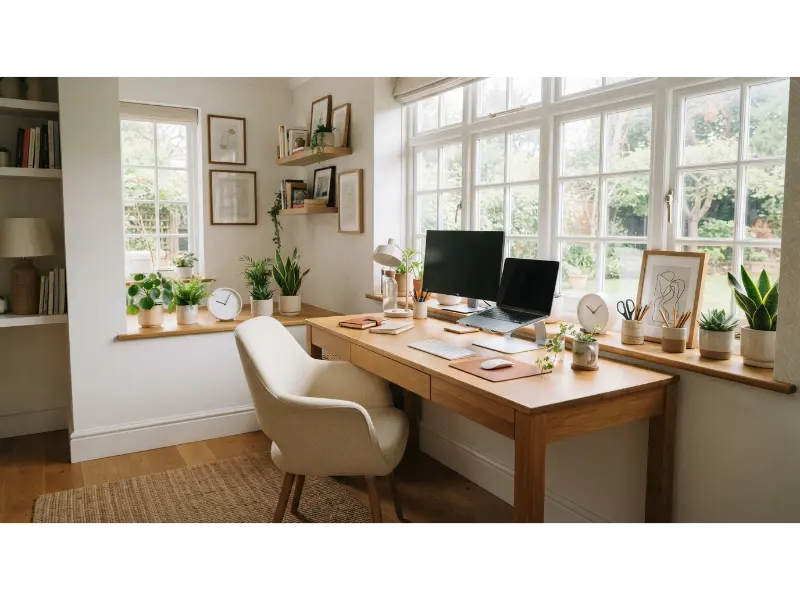
A home office can benefit from a little greenery and personality near the window. Place a compact plant beside a small clock, framed print, or ceramic container. These details soften the functional appearance of the workspace while allowing the natural view to become part of the room’s design.
Keep the sill visually calm if your desk already contains supplies, screens, and paperwork. Too many small objects can compete with your workspace and make the room feel busy. A simple arrangement with one plant and two supporting pieces usually creates enough interest without distracting from work.
Pro Tip: Match the colors of your sill accessories to your desk or office chair for a more cohesive workspace.
20. Try a Monochromatic White Display
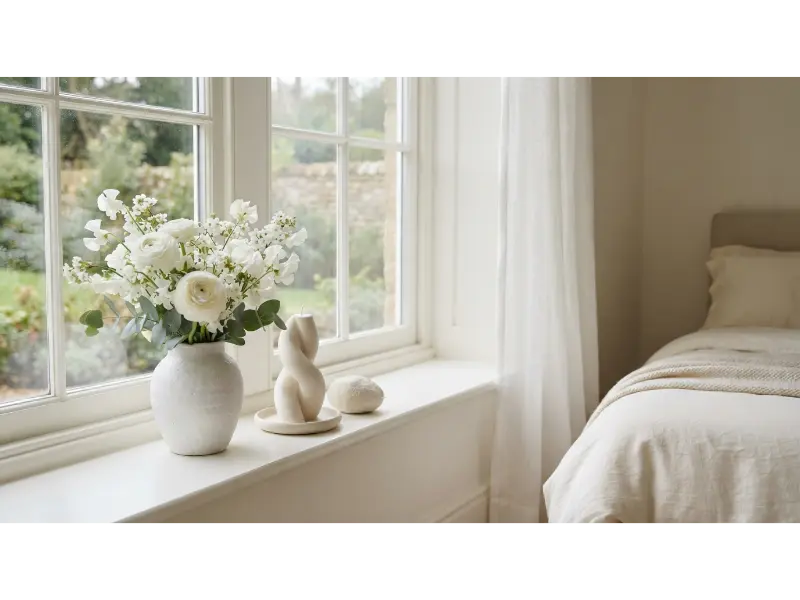
A monochromatic display can make a small window area feel sophisticated and peaceful. Use ivory ceramics, white flowers, cream candles, and textured accessories instead of introducing multiple colors. The secret is to vary texture and shape so the arrangement does not appear flat.
White styling works especially well in small rooms because it keeps the visual weight low. Natural daylight adds subtle shadows and highlights throughout the day, giving the display more depth. Pair the sill with linen curtains, light walls, or pale wood for a cohesive neutral interior.
Pro Tip: Mix matte, glossy, rough, and soft textures so a single color palette still feels rich and layered.
21. Build a Colorful Eclectic Display
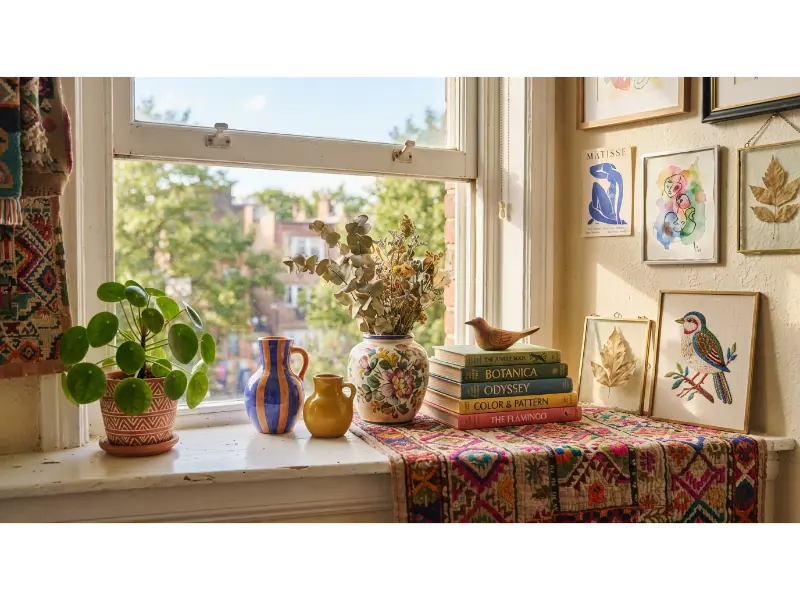
If your home has a playful personality, let the window sill become a small color story. Combine one colorful vase with a patterned object, a compact plant, and a small piece of artwork. Choose colors that already appear elsewhere in the room so the arrangement feels connected rather than random.
Eclectic styling works best when you balance variety with repetition. You can mix different shapes and materials while repeating one or two colors throughout the display. This creates enough visual interest for a Pinterest worthy look without making the small surface feel chaotic.
Pro Tip: Pick one dominant color and use two supporting shades instead of giving every object a completely different color.
22. Decorate With a Simple Stone and Wood Arrangement
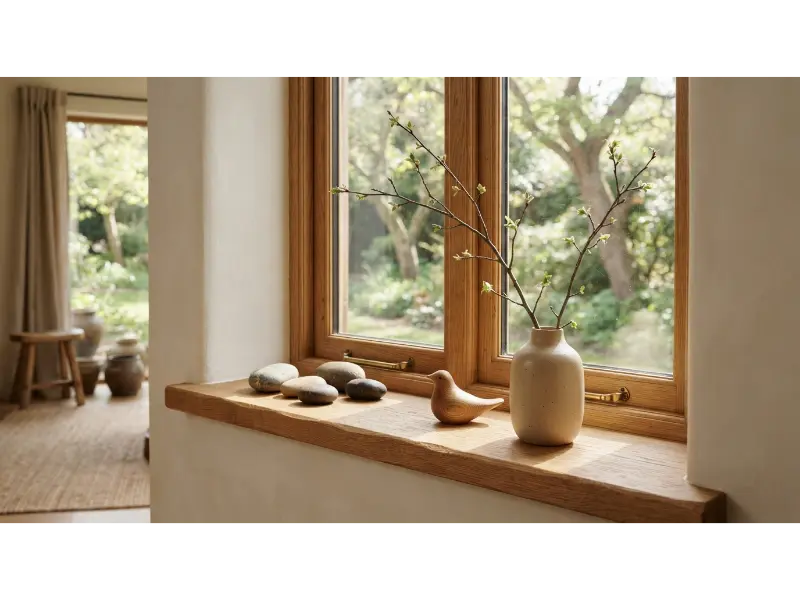
Natural materials can create an understated display that feels connected to the outdoors. Combine a small wooden sculpture with smooth stones, a ceramic vase, and one delicate branch. The mix of rough, smooth, warm, and cool textures creates interest without relying on bright colors or numerous accessories.
This approach works particularly well for minimalist and organic modern interiors. Because the materials have subtle differences, the display can look layered even when it contains only a few pieces. Keep the shapes varied but the color palette restrained to maintain a calm visual rhythm.
Pro Tip: Choose natural objects with different heights and textures, but keep their colors within the same earthy family.
23. Keep It Simple With One Statement Piece
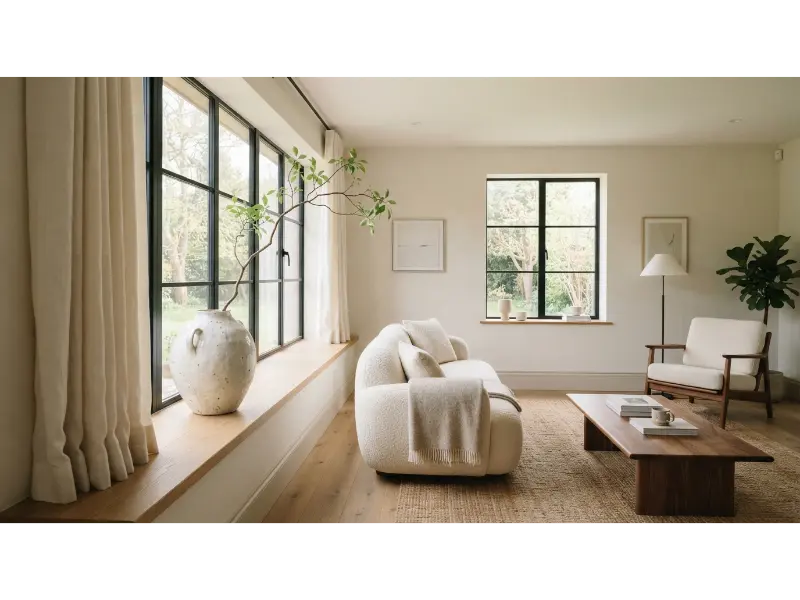
Sometimes the most effective sill styling uses only one beautiful object. A large sculptural vase, striking plant, handmade vessel, or distinctive piece of pottery can create a focal point without crowding the window. This works especially well when the surrounding room already contains furniture, artwork, patterns, or other decorative elements.
Leaving part of the sill empty gives the statement piece room to stand out. Negative space can make a room feel calmer and more intentional, while overcrowding can reduce the impact of individual objects. Choose one item that genuinely adds character rather than adding accessories simply because the surface is available.
Pro Tip: Step back several feet after styling and ask whether the statement piece still looks intentional from across the room.
How to Style a Window Sill Without Making It Cluttered
The best window styling starts with the size and function of the sill. A narrow ledge needs a different approach from a deep bay window or built in bench. Before buying accessories, measure the available space and consider whether you need regular access to the window. Keep frequently used handles, blinds, vents, and opening mechanisms clear.
Scale also matters. A collection of tiny accessories can disappear against a large window, while one oversized object can overwhelm a narrow sill. Try combining one tall element, one medium element, and one low element when the space allows. This simple variation creates visual rhythm without requiring a large number of objects.
Natural light should also influence your choices. Plants can be beautiful but should match the actual light conditions. The RHS explains that direct summer sunlight can cause discoloration or scorching for some plants, while winter light may be much weaker.
For rooms that receive strong sunlight, consider sheer curtains or blinds when appropriate. They can soften intense light while maintaining brightness. In colder months, keep delicate plants away from cold drafts and avoid placing them directly behind curtains where temperatures may fluctuate.
Frequently Asked Questions
What should I put on a window sill?
Choose items according to the room, available space, and amount of natural light. Popular choices include houseplants, ceramic vases, books, candles, framed artwork, seasonal accents, and small sculptural objects. A good arrangement usually combines different heights while leaving enough open space to keep the window visually accessible.
How do I decorate a small window sill?
Start with one focal object and add one or two smaller pieces. A small plant, narrow vase, miniature artwork, or candle can work well. Avoid placing too many small accessories together because they can make a narrow ledge look crowded. Vertical shapes can add interest without requiring much horizontal space.
Are plants good for window sill decorating?
Yes, provided you choose plants that suit the light and temperature of that particular window. Sunny windows can work well for suitable sun loving plants, while shaded windows may require different varieties. Light changes throughout the year, so plant placement may need seasonal adjustment.
What plants are best for a sunny window sill?
Cacti and many succulents are good choices for sunny conditions because they are adapted to bright, dry environments. Aloe and some other sun tolerant plants can also work well. However, always check the specific plant’s requirements because not every houseplant can handle strong direct sunlight.
How do I make a window sill look expensive?
Use fewer, better coordinated pieces. Natural ceramic, glass, stone, wood, and linen tend to create a refined appearance. Keep the color palette limited and vary the height and texture of the objects. Most importantly, leave some negative space so the display feels curated instead of crowded.
Can I decorate a window sill without plants?
Absolutely. Use books, framed artwork, candles, ceramic vessels, vintage objects, sculptures, dried stems, or seasonal accessories. If the window receives difficult light or has temperature fluctuations, nonliving decor can also be easier to maintain than plants.
How many items should I put on a window sill?
There is no fixed number because sill depth and object size vary. As a starting point, try three visually different pieces on a medium or wide sill. For a narrow sill, one statement piece may work better. The goal is balance rather than filling every available inch.
How do I decorate a window sill for different seasons?
Keep a few everyday foundation pieces and replace only the seasonal accents. For fall, use dried stems and small pumpkins. For winter, try evergreen branches and subtle lights. In spring, add fresh flowers and soft colors. For summer, use lightweight ceramics, greenery, or coastal inspired textures.
Should window sill decor match the rest of the room?
It does not need to match exactly, but it should relate to the room. Repeat one color, material, or texture from nearby furniture or accessories. This creates visual continuity while still allowing the window display to have its own personality.
How do I stop window sill decor from looking cluttered?
Use negative space, vary object heights, and remove anything that does not contribute to the overall composition. Avoid filling every gap. If you cannot see which piece should attract attention first, simplify the arrangement until one clear focal point emerges.
Conclusion
A window sill offers far more decorating potential than its small size suggests. The right combination of plants, ceramics, books, artwork, natural textures, seasonal accents, or a single statement object can turn an overlooked architectural feature into a meaningful part of your interior.
The most successful styling does not depend on buying a lot of decor. It depends on choosing pieces that suit the room, respecting the available light, considering scale, and leaving enough breathing room around each element. Whether you prefer minimalist, cottagecore, Japandi, coastal, colorful, or organic modern interiors, the best approach is to make the display feel connected to the way you actually live.
Start with one piece you genuinely love, build around it slowly, and let the natural light through your window become part of the design. With thoughtful placement and a little creativity, even the smallest sill can add warmth, character, and a polished finishing touch to your home.