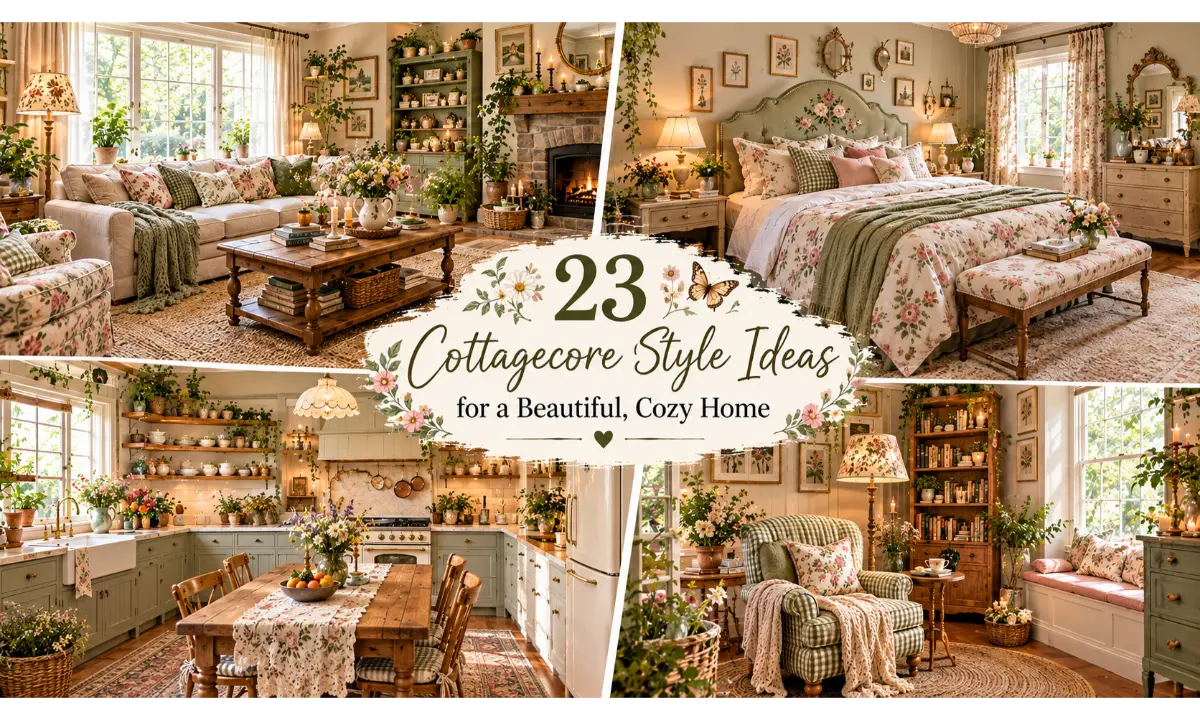
23 Cottagecore Style Ideas for a Beautiful, Cozy Home
If you love rooms that feel warm, personal, nostalgic, and connected to nature, these cottagecore home decor ideas can help you create that feeling without making your home look like a themed set. The look works especially well with vintage furniture, floral patterns, natural wood, handmade accents, soft textiles, and collected pieces that feel useful as well as beautiful.
The best approach is not to fill every surface with tiny decorations. Instead, combine a few memorable pieces with practical comforts, natural textures, and gentle colors. That creates a home that feels authentic, inviting, and easy to live in.
Beautiful Cottagecore Home Ideas
1. Cottagecore Style Living Room With Vintage Character
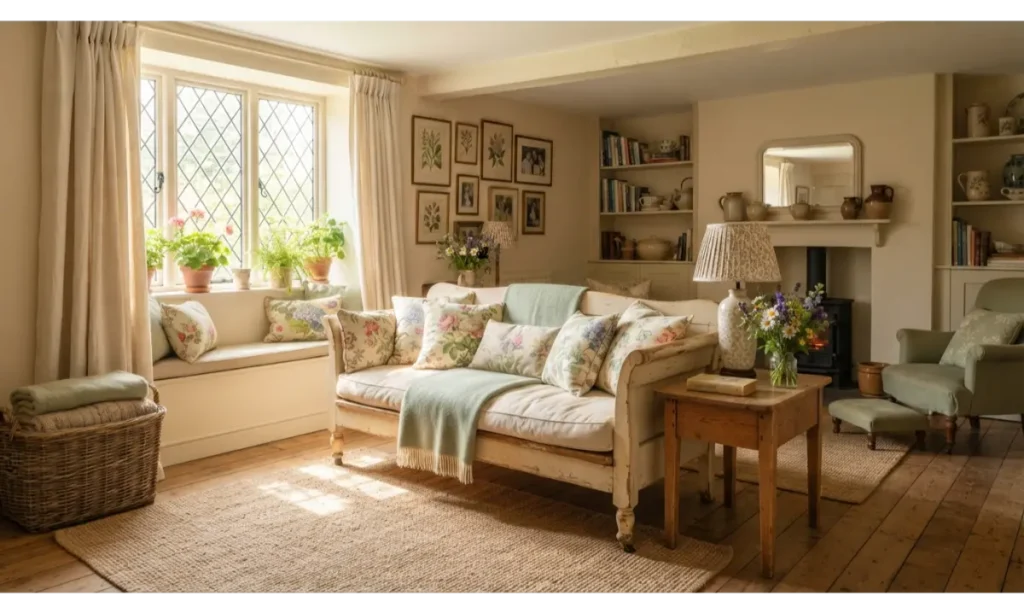
Cottagecore Style feels especially natural in a living room because the space already centers around comfort and togetherness. Start with a vintage wooden coffee table or an older looking side table, then add a soft sofa with floral or gingham cushions. Layer a woven rug, linen throw, ceramic vase, and a few favorite books to make the room feel collected instead of overly decorated.
Keep the palette gentle with sage green, warm cream, dusty rose, muted blue, or soft brown. Natural daylight will highlight the textures and make the room feel even more welcoming. Avoid matching every item perfectly. A mixture of wood, cotton, ceramic, and woven materials gives the space the relaxed character that makes cottage living room decor so appealing.
Pro Tip: Choose one strong floral pattern and keep nearby patterns simpler so the room feels layered rather than crowded.
2. Floral Wallpaper Accent Wall
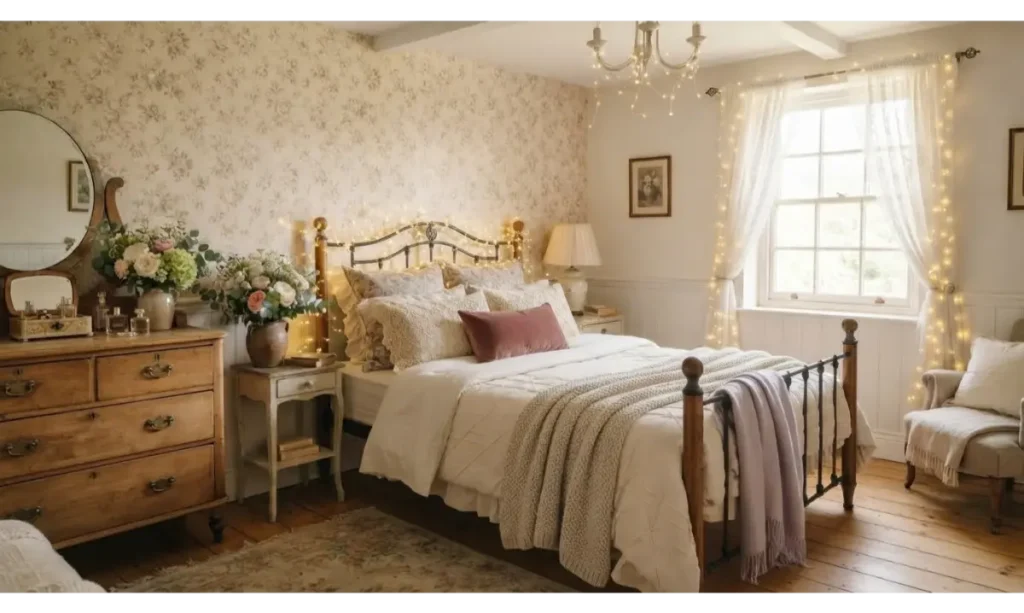
A floral wallpaper accent wall can transform an ordinary room into a romantic retreat without covering every surface in pattern. Choose a small scale botanical print if the room is compact, or use a larger faded floral design when you want a stronger visual statement. Cream, sage, dusty pink, and muted blue work beautifully with traditional floral motifs.
Place the wallpaper behind a bed, reading chair, dresser, or dining area so it becomes the visual anchor. Pair it with natural wood furniture, plain linen, and understated accessories. The contrast between detailed wallpaper and simple furnishings keeps the space balanced while giving it plenty of personality. This approach also works well with removable wallpaper.
Pro Tip: Let the wallpaper provide the main pattern, then repeat one of its softer colors in cushions, curtains, or artwork.
Read More: 20 Contemporary Style Ideas for a Fresh, Modern Home
3. Rustic Wooden Dining Table
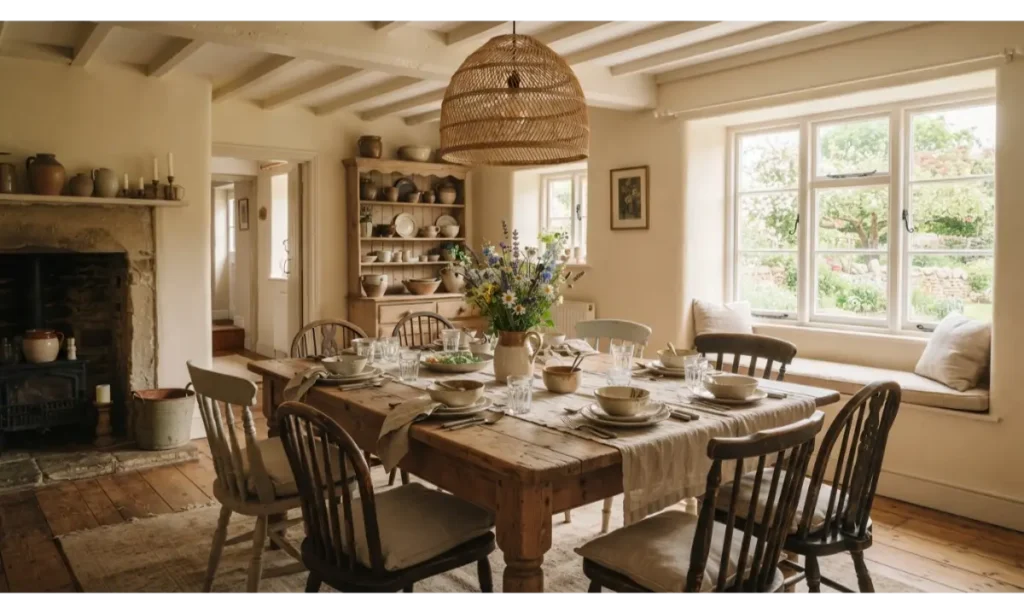
A rustic wooden dining table instantly gives a dining room warmth and substance. Look for visible grain, gently aged edges, or a finish that allows the natural character of the wood to show. You do not need a perfectly matched dining set. Different wooden or painted chairs can create the relaxed, collected appearance associated with cottage dining room ideas.
Dress the table simply with a linen runner, handmade ceramics, a small pitcher of flowers, and woven placemats. Keep enough open space for everyday meals so the room remains practical. The goal is to make the dining area feel like a place where people actually gather, eat, talk, and linger rather than a formal display.
Pro Tip: Mix two or three chair styles while keeping their colors within the same soft palette for an intentionally collected look.
4. Cozy Cottagecore Bedroom
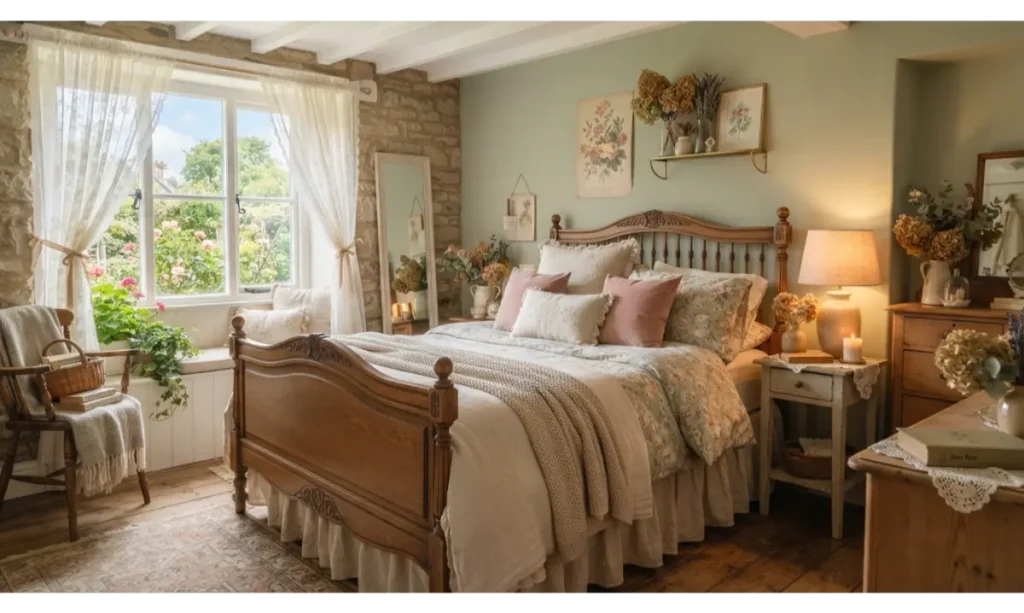
A cozy bedroom benefits from layers of soft texture. Begin with linen bedding, a quilt, embroidered cushions, and a knitted or crocheted throw. An antique wooden bed frame or painted headboard adds character, while a small vintage bedside table makes the room feel personal. Choose fabrics that look comfortable rather than overly polished.
Use soft colors such as cream, faded green, dusty pink, pale blue, and warm beige. Add a botanical print, small ceramic lamp, or simple flower arrangement to bring nature indoors. The combination creates a peaceful cozy cottage bedroom that feels restful without becoming visually busy.
Pro Tip: Keep your largest bedding piece relatively simple, then use smaller floral and embroidered details for personality.
5. Vintage Kitchen With Open Shelving
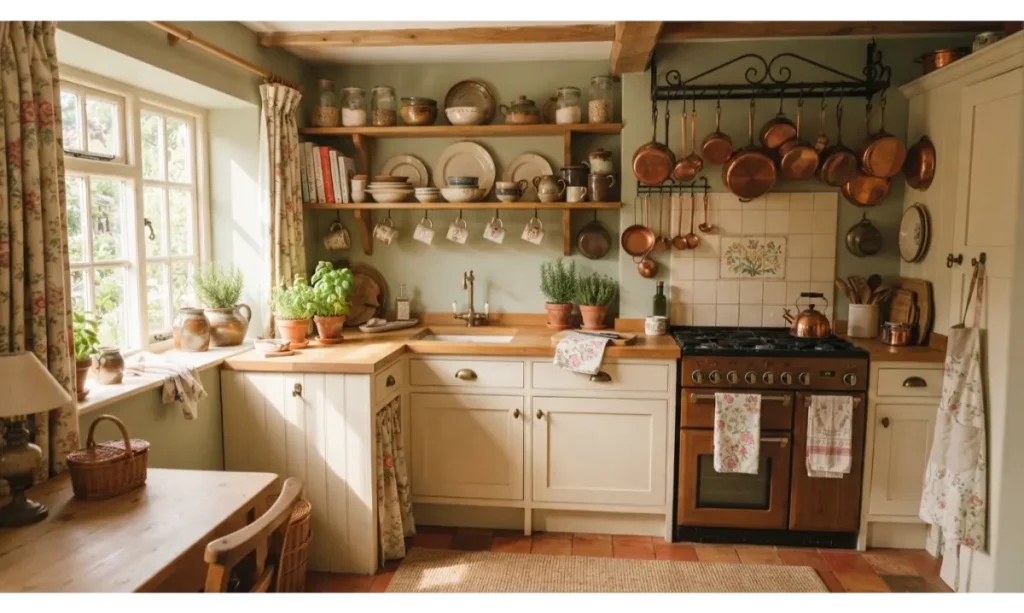
Open shelving gives the kitchen an opportunity to display useful objects beautifully. Arrange vintage ceramics, simple bowls, glass jars, wooden cutting boards, and a few favorite mugs on sturdy wood shelves. Leave breathing room between groups so the shelves look curated instead of crowded.
Pair the shelves with cream, sage, or warm wood cabinetry for a soft cottage kitchen decor effect. Small herb pots near a window can add greenery and a practical touch. Natural materials such as wood, ceramic, linen, and wicker help soften harder kitchen surfaces and create a warmer overall appearance.
Pro Tip: Display everyday pieces you actually use. Functional objects usually create a more convincing cottage atmosphere than decorative items alone.
Read More: 23 Stunning Earthy Living Room Ideas for a Cozy Feel
6. Charming Breakfast Nook
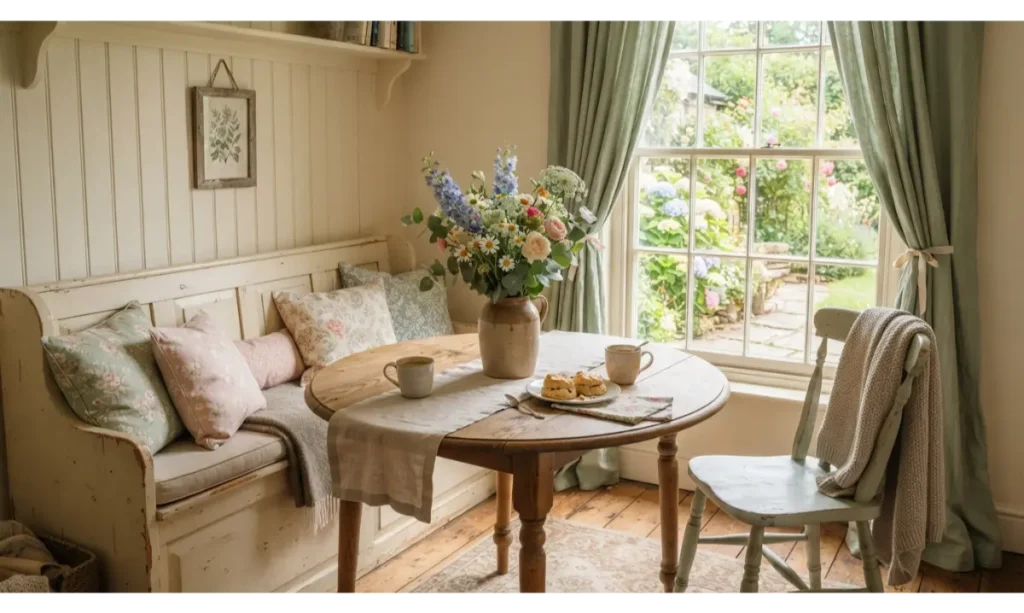
A small breakfast nook can become one of the most inviting areas in the home. Place a compact wooden table near a window and surround it with a bench or mismatched chairs. Add floral cushions, a linen runner, and a simple vase to create a cheerful morning setting without taking up much space.
Natural daylight is especially important here because it brings out the warmth of wood and fabric. A small pendant light can provide cozy evening illumination. If you have limited room, use a round table because its softer shape makes movement easier and gives the nook a relaxed appearance.
Pro Tip: Choose washable cushion covers if the nook will serve as an everyday breakfast and coffee spot.
7. Handmade Pottery Display
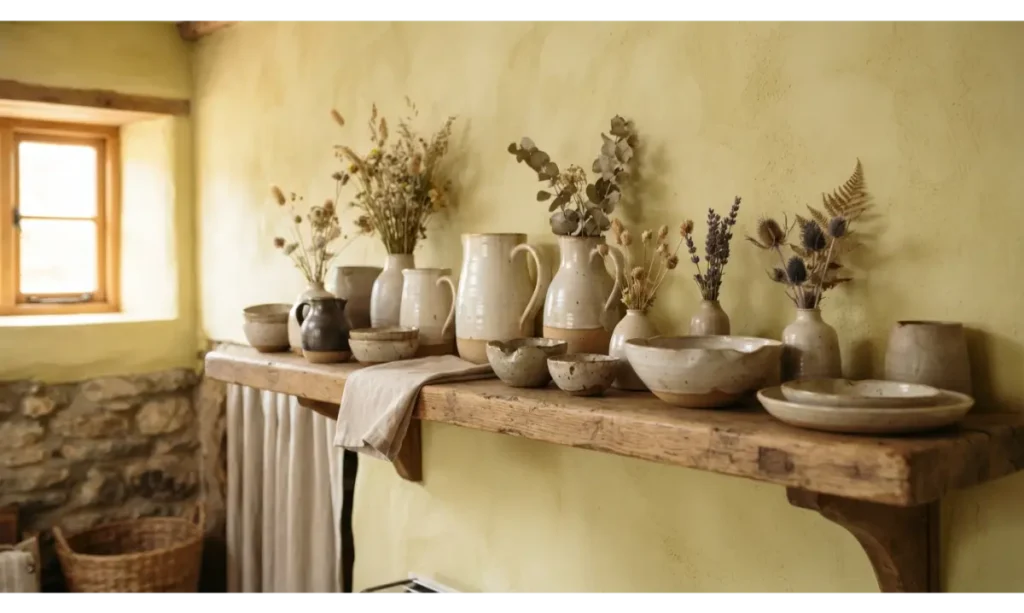
Handmade pottery adds a subtle sense of craftsmanship to a room. Look for ceramic pitchers, bowls, mugs, vases, and candle holders with gentle variations in shape and finish. Those small imperfections make the collection feel more personal and less like a perfectly coordinated showroom display.
Arrange pottery on open shelves, a kitchen counter, a dining cabinet, or a wooden console. Combine ceramics with dried flowers, old books, woven baskets, and natural wood. The result feels warm and useful because every piece can serve a real purpose while contributing to the room’s character.
Pro Tip: Group pottery in odd numbers and vary the heights to create a natural visual rhythm.
8. Romantic Reading Corner
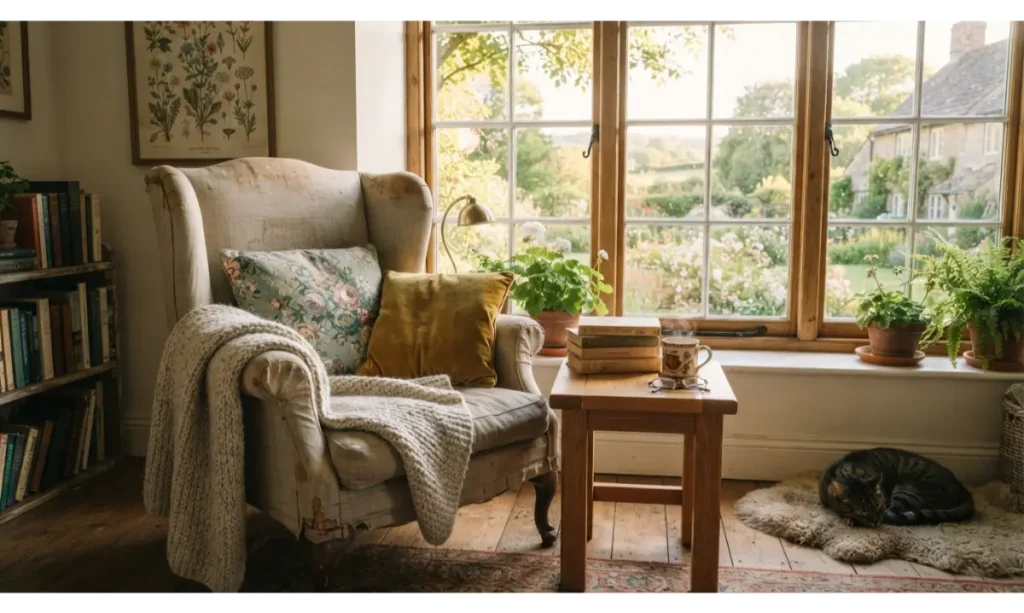
A reading corner gives you a chance to create a small destination within a larger room. Choose a comfortable vintage armchair and place it beside a window if possible. Add a soft throw, floral cushion, wooden side table, and warm table lamp. A basket nearby can hold books or extra blankets.
The space should feel relaxed rather than perfectly styled. A stack of favorite books, handmade mug, or small vase of flowers gives it a lived in quality. This type of cozy reading nook also works in bedrooms, hallways, unused corners, and larger landings.
Pro Tip: Position the chair where you receive natural daylight during your favorite reading time.
9. Botanical Gallery Wall
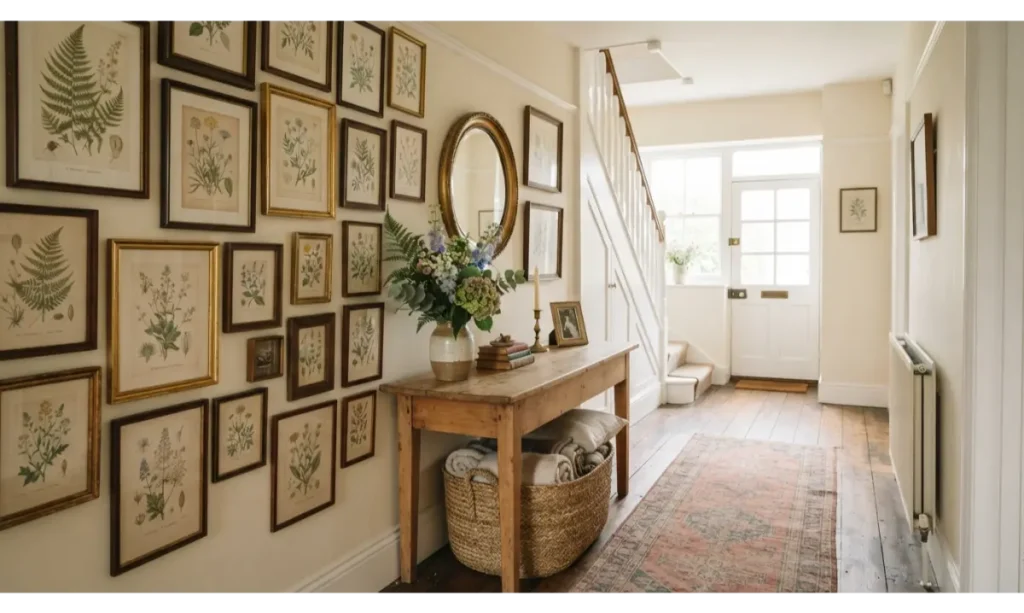
A botanical gallery wall brings the outdoors inside without requiring many living plants. Combine illustrations of herbs, flowers, leaves, and ferns using frames in wood, brass, or aged finishes. Slight variations between frames can make the collection feel collected over time.
Place the gallery above a console, bed, dining bench, or staircase. Keep the surrounding furniture relatively simple so the artwork remains easy to appreciate. Botanical art pairs especially well with natural wood decor, linen textiles, and muted green accents, creating a peaceful visual connection between the room and nature.
Pro Tip: Leave consistent spacing between frames even when the frame styles differ. This keeps an eclectic gallery wall looking intentional.
10. Gingham Kitchen Details
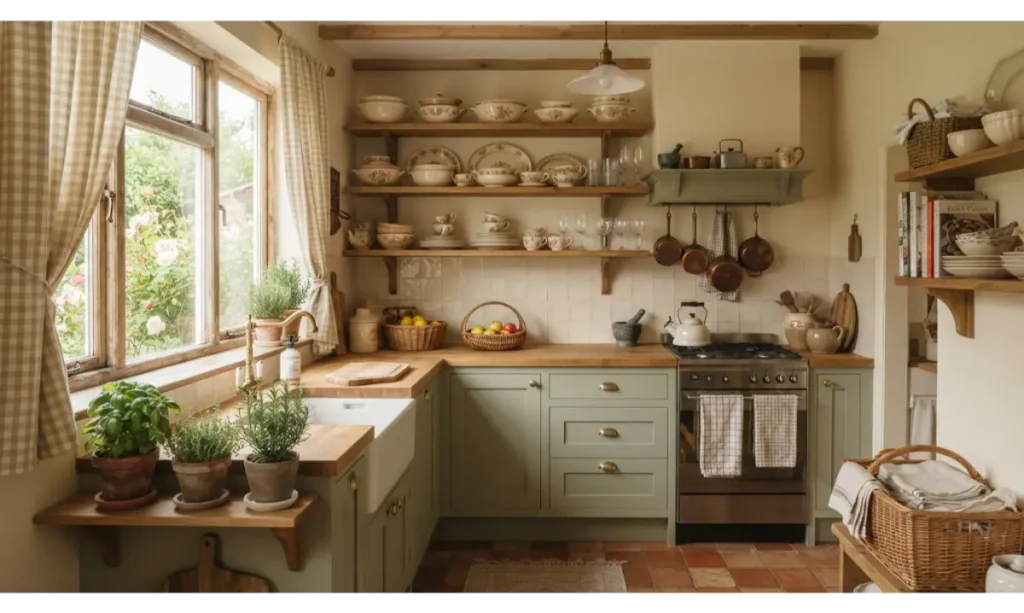
Gingham is an easy way to introduce pattern without overwhelming a room. Use it on tea towels, seat cushions, café curtains, table runners, or small napkins. Soft cream and sage checks feel particularly gentle, while muted blue or dusty rose can add more personality.
Because gingham has a strong visual identity, balance it with solid linen, plain ceramics, and natural wood. This creates a charming cottage kitchen without making every surface look patterned. Small fabric details also make it easy to refresh the room seasonally without replacing major furniture.
Pro Tip: Repeat the same gingham color in only two or three places so the pattern feels connected without becoming repetitive.
11. Vintage Dresser as a Statement Piece
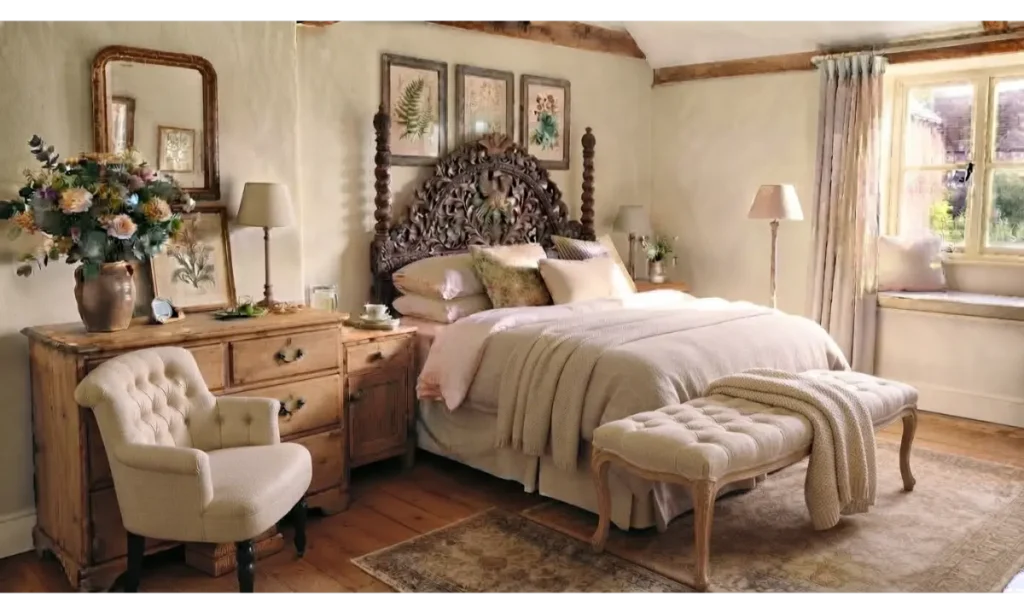
An old dresser can become the centerpiece of a bedroom, hallway, or living room. Look for solid wood furniture with interesting handles, visible grain, gentle wear, or a warm painted finish. You do not need to restore every mark. Some signs of age give the piece character and help it feel naturally integrated.
Style the top with a ceramic vase, framed artwork, small stack of books, or vintage lamp. Keep some empty space so the furniture remains visible. A statement dresser works particularly well with vintage home decor because it provides both storage and visual personality.
Pro Tip: Test the drawers, joints, and overall structure before buying secondhand furniture so beauty does not come at the cost of function.
12. Cottagecore Style With Soft Natural Textiles
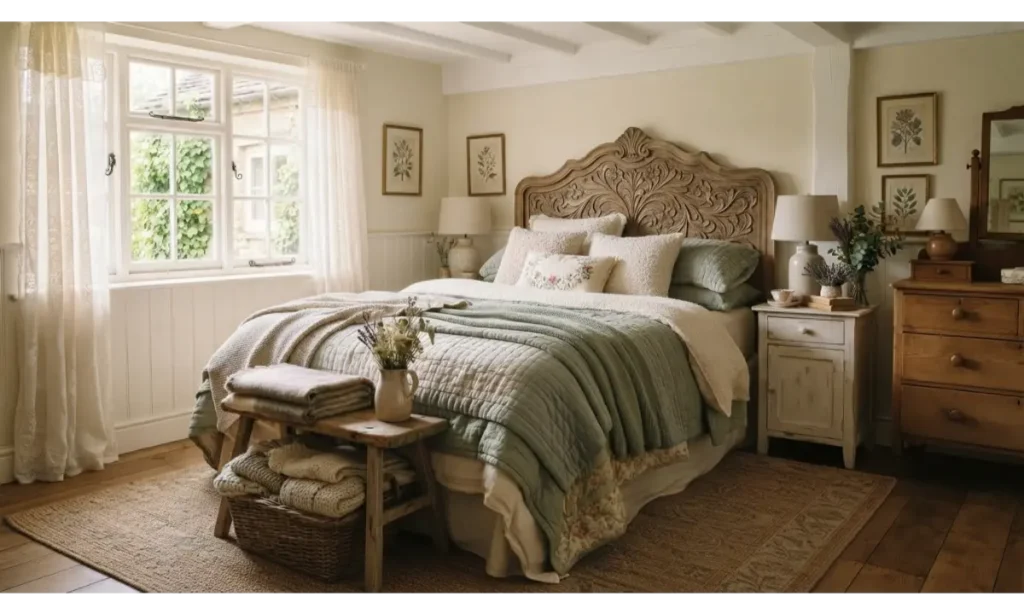
Cottagecore Style becomes especially inviting when you build the room through texture instead of decoration alone. Combine linen, cotton, crochet, embroidery, quilted fabric, and soft woven materials. These layers add depth while keeping the room comfortable enough for everyday living.
Choose natural looking colors rather than several strong shades at once. Cream, oatmeal, muted green, dusty blue, and faded pink create a gentle base that allows floral or botanical accents to stand out. The same textile approach works in bedrooms, living rooms, reading spaces, and guest rooms.
Pro Tip: Mix textures before adding more decorations. A room with rich fabric layers often needs fewer accessories to feel complete.
13. Wicker and Rattan Accents
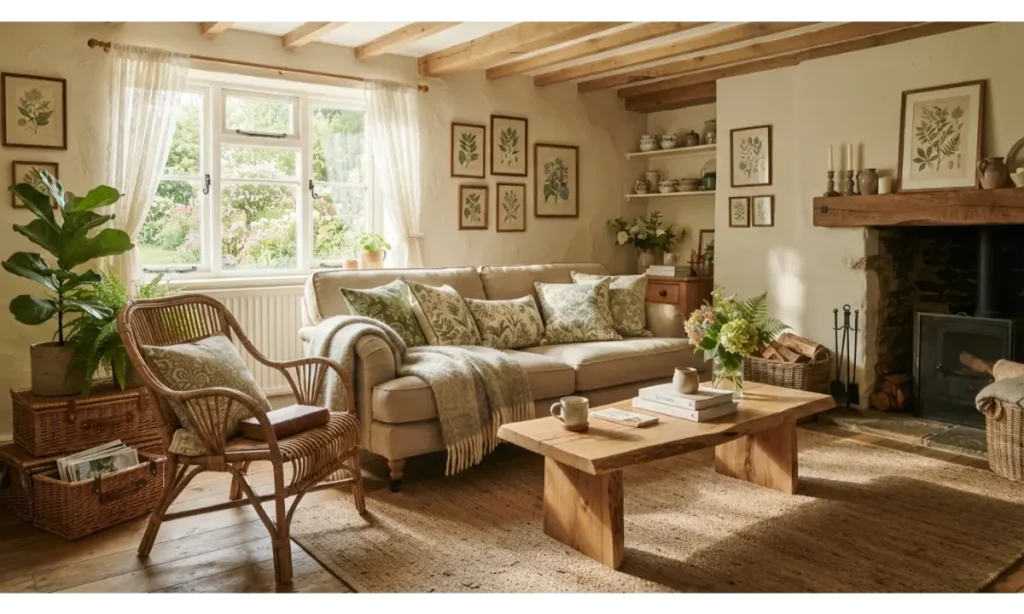
Wicker decor and rattan furniture bring natural texture into spaces that might otherwise feel too polished. A rattan chair, woven basket, wicker tray, or cane cabinet can introduce visual warmth without requiring a major redesign. These materials also work beautifully beside wood and linen.
Use woven storage for blankets, books, towels, or toys so the material serves a practical purpose. This creates the relaxed feeling of natural home decor while keeping everyday clutter under control. A few well chosen woven pieces can have more impact than many small decorative objects.
Pro Tip: Combine woven pieces with smooth ceramics and soft fabrics to create contrast rather than using woven texture everywhere.
14. Cottage Inspired Entryway
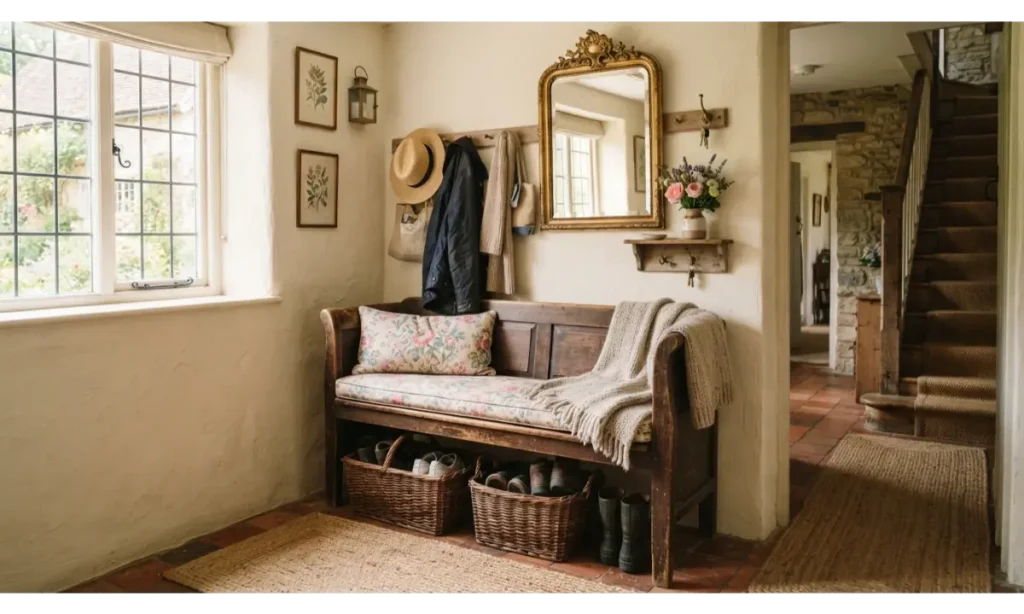
Your entryway sets the tone for the rest of the home. Start with a small wooden bench or narrow console, then add a vintage mirror, peg rail, woven basket, and simple vase. These pieces create a useful landing spot for shoes, bags, coats, and everyday essentials.
Keep the colors soft and welcoming. A faded floral cushion or botanical print can introduce personality without taking up much room. If your entryway is narrow, use vertical storage and a slim console rather than filling the floor with furniture. A simple cozy entryway can feel both beautiful and practical.
Pro Tip: Give every frequently used item a designated storage place so the decorative styling stays visible.
15. Soft Cottage Bathroom
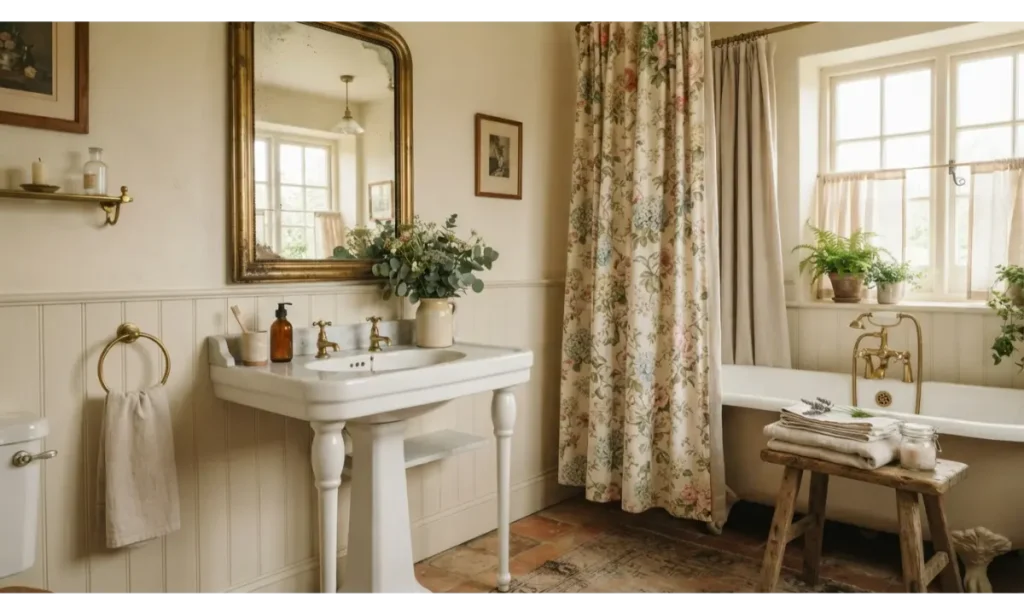
Bathrooms can take on a softer character through small material and color changes. Choose cream towels, floral fabric, wooden accessories, vintage inspired mirrors, and ceramic containers. If a full renovation is not possible, focus on textiles, lighting, artwork, and storage pieces that can change the mood without construction.
A wooden stool beside the tub or sink can provide useful storage while introducing natural texture. Add a small plant or simple floral arrangement for freshness. The goal is a cottage bathroom that feels calm and welcoming while remaining easy to clean and use.
Pro Tip: Keep countertop accessories limited to items you use regularly so the bathroom maintains a peaceful appearance.
16. Cozy Fireplace Styling
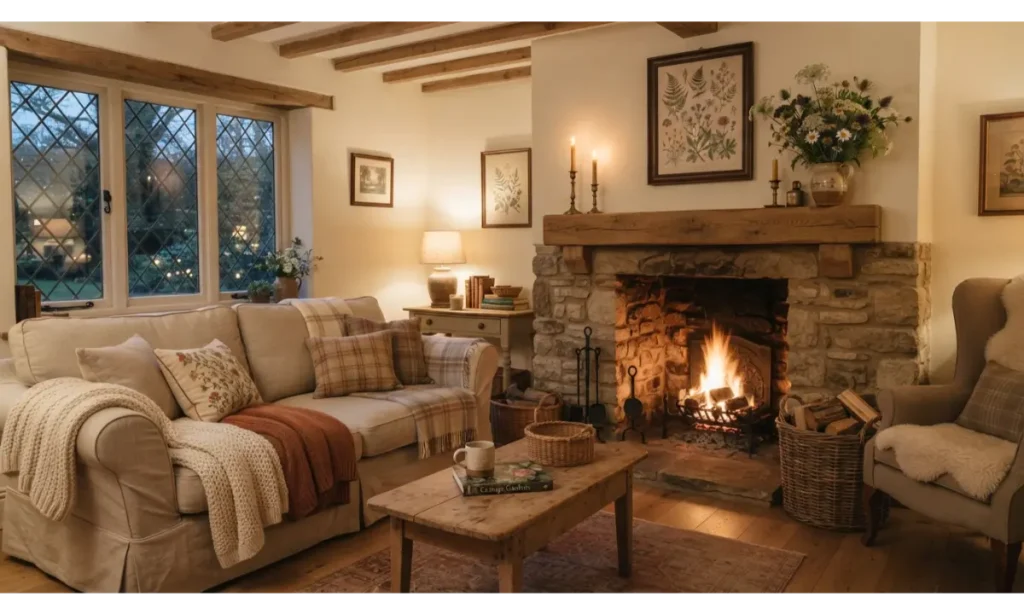
A fireplace naturally becomes a focal point, so it does not need excessive decoration. Style the mantel with a ceramic vase, small botanical artwork, vintage candlesticks, or a few meaningful objects. Let the original stone, brick, or painted surface remain visible because natural architectural texture adds character.
Place a woven basket with blankets nearby and use soft seating to make the fireplace feel like a gathering point. Warm lighting becomes especially important in the evening. A combination of layered lighting, textiles, and natural materials can make even a modern fireplace feel more relaxed and traditional.
Pro Tip: Keep the tallest object slightly off center rather than creating a perfectly symmetrical mantel arrangement.
17. Vintage China Cabinet
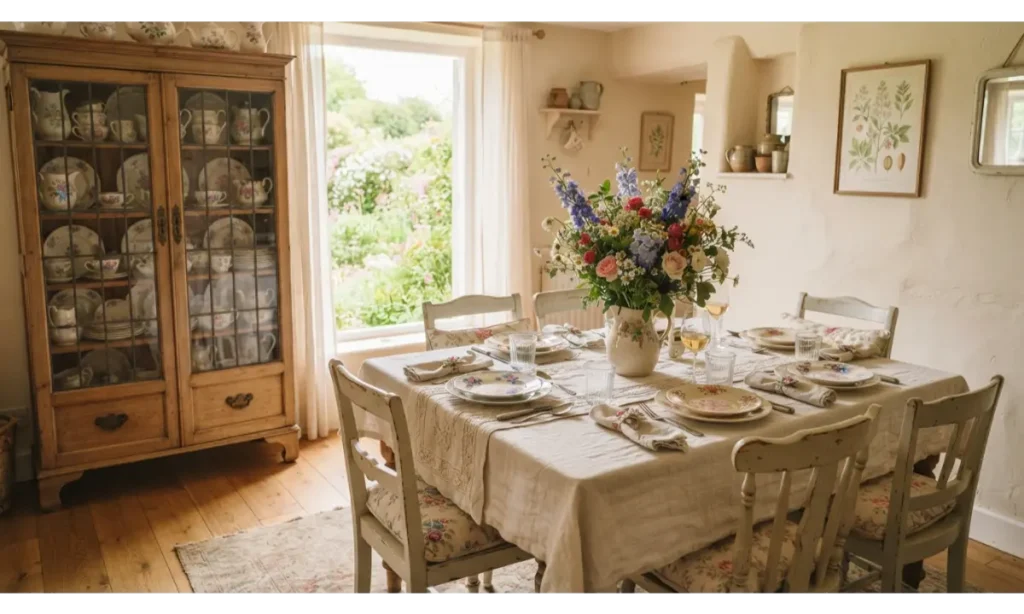
A glass front cabinet offers a beautiful way to store and display dishes at the same time. Fill it with vintage plates, ceramic pitchers, tea cups, serving bowls, and glassware that you genuinely enjoy. Different patterns can work together when they share a similar color family.
Place the cabinet near a dining table or in a kitchen corner where it becomes part of the room rather than an isolated display. A wooden cabinet with an aged finish works especially well with cottage dining decor, floral textiles, and warm neutral walls.
Pro Tip: Arrange larger plates or serving pieces toward the back and smaller pieces toward the front so everything remains visible.
18. Indoor Herb Garden
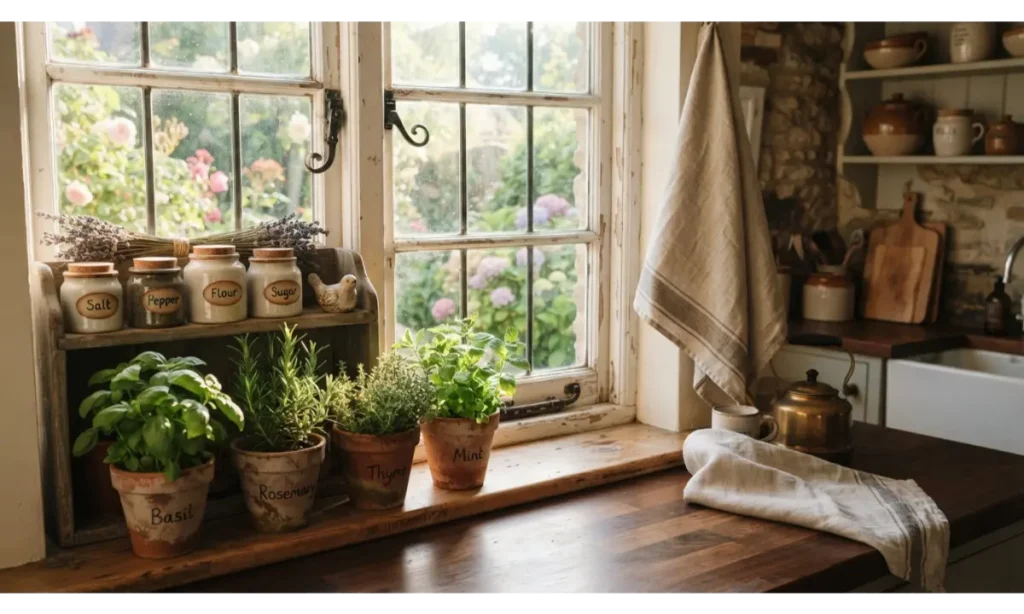
An indoor herb garden combines beauty with everyday usefulness. Place small pots of basil, rosemary, thyme, mint, or other suitable herbs near a bright window. Use terracotta pots, ceramic containers, or simple wooden plant stands to reinforce the natural look.
The greenery adds life to kitchens without requiring large decorative plants. You can also place small herb pots on open shelves or a sunny breakfast nook. The combination of plants, wood, ceramic, and sunlight creates a fresh botanical home decor moment that feels connected to simple everyday rituals.
Pro Tip: Choose herbs based on the light available in your kitchen rather than selecting plants only for appearance.
19. Romantic Canopy Bed
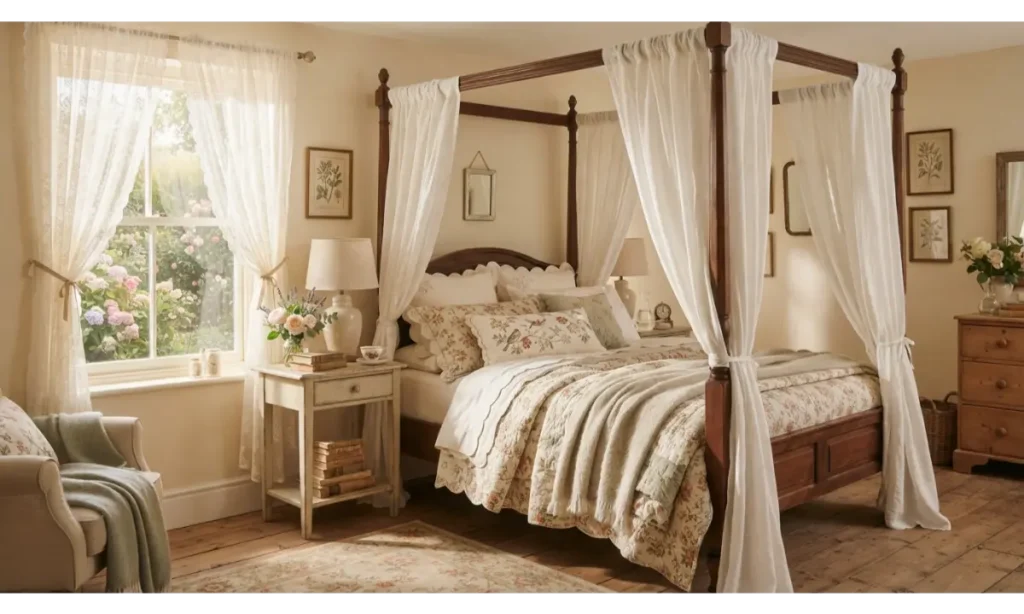
A canopy bed can create a romantic focal point without requiring elaborate decoration. Choose a simple wooden frame and drape lightweight linen or cotton fabric loosely around it. Avoid overly heavy fabric if you want the bedroom to feel bright and airy.
Layer the bed with a quilt, floral pillow, embroidered cushion, and soft throw. Add an antique bedside table and small ceramic lamp to complete the scene. This creates a romantic bedroom that feels dreamy but still comfortable enough for everyday use.
Pro Tip: Keep canopy fabric light and relaxed. Too much fabric can make a small bedroom feel visually heavy.
20. Collected Bookshelf Styling
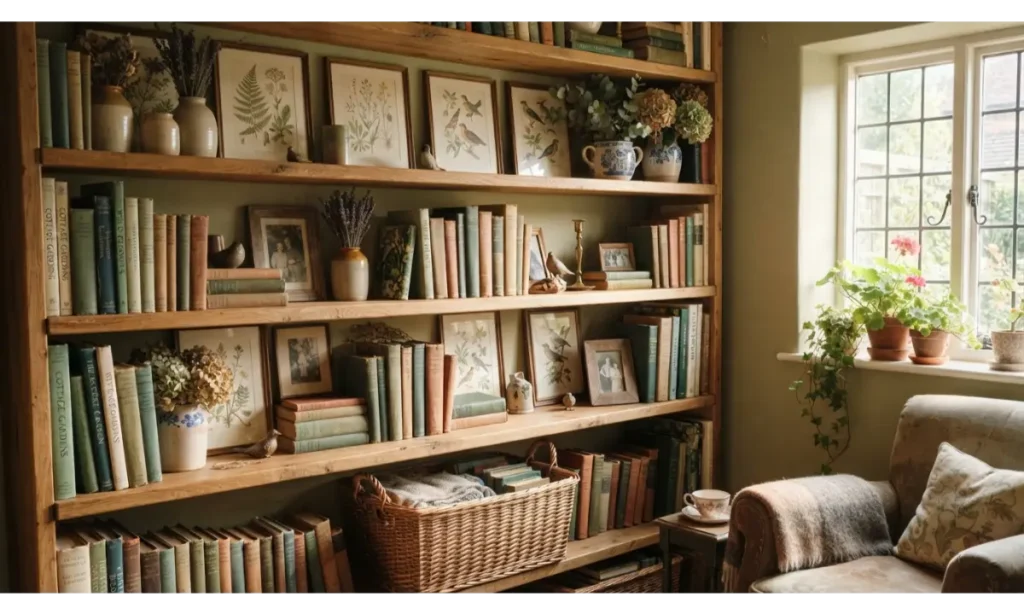
A bookshelf can tell the story of your home when you mix books with objects that have meaning. Combine vintage books, small ceramics, framed photographs, botanical prints, candles, and woven pieces. Leave some open shelf space so the arrangement does not become visually overwhelming.
Vary the direction of the books by placing some upright and a few horizontally. Use the horizontal stacks as platforms for small objects. This creates a relaxed collected home aesthetic that feels personal rather than carefully manufactured.
Pro Tip: Arrange books by height and color loosely, then break up each section with one decorative object or small group.
21. Cottage Style Sunroom
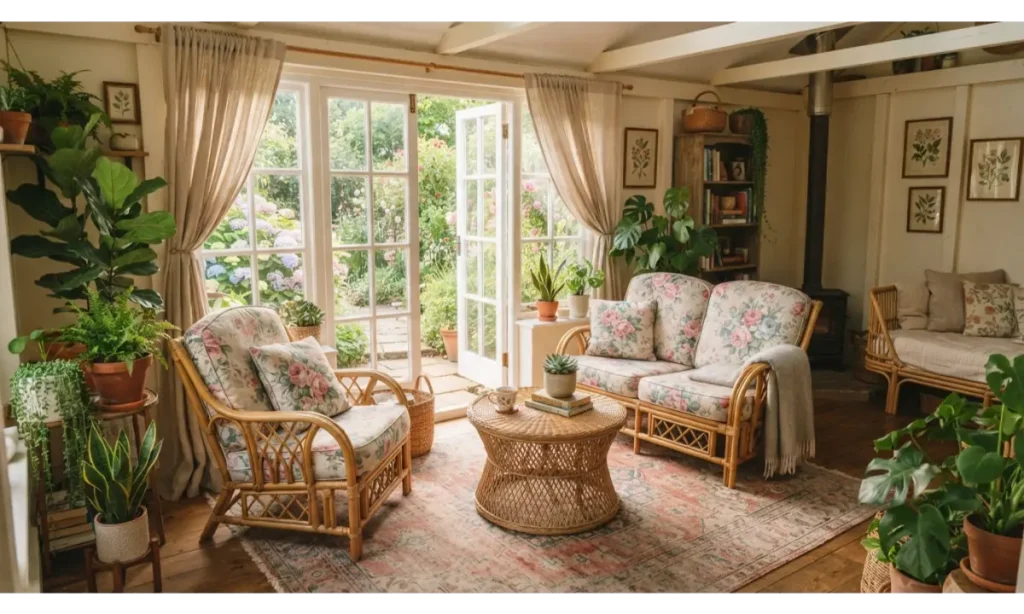
A sunny room is perfect for combining natural textures with greenery. Use rattan chairs, a woven coffee table, soft floral cushions, and lightweight linen curtains. If the room receives suitable light, add plants in ceramic or terracotta pots to strengthen the connection with the garden outside.
Keep the furniture comfortable and practical. A small table provides space for tea, books, or a flower vase, while a vintage rug adds warmth underfoot. The result is a peaceful sunroom decor concept that encourages reading, conversation, and quiet mornings.
Pro Tip: Arrange seating toward the windows so the garden becomes part of the room’s visual composition.
22. Cottagecore Style Garden Inspired Decor
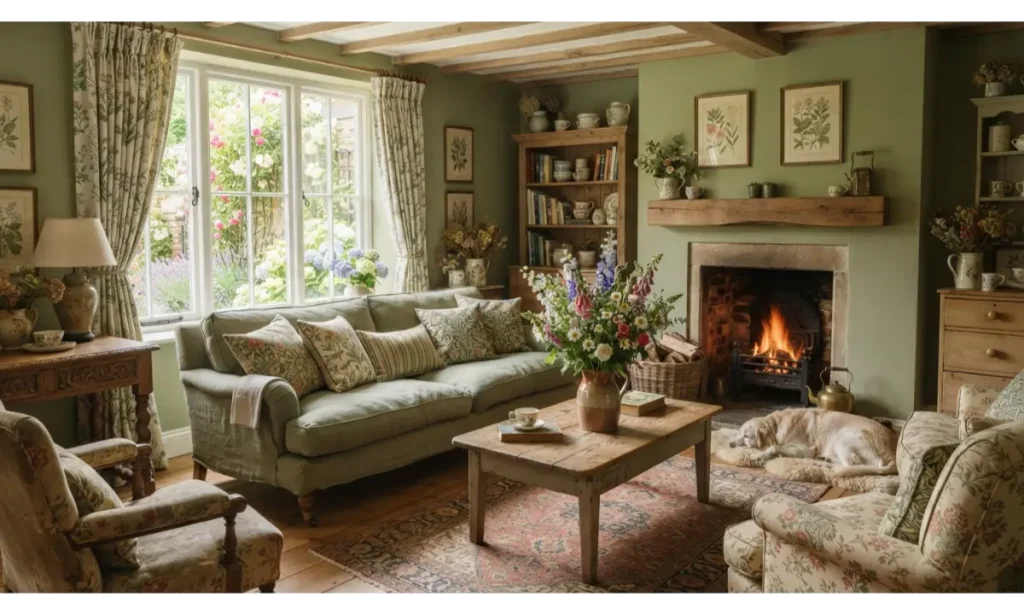
Cottagecore Style can feel more natural when the decor reflects what you might see outdoors. Use wildflower colors, botanical prints, leafy artwork, natural wood, and handmade ceramics. Instead of choosing identical floral patterns, combine flowers with subtle stripes, checks, or solid linen.
Bring in seasonal details through fresh branches, flowers, herbs, or dried arrangements. These small changes keep the room feeling alive throughout the year. A garden inspired interior works particularly well in living rooms, kitchens, dining spaces, and bedrooms because the theme connects easily with natural light and greenery.
Pro Tip: Take inspiration from your local landscape so the colors feel natural instead of relying only on traditional cottage motifs.
23. Personalized Cozy Cottage Retreat
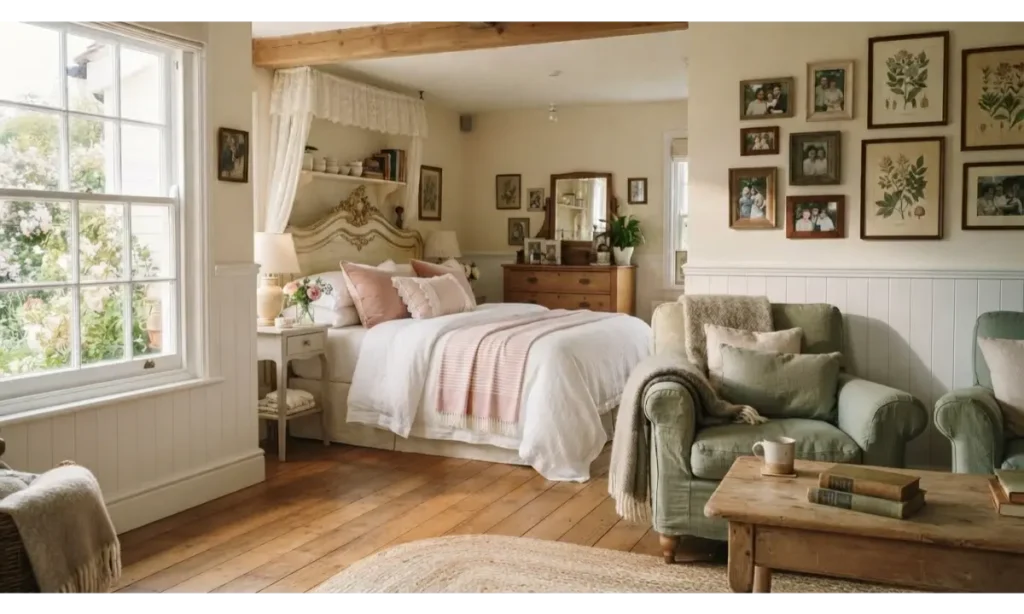
The most memorable cottage inspired rooms usually contain personal objects rather than decorations chosen only because they match a trend. Display a favorite quilt, inherited dish, old photograph, handmade object, travel keepsake, or well loved book. These details give the room a sense of history that new decor alone cannot create.
Balance meaningful pieces with comfortable furniture and open space. You want the home to feel collected, not cluttered. A few sentimental home decor pieces can make a simple room feel deeply personal, warm, and welcoming while still maintaining a beautiful visual flow.
Pro Tip: Before buying something new, look around your home for objects you already love. Rearranging meaningful pieces can completely change a room.
Frequently Asked Questions
What makes a home feel cottagecore?
A cottage inspired home usually combines natural materials, vintage or vintage inspired furniture, soft textiles, floral or botanical patterns, handmade objects, greenery, and warm colors. The key is the overall feeling rather than one specific item. Mixing useful pieces with personal objects creates a relaxed atmosphere that feels lived in.
What colors work best for cottagecore decor?
Popular choices include warm cream, sage green, muted blue, dusty pink, faded yellow, soft beige, and earthy brown. You can also use deeper green or blue as an accent. The best palette usually combines a gentle base with one or two nature inspired colors.
Can I create cottage decor in a modern house?
Yes. You do not need an old cottage or countryside property. Add a few traditional elements such as a wooden table, floral cushions, woven storage, vintage ceramics, linen curtains, or botanical artwork. Keeping modern architecture simple can actually make those warmer pieces stand out beautifully.
How do I avoid making cottage decor look cluttered?
Start with a few larger pieces and allow open space around them. Use one main pattern per area, then support it with solids, natural textures, and subtle prints. Practical storage such as baskets and cabinets can hide everyday clutter while still contributing to the overall aesthetic.
Is vintage furniture necessary?
No. Vintage furniture adds character, but you can achieve a similar feeling with new furniture made from natural looking materials. Focus on wood, linen, wicker, ceramic, soft colors, and comfortable shapes. Adding one or two genuinely old pieces can provide character without requiring the entire room to be antique.
How can I make cottage decor affordable?
Start with textiles, thrifted furniture, secondhand ceramics, plants, books, and simple artwork. You can also refresh furniture with new hardware or a suitable paint finish. Buying slowly allows you to collect pieces that feel meaningful instead of purchasing everything at once.
Conclusion
A beautiful cottage inspired home does not depend on having a countryside house or filling every corner with vintage decorations. The strongest rooms combine comfort, nature, personal character, and practical design. Start with one area such as a living room, kitchen, bedroom, or reading corner, then gradually add natural wood, soft textiles, floral details, handmade ceramics, greenery, and pieces with a story.
The real charm comes from creating a space that feels like you. Mix old and new, leave room for everyday life, and choose objects that make your home feel warm rather than simply matching a trend. With thoughtful layering and a relaxed approach, these ideas can help turn almost any home into a beautiful, cozy retreat.