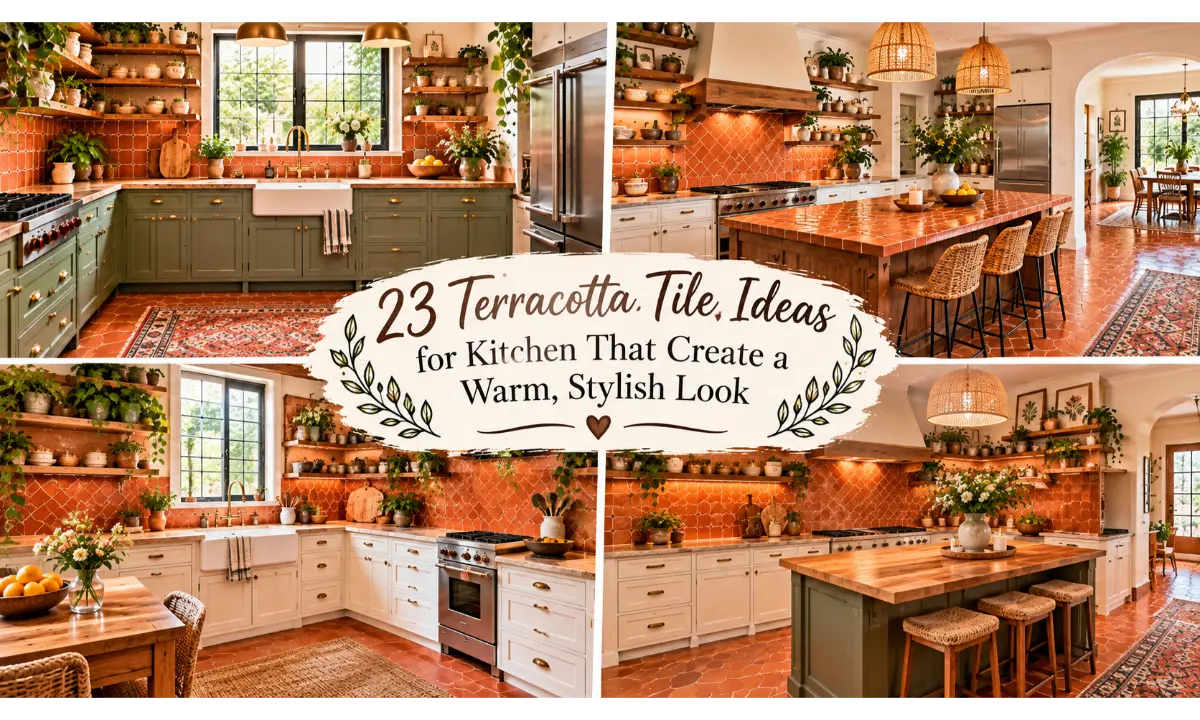
23 Terracotta Tile Ideas For Kitchen That Create a Warm, Stylish Look
Warm, earthy, and full of character, terracotta can completely change the personality of a kitchen. These Terracotta Tile Ideas For Kitchen spaces show how clay inspired surfaces can work with modern cabinets, natural wood, stone countertops, brass details, and classic furniture. Whether you want a rustic kitchen, a Mediterranean feel, or a clean modern room with warmth, the right tile shape, finish, layout, and color can make the space feel inviting without looking dated.
Warm and Timeless Terracotta Kitchen Designs
1. Terracotta Tile Ideas For Kitchen With Cream Cabinets
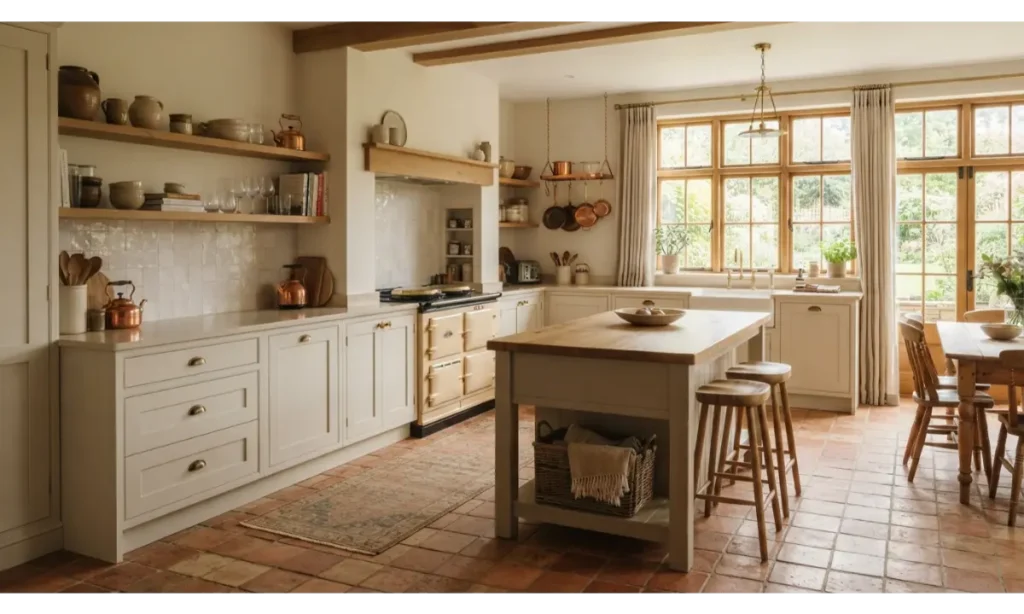
A classic combination of terracotta floor tiles and cream cabinets creates an inviting kitchen that feels warm without becoming visually heavy. The soft cabinetry balances the deeper clay tones underfoot, while natural wood can connect both finishes beautifully. Choose a matte or softly aged tile instead of an overly polished surface for a more authentic appearance. This pairing works especially well in traditional, farmhouse, Mediterranean, and transitional kitchens where comfort matters as much as style.
For a more polished result, repeat small touches of the terracotta color through pottery, woven baskets, artwork, or textiles rather than adding more tile everywhere. Creamy countertops help maintain brightness, while aged brass hardware adds a gentle glow. If your kitchen receives plenty of daylight, the natural variation within genuine clay tiles becomes a major design feature. The result feels collected and established rather than overly coordinated or freshly manufactured.
Pro Tip: Keep the grout close to the tile color when you want the floor to look calm and continuous.
2. Large Terracotta Floor Tiles for an Open Kitchen
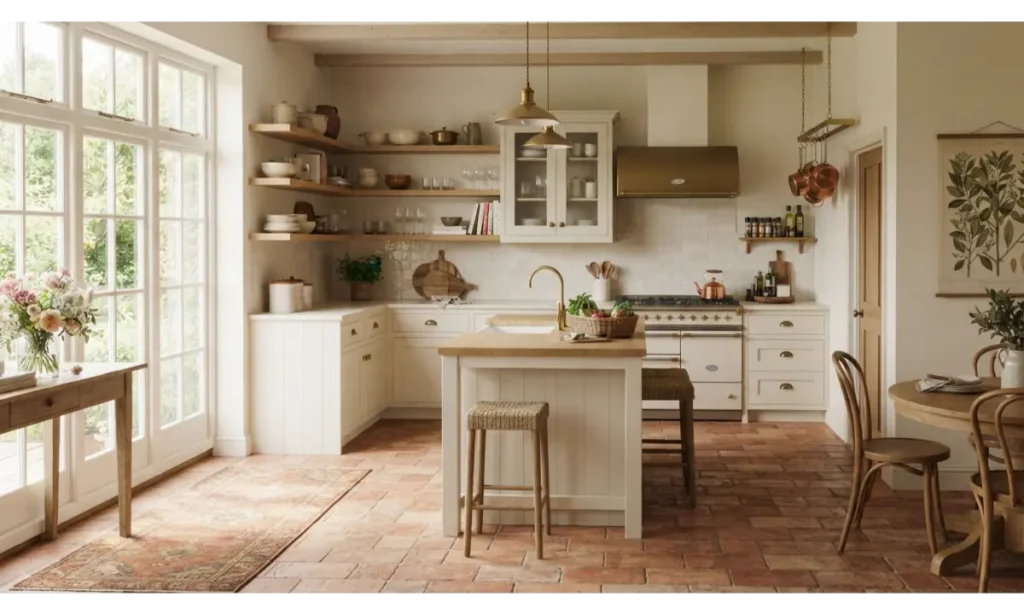
Large format terracotta floor tiles can give an open kitchen a grounded, architectural appearance. Fewer grout lines create a cleaner visual field, which can make a large room feel more connected and less busy. Pair the flooring with simple cabinetry and one strong island so the natural texture remains visible. Warm white, beige, walnut, and soft taupe all work well with clay based flooring, creating a sophisticated palette that does not depend on bright colors.
The key is choosing the correct scale for the room. Very large tiles can look impressive in expansive kitchens, while medium formats often suit smaller spaces better. Lay the tiles in a simple grid for a contemporary feeling or slightly rotate them for a softer European character. Natural stone countertops and understated lighting can further emphasize the earthy character without making the kitchen feel rustic.
Pro Tip: Use larger tiles when you want fewer visual interruptions and a more spacious floor appearance.
Read More: 21 Gnome Decor Ideas for a Magical and Cozy Home
3. Terracotta Kitchen Backsplash With Open Shelving
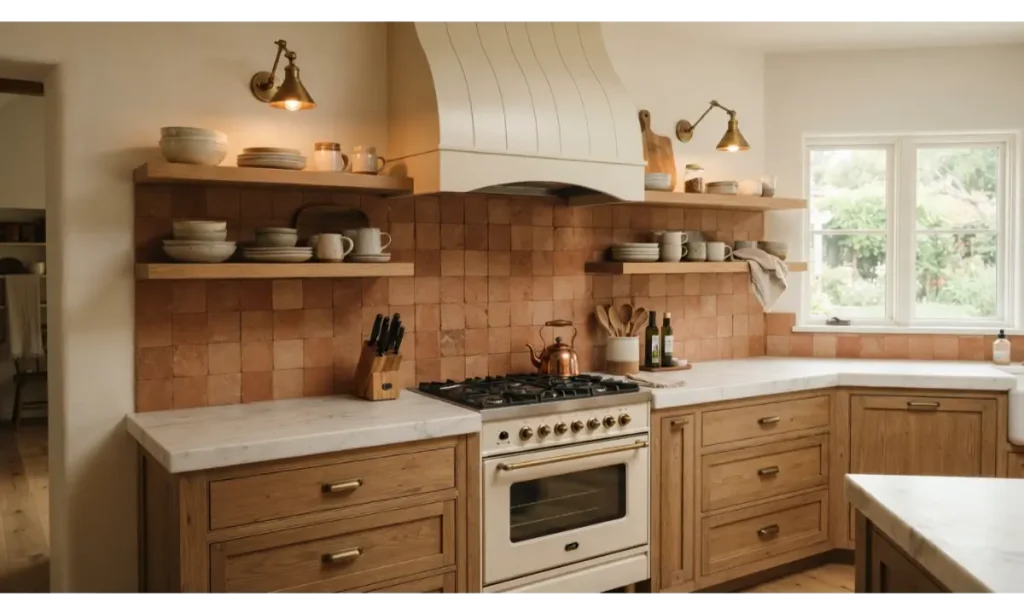
A terracotta kitchen backsplash brings warmth directly into the cooking zone without requiring a full terracotta floor. Handmade looking tiles with slight tonal variation can make a backsplash feel artisanal and personal. Pair them with open oak shelving, creamy cabinetry, and simple ceramic dishes for a relaxed look. This approach works particularly well when you want the kitchen to feel softer and more decorative while still keeping the main work surfaces practical.
Consider extending the backsplash behind the range or sink while stopping it cleanly at a natural architectural boundary. A subtle handmade texture can catch light differently throughout the day, giving the wall more depth. If your cabinets already have a strong color, select a quieter clay shade. If the cabinetry is neutral, a richer terracotta can become the focal point without competing with the rest of the room.
Pro Tip: Let the backsplash be the main warm statement and keep nearby accessories in quieter earthy shades.
4. Terracotta and Natural Wood Kitchen
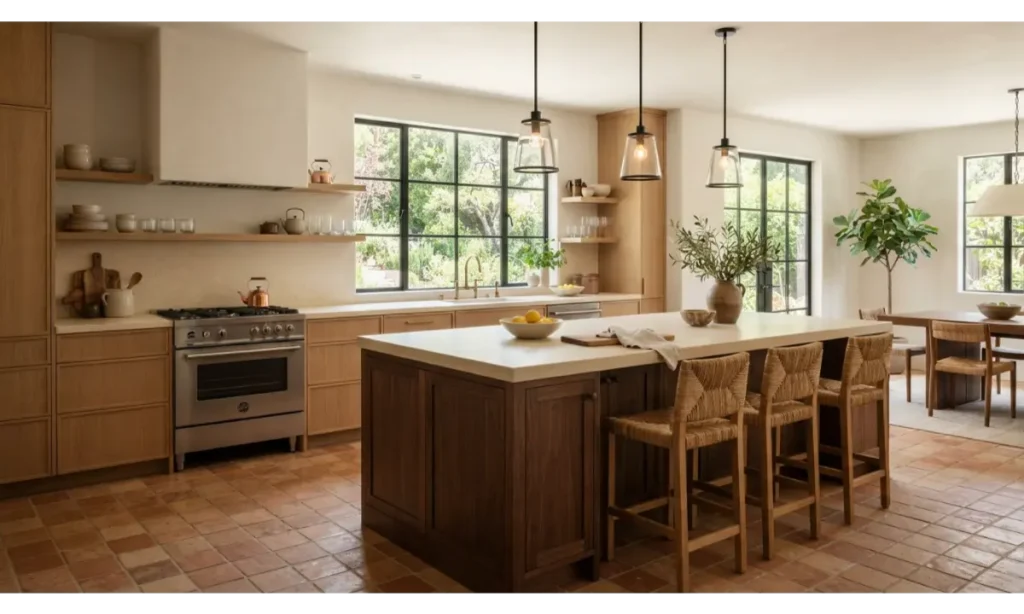
Combining terracotta tiles with natural wood creates one of the most naturally harmonious kitchen palettes. Both materials bring warmth, texture, and visible variation, so the room feels connected rather than decorated around a single trend. Oak creates a lighter Scandinavian inspired effect, while walnut creates a richer and more dramatic atmosphere. Choose one dominant wood tone and allow the terracotta to act as the grounding element.
To keep the combination sophisticated, introduce a cooler neutral through the countertop or wall color. Soft limestone, creamy quartz, or pale stone can prevent the room from becoming visually brown. Black hardware can add definition, while aged brass makes the palette feel softer. This material combination works especially well in kitchens that aim for an organic modern, rustic, European, or transitional aesthetic.
Pro Tip: Avoid matching the wood and tile too closely. A little contrast makes both materials more noticeable.
5. Terracotta Checkerboard Kitchen Floor
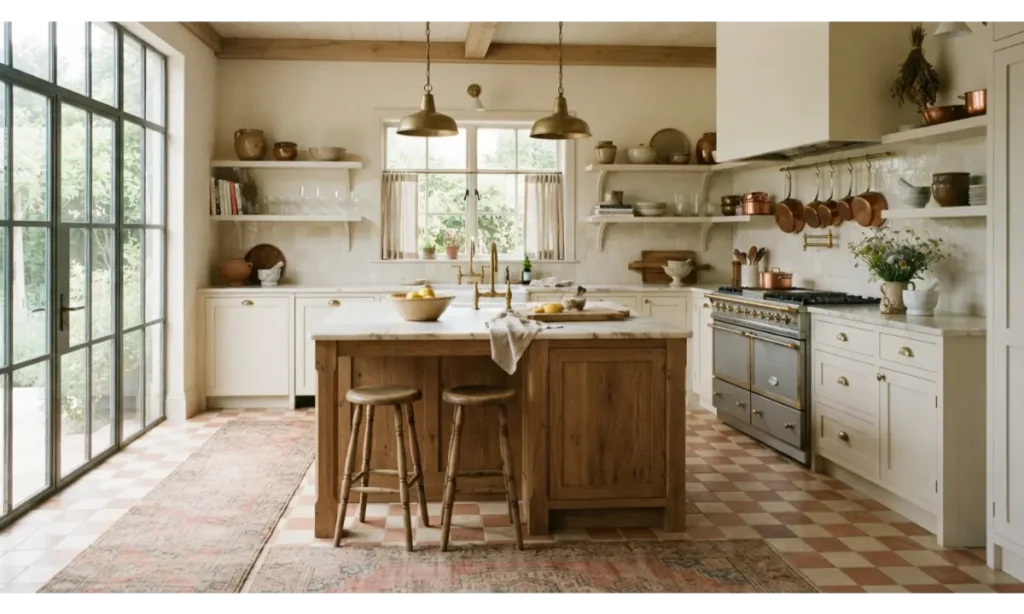
A terracotta checkerboard floor gives the kitchen pattern without relying on harsh black and white contrast. Pair muted clay squares with cream or warm ivory tiles for a softer interpretation of the classic layout. The pattern becomes especially attractive when the cabinets remain simple. Shaker doors, natural wood islands, or flat panel cabinetry can all work because the floor provides enough visual interest.
Scale matters when using checkerboard. Smaller squares can create a traditional, cottage inspired mood, while larger squares feel cleaner and more contemporary. Keep the rest of the room relatively calm so the floor remains the visual anchor. If the kitchen already contains patterned fabrics or strong countertops, choose softer terracotta and cream tones. This creates a layered space without making every surface compete for attention.
Pro Tip: Choose warm ivory instead of stark white for a more cohesive and comfortable checkerboard effect.
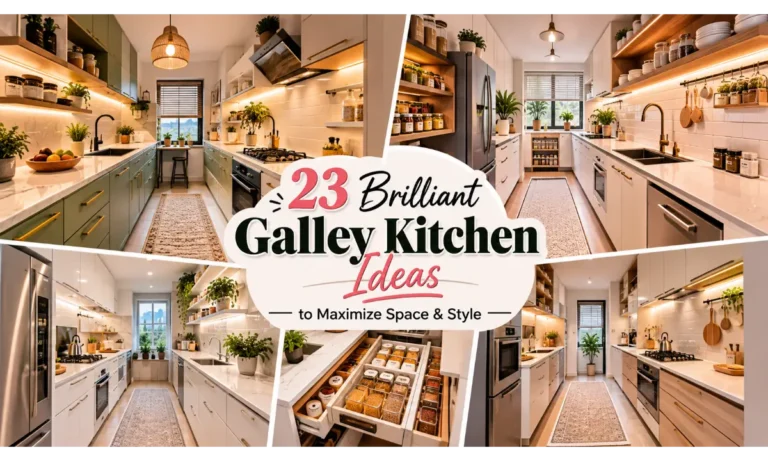
Read More: 23 Brilliant Galley Kitchen Ideas to Maximize Space & Style
6. Rustic Terracotta Kitchen With Exposed Beams
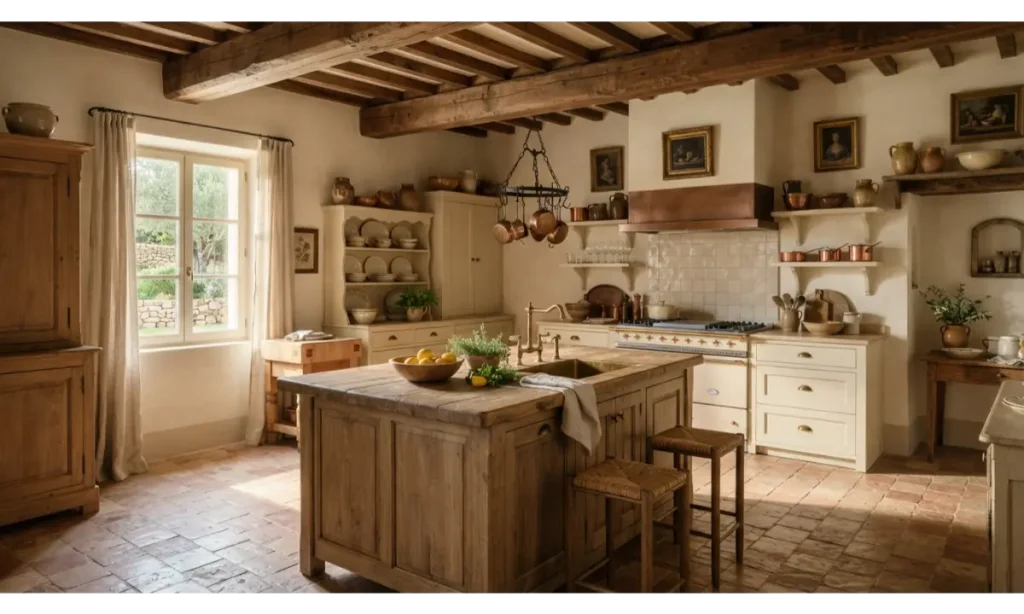
A rustic kitchen becomes especially welcoming when aged terracotta flooring meets exposed timber beams and softly finished walls. The naturally uneven appearance of old style clay tiles gives the room character that perfectly suits reclaimed wood and vintage details. Instead of trying to make every surface look new, allow small variations to create a lived in atmosphere. This approach works beautifully in farmhouse, cottage, Mediterranean, and European country kitchens.
Balance the rustic materials with practical modern features. A streamlined range, concealed storage, quality countertops, and efficient lighting can keep the room comfortable for everyday use. Cream plaster, warm beige walls, and simple linen details help soften the stronger floor tones. The goal is not to recreate an old kitchen exactly, but to combine historic character with modern convenience.
Pro Tip: Use aged finishes selectively so the kitchen feels authentic rather than themed.
7. Soft Blush Terracotta Tiles With White Cabinets
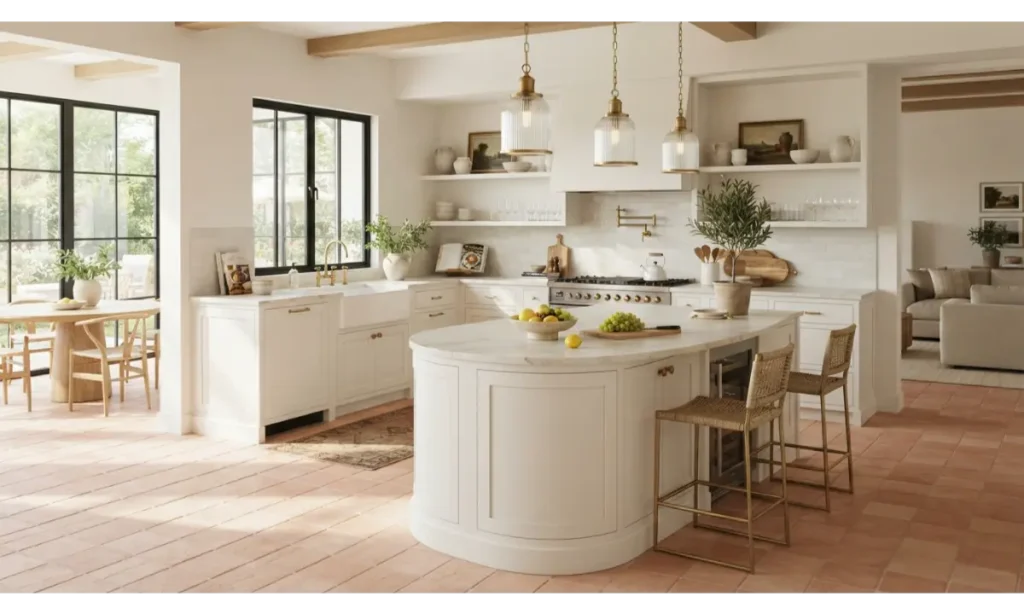
Not every clay tile needs to be deep red or orange. Soft blush and dusty terracotta tones offer a lighter interpretation that works beautifully with warm white cabinetry. This color combination can make a kitchen feel cheerful while maintaining the earthy quality associated with terracotta kitchen design. Add pale wood, creamy stone, and brushed brass to create a gentle palette that feels fresh without becoming overly sweet.
This approach works particularly well in smaller kitchens because the lighter tile color can maintain visual openness. Use the same soft tone across the floor or backsplash for continuity, then introduce stronger terracotta through ceramics and textiles. Matte finishes usually look more natural than highly glossy surfaces. The final room can feel modern, feminine, relaxed, or European depending on the furniture and lighting you choose.
Pro Tip: Test the tile in both daylight and artificial light because blush clay can shift noticeably throughout the day.
8. Terracotta Tiles With Sage Green Cabinets
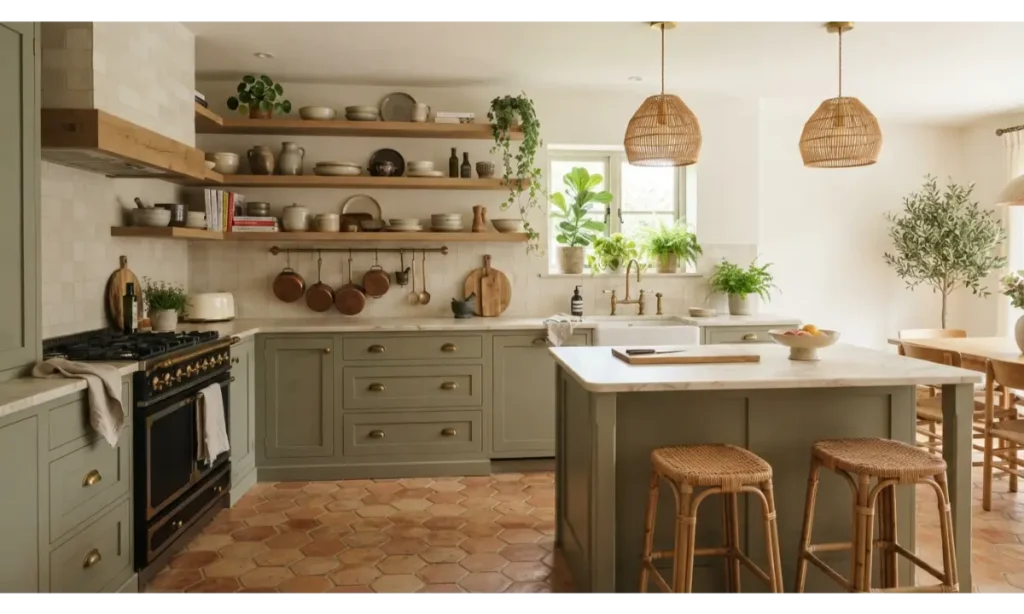
Sage green and terracotta create a strong nature inspired pairing because both colors have an earthy foundation. A muted green cabinet can soften the warmth of clay flooring while still allowing the tile to remain visually important. Add cream stone, natural oak, and aged brass to create a layered palette that feels relaxed and sophisticated. This combination works particularly well for homeowners who want color without using extremely bright or saturated shades.
For the best balance, select a sage with gray or warm undertones rather than a sharp mint green. The tile can then carry richer red, rust, or brown notes without clashing. Keep countertops relatively quiet and use plants sparingly. The combination already provides plenty of organic color, so a few carefully chosen accessories will have more impact than a crowded collection.
Pro Tip: Match the warmth of your sage green to the undertones of the terracotta before committing to cabinetry.
9. Terracotta Herringbone Kitchen Flooring
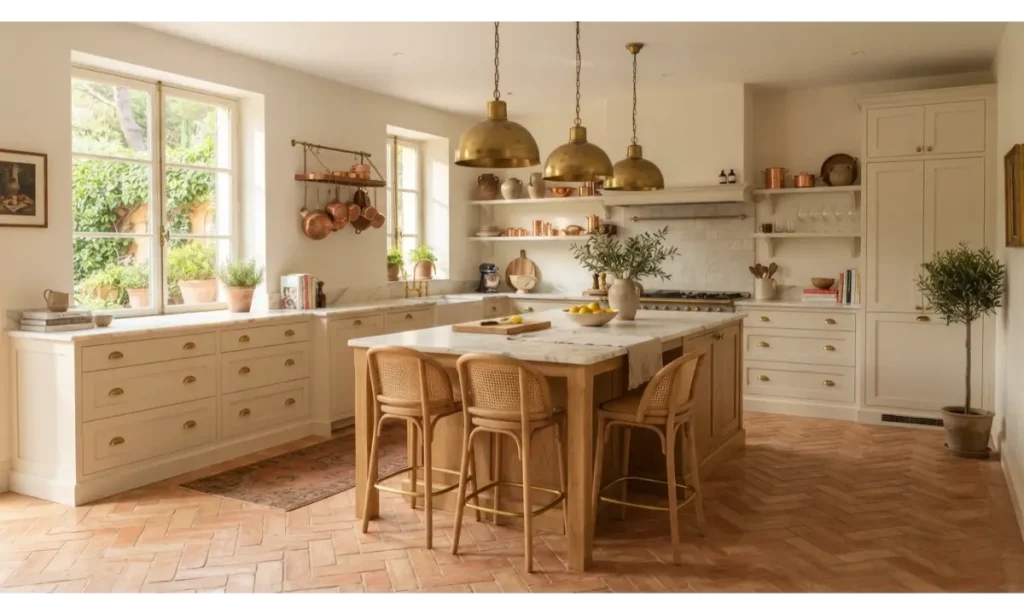
A herringbone layout adds movement to terracotta kitchen flooring while keeping the natural color palette simple. Rectangular clay tiles can create a subtle pattern that feels architectural rather than decorative. This layout works especially well in long kitchens because the directional pattern can influence how the eye travels through the room. Pair it with calm cabinetry, a simple countertop, and minimal accessories so the flooring remains the star.
The angle of the herringbone can also change the mood. A traditional arrangement feels classic, while a tighter or more elongated pattern can look contemporary. If the tile itself has strong color variation, avoid adding another bold floor border. Let the natural differences between individual pieces create the visual texture. This is a strong choice for anyone who wants pattern but does not want graphic prints.
Pro Tip: Plan the starting point carefully so the herringbone pattern looks intentional from the main entrance.
10. Mediterranean Terracotta Kitchen Floor
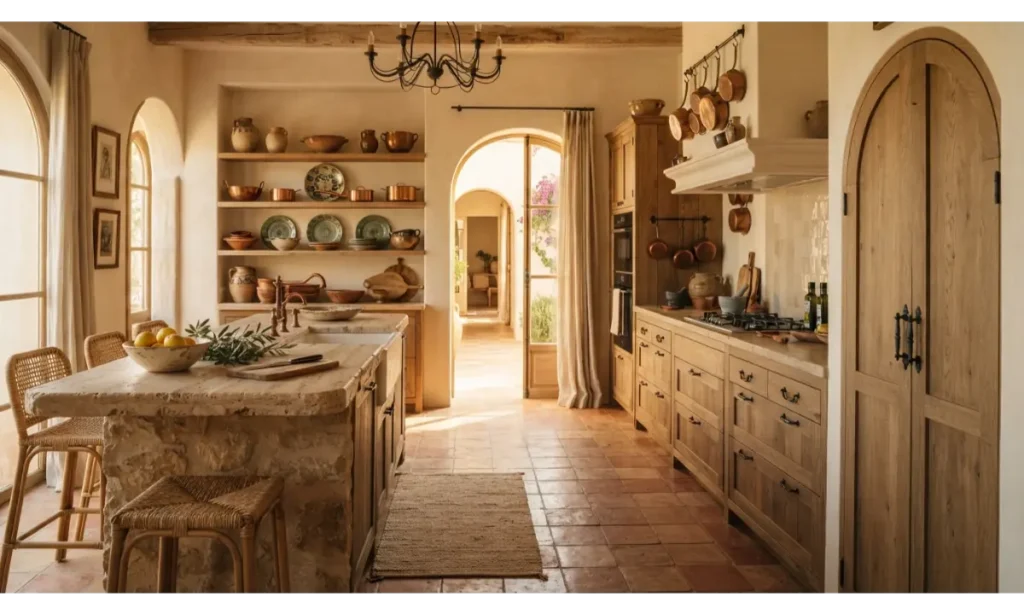
Mediterranean kitchens naturally suit terracotta floor ideas because clay surfaces complement plaster walls, natural wood, stone, and handcrafted accessories. Choose warm red brown tiles and combine them with creamy walls to create a sun washed appearance. Arched openings, woven seating, ceramic pottery, and aged brass can reinforce the style without requiring a heavily themed room.
The most successful Mediterranean kitchens usually mix rough and refined surfaces. A textured clay floor can sit beside a smooth stone countertop and simple modern appliances. This contrast keeps the room practical and prevents it from feeling like a staged vacation home. Add olive green, muted blue, or natural linen through small accents if you want additional color without overpowering the terracotta.
Pro Tip: Use fewer themed accessories and let the materials create the Mediterranean character naturally.
11. Small Terracotta Tiles for a Cozy Kitchen
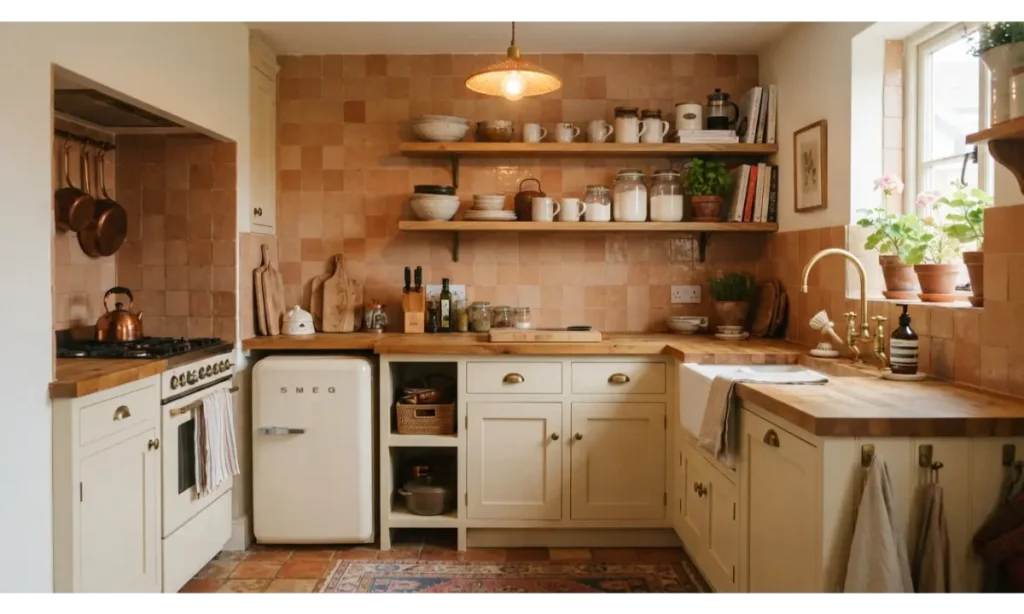
Small terracotta tiles can create a cozy, detailed foundation in compact kitchens. Their scale works beautifully with cottage style cabinetry, narrow galley layouts, and smaller cooking spaces. Because individual tiles remain visible, the floor develops a handcrafted appearance that adds personality without needing decorative patterns. Warm white cabinets and pale countertops can keep the overall room bright while the floor provides depth.
Use small tiles thoughtfully because too many grout lines can make a large kitchen feel busy. In a smaller room, however, the extra detail can actually enhance the sense of charm. Choose a grout tone that blends with the tile rather than creating strong contrast. This approach works especially well with vintage fixtures, butcher block countertops, open shelving, and simple ceramic accessories.
Pro Tip: Keep grout lines visually quiet when using many small tiles.
12. Terracotta Accent Wall Behind the Range
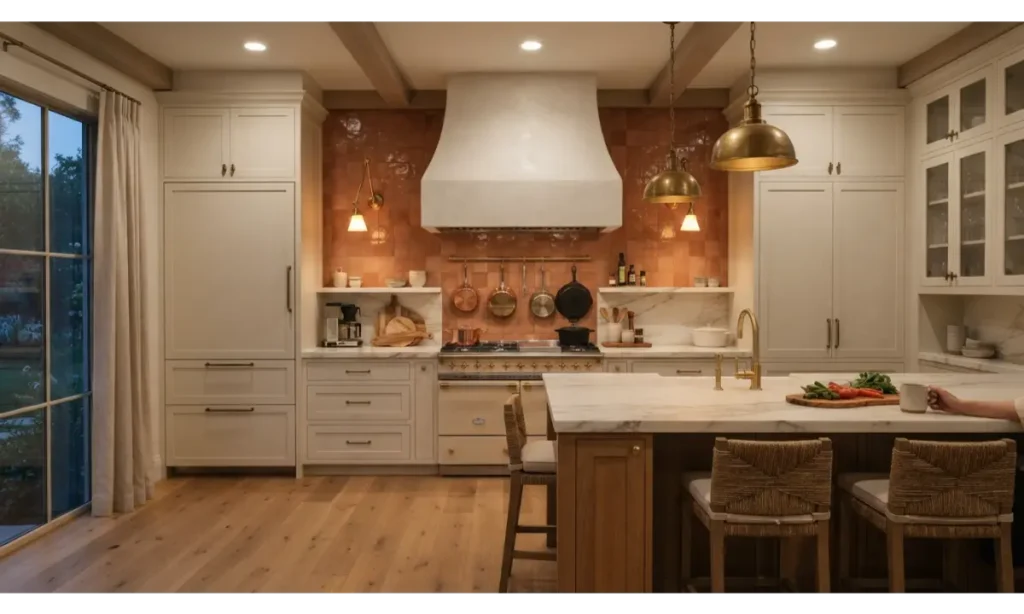
A terracotta accent wall can turn the cooking area into a memorable focal point without covering the entire kitchen. Use handmade style rectangular or square tiles behind the range and keep surrounding walls neutral. The warm clay surface naturally draws attention toward the stove, creating a visual center for the room. A plaster range hood, stone countertop, and brass lighting can make the composition feel refined rather than overly rustic.
This idea works especially well when the kitchen already has neutral flooring. It gives you the character of terracotta backsplash tile without committing to a full floor installation. If the room is small, use the feature wall as the main color moment and keep the cabinetry light. The result feels intentional, warm, and architectural.
Pro Tip: Center the tile layout carefully around the range hood so the feature looks balanced from across the room.
Modern and Creative Terracotta Tile Designs
13. Modern Terracotta Tiles With Minimal White Cabinets
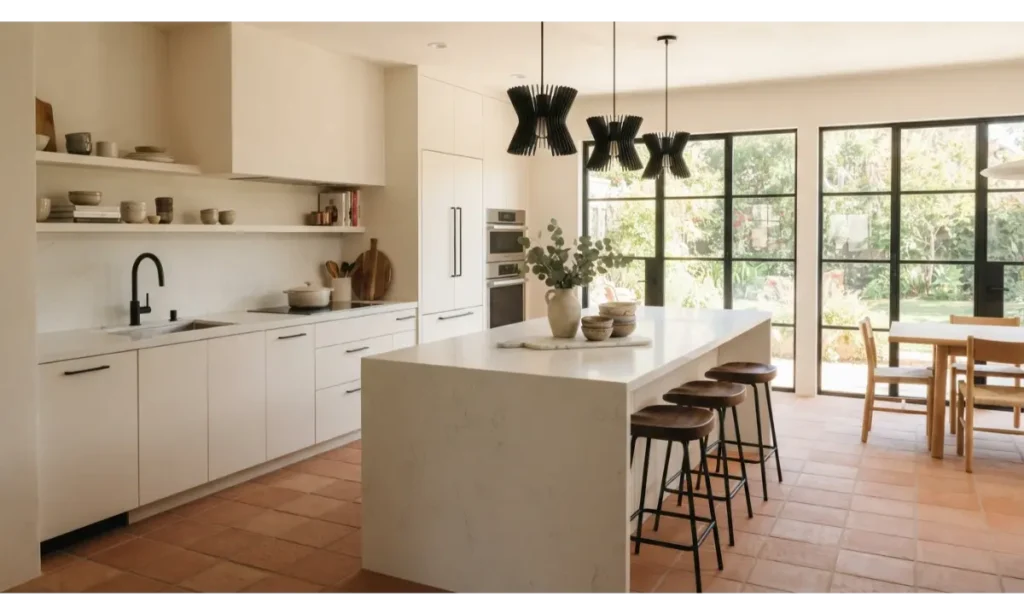
Modern kitchens can benefit from the softness of terracotta tile design without looking rustic. Pair matte clay tiles with simple white or warm ivory cabinets and clean countertops. The contrast between organic flooring and streamlined cabinetry creates a balanced look that feels current. Avoid excessive decorative details so the texture of the tile can provide the character.
Black fixtures can sharpen the composition, while natural wood can soften it again. If you prefer a quieter room, choose muted terracotta with brown undertones instead of bright orange. Large windows and simple pendant lighting can emphasize the natural texture. This style proves that terracotta does not need farmhouse furniture or vintage accessories to feel beautiful.
Pro Tip: Choose one modern element, such as a sculptural hood or oversized island, to keep the design contemporary.
14. Terracotta Tiles With Dark Walnut Cabinets
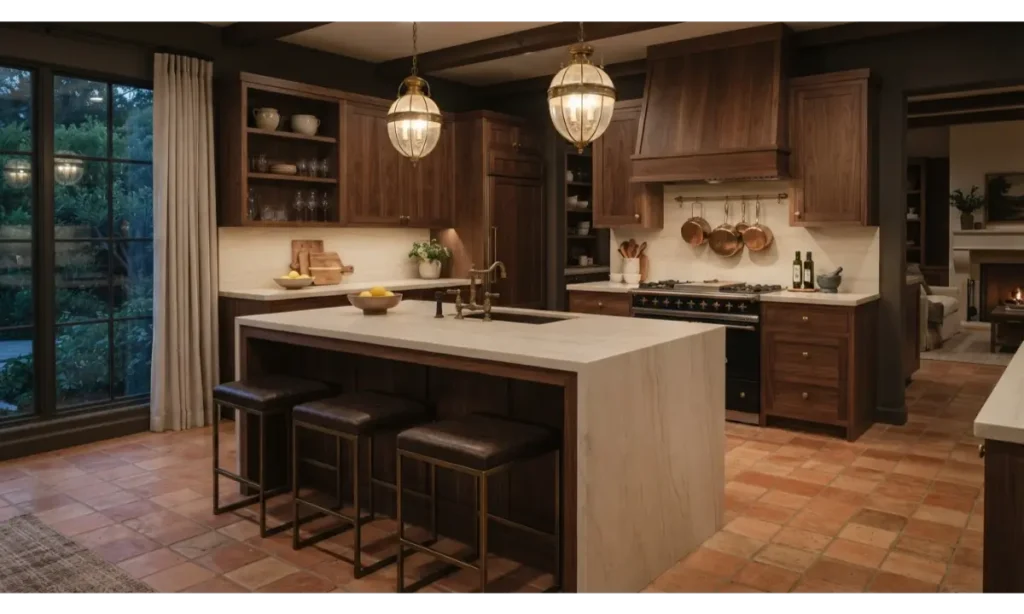
Dark walnut and terracotta create a deeper, more dramatic kitchen palette. The warm red brown tones of the flooring complement the richness of walnut while adding enough color variation to keep the room from looking flat. Use a lighter stone countertop or warm plaster wall to provide contrast. This combination works particularly well in spacious kitchens where darker cabinetry can feel intentional rather than restrictive.
Lighting becomes important with this palette. Add layered pendant lights, under cabinet illumination, and warm ambient fixtures to reveal the textures of the wood and tile. Keep metallic finishes consistent, such as aged brass or bronze, so the room feels cohesive. A few cream or linen accents can also break up the darker surfaces without weakening the overall mood.
Pro Tip: Include one lighter large surface, such as the countertop or wall, to balance dark wood and terracotta.
15. Terracotta Tile Border Around a Kitchen Island
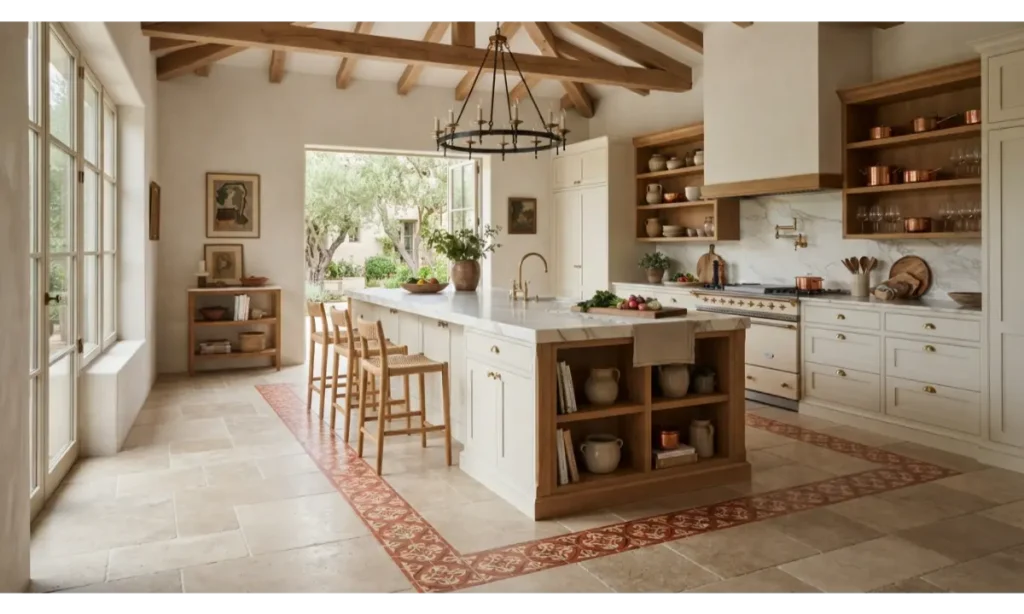
A terracotta border can define a kitchen zone without covering the entire floor. Use clay tiles around the island or along a preparation area while keeping the surrounding floor neutral. This creates a subtle architectural frame and can help visually organize an open plan kitchen. The idea works particularly well when the cooking, dining, and living areas share one large space.
Choose a border color that relates to another warm element in the room, such as wood, brass, or a nearby rug. Keep the geometry clean so the feature feels deliberate rather than decorative. This is also a useful approach when you love Terracotta Tile Ideas For Kitchen but want to use the material selectively. A smaller installation can create major visual impact.
Pro Tip: Use the border to define function, not simply to add decoration.
16. Handmade Terracotta Subway Style Tiles
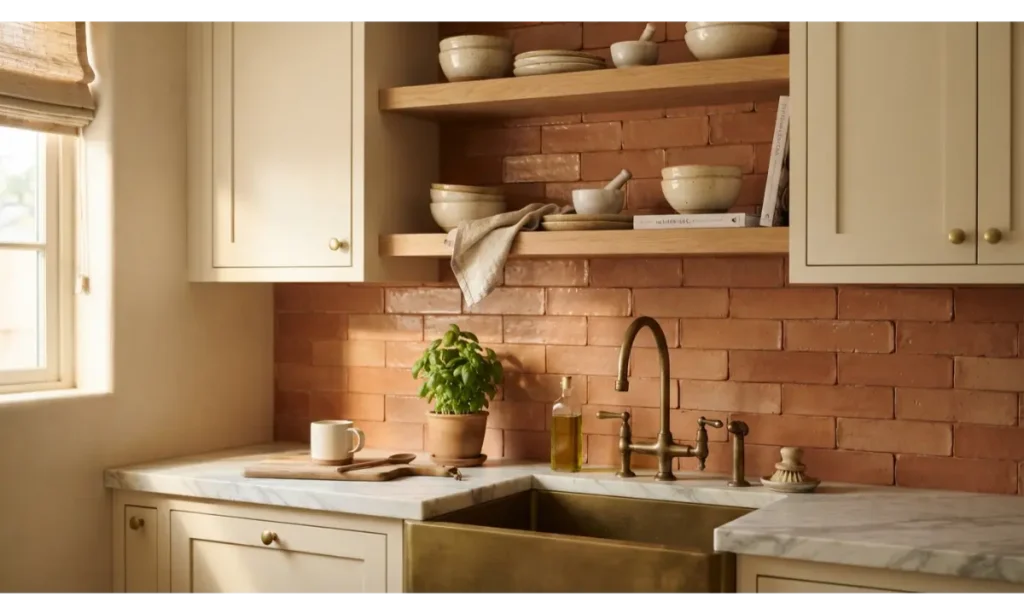
Handmade style terracotta subway tiles offer a softer alternative to perfectly uniform ceramic backsplashes. Slight variations in shape, glaze, and color can make the wall feel handcrafted and authentic. Pair them with simple cabinetry so their irregular beauty remains visible. A warm white counter and natural wood shelving can create a relaxed backdrop that feels collected rather than overly designed.
If you want a more modern result, install the tiles in a straight stack pattern instead of a traditional offset layout. A classic running bond can create a more timeless appearance. Consider using tonal grout to emphasize the handmade character without creating strong lines. The result suits modern farmhouse, European, organic modern, and transitional kitchens.
Pro Tip: Use irregular tiles as a feature and keep surrounding surfaces visually simple.
17. Terracotta Hexagon Kitchen Tiles
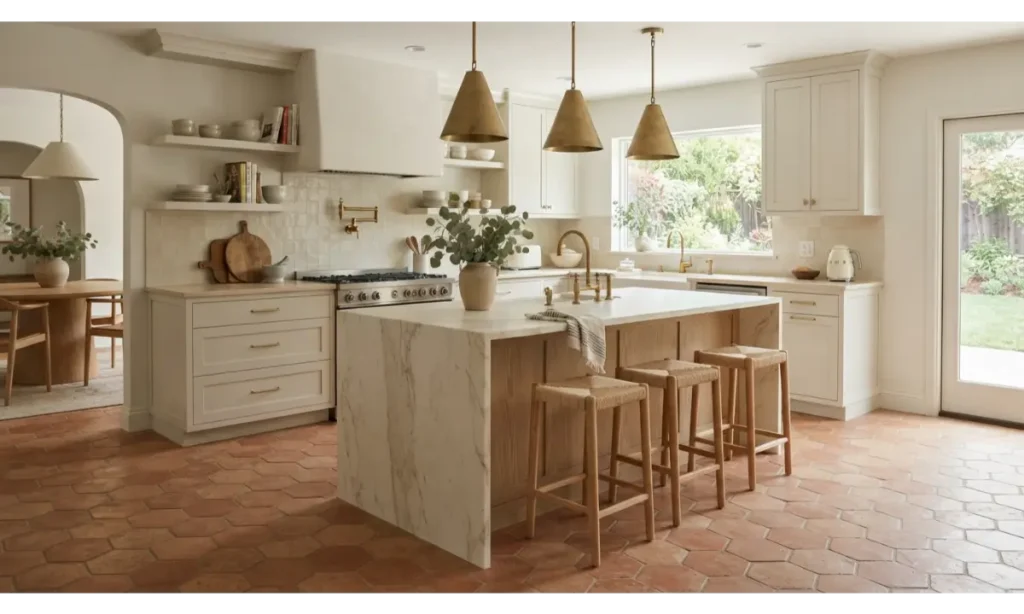
Hexagonal terracotta tiles can introduce geometry while maintaining an earthy color palette. Their shape makes the floor more visually interesting than a standard square layout, yet the clay color keeps the overall effect warm and grounded. Use them with flat panel cabinets or simple shaker doors so the geometry does not compete with detailed cabinetry.
For a subtle look, select one terracotta shade throughout the floor. For more character, combine two close clay tones in a random arrangement. Avoid too many additional patterns in rugs, curtains, or backsplash surfaces. The hexagon shape already creates movement. Neutral walls and simple stone countertops allow the floor to remain the main design feature.
Pro Tip: Keep the color variation subtle when using a strong geometric tile shape.
18. Terracotta Tiles With Cream Stone Countertops
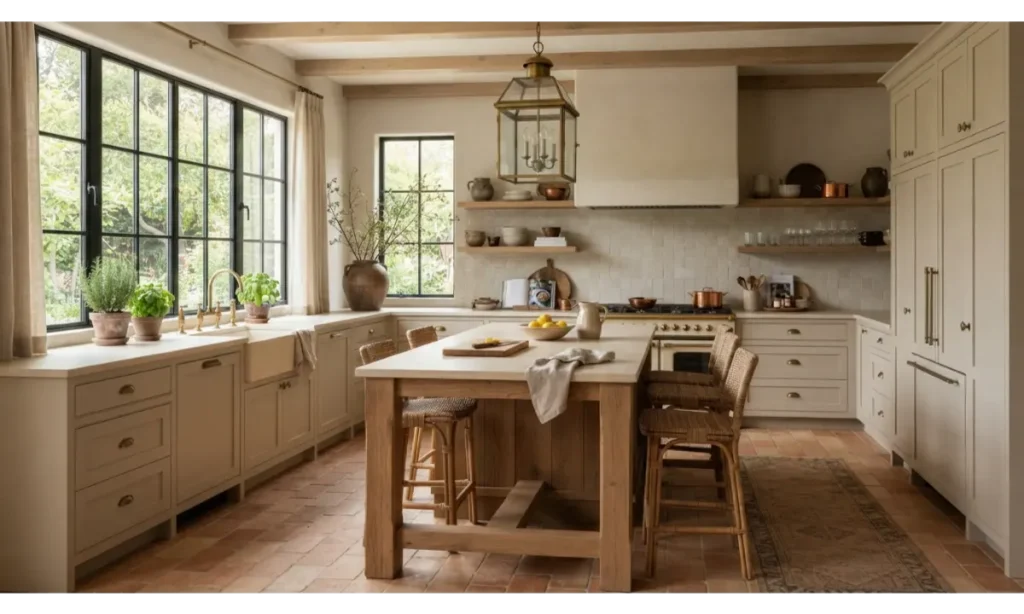
Cream stone and terracotta create a sophisticated combination because both materials have warm natural undertones. A limestone or limestone inspired countertop can soften the stronger clay floor while adding a refined surface for everyday kitchen use. Keep cabinetry in beige, cream, or muted wood to create a seamless transition between the materials.
This combination is especially effective when the terracotta has visible variation. Instead of trying to match every tile to the countertop, choose a stone with several related warm shades. That allows the room to feel layered rather than overly coordinated. Add aged brass, woven stools, and simple pottery for additional texture. The overall result feels luxurious but comfortable.
Pro Tip: Choose stone with warm undertones so it does not make the terracotta appear overly orange.
19. Terracotta Kitchen Tiles With Blue Accents
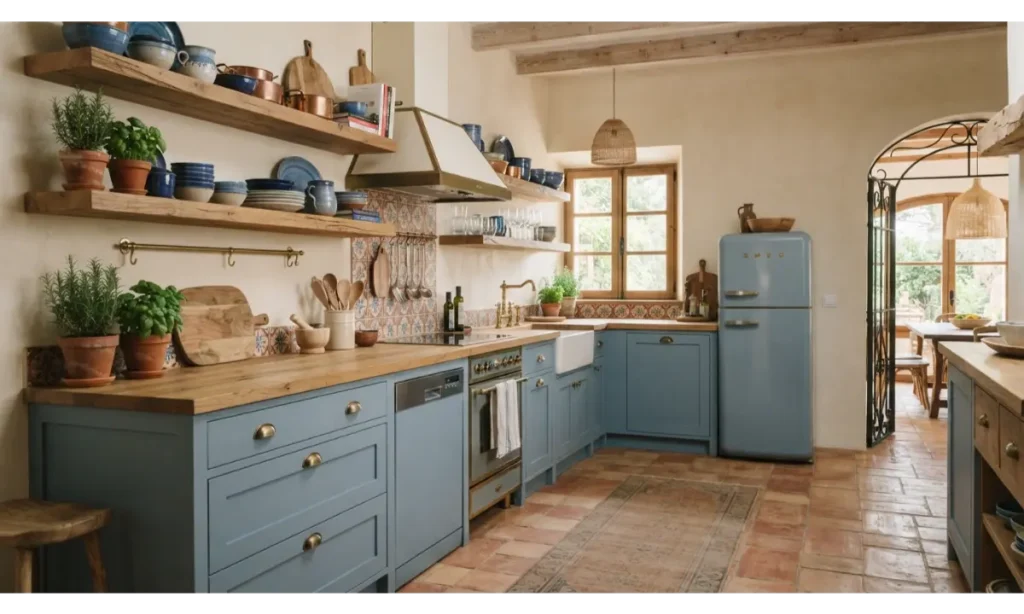
Blue can provide an unexpected contrast against warm terracotta while keeping the kitchen inviting. Instead of bright royal blue, choose dusty blue, muted denim, or soft Mediterranean blue. These shades create enough contrast to make the clay tiles stand out while maintaining a relaxed atmosphere. Cream walls and natural wood can bridge the two colors and prevent the palette from becoming too strong.
Use blue strategically through cabinetry, pottery, a runner, or small decorative elements. You do not need several blue surfaces to make the combination work. If the floor has strong red undertones, a softer blue can create a beautiful complementary relationship. This style works particularly well in Mediterranean, coastal, vintage, and eclectic kitchens.
Pro Tip: Repeat the blue in only two or three places so the terracotta remains the visual anchor.
20. Terracotta Tile Runner Effect in a Galley Kitchen
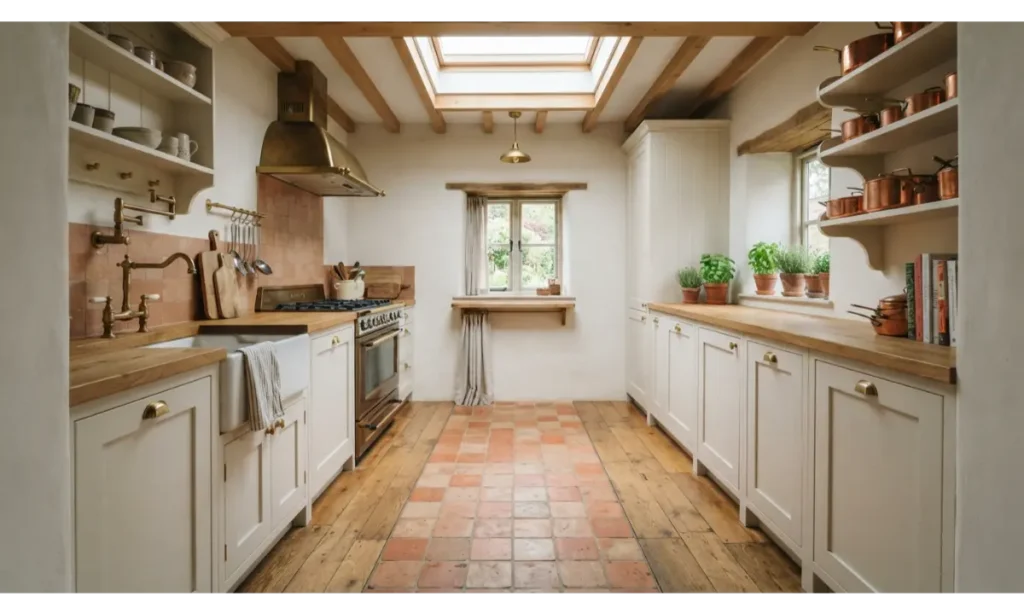
A defined terracotta tile runner can give a galley kitchen a strong visual center. Instead of using clay tiles from wall to wall, create a long rectangular zone through the main walking and cooking area. This can visually organize a narrow room while adding warmth beneath otherwise neutral cabinetry. The approach works particularly well with cream cabinets, oak details, and soft stone surfaces.
For a cohesive result, align the runner with the main work zone rather than placing it randomly. Keep the surrounding floor simple and let the terracotta establish direction. A narrow kitchen can benefit from elongated tile formats or a simple running pattern that visually follows the room. Good lighting will also highlight the natural variation of the surface.
Pro Tip: Follow the length of the kitchen when you want the floor to emphasize the room’s natural direction.
21. Reclaimed Terracotta Tiles for a Historic Look
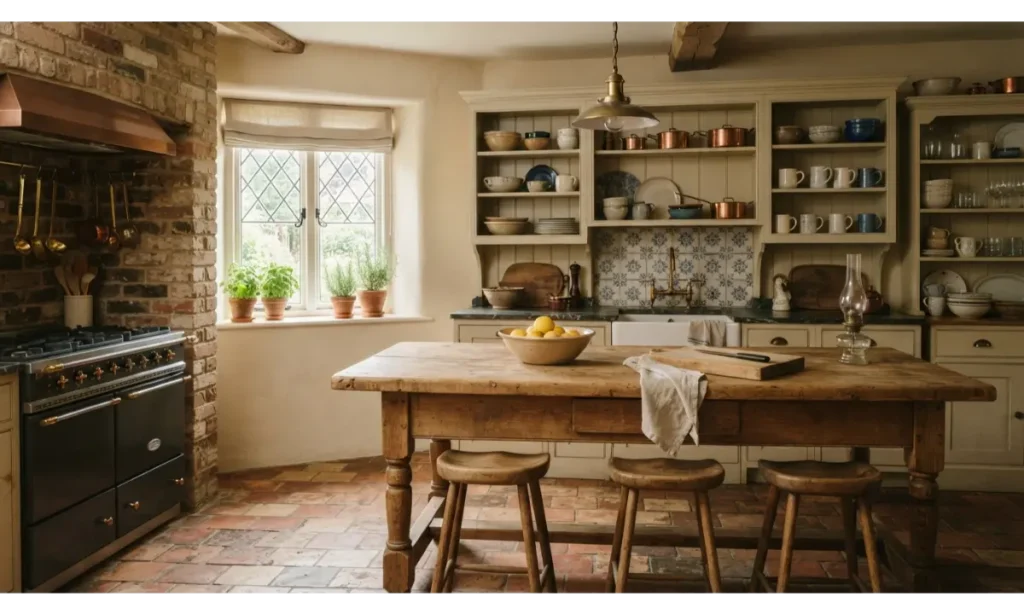
Reclaimed terracotta tiles bring genuine history and variation into a kitchen. Their worn edges, changing tones, and natural patina can make a new renovation feel as though it has evolved over time. This style works beautifully with antique furniture, aged wood, plaster walls, and traditional cabinetry. It is especially appealing when the goal is character rather than a perfectly uniform finish.
Because reclaimed material can vary considerably, inspect samples before installation and plan for differences in thickness, color, and texture. Professional preparation matters because older clay tiles may require careful cleaning and sealing. When installed thoughtfully, the variation becomes part of the beauty. The finished kitchen can feel authentic, established, and highly individual rather than copied from a showroom.
Pro Tip: Buy enough reclaimed tiles to allow for sorting and selecting pieces with compatible thicknesses and tones.
22. Terracotta Tiles With a Modern Black Kitchen
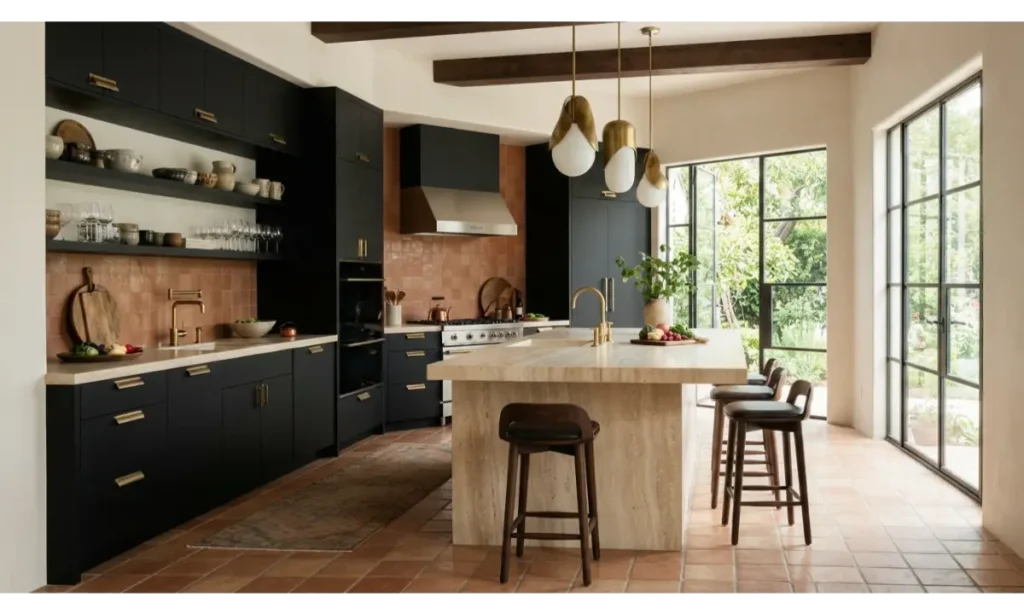
Black cabinetry can make terracotta flooring look surprisingly modern. The deep cabinetry provides a strong backdrop while the clay tiles add warmth and prevent the room from feeling cold. A creamy countertop or backsplash can create the third major tone, giving the palette enough contrast to remain balanced. This combination works especially well in contemporary kitchens that need warmth.
Keep the black finish consistent and avoid adding too many dark accessories. Terracotta already supplies rich color, so a few brass details can provide enough visual softness. Natural wood stools or cutting boards can add another organic layer. The result feels bold but grounded, making it a strong option for homeowners who want something more dramatic than an all neutral kitchen.
Pro Tip: Add one large light surface to stop black cabinetry and terracotta from making the room feel visually heavy.
23. Full Warm Earth Tone Terracotta Kitchen
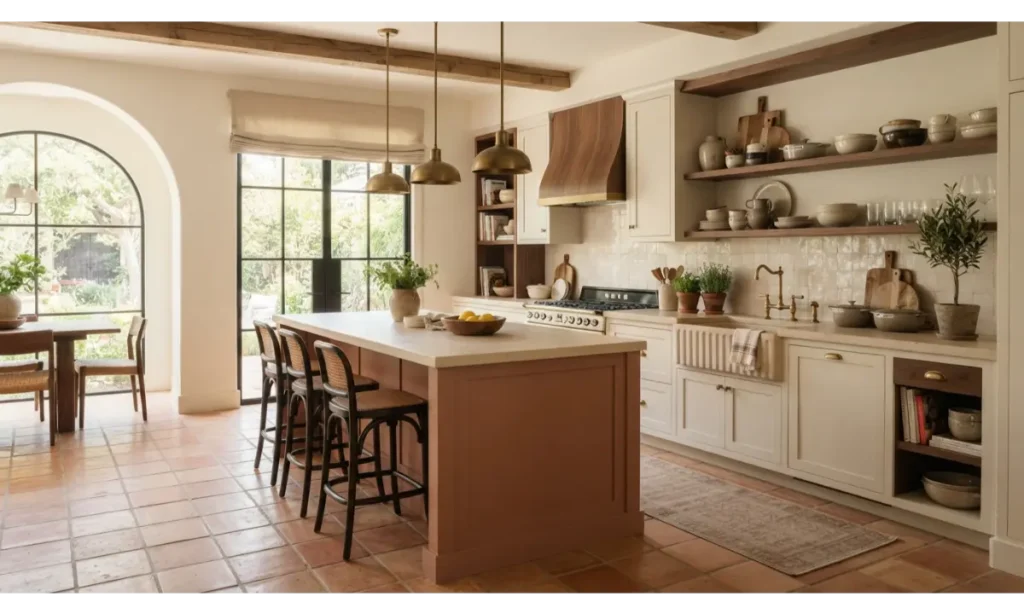
For the most immersive approach, build the kitchen around a carefully controlled earth tone palette. Use terracotta flooring as the foundation, then bring in cream cabinetry, warm wood, stone, and small terracotta accents. Current kitchen design direction strongly favors warmth, natural materials, layered textures, and rooms that feel personal rather than overly coordinated, making this approach especially relevant for a timeless kitchen.
The trick is controlling repetition. You do not need terracotta on every surface. Let the floor carry the strongest clay tone while smaller details echo it through pottery, lighting, textiles, or an island accent. Natural materials should provide most of the remaining texture. This creates a kitchen that feels warm and expressive while still functioning as a practical everyday space.
Pro Tip: Choose one dominant terracotta tone and repeat it in small accents instead of covering every surface.
How to Choose the Right Terracotta Tiles for Your Kitchen
When comparing terracotta kitchen tiles, start with the role the surface needs to play. Flooring usually benefits from durable, practical finishes and a tile size that suits the room. A backsplash gives you more freedom to use handmade textures, smaller formats, or decorative layouts. Think about cleaning, moisture, traffic, lighting, cabinet color, and countertop undertones before choosing the final material.
Genuine terracotta has a naturally porous character, so sealing and ongoing care can matter depending on the specific product and installation. Terracotta look porcelain or other manufactured alternatives can provide a similar visual effect with different maintenance characteristics. The right choice depends on whether you value authentic variation and aging or prefer easier upkeep and greater consistency. Always follow the manufacturer’s installation and maintenance guidance for the exact tile you choose.
Best Colors to Pair With Terracotta Kitchen Tiles
Warm white, cream, beige, sage, dusty blue, natural oak, walnut, and soft stone can all work beautifully with clay tones. The best pairing depends on the undertone of your tile. Redder terracotta often looks excellent with creamy neutrals and muted greens, while brown leaning clay can pair naturally with walnut and deeper earthy colors.
Avoid choosing colors from a screen alone. Lighting changes how terracotta appears throughout the day, especially when the tile has natural tonal variation. Place physical samples beside your cabinets, countertop, wall color, and hardware before making a final decision. A combination that looks perfect online may feel much warmer or cooler in your actual kitchen.
How to Make Terracotta Kitchen Tiles Look Modern
Modern Terracotta Tile Ideas For Kitchen design does not require removing all signs of texture or age. Instead, combine organic materials with clean lines. Flat panel cabinets, simple islands, sculptural lighting, streamlined appliances, and minimal hardware can make traditional clay flooring feel fresh.
Another effective strategy is contrast. Pair rough or matte terracotta with smooth stone, simple cabinetry, or a refined metal finish. Designers are increasingly favoring layered materials and warmer palettes over kitchens where every finish looks identical. That makes terracotta particularly useful for creating a room with personality and depth.
Frequently Asked Questions
Are terracotta tiles good for a kitchen floor?
Yes, terracotta can work beautifully on a kitchen floor when the specific tile is appropriate for flooring and installed correctly. Its warm color, natural variation, and tactile appearance can create a welcoming foundation. Because genuine terracotta is porous, homeowners should understand the product’s sealing, cleaning, and maintenance requirements before installation.
Do terracotta tiles make a kitchen look old fashioned?
Not necessarily. The surrounding materials determine the overall style. Pairing clay tiles with modern cabinetry, simple lighting, contemporary stone, or streamlined furniture can make them look current. Aged or reclaimed tiles create a traditional character, while clean shapes and muted colors can produce a modern organic appearance.
What cabinet colors look best with terracotta tiles?
Cream, warm white, sage green, natural oak, walnut, beige, dusty blue, and even black can work well. The best choice depends on the undertone and intensity of the terracotta. Warm neutrals are usually the easiest starting point because they allow the clay color to remain the main feature.
Are terracotta tiles difficult to maintain?
Maintenance depends on whether you choose genuine terracotta or a manufactured terracotta look product. Natural clay can require sealing and careful cleaning because of its porous nature. Manufactured alternatives may offer different maintenance needs. Always follow the care instructions supplied for the exact tile rather than assuming every terracotta product requires the same treatment.
What grout color works best with terracotta tiles?
A grout color close to the tile usually creates a calm, cohesive appearance. Cream or warm beige can work well when you want slightly more definition. Strongly contrasting grout can emphasize every individual tile and create a busier appearance, which may be useful for decorative layouts but less desirable for a quiet floor.
Can terracotta tiles work in a small kitchen?
Yes. In a small kitchen, terracotta can add warmth and character without requiring many decorative accessories. Lighter clay tones, warm white cabinets, and simple countertops can keep the room feeling open. Choosing an appropriate tile size and quiet grout can also reduce visual clutter.
Can terracotta tiles work with modern cabinets?
Absolutely. Modern cabinetry can actually make terracotta look more contemporary. The contrast between clean cabinet lines and organic clay texture creates visual balance. White, cream, black, walnut, and muted green cabinets can all produce different but attractive results.
Should terracotta tiles match the countertop?
They do not need to match exactly. In fact, slight variation often creates a more natural and sophisticated result. Instead of matching colors perfectly, look for compatible undertones. Cream stone, warm limestone, soft marble, and natural wood can create a strong relationship with terracotta without copying its exact color.
Final Thoughts
The best Terracotta Tile Ideas For Kitchen do more than add color. They create warmth, texture, character, and a strong connection to natural materials. From classic cream cabinetry and reclaimed flooring to modern black kitchens, sage green cabinets, handmade backsplashes, checkerboard patterns, and elegant stone combinations, terracotta can adapt to many decorating styles.
The most important choice is not simply the shade of the tile. Consider the kitchen’s natural light, cabinet color, countertop, layout, traffic level, maintenance needs, and overall mood. When those elements work together, terracotta becomes more than a trend. It becomes a warm design foundation that can make your kitchen feel inviting, distinctive, and beautifully lived in for years.