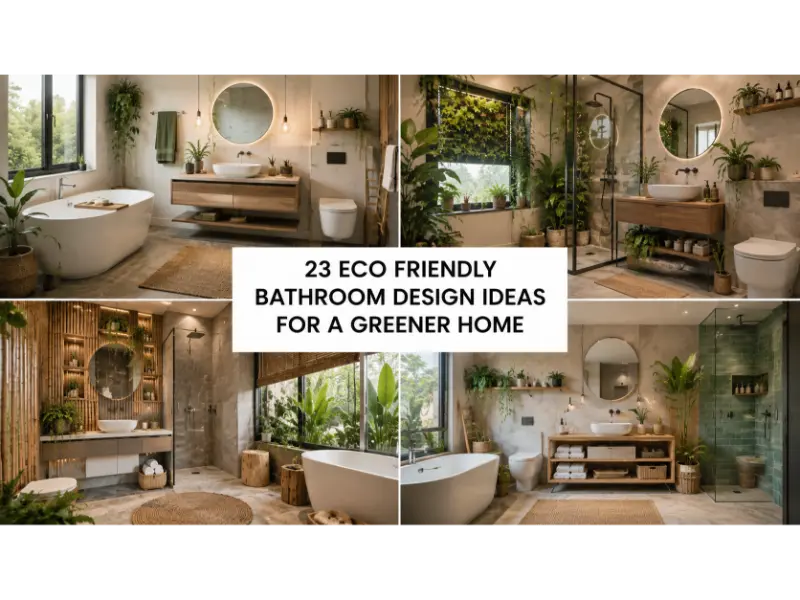
23 Best Eco Friendly Bathroom Design Ideas for a Greener Home
Creating a beautiful bathroom does not mean choosing materials that create unnecessary waste or using more water and energy than you need. Smart design can make your space stylish, comfortable, practical, and kinder to the environment at the same time. These Eco Friendly Bathroom Design Ideas focus on realistic improvements that homeowners can actually use, from water saving fixtures and reclaimed materials to natural lighting and thoughtful storage. Whether you are planning a complete renovation or making a few simple upgrades, these ideas can help you create a greener bathroom without giving up comfort or modern style.
Eco Friendly Bathroom Design Ideas for a Greener Home
1. Eco Friendly Bathroom Design Ideas With a Reclaimed Wood Vanity
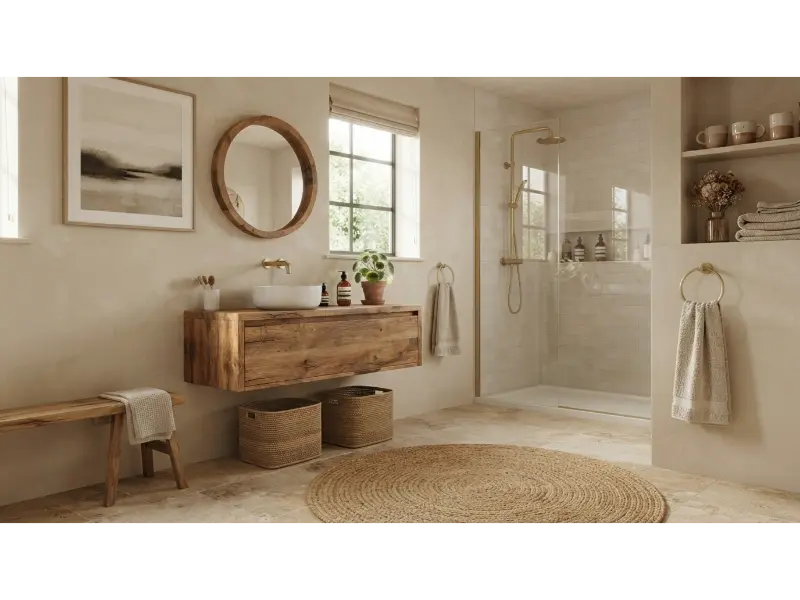
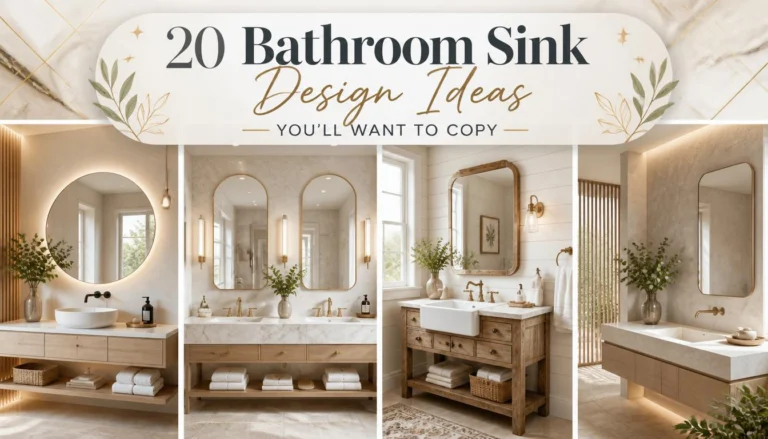
A reclaimed wood vanity can instantly bring warmth and character into a bathroom while giving an existing material a useful second life. Choose timber with natural grain, subtle imperfections, and a finish designed for humid environments. A floating vanity creates an airy appearance and leaves visible floor space underneath, which can make a smaller bathroom feel more open. Pair the wood with a simple ceramic sink, neutral walls, and understated hardware for a balanced look that feels natural rather than overly rustic.
For a long lasting result, protect the wood carefully from standing water and excessive moisture. Look for reclaimed timber from a reliable source and make sure it receives proper treatment before installation. Open shelving underneath can reduce the need for bulky cabinetry while providing room for towels and baskets. This combination works beautifully with sustainable bathroom materials and natural bathroom decor, creating a space that feels personal, warm, and thoughtfully designed.
Pro Tip: Seal reclaimed wood thoroughly and wipe away standing water quickly to protect the surface.
2. Water Saving Bathroom With a Low Flow Showerhead
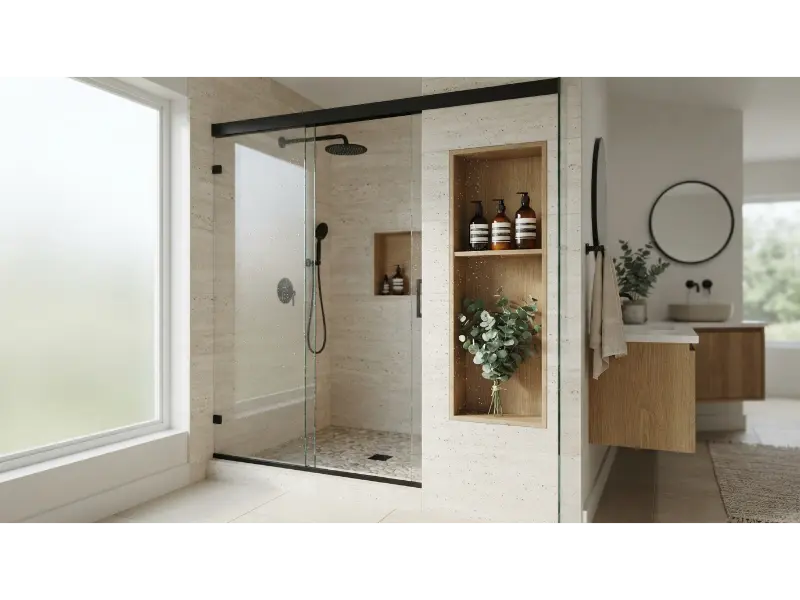
A low flow showerhead is one of the easiest upgrades for reducing water consumption without changing the overall appearance of your bathroom. Modern designs can provide a comfortable spray while using less water than older fixtures. Choose a style that matches your bathroom, whether you prefer a simple wall mounted model, handheld showerhead, or rainfall inspired design. The key is selecting an efficient fixture that still provides the pressure and spray pattern your household prefers.
You can make the upgrade even more effective by combining it with shorter showers and sensible water habits. A handheld model can also make cleaning the shower easier while providing flexibility for children or pets. When combined with other water saving bathroom choices, an efficient showerhead becomes part of a larger conservation strategy. The best upgrades should feel natural in everyday life rather than forcing you to sacrifice comfort.
Pro Tip: Clean mineral buildup from the showerhead regularly to keep the spray pattern strong and consistent.
Read More: 23 Vintage Bathroom Ideas for Timeless Charm & Style
3. Recycled Glass Tile Accent Wall
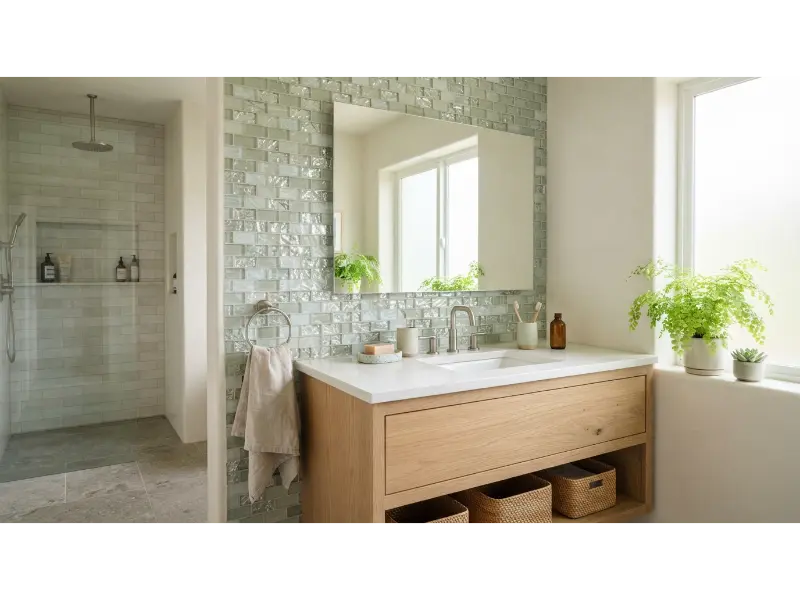
Recycled glass tile can give your bathroom a distinctive focal point while adding recovered material to the design. Its reflective surface can bounce light around the room, making it particularly useful in smaller bathrooms with limited natural brightness. Soft green, blue, cream, and translucent shades can create a calming atmosphere that works beautifully with wood and stone. Instead of covering every wall, use the tile around the vanity, shower niche, or bathtub for a focused decorative effect.
The beauty of recycled glass is that it can provide plenty of visual interest without requiring additional decorations. Keep surrounding surfaces simple so the tile remains the main feature. Pair it with eco conscious bathroom materials, natural wood, ceramic accessories, and soft textiles for a cohesive appearance. This approach gives a bathroom a modern personality while keeping the overall design connected to natural colors and textures.
Pro Tip: Use recycled glass tile on one feature area to create impact without overwhelming the entire bathroom.
4. Natural Stone Bathroom With Local Materials
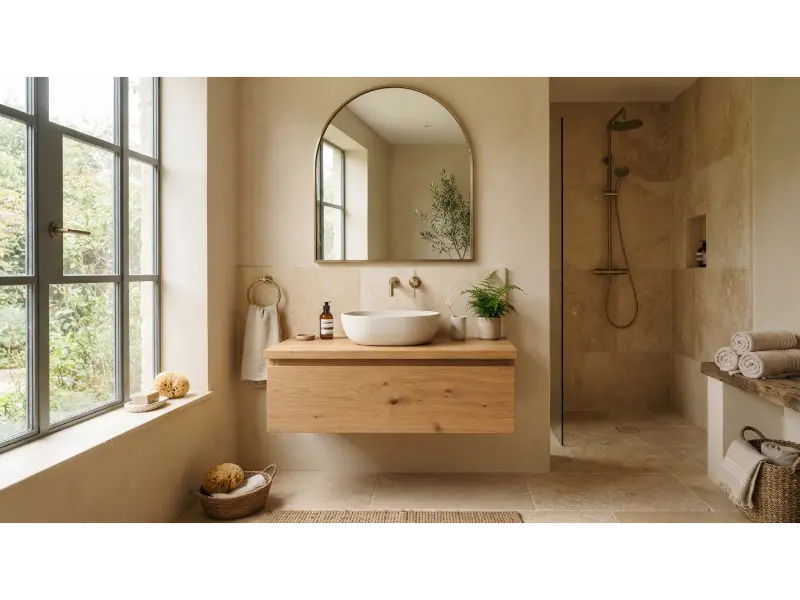
Natural stone can create a timeless bathroom that feels connected to nature. Limestone, slate, travertine, and other stone surfaces bring authentic texture and earthy color into the room. When possible, consider materials sourced closer to your location because transportation can influence the environmental impact of a renovation. You do not need to cover every surface with stone. A stone floor, backsplash, or shower wall can provide enough texture to make the room feel distinctive.
Longevity also matters when choosing bathroom materials. A durable surface that remains attractive for decades may reduce the need for frequent renovations and replacements. Use suitable sealers on porous stone and follow the recommended maintenance routine. Combining sustainable materials with timeless shapes creates a bathroom that does not depend on short lived trends. The result feels elegant, grounded, and practical while remaining easy to personalize with towels and accessories.
Pro Tip: Ask suppliers about the stone’s origin and choose durable finishes suitable for humid bathroom conditions.
5. Bamboo Bathroom Vanity
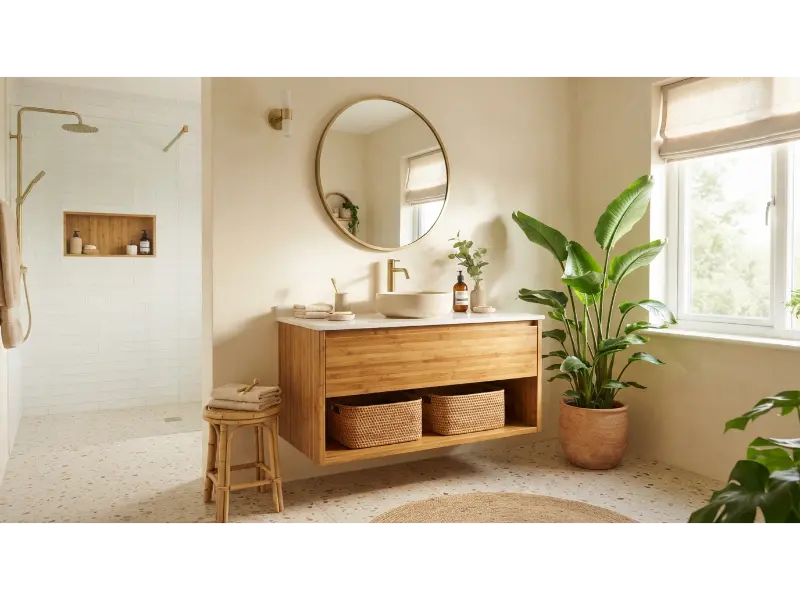
Bamboo can bring warmth and natural texture to a bathroom while creating a fresh alternative to conventional cabinetry. Its clean grain works especially well with Scandinavian, Japandi, minimalist, and modern organic styles. Choose a bathroom suitable bamboo vanity with a moisture resistant finish and durable construction. Light bamboo can also make a small bathroom feel brighter because its warm tone reflects light without making the space appear heavy.
A sustainable vanity should offer more than an attractive appearance. Look for quality hardware, practical storage, and construction that can withstand regular moisture exposure. Pair bamboo with ceramic, stone, and neutral textiles to create a calm material palette. These renewable materials can work beautifully with natural bathroom design when you keep the rest of the room simple and balanced. A floating bamboo vanity can further enhance the feeling of openness.
Pro Tip: Choose bamboo cabinetry with a protective finish specifically designed for humid interior spaces.
Read More: Coffee Table Decor Ideas: 22 Simple Ideas That Look Expensive
6. Water Efficient Dual Flush Toilet
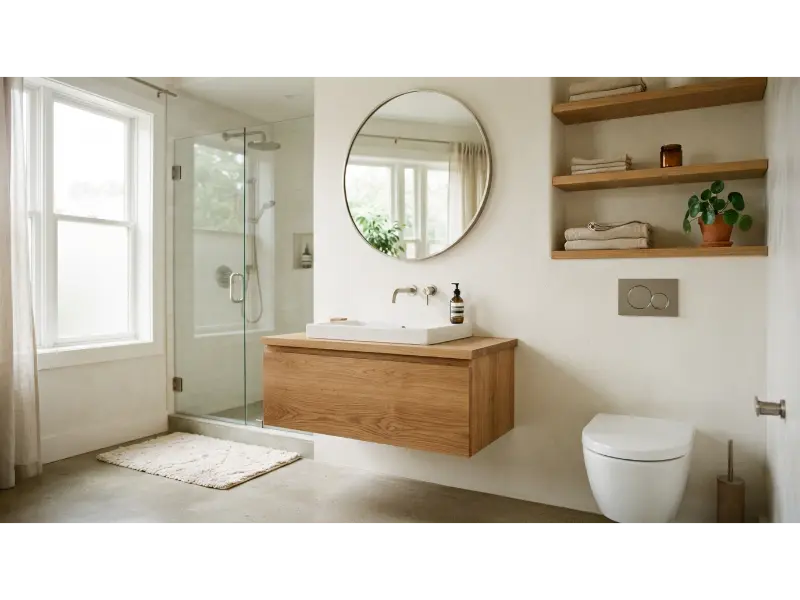
A dual flush toilet gives users different flushing options depending on their needs. This simple feature can reduce unnecessary water use while keeping the bathroom practical for everyday living. Modern high efficiency toilets also come in many attractive shapes, so choosing an efficient model does not mean accepting an outdated appearance. A clean white toilet with a streamlined profile works especially well in modern, minimalist, Scandinavian, and contemporary bathrooms.
When replacing an older toilet, pay attention to both water efficiency and flushing performance. A reliable toilet should remove waste effectively without requiring repeated flushing. Combining an efficient toilet with other water conservation upgrades can make a noticeable difference over time. This is one of the most practical improvements because the fixture performs an important daily function while quietly reducing resource use.
Pro Tip: Compare water efficiency and flushing performance before selecting a replacement toilet.
7. Large Windows for Natural Bathroom Lighting
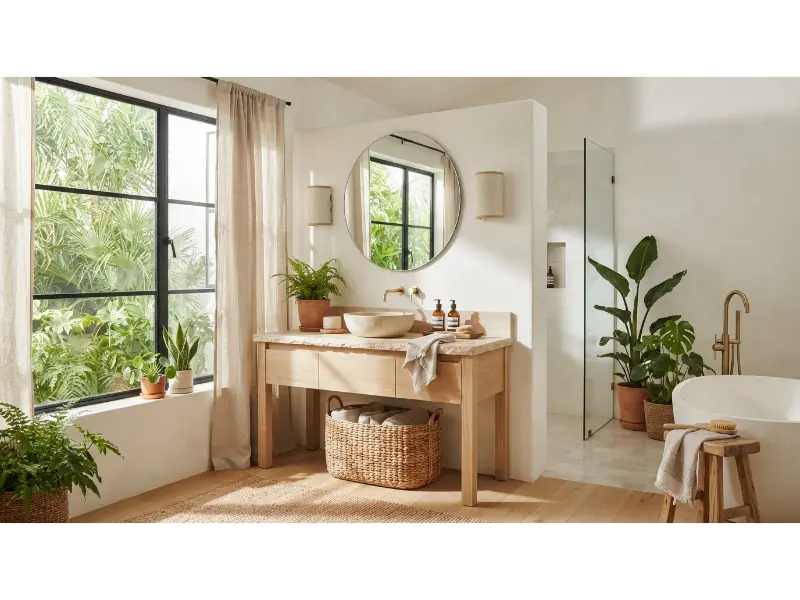
Natural light can make a bathroom feel larger, cleaner, and more welcoming while reducing the need for electric lighting during daylight hours. A large window can become an architectural feature instead of simply serving a practical purpose. If privacy is a concern, consider frosted glass, textured glazing, or a high placed window. These solutions can allow sunlight into the bathroom without making the space feel exposed.
Windows can also support natural ventilation when the climate and layout allow it. However, moisture control still matters, especially after showers. Combine natural airflow with a properly sized exhaust fan to keep humidity under control. A thoughtful energy efficient bathroom uses daylight as a design feature rather than relying on artificial lighting throughout the day. The result feels fresh, comfortable, and naturally connected to the outdoors.
Pro Tip: Use privacy glass or a high window placement when you want more daylight without sacrificing privacy.
8. Warm LED Bathroom Lighting
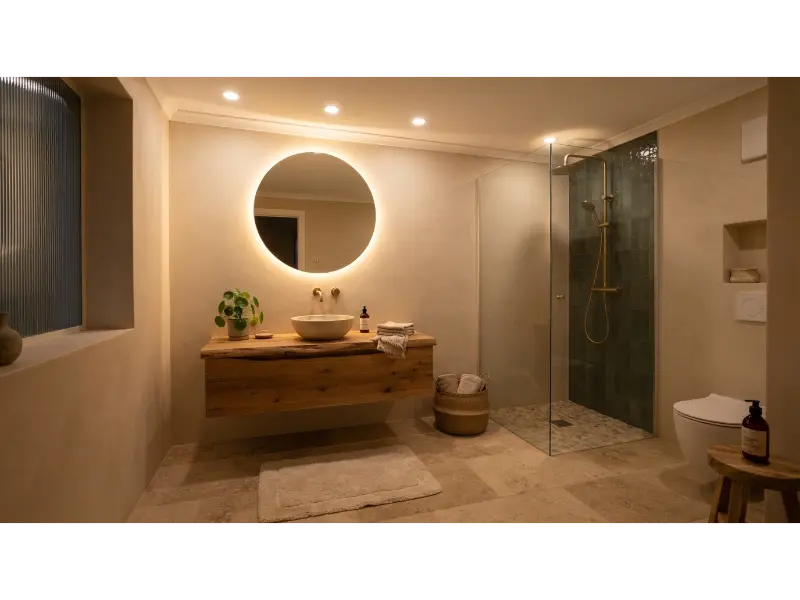
LED lighting can help reduce energy use while giving you more control over the bathroom atmosphere. Instead of relying on one bright ceiling fixture, layer different types of lighting. Recessed lights can provide general illumination, wall sconces can improve visibility around the mirror, and soft accent lighting can create a relaxing mood. Warm white bulbs work especially well with natural wood, stone, cream walls, and muted green accents.
Efficient lighting becomes even more useful when paired with smart habits. Occupancy sensors can prevent lights from staying on unnecessarily, while dimmers allow you to use only the amount of light you need. A well planned energy saving bathroom should feel comfortable at every time of day. Thoughtful placement matters just as much as choosing efficient bulbs because good lighting should improve function as well as appearance.
Pro Tip: Use warm LED bulbs around 2700K to 3000K for a comfortable and relaxing bathroom atmosphere.
9. Reclaimed Wood Open Shelving
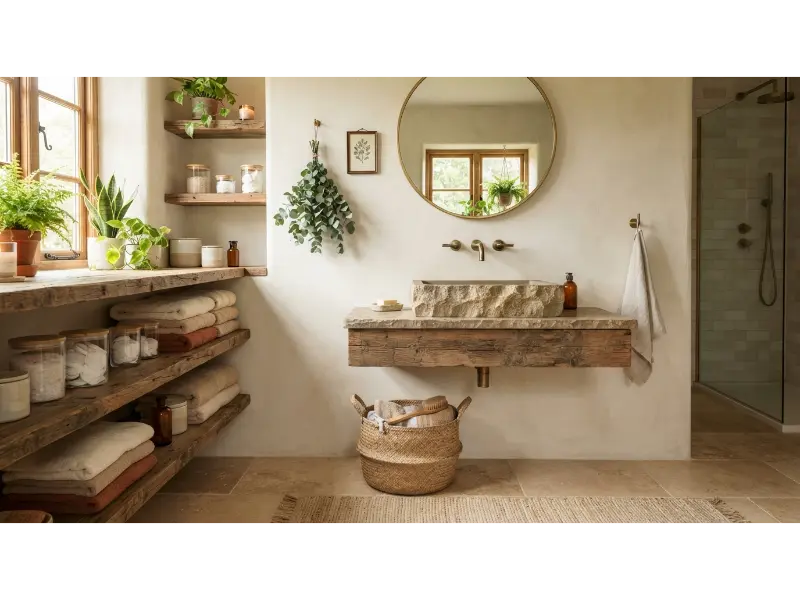
Open shelving can turn reclaimed timber into useful bathroom storage while keeping the room visually light. Two or three shelves above a vanity or toilet can provide space for towels, containers, and everyday essentials without requiring a large cabinet. Reclaimed wood adds natural texture and character, especially when paired with white ceramic, woven baskets, and soft neutral textiles. The result feels warm and collected rather than overly coordinated.
The key is keeping open shelving organized. Use attractive containers for small toiletries and avoid filling every inch with products. Reserve the most accessible shelves for items you use frequently. This idea works particularly well in low waste bathroom design because it can reuse existing materials while reducing the need for bulky new storage furniture. It also makes your bathroom feel more open and easier to maintain.
Pro Tip: Leave some empty shelf space so the storage looks intentional rather than crowded.
10. Recycled Terrazzo Bathroom Countertop
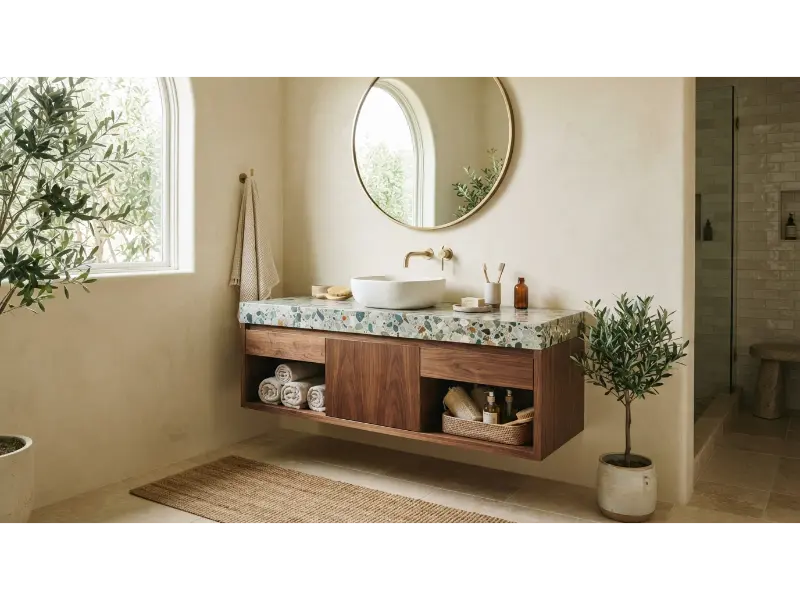
Recycled terrazzo can give a bathroom countertop a distinctive designer appearance while incorporating recovered materials. Its colorful chips create subtle movement across the surface, allowing a simple vanity to feel more custom and interesting. Depending on the product, terrazzo can contain recycled glass, stone, or other aggregates. Soft neutral terrazzo works especially well when you want a refined bathroom that feels natural rather than overly decorative.
Because terrazzo already has visual texture, surrounding finishes can remain simple. Choose a clean vanity shape, understated mirror, and limited accessories so the countertop becomes the focal point. This approach works beautifully for eco bathroom renovation projects because one carefully selected surface can transform the room without covering every wall in decorative materials. The result feels contemporary, durable, and thoughtfully composed.
Pro Tip: Ask the manufacturer about recycled content before choosing a terrazzo product.
11. Low Flow Bathroom Faucet
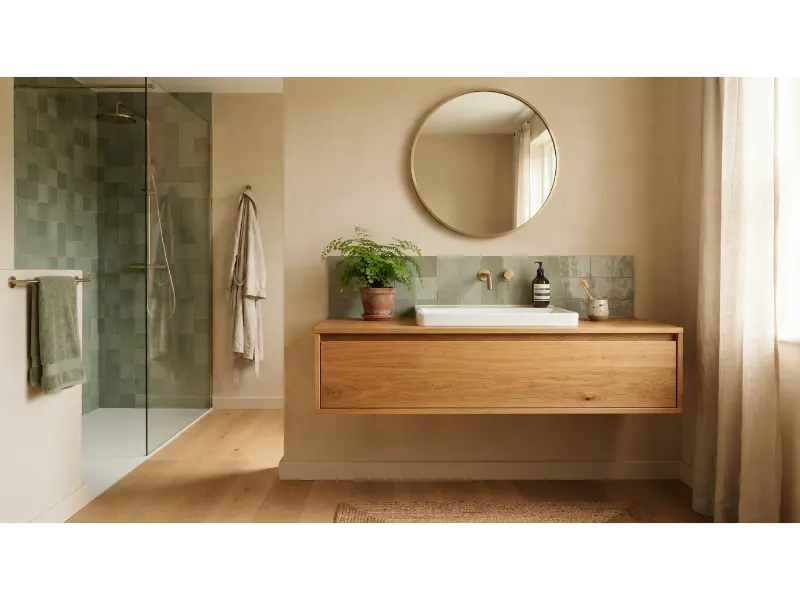
A low flow faucet can reduce water use during everyday activities such as brushing teeth, washing hands, and cleaning the sink. Modern faucets come in many finishes and shapes, so an efficient fixture can easily match your existing bathroom style. Brushed brass, matte black, chrome, and brushed nickel options can all work beautifully with sustainable interiors. The important factor is choosing an efficient fixture that still provides a comfortable stream.
You may not even need to replace the complete faucet. A compatible aerator can sometimes improve water efficiency while allowing you to keep your existing fixture. This makes the idea useful for budget friendly upgrades and rental bathrooms. Combining an efficient faucet with other water saving bathroom ideas can gradually reduce household water consumption without requiring a major renovation or changing the way the room looks.
Pro Tip: Check the faucet specifications and aerator compatibility before purchasing a replacement part.
12. Humidity Loving Bathroom Plants
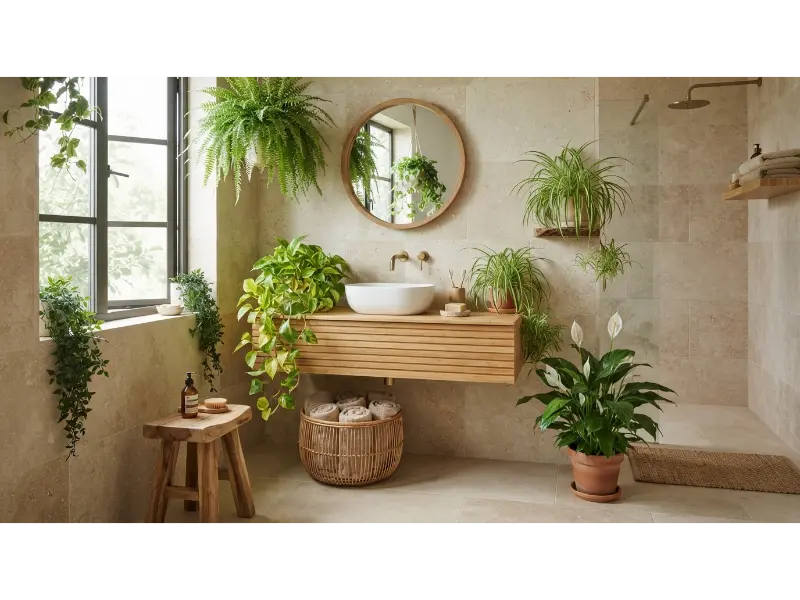
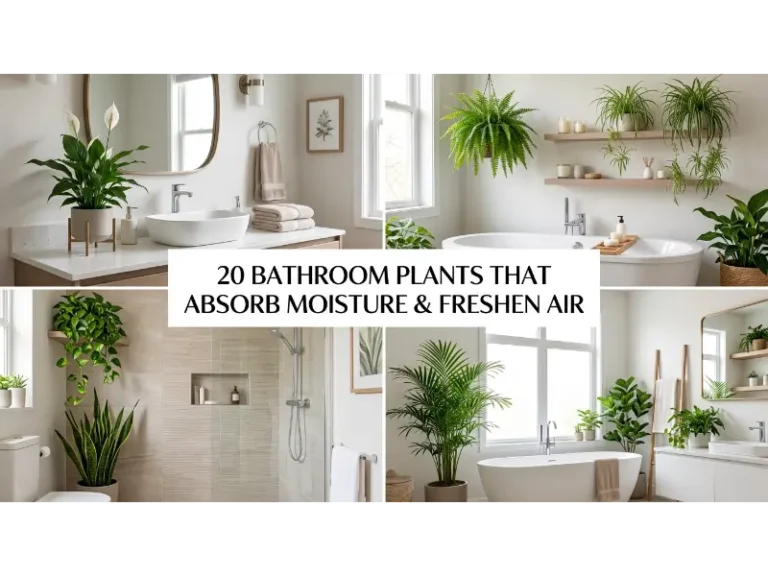
Plants can soften the hard surfaces commonly found in bathrooms while adding color and natural character. Pothos, ferns, spider plants, and other humidity tolerant varieties can work well when the bathroom provides suitable light. Hanging plants can make use of vertical space, while a small plant on a vanity can create a simple focal point. Choose plants based on actual growing conditions rather than selecting them only for appearance.
Avoid filling every available surface with greenery because crowded bathrooms can become difficult to clean. A few healthy plants usually create a stronger visual effect than dozens of struggling ones. This approach supports biophilic bathroom design, which uses natural forms, textures, and greenery to create a more relaxing interior. Combine plants with wood, stone, ceramic, and woven materials for a cohesive organic atmosphere.
Pro Tip: Check the available natural light before choosing bathroom plants so they can thrive long term.
13. Natural Limewash Bathroom Walls
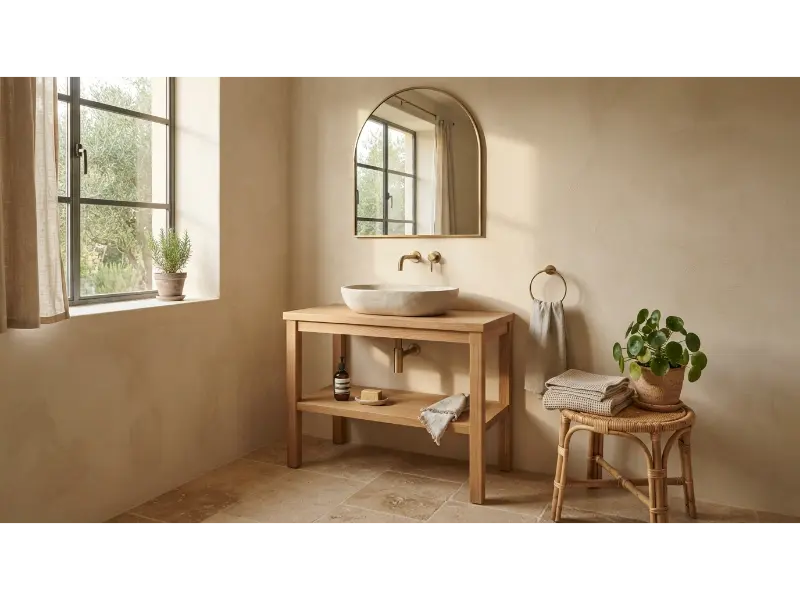
Limewash walls can create a soft, natural finish with subtle movement that makes a bathroom feel handcrafted. The gentle variation works beautifully with natural stone, wood, ceramic, and muted colors. Instead of creating a perfectly uniform wall, limewash adds depth and character without requiring wallpaper or decorative panels. Its organic appearance makes it especially attractive for Mediterranean, rustic, cottage, and modern organic bathrooms.
Bathroom moisture requires careful planning, so choose a suitable product and use it only where the manufacturer recommends it. Wet areas such as shower walls need proper waterproofing and appropriate finishes. When used correctly, limewash can complement natural bathroom materials and create a calm atmosphere. Pair the walls with simple fixtures and warm lighting so the texture remains the main visual feature.
Pro Tip: Use limewash in suitable dry areas unless the selected product is specifically designed for high moisture exposure.
14. Sustainable Cork Bathroom Flooring
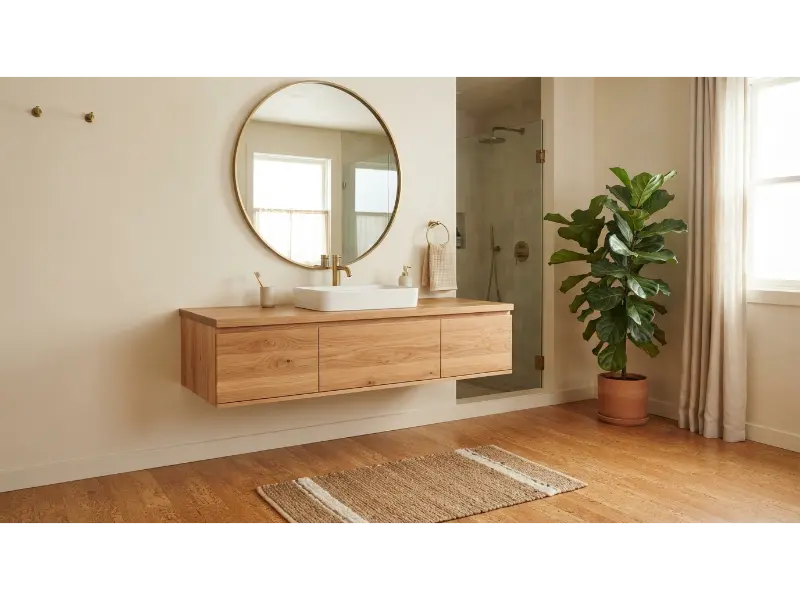
Cork flooring can introduce warmth and softness into a bathroom while giving the space a distinctive natural texture. Its earthy appearance works especially well with Scandinavian, Japandi, rustic modern, and organic design styles. Cork can make a bathroom feel less cold and hard compared with a room filled entirely with ceramic and stone. Choose a product designed for bathroom conditions and follow professional installation guidance carefully.
Keep the rest of the material palette simple so the flooring does not compete with too many patterns. Cream walls, light wood, white ceramic, and muted green accents can create a calm combination. Proper maintenance and moisture protection remain essential. When correctly specified, sustainable bathroom flooring can provide both visual warmth and a unique material story.
Pro Tip: Confirm that the flooring product is specifically approved for humid bathroom environments.
15. Water Saving Walk In Shower
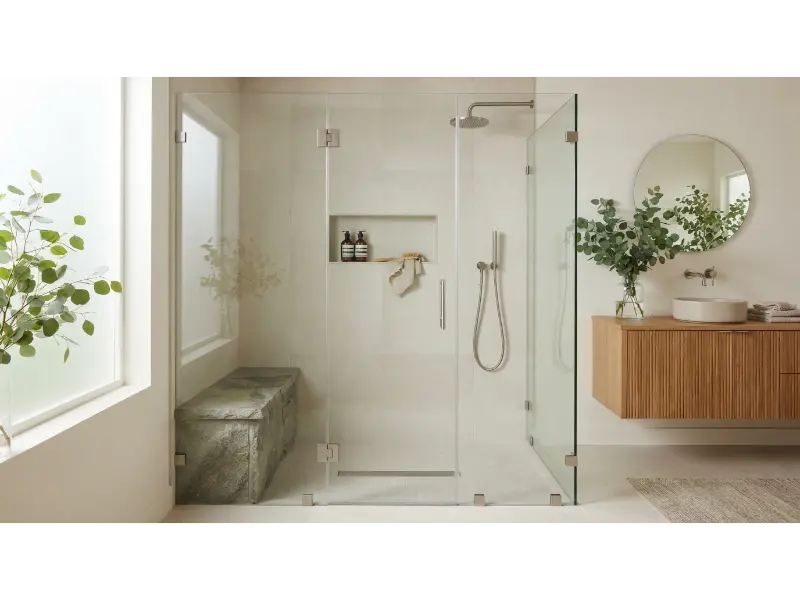
A walk in shower can create a spacious appearance while keeping the bathroom practical and easy to use. The most efficient design does not require multiple showerheads or oversized plumbing features. A single high performance showerhead can provide a comfortable experience while using water more thoughtfully. Frameless glass can help natural and artificial light travel across the room, making the bathroom feel brighter and larger.
Built in niches and benches can reduce the need for separate plastic organizers and freestanding furniture. Choose durable tile that can handle moisture and everyday cleaning without quickly looking dated. These sustainable bathroom ideas focus on efficiency without making the room feel basic. A carefully planned walk in shower can look luxurious while using space and resources more intelligently.
Pro Tip: Avoid adding multiple shower outlets unless they serve a genuine need.
16. Vintage Furniture Bathroom Vanity
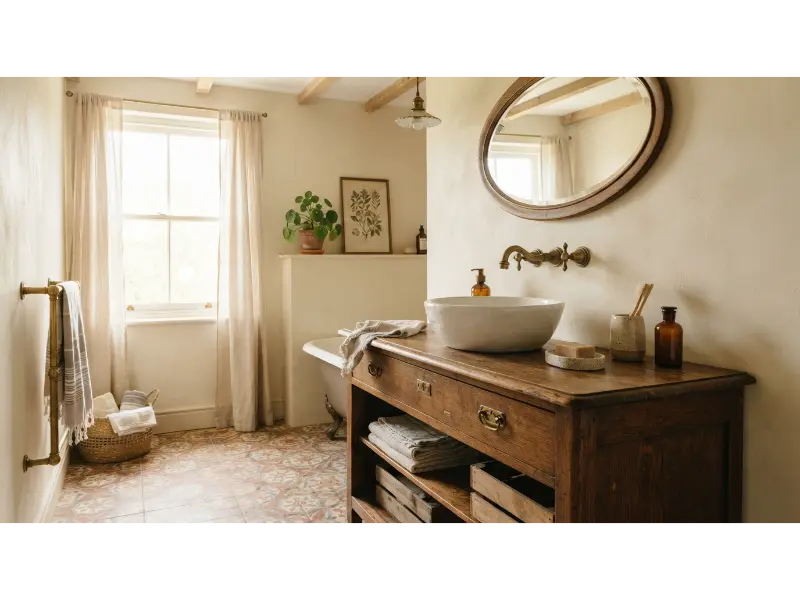
A vintage dresser can become a memorable bathroom vanity when its size and structure suit the space. Reusing furniture gives an existing piece a new purpose while adding character that can be difficult to achieve with mass produced cabinetry. Look for solid construction, attractive wood grain, and enough surface area for the sink and daily essentials. A carefully selected vintage piece can become the strongest feature in the entire bathroom.
Before installation, check the furniture carefully for structural damage and plan where the plumbing will pass through. Protect the surface against moisture and reinforce areas affected by the sink. Combining vintage furniture with sustainable home design creates a layered bathroom that feels collected over time. Add a simple mirror, modern faucet, and soft textiles to balance the older furniture with contemporary function.
Pro Tip: Measure the plumbing route and internal storage before committing to a vintage dresser conversion.
17. Organic Cotton and Linen Bathroom Textiles
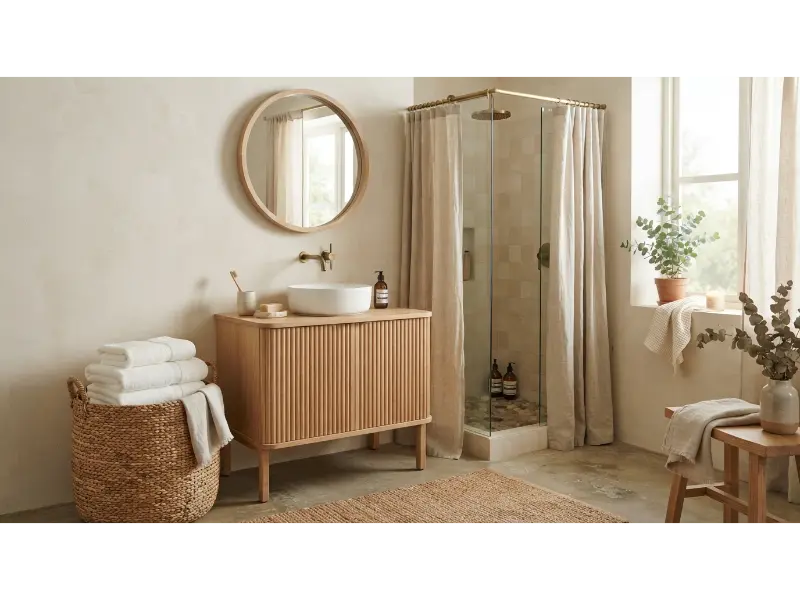
Bathroom textiles may seem like small details, but they can strongly influence how a space feels. Organic cotton towels and linen accessories can introduce softness and natural texture into a room dominated by tile, glass, and stone. Choose neutral shades such as cream, beige, warm white, sage, or soft gray for a relaxed appearance. Durable fabrics can also remain useful for years instead of being replaced whenever a trend changes.
You do not need a large collection of decorative textiles to create a beautiful bathroom. A few high quality towels, one washable bath mat, and a simple shower curtain can provide enough softness. This approach supports low waste home decor by focusing on useful pieces rather than constant decorative purchases. Natural textiles also pair easily with reclaimed wood, bamboo, stone, and ceramic finishes.
Pro Tip: Choose durable washable fabrics and avoid buying more towels than your household actually needs.
18. Refillable Bathroom Storage
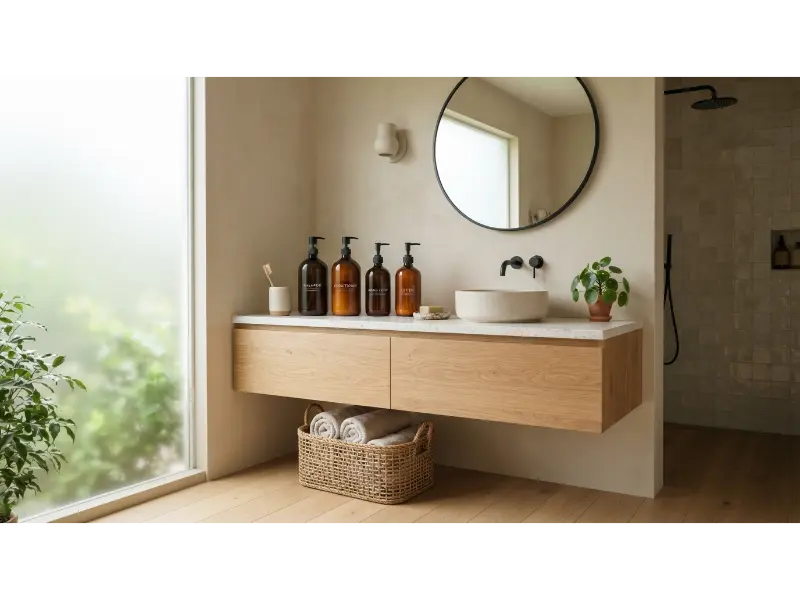
Refillable storage can make everyday products look more organized while reducing the number of disposable containers visible around the bathroom. Matching bottles can create a calm visual rhythm on a vanity or shower shelf. Choose durable containers that are easy to wash and refill rather than decorative bottles that become difficult to maintain. Simple labels can help everyone identify products quickly.
Keep refillable containers inside a tray or recessed shelf where possible to protect surfaces from water and spills. Avoid buying new containers simply for decoration if you already own suitable ones. This practical approach can support a zero waste bathroom by reducing packaging clutter and encouraging more thoughtful product consumption. Small changes like this can make sustainable habits feel easier because the system works naturally with everyday routines.
Pro Tip: Keep refillable bottles easy to access so refilling becomes a simple habit rather than an extra chore.
19. Smart Bathroom Ventilation
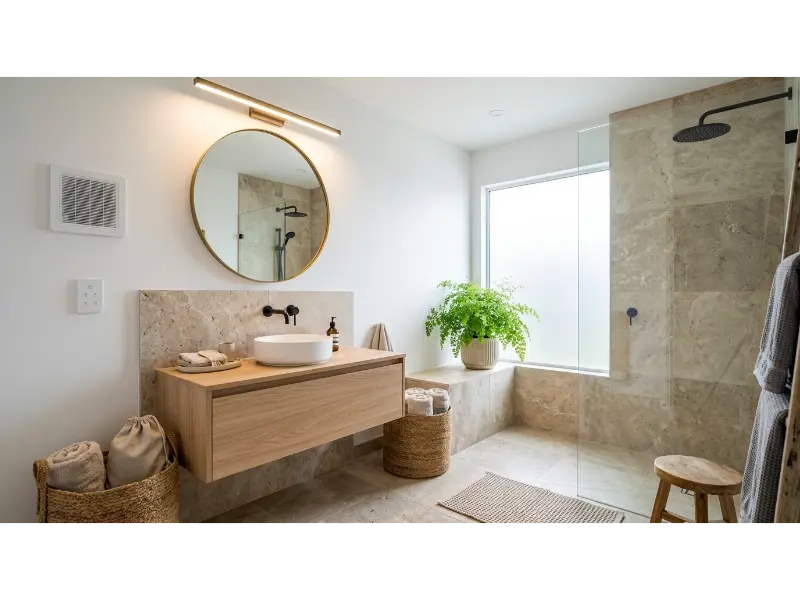
Good ventilation plays an important role in protecting a bathroom from excess moisture. Humid air that remains trapped can damage finishes and create conditions that encourage mold growth. A properly sized exhaust fan can remove moisture after showers while a window may provide additional airflow when the climate and layout allow it. Smart controls can make ventilation easier to manage because the fan can operate automatically or according to a set schedule.
Place the exhaust system where it can effectively remove humid air from the bathing area. Clean the fan and surrounding components regularly so airflow does not become restricted. A healthy bathroom needs more than attractive finishes. Proper air movement, moisture control, and regular maintenance all support healthy bathroom design and help materials last longer.
Pro Tip: Run the exhaust fan during showers and for a suitable period afterward to reduce lingering humidity.
20. Timeless Porcelain Tile
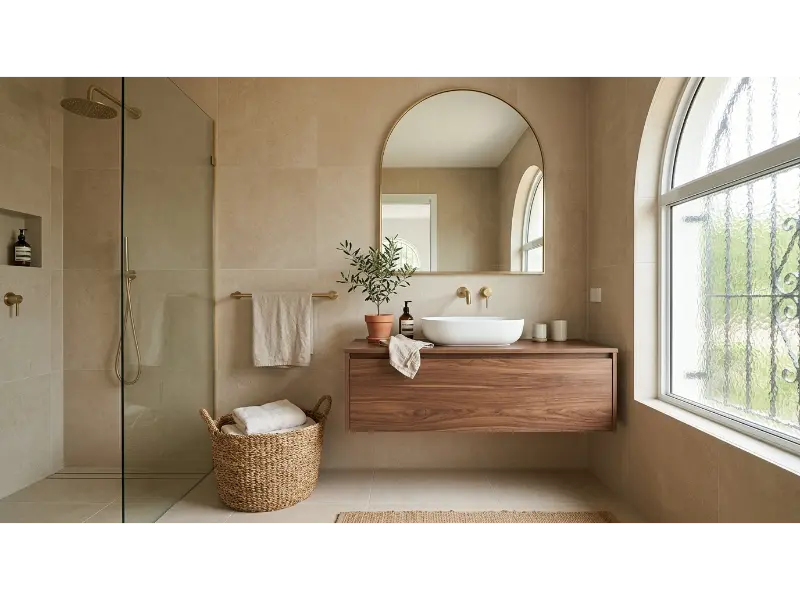
Porcelain tile can provide a durable surface that works beautifully in bathrooms of almost every style. Modern porcelain can imitate the appearance of stone, concrete, wood, or handmade tile while offering a wide range of colors and patterns. Choosing a timeless design can help prevent unnecessary remodeling when trends change. Warm beige, soft white, light gray, and muted earthy tones can remain attractive for many years.
Larger tiles can create a calmer appearance and may reduce the amount of grout that needs regular cleaning. Use stronger patterns selectively so the bathroom remains flexible when you update towels, mirrors, or accessories. Durable materials are an important part of long lasting bathroom design because a finish that stays functional and attractive for years can reduce replacement waste.
Pro Tip: Choose classic tile colors and shapes if you want the bathroom to remain easy to update.
21. Leak Resistant Bathroom Fixtures
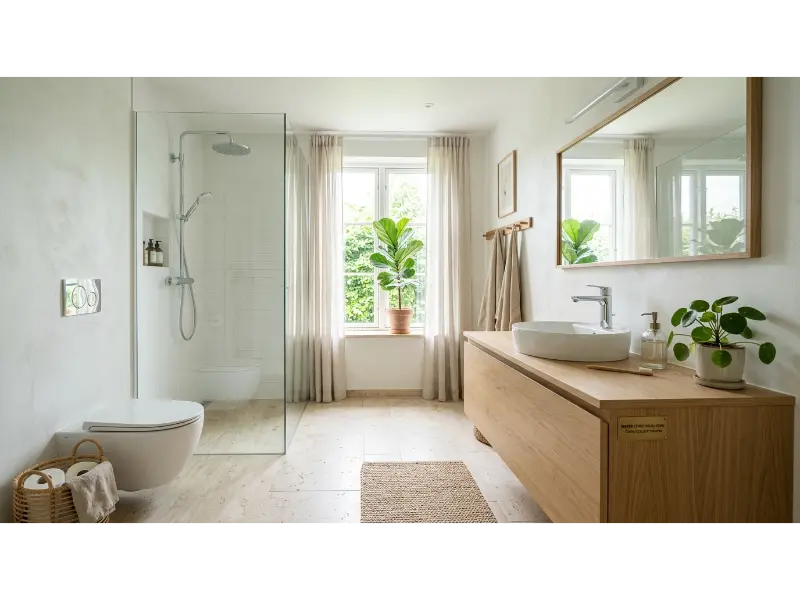
Water efficiency means very little if a bathroom has leaks that continue unnoticed. Faucets, toilets, shower connections, and plumbing joints should be checked regularly for drips or unexplained moisture. Small leaks can waste water over time and may eventually damage cabinets, floors, walls, or ceilings. Choosing quality fixtures and having plumbing connections installed correctly can reduce the risk of these problems.
Maintenance should be considered part of bathroom design rather than something done only after a problem appears. Look under the vanity, around the toilet, and near shower connections periodically. Early detection can prevent larger repairs and unnecessary material waste. This supports water saving home improvements because protecting the water system also protects the materials surrounding it.
Pro Tip: Inspect hidden plumbing areas regularly, especially after installing a new faucet, toilet, or vanity.
22. Minimalist Sustainable Bathroom Storage
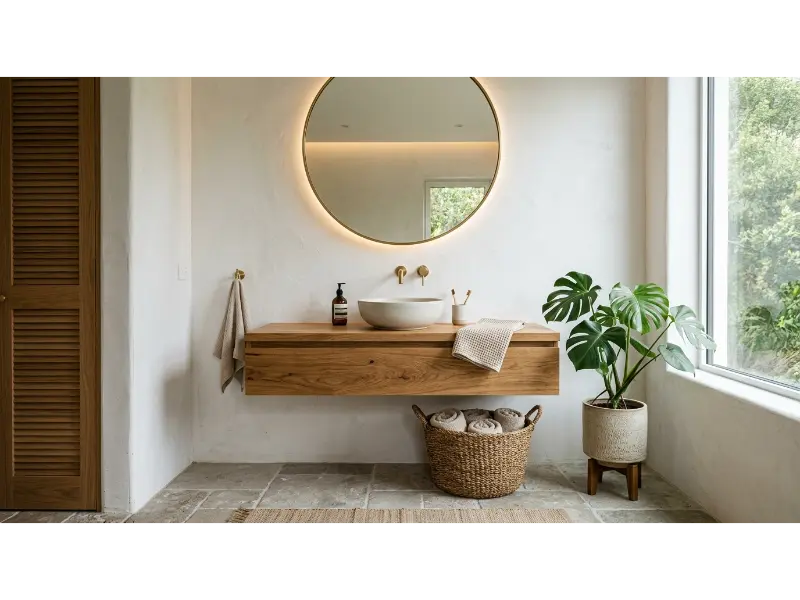
Minimalist storage can help a bathroom feel calm while reducing the temptation to fill every surface with unnecessary products. Instead of installing several separate cabinets, combine a practical vanity with drawers, a recessed shower niche, and one or two baskets. This approach keeps daily essentials organized while allowing beautiful materials and architectural details to remain visible.
Start by considering what your household actually uses before designing storage. Give frequently used items easy access and keep less frequently used products in deeper storage. Thoughtful organization can support an eco friendly home because it encourages people to buy intentionally and avoid accumulating products they do not need. A cleaner bathroom also takes less time to maintain.
Pro Tip: Measure your real storage needs before adding cabinets so you do not create unnecessary furniture.
23. Low Waste Bathroom Cleaning Station
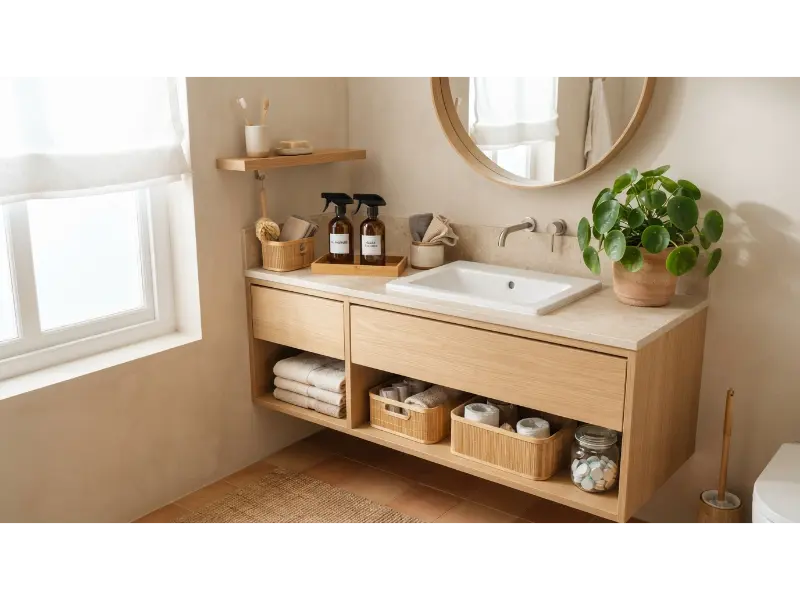
Cleaning supplies are an often overlooked part of bathroom sustainability. A small dedicated cleaning station can keep reusable cloths, brushes, refillable bottles, and everyday supplies together. Choose durable tools that can be washed and reused instead of relying on disposable products whenever possible. Keep everything organized in one basket or cabinet so cleaning remains convenient and does not create visual clutter.
Pay attention to product ingredients and storage instructions, especially when choosing cleaners for a household with children or pets. Never mix different cleaning chemicals because some combinations can create dangerous fumes. A practical cleaning system should make regular maintenance easier rather than adding complexity. This final detail completes a sustainable bathroom renovation by considering how the space will be cleaned and maintained throughout its life.
Pro Tip: Store cleaning products safely and never mix different chemical cleaners together.
How to Create a Greener Bathroom Without a Full Renovation
You do not need to demolish your entire bathroom to make it more sustainable. Start with practical upgrades that affect everyday resource use. Replace an inefficient showerhead or faucet, install efficient lighting, repair leaks, and consider a high efficiency toilet when your existing fixture needs replacement. These improvements can make the bathroom more efficient without changing its entire appearance.
Next, focus on materials and daily habits. Reuse furniture when possible, choose durable finishes, reduce disposable packaging, improve ventilation, and use refillable storage. The most effective green bathroom design does not depend on filling the room with products labeled eco friendly. It focuses on using fewer resources, choosing durable materials, reducing waste, and creating a space that works efficiently for your household.
Frequently Asked Questions
What makes a bathroom eco friendly?
An eco friendly bathroom combines water efficient fixtures, energy efficient lighting, durable materials, responsible product choices, good ventilation, and low waste habits. The goal is to reduce unnecessary resource consumption while keeping the space comfortable and attractive.
What is the easiest way to make a bathroom more sustainable?
Start with small upgrades that do not require major construction. A water efficient showerhead, faucet aerator, LED lighting, leak repair, reusable storage, and refillable product containers can all improve the bathroom without changing its basic layout.
Are eco friendly bathroom designs expensive?
They can be affordable when you prioritize the right improvements. Some changes cost very little, such as fixing leaks, changing light bulbs, using refillable containers, and installing efficient aerators. Larger upgrades can be completed gradually when fixtures or finishes naturally reach the end of their useful life.
Which bathroom fixture should I replace first?
If your toilet is old and inefficient, replacing it can be a strong improvement because toilets use a significant amount of household water. If the toilet is already efficient, consider upgrading your showerhead or faucet because these fixtures are used frequently.
Can a small bathroom be eco friendly?
Absolutely. Small bathrooms can become highly efficient because they require fewer materials, less lighting, and less water infrastructure. Use compact fixtures, efficient storage, natural light, reflective surfaces, and durable materials to create a space that feels comfortable without wasting resources.
Are natural materials always sustainable?
Not necessarily. A material’s sustainability depends on factors such as sourcing, transportation, manufacturing, durability, maintenance, and lifespan. A durable locally sourced material may be a better choice than a product that is marketed as natural but travels a long distance or requires frequent replacement.
How can I make my bathroom more sustainable on a budget?
Begin with maintenance and small upgrades. Fix leaks, use LED lighting, install an efficient faucet aerator, reduce disposable packaging, choose reusable storage, and reuse furniture whenever practical. These changes can improve the bathroom without requiring a complete remodel.
Conclusion
The best Eco Friendly Bathroom Design Ideas show that sustainability and beautiful design can work together. A greener bathroom can still feel luxurious, modern, warm, and comfortable when every material and fixture has a clear purpose. Water efficient plumbing, natural lighting, reclaimed furniture, durable surfaces, responsible storage, and reusable products can all contribute to a more thoughtful space.
You do not have to change everything at once. Begin with one practical improvement and build from there. Choose materials that last, maintain your fixtures, reduce unnecessary waste, and design around the way your household actually uses the room. With these simple principles, your bathroom can become more efficient, healthier, easier to maintain, and genuinely beautiful for years to come.