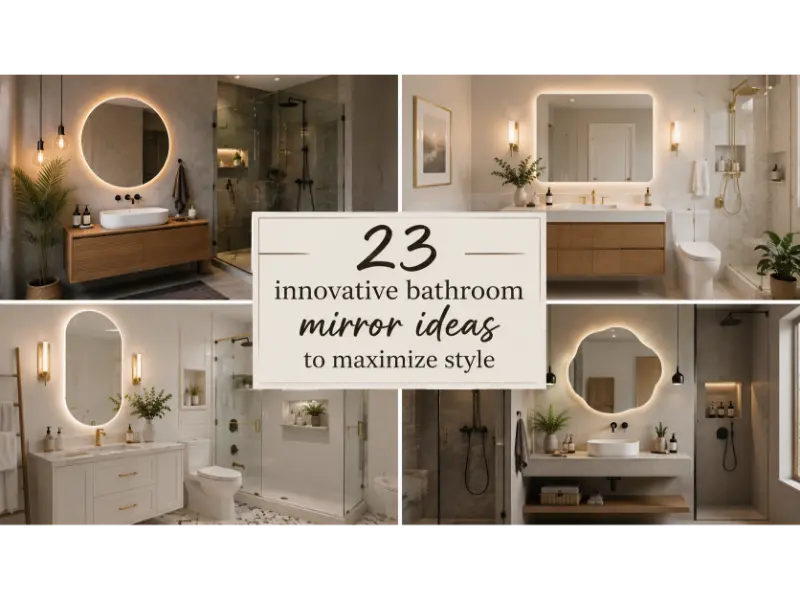
23 Innovative Bathroom Mirror Ideas to Maximize Style
Your bathroom mirror can do much more than reflect your face. The right design can make a small room feel larger, improve vanity lighting, add storage, introduce texture, and create a beautiful focal point. From softly glowing LED bathroom mirrors to sculptural arches and warm wood frames, today’s designs offer plenty of ways to combine function with personality. These Innovative Bathroom Mirror Ideas focus on practical layouts, attractive finishes, clever features, and fresh styling choices that can transform an ordinary bathroom into a space that feels polished, comfortable, and thoughtfully designed.
Innovative Bathroom Mirror Ideas for a Stylish and Functional Space
1. Backlit Innovative Bathroom Mirror Ideas
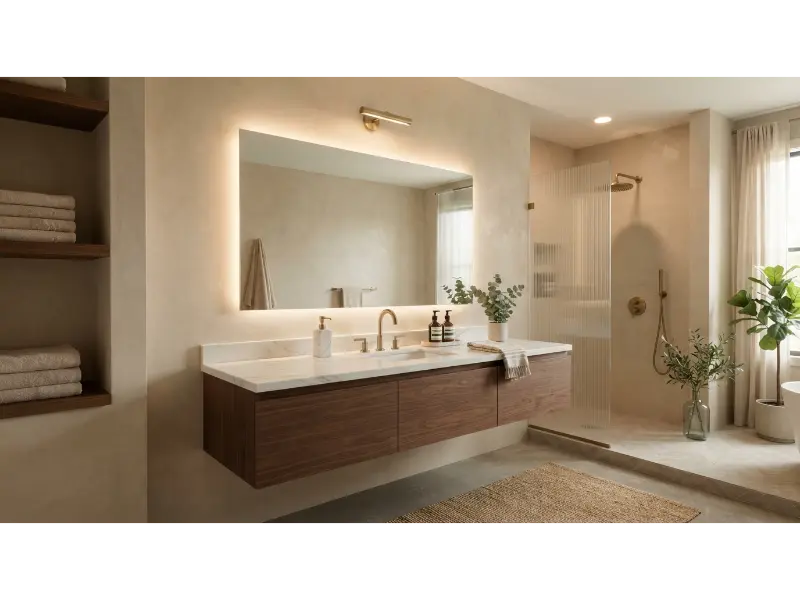
These Innovative Bathroom Mirror Ideas show how a backlit design can instantly add depth and atmosphere. A soft LED halo separates the mirror from the wall while creating a sophisticated glow around the vanity. The frameless appearance keeps the design clean, making it ideal for contemporary, minimalist, and modern bathrooms. Pair the mirror with warm stone, wood, or neutral walls to create a calm setting where the lighting becomes part of the room’s decoration.
Backlighting also gives the vanity area a softer appearance than harsh overhead lighting. For everyday grooming, choose a design that combines rear illumination with front lighting so the mirror remains attractive while providing useful facial light. A dimmable option gives you more control throughout the day, allowing bright illumination during morning routines and a gentler glow during evening baths.
Pro Tip: Choose a dimmable mirror with adjustable lighting if you want both practical grooming light and relaxing evening ambiance.
2. Arched Mirror With Soft Curves
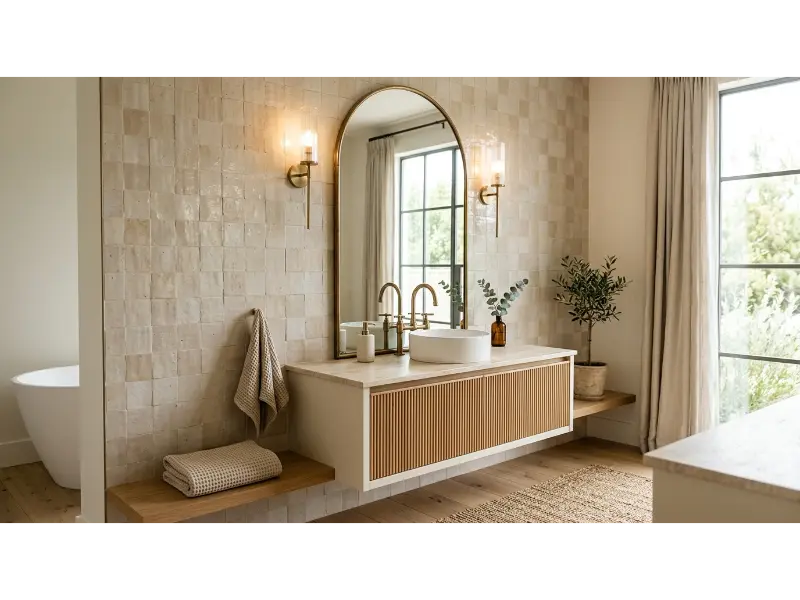
An arched mirror brings softness to a bathroom filled with straight lines. The rounded top creates an architectural focal point while visually drawing the eye upward. This shape looks especially beautiful above a rectangular vanity because the contrast between curved glass and angular cabinetry feels balanced rather than predictable. A thin metal frame can make the design feel contemporary, while a wider frame gives it a more traditional and decorative personality.
For a calm bathroom, pair an arched vanity mirror with warm white walls, natural wood, and brushed brass fixtures. If you prefer a modern look, choose black framing with simple lighting and clean tile. The mirror should remain large enough for comfortable daily use without overwhelming the vanity. Its proportions matter because an arch that is too narrow can make the wall feel disconnected from the cabinetry.
Pro Tip: Center the arch directly over the sink and keep enough space around it so the curved silhouette remains visually clear.
Read More: 21 Teen Room Design Ideas for a Dream Makeover
3. Pill Shaped Mirror for a Modern Vanity
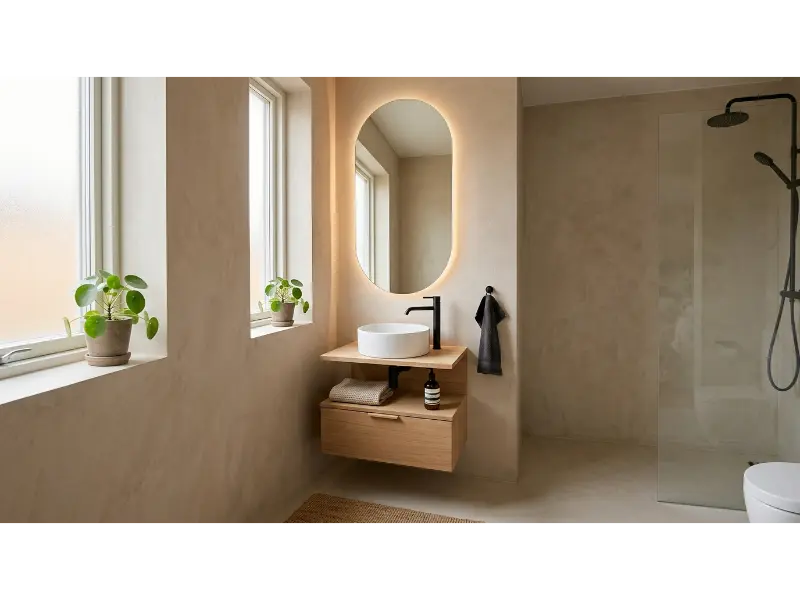
A pill shaped mirror combines the clean structure of a rectangle with beautifully rounded corners. Its narrow vertical form works particularly well in smaller bathrooms because it adds height without using excessive wall width. The smooth outline also creates a pleasing contrast against square cabinetry, rectangular tiles, and geometric fixtures. This makes the shape feel modern while still offering a softer visual character than a traditional rectangular mirror.
Choose frameless glass for a minimalist appearance or add a slim black, bronze, or brass frame for extra definition. A modern bathroom mirror with integrated lighting can make the silhouette even more noticeable after dark. Keep surrounding accessories simple so the unusual shape remains the main feature. This style also works beautifully with floating vanities because the open area below reinforces its lightweight appearance.
Pro Tip: Select a vertical pill shape when you want to make a compact vanity wall appear taller and more spacious.
4. Oversized Mirror Across the Vanity Wall
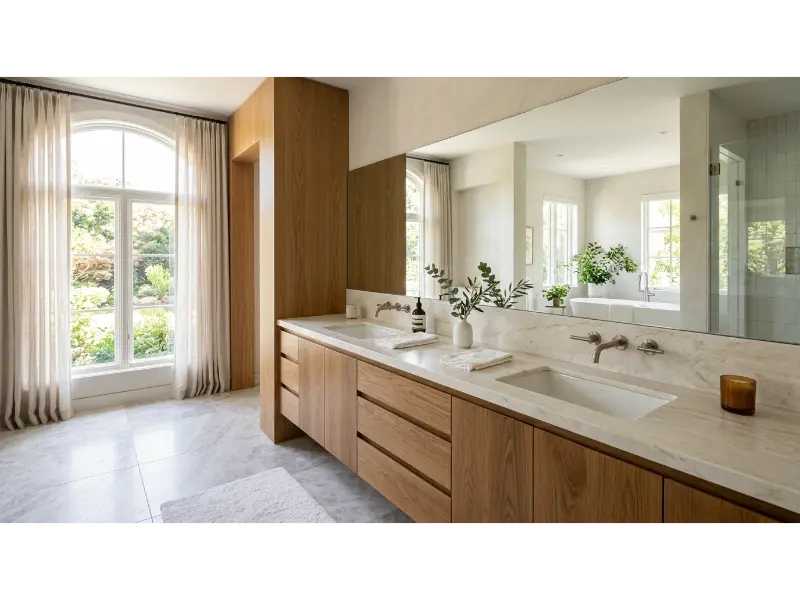
An oversized mirror can dramatically change the sense of space in a bathroom. By reflecting light, cabinetry, and surrounding surfaces, it creates a more open visual effect and gives the vanity wall greater presence. This approach works particularly well with long double vanities because one continuous mirror creates a clean horizontal line instead of dividing the wall into separate sections.
Before choosing an oversized large bathroom mirror, measure the complete vanity area and consider nearby sconces, cabinets, doors, and wall features. The mirror should feel connected to the vanity rather than extending into unrelated areas without purpose. Frameless glass works well for a seamless effect, while a narrow metal border can add definition without making the large surface look heavy.
Pro Tip: Keep the mirror proportionate to the vanity and leave enough breathing room around its edges for a polished appearance.
5. Round Mirror With a Brass Frame
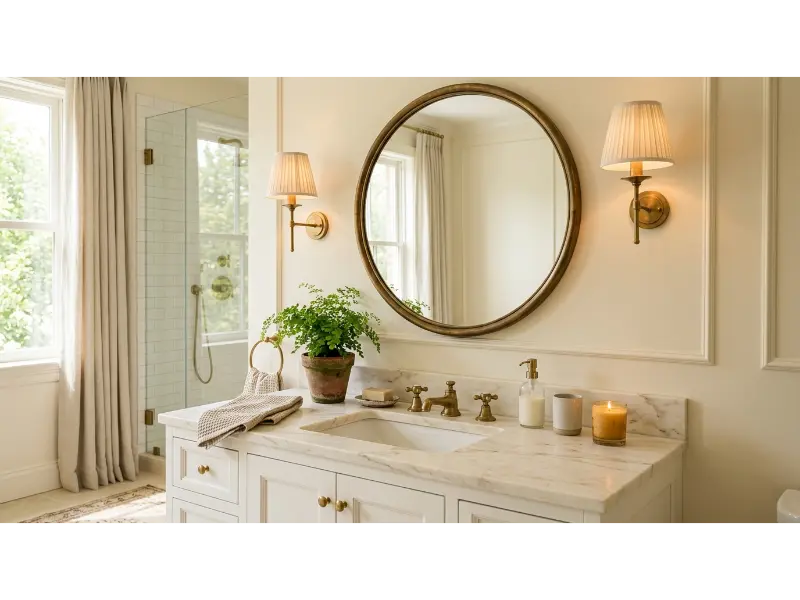
A round mirror immediately softens the hard lines found in most bathrooms. Its circular shape creates an inviting focal point above a rectangular vanity while adding a subtle decorative element without requiring artwork. A brass frame introduces warmth and works naturally with matching faucets, cabinet hardware, sconces, and towel accessories. This combination can make a simple vanity feel much more finished.
For a refined look, combine the mirror with marble, warm white walls, and traditional fixtures. For a contemporary room, use a thinner brass frame with a floating vanity and simple stone surfaces. The circular silhouette also pairs well with curved basins and rounded lighting. Avoid adding too many decorative elements around it because the mirror itself already provides strong visual interest.
Pro Tip: Repeat the brass finish in two or three smaller bathroom details to make the mirror feel connected to the overall design.
Read More: 22 Grey Bathroom Design Ideas for a Luxe Look
6. Front Lit Mirror for Better Grooming
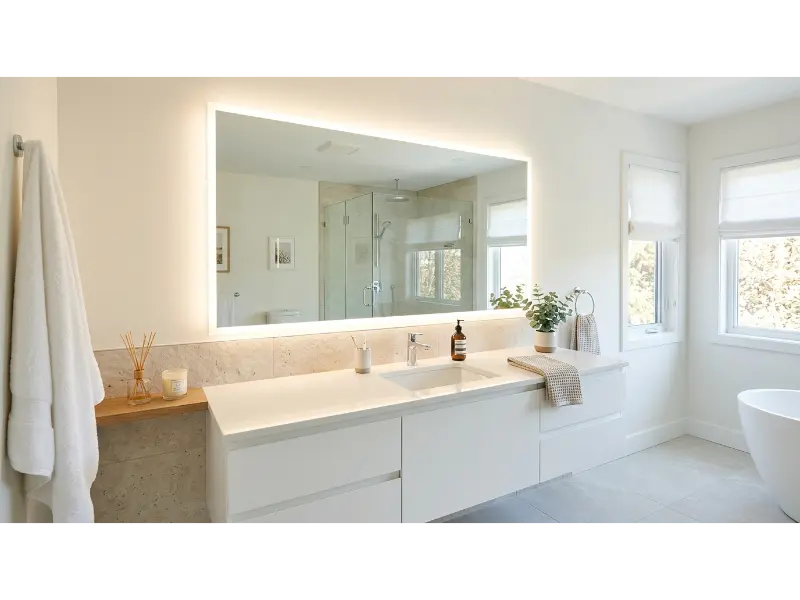
A front lit mirror focuses illumination toward the person standing at the vanity, making it especially useful for makeup, shaving, skincare, and other grooming routines. Instead of relying only on a ceiling fixture, the light sits closer to the face and can create a more useful vanity environment. This makes a lighted bathroom mirror a practical upgrade as well as a stylish design choice.
Look for evenly distributed lighting rather than one narrow bright strip. Dimming is helpful when you want to adjust the intensity throughout the day, while adjustable color temperature can make the mirror more versatile. A frameless design keeps the wall minimal, while a slim illuminated border creates a more architectural appearance. The best option should support your routine without making the bathroom feel overly technical.
Pro Tip: Choose even front illumination rather than a single overhead light when grooming performance is your main priority.
7. Fluted Frame Mirror for Texture
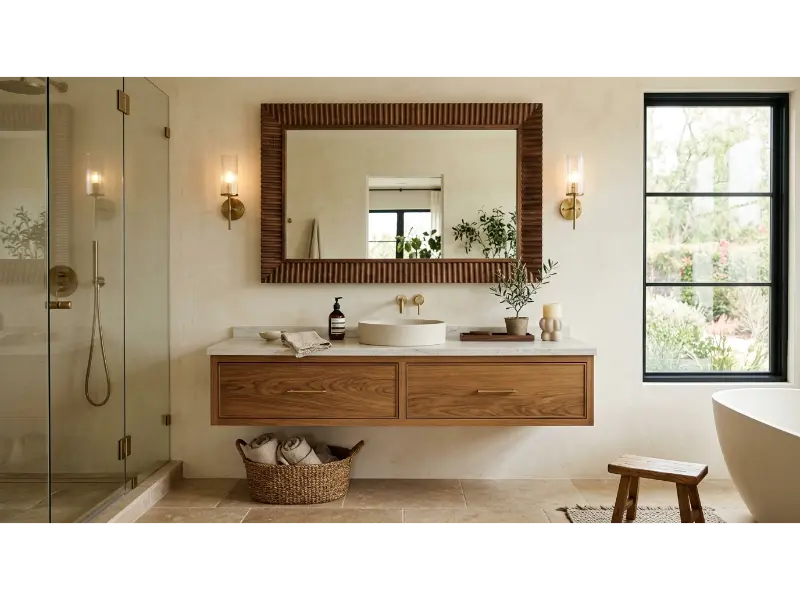
A fluted frame introduces texture around an otherwise simple reflective surface. Vertical grooves create subtle shadows that make the mirror feel more custom and decorative. This idea works especially well in neutral bathrooms where you want visual depth without relying on bold colors or busy patterns. Natural wood creates an organic appearance, while fluted metal can give the same idea a more polished contemporary finish.
Pair the frame with simple cabinetry and quiet stone so the texture remains noticeable without competing with other surfaces. Fluting can also connect beautifully with textured bathroom walls, ribbed cabinetry, or vertical tile. The goal is not to repeat the same pattern everywhere but to create small visual connections throughout the vanity area. This gives the bathroom a designer feel while keeping the overall composition calm.
Pro Tip: Repeat the vertical texture in only one additional feature so the vanity wall stays sophisticated rather than overly busy.
8. Recessed Mirrored Medicine Cabinet
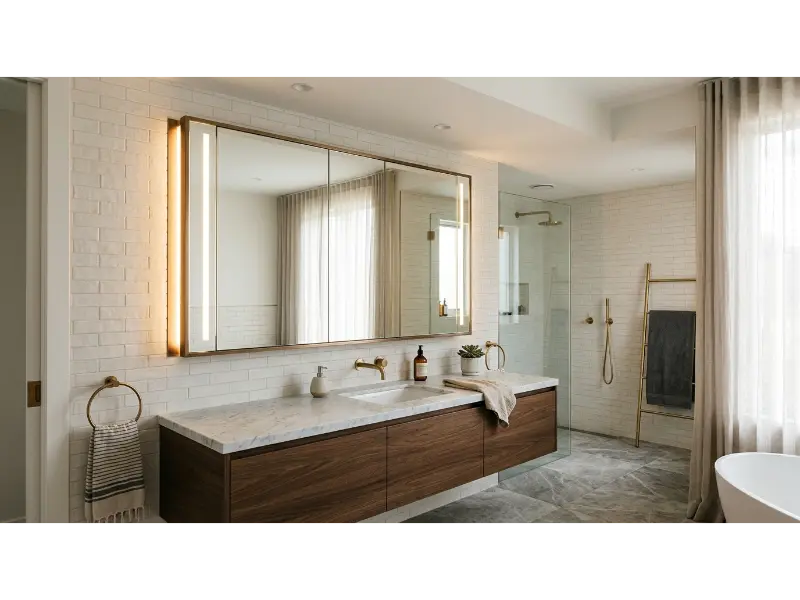
A recessed medicine cabinet combines the appearance of a stylish mirror with hidden storage behind the glass. It gives you a place for skincare products, toothbrushes, grooming supplies, and everyday essentials without filling the countertop with containers. Because the cabinet sits inside the wall, it can also look much cleaner than a bulky surface mounted storage unit.
Modern bathroom storage mirror designs can include adjustable shelves, integrated lighting, outlets, and anti fog features. Plan the cabinet before completing a renovation because recessed installation may require careful attention to wall framing and electrical placement. If remodeling is not possible, a slim surface mounted version can still provide useful storage while maintaining a contemporary appearance.
Pro Tip: Choose adjustable interior shelves so the cabinet can accommodate bottles and products of different heights.
9. Double Mirrors for a Shared Vanity
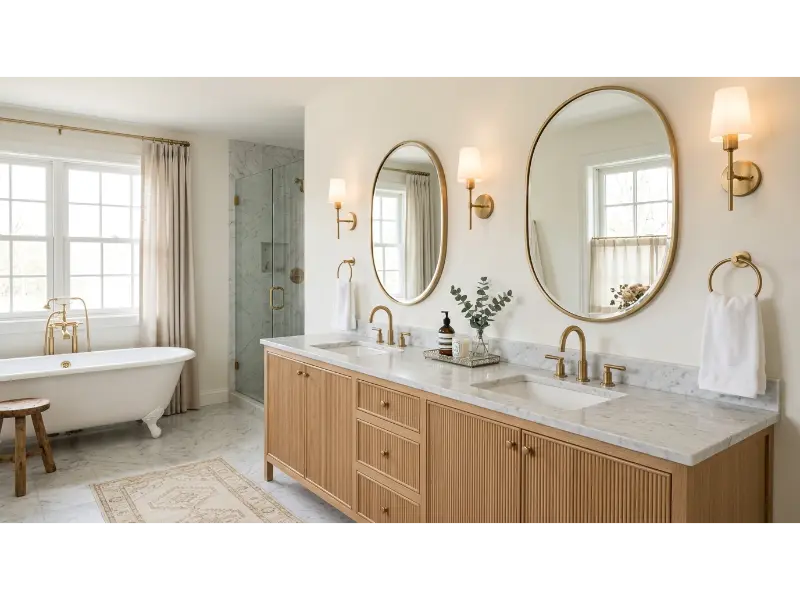
Two individual mirrors can make a double vanity feel organized and intentional. Each mirror creates a personal zone around its sink while maintaining symmetry across the wall. This setup works especially well when two people regularly use the bathroom together because each side has its own reflection area and lighting arrangement.
Choose matching shapes and frames to maintain visual balance. Oval mirrors soften traditional cabinetry, rectangular designs create a modern appearance, and arches add more personality. The spacing should relate to the sink positions rather than simply dividing the wall into equal sections. When the proportions are right, two double vanity mirrors can make the bathroom feel custom designed without requiring complicated construction.
Pro Tip: Center each mirror over its individual sink instead of centering both mirrors according to the total wall width.
10. Antique Mirror for Vintage Character
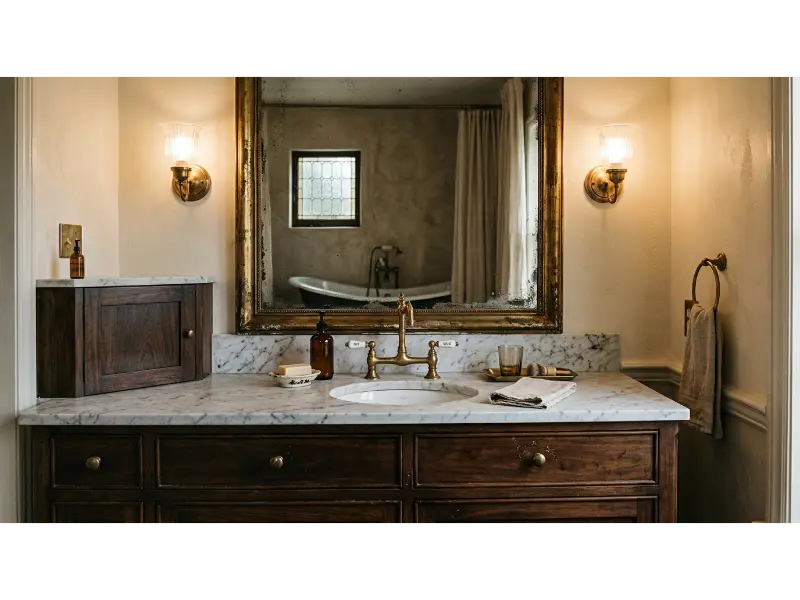
An antiqued mirror adds character through softly aged reflections and subtle variations across the glass. Instead of creating the perfectly crisp appearance of new reflective surfaces, it gives the bathroom a collected and slightly historic personality. This works beautifully with marble, dark wood, aged brass, traditional cabinetry, and vintage inspired lighting.
Because the glass already provides visual texture, keep the surrounding finishes relatively simple. An antique bathroom mirror can become the focal point without requiring artwork or excessive accessories. This makes it especially effective in powder rooms where a single strong detail can create a memorable impression. Warm lighting enhances the aged effect and makes the room feel welcoming rather than overly formal.
Pro Tip: Pair antiqued glass with warm lighting and classic hardware for a timeless bathroom that does not feel dated.
11. Black Framed Mirror for Contrast
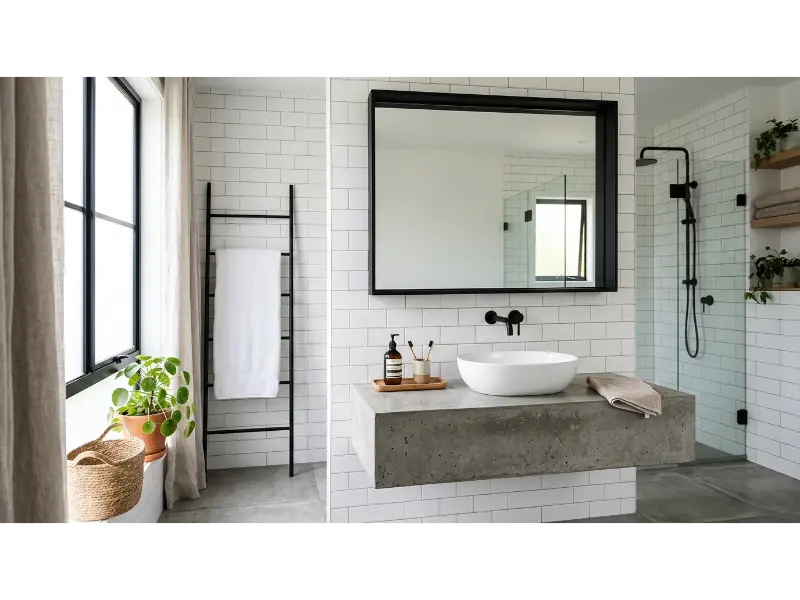
A black frame gives a bathroom immediate definition. The dark outline creates a strong border around the reflective glass and looks especially striking against white tile, pale stone, cream plaster, and light wood. This makes a black framed bathroom mirror an easy way to add contrast without changing the entire room.
The key to making this style work is repetition. Echo the black finish through the faucet, cabinet pulls, sconces, shower frame, or another small detail. If the bathroom already has several dark elements, select a thinner frame to avoid making the vanity wall feel heavy. A balanced contrast creates a modern look that remains easy to update.
Pro Tip: Repeat black through small fixtures instead of introducing several large dark surfaces.
12. Smart Mirror With Practical Features
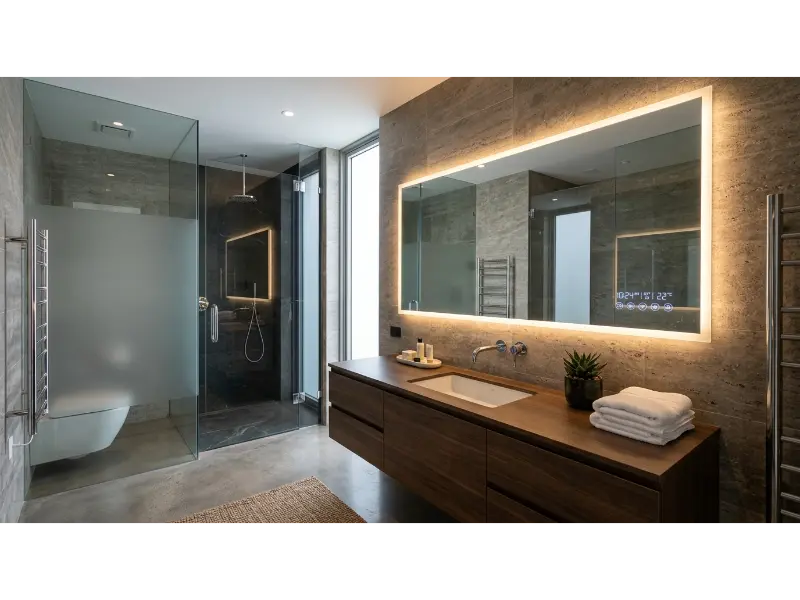
A smart mirror can combine useful technology with a clean bathroom design. Features such as touch controls, integrated lighting, anti fog surfaces, motion activation, and adjustable brightness can make daily routines easier. The best smart bathroom mirror does not need to look futuristic; it should blend naturally with the vanity and surrounding finishes.
Think about which functions you will actually use before choosing a model. Anti fog technology can help when the mirror sits near a shower, while adjustable lighting can support both grooming and nighttime routines. Keep the technology visually subtle so the mirror still feels like part of the interior rather than an electronic device placed on the wall.
Pro Tip: Prioritize anti fog technology and adjustable lighting before paying extra for features you are unlikely to use.
13. Full Height Mirror for a Small Bathroom
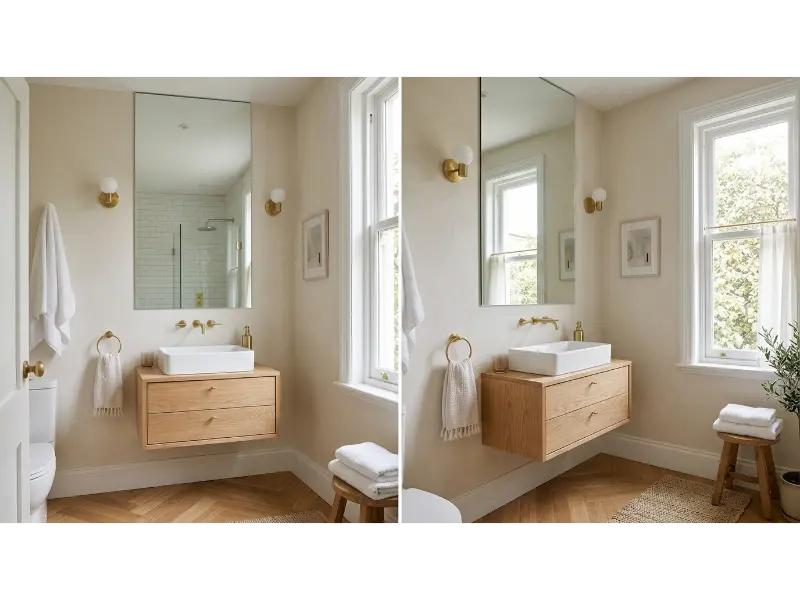
A tall mirror can help a small bathroom feel visually higher and more open. Its vertical shape draws attention upward while reflecting light throughout the room. This approach works especially well when the ceiling feels low or the bathroom lacks large windows. A frameless design keeps the reflection uninterrupted and makes the wall feel less crowded.
Keep surrounding accessories simple because a small bathroom mirror does not need elaborate decoration to create impact. Pair it with a slim vanity, pale surfaces, and open shelving if additional storage is necessary. Before installation, check the position of lights, outlets, cabinets, and doors so the tall mirror does not interfere with essential features.
Pro Tip: Choose a narrow vertical mirror when you have limited wall width but want the room to appear taller.
14. Sculptural Organic Mirror
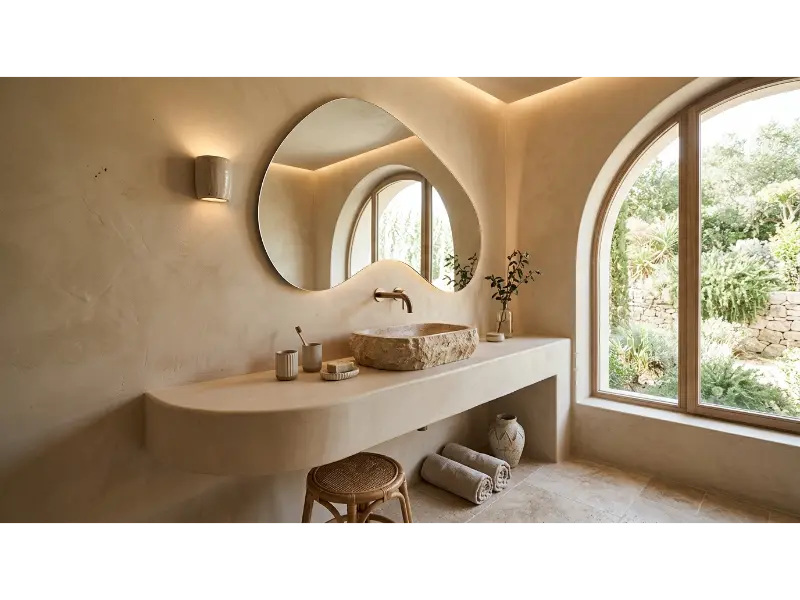
An asymmetrical mirror can turn a basic vanity wall into an artistic focal point. Its irregular outline creates movement and breaks up the predictable geometry found in many bathrooms. This shape works particularly well with curved vanities, natural stone, plaster walls, and handcrafted accessories because the entire room can share a softer organic language.
When choosing an organic bathroom mirror, remember that the unusual silhouette should still provide a practical reflection area. Keep surrounding accessories restrained so the mirror remains the star. A sculptural frame can add even more personality, but frameless glass may feel more refined when the wall already contains strong textures or decorative materials.
Pro Tip: Repeat gentle curves through the basin, vanity, lighting, or accessories to make the asymmetrical mirror feel intentional.
15. Mirror With Integrated Shelf
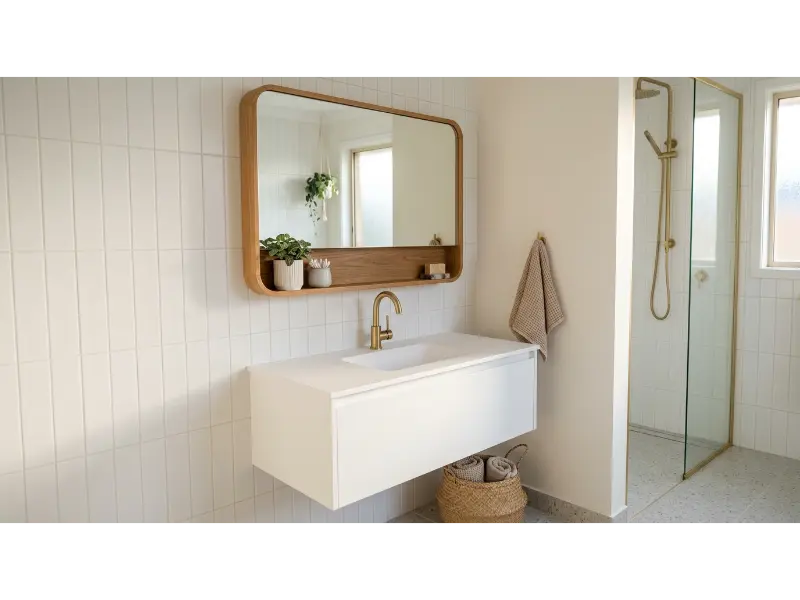
A mirror with a built in shelf gives you a small storage area without adding another bulky fixture to the wall. The shelf can hold hand soap, a small plant, perfume, skincare products, or a few decorative pieces. This makes it particularly useful in compact bathrooms where countertop space is limited.
Keep the shelf visually light and avoid turning it into a crowded storage area. A bathroom mirror with shelf should still function primarily as a mirror, while the ledge adds a convenient finishing touch. Choose a material that relates to the vanity, such as wood, stone, or matching metal, so the shelf feels like part of the original design.
Pro Tip: Keep only a few attractive essentials on the shelf so the vanity remains clean and uncluttered.
16. Backlit Oval Mirror With Floating Vanity
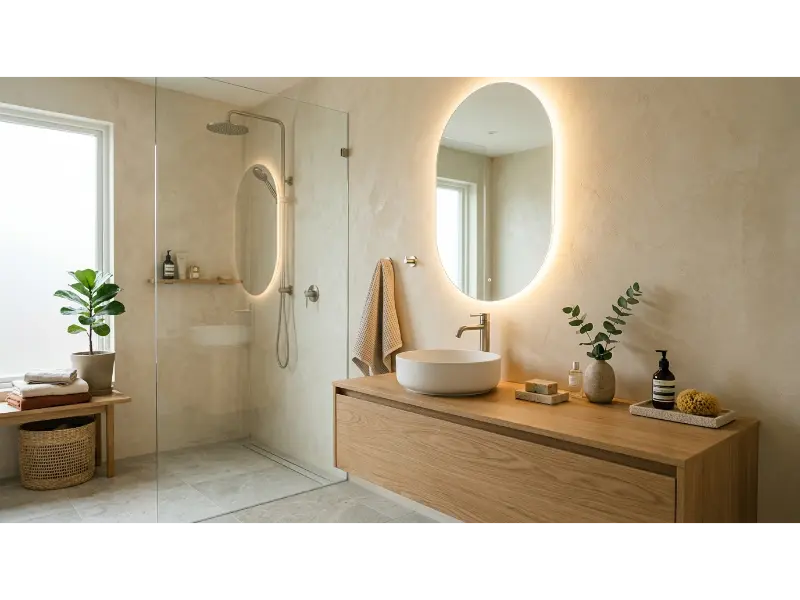
An oval mirror paired with a floating vanity creates a balanced combination of softness and modern simplicity. The rounded glass contrasts with the straight cabinet while the open area underneath makes the entire vanity feel lighter. Adding a subtle LED halo emphasizes the shape and creates a beautiful glow against the wall.
This combination suits neutral bathrooms because the design relies on shape, light, and texture rather than bold color. A backlit bathroom mirror can also enhance textured plaster or stone because the glow creates subtle shadows around the edges. Keep the vanity wall simple enough for the oval shape to remain the primary focal point.
Pro Tip: Leave the floor beneath the floating vanity open to strengthen the mirror’s lightweight visual effect.
17. Wide Horizontal Mirror for a Long Vanity
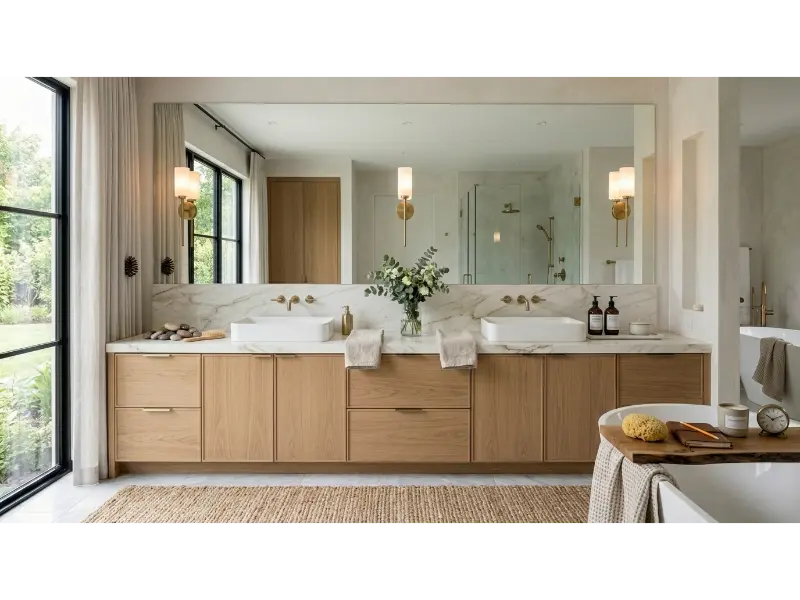
A wide horizontal mirror visually connects a long vanity and can make the wall appear broader. Instead of separating the two sinks with individual glass pieces, one continuous surface creates a streamlined composition. This approach works particularly well in contemporary bathrooms with long cabinetry and simple countertops.
Choose the width according to the vanity and surrounding architecture. A wide bathroom mirror should feel connected to the cabinet beneath it rather than extending into unrelated wall space. Frameless glass creates a seamless appearance, while a slim frame can add definition. Make sure nearby lighting does not create unwanted reflections or interfere with the mirror’s clean horizontal line.
Pro Tip: Align the mirror edges with the vanity or major architectural lines to create a built in appearance.
18. Fluted Glass Mirror Cabinet
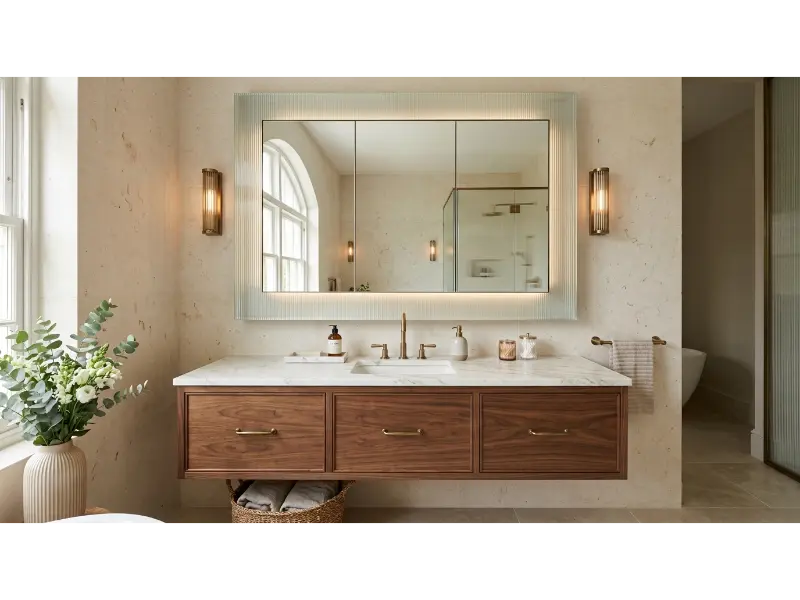
A fluted frame can make a practical mirrored cabinet feel more like custom furniture. The ribbed texture adds depth while the reflective surface keeps the bathroom visually open. This is a useful option when you want storage but do not like the ordinary appearance of traditional medicine cabinets.
Pair the cabinet with warm wood, natural stone, or brushed metal to create a refined material palette. A mirrored medicine cabinet can provide excellent hidden storage, but the exterior should remain visually calm. Avoid surrounding the cabinet with too many competing patterns because the fluted detail already supplies enough texture.
Pro Tip: Let the fluted frame be the main textured feature and keep the backsplash and countertop relatively quiet.
19. Mirror With Side Sconces
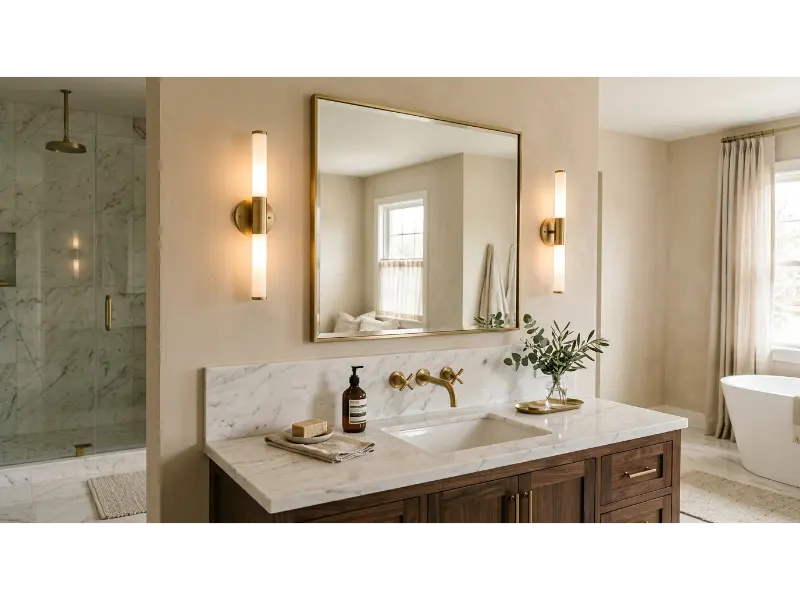
Side sconces can improve vanity lighting while giving the mirror a beautifully framed appearance. Positioning light sources beside the glass helps illuminate the face more evenly than relying only on an overhead fixture. The arrangement also creates symmetry, which can make even a simple vanity feel polished and thoughtfully planned.
Choose sconces that complement the mirror frame and other hardware. Opal glass can provide a soft glow, while clear shades create a lighter appearance. A bathroom mirror with sconces works across many styles, from traditional to contemporary. Keep both fixtures at matching heights and consider their scale carefully so they do not overpower the mirror.
Pro Tip: Place matching sconces on both sides of the mirror for balanced illumination and a classic designer look.
20. Ceiling To Vanity Mirror Panel
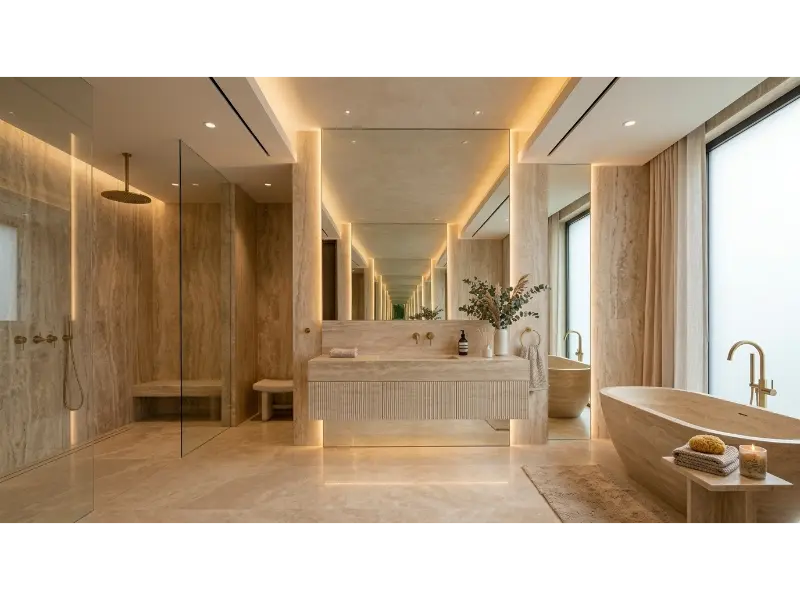
A tall mirror panel extending toward the ceiling can create a dramatic sense of height. It reflects more of the bathroom and makes the vanity wall feel larger, especially when the room has attractive lighting or architectural features worth reflecting. The seamless surface works particularly well in contemporary and minimalist spaces.
A floor to ceiling bathroom mirror requires careful planning because its size can amplify whatever appears opposite it. Check the reflection before installation and consider nearby doors, shelves, shower areas, and lighting. Frameless glass keeps the look sleek, while a thin metal border can connect the mirror with bathroom hardware without making the design feel heavy.
Pro Tip: Check the mirror’s reflection from several angles before installation to ensure it highlights the best parts of your bathroom.
21. Warm Wood Framed Mirror
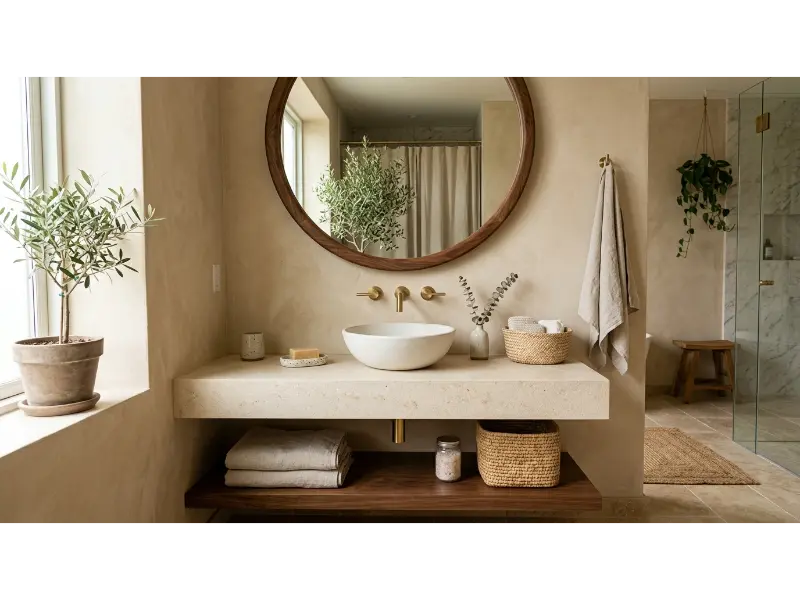
A warm wood frame can instantly make a bathroom feel more inviting. Walnut, oak, and other natural finishes soften the cooler appearance of ceramic, glass, and stone while creating a visual connection with wooden cabinetry. This makes a wood framed bathroom mirror especially appealing in organic modern, Japandi, Scandinavian, and transitional interiors.
Choose a wood tone that complements the vanity without trying to match every wooden surface perfectly. Slight differences can make the room feel more natural. Pair the frame with warm lighting and simple stone for a relaxed atmosphere. If the bathroom already contains strong wood grain, a simpler frame can prevent the space from becoming visually crowded.
Pro Tip: Repeat the wood tone in one additional feature, such as the vanity, shelf, stool, or storage cabinet.
22. Corner Mirror for an Awkward Vanity
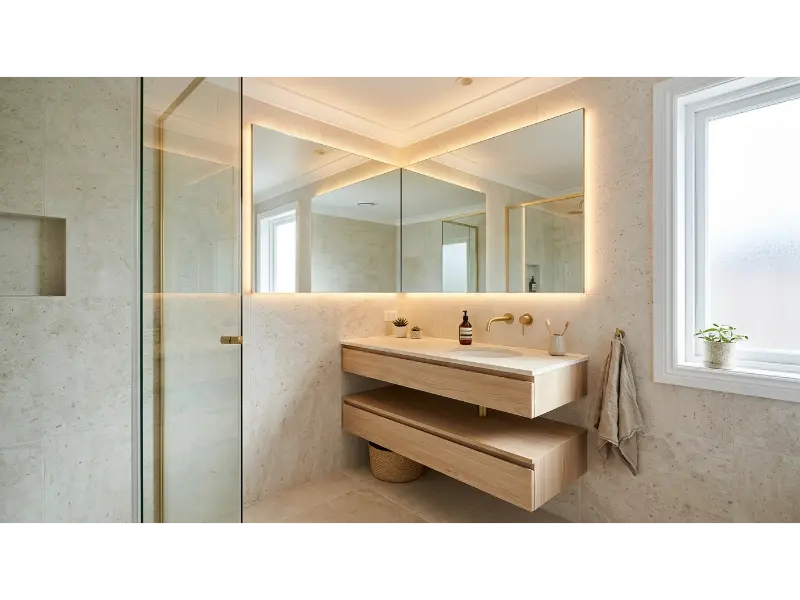
A corner mirror can turn an awkward vanity layout into a smart design feature. Instead of leaving the corner unused, reflective surfaces can visually connect both walls and create additional depth around the sink. This approach works particularly well in narrow powder rooms, unusual floor plans, and compact bathrooms where standard mirror placement feels restrictive.
A corner bathroom mirror usually requires accurate measurements because wall angles, tile edges, electrical fixtures, and cabinetry can affect the final fit. A custom design can create a seamless appearance, while two carefully aligned mirrors can provide a similar effect with simpler installation. Keep the rest of the vanity wall uncluttered so the corner reflection remains effective.
Pro Tip: Create a precise template before ordering custom glass so the corner connection aligns properly with the walls and vanity.
23. Decorative Statement Mirror With Designer Frame
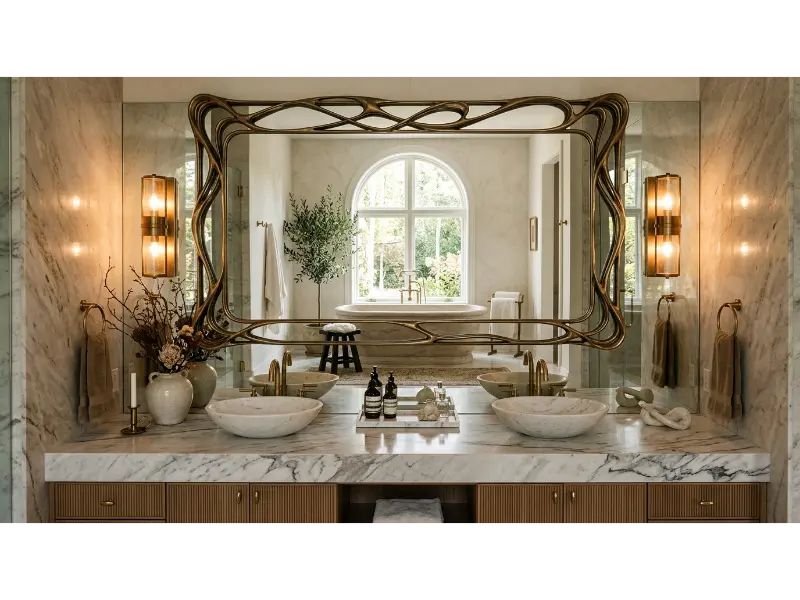
A statement mirror can work like artwork in a bathroom. Instead of adding another decorative object to the vanity wall, choose a frame with sculptural edges, layered detailing, unusual metalwork, or an architectural silhouette. The mirror becomes the feature that immediately attracts attention while still serving a practical purpose.
When choosing statement bathroom mirrors, let the surrounding design support rather than compete with the frame. Simple tile, refined hardware, and uncluttered countertops provide enough contrast for a dramatic mirror to stand out. This approach works particularly well in powder rooms because a single memorable feature can give a small space a strong personality without requiring a complete renovation.
Pro Tip: Balance a bold mirror with simpler lighting, accessories, and wall finishes so the overall room still feels sophisticated.
How to Choose the Right Bathroom Mirror
The best mirror starts with proportion. Measure the vanity first, then consider the available wall space, lighting positions, backsplash, cabinets, and ceiling height. A mirror that looks beautiful online may feel too small or too dominant when placed above your actual vanity. Think about the entire composition instead of choosing the glass as an isolated decoration.
Shape should support the style of your bathroom. Rounded and arched mirrors soften angular cabinetry, while rectangular designs create a clean and timeless appearance. Organic shapes work well with natural materials, and geometric frames suit modern interiors. If the bathroom already contains many patterns, choose a simpler mirror shape and let the materials provide the visual interest.
Lighting also deserves careful attention. Front illumination can provide useful light for grooming, while rear illumination creates a soft decorative glow. A combination of both can offer the most flexibility. If your bathroom has limited natural light, an illuminated vanity mirror can improve both the function and atmosphere of the room.
Storage needs should influence the choice as well. If your countertop becomes cluttered easily, consider a mirrored medicine cabinet or a design with hidden storage. If storage is already sufficient, a sculptural or oversized mirror can focus more on style. The best choice balances what the room needs with the appearance you want.
Bathroom Mirror Styling Mistakes to Avoid
One common mistake is choosing a mirror that does not relate to the vanity size. A tiny mirror above a wide cabinet can make the wall feel unfinished, while an oversized design may overwhelm a narrow space. Measure the entire vanity wall before shopping and visualize the mirror with the lighting and backsplash already in place.
Another mistake is treating lighting as an afterthought. A beautiful mirror can still perform poorly if the vanity receives harsh shadows or insufficient illumination. Consider where sconces, ceiling lights, windows, and the mirror’s own LEDs will sit before installation. Good lighting should support grooming while also creating a comfortable atmosphere.
Avoid combining too many competing finishes around the same focal point. If you choose a strongly textured frame, unusual shape, bold tile, and elaborate sconces at once, the vanity wall can quickly become chaotic. Select one main feature and let the other elements support it.
Finally, do not ignore what the mirror reflects. A large reflective surface can make a bathroom look much better when it captures natural light, attractive tile, greenery, or architectural details. Before installation, stand where the mirror will sit and check the reflection from normal viewing angles.
Frequently Asked Questions
What bathroom mirror style is most popular right now?
Rounded arches, pill shapes, backlit designs, oversized mirrors, organic silhouettes, warm wood frames, and smart illuminated mirrors are popular choices. The strongest trend is toward mirrors that combine attractive shapes with useful everyday functions.
What is the best mirror for a small bathroom?
A generously sized frameless, vertical, or softly rounded mirror can make a small bathroom feel more open. Backlighting can add depth, while a recessed medicine cabinet can provide useful storage without taking up visual space.
Are LED bathroom mirrors worth it?
They can be worth the investment when you need better vanity lighting or want a clean modern appearance. Dimmable illumination, anti fog technology, and adjustable color temperature can make the mirror especially practical for everyday use.
Should bathroom mirrors match the vanity?
They do not need to match exactly. They should complement the vanity in scale, finish, and overall style. Contrasting shapes can actually make the design more interesting when the proportions remain balanced.
What shape of mirror makes a bathroom look bigger?
Large frameless mirrors can increase the feeling of space because they reflect more light and surroundings. Vertical mirrors can emphasize height, while wide horizontal mirrors can make a narrow vanity wall appear broader.
Is a round mirror good above a rectangular vanity?
Yes. The contrast between a round mirror and rectangular vanity creates visual balance. The curved shape softens the hard lines of cabinetry and can make the bathroom feel more relaxed.
How high should a bathroom mirror be above the vanity?
The correct height depends on the mirror size, countertop height, users, lighting, and ceiling. The mirror should provide a comfortable reflection without interfering with faucets, sconces, cabinets, or other fixtures.
Are medicine cabinet mirrors still stylish?
Yes. Modern recessed medicine cabinets can look extremely sleek and almost indistinguishable from decorative mirrors. They are especially useful when you want to hide everyday bathroom products and maintain a clean countertop.
Should I choose a framed or frameless mirror?
Frameless mirrors create a lighter, minimalist appearance and can make a small bathroom feel more open. Framed designs add personality, contrast, warmth, or texture. Your choice should reflect the overall style of the bathroom.
How can I make my bathroom mirror look more expensive?
Focus on scale, lighting, and materials. A properly sized mirror with elegant lighting, a refined frame, coordinated hardware, and a clean vanity can look far more luxurious than an inexpensive mirror surrounded by clutter.
Conclusion
The right mirror can completely change the character of your bathroom. Whether you choose a glowing LED design, a soft arch, a warm wood frame, a hidden storage cabinet, or a dramatic sculptural shape, the goal should always be the same: combine beauty with everyday usefulness.
These Innovative Bathroom Mirror Ideas give you plenty of ways to make the vanity wall more functional, attractive, and personal. Start by measuring your space, deciding what you need from the mirror, and choosing a shape that complements your existing fixtures. Then build the surrounding design around that focal point with coordinated lighting, hardware, materials, and accessories.
A well chosen bathroom mirror does not simply complete the vanity. It can make the room feel brighter, larger, more organized, and more thoughtfully designed. The most successful bathroom is not the one with the most features, but the one where every feature works together.