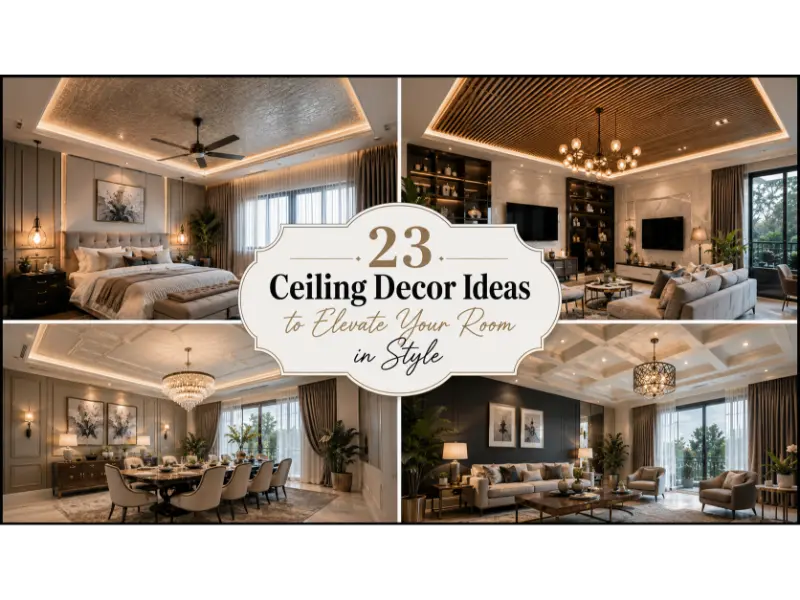
23 Ceiling Decor Ideas to Elevate Your Room in Style
Your ceiling has more potential than you may think. While walls, floors, and furniture usually get most of the attention, the ceiling can completely change the mood and character of a room. The right ceiling decor can make a space feel warmer, taller, more elegant, cozy, or visually interesting without changing the entire room. From painted ceilings and wood beams to wallpaper, molding, lighting, and textured finishes, there are countless ways to give this overlooked surface a beautiful purpose.
These Ceiling Decor Ideas are designed for real homes and different decorating styles. Whether you are updating a bedroom, living room, dining area, hallway, home office, or cozy reading space, you can find an option that matches your budget and personality. The key is choosing a design that works with your room’s size, lighting, architecture, and existing decor.
Ceiling Decor Ideas for Beautiful and Timeless Rooms
1. Soft Coffered Ceiling
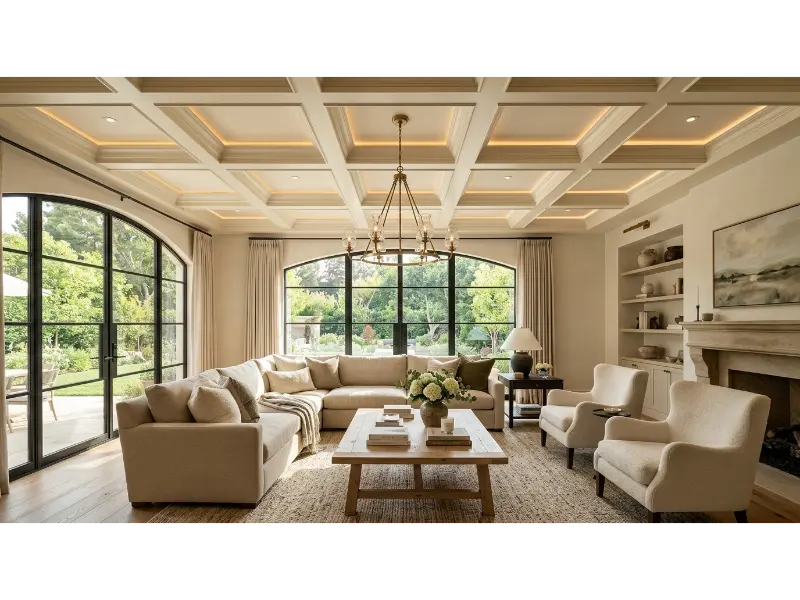
A coffered ceiling can instantly give a simple room more architectural character. The recessed panels create gentle depth while the repeated pattern gives the room a polished and balanced appearance. Soft white, ivory, or warm cream keeps the design elegant without making the overhead surface feel too heavy. This style works particularly well in living rooms, dining rooms, bedrooms, and formal sitting areas.
The beauty of this design comes from its structure rather than excessive decoration. Keep the surrounding furniture fairly simple so the ceiling has room to stand out. You can also introduce subtle contrast by painting the recessed sections a slightly different shade from the beams. This creates dimension while maintaining a calm, coordinated appearance throughout the room.
Pro Tip: Use shallow coffers in rooms with lower ceilings so you can add architectural interest without making the space feel compressed.
2. Botanical Wallpaper Ceiling
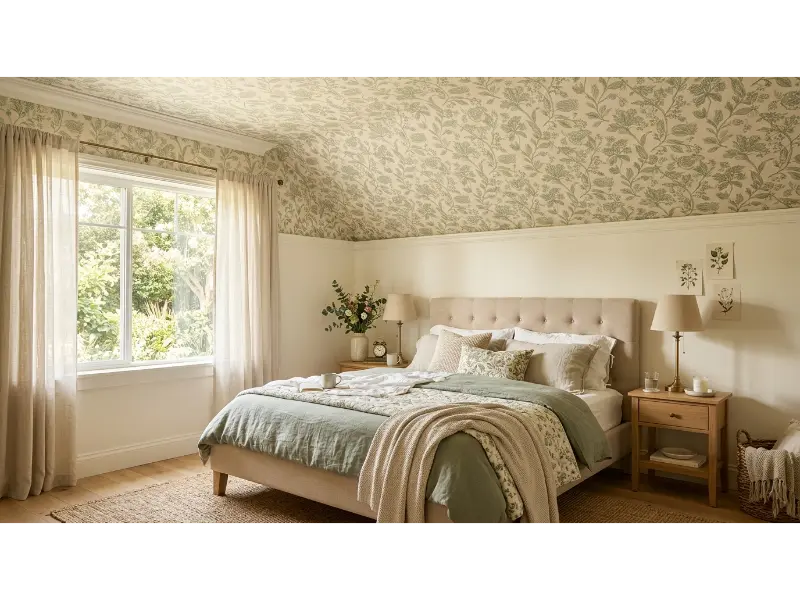
A wallpapered ceiling gives a room an unexpected focal point that immediately catches attention. Botanical patterns are especially beautiful because they introduce nature inspired movement without requiring bold furniture or dramatic wall colors. A soft green, cream, blue, or beige pattern can create a sophisticated look in bedrooms, dining rooms, hallways, and reading spaces.
When choosing ceiling wallpaper, think about how the pattern will look from below rather than only how it appears on a sample board. Small or medium patterns often work better than extremely large prints. Repeating one of the wallpaper colors in cushions, curtains, artwork, or accessories can also make the room feel intentionally designed.
Pro Tip: Choose a wallpaper with a lighter background if your room receives limited natural light.
Read More: 23 Black Bedroom Decor Ideas That Feel Expensive
3. Warm Wood Beam Ceiling
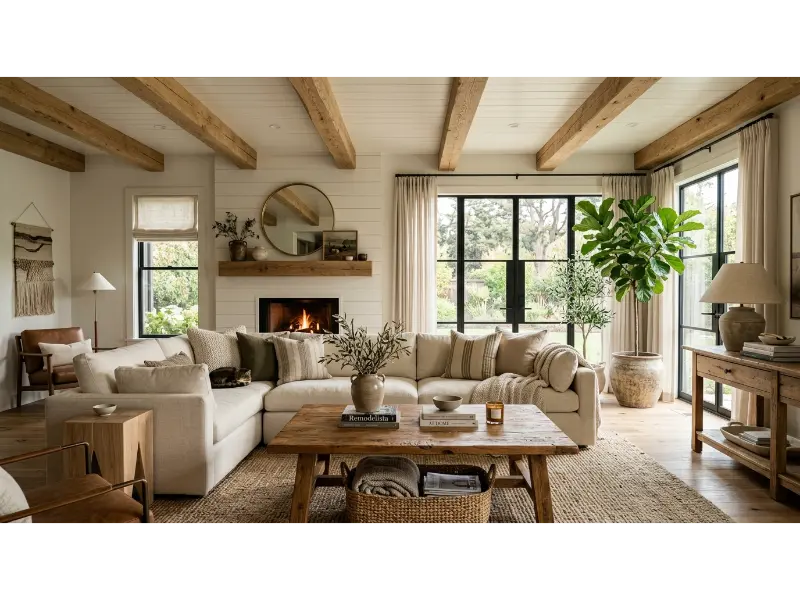
Wood beams bring warmth and character to a room while making the ceiling feel like an important architectural feature. Natural oak creates a light and relaxed appearance, while walnut or darker wood offers a richer and more dramatic effect. This style works beautifully with farmhouse, rustic, Scandinavian, cottage, Mediterranean, and organic modern interiors.
Decorative beams can also create the appearance of a custom architectural ceiling without changing the structure of your home. Keep the beam arrangement simple if the room already has patterned flooring or busy furniture. Matching the wood tone with flooring, shelves, furniture, or smaller wooden details can make the entire space feel more cohesive.
Pro Tip: Choose lighter wood for smaller rooms and darker beams for larger spaces where the ceiling can handle stronger contrast.
4. Soft Sage Green Ceiling
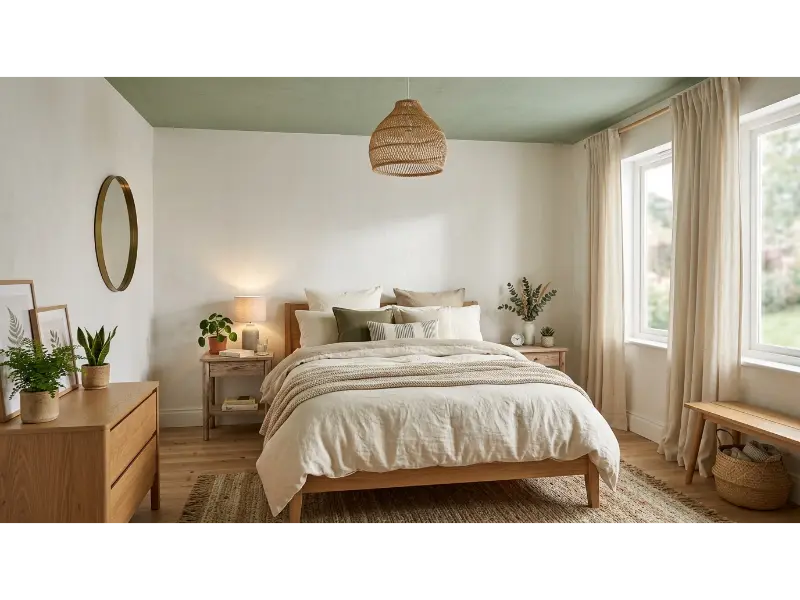
A colored ceiling can completely change the atmosphere of a room without requiring complicated construction. Soft sage green creates a calm, natural feeling that works especially well in bedrooms, bathrooms, reading rooms, nurseries, and relaxed living spaces. Pairing it with warm white walls keeps the overall design bright while allowing the ceiling to become a subtle focal point.
If you want a more immersive effect, continue the ceiling color a few inches down the upper portion of the walls. This creates a soft transition and makes the room feel more thoughtfully finished. Muted colors usually work best because they add personality without becoming visually overwhelming.
Pro Tip: Look at your paint sample in both morning and evening light before choosing the final color.
5. Elegant Ceiling Medallion
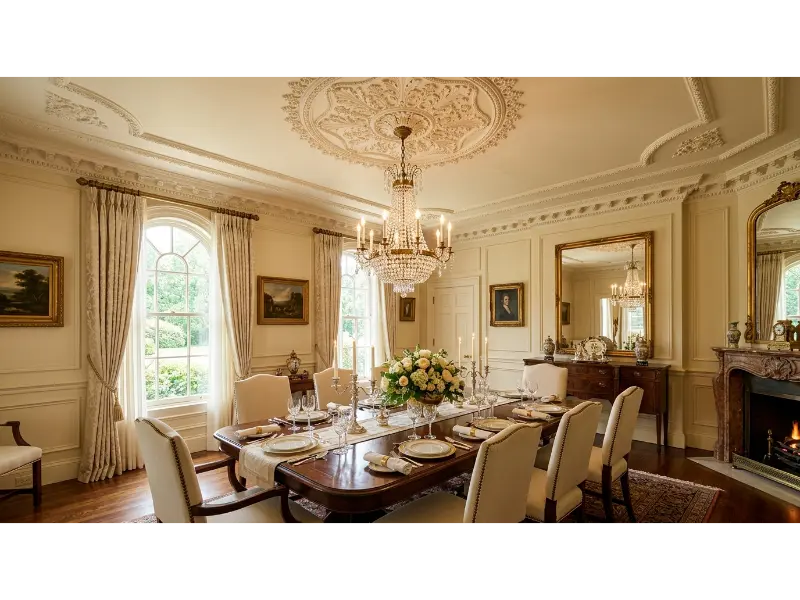
A ceiling medallion can transform an ordinary light fixture into an elegant architectural centerpiece. Traditional carved designs work beautifully in classic and vintage interiors, while simple geometric medallions can suit modern and transitional spaces. The most important consideration is scale because a medallion should feel proportional to the room and the fixture beneath it.
This detail works especially well above dining tables, entryway lights, bedroom chandeliers, and large living room fixtures. You can paint the medallion the same color as the ceiling for a subtle appearance or use a slightly different shade to emphasize its shape. Either approach can make the room feel more finished.
Pro Tip: Measure your light fixture before choosing a medallion so the two elements look balanced together.
Read More: 21 Luxurious Bedroom Design Ideas for a Chic Escape
6. Linear Ceiling Panels
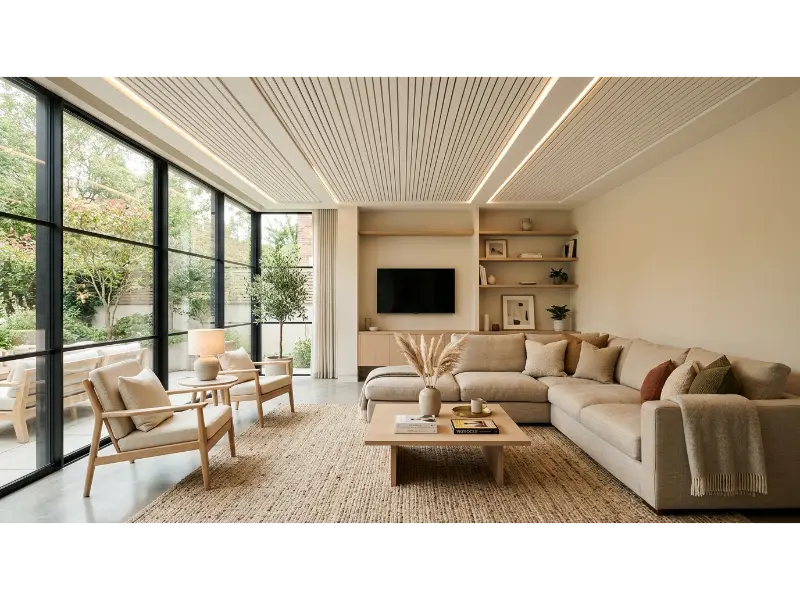
Linear panels provide a clean way to add architectural detail without using ornate molding. Their repeated lines create rhythm and can make a ceiling feel longer and more intentional. This style works especially well in contemporary living rooms, home offices, dining areas, hallways, and minimalist homes where simple details have a strong visual impact.
The spacing between each line matters greatly. Too many narrow lines can make the ceiling look crowded, while widely spaced panels can create a more relaxed appearance. Keep the color palette restrained so the architecture remains the main feature instead of competing with artwork, furniture, or flooring.
Pro Tip: Run the lines in the direction that visually supports your room’s strongest dimension.
7. Layered Tray Ceiling
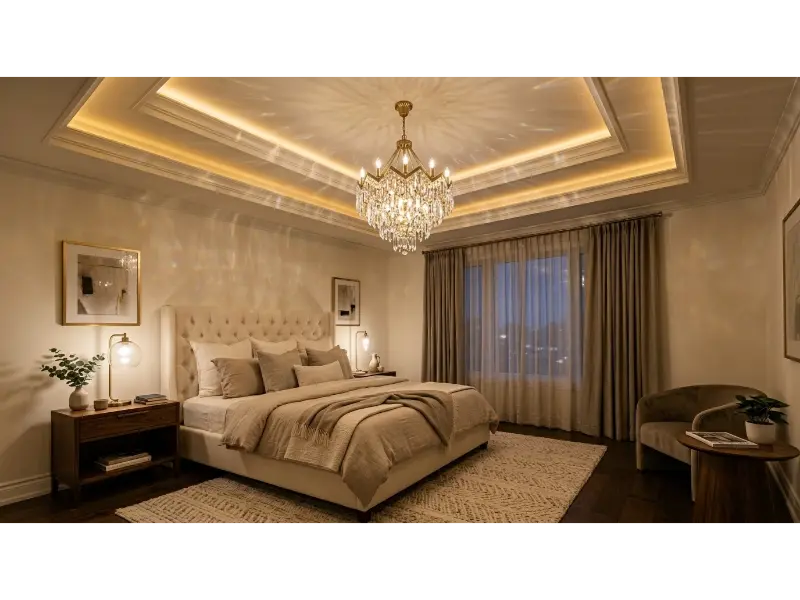
A tray ceiling creates depth by placing a recessed section inside the main ceiling plane. This architectural treatment becomes even more impressive when you add concealed lighting around the recessed edge. Instead of relying on one bright fixture, you can combine soft ambient lighting with a central pendant or chandelier to create a comfortable layered effect.
This design works especially well in larger bedrooms, dining rooms, living rooms, and spacious entryways. The recessed section should have enough room to feel intentional without becoming too deep. When the proportions are right, the result feels elegant and custom rather than overly decorative.
Pro Tip: Install dimmable concealed lighting so you can adjust the atmosphere throughout the day.
8. Classic Beadboard Ceiling
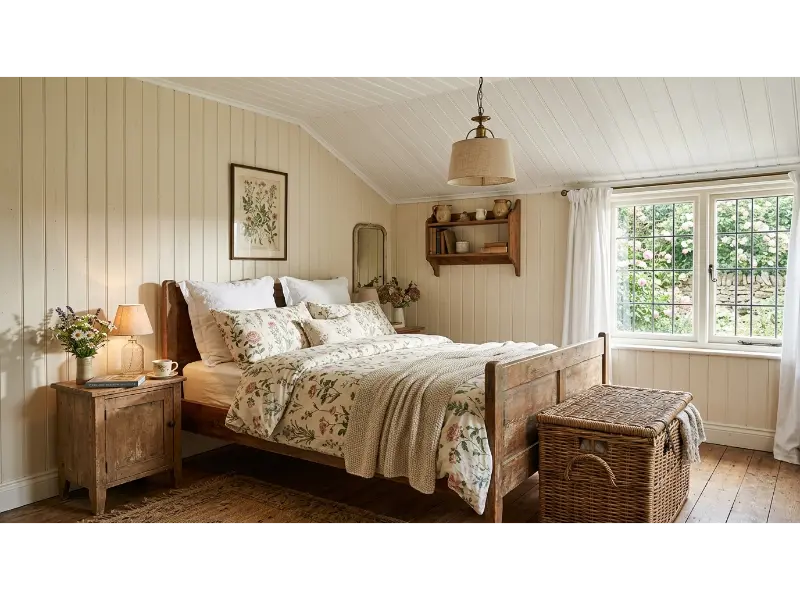
Beadboard creates gentle texture and timeless charm without making a ceiling feel overly formal. Its narrow repeating lines work beautifully in cottage bedrooms, coastal homes, farmhouse interiors, bathrooms, porches, kitchens, and relaxed sitting spaces. A classic white finish keeps the room bright and allows the texture to provide most of the visual interest.
For something more distinctive, consider painting the beadboard in dusty blue, sage, soft gray, or warm taupe. This creates a stronger feature while maintaining the cozy quality of the material. Pairing it with natural wood, linen, woven accessories, and simple lighting can create a relaxed and welcoming room.
Pro Tip: Choose narrow beadboard for traditional rooms and wider panels for a more contemporary appearance.
9. Dramatic Dark Ceiling
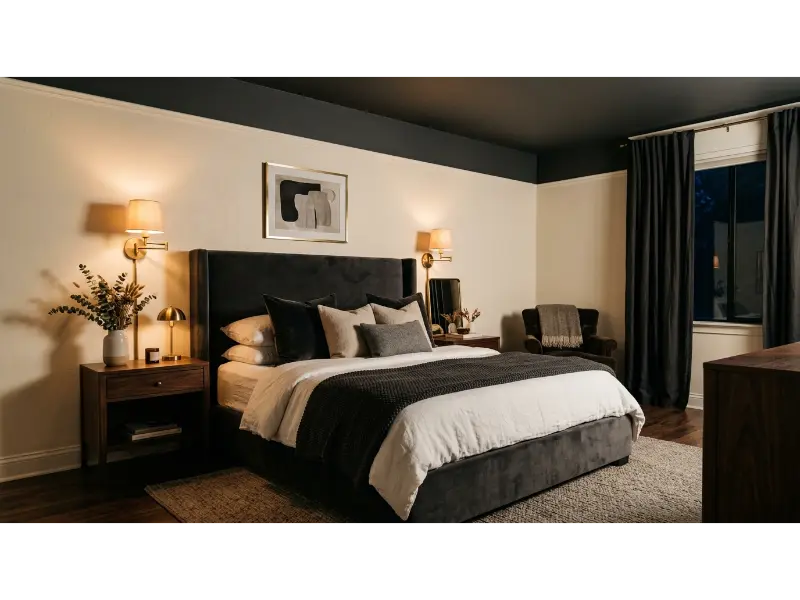
A dark ceiling can create an intimate and sophisticated atmosphere when used thoughtfully. Charcoal, navy, deep olive, chocolate brown, and other rich shades can make bedrooms, libraries, dining rooms, and media rooms feel cozy and dramatic. Light walls and warm furniture help balance the darker surface.
Many people assume a dark ceiling will automatically make a room feel smaller, but the right combination of lighting, proportion, and contrast can produce the opposite effect. A dark overhead surface can create a cozy envelope and make lighter furniture appear more striking.
Pro Tip: Use warm lighting instead of cool bulbs to keep the darker ceiling feeling inviting.
10. Decorative Ceiling Molding
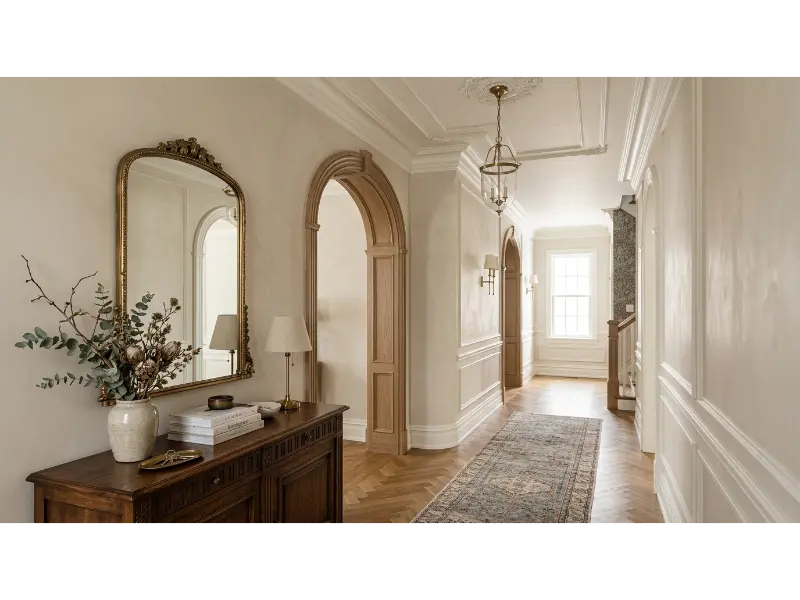
Decorative molding can give a basic ceiling a custom architectural appearance without introducing strong color or pattern. Rectangular frames, narrow borders, layered trim, and simple geometric arrangements can all create visual structure. This approach works beautifully in dining rooms, bedrooms, living rooms, entryways, and hallways.
For a timeless result, keep the molding and ceiling in the same color and let natural shadows create the contrast. If you want a more noticeable feature, use a slightly darker or lighter tone on the molding. The design should still coordinate with the home’s existing door trim and wall molding.
Pro Tip: Use painter’s tape to map the design before installing the molding so you can judge the spacing from across the room.
11. Natural Grasscloth Ceiling
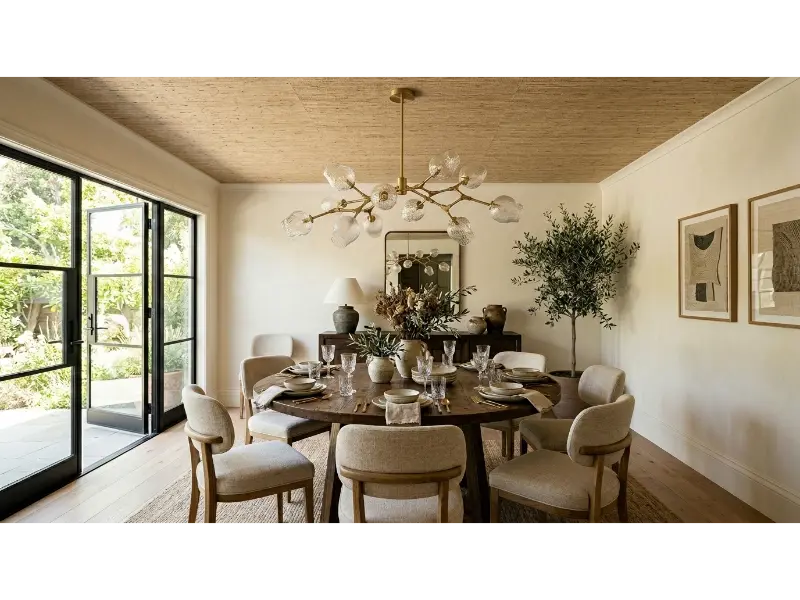
Grasscloth adds natural texture without relying on bold colors or complicated patterns. Its woven surface creates subtle movement and warmth, making it especially attractive in dining rooms, bedrooms, studies, sitting rooms, and entryways. Neutral grasscloth works beautifully with linen, wood, stone, rattan, and other natural materials.
Because the material already has visible texture, the rest of the ceiling should remain relatively simple. Soft lighting can highlight the woven fibers and create gentle shadows throughout the day. The result feels organic and sophisticated without looking overly decorated.
Pro Tip: Always view a large material sample before installation because woven textures can vary noticeably from small samples.
12. Recessed Ceiling Lighting
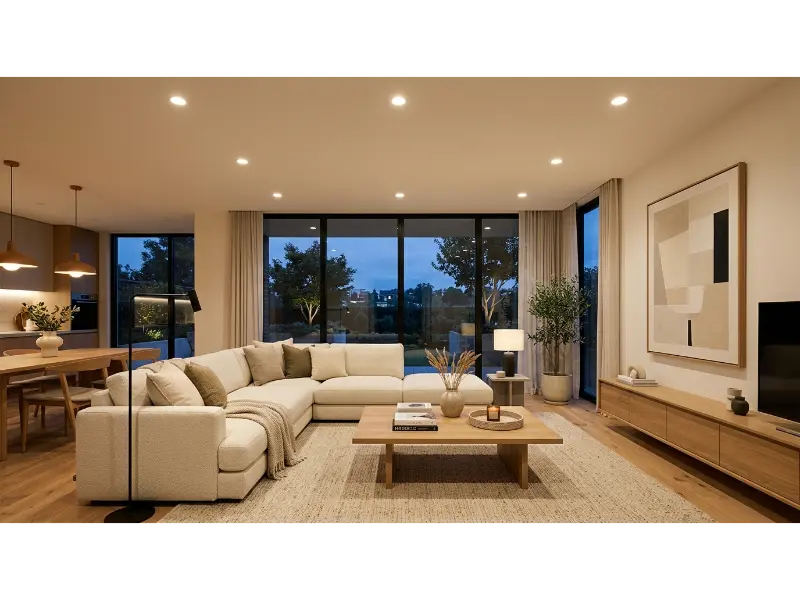
Lighting can become an important part of the ceiling rather than simply a practical feature. Recessed spotlights create a clean appearance while allowing you to highlight artwork, seating areas, kitchen counters, architectural details, and decorative objects. They are particularly useful in modern living rooms, kitchens, hallways, and home offices.
Plan the lighting around how you actually use the room instead of automatically placing every fixture in a rigid grid. A combination of recessed lights, floor lamps, table lamps, and decorative fixtures can create a much more comfortable environment than a ceiling filled with bright lights.
Pro Tip: Choose dimmable recessed fixtures so the room can shift easily from daytime tasks to evening relaxation.
13. Graceful Arched Ceiling Detail
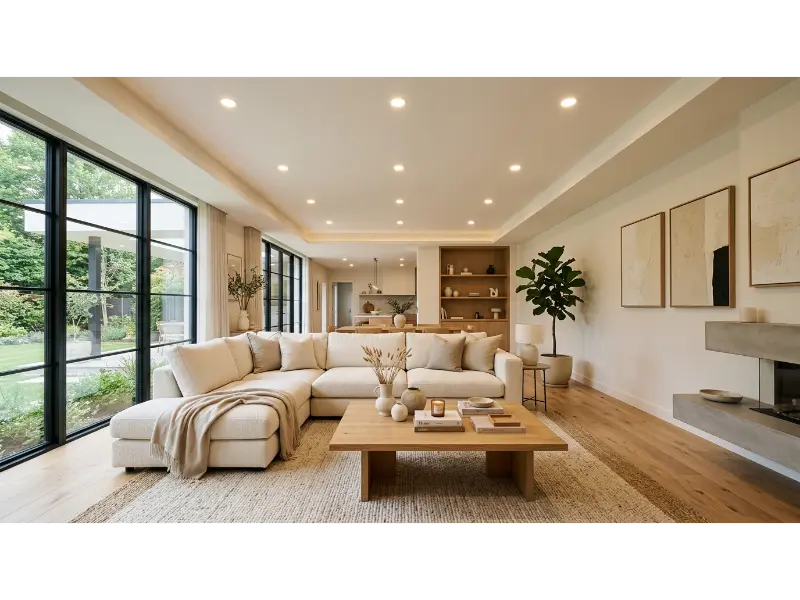
Curved architectural details can soften rooms that contain many straight lines. A shallow arch, rounded recess, or curved transition can introduce movement and make the room feel more custom. This treatment works especially well in Mediterranean, organic modern, contemporary, and transitional interiors.
Repeat the curved shape elsewhere in the room to make the ceiling feel connected to the overall design. Rounded mirrors, curved sofas, arches, circular tables, and sculptural lighting can all reinforce the same visual language. Keeping the palette soft allows the shape to remain the main feature.
Pro Tip: Repeat the ceiling’s curve in at least one major furnishing or architectural feature for better visual harmony.
14. Vintage Pressed Tin Ceiling
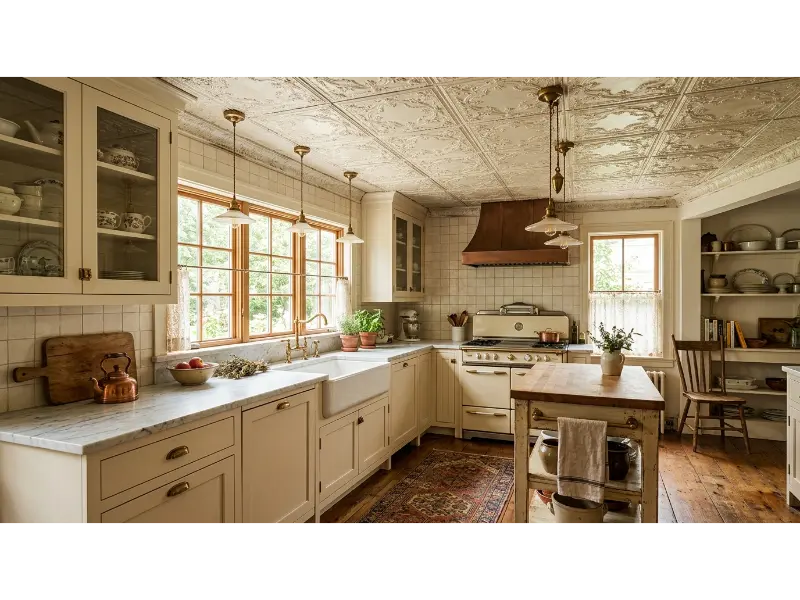
Pressed tin panels bring texture and historic character to kitchens, dining areas, entryways, and entertaining spaces. A white finish creates a classic appearance, while aged bronze or muted metallic finishes can produce a stronger vintage statement. The repeating pattern adds detail without requiring additional decorative elements.
This treatment can also work surprisingly well in modern spaces when paired with simple cabinetry, clean furniture, and minimal accessories. The ceiling provides the historical character while the rest of the room keeps the overall look fresh and current.
Pro Tip: Choose a tin pattern that complements your home’s architecture instead of competing with patterned flooring or a busy backsplash.
15. Soft Painted Ceiling Stripes
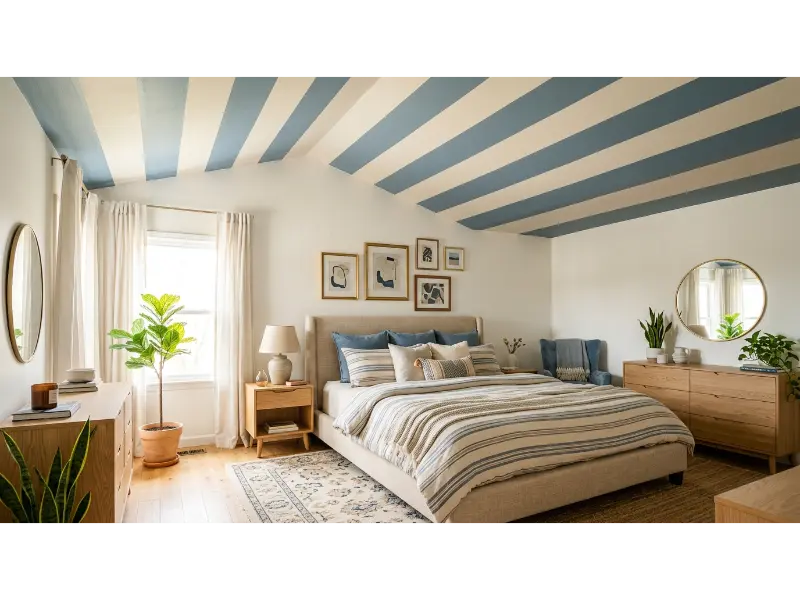
Painted stripes can make a ceiling feel playful, tailored, and completely unexpected. Wide stripes in two gentle shades create a subtle effect, while stronger contrast creates a more dramatic statement. This idea works especially well in bedrooms, children’s rooms, reading spaces, casual dining rooms, and creative studios.
The direction of the stripes can influence how the room appears. Long lines can emphasize the length of a room, while carefully planned crosswise stripes may visually balance a narrow space. Keep the stripe widths consistent so the final result feels polished and intentional.
Pro Tip: Use low contrast colors if you want the striped ceiling to look sophisticated rather than theatrical.
16. Woven Rattan Ceiling
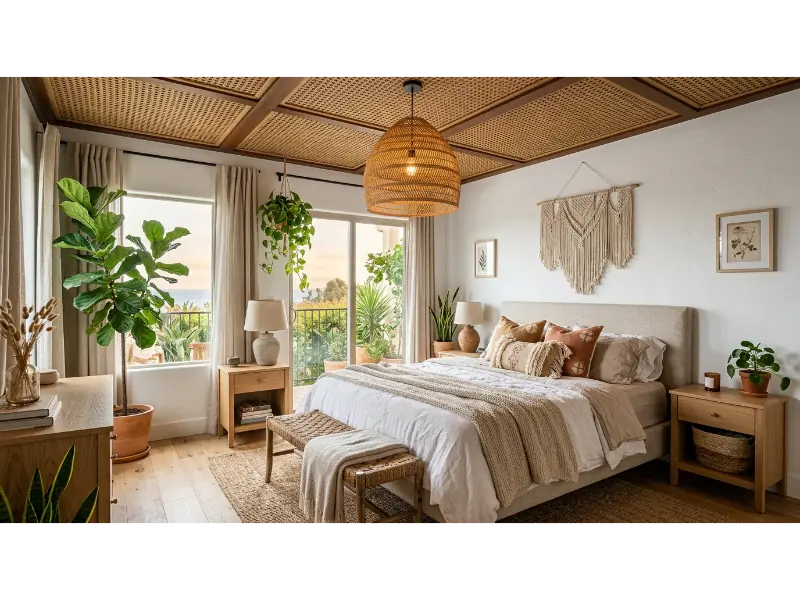
Rattan and woven materials introduce warmth and handcrafted character overhead. They work beautifully in coastal, bohemian, tropical, organic modern, and relaxed resort inspired interiors. The natural texture adds visual interest while keeping the overall color palette soft and earthy.
Pair woven ceiling materials with linen, cotton, light wood, natural stone, and plants to create a layered organic look. Sunlight can make the woven texture especially beautiful by creating small shadows throughout the day. The result feels warm, relaxed, and connected to nature.
Pro Tip: In humid rooms, choose woven ceiling products specifically designed to handle moisture and changing temperatures.
17. Soft Metallic Ceiling
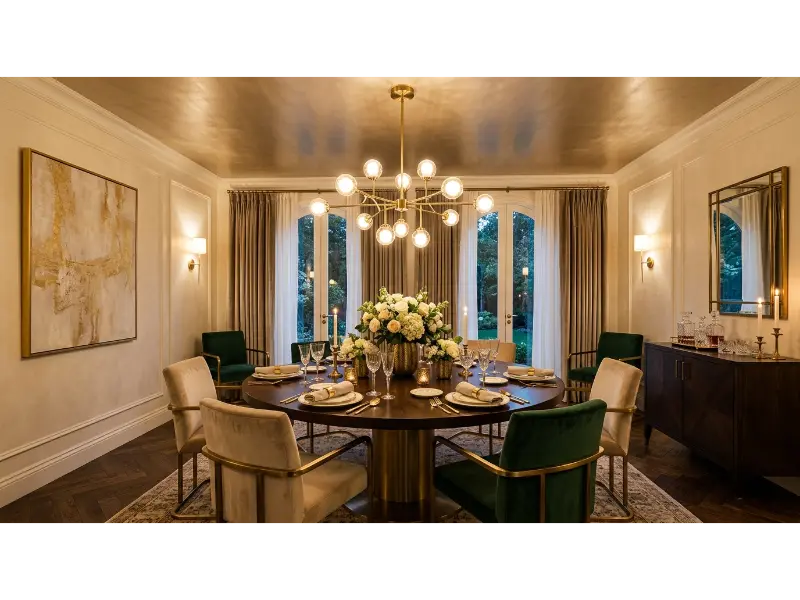
A soft metallic ceiling can reflect light and add an elegant glow without requiring dramatic decoration. Champagne, muted gold, aged brass, and soft bronze can work beautifully in dining rooms, powder rooms, entryways, bedrooms, and sophisticated living areas.
Because metallic surfaces already attract attention, the rest of the room should remain fairly balanced. Cream, beige, warm wood, velvet, and natural stone can create a refined backdrop. The finish should complement your existing hardware and lighting rather than introduce an unrelated metallic tone.
Pro Tip: Test the metallic finish under both natural daylight and evening lighting because reflections can change its appearance.
18. Layered White on White Ceiling
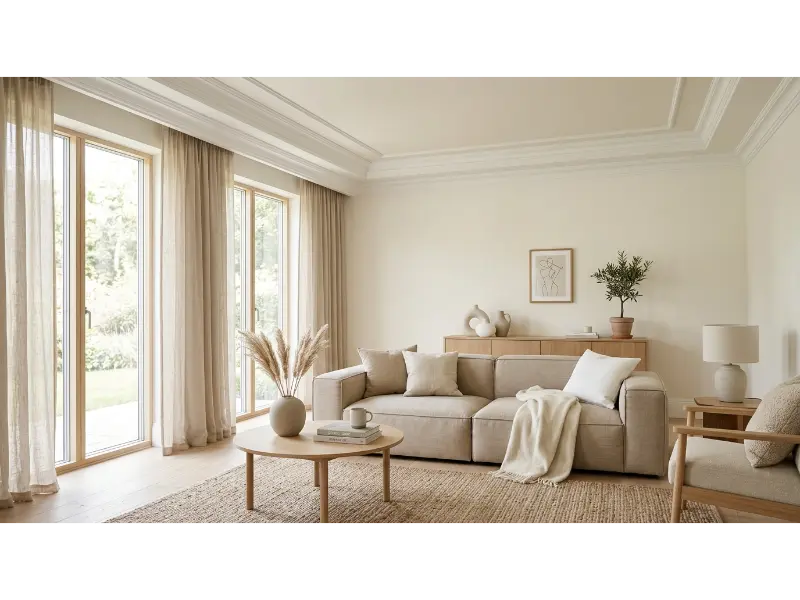
A white ceiling can still become a major design feature when you introduce subtle texture and architectural layering. Shallow molding, recessed borders, raised panels, and delicate trim can create dimension while preserving a bright and peaceful atmosphere. This approach works particularly well in Scandinavian, coastal, contemporary, and transitional homes.
The beauty comes from the interaction between light and shadow. Instead of relying on bold color, the ceiling gains interest through small changes in depth and texture. Warm white finishes usually work well with beige, cream, natural oak, and soft neutral furnishings.
Pro Tip: Use a warm white if your room contains cream and beige so the ceiling does not appear too cold.
19. Defined Ceiling Feature Above the Dining Table
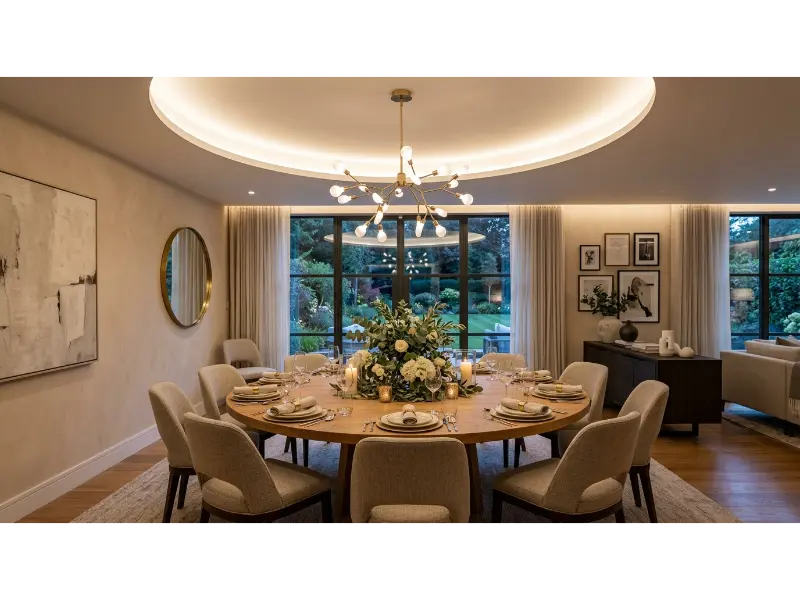
Instead of decorating the entire ceiling, you can create one focused feature above the dining table. A circular recess, painted shape, wallpaper panel, or decorative molding can visually anchor the table and light fixture. This approach creates a strong focal point without requiring a complicated treatment across the entire room.
The ceiling feature should relate directly to the furniture below. A round table pairs naturally with a circular design, while a rectangular table can work better with a long framed treatment. Careful alignment is essential because the relationship between the ceiling, light, and table will be highly visible.
Pro Tip: Center the ceiling feature precisely with both the dining table and light fixture for a polished result.
20. Textured Plaster Ceiling
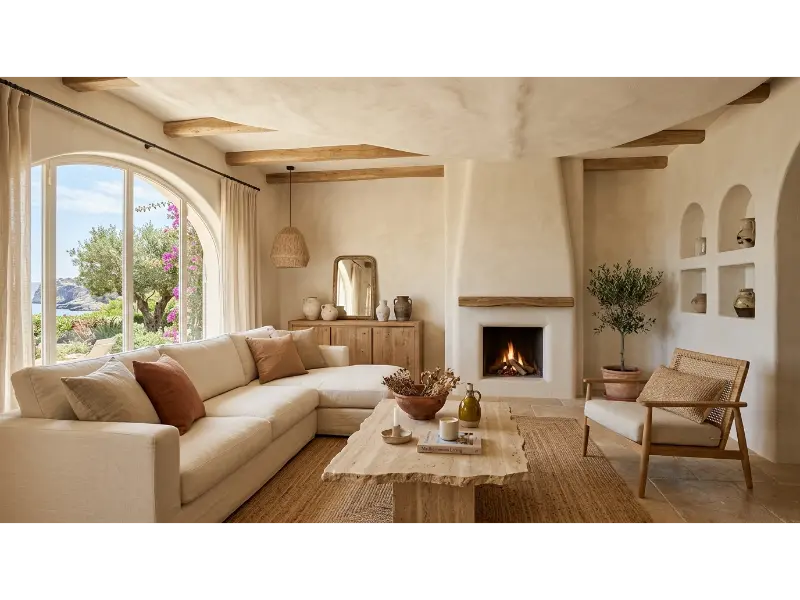
A textured plaster ceiling adds subtle movement and handcrafted character without relying on obvious patterns. Limewash and plaster finishes can create soft variations that make a room feel warm and naturally imperfect. They work especially well in Mediterranean, rustic, organic modern, minimalist, and contemporary interiors.
Keep the texture gentle rather than extremely rough. The goal is to create atmosphere while maintaining a calm overhead surface. Natural materials such as stone, wood, linen, clay, and woven accessories can reinforce the same organic feeling throughout the room.
Pro Tip: Apply the finish to a large sample first so you can see how the texture changes under your room’s actual lighting.
21. Geometric Ceiling Panels
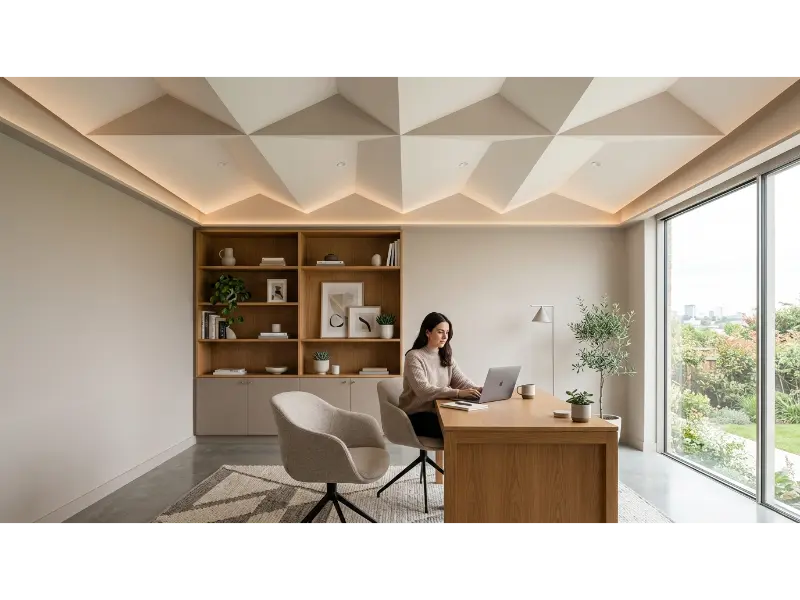
Geometric panels can turn a plain ceiling into a strong modern architectural feature. Squares, rectangles, diamonds, hexagons, and angled shapes can create rhythm and guide the eye across the room. This treatment works especially well in home offices, entertainment spaces, modern living rooms, and contemporary dining areas.
Because geometric patterns already create movement, keep the colors restrained. One main ceiling color with subtle tonal variation often looks more sophisticated than several unrelated shades. The pattern should also relate to the room’s furniture arrangement so it feels purposeful rather than random.
Pro Tip: Draw the full pattern with accurate measurements before installation to check symmetry around lights, windows, and architectural features.
22. Artistic Ceiling Mural
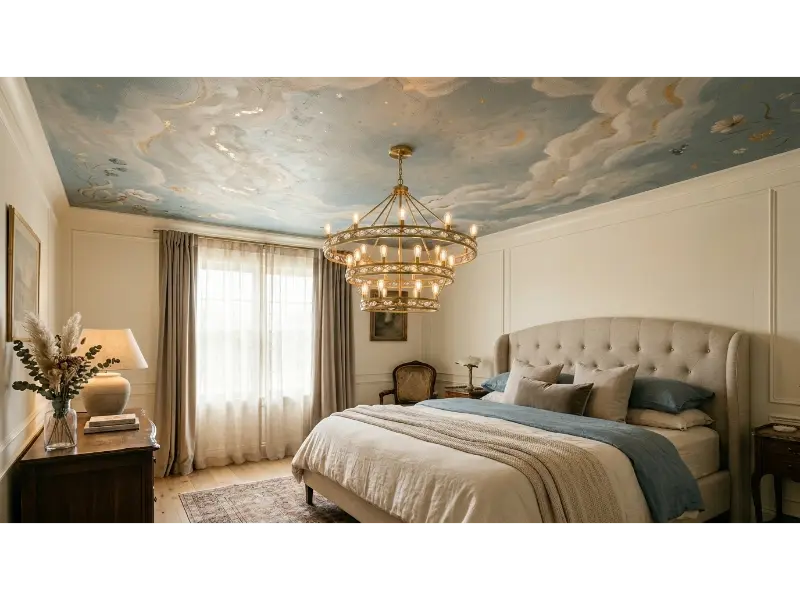
A ceiling mural can transform an ordinary room into a deeply personal space. Soft clouds, botanical branches, stars, abstract brushwork, or sky inspired artwork can create an immersive feeling when viewed from below. This idea works especially well in bedrooms, creative studios, reading rooms, nurseries, and quiet relaxation spaces.
The artwork does not need to cover the surface with complicated details. Leaving negative space around the design can make the mural feel more refined and peaceful. Choose colors that already appear in the room so the artwork becomes part of the interior rather than feeling like an isolated feature.
Pro Tip: Keep the mural softer and less detailed than wall artwork because you will usually view it from a greater distance.
23. Layered Ceiling With a Statement Chandelier
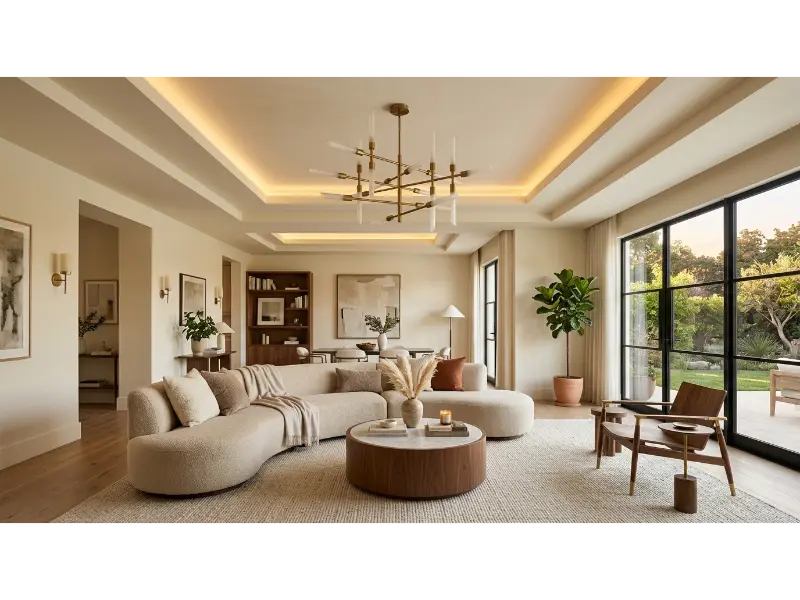
A layered ceiling can become even more impressive when it frames one carefully chosen statement chandelier. Instead of filling the overhead surface with multiple competing fixtures, let the chandelier act as the centerpiece. A recessed panel, subtle molding, or tray structure can naturally guide attention toward the light.
This approach works particularly well in large living rooms, dining areas, entryways, and open entertaining spaces. Keep the ceiling treatment relatively simple when the chandelier has a bold silhouette. The goal is to make the architectural detail and lighting work together rather than compete for attention.
Pro Tip: Consider the chandelier and ceiling as one composition and check their proportions from several viewpoints before installation.
Ceiling Decor Ideas for Small and Large Rooms
The best design depends heavily on room proportions. Small rooms usually benefit from lighter colors, shallow molding, subtle wallpaper, narrow panels, and carefully planned lighting. These treatments add interest without making the ceiling feel visually heavy. A simple white ceiling can also look sophisticated when you add delicate architectural texture and warm lighting.
Large rooms provide more freedom to experiment with beams, coffered designs, dramatic colors, oversized chandeliers, wallpaper, and layered architectural features. However, a larger room does not automatically need a more complicated ceiling. Sometimes one strong element creates a better result than several competing details.
Think about what the room already has before choosing a treatment. If the floor has a strong pattern, the walls feature bold wallpaper, or the furniture contains many decorative details, a quieter ceiling may create better balance. If the rest of the room feels simple, the ceiling can become the feature that adds personality.
How to Choose Ceiling Decor Ideas for Your Home
Start by deciding what you want the ceiling to accomplish. If the room feels cold, consider wood or woven materials. If it feels plain, molding or wallpaper can introduce character. If it feels too dark, a lighter color and layered lighting may help. If it lacks personality, a painted ceiling or mural can create an unexpected focal point.
Next, consider your ceiling height. Low ceilings usually work best with shallow treatments and lighter colors, while tall ceilings can handle deeper architectural details and stronger contrast. You should also consider natural light because the same color can appear completely different in a bright south facing room compared with a darker space.
Finally, think about repetition. A ceiling feels more connected to the room when its colors, materials, or shapes appear elsewhere. A wood ceiling can repeat the tone of the floor. A sage ceiling can echo cushions or artwork. A brass fixture can connect with cabinet hardware. These small connections make the entire design feel intentional.
Ceiling Decor Ideas That Work With Different Styles
Modern rooms often look best with clean geometric panels, linear details, recessed lighting, or simple tray structures. Traditional interiors can benefit from decorative molding, coffers, medallions, and classic chandeliers. Farmhouse and cottage rooms naturally suit wood beams, beadboard, painted surfaces, and warm neutral finishes.
For coastal interiors, white beadboard, soft blue paint, light wood, and woven textures create an airy appearance. Organic modern spaces can use plaster, rattan, natural wood, and muted earthy colors. Vintage rooms can embrace pressed tin, ornate molding, wallpaper, and decorative lighting.
The important point is not to follow a style formula too strictly. Mixing elements can make a room feel more personal. A modern room with one vintage ceiling detail can look much more interesting than a space where every element follows the same design period.
Frequently Asked Questions
What is the easiest way to update a plain ceiling?
Paint is usually the simplest option because it can completely change the mood without adding structural details. You can also consider lightweight molding, wallpaper, beadboard, or a new decorative light fixture depending on your budget and the condition of the ceiling.
What ceiling design makes a room look taller?
Light colors, subtle linear details, shallow molding, and well positioned lighting can help draw attention upward. Avoid extremely deep architectural treatments in rooms with very low ceilings because they can visually reduce the available height.
Can I use wallpaper on my ceiling?
Yes. Ceiling wallpaper can create a beautiful focal point and introduce pattern without taking up floor space. Botanical, geometric, vintage, and subtle textured designs can all work well when they coordinate with the room.
Should my ceiling match my walls?
It does not have to. Matching colors create a calm and seamless effect, while contrast creates more visual interest. A slightly lighter, darker, or softer version of the wall color can provide a balanced middle option.
What is the best ceiling color besides white?
Soft sage, dusty blue, warm beige, cream, muted gray, pale blush, and deeper charcoal can all work depending on the room. Consider natural light, furniture, flooring, and wall color before choosing your shade.
Are dark ceilings a good idea?
Dark ceilings can look beautiful when balanced with appropriate lighting and lighter furnishings. They work particularly well in bedrooms, dining rooms, libraries, and rooms where you want a cozy or dramatic atmosphere.
How can I make my ceiling look expensive?
Focus on proportion and quality rather than adding too many decorations. Well planned molding, a beautiful chandelier, subtle wallpaper, wood details, or a carefully selected paint color can make a ceiling feel custom and sophisticated.
Which ceiling treatment is best for a bedroom?
Bedrooms usually benefit from calming finishes such as soft paint, subtle wallpaper, wood, shallow molding, tray ceilings, or warm concealed lighting. Choose a design that supports relaxation rather than creating too much visual activity overhead.
Are ceiling beams still stylish?
Yes. The key is choosing beam proportions and materials that suit the room. Light wood can create a modern organic appearance, while darker wood gives a traditional or rustic feeling. Decorative beams can also add architectural character without changing the structure.
How do I choose the right ceiling lighting?
Start with the room’s function. Living rooms often benefit from layered lighting, dining rooms may need a statement pendant, and work areas require focused illumination. Combining ceiling fixtures with lamps and indirect lighting usually creates the most flexible atmosphere.
Conclusion
Your ceiling can become one of the most memorable parts of your home when you treat it as an important design surface rather than an empty space overhead. From soft paint and elegant molding to wood beams, wallpaper, textured plaster, woven materials, architectural panels, and statement lighting, there are options for almost every decorating style.
The most successful ceiling decor choices support the room instead of competing with it. Consider the ceiling height, natural light, furniture scale, existing colors, and architectural character before selecting your favorite design. A small bedroom may need a subtle treatment, while a spacious living room can handle a stronger statement.
Whether you want a cozy bedroom, sophisticated dining room, welcoming living area, or stylish home office, these Ceiling Decor Ideas can help you turn an overlooked surface into a thoughtful part of the room. Start with one idea that fits your space, keep the proportions balanced, and let the ceiling add the finishing touch that makes the entire room feel complete.