
21 Luxurious Bedroom Design Ideas for a Chic Escape
Your bedroom should feel like more than a place to sleep. It can become a personal retreat where beautiful materials, calming colors, thoughtful lighting, and comfortable furniture work together to create an elevated everyday experience. The latest luxury bedroom trends are moving toward warmer, more personal spaces rather than rooms that simply look expensive. Designers are also emphasizing tactile materials, layered lighting, natural finishes, and technology that stays visually hidden.
The best part is that luxury does not require filling the room with expensive decorations. A carefully chosen headboard, elegant bedding, sculptural lighting, custom looking window treatments, or one dramatic wall treatment can completely change the atmosphere. These luxury bedroom decor ideas give you practical inspiration for creating a polished room that still feels comfortable, personal, and genuinely inviting.
Elegant Bedroom Ideas for a Sophisticated Look
1. Layered Cream and Soft Beige Bedroom
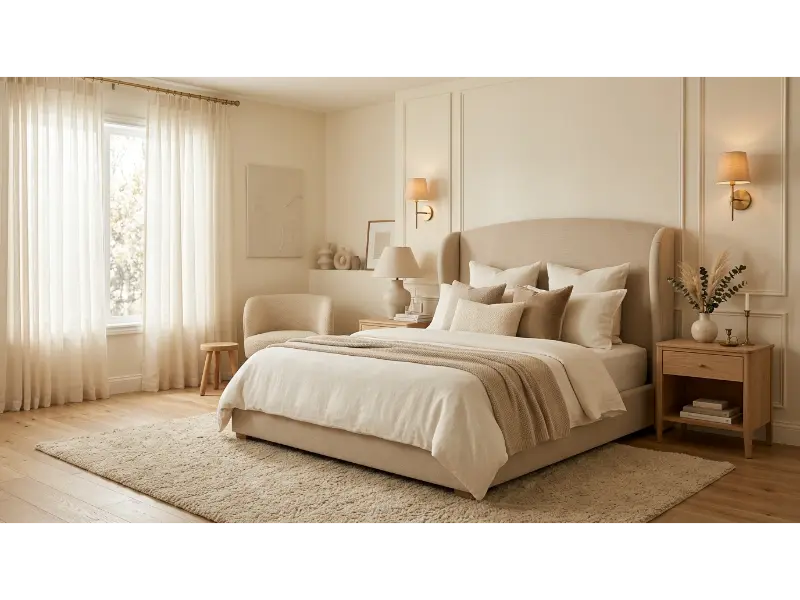
The first of these Luxurious Bedroom Design Ideas focuses on layering several soft neutrals instead of relying on one flat shade. Combine creamy walls with warm beige upholstery, ivory bedding, pale wood, and subtle brass details. This approach creates depth while keeping the room peaceful. Designers increasingly use neutral palettes with varied textures because they can feel sophisticated without becoming cold or visually empty.
Keep the color differences subtle rather than matching everything perfectly. A chunky throw, linen duvet, woven rug, smooth ceramic lamp, and lightly textured wall can each introduce another layer. The result feels collected rather than decorated all at once. Add one darker wood accent to give the pale palette enough contrast and visual weight.
Pro Tip: Use three to five shades within the same warm neutral family instead of choosing one beige for everything.
2. Floor to Ceiling Upholstered Headboard
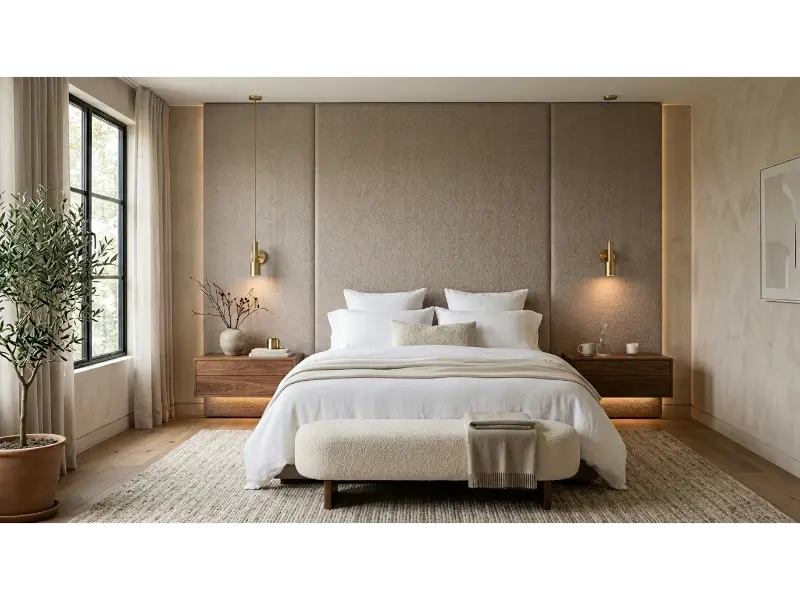
An oversized upholstered headboard immediately gives a bedroom a custom designed appearance. Choose boucle, linen, velvet, or another tactile fabric and extend the headboard across much of the wall. This creates a strong architectural backdrop while making the bed feel more substantial. Upholstered surfaces also soften the visual character of a room and can contribute to a quieter atmosphere.
For a refined look, keep the surrounding furniture simple. Floating nightstands, discreet sconces, and minimal artwork prevent the headboard from competing with too many focal points. A neutral fabric works especially well because you can change pillows, throws, and accessories later without redesigning the entire room.
Pro Tip: Choose a headboard color slightly darker than the wall so its shape remains visible without creating harsh contrast.
Read More: 23 Lavender Bedroom Ideas to Create a Calm, Cozy Retreat
3. Warm Walnut and Brass Retreat
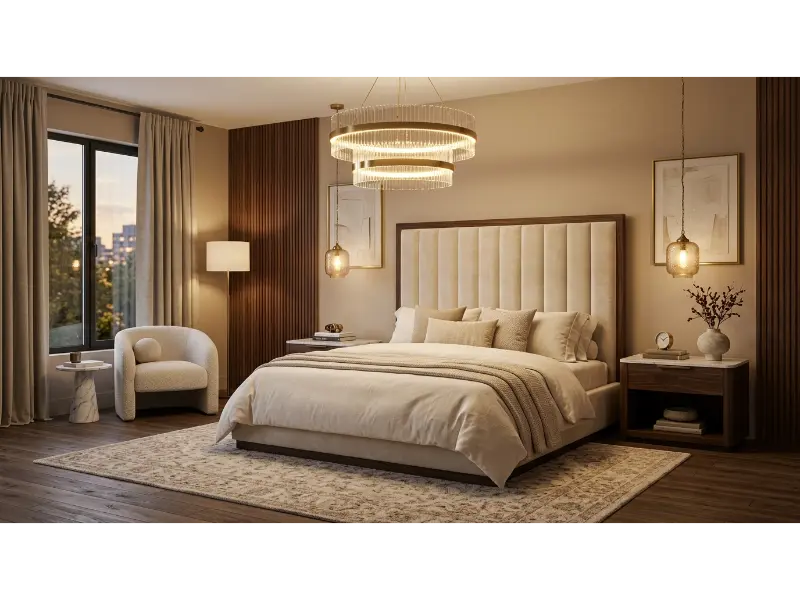
Walnut brings warmth and richness to a bedroom without making it feel overly formal. Use it for a feature wall, nightstands, wardrobe doors, or a low console. Pairing the deep wood tone with cream bedding and aged brass creates a balanced combination of natural warmth and understated glamour.
Avoid using walnut on every surface. Let the wood become an anchor while softer fabrics and lighter walls keep the room breathable. A marble tray, brass lamp, linen curtains, and wool rug can add contrasting textures without overwhelming the space. This mix reflects the current preference for natural materials and carefully layered finishes.
Pro Tip: Choose one dominant wood tone and repeat it in two or three places for a cohesive, custom look.
4. Sculptural Statement Chandelier
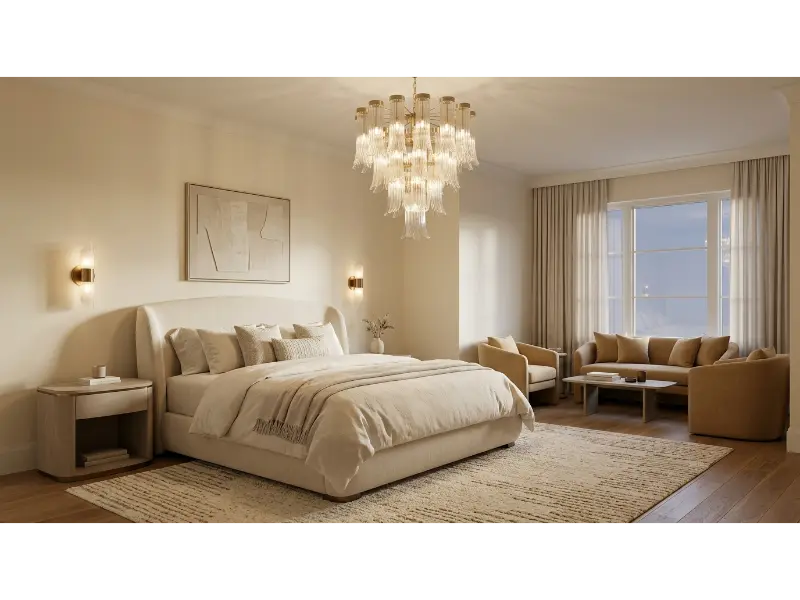
A statement chandelier can turn an otherwise simple bedroom into a memorable space. Instead of choosing a fixture simply because it looks expensive, consider its shape, scale, and relationship to the bed. Sculptural lighting has become increasingly important because designers now treat fixtures as decorative objects as well as sources of illumination.
Keep the rest of the room relatively restrained when the ceiling fixture has strong visual impact. Curved glass, alabaster, aged metal, or softly shaped fabric can create an elegant focal point. Add bedside lighting separately so the chandelier does not have to provide every type of illumination.
Pro Tip: Hang the fixture at a comfortable height and make sure its scale suits the room rather than choosing the largest chandelier available.
5. Moody Charcoal Bedroom
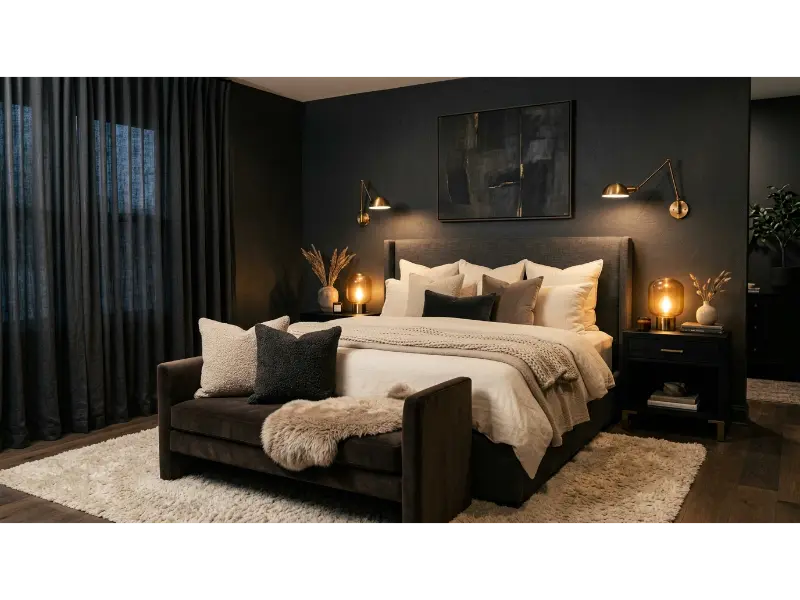
Dark colors can make a bedroom feel intimate and cocooning when you balance them with soft textures and warm lighting. Charcoal walls work particularly well with cream bedding, dark wood, aged brass, and warm brown accents. Rather than feeling gloomy, the room can create a sophisticated evening atmosphere.
The key is controlling contrast. Use lighter bedding and a few reflective details to prevent the darker palette from absorbing too much visual energy. Layer bedside lamps, sconces, and low accent lighting instead of depending on a bright ceiling fixture. Warm layered illumination can dramatically change how dark surfaces appear after sunset.
Pro Tip: Test dark paint on several walls first because natural light can make the same color look completely different throughout the day.
Read More: 23 Mid Century Modern Kitchen Ideas You’ll Copy
6. Soft Velvet Bedroom
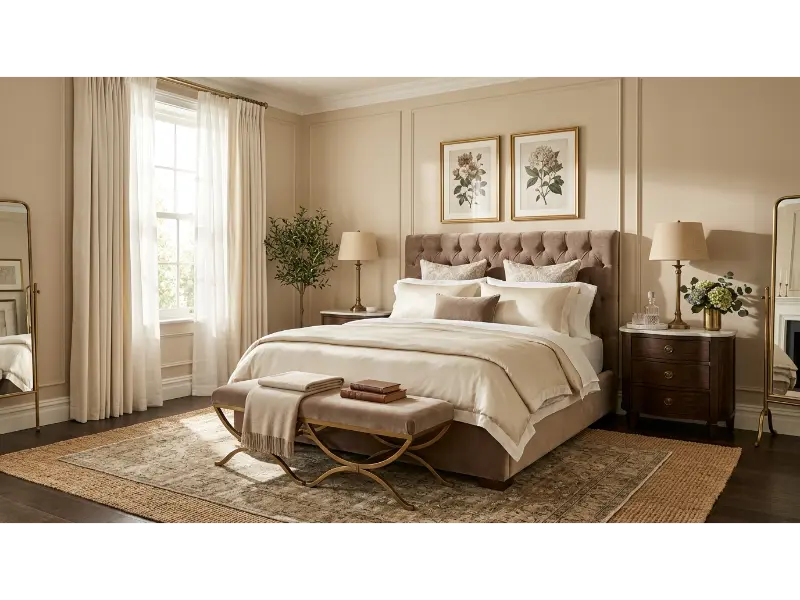
Velvet adds instant visual richness because its surface changes subtly as light moves across the fabric. Use it on the headboard, a small bench, or one accent chair rather than covering every piece of furniture. Soft taupe, olive, dusty rose, chocolate, and deep navy can all work beautifully when balanced with quieter materials.
The rest of the room should provide contrast. Combine velvet with linen bedding, natural wood, stone, or matte ceramics to keep the design from feeling too heavy. This mixture creates the layered comfort that designers increasingly favor over perfectly matched furniture sets.
Pro Tip: If velvet feels too formal, use it only on the headboard and introduce casual linen and woven textures elsewhere.
7. Boutique Hotel Inspired Bedroom
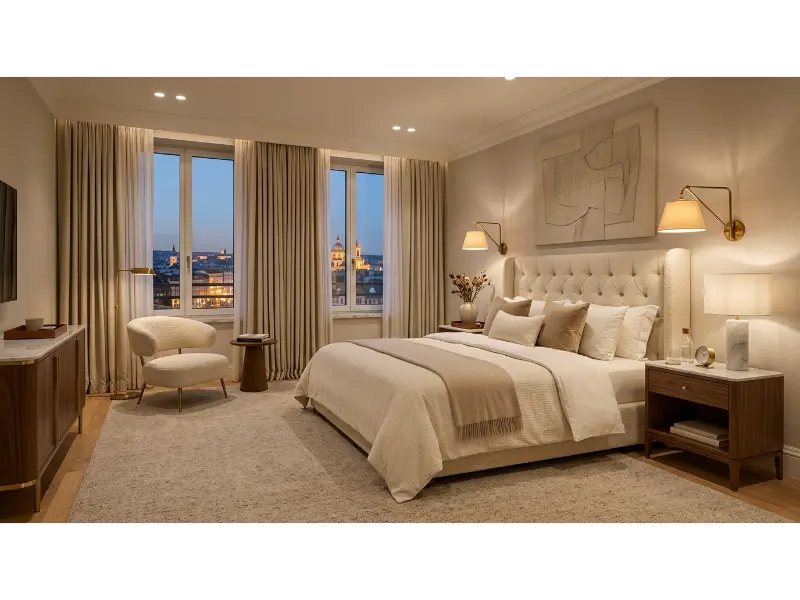
A boutique hotel look works because it combines comfort, symmetry, excellent lighting, and uncluttered surfaces. Start with a substantial bed, then build the room around it with balanced nightstands, matching or coordinated lamps, full length curtains, and a generous rug. The goal is not to copy a hotel but to recreate its sense of calm organization.
Keep practical items hidden whenever possible. Closed storage, concealed charging points, and clean bedside surfaces make the room feel more intentional. Current bedroom design trends also show growing interest in reducing visible technology and creating spaces that support relaxation and disconnection.
Pro Tip: Place the largest visual investment around the bed because it naturally becomes the room’s main focal point.
8. Marble and Cream Elegance
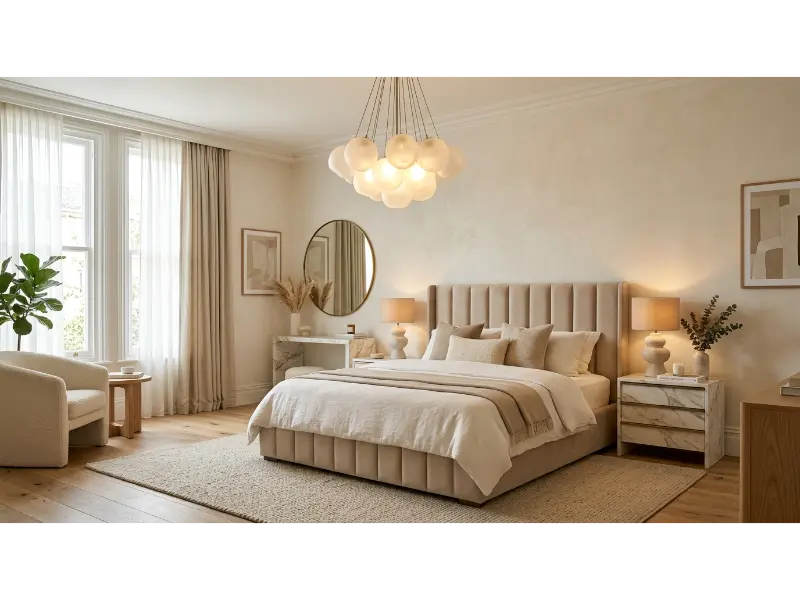
Marble can bring a polished quality to a bedroom when you use it selectively. A marble nightstand, small console, lamp base, or decorative tray can provide a beautiful mineral texture without making the room resemble a showroom. Cream, ivory, and warm beige help soften the stone’s naturally hard appearance.
Choose marble with subtle veining if you want a quieter design. Pair it with linen, wood, boucle, or wool so the room includes both smooth and tactile surfaces. The contrast between hard stone and soft textiles gives the space visual depth while maintaining an elegant atmosphere.
Pro Tip: Use one main marble finish rather than mixing several dramatically different stone patterns.
9. Curved Furniture and Organic Shapes
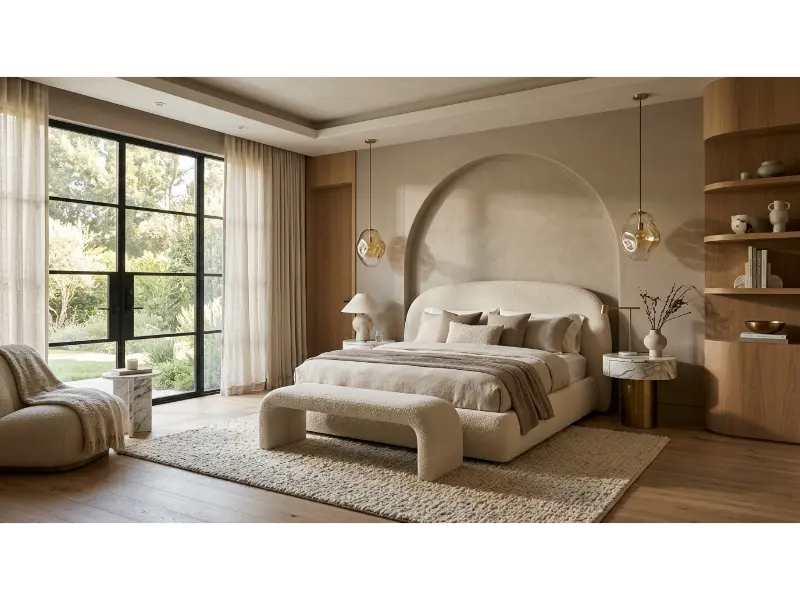
Curved furniture can make a bedroom feel softer and more inviting. A rounded headboard, curved bench, circular nightstand, or sculptural chair can break up a room filled with straight architectural lines. Organic shapes also connect beautifully with natural materials such as wood, linen, stone, and woven fibers.
Do not fill the entire space with rounded pieces. One or two strong curves usually create enough visual movement. Keep the remaining furniture simple so the eye can appreciate the shape without becoming overwhelmed by competing silhouettes. Current lighting trends are also embracing softer, fluid forms that create a more relaxed atmosphere.
Pro Tip: Pair one large curved piece with straight furniture to create contrast and keep the layout visually balanced.
10. Elegant Canopy Bed
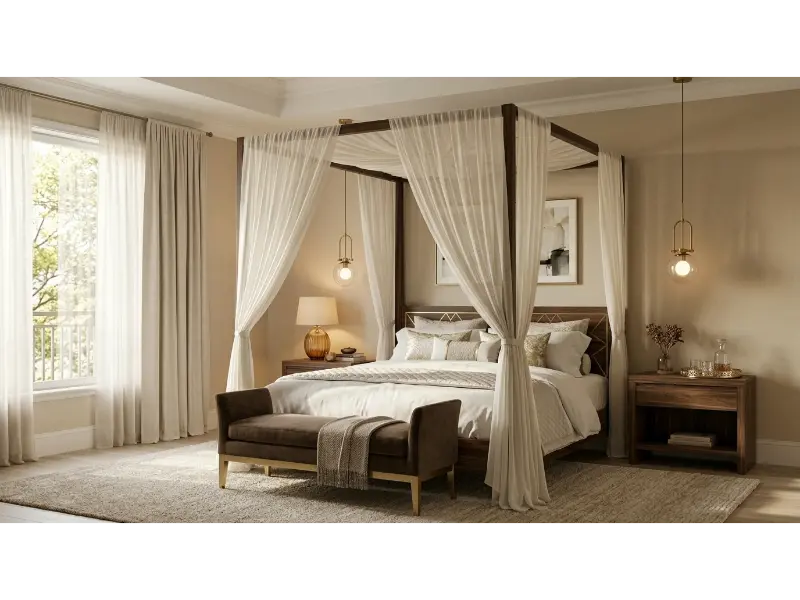
A canopy bed creates an immediate sense of architecture and privacy. Modern versions do not need heavy curtains or ornate posts. A slim walnut or black frame paired with flowing ivory fabric can feel sophisticated while maintaining an airy appearance. The canopy also gives the bed a strong visual identity.
Keep the surrounding decor quiet so the structure remains the star. Soft bedding, understated bedside tables, and warm lighting can make the design feel romantic rather than theatrical. For smaller rooms, choose a slim frame and lighter curtains so the bed does not visually dominate the entire space.
Pro Tip: Let sheer curtains fall naturally instead of arranging them too perfectly for a relaxed, expensive looking finish.
11. Floor to Ceiling Curtains
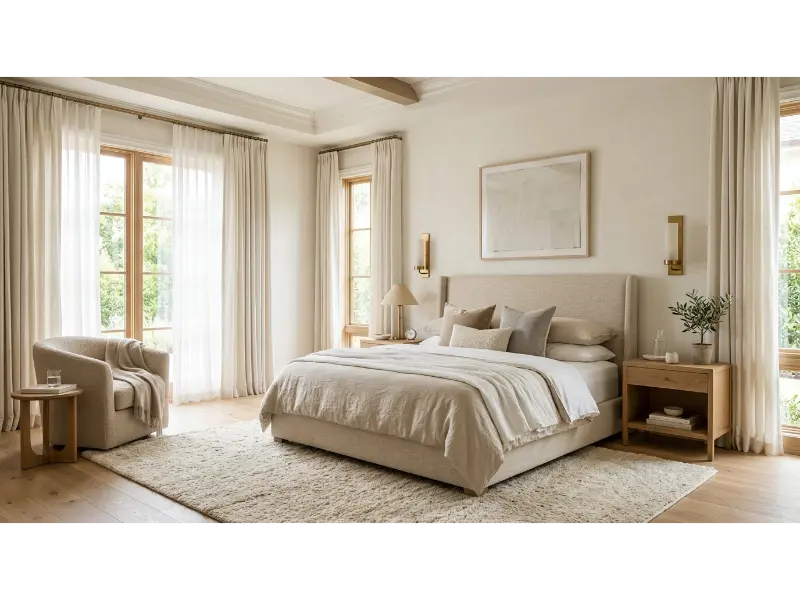
Window treatments can dramatically change the perceived proportions of a bedroom. Mounting curtains close to the ceiling and allowing them to fall all the way to the floor creates a longer vertical line. Designers often use this technique to make rooms appear taller and windows feel more substantial.
Linen or linen blend curtains work beautifully for a relaxed luxury effect. Choose a shade close to the wall color if you want the room to feel seamless. For more drama, use velvet or a deeper neutral. Layer sheer curtains with blackout panels when you need both daytime softness and nighttime privacy.
Pro Tip: Avoid curtains that stop just above the floor because that gap can make an otherwise refined room feel unfinished.
12. Fluted Wall Paneling
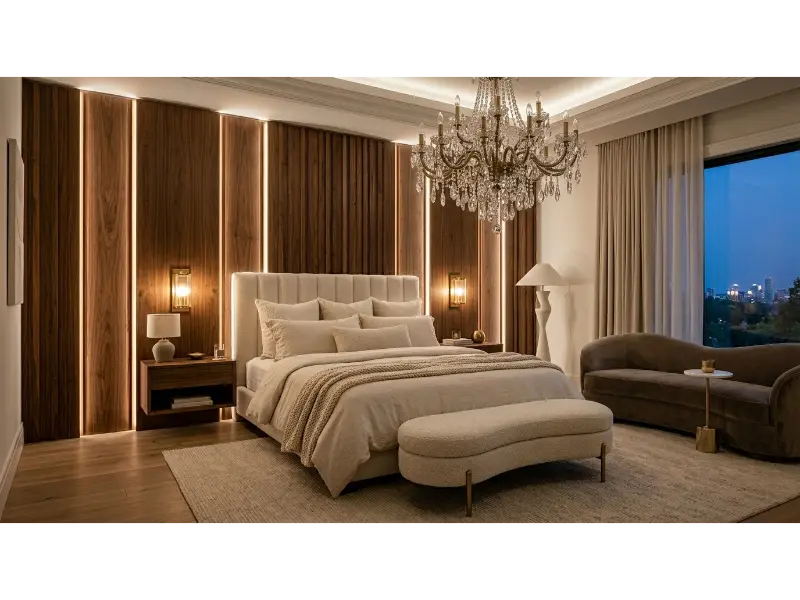
Fluted paneling adds architectural texture without requiring bold color. Use it behind the bed to create a strong focal wall, then keep the bedding and furniture relatively calm. Vertical lines can also draw the eye upward, which makes the ceiling feel visually taller and gives the bed a stronger sense of scale.
Wood paneling works especially well with warm neutral bedding and soft lighting. If natural wood feels too dark, choose a pale oak finish or paint the panels in a warm neutral. The goal is to add dimension rather than cover every available surface with texture.
Pro Tip: Continue the paneling behind bedside tables when possible so the feature wall feels intentionally integrated into the furniture layout.
13. Quiet Luxury With Natural Materials
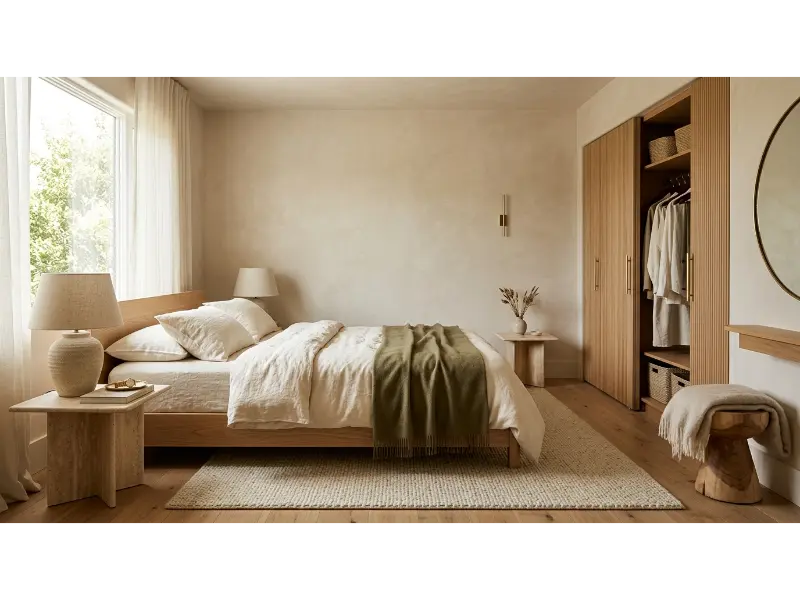
Natural materials can make a bedroom feel luxurious without appearing flashy. Think oak, walnut, linen, wool, stone, ceramic, and woven fibers. These materials provide subtle differences in texture that make a restrained color palette feel rich and layered. They also suit the growing preference for warmer, more authentic bedroom interiors.
Let each material perform a different role. Wood can provide structure, linen can soften the bed, wool can ground the floor, and stone can add a cool counterpoint. Handmade ceramics or imperfect accessories can make the space feel personal rather than mass produced.
Pro Tip: Mix matte and slightly polished finishes so natural materials do not make the room look visually flat.
14. Romantic Blush and Taupe Bedroom
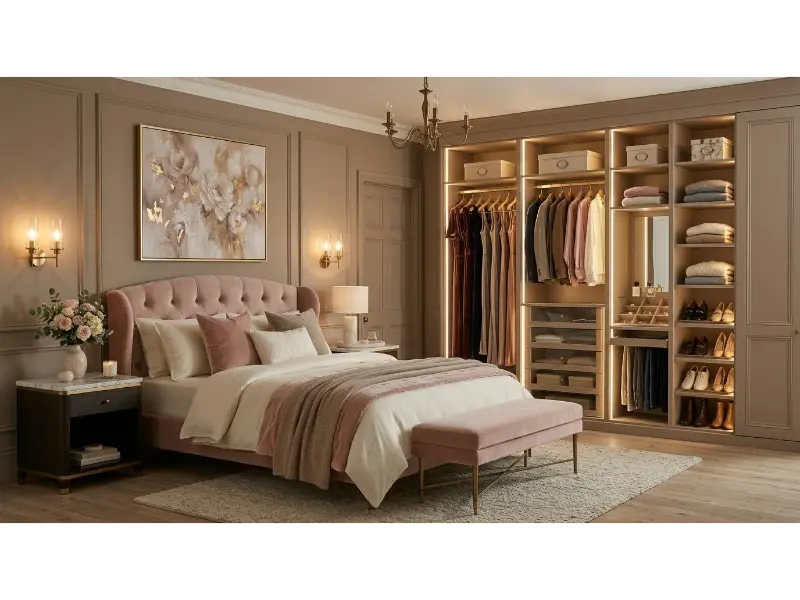
Blush does not have to make a bedroom look overly sweet. A muted dusty rose combined with taupe, cream, walnut, and aged brass creates a sophisticated romantic palette. Keep the pink understated so it works as an accent rather than dominating the entire room.
Use blush through upholstery, artwork, a throw, or decorative pillows rather than painting every wall. Soft curved furniture can complement this palette beautifully, while darker wood or brass gives it enough grounding. The final effect feels warm, elegant, and personal without becoming overly themed.
Pro Tip: Choose dusty or muted pink instead of bright bubblegum shades for a more timeless bedroom.
15. Dramatic Black Accent Wall
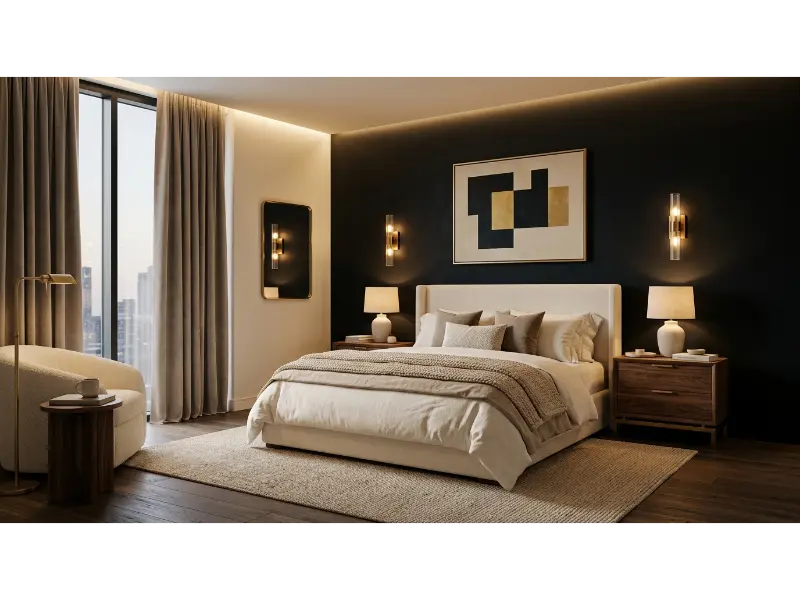
A black accent wall can give a bedroom instant drama while allowing the remaining walls to stay light. Matte black works particularly well because it absorbs light rather than creating a glossy effect. Pair it with cream bedding, warm wood, brass, and soft textiles for contrast.
This idea works best when you treat black as an architectural anchor. Avoid adding too many other dark elements unless the room receives plenty of natural light. A few repeated black details, such as sconces or picture frames, can connect the accent wall to the rest of the space.
Pro Tip: Use warm lighting against black walls because cool white bulbs can make the room feel harsh.
16. Spa Inspired Luxury Bedroom
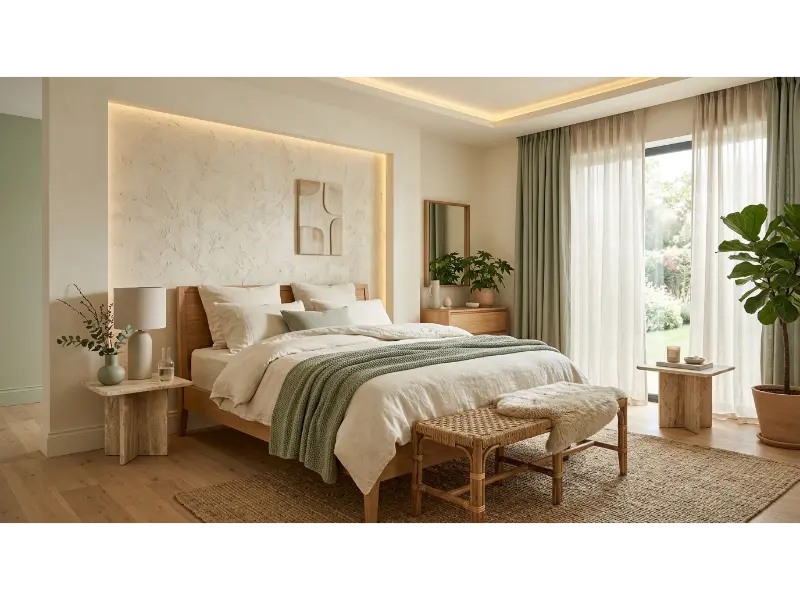
A spa inspired bedroom focuses on calm rather than decoration. Warm whites, pale sage, natural wood, stone, linen, and soft greenery can create a peaceful environment without making the room feel sterile. Keep surfaces intentionally uncluttered and choose accessories that support the overall sense of rest.
Lighting plays an important role here. Use several gentle sources instead of one harsh overhead fixture. Small lamps, wall sconces, concealed lighting, and dimmable ambient fixtures allow the room to transition from daytime functionality to a softer evening mood.
Pro Tip: Keep technology visually hidden and create one small surface for books, water, or a calming evening ritual.
17. Deep Navy and Cream Bedroom
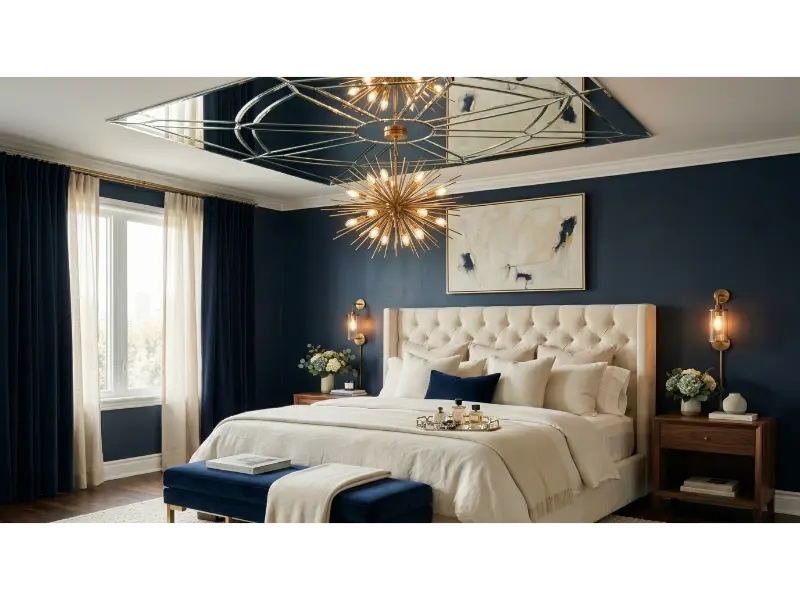
Deep navy offers the drama of a dark room while maintaining a softer character than pure black. Combine it with cream, warm white, walnut, and brass to create a balanced bedroom that feels both elegant and comfortable. Navy velvet can reinforce the palette without requiring additional wall color.
Keep the bedding lighter than the walls so the bed remains visually defined. A warm rug can connect the darker wall to the lighter furniture. If the room feels too dark at night, add multiple warm light sources at different heights rather than increasing the brightness of one fixture.
Pro Tip: Repeat navy in only two or three small details so the wall remains the dominant color statement.
18. Elegant Bedroom With a Reading Nook
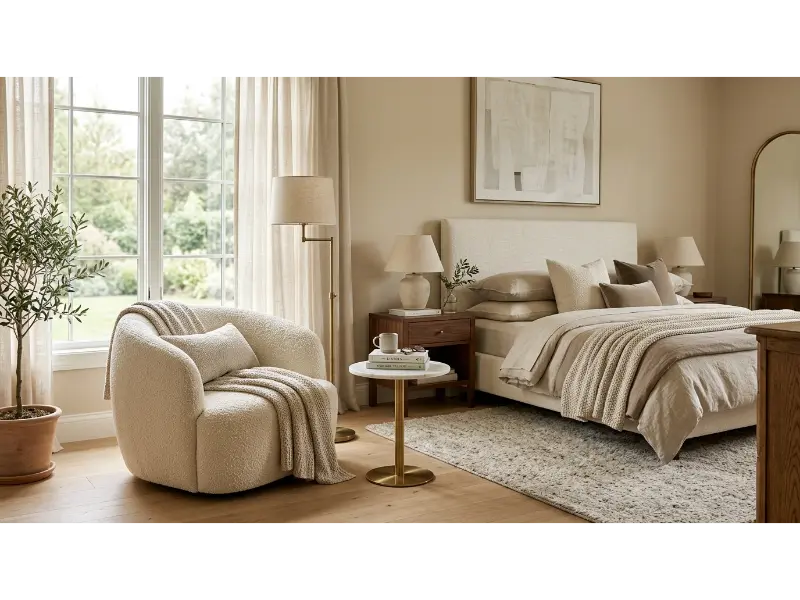
A reading nook can make a large bedroom feel more complete while giving the space another purpose. Choose one comfortable chair, a small side table, and a beautiful floor lamp. The area does not need many accessories because the simplicity helps it feel intentional.
Place the nook near natural light whenever possible, but add a dedicated lamp for evening reading. Keep its colors connected to the main bedroom palette so it feels like part of the same design. A small rug can also visually define the corner without creating a separate room within the room.
Pro Tip: Choose a chair with enough depth to relax in, not just a decorative accent chair that looks good in photographs.
19. Hidden Technology Bedroom
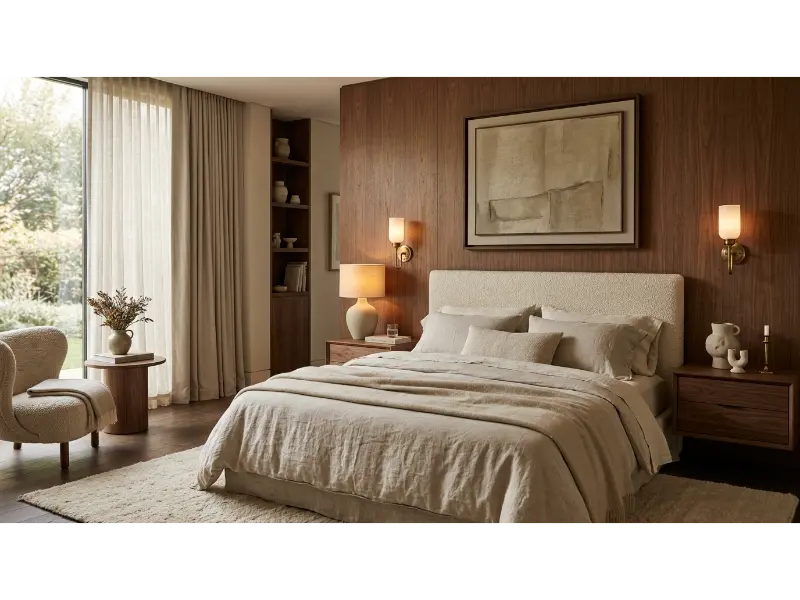
Modern luxury increasingly focuses on what you do not see. A television can hide behind artwork or cabinetry, charging cables can disappear into furniture, and electronics can stay inside closed storage. This creates a calmer visual environment and supports the growing interest in bedrooms designed for rest and disconnection.
Use closed nightstands and built in storage to keep everyday clutter out of sight. Instead of decorating every surface, choose a few meaningful objects such as a ceramic lamp, small artwork, or favorite book. The room will feel more spacious because the eye has fewer objects to process.
Pro Tip: Plan electrical outlets and charging locations before installing furniture so technology stays convenient but visually discreet.
20. Textured Plaster Feature Wall
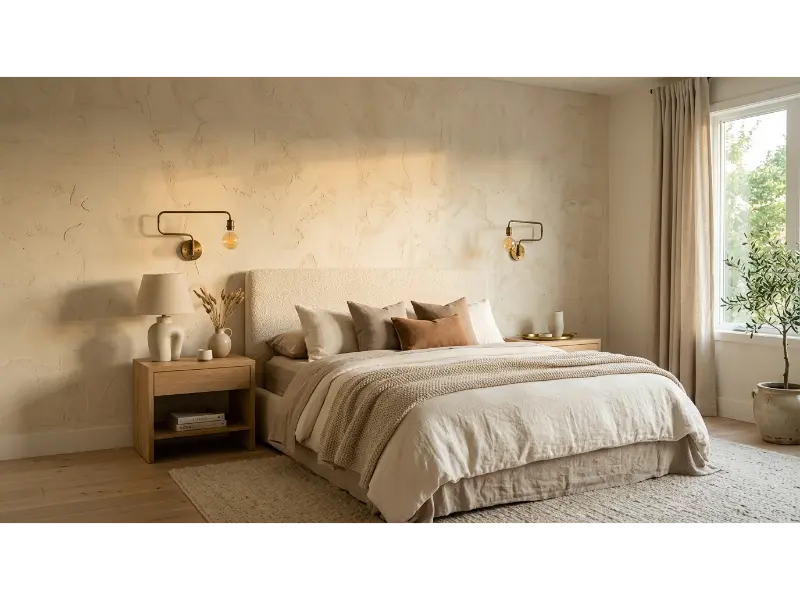
Textured plaster creates depth without relying on busy patterns. A softly uneven finish behind the bed can catch daylight beautifully and become even more atmospheric when illuminated in the evening. Warm ivory or greige plaster works particularly well with natural wood, linen, wool, and aged metals.
Keep the texture subtle enough that it does not compete with the bed. The beauty comes from shadows and small imperfections rather than an obvious decorative pattern. This approach feels especially appropriate for a bedroom because it adds character while maintaining a calm visual rhythm.
Pro Tip: Test the finish under both natural and artificial lighting because texture can appear dramatically different throughout the day.
21. Personalized Collected Luxury Bedroom
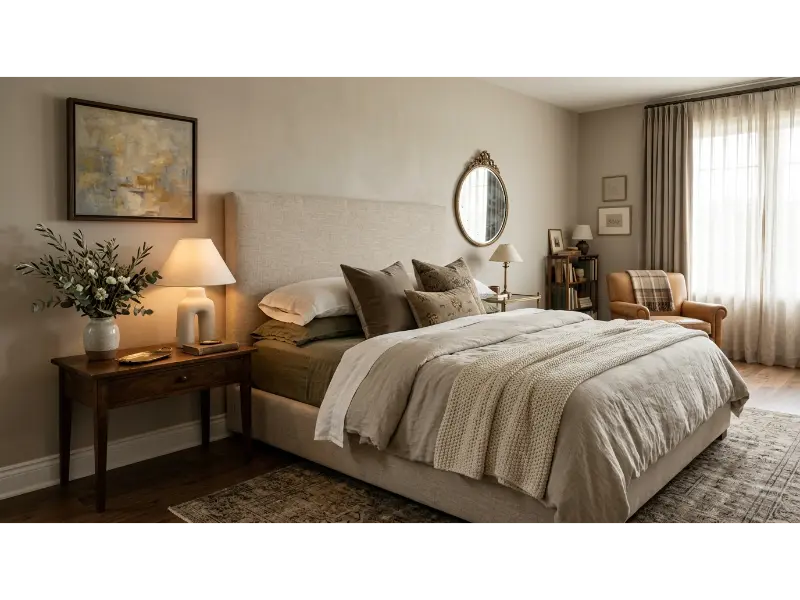
The most memorable bedroom is not always the one with the most expensive furniture. It is the one that reflects the person who lives there. Combine a beautiful modern bed with an older wooden table, meaningful artwork, handmade ceramics, or a vintage mirror. Mixing eras creates character and prevents the room from looking like a furniture showroom.
Use repetition to keep the collection cohesive. Similar warm metals, related wood tones, or a limited color palette can connect pieces that come from different styles. Designers increasingly favor spaces that feel layered and authentic instead of overly staged or perfectly matched.
Pro Tip: Before buying more decor, remove a few unnecessary pieces and give your favorite objects more visual space to stand out.
How to Make a Bedroom Look Luxurious
Luxury begins with proportion, texture, lighting, and restraint rather than simply buying expensive furniture. Start by making the bed the visual anchor, then build supporting elements around it. A substantial headboard, quality bedding, a properly sized rug, elegant window treatments, and coordinated bedside lighting can make a noticeable difference. Interior designers also emphasize layered lighting because a bedroom needs different levels of illumination for getting dressed, reading, relaxing, and winding down.
Next, create contrast through materials. Pair soft linen with smooth stone, warm wood with metal, boucle with glass, or wool with polished surfaces. Keep the palette controlled and introduce personality through artwork and carefully selected accessories. This gives the room richness without clutter. Current design thinking also favors warmer, more authentic bedrooms that feel personal and comfortable rather than overly formal.
Luxury Bedroom Color Combinations That Work
Warm cream and beige create an effortless foundation for an elegant bedroom. Add walnut and aged brass when you want more richness. Charcoal and ivory create a dramatic cocooning atmosphere, while deep navy and cream offer a softer alternative to black. Sage and warm white create a calm, natural feeling that works especially well with oak and stone.
For a romantic bedroom, dusty blush with taupe and brass feels refined without becoming overly feminine. If you prefer a modern statement, charcoal with warm wood and cream creates strong contrast. The most successful palettes usually combine a dominant neutral with one darker anchor and one or two carefully controlled accent tones.
Bedroom Lighting That Creates a Luxury Feel
Good bedroom lighting should have layers rather than relying on a single ceiling fixture. Ambient lighting provides general illumination, bedside sconces or pendants support reading, and accent lighting highlights architectural features or decorative elements. Dimmable warm lighting allows the same room to feel bright during the day and intimate at night.
Consider small decorative lamps in overlooked areas as well. A little lamp on a dresser, console, or reading nook can add a soft pool of light and personality. Current design trends are placing more attention on sculptural fixtures and smaller ambient lamps because they make rooms feel warmer and more individual.
Frequently Asked Questions
What makes a bedroom look luxurious?
A bedroom looks luxurious when its furniture, lighting, materials, colors, and proportions work together. A strong focal bed, layered textiles, quality looking window treatments, warm lighting, natural materials, and uncluttered surfaces can create an elevated appearance without filling the room with expensive decorations.
What colors make a bedroom look expensive?
Warm cream, ivory, beige, taupe, charcoal, deep navy, muted sage, dusty blush, and rich brown can all create an expensive looking bedroom. The key is not the individual color but how you combine it with texture, lighting, contrast, and carefully selected materials.
How can I make a small bedroom feel luxurious?
Choose furniture that fits the room, use floor to ceiling curtains, keep surfaces uncluttered, and prioritize one strong focal point such as an upholstered headboard. Mirrors, warm layered lighting, light neutral colors, and furniture with visible floor space can also make a compact bedroom feel more open.
What type of bed looks most luxurious?
Large upholstered beds with substantial headboards often create the strongest luxury effect. Boucle, linen, velvet, and high quality performance fabrics can all work. A canopy or four poster bed can create additional drama when the room has enough ceiling height and floor space.
Is dark paint good for a luxury bedroom?
Yes. Charcoal, deep navy, chocolate brown, and other rich colors can create a sophisticated cocooning atmosphere. Balance dark walls with lighter bedding, warm wood, soft textiles, and layered lighting so the room feels intimate rather than visually heavy.
How do I create a luxury hotel bedroom at home?
Start with a comfortable focal bed, symmetrical bedside styling, quality looking bedding, full length curtains, a properly sized rug, and multiple lighting layers. Hide cables and everyday clutter, then add a few elegant materials such as wood, stone, brass, linen, or velvet.
What lighting is best for a luxury bedroom?
A combination of warm ambient, task, and accent lighting works best. Use bedside sconces or lamps for reading, a statement pendant or chandelier for visual impact, and low accent lighting for architectural features. Dimmers make the lighting more flexible throughout the day.
How can I make my bedroom feel expensive without spending a lot?
Focus on the details people notice first. Improve bedding, raise curtain rods closer to the ceiling, declutter surfaces, replace mismatched lighting, add one large piece of artwork, and introduce natural textures. A restrained palette and thoughtful arrangement often create more impact than buying many inexpensive decorations.
Conclusion
The best luxury bedroom is not necessarily the most dramatic or expensive. It is a room where every choice feels intentional. Start with the bed, establish a controlled color palette, introduce tactile materials, and build several layers of warm lighting. Then add personality through artwork, vintage pieces, natural finishes, or one statement feature that genuinely reflects your taste.
Whether you prefer creamy neutrals, dramatic charcoal, deep navy, warm walnut, romantic blush, or natural spa inspired styling, the goal remains the same: create a bedroom that feels beautiful when you first walk in and even better when you settle down at night. The strongest designs balance sophistication with comfort, giving you a personal escape that feels polished without losing its warmth.