

23 Eco Friendly Bedroom Ideas for a Healthier, Cozy Space
Creating a bedroom that feels beautiful, peaceful, and responsible does not require a complete renovation. The best eco friendly bedroom ideas focus on thoughtful materials, lower energy use, better air quality, natural textures, and furniture choices that can last for years. A healthier bedroom can also feel warmer and more inviting when you combine breathable fabrics, natural finishes, soft lighting, and clutter free design. Indoor air quality matters because furnishings, paints, cleaners, and other household products can contribute to indoor pollutants.
This guide brings together practical sustainable bedroom decor, clever styling ideas, and simple upgrades that work for different budgets. Whether you are decorating a small bedroom, refreshing a rental, or planning a full makeover, these ideas can help you create a space that looks intentional without relying on unnecessary consumption. You will also find realistic image prompts for every idea so you can easily visualize the finished look.
Eco Friendly Bedroom Ideas to Create a Healthier, Cozier Retreat
1. Natural Linen Bedding for a Breathable Retreat
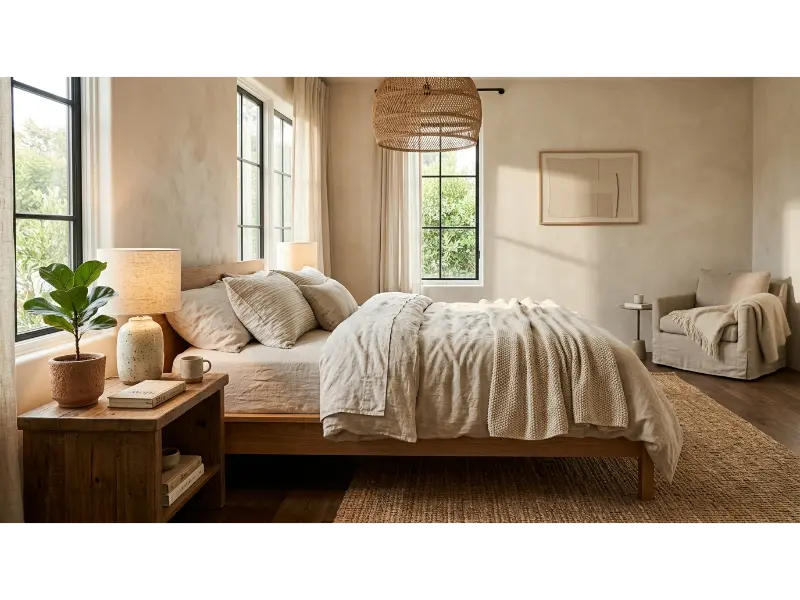
Eco Friendly Bedroom Ideas become especially inviting when you start with breathable natural bedding. Choose linen sheets in ivory, oatmeal, sand, or muted sage for a relaxed appearance that feels timeless rather than overly decorated. Layer a lightweight quilt and textured throw at the foot of the bed to create warmth without making the room visually heavy. Natural fibers can also bring softness and texture while helping the bedroom feel connected to nature.
Linen works beautifully with simple wood furniture, woven baskets, ceramic accessories, and neutral walls. Instead of buying several decorative bedding sets, invest in a small collection of durable pieces that mix easily together. This approach reduces unnecessary consumption while giving you multiple styling possibilities throughout the year. Look for responsible manufacturing information and care instructions before purchasing, because sustainability depends on the entire product lifecycle rather than the fabric name alone.
Pro Tip: Choose timeless bedding colors so individual pieces remain useful when you change your bedroom decor.
2. Reclaimed Wood Bed for Character

A reclaimed wood bed can become the visual anchor of a warm and character filled bedroom. Instead of introducing newly manufactured furniture, reclaimed timber gives old material another purpose. Look for pieces with visible grain, subtle imperfections, and a finish that allows the natural character of the wood to remain visible. Pair the frame with simple bedding so the material becomes the main design feature without making the room feel overly rustic.
When shopping for reclaimed furniture, ask about the wood source, finish, construction, and maintenance requirements. A well made frame can remain useful for many years, which makes durability an important part of sustainable interior design. FSC certification can also provide useful information when purchasing newly sourced wood products because FSC certification includes independent standards and chain of custody systems for responsible forest products.
Pro Tip: Choose a bed with a classic silhouette rather than a trendy shape so you can keep it through several decor changes.
Read More: 23 Window Sill Decor Ideas to Transform Your Space
3. Organic Cotton Bedding in Soft Neutrals
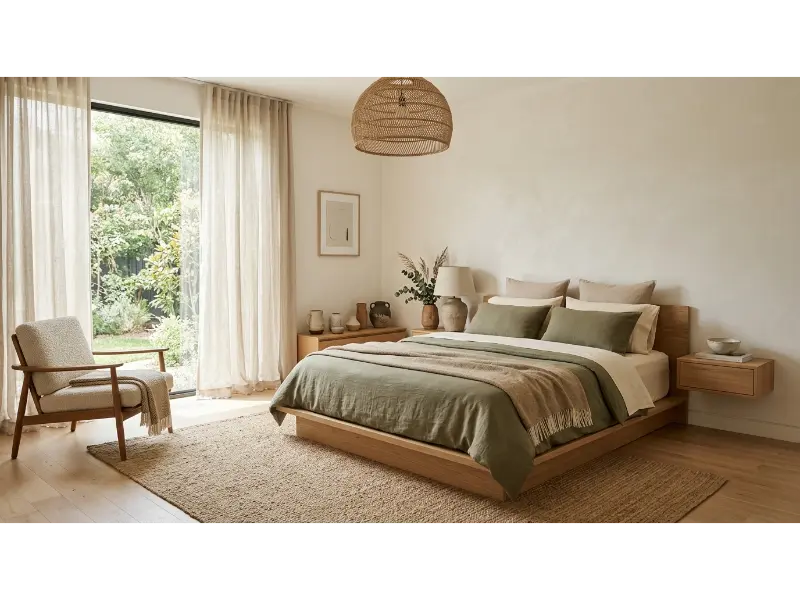
Organic cotton bedding can create a clean, comfortable foundation while keeping the bedroom visually calm. Choose simple shades such as cream, stone, taupe, or pale green rather than busy patterns that may quickly feel dated. A layered bed with breathable sheets, a lightweight coverlet, and one textured blanket creates a cozy appearance without requiring a large number of decorative pillows or accessories.
When comparing bedding, look beyond marketing labels and check how the product was made, how it should be washed, and whether the company provides meaningful sourcing information. The goal is not simply to purchase something labeled green. It is to choose useful pieces that you will enjoy, maintain properly, and keep for a long time. A smaller collection of quality bedding can support a more intentional low waste bedroom.
Pro Tip: Buy neutral bedding first, then introduce color through one washable throw or a small accent cushion.
4. Low VOC Paint for Fresher Walls
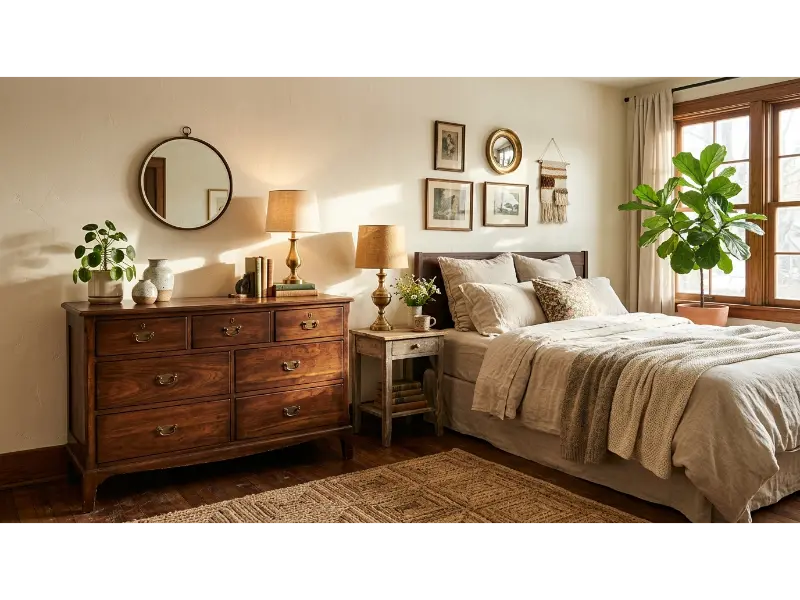
Wall color dramatically affects the feeling of a bedroom, but the paint itself deserves attention. Choosing a lower VOC or low odor paint can help you make a more thoughtful material choice, especially during a renovation. EPA notes that household products and building materials can contribute to indoor VOC levels, making product selection and ventilation important considerations.
Warm white, muted sage, clay beige, soft mushroom, and pale blue can create a relaxing backdrop without overwhelming the room. Paint only the walls that need refreshing instead of automatically repainting everything. During painting, follow the manufacturer’s instructions and provide plenty of ventilation. Once the walls are finished, let the room air out properly before sleeping there. This combines attractive healthy bedroom design with a practical approach to indoor air quality.
Pro Tip: Test paint samples at different times of day because natural light can dramatically change how a color appears.
5. Secondhand Furniture With a Curated Look
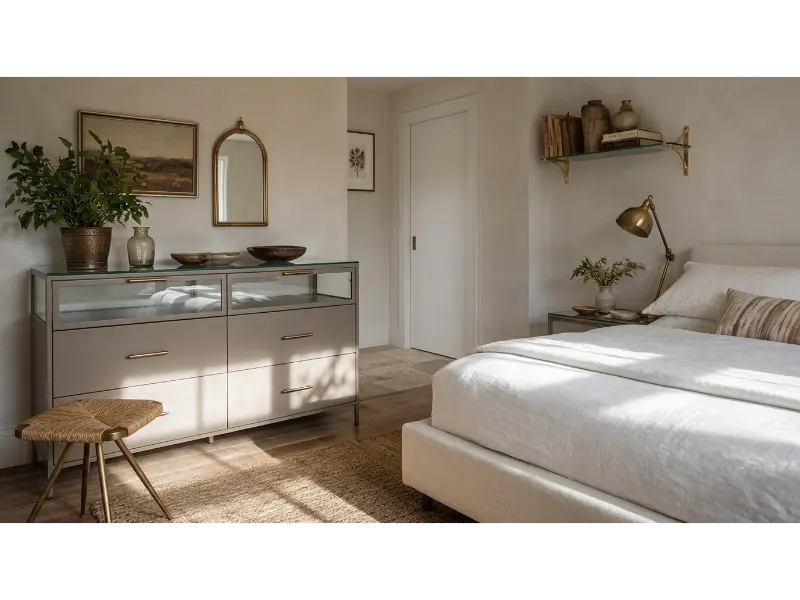
Secondhand furniture can make a bedroom feel more personal while reducing the demand for new pieces. Search local resale shops, vintage markets, estate sales, and online marketplaces for solid wood dressers, nightstands, benches, and mirrors. A simple older piece can become beautiful with cleaning, light refinishing, or new hardware. Mixing vintage furniture with modern bedding creates a layered room that feels collected instead of copied from a showroom.
Before bringing secondhand furniture home, inspect joints, drawers, surfaces, odors, and signs of moisture or pests. Choose pieces that can realistically serve your needs rather than buying something simply because it looks interesting. This mindset supports conscious consumption and keeps useful furniture in circulation. It can also help you create a bedroom with more character than a matching furniture set while potentially saving money.
Pro Tip: Prioritize solid construction over perfect appearance because small cosmetic flaws can often become part of the charm.
Read More: 21 Luxurious Bathroom Design Ideas for a Luxe Home
6. Natural Fiber Rugs for Warmth
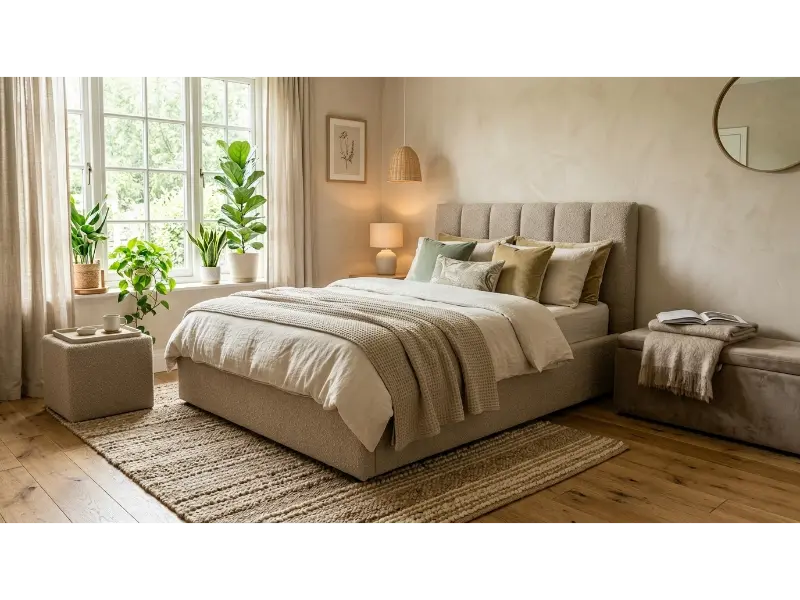
A natural fiber rug can instantly make a bedroom feel warmer and more finished. Jute, wool, sisal, and other natural materials can introduce texture without depending on a highly glossy or artificial appearance. Choose a rug large enough to extend around the bed so your feet land on a comfortable surface in the morning. Neutral colors also make the room easier to update later.
Consider the rug’s construction, backing, cleaning requirements, and expected lifespan before buying. A durable rug that can remain in your home for years is generally more useful than an inexpensive piece that needs frequent replacement. For bedrooms, texture matters as much as appearance because a soft, grounded material can contribute to a more comfortable atmosphere. Natural fibers also pair naturally with wood, linen, cotton, and woven accessories.
Pro Tip: Use a rug pad made from a suitable material to prevent slipping and help protect both the rug and flooring.
7. Energy Efficient LED Bedroom Lighting

Lighting can completely change the atmosphere of your bedroom, and efficient lighting can help reduce unnecessary energy use. Replace older bulbs with quality LED options and choose warm white light for a softer evening environment. Use bedside lamps for focused illumination rather than turning on bright overhead lights whenever you need to read, dress, or move around the room.
Layered lighting also makes the bedroom more comfortable because you can control brightness according to the activity. Add a dimmable bedside lamp, a soft ceiling fixture, and gentle accent lighting where needed. ENERGY STAR is a useful starting point when comparing energy efficient lighting products. A thoughtfully lit bedroom can feel luxurious without requiring excessive fixtures, electricity, or decorative clutter.
Pro Tip: Choose warm light for evening lamps and place switches where you can reach them easily from bed.
8. Rattan and Woven Furniture Accents
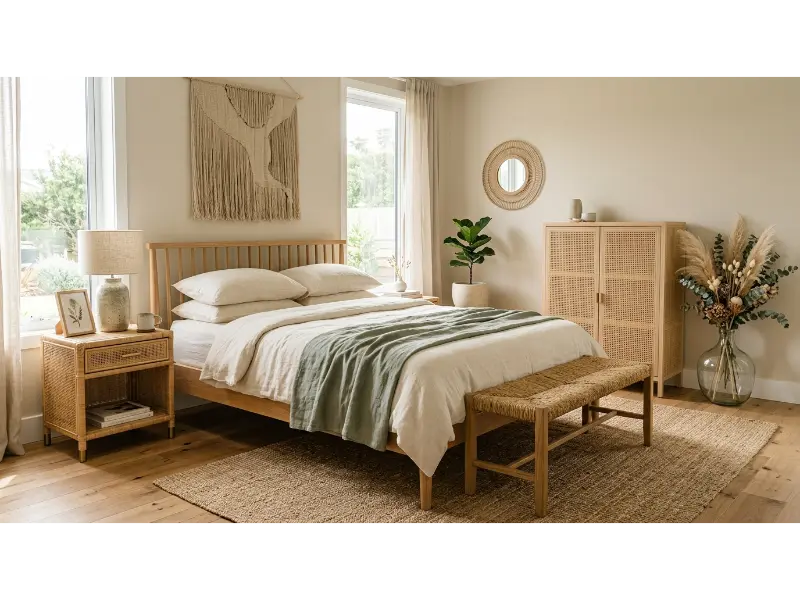
Rattan, cane, and woven materials can add natural texture without making a bedroom feel overly formal. A rattan nightstand, woven bench, cane cabinet, or small basket can soften the straight lines of modern furniture. Keep the rest of the room simple so the texture remains noticeable without creating visual clutter. These materials work especially well with linen, cotton, wood, and neutral wall colors.
The key is moderation. You do not need a completely woven bedroom to create a natural atmosphere. One or two carefully chosen pieces can provide enough texture to transform the space. Look for sturdy construction and repairable designs rather than disposable decorative accessories. Combining materials thoughtfully creates a biophilic bedroom feeling by bringing natural forms, textures, and colors into the interior.
Pro Tip: Mix woven textures with smooth wood and soft fabric so the room feels layered rather than visually busy.
9. Houseplants for a Natural Bedroom Atmosphere
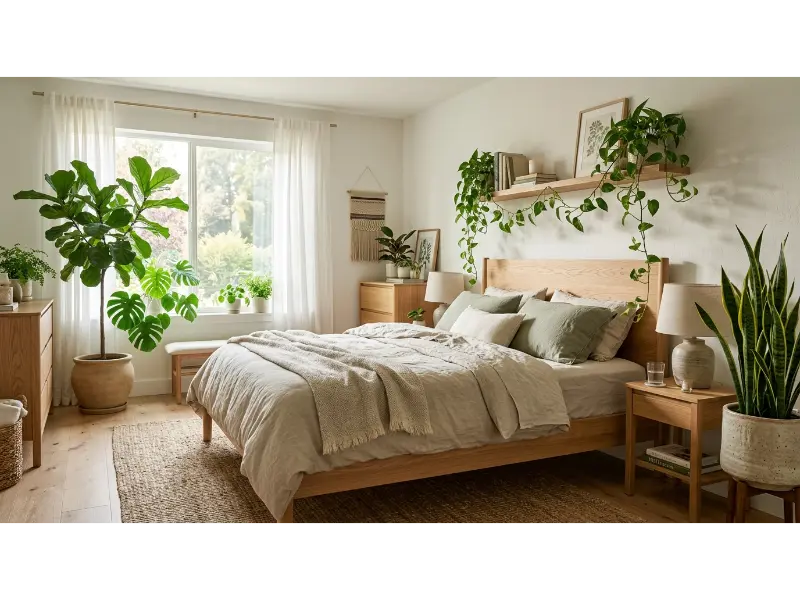
Plants can make a bedroom feel more alive by introducing natural color, organic shapes, and visual softness. Instead of filling every surface with greenery, choose a few plants that suit your light conditions and your ability to care for them. A tall plant beside the bed, a small plant on a dresser, or a trailing variety on a shelf can create a balanced composition.
Plants should complement rather than replace good ventilation and moisture management. Excess moisture can contribute to problems such as mold, while proper ventilation and humidity control help maintain a healthier sleeping environment. Choose attractive pots made from durable materials and place plants where watering will not damage wood or textiles.
Pro Tip: Select plants based on your actual window light instead of buying varieties that need conditions your room cannot provide.
10. Upcycled Nightstands With Personality
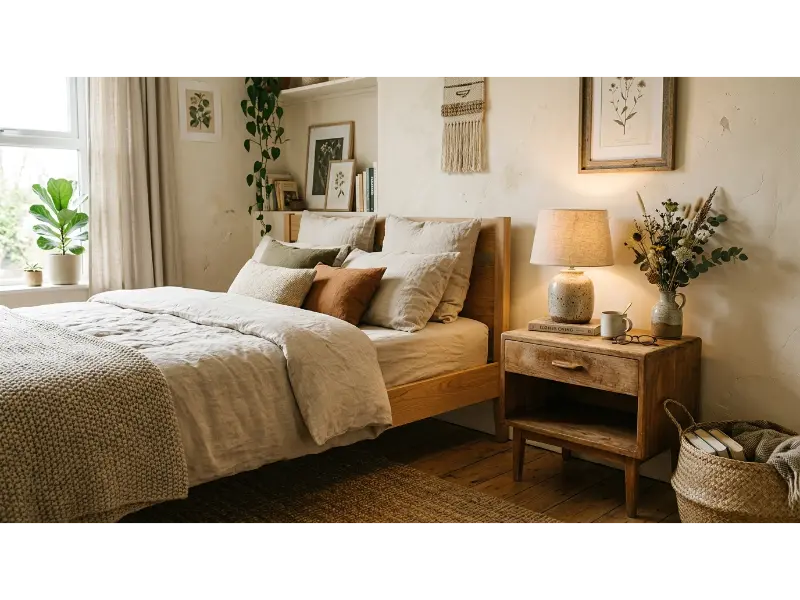
An old stool, small cabinet, wooden crate, or vintage table can become a practical nightstand with very little effort. Upcycling gives existing furniture another purpose and allows you to create something that feels unique. Clean the piece thoroughly, repair loose joints, and use a suitable finish if necessary. You can keep the original character visible instead of trying to make everything look brand new.
The most successful upcycled furniture still serves a clear function. Make sure your nightstand has enough surface area for your lamp, book, water, or other essentials. If storage matters, select a cabinet with drawers or a shelf. This approach supports upcycled home decor while reducing the temptation to buy new furniture simply to achieve a particular aesthetic.
Pro Tip: Preserve interesting scratches, grain, and small imperfections when they do not affect the furniture’s safety or function.
11. Natural Curtains for Soft Daylight
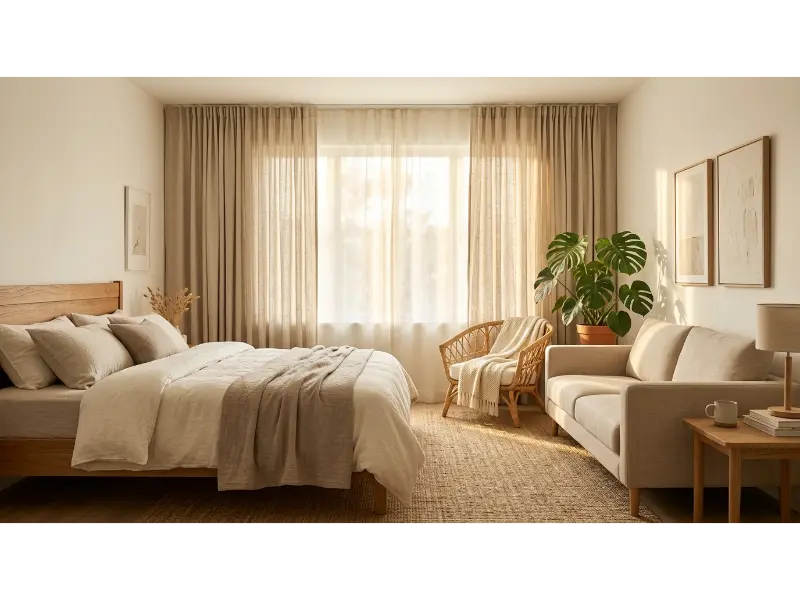
Curtains affect privacy, temperature, daylight, and the overall softness of a bedroom. Linen or cotton curtains can create an airy appearance while allowing gentle natural light to enter. Hang them high and wide around the window to make the room feel taller and more spacious. Choose warm white, oatmeal, or soft beige for a timeless look that works with natural furniture.
Curtains can also support passive comfort by controlling sunlight during the day. In warmer climates, closing curtains during intense afternoon sun can reduce heat buildup, while opening them when the weather is comfortable can bring in daylight. This simple strategy can work alongside efficient cooling rather than relying entirely on mechanical systems. Natural daylight also gives wood, plants, and textiles a more beautiful appearance.
Pro Tip: Use a double curtain setup if you need both soft daylight and stronger nighttime privacy.
12. A Refillable and Minimal Bedside Station
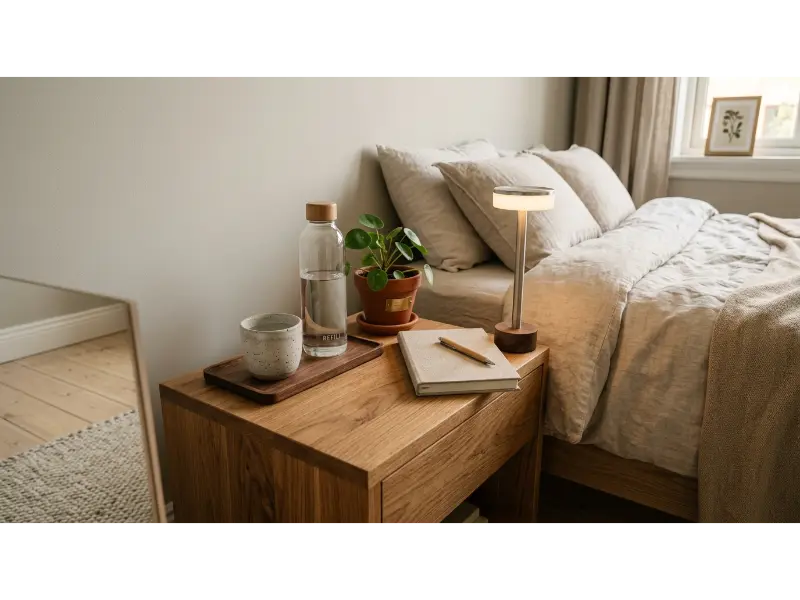
A cluttered bedside table can make even a beautiful bedroom feel chaotic. Create a simple station using a durable tray, refillable glass bottle, one useful lamp, and perhaps a small notebook. Remove disposable water bottles, excessive packaging, and decorative objects that do not serve a purpose. The result can feel cleaner, calmer, and easier to maintain.
This idea supports a broader zero waste bedroom mindset without requiring extreme changes. Reusable objects work best when they are convenient enough to become part of your daily routine. Keep only what you genuinely use beside the bed and store everything else in drawers or a nearby cabinet. A simplified surface also makes regular dusting easier, which contributes to a cleaner bedroom environment.
Pro Tip: Keep a small basket or drawer nearby for items that tend to collect on your nightstand.
13. A Mattress Made With Thoughtful Materials
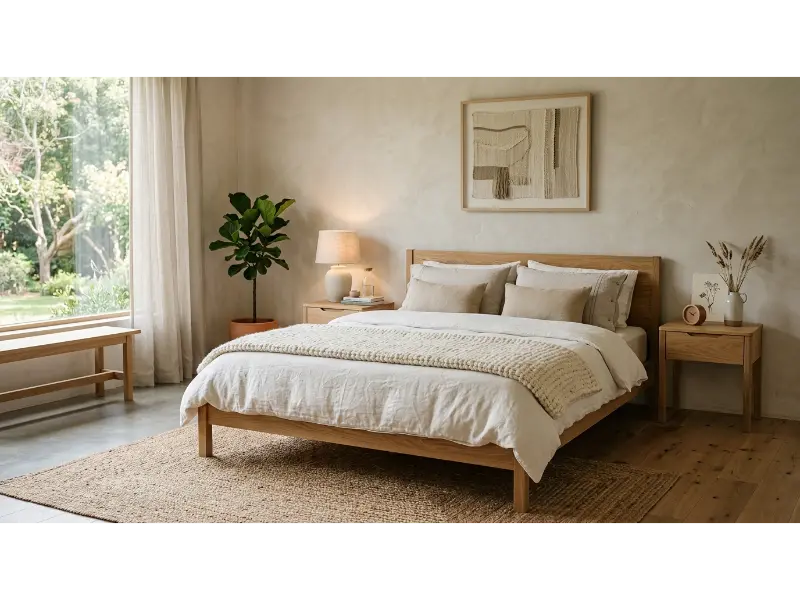
Your mattress is one of the most important pieces in the bedroom because you spend many hours in direct contact with it. When replacing one, investigate the materials, certifications, construction, warranty, and expected lifespan rather than focusing only on sustainability claims. Natural latex, wool, cotton, and other thoughtfully selected materials may appeal to shoppers seeking alternatives to conventional constructions.
Comfort should remain the first priority because a sustainable mattress that does not support your body properly will not be a successful purchase. Try the mattress when possible and check the return policy before committing. A durable mattress that remains comfortable for years can prevent unnecessary replacement. This combines healthy sleep design with a more deliberate purchasing decision.
Pro Tip: Never choose a mattress solely because it uses a natural material. Check comfort, support, certifications, and construction together.
14. Wool Throws for Cozy Layering
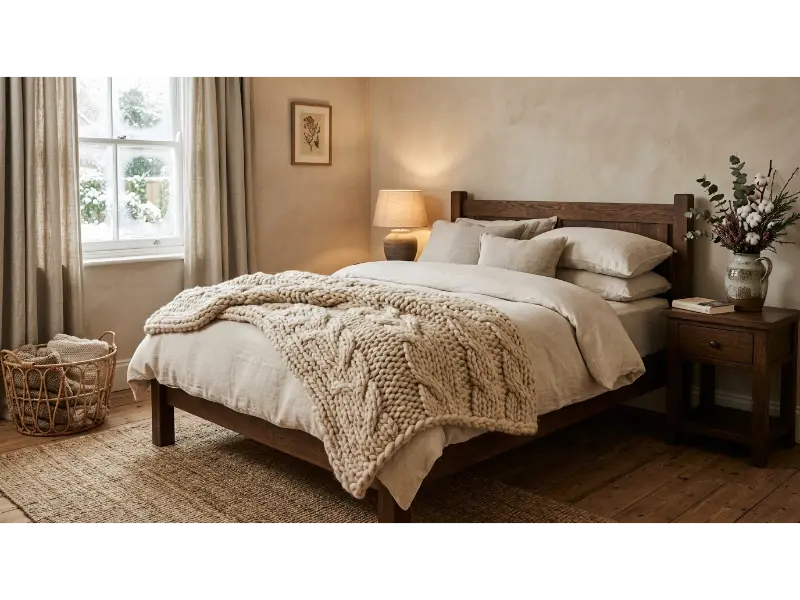
A wool throw can add warmth, texture, and visual depth without requiring multiple synthetic blankets. Drape one casually across the bed or fold it neatly at the foot for a more tailored look. Cream, oatmeal, camel, gray, and muted olive work beautifully with wood and natural textiles. One quality throw can often serve as both a functional layer and a decorative accent.
Choose the weight according to your climate and personal comfort. Wool can be especially useful when you want warmth without making the entire bedding arrangement heavy. Follow the care instructions carefully because improper washing can damage the fibers. A durable throw that stays beautiful for years fits naturally into a more intentional approach to sustainable home styling.
Pro Tip: Select one versatile throw rather than buying several seasonal blankets that require additional storage.
15. A Decluttered Bedroom With Built In Storage
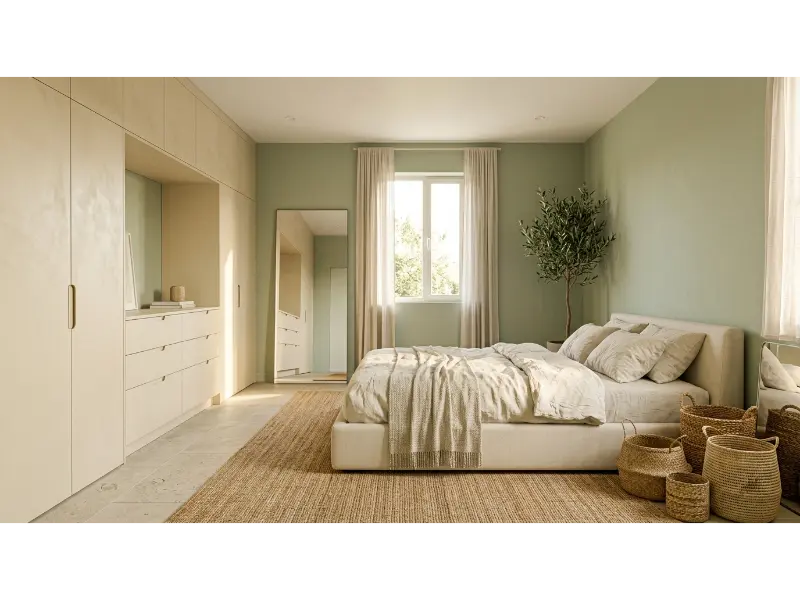
A calmer bedroom does not always require more decor. Sometimes the biggest improvement comes from removing visual clutter. Built in storage, under bed drawers, wardrobes, and closed cabinets can keep clothing and personal items organized while leaving the sleeping area visually quiet. Choose storage that uses the available space efficiently instead of adding multiple freestanding pieces.
Decluttering also changes how you shop. When every item has a place, it becomes easier to see what you already own and avoid buying duplicates. Donate or responsibly pass along items that no longer serve you. This creates a minimalist bedroom that feels spacious and practical while supporting more conscious consumption.
Pro Tip: Before buying storage furniture, measure the items you actually need to store and design around those dimensions.
16. Natural Beeswax or Plant Based Decor

Small decorative details can bring warmth to a bedroom without overwhelming the space. Handmade ceramics, wooden trays, beeswax candles, natural fiber baskets, and plant based decorative materials can introduce texture and craftsmanship. Select only a few pieces that genuinely add beauty or function. A carefully chosen handmade vase can have more impact than a shelf filled with inexpensive objects.
Be thoughtful with candles and fragrances because products used indoors can affect air quality. EPA notes that some air fresheners and fragranced products can contribute to indoor pollutants, so ventilation and careful product selection matter. If you use candles, keep them safely positioned and never leave a burning candle unattended.
Pro Tip: Choose fragrance free decor when possible if you prefer a bedroom with fewer airborne scents.
17. Secondhand Mirrors to Reflect Natural Light
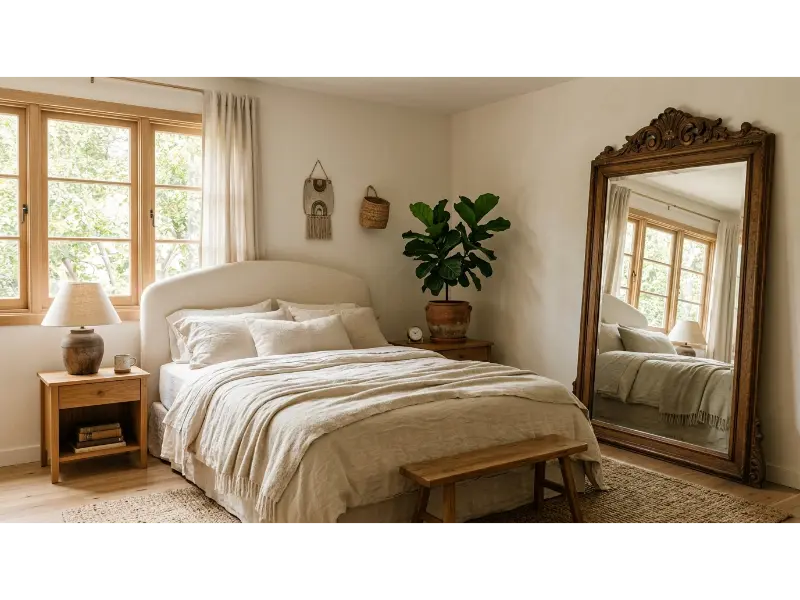
A large mirror can make a small bedroom feel brighter and more spacious by reflecting available light. Instead of buying a brand new mirror, search for secondhand versions with interesting frames and solid construction. Vintage wood, simple brass, and understated painted frames can all work beautifully depending on your decor style.
Position the mirror where it reflects daylight rather than an unattractive storage area or cluttered corner. Avoid placing it where it creates distracting reflections while you are lying in bed if that bothers you. Reusing a mirror also keeps a functional object in circulation while adding character. The best eco conscious bedroom decor often comes from combining practical design with materials and objects that already exist.
Pro Tip: Test several positions during daylight before permanently mounting a large mirror.
18. Natural Ventilation and Better Airflow
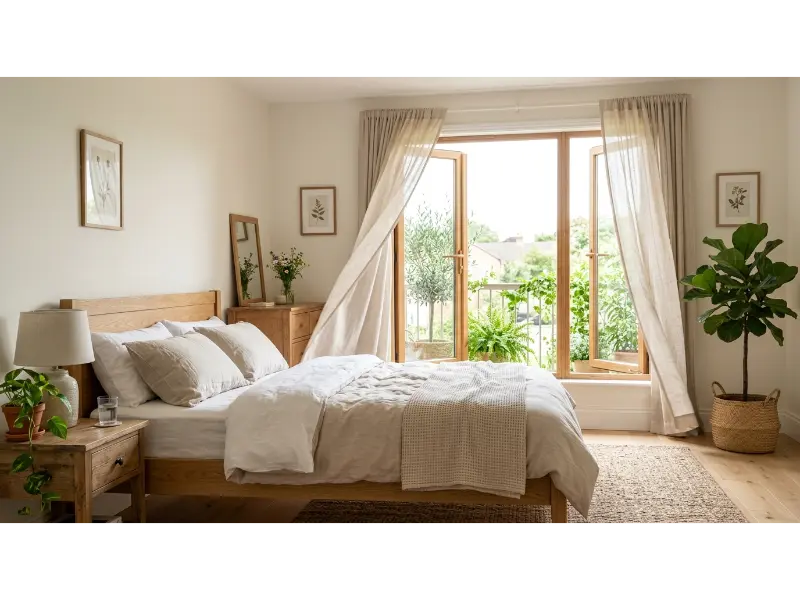
A beautiful bedroom should also feel fresh and comfortable. When outdoor conditions allow, opening windows can improve ventilation and introduce fresh air. Sleep Foundation notes that ventilation and fresher air are associated with better sleep, while indoor air quality can influence the sleeping environment. Arrange furniture so vents and windows are not unnecessarily blocked.
Airflow becomes particularly important when controlling humidity. The EPA recommends managing moisture to help prevent biological contaminants, while current sleep guidance commonly places comfortable indoor humidity around 30 to 50 percent. You do not need complicated technology to begin. Better airflow, sensible furniture placement, and regular maintenance can make a meaningful difference.
Pro Tip: Use a simple hygrometer if your bedroom often feels unusually damp or dry.
19. A No Electronics Sleep Zone
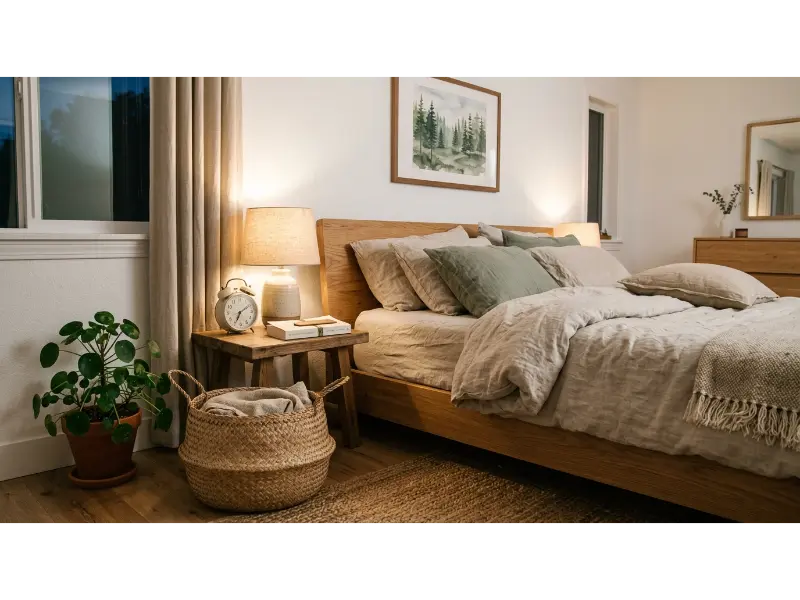
Reducing electronics can make a bedroom feel calmer and less visually cluttered. Create a dedicated sleep zone where the bed remains the main focus rather than the television, computer, or collection of charging cables. Use an analog alarm clock and keep phones away from the pillow if that helps you avoid late night scrolling.
A calmer room also supports better sleep habits. Sleep Foundation recommends minimizing bright light and noise while creating a comfortable temperature and supportive sleeping environment. You can make the change gradually by removing one unnecessary device at a time. The goal is not perfection but creating a bedroom that encourages rest instead of constant stimulation.
Pro Tip: Place charging devices outside arm’s reach so checking notifications becomes less automatic.
20. Reusable Storage Baskets Instead of Plastic Bins
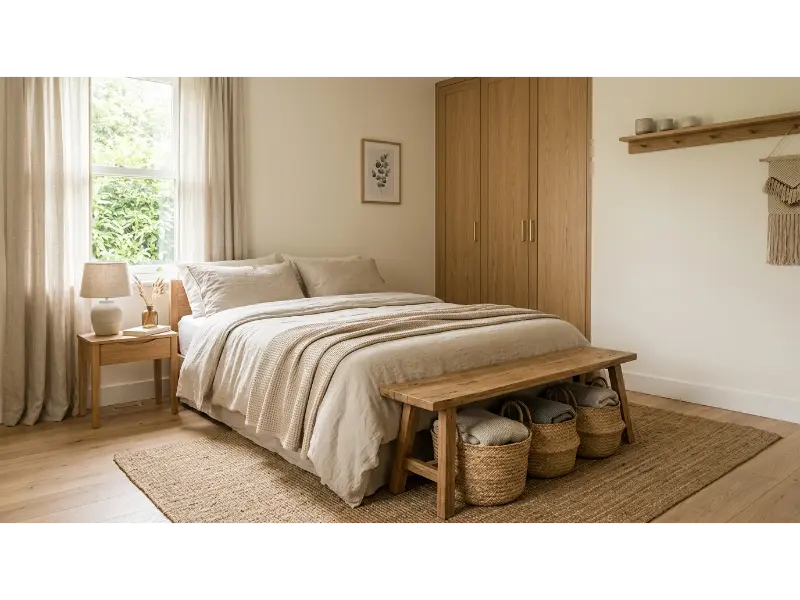
Storage does not have to look purely functional. Woven baskets made from durable natural materials can hide blankets, accessories, laundry, or seasonal items while adding warmth. Place larger baskets under a bench, beside a wardrobe, or on an open shelf. Choose matching or complementary textures so storage becomes part of the room’s design instead of visual clutter.
Before purchasing new baskets, consider what you already have. Repurpose sturdy containers and baskets from other rooms whenever possible. If you need new storage, select sizes that match your actual belongings. This reduces the chance of buying containers that later become empty clutter themselves. Practical low waste home organization works best when storage follows your lifestyle rather than forcing your belongings into an unrealistic system.
Pro Tip: Label hidden storage when you rotate seasonal items so you do not repeatedly open every basket to find one thing.
21. Sustainable Wood Shelving With Curated Decor
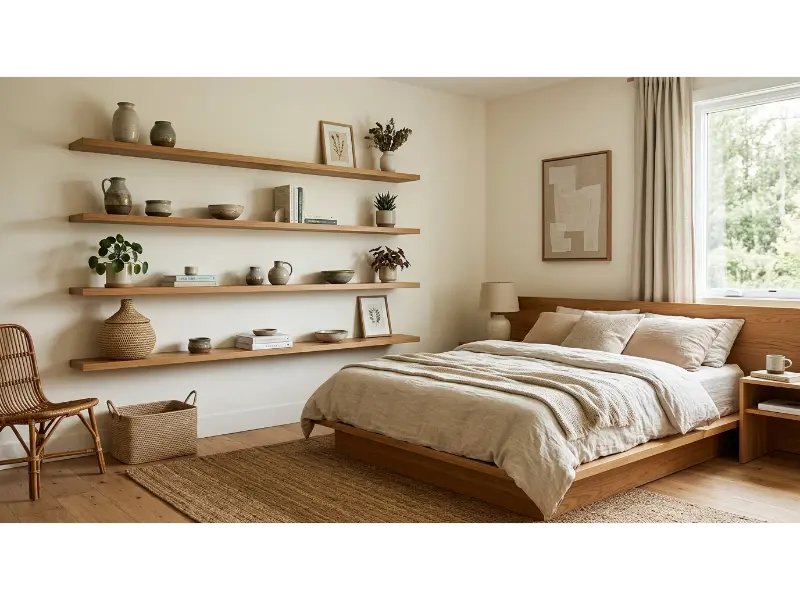
Floating wood shelves can provide useful storage without making a bedroom feel crowded. Use them for a small collection of books, ceramics, plants, or meaningful objects. Choose wood from a responsible source and look for credible certification information when available. FSC certification provides an established system for responsible forest management and tracking certified forest products through supply chains.
Keep shelves intentionally styled rather than filling every inch. Leave some empty space so the room can breathe visually. You can rotate seasonal objects instead of continually purchasing new decorations. This creates a flexible display that feels personal and prevents the shelf from becoming another source of clutter. Natural wood also adds warmth to minimalist bedrooms without needing excessive color or ornament.
Pro Tip: Use fewer, larger objects rather than many tiny accessories because they are easier to dust and arrange.
22. Eco Friendly Cleaning Routine for a Fresher Room
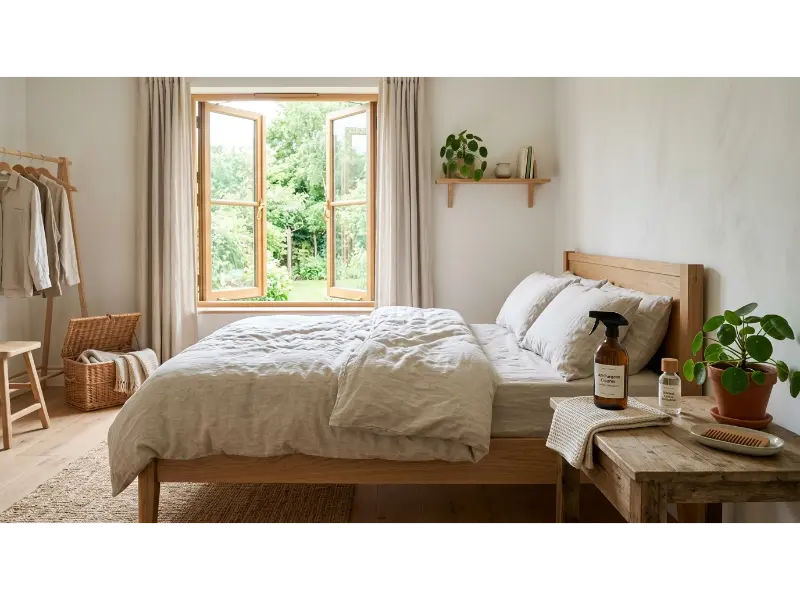
A sustainable bedroom should be clean as well as attractive. Dust hard surfaces regularly, wash bedding according to care instructions, vacuum rugs, and keep moisture under control. EPA recommends routine cleaning of hard surfaces and fabric covered furnishings and emphasizes ventilation when using household cleaning products. Reusable cloths can also reduce the need for disposable cleaning materials.
When choosing cleaning products, look for credible standards rather than relying only on words such as natural or green. EPA’s Safer Choice program evaluates ingredients and product criteria, while certified products must meet specific health and environmental requirements. Always follow labels and never mix cleaning chemicals.
Pro Tip: Keep a small reusable cleaning kit in or near the bedroom so regular maintenance takes only a few minutes.
23. A Nature Inspired Bedroom With Fewer, Better Pieces
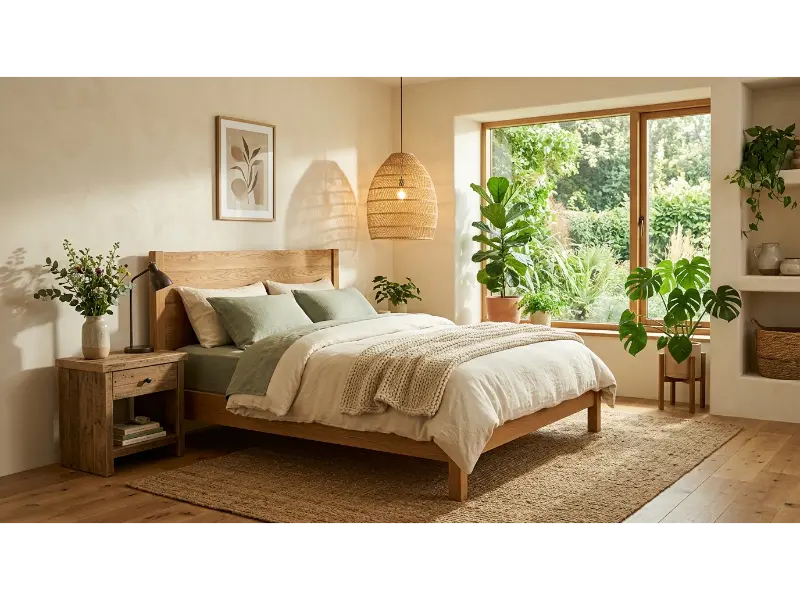
The most successful sustainable bedroom does not need to look obviously eco themed. Combine solid wood, breathable textiles, natural fibers, secondhand furniture, warm lighting, and a few plants to create a room that feels effortless. Keep the palette grounded in cream, beige, warm brown, muted green, and soft clay. This approach creates visual harmony while allowing each material to contribute its own texture.
Instead of trying to replace everything at once, improve the room gradually. Keep useful furniture, repair what can be repaired, replace worn items when necessary, and purchase fewer pieces with greater care. A genuinely sustainable space comes from long term habits rather than a single shopping trip. The result is a nature inspired bedroom that feels cozy, personal, and practical while avoiding unnecessary excess.
Pro Tip: Before every new purchase, ask whether you need it, whether you can repair something you already own, and whether you will still love it years from now.
How to Make Your Bedroom More Eco Friendly on a Budget
You do not need a large renovation budget to create a more responsible bedroom. Start with changes that cost little or nothing, such as improving ventilation, reducing clutter, washing and caring for existing textiles properly, switching to efficient bulbs, and reusing furniture you already own. These changes can have a bigger practical impact than replacing an entire room simply to achieve a particular aesthetic.
When you do spend money, prioritize items that affect comfort or longevity first. A durable bed, breathable bedding, efficient lighting, quality curtains, and useful storage can provide more value than decorative accessories. Look for credible material information and avoid assuming that an expensive product is automatically sustainable. The best approach combines durability, functionality, responsible sourcing, and long term use.
How to Choose Sustainable Bedroom Materials
Look for materials that suit the purpose of the product and can withstand regular use. Solid wood can work well for beds and storage, while linen, cotton, and wool can provide comfortable textile options. For wood products, credible certifications can help you investigate sourcing. For cleaning products, EPA’s Safer Choice program offers a more reliable standard than vague green marketing language.
Also consider maintenance. A beautiful material that requires difficult care may not remain useful for long. Ask how an item should be cleaned, whether replacement parts are available, how it can be repaired, and whether you can realistically keep it for years. Sustainability becomes much more meaningful when an object remains useful instead of becoming another short lived purchase.
How to Create a Healthier Bedroom Environment
A healthier bedroom involves more than choosing natural looking furniture. Ventilation, moisture, temperature, light, noise, bedding, and cleanliness all influence the sleeping environment. Sleep Foundation recommends creating comfortable conditions around temperature, light, noise, and bedding, while its current guidance also highlights ventilation and humidity management. hways clear, address moisture quickly, and use cleaning products carefully. EPA guidance also recommends reducing unnecessary indoor use of cleaners, fragrances, and pesticides and improving ventilation when using products that may affect indoor air quality.
FAQs
What makes a bedroom eco friendly?
An eco friendly bedroom uses resources thoughtfully and avoids unnecessary consumption. This can include durable furniture, responsible wood, natural or lower impact textiles, efficient lighting, reusable storage, secondhand pieces, and careful maintenance. Good ventilation, moisture control, and reduced clutter can also support a healthier and more comfortable bedroom environment.
What is the easiest way to make a bedroom more sustainable?
Start with what you already own. Repair furniture, reduce clutter, reuse storage, wash bedding correctly, improve airflow, and replace inefficient lighting when needed. When something eventually wears out, choose a durable replacement rather than buying several inexpensive versions. Gradual improvements are often more practical than a complete makeover.
Are natural materials always more sustainable?
Not necessarily. The environmental impact of a product depends on sourcing, manufacturing, transportation, durability, maintenance, and eventual disposal. A durable secondhand synthetic item can sometimes be a better choice than purchasing a new product simply because it uses a natural material. Consider the entire lifecycle instead of focusing on one label.
How can I make a small bedroom more eco friendly?
Use multifunctional furniture, vertical storage, natural daylight, efficient lighting, and fewer decorative pieces. A secondhand dresser, floating shelf, woven basket, and breathable bedding can transform a small room without filling the floor with furniture. Keep the palette light and calm to make the room feel more spacious.
What bedding is best for a sustainable bedroom?
Look for bedding that feels comfortable, suits your climate, and can withstand frequent washing. Linen, cotton, wool, and other breathable textiles may work well depending on your needs. Check sourcing and certification information where available, and prioritize quality over buying large quantities of bedding you rarely use.
How can I improve bedroom air quality naturally?
Start by reducing unnecessary sources of indoor pollutants, improving ventilation, controlling moisture, and keeping surfaces and textiles clean. EPA recommends increasing ventilation when using household products and reducing unnecessary indoor use of cleaners, fragrances, and pesticides.
Are houseplants enough to clean bedroom air?
Houseplants can add beauty and a connection to nature, but they should not replace proper ventilation or moisture control. A well maintained bedroom needs sensible airflow, appropriate humidity, regular cleaning, and careful attention to damp areas. Plants should complement these measures rather than serve as the main air quality strategy.
What colors work best for a sustainable bedroom?
Warm neutrals, soft whites, beige, clay, muted green, natural brown, and dusty blue work especially well. These colors complement wood, linen, jute, rattan, and ceramics while creating a calm atmosphere. Choosing timeless colors also makes it easier to keep existing furniture when you change small decorative details.
How do I decorate sustainably without making my bedroom look rustic?
Use a balanced mix of modern and natural elements. Pair clean lined furniture with linen bedding, one woven accent, contemporary lighting, and carefully selected plants. You do not need every item to look handmade or rustic. A restrained palette and quality materials can create a polished, modern sustainable bedroom.
Conclusion
The most effective sustainable bedroom decor does not depend on buying a completely new room. It comes from making thoughtful choices about what enters your home, what stays there, and how long each item remains useful. Natural textiles, reclaimed furniture, efficient lighting, responsible wood, reusable storage, better ventilation, and simple styling can work together to create a bedroom that feels both beautiful and practical.
Start with one improvement that fits your budget and lifestyle. Replace a worn item with a durable alternative, give an old piece a second life, reduce unnecessary clutter, or simply improve the room’s airflow and lighting. Over time, these small decisions can transform your bedroom into a calmer, cozier retreat that supports comfort while using resources more thoughtfully.
Research note: The recommendations above are informed by current guidance from the U.S. EPA on indoor air quality, VOCs, cleaning products, and Safer Choice standards, plus Sleep Foundation guidance on bedroom environment, ventilation, temperature, humidity, and sleep conditions.