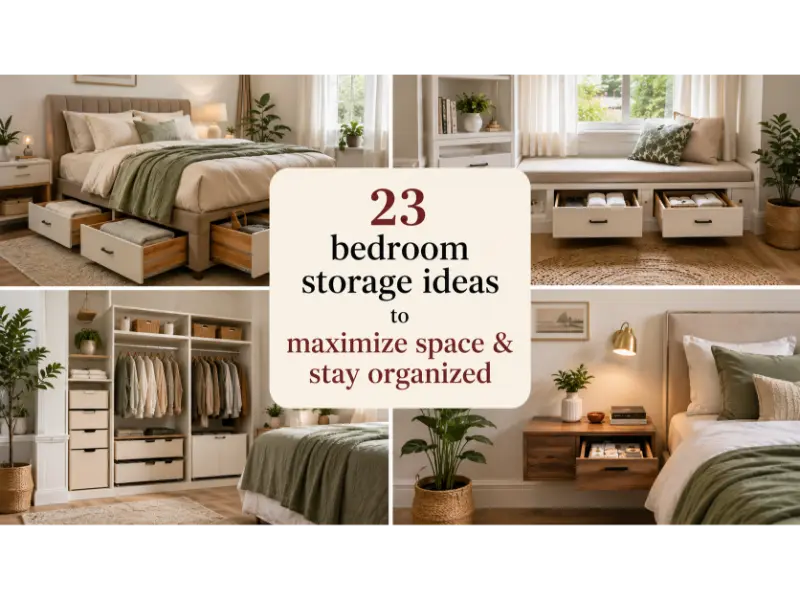
23 Bedroom Storage Ideas to Maximize Space & Stay Organized
A bedroom can feel crowded even when you do not own that much stuff. Clothes, shoes, bedding, books, accessories, bags, and everyday essentials quickly take over drawers and surfaces. The good news is that smart bedroom storage ideas can help you use overlooked spaces without making the room feel packed. The key is to choose storage that matches the way you actually live rather than simply adding more boxes and furniture.
From hidden compartments and vertical shelves to storage beds and clever door solutions, these ideas can turn awkward corners into useful zones. They also work beautifully in small bedrooms, apartments, guest rooms, dorms, and shared spaces. If you want a bedroom that feels calmer while still holding everything you need, these creative space saving storage solutions are worth trying.
Smart Bedroom Storage Ideas for Every Room
1. Under Bed Storage Drawers
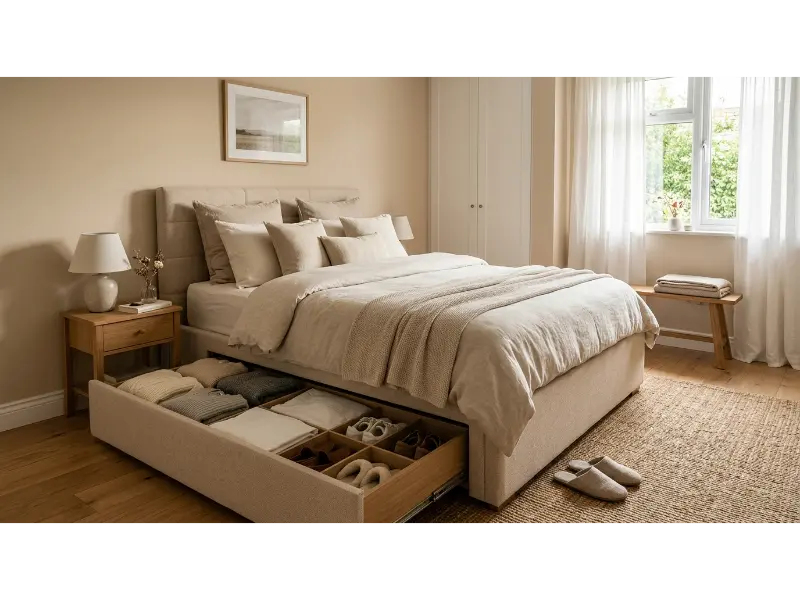
The first of these Bedroom Storage Ideas makes use of one of the largest overlooked areas in the room. A bed with built in drawers creates hidden under bed storage without taking additional floor space. Use separate drawers for bedding, seasonal clothes, shoes, handbags, or items you do not need every day. Choose a bed with smooth drawer movement so the storage remains easy to access.
This solution works particularly well when a traditional dresser would make the room feel crowded. Instead of allowing random containers to collect beneath the bed, create clear categories and give each drawer a purpose. Low profile drawers also keep belongings protected from dust while making your available floor area work harder.
Pro Tip: Use fabric drawer organizers inside larger compartments so smaller belongings do not become one messy pile.
2. Floor To Ceiling Wardrobe
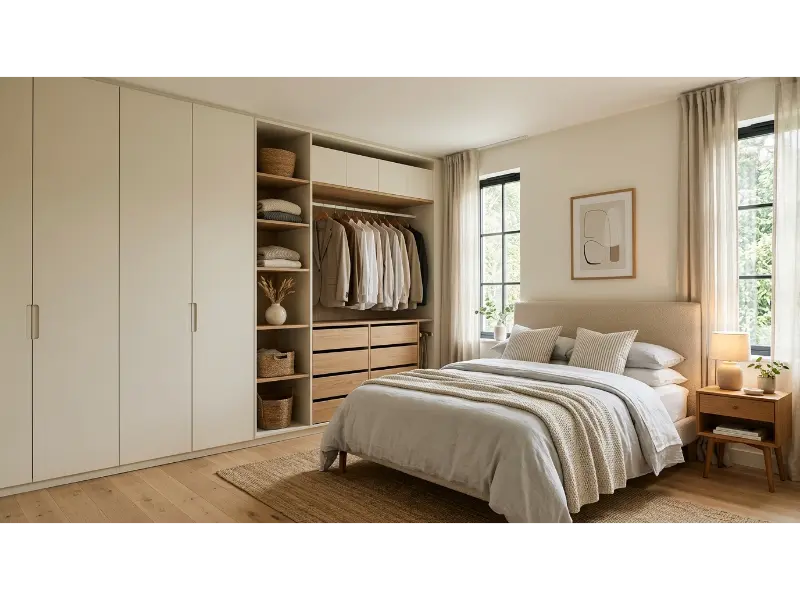
A tall wardrobe can transform unused wall height into valuable vertical storage. Instead of choosing a wide dresser and a short closet, consider a floor to ceiling wardrobe that stores hanging clothes, folded pieces, accessories, shoes, and seasonal belongings in one organized area. The upper section can hold luggage, blankets, or items used only occasionally.
This approach creates a cleaner visual line because the storage reaches the ceiling instead of stopping halfway up the wall. Closed doors also hide visual clutter, which helps the bedroom feel calmer. For a narrow room, choose a wardrobe with a relatively shallow profile and prioritize adjustable shelves so you can change the layout as your storage needs change.
Pro Tip: Keep everyday clothing between waist and eye level and reserve the highest shelves for seasonal items.
Read More: 23 Window Sill Decor Ideas to Transform Your Space
3. Floating Nightstand With Drawers
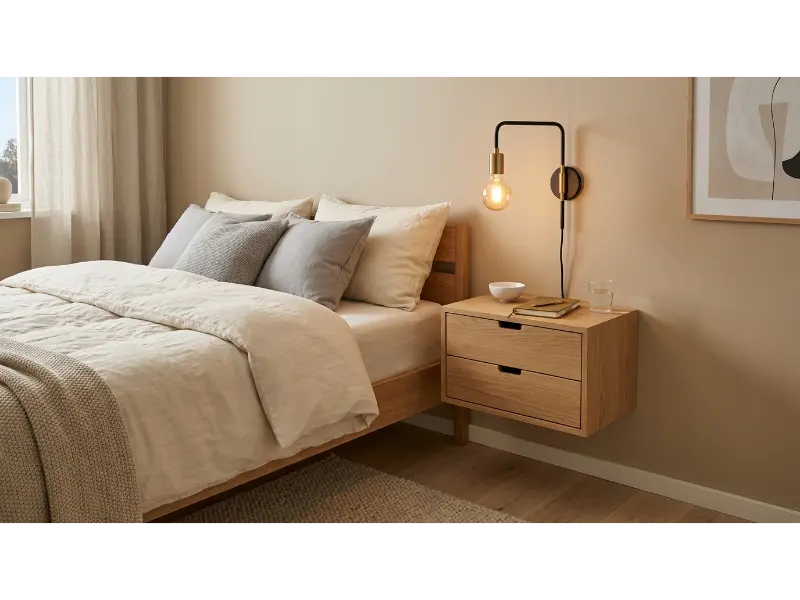
A floating nightstand gives you the convenience of bedside storage while leaving the floor underneath completely open. This makes it especially useful for small bedroom organization, where every visible inch matters. Choose a compact model with one or two drawers for chargers, books, glasses, skincare, or other nighttime essentials.
Because the nightstand attaches directly to the wall, you can customize its height and width according to your bed and available space. The open floor underneath also makes cleaning easier and creates a lighter appearance. Pairing a floating nightstand with wall mounted lighting can free even more surface area while giving the bedroom a polished, intentional look.
Pro Tip: Keep only nightly essentials in the drawers and move rarely used items elsewhere.
4. Storage Headboard
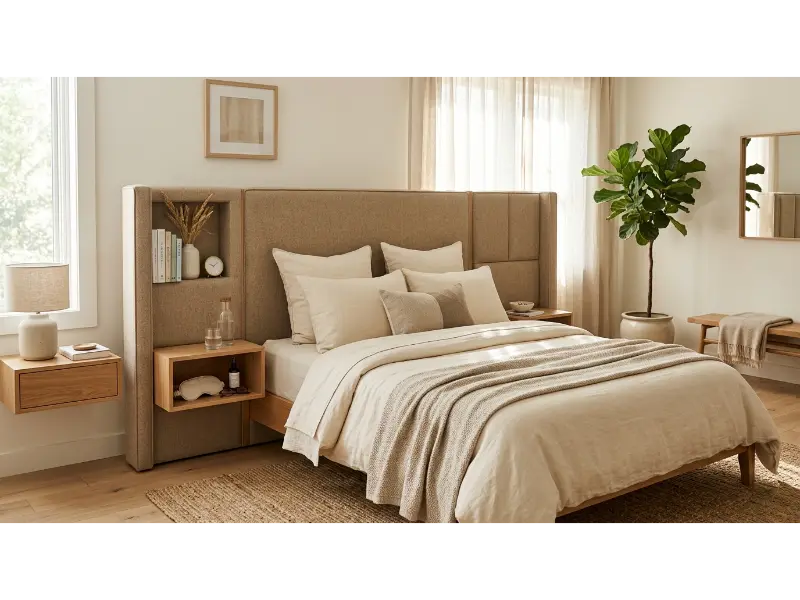
A storage headboard combines two useful bedroom functions into one piece of furniture. Instead of leaving the wall behind the bed empty, use built in shelves or hidden compartments for books, accessories, small baskets, and decorative objects. This creates hidden bedroom storage without requiring another bulky cabinet.
A headboard with closed compartments works especially well for belongings you want nearby but do not want visible. Open niches can display books or artwork while concealed sections handle less attractive necessities. If you are designing a bedroom from scratch, consider a custom headboard that extends across the wall and incorporates lighting, charging points, and practical shelving.
Pro Tip: Use matching baskets inside open compartments to create a more cohesive and less cluttered appearance.
5. Over The Door Organizer
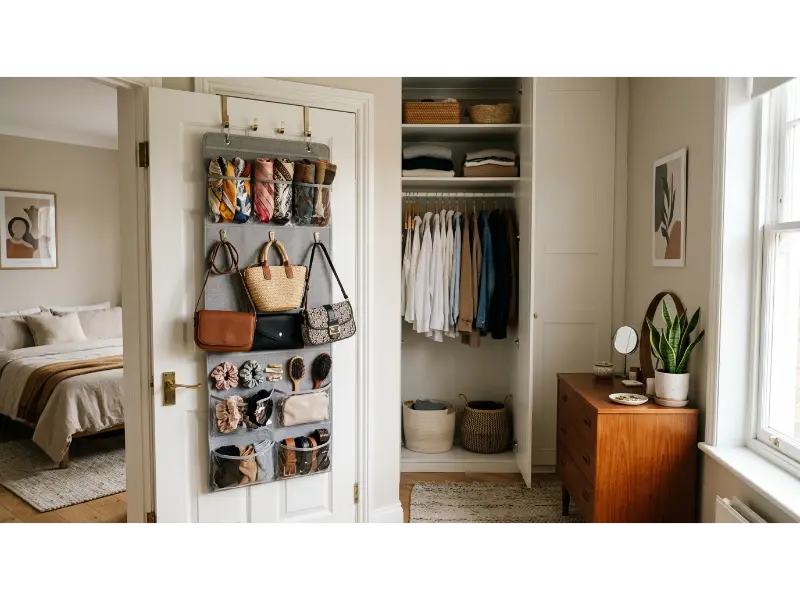
The back of a bedroom door offers surprisingly useful small space storage. An over the door organizer can hold accessories, scarves, handbags, hair products, cleaning supplies, or small clothing pieces without using valuable floor area. It is particularly useful in rental bedrooms where permanent shelving may not be practical.
Choose an organizer with pockets or narrow shelves according to what you need to store. For frequently used belongings, transparent pockets can make everything easier to find. If you prefer a cleaner appearance, choose a fabric organizer in a neutral color that blends into the room instead of competing with your decor.
Pro Tip: Avoid overloading the door because excessive weight can make it harder to open and close smoothly.
Read More: 22 Room Decoration Ideas for a Stunning Home
6. Built In Window Seat Storage
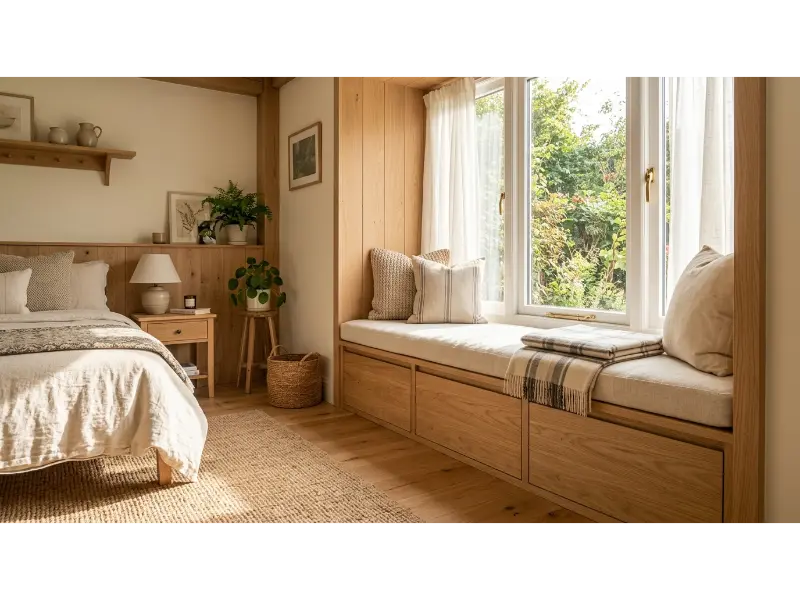
A window seat can become much more than a comfortable reading spot. Build drawers or lift up compartments beneath the seat to create discreet bedroom organization for blankets, books, pillows, toys, or seasonal accessories. This turns an awkward architectural area into a functional storage zone.
The best part is that the storage stays visually integrated with the room. Instead of adding another cabinet, you create furniture that serves two purposes. Choose sturdy hardware and deep compartments if you plan to store bulky belongings. For smaller items, divided baskets can prevent the large storage cavity from becoming difficult to manage.
Pro Tip: Store soft items such as spare blankets and decorative pillows in the window seat to make the most of its depth.
7. Slim Rolling Storage Cart
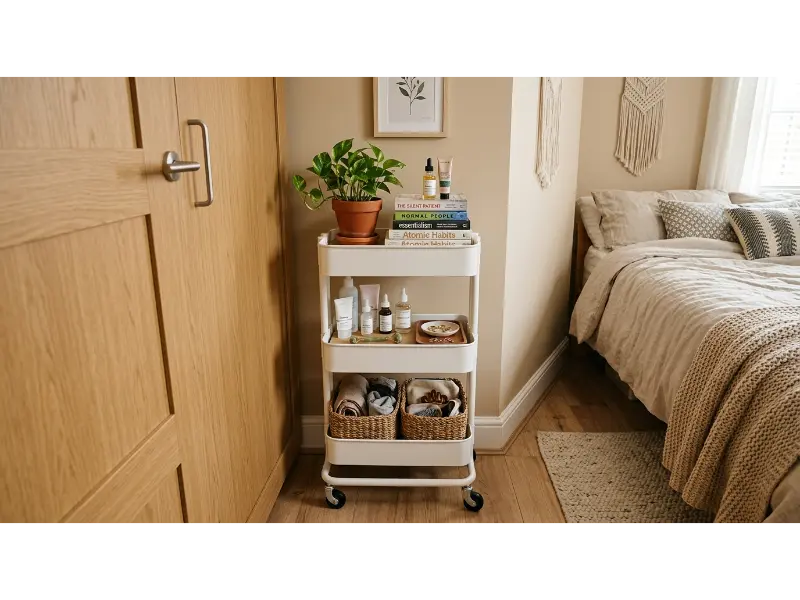
A slim rolling cart can fit into narrow gaps that would otherwise remain completely unused. This makes it one of the most flexible space saving storage options for bedrooms. Use one beside a wardrobe, between a desk and wall, or next to a vanity for beauty products, books, accessories, or craft supplies.
Because the cart moves, you can pull it forward whenever you need something and slide it back afterward. Choose a narrow design with several levels so you can separate categories. A neutral metal or wood finish can also make the cart look intentional rather than temporary.
Pro Tip: Reserve each level for one category so the cart stays useful instead of becoming a general clutter collector.
8. Wall Mounted Clothing Rail
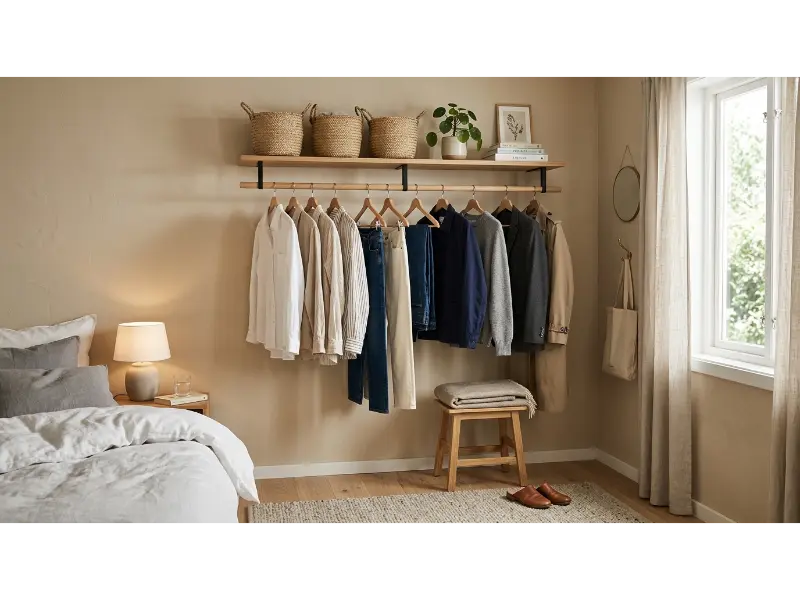
When closet space is limited, move some hanging storage onto the wall. A wall mounted clothing rail can display your most frequently worn pieces while freeing room inside an overcrowded wardrobe. Add a shelf above the rail for folded sweaters, hats, bags, or attractive storage baskets.
This works particularly well for people who prefer a capsule wardrobe or enjoy seeing their favorite outfits. Keep the rail carefully edited rather than packing it with every garment you own. A limited collection creates a boutique inspired appearance and makes daily dressing easier while reducing pressure on your main closet.
Pro Tip: Group clothing by type or color so the open wardrobe looks organized and intentional.
9. Ottoman With Hidden Storage
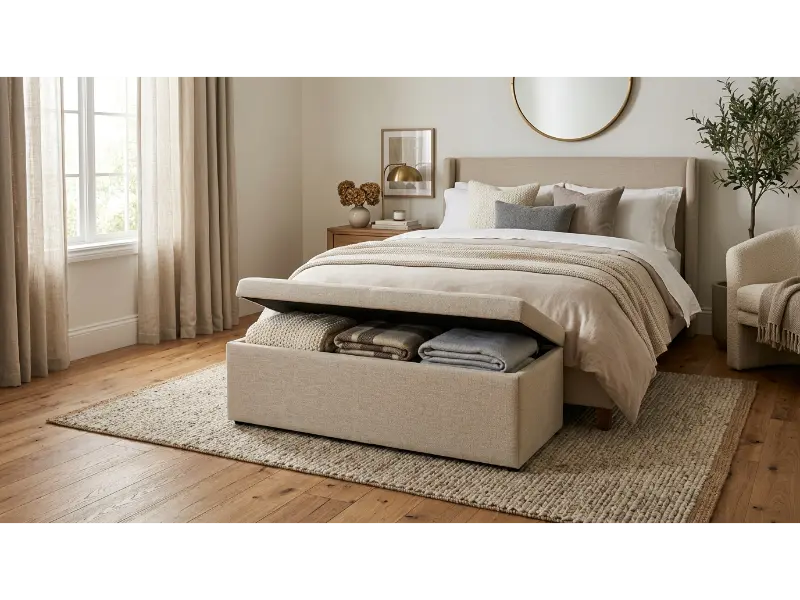
A storage ottoman gives you seating, style, and concealed storage in one piece. Place it at the foot of the bed and use its interior for extra blankets, pillows, seasonal clothing, or items that need occasional access. This is especially helpful when a bedroom does not have enough room for another cabinet.
Choose an ottoman with a lid that opens easily and enough internal depth for the belongings you plan to store. A soft upholstered finish can also make the room feel warmer and more comfortable. For a smaller bedroom, select a narrow rectangular design rather than a large bulky bench.
Pro Tip: Use the ottoman for soft, lightweight items rather than heavy objects that make the lid difficult to lift.
10. Floating Shelves Above the Bed
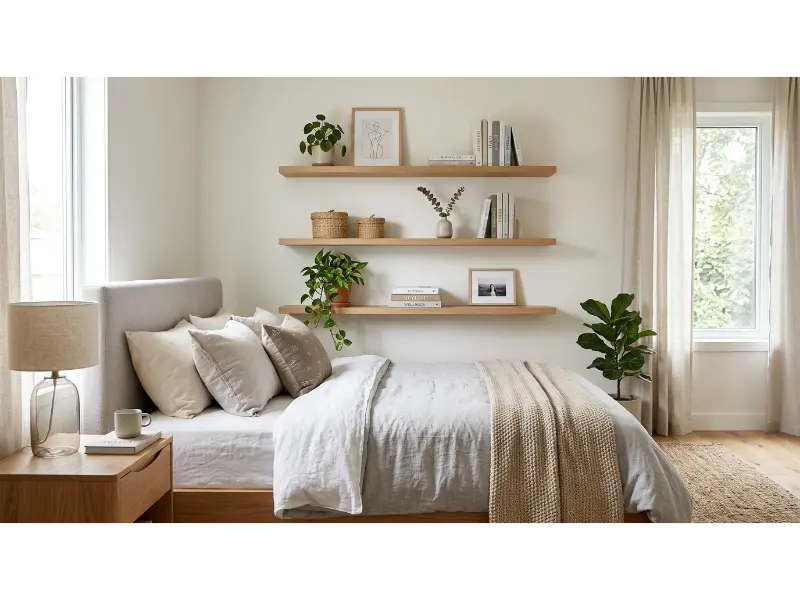
The wall above the bed can provide valuable vertical storage when floor space is limited. Floating shelves can hold books, baskets, small accessories, photographs, and decorative objects while keeping the floor completely clear. They also give you an opportunity to combine practical organization with bedroom styling.
For safety, install shelves securely and avoid placing heavy or fragile objects directly above where you sleep. If you prefer a softer appearance, use lightweight baskets and a few carefully chosen decorative pieces. The goal is not to fill every inch of wall but to create useful storage that still allows the room to breathe.
Pro Tip: Keep shelves visually simple by combining useful objects with only a few decorative pieces.
11. Dresser Inside the Closet
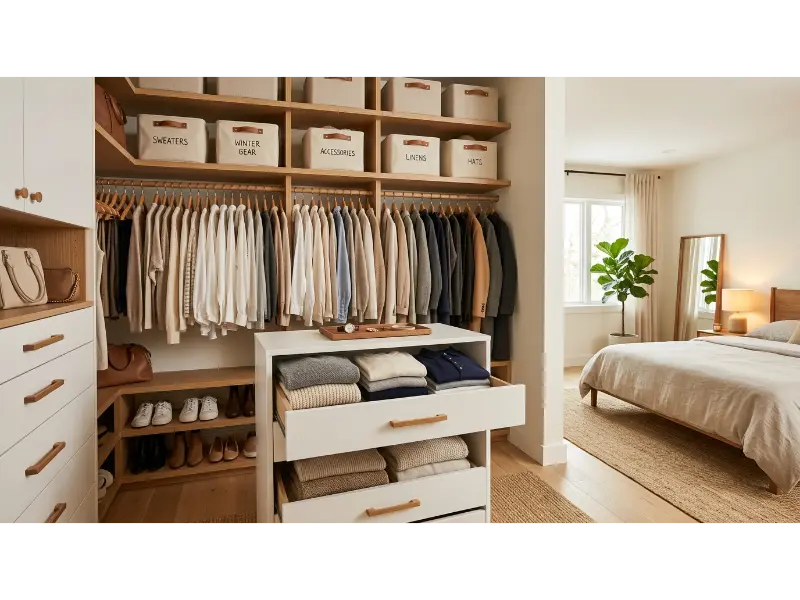
If your closet has unused floor space, consider moving a compact dresser inside it. This creates a dedicated clothing zone and keeps bulky furniture from occupying the bedroom. It can also make getting dressed easier because hanging clothes and folded clothes stay together in one location.
Before choosing a dresser, measure the closet carefully and account for door movement and walking clearance. A narrow chest with several drawers often works better than a deep unit. You can also place baskets above the dresser for accessories or seasonal items while keeping the main bedroom visually uncluttered.
Pro Tip: Use the dresser drawers for folded clothing and keep accessories in smaller divided organizers.
12. Behind The Bed Storage Wall
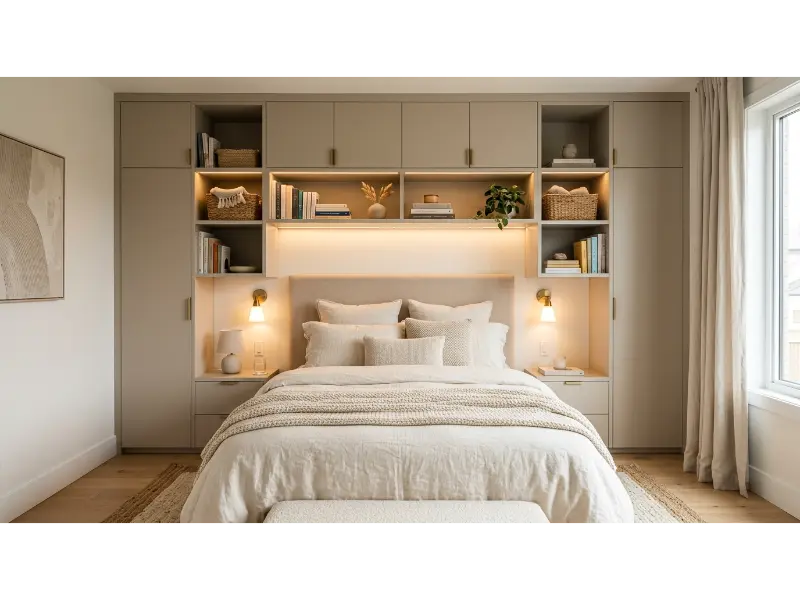
If your bed sits against a wide wall, consider creating a storage wall around it. Built in cabinets can frame the bed while providing room for clothing, books, linens, and personal belongings. This is an excellent approach for people who want clutter free bedroom design without sacrificing storage capacity.
The cabinetry can combine closed doors with a few open niches to keep the wall visually interesting. Integrated lighting can eliminate the need for bulky bedside lamps. Although this solution requires more planning than freestanding furniture, it can dramatically improve how efficiently the room uses its footprint.
Pro Tip: Use mostly closed storage and reserve open shelves for items that contribute to the room’s design.
13. Corner Ladder Shelf
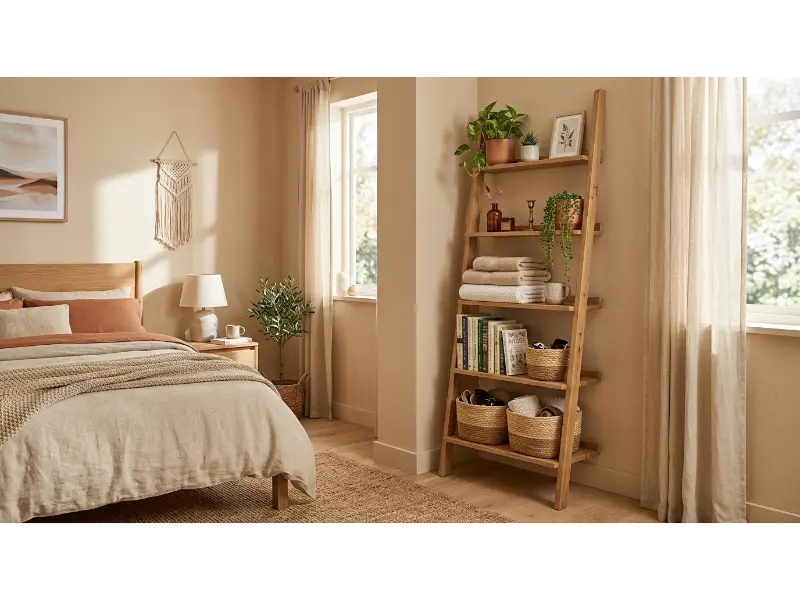
Corners often become dead zones because standard furniture does not fit them well. A ladder shelf solves that problem by using vertical space while maintaining a narrow footprint. Use its different levels for baskets, books, accessories, folded blankets, or decorative items.
Because the shelves gradually become wider toward the bottom, the unit can fit neatly into a corner without overwhelming the room. Choose a style that complements your existing furniture and avoid filling every shelf. A little breathing room helps the storage piece look like part of the decor rather than a clutter solution.
Pro Tip: Put heavier storage baskets on the lower shelves and lighter decorative items toward the top.
14. Closet Door Shelving
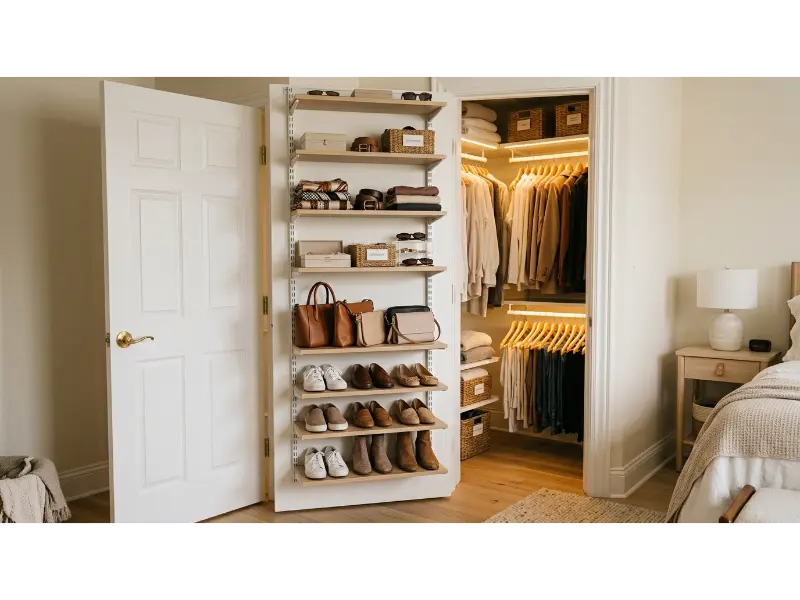
The inside of a closet door can become an extra storage surface with the right slim shelving system. This solution is particularly helpful for accessories that are easy to lose inside deep drawers or crowded shelves. Use it for handbags, scarves, belts, shoes, jewelry organizers, or other lightweight belongings.
Choose shallow shelving that does not interfere with the door closing. The best systems keep smaller items visible while preserving the closet’s main storage area for clothing. This approach also encourages you to group similar belongings together, making your wardrobe easier to maintain over time.
Pro Tip: Store the accessories you use most often at eye level so you do not have to search through the entire closet.
15. Bedside Cabinet With Open Cubby
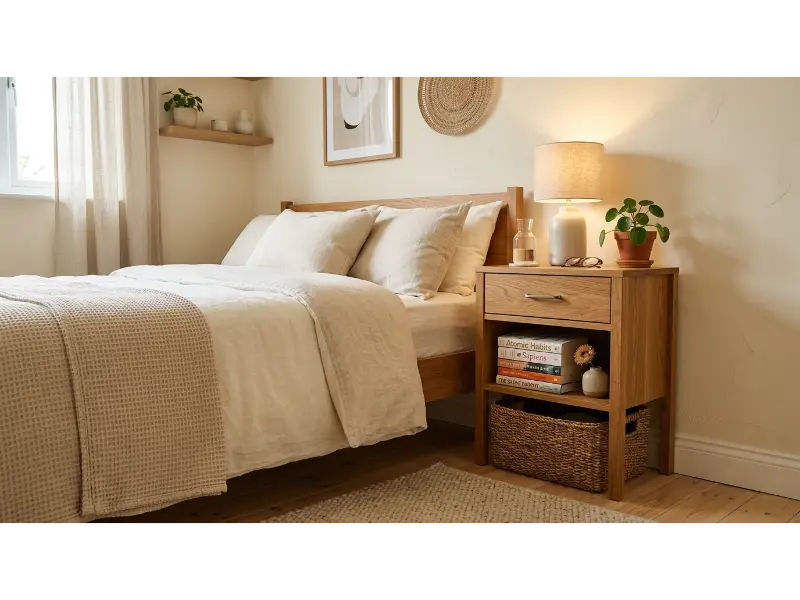
A bedside cabinet with both drawers and open shelving offers flexible organization without requiring a large nightstand. Keep small personal belongings inside the drawer while using the open cubby for books, magazines, or a decorative basket. This creates layers of storage without taking up much room.
The mixed design also prevents the cabinet from feeling visually heavy. If your bedroom has limited floor space, select a narrow model with a compact footprint. You can further improve functionality by choosing one with cable management so charging cords remain contained instead of spreading across the tabletop.
Pro Tip: Give the drawer a single purpose, such as nighttime essentials, rather than using it as a catch all.
16. Peg Rail For Bags And Accessories
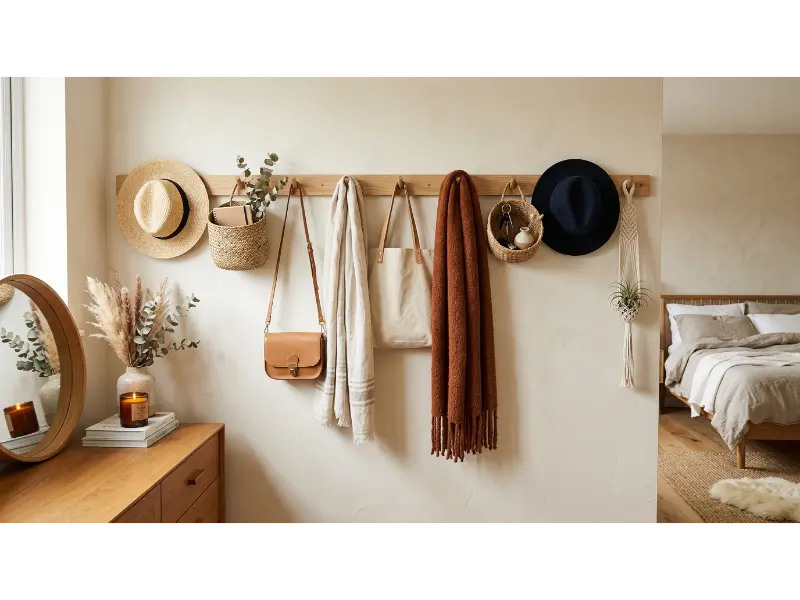
A peg rail turns an empty wall into flexible hanging storage. Install one near the wardrobe or dressing area and use sturdy pegs for handbags, hats, scarves, robes, or frequently worn accessories. It provides easy access without requiring another piece of furniture.
This solution works particularly well when you want storage that also contributes to the room’s visual character. Select a wooden rail for a warm natural feel or a simple painted design for a modern bedroom. Keep only frequently used belongings on display so the wall remains attractive rather than overloaded.
Pro Tip: Rotate seasonal accessories on the rail instead of keeping every bag and scarf visible all year.
17. Drawer Dividers For Clothing
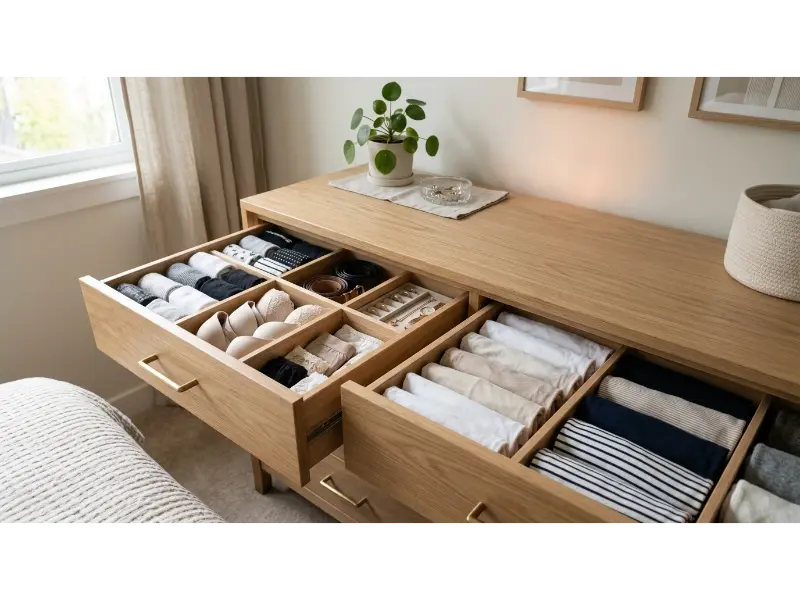
A drawer becomes far more useful when every section has a clear purpose. Adjustable drawer organizers can separate underwear, socks, sleepwear, accessories, and smaller clothing pieces so they remain easy to find. This is a simple improvement that can make existing furniture work harder without buying additional storage.
Instead of stacking everything into one large compartment, divide the drawer according to how often you use each category. Smaller sections should hold smaller belongings while larger areas can accommodate folded clothing. A consistent folding method also makes it easier to see what you own and prevents items from disappearing at the bottom.
Pro Tip: Measure your drawers before purchasing dividers so you get a secure fit with minimal wasted space.
18. Tall Narrow Dresser
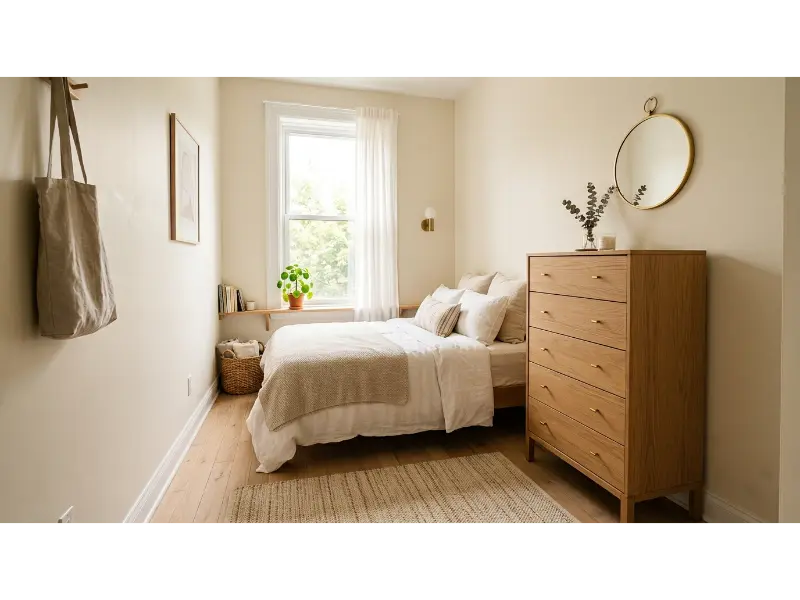
A tall narrow dresser can provide substantial storage while using less floor width than a traditional wide chest. It is particularly useful in narrow bedrooms where horizontal furniture blocks walking paths. Use different drawers for clothing categories and reserve the top for everyday essentials.
Before buying one, consider the height and depth carefully. You want enough capacity without creating a top heavy appearance or interfering with windows, artwork, or other furniture. Anchoring tall furniture securely is also important, especially in homes with children or pets.
Pro Tip: Leave a little empty space in each drawer so clothing stays easy to remove and put away.
19. Storage Bench At The Foot Of The Bed
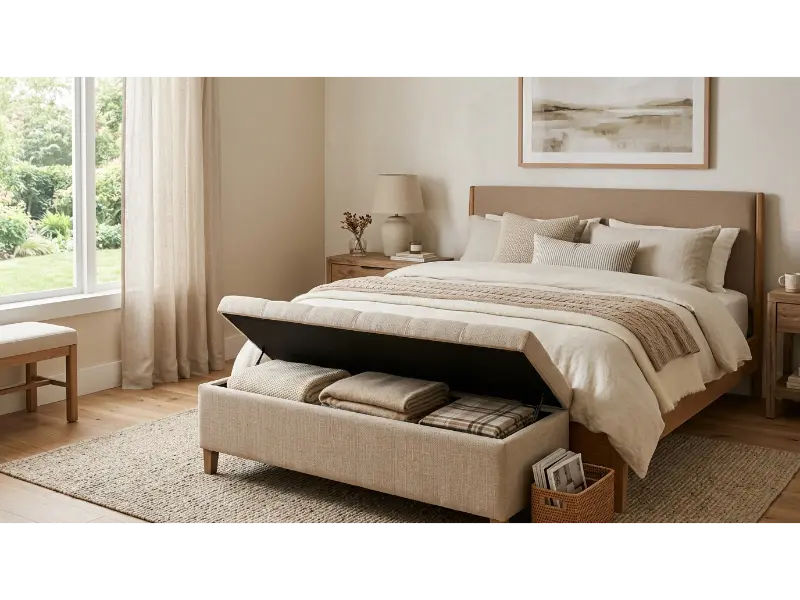
A storage bench at the foot of the bed provides an easy place to sit while also creating hidden space for bulky belongings. Use the compartment for spare bedding, decorative pillows, seasonal accessories, or extra throws. This keeps soft items contained without adding another visible cabinet.
For a smaller room, measure the walkway before buying the bench. A piece that extends too far can make movement around the bed uncomfortable. Choose a streamlined shape with enough interior capacity to justify its footprint. Upholstered designs can also add texture and softness to an otherwise simple bedroom.
Pro Tip: Keep the bench slightly shorter than the bed width for a balanced and less crowded appearance.
20. Open Wardrobe With Matching Baskets
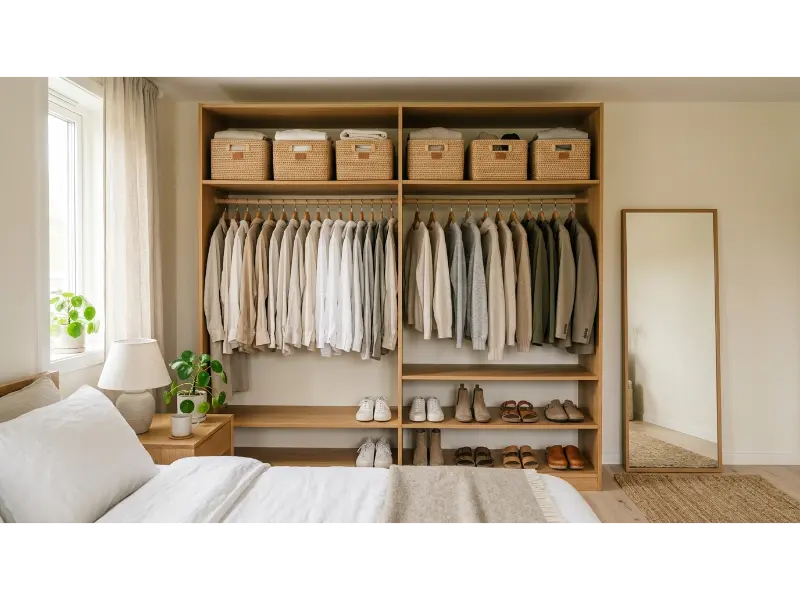
An open wardrobe can make a small room feel more flexible when a bulky traditional closet is not practical. Combine hanging rails with shelves and matching baskets to create a structured closet organization system. Keep everyday clothing visible and use baskets for smaller or less attractive belongings.
The biggest advantage comes from customization. You can adjust shelf heights according to the items you own instead of trying to force everything into fixed compartments. However, an open wardrobe requires regular editing because clutter remains visible. A carefully selected capsule wardrobe can make this approach both functional and beautiful.
Pro Tip: Use identical baskets on upper shelves to create visual consistency and hide seasonal or miscellaneous belongings.
21. Pull Out Storage Under A Dresser
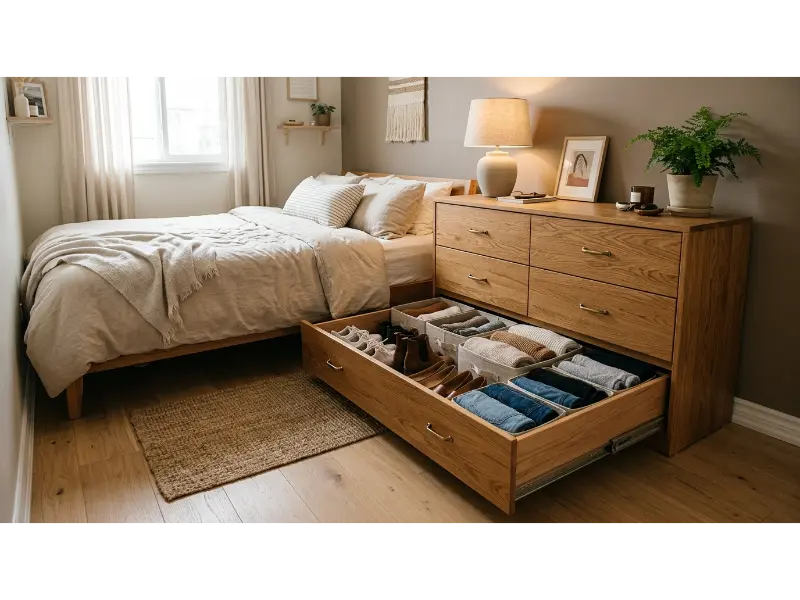
The empty space beneath a dresser can become useful with a custom or appropriately sized pull out drawer. This hidden compartment is ideal for flat items such as shoes, handbags, accessories, seasonal clothing, or extra linens. It turns dead space into storage without increasing the visible footprint of the furniture.
This idea works best when the dresser has enough clearance beneath it and the floor remains level. Use shallow compartments rather than deep ones so belongings stay visible and accessible. If you are renovating or building custom furniture, this feature can be incorporated directly into the design.
Pro Tip: Store flat, infrequently used items here so you do not need to pull the drawer out several times each day.
22. Mirror Cabinet For Hidden Storage
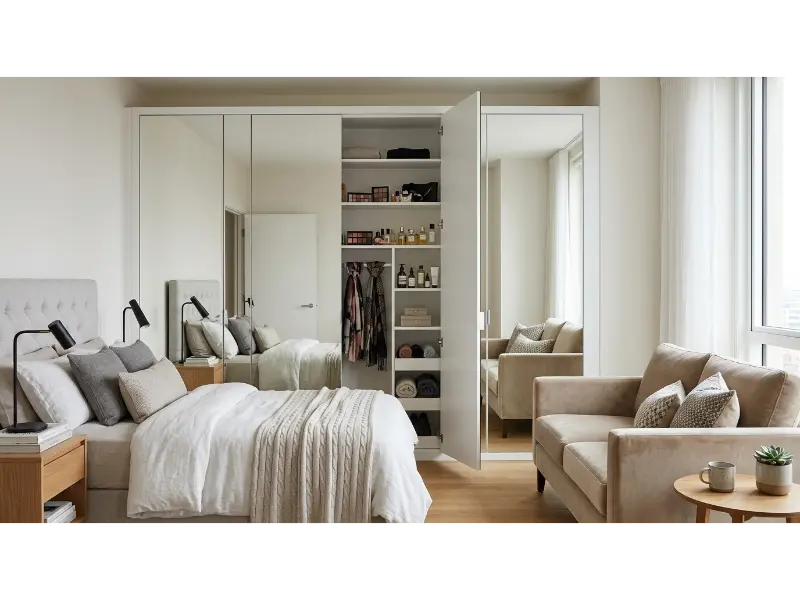
A full length mirror can do double duty when it hides a shallow storage cabinet. This is an excellent option for accessories, jewelry, beauty products, scarves, and other small belongings that need to stay organized but accessible. The mirror also reflects light and can help the room feel visually more open.
Choose a slim cabinet that does not extend too far into the walking area. Interior shelves should match the types of items you plan to store. Small hooks, trays, and narrow compartments can make the inside much more functional than a single large empty cavity.
Pro Tip: Keep the most frequently used accessories near the middle of the cabinet so they remain easy to reach.
23. Declutter First, Then Add Storage
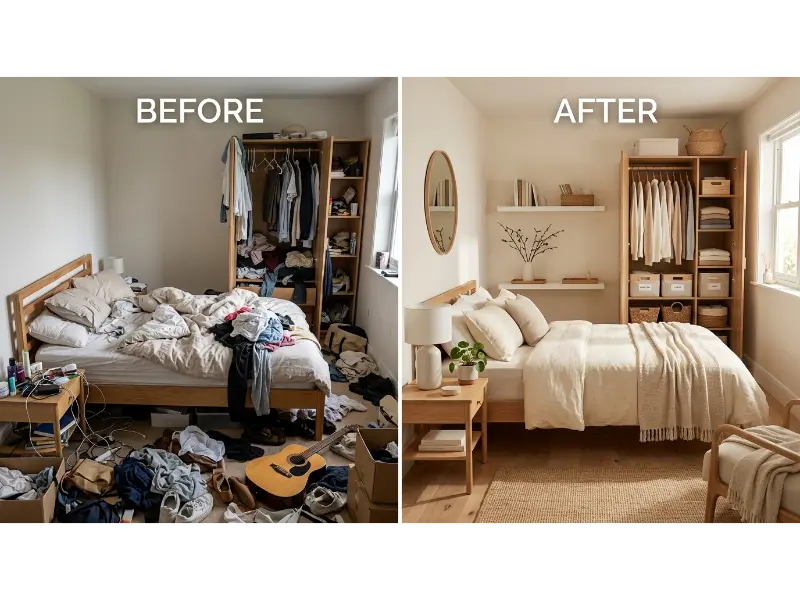
The most effective Bedroom Storage Ideas do not always begin with buying furniture. Start by removing things you no longer use, separating belongings by category, and deciding what genuinely deserves space in the bedroom. Professional organizing guidance commonly recommends editing possessions before adding more containers because storage cannot solve an excess problem by itself.
Once you know what remains, choose storage around those belongings. This approach prevents you from filling the bedroom with bins and organizers that create another layer of clutter. A simple system with clearly defined homes for clothing, bedding, accessories, books, and everyday essentials is easier to maintain than an elaborate setup that does not match your habits.
Pro Tip: Try a simple one in, one out rule for clothing and accessories to prevent your newly organized space from becoming crowded again.
How To Make Bedroom Storage Actually Work
Good storage is not only about capacity. It should make everyday life easier. Keep frequently used items within easy reach and place seasonal or rarely used belongings higher up or farther away. This simple zoning approach reduces unnecessary searching and keeps the bedroom easier to maintain.
Before adding another cabinet, look at the room from floor to ceiling. Walls, doors, bed frames, closet interiors, corners, and furniture gaps can all provide useful opportunities. Current small bedroom guidance repeatedly highlights vertical shelving, multifunctional furniture, under bed storage, and purposeful drawer categories as effective ways to increase capacity without overwhelming the room.
The most successful bedroom organization systems also depend on realistic habits. If you always drop your handbag beside the bed, create a designated hook there. If clean laundry usually sits on a chair, add a hamper or folding surface nearby. Storage works best when it follows your behavior instead of forcing you to completely change it.
FAQs About Bedroom Storage Ideas
How can I add storage to a small bedroom?
Start by using spaces that do not require additional floor area. Under bed drawers, floating shelves, door organizers, wall hooks, tall wardrobes, and vertical shelving can increase capacity while preserving walking space. Multifunctional furniture can also replace separate pieces, giving you storage and another useful function at the same time.
What should I store under my bed?
Under bed storage works well for seasonal clothing, spare bedding, shoes, luggage, pillows, and belongings you do not need every day. Use closed containers or built in drawers to keep items protected and organized. Avoid turning the area into a place where miscellaneous belongings disappear without categories.
How do I organize a bedroom with little closet space?
Prioritize vertical space first. A tall wardrobe, wall mounted clothing rail, peg rail, hooks, floating shelves, and over door organizer can dramatically increase usable capacity. Edit your wardrobe before adding storage so you only dedicate valuable space to clothing and accessories you actually use.
Is open or closed bedroom storage better?
Both can work well. Closed storage hides visual clutter and can make a bedroom feel calmer, while open storage makes frequently used items easier to see and access. A combination usually works best, with closed cabinets for miscellaneous belongings and open shelves for attractive or frequently used items.
How do I keep bedroom storage from becoming cluttered?
Give every category a defined home and avoid creating oversized catch all spaces. Labeling can help, especially for seasonal storage, while regularly editing unused clothing and belongings prevents storage systems from becoming overloaded. Professional organizers also recommend maintaining systems rather than waiting for clutter to become overwhelming.
What is the best storage solution for a tiny bedroom?
There is no single solution for every room, but multifunctional furniture and vertical storage usually provide the biggest impact. A storage bed, tall wardrobe, floating nightstand, wall shelves, and door organizers can work together without consuming much additional floor space.
Conclusion
The best storage system is the one that makes your bedroom easier to use every day. You do not need a huge room or expensive custom furniture to create a more organized space. Start by removing belongings you no longer need, then identify unused areas such as the space beneath the bed, the backs of doors, empty corners, and vertical wall space.
From storage beds and hidden cabinets to floating shelves and multifunctional benches, these space saving storage solutions give ordinary bedroom features a second purpose. Choose only the ideas that fit your room, belongings, and daily habits. When every important item has a practical home, your bedroom can feel more open, peaceful, and organized without sacrificing personality or style.