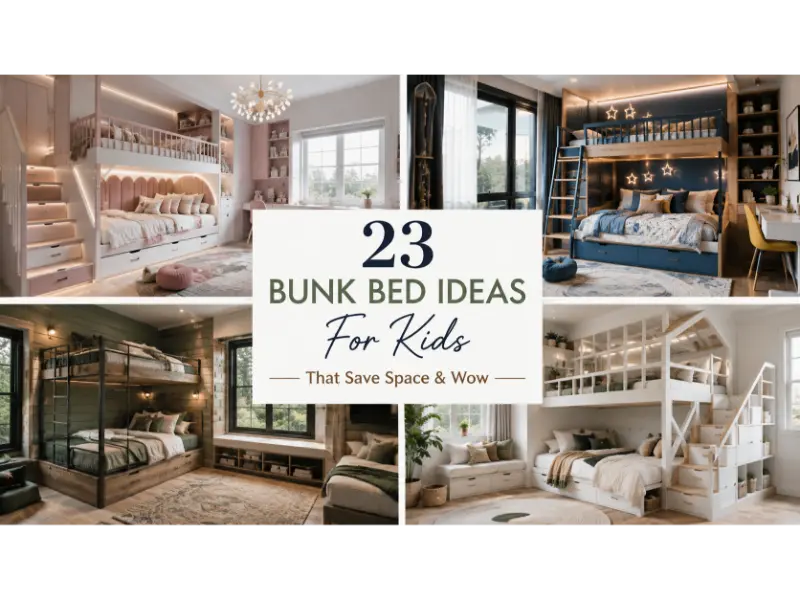
23 Amazing Bunk Bed Ideas For Kids That Save Space & Wow
When a shared kids’ room feels crowded, the right bunk bed can completely change how the space works. It gives siblings a comfortable place to sleep while freeing valuable floor space for play, homework, storage, and movement. The best designs today go beyond simple stacked beds. They combine space saving furniture, smart storage, cozy details, and playful style that can grow with your children.
This guide brings together 23 fresh kids room ideas that make bunk beds feel stylish rather than bulky. You will find built in storage, study zones, cozy reading corners, modern layouts, themed designs, and flexible configurations for different room sizes. Safety matters just as much as appearance, so every design should use the correct mattress, secure guardrails, and a sturdy construction. The American Academy of Pediatrics advises keeping children younger than six off the upper bunk.
Creative Bunk Bed Ideas For Kids
1. Bunk Bed Ideas For Kids With Built In Drawers
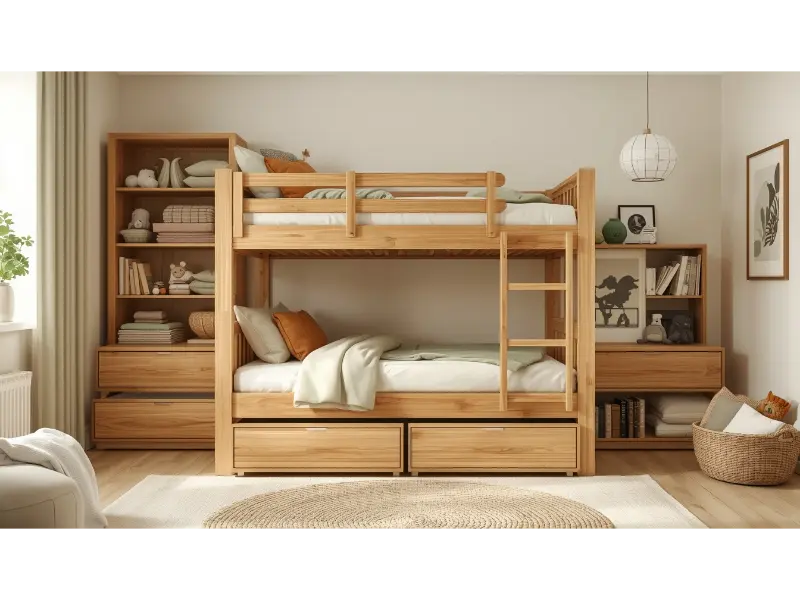
A bunk bed with built in storage makes every inch of a small bedroom work harder. Deep drawers beneath the lower bed can hold pajamas, toys, extra blankets, or seasonal clothing without taking up additional floor space. Choose a finish that matches the room so the storage feels like part of the furniture instead of an afterthought.
For a polished look, keep everyday items in the easiest drawers to reach and reserve higher or deeper compartments for less frequently used belongings. Soft neutral bedding can balance the visual weight of the wood frame, while baskets and simple artwork make the room feel warm and organized without looking overly decorated.
Pro Tip: Choose drawers with smooth, sturdy runners and enough depth to hold bulky bedding.
2. Corner Bunk Bed Layout
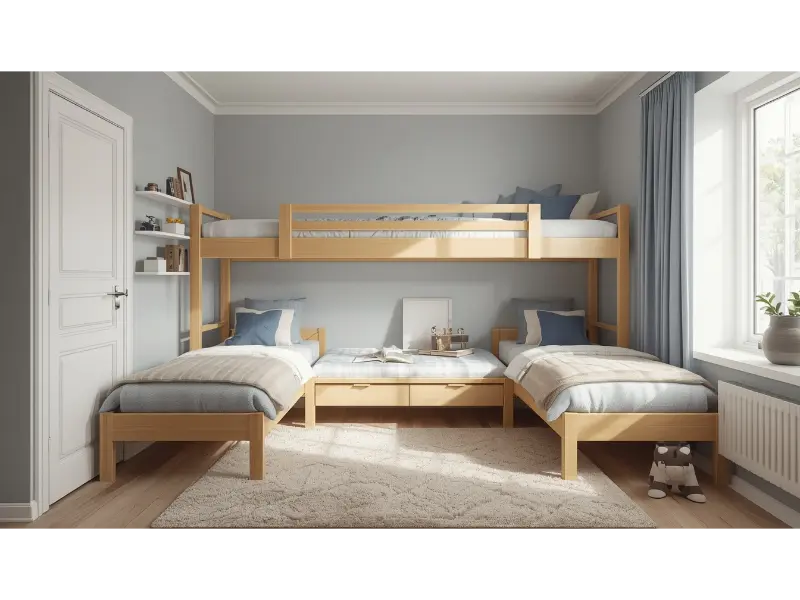
A corner layout can make an awkward bedroom feel surprisingly spacious. Instead of placing the bunk bed directly in the middle of the room, position it against two walls to create a clear central play area. This arrangement works especially well in compact rooms where every open section of floor matters.
The corner placement also gives the room a cozy architectural feeling. Add a small bookshelf, floor cushion, or soft reading lamp nearby without blocking the ladder. The result feels intentional and comfortable rather than crowded. It also creates a natural separation between the sleeping zone and the rest of the room.
Pro Tip: Keep the ladder and entry area completely clear so children can climb safely and easily.
Read More: 23 Ceiling Decor Ideas to Elevate Your Room in Style
3. Modern White Bunk Bed For A Bright Room
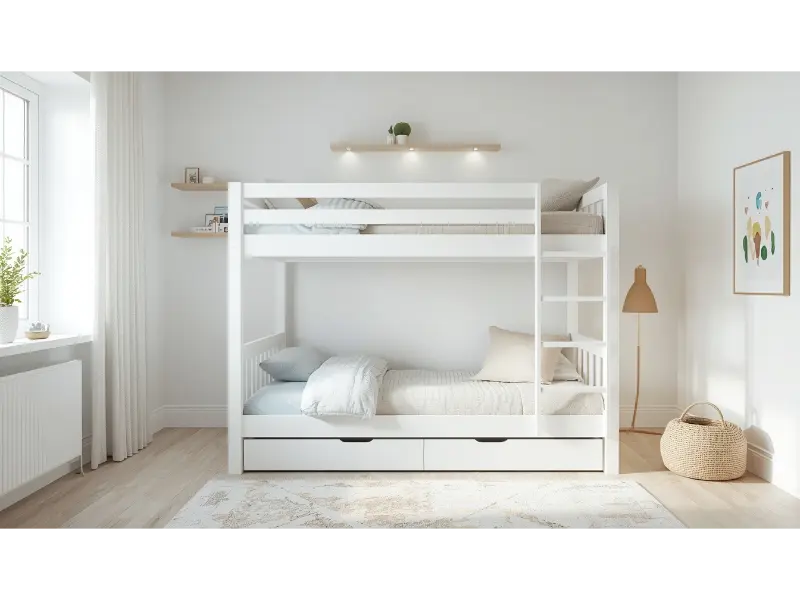
A white bunk bed can visually lighten a small bedroom while making the ceiling feel taller. Its simple color works with almost any decorating style, from Scandinavian minimalism to colorful modern kids rooms. Pair it with pale wood flooring and soft textiles for a calm, bright atmosphere.
You can introduce personality through bedding, artwork, curtains, and small accessories instead of choosing a heavily themed frame. This approach also makes future updates easier because the basic furniture stays versatile. When children outgrow a playful color scheme, changing textiles can refresh the room without replacing the entire bed.
Pro Tip: Use washable bedding and removable accessories so the bright room stays practical for everyday family life.
4. Bunk Bed With A Desk Underneath
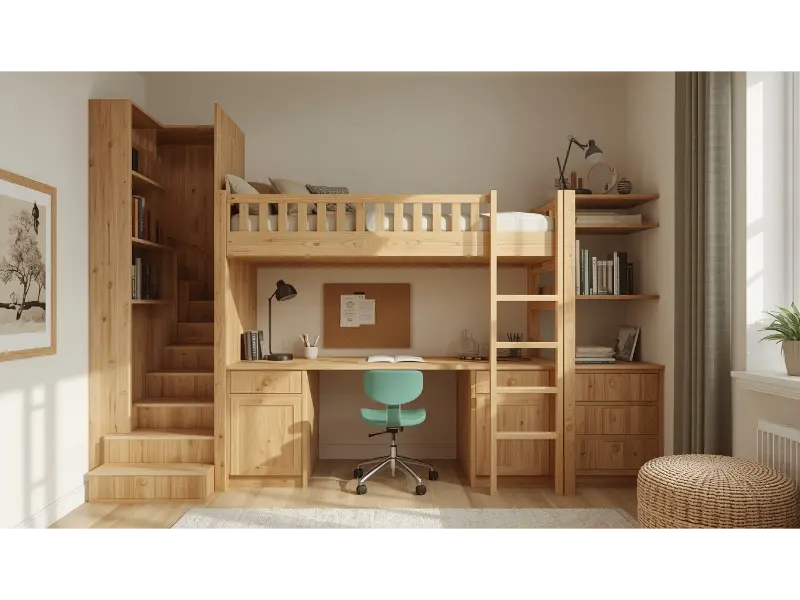
When floor space is limited, combining sleeping and studying in one structure can be extremely useful. A bunk bed with desk underneath creates a dedicated homework zone without requiring a separate desk elsewhere. The elevated bed also leaves valuable floor space available for play or storage.
Keep the study area visually simple so it does not feel cramped. A narrow desk, wall mounted shelves, and one focused task light provide enough function without overwhelming the space. Choose a chair that fits comfortably beneath the desk and leave enough clearance for children to move naturally.
Pro Tip: Position the desk where it receives natural daylight without creating glare on screens or books.
5. House Shaped Bunk Bed
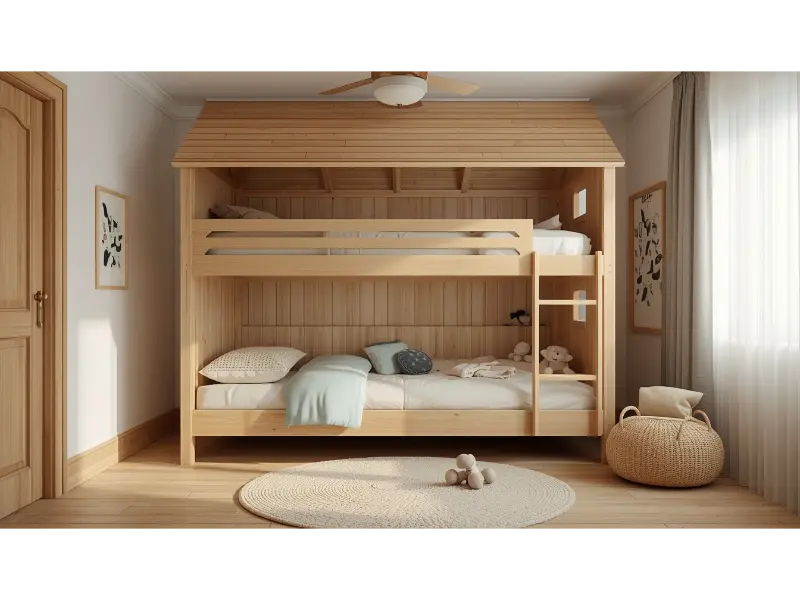
A house shaped bunk bed turns an ordinary sleeping area into a playful little retreat. The roof detail gives the upper section a cozy character while making the bed feel like a tiny room within the room. This style works beautifully for children who enjoy imaginative play.
Keep the surrounding decoration relatively calm so the structure remains the focal point. Natural wood, warm whites, and muted colors create a timeless appearance that does not feel too young. A small reading lamp or fabric canopy can add coziness without making the area visually crowded.
Pro Tip: Avoid hanging cords, loose ropes, or decorative items around the upper bunk that could create safety concerns.
Read More: 23 Vintage Bathroom Ideas for Timeless Charm & Style
6. Bunk Bed With Stair Storage
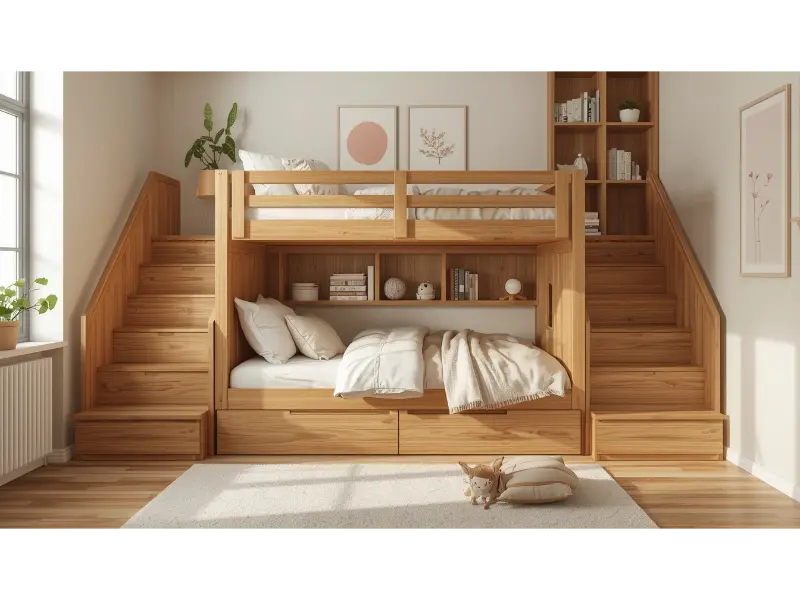
A staircase bunk bed combines climbing access with useful storage. Instead of wasting the space beneath a traditional ladder, each stair can contain a drawer or cabinet. This makes the design particularly helpful for children’s rooms that lack closets or extra shelving.
The staircase also creates a more substantial furniture piece, so balance it with light colors and uncluttered walls. Use the drawers for books, clothing, toys, or spare bedding and keep the most frequently used items in the lower compartments. The result feels practical while still looking like a carefully designed bedroom.
Pro Tip: Make sure the stairs have secure handholds and follow the manufacturer’s installation instructions carefully.
7. Natural Wood Bunk Bed With Cozy Textiles
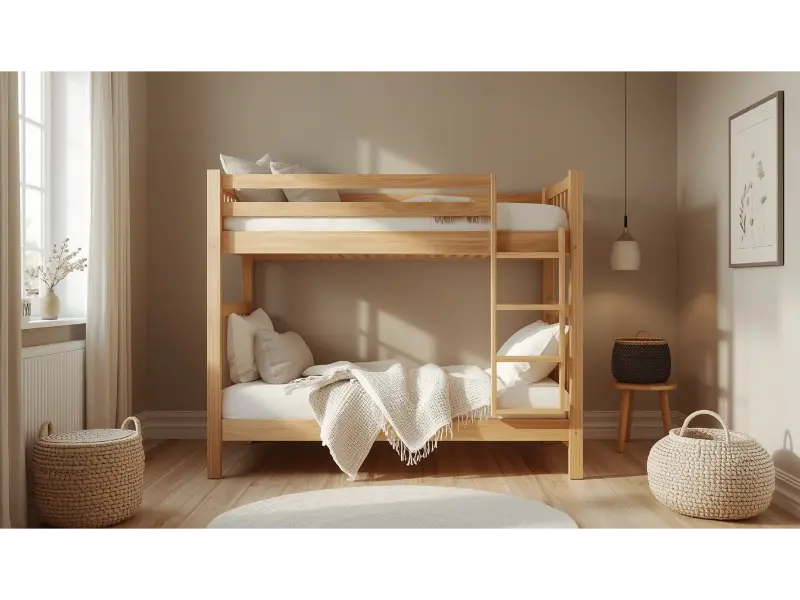
Natural wood brings warmth to a shared room and helps prevent a bunk bed from feeling too industrial. Oak, pine, or another suitable wood finish can pair easily with neutral bedding and colorful accessories. The organic texture also gives the room a comfortable, homey quality.
Layer the beds with breathable bedding, simple blankets, and a few decorative cushions that stay safely away from climbing areas. Add woven baskets and soft rugs to continue the natural theme. This combination creates a peaceful sleeping space that works for different ages and personalities.
Pro Tip: Choose a durable finish that can handle everyday cleaning, scratches, and active children.
8. Triple Bunk Bed For Three Siblings
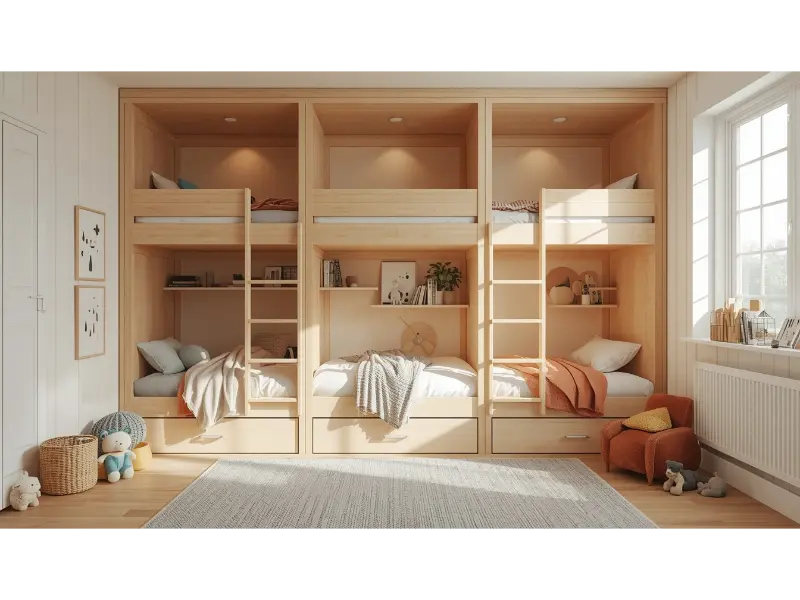
A triple bunk configuration can solve a difficult room planning problem when three siblings share one bedroom. Instead of placing three separate beds across the floor, vertical sleeping space preserves room for play and storage. The design should feel sturdy and carefully planned rather than simply stacked.
Choose coordinated bedding colors instead of identical patterns so each child gets a little individuality. Built in shelves can provide personal storage beside each sleeping area. Before choosing this layout, measure ceiling height, access points, and available clearance carefully so the finished arrangement remains comfortable.
Pro Tip: Never assume a triple configuration is automatically safe; follow the manufacturer’s specific age, weight, mattress, and assembly requirements.
9. Loft Bunk With A Play Space Below
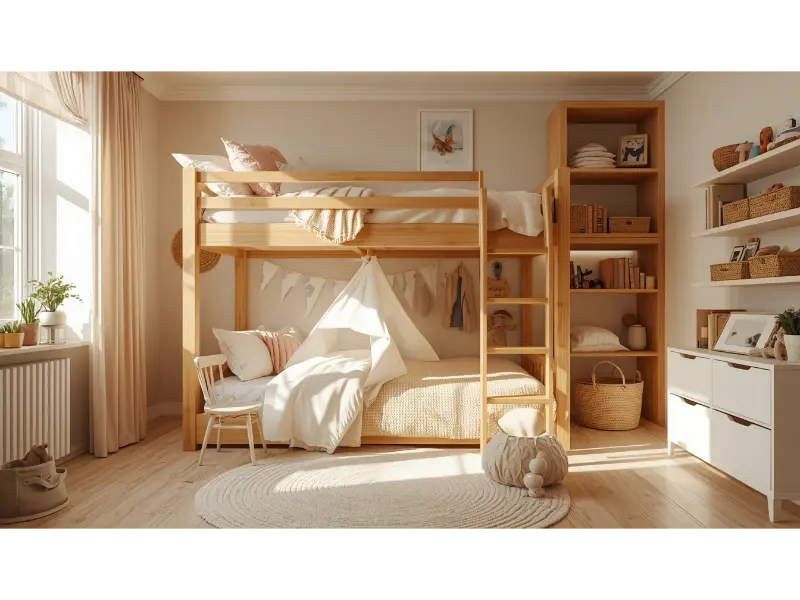
A loft style bunk transforms the lower area into a mini playroom. Children can use the space for reading, imaginative games, toy storage, or a small seating area. This approach works especially well when the bedroom has limited floor area but still needs a dedicated activity zone.
Keep the lower space open enough for comfortable movement. A low shelf, soft rug, and a few baskets can define the area without filling it. If the ceiling is low, choose a lower loft configuration so the upper sleeping area does not feel cramped.
Pro Tip: Measure the distance between the mattress and ceiling before buying so the upper sleeping area has appropriate clearance.
10. Built In Bunk Bed Wall
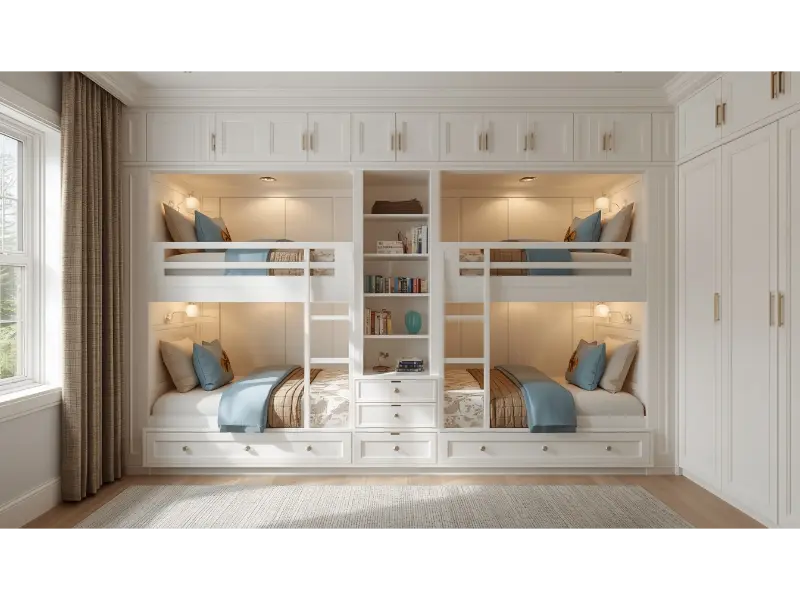
A built in bunk wall can turn an entire section of the bedroom into a highly efficient storage and sleeping zone. Cabinets around the bunks can store clothing, books, toys, and school supplies while the center remains dedicated to sleep.
This design feels especially polished when the cabinetry uses one consistent material and color. Add small personal touches to each sleeping area through bedding and artwork. The result resembles custom furniture rather than a standalone bed, which can make a small room feel more cohesive.
Pro Tip: Have built in furniture professionally planned so ventilation, access, structural support, and mattress clearance receive proper attention.
11. Twin Over Full Bunk Bed
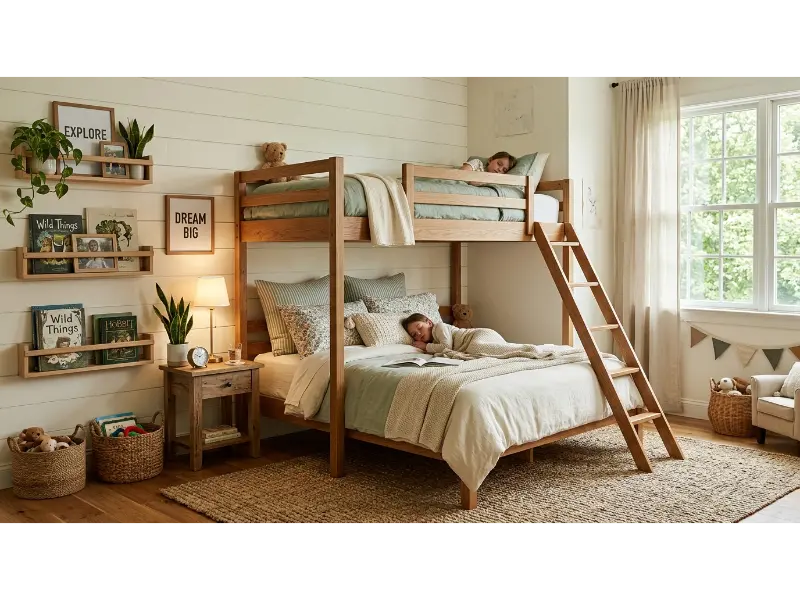
A twin over full arrangement gives the lower sleeper more space while keeping the vertical footprint compact. It can work well for siblings of different ages or for rooms that occasionally host overnight guests. The wider bottom bed also gives older children a more comfortable sleeping surface.
Because the lower mattress is wider, leave enough clearance around the bed for movement. Keep the room balanced with slim furniture and wall mounted storage. Coordinated bedding helps the two levels feel connected while allowing each child to choose their preferred colors or patterns.
Pro Tip: Check the manufacturer’s mattress size and weight specifications instead of assuming any standard mattress will fit.
12. Bunk Bed With Reading Nook
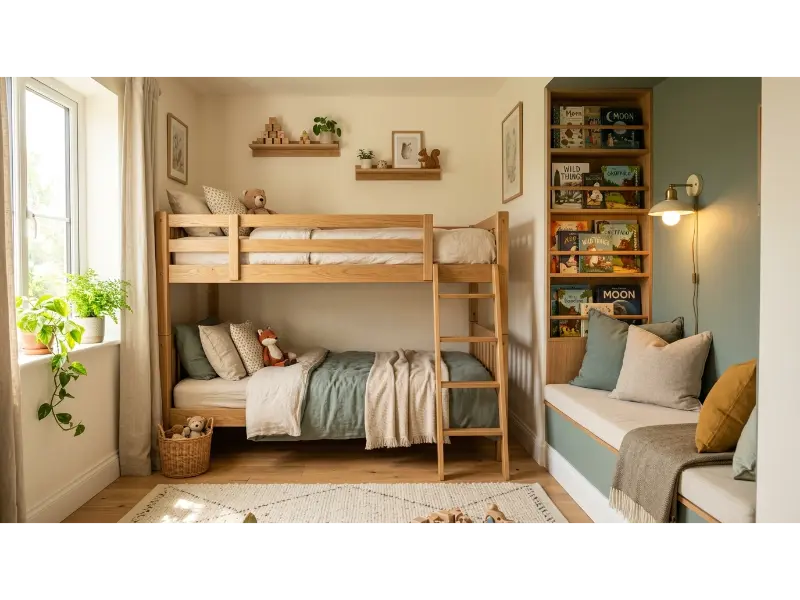
A bunk bed can become more than a sleeping arrangement when paired with a dedicated reading corner. Place a compact bookshelf beside the lower bunk and create a small nook with a cushioned seat or floor mattress. This gives children a quiet place to read without consuming much floor space.
Keep the reading area visually connected to the bed using matching colors and materials. A warm lamp can make the nook inviting during evening reading, while wall shelves keep books accessible. The design encourages independent quiet time while keeping the bedroom organized.
Pro Tip: Use a properly installed reading light and keep electrical cords safely out of climbing paths.
13. Minimalist Bunk Bed For A Small Room
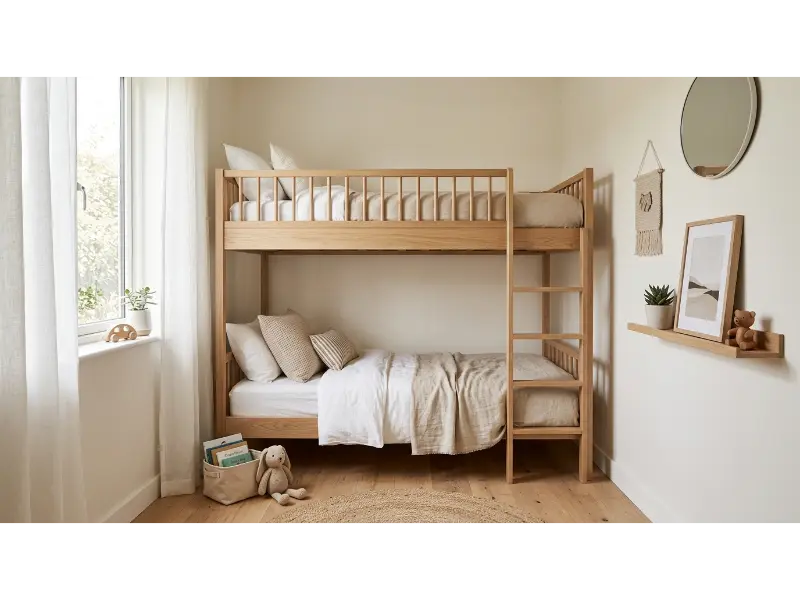
Minimalism works particularly well when the room itself is small. A slim bunk frame with clean lines can provide two sleeping spaces without making the room look visually heavy. Light colors and limited accessories help maintain a sense of openness.
Instead of filling every wall, choose a few useful pieces such as one shelf, one storage cabinet, and a compact rug. The goal is not to remove personality but to give every item a clear purpose. A few colorful books or bedding accents can still make the room feel cheerful.
Pro Tip: Prioritize circulation space around the bed before adding decorative furniture.
14. Bunk Bed With Individual Storage Cubes
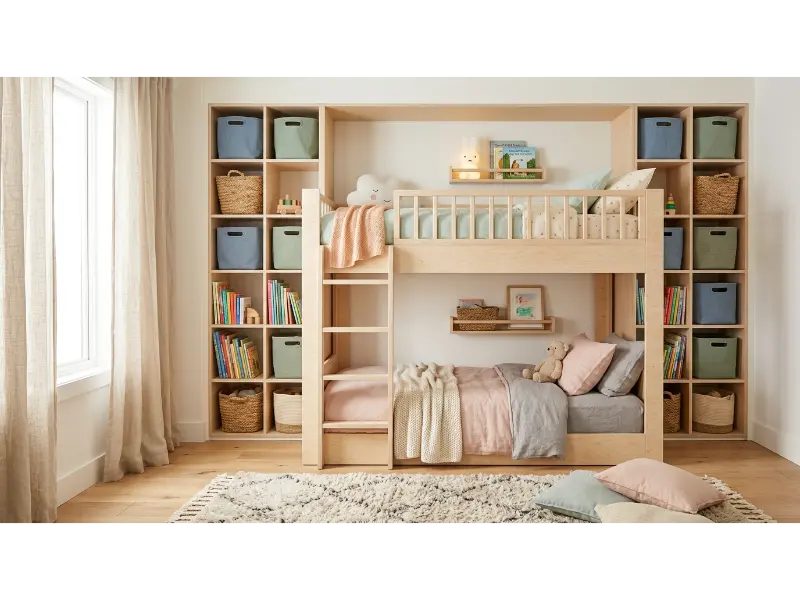
Personal storage can make shared bedrooms easier to manage. Give each child a small shelf or cube near their sleeping space for books, favorite objects, and everyday belongings. This simple arrangement creates ownership while reducing clutter across the rest of the room.
Use labeled or color coordinated baskets if children need help keeping things organized. Open cubes make frequently used belongings easy to reach, while closed boxes can hide less attractive items. The combination keeps the bedroom practical without turning it into a wall of cabinets.
Pro Tip: Secure freestanding storage furniture to the wall according to its manufacturer’s instructions to reduce tip over risks.
15. Scandinavian Style Bunk Bed
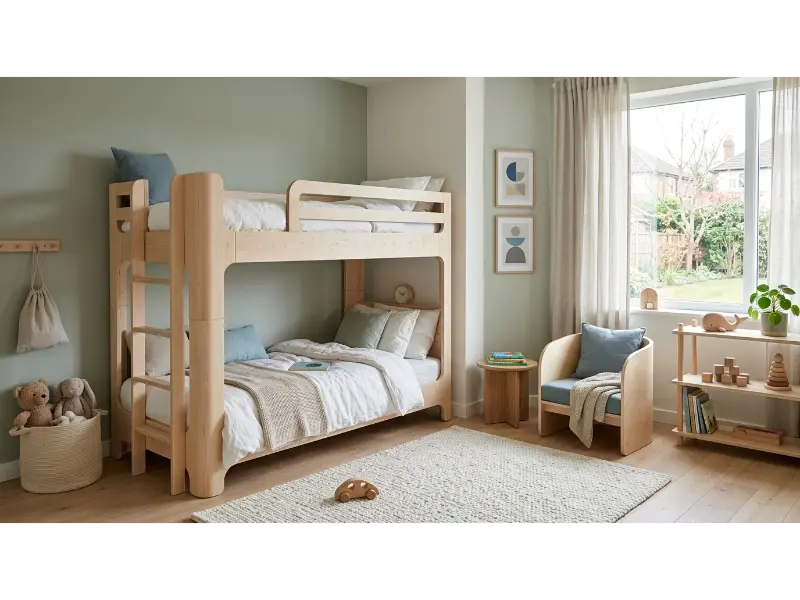
Scandinavian design brings a clean, warm feeling to children’s bedrooms through pale wood, soft colors, and simple shapes. A bunk bed becomes less visually imposing when paired with light flooring and uncluttered walls.
Choose natural textures such as cotton, wool style rugs, and woven baskets to add comfort without introducing visual chaos. Small color accents can make the room playful while keeping the overall palette calm. This approach also adapts well as children grow.
Pro Tip: Let the bunk bed remain the main furniture feature and avoid crowding it with oversized accessories.
16. Bunk Bed With A Hidden Study Station
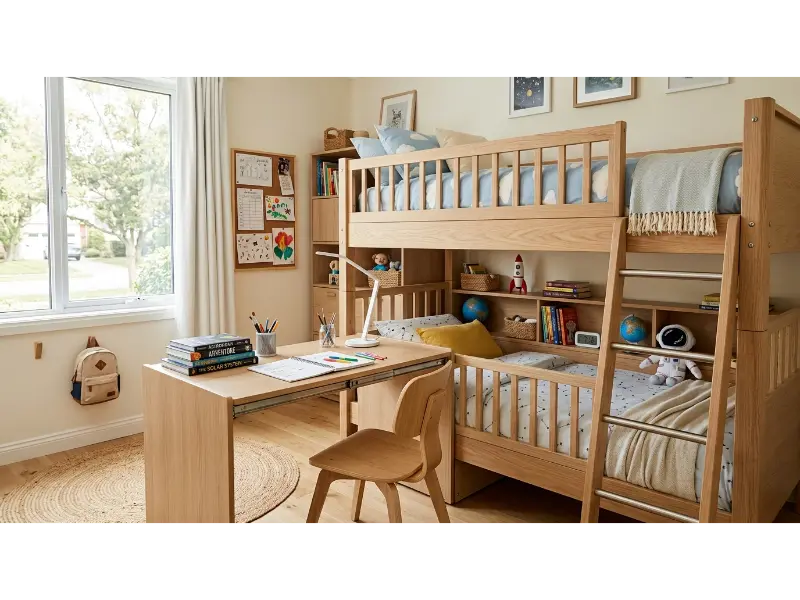
A hidden study station can be useful when a bedroom needs to serve several purposes. A pull out desk can remain tucked away during playtime and slide into place when homework begins. This makes the room feel flexible instead of permanently arranged around schoolwork.
Choose a desk surface large enough for books and a laptop without making the structure bulky. Add a small storage compartment for pencils and school supplies so the workspace can disappear neatly after use. This design works particularly well in compact bedrooms.
Pro Tip: Check that the pull out mechanism locks securely and does not create pinch points.
17. Colorful Bunk Bed For A Playful Room
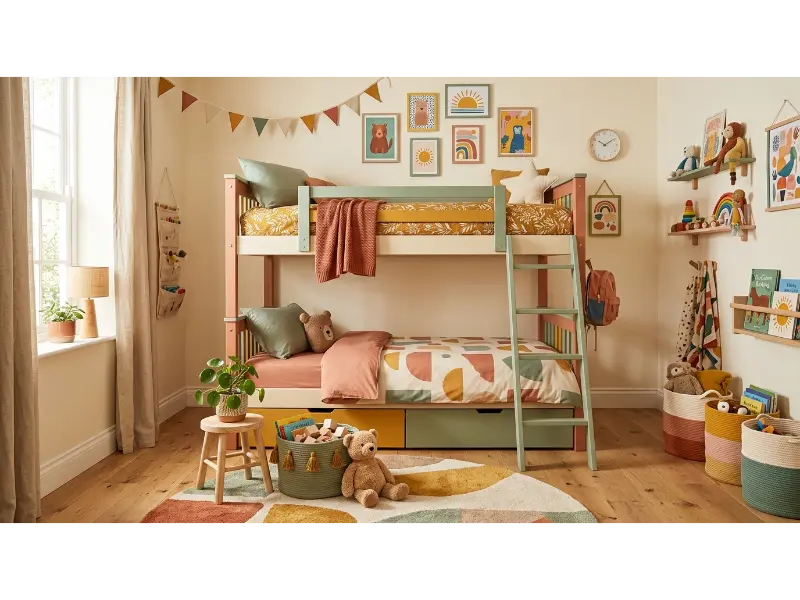
Color can turn a simple bunk into the centerpiece of a playful bedroom. Instead of covering every surface in bright patterns, choose one strong frame color and repeat smaller accents throughout the room. This creates a cheerful space without making it feel chaotic.
For a more timeless look, consider muted versions of popular colors such as dusty blue, sage, terracotta, or warm yellow. Children can then personalize their sleeping areas with bedding and artwork. When their tastes change, you can update those smaller elements instead of repainting everything.
Pro Tip: Use durable, child appropriate finishes and check the manufacturer’s care instructions before cleaning painted surfaces.
18. Bunk Bed With Curtain Privacy
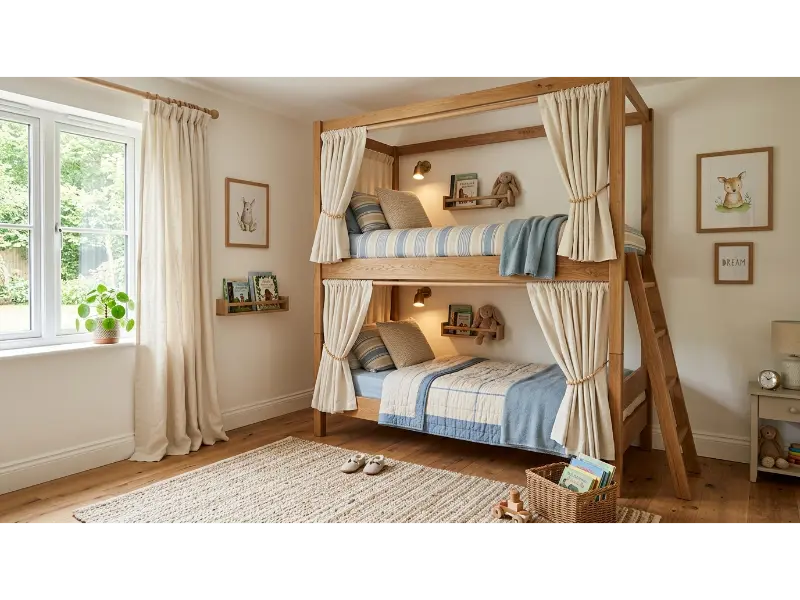
Privacy curtains can make shared sleeping spaces feel more personal. Each child gets a small visual retreat without requiring a separate room. Choose breathable, lightweight fabric and colors that complement the overall bedroom palette.
Curtains should enhance privacy rather than create a complicated enclosure. Keep them neatly fitted and away from climbing routes, lights, and other potential hazards. A simple linen look can create a calm atmosphere while still allowing plenty of daylight into the room.
Pro Tip: Avoid loose hanging cords and secure curtain hardware carefully according to the product instructions.
19. Bunk Bed With Under Bed Toy Storage
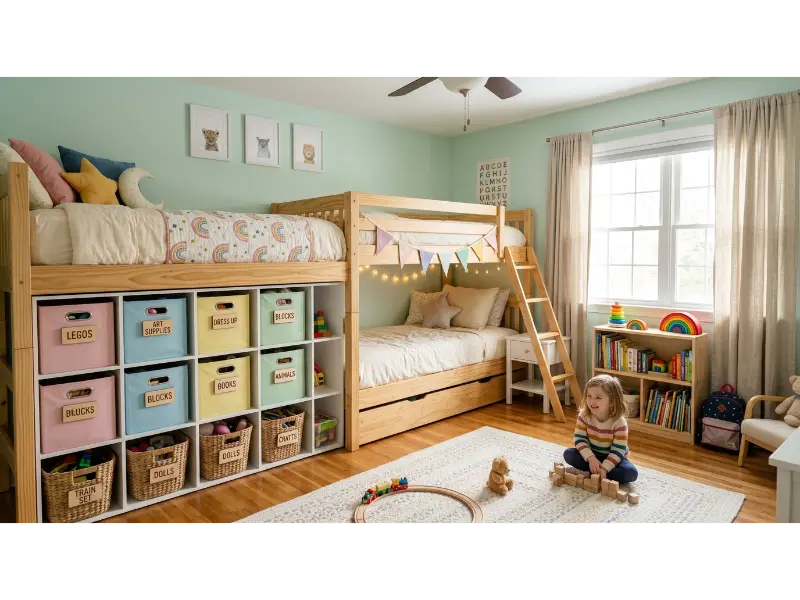
Toy storage underneath a bunk bed keeps the center of the room clear for play. Large baskets or drawers can hold building blocks, stuffed animals, games, and craft supplies. Children can also learn to return toys to the same storage zone after playing.
Use containers that children can lift and move safely. Open baskets work well for frequently used toys, while drawers create a cleaner visual appearance. Keep heavy items low and avoid overloading storage compartments so they remain easy to manage.
Pro Tip: Keep storage from blocking ventilation, access points, ladders, or emergency pathways.
20. Modern Metal Bunk Bed
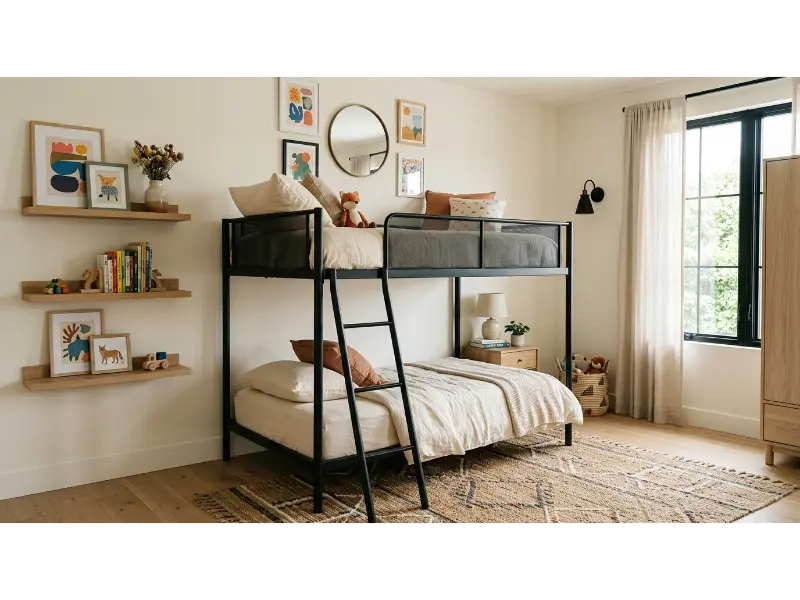
A metal bunk bed can bring a modern architectural look to a child’s room. Slim rails often create a lighter visual profile than chunky furniture, making the room feel more open. Pair the frame with warm wood and soft textiles to prevent the space from feeling cold.
Choose bedding in warm neutrals or gentle colors to soften the metal structure. A textured rug and wooden accessories can add balance. This style works especially well in modern homes where simple furniture and clean lines already define the interior.
Pro Tip: Inspect the frame, joints, fasteners, and welds regularly for signs of damage or loosening.
21. Bunk Bed With A Built In Wardrobe
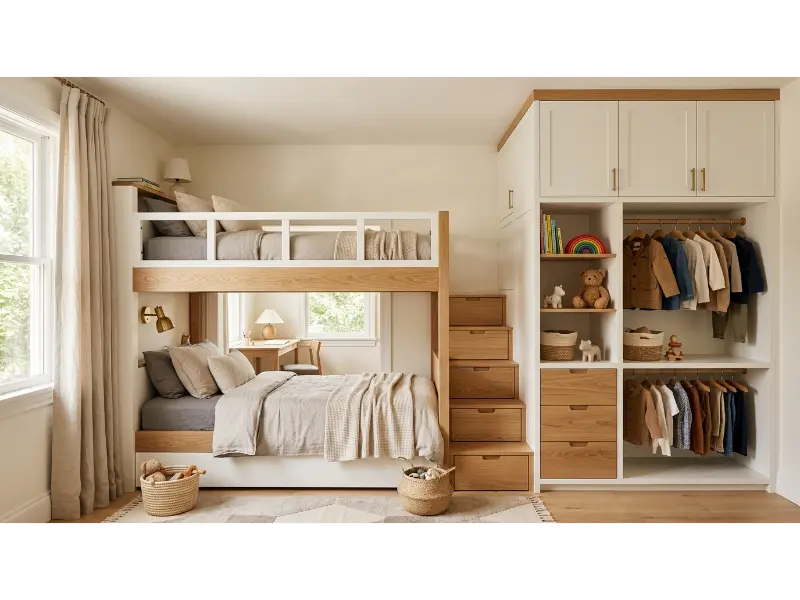
Combining a wardrobe with the sleeping structure can make a tiny bedroom dramatically more efficient. Clothing storage can sit beside or beneath the bunk, reducing the need for a separate dresser. This leaves more open floor area for play and movement.
Keep the wardrobe visually integrated with the bed using matching materials and simple handles. Interior organizers can divide clothing by type so children can find what they need more easily. A few open shelves can display books or favorite objects without overwhelming the design.
Pro Tip: Make sure doors and drawers open fully without interfering with the ladder or access to either bunk.
22. Coastal Bunk Bed For Kids
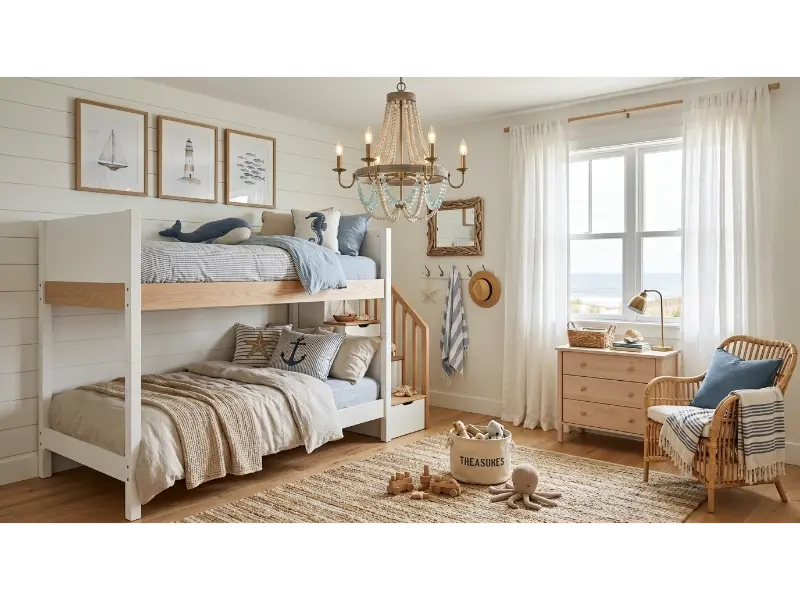
A coastal bunk bed theme creates a fresh and relaxed atmosphere without relying on obvious nautical decorations. White wood, pale blue, sandy beige, and natural woven textures can suggest the feeling of the sea while keeping the room sophisticated.
Use a few carefully chosen coastal details rather than filling the room with anchors and boat motifs. Striped bedding, woven baskets, and simple ocean inspired artwork provide enough personality. The restrained palette also makes the bedroom feel brighter and more spacious.
Pro Tip: Keep the theme flexible by using removable textiles and artwork rather than permanently themed furniture.
23. Flexible Bunk Bed That Separates Into Two Beds
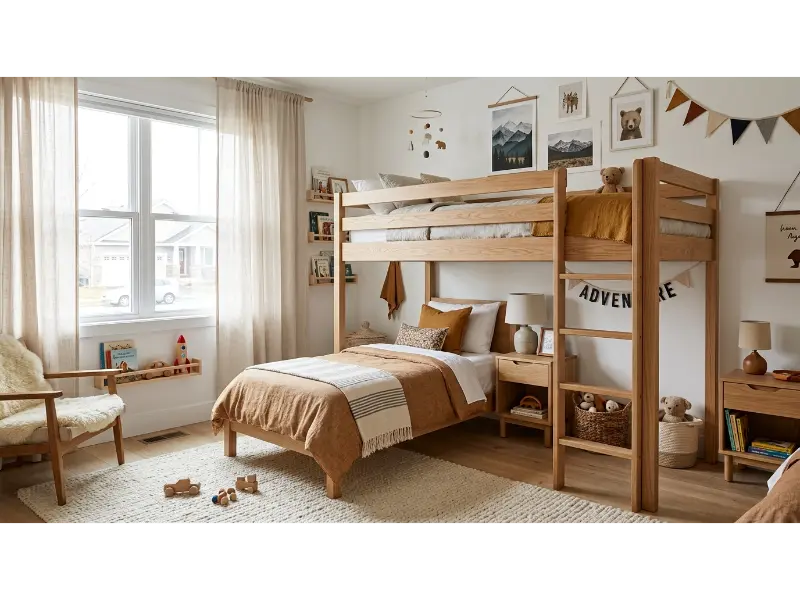
A flexible bunk that can later separate into two individual beds offers long term value. It allows the bedroom to change as children grow, especially when siblings eventually want separate sleeping arrangements. The design gives you vertical space now without locking you into one layout forever.
Look for a construction specifically designed to separate safely rather than assuming every bunk can be divided. Once separated, the beds should have all required connectors removed or handled according to the manufacturer’s instructions. This flexibility makes the furniture useful through different stages of childhood.
Pro Tip: Keep the original assembly instructions and hardware so future conversion follows the manufacturer’s approved method. The American Academy of Pediatrics specifically advises removing dowels and connectors when separating compatible bunk beds.
How To Choose The Right Bunk Bed For Kids
Start with the room itself. Measure the floor area, ceiling height, door swing, windows, closet access, and walking paths before choosing a design. A beautiful bunk can still make a room uncomfortable if the ladder blocks circulation or the upper mattress sits too close to the ceiling.
Next, consider how the room needs to function. If storage is the biggest problem, choose drawers, stairs, shelves, or wardrobe integration. If homework is important, consider a desk configuration. If play space matters most, a loft arrangement may make better use of the available floor.
Safety should always come before appearance. The CPSC requires children’s bunk beds to meet federal safety requirements addressing guardrails, entrapment hazards, and structural integrity. Its guidance also specifies that upper guardrails should extend sufficiently above the mattress and that the correct mattress size and thickness must be used.
The American Academy of Pediatrics recommends not allowing children younger than six years to sleep on the upper bunk. It also recommends a secure ladder, appropriate guardrails, a snug mattress fit, and avoiding roughhousing or jumping on the bunks.
Styling Tips For A Pinterest Worthy Kids Room
Choose one main color direction and repeat it through bedding, artwork, rugs, and storage. A room looks more intentional when its colors connect naturally. You can still give each child an individual space by using different bedding patterns within the same palette.
Layer textures instead of adding too many decorations. Cotton bedding, woven baskets, a soft rug, natural wood, and simple wall art can make a bedroom feel warm without creating clutter. This approach also photographs beautifully because the room has depth without becoming visually busy.
Use vertical space wisely. Floating shelves, wall mounted book storage, pegboards, and tall wardrobes can keep belongings off the floor. However, secure furniture and storage units properly and keep climbing hazards away from the bunk structure.
Frequently Asked Questions
Are bunk beds good for small kids rooms?
Yes. A well designed bunk can free significant floor space because two sleeping areas occupy a similar footprint to one traditional bed. Designs with drawers, desks, stairs, or wardrobes can make the available space even more useful.
What age is appropriate for the top bunk?
The American Academy of Pediatrics advises that children younger than six should not sleep on the upper bunk. Parents should also consider the child’s coordination, maturity, ability to use the ladder correctly, and the manufacturer’s specific age guidance.
What safety features should a kids bunk bed have?
Look for secure guardrails, a sturdy frame, correctly fitted mattress support, the correct mattress size and thickness, and a secure ladder. The CPSC requires children’s bunk beds to meet safety requirements that address falls, entrapment, and structural integrity.
Can bunk beds save space?
Yes. Their biggest advantage comes from using vertical space instead of placing two beds side by side. Adding storage drawers, shelves, desks, or wardrobes can increase the amount of useful space even further.
Is a bunk bed with stairs better than one with a ladder?
It depends on the room and the child. Stairs can provide easier access and useful built in storage, but they require more floor space. A ladder takes less room and may work better in a very compact bedroom.
Can bunk beds be separated later?
Some models are specifically designed to convert into two separate beds. Never assume a bunk can safely separate. Follow the manufacturer’s instructions, remove the correct connectors, and use only the approved configuration.
How can I make a bunk bed feel less bulky?
Choose a light colored frame, simple lines, open shelving, and minimal surrounding furniture. White, pale wood, and soft neutral colors can make a large structure visually lighter. Keeping the floor around the bunk clear also improves the sense of space.
What mattress should I use?
Use only the mattress size and thickness specified by the bunk bed manufacturer. The CPSC notes that guardrail height and mattress thickness work together to reduce fall and entrapment risks.
Should a bunk bed sit against a wall?
A corner placement can provide useful stability and reduce exposed sides. The American Academy of Pediatrics recommends positioning bunk beds in a corner with walls on two sides when possible.
How do I keep a shared bunk room organized?
Give each child dedicated storage near their sleeping area. Drawers, baskets, shelves, and labeled compartments make it easier to keep personal belongings separate. Keeping the floor mostly clear also makes the room feel larger and easier to use.
Final Thoughts
The best Bunk Bed Ideas For Kids do more than stack two mattresses. They solve real problems in shared bedrooms by combining sleeping space with storage, study areas, play zones, and flexible furniture. Whether you prefer natural wood, modern white furniture, a playful house design, or a built in storage wall, the right choice should fit the room and the children who use it.
Start with measurements and daily needs before choosing a style. Then prioritize sturdy construction, proper guardrails, the correct mattress, safe access, and age appropriate use. Once those essentials are handled, you can personalize the room with color, texture, books, artwork, and cozy details. A thoughtfully planned bunk can make a small bedroom feel organized, comfortable, playful, and surprisingly spacious.