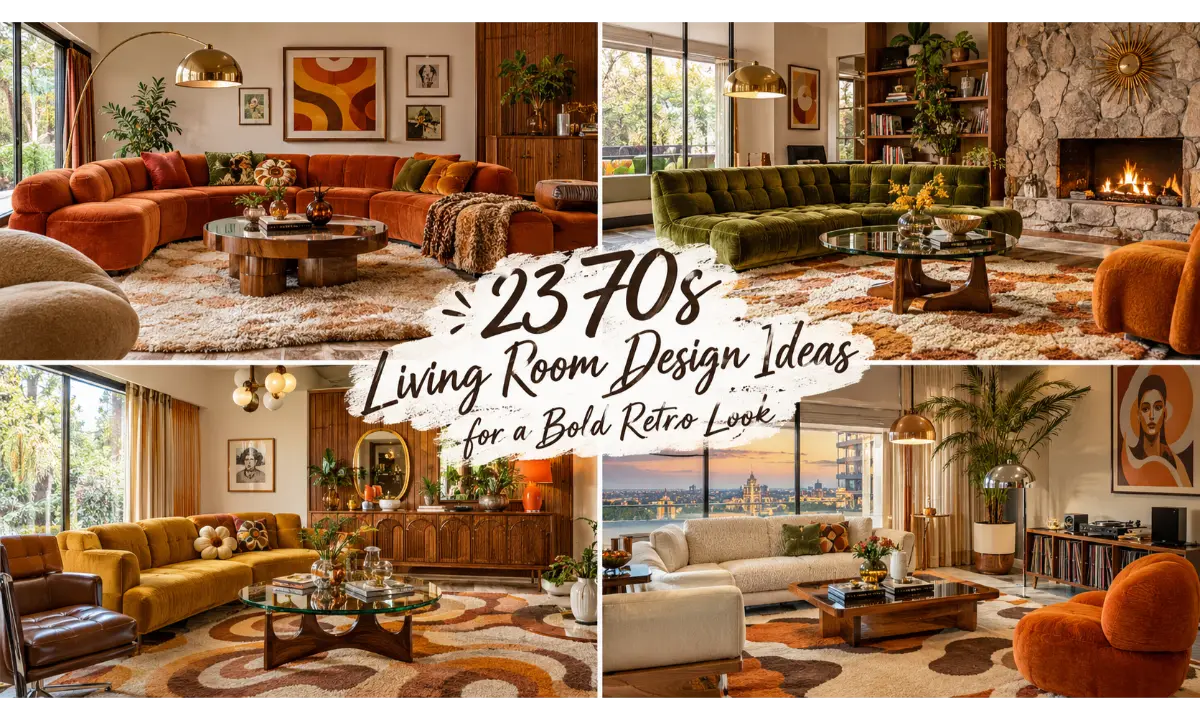
23 70s Living Room Design Ideas for a Bold Retro Look
The charm of the 1970s is making a big comeback, and it is easy to see why. Warm wood, earthy colors, funky furniture, and playful patterns can turn an ordinary room into a stylish, welcoming retreat. These 70s Living Room Design Ideas will help you bring vintage character into your home without making it feel outdated. Whether you love a bold retro look or a softer modern twist, you will find inspiration for creating a living room that feels unique, comfortable, and Pinterest worthy.
23 Creative 70s Living Room Design Ideas to Transform Your Space
1. 70s Living Room Design Ideas With Earthy Brown Tones
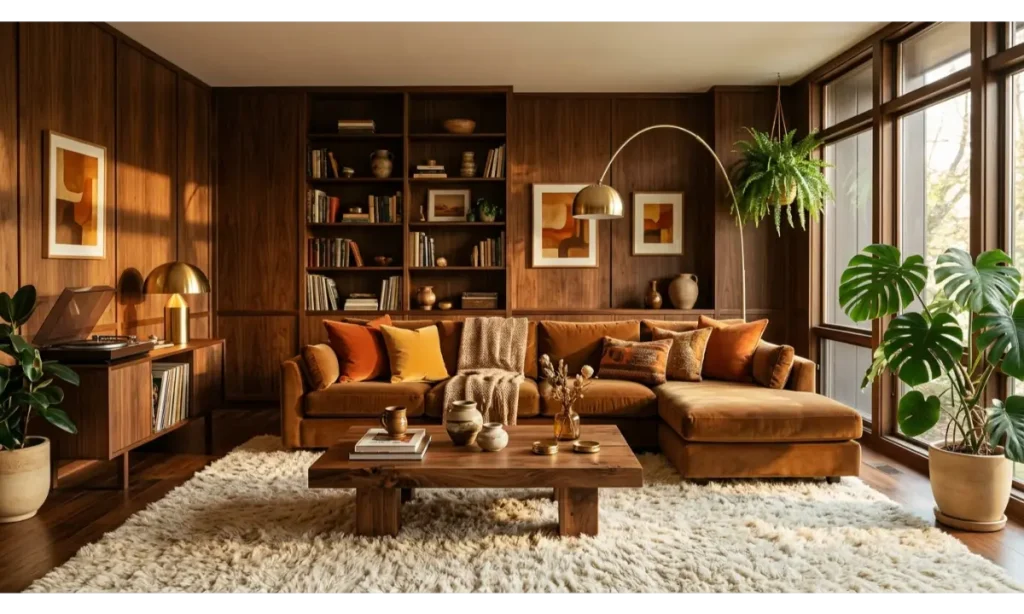
The beauty of 70s Living Room Design Ideas starts with earthy brown tones that make a space feel warm and grounded. Choose a caramel or chocolate brown sofa as the main feature, then add walnut furniture and cream accents to keep the room balanced. These rich shades capture the relaxed feeling of 1970s homes while giving your living room a timeless look. A textured rug and soft curtains can make the entire space feel more inviting.
For extra character, mix different brown shades instead of matching every piece. Add a few rust colored cushions, a vintage ceramic vase, or a wooden floor lamp to introduce depth. If your room is small, use lighter walls and cream upholstery to prevent the darker furniture from overwhelming the space. This combination works especially well for homeowners who love retro living room decor but still want a polished, modern interior.
Pro Tip: Combine chocolate brown, caramel, and cream in different textures to create a layered look without making the room feel too dark.
2. Burnt Orange and Mustard Yellow Accents
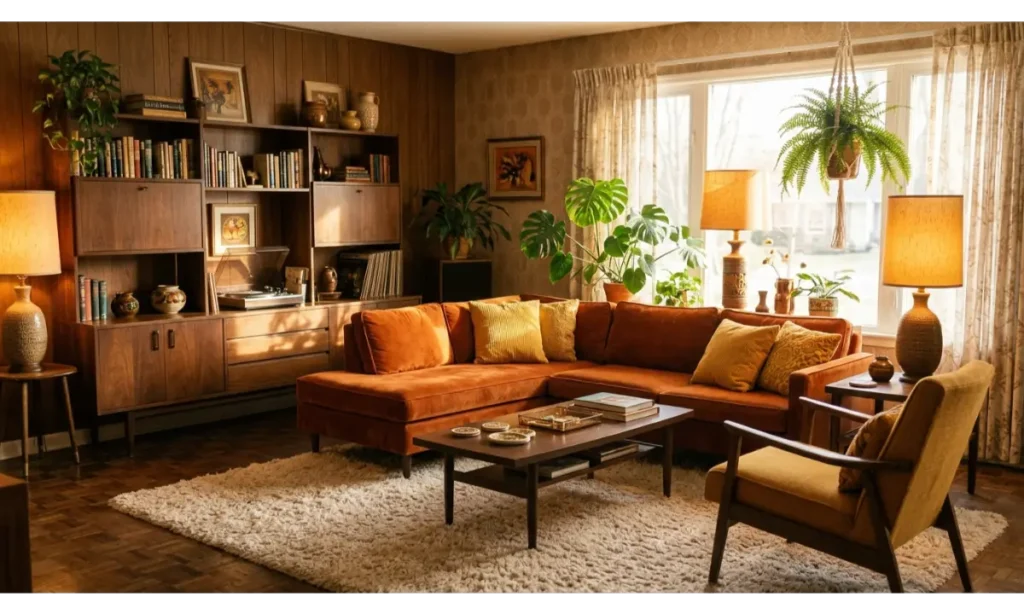
Burnt orange and mustard yellow are classic colors for 70s Living Room Design Ideas because they instantly create a cheerful, nostalgic atmosphere. You do not need to paint every wall or buy an entirely new furniture set to achieve this look. Start with an orange accent chair, mustard cushions, or a warm yellow throw. These small additions can bring personality to a neutral room while keeping your existing furniture useful and comfortable.
The secret is to balance these strong colors with quieter shades. Cream walls, natural wood, and beige curtains allow orange and yellow to stand out without competing for attention. You can also add a vintage-inspired print or a patterned cushion to connect the colors throughout the space. This approach creates a lively 1970s inspired living room that feels expressive without becoming visually overwhelming.
Pro Tip: Choose two warm accent colors and repeat them in at least three places, such as cushions, artwork, and decorative objects.
Read More: 20 Valentine’s Day Home Decor Ideas for a Romantic Home
3. Retro Velvet Sofas for a Luxurious Look
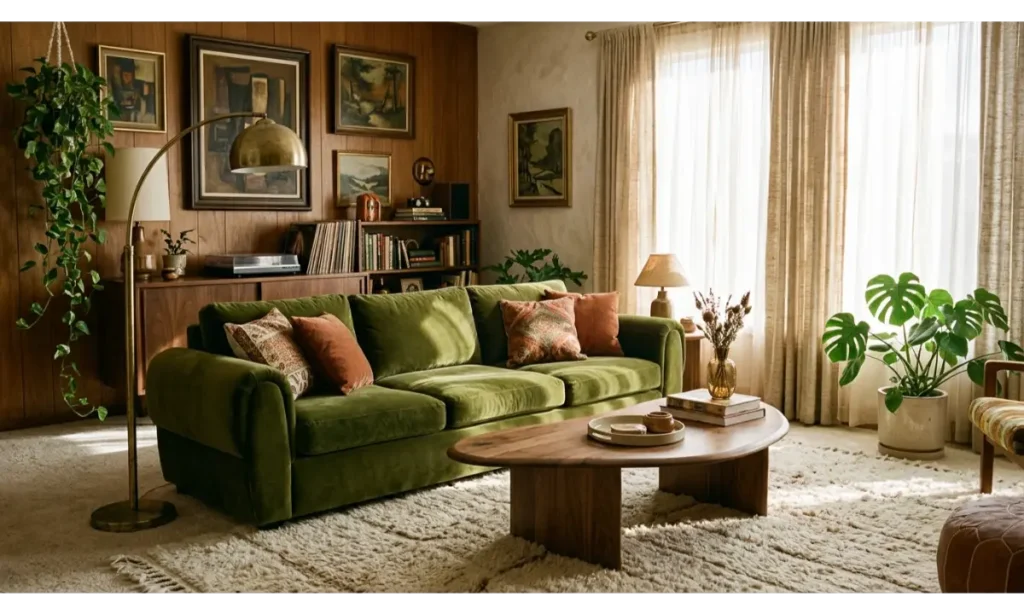
A velvet sofa can instantly elevate your 70s Living Room Design Ideas by adding rich color and a soft, luxurious texture. Look for rounded arms, low seating, or a curved silhouette to capture the distinctive furniture shapes of the decade. Olive green, rust, tobacco brown, and golden mustard are excellent choices. These colors pair beautifully with natural wood and create a welcoming seating area that encourages conversation and relaxation.
To make the sofa feel connected to the rest of your room, layer it with cushions in different fabrics and patterns. A simple cream rug can soften the overall look, while a wooden coffee table adds warmth. If you prefer a contemporary interior, keep the surrounding accessories minimal and let the sofa become the main attraction. This blend of vintage character and modern simplicity makes retro furniture styling especially appealing.
Pro Tip: Before purchasing a vintage sofa, check its frame, cushion support, and fabric condition to make sure it offers both style and everyday comfort.
4. Wood Paneling for Authentic Vintage Character
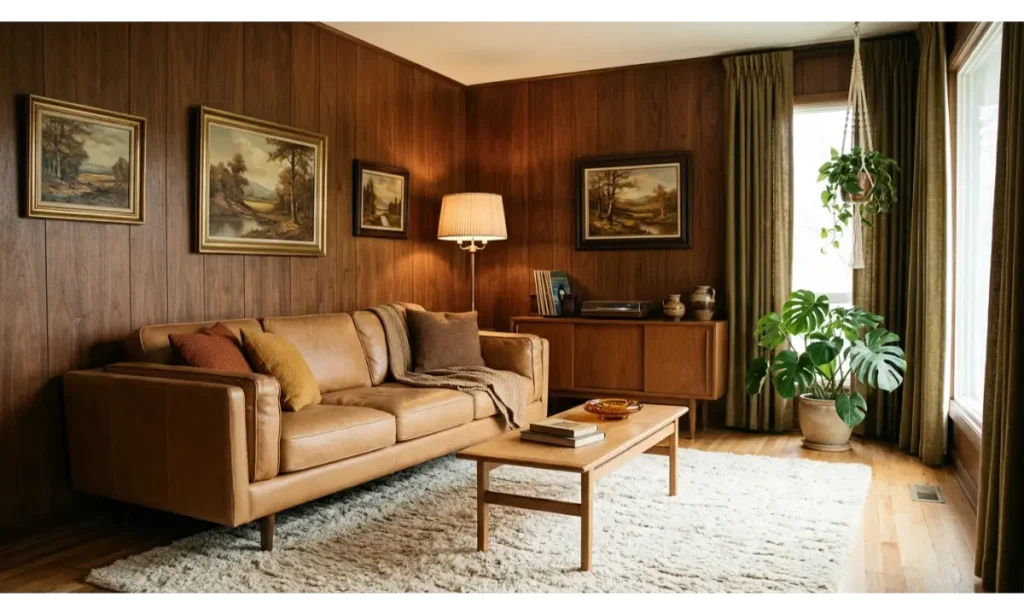
Wood paneling is one of the most recognizable features of 70s Living Room Design Ideas. Its deep grain and warm color create a cozy backdrop that makes furniture and accessories feel connected. You can install walnut panels on one feature wall rather than covering the entire room. This gives you the vintage atmosphere you want without making the space feel too enclosed, especially if your living room has limited natural light.
Pair the paneling with cream upholstery, a light rug, and a few carefully chosen accessories. A tan leather chair or brass lamp can add contrast without taking away from the wood’s natural beauty. For a budget friendly alternative, consider wood veneer panels or a carefully selected wood effect finish. These options help you create vintage living room interiors while keeping installation costs and maintenance manageable.
Pro Tip: Use a single paneled wall behind your sofa or television, and keep the other walls light to maintain visual balance.
5. Shag Rugs for a Cozy Retro Foundation
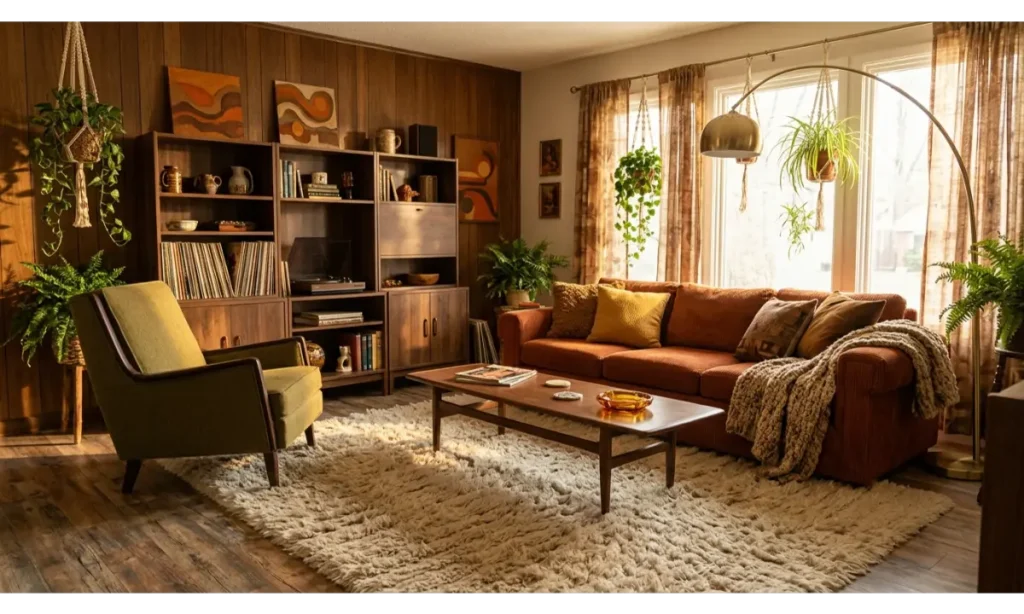
A shag rug brings softness and unmistakable vintage personality to 70s Living Room Design Ideas. Its thick, fluffy texture makes a seating area feel comfortable while adding contrast to smooth wooden floors and sleek furniture. Cream and beige rugs create a subtle foundation, whereas rust, gold, or brown versions introduce a stronger retro mood. The right rug can also help define your seating arrangement in an open plan living room.
Choose a size that allows the front legs of your sofa and chairs to rest on the rug. This simple detail makes the furniture arrangement feel intentional rather than scattered. If you have pets or children, look for a rug that is easy to maintain and does not trap too much dirt. Pair it with a low coffee table and rounded seating to complete your cozy retro living room.
Pro Tip: Measure your seating area before buying a shag rug, and leave a visible border of flooring around the arrangement.
Read More: 20 Japandi Home Decor Ideas for Calm, Minimal Living
6. Curved Furniture With Soft Retro Shapes
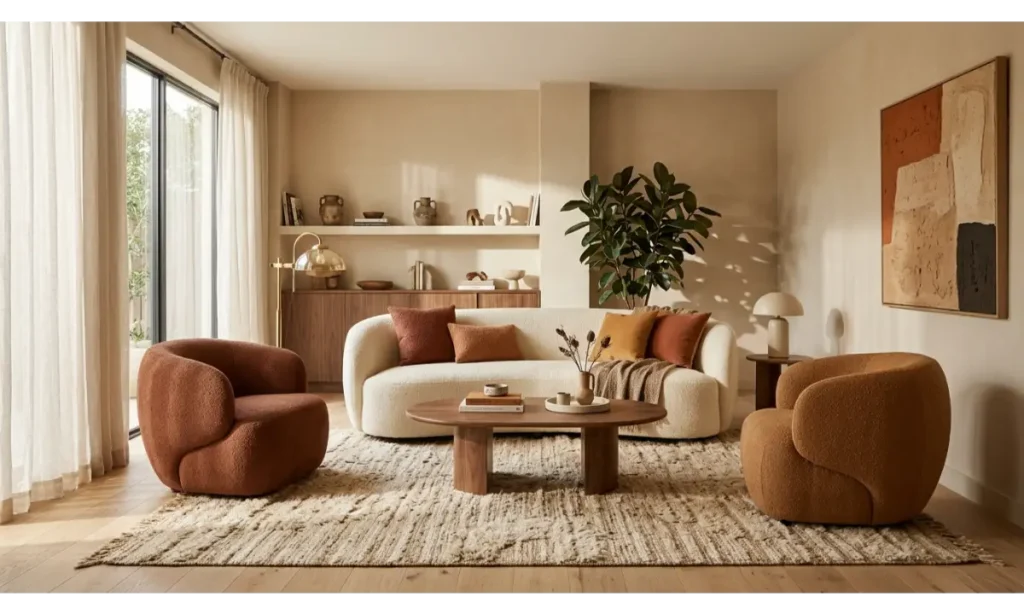
Curved furniture brings a softer, more playful feeling to 70s Living Room Design Ideas. Instead of filling the room with straight lines and sharp corners, introduce a rounded sofa, an oval coffee table, or a chair with sculptural arms. These shapes create a natural flow and make the seating area feel welcoming. Cream upholstery and warm wood help the curves stand out without making the design look too busy.
You can use curved furniture in a large living room or a compact apartment. In smaller spaces, an oval coffee table may improve movement around the seating area, while one rounded chair can add interest without taking up too much visual space. Combine these shapes with subtle geometric artwork and textured cushions for a cohesive finish. This style connects mid century modern furniture with the playful shapes associated with the 1970s.
Pro Tip: Choose one large curved piece as your focal point, then use simpler furniture around it to keep the room balanced.
7. A Sunken Living Room With Vintage Appeal
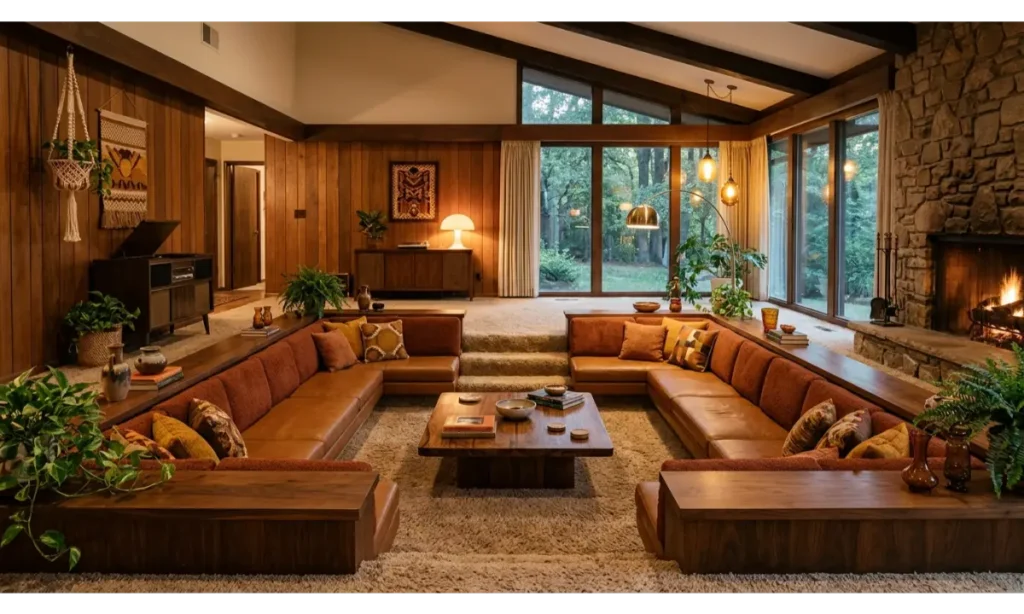
A sunken seating area is a dramatic way to bring the social spirit of 70s Living Room Design Ideas into a home. Often called a conversation pit, this arrangement places the seating slightly below the surrounding floor, creating a defined space for talking, relaxing, or entertaining. Built in benches, thick cushions, and a low coffee table help recreate the relaxed atmosphere associated with classic 1970s interiors.
A permanent sunken area requires careful planning, structural assessment, and a suitable layout, so it is not practical for every home. You can capture a similar feeling with a low sectional sofa arranged around a central table. Add warm lighting, layered cushions, and a soft rug to make the area feel intimate. This alternative gives you the atmosphere of retro conversation pit design without requiring major construction.
Pro Tip: If you are renovating, consult a qualified professional before changing floor levels, and consider accessibility and safe circulation.
8. Vintage Floral Wallpaper for a Bold Statement

Floral wallpaper can make 70s Living Room Design Ideas feel expressive and full of personality. Look for oversized flowers, organic shapes, and earthy color combinations rather than delicate modern prints. A feature wall behind the sofa can create a striking focal point without overwhelming the room. Choose wallpaper that includes one or two colors already present in your furniture to make the entire design feel coordinated.
Because floral patterns naturally attract attention, keep the larger furniture pieces relatively simple. A plain sofa, wooden sideboard, and neutral rug can balance the busy wall. You can introduce smaller matching details through cushions or artwork, but avoid repeating the exact same print everywhere. This creates a more refined vintage floral living room that feels inspired by the past while remaining suitable for today’s homes.
Pro Tip: Order wallpaper samples and view them in morning and evening light before choosing your final pattern.
9. Low Wooden Coffee Tables
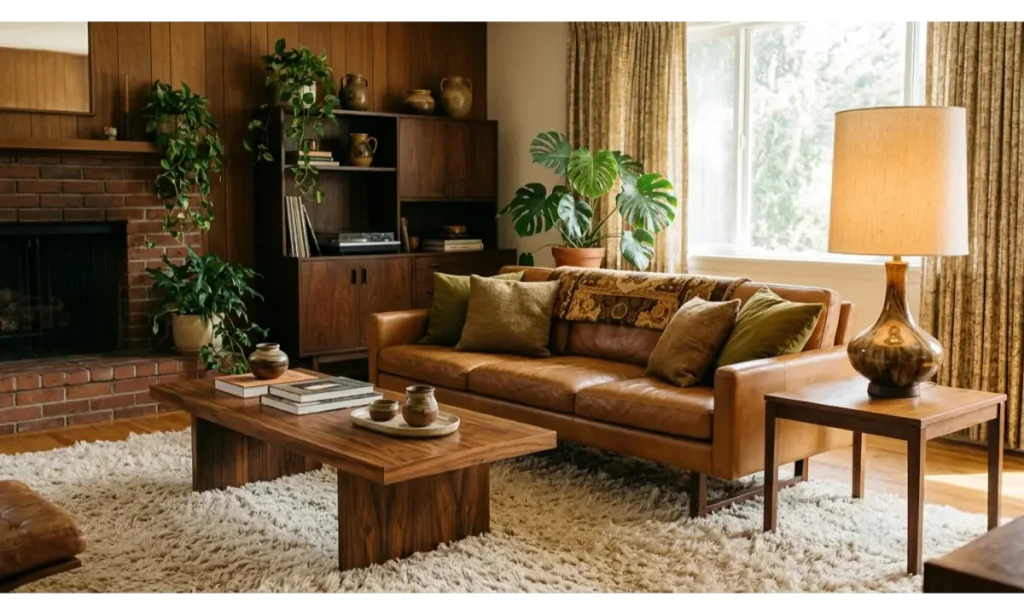
A low wooden coffee table is a practical centerpiece for 70s Living Room Design Ideas. Its simple height and natural finish complement low sofas, relaxed seating, and the horizontal lines commonly found in retro interiors. Walnut and teak inspired finishes work especially well with caramel leather, orange upholstery, and cream rugs. A table with rounded corners or sculptural legs adds another layer of vintage character.
Styling the table is just as important as selecting the right design. Place a small stack of books beside a ceramic bowl or a vintage inspired vase. Leave enough empty surface for drinks, games, and everyday use. If you have a compact room, a round table can make movement easier than a large rectangular design. This combination of function and character makes vintage wooden furniture a reliable choice.
Pro Tip: Select a coffee table that sits close to the height of your sofa cushions and leaves comfortable walking space around the seating.
10. Rattan and Wicker Furniture
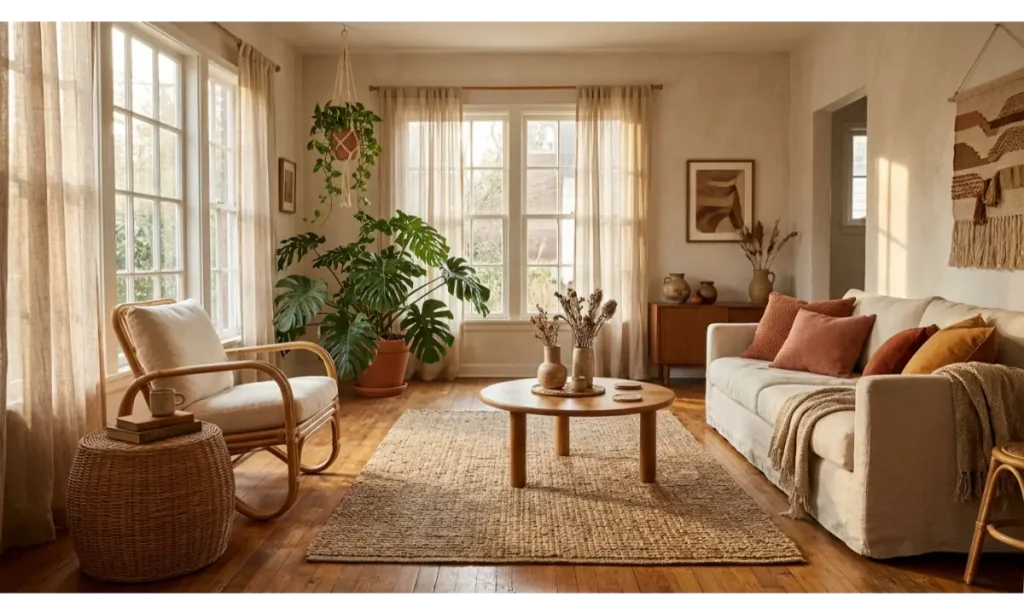
Rattan and wicker add natural texture to 70s Living Room Design Ideas without relying on strong colors or heavy furniture. A woven armchair can create a relaxed reading corner, while a wicker side table adds a handcrafted touch beside the sofa. These materials work particularly well with cream fabrics, terracotta accents, and warm wood because they bring an easygoing, nature inspired quality into the room.
To make the furniture comfortable, add a well fitted seat cushion and one or two soft pillows. Avoid filling every corner with woven objects, as too many similar textures can make the room feel crowded. Instead, combine one statement chair with smoother surfaces such as glass, wood, or ceramic. This mix creates natural retro living room decor that feels airy, warm, and suitable for everyday living.
Pro Tip: Protect natural rattan from prolonged dampness and harsh direct sunlight to help preserve its appearance.
11. A Record Player and Music Corner
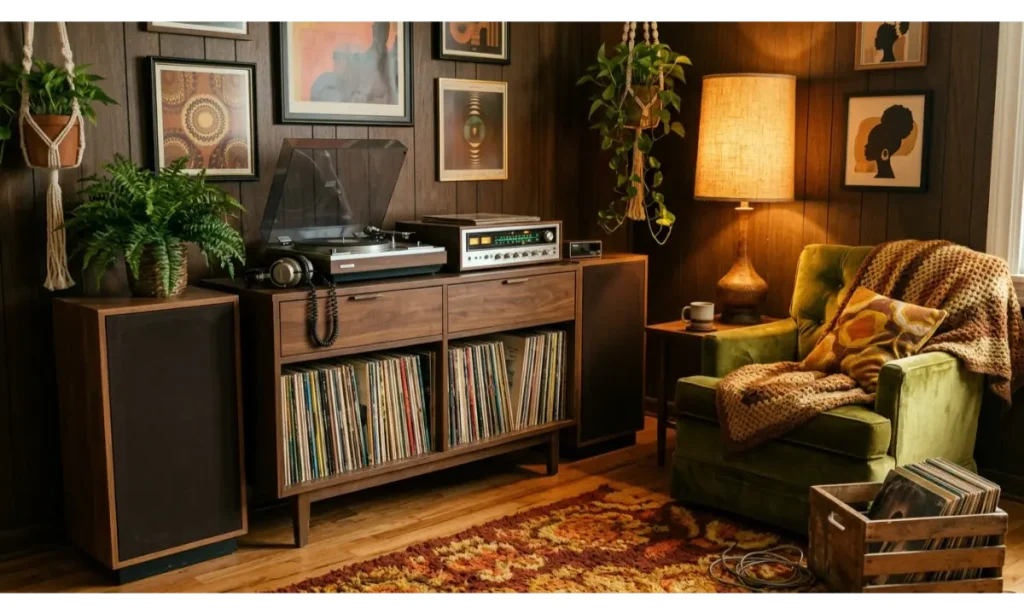
Music played a major role in the culture of the 1970s, making a record player a natural addition to 70s Living Room Design Ideas. Create a dedicated corner with a wooden record cabinet, a turntable, and a small collection of vinyl albums. Choose a chair that feels comfortable for listening, and add framed music artwork to give the space a personal touch without turning the entire room into a themed display.
Arrange the equipment on a stable surface and leave enough room to access the records easily. If you use modern speakers, select a design that complements the warm wood and vintage accessories. You can also display a few favorite album covers on the wall, changing them whenever you want a fresh look. A thoughtful vinyl record listening corner adds nostalgia while making your living room more personal.
Pro Tip: Keep the turntable level and away from speaker vibrations to support better playback and protect your records.
12. Olive Green Walls for a Nature Inspired Look

Olive green is an excellent color for 70s Living Room Design Ideas because it connects the room to nature while creating a rich vintage atmosphere. Use it on the walls, in upholstery, or through a few well placed accessories. This shade pairs beautifully with walnut wood, caramel leather, and warm beige, creating a balanced palette that feels both nostalgic and sophisticated.
If you are painting the walls, test a sample in different lighting conditions first. Olive green can appear lighter or darker depending on the room’s natural light and the surrounding finishes. Keep the ceiling and larger textiles relatively light if you want an open feeling. A few plants and simple ceramic accessories will complete the look without adding clutter. The result is a green retro living room that feels calm, grounded, and visually memorable.
Pro Tip: Pair olive walls with warm white trim and natural wood to prevent the space from feeling too heavy.
13. Geometric Patterns and Retro Prints
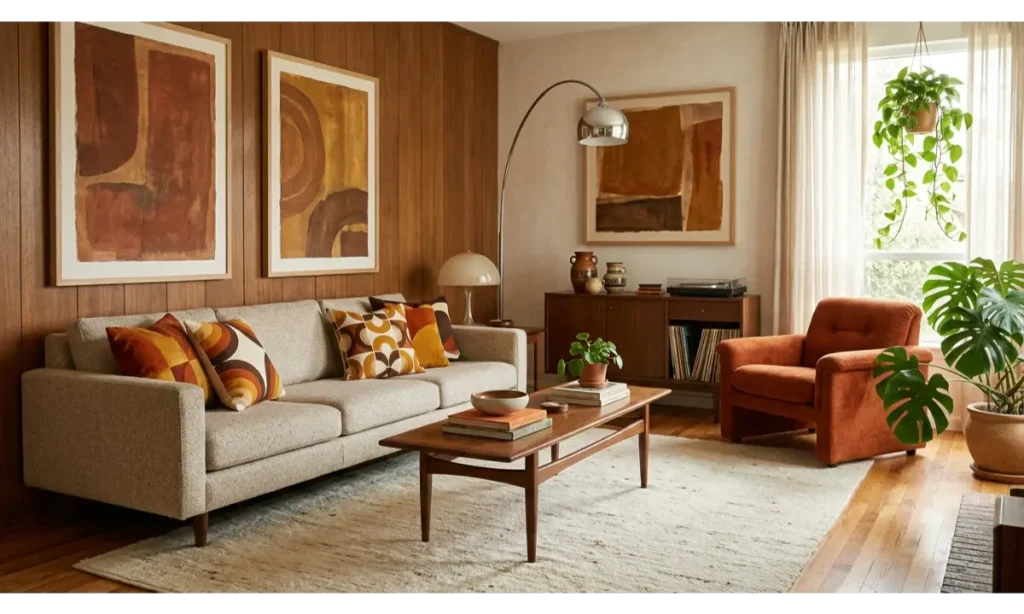
Geometric prints are a fun way to introduce movement into 70s Living Room Design Ideas. Look for repeating circles, arches, stripes, and abstract shapes in earthy colors. These patterns work beautifully on cushions, rugs, curtains, or framed artwork. You can create a lively atmosphere without replacing your existing furniture by adding just a few well chosen patterned accessories.
The key is to vary the scale of your prints. A large geometric cushion can work with smaller repeating shapes in a rug, provided the colors connect naturally. Keep the main sofa in a solid shade so the patterns have room to stand out. This approach gives your retro patterned living room a collected look instead of making every surface compete for attention.
Pro Tip: Choose a shared color palette before mixing prints, and combine large patterns with smaller, quieter designs.
14. A Conversation Friendly Furniture Layout
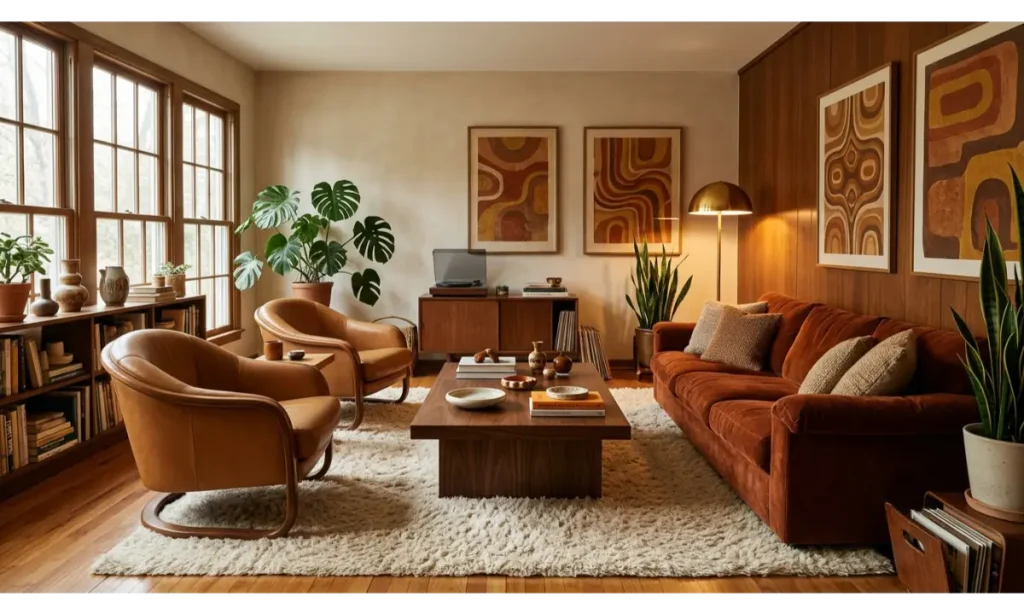
The best 70s Living Room Design Ideas are not just about appearance; they also make the room comfortable for people to gather. Arrange your sofa and chairs so they face one another instead of pointing every seat toward the television. A central coffee table creates a natural place for drinks and conversation, while a large rug visually connects the seating pieces.
Make sure there is enough space to walk between the furniture without squeezing past corners. In a smaller room, two compact chairs may work better than an oversized sectional. Add a floor lamp beside one seat and a side table near another to support reading and relaxing. This thoughtful retro living room layout brings the social, welcoming atmosphere of 1970s homes into modern life.
Pro Tip: Leave a clear walking path through the room and position the main seats close enough for easy conversation.
15. Statement Floor Lamps With Warm Lighting
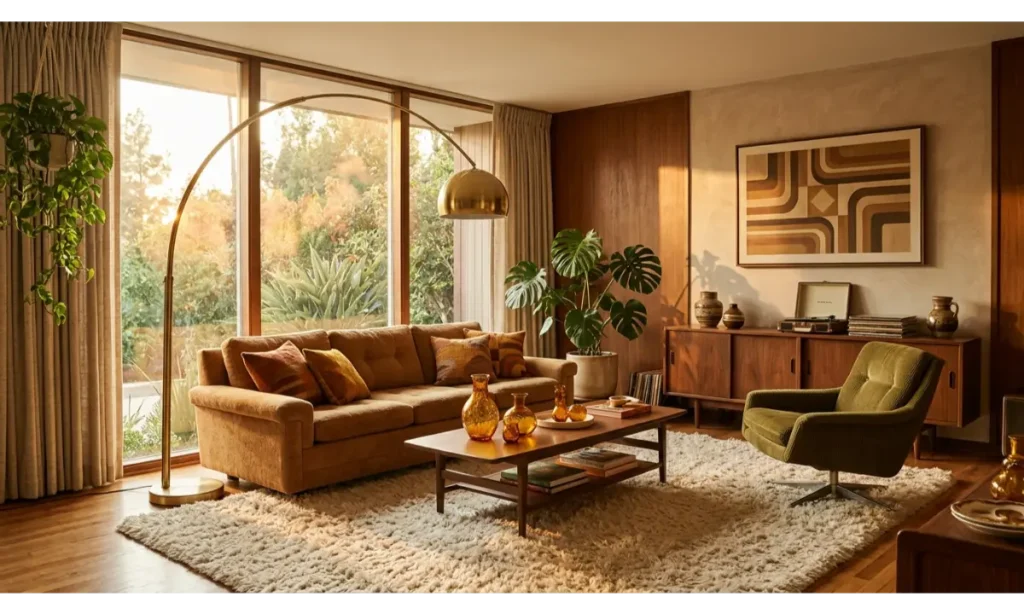
Lighting can completely change the mood of 70s Living Room Design Ideas. A sculptural floor lamp, an arched metal design, or a lamp with an amber glass shade can become a decorative feature as well as a useful source of light. Choose warm white bulbs to create a comfortable atmosphere that complements earthy colors and textured fabrics.
Rather than relying on one bright ceiling light, layer several sources throughout the room. A floor lamp beside the sofa, a table lamp on a sideboard, and gentle ambient lighting can make the space feel more inviting at night. Choose fixtures with interesting silhouettes but avoid placing too many statement pieces close together. This layered retro living room lighting approach adds depth and makes different areas more useful.
Pro Tip: Use warm white bulbs and separate lighting sources so you can adjust the mood for reading, relaxing, or entertaining.
16. Sunburst Mirrors and Sculptural Wall Decor
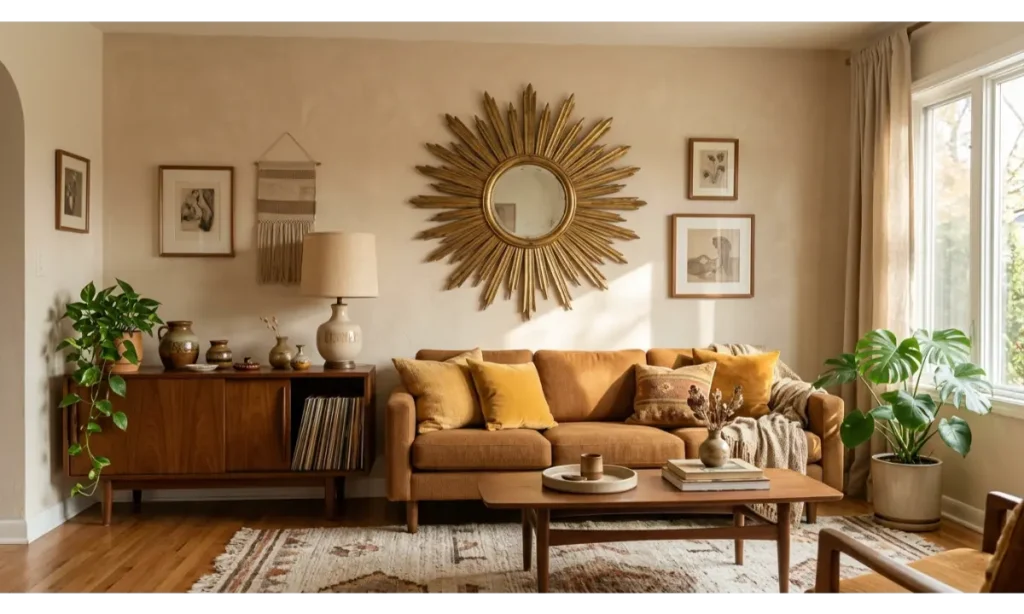
A sunburst mirror brings a distinctive focal point to 70s Living Room Design Ideas. Its radiating shape adds movement to a plain wall, while a brass or gold finish introduces warmth. Hang one above a sofa or console table, then balance it with a few smaller decorative objects. This creates a clear focal point without needing a large collection of accessories.
You can also use sculptural wall art, abstract prints, or vintage inspired metal decor to reinforce the theme. Keep the surrounding wall relatively simple so the mirror remains the main feature. In smaller living rooms, a well positioned mirror may also reflect natural light and help the space feel more open. The result is a retro statement wall that adds personality without taking up valuable floor space.
Pro Tip: Hang your mirror at a comfortable viewing height and check what it reflects before fixing it permanently to the wall.
17. A Cozy Fireplace With Vintage Styling
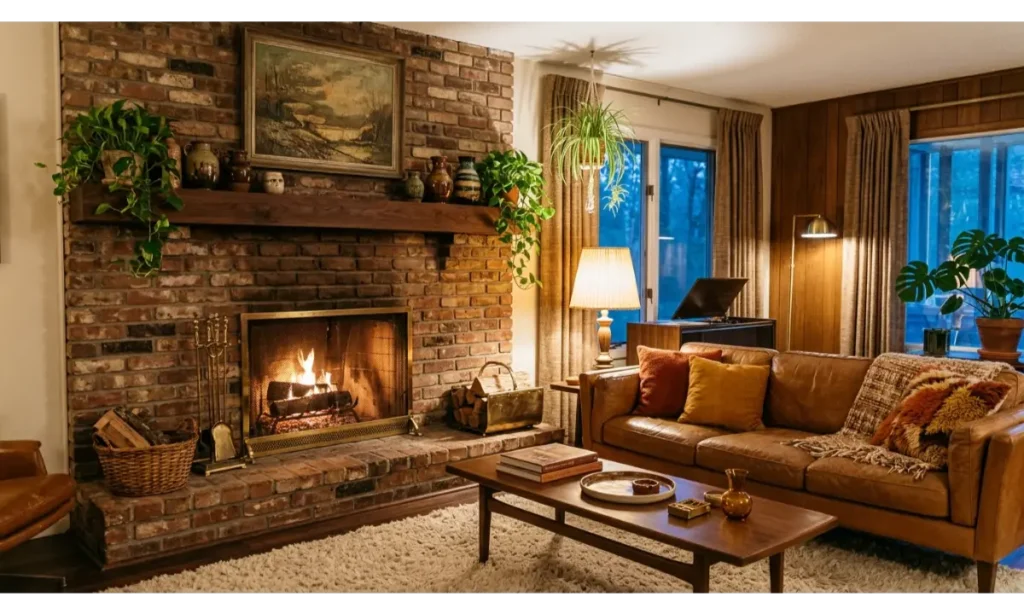
A fireplace can anchor 70s Living Room Design Ideas by giving the room a natural gathering point. Brick surrounds, earthy stone, and simple wooden mantels all work well with the decade’s warm palette. Arrange your sofa and chairs to face the fireplace, then add a low coffee table and soft rug to create a comfortable area for relaxing on cooler evenings.
If your home does not have a working fireplace, you can still create a similar focal point with a decorative mantel or an approved electric fireplace. Style the surrounding area with ceramic pottery, a vintage clock, or a small piece of artwork. Avoid overcrowding the mantel, as a few thoughtful objects often look more authentic than a large display. This vintage fireplace living room combines comfort with a strong architectural feature.
Pro Tip: Follow the fireplace manufacturer’s clearance requirements and local safety rules when placing furniture, rugs, or decorations nearby.
18. Houseplants and Natural Materials
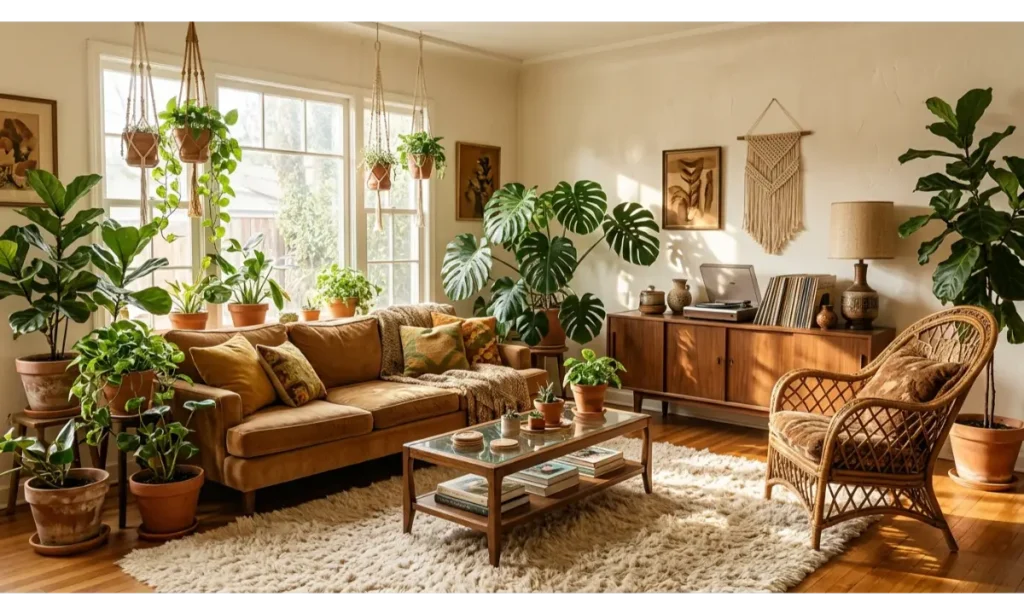
Houseplants bring life and color to 70s Living Room Design Ideas. Large leafy plants, trailing greenery, and simple terracotta pots complement warm wood and earthy fabrics. Place a taller plant beside a window or near an empty corner, then add a smaller plant to a side table or shelf. This creates visual variety while making the room feel connected to nature.
Choose plants according to the light and care conditions in your home rather than selecting them for appearance alone. If you have pets, check whether a plant is safe for them before bringing it indoors. Combine greenery with natural materials such as rattan, jute, wood, and cotton for a relaxed finish. These elements help create organic retro living room decor without requiring expensive furniture or major changes.
Pro Tip: Group plants of different heights together, but leave enough space around them for easy watering and maintenance.
19. A Retro Bar Cart for Entertaining
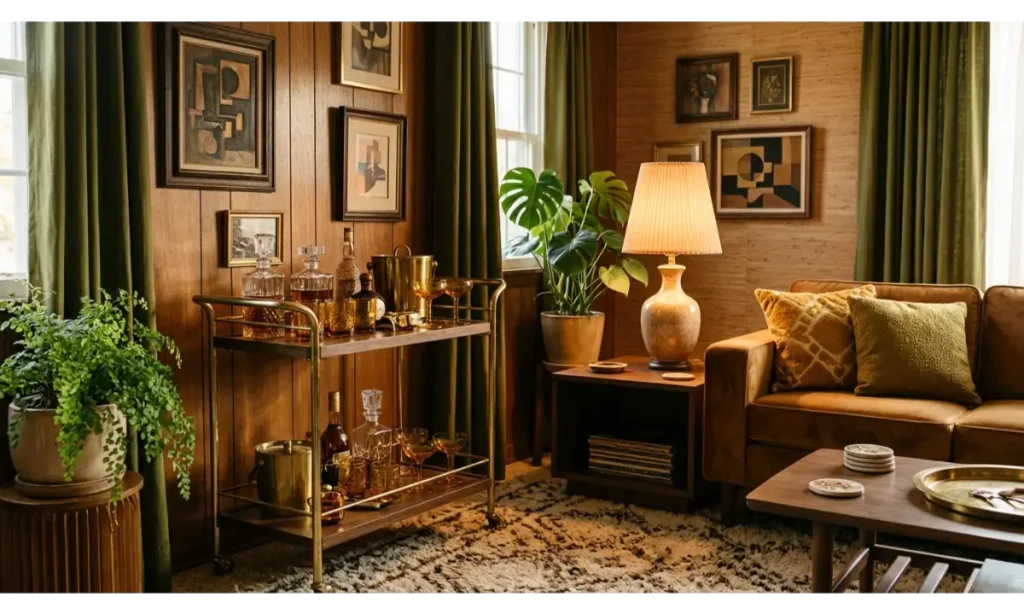
A bar cart adds a playful entertaining feature to 70s Living Room Design Ideas. Look for a design with brass details, warm wood shelves, or rounded edges that suit the room’s vintage character. Use the cart to display glassware, a small tray, and a few decorative objects. It can sit beside a sofa or near a dining area, creating a practical feature that does not require permanent installation.
Keep the arrangement simple so the cart remains useful and visually appealing. If you do not serve drinks, use it as a coffee station, book display, or home for a small collection of ceramics. Make sure the wheels lock securely when available, and avoid placing heavy objects where they could tip. This vintage entertaining corner adds function and personality while keeping the rest of the living room uncluttered.
Pro Tip: Style the cart with a small number of coordinated objects and keep frequently used items easy to reach.
20. Leather Sofas With a Timeless Retro Feel
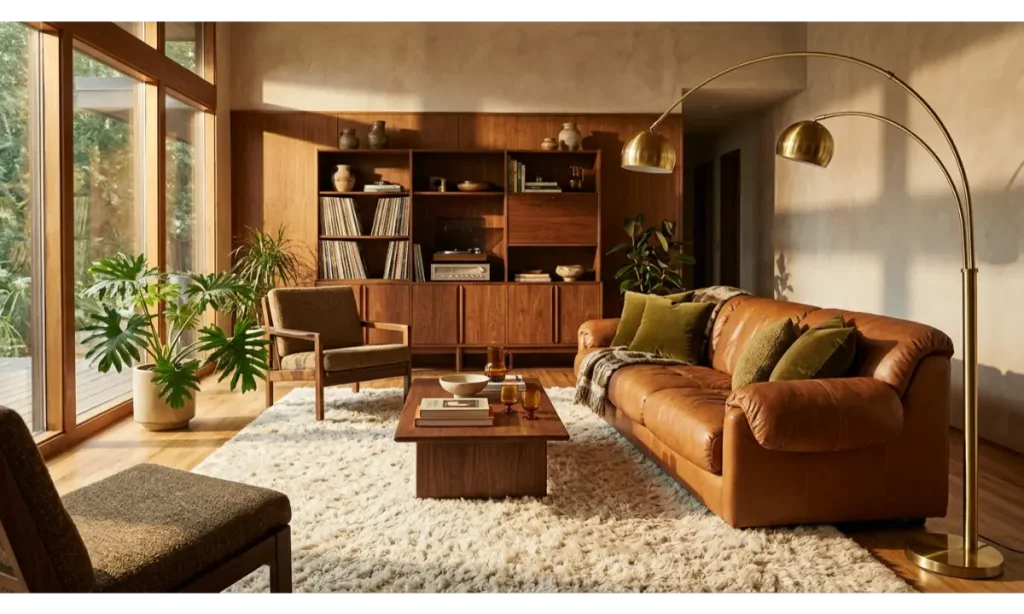
A cognac leather sofa is a strong choice for 70s Living Room Design Ideas because it combines durability with a warm, lived in appearance. Its natural color works beautifully with walnut furniture, cream textiles, and muted green accents. Choose a sofa with clean lines or gently rounded arms to connect the vintage influence with a more contemporary interior.
Leather can develop character over time, but it needs suitable care to stay in good condition. Follow the manufacturer’s cleaning instructions and keep the sofa away from prolonged direct sunlight or heat sources. Add soft cushions and a textured throw to make the seating area feel more comfortable. This mix of leather, wood, and fabric creates classic retro furniture styling that feels welcoming rather than overly formal.
Pro Tip: Test leather care products on a hidden area first, and use a material appropriate for your sofa’s specific finish.
21. A Cream and Beige Retro Living Room
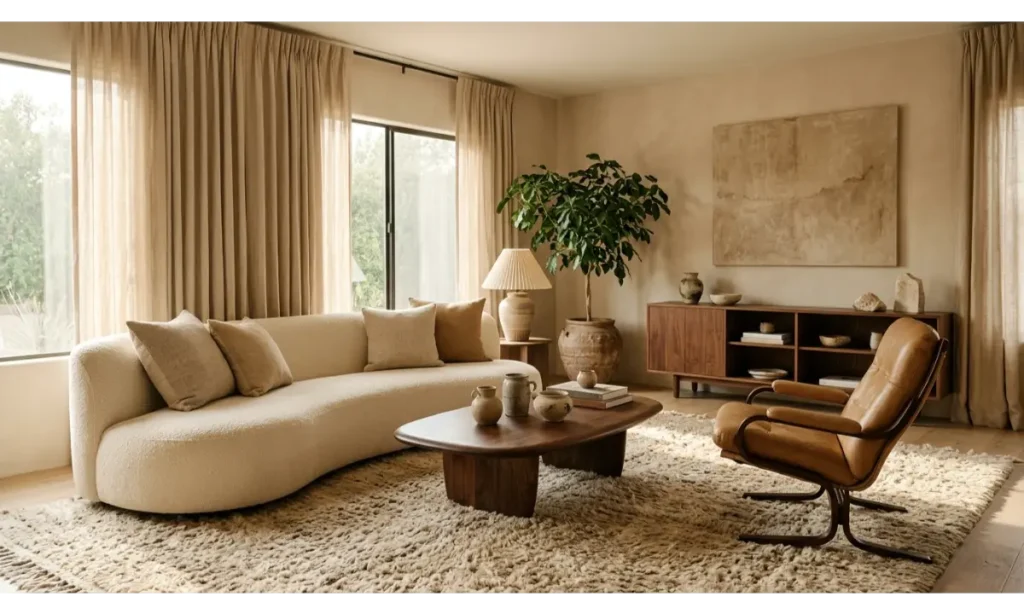
Not every retro room needs bright orange walls or bold patterns. Neutral 70s Living Room Design Ideas can capture the decade’s warmth through natural materials, low furniture, and soft textures. Begin with cream walls and a beige sofa, then introduce walnut furniture and a textured rug. This creates a quiet foundation that feels fresh while retaining the relaxed proportions associated with vintage interiors.
To prevent a neutral palette from looking flat, use a variety of finishes. Boucle upholstery, woven baskets, linen curtains, and natural wood each bring a different texture into the room. Add a small rust or olive accent if you want a little more contrast. This approach is ideal for homeowners who prefer modern retro living room decor that feels calm, flexible, and easy to update over time.
Pro Tip: Combine at least three distinct textures and use warm wood to give a neutral room more depth.
22. Vintage Artwork and Gallery Walls
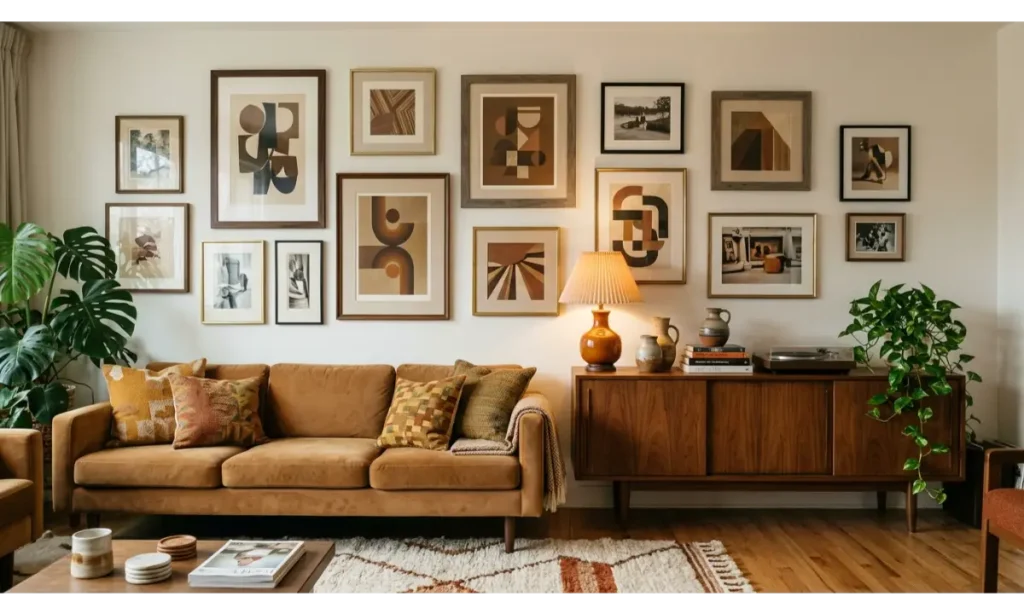
Artwork helps personalize 70s Living Room Design Ideas without requiring changes to the furniture or walls. Choose abstract prints, vintage photography, colorful illustrations, or graphic designs that reflect the colors already used in your room. A gallery wall above the sofa can create a strong focal point, while one oversized print can make a smaller space feel more organized.
Lay out your frames on the floor before hanging them to test different arrangements. You can mix frame sizes, but repeating one or two finishes helps the display feel cohesive. Leave enough space between each piece so the wall does not appear crowded. This vintage gallery wall approach allows you to express your taste while connecting the room’s colors, furniture, and decorative details.
Pro Tip: Choose artwork with a shared color or theme, and plan the layout before making holes in the wall.
23. Modern 70s Living Room Design Ideas With a Fresh Twist
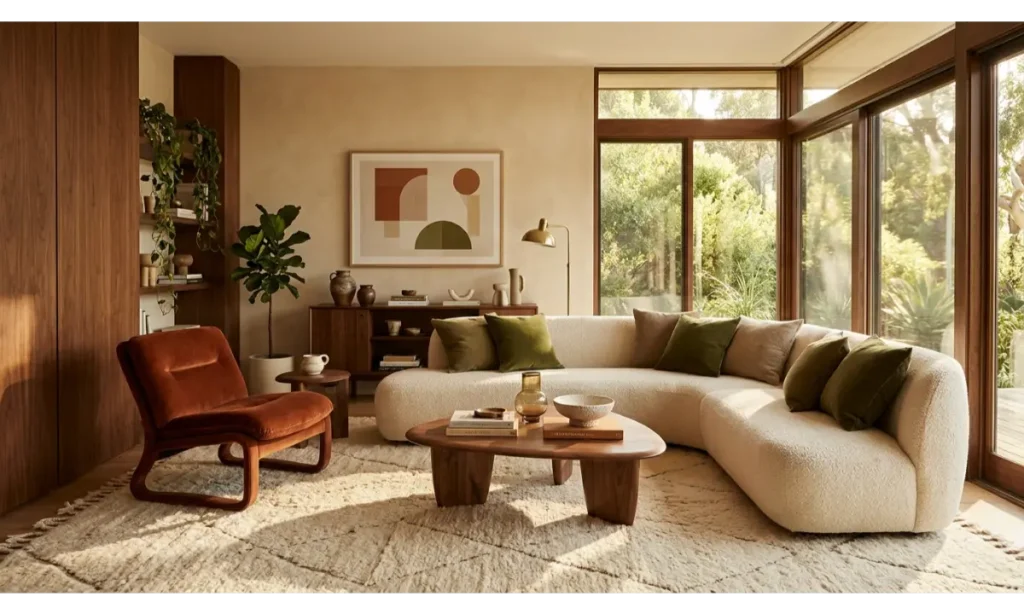
Modern 70s Living Room Design Ideas combine vintage shapes and warm colors with the clean lines of contemporary interiors. Start with a curved sofa or a low wooden coffee table, then introduce one or two retro accents such as an orange chair, a geometric print, or a sculptural lamp. Keep the main layout simple so the vintage pieces feel intentional rather than like decorations from a themed set.
The best part of this approach is its flexibility. You can keep modern flooring, simple curtains, and updated lighting while adding selected vintage finds. Mix old and new furniture according to scale, comfort, and color instead of trying to recreate every detail of a 1970s home. This modern vintage living room feels personal, practical, and stylish while retaining the playful character that makes the decade so memorable.
Pro Tip: Choose two or three defining retro features and combine them with modern essentials for a balanced, long lasting design.
Frequently Asked Questions
What colors are best for a 70s living room?
The most recognizable colors include burnt orange, mustard yellow, avocado green, olive, caramel, chocolate brown, and cream. These shades create the warm, earthy atmosphere associated with the decade. You can combine two or three of them with natural wood and neutral textiles for a balanced look.
How can I decorate a 70s living room on a budget?
Start with affordable changes such as patterned cushions, thrifted artwork, warm table lamps, and secondhand wooden furniture. You can also refresh your existing sofa with a retro throw or add a textured rug. Focus on a few distinctive pieces rather than replacing everything at once.
What furniture was popular in 1970s living rooms?
Popular styles included low sofas, velvet seating, leather couches, wooden coffee tables, curved chairs, rattan furniture, and sculptural lighting. Many interiors also featured shag rugs and bold printed fabrics. You can use these elements selectively to create a vintage look that still suits modern needs.
Can I create a 70s living room in a small apartment?
Yes. Choose compact furniture with low profiles, use one bold accent color, and add vintage character through lighting, cushions, or artwork. A round coffee table can improve movement, while a large mirror may help reflect light. Avoid filling every surface with accessories.
How do I make retro decor look modern?
Balance vintage pieces with clean walls, simple window treatments, and practical furniture. Choose a limited color palette and use patterns selectively. A vintage sofa can look fresh with contemporary artwork, while modern lighting can complement a traditional wooden coffee table.
What flooring works best with 1970s decor?
Wood flooring is a natural choice because it complements warm colors and vintage furniture. Medium or dark wood creates a rich atmosphere, while lighter oak helps keep the room airy. You can add a shag, wool, or textured area rug to define the seating area and improve comfort.
How can I mix vintage and modern furniture?
Start with one defining vintage piece, such as a leather sofa, walnut sideboard, or sculptural chair. Pair it with modern essentials that share a similar scale or color. Repeating materials and accent shades helps the room feel cohesive without making every item look like it came from the same decade.
Conclusion
The best 70s Living Room Design Ideas bring together warmth, comfort, personality, and timeless vintage charm. From earthy brown palettes and velvet sofas to shag rugs, wood paneling, and sculptural lighting, each idea offers a different way to make your living room feel more inviting.
You do not need to recreate an entire 1970s interior to achieve the look. Start with one feature you love, such as a caramel sofa, a retro lamp, or a bold floral print. Then build around it with complementary colors, natural textures, and practical furniture. With the right balance, your retro living room decor can feel nostalgic, modern, and uniquely yours.