
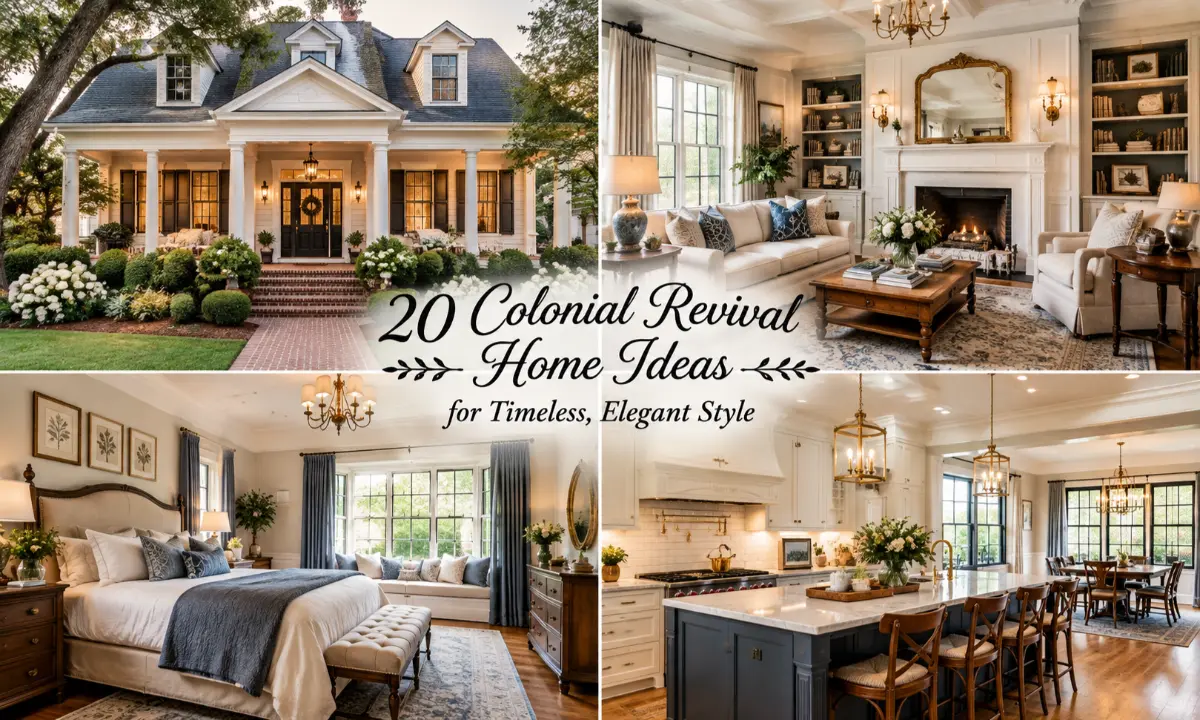
20 Colonial Revival Home Ideas for Timeless, Elegant Style
A Colonial Revival Home brings together classic American architecture, graceful proportions, and comfortable modern living. Its appeal comes from details that feel familiar without looking outdated, including balanced windows, welcoming entrances, traditional columns, refined trim, and warm materials. Whether you own an older house or want to borrow this look for a new build, these Colonial Revival home ideas can help you create a polished exterior and inviting interior. From elegant entryways to timeless kitchens, each idea offers a practical way to bring historic character into everyday living.
Classic Exterior Ideas for a Colonial Revival Home
1. Create a Symmetrical Colonial Revival Home Facade
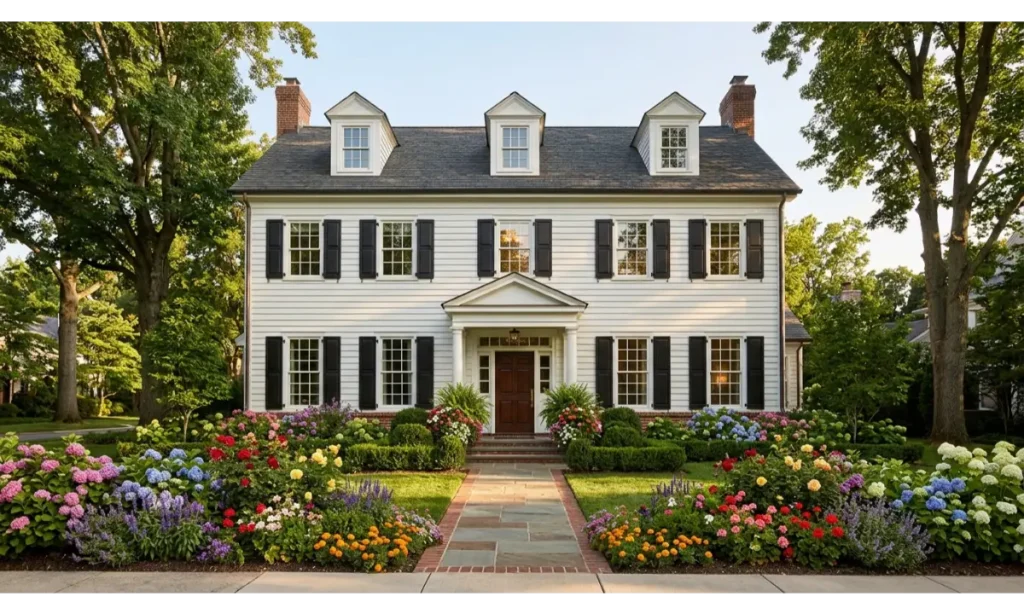
A balanced facade instantly gives a Colonial Revival Home its recognizable character. Place the front door near the center and arrange windows evenly on both sides. Choose symmetrical architecture, simple shutters, and consistent window proportions to make the exterior feel organized and graceful. White, cream, soft gray, and muted beige work especially well when paired with darker shutters or a rich wood door. This approach feels traditional while still looking fresh enough for modern neighborhoods.
The beauty of symmetry comes from its simplicity. You do not need excessive decoration to make the exterior impressive. Instead, focus on proportion, spacing, and quality materials. A brick walkway, trimmed hedges, and carefully shaped foundation planting can strengthen the classic appearance. For homeowners updating an existing property, matching window styles and repeating architectural details often creates more impact than adding many decorative accessories.
Pro Tip: Use the front door as the visual center and repeat its colors subtly around the facade for a polished result.
2. Highlight the Front Door With Classic Columns
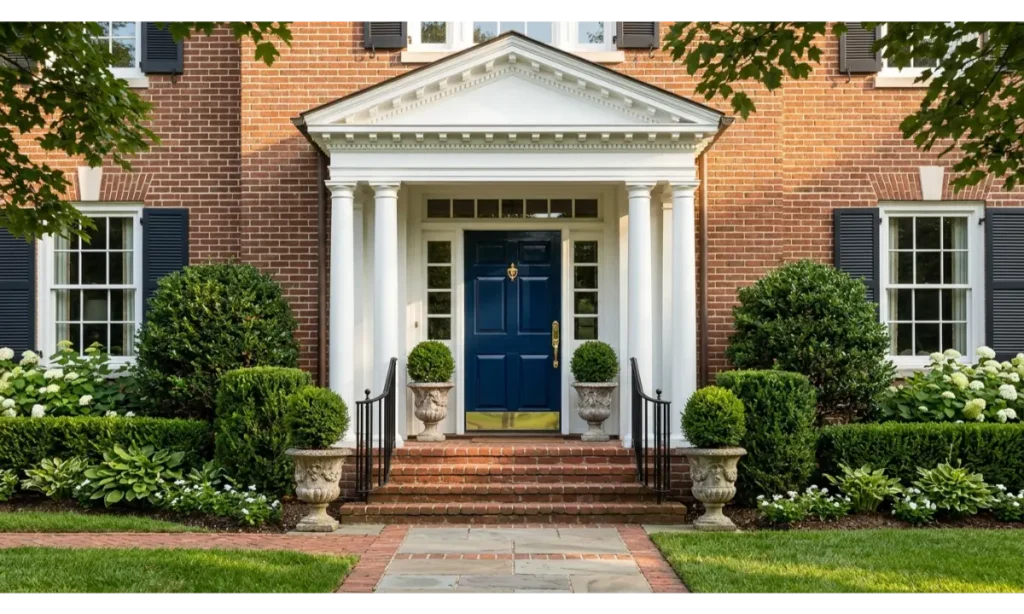
The entrance deserves special attention because it establishes the personality of your Colonial Revival Home before anyone steps inside. A paneled door surrounded by classical columns, sidelights, or a modest pediment can create an immediate sense of importance. Traditional architectural details do not need to feel heavy. Slim columns, crisp white trim, and a richly colored door can make the entry look refined while keeping the overall design approachable.
Consider adding brass hardware, a traditional lantern, and a simple pair of planters near the steps. These details create a welcoming arrival without overwhelming the architecture. If your home already has a strong entrance, refresh the area with a new door color and carefully chosen lighting. Deep navy, forest green, charcoal, and muted red can all create beautiful contrast against neutral siding or brick.
Pro Tip: Choose one strong door color and repeat small touches of it in the planters, lighting, or porch accessories.
Read More: 20 Contemporary Style Ideas for a Fresh, Modern Home
3. Use White Trim for Timeless Contrast
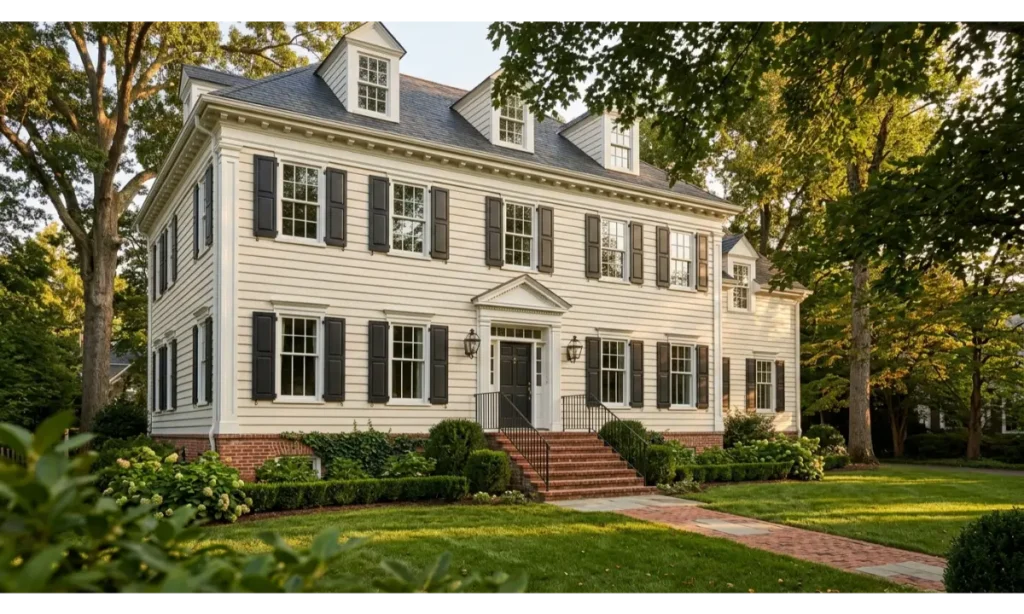
White trim is one of the easiest ways to emphasize the architectural structure of a Colonial Revival Home. Use it around windows, doors, corners, cornices, and porch details to make each feature stand out. Against cream, gray, sage, or muted blue siding, bright trim creates a clean contrast that feels historic but not old fashioned. The result is especially attractive when the trim follows the natural lines of the house.
For a richer appearance, combine white architectural trim with natural brick or carefully painted wood siding. The contrast between smooth painted surfaces and textured masonry gives the facade visual depth. Keep the palette controlled rather than introducing too many colors. A restrained combination of siding, trim, shutters, and door color allows the architectural details to remain the focus.
Pro Tip: Keep major architectural trim consistent throughout the exterior so the house looks intentionally designed from every angle.
4. Add Traditional Shutters Around the Windows
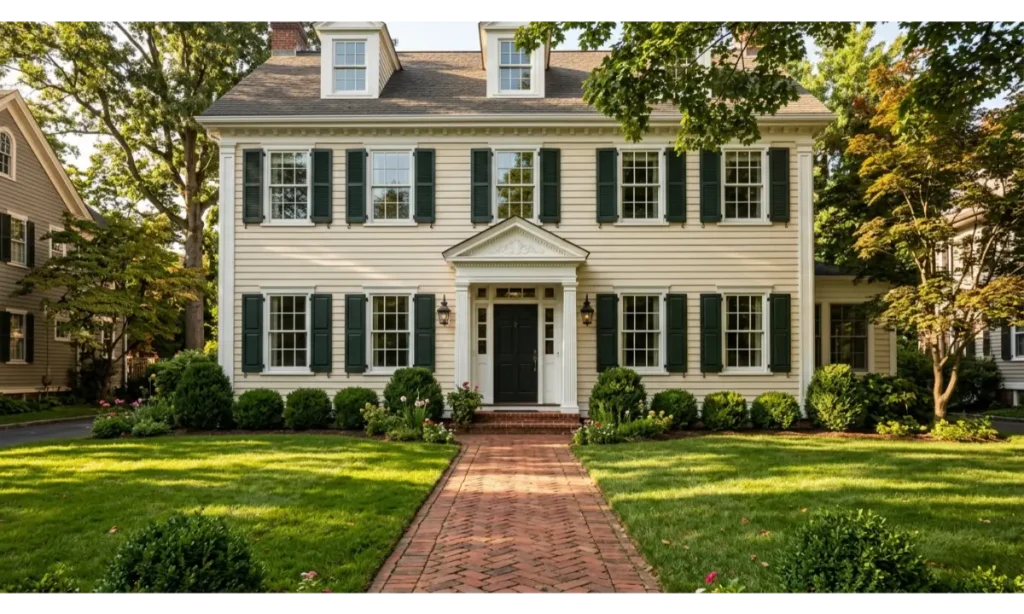
Traditional shutters can give a Colonial Revival Home an instant sense of proportion and character. Choose shutters that visually relate to the window size rather than using very narrow decorative pieces. Deep green, charcoal, navy, and classic black create attractive contrast against light siding. When placed evenly across the facade, shutters reinforce the balanced appearance that makes Colonial Revival architecture so appealing.
Functional shutters can also bring practical character to older properties, while decorative versions can work well on newer builds. Look for simple louvered or paneled designs instead of overly ornate styles. The goal is to support the windows, not compete with them. Pair the shutters with crisp trim and understated landscaping to create an exterior that feels collected and naturally elegant.
Pro Tip: Match shutter color with another exterior element such as the front door, roof accents, or outdoor lighting for visual connection.
5. Design a Welcoming Covered Porch
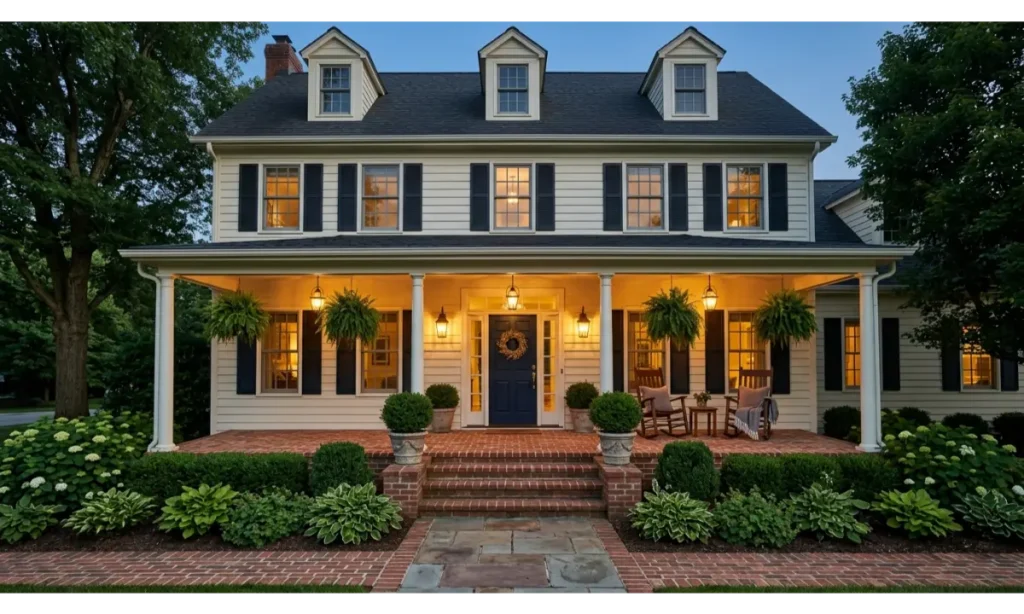
A covered porch can make a Colonial Revival Home feel more welcoming while emphasizing its traditional character. Use slender columns, simple railings, comfortable seating, and warm lighting to create an outdoor room that feels useful rather than purely decorative. Brick, painted wood, or natural stone flooring can complement the architecture while adding texture beneath the porch.
Keep the furnishings classic and comfortable. A pair of chairs, a small table, and a simple outdoor rug can provide enough function without making the space crowded. Seasonal flowers can add color, but restrained planting usually works best with the formal lines of Colonial Revival architecture. The porch should feel like an extension of the home’s personality.
Pro Tip: Use warm lighting at the porch ceiling and beside the door to make the entrance especially inviting after sunset.
Read More: 23 Terracotta Tile Ideas For Kitchen That Create a Warm, Stylish Look
6. Choose a Brick Exterior for Historic Character
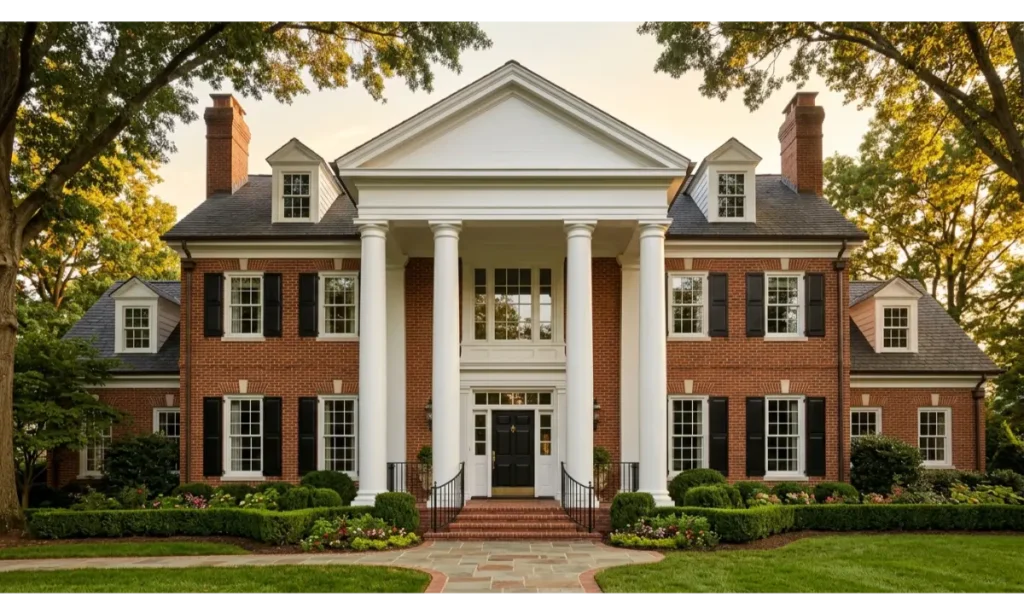
Brick gives a Colonial Revival Home a strong architectural presence while adding natural warmth. Red brick paired with white trim creates a classic combination, while softer brown or painted brick can give the house a more relaxed appearance. Brick also works beautifully around foundations, steps, chimneys, and walkways, helping the exterior feel connected rather than visually fragmented.
When choosing brick, think about the overall color story. A warm brick facade looks especially attractive with cream trim and dark green shutters, while cooler brick can work with charcoal or navy accents. Avoid introducing too many competing materials. The strongest traditional home exterior designs often rely on a few materials repeated thoughtfully across the property.
Pro Tip: Use the same brick or a closely related tone for the walkway and foundation accents to create a unified exterior.
7. Frame the Roof With Elegant Dormer Windows
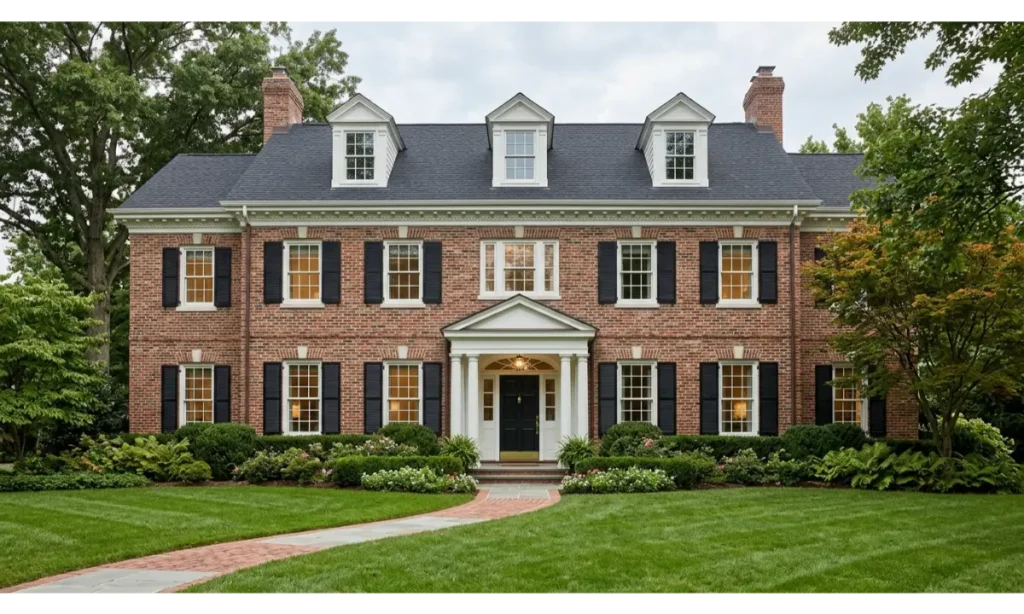
Dormers can add character and visual rhythm to a Colonial Revival Home without requiring excessive ornament. Small pedimented dormers with carefully proportioned windows can make a roofline more interesting while reinforcing the home’s traditional identity. Symmetrical placement usually creates the most polished effect, especially when the dormers align with windows or important architectural features below.
Dormers also help create a sense of scale. Instead of allowing a large roof to dominate the facade, they introduce smaller architectural elements that guide the eye upward. Choose trim that matches the windows below and keep the roof material understated. The result should feel like one coordinated composition rather than a collection of separate features.
Pro Tip: Align dormers with the main windows or interior rooms whenever possible to maintain architectural balance.
Refined Interior Ideas for a Colonial Revival Home
8. Build a Grand but Comfortable Foyer
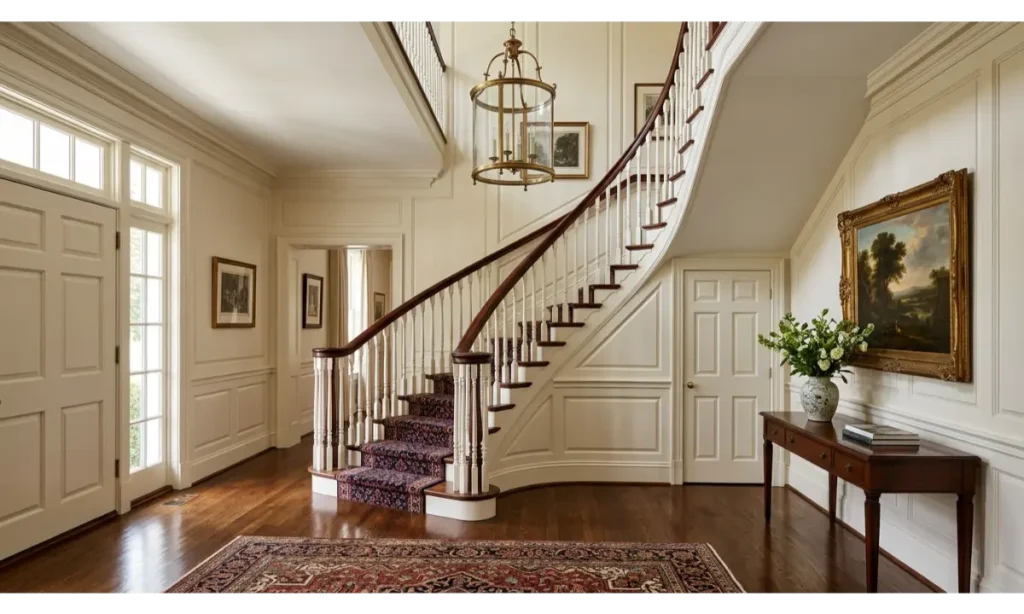
The foyer should introduce the character of a Colonial Revival Home without feeling formal or untouchable. Paneled walls, a traditional staircase, hardwood flooring, and a classic console table can create an impressive first impression. Choose warm neutral colors such as ivory, taupe, soft beige, or muted sage to make the space feel elegant while remaining comfortable.
Lighting plays an important role in a traditional entryway. A lantern style chandelier or simple brass fixture can reinforce the architecture while providing a warm glow. Add framed artwork, a mirror, or a small vase of seasonal branches rather than filling every surface. A thoughtful foyer feels collected, not staged.
Pro Tip: Let the staircase, door, or flooring become the main focal point and keep the remaining decorations simple.
9. Add Classic Wall Paneling to the Living Room
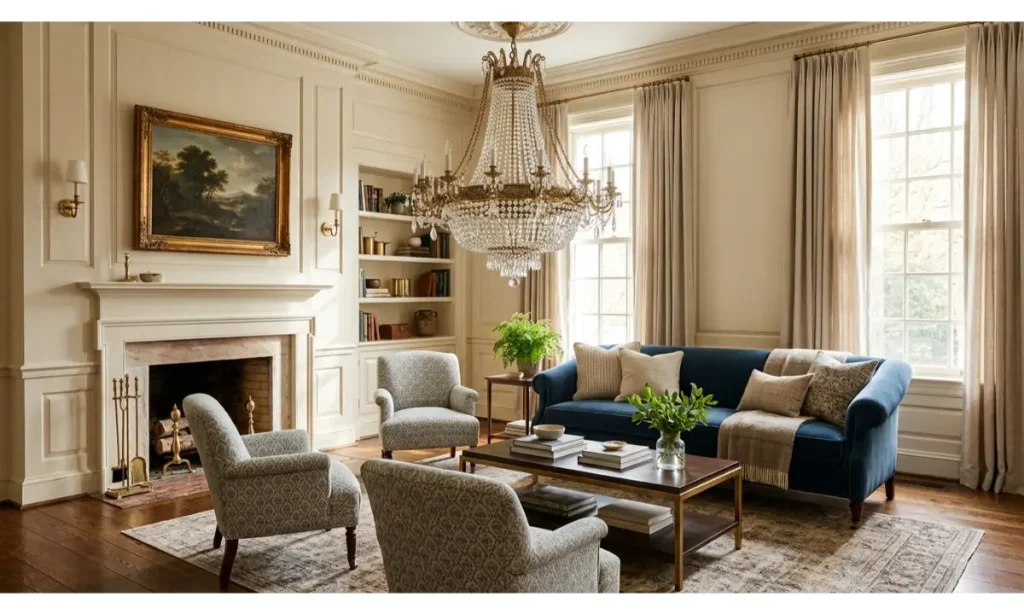
Wall paneling can instantly add architectural depth to a Colonial Revival Home living room. Simple rectangular panels, chair rails, and carefully proportioned molding create a refined backdrop without making the room feel overly ornate. Paint the paneling in the same color as the walls for a subtle effect, or use a slightly brighter shade to highlight the craftsmanship.
Balance traditional architecture with comfortable modern furniture. A deep sofa, textured chairs, a patterned rug, and a classic coffee table can make the room feel inviting rather than museum like. Choose patterns that have a traditional influence but remain fresh. This combination creates the comfortable elegance associated with traditional interior design.
Pro Tip: Keep wall panel proportions consistent across the room so the molding feels intentional rather than decorative clutter.
10. Create a Warm Colonial Style Kitchen
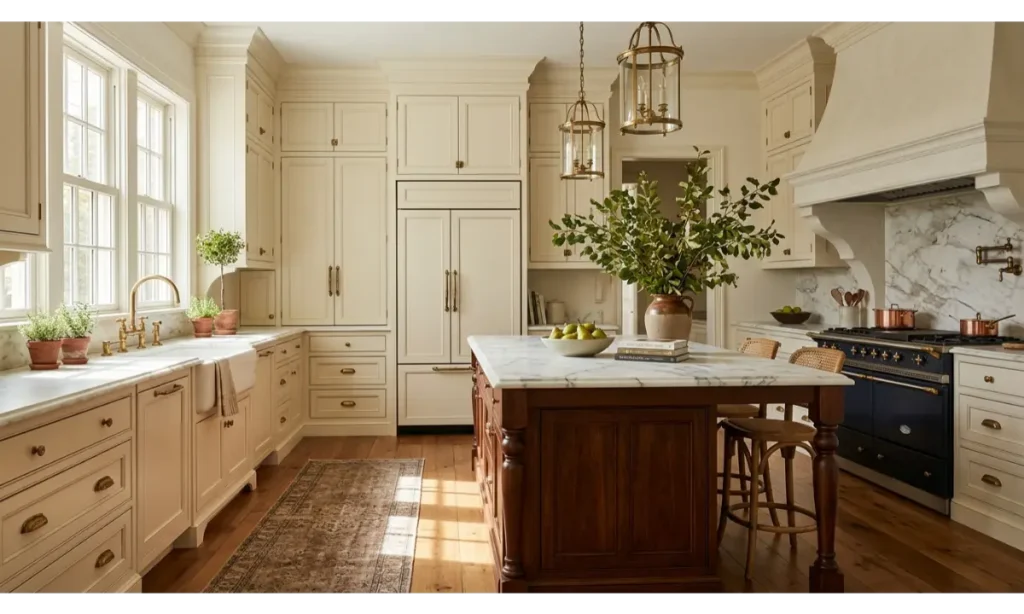
A kitchen can combine the timeless structure of a Colonial Revival Home with the convenience of modern appliances. Cream or warm white cabinets, a substantial island, marble or quartz countertops, and traditional brass hardware create a graceful foundation. Paneled appliances can help modern technology blend more naturally into the surrounding cabinetry.
Wood accents add warmth and keep the room from feeling too bright or formal. Consider a wood island, exposed shelves, or a traditional dining table nearby. Subway tile, handmade looking tile, or softly patterned stone can provide a subtle backsplash. The goal is a kitchen that feels established and comfortable rather than overly themed.
Pro Tip: Mix painted cabinetry with one natural wood element to add warmth and prevent the kitchen from looking flat.
11. Design a Formal Dining Room With Modern Comfort
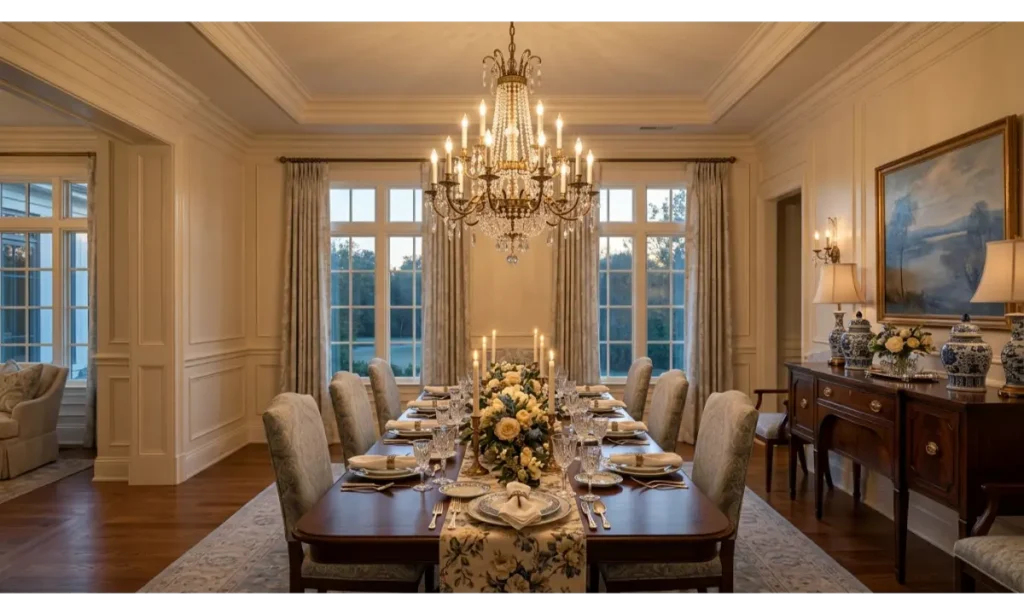
A formal dining room can highlight the refined side of a Colonial Revival Home while still supporting everyday gatherings. Choose a substantial wood table, comfortable upholstered chairs, and a classic chandelier. Paneled walls or a chair rail can add architectural interest without requiring elaborate decoration. Keep the color palette warm and restrained for a room that feels timeless.
Use artwork, curtains, and table accessories to introduce personality. Blue, green, burgundy, and muted floral patterns work particularly well with traditional interiors. Instead of matching every piece, combine related materials and colors for a more natural look. A dining room should feel ready for dinner with family, friends, or holiday guests.
Pro Tip: Choose a dining table large enough for everyday use, but keep enough space around it for comfortable movement.
12. Make the Staircase a Signature Feature
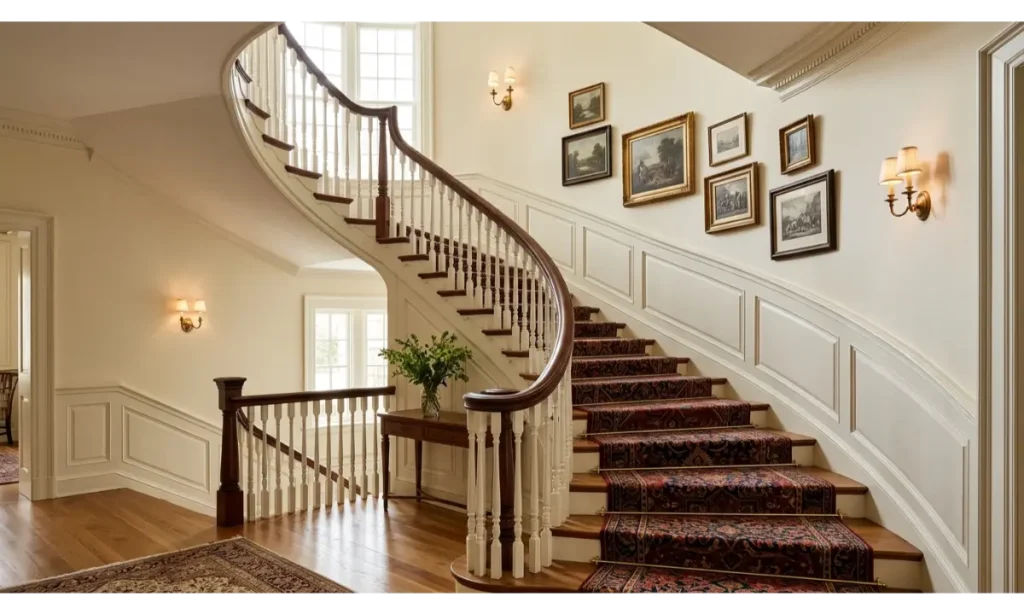
A staircase can become one of the most memorable elements inside a Colonial Revival Home. A dark wood handrail, painted balusters, traditional runner, and paneled walls create a sophisticated combination. Keep the structure visually clean so the staircase itself becomes the feature. If the home has an older staircase, refinishing the wood and updating the runner may be enough to restore its beauty.
Artwork can make the stairway feel personal without adding unnecessary clutter. Small framed pieces arranged carefully along the wall can create a collected gallery effect. Brass sconces can provide soft evening lighting while emphasizing the vertical lines. These details make the staircase feel intentional and connected to the rest of the home.
Pro Tip: Repeat the staircase wood tone elsewhere in the house to create continuity between rooms.
Fresh and Functional Colonial Revival Home Design Ideas
13. Mix Traditional Details With Modern Furniture
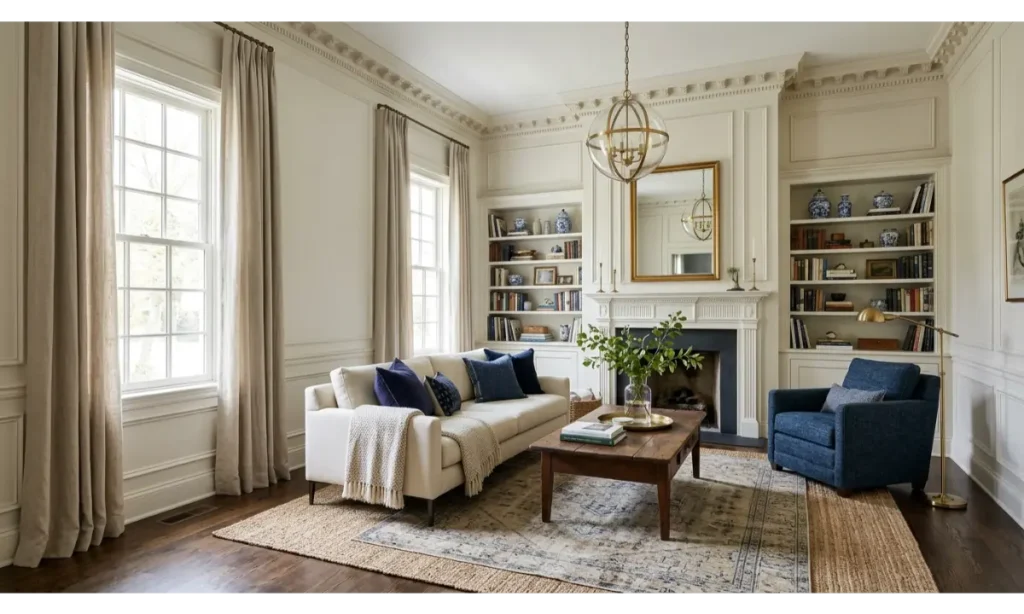
A modern furniture mix can make a Colonial Revival Home feel current without removing its historic personality. Pair traditional molding, fireplaces, or hardwood floors with clean lined sofas, modern accent chairs, and simple lighting. This contrast creates an updated interpretation of modern traditional design that feels comfortable rather than overly formal.
The key is to create a conversation between old and new. A vintage wood table can sit beside a contemporary sofa, while a traditional rug can ground a cleaner coffee table. Keep the color palette connected throughout the room so different periods still feel intentional together. This approach works especially well for homeowners who love classic architecture but want relaxed interiors.
Pro Tip: Keep permanent architectural features traditional and use furniture and accessories to introduce contemporary personality.
14. Use Deep Blue for a Sophisticated Accent
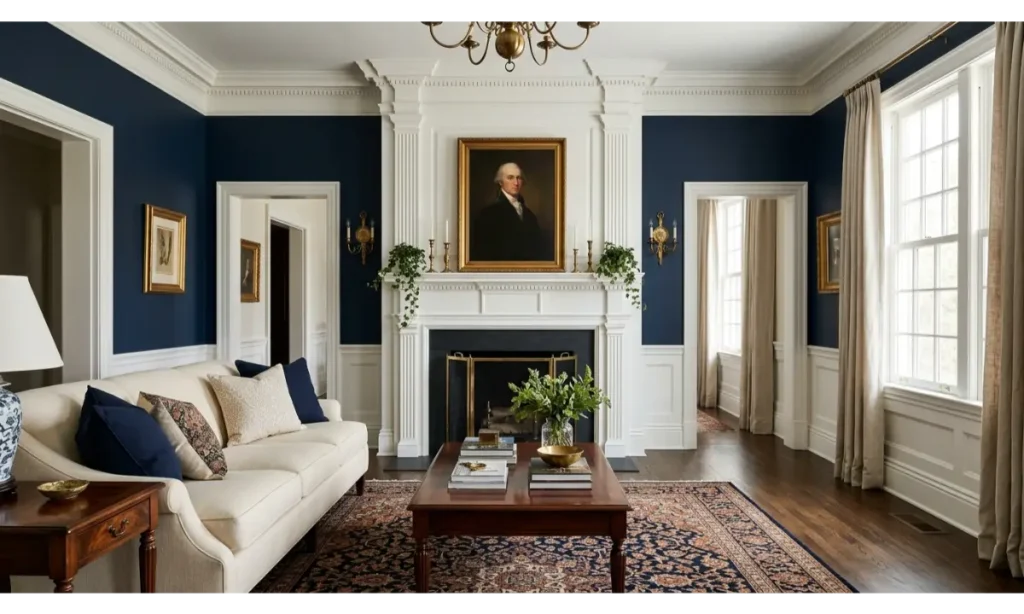
Deep blue can give a Colonial Revival Home a confident and sophisticated appearance. Use navy on an accent wall, built in cabinetry, a study, or even a front door. Against white trim, the color creates crisp architectural contrast while maintaining a classic mood. Muted navy tends to feel especially timeless because it adds depth without overwhelming traditional details.
Pair blue with warm wood, brass, cream, and natural textiles. These materials soften the color and make the space feel comfortable. You can also use blue through curtains, upholstery, rugs, and artwork if painting feels too permanent. The result should feel elegant but still relaxed enough for everyday life.
Pro Tip: Use deep blue in one major area and repeat small touches throughout nearby rooms for a cohesive color story.
15. Add a Traditional Home Library
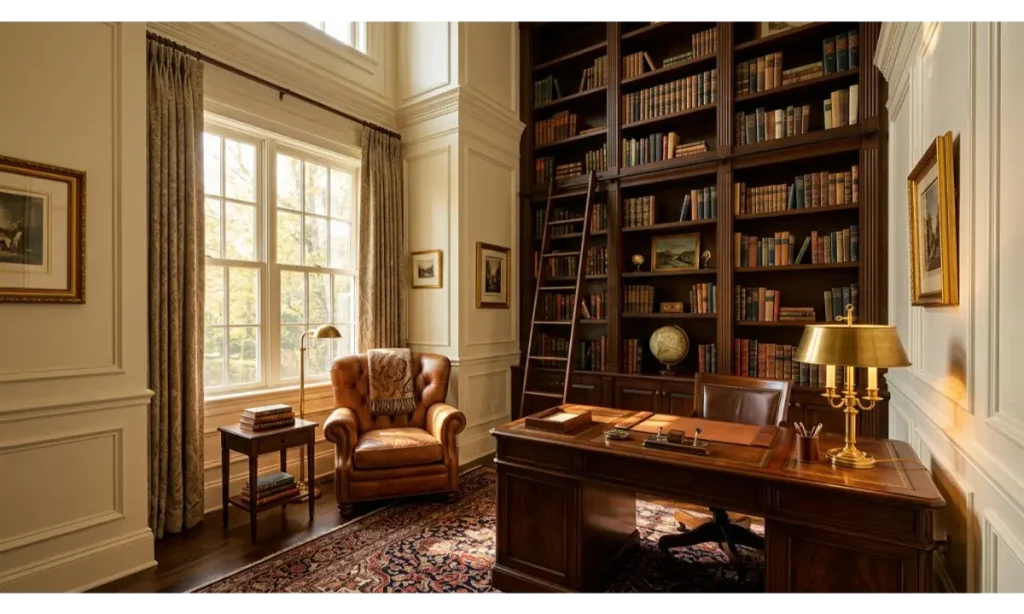
A home library fits naturally into a Colonial Revival Home because traditional architecture and books create a timeless combination. Built in shelves, wood furniture, comfortable seating, and warm lighting can turn an unused room into a quiet retreat. Choose shelves with simple molding that relates to the home’s existing trim for a unified appearance.
You do not need a huge collection of books to create the effect. Arrange books with framed artwork, small ceramics, and meaningful objects to add personality. A leather chair or upholstered reading chair can make the room comfortable for longer stays. Deep green, navy, warm brown, and cream are excellent choices for a classic library palette.
Pro Tip: Add adjustable lighting near the reading chair so the room remains functional during evenings.
16. Bring Character With a Traditional Fireplace
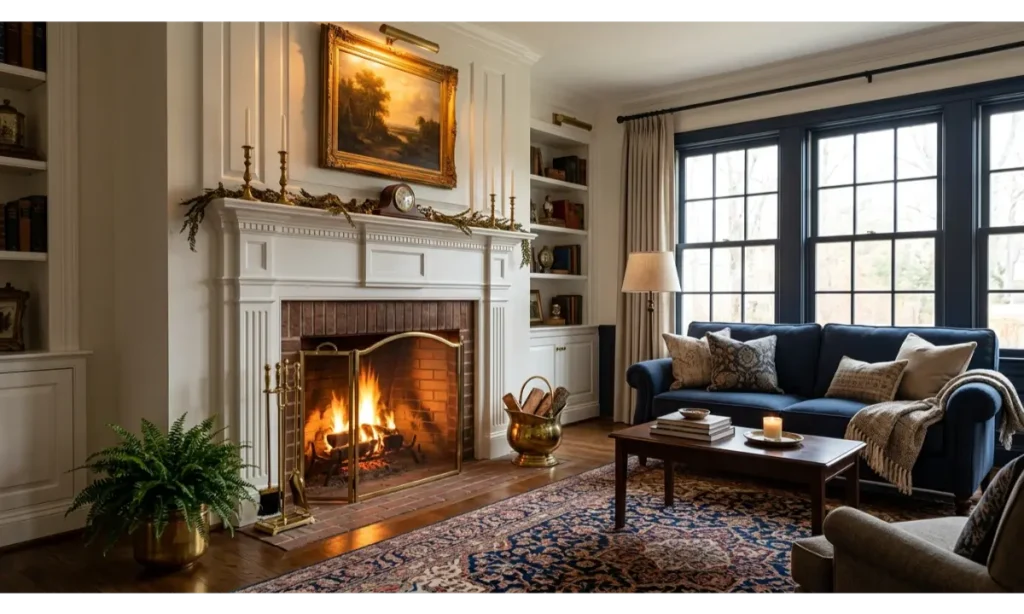
A fireplace can become the heart of a Colonial Revival Home living room. Choose a traditional mantel with clean proportions rather than excessive ornament. Painted wood, natural stone, or brick can all work depending on the architecture. Above the mantel, artwork or a simple mirror can create a focal point while leaving enough visual space around the fireplace.
Arrange furniture around the fireplace to encourage conversation. A sofa facing the mantel with two chairs nearby creates a balanced seating area without making the room feel rigid. Layer in textured cushions and a classic rug for warmth. The combination of architectural character and comfortable furniture creates a room that feels both elegant and lived in.
Pro Tip: Match the mantel’s scale to the room so it feels substantial without overpowering the surrounding architecture.
17. Use Warm Wood Throughout the Interior
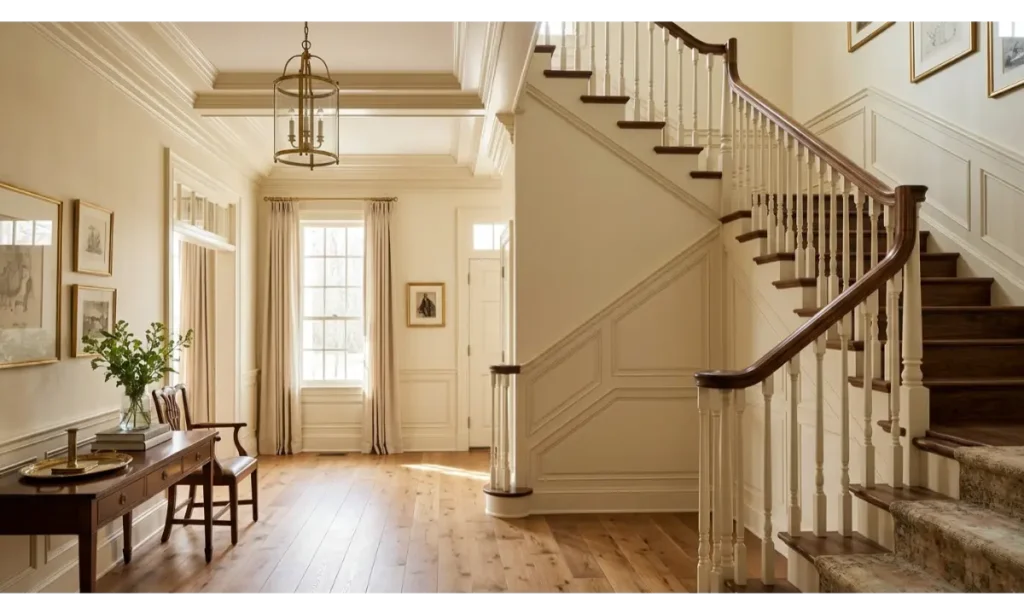
Warm wood adds depth and natural character to a Colonial Revival Home. Hardwood floors, stair rails, tables, cabinets, and doors can create a consistent material story throughout the house. Oak, walnut, and other warm wood tones pair beautifully with cream walls, white trim, muted blue, and soft green.
Avoid making every wooden surface identical. A little variation creates a more natural and collected appearance. If the house already has beautiful original floors, consider making them a major feature instead of covering them with excessive rugs. Use furniture and accessories to complement the wood rather than competing with its natural texture.
Pro Tip: Choose one dominant wood tone and allow smaller pieces to vary slightly so the interior feels layered instead of matched.
18. Create a Classic Home Office
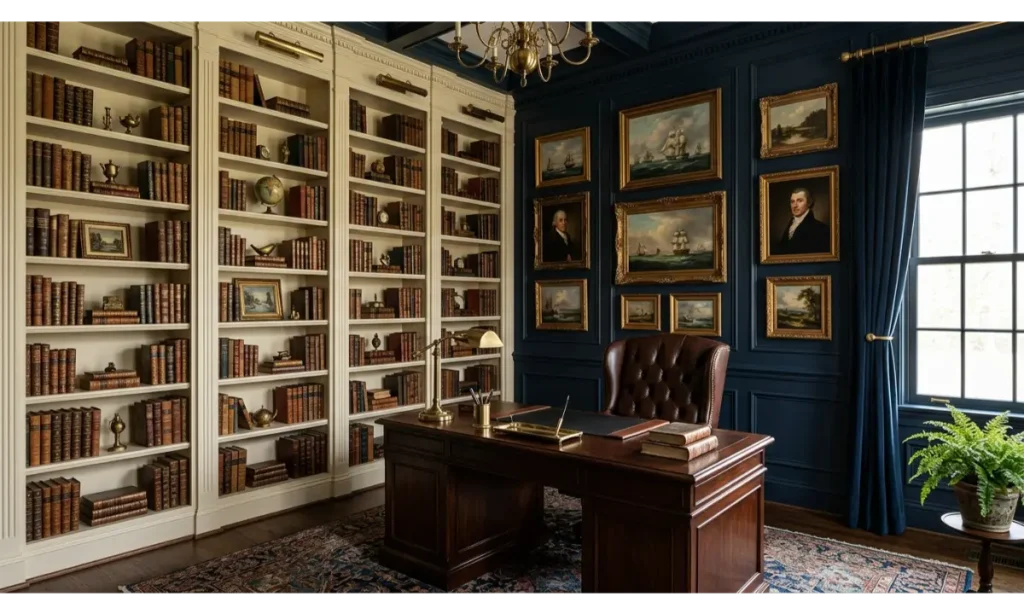
A traditional home office can make a Colonial Revival Home feel especially sophisticated. Use paneled walls, built in shelves, a substantial wood desk, and a comfortable chair to create an environment that supports focused work. Choose a calm palette such as cream, navy, forest green, warm brown, or muted gray.
Modern technology can blend into the room when you keep cords hidden and choose streamlined equipment. A desk lamp with a traditional shape can provide practical light without looking out of place. Add only a few personal pieces, such as framed artwork or meaningful books, so the office remains focused and functional.
Pro Tip: Position the desk near natural light while keeping computer screens away from direct glare for a more comfortable workspace.
19. Elevate the Bedroom With Traditional Layering
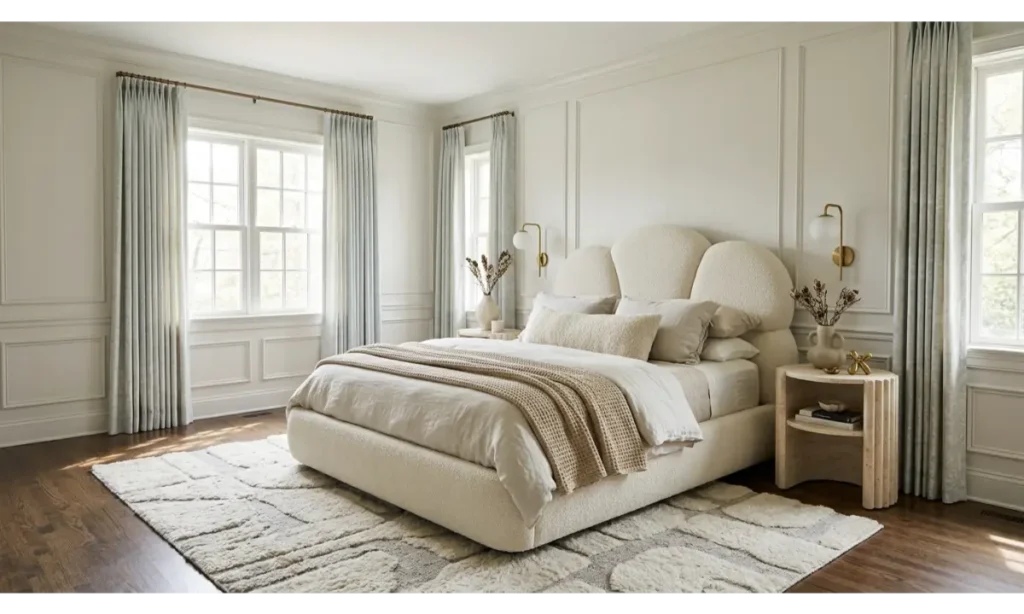
A bedroom in a Colonial Revival Home should feel peaceful rather than overly formal. Start with a traditional upholstered or wood bed, then layer soft bedding, classic curtains, and a comfortable area rug. Cream, pale blue, muted green, and warm beige can create a relaxing palette that complements traditional architecture.
Architectural details such as paneled walls, crown molding, and classic windows already provide plenty of visual interest. Keep decorative accessories restrained and focus on comfort. Matching bedside lamps can reinforce symmetry, while a bench or small reading chair can make the room more useful. The result should feel elegant enough for a magazine but comfortable enough for everyday life.
Pro Tip: Use layered bedding with different textures rather than relying on many decorative pillows to create a luxurious look.
20. Finish With Elegant Colonial Revival Home Landscaping
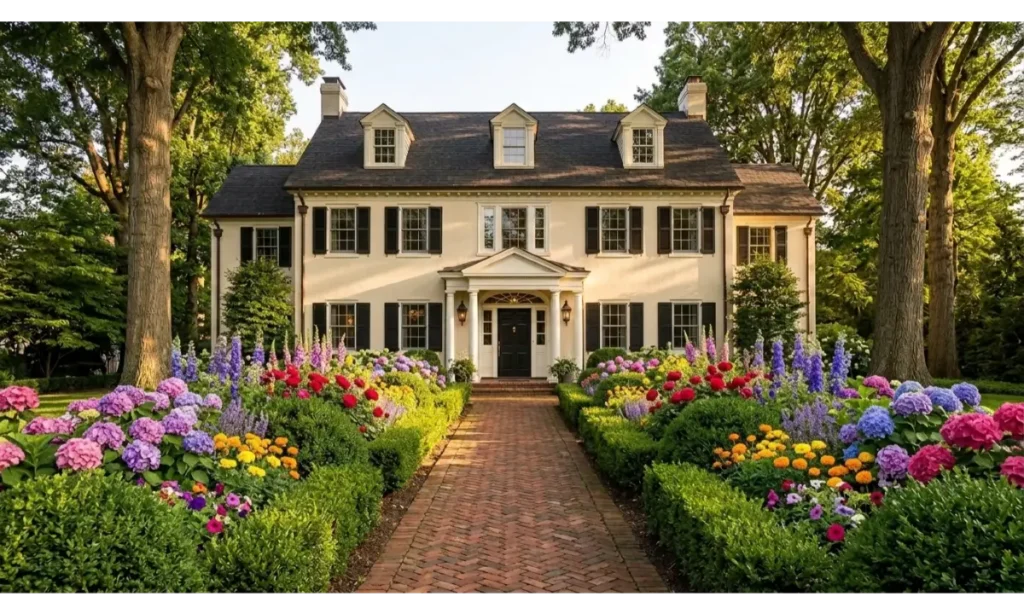
Thoughtful landscaping can complete the look of a Colonial Revival Home by reinforcing its sense of balance. Boxwood, hydrangeas, roses, flowering perennials, and mature shade trees can work beautifully around a traditional facade. Keep the planting organized near the entrance while allowing softer layers farther from the house for a natural transition.
A brick or stone walkway can strengthen the connection between the garden and architecture. Traditional lanterns, low hedges, and symmetrical planting near the front door can emphasize the home’s central axis. Avoid making every plant perfectly identical because a little variation keeps the landscape welcoming. The strongest classic curb appeal combines structure with seasonal softness.
Pro Tip: Frame the entrance with balanced planting while allowing the outer garden areas to become slightly more relaxed and natural.
How to Make a Colonial Revival Home Feel Modern
The best Colonial Revival Home designs do not copy the past too literally. The style originally borrowed historical architectural ideas and adapted them to newer construction methods and changing needs. That same principle works today. Keep classic proportions, symmetry, traditional windows, columns, doors, and trim, then introduce modern comfort through lighting, furniture, appliances, storage, and practical layouts.
For a fresh result, avoid filling every room with antiques or matching traditional furniture. Instead, let the architecture provide the historic foundation while contemporary pieces add comfort. A classic exterior can surround an updated kitchen, a traditional foyer can lead into a relaxed family room, and original molding can work beautifully with modern art. This balance makes traditional home design feel personal, current, and genuinely livable.
Common Colonial Revival Home Design Mistakes to Avoid
One common mistake is adding too many decorative details at once. A Colonial Revival Home already has strong visual structure through symmetry, windows, doors, columns, and trim. Excessive ornament can make the exterior look busy instead of elegant. Another mistake involves ignoring proportions. Oversized columns, tiny shutters, or poorly scaled lighting can make even beautiful materials look disconnected from the architecture.
Another issue is creating a completely formal interior. Traditional architecture does not mean every room needs stiff furniture or fragile decorations. Comfortable seating, practical storage, modern appliances, and relaxed textiles can work beautifully within the style. Focus on balance rather than strict historical imitation. The goal is a home that respects Colonial Revival architecture while supporting the way people live today.
Frequently Asked Questions
What defines a Colonial Revival Home?
A Colonial Revival Home commonly features a balanced facade, central entrance, multi pane windows, shutters, classical columns, pediments, dormers, and traditional trim. The style became especially popular in the United States from the late nineteenth century into the twentieth century as designers looked back to earlier American architectural traditions.
What colors work best for Colonial Revival homes?
Classic combinations include white with black, cream with navy, soft gray with dark green, and warm beige with deep brown. Brick exteriors also work beautifully with white trim. The strongest Colonial Revival color palettes usually stay restrained and use one or two deeper accent colors.
Can a Colonial Revival Home have a modern interior?
Absolutely. Modern furniture, contemporary lighting, updated kitchens, practical storage, and modern technology can work beautifully with traditional architectural details. Keeping the original proportions, trim, windows, and doors helps preserve the home’s identity while allowing the interior to feel current.
Are columns necessary for Colonial Revival architecture?
No. Columns are common, but they are not required for every property. Some homes rely more heavily on symmetry, traditional windows, a central entrance, shutters, dormers, or decorative pediments. The most important goal is maintaining a balanced architectural composition.
How can I make a Colonial Revival Home look more luxurious?
Focus on quality and proportion rather than excessive decoration. Beautiful wood floors, well designed trim, classic lighting, natural stone, brass hardware, substantial doors, and carefully maintained landscaping can create a luxurious appearance. A restrained palette often looks more expensive than a highly decorated exterior.
Is Colonial Revival style still popular?
Yes. Its emphasis on symmetry, recognizable proportions, traditional materials, and adaptable details continues to make it appealing. Modern homeowners can also personalize the style through updated colors, furniture, kitchens, lighting, and landscaping while keeping its classic architectural foundation.
Final Thoughts
A Colonial Revival Home combines timeless character with elegant, welcoming design. From balanced facades and classic windows to beautiful landscaping and traditional interiors, small updates can create a lasting impact.
Choose the details that fit your home and lifestyle. With thoughtful choices, you can create a graceful space that feels classic, comfortable, and beautiful for years to come.