

20 Dining Table Design Ideas to Elevate Your Dining Room
Your dining table is more than a place to enjoy meals. It can become the visual heart of your dining room, bringing together your chairs, lighting, rug, artwork, and decor while creating a welcoming place for everyday life. The right table can make a compact room feel more comfortable, give a large room a stronger focal point, or add warmth to an otherwise plain space.
The best Dining Table Design Ideas balance style, comfort, proportion, and function. In 2026, softer shapes, warm woods, sculptural bases, natural stone, organic silhouettes, and flexible designs are especially appealing. These styles can help you create a dining room that feels current without looking like it will quickly become outdated.
Dining Table Design Ideas to Elevate Your Dining Room
1. Natural Oak Dining Table Design Ideas
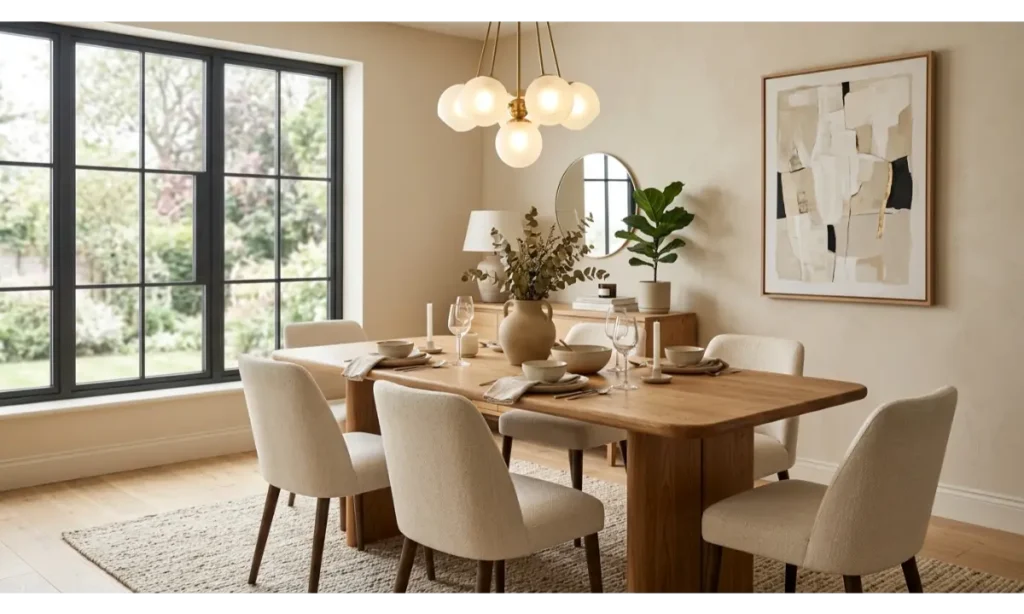
Natural oak brings warmth and character into almost any dining room. Its visible grain creates a relaxed connection with nature while the lighter tone keeps the space feeling bright and welcoming. Choose a simple tabletop with clean edges if you want a modern appearance. Cream chairs, woven textures, and soft beige walls can make the entire room feel calm and effortlessly stylish.
You can make the table the main feature by keeping the surrounding decor simple. A textured rug underneath can define the dining zone, while linen curtains and handmade ceramics add subtle personality. Natural oak also works beautifully in open plan homes because its warm finish can connect the dining space with nearby kitchen cabinets or living room furniture.
Pro Tip: Choose a low sheen finish because it gives natural oak a softer appearance and helps everyday marks blend into the wood.
2. Sculptural Pedestal Dining Table
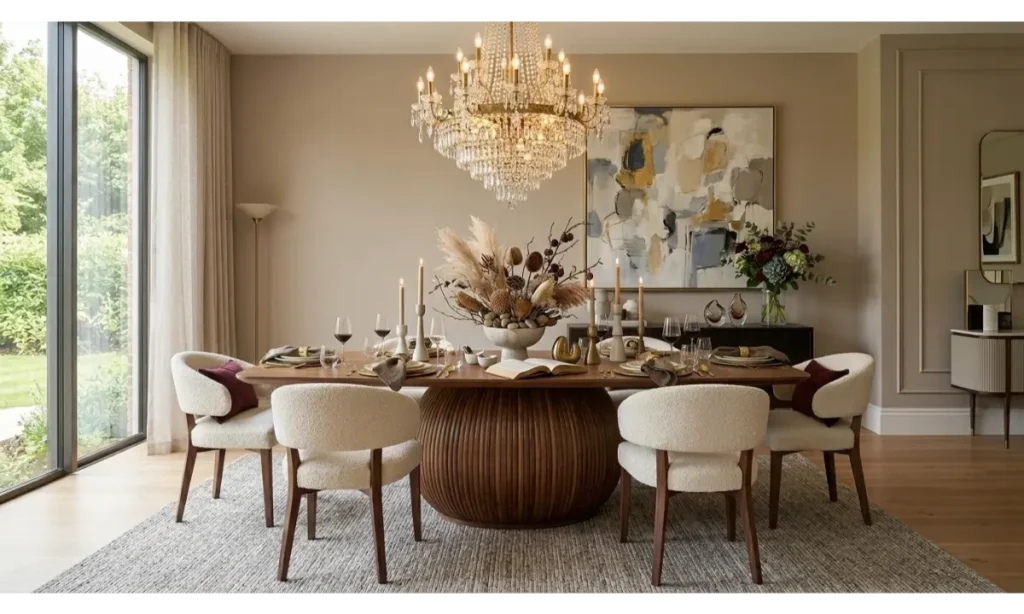
A sculptural pedestal can turn a simple dining table into a striking focal point. Instead of traditional legs sitting at each corner, the central base creates a cleaner and more artistic silhouette. Pair a rounded tabletop with curved chairs to create a soft, cohesive look that feels modern without becoming too formal.
The pedestal also offers practical benefits. Guests can position their chairs more freely because corner legs do not interfere with their feet. This makes pedestal tables particularly attractive when comfort and conversation matter. A simple tabletop paired with a dramatic base can also give your dining room personality without requiring excessive decorations.
Pro Tip: Make sure the pedestal provides enough leg clearance for everyone before choosing a dramatic oversized base.
Read More: 23 Brilliant Galley Kitchen Ideas to Maximize Space & Style
3. Round Dining Table for Better Conversation
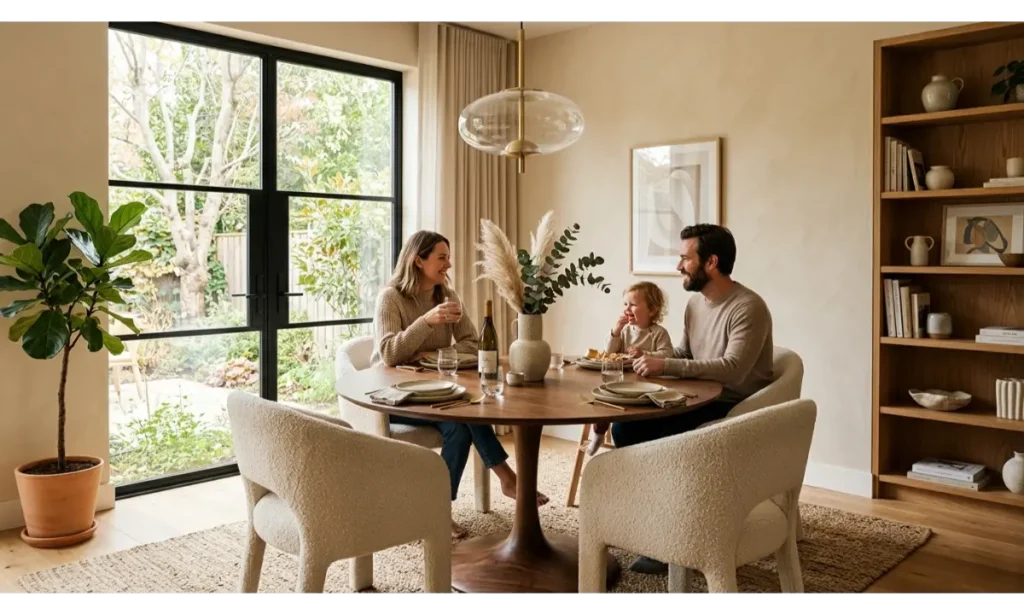
A round table creates a naturally social atmosphere because everyone faces one another. There is no obvious head of the table, which makes conversations feel more relaxed and inclusive. The circular shape also gives the room a softer appearance, especially when the surrounding furniture contains straight lines and rectangular forms.
Round tables can work particularly well in smaller dining rooms because they eliminate sharp corners. This can make walking around the furniture feel easier and create a more open visual flow. Pair the table with curved chairs, a round rug, or a central pendant to reinforce the shape without making the room look overly coordinated.
Pro Tip: A pedestal base usually works better than multiple legs on a round table because it gives guests more freedom to position their chairs.
4. Elegant Oval Dining Table
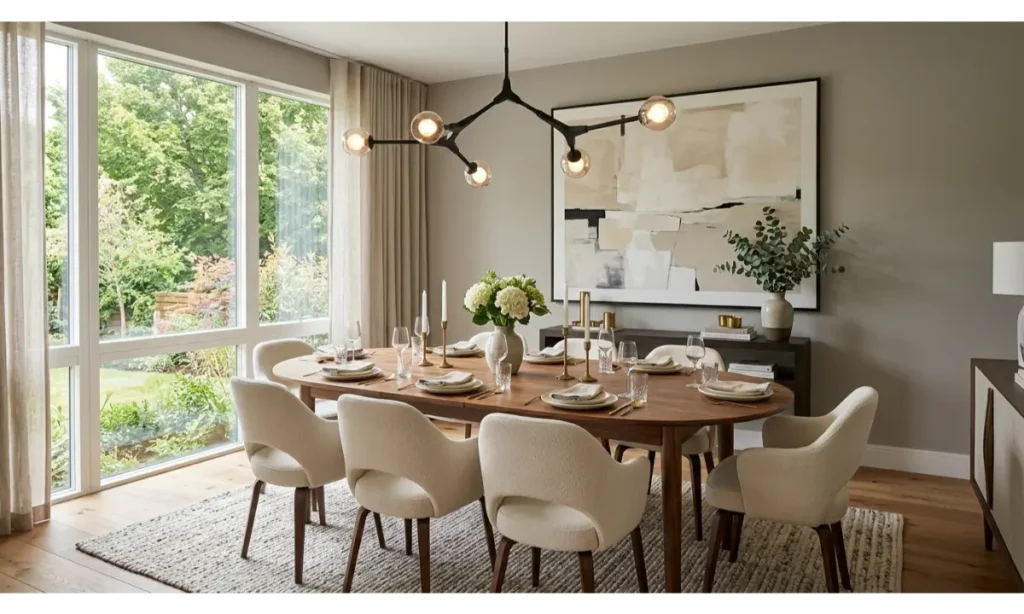
An oval table offers the generous surface of a rectangular table while introducing softer curves. The rounded ends make the furniture appear less bulky and can improve movement around the room. This shape works beautifully in long dining rooms where you need seating capacity but do not want harsh corners dominating the design.
For a timeless look, choose warm wood and simple upholstered chairs. If you prefer something more contemporary, pair the oval top with a sculptural pedestal or contrasting base. Keep the centerpiece low so guests can easily see across the table. This creates a balanced setting that feels both stylish and practical.
Pro Tip: An oval table looks especially balanced when its length follows the longest direction of a rectangular dining room.
5. Rich Walnut Dining Table
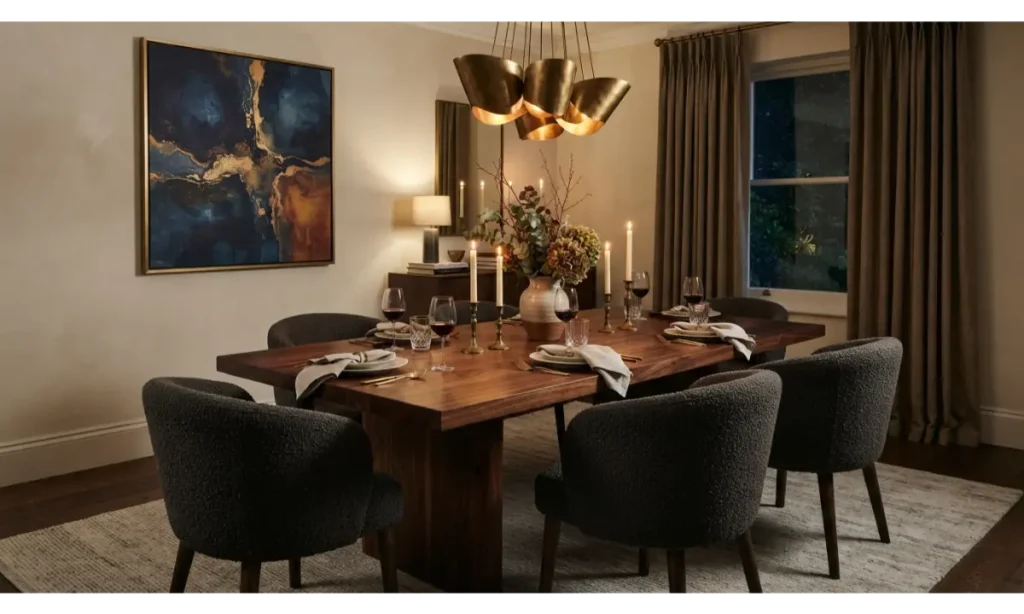
Dark walnut can instantly give a dining room depth and sophistication. Its rich brown color creates a beautiful foundation for cream chairs, warm lighting, brass details, and neutral walls. A clean modern silhouette keeps the dark wood from feeling heavy or old fashioned.
To make the room feel inviting, introduce several soft textures around the table. Linen curtains, a wool rug, upholstered chairs, and handmade ceramics can balance the darker surface. Warm lighting also helps reveal the natural grain and creates a cozy atmosphere during evening meals.
Pro Tip: Use warm bulbs in your pendant or chandelier to bring out the richness of walnut instead of making it look flat.
Read More: 22 Minecraft Bed Ideas That Make Builds Stand Out
6. Minimalist White Dining Table
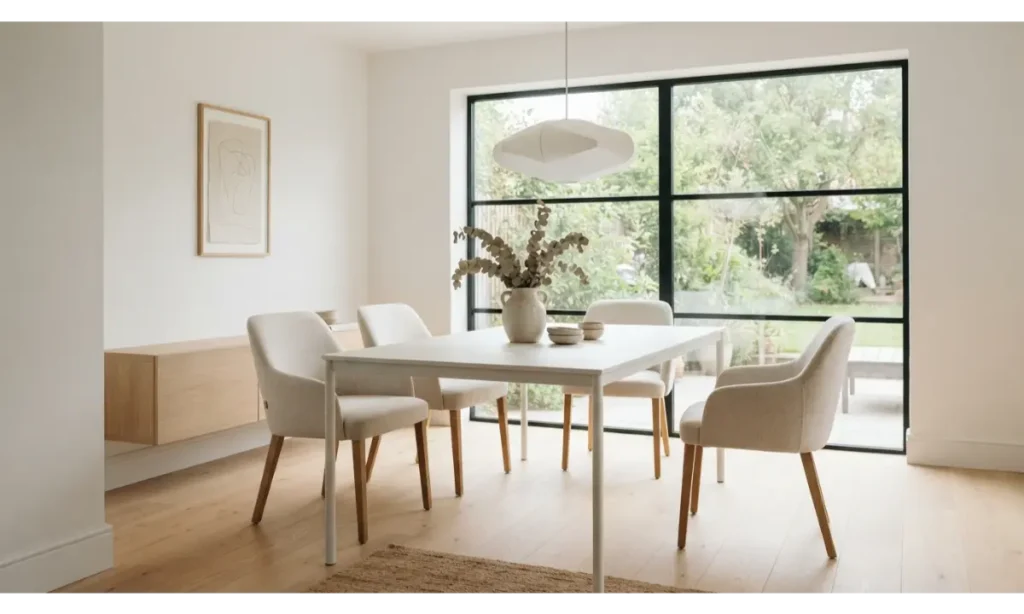
A white table gives a dining room a clean and spacious appearance. It works particularly well with pale flooring, neutral walls, and soft fabrics. Because the tabletop remains visually quiet, you can use chairs, artwork, lighting, or a colorful centerpiece to add personality without overwhelming the room.
The key to making white furniture feel warm is texture. Add a woven rug, linen curtains, natural wood accessories, or ceramic pieces to prevent the room from looking sterile. A few carefully selected elements can make the dining area feel sophisticated while maintaining its peaceful minimalist character.
Pro Tip: For everyday family use, select a durable easy clean finish that can handle frequent spills and stains.
7. Live Edge Wood Dining Table
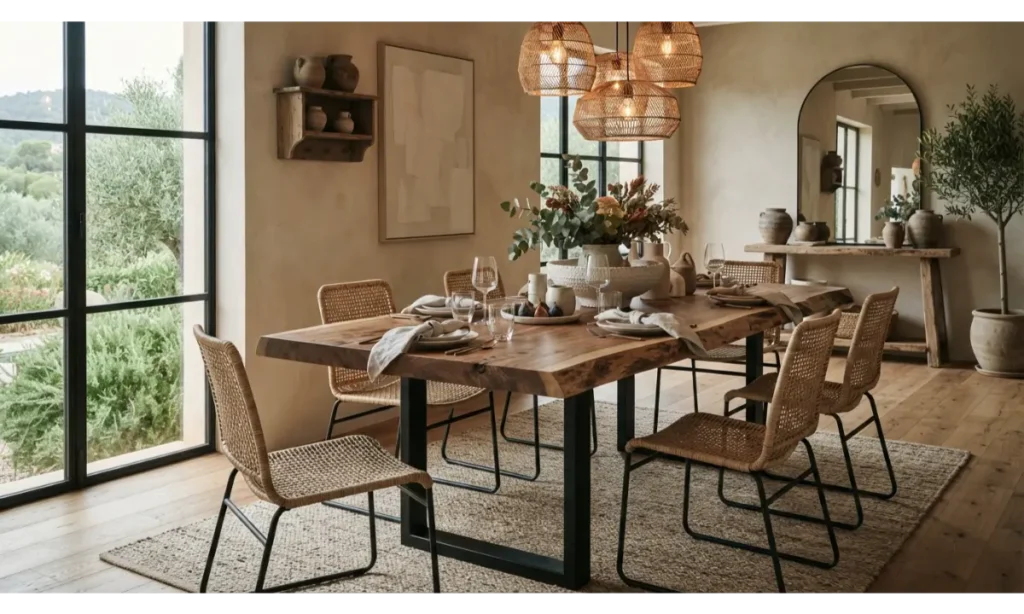
A live edge table brings natural character directly into your dining room. The irregular edge makes each tabletop feel unique, while knots, grain variations, and natural markings create visual interest. This style works beautifully with rustic, organic modern, farmhouse, and contemporary interiors.
Because the tabletop already has plenty of personality, keep the surrounding furniture relatively simple. Neutral chairs, black accents, handmade ceramics, and soft lighting can complement the wood without competing with it. The result feels authentic and collected instead of overly coordinated.
Pro Tip: Avoid covering too much of the tabletop with a large runner because the natural edge and wood grain are the main attraction.
8. Marble Dining Table
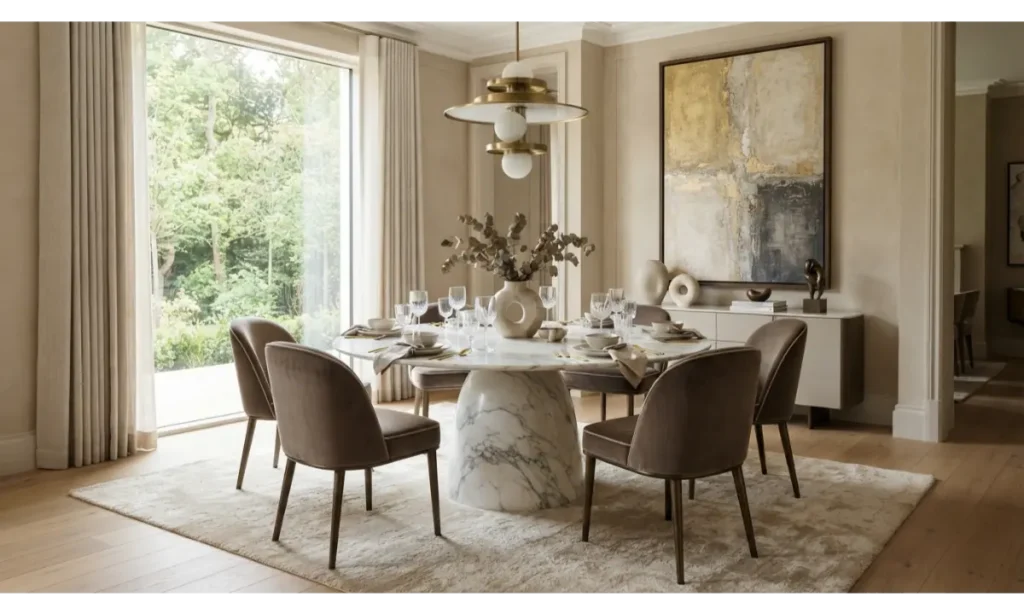
Marble creates an instant sense of luxury and can become the focal point of the entire dining room. White marble with subtle veining works beautifully with warm neutrals, while darker stone can create a dramatic and sophisticated mood. Pairing the surface with upholstered chairs helps soften its naturally cool appearance.
A marble table already provides strong visual interest, so avoid overcrowding it with accessories. One sculptural bowl, a low arrangement, or a simple ceramic centerpiece can be enough. Balance the stone with wood, fabric, or warm metal elsewhere in the room to create a more welcoming atmosphere.
Pro Tip: Check the care requirements of the stone before buying because natural marble may need more attention than wood or engineered surfaces.
9. Extendable Dining Table
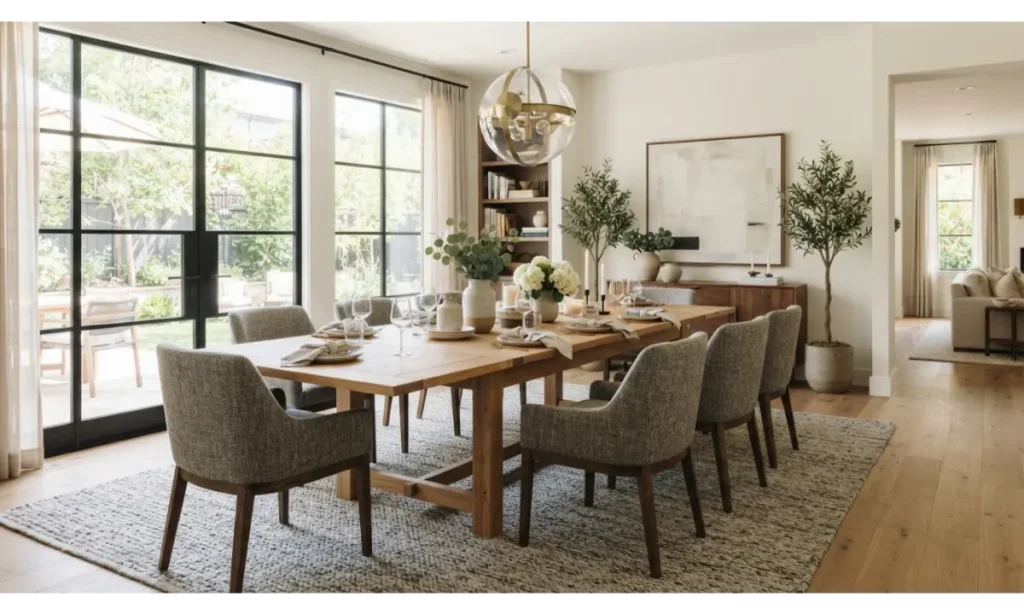
An extendable table is ideal when you want flexibility without keeping a large table in the room every day. Keep it compact for normal family meals and extend it when guests arrive. Modern designs can look polished in both positions, making them useful for homes where space needs to work harder.
This style works particularly well in apartments, multipurpose rooms, and dining areas that host occasional celebrations. When shopping, pay attention to how the extension mechanism operates and where the additional leaves are stored. A practical design should feel easy to use rather than becoming a complicated task whenever guests arrive.
Pro Tip: Measure the table at its full extended length and make sure the surrounding chairs still have enough room to move comfortably.
10. Small Round Dining Table
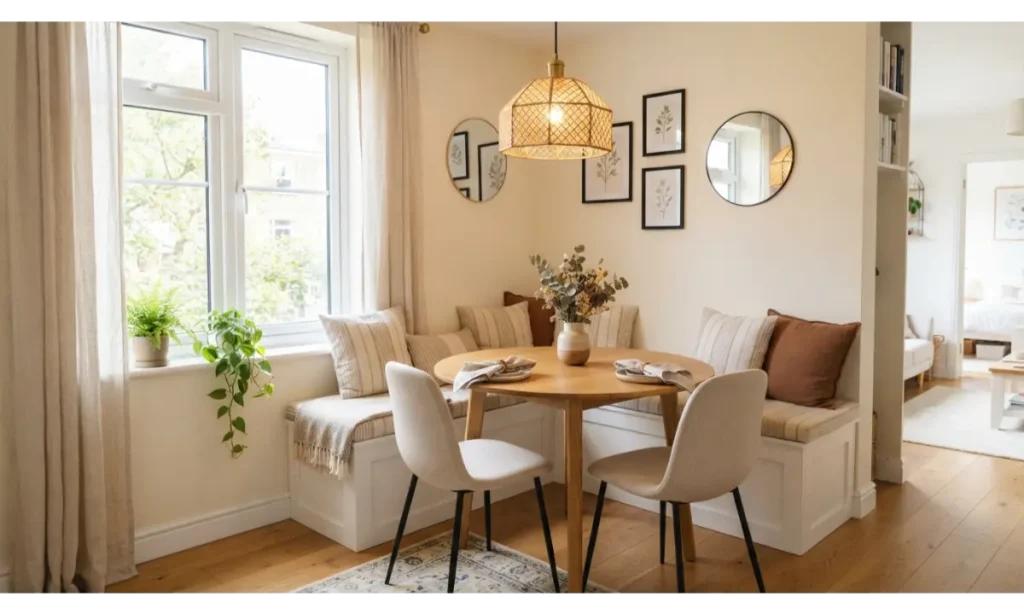
A small round table can make a compact dining area feel comfortable instead of crowded. Its curved shape removes bulky corners and creates a smoother path around the furniture. This makes it especially useful for apartments, breakfast corners, small kitchens, and narrow dining zones.
Keep everything around the table visually light. Slim chairs, a small pendant, and a simple centerpiece can create a complete arrangement without taking over the room. If you need additional seating, a wall mounted bench can provide useful flexibility while keeping the floor area open.
Pro Tip: Choose armless chairs that slide underneath the table when not in use to maximize valuable floor space.
11. Glass Dining Table with Statement Base
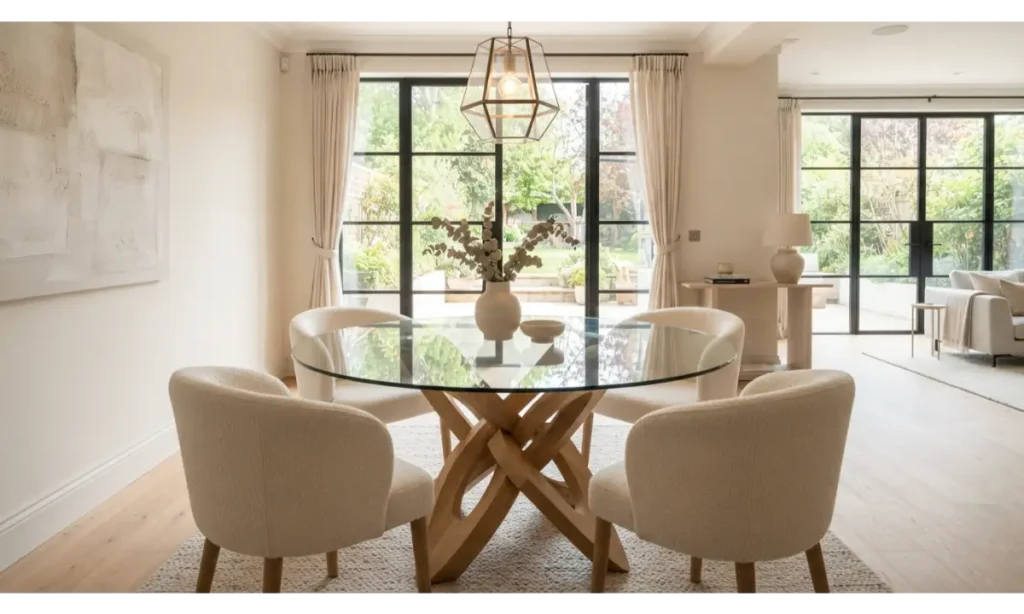
A glass tabletop can make a room feel visually lighter because the eye can see through the surface. This makes it useful for smaller dining areas where a solid table might appear too heavy. The base becomes the visual focus, so you can choose a sculptural wooden, metal, or artistic design.
Balance the transparency with tactile materials. Upholstered chairs, a textured rug, natural wood, and warm lighting can make the room feel comfortable instead of overly sleek. This combination works particularly well in modern interiors where you want architectural details to remain visible.
Pro Tip: If you dislike visible fingerprints, choose lightly textured glass instead of an extremely glossy surface.
12. Reclaimed Wood Farmhouse Table
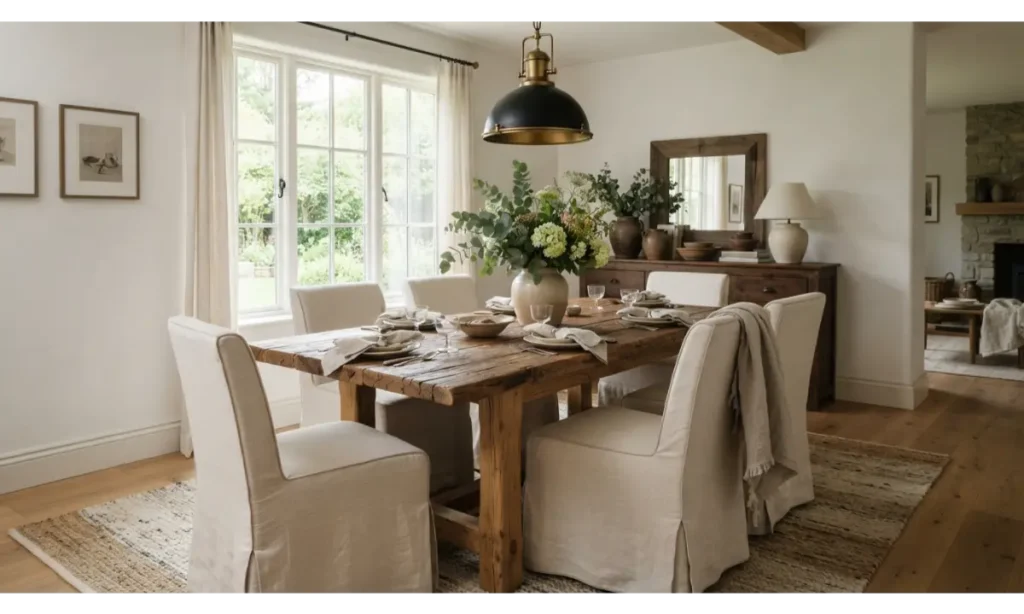
Reclaimed wood creates warmth and character through its natural imperfections. Knots, small marks, varied tones, and visible grain give the tabletop a lived in quality that makes the dining room feel welcoming. Pair it with upholstered chairs for a modern farmhouse appearance or vintage seating for a more traditional room.
Do not worry about making every wood tone identical. Slight variations can make the room feel more authentic. Combine the table with linen, woven textures, ceramic accessories, and aged metal details to create a relaxed environment that feels comfortable for everyday meals and weekend gatherings.
Pro Tip: Use a simple centerpiece so the beautiful natural texture of reclaimed wood remains visible.
13. Black Dining Table with Light Chairs
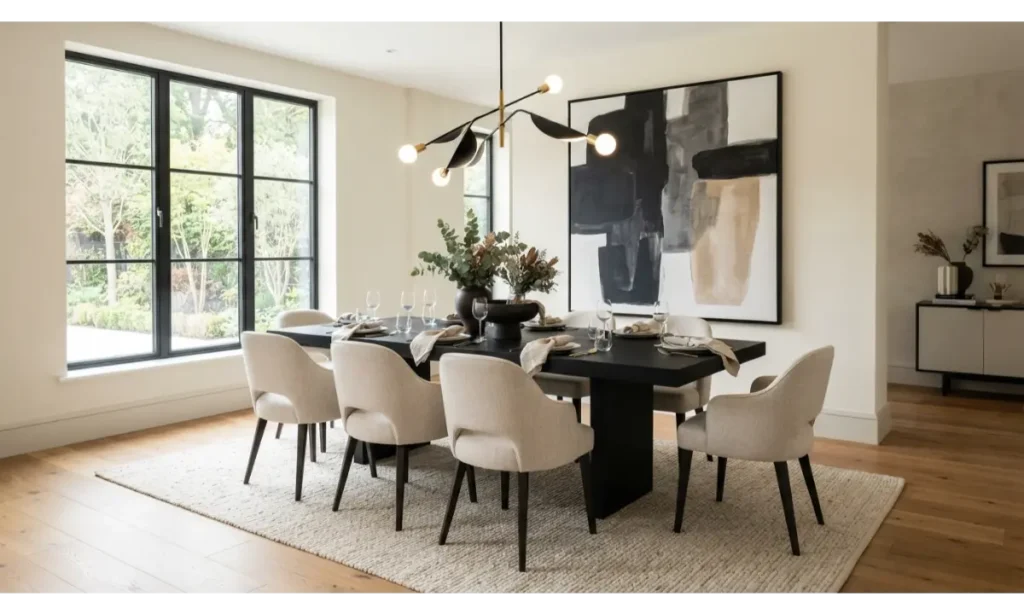
A black table gives your dining room a strong visual anchor. Instead of surrounding it with more dark furniture, balance the surface with cream chairs, warm flooring, pale walls, and soft textiles. This creates contrast while keeping the room bright and welcoming.
A matte finish usually feels more sophisticated than a highly glossy surface. You can repeat small black details through picture frames, lighting, or decorative accessories to connect the table with the rest of the room. Keep those accents subtle so the table remains the strongest feature.
Pro Tip: Add lighter colors around the table to prevent a dark tabletop from visually shrinking the room.
14. Warm Travertine Dining Table
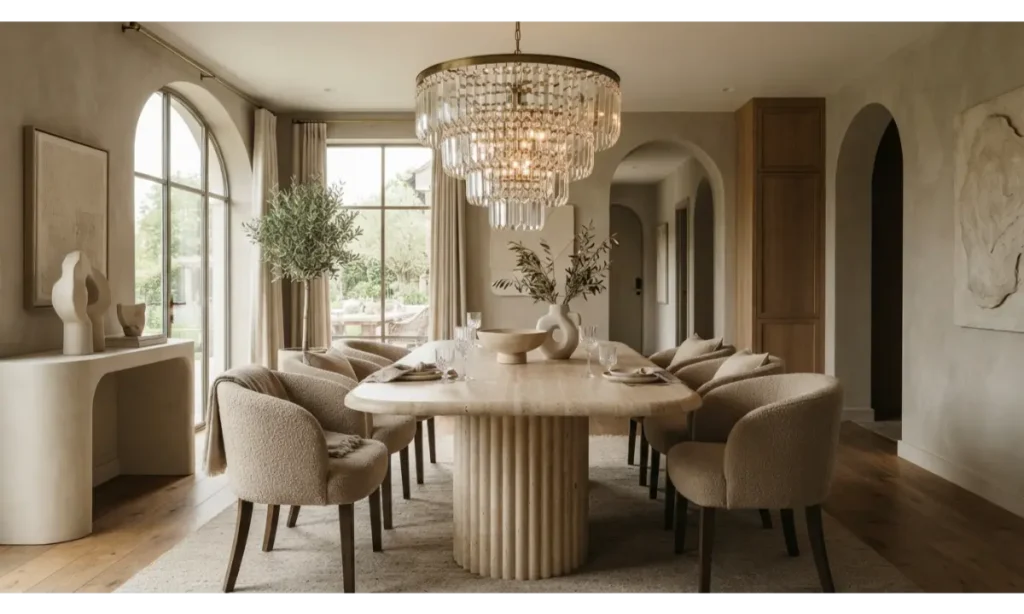
Travertine adds warmth through its creamy color and natural surface variation. Unlike highly polished stone, its softer appearance works beautifully with organic interiors filled with wood, linen, plaster, and woven materials. A rounded pedestal can make the table feel almost architectural while keeping the overall room relaxed.
Because travertine provides plenty of texture, the rest of the decor should remain restrained. Choose one beautiful centerpiece rather than covering the tabletop with accessories. Curved chairs and warm lighting can reinforce the natural character while creating an inviting environment for everyday dining.
Pro Tip: Ask about sealing and maintenance requirements before choosing travertine for frequent everyday use.
15. Pedestal Table with Extra Legroom
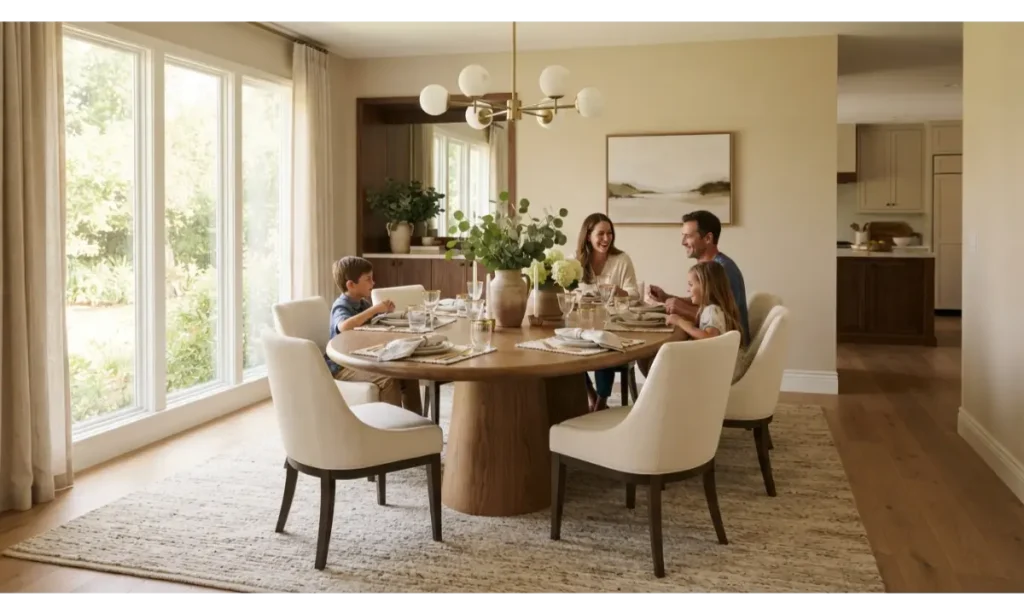
A pedestal base can make dining more comfortable by reducing the number of legs underneath the tabletop. Traditional table legs sometimes interfere with guests’ feet or prevent chairs from sitting exactly where you want them. A central base gives the furniture a cleaner appearance while creating more flexible seating.
This design works with almost every interior style. Light oak can create a Scandinavian feel, dark walnut adds sophistication, painted wood works beautifully in traditional spaces, and stone can create a modern statement. The right choice depends on the atmosphere you want to create.
Pro Tip: Check the width and shape of the pedestal before purchasing because a beautiful base can still become uncomfortable if it occupies too much foot space.
16. Two Tone Dining Table
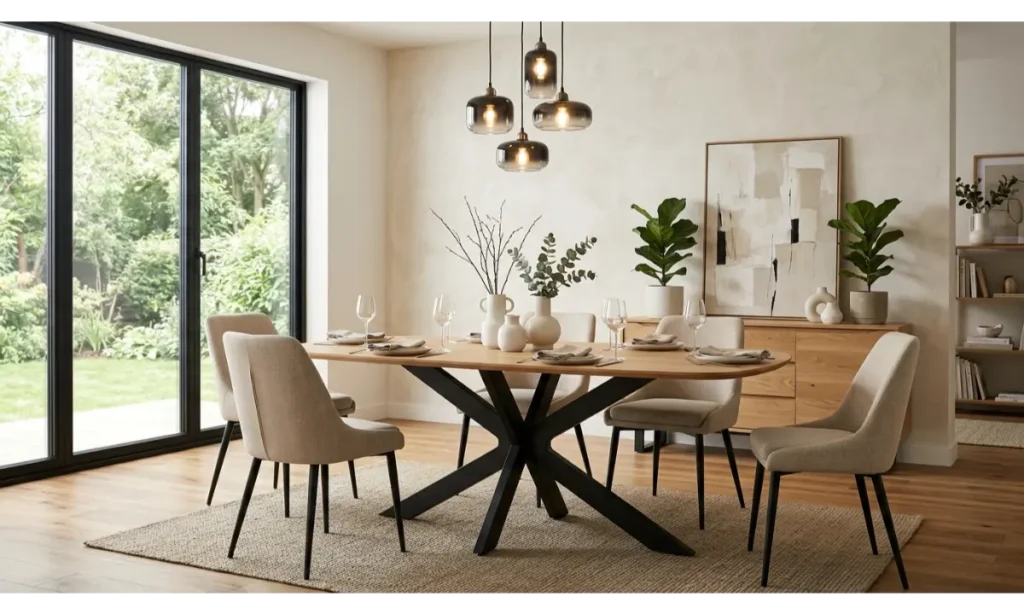
A two tone table introduces contrast without requiring lots of decorative objects. A natural wood top combined with a black base creates a modern grounded appearance, while a lighter painted base can give a traditional table a fresh update. This design also makes it easier to connect different furniture finishes within the room.
Repeat each finish subtly throughout the dining area for balance. Black lighting, wood flooring, or a neutral sideboard can create visual connections without making everything match perfectly. The result feels intentional and layered while still maintaining a clean overall appearance.
Pro Tip: Keep the table to two main finishes and let the remaining furniture and accessories use softer complementary tones.
17. Organic Shaped Dining Table
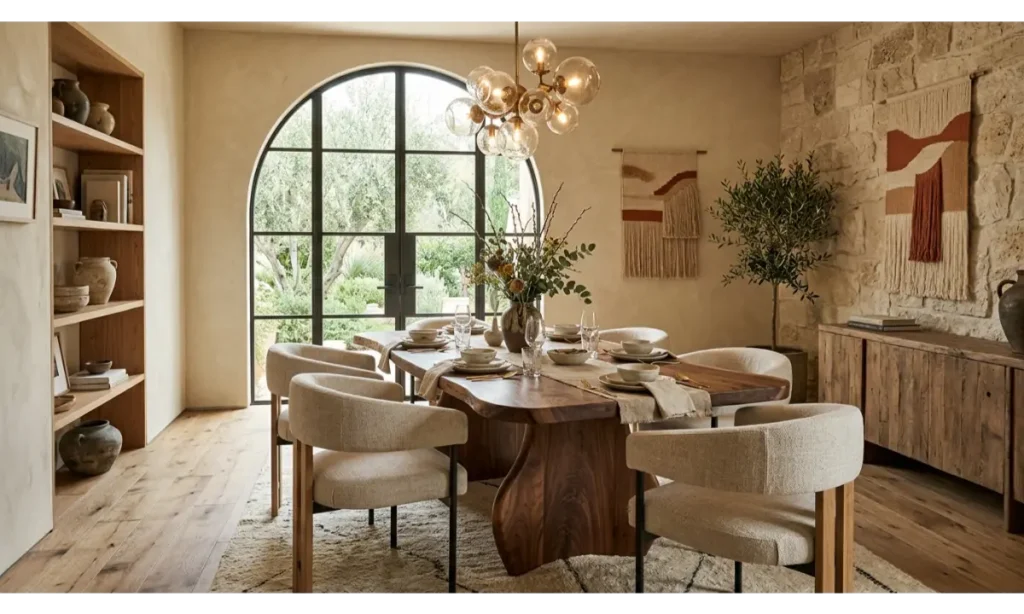
An organically shaped table gives the dining room a more artistic personality. Instead of following a strict rectangle, the tabletop may have curved edges, asymmetrical ends, or an unusual flowing outline. These small changes can make the entire room feel more custom and visually interesting.
Let the unusual silhouette remain the main feature. Choose simple chairs and restrained accessories so the table does not compete with too many other shapes. A sculptural pendant can echo the curves without copying them exactly, creating a balanced composition that feels creative but still comfortable.
Pro Tip: Use a low centerpiece so guests can appreciate the unusual tabletop shape from every angle.
18. Dining Table with Built In Banquette
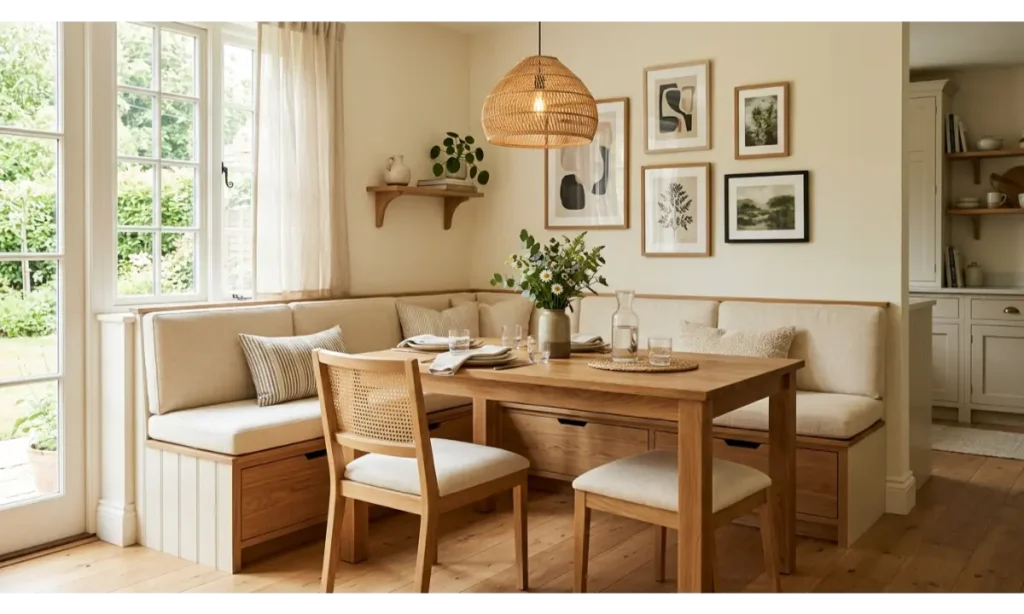
A built in banquette can transform an unused corner into a practical dining area. Place the table beside the upholstered bench and add chairs on the opposite side. This arrangement can provide generous seating while using less floor space than placing individual chairs around every edge.
The bench can also provide hidden storage if you add drawers or lift up compartments underneath the seat. Keep the table relatively simple so the nook does not feel crowded. Soft cushions, warm lighting, and a small piece of artwork can make the area feel like an intentional part of the home.
Pro Tip: Choose durable upholstery that can handle spills and frequent cleaning, especially if the dining nook serves a busy family.
19. Classic Traditional Wood Table
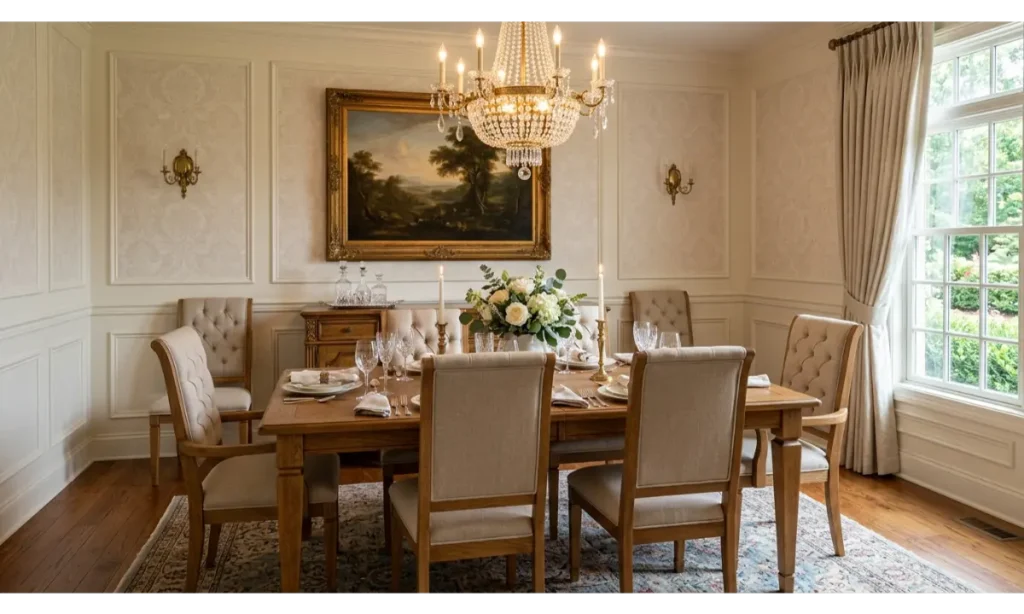
A classic wood table can give your dining room a timeless foundation. Look for quality materials, balanced proportions, and restrained detailing instead of overly ornate features. This allows the table to remain relevant even when you change your chairs, wall color, lighting, or accessories.
You can also mix traditional and modern pieces to create a more updated appearance. Upholstered chairs with a classic wood table can add softness, while contemporary artwork can prevent the room from feeling too formal. The goal is to create a dining space that feels established but still reflects your personality.
Pro Tip: Choose a simple classic silhouette if you expect to change your dining room style in the future.
20. Statement Sculptural Dining Table
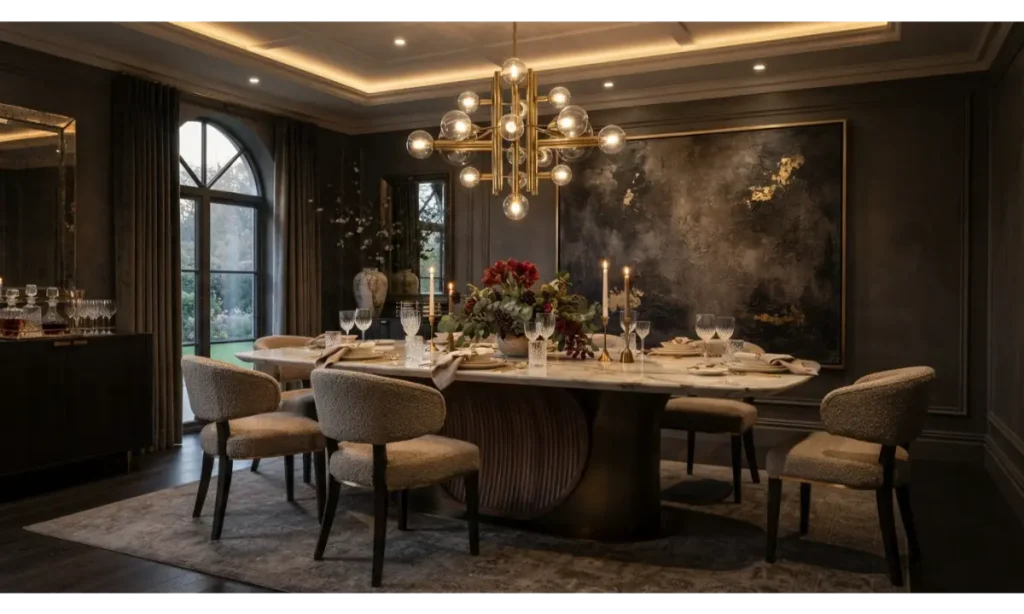
If you want the dining room to make an immediate impression, choose a table with sculptural personality. A dramatic base, unusual silhouette, expressive stone surface, or richly textured wood can turn the furniture into an artistic focal point. Keep everything around it relatively restrained so the table has enough visual space.
A statement table still needs to work for real life. Check the height, legroom, seating capacity, and walking clearance before buying. The most successful dining rooms combine visual impact with everyday comfort. A table should look impressive in photographs while remaining comfortable enough for long dinners and family gatherings.
Pro Tip: Pair a dramatic table with one statement light and a simple centerpiece instead of filling the room with competing focal points.
How to Choose the Right Dining Table
Before choosing your favorite style, measure your dining room carefully. Consider the table itself, the chairs, and the space needed for people to move around them. A beautiful table can quickly become frustrating if guests cannot pull their chairs out comfortably or walk behind someone who is seated.
Think about your daily routine too. If you usually eat with four people but host large gatherings several times a year, an extendable table may offer better flexibility than buying a permanently oversized table. If you rarely host guests, choose a size that feels comfortable for your everyday household.
The shape should also complement the room. Round tables often work well in compact or square spaces, while oval and rectangular tables can make better use of long rooms. If your dining room already contains many straight lines, a curved or organic table can soften the overall appearance.
How to Style Your Dining Table
Start with the lighting above the table. A pendant or chandelier can visually anchor the dining area and create a stronger sense of intimacy. The fixture should complement the scale of the tabletop rather than overpower it.
Next, introduce texture. A wooden table can look beautiful with linen napkins, ceramic pieces, woven chairs, or a soft rug. Stone tables can benefit from warm wood accents and fabric seating. The goal is to create contrast so the room feels layered rather than flat.
Keep your centerpiece simple. A low ceramic bowl, sculptural vase, natural branches, or a small arrangement can be enough. Avoid covering the entire tabletop because an attractive surface should remain visible.
Dining Table Size and Seating Tips
The size of your table should match both the room and the number of people who use it. Do not choose a table based only on how many seats the manufacturer claims. Chair width, table legs, pedestal placement, and personal comfort can all affect how many people can actually sit comfortably.
Leave enough space around the table for chairs to move backward. You should also check nearby doors, cabinets, windows, and walkways before finalizing the layout. These details are easy to overlook when you only measure the empty floor.
If you are furnishing a small room, prioritize movement over maximum seating. A slightly smaller table that people can comfortably walk around will usually feel better than a large table that blocks the room.
Frequently Asked Questions
What is the most popular dining table shape for 2026?
Round and oval tables are especially popular because they soften the room, improve movement, and encourage conversation. Sculptural pedestal bases are also becoming a strong feature in contemporary dining furniture.
What is the most timeless dining table material?
Wood remains one of the safest long term choices. Oak and walnut can work across many decorating styles and can be updated easily through different chairs, lighting, rugs, and accessories.
Is a round dining table good for a small room?
Yes. A round table can work particularly well in compact spaces because it removes sharp corners and can make movement around the furniture feel smoother.
Are oval dining tables better than rectangular tables?
Neither shape is automatically better. Oval tables provide a similar seating arrangement to rectangular tables while introducing softer edges. They work especially well in long rooms where you want to reduce the visual heaviness of sharp corners.
What type of dining table makes a room look expensive?
A table with quality natural materials, balanced proportions, and a distinctive base can create a high end appearance. Warm walnut, natural stone, sculptural pedestal designs, and carefully crafted wood can all make a strong impression.
Should dining chairs match the table?
They do not have to match. In fact, mixing materials can make the room feel more collected and personal. Upholstered chairs with a wooden table or woven chairs with a stone table can create beautiful contrast.
What is the best table for entertaining guests?
An extendable dining table is one of the most practical choices if you regularly host guests but want a smaller everyday setup. Oval and rectangular designs can also provide generous seating for larger gatherings.
How can I make my dining room feel warmer?
Use warm wood, soft textiles, layered lighting, natural materials, and comfortable upholstered seating. Walnut, oak, linen, wool, ceramic, and warm neutral colors can make the room feel much more inviting.
Is marble practical for a dining table?
Marble can look beautiful and luxurious, but natural stone usually needs more care than many wood surfaces. Consider your household habits and maintenance preferences before choosing it for everyday dining.
What makes a dining table look modern?
Modern tables often feature clean silhouettes, soft curves, sculptural bases, natural materials, restrained detailing, and carefully balanced proportions. You can create a modern look without making the entire room minimalist.
Conclusion
The right dining table can completely change the atmosphere of your dining room. Whether you love warm oak, rich walnut, natural stone, a compact round shape, an elegant oval, or a dramatic sculptural base, the best choice should combine beauty with everyday comfort.
These Dining Table Design Ideas show how different materials, shapes, finishes, and layouts can create very different moods. Before choosing a table, measure your room, consider your seating needs, check walking clearance, and think about how you actually use the space.
A beautiful dining room does not need dozens of expensive pieces. One well chosen table, comfortable chairs, thoughtful lighting, and a few carefully selected accessories can create a space that feels stylish, welcoming, and ready for everyday meals as well as special gatherings.