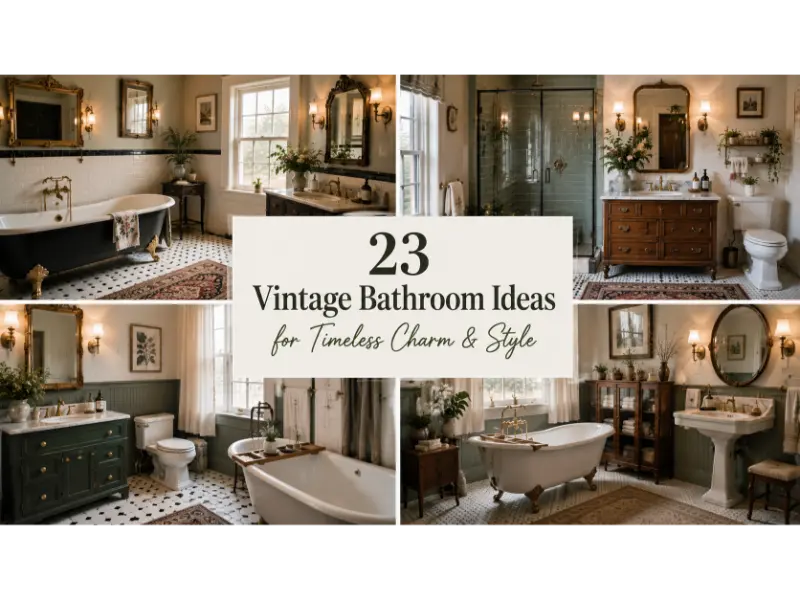
23 Vintage Bathroom Ideas for Timeless Charm & Style
A bathroom can have all the comfort of a modern space while still carrying the warmth and personality of another era. The beauty of vintage bathroom ideas lies in those memorable details that make a room feel collected rather than overly designed. Think graceful clawfoot tubs, pedestal sinks, classic tile, warm brass, old fashioned mirrors, soft colors, and beautiful lighting. These elements can work in a large primary bathroom just as beautifully as they can in a tiny powder room.
The secret is balance. You do not need to make everything look antique. A few carefully chosen traditional features can create the right atmosphere while modern plumbing, storage, ventilation, and lighting keep the room practical. Whether you are renovating an older home or simply want to bring more character into a newer space, these ideas will help you create a bathroom that feels timeless, welcoming, and uniquely yours.
Beautiful Vintage Bathroom Ideas to Transform Your Space
1. Classic Clawfoot Tub
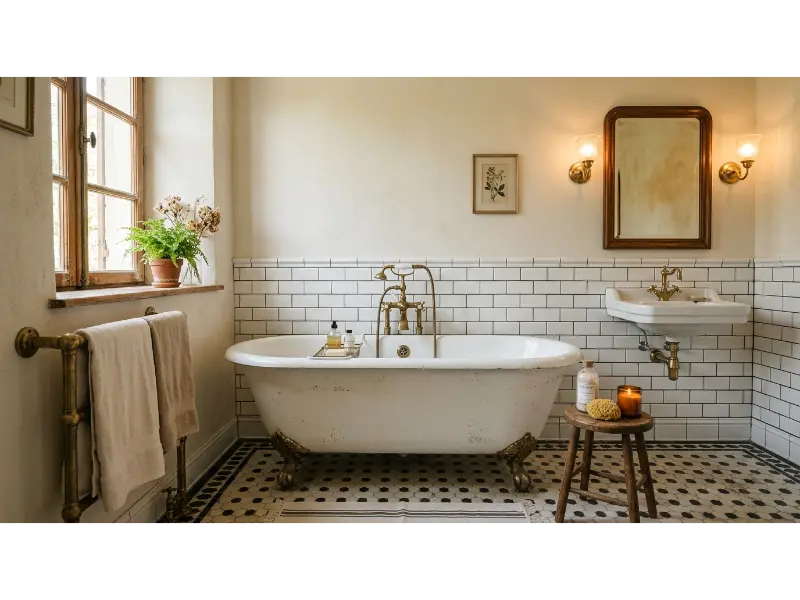
A clawfoot tub instantly gives a bathroom a sense of history and elegance. Its curved silhouette creates a beautiful focal point while the raised feet add an unmistakable traditional character. Choose a classic white tub and pair it with aged brass, polished chrome, or brushed nickel plumbing. Keep the surrounding finishes relatively simple so the tub remains the main attraction.
The area around the tub should feel useful rather than crowded. Add a small wooden stool for towels, a woven basket for bath linens, or a simple wall hook nearby. A soft cotton bath mat can make the hard surfaces feel warmer while maintaining the relaxed character of the room.
Pro Tip: Give the bathtub enough open space around it so its curved shape remains visually noticeable.
2. Elegant Pedestal Sink
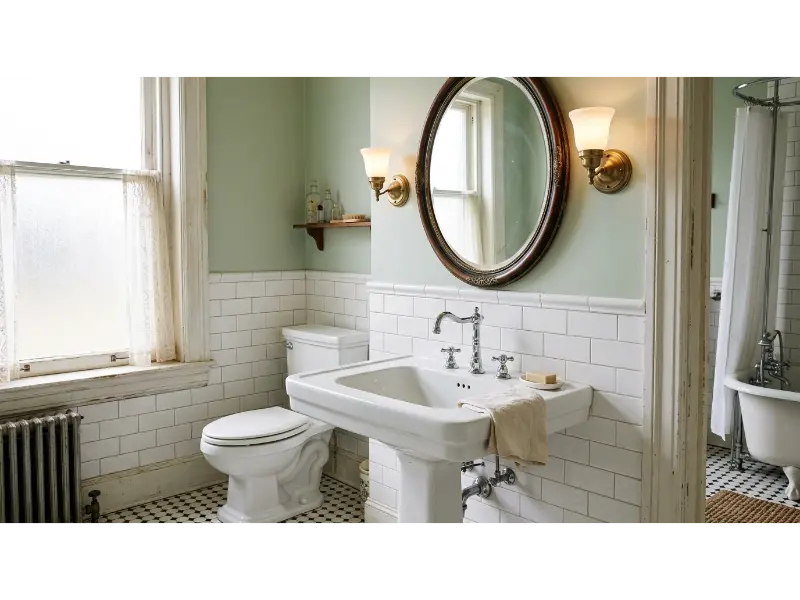
A pedestal sink is one of the easiest ways to create an authentic traditional bathroom appearance. Its slim structure keeps the floor visible and makes a small room feel less crowded. White porcelain looks especially beautiful with classic chrome or aged brass fixtures, while an ornate mirror above the sink can add personality.
The main challenge is storage because a pedestal sink does not provide a traditional vanity cabinet. Solve this with a recessed medicine cabinet, narrow linen cupboard, or attractive wall shelf. Keeping toiletries organized elsewhere allows the sink area to remain clean and visually graceful.
Pro Tip: Choose a recessed medicine cabinet if you want storage without sacrificing the open look of a pedestal sink.
Read More: 22 Mermaid Bathroom Decor Ideas That Wow Guests
3. White Subway Tile With Dark Grout
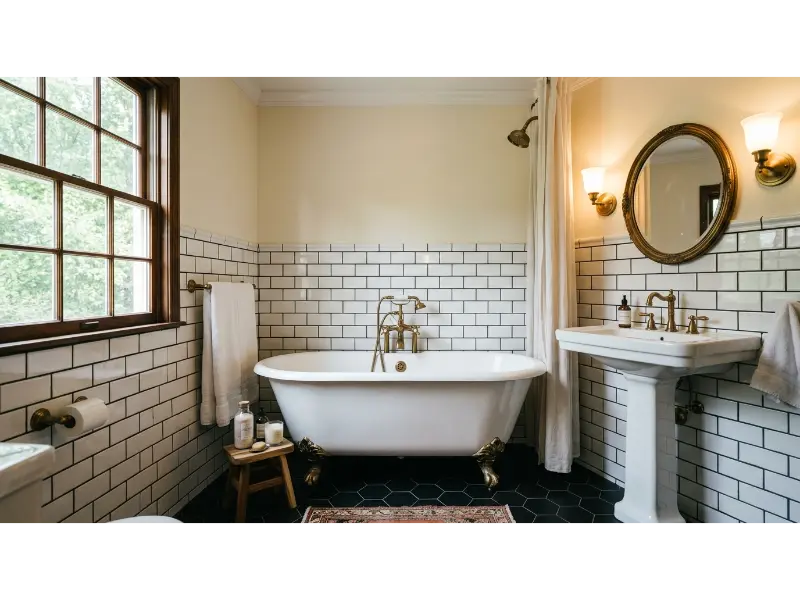
White subway tile provides a timeless foundation for a traditional bathroom. The simple rectangular shape creates clean lines, while darker grout emphasizes the individual tiles and adds architectural definition. This combination works beautifully with white porcelain fixtures and traditional metal finishes.
You can install the tile halfway up the wall and use paint above it for a softer appearance. Cream, muted sage, dusty blue, and warm beige all work well. This approach prevents the bathroom from feeling too stark while still giving the walls the practical protection needed around sinks and bathing areas.
Pro Tip: Use a classic tile border or trim at the top of the subway tile to give the installation a more finished appearance.
4. Black and White Checkerboard Floor
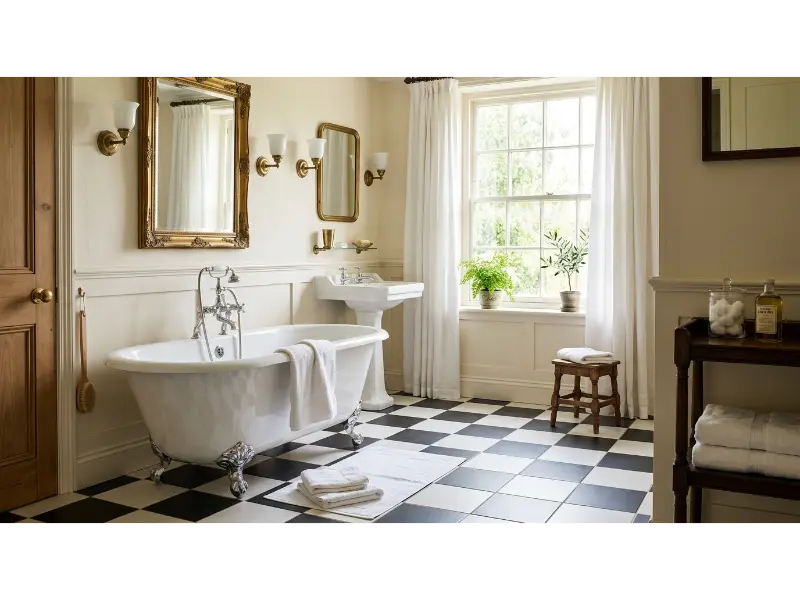
A checkerboard floor brings instant personality to a bathroom without requiring complicated decoration. Black and white create a strong contrast that works beautifully with white porcelain fixtures and traditional chrome or brass hardware. The pattern can make a simple bathroom feel carefully designed and full of character.
If pure black and white feels too dramatic, use charcoal and ivory instead. The softer combination creates the same traditional effect while making the room feel warmer. Keep the rest of the bathroom relatively restrained so the floor provides the visual interest.
Pro Tip: Repeat a small amount of black elsewhere through the mirror frame, hardware, or lighting to connect the room visually.
5. Aged Brass Fixtures
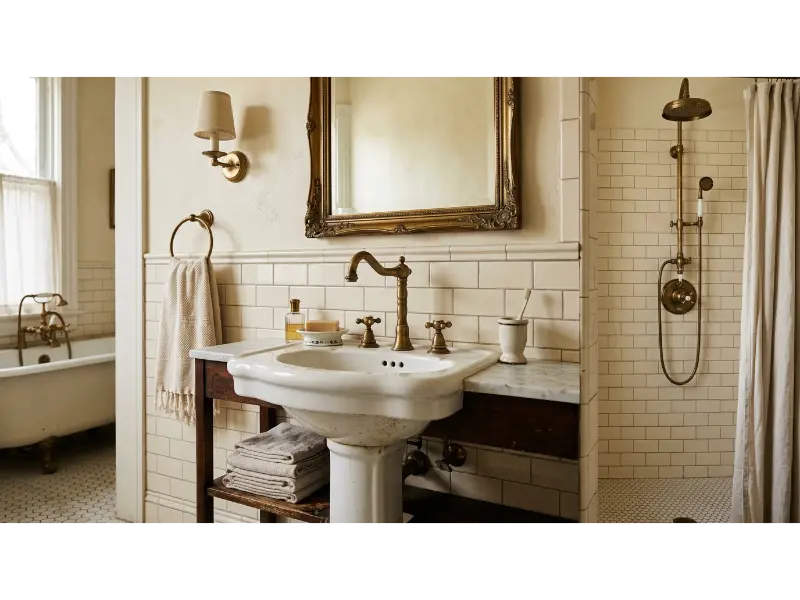
Aged brass adds warmth and character that can make even a newly renovated bathroom feel established. Use it on faucets, shower controls, towel bars, cabinet knobs, mirror frames, and lighting. Its slightly muted appearance works especially well with cream, sage green, dusty blue, marble, and natural wood.
Try to keep the main metal finish consistent throughout the space. When every fixture has a different finish, the room can lose its sense of history and visual harmony. A coordinated brass palette feels more intentional and allows the porcelain and tile to remain important parts of the design.
Pro Tip: Select one dominant metal finish and repeat it across several visible fixtures instead of mixing too many metals.
Read More: 23 Elegant Bathroom Designs That Look Expensive
6. Romantic Floral Wallpaper
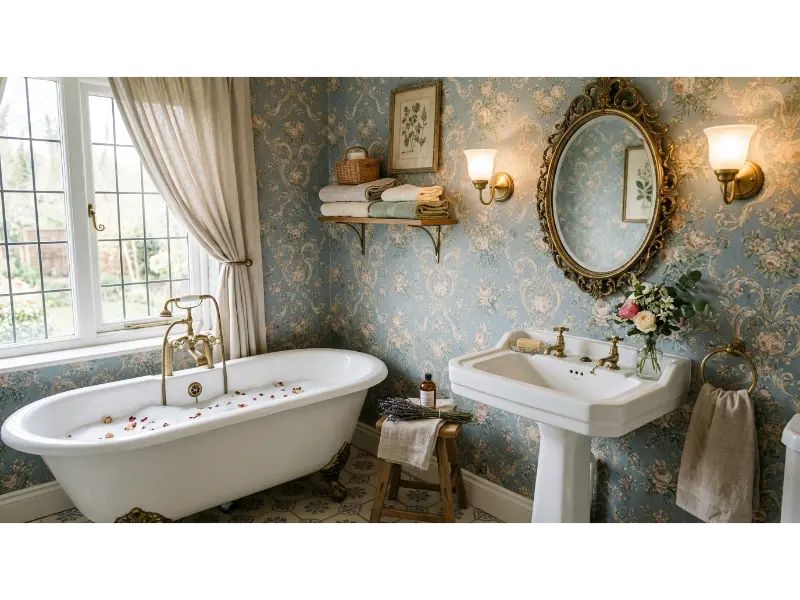
Floral wallpaper can completely change the personality of a bathroom. Small botanical prints and faded floral patterns create a nostalgic feeling without making the room appear old fashioned. Choose colors that already appear in the tile or fixtures so the wallpaper feels connected to the rest of the design.
For a small bathroom, wallpaper can become the main decorative feature. In a larger space, combine it with simple white tile or painted beadboard. Keeping one section visually calm allows the floral pattern to stand out without making the room feel busy.
Pro Tip: Use a smaller floral pattern in compact bathrooms because oversized designs can visually shrink the space.
7. White Beadboard Wainscoting
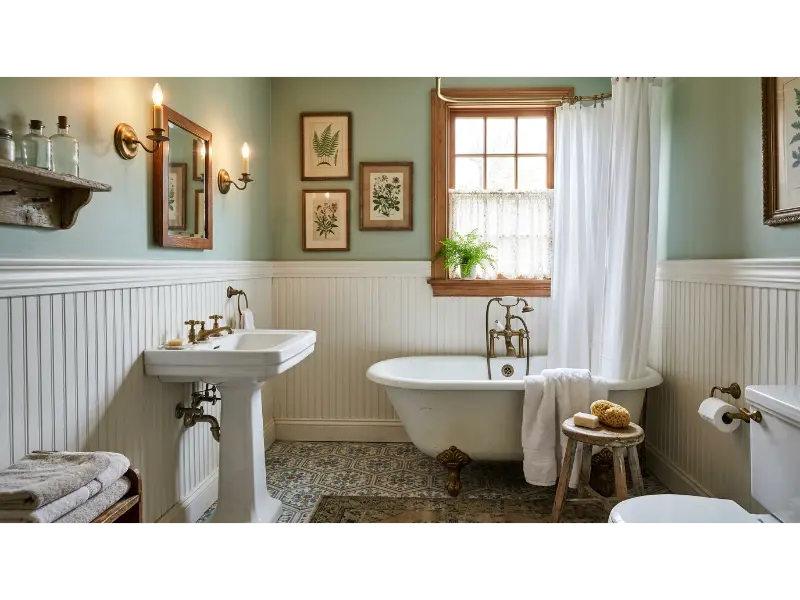
Beadboard wainscoting adds architectural detail while giving the bathroom a cozy cottage character. White panels look especially beautiful with muted colors above them, including sage green, dusty blue, warm cream, and soft pink. The vertical grooves also add subtle texture and help draw attention upward.
This wall treatment works particularly well when you want traditional character without using elaborate tile everywhere. Pair the beadboard with classic trim around doors and windows for a more complete look. A simple framed mirror and traditional lighting can then finish the sink area.
Pro Tip: Paint the trim and beadboard in the same white shade to create a clean, unified appearance.
8. Antique Style Medicine Cabinet
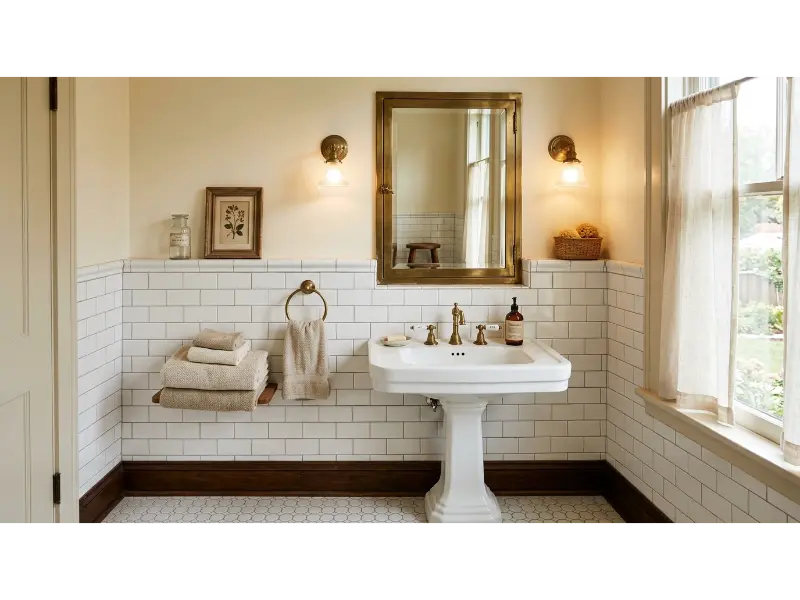
A medicine cabinet can provide essential storage while also becoming part of the bathroom’s design. Look for beveled glass, antique style framing, traditional hardware, or a painted wood surround. A recessed cabinet is especially useful because it saves wall space and keeps the area above the sink visually neat.
Use the cabinet to hide everyday products that can otherwise make a traditional bathroom look cluttered. Hair products, skincare items, medications, and grooming supplies can stay organized behind closed doors while the countertop remains simple and attractive.
Pro Tip: Choose a mirror cabinet that is wide enough to balance the sink without extending too far beyond it.
9. Small Hexagon Floor Tiles
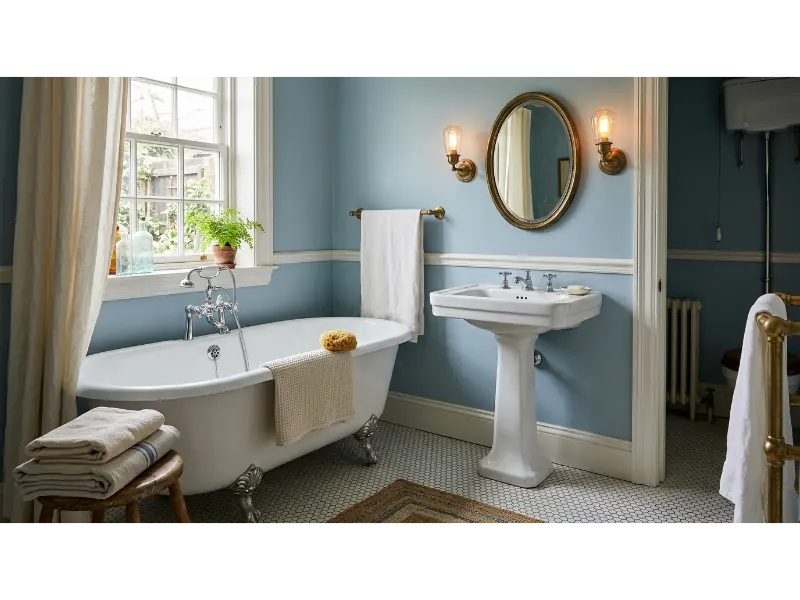
Small hexagon tiles create a detailed floor without making the room feel overly decorative. White tiles with darker grout provide a classic appearance, while cream, gray, or muted colored tiles can create a softer look. A simple border around the room can make the flooring feel more finished.
Because the pattern is relatively small, hexagon tile works especially well in compact bathrooms. Keep the walls simple with subway tile, beadboard, or paint so the floor has enough visual space to stand out.
Pro Tip: Choose a grout shade that defines the hexagon pattern while still keeping the overall floor visually light.
10. Marble Console Sink
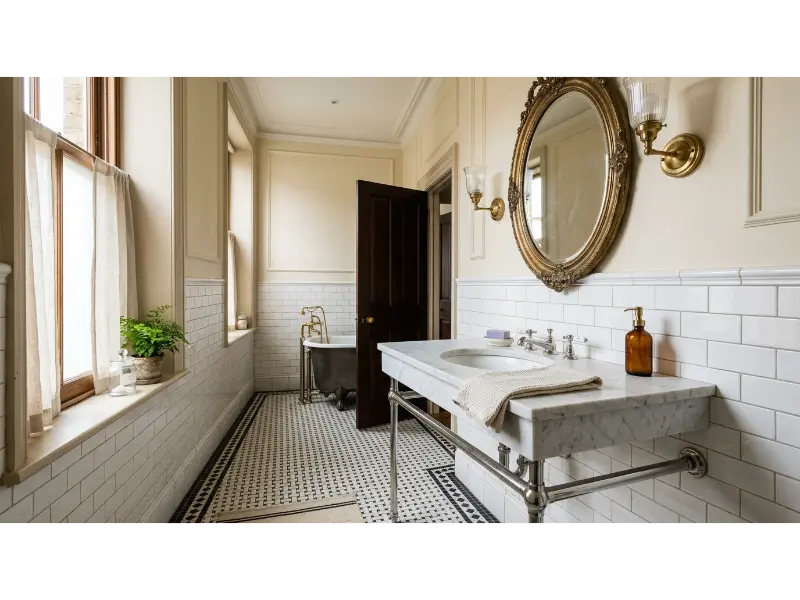
A console sink combines the openness of a pedestal sink with a useful countertop. A marble top adds natural veining and creates a refined furniture like appearance. Slim metal legs keep the lower portion open, which helps a small bathroom maintain a spacious feeling.
Keep the countertop relatively uncluttered so the marble remains visible. A ceramic soap dish, small glass container, and neatly folded hand towel can provide function without overwhelming the surface. This creates an elegant balance between practicality and traditional charm.
Pro Tip: Select subtle marble veining if you already have patterned flooring or wallpaper.
11. Traditional Wall Sconces
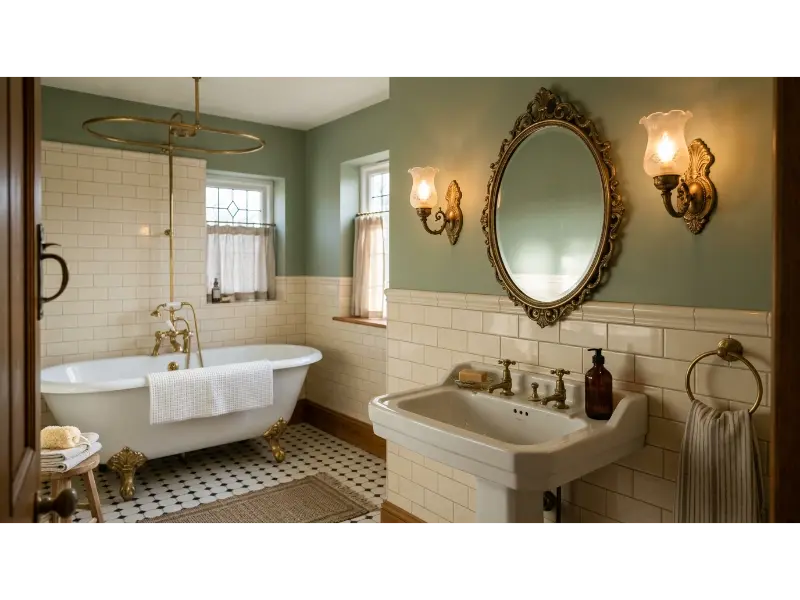
Wall sconces provide more than practical lighting. They can become architectural details that define the sink area. Frosted glass shades, brass arms, globe designs, and simple traditional silhouettes all work beautifully with vintage inspired bathrooms.
Place matching sconces on both sides of the mirror when possible. This provides balanced illumination and gives the sink wall a polished appearance. Combine them with a ceiling fixture and natural daylight so the bathroom does not depend on one harsh overhead source.
Pro Tip: Use warm white bulbs to create a softer atmosphere that complements traditional finishes.
12. Soft Sage Green Walls
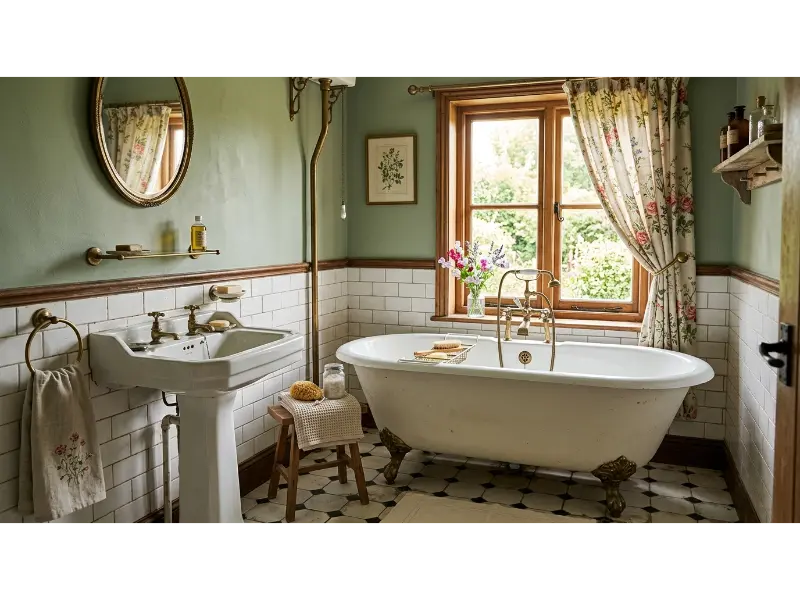
Sage green is a beautiful choice when you want color without losing the calm quality of a traditional bathroom. Its muted appearance works naturally with white porcelain, brass, marble, wood, and floral textiles. It can make a bathroom feel softer than one decorated entirely in white.
Use sage above tile or beadboard to create visual layers. You can also repeat a similar green tone in artwork, towels, or wallpaper. Keeping the shade slightly muted helps the bathroom maintain a timeless quality instead of feeling tied to a short lived trend.
Pro Tip: Test the paint at different times of day because natural and artificial lighting can change how green appears.
13. Ornate Oval Mirror
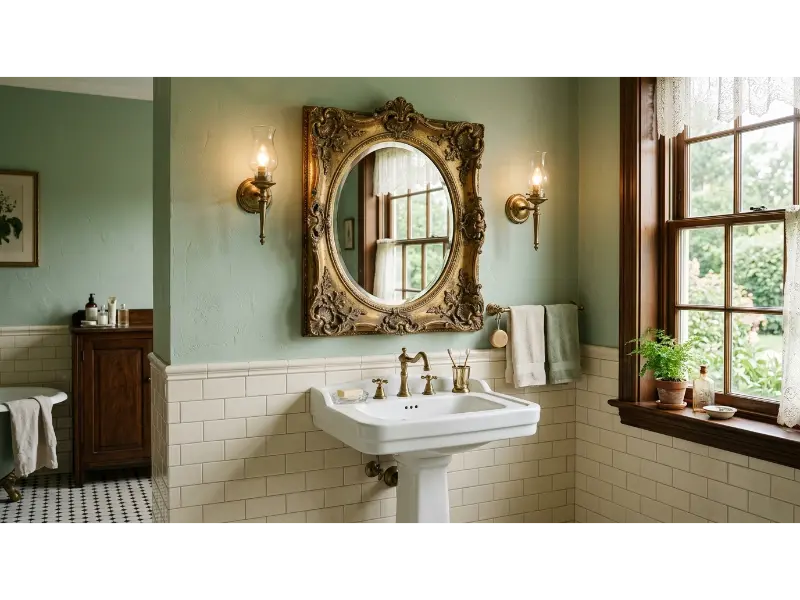
An oval mirror adds softness to a bathroom filled with straight tile lines and rectangular furniture. Aged gold, dark wood, or distressed metal frames can reinforce the traditional mood. The mirror also gives the sink wall a stronger focal point without requiring elaborate decoration.
Proportion matters when selecting the mirror. It should feel substantial enough to balance the sink but not so large that it overwhelms the wall. If the bathroom is narrow, a tall oval mirror can also emphasize vertical space and make the room feel more elegant.
Pro Tip: Choose a mirror shape that repeats another curved element, such as the tub or rounded lighting.
14. Classic Penny Tile
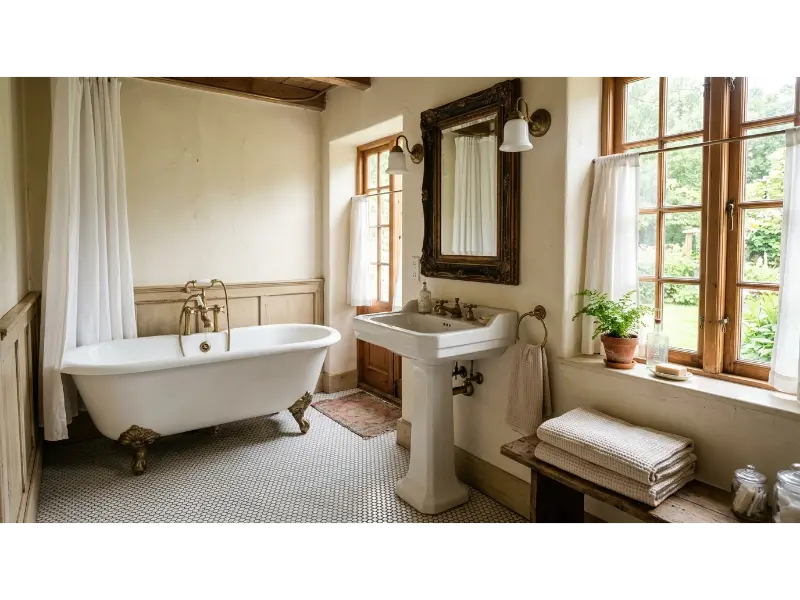
Penny tile brings a delicate repeating pattern to the floor and creates a strong connection with classic bathroom design. White penny rounds provide a clean appearance, while darker grout emphasizes each individual shape. You can also introduce a simple border around the floor for extra definition.
Because penny tile contains many small circles, it already provides plenty of visual texture. Pair it with simple walls and restrained accessories. This keeps the bathroom from feeling overloaded while allowing the flooring to become a subtle feature.
Pro Tip: Use penny tile in a limited area if you already have patterned wallpaper or decorative wall tile.
15. Freestanding Linen Cabinet
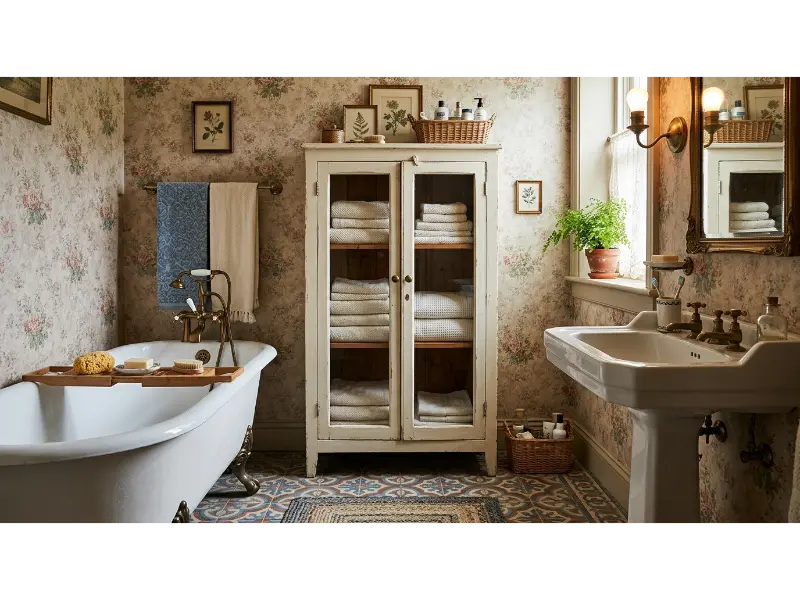
A freestanding linen cabinet can add much needed storage while preserving the furniture like quality of a traditional bathroom. Look for painted wood, glass doors, turned feet, or aged hardware. Cream, muted green, natural wood, and soft blue finishes can blend beautifully with classic bathroom palettes.
Use the cabinet to store towels, toiletries, cleaning supplies, and spare linens. Keep the visible shelves neat by folding towels consistently and using attractive containers for smaller items. This allows storage to become part of the room’s visual design instead of something that needs to be hidden.
Pro Tip: Measure the cabinet carefully before purchasing because antique and vintage inspired furniture often has unusual proportions.
16. Vintage Floral Shower Curtain
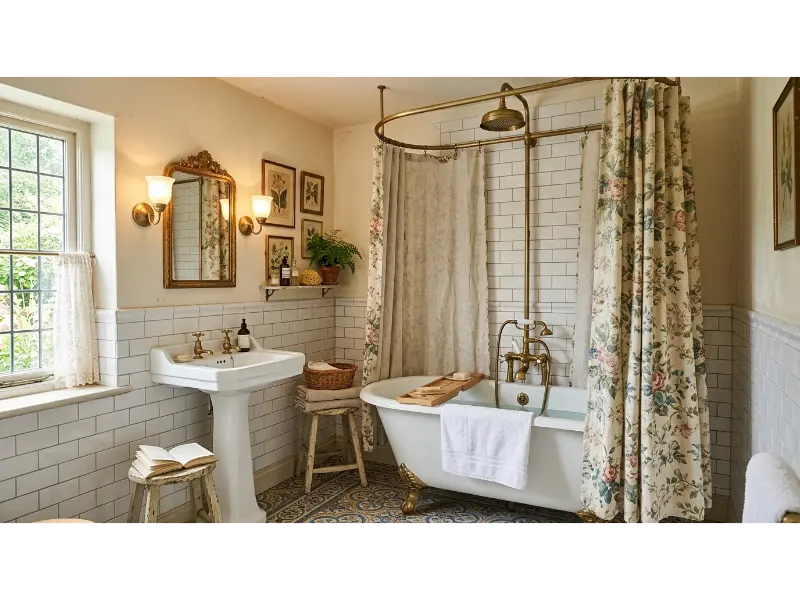
A fabric shower curtain can instantly soften a bathroom filled with hard surfaces. Choose delicate florals, traditional stripes, small botanical patterns, or classic checks. Linen and cotton textures work particularly well because they create a relaxed feeling around a porcelain bathtub.
The curtain should complement the wall color rather than match every element exactly. A little contrast makes the room feel more collected. If your floor already contains a strong pattern, choose a simpler curtain so the overall design remains balanced.
Pro Tip: Select a washable fabric curtain and use a separate waterproof liner for everyday practicality.
17. Cross Handle Faucets
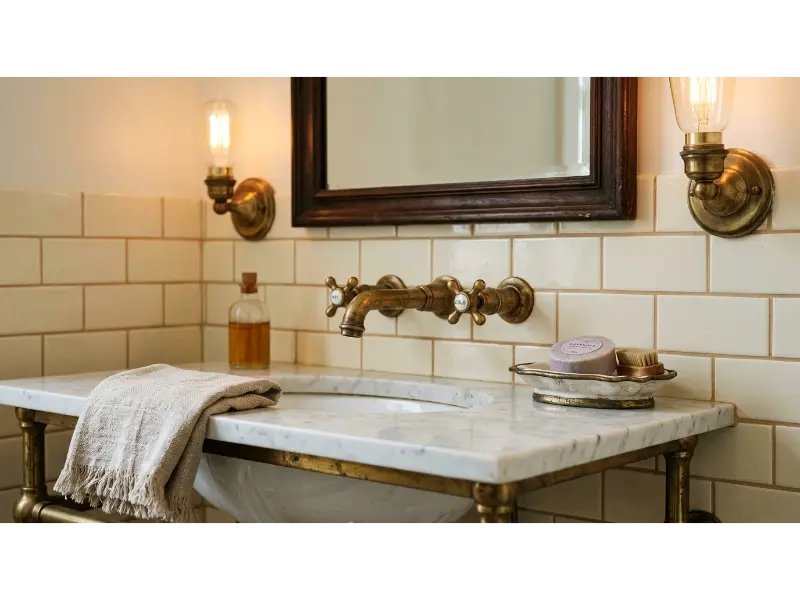
Cross handle faucets have a recognizable traditional shape that can make a bathroom feel instantly more established. They work especially well with pedestal sinks, console sinks, and clawfoot tubs. Chrome creates a crisp classic appearance, while aged brass gives the room more warmth.
Repeat the faucet style throughout the bathroom when possible. Matching cross handles on the tub and sink can create a consistent visual language. This small detail often makes a larger difference than adding many decorative accessories.
Pro Tip: Check your existing plumbing configuration before selecting a replacement faucet so the new fixture fits properly.
18. Vintage Botanical Gallery Wall
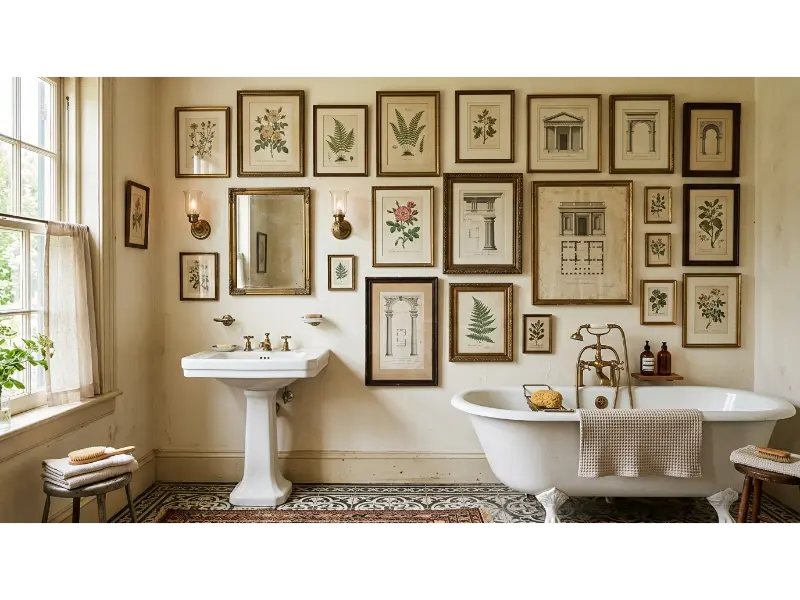
Artwork can make a bathroom feel personal and lived in. Botanical illustrations, old floral prints, architectural drawings, and soft landscapes work beautifully with traditional interiors. Mix a few frame styles instead of using identical frames to create a collected appearance.
Choose a wall that remains protected from direct water exposure. A space beside the vanity or above a towel rail can work well. Keep the artwork connected through color so the gallery feels intentional rather than random.
Pro Tip: Use a small number of meaningful pieces instead of filling every available wall.
19. Warm Cream and Ivory Palette
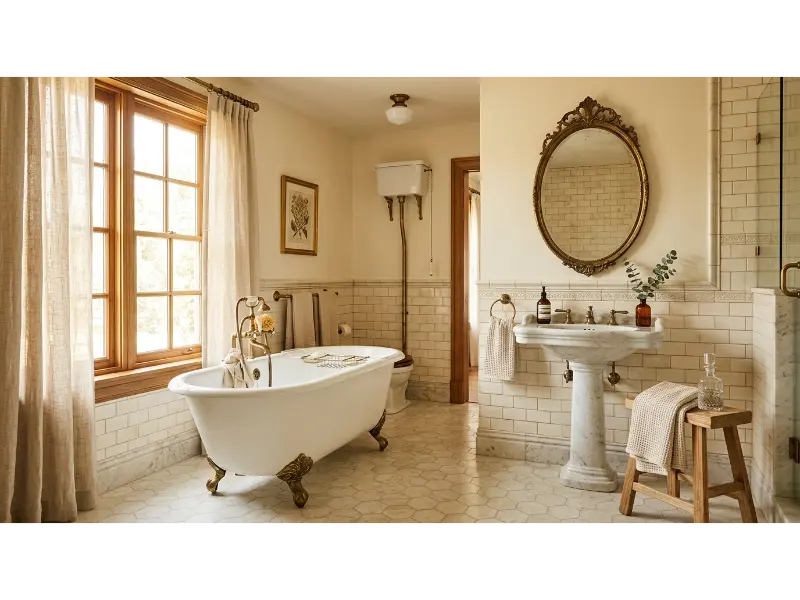
Cream and ivory create a softer alternative to bright white. These warm neutrals allow brass, marble, wood, and porcelain to stand out without creating harsh contrast. Layering several warm shades can also make a bathroom feel comfortable and welcoming.
Texture becomes especially important in a neutral room. Combine glossy ceramic tile with matte paint, woven linen, natural wood, polished porcelain, and softly veined marble. These differences keep the space interesting without requiring strong colors or bold patterns.
Pro Tip: Mix several warm white shades rather than trying to make every surface exactly the same color.
20. Decorative Patterned Floor
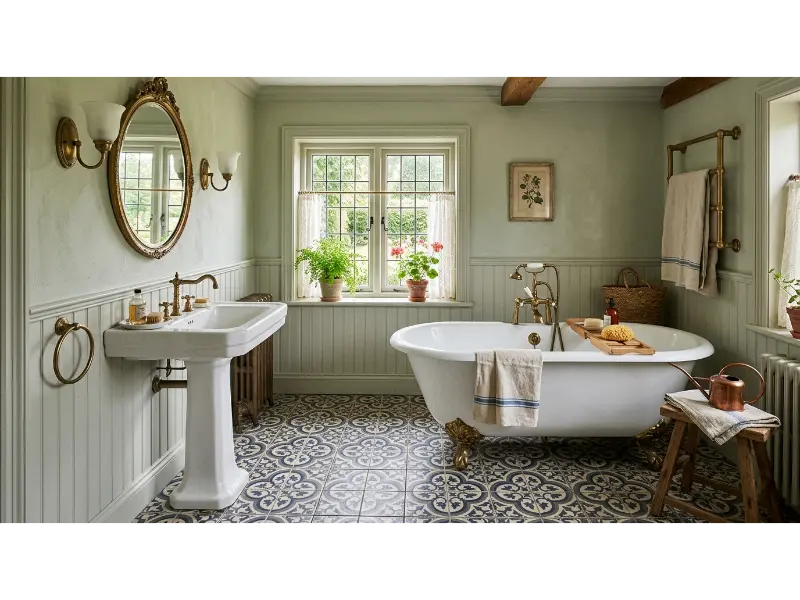
A decorative floor can become the main personality feature of a bathroom. Geometric, floral, heritage, and encaustic inspired patterns can all create a beautiful traditional effect. Choose a restrained color palette so the floor feels sophisticated instead of overwhelming.
When the flooring contains a detailed pattern, keep the walls relatively quiet. Simple subway tile, painted walls, or white beadboard will allow the floor to stand out. Repeating one subtle floor color in the towels or artwork can connect the entire room.
Pro Tip: Use a small sample of the flooring alongside your wall tile and paint before committing to the final combination.
21. Antique Wooden Stool
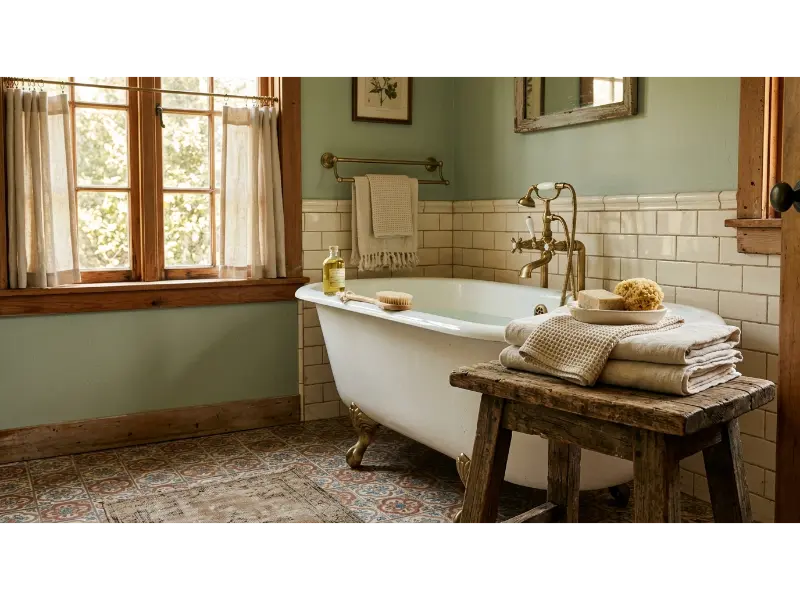
A small wooden stool can bring warmth to a bathroom dominated by tile and porcelain. Place it beside the tub for towels, a book, or simple bathing essentials. Natural wood with visible grain works especially well because it introduces an organic texture.
The stool should remain useful rather than becoming a pile of decorative objects. In a small bathroom, select a compact design that can move easily when you need more floor space. A slightly worn finish can make the room feel more relaxed and authentic.
Pro Tip: Choose solid wood with a finish suitable for humid environments and keep it away from direct splashing.
22. Traditional Ceiling Light
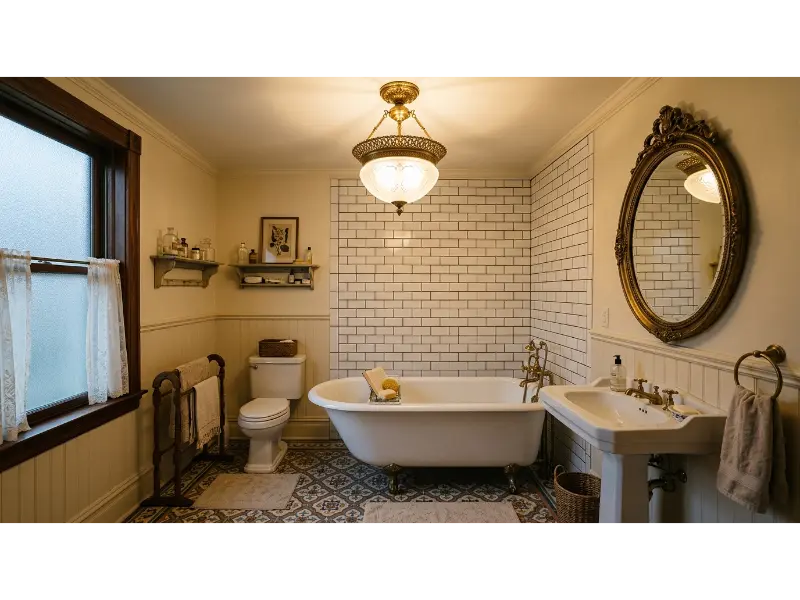
A traditional ceiling fixture can complete the room by adding a final layer of period inspired character. Frosted glass shades, classic globe shapes, and aged brass details work beautifully with clawfoot tubs, pedestal sinks, and decorative tile. The fixture should feel like part of the bathroom rather than a modern addition placed afterward.
Use the ceiling fixture for general illumination and combine it with sconces near the mirror. This layered approach creates a more comfortable atmosphere and prevents the bathroom from relying on one overly bright light source.
Pro Tip: Make sure every fixture you select is properly rated for bathroom use and its specific location.
23. Vintage Meets Modern
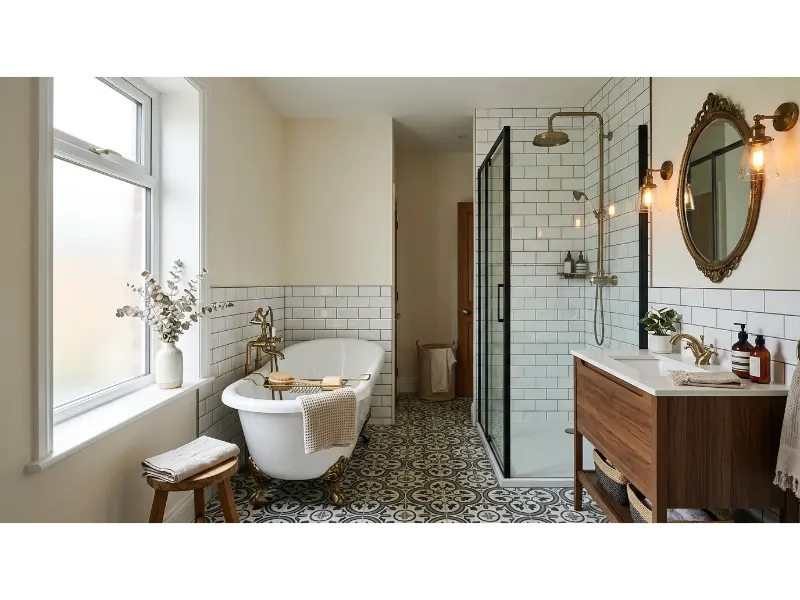
You do not have to recreate a bathroom from one exact decade to achieve a timeless look. Combining classic materials with modern conveniences often creates the most comfortable result. Keep major visual elements traditional, such as the tub, tile, mirror, or fixtures, while using modern features where they genuinely improve everyday function.
The key is visual balance. A contemporary glass shower can sit comfortably beside a clawfoot tub when the finishes connect the two areas. Modern ventilation, plumbing, storage, and electrical systems can remain practical and discreet while the visible design celebrates traditional character.
Pro Tip: Keep two or three major vintage elements as the foundation and let modern additions stay visually simple.
How to Create a Cohesive Vintage Bathroom
The most successful traditional bathroom design usually begins with a clear visual direction. Instead of buying individual vintage looking pieces simply because they are attractive, choose a palette and a few defining elements first. White porcelain, classic tile, warm metal, natural wood, and muted colors can create a strong foundation.
If your home already has original features, consider whether they can be restored rather than removed. Existing tile, trim, windows, doors, tubs, and unusual architectural details may give the room genuine character that new materials cannot easily reproduce. At the same time, practical problems such as damaged plumbing, unsafe wiring, poor ventilation, or water damage should never be ignored simply for the sake of appearance.
For a newer bathroom, you can create the same atmosphere through carefully selected reproduction pieces. A pedestal sink, classic subway tile, traditional sconces, aged brass hardware, and an antique style mirror can make a newly built room feel established without turning it into a themed space.
Frequently Asked Questions
What makes a bathroom look vintage?
A combination of classic bathroom fixtures, traditional tile, warm finishes, vintage inspired lighting, and nostalgic accessories usually creates the strongest effect. Clawfoot tubs, pedestal sinks, subway tile, hexagon flooring, beadboard, cross handle faucets, and antique mirrors are especially recognizable choices.
What colors work best for a vintage bathroom?
Warm white, cream, ivory, sage green, dusty blue, muted pink, charcoal, and soft black work beautifully. You can use one main color and introduce the others through tile, towels, wallpaper, artwork, and hardware.
Can vintage style work in a small bathroom?
Yes. A small bathroom can actually benefit from traditional fixtures because pedestal sinks and wall mounted storage leave more visible floor area. Light colors, mirrors, simple tile, and carefully chosen furniture can also make the space feel more open.
Is brass better than chrome for a vintage bathroom?
Both finishes work well. Aged brass creates warmth and an antique feeling, while chrome offers a brighter and cleaner traditional appearance. Choose the finish that works best with your wall colors, tile, lighting, and other fixtures.
How can I add vintage character without remodeling?
Start with smaller changes. Replace the mirror, lighting, hardware, towels, shower curtain, or artwork. Painting the walls or adding removable wallpaper can also dramatically change the atmosphere without replacing major fixtures.
Can modern features work with vintage bathroom design?
Absolutely. Modern plumbing, ventilation, storage, lighting, and shower systems can make a traditional bathroom much more comfortable. The best approach is to keep practical modern upgrades visually simple while allowing the classic elements to define the room.
Final Thoughts
The best vintage bathroom ideas create a room that feels beautiful without feeling frozen in the past. You can combine a graceful clawfoot tub with modern plumbing, pair classic subway tile with contemporary storage, or use an antique mirror above a newly installed pedestal sink. These combinations give you the character of traditional design while keeping the bathroom comfortable for modern life.
Start with one feature that genuinely catches your attention, then build around it slowly. A beautiful floor, a classic sink, a warm brass faucet, a floral wallpaper, or a vintage mirror can become the starting point for the entire room. When the colors, materials, proportions, and finishes work together, your bathroom can feel timeless, personal, and welcoming for years to come.