

21 Bring Coastal Style Into Your Own Home for a Stunning Look
Coastal decor brings the calm, airy feeling of a seaside escape into your everyday living space. You do not need to live near the ocean to enjoy coastal home decor, soft blue colors, natural textures, and sunlit rooms. With the right choices, you can Bring Coastal Style Into Your Own Home while keeping your rooms comfortable, practical, and personal. These 21 ideas combine timeless beach house charm with fresh, modern details that look beautiful on Pinterest and work in real homes.
Fresh Coastal Decorating Ideas for Every Room
1. Bring Coastal Style Into Your Own Home With Soft Blue Walls
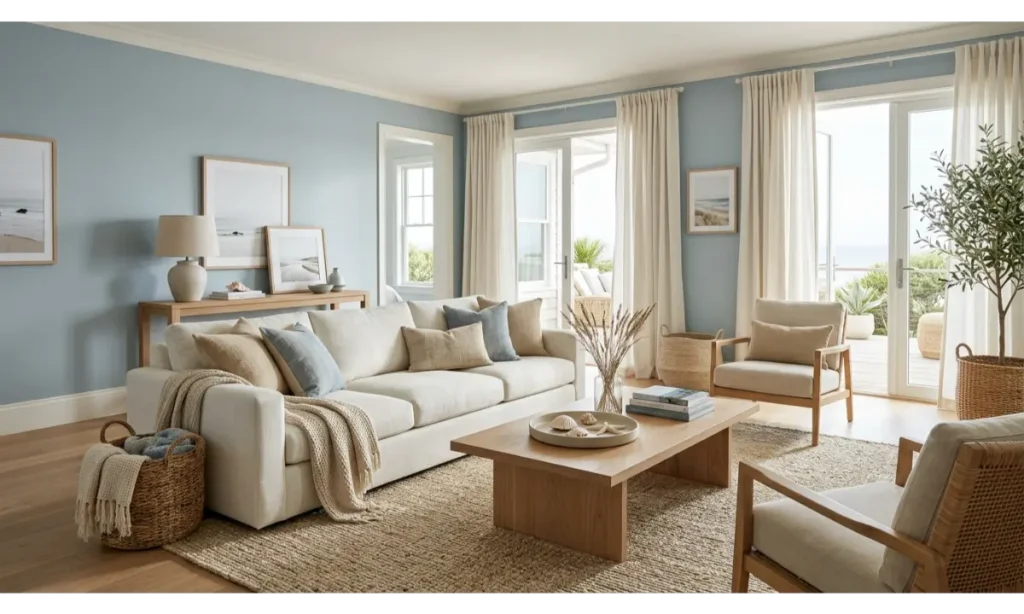
Soft blue walls instantly create the peaceful feeling of a seaside retreat. To Bring Coastal Style Into Your Own Home, choose a muted ocean blue, pale aqua, or misty blue shade that feels relaxing rather than overpowering. These colors pair beautifully with white trim, light wood furniture, and natural linen fabrics. The result is a bright, welcoming room that feels connected to the ocean without looking like a themed beach rental.
For a balanced look, keep larger furniture pieces neutral and let the wall color provide the coastal character. Add a cream sofa, woven baskets, and a few cushions in sandy beige or deeper blue. Natural sunlight makes these shades feel even softer throughout the day. If your room receives limited daylight, choose a lighter blue with a warm undertone to prevent the space from feeling cold.
Pro Tip: Test paint samples in morning and evening light before choosing your final shade.
2. Layer Natural Textures for a Relaxed Beach House Look
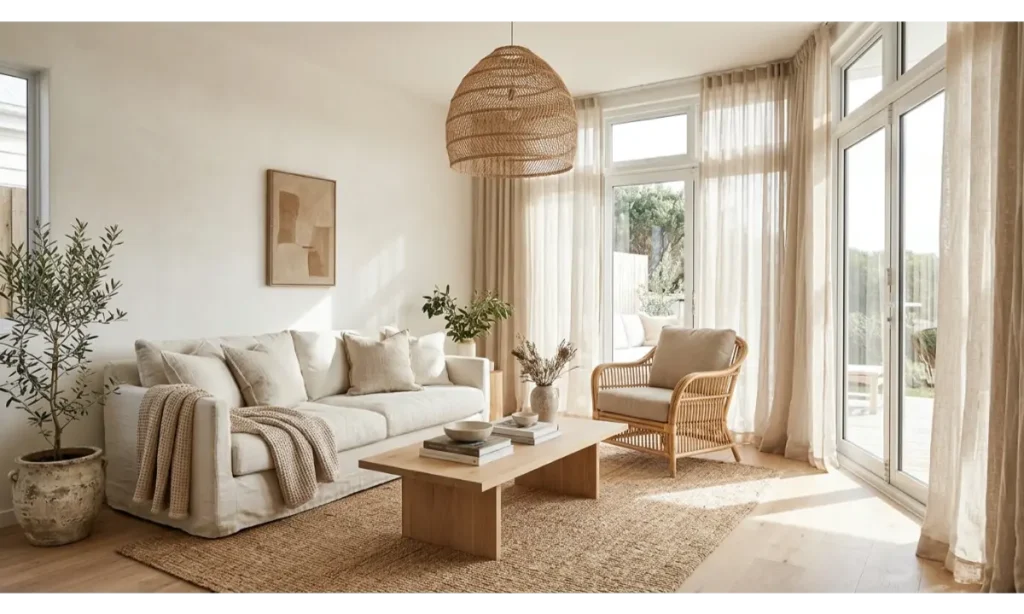
Natural textures give coastal rooms warmth and depth without requiring bright colors or expensive decorations. Start with a jute rug, then introduce linen cushions, cotton throws, woven baskets, and light wood accents. These materials create the relaxed atmosphere associated with coastal interiors. Their slightly varied surfaces make a neutral room feel interesting while keeping the overall design calm, comfortable, and suitable for everyday family life.
Layering textures works especially well when your color palette stays simple. Combine ivory, oatmeal, pale taupe, and sandy beige, then add a small amount of faded blue for contrast. Choose materials that feel pleasant to touch and can handle regular use. You can also bring in seagrass storage baskets or a woven tray to create visual interest without cluttering tables and shelves.
Pro Tip: Mix at least three different textures in one seating area, but keep their colors closely coordinated.
Read More: 20 Winter Mantel Decor Ideas for a Cozy Cold-Weather Home
3. Choose a White and Sand Color Palette
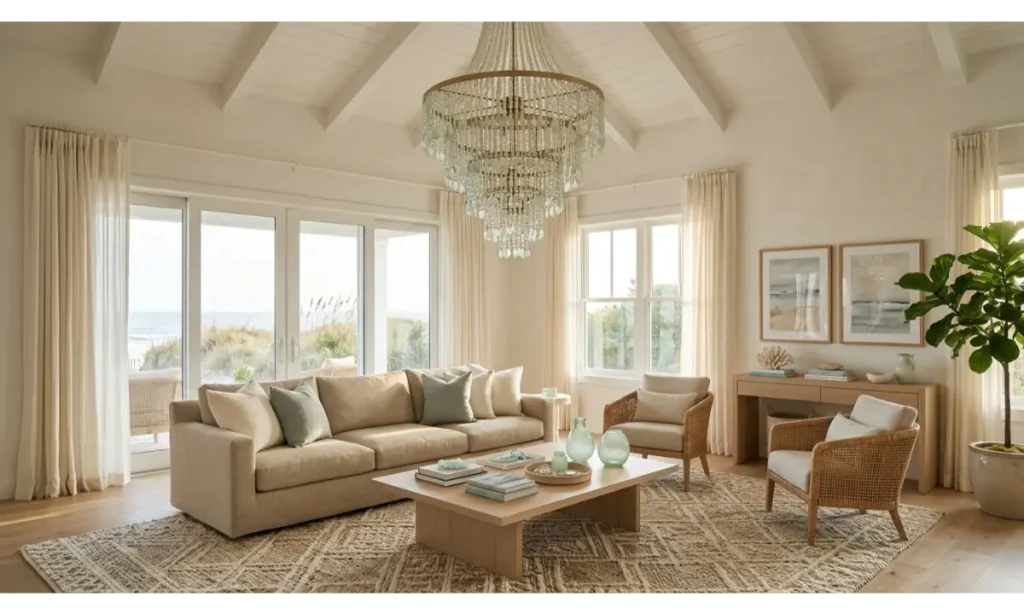
A white and sand color palette is a timeless foundation for coastal home decor. Warm white walls make rooms feel open, while sandy beige adds the warmth of sunlit beaches. Use ivory upholstery, cream curtains, pale wood furniture, and textured neutral rugs to build a layered look. This combination creates a sophisticated space that feels coastal without relying on obvious ocean-themed decorations.
To keep the room from looking flat, introduce different shades and finishes rather than choosing everything in identical colors. A chunky knit throw, a natural wood side table, and a woven lampshade can make the palette feel richer. Add muted blue through one or two accessories for a subtle seaside touch. This approach works particularly well in small apartments because light colors help the space feel brighter and more open.
Pro Tip: Choose warm whites instead of stark whites if you want a softer, more inviting atmosphere.
4. Decorate With Rattan and Wicker Furniture
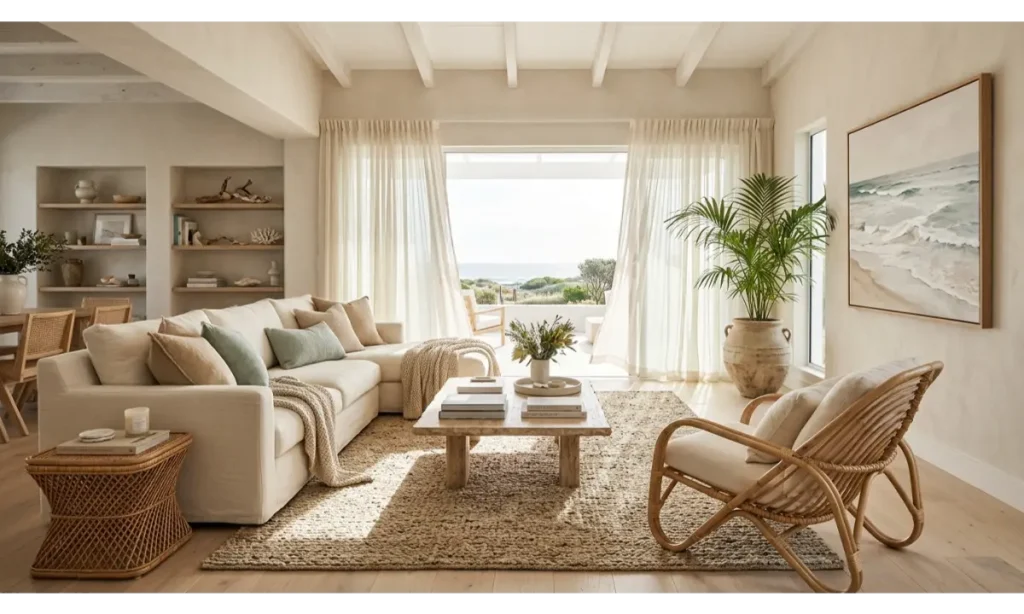
Rattan and wicker furniture bring natural character into a coastal room. Their woven surfaces add texture, while their light appearance keeps the space from feeling heavy. Try a rattan accent chair beside a window, a wicker storage trunk at the foot of a bed, or a woven coffee table in a relaxed sitting area. These pieces complement linen, cotton, light wood, and other materials commonly found in beach house decor.
You do not need to fill the entire room with woven furniture. One statement chair or two smaller accents can create the desired effect without overwhelming the design. Pair rattan with a neutral sofa and soft cushions to keep the space comfortable. For busy households, look for sturdy frames and practical woven designs that are easy to maintain.
Pro Tip: Combine one large woven piece with smaller natural accessories to create balance instead of repetition.
5. Create a Coastal Gallery Wall
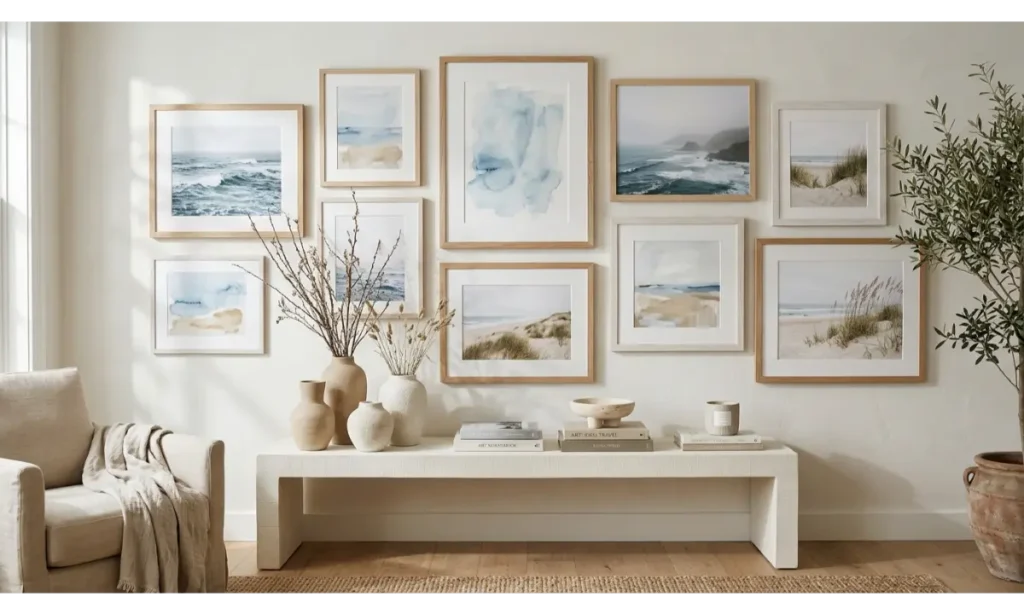
A thoughtfully arranged gallery wall gives your home a personal coastal touch. Choose artwork featuring ocean horizons, beach grasses, sailboats, weathered piers, or abstract patterns inspired by waves. Frames in light oak, white, or natural wood help the collection feel coordinated. This is an easy way to introduce nautical home accents without filling your shelves with anchors, shells, and other predictable seaside decorations.
Before hanging anything, arrange your frames on the floor to test different layouts. Keep similar spacing between pieces and consider the size of the wall and nearby furniture. A larger central print can anchor the arrangement, while smaller images add variety. You can also include a family beach photograph to make the display feel meaningful rather than purely decorative.
Pro Tip: Hang the center of the overall arrangement near eye level, adjusting it to suit the furniture below.
Read More: 20 Home Office Wall Decor Ideas for a Stunning Workspace
6. Add Breezy Linen Curtains
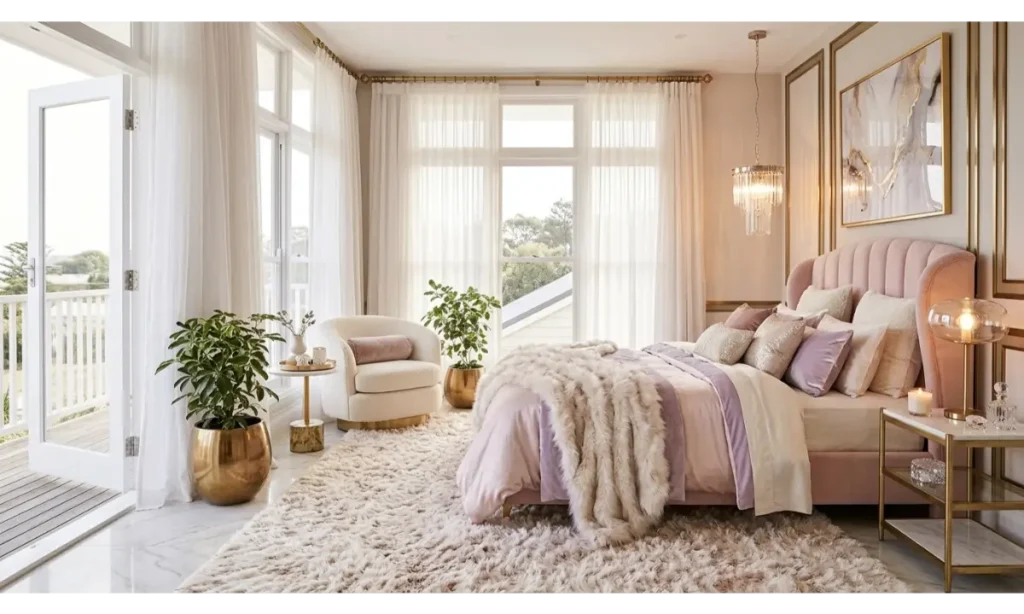
Linen curtains create the light, breezy feeling that makes coastal interiors so inviting. Their relaxed weave softens windows while allowing natural light to filter through, depending on the fabric’s weight. Choose white, ivory, or pale sand for a classic look. These shades work beautifully with airy coastal interiors, especially when paired with pale wood furniture, simple bedding, and a limited color palette.
For the best result, hang curtain rods slightly above the window frame and extend them beyond its sides where possible. This can make the windows appear larger and allow more daylight into the room. If privacy is important, layer sheer linen curtains with a practical blind. Avoid heavy, shiny fabrics that compete with the relaxed character of the space.
Pro Tip: Measure carefully before purchasing curtains, and choose a length that gently meets the floor without dragging.
7. Style Your Space With Sea Glass Colors
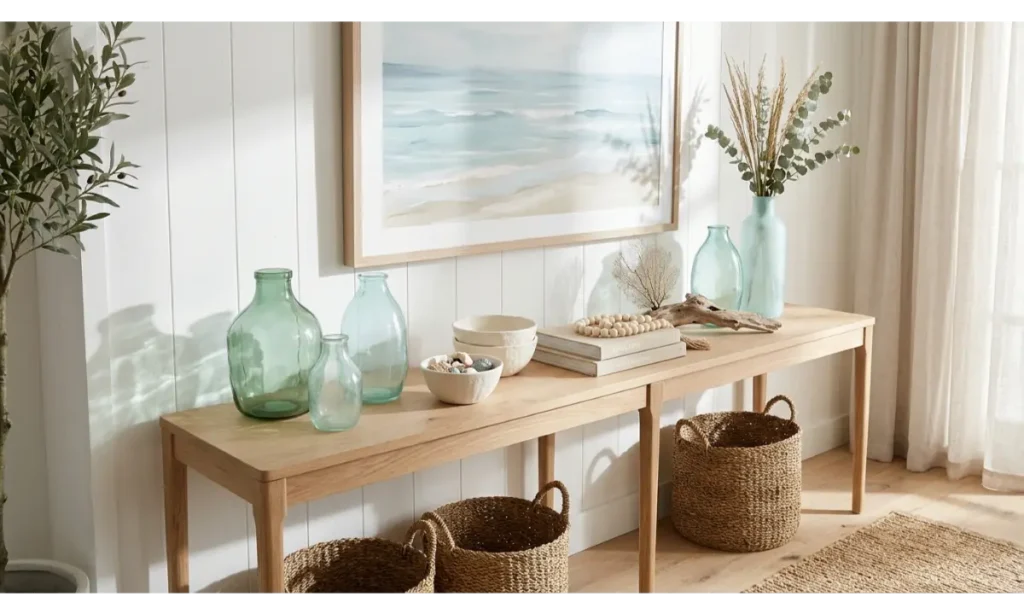
Sea glass colors offer a fresh alternative to traditional navy and white. Pale aqua, muted turquoise, misty green, and watery blue bring a subtle coastal feeling to your home. Use these shades in decorative vases, cushions, small artworks, or ceramic bowls. They work especially well against warm white walls and natural wood because the colors provide a gentle contrast without making the room feel busy.
The secret is to treat sea glass colors as accents rather than covering every surface in blue and green. Start with two related shades and repeat them in a few places around the room. A pale aqua vase on a console table can connect with a blue cushion on the sofa. This repetition makes the design feel intentional while preserving the peaceful quality of a seaside palette.
Pro Tip: Choose softened, slightly muted colors for a timeless look that is easy to update.
8. Make Driftwood a Decorative Feature
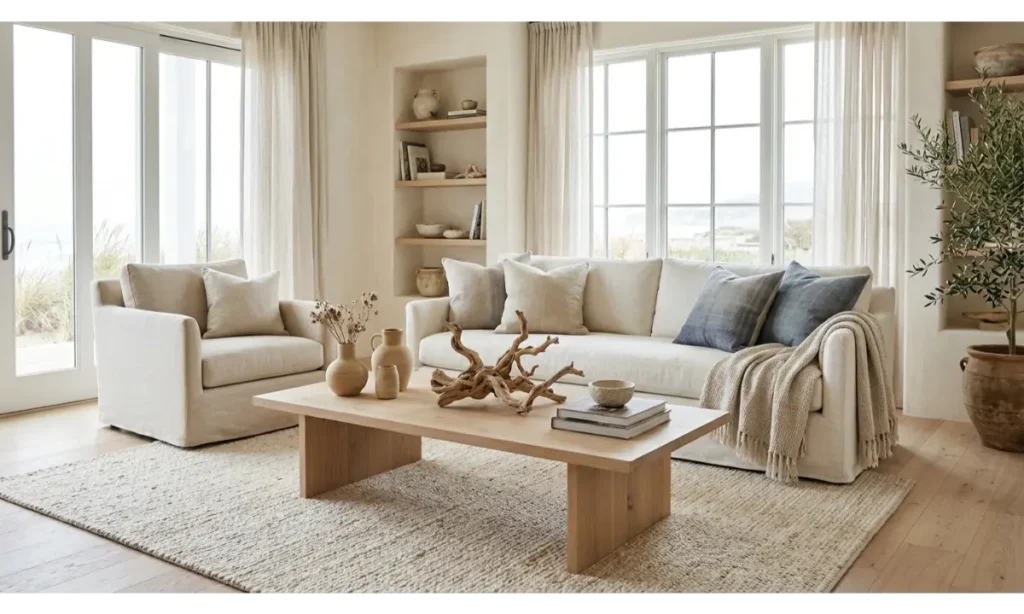
Driftwood introduces an organic shape that connects coastal decorating with the natural world. A sculptural piece can sit on a coffee table, decorate an open shelf, or become the centerpiece of a dining table. Its weathered texture works beautifully with soft linen, pale wood, and creamy ceramics. This approach creates a beach-inspired atmosphere without requiring large quantities of shells or other traditional seaside souvenirs.
Look for a piece with an interesting silhouette that fits the scale of your furniture. Keep surrounding decorations simple so its natural shape remains visible. If you collect driftwood yourself, clean and dry it thoroughly before bringing it indoors, and make sure it is free of pests or unwanted residue. A responsibly sourced decorative piece can become a lasting focal point.
Pro Tip: Place driftwood beside smooth ceramics or glass objects to create an appealing contrast between rough and polished surfaces.
9. Bring the Outdoors Inside With Coastal Plants
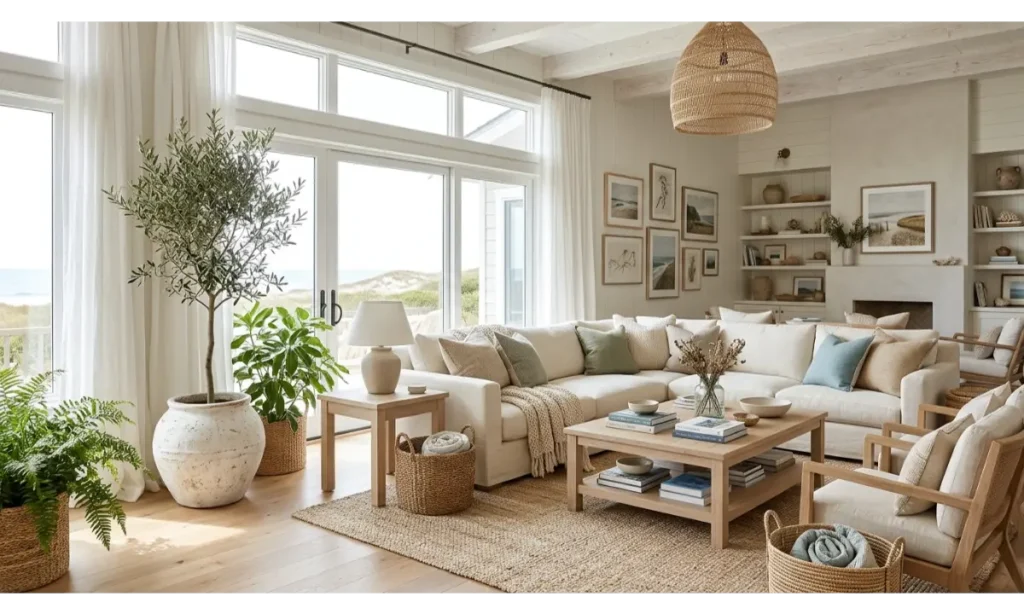
Greenery adds life to coastal interiors and balances the coolness of blue and white palettes. Choose plants that suit your home’s lighting, such as a snake plant for some lower-light spaces or a suitable palm for a bright room. Place larger plants near windows and smaller ones on shelves or side tables. Natural green leaves introduce color without disrupting the calm, beach-inspired atmosphere.
Use simple planters in terracotta, white ceramic, woven materials, or sandy neutral shades. Avoid crowding every corner with greenery; a few thoughtfully placed plants create a cleaner result. If natural light is limited, select plants suited to those conditions rather than choosing a tropical variety solely for its appearance. Pet owners should also check plant safety before bringing new greenery home.
Pro Tip: Choose plants based on their real light and watering needs, not just their coastal appearance.
10. Design a Coastal Coffee Table
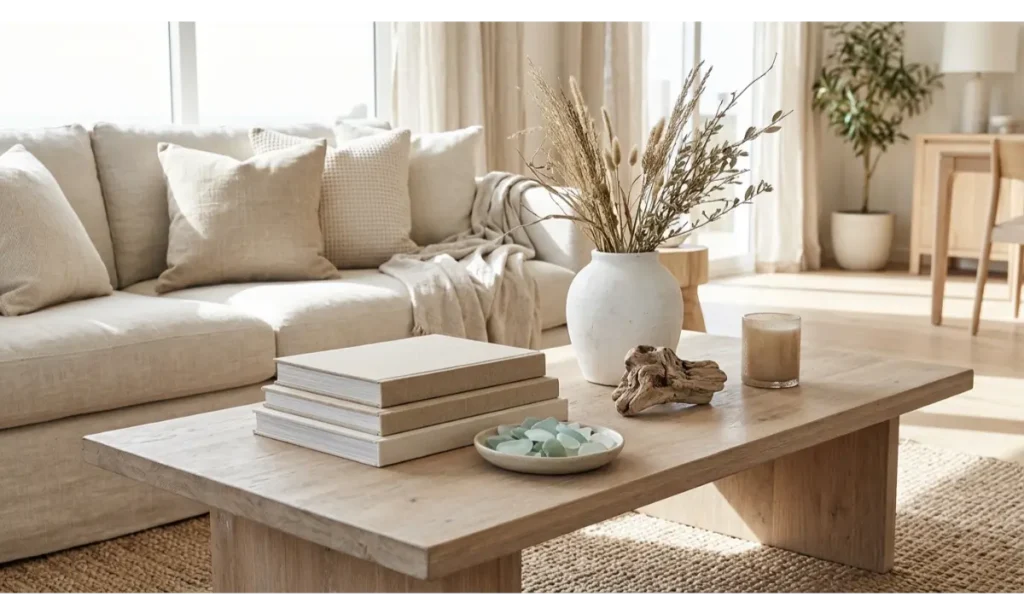
A coastal coffee table can become a small focal point that ties the whole living room together. Start with a tray in natural wood or woven material to organize smaller items. Add a ceramic vase, one or two books, and a simple natural accent. A restrained arrangement creates the relaxed feeling of modern coastal decor without making the table look like a souvenir display.
Keep the styling practical by leaving enough room for drinks, remote controls, and everyday activities. Vary the height of objects so the arrangement feels balanced, and use a low centerpiece if your sofa faces another seating area. Materials such as oak, ceramic, linen, and glass work well together because they offer different textures while sharing a calm visual quality.
Pro Tip: Remove one item if the arrangement feels crowded, and always leave usable surface space.
11. Create a Relaxing Coastal Bedroom
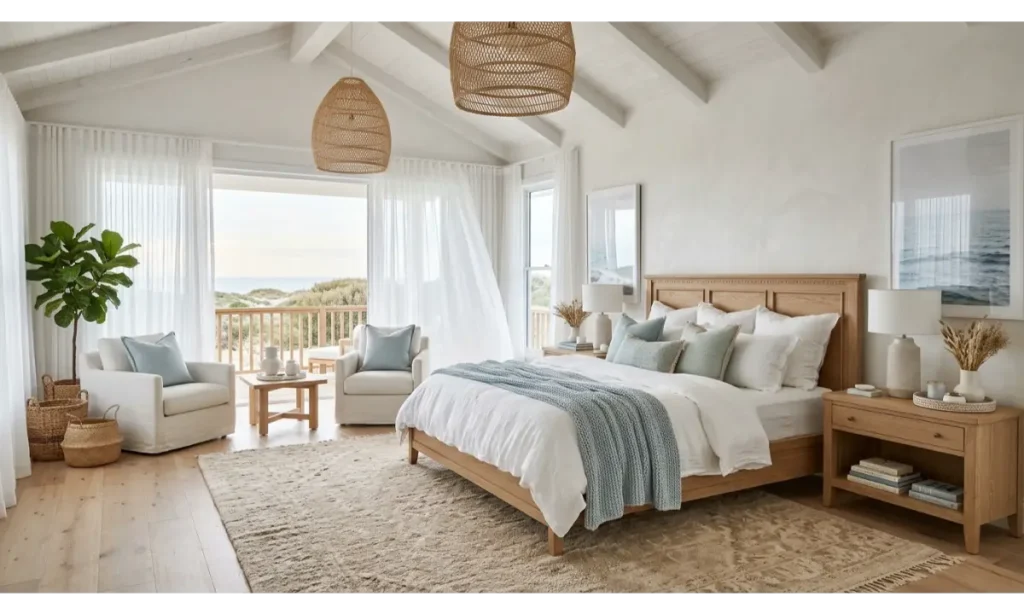
A coastal bedroom should feel restful rather than overly decorated. Begin with white or ivory bedding, then add pale blue cushions, a textured throw, and light wood furniture. These elements create a soft foundation that reflects the calm colors of the shoreline. Keep bedside tables simple and use gentle lighting to make the room feel comfortable in the evening as well as bright during the day.
Layering matters more than adding lots of accessories. A cotton quilt, linen pillowcases, and a woven rug create depth without introducing visual clutter. Choose one or two coastal artworks above the bed and repeat their colors in small details elsewhere. This makes the bedroom feel connected and intentional while keeping the focus on comfort, sleep, and a peaceful daily routine.
Pro Tip: Use washable bedding and breathable natural fabrics if you want the room to stay practical as well as beautiful.
12. Refresh Your Kitchen With Coastal Colors
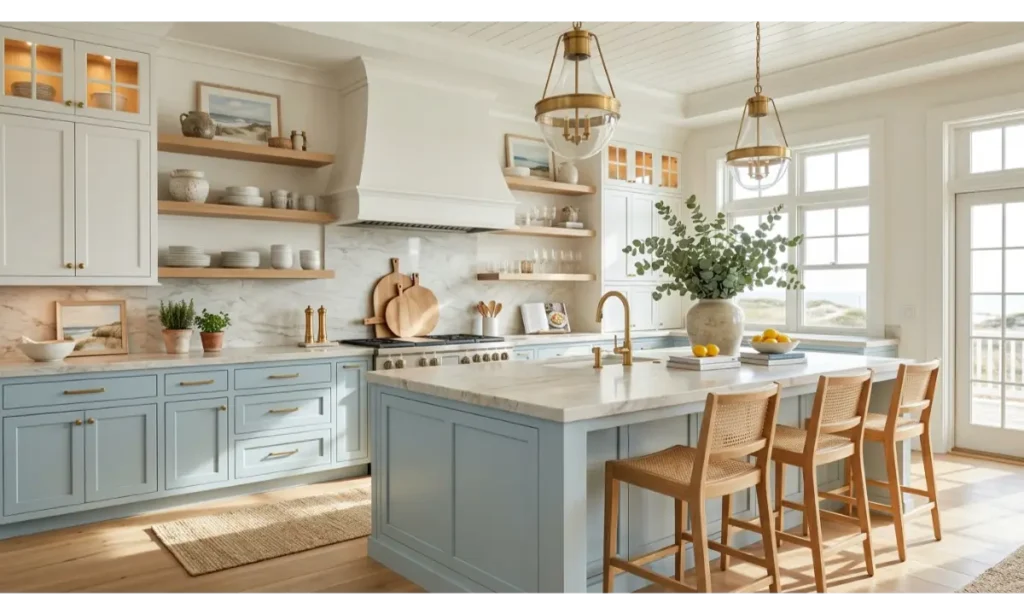
A coastal kitchen can feel fresh and welcoming without a complete renovation. Consider soft blue lower cabinets, white walls, light wood shelves, or understated sea glass accessories. These details introduce the colors of the coast while keeping the kitchen bright and functional. If replacing cabinets is outside your budget, paint a small island or update cabinet hardware to create a noticeable change.
Open shelving can display everyday dishes, glassware, and a few handmade ceramic pieces. Keep the arrangement simple so it remains easy to clean and use. Pale wood cutting boards and woven storage baskets add warmth, while brushed brass or matte black hardware provides definition. The best coastal kitchens balance decorative charm with surfaces that can handle cooking, spills, and regular family use.
Pro Tip: Test cabinet paint under your kitchen’s actual lighting before committing to a full color change.
13. Style a Coastal Bathroom With Natural Materials
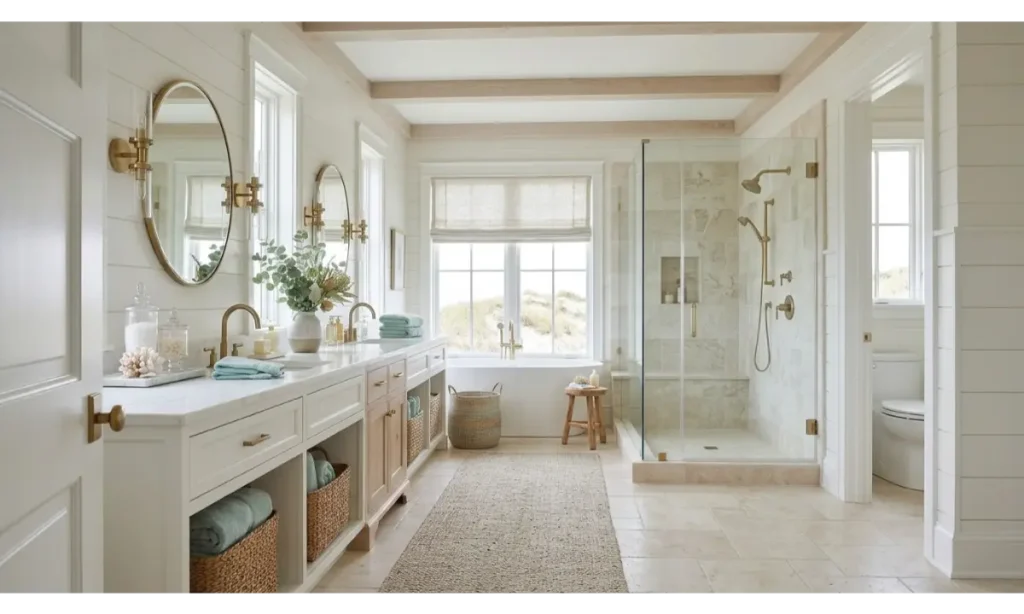
You can create a seaside-inspired bathroom through color, texture, and simple accessories. White towels, pale blue accents, light wood, and woven storage baskets help the room feel fresh and relaxed. A round mirror or simple coastal artwork can soften straight lines, while a ceramic soap dispenser keeps the countertop looking organized. These details bring a subtle coastal bathroom decor style to both large and small spaces.
Choose materials that suit the room’s moisture levels. Use properly finished wood, washable textiles, and baskets that can dry between uses. Keep everyday products stored in drawers or matching containers to reduce visual clutter. If you want a stronger coastal feature, consider pale aqua wall paint or a textured shower curtain rather than covering every surface in ocean-themed patterns.
Pro Tip: Prioritize moisture-resistant finishes and good ventilation before adding decorative materials.
14. Bring Coastal Charm to Your Dining Room
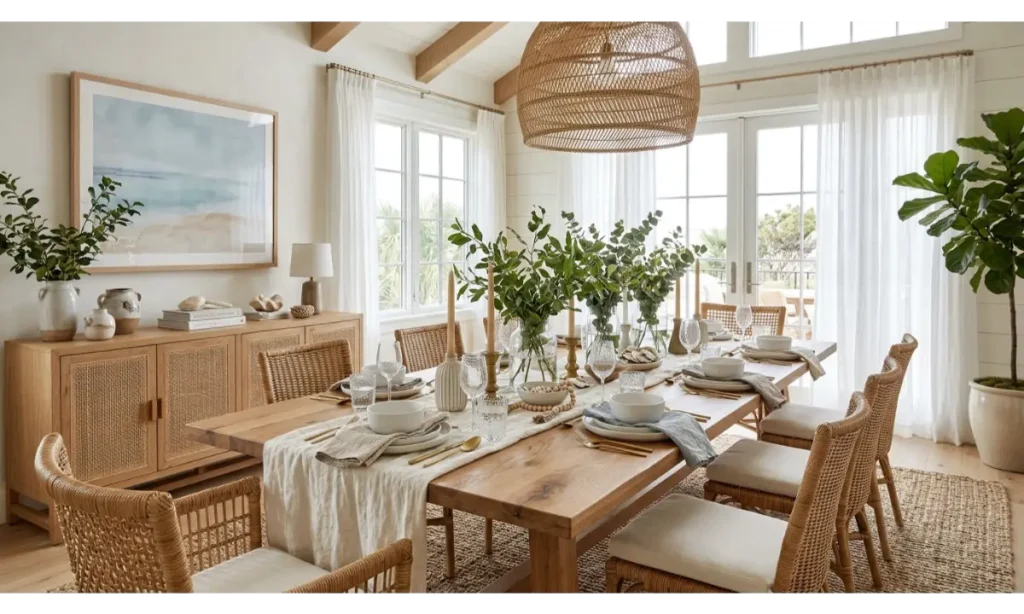
A coastal dining room combines natural materials with a relaxed setting for everyday meals and gatherings. Choose a light wood table, woven chairs, or upholstered seating in a washable neutral fabric. Keep the main palette simple, then add blue glassware, linen napkins, and a ceramic centerpiece. This creates a welcoming atmosphere without making the dining area feel like a formal restaurant or a themed beach cafe.
For the table, try a linen runner with a low vase of greenery or seasonal flowers. Choose lighting that creates a warm glow in the evening, such as a woven pendant or a simple natural-finish fixture. If the dining room is small, use a pale rug and visually light chairs to preserve an open feeling and make movement around the table easier.
Pro Tip: Make sure the pendant light is sized for the table and does not obstruct conversation.
15. Add Subtle Nautical Accessories
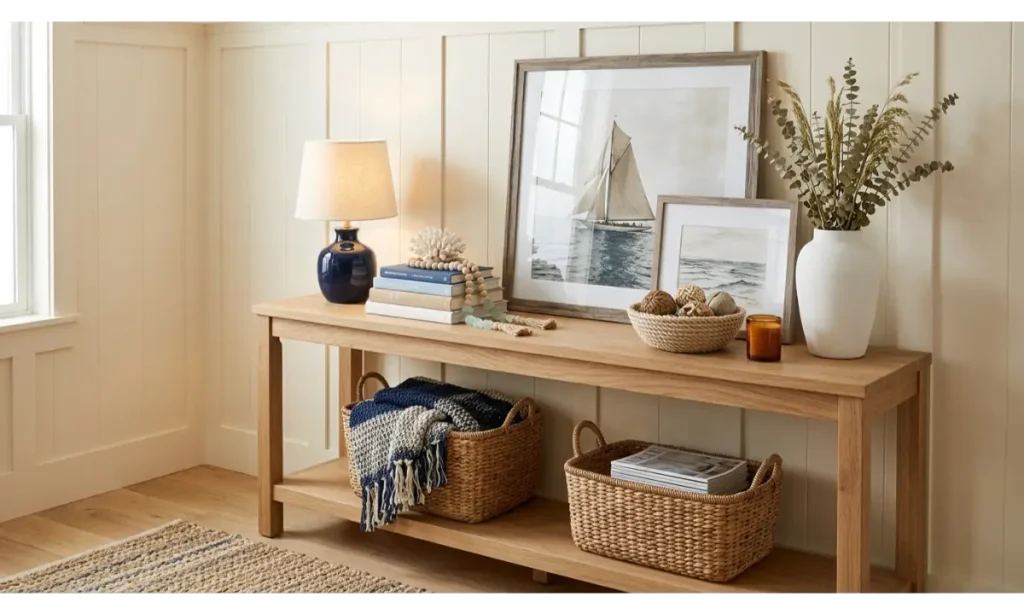
Nautical accessories can give a coastal room a little personality, but restraint makes the difference between a sophisticated interior and an overly themed space. Consider a small sailboat print, a navy ceramic lamp, or a simple rope-textured bowl. These pieces suggest the maritime world while allowing the room’s natural materials and neutral colors to remain the main focus.
Repeat navy or deep blue in only a few places to create a visual connection. For example, a dark blue cushion can echo the color of a lamp or framed artwork. Avoid filling every shelf with anchors, ropes, and miniature boats. A selective approach feels more modern and allows your accessories to remain interesting even when your decorating preferences change.
Pro Tip: Use one or two nautical accents per area instead of repeating the same motif everywhere.
16. Use Striped Fabrics for Classic Coastal Character
Blue and white stripes are a classic way to introduce coastal character without relying on literal beach decorations. Add striped cushions to a neutral sofa, use a striped throw at the end of a bed, or choose a subtle runner for a dining table. The pattern adds movement while preserving the simple color palette that makes seaside-inspired interiors feel relaxed and timeless.
Vary the scale of the stripes to avoid a repetitive look. Fine stripes work well on smaller cushions, while broader bands can make a statement on a chair or rug. Balance the pattern with solid fabrics and natural textures so the room remains calm. If you prefer a softer look, choose faded blue and cream rather than high-contrast navy and bright white.
Pro Tip: Pair striped fabrics with solid colors and woven textures to keep the pattern from overwhelming the room.
17. Create a Cozy Coastal Reading Corner
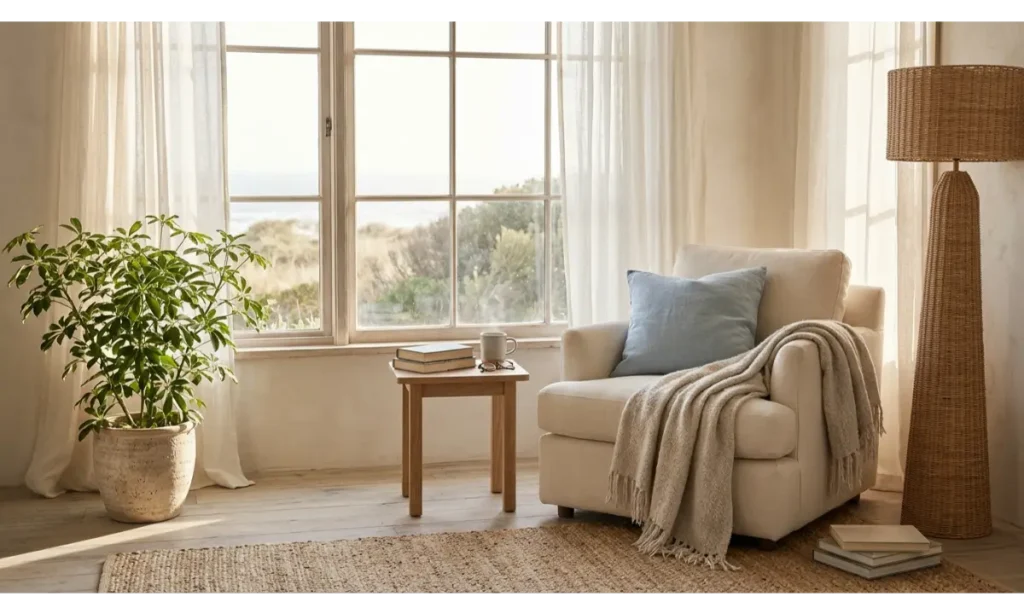
A reading corner gives you a practical way to enjoy coastal style in even a small home. Start with a comfortable chair in cream, beige, or muted blue. Add a soft throw, a compact side table, and a lamp that provides enough light for reading. A woven basket can hold books or blankets, while a small plant brings a natural touch to the space.
Choose a location near a window if possible, but make sure the chair does not block a walkway or access to doors. Keep the color palette connected to the rest of your home so the nook feels intentional rather than separate. A framed beach photograph or abstract ocean print can provide a final touch without taking up valuable floor space.
Pro Tip: Check the chair’s comfort and lighting at night, not just how attractive the corner looks in photographs.
18. Introduce Coastal Style With Handmade Ceramics
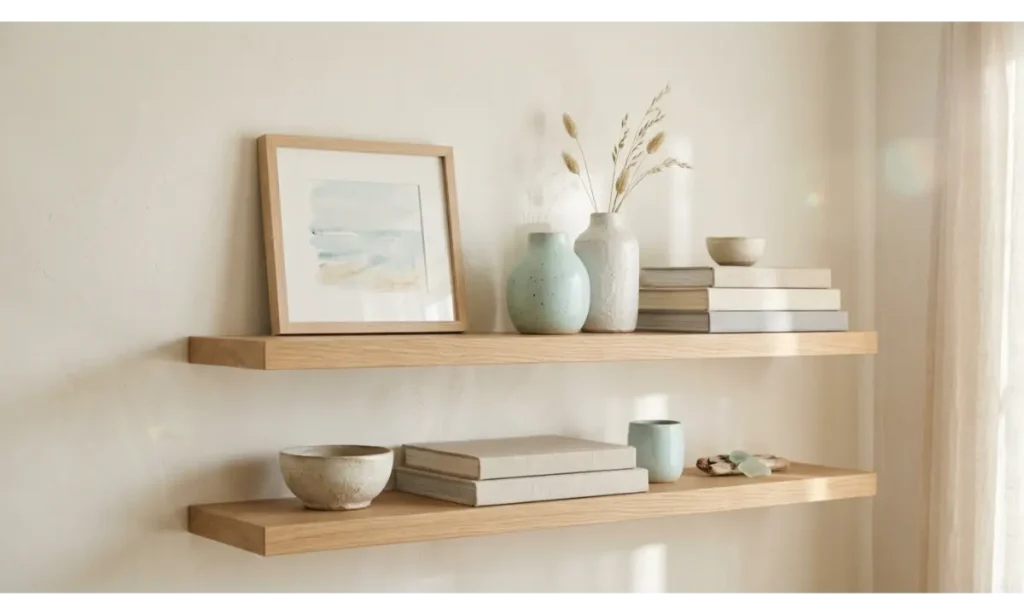
Handmade ceramics add character to coastal rooms because their slight variations make a space feel personal. Look for matte white vases, pale aqua bowls, sandy stoneware, or pieces with softly irregular shapes. Display them on shelves, bedside tables, or a dining room console. Their natural finishes complement linen, wood, and woven materials while adding a quiet artistic element to the room.
Try grouping ceramics in different heights rather than spreading many small objects across every surface. Leave empty space around each group so the shapes remain visible. You can combine a larger vase with a small bowl and one framed print for a balanced display. Choose pieces that are useful as well as decorative, such as serving bowls or vases you can use with fresh flowers.
Pro Tip: Combine matte and lightly glazed ceramics for subtle variation without introducing too many colors.
19. Choose Light Wood Furniture for an Airy Look
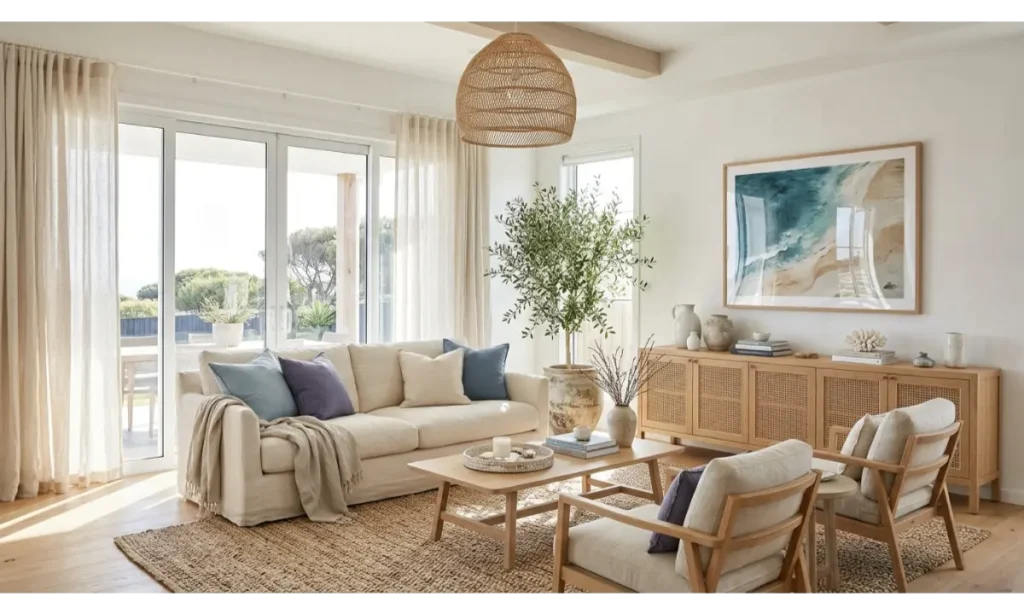
Light wood furniture is one of the easiest ways to create a bright, natural coastal interior. Pale oak, ash, and other light finishes work well with white walls, soft blue accents, and sandy textiles. A wooden sideboard, coffee table, or bed frame can add warmth without making the room feel visually heavy. The natural grain also provides texture that painted surfaces alone may lack.
You do not need every wooden piece to match perfectly. Mixing related wood tones can make the room feel more collected and less like a showroom. Try to keep undertones compatible, and repeat each finish where possible to create a sense of connection. Choose furniture with simple shapes and practical storage so the room remains useful as your household needs change.
Pro Tip: Compare wood samples beside your flooring and existing furniture before buying a large piece.
20. Decorate With Ocean Inspired Artwork
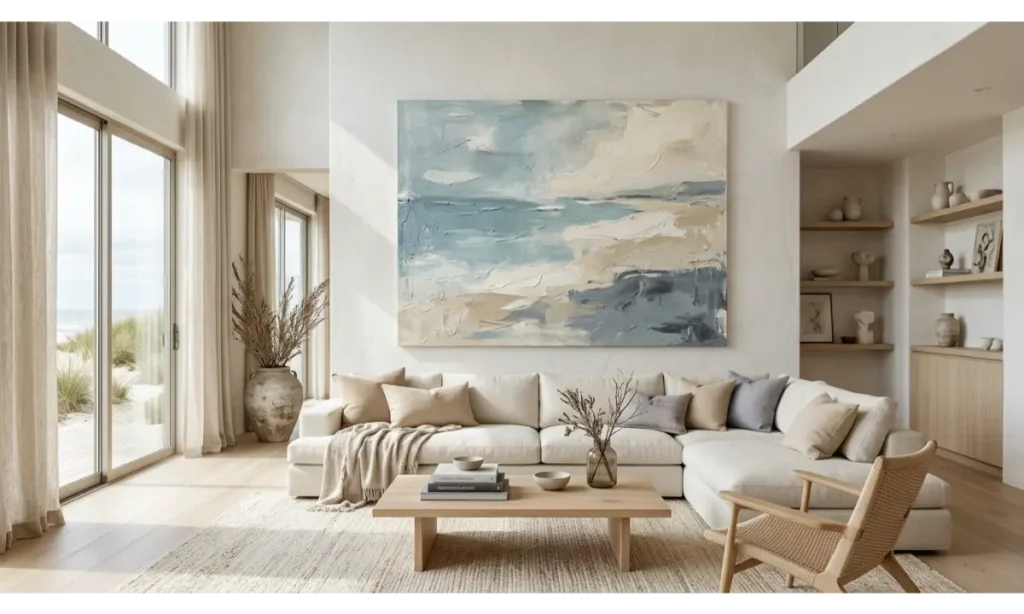
Ocean-inspired artwork can establish the mood of a room without changing its furniture or paint. Consider an abstract wave painting, a misty shoreline photograph, a simple horizon print, or artwork featuring sea grasses. Choose pieces that share colors with your cushions, rug, or curtains. This creates a coordinated look while allowing the artwork to become the main visual feature.
Scale matters when choosing wall art. A small print may disappear above a large sofa, while an oversized piece can overwhelm a narrow wall. Measure the available space and consider how the artwork relates to nearby furniture. If you prefer a gallery wall, combine a larger central image with a few smaller coastal prints. Keep frames simple to maintain a clean, relaxed appearance.
Pro Tip: Pick artwork first if you love a particular ocean-inspired color palette, then repeat its colors in smaller accessories.
21. Bring Coastal Style Into Your Own Home With a Relaxed Outdoor Patio
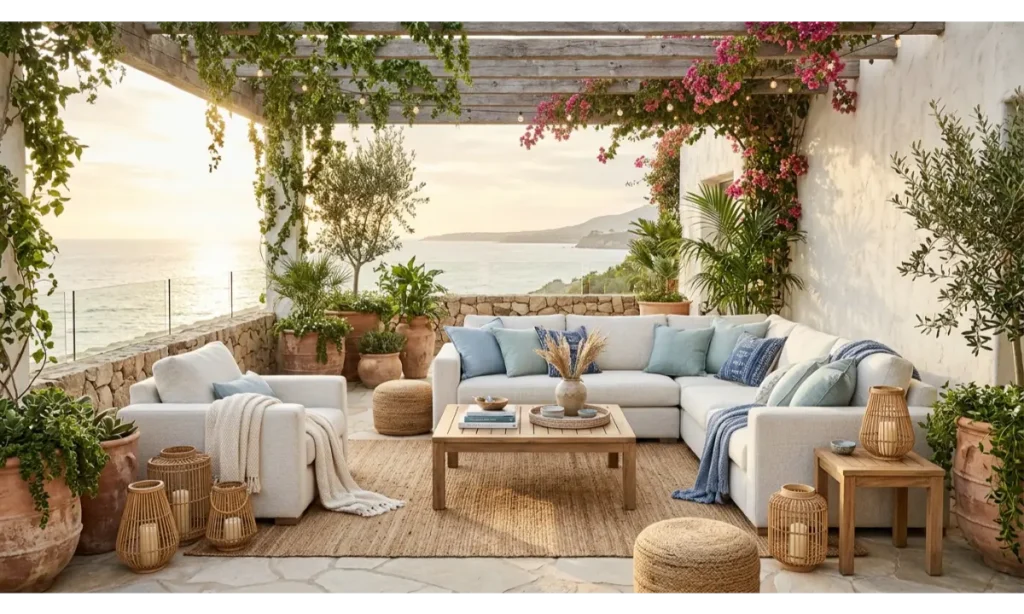
Your patio or balcony can carry the same relaxed feeling as your indoor coastal rooms. Begin with weather-resistant seating in a light neutral shade, then add pale blue cushions, a natural wood table, and planters filled with suitable greenery. Outdoor rugs and woven lanterns can soften hard surfaces and make the area feel more like an extension of your living room.
Keep the layout comfortable enough for conversation, meals, or quiet mornings. In a small balcony, choose compact furniture and use vertical planters to preserve floor space. For exposed patios, select fabrics and finishes designed for outdoor conditions. Repeat a few colors from inside your home to create a visual connection between the two areas without needing identical furniture or decorations.
Pro Tip: Choose UV-resistant fabrics and weather-appropriate furniture, and secure lightweight accessories in windy conditions.
Frequently Asked Questions
What is coastal style in home decor?
Coastal style is an interior design approach inspired by the sea, sandy beaches, natural materials, and bright seaside homes. It often features soft blue, white, beige, light wood, linen, woven textures, and plenty of natural light. The goal is to create a calm, comfortable space rather than recreate a literal beach scene.
How can I bring coastal style into my home on a budget?
Start with affordable changes such as blue and white cushion covers, light curtains, woven baskets, neutral throws, and simple ocean-inspired artwork. Rearrange existing furniture to make the room feel more open, and remove unnecessary clutter. You can Bring Coastal Style Into Your Own Home gradually by updating one room or one small area at a time.
What colors work best for coastal interiors?
The most common choices include warm white, ivory, sand, pale blue, aqua, sea glass green, and light wood tones. Navy can provide contrast, while muted green adds a natural touch. Choose two or three main colors and repeat them throughout the room for a coordinated appearance.
Can coastal decor work in a small apartment?
Yes. Light colors, sheer curtains, mirrors, compact furniture, and natural textures can make a small apartment feel bright and welcoming. Use a few well-chosen coastal accessories rather than filling every surface with decorations. Multifunctional furniture and hidden storage also help maintain an airy atmosphere.
What is the difference between coastal and nautical decor?
Coastal decor focuses on natural textures, relaxed comfort, light colors, and the feeling of being near the sea. Nautical decor more directly references maritime life through navy stripes, ropes, sailboats, anchors, and ship-inspired details. The two styles can overlap, but coastal interiors generally offer more flexibility and a softer overall look.
How do I make coastal decor look modern rather than outdated?
Choose simple furniture, natural materials, restrained patterns, and a limited color palette. Use ocean-inspired artwork instead of filling rooms with themed ornaments. Combine contemporary lighting with linen, light wood, and woven textures. Avoid excessive distressed finishes and matching decorative sets if you want a fresher, more modern result.
Can I mix coastal style with farmhouse or modern decor?
Absolutely. Coastal and farmhouse styles both work well with natural wood, neutral fabrics, and handmade accessories. For a modern combination, choose clean furniture shapes, simple lighting, and minimal decoration. Keep a consistent color palette so the different styles feel connected instead of competing with one another.
Which materials are best for coastal home decor?
Linen, cotton, jute, seagrass, rattan, wicker, light wood, stone, glass, and ceramic are popular choices. They add texture and natural character without requiring bold colors. For bathrooms and outdoor spaces, select finishes that can handle moisture, sunlight, and regular use.
Conclusion
You do not need an ocean view or an expensive renovation to create a beautiful coastal home. Soft blue walls, natural textures, light wood furniture, linen curtains, handmade ceramics, and thoughtful artwork can bring the relaxed character of the seaside into almost any room.
The best results come from choosing details that suit your lifestyle instead of copying an entire showroom. Start with one change, repeat a few colors, and leave enough open space for your rooms to feel comfortable and bright. When you Bring Coastal Style Into Your Own Home, focus on natural materials, practical furniture, and personal touches that make everyday living feel a little more peaceful.