
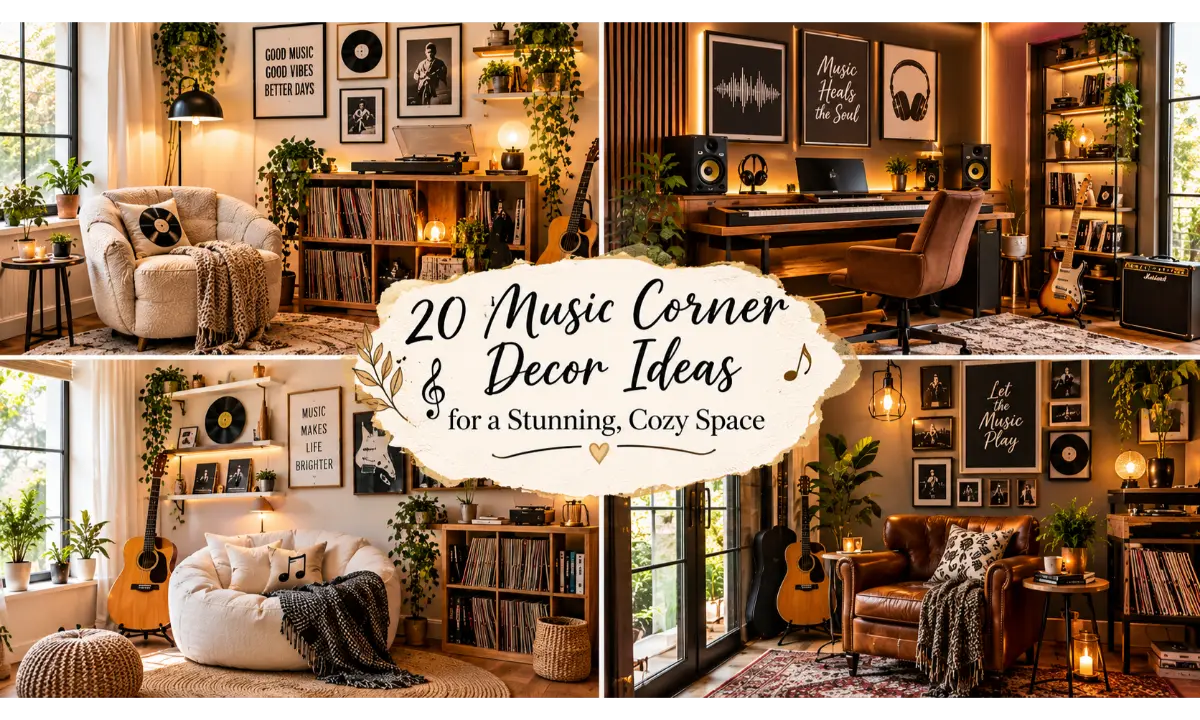
20 Music Corner Decor Ideas for a Stunning, Cozy Space
A music corner can be much more than a place to store your guitar, piano, or vinyl records. With thoughtful styling, you can create a cozy, inspiring spot that reflects your personality and makes listening to your favorite songs feel special. These Music Corner Decor Ideas combine practical storage, warm lighting, beautiful textures, and creative displays to help you design a space that looks stylish without feeling cluttered. Whether you have an entire room or just one empty corner, you can turn it into a personal music retreat.
Creative and Cozy Music Corner Decor Ideas
1. Music Corner Decor Ideas With a Stylish Vinyl Record Wall
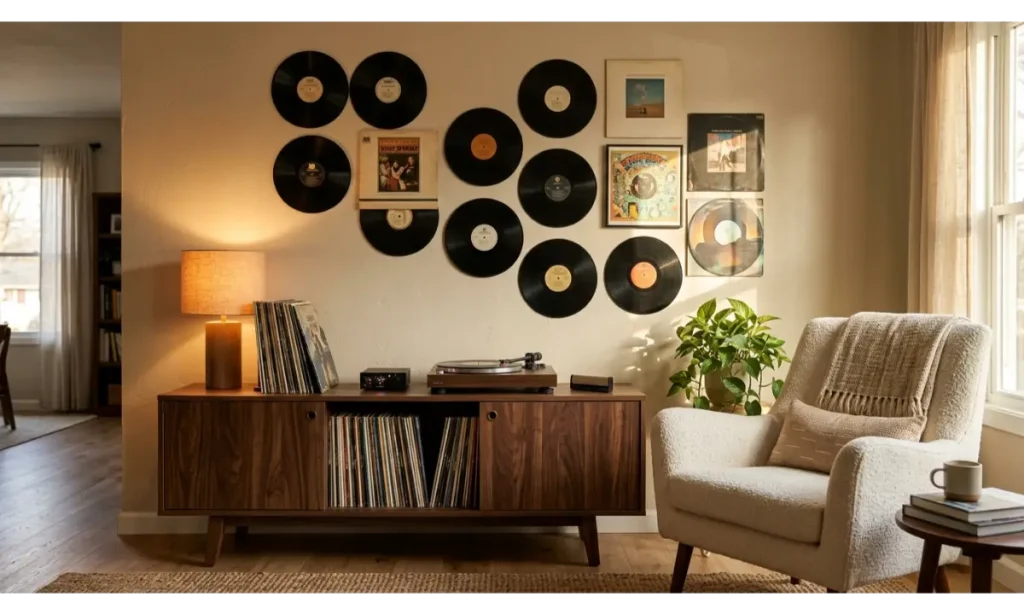
Create a beautiful listening space by turning your favorite vinyl records into wall art. Arrange records in a balanced grid or create a flowing gallery that draws attention toward your turntable. Choose a few colorful album covers to add personality while keeping the rest of the display coordinated. These Music Corner Decor Ideas work especially well in small living rooms because they use vertical space without taking up valuable floor area.
Place a low wooden cabinet beneath the display to hold your record collection, headphones, and speakers. A comfortable chair beside the cabinet makes the corner practical for everyday listening. Keep enough space between the records so the wall feels intentional rather than crowded. Warm lighting and natural wood finishes can soften the appearance of black records and create a relaxed, inviting atmosphere.
Pro Tip: Use removable picture ledges or record frames so you can change album covers whenever your music taste changes.
2. A Cozy Guitar Display Corner
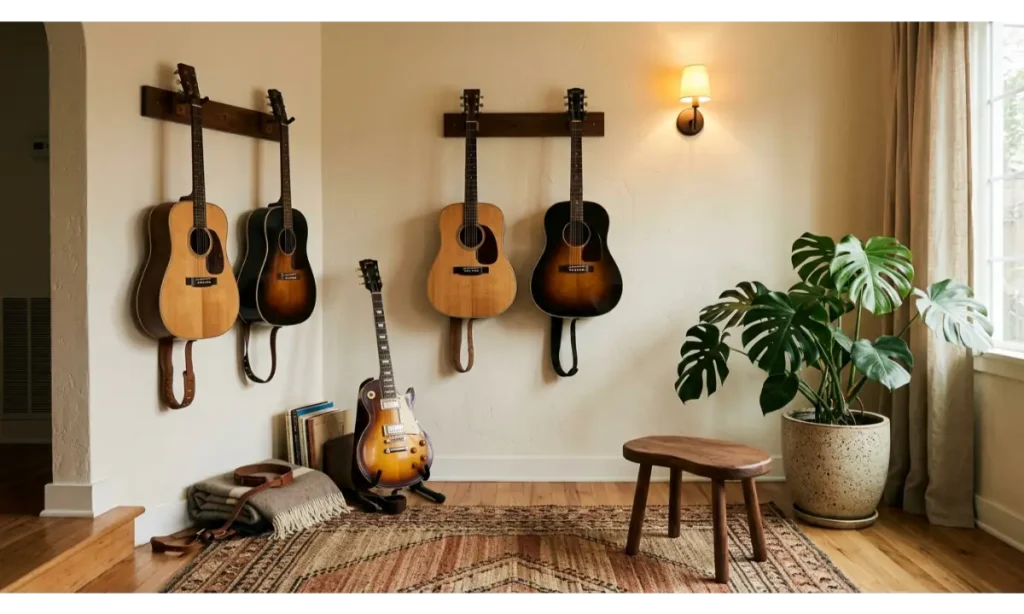
Turn your guitars into an attractive part of your home instead of hiding them inside cases. Wall-mounted guitar hangers create a clean display and make your instruments easy to reach when inspiration strikes. Choose a simple wall color that highlights the wood grain, finish, or shape of each guitar. A small stool and a compact amplifier can complete the setup without making the corner feel like a crowded rehearsal room.
For a more polished look, group your instruments at different heights while maintaining enough space to remove each one safely. Add a soft rug beneath the display to improve comfort and help define the area. If you play regularly, keep your picks, tuner, and music sheets in a nearby organizer. This approach combines guitar corner decor, convenient storage, and a personal display that celebrates your musical interests.
Pro Tip: Choose instrument hangers designed for your guitar type and finish, and keep guitars away from direct sunlight, radiators, and damp walls.
Read More: 23 Home Theater Room Ideas for a Stunning Movie Night
3. Music Corner Decor Ideas for a Piano Nook
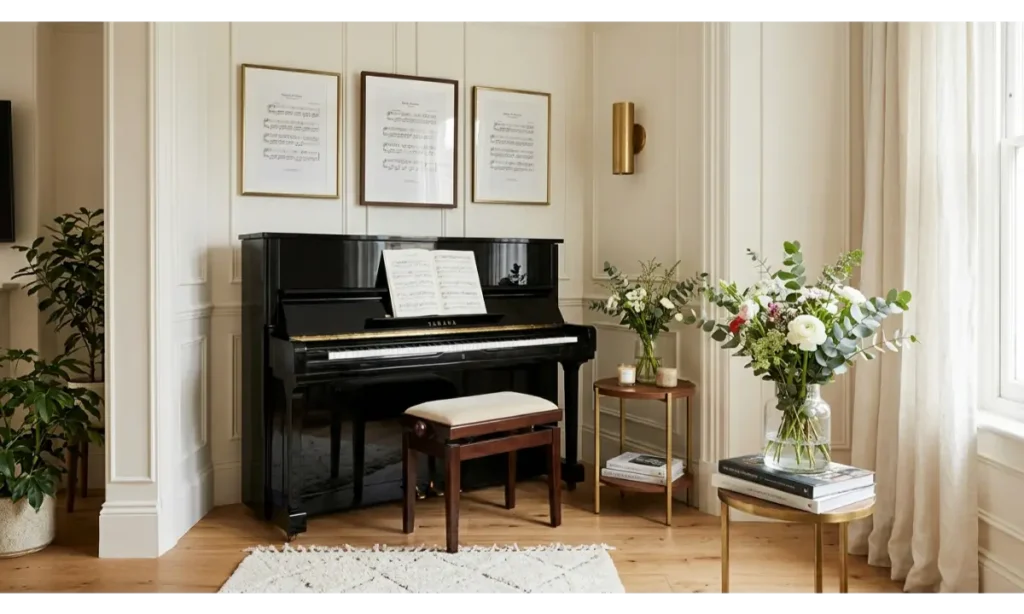
An upright piano can become the natural centerpiece of your music corner. Position it against a simple wall and give it enough breathing room so the instrument feels important rather than squeezed between other furniture. A padded bench, soft rug, and one or two framed music prints can make the area feel finished. For a timeless look, combine the piano’s dark finish with cream walls, warm wood, and subtle brass accents.
Keep the piano top relatively uncluttered so its shape remains visible. A small vase, one framed photograph, or a neatly arranged stack of sheet music is usually enough. If the piano sits in a shared living room, use furniture and colors that connect it to the surrounding decor. This creates a cozy piano corner that feels like a natural part of your home while encouraging you to practice more often.
Pro Tip: Avoid placing a piano beside a radiator, in direct sunlight, or near a frequently opened exterior door because temperature and humidity changes can affect tuning.
4. A Small Music Corner Under the Stairs
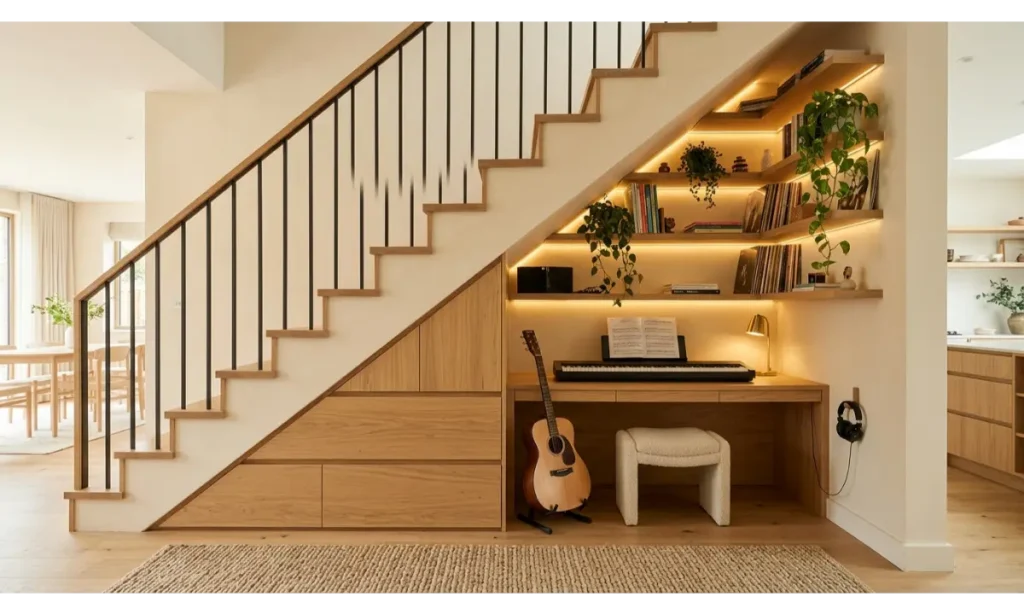
The empty space beneath a staircase can become a useful music retreat when you plan around its unusual shape. Place a compact keyboard or a single guitar in the tallest section, then use the lower areas for drawers and closed storage. Floating shelves can follow the staircase angle and hold small speakers, music books, and carefully selected decorative objects. Light wall colors help the nook feel more open and prevent the sloping ceiling from looking heavy.
Before choosing furniture, measure the available height, depth, and walking clearance. Make sure you can sit comfortably, move your arms freely, and reach your instruments without hitting the stairs. Built-in storage offers a neat finish, but movable furniture can work just as well if you are decorating on a budget. This arrangement makes small music room decor possible even when your home has very little spare space.
Pro Tip: Use a compact, adjustable lamp to illuminate sheet music without filling the entire nook with bulky lighting.
5. A Warm Music Corner With Floating Shelves
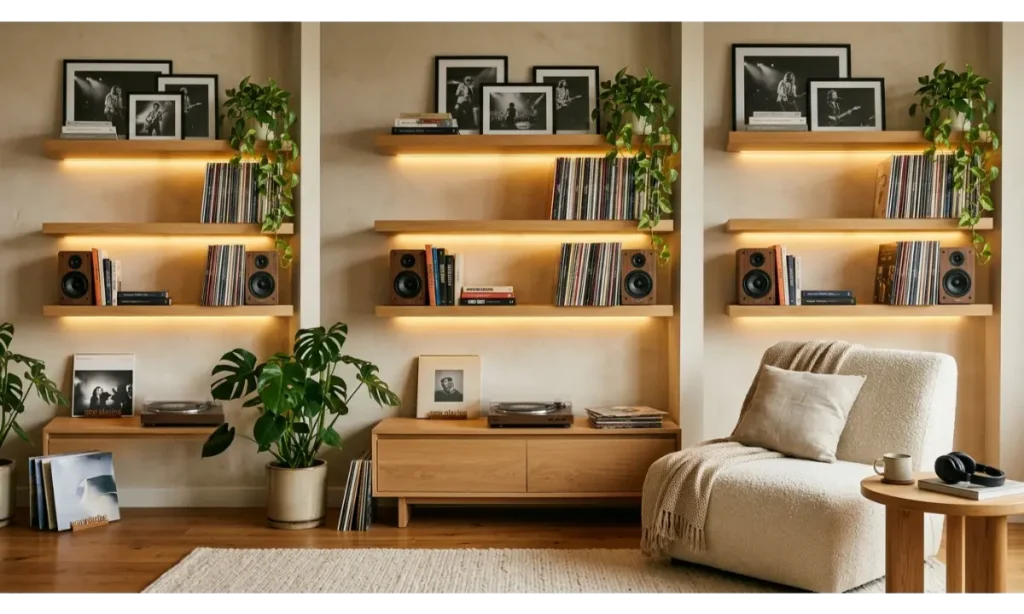
Floating shelves provide storage and display space without the bulk of a large cabinet. Use the lower shelf for records or music books, the middle shelf for smaller decorative pieces, and the upper shelf for framed photographs or objects that reflect your musical interests. Keeping a consistent color palette makes the arrangement feel calm and organized. Natural oak, matte black accessories, and warm white walls create a balanced look that suits many interior styles.
Think about how you use your music collection before deciding what belongs on each shelf. Everyday items should stay within easy reach, while delicate collectibles can sit higher up. Leave some empty space between objects so the shelves do not resemble crowded storage racks. For a more atmospheric finish, add suitable shelf lighting and position a comfortable chair nearby. These music room shelving ideas help you combine function and personality in one compact area.
Pro Tip: Secure shelves into suitable wall supports, check their weight limits, and keep heavy records on shelves designed to carry their load.
Read More: 20 Blue Couch Living Room Ideas for Beautiful, Cozy Style
6. A Boho Music Corner With Natural Textures
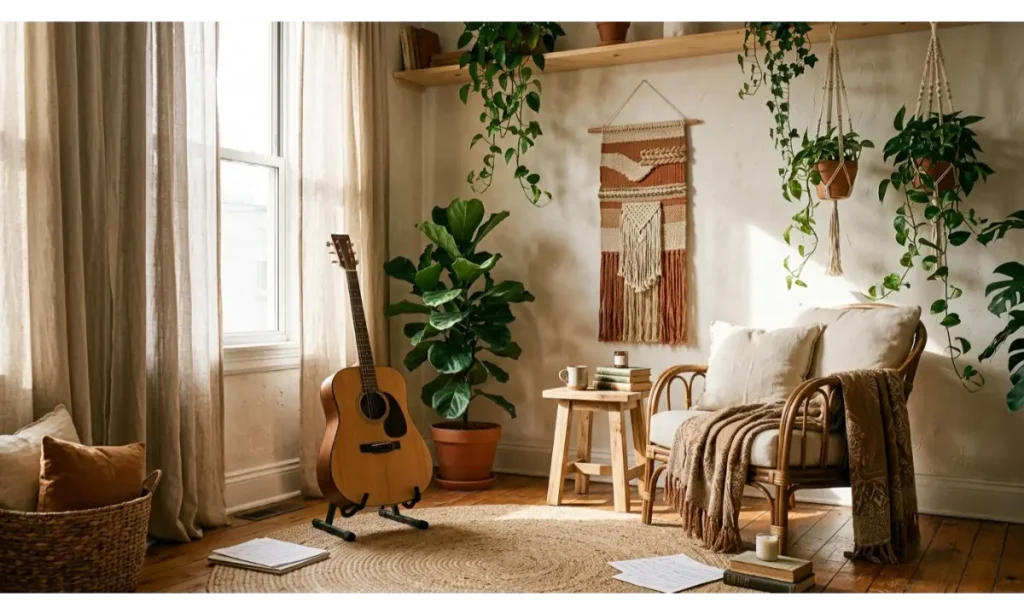
A boho-inspired music nook feels relaxed, creative, and welcoming. Start with natural materials such as rattan, jute, linen, and unfinished wood. Add a comfortable chair, an acoustic guitar, and a small table for headphones or a cup of tea. Woven wall decor can introduce texture without competing with your instruments. Earthy shades of sand, olive, and terracotta help the corner feel connected to nature while giving it a warm, lived-in character.
Keep the arrangement practical by choosing only a few meaningful accessories. Too many cushions, baskets, and hanging decorations can make a small area difficult to use. Place plants where they receive suitable light without blocking your instruments or creating excess moisture nearby. This style works particularly well for people who enjoy acoustic music, songwriting, or quiet listening sessions. The result is a relaxed boho music nook that looks personal rather than overly styled.
Pro Tip: Choose stable plant stands and keep water, damp soil, and watering equipment away from electrical devices and instruments.
7. A Minimalist Music Corner for Small Apartments
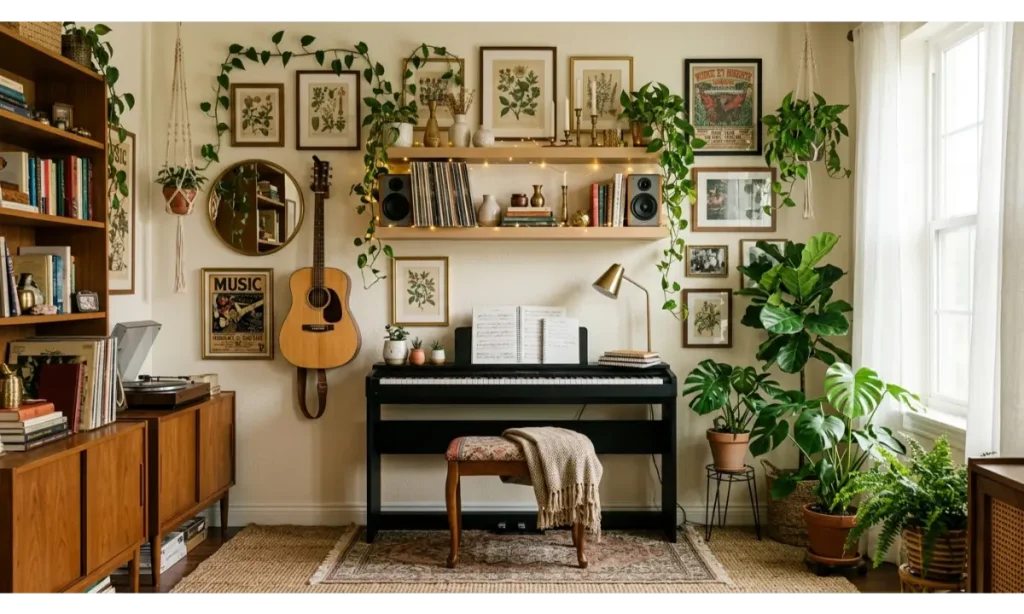
A minimalist music corner proves that you do not need many decorations to create an attractive space. Choose one main instrument, a comfortable seat, and only the equipment you use regularly. A slim digital piano or compact turntable setup can fit beside a sofa or near a window. Neutral colors, simple furniture, and clean lines keep the arrangement visually quiet, allowing your instrument to become the main feature.
Storage is especially important in a small apartment. Use a drawer for cables, sheet music, and accessories rather than leaving everything on the floor. Route cables neatly along suitable surfaces, and position speakers according to the manufacturer’s recommendations. Avoid filling every empty wall with artwork; one carefully chosen print can have more impact than several unrelated pieces. These minimalist music corner ideas make a small home feel more organized while preserving a dedicated place for music.
Pro Tip: Measure the space with the instrument, bench, and chair in position before buying furniture. Include enough clearance for comfortable movement.
8. A Music Corner With LED Accent Lighting
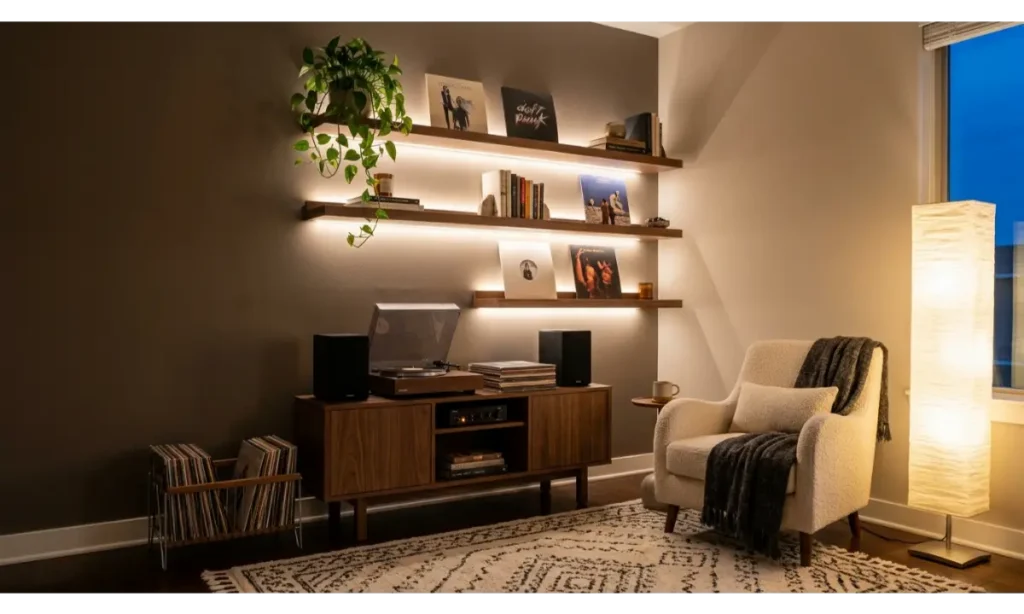
Lighting can change the mood of a music corner without requiring a complete redesign. Install warm LED strips behind shelves or along the back of a cabinet to create a soft glow around your records and speakers. A dimmable floor lamp adds another layer of light for reading album notes or relaxing in the evening. Warm white illumination usually feels more comfortable than harsh, cool lighting when you want a calm listening environment.
Think in layers rather than relying on a single bright ceiling light. Ambient lighting illuminates the room, task lighting helps you read music, and accent lighting highlights selected details. Keep cables hidden where practical, and choose lighting products suited to their installation location. These cozy music corner decor ideas help create an inviting atmosphere for quiet evenings, casual listening, or time spent with friends.
Pro Tip: Use dimmable lights where possible, and keep electrical connections, power strips, and adapters away from rugs, fabric, and other materials that may trap heat.
9. A Vintage Music Corner With Retro Furniture
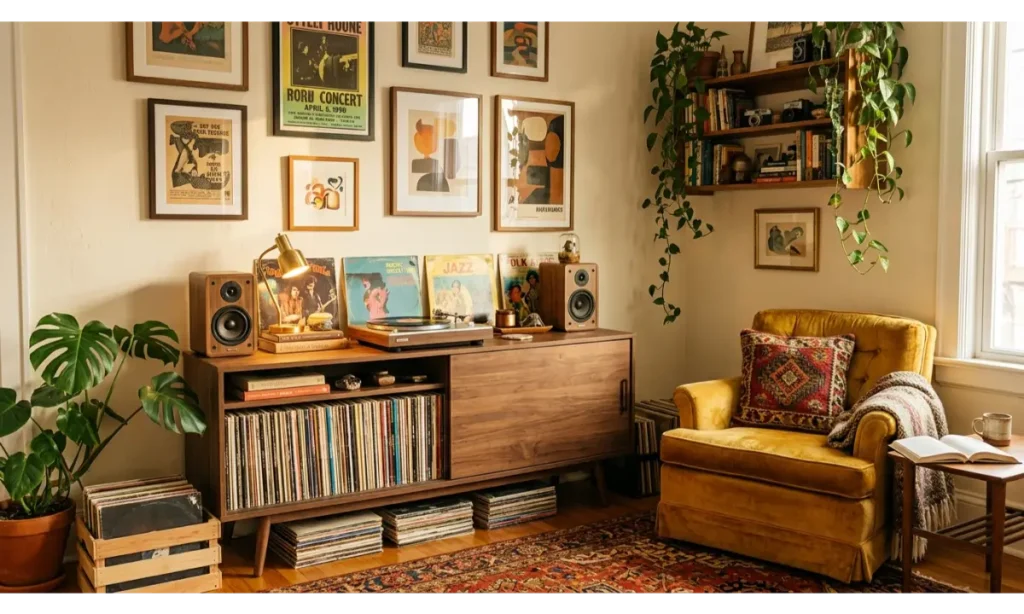
Vintage furniture gives a music corner character that new, matching furniture sometimes lacks. Look for a mid-century sideboard, an old wooden cabinet, or a secondhand chair with interesting lines. A record player and a small collection of album sleeves can reinforce the nostalgic feeling without making the room look like a museum. Choose a few colors from your favorite album covers to connect the furniture, artwork, and textiles.
Mix old and new pieces so the space remains useful. A restored cabinet can provide traditional charm, while modern speakers and discreet cable management keep the setup practical. Check the stability and condition of secondhand furniture before using it to support heavy equipment. The aim is to create a personal listening area rather than recreate a particular decade exactly. These retro music room decor choices work beautifully in apartments, bedrooms, and relaxed living rooms.
Pro Tip: Clean vintage furniture gently and check its surface before placing a turntable on it. A stable, level surface helps the record player perform properly.
10. A Music Corner With Concert Posters and Artwork
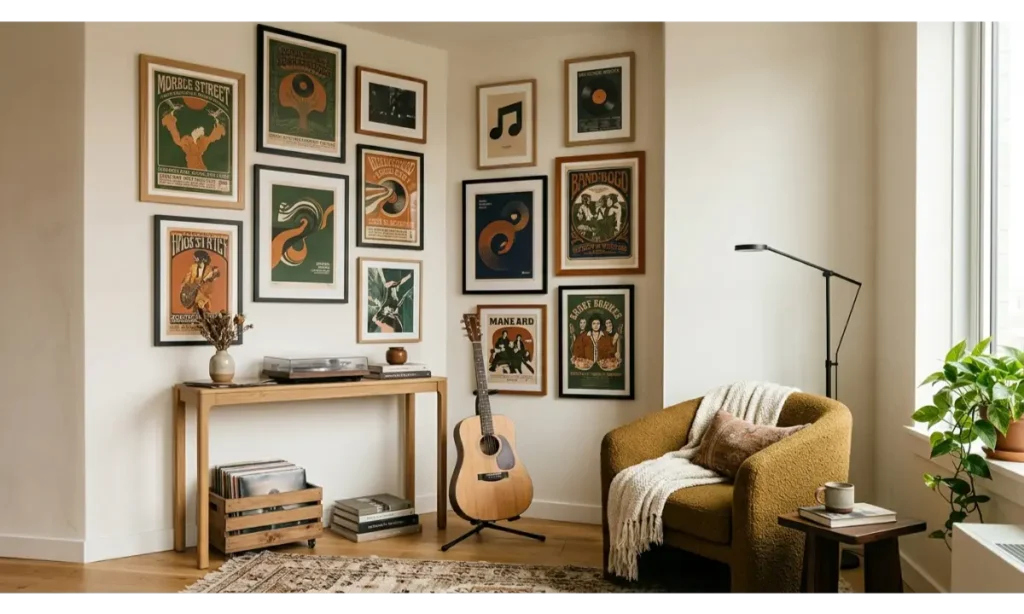
Concert posters and music artwork can make a plain corner feel uniquely yours. Frame posters from favorite performances, display illustrations of beloved instruments, or choose abstract prints inspired by sound and rhythm. Arrange the artwork around a clear center point, such as a guitar or a record console, so the wall feels connected to the rest of the space. A mixture of frame sizes can add interest when you keep the spacing consistent.
You do not need expensive originals to create a meaningful display. Personal concert memories, ticket stubs in shadow boxes, and legally obtained art prints can all work well. Limit the number of colors if your collection contains many different designs, and leave a little wall space visible around the arrangement. This approach turns music wall decor into a conversation starter while giving your corner an authentic, personal story.
Pro Tip: Lay out your frames on the floor first and photograph the arrangement before hanging them. This makes it easier to balance the sizes and spacing.
11. A Music Corner With a Comfortable Listening Chair
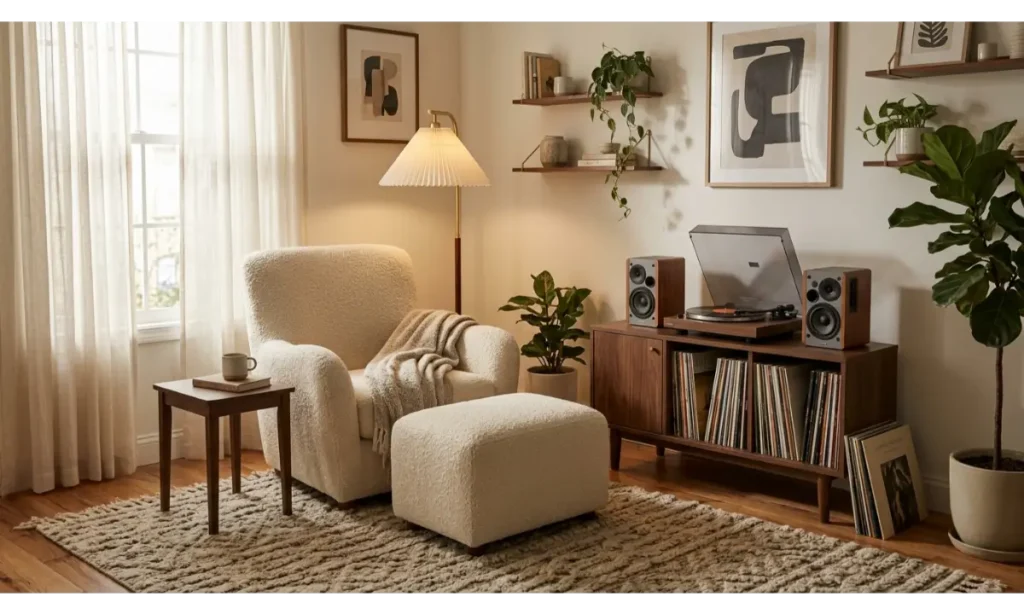
Sometimes the best music corner begins with a chair rather than an instrument. Choose a seat with supportive cushioning, comfortable armrests, and enough room to sit for an entire album. Position a small table within reach for headphones, a notebook, or a glass of water. A soft rug and a warm floor lamp help separate the listening area from the rest of a shared room without requiring a screen or bulky divider.
Pay attention to how sound reaches the chair. Place speakers at a comfortable listening distance and experiment with their direction instead of pushing everything tightly into the corner. Keep the walkway clear, and avoid positioning the chair where it blocks doors or natural light. This setup suits people who love podcasts, vinyl records, acoustic playlists, and quiet breaks. It creates a home listening nook designed around comfort rather than decorative objects alone.
Pro Tip: Test the chair and speaker placement before buying a rug or side table. Your listening position should determine the layout.
12. A Creative Music Corner for Kids
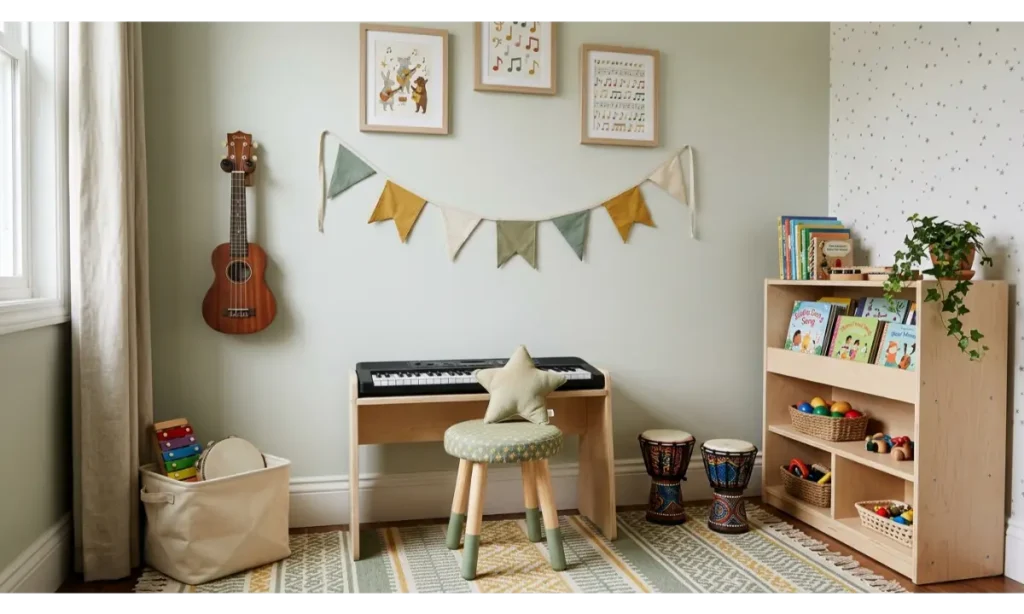
A children’s music corner can encourage creativity while giving instruments a clear place to live. Set up a child-sized keyboard, small percussion instruments, or a beginner ukulele in an accessible area. Use low shelves for music books and simple instrument baskets so children can put things away themselves. Cheerful colors and playful artwork make the space inviting, while a washable rug provides a comfortable surface for sitting and experimenting with sounds.
Keep the design simple enough for everyday use. Choose age-appropriate instruments, secure furniture to the wall when necessary, and avoid small detachable parts for young children. Keep cords out of reach and supervise the use of electronic equipment. You can also display children’s drawings or a chart showing the instruments they are learning. These kids’ music room ideas make music practice feel like an enjoyable activity rather than another task on the daily schedule.
Pro Tip: Store noisy percussion instruments in a basket with a lid and agree on suitable practice times, especially in shared homes.
13. A Music Corner With a Dedicated Headphone Station
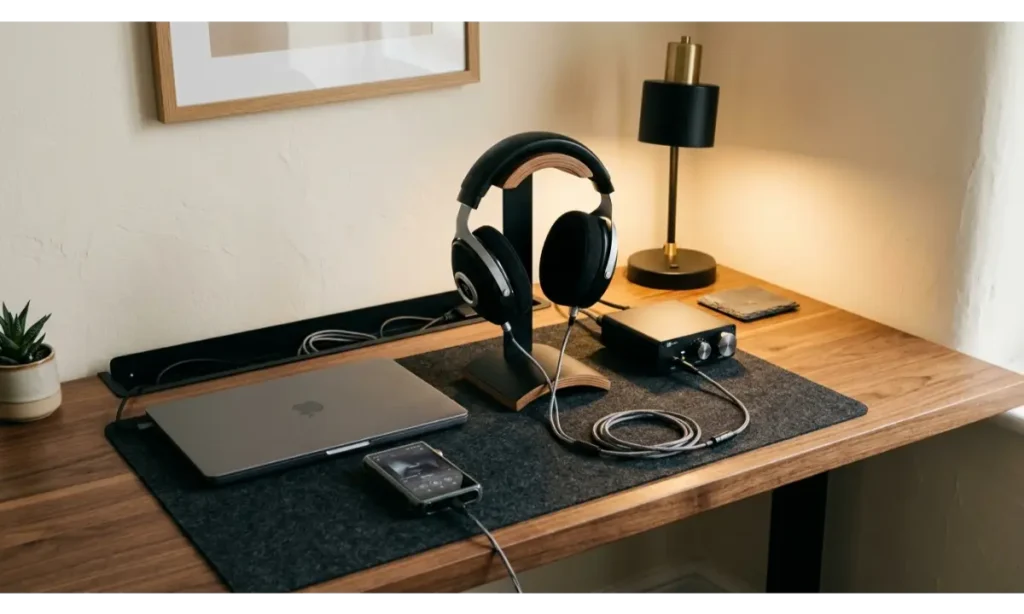
A headphone station is an excellent choice if you enjoy music but need to keep noise down. Start with a compact desk or console, a reliable headphone stand, and a drawer for charging cables and adapters. If you use a computer or audio interface, group the equipment neatly so the surface remains easy to clean. A comfortable chair and focused task lighting can turn even a small corner into a useful everyday listening spot.
Keep the setup centered on your routine. Store frequently used headphones where you can reach them, coil spare cables loosely, and leave room for a notebook or tablet. If you edit audio or create playlists, a small monitor stand can help organize your workspace. This headphone listening corner suits shared apartments, late-night listeners, students, and anyone who prefers private listening without filling the whole room with sound.
Pro Tip: Use a stand that supports your headphone headband properly, and avoid wrapping cables tightly around the earcups because repeated stress can damage them.
14. Music Corner Decor Ideas With Built-In Storage
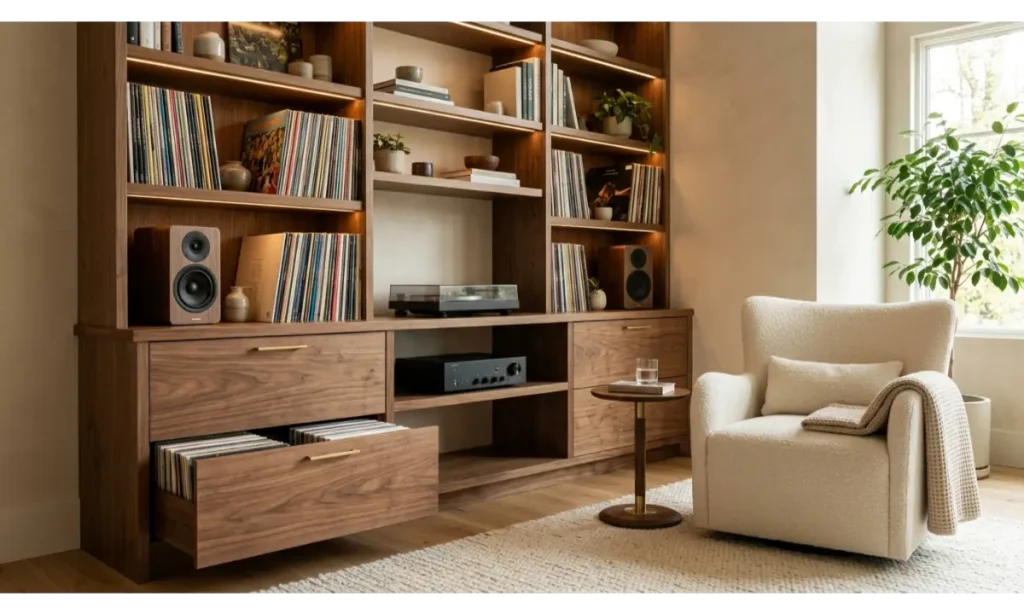
Built-in storage makes a music corner look organized because the furniture can fit the available wall space precisely. Use deep lower compartments for records, drawers for smaller accessories, and open shelves for items worth displaying. A dedicated surface for your turntable or keyboard keeps the equipment easy to use. If the corner shares a wall with a living room, matching the cabinetry to existing furniture helps the entire space feel connected.
Plan storage around the size and weight of your collection. Vinyl records need sturdy, appropriately sized compartments that let them stand upright without leaning too tightly. Leave ventilation space for equipment that generates heat, and avoid enclosing devices unless the manufacturer permits it. Although custom cabinetry can cost more upfront, well-planned storage can reduce clutter for years. These music corner storage ideas are particularly useful for growing collections and homes where every square foot matters.
Pro Tip: Measure your record sleeves, equipment, and cables before designing shelves. Leave practical room for access, ventilation, and future additions.
15. A Budget-Friendly DIY Music Corner
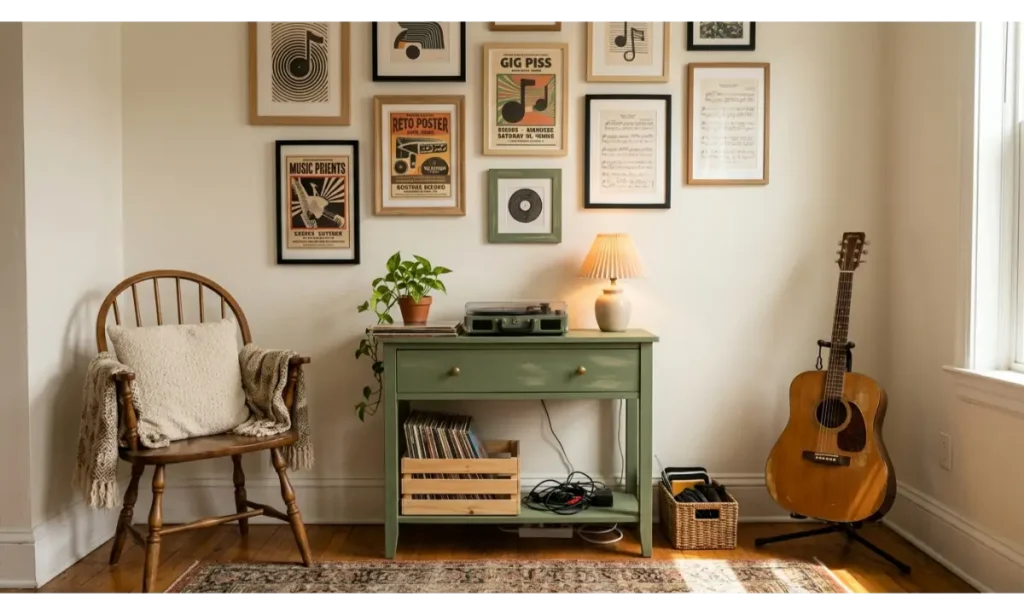
You can create an attractive music corner without buying a matching furniture set. Begin with a piece you already own, such as a small desk, sideboard, or sturdy shelf. Refresh it with suitable paint or a careful cleaning, then add a comfortable secondhand chair and a lamp. Framed prints, a small rug, and a few favorite albums can provide personality without making the project expensive.
Spend money first on items that affect daily use, including safe instrument stands, reliable cables, and suitable storage. Decorative accessories can come later as you find pieces you love. Reusing furniture also allows you to experiment with different layouts before committing to permanent changes. These DIY music corner ideas are especially helpful for renters, students, and anyone decorating on a tight budget while still wanting a thoughtful, finished look.
Pro Tip: Set a budget before shopping and check local secondhand options for furniture. Never compromise on safe electrical equipment or secure instrument supports to save money.
16. A Music Corner With a Colorful Accent Wall
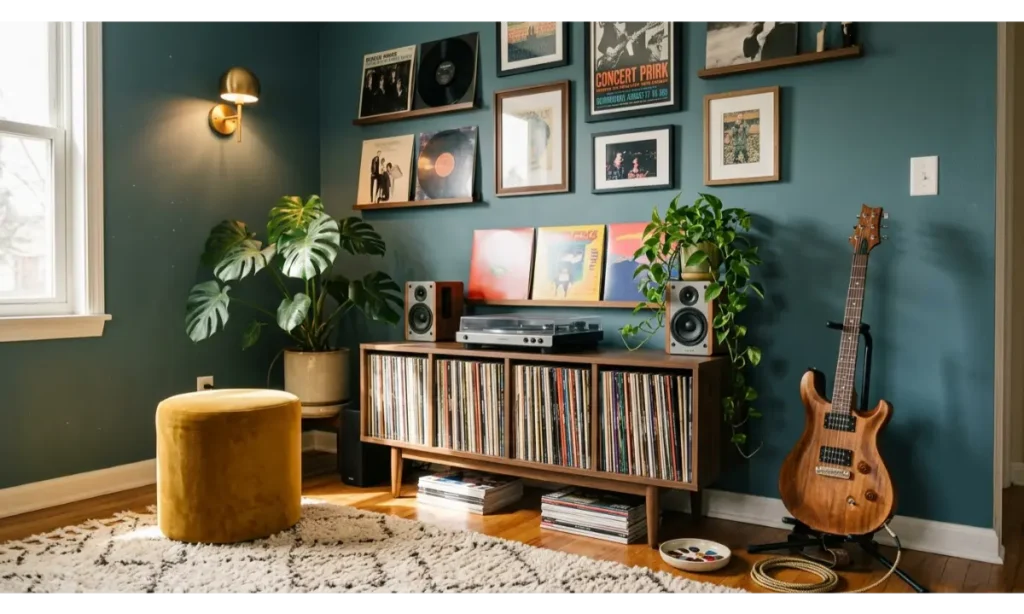
A colorful accent wall gives your music corner a clear identity. Deep green, muted teal, navy, or warm terracotta can create a rich background for instruments and artwork. Choose a color that complements your existing furniture rather than competing with it. If your room is small, painting just one wall can provide visual interest while leaving the other surfaces light and open.
Connect the accent color to a few smaller details, such as a cushion, framed print, or storage box. This repeated color creates a coordinated look without requiring every item to match. Before painting, test a sample in morning and evening light because shades can look very different throughout the day. These colorful music nook ideas suit creative personalities who want a corner that feels expressive while remaining comfortable enough for regular use.
Pro Tip: Use removable wallpaper if you rent your home, but check the manufacturer’s guidance and test a small area before applying it.
17. A Music Corner With Acoustic Panels
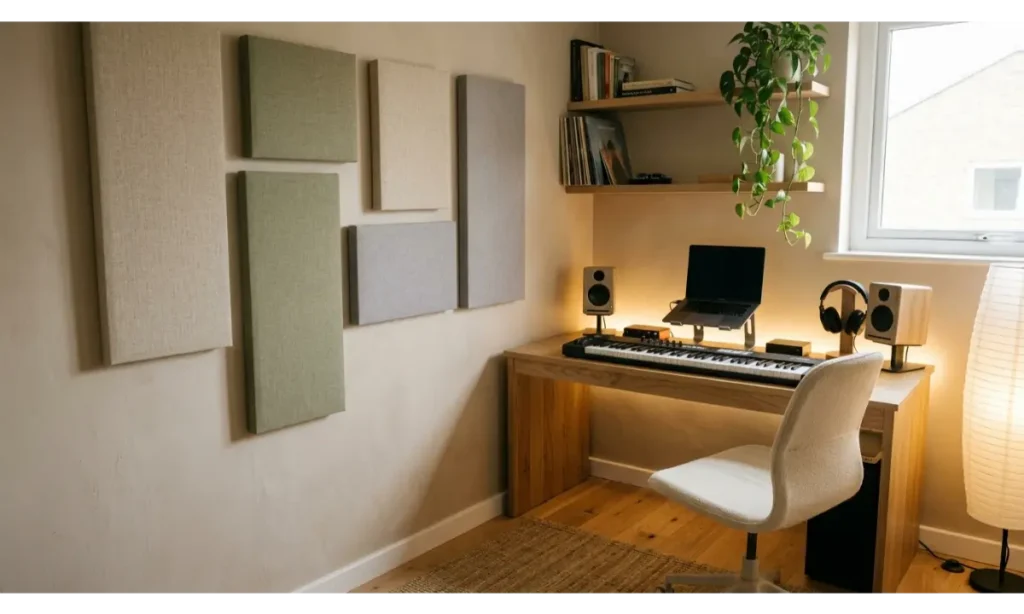
Acoustic panels can help control reflections in a music corner, especially when you record vocals, practice instruments, or listen through speakers in a reflective room. Choose panels in colors that suit your decor so the setup feels intentional rather than industrial. A few well-placed panels, a desk, and suitable speaker stands can create a practical creative space without needing a full professional studio.
Remember that acoustic treatment and soundproofing are different. Panels can reduce certain reflections inside the room, but they will not automatically stop music from traveling through walls or floors. Placement depends on the room, your equipment, and the type of sound you want to control. Start by listening for echo and harsh reflections before buying a large quantity. These home music studio ideas balance appearance with a more comfortable environment for practice and recording.
Pro Tip: Follow the panel manufacturer’s installation instructions, and never cover ventilation openings or block access to electrical outlets with acoustic materials.
18. A Music Corner in a Bedroom
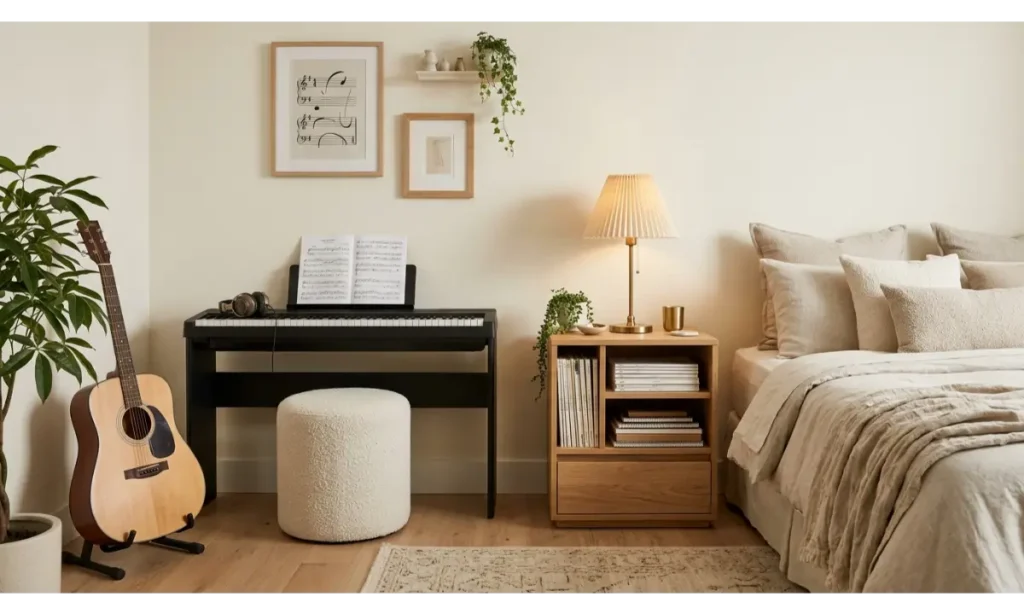
A bedroom music corner should feel relaxing while still giving your instrument a clear purpose. A slim keyboard, compact guitar stand, or small record cabinet can fit beside a dresser or in an unused corner. Choose decor that matches the room’s existing bedding and furniture, such as cream textiles, warm wood, and soft lighting. Keeping the palette consistent helps the music area blend naturally into the bedroom.
Protect your sleep space from unnecessary clutter by storing cables, sheet music, and accessories in a drawer or closed basket. If you practice late, use headphones with suitable equipment and keep the volume at a safe level. Avoid positioning delicate instruments near windows with direct sun or heating vents. These bedroom music corner ideas give you a convenient place to enjoy music without sacrificing the peaceful feeling that makes a bedroom comfortable.
Pro Tip: Measure the instrument’s footprint and allow enough space to sit, play, and move around without blocking wardrobes or bedroom doors.
19. A Music Corner With Plants and Natural Decor
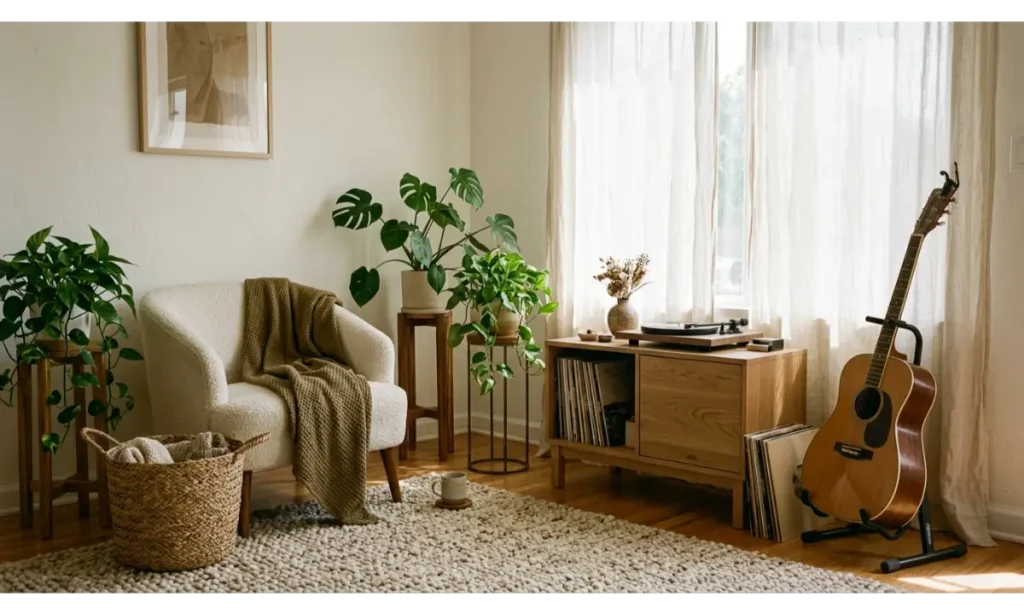
Plants and natural finishes can soften a music corner and make it feel connected to the rest of your home. Choose a few plants suited to the available light and place them around the edges of the setup. Combine them with a wooden cabinet, woven basket, linen cushion, or natural-fiber rug. The mix of green leaves and warm textures creates a calm backdrop for listening, reading music, or practicing an instrument.
Keep the plants separate from electronic equipment and valuable instruments. Watering spills, damp soil, and excess moisture can damage wood, finishes, and electrical devices. If your corner receives little daylight, choose plants that suit lower-light conditions or use appropriate plant lighting away from equipment. A restrained arrangement looks fresher than filling every shelf with greenery. This natural music nook decor style works especially well in bright apartments and homes with warm, earthy interiors.
Pro Tip: Use a waterproof tray under plant pots and leave enough distance between foliage, cables, speakers, and instruments for easy cleaning.
20. A Personalized Music Corner With Memorabilia
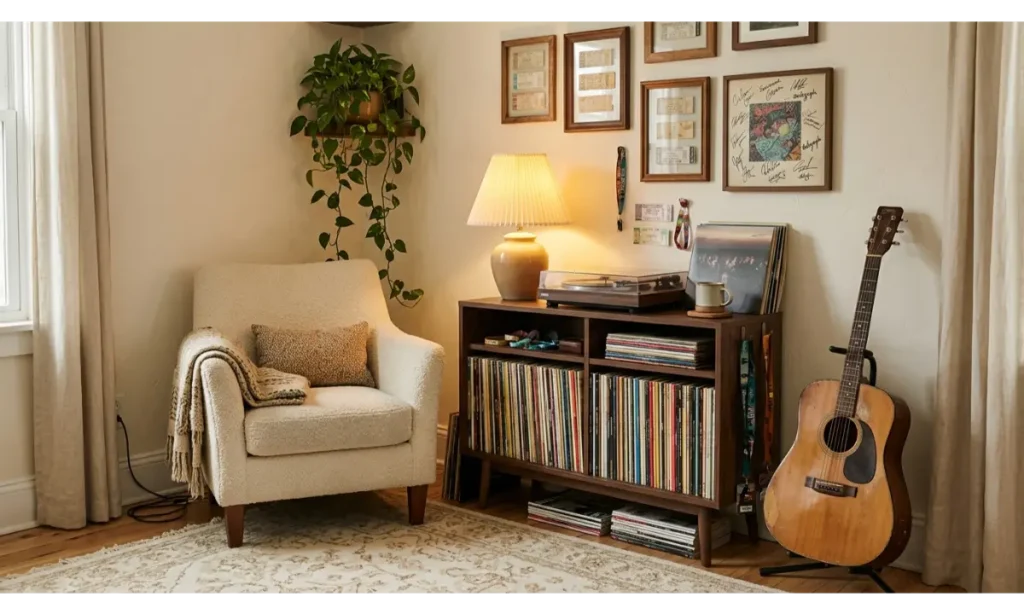
The most memorable music corners reflect the person who uses them. Display concert tickets, photographs from performances, favorite album covers, or a small object connected to an important musical memory. Rather than arranging everything at once, select a few pieces that tell a story. A shelf or small gallery wall can bring these objects together while leaving room for your instruments and everyday equipment.
Make the display easy to update as your interests change. Use frames to protect paper keepsakes, small boxes for ticket collections, and shelves for sturdy objects. Combine sentimental items with a comfortable chair or a practical record cabinet so the corner remains useful rather than becoming only a display. These personalized music corner decor ideas turn an ordinary part of your home into a meaningful place that celebrates your favorite sounds, artists, and experiences.
Pro Tip: Keep valuable memorabilia away from direct sunlight and humidity. Use protective sleeves or frames designed for the materials you want to preserve.
How to Design the Perfect Music Corner
A beautiful music nook needs more than attractive decorations. Before buying anything, think about what you want to do there. A vinyl listening area needs record storage and a suitable turntable surface, while a practice corner needs enough room to handle an instrument comfortably. If you want a creative workspace, you may also need a desk, headphones, and organized cable storage.
Consider these important details as you plan your layout.
Choose the Right Location
Look for an unused corner in your living room, bedroom, home office, or under the stairs. Make sure the area has enough room for your instrument, seating, and safe movement. Avoid locations exposed to excessive sunlight, dampness, or major temperature changes.
Plan Lighting and Sound
Use comfortable ambient lighting alongside a focused lamp when reading music. Position speakers thoughtfully and experiment with their direction to find a pleasing sound. If you practice loudly, consider the effect on other household members and neighbors.
Keep Storage Practical
Store records upright in suitable compartments, keep accessories in labeled containers, and arrange cables neatly. Avoid overloading floating shelves or placing heavy equipment on furniture that cannot support it.
Match the Decor to Your Home
Choose a style that complements your existing interior. Natural wood and woven textures suit boho spaces, while simple furniture and neutral colors work well in minimalist homes. A few personal objects can make the corner feel special without creating visual clutter.
Set a Realistic Budget
Start with the essentials: the instrument, a safe stand, comfortable seating, and useful storage. Add artwork, accent lighting, and decorative pieces gradually. You can create a beautiful space using furniture you already own.
Frequently Asked Questions
1. How do I decorate a small music corner?
Start with one main instrument, compact furniture, and vertical storage. Use floating shelves, wall-mounted artwork, and a small rug to define the space. Keep the floor clear and choose light colors to make the corner feel more open. These Music Corner Decor Ideas can help you create a stylish setup without needing a separate music room.
2. What should I put in a music corner?
Include the items that support your favorite musical activity. These might be a guitar, digital piano, turntable, headphones, speakers, music books, or a comfortable chair. Add useful storage and a lamp, then choose a few decorative pieces such as framed artwork or favorite album covers.
3. How can I make my music corner look expensive on a budget?
Choose a consistent color palette, keep cables organized, and use good lighting. Refresh existing furniture, frame a few prints, and display your collection neatly. Natural wood, neutral textiles, and a clutter-free surface often look more polished than lots of inexpensive decorations.
4. Where should I place a music corner in my home?
A living room corner works well for shared listening, while a bedroom can suit private practice with headphones. An unused area under the stairs can hold a compact instrument or keyboard. Choose a location with enough clearance, suitable lighting, and a comfortable environment for your equipment.
5. How can I decorate a music corner without making it cluttered?
Choose a clear focal point and limit decorative items to a few meaningful pieces. Use closed storage for cables and accessories, arrange records neatly, and leave some empty space on shelves. A simple layout makes the instruments easier to reach and helps the corner feel calm.
6. What colors work best for a cozy music corner?
Cream, beige, warm white, muted green, walnut brown, and soft terracotta can create a welcoming atmosphere. Dark blue or deep green can also work well as an accent wall. Choose colors that complement your instruments and the rest of your home rather than following every trend.
7. How can I improve the sound in my music corner?
Start by positioning speakers carefully and listening from your usual seating spot. Experiment with small changes in speaker direction and distance from walls. Rugs, curtains, and suitable acoustic panels may help control reflections, but they do not provide complete soundproofing. Keep equipment stable and follow the manufacturer’s placement guidance.
8. Can I create a music corner in a rental home?
Yes. Use freestanding furniture, removable wall decor, and portable lighting to avoid permanent changes. A small record cabinet, a stable instrument stand, and a comfortable chair can create a complete setup. Before drilling holes or installing heavy shelves, check your rental agreement and use safe mounting methods.
Conclusion
The best Music Corner Decor Ideas combine personal style with everyday comfort. Whether you love vinyl records, play the guitar, practice piano, or simply enjoy relaxing with your favorite songs, you can create a beautiful space that fits your home and lifestyle. You do not need a large room or an expensive budget to make it special.
Start with one meaningful feature, such as a record display, a comfortable listening chair, or a dedicated instrument stand. Add warm lighting, practical storage, and a few favorite decorative pieces to complete the look. Keep the arrangement simple enough to use every day, and allow it to grow as your musical interests change. With thoughtful choices, even a small corner can become your favorite place to listen, practice, create, and unwind.