
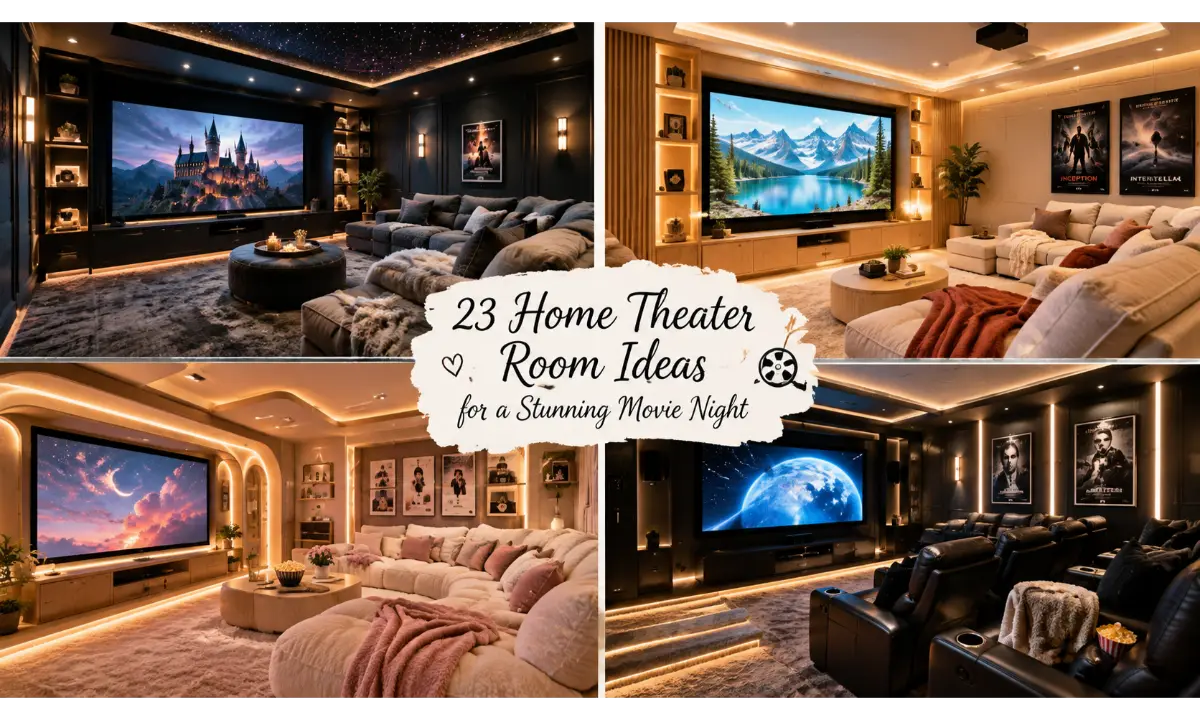
23 Home Theater Room Ideas for a Stunning Movie Night
The right home theater can turn an ordinary evening into an exciting movie experience. Whether you have a dedicated media room, a spare bedroom, or a cozy corner in your living room, thoughtful design can make every movie night feel special. These Home Theater Room Ideas combine comfortable seating, beautiful lighting, smart technology, and creative decorating to help you build a space that looks amazing and works for your lifestyle. From modern luxury theaters to budget friendly family rooms, you will find inspiration for every home and budget.
23 Home Theater Room Ideas to Transform Your Space
1. Home Theater Room Ideas With Plush Reclining Seats
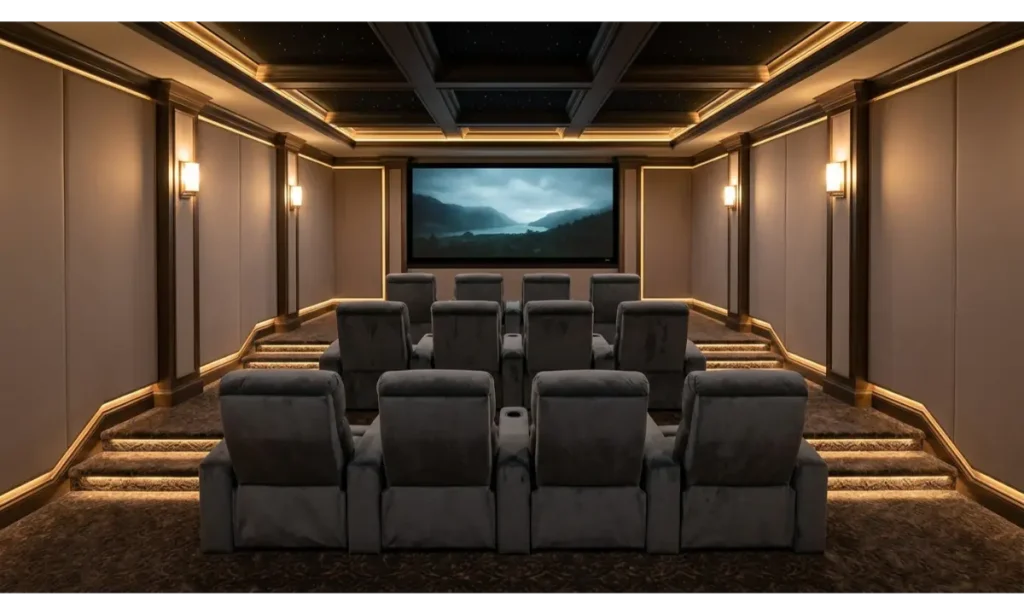
Comfort is the foundation of excellent Home Theater Room Ideas, and plush reclining seats make a wonderful starting point. Choose generously padded chairs with supportive headrests, adjustable footrests, and built in cup holders. Deep charcoal, chocolate brown, or warm taupe upholstery creates a polished cinema atmosphere without making the room feel too formal. Arrange the seats so everyone can see the screen comfortably, and leave enough space for people to move around without disturbing others.
For a more luxurious experience, consider arranging two or three rows of seating if your room has enough depth. A raised rear platform can improve visibility, while a soft area rug helps define the seating zone. If you have a smaller room, two reclining chairs and a compact loveseat can provide plenty of comfort without overcrowding the space. The goal is to create a relaxing environment where everyone can settle in for a full movie.
Pro Tip: Measure the room and check the seats’ fully reclined dimensions before buying furniture.
2. Modern Minimalist Home Theater Room Ideas
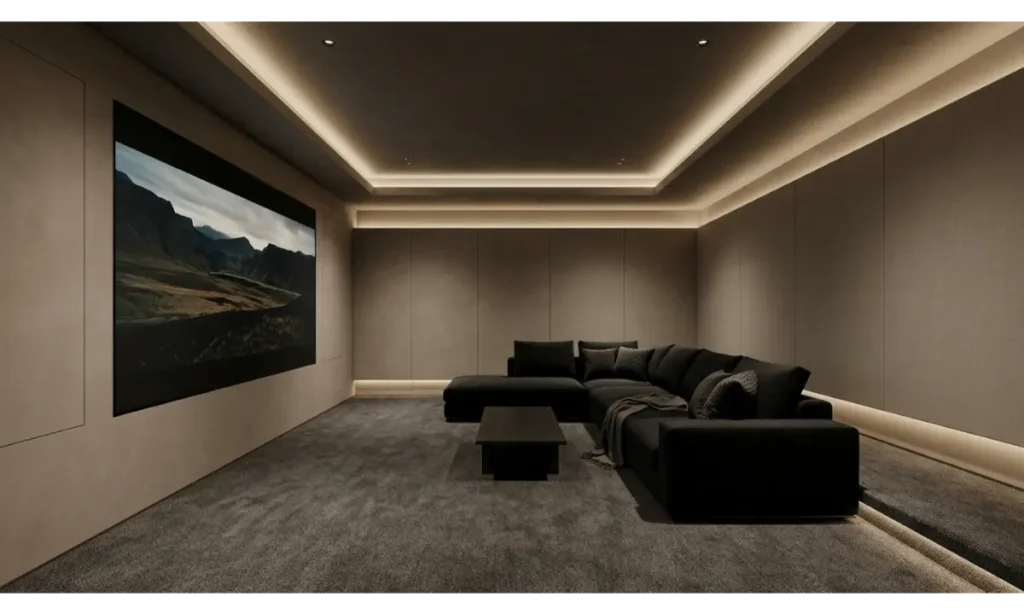
A minimalist theater proves that Home Theater Room Ideas do not need complicated decorations to look impressive. Start with a simple color palette of black, warm gray, cream, or muted beige. Choose streamlined furniture, a clean screen wall, and closed storage to keep remotes, gaming accessories, and cables out of sight. This approach makes the room feel organized and spacious while keeping attention on the screen. It works particularly well in contemporary homes where simplicity and function matter equally.
Lighting plays an important role in this style. Install dimmable ceiling lights and concealed LED strips that create a soft glow without distracting viewers. Choose a few carefully selected accessories, such as a textured throw or a small side table, instead of filling every surface with decorations. A soundbar or discreet speaker system can preserve the clean appearance while improving audio quality. With fewer visual distractions, the room feels calm before the movie and immersive once the lights go down.
Pro Tip: Plan cable routes and equipment storage before installing the screen or mounting the television.
Read More: 23 Stunning DIY Snowman Decor Ideas for a Magical Holiday Home
3. Luxury Home Theater With a Starry Ceiling
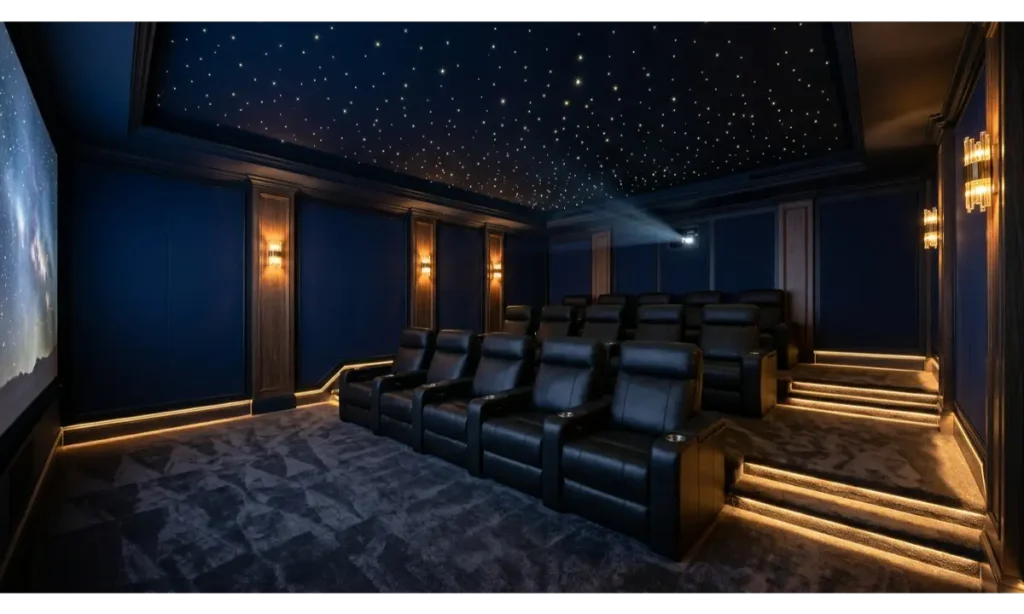
A starry ceiling adds a magical detail to Home Theater Room Ideas, making the room feel like a private cinema under the night sky. Small fiber optic lights create a delicate pattern across a dark ceiling, while navy or charcoal finishes deepen the atmosphere. Pair this feature with comfortable recliners, a large projection screen, and soft wall lighting. The tiny points of light create visual interest without requiring large decorative fixtures or distracting wall art.
To keep the design elegant, use the star effect as a supporting feature rather than the room’s only attraction. Dark acoustic panels can improve sound control, while plush carpet helps reduce reflections and creates a comfortable surface underfoot. Choose dimmable lighting so the stars remain visible during opening credits and quieter scenes. This design suits dedicated basement theaters, spacious spare rooms, and homeowners who want a distinctive cinema experience with a touch of fantasy.
Pro Tip: Select adjustable star lighting with a low brightness setting so it does not compete with the screen.
4. Small Home Theater Room Ideas for Compact Spaces
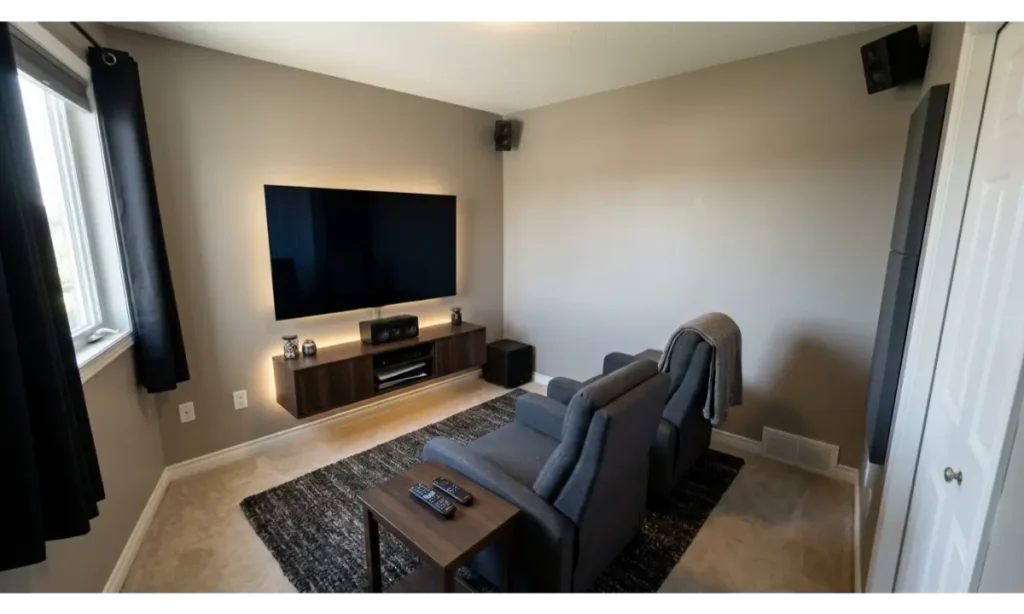
You do not need a large basement to create memorable Home Theater Room Ideas. A small spare room can become a comfortable cinema with a wall mounted television, two streamlined recliners, and a compact media console. Choose furniture with narrow arms and simple profiles to preserve walking space. Wall mounted equipment frees up the floor, while light neutral walls can make the room feel less cramped. The secret is selecting only the furniture and technology that genuinely improve your viewing experience.
Smart placement can make a small room feel much more functional. Position the screen at a comfortable height, leave enough distance between the seats and the display, and use blackout curtains to control daylight. A soundbar can reduce the need for multiple large speakers, while a small side table provides space for drinks and snacks. Built in shelves or closed cabinets help keep accessories organized without adding visual clutter. Even a compact setup can feel polished when every item has a clear purpose.
Pro Tip: Sketch your furniture layout and measure the viewing distance before purchasing a screen or seating.
5. Dark and Moody Cinema Room
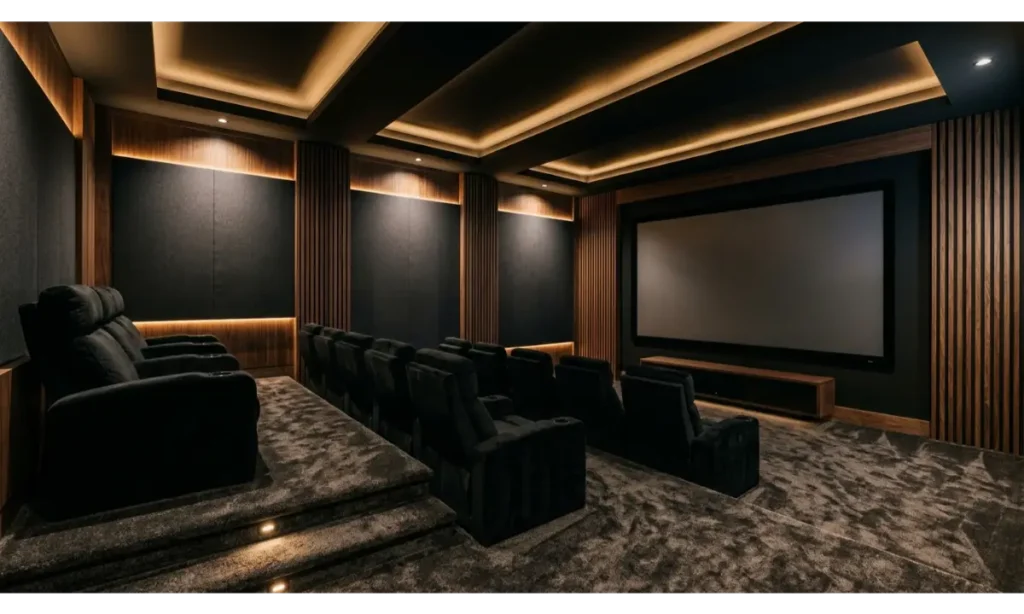
Dark finishes create a dramatic atmosphere that makes a home cinema feel separate from the rest of the house. Consider charcoal, midnight blue, forest green, or deep brown walls with a matte finish. These shades can reduce distracting reflections when paired with controlled lighting. Blackout curtains and dark upholstery complete the look, while a large screen becomes the natural focal point. Among the many Home Theater Room Ideas, this style is especially appealing to movie lovers who enjoy a traditional theater atmosphere.
To prevent the room from feeling flat, introduce a mix of textures. Velvet seating, ribbed acoustic panels, wood trim, and thick carpeting add depth without relying on bright colors. Use low level wall sconces or concealed LED strips for safe movement between scenes. A few brass details or walnut surfaces can introduce warmth without weakening the dramatic palette. Keep decorative objects simple, and avoid glossy finishes near the screen because they may reflect unwanted light during darker scenes.
Pro Tip: Test paint samples under both normal room lighting and your planned movie lighting before choosing a shade.
Read More: 23 Brown And Cream Living Room Ideas for Stunning, Cozy Elegance
6. Modern Farmhouse Home Theater
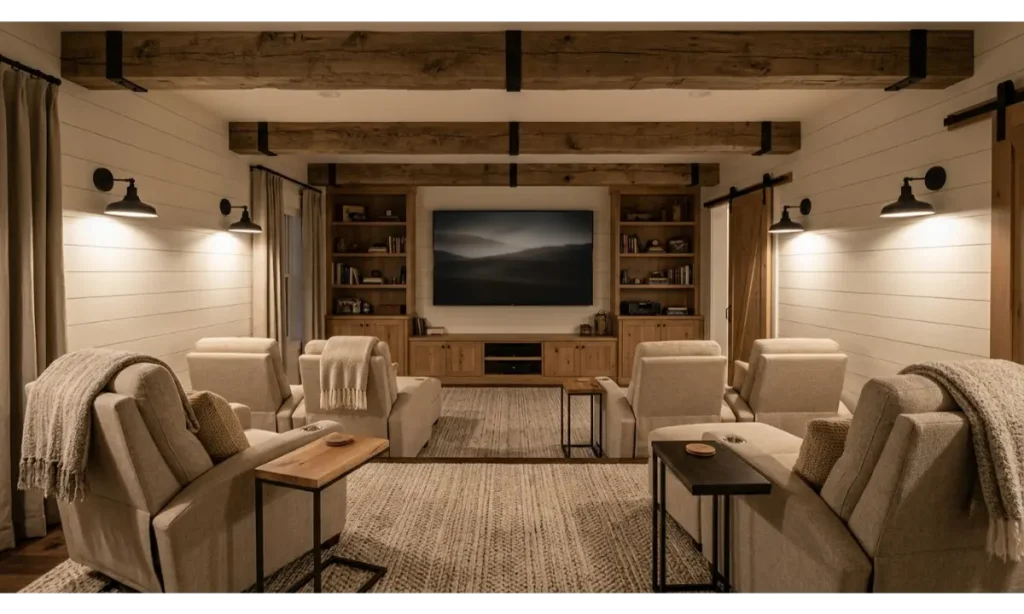
Modern farmhouse style brings a welcoming, lived in feeling to Home Theater Room Ideas. Combine warm white walls, natural wood accents, comfortable upholstered seating, and simple black metal fixtures. Shiplap or subtle wood paneling can add character without overwhelming the room. Choose a medium toned oak media cabinet and soft beige or taupe recliners to balance the rustic materials with modern comfort. The result feels relaxed and inviting rather than overly formal, making it suitable for family movie nights and casual entertaining.
Texture is essential to making this design feel authentic. A woven rug, linen cushions, wood framed shelves, and understated wall sconces help create warmth. Keep the screen wall relatively simple so decorative beams and paneling do not compete with the picture. Closed cabinets can hide gaming equipment, remotes, and cables while maintaining a tidy farmhouse appearance. If the room connects to an open living area, repeat the same wood tones and neutral colors to create a natural transition.
Pro Tip: Use real wood accents in a few prominent places instead of covering every wall with rustic finishes.
7. Home Theater With LED Accent Lighting
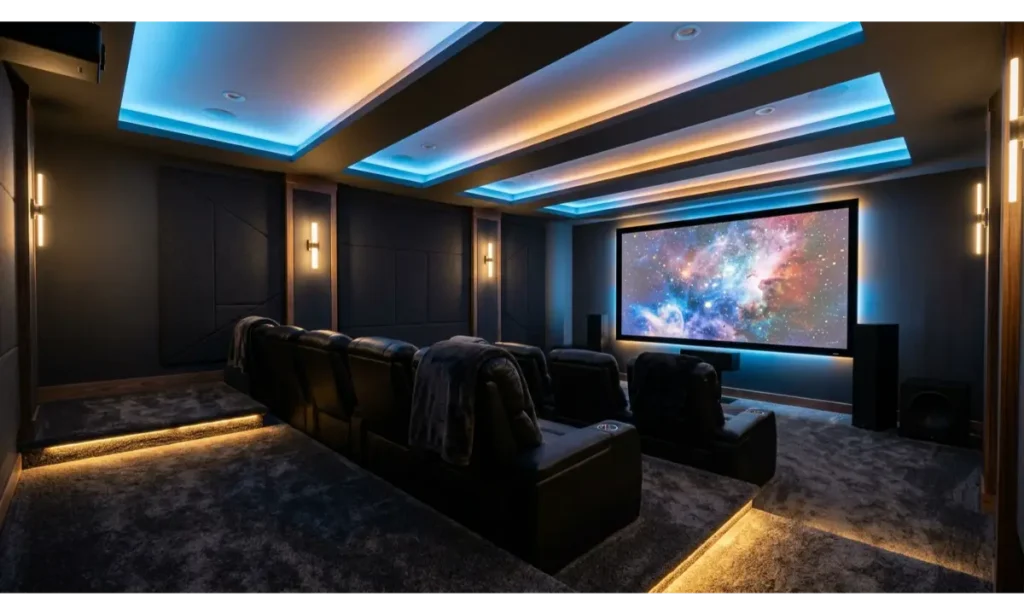
LED lighting can transform an ordinary media room into a modern entertainment space. Add concealed strips behind the television, along ceiling coves, or beneath a raised seating platform. Soft blue, amber, or neutral white lighting creates atmosphere while helping define the room’s architecture. For balanced Home Theater Room Ideas, choose lighting that complements the wall colors and furniture instead of using every color at once. Indirect illumination looks especially polished because the light source remains hidden from direct view.
Programmable lighting makes the room more versatile. You can use a brighter setting for cleaning, a gentle glow for family gatherings, and a dim setting for films. Smart controls can also connect lighting to a home automation system, allowing you to adjust brightness without leaving your seat. Make sure the LEDs do not shine directly onto the screen or create glare on glossy surfaces. A thoughtful lighting plan improves the room’s appearance while making the space easier to use every day.
Pro Tip: Choose dimmable LEDs with adjustable color temperature, and keep screen reflections in mind when positioning each strip.
8. Basement Home Theater With Surround Sound
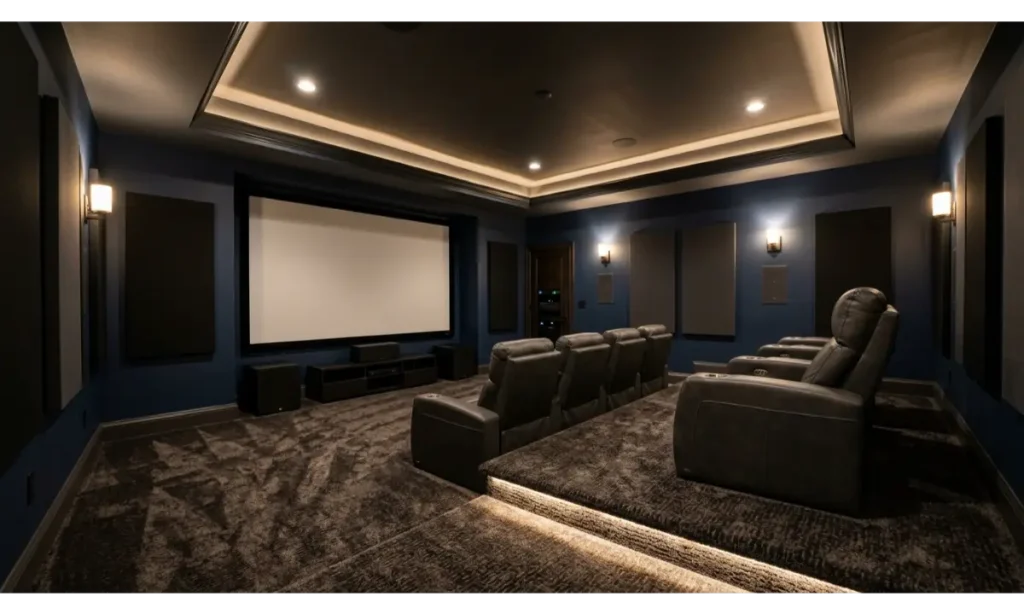
A basement often provides the privacy and separation needed for an immersive cinema. Use the available depth for comfortable seating, a large screen, and a carefully planned speaker arrangement. Dark wall colors and thick carpet can create a theater atmosphere, while acoustic panels help control unwanted sound reflections. These Home Theater Room Ideas work particularly well when the basement has limited natural light, because you can control brightness more easily than in a sunlit living room.
Surround sound adds depth by placing speakers around the listening area instead of relying only on the television’s built in audio. Position the speakers according to the manufacturer’s guidance and the room layout, and leave enough room for airflow around receivers and other electronics. Basements may also need attention to moisture, insulation, and ventilation before expensive equipment is installed. Addressing these practical details early helps protect your investment and creates a more comfortable room for longer viewing sessions.
Pro Tip: Check for moisture problems and plan ventilation before installing carpet, acoustic panels, or electronic equipment.
9. Home Theater With a Giant Projector Screen
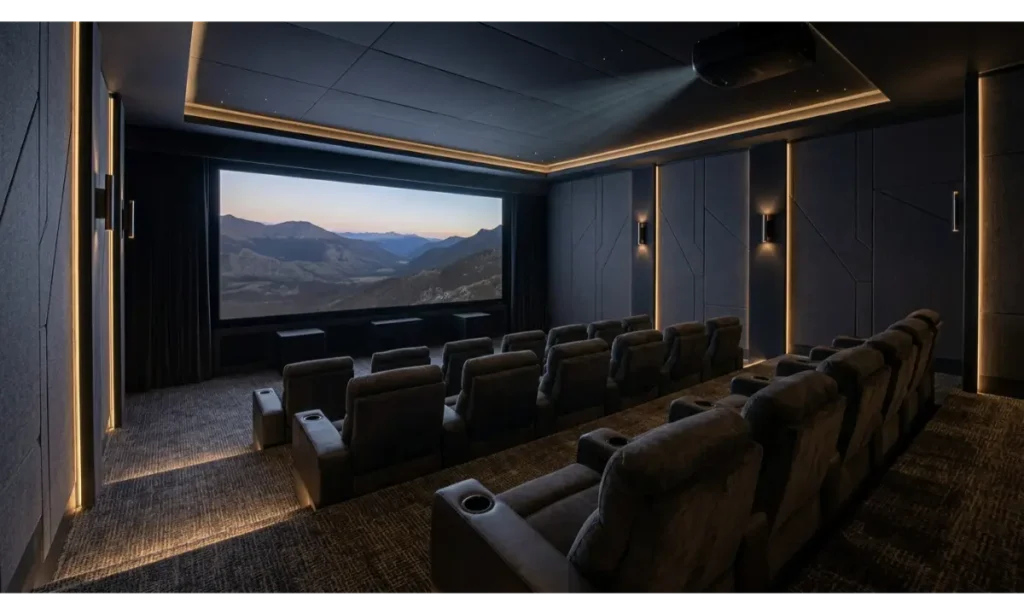
A large projector screen can deliver the big picture experience that many movie lovers want at home. It works especially well in a dedicated room where you can control daylight and position the seating at a suitable distance. Consider a retractable screen if the room serves more than one purpose, or choose a fixed screen for a permanent cinema setup. Well planned Home Theater Room Ideas focus on screen size, viewing distance, and room proportions rather than simply choosing the biggest display available.
Projector placement is just as important as screen selection. Check the projector’s throw distance, resolution, brightness, and mounting requirements before finalizing the room layout. A suitable screen surface helps maintain picture quality, while blackout curtains reduce competing light. Leave accessible space for cables and future upgrades, and avoid placing ceiling lights where they could interfere with the projected image. With the right equipment and careful positioning, a projector setup can make films, sports, and gaming feel more engaging.
Pro Tip: Confirm the projector’s throw ratio and mounting distance using the manufacturer’s specifications before drilling ceiling holes.
10. Cozy Family Movie Room
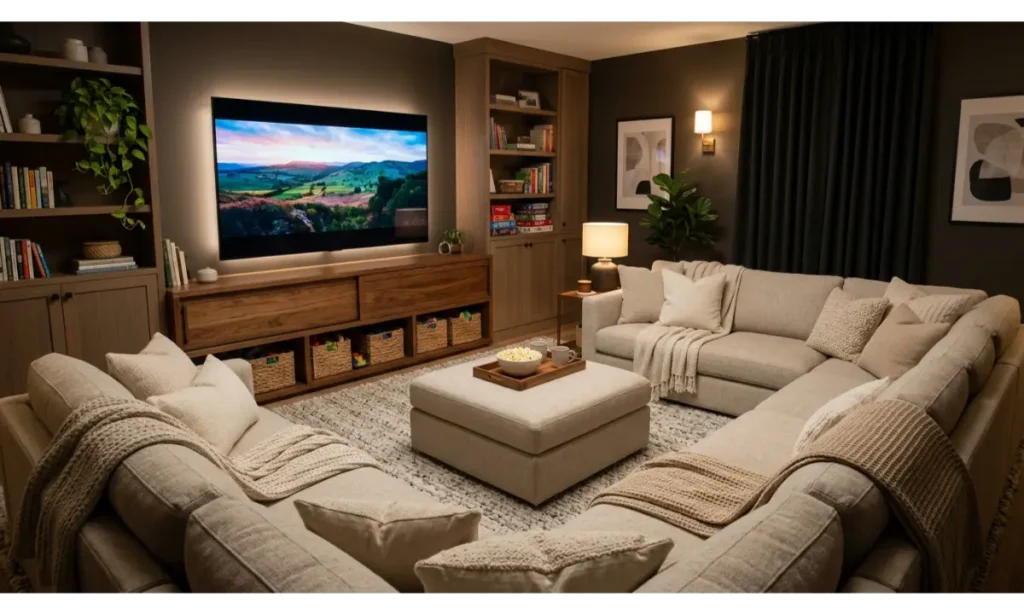
A family movie room should feel comfortable enough for everyday use, not just special occasions. A deep sectional sofa offers space to stretch out, while soft cushions and a thick rug make the room feel inviting. Choose durable fabrics that are easy to clean, especially if children use the space regularly. These Home Theater Room Ideas balance entertainment with practicality, creating a room where people can watch films, enjoy cartoons, play games, or relax together after a busy day.
Storage helps the room stay tidy without making it feel strict or formal. Use baskets or closed cabinets for blankets, board games, controllers, and movie accessories. A small snack station can keep refreshments within reach, while a washable throw protects frequently used seating. Keep walkways clear and secure loose cables so everyone can move around safely. You can introduce color through cushions or framed movie artwork, then change those accents over time without redesigning the entire room.
Pro Tip: Choose performance fabric or removable cushion covers to make cleaning easier after snacks and drinks.
11. Home Theater With Built In Shelving
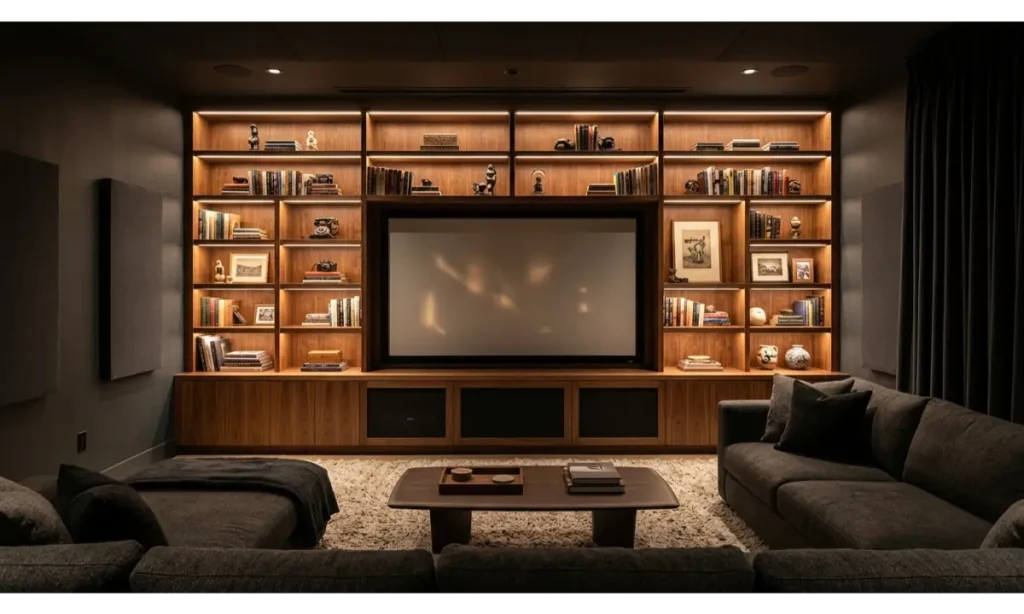
Built in shelving combines storage and design in one attractive feature. Frame the screen with custom cabinets or symmetrical shelves that hold books, collectibles, gaming accessories, and carefully selected decorations. This approach makes Home Theater Room Ideas feel more personal while giving everyday items a proper place. Walnut, oak, and painted cabinetry all work well, depending on the style of your home. Closed lower cabinets are especially useful because they hide clutter and create a clean visual base for the entertainment wall.
Plan the shelves around the equipment you actually own. Receivers, consoles, and streaming devices may need extra depth, cable access, and ventilation. Avoid filling every shelf with objects because an overcrowded wall can distract from the screen. Instead, mix a few books, framed prints, and sculptural pieces with open space. Soft integrated lighting can highlight the wood grain and display objects without making the room too bright during a movie. A balanced arrangement looks custom designed and remains practical over time.
Pro Tip: Include ventilation openings and accessible cable routes in the cabinetry design before installation.
12. Contemporary Home Theater With Acoustic Panels
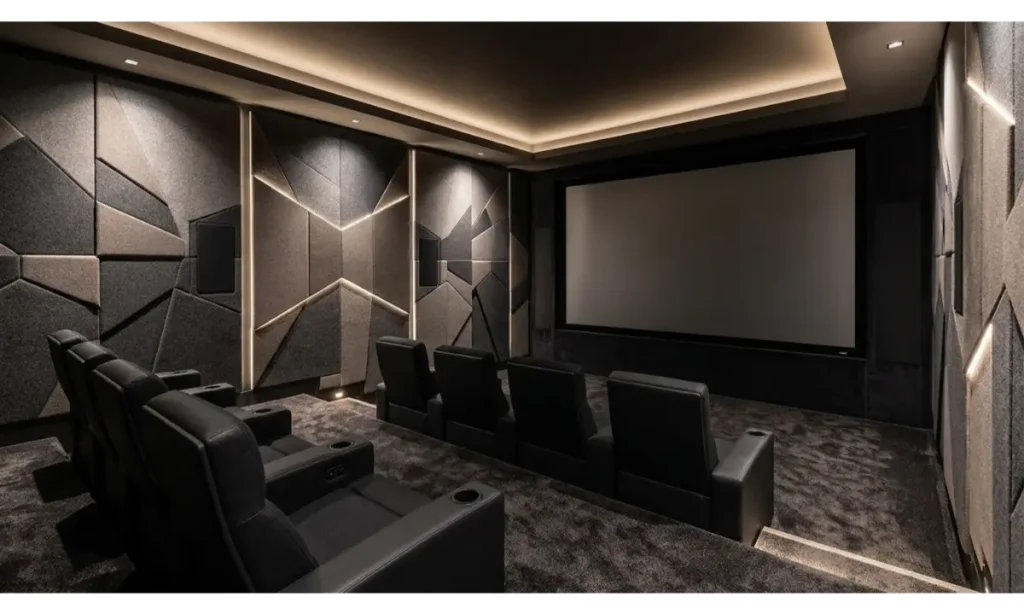
Acoustic panels can improve the listening experience while adding architectural interest to a room. Fabric covered panels, wood slats with acoustic backing, and geometric wall treatments offer different looks for modern interiors. For effective Home Theater Room Ideas, think about sound quality alongside color and furniture. A room with hard floors and bare walls may produce distracting echoes, while carefully selected soft materials can help create clearer dialogue and a more controlled sound environment.
Panel placement matters more than covering every surface. A professional can help identify reflection points and determine whether the room needs absorption, diffusion, or a combination of treatments. Pair the panels with thick curtains, a suitable rug, and properly positioned speakers. Choose colors that coordinate with your seating and screen wall so the acoustic treatment looks intentional. These details are especially valuable in dedicated cinemas, gaming rooms, and multipurpose media spaces where clear sound improves the overall experience.
Pro Tip: Address the room’s actual acoustic problems instead of buying panels based only on their appearance.
13. Small Living Room Home Theater
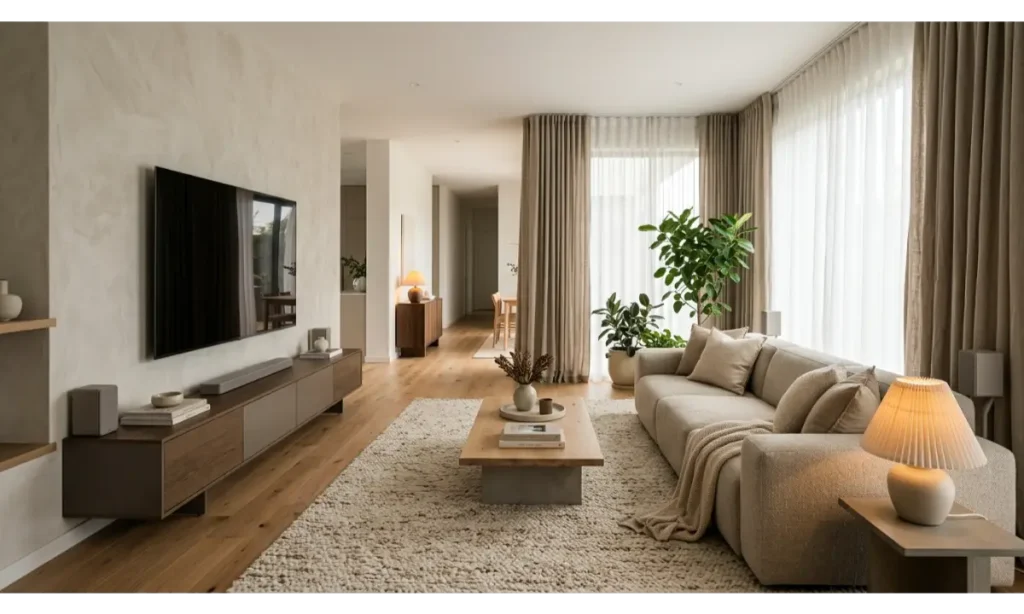
Not every home has space for a dedicated cinema, but a regular living room can still deliver an excellent viewing experience. Mount the television at a comfortable height and choose a media console that fits the wall without blocking walkways. A compact soundbar, wireless subwoofer, or discreet speaker setup can improve audio without filling the room with equipment. These Home Theater Room Ideas work well for apartments and open plan homes where the entertainment area must blend naturally with everyday living.
Use lighting and textiles to create a cinema atmosphere when needed. Layered curtains can reduce glare, while a dimmable floor lamp provides gentle light during casual viewing. Keep the sofa facing the screen and arrange nearby chairs so guests have comfortable sightlines. Closed storage makes it easier to hide remotes and cables after the movie ends. Instead of buying specialized theater furniture, choose attractive everyday pieces that provide both comfort and a polished appearance.
Pro Tip: Test your screen for window glare at different times of day before deciding where to mount it.
14. Vintage Hollywood Home Cinema
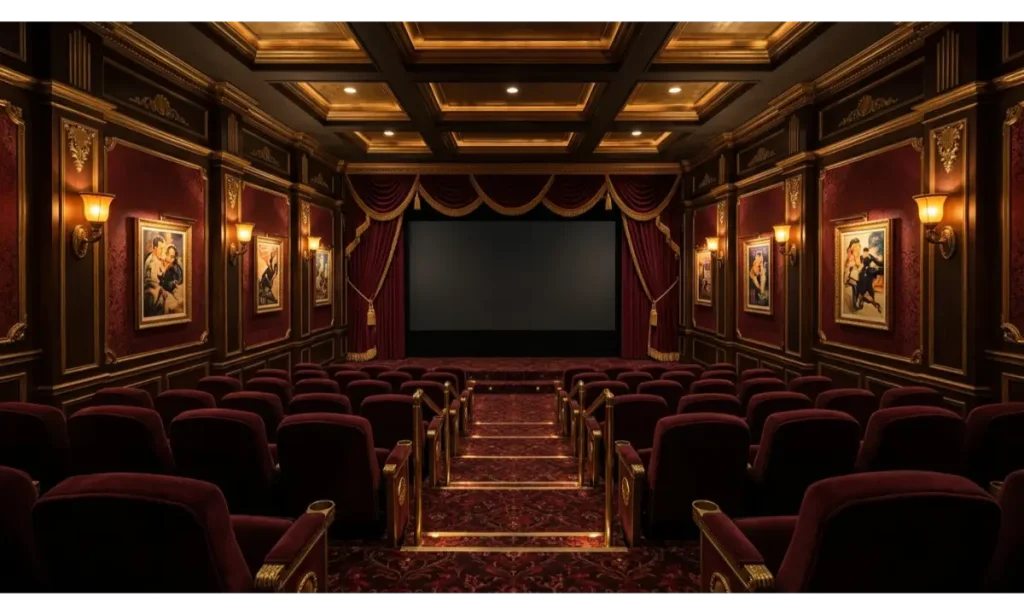
Bring the glamour of classic movie palaces into your home with rich colors and elegant decorative details. Burgundy seating, gold accents, traditional wall molding, and framed vintage film artwork create a distinctive atmosphere. This style gives Home Theater Room Ideas a sense of occasion, making the room feel special even before the opening credits begin. A dark ceiling and soft wall sconces can enhance the cinematic mood, while comfortable modern seating keeps the space practical for long films.
The key is balancing vintage character with modern technology. Use a large television or projector screen as the main focal point, and conceal speakers where possible without compromising sound. Select a few framed prints instead of covering every wall, and choose warm lighting that complements the burgundy and gold palette. A patterned carpet or decorative curtain can complete the look, but avoid too many competing details. The result should feel inspired by classic Hollywood rather than like a crowded themed restaurant.
Pro Tip: Use brass finishes and vintage style artwork as accents, keeping the screen wall visually simple.
15. Gaming and Movie Theater Combo
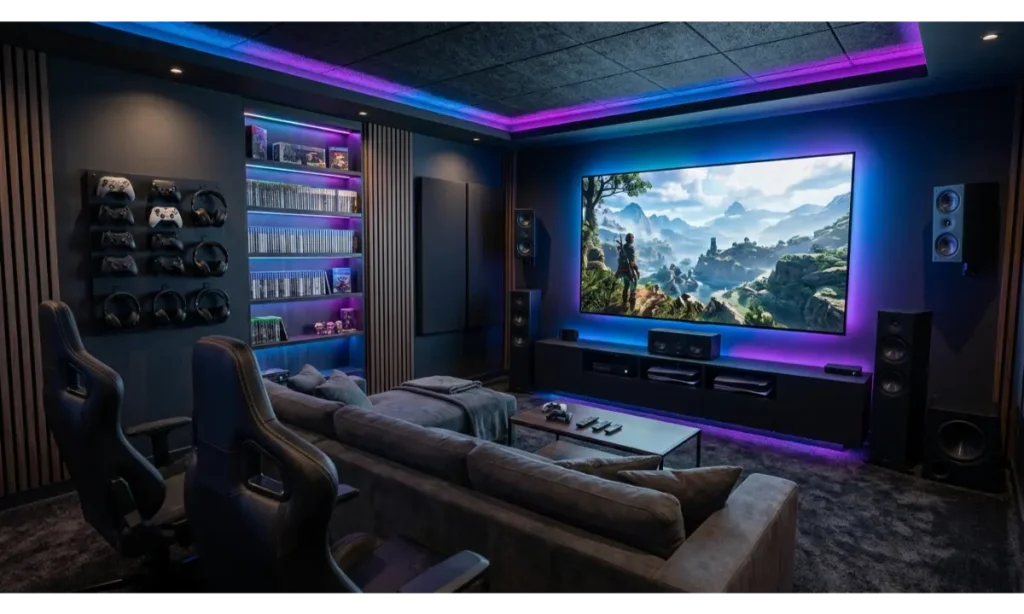
A combined gaming and movie room makes entertainment more flexible without requiring two separate spaces. Choose a large television with suitable refresh rate and low input lag for gaming, then pair it with a comfortable sofa or reclining chairs for films. These Home Theater Room Ideas can accommodate console gaming, streaming, sports, and movie nights in one organized environment. A dedicated console shelf and a convenient charging station help keep controllers, headsets, and accessories ready to use.
Lighting can distinguish gaming mode from movie mode. Programmable LEDs may provide colorful accents during games, while a softer warm setting creates a more relaxed atmosphere for films. Use cable organizers and ventilated cabinets to keep equipment tidy and prevent heat buildup. If several people use the room, provide a mixture of seating so gamers and movie watchers can sit comfortably. A practical layout should allow quick access to controllers and equipment without placing them in the main walking path.
Pro Tip: Check the television’s gaming features and available HDMI connections before connecting multiple consoles and streaming devices.
16. Elegant Neutral Home Cinema
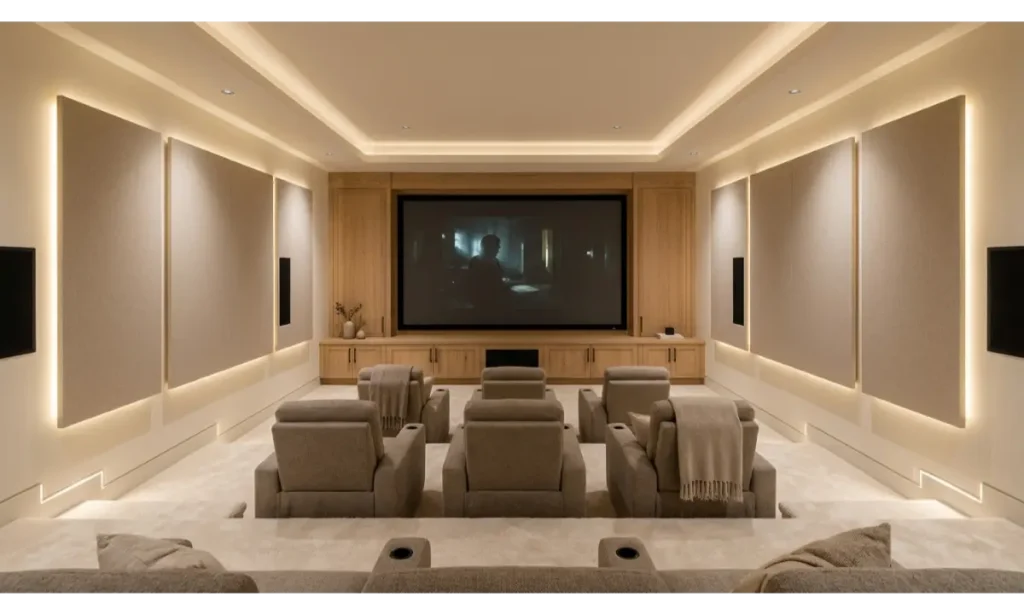
Neutral colors can make a home cinema feel luxurious without relying on dramatic black walls or bright accent lighting. Combine ivory, taupe, sand, and warm gray with natural wood and a few dark details for contrast. Among versatile Home Theater Room Ideas, this palette suits homes where the cinema should feel connected to the rest of the interior. Upholstered wall panels, soft curtains, and comfortable seating introduce texture while helping the space feel welcoming and visually balanced.
The challenge is controlling light while preserving the airy appearance. Use lined curtains or blackout shades when watching films, and choose a screen wall with a finish that minimizes reflections. A warm wood console can ground the pale colors, while concealed speakers and simple accessories maintain a clean look. If the room doubles as a lounge, add a small side table and a soft throw for everyday comfort. Neutral design remains flexible because you can refresh it with new cushions or artwork.
Pro Tip: Use a darker, low reflection finish directly behind the screen if bright neutral walls cause distracting glare.
17. Home Theater With a Raised Seating Platform
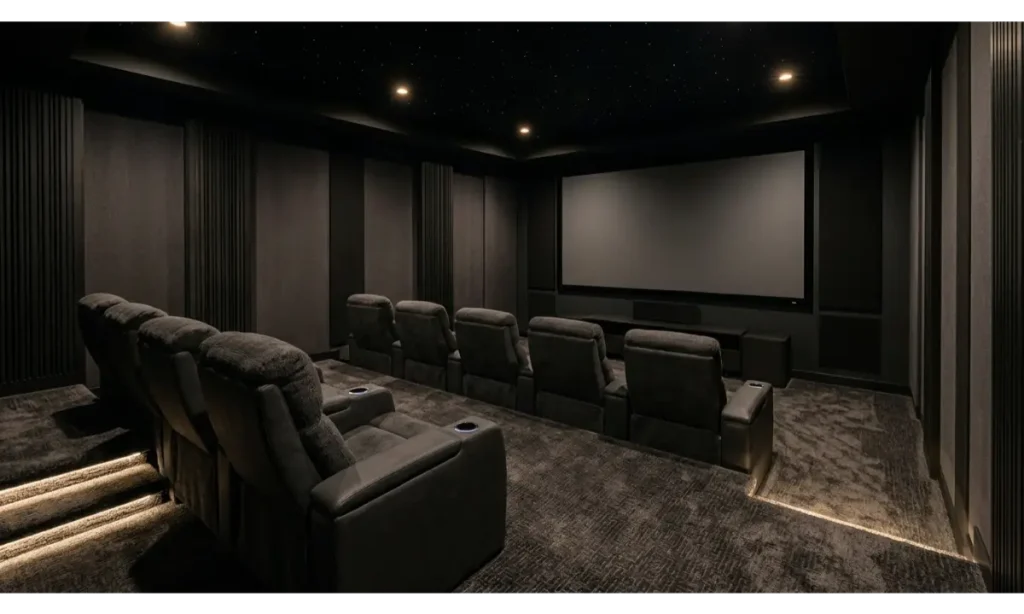
A raised seating platform can improve sightlines when your home theater has enough floor space and ceiling height. The rear row sits slightly higher, helping viewers see over the people in front. This design works particularly well in larger basements and dedicated cinema rooms with multiple rows of seats. When planning Home Theater Room Ideas around tiered seating, consider platform depth, seat recline, step access, and the position of the screen before building the structure.
The platform should feel sturdy and comfortable rather than like an afterthought. Carpet can reduce footstep noise, while subtle step lights help people navigate when the main lights are dimmed. Keep the aisles clear and make sure the platform does not interfere with doors, ventilation, or equipment access. The correct height depends on the screen size, seating arrangement, and viewing angles, so measure carefully or consult a professional. Good planning can make the entire room feel more like a purpose built cinema.
Pro Tip: Confirm viewing sightlines from every seat before fixing the platform height or position.
18. Rustic Wood Accent Home Theater
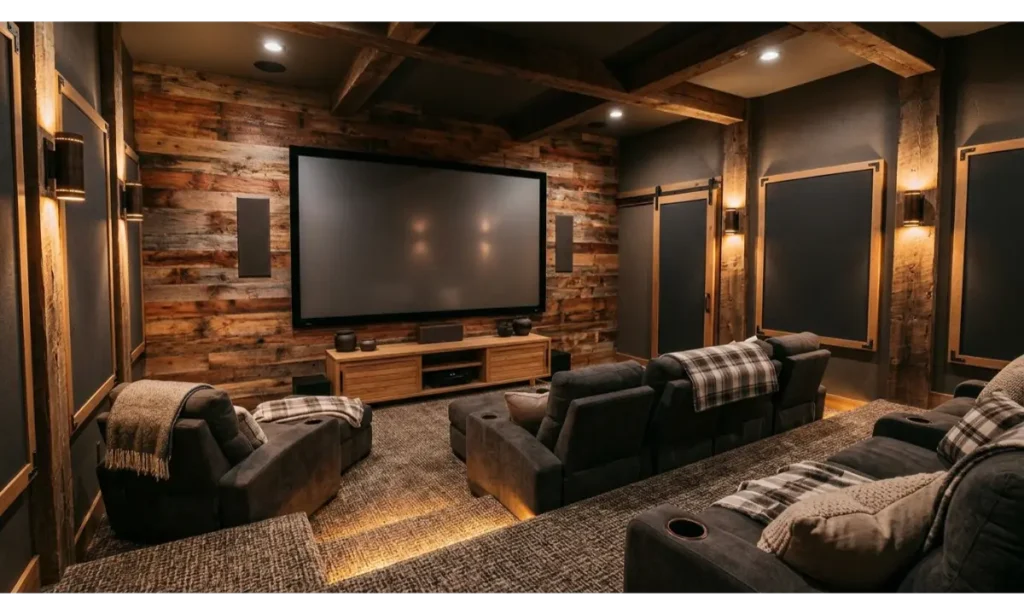
Natural wood adds warmth and character to a theater room. A reclaimed wood accent wall, oak console, or timber ceiling detail can soften the appearance of dark equipment and modern screens. This is one of the most inviting Home Theater Room Ideas for homeowners who enjoy rustic, cabin inspired, or organic modern interiors. Pair the wood with charcoal, cream, or muted brown upholstery to create contrast while keeping the space comfortable and visually cohesive.
Use wood selectively so the room does not become too visually busy. A single accent wall behind the seating or around the media area may provide enough texture. Combine it with soft carpet, curtains, and fabric covered panels to balance the harder surfaces. Warm lighting enhances the grain and creates a relaxed atmosphere for evening viewing. If you prefer a cleaner modern style, choose smooth oak panels and simple furniture instead of heavily distressed finishes. The result can feel both natural and sophisticated.
Pro Tip: Test wood samples beside your flooring and furniture because undertones can look different under warm artificial light.
19. Home Theater With Hidden Speakers and Equipment
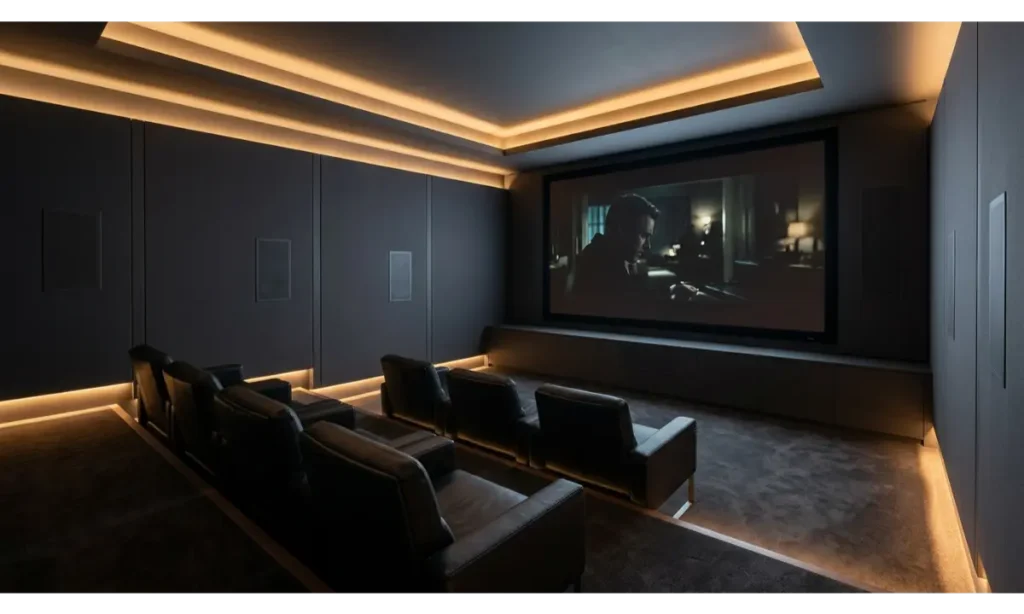
A clean screen wall creates a sophisticated appearance by keeping visible technology to a minimum. In wall speakers, concealed wiring, and closed cabinets can make the room feel organized and uncluttered. This approach suits modern homes where electronics should blend into the architecture. Well designed Home Theater Room Ideas consider the equipment layout early so the screen, speakers, ventilation, and storage work together rather than requiring visible fixes after installation.
Hidden equipment still needs easy access for maintenance and upgrades. Provide adequate ventilation for receivers and consoles, and make sure cabinet doors do not block signals or airflow. In wall speakers should be selected and installed with the wall construction and room acoustics in mind. If you prefer not to open the walls, compact speakers and a cable concealer can produce a similar tidy effect. Either way, the goal is a room where technology supports the experience without dominating the design.
Pro Tip: Draw a complete equipment and wiring plan before closing walls or ordering custom cabinetry.
20. Home Theater With a Snack and Popcorn Station
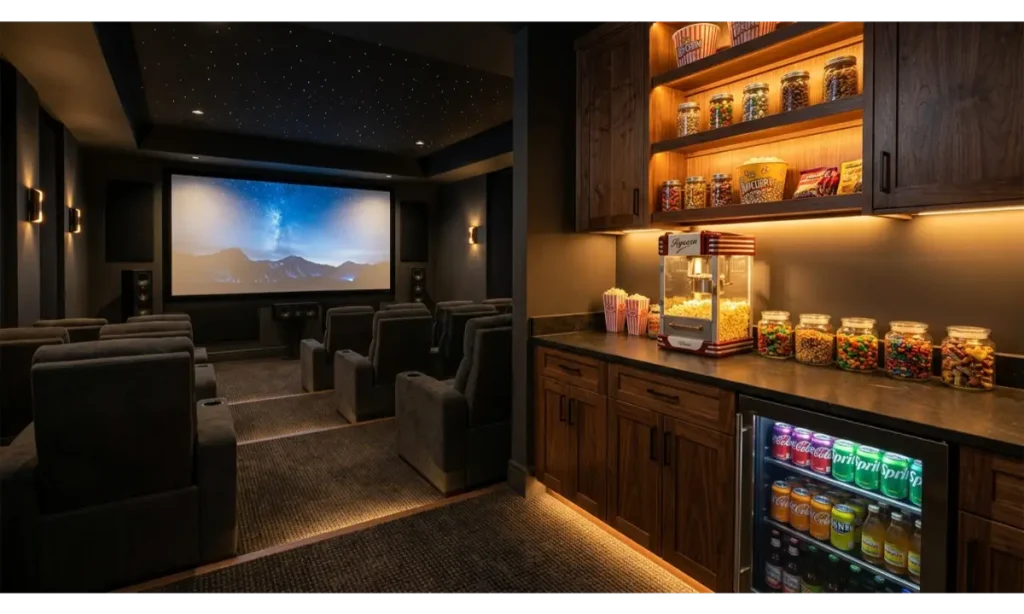
A dedicated snack station makes movie nights feel more organized and fun. Use a compact cabinet, countertop, or small bar area for popcorn, drinks, candy, and serving bowls. These Home Theater Room Ideas work especially well for families and people who often invite friends over. Choose storage that suits your available space, from a simple rolling cart to a built in cabinet with a small refrigerator. Keeping refreshments in one place reduces trips to the kitchen during the film.
Think about cleanup and noise when choosing equipment. A popcorn maker may be ideal for a spacious theater, while a covered snack container and drink tray work better in a compact room. Wipeable countertops and closed storage help prevent crumbs and spills from becoming a problem. If possible, place the snack station near the entrance rather than beside the main seating area. This keeps movement away from the screen and helps viewers settle in before the movie begins.
Pro Tip: Store snacks in sealed containers and use washable trays to make post movie cleanup quick.
21. Scandinavian Inspired Home Theater
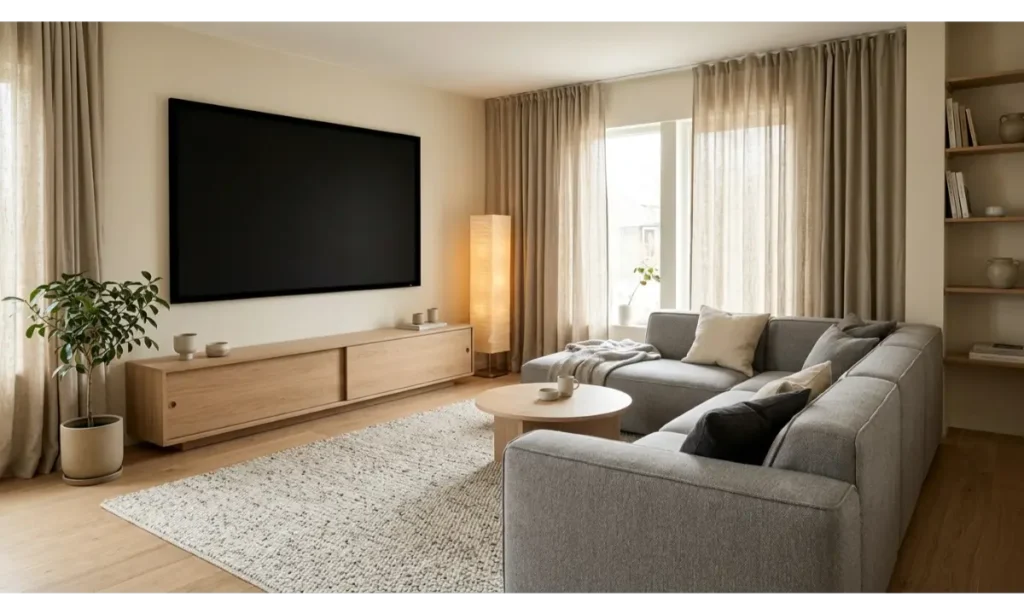
Scandinavian design combines simplicity, natural materials, and everyday comfort. Pale oak, soft gray, cream, and muted earthy colors create a calm backdrop for a screen and sound system. This style is ideal for homeowners who want a cinema that feels like a natural extension of their living space. These Home Theater Room Ideas favor functional furniture, uncluttered surfaces, and layered textures rather than heavy ornamentation or overly dramatic finishes.
Comfort comes from thoughtful choices rather than excess decoration. A supportive sofa, wool style rug, lined curtains, and warm dimmable lamps make the room pleasant for everyday use. Add closed storage for devices and a few carefully selected objects to give the space personality. For better viewing, control daylight with curtains or blinds and position the screen to avoid direct reflections. A Scandinavian inspired theater can feel light and relaxed during the day while still becoming a cozy entertainment space in the evening.
Pro Tip: Combine several soft textures in similar colors to create depth without cluttering the room.
22. Home Theater With Movie Poster Gallery Walls
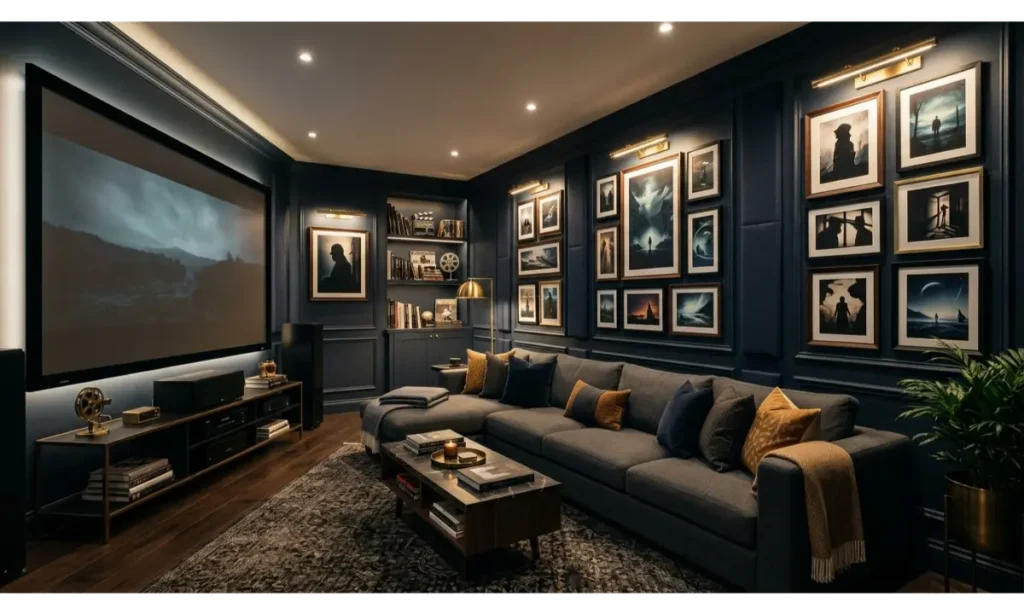
A gallery wall lets you show your love of cinema while adding personality to a theater room. Choose framed film artwork, photography, or illustrations that share a color palette or visual style. Black frames create a modern look, while warm wood frames suit rustic and farmhouse interiors. This design gives Home Theater Room Ideas a personal touch without requiring expensive construction. The artwork can tell a story about your favorite genres, directors, or memorable movie experiences.
Plan the arrangement before hanging anything. Lay the frames on the floor first, maintain consistent spacing, and keep artwork away from areas where it could distract from the screen. If you want a traditional cinema mood, use a few larger pieces with warm picture lighting. For a modern appearance, choose a symmetrical grid with matching frames. Make sure any glass surfaces do not reflect the screen or nearby lights, especially when the gallery wall sits opposite the viewing area.
Pro Tip: Use lightweight frames and secure hanging hardware, especially in a room where children may move furniture around.
23. Smart Home Theater With One Touch Controls
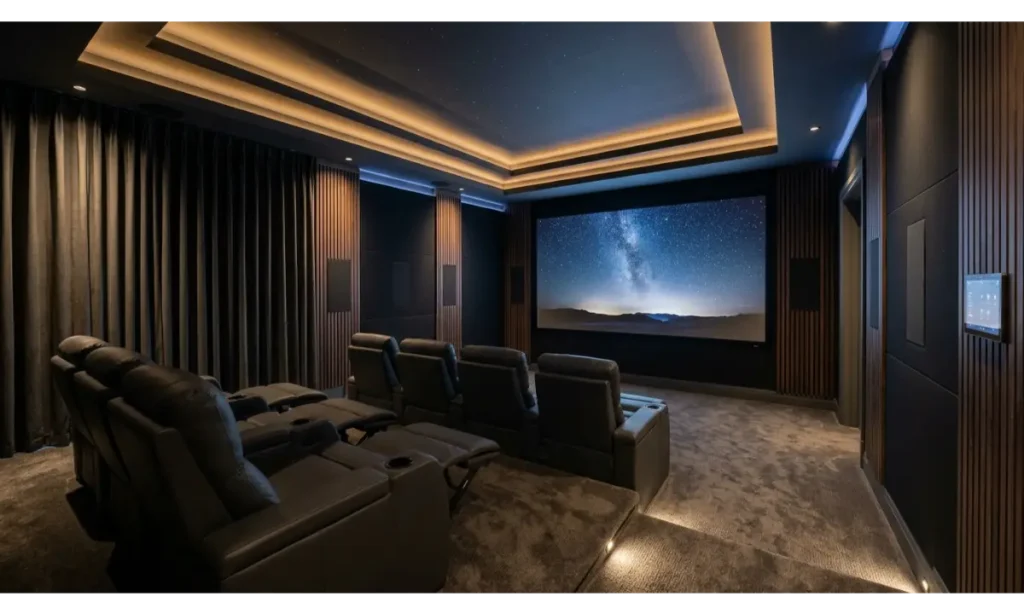
Smart controls can make a home cinema easier to use by connecting several functions in one place. Depending on your equipment, a single command can dim the lights, close motorized curtains, and turn on the display and audio system. These Home Theater Room Ideas are especially useful for dedicated rooms where multiple remotes can become frustrating. You can also create separate settings for movies, gaming, sports, and everyday television so the room adapts to different activities.
Start with a reliable setup rather than buying every smart device at once. Check that your television, receiver, lighting, and curtains support the same control system or compatible integrations. Keep a simple manual option available in case the network or automation system stops working. Good cable management, accessible equipment, and clear labeling make troubleshooting easier. With thoughtful planning, automation can remove small hassles and help the entire room feel polished without making it complicated to operate.
Pro Tip: Test compatibility between your existing devices before investing in a complete smart home theater system.
Frequently Asked Questions
What is the best color for a home theater room?
Dark charcoal, navy, deep brown, and muted green are popular choices for dedicated cinemas because they can reduce distracting reflections. Warm neutrals also work well in multipurpose rooms. Choose a color that suits your furniture and lighting, and consider a darker finish around the screen if glare is a problem.
How much space do I need for a home theater?
The amount of space depends on the screen, seating, equipment, and number of viewers. A small room can work with a television and a compact sofa, while a dedicated theater with multiple rows needs more depth and careful planning. Measure your room and test the viewing distance before purchasing equipment.
Is a projector better than a television for a home theater?
A projector can create a very large image and a traditional cinema feel, especially in a dark room. A television usually offers stronger performance in brighter spaces and may be easier to install. The better choice depends on your budget, room lighting, desired screen size, and viewing habits.
How can I improve home theater sound?
Start by positioning the speakers correctly and choosing equipment suited to the room. Rugs, curtains, upholstered furniture, and suitable acoustic treatments can help manage reflections. A subwoofer adds low frequency impact, while a properly configured surround sound system can improve immersion. Room correction and professional calibration may also help.
What lighting works best in a home theater?
Dimmable indirect lighting usually works best. Consider recessed lights, concealed LED strips, wall sconces, and low level aisle lighting. Position lights to avoid screen glare and choose separate settings for cleaning, entertaining, and movie viewing. Smart controls can make it easier to switch between these modes.
How can I create a home theater on a budget?
Start with a good television or affordable projector, comfortable existing seating, blackout curtains, and organized cables. Add a soundbar or entry level speaker system when your budget allows. Paint, lighting, and a simple media console can transform the room without requiring expensive custom construction.
Do I need acoustic panels in my home theater?
Not every room needs dedicated acoustic panels. Soft furnishings and curtains may provide enough control for casual viewing, while rooms with noticeable echoes or demanding surround sound setups may benefit from targeted treatment. Identify the room’s acoustic issues before buying panels, because placement and material matter.
What furniture is essential for a home theater?
Comfortable seating is the main priority. Depending on the space, you may also want a media console, side tables, a storage cabinet, and a small snack station. Choose furniture that preserves clear walkways and provides easy access to the screen, speakers, and other equipment.
How do I make a home theater suitable for the whole family?
Choose durable seating, washable fabrics, safe cable management, accessible storage, and lighting that allows people to move around easily. A sectional sofa or a combination of recliners and flexible seating can accommodate different ages. Keep snacks and accessories organized to make family movie nights more comfortable.
What should I plan before building a dedicated home theater?
Measure the room and plan screen size, viewing distance, seating, speaker locations, lighting, wiring, ventilation, and equipment storage. If you are converting a basement, check for moisture and insulation issues first. Planning these details before construction helps avoid costly changes later.
Conclusion
The best Home Theater Room Ideas bring together comfort, technology, lighting, and personal style to create a space you genuinely enjoy using. Whether you prefer a luxurious cinema with reclining seats, a cozy modern farmhouse room, a compact living room setup, or a smart entertainment space, the right design depends on your available space and everyday needs.
Start with the essentials: comfortable seating, a suitable screen, clear sound, and lighting you can control. Then add the details that make the room yours, such as acoustic panels, wood accents, movie artwork, or a snack station. You do not need an enormous budget or a dedicated basement to create a memorable movie night. With thoughtful planning, these Home Theater Room Ideas can help you turn an ordinary room into a welcoming entertainment space for family, friends, and your favorite films.