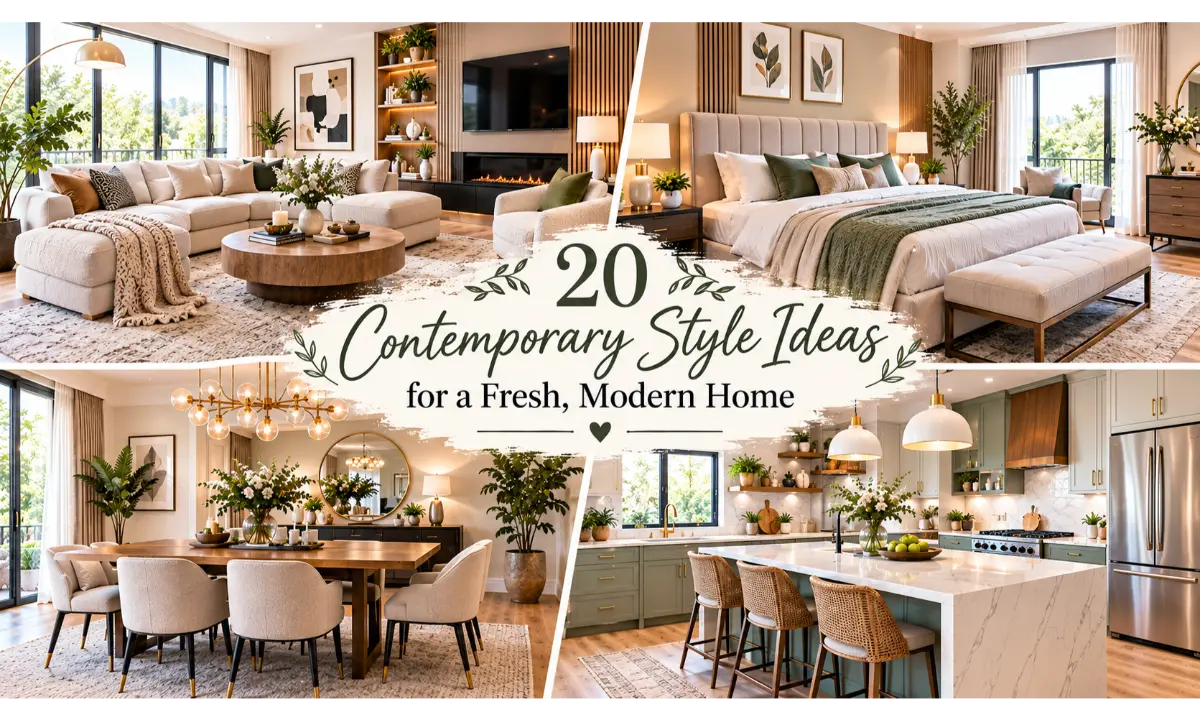
20 Contemporary Style Ideas for a Fresh, Modern Home
A beautiful home does not need to feel overly decorated to make a strong impression. Contemporary Style brings together clean lines, comfortable furniture, natural materials, thoughtful lighting, and carefully chosen accents to create spaces that feel fresh without becoming cold. Whether you are updating one room or planning a complete home makeover, these ideas can help you create an inviting interior with a polished modern character.
The best contemporary interiors balance beauty with everyday function. Warm wood, soft textiles, sculptural furniture, earthy colors, greenery, and personal artwork can make a clean space feel comfortable and full of personality. The following ideas offer practical inspiration for creating a modern home that looks stylish while still feeling genuinely livable.
Fresh Contemporary Ideas for Every Room
1. Contemporary Style With Warm Neutral Layers
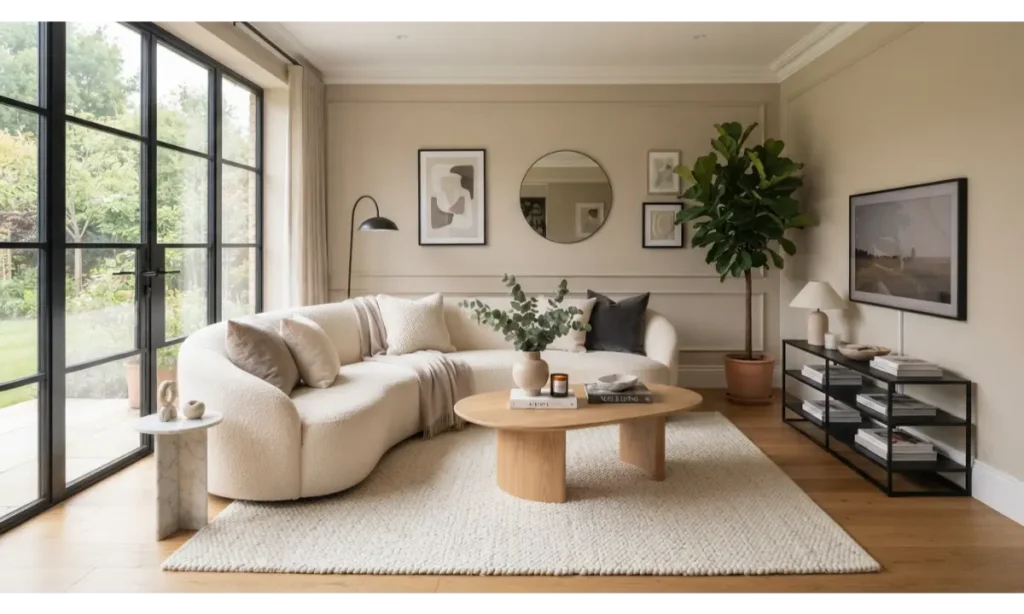
Warm neutrals create an elegant foundation for Contemporary Style. Instead of decorating with only one beige shade, combine cream, warm white, taupe, soft brown, and subtle greige. This creates gentle contrast while keeping the room calm. Add a textured rug, linen cushions, and a natural wood coffee table to introduce depth. The combination feels polished but comfortable, making it easy to enjoy the room every day without creating a formal showroom appearance.
Texture becomes especially important when several colors remain close together. Pair smooth walls with woven fabrics, natural timber, soft upholstery, and handcrafted ceramics. Large windows can brighten the palette, while small black or bronze accents can give the room sharper definition. This approach creates a warm modern interior that feels sophisticated without looking overly decorated. It also gives you flexibility because you can easily refresh the room with new cushions or artwork.
Pro Tip: Use several shades from the same warm neutral family instead of using one color everywhere. Small tonal differences make the room feel richer.
2. Make Sculptural Furniture the Focal Point
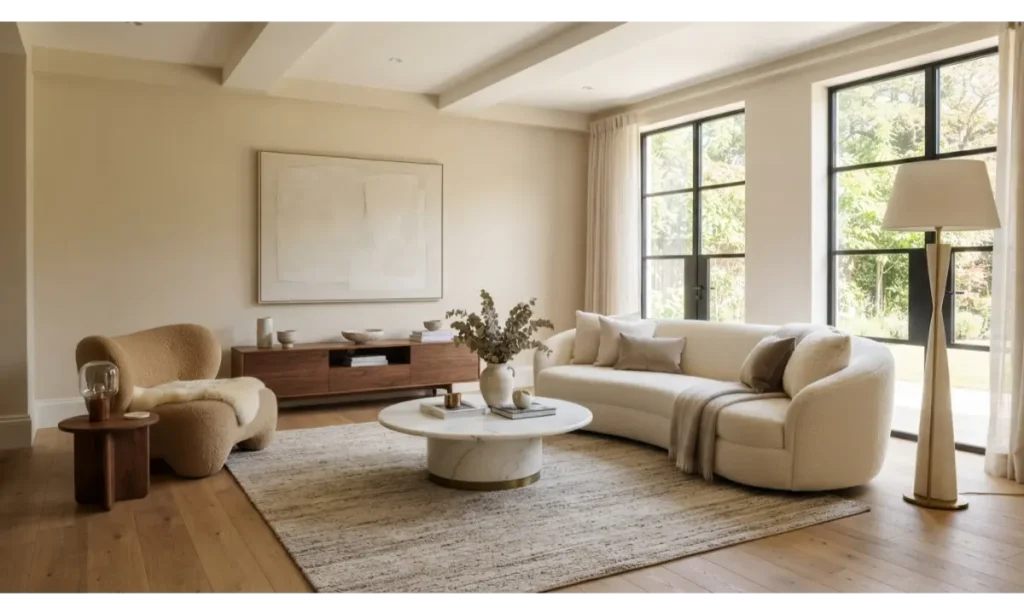
Sculptural furniture can instantly give a room a distinctive modern personality. A curved sofa, rounded coffee table, organic accent chair, or unusual side table can become the main visual feature. Choose one strong shape instead of filling the room with competing designs. Keeping the surrounding furniture simple allows the sculptural piece to stand out while maintaining a balanced and sophisticated atmosphere.
Natural materials can make sculptural furniture feel warmer and more approachable. Combine curved upholstery with walnut, oak, stone, or ceramic surfaces for a layered appearance. A rounded chair beside a straight console can create an attractive contrast between soft and structured forms. This method works especially well in living rooms because it adds visual interest without depending on excessive accessories or bold patterns.
Pro Tip: Let one sculptural piece lead the room. Too many unusual shapes can make the space feel visually busy.
Read More: 23 Boho Living Room Designs for a Cozy, Stylish Home
3. Add Natural Wood for Warmth
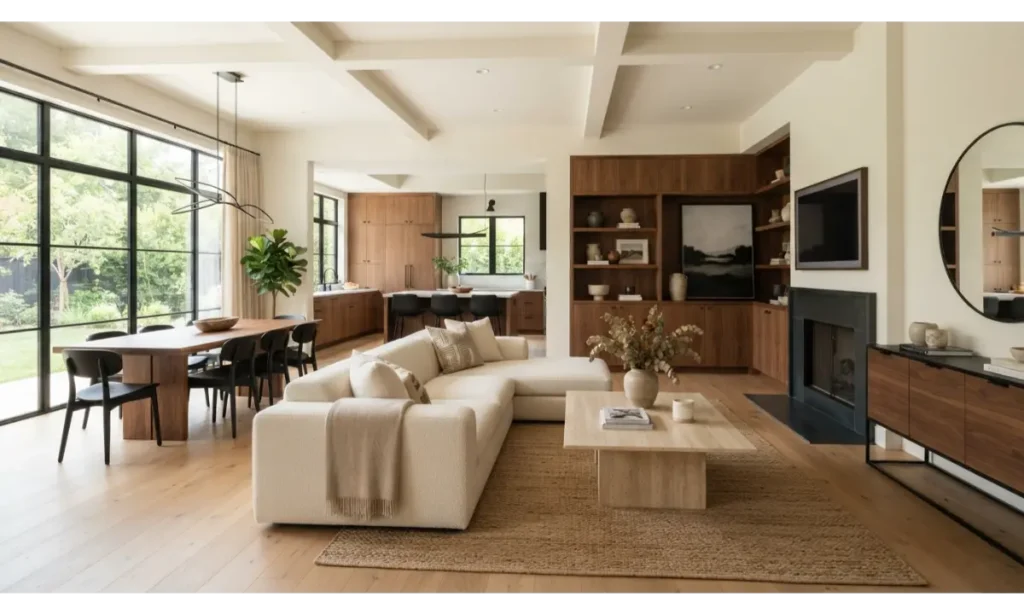
Natural wood adds warmth to a clean interior and helps prevent neutral rooms from feeling sterile. Walnut, oak, ash, and other wood tones can appear through flooring, shelving, cabinetry, coffee tables, consoles, or accent chairs. You do not need wood on every surface. A carefully chosen walnut cabinet or oak table can provide enough warmth to balance lighter walls and upholstery.
Wood also creates an appealing contrast with stone, glass, metal, and smooth painted surfaces. Try pairing a visible wood grain with a creamy stone table and soft fabric seating. This combination produces a warm modern aesthetic while keeping the overall room simple. Natural materials also add subtle visual variation, which can make minimalist spaces feel more comfortable and less predictable.
Pro Tip: Choose one main wood tone and repeat it in several areas so the room feels connected rather than mismatched.
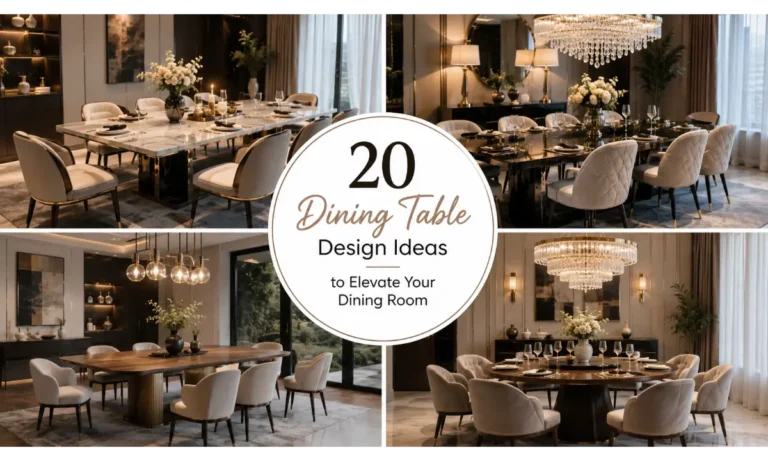
4. Install a Statement Dining Pendant
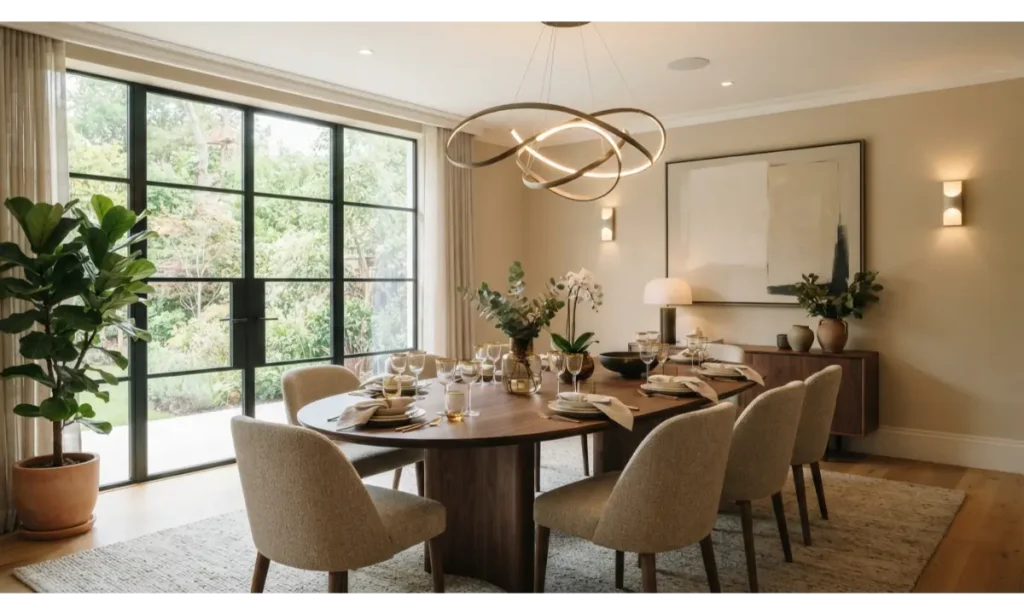
A statement pendant can transform an ordinary dining room into a memorable space. Choose a sculptural fixture with an interesting silhouette, textured glass, natural material, or refined metal finish. Hang it above the dining table so the light visually connects the upper and lower parts of the room. A distinctive fixture can provide personality without requiring numerous decorative accessories.
Keep the furniture underneath relatively simple so the lighting remains the star. An oval or rectangular table, comfortable dining chairs, and one understated artwork can complete the setting. Combine the pendant with natural daylight and softer secondary lighting for flexibility. This creates a dining room that feels suitable for both everyday meals and relaxed gatherings with family or friends.
Pro Tip: Position the pendant carefully so it creates intimacy without blocking eye contact across the dining table.
5. Use Black Accents for Strong Contrast
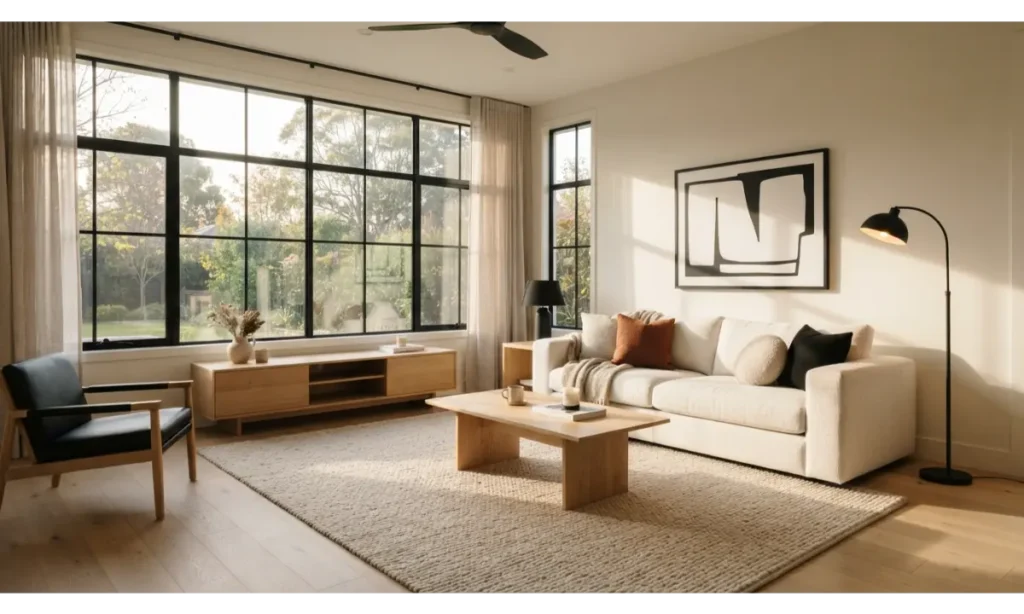
Black accents can give a soft neutral room stronger definition. Use black through window frames, lighting, furniture legs, picture frames, handles, or a single sculptural accessory. Against warm white, cream, beige, or light wood, black creates crisp contrast and makes important architectural features more noticeable.
The goal is controlled contrast rather than a dark room. Repeat small black details in different areas so they feel connected. Natural wood and soft textiles can balance the stronger visual effect. This combination creates modern minimalist decor with enough structure to keep a neutral interior from looking flat or unfinished.
Pro Tip: Repeat black in two or three small areas rather than placing one large dark object in an otherwise pale room.
Read More: 20 Dining Table Design Ideas to Elevate Your Dining Room
6. Layer Different Types of Lighting
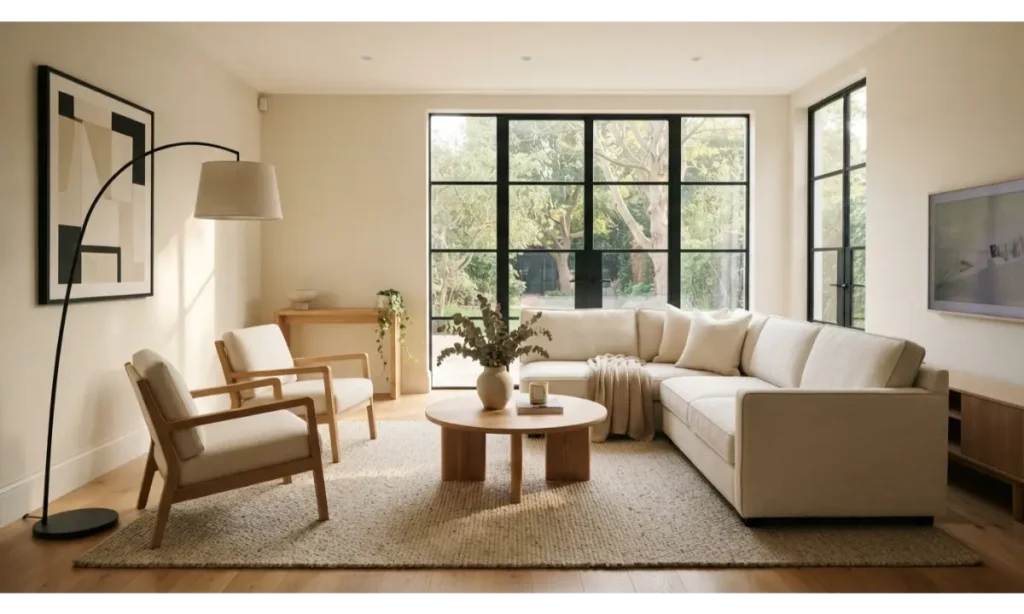
Lighting has a major influence on how a room looks and feels. Instead of depending on one bright ceiling fixture, combine recessed lights, floor lamps, table lamps, wall lights, and decorative fixtures. Each source can serve a different purpose. General lighting illuminates the room, task lighting supports activities, and accent lighting can highlight artwork or architectural details.
The fixtures themselves can become part of the design. A sculptural lamp on a console can act like a decorative object, while a slim floor lamp can fill an empty corner without adding clutter. Warm lighting generally helps wood, beige, cream, and textured fabrics feel more inviting. Layered lighting also lets the same room change atmosphere from daytime to evening.
Pro Tip: Choose dimmable lighting when possible so you can easily adjust brightness according to the activity and time of day.
7. Mix Stone With Natural Wood
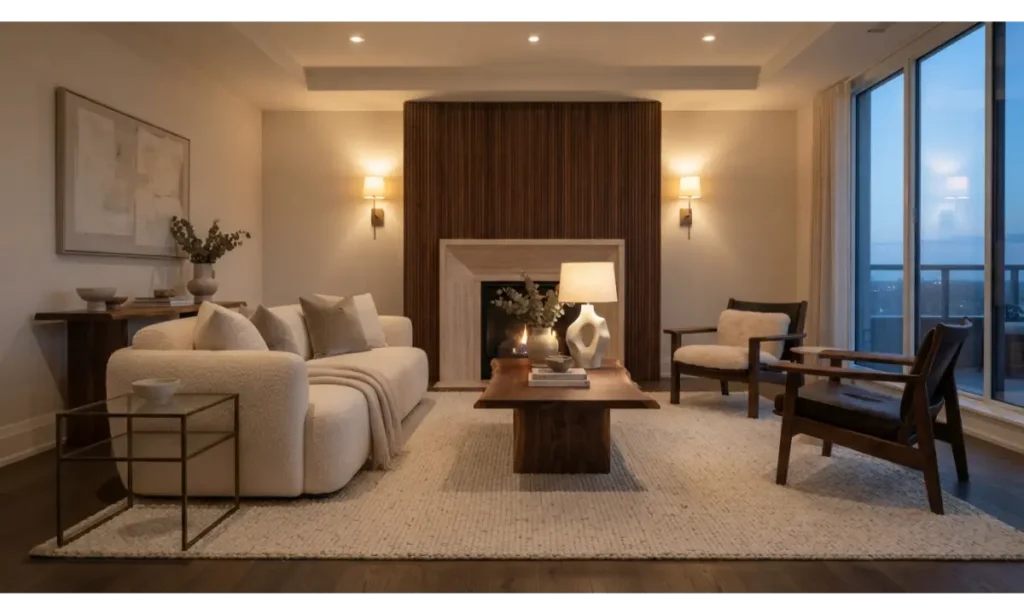
Stone and wood create a beautiful balance between cool and warm materials. Use stone for a coffee table, fireplace surround, kitchen island, bathroom surface, or console top, then introduce wood through cabinetry and furniture. Travertine, limestone, marble, and similar natural surfaces can bring subtle variation while wood adds warmth and comfort.
The most effective rooms allow these materials to remain visible rather than covering them with excessive decoration. Add linen curtains, wool rugs, woven accessories, or soft upholstery to balance harder surfaces. This creates an organic modern design that feels current while still connected to natural materials. The contrast also gives a simple neutral palette more depth.
Pro Tip: Let one material dominate and use the second as a supporting element to create a clear visual hierarchy.
8. Keep the Living Room Open and Airy
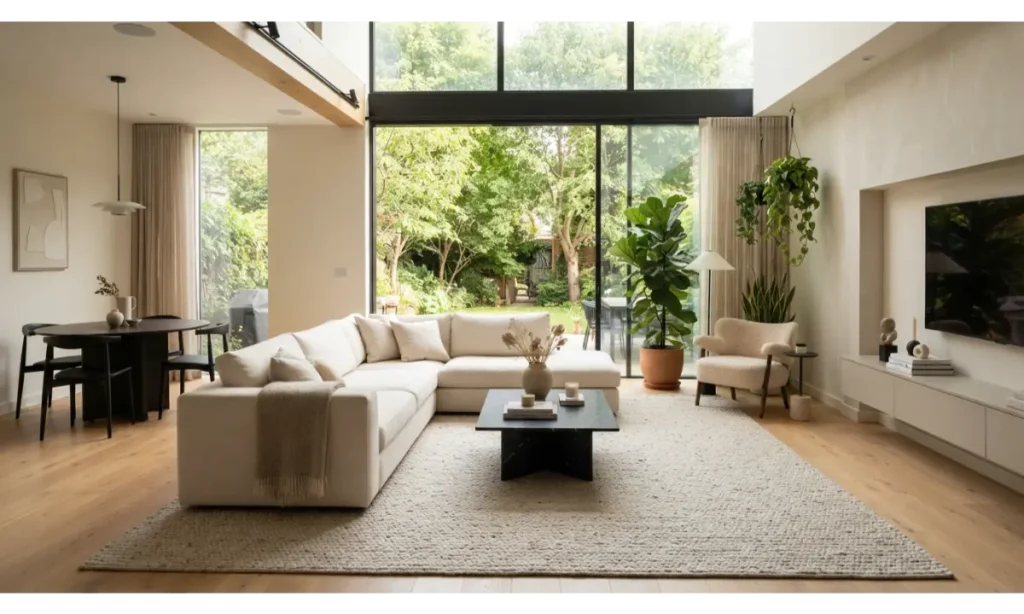
An open living room looks more sophisticated when furniture supports the architecture instead of blocking it. Choose furniture that fits the scale of the room and keep major walking paths clear. A streamlined sofa, slim console, low coffee table, and carefully positioned chairs can define the living area without making it feel crowded.
Avoid decorating every empty corner simply because space is available. Negative space allows important furniture and architectural features to remain visible. Light flooring, large windows, simple colors, and limited clutter can strengthen the feeling of openness. The goal is not to create an empty room but to give each major element enough space to breathe.
Pro Tip: Measure walking paths before buying furniture. A stylish room should also feel comfortable and practical to move through.
9. Choose a Curved Sofa
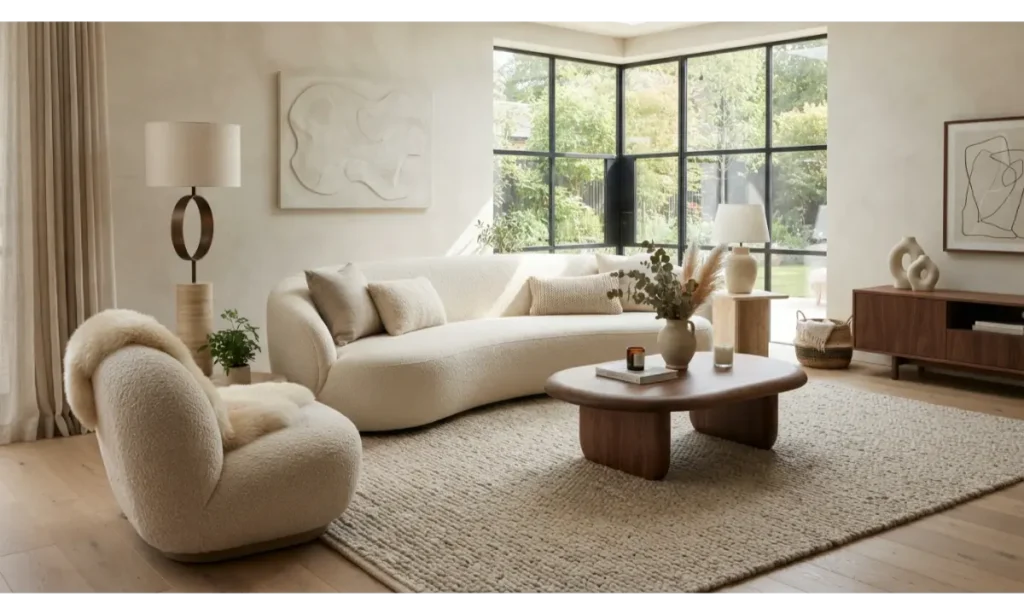
A curved sofa can soften the strong architectural lines found in modern homes. Its rounded silhouette creates movement and makes a seating area feel more relaxed. Choose a simple fabric in cream, beige, taupe, or another understated color so the shape remains the main feature. Pair it with a rounded or oval table to reinforce the gentle visual rhythm.
Curved furniture works best when the surrounding pieces remain relatively simple. Too many unusual shapes can compete for attention, but one strong curved sofa can create an intentional focal point. Soft upholstery also balances harder materials such as glass, stone, wood, and metal. The result is a living room that feels modern while remaining comfortable and welcoming.
Pro Tip: Leave enough open space around a curved sofa so its silhouette remains visible from different angles.
10. Hang One Large Artwork
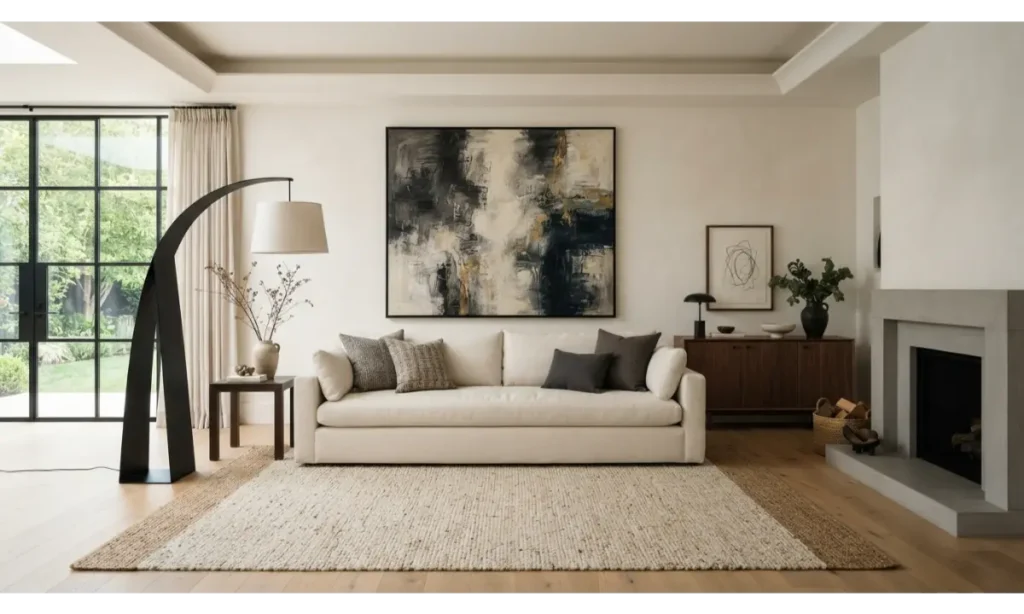
One large artwork can give a contemporary room personality without filling every wall. Choose an abstract painting, photographic print, textile artwork, or sculptural wall piece that adds character. Deeper colors such as rust, olive, navy, charcoal, or muted terracotta can create contrast against a neutral background.
A large artwork also gives you a simple color story to build around. Pick one or two tones from the artwork and repeat them subtly through cushions, ceramics, or a small accent chair. This creates connection without requiring everything to match. Personal artwork can also prevent a polished modern home from feeling generic.
Pro Tip: Give large artwork enough empty wall space around it. Breathing room helps the piece become a true focal point.
11. Add Texture to the Walls
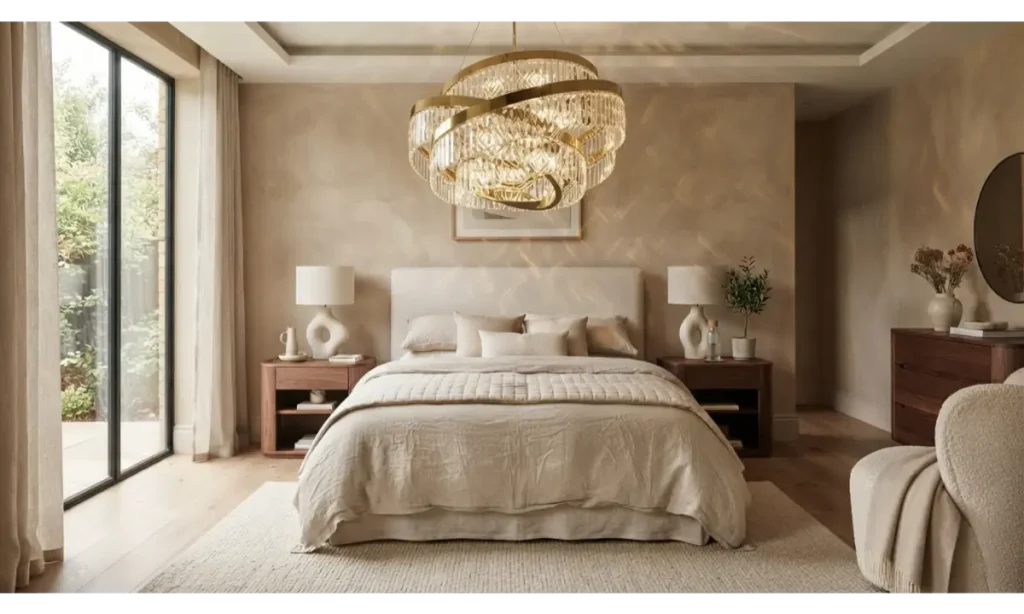
Textured walls can add depth without introducing complicated patterns. Plaster inspired finishes, subtle paneling, textured wallpaper, limewash effects, or natural stone can create an interesting backdrop for simple furniture. The wall becomes visually appealing through its surface rather than through excessive decoration. This approach works especially well in bedrooms, dining rooms, living spaces, and entryways.
Keep surrounding colors relatively calm so the wall texture remains noticeable. Linen, wool, wood, and matte ceramics can reinforce the tactile feeling without competing with it. When a room uses mostly neutral colors, texture becomes one of the main ways to create visual richness and prevent the space from appearing flat.
Pro Tip: Test a wall finish in both daylight and artificial light before committing because texture can change dramatically throughout the day.
12. Bring in Natural Greenery
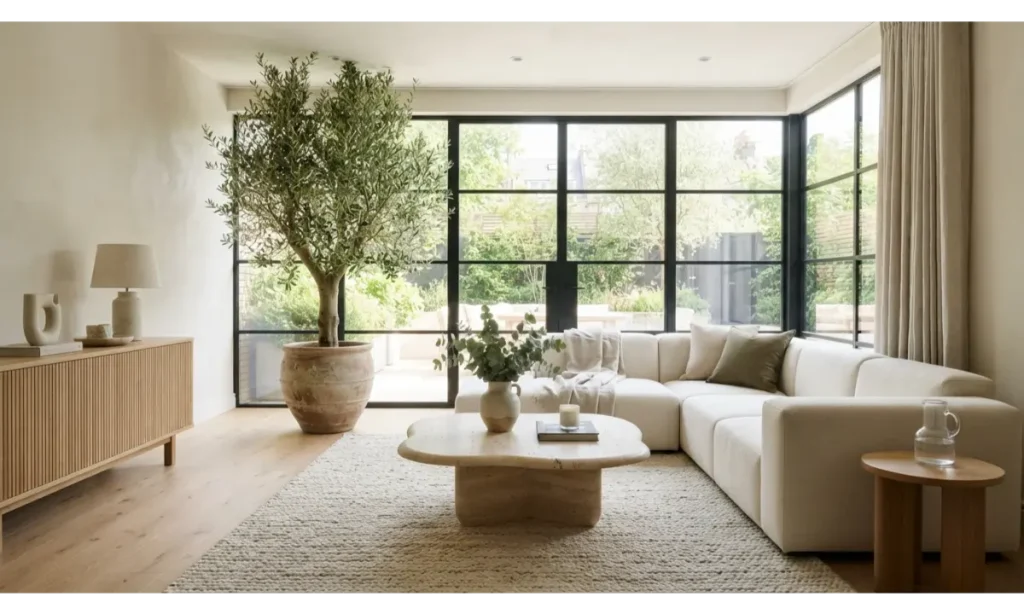
Plants can soften a clean modern interior and introduce natural color. A large indoor tree can fill an empty corner, while a few smaller plants can add life to shelves or consoles. Choose simple planters made from ceramic, stone, terracotta, or woven materials. The aim is to use greenery as an intentional design element rather than filling every available surface with plants.
Greenery looks especially attractive against warm neutrals, natural wood, and stone. The organic shapes of leaves contrast with straight furniture and architectural forms. Choose plants according to the amount of natural light available so they remain healthy. A single thriving plant can make a stronger impression than several small plants that struggle in unsuitable conditions.
Pro Tip: Use one large plant as a focal point instead of scattering many tiny plants throughout the room.
13. Create a Streamlined Contemporary Kitchen
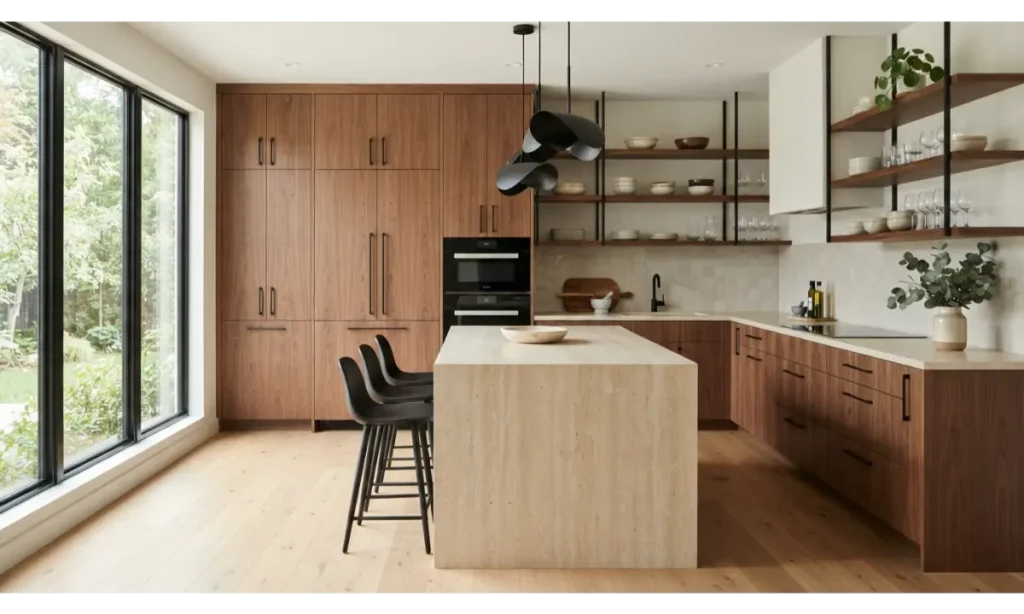
Flat panel cabinetry gives a kitchen a clean and streamlined appearance. Warm walnut, light oak, soft beige, matte white, or muted green can create a sophisticated foundation. Pair the cabinets with simple stone counters and restrained hardware. Integrated appliances can help reduce visual noise and allow the materials and architecture to remain the main focus.
Do not make every surface identical. A small contrast in texture can give the kitchen more personality. Smooth cabinets can work beautifully with natural stone, wood flooring, ceramic accessories, or a textured runner. Open shelving can display a few useful pieces without making the kitchen feel cluttered. The result is practical enough for daily cooking while still looking polished.
Pro Tip: Keep countertops mostly clear and display only the items that are attractive or frequently used.
14. Design a Calm Modern Bedroom
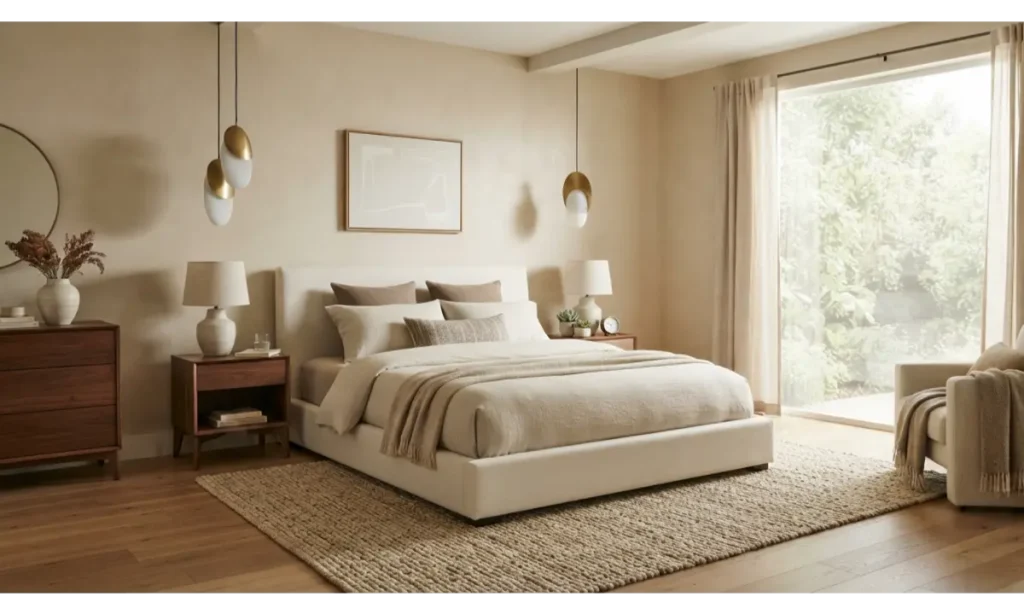
A modern bedroom should feel restful while still looking polished. Begin with a simple upholstered or wood bed and surround it with soft bedding in cream, warm white, taupe, or muted earth tones. Add a textured rug, comfortable curtains, and natural wood furniture to create softness. Keep the furniture silhouettes clean so the room feels organized rather than crowded.
Lighting can dramatically change the atmosphere after sunset. Bedside lamps, wall sconces, or hanging pendants can create a softer environment than a bright central ceiling light. Add one large artwork or a sculptural accessory for personality. Keeping technology, cables, and unnecessary objects controlled can make the bedroom feel more peaceful.
Pro Tip: Choose bedding and curtains with different textures even when their colors are similar. This creates depth without adding visual noise.
15. Introduce One Earthy Accent Color
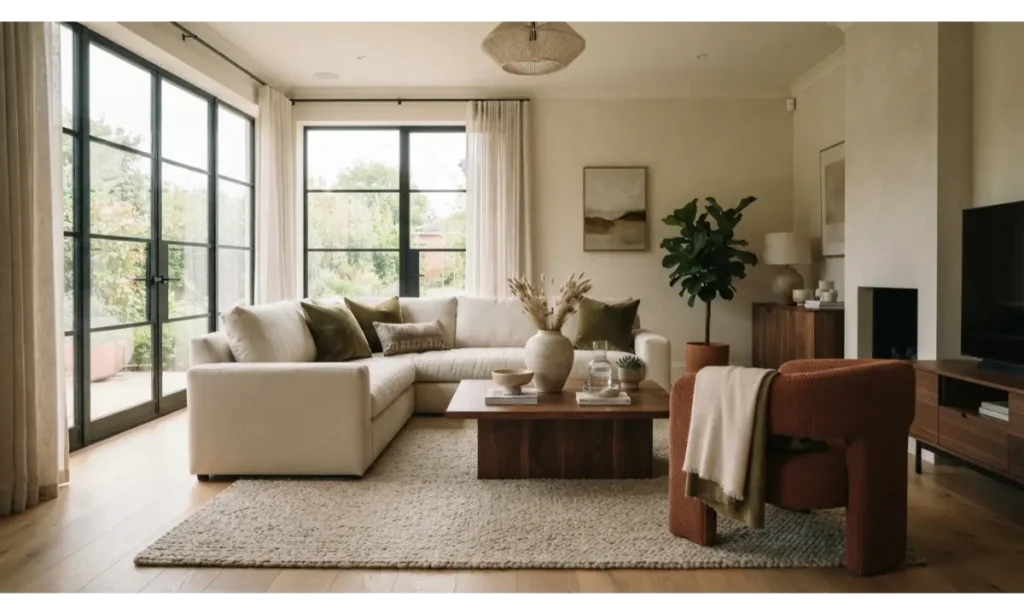
A controlled accent color can make a neutral room more memorable. Instead of introducing many bright shades, choose one earthy color such as terracotta, olive, rust, muted blue, or warm ochre. Use it through an accent chair, cushions, artwork, ceramics, or a small rug. The neutral background allows the color to stand out while keeping the overall room sophisticated.
Earthy colors work particularly well with natural wood and stone because they reinforce a connection with nature. They also bring warmth to rooms dominated by white, beige, or gray. You do not need a large amount of color to create an impact. A few carefully repeated accents can give the entire space a stronger identity.
Pro Tip: Repeat your chosen accent color in two or three smaller areas so it feels intentionally connected throughout the room.
16. Mix Glass, Metal, and Soft Textiles
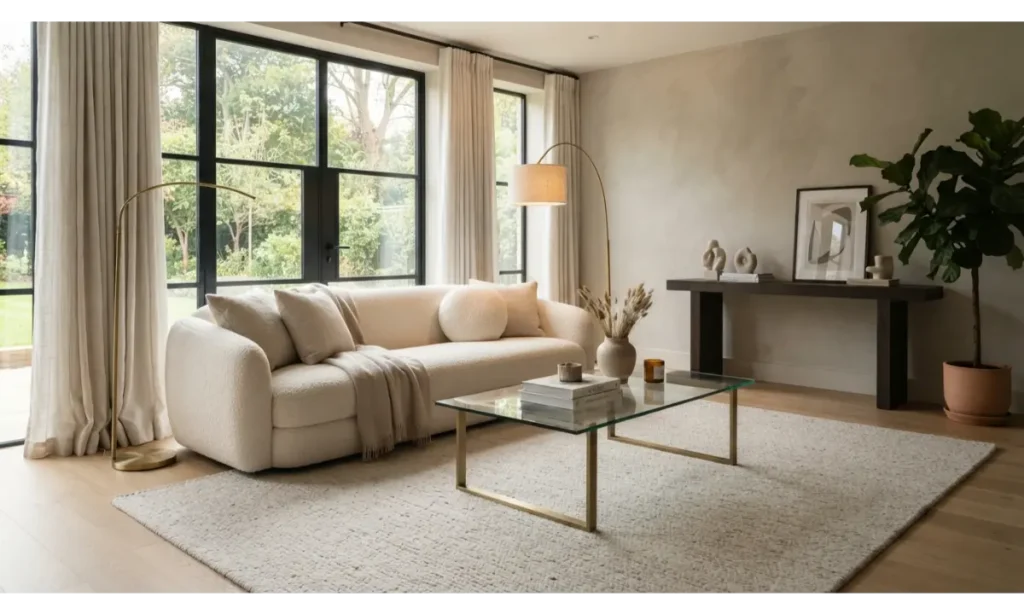
Mixing materials gives a contemporary room depth without requiring lots of accessories. Glass can create visual lightness, metal can add definition, and soft textiles can introduce comfort. A glass coffee table beside a textured sofa and metal floor lamp creates an attractive contrast. Wood can then provide warmth and connect the different surfaces.
The key is to repeat materials thoughtfully rather than introducing something different everywhere. If you use brass in one lamp, a small brass detail elsewhere can create continuity. If the room already has several hard surfaces, add linen, wool, cotton, or boucle to soften it. A controlled material palette usually feels more sophisticated than a room filled with unrelated finishes.
Pro Tip: Focus on contrasting textures and finishes instead of simply adding more materials.
17. Build a Functional Contemporary Home Office
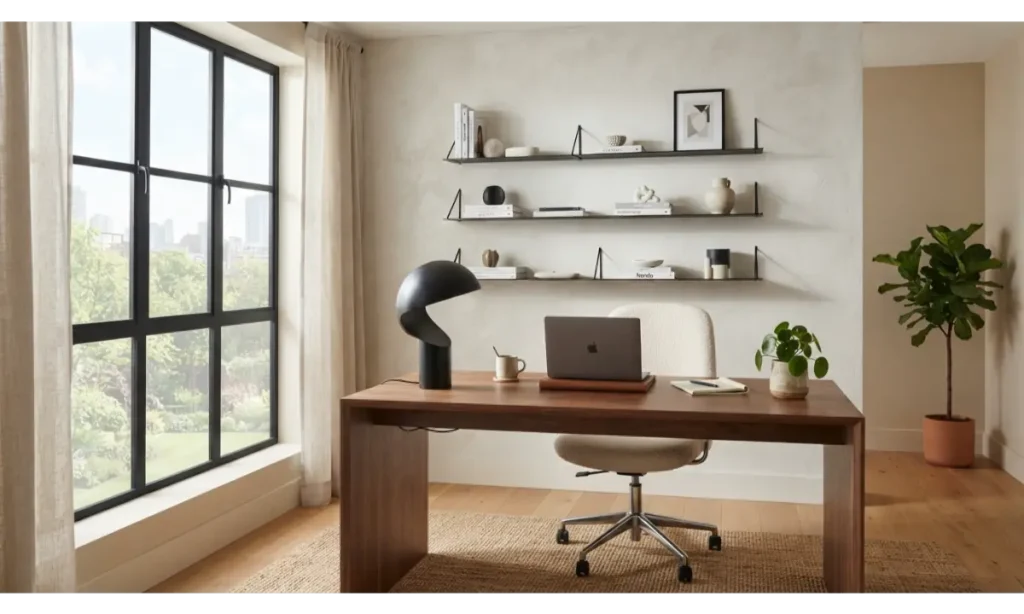
A contemporary home office should support concentration while still feeling connected to the rest of the home. Choose a clean desk, comfortable chair, and storage that keeps everyday clutter under control. Walnut or oak can add warmth, while black details provide definition. A large window or well-positioned lamp can make the workspace brighter and more enjoyable.
Avoid making the office completely bare. One artwork, a small plant, and a few carefully chosen books can add personality without becoming distractions. Closed storage is useful for supplies that need to stay nearby but do not need to remain visible. This creates a functional modern workspace that feels professional without looking sterile.
Pro Tip: Keep frequently used items nearby but reserve the main desk surface for the task you are currently working on.
18. Create a Minimal Contemporary Entryway
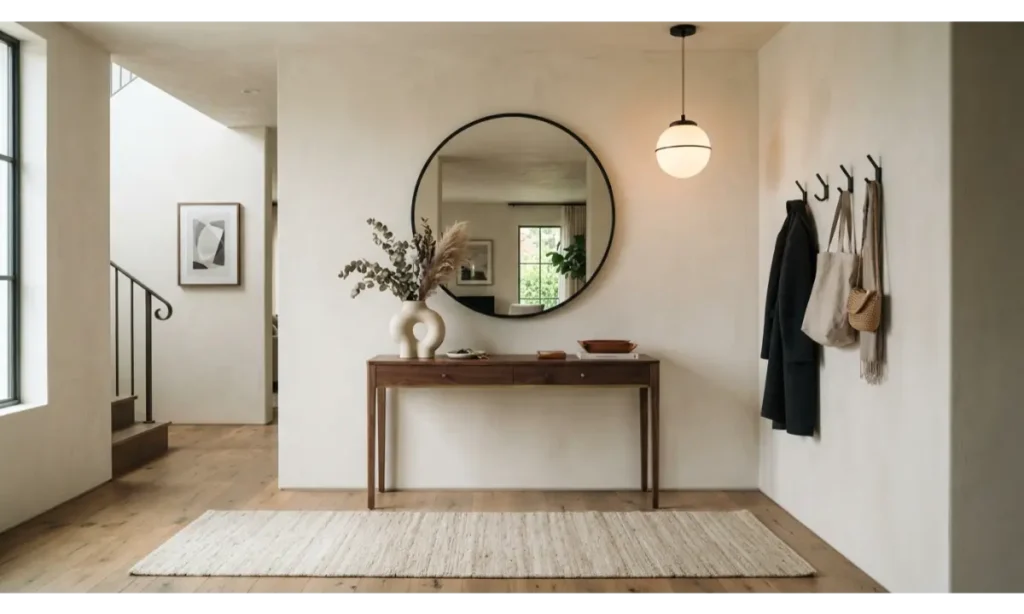
The entryway sets the tone for the entire home. A slim console, large round mirror, sculptural lamp, and simple runner can create a polished first impression without taking up too much space. Choose furniture with a narrow profile if the hallway is small. One artwork or ceramic object can add personality while still leaving enough room for movement.
Storage should remain part of the design. A closed cabinet, drawer, or attractive basket can hide shoes, bags, keys, and other everyday items. A large mirror can reflect light and make a compact entrance feel more open. Keeping the floor and console relatively clear also makes the area feel welcoming rather than crowded.
Pro Tip: Give every entryway item a practical purpose. Attractive storage is especially valuable in small homes.
19. Add Natural Stone to the Bathroom
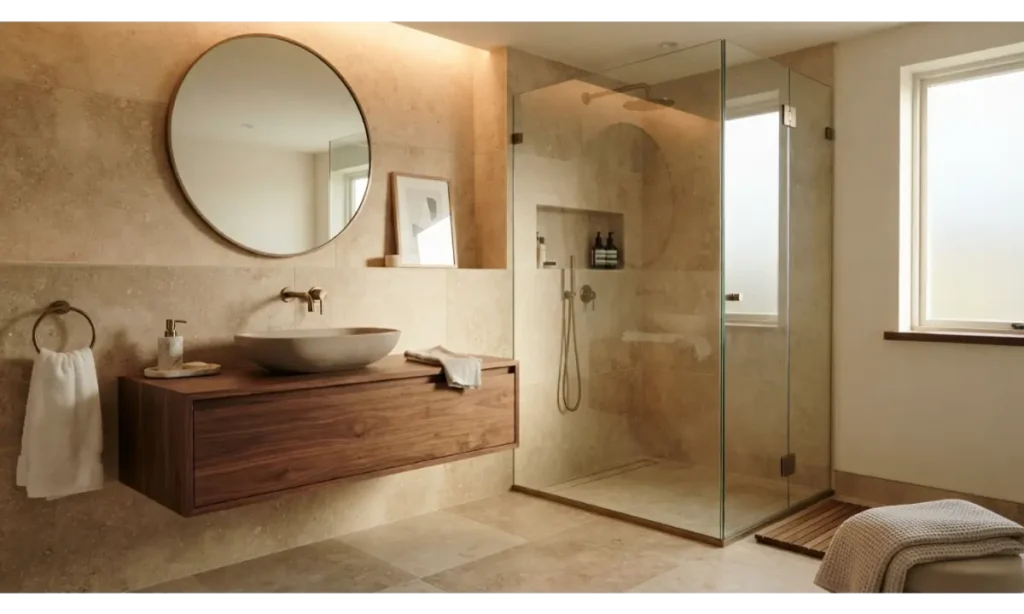
Natural stone can give a contemporary bathroom a calm and luxurious appearance. Large stone surfaces reduce visual interruptions and can make the room feel more spacious. Pair warm beige or soft gray stone with a floating wood vanity and simple fixtures. A frameless glass shower can preserve openness, while a round mirror can soften the stronger architectural lines.
Lighting is equally important because bathroom materials can look very different under different light sources. Use a combination of general lighting and softer mirror lighting where practical. Keep accessories limited to useful pieces such as folded towels, ceramic containers, or a small plant. This creates a modern spa bathroom that feels sophisticated without unnecessary decoration.
Pro Tip: Consider maintenance before choosing a stone finish. The best material should look beautiful while also fitting your cleaning routine.
20. Add Personal Pieces for Quiet Luxury
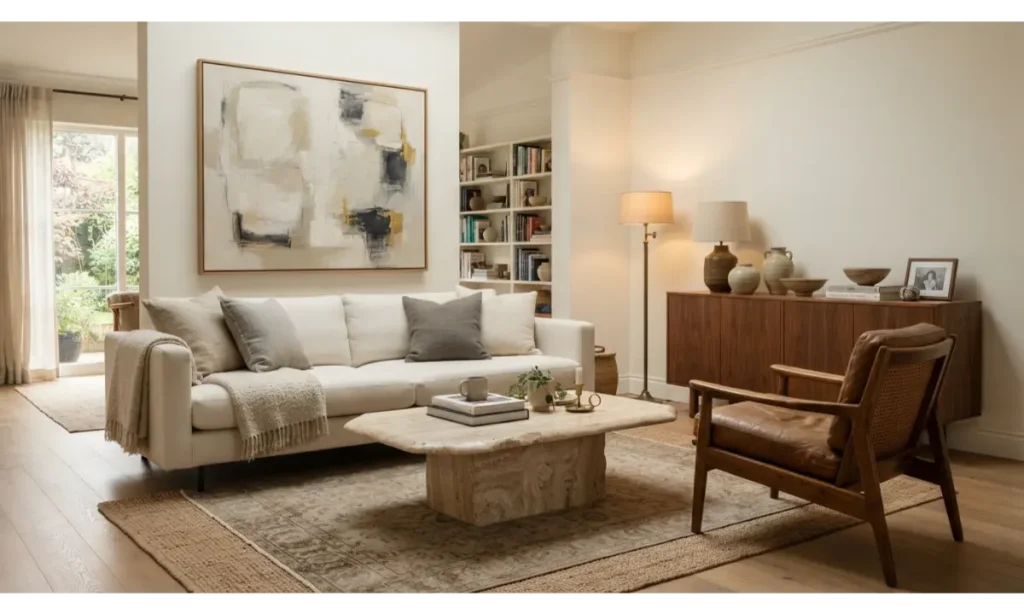
The most memorable modern rooms rarely look as though every item came from one furniture collection. Mix current pieces with a vintage chair, handcrafted ceramic, meaningful artwork, family object, or interesting secondhand find. These personal elements give the room character and create a story. The contrast between old and new can make a carefully designed interior feel more genuine.
Quiet luxury works best when you focus on quality, comfort, proportion, and restraint rather than filling the room with expensive looking accessories. Natural wood, linen, wool, stone, and carefully chosen metal finishes can create understated richness. A few objects that genuinely matter to you will usually have more impact than a large collection of decorative pieces.
Pro Tip: Display meaningful objects selectively. Editing your collection allows special pieces to receive more attention.
How to Make a Contemporary Home Feel Warm
A clean interior does not have to feel cold or empty. Warm wood, soft upholstery, linen, wool, textured rugs, natural stone, plants, and personal artwork can introduce comfort while maintaining a polished appearance. The key is to create contrast through materials instead of relying on excessive decoration.
Lighting also plays an important role. Use multiple light sources instead of depending on one strong overhead fixture. Table lamps, floor lamps, wall lights, and soft accent lighting can make the same room feel completely different in the evening.
How to Choose the Right Colors
Start with a neutral foundation such as warm white, cream, beige, taupe, greige, or soft brown. These shades work well across large surfaces because they create a calm background. Then introduce one or two accent colors through furniture, artwork, textiles, or accessories.
Earthy colors such as olive, terracotta, rust, muted blue, and warm ochre can add personality without overpowering a contemporary room. Repeating a chosen accent in several small areas creates a stronger connection than placing one random bright object in the room.
How to Mix Modern and Organic Elements
The contrast between clean architectural shapes and natural materials can make a home feel both modern and inviting. Straight cabinetry can be softened with wood grain, a stone table can sit beside a curved sofa, and a clean room can gain life from plants and woven textures.
Texture is especially valuable when the color palette stays simple. Linen, wool, boucle, ceramics, wood grain, stone, and textured walls give the eye different surfaces to appreciate. This makes a neutral room feel rich without requiring strong patterns.
Frequently Asked Questions
What is Contemporary Style in interior design?
Contemporary Style describes an evolving approach to interior design that reflects current preferences. It often combines clean lines, comfortable furniture, restrained colors, natural materials, open spaces, layered lighting, and carefully selected decorative elements.
What colors work best in a contemporary home?
Warm white, cream, beige, taupe, greige, soft brown, and muted gray create strong foundations. You can add olive, terracotta, rust, muted blue, charcoal, or warm ochre for controlled contrast.
Is contemporary design the same as modern design?
No. Modern design generally refers to a particular historical design movement, while contemporary design changes as current tastes and materials evolve. Contemporary rooms can include modern design elements while also using newer shapes, colors, textures, and materials.
How can I make a contemporary room cozy?
Use warm wood, comfortable upholstery, textured rugs, linen curtains, layered lighting, greenery, and personal artwork. A warm neutral palette can also make a clean room feel more inviting.
Can contemporary design work in a small home?
Yes. Clean furniture profiles, smart storage, light colors, mirrors, open walking paths, and controlled decoration can make smaller rooms feel spacious. Choose fewer pieces with appropriate proportions instead of overcrowding the space.
What materials work well in contemporary interiors?
Natural wood, stone, glass, metal, linen, wool, cotton, ceramic, and plaster inspired finishes all work beautifully. Combining hard and soft materials creates visual depth and prevents the room from feeling flat.
How can I add personality without creating clutter?
Choose a few meaningful pieces rather than decorating every surface. A large artwork, sculptural lamp, special chair, handcrafted ceramic, or beautiful plant can add personality while maintaining a clean appearance.
What type of lighting works best?
Layered lighting usually creates the most flexible result. Combine general ceiling lighting with table lamps, floor lamps, wall lights, and accent lighting. Dimmable fixtures can make the room easier to adapt throughout the day.
Conclusion
A beautiful contemporary home does not depend on following every new trend. The strongest interiors balance clean architecture with comfort, natural materials, thoughtful lighting, useful furniture, and personal details. Start with a calm neutral foundation, introduce warmth through wood and textiles, then add sculptural forms, greenery, artwork, and carefully chosen accents.
The most successful contemporary home design gives every major element a purpose. When you leave enough breathing room, mix textures intentionally, and choose pieces that reflect your personality, your home can feel fresh, modern, comfortable, and genuinely yours. These ideas can be adapted to living rooms, bedrooms, kitchens, bathrooms, offices, and entryways to create a cohesive home with lasting visual appeal.